- Product Description Description
- Table of Contents TOC
- List of Table & Figure LOT
- Get Free Sample PDF Sample PDF
Market Size, 2025
$12.34 BnMarket Estimate, 2026
$13.07 BnMarket Forecast, 2034
$20.67 BnCAGR, 2026–2034
5.9%U.S. Pest Control Market Size
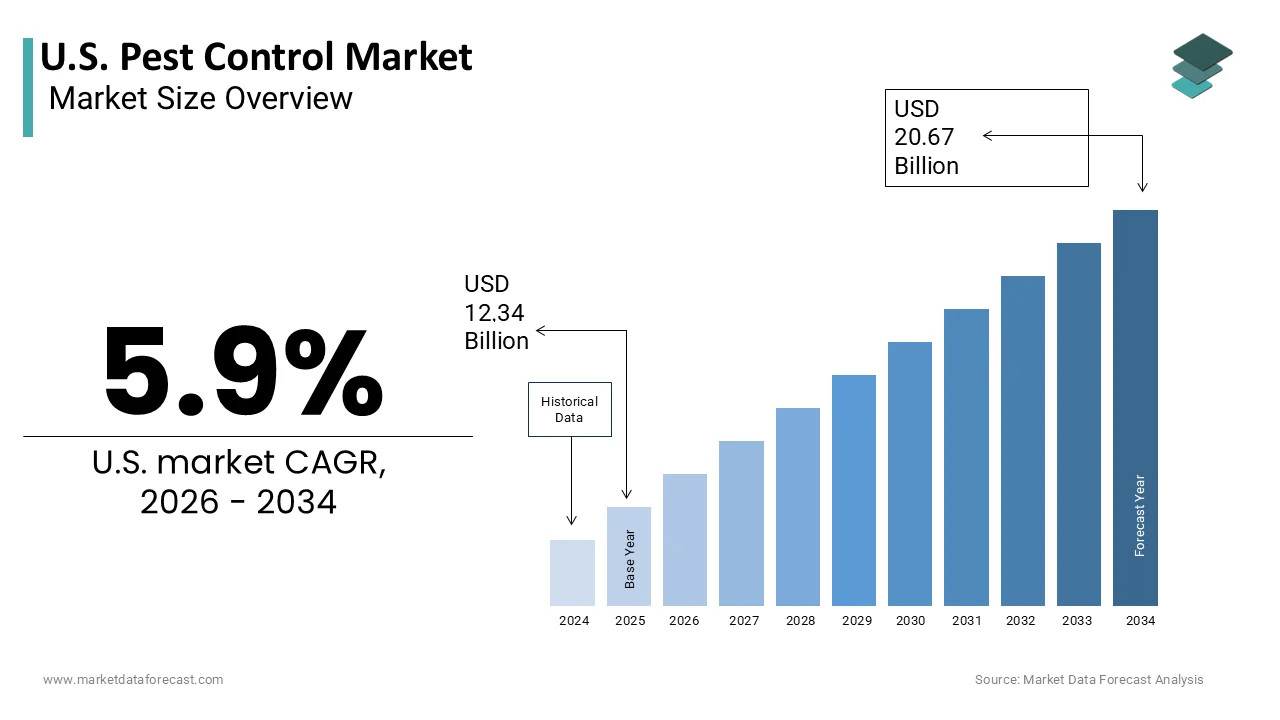
The U.S. Pest Control Market was valued at USD 12.34 billion in 2025, is estimated to reach USD 13.07 billion in 2026, and is projected to reach USD 20.67 billion by 2034, growing at a CAGR of 5.9% from 2026 to 2034.
As per data from the U.S. Census Bureau, there are approximately 131.4 million occupied housing units in the nation, providing a vast infrastructure requiring regular inspection and maintenance. The aging of this housing stock increases susceptibility to infestations, as older structures often possess entry points and vulnerabilities that facilitate pest intrusion. According to the Centers for Disease Control and Prevention, more than 1.6 million cases of diseases caused by the bite of an infected mosquito, tick, or flea were reported in the United States between 2004 and 2023, driving the need for professional intervention. The Environmental Protection Agency mandates rigorous licensing and certification for pesticide applicators, ensuring that treatments adhere to federal safety standards. Urbanization trends have also intensified human-pest interactions, with the National Association of Home Builders noting that high-density living conditions can exacerbate spread rates among multi-unit dwellings. Consequently, the market is not merely a response to infestation, but a critical component of public health infrastructure and property preservation. The integration of digital monitoring systems and data analytics further modernizes service delivery, allowing for proactive, rather than reactive, management of pest populations across diverse geographic regions.
MARKET DRIVERS
Increasing Urbanization and High-Density Living Conditions
The rapid urbanization and the prevalence of high-density living conditions that facilitate the rapid spread of pests among connected structures are one of the major factors driving the growth of the U.S. pest control market. As more individuals migrate to urban centers, the concentration of housing units creates ideal environments for pests, such as bed bugs, cockroaches, and rodents, to thrive and migrate between apartments and condominiums. According to the U.S. Census Bureau, 80% of the U.S. population lived in urban areas as of the last decennial census, which are regions where multi-family housing complexes are common. These structures share walls, plumbing, and ventilation systems, allowing pests to move seamlessly from one unit to another, making individual efforts insufficient and necessitating professional, building-wide interventions. According to the data from the National Pest Management Association, bed bug treatments have increased significantly in urban hotels and apartment complexes, reflecting the difficulty of eradicating these pests in dense environments. The proximity of waste disposal sites and food establishments in cities also provides abundant resources for pest populations. Furthermore, the turnover rate in rental properties is higher in urban areas, leading to frequent introductions of pests through moved furniture and belongings. Professional pest control services are essential in these scenarios to implement comprehensive strategies that address the root causes of infestations. The complexity of managing pests in high-rise buildings requires specialized expertise and equipment, which drives demand for licensed professionals. This structural dynamic ensures a consistent and growing need for pest management services in urbanized regions.
Rising Prevalence of Vector-Borne Diseases and Public Health Concerns
The rising prevalence of vector-borne diseases and the associated public health concerns that require professional mitigation strategies are further boosting the expansion of the U.S. pest control market. Climate change and environmental shifts have expanded the habitats of disease-carrying pests, such as mosquitoes and ticks, increasing the risk of illnesses like Lyme disease, West Nile virus, and Zika virus. According to the Centers for Disease Control and Prevention, the number of reported cases of diseases from mosquito, tick, and flea bites tripled between 2004 and 2016, highlighting the urgent need for effective control measures. Data from the Environmental Protection Agency indicates that warmer temperatures extend the active seasons of these pests, allowing them to reproduce and spread pathogens over longer periods. Homeowners and municipalities are increasingly investing in professional pest control services to reduce exposure risks and protect community health. The awareness of these health threats has shifted consumer perception from viewing pest control as a cosmetic service to an essential health safeguard. Local governments often contract professional firms for large-scale mosquito abatement programs during peak seasons to prevent outbreaks. Additionally, the presence of invasive species, such as the Asian tiger mosquito, has complicated control efforts, requiring specialized knowledge and targeted treatments. The integration of public health initiatives with private pest management services creates a robust demand for expert intervention. This health-driven motivation sustains market growth, as consumers prioritize safety and well-being in their living environments.
MARKET RESTRAINTS
Stringent Environmental Regulations and Chemical Restrictions
The stringent environmental regulations and restrictions on conventional chemical pesticides that limit treatment options and increase operational complexity are significantly hampering the pest control market growth in the U.S. The Environmental Protection Agency continuously reviews and cancels registrations for pesticides that pose unreasonable risks to human health or the environment, forcing companies to adapt their methodologies. According to the Federal Register, the EPA finalized a rule in 2024 to significantly restrict the use of certain rodenticides to protect non-target wildlife, requiring pest control providers to seek alternative solutions. Data from the National Association of State Departments of Agriculture indicates that compliance with evolving state and federal regulations requires extensive training and certification for technicians, increasing labor costs. The transition to softer chemistries and biological controls often results in slower efficacy rates, requiring more frequent visits and integrated approaches that may be less convenient for customers. Additionally, the labeling requirements and application restrictions for remaining chemicals limit where and how they can be used, which reduces flexibility in severe infestation scenarios. Consumers are also becoming more aware of the potential health impacts of synthetic pesticides, leading to resistance against traditional treatments. This regulatory pressure forces companies to invest heavily in research and development for compliant products, which can strain financial resources, particularly for smaller operators. The balance between effective pest elimination and environmental stewardship remains a challenging operational constraint that impacts service delivery and profitability.
Consumer Resistance and Misconceptions about Safety
Service providers in the United States are likely to face ongoing challenges in consumer trust over the next few years, as public preference for "green" household solutions grows, which is further likely to impede the pest control market growth in the U.S. Many homeowners hesitate to engage professional services due to fears of toxic exposure and long-term health effects associated with pesticide applications. According to the American Association of Poison Control Centers, more than 33,000 human exposure cases involving pesticides were reported to U.S. poison centers in a single recent year, reinforcing public anxiety about their use. Data from consumer surveys indicates that a significant portion of homeowners prefer DIY solutions or natural remedies, despite their lower efficacy, because they perceive them as safer alternatives. This hesitation delays professional intervention, allowing infestations to worsen and become more difficult and costly to eradicate. The lack of clear communication from service providers about the safety profiles of modern, low-toxicity products exacerbates this issue. Additionally, the visibility of treatment processes and the presence of technicians in private spaces can cause discomfort for some residents. The stigma associated with pest infestations also leads to underreporting and delayed action, particularly in rental properties where tenants fear eviction or judgment. These psychological and informational barriers reduce the frequency of preventive maintenance contracts, which are crucial for stable revenue streams. Overcoming these misconceptions requires extensive educational efforts and transparency, which can be resource-intensive for market participants.
MARKET OPPORTUNITIES
Integration of Smart Technology and Digital Monitoring Systems
The United States is likely to witness a surge in IoT-enabled pest management over the next few years as commercial clients seek real-time data for compliance, which is a promising opportunity for the U.S. pest control market. Internet of Things devices, such as smart traps and sensors, can detect pest activity in real time and alert service providers before infestations become visible or severe. According to the International Data Corporation, global spending on the Internet of Things is expected to reach $1.1 trillion by 2028, offering pest control companies a chance to differentiate their services through technology. Data from industry analysis suggests that predictive analytics can optimize treatment schedules, reducing unnecessary visits and improving customer satisfaction by addressing issues preemptively. These systems provide detailed reports on pest trends and entry points, allowing for targeted interventions that are more effective and environmentally friendly. Commercial clients, such as restaurants and healthcare facilities, are increasingly demanding such transparent and data-backed services to meet hygiene standards and audit requirements. The ability to monitor remote locations and multiple sites simultaneously enhances operational efficiency for service providers. Furthermore, the integration of mobile applications allows customers to view activity logs and communicate directly with technicians, fostering trust and engagement. This technological evolution transforms pest control from a reactive service to a continuous management partnership. By leveraging digital tools, companies can offer premium services that command higher prices and foster long-term client relationships.
Expansion into Eco-Friendly and Organic Pest Management Solutions
Organic and eco-friendly pest solutions in the United States are likely to capture a larger market share over the next few years as LEED certifications become a standard in new construction, which is another notable opportunity for the U.S. market. As environmental awareness increases, homeowners and businesses are seeking alternatives to synthetic chemicals that minimize ecological impact and health risks. According to the Environmental Protection Agency, biopesticides currently represent about 10% of the total pesticide market and are growing at a faster rate than conventional products, reflecting a shift towards safer active ingredients. Data from the Organic Materials Review Institute shows that the demand for certified organic pest control services is rising, particularly among affluent demographics and green building projects. Companies that develop and offer botanical extracts, essential oils, and biological controls can capture this niche market and differentiate themselves from competitors relying on traditional methods. The adoption of Integrated Pest Management principles, which emphasize prevention and non-chemical controls, further supports this trend. Service providers can partner with organic certification bodies to validate their practices and appeal to environmentally conscious consumers. Additionally, government incentives and green building standards, such as LEED, encourage the use of low-impact pest control methods in commercial constructions. By positioning themselves as sustainability leaders, companies can attract a loyal customer base willing to pay a premium for safe and responsible services. This strategic pivot towards green solutions opens new revenue streams and enhances brand reputation in a competitive landscape.
MARKET CHALLENGES
Labor Shortages and Technician Retention Issues
The persistent labor shortage and difficulties in recruiting and retaining qualified technicians are a major challenge to the U.S. pest control market expansion. The U.S. market requires skilled workers who possess technical knowledge, regulatory certifications, and physical stamina, yet it often struggles to attract talent due to perceptions of the work as undesirable or hazardous. According to the Bureau of Labor Statistics, employment of pest control workers is projected to grow 4% from 2023 to 2033, but the industry must compete with rising wages in other trade sectors to fill these roles. Data from the National Pest Management Association indicates that many companies face challenges in filling entry-level positions and retaining experienced staff, due to competitive wage pressures in other industries. The rigorous training and licensing requirements create barriers to entry, prolonging the time needed to onboard new employees. Additionally, the seasonal nature of pest activity in some regions leads to fluctuating workload demands, which complicate staffing planning. The shortage of qualified technicians limits the capacity of companies to expand their customer base and respond promptly to service requests. This operational bottleneck can lead to delayed appointments and reduced service quality, affecting customer satisfaction and retention. Addressing this challenge requires innovative recruitment strategies, improved compensation packages, and career development opportunities. Until the workforce pipeline is strengthened, labor constraints will remain a significant impediment to market growth and operational efficiency.
Climate Change and Unpredictable Pest Behavior Patterns
Climate change and the resulting unpredictable behavior patterns of pest populations are further challenging the pest control market expansion in the U.S. Rising temperatures and altered precipitation levels are shifting the geographic ranges and life cycles of many pests, making historical data less reliable for prediction and management. According to the National Oceanic and Atmospheric Administration, the year 2024 was the warmest on record globally, and such trends allow pests, such as termites and ants, to remain active year-round in regions where they were previously dormant. Data from entomological studies indicates that extreme weather events, such as floods and droughts, can displace pest populations, forcing them into human structures in search of shelter and water. This unpredictability complicates scheduling and resource allocation for pest control companies, as surge demand can occur unexpectedly. Traditional treatment calendars may become ineffective, requiring more flexible and responsive service models. Additionally, the introduction of invasive species from other regions due to changing climates adds complexity to identification and control efforts. Technicians must continuously update their knowledge and adapt their strategies to address these emerging threats. The increased frequency of severe infestations strains operational capacities and increases costs for both providers and consumers. Adapting to these environmental changes requires investment in research and advanced monitoring tools. The volatility introduced by climate change poses a persistent operational and strategic challenge for the industry.
REPORT COVERAGE
| REPORT METRIC | DETAILS |
| Market Size Available | 2025 to 2034 |
| Base Year | 2025 |
| Forecast Period | 2026 to 2034 |
| Segments Covered | By Pest Type, Type, Application, and Region. |
| Various Analyses Covered | Global, Regional and Country-Level Analysis, Segment-Level Analysis, Drivers, Restraints, Opportunities, Challenges; PESTLE Analysis; Porter’s Five Forces Analysis, Competitive Landscape, Analyst Overview of Investment Opportunities |
| Countries Covered | California, Washington, Oregon, New York, United States |
| Market Leaders Profiled | Rollins, Inc., Rentokil Initial plc, Terminix Global Holdings, Inc., Ecolab Inc., Arrow Exterminators, Inc., Massey Services, Inc., Anticimex Group, Cook’s Pest Control, Inc., Truly Nolen of America, Inc., ORKIN LLC, Hawx Pest Control, Aptive Environmental LLC |
SEGMENTAL ANALYSIS
By Pest Type Insights
The insect segment dominated the market by capturing the largest share of the U.S. pest control market in 2025. The dominance of the insect segment in the U.S. market is attributed to their ubiquitous presence in residential and commercial environments, nd the significant hygiene risks they pose. Species such as cockroaches, ants, bed bugs, and flies are among the most common pests encountered by homeowners and business operators that require frequent professional intervention. According to the National Pest Management Association, cockroaches and ants remain the top two nuisance pests reported by customers across the country, reflecting their adaptability to human habitats. Data from the Centers for Disease Control and Prevention indicates that cockroaches can trigger asthma attacks, particularly in children, which drives urgent demand for elimination services in urban apartments and schools. The rapid reproduction rates of these insects mean that minor infestations can quickly escalate into severe problems if not addressed promptly by experts. Furthermore, the social stigma associated with insect infestations prompts immediate action from property managers and restaurant owners to protect their reputations. The widespread distribution of these pests across all climatic zones in the U.S. ensures a consistent and high volume of service requests. Unlike seasonal pests, many insects remain active year-round in heated indoor environments, creating a steady demand for maintenance contracts. This constant threat to health and comfort solidifies the dominance of the insect segment in the overall pest control landscape.
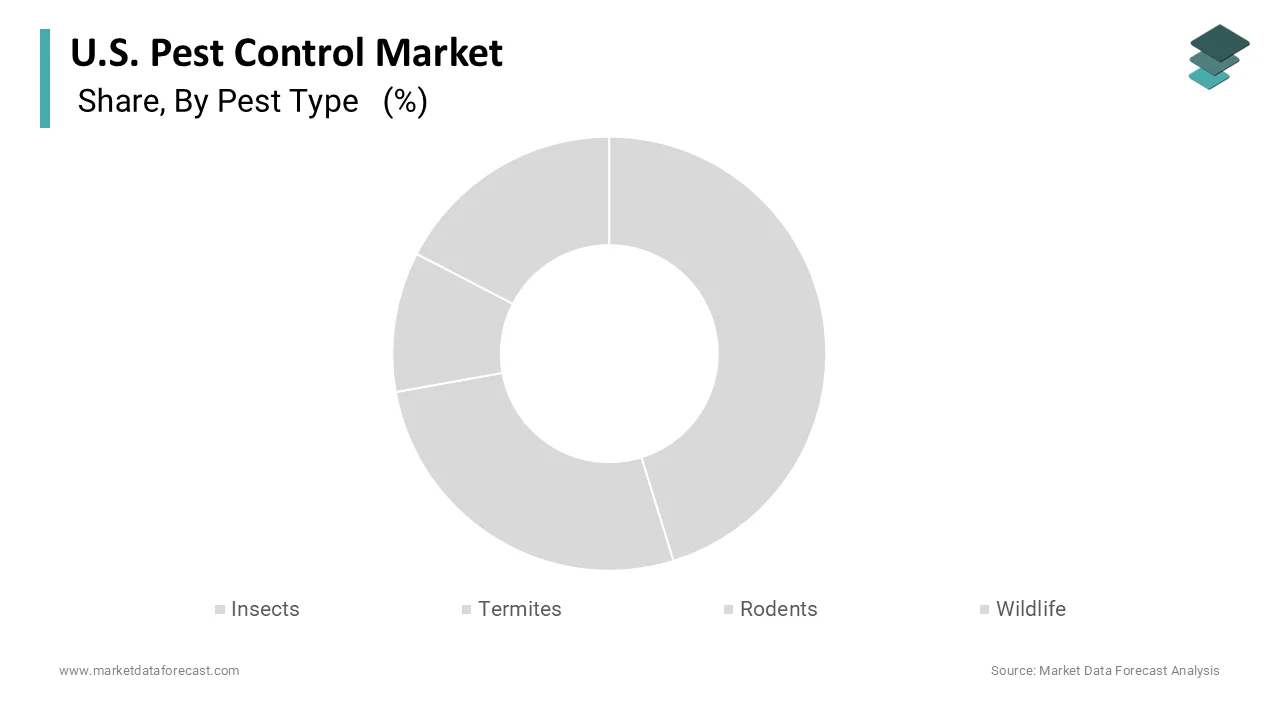
On the other hand, the termite activity segment is estimated to showcase a promising CAGR in the U.S. market during the forecast period owi, owing to the extensive structural damage they cause and the high costs associated with repairs, which incentivize preventive measures. These silent destroyers consume wood and cellulose materials, compromising the integrity of buildings and leading to billions of dollars in damage. According to the National Pest Management Association, termites cause approximately $6.8 billion in property damage each year in the U.S., surpassing the combined damage from fires and windstorms. Data from insurance industry reports indicates that standard homeowners' insurance policies typically do not cover termite damage, leaving property owners fully responsible for remediation and reconstruction costs. This financial risk drives homeowners to invest in comprehensive termite protection plans and annual inspections. The prevalence of subterranean termites in warm and humid regions, such as the Southeast and Southwest, further amplifies the demand for specialized treatments. Real estate transactions often mandate termite inspections and clearances, adding a procedural driver to the market. The long-term nature of termite infestations means that once detected, ongoing monitoring and treatment are required for years. This combination of catastrophic financial potential and mandatory real estate protocols fuels the rapid expansion of the termite control segment.
By Type Insights
The chemical control segment led the market by holding the highest share of the U.S. pest control market in 2025. The growth of the chemical control segment in the U.S. market is driven by its proven efficacy and ability to rapidly eliminate large pest populations, which is critical in severe infestation scenarios. Synthetic pesticides and insecticides offer immediate results that mechanical or biological methods often cannot match, making them the preferred choice for emergency treatments. According to the Environmental Protection Agency, roughly 1.1 billion pounds of pesticides are used each year in the U.S., and registered chemical pesticides remain the primary tool for managing public health pests, such as mosquitoes and ticks, that transmit diseases. Data from the National Pest Management Association indicates that the majority of professional treatments still rely on chemical formulations, due to their reliability and cost-effectiveness. The development of newer generation chemicals with lower toxicity to humans and pets has alleviated some safety concerns while maintaining high potency against target pests. Professional applicators are trained to use these substances precisely, minimizing exposure risks and maximizing impact. The versatility of chemical controls allows them to be applied in various forms, such as sprays, dusts, and baits, catering to different pest types and environments. This broad applicability ensures that chemical methods remain the backbone of the industry. The immediate relief provided by chemical treatments satisfies consumer expectations for quick solutions, reinforcing their dominant market position.
On the other hand, the mechanical pest control segment is estimated to showcase a healthy CAGR in the U.S. market during the forecast period as commercial food processors aim to reduce chemical residues in their facilities. Mechanical control is the fastest-growing segment in the U.S. pest control market, driven by increasing consumer demand for non-toxic and physical barrier solutions that avoid chemical exposure. Homeowners and businesses are increasingly seeking methods that exclude pests, rather than kill them, using traps, screens, and exclusion techniques. According to the Green Building Alliance, mechanical controls, such as physical barriers and traps, are recommended for projects seeking to achieve 100% of the points available in the LEED Integrated Pest Management credit. Data from industry surveys indicates that a growing percentage of consumers prefer humane and chemical-free options, particularly in households with children and pets. Mechanical methods, such as sealing entry points, installing door sweeps, and using heat treatments for bed bugs, offer effective alternatives without residual toxins. The rise in organic farming and eco-friendly housing developments further boosts the adoption of mechanical controls. These methods provide long-term solutions by addressing the root causes of infestations, such as access points, rather than just treating symptoms. As awareness of chemical risks grows, mechanical control offers a safe and permanent strategy. This shift in consumer preference towards prevention and physical exclusion drives the rapid expansion of the mechanical segment.
By Application Insights
The residential segment dominated the market with the largest share of the U.S. pest control market in 2025. The growth of the residential segment in the U.S. market can be credited to the high volume of housing units and increasing homeowner awareness regarding health and property protection. With millions of single-family homes and multi-unit dwellings across the country, the potential customer base is vast and diverse. According to the U.S. Census Bureau, there were 144.1 million housing units in the U.S. as of 2023, many of which require regular pest management services to maintain habitability. Data from the National Pest Management Association indicates that nearly one in three homeowners encounters a pest problem annually, driving consistent demand for professional assistance. The emotional connection to home and the desire for a safe living environment motivate residents to invest in preventive and reactive treatments. The aging housing stock in many regions presents unique challenges, such as cracks and crevices that facilitate pest entry, requiring expert remediation. Furthermore, the rise in DIY awareness has led many homeowners to recognize the limits of over-the-counter solutions and seek professional help for persistent issues. The recurring nature of residential pest problems, such as seasonal ant invasions or annual termite inspections, creates stable subscription models for service providers. This broad and engaged consumer base ensures that the residential segment remains the largest contributor to market revenue.
However, the commercial segment is predicted to showcase the fastest CAGR in the U.S. market during the forecast period, due to the stringent health regulations and the critical need for brand reputation management in service industries. Businesses, such as restaurants, hotels, and healthcare facilities, face strict compliance standards that mandate regular pest control to avoid closures and legal penalties. According to the Food and Drug Administration, approximately 48 million people in the U.S. get sick from foodborne illnesses each year, and food service establishments are subject to frequent health inspections, where pest evidence can lead to immediate shutdowns and fines. Data from the National Restaurant Association highlights that pest-related violations are among the most damaging to customer trust and business continuity. Consequently, commercial entities are investing heavily in comprehensive pest management programs that include frequent monitoring and detailed reporting. The rise of online review platforms means that a single pest sighting can go viral and severely impact revenue, motivating proactive investment in professional services. Corporate headquarters often mandate standardized pest control protocols across all locations, ensuring consistent quality and compliance. This institutional demand creates large-scale contracts for pest control firms. The focus on risk mitigation and brand protection drives rapid adoption of advanced commercial pest solutions. As the service economy expands, the commercial segment continues to outpace others in growth rate.
COUNTRY LEVEL ANALYSIS
U.S. Pest Control Market Analysis
The U.S. is likely to maintain its global leadership in pest control innovation over the next few years, as domestic firms invest heavily in automation and remote sensing. The U.S. stands as the dominant and most mature market for pest control services in North America, accounting for the largest share of global revenue and innovation in the sector. The country serves as a leader in regulatory standards, technological adoption, and professional certification practices that influence global trends. According to the Environmental Protection Agency, the U.S. pesticide market accounted for about 18% of global pesticide expenditures in recent years, reflecting one of the most comprehensive frameworks for pesticide registration and applicator licensing, ensuring high service quality and safety. The market status is characterized by a mix of large national corporations and numerous local independent operators, serving diverse geographic and climatic zones. The presence of major industry players facilitates economies of scale and investment in research and development. Data from the Bureau of Labor Statistics indicates that the employment of pest control technicians is projected to grow 4% through 2033, which is about as fast as the average for all occupations, reflecting strong demand. The mature nature of the market means that growth is driven by service differentiation, technological integration, and expansion into niche segments, rather than basic awareness. The U.S. also leads in the adoption of digital monitoring tools and eco-friendly solutions, setting benchmarks for the industry. This leadership position ensures that the U.S. market remains the primary focus for strategic investments and product launches by international and domestic firms. The stability and size of the market provide a foundation for long-term industry resilience.
COMPETITIVE LANDSCAPE
The competition in the U.S. pest control market is characterized by a mix of large national corporations and numerous small independent operators vying for market presence. National brands leverage their extensive resources, brand recognition,n and standardized service protocols to attract commercial and residential clients. Local companies compete by offering personalized service, flexibility, a nd competitive pricing tailored to specific community needs. Technological advancement serves as a key differentiator, with firms investing in digital tools for efficient scheduling and customer communication. Price sensitivity varies among segments, with commercial clients prioritizing compliance and reliability,y while residential customers often seek value and convenience. Regulatory compliance and safety standards create barriers to entry by ensuring that licensed professionals maintain a competitive edge over unregulated entities. Customer loyalty is driven by service quality, ty responsiven, ess and trustworthiness. Mergers and acquisitions are common strategies used by larger players to consolidate market position and expand reach. Innovation in green pest control methods offers opportunities for differentiation. This dynamic environment requires continuous adaptation and investment in service excellence to sustain growth and profitability.
KEY MARKET PLAYERS
Some of the companies that are playing a dominating role in the U.S. pest control market include
- Rollins, Inc.
- Rentokil Initial plc
- Terminix Global Holdings, Inc.
- Ecolab Inc.
- Arrow Exterminators, Inc.
- Massey Services, Inc.
- Anticimex Group
- Cook’s Pest Control, Inc.
- Truly Nolen of America, Inc.
- ORKIN LLC
- Hawx Pest Control
- Aptive Environmental LLC
TOP LEADING PLAYERS IN THE MARKET
- Rollins Inc operates as a leading provider of residential and commercial pest control services through its diverse portfolio of brands, ds including Orkin and Critter Control. The company focuses on delivering comprehensive pest management solutions that prioritize customer satisfaction and environmental safety. Recent strategic actions include expanding its digital capabilities by enhancing mobile applications for seamless scheduling and service tracking. Rollins has also invested in training programs to ensure technicians are equipped with the latest industry knowledge and safety protocols. The company actively pursues acquisitions of regional providers to broaden its geographic footprint and service offerings. By leveraging data analytics, Rollins optimizes route efficiency and customer retention strategies. These initiatives reinforce its position as a trusted partner in protecting homes and businesses from pest-related threats across the U.S.
- Terminix Global Holdings contributes significantly to the U.S. market by offering specialized termite and pest control services backed by decades of industry expertise. The company emphasizes innovative treatment methods and customer-centric solutions to address unique pest challenges. Recent initiatives involve integrating advanced monitoring technologies such as smart traps to provide real-time insights into pest activity. Terminix has expanded its commercial services division to cater to the growing needs of the healthcare and hospitality sectors. The company also focuses on sustainability by developing eco-friendly treatment options that minimize environmental impact. Through strategic partnerships and continuous innovation, Te rminix enhances its operational efficiency and service quality. These efforts strengthen its reputation as a leader in effective and responsible pest management solutions for diverse client needs throughout the nation.
- Rentokil Initial plays a vital role in the U.S. pest control sector by providing integrated pest management services under well-known brands such as Ehrlich and Western Exterminator. The company leverages global expertise and local knowledge to deliver tailored solutions for residential and commercial clients. Recent actions include investing in digital transformation initiatives to improve customer engagement and service delivery speed. Rentokil has introduced new training modules for technicians focusing on advanced identification and treatment techniques. The company also emphasizes corporate social responsibility by supporting community health and safety programs. By consolidating its brand presence and optimizing operational workflows, Rentokill ensures consistent high-quality service. This approach enhances customer trust and loyalty while driving growth in a competitive market landscape.
TOP STRATEGIES USED BY KEY MARKET PARTICIPANTS IN THE MARKET
Key players in the U.S. pest control market primarily focus on technological integration to enhance service efficiency and customer experience. Companies are adopting digital platforms for online booking, real-time tracking, and automated reporting. Strategic acquisitions of local firms enable expansion into new geographic areas and diversification of service offerings. Investment in employee training ensures technicians possess up-to-date knowledge of safe and effective treatment methods. The development of eco-friendly and non-toxic solutions addresses growing consumer demand for sustainable practices. Preventive maintenance contracts are promoted to secure recurring revenue streams and build long-term customer relationships. Marketing efforts emphasize health and safety benefits to differentiate services in a competitive landscape. These strategies drive growth and operational excellence.
MARKET SEGMENTATION
This research report on the U.S. pest control market is segmented and sub-segmented into the following categories.
By Pest Type
- Insects
- Termites
- Rodents
- Wildlife
- Others
By Type
- Chemical Control
- Mechanical Control
- Biological Control
- Others
By Application
- Residential
- Commercial
- Industrial
- Agriculture
By Country
- California
- Washington
- Oregon
- New York
- Rest of the United States