U.S. Population Health Management Solutions Market Size, Share, Trends, and Growth Analysis Report, Segmented by Product, Deployment, End-User, and Country – Industry Forecast From 2026 to 2034
Market Size, 2025
$22.45 BnMarket Estimate, 2026
$25.80 BnMarket Forecast, 2034
$78.36 BnCAGR, 2026–2034
14.90%U.S. Population Health Management Solutions Market Report Summary
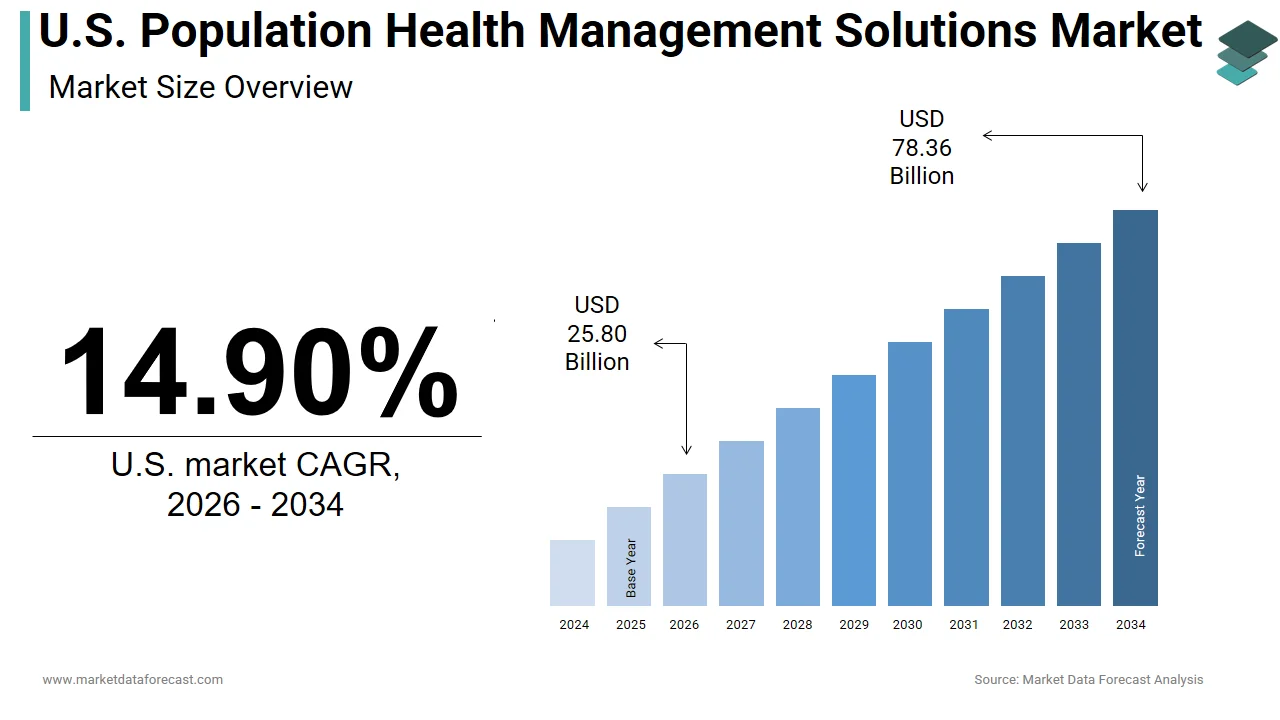
The U.S. population health management solutions market was valued at USD 22.45 billion in 2025, is estimated to reach USD 25.80 billion in 2026, and is projected to reach USD 78.36 billion by 2034, growing at a CAGR of 14.90% from 2026 to 2034. Market growth is driven by increasing demand for value-based healthcare, rising adoption of healthcare analytics platforms, and growing focus on improving patient outcomes while reducing healthcare costs. Population health management solutions help healthcare organizations analyze patient data, manage chronic diseases, and enhance care coordination through integrated digital platforms. The expansion of electronic health records, increasing adoption of cloud-based healthcare technologies, and rising emphasis on preventive care and data-driven clinical decision-making are further supporting market growth across the United States.
Key Market Trends
- Rising adoption of value-based healthcare and care coordination models.
- Increasing demand for integrated healthcare analytics and patient data platforms.
- Growing use of cloud-based population health management solutions.
- Expansion of AI-driven predictive analytics and risk stratification tools.
- Increasing focus on chronic disease management and preventive healthcare initiatives.
Segmental Insights
- Based on product, the software segment dominated the U.S. population health management solutions market in 2025, driven by increasing demand for integrated healthcare analytics platforms, patient data management systems, and care coordination software.
- Based on deployment, the cloud deployment segment led the market by accounting for 36.7% share in 2025, supported by scalability, cost efficiency, and the ability to facilitate seamless data sharing across diverse healthcare environments.
- Based on end user, the healthcare providers segment held the largest share of 32.1% in 2025, driven by the growing responsibility of hospitals, clinics, and physician groups in managing patient outcomes and delivering value-based care.
Country Insights
- The United States represents one of the largest markets for population health management solutions globally, supported by advanced healthcare IT infrastructure, strong adoption of electronic health records, and increasing healthcare digitization initiatives. Rising focus on improving patient outcomes, reducing hospital readmissions, and optimizing healthcare spending continues to drive long-term market growth across the country.
Competitive Landscape
The U.S. population health management solutions market is characterized by strong competition among healthcare IT companies, analytics platform providers, and cloud healthcare solution vendors focusing on interoperability, predictive analytics, and integrated care management capabilities. Market participants are emphasizing AI-driven healthcare insights, cloud platform expansion, and strategic collaborations with healthcare providers to strengthen market positioning. Acquisitions, product innovation, and investments in digital healthcare transformation are shaping competitive dynamics across the market.
Prominent companies operating in the U.S. population health management solutions market include Athenahealth Inc., Conifer Health Solutions LLC, Cotiviti Inc., eClinicalWorks LLC, Epic Systems Corp., Health Catalyst Inc., HealthEC LLC, i2i Systems Inc., Allscripts Healthcare Solutions, Innovaccer Inc., IBM Watson Health, Koninklijke Philips NV, Lightbeam Health Solutions, McKesson Corp., Medecision Inc., Medical Information Technology Inc., Merative L.P., NextGen Healthcare, Optum Inc., Oracle Corp., symplr Software LLC, and Tebra Technologies Inc.
U.S. Population Health Management Solutions Market Size
The U.S. population health management solutions market was valued at USD 22.45 billion in 2025, is estimated to reach USD 25.80 billion in 2026, and is projected to reach USD 78.36 billion by 2034, growing at a CAGR of 14.90% from 2026 to 2034.
The population health management solutions strategic framework is designed to improve clinical health outcomes of defined groups through improved care coordination and patient engagement interventions. These systems integrate data analytics, electronic health records, and predictive modeling to identify high-risk patients and manage chronic conditions effectively across diverse care settings. Furthermore, the financial strain on the healthcare system is evident with national health care spending reaching 5.3 trillion dollars in 2024, according to the Centers for Medicare and Medicaid Services. This substantial expenditure underscores the need for efficient management tools that can reduce unnecessary hospitalizations and optimize resource allocation. The demographic shift towards an aging population further intensifies this demand as the number of individuals aged 65 and older continues to rise significantly. Consequently, healthcare providers are increasingly adopting these solutions to transition from volume-based to value-based care models. The integration of real-time data allows for proactive interventions that address social determinants of health and lifestyle factors.
MARKET DRIVERS
Rising Prevalence of Chronic Diseases and Multimorbidity
The escalating prevalence of chronic diseases and multimorbidity for the adoption of population health management solutions is fuelling the growth of the United States population health management solutions market. Chronic conditions, such as diabetes, heart disease, and cancer, are the leading causes of death and disability in the nation, creating an unsustainable burden on the healthcare infrastructure. According to the Centers for Disease Control and Prevention, 76.4% of US adults reported having at least one chronic condition in 2023. This widespread prevalence necessitates a shift from episodic acute care to continuous proactive management, which is facilitated by advanced health IT systems. Multimorbidity, or the presence of two or more chronic conditions, affects 51.4% of adults with chronic diseases, making care coordination exceptionally complex. Population health platforms enable providers to aggregate data from various sources to create holistic patient profiles that support personalized care plans. These systems utilize predictive analytics to identify patients at risk of complications, allowing for early intervention before conditions worsen. The economic implications are profound, as individuals with multiple chronic conditions account for a disproportionate share of healthcare spending. By leveraging these solutions, healthcare organizations can monitor patient vitals remotely and ensure medication adherence, thereby reducing emergency department visits. The ability to track population-level trends also helps public health officials allocate resources more effectively to areas with the highest disease burden.
Transition to Value-Based Care and Reimbursement Models
The systemic transition from fee-for-service to value-based care reimbursement models is a significant driver propelling the growth of the United States population health management solutions market. Value-based care incentivizes healthcare providers to focus on patient outcomes rather than the volume of services delivered, which requires robust data analytics and performance tracking capabilities. This shift places financial risk on providers, who must manage the total cost of care for their patient populations, while maintaining high-quality standards. Population health management solutions provide the necessary infrastructure to monitor key performance indicators, such as readmission rates and patient satisfaction scores. These platforms enable care teams to identify gaps in care and address them proactively, ensuring that patients receive preventive services and timely treatments. The Centers for Medicare and Medicaid Services has been actively promoting alternative payment models that reward efficiency and effectiveness, which further accelerates adoption. Healthcare organizations utilize these tools to stratify patients by risk level, allowing for targeted interventions that reduce unnecessary utilization of high-cost services. Additionally, the integration of financial data with clinical information helps providers understand the cost implications of their treatment decisions. Population health solutions facilitate this collaboration by providing a shared view of patient health status and care progress.
MARKET RESTRAINTS
Data Interoperability and Integration Complexities
The data interoperability and integration complexities with the widespread and effective implementation of population health management solutions are impeding the growth of the United States population health management solutions market. Despite advancements in health information technology, many healthcare organizations struggle to exchange data seamlessly across different electronic health record systems and platforms. The technical barriers and privacy concerns continue to impede the electronic exchange of health information. This fragmentation results in siloed data that prevents providers from obtaining a comprehensive view of patient health history and current status. The lack of standardized data formats and protocols further exacerbates the challenge, requiring significant investment in custom integration solutions. Providers often face difficulties in aggregating data from disparate sources, such as laboratories, pharmacies, and specialty clinics. This inefficiency not only increases operational costs but also contributes to physician burnout as clinicians spend excessive time manually reconciling records. Without seamless interoperability, population health management solutions cannot fully realize their potential to coordinate care and improve outcomes. The ongoing effort to establish universal standards and enforce compliance is essential, but progress has been slower than anticipated.
High Implementation Costs and Financial Constraints
The high implementation costs and financial constraints with the adoption of population health management solutions among smaller healthcare providers and rural hospitals are expected to hamper the growth of the United States population health management solutions market. Deploying these sophisticated systems requires substantial upfront investment in software licenses, hardware infrastructure, and specialized personnel training. Many healthcare organizations operate on thin margins and find it challenging to allocate the necessary capital for such transformative technologies. This economic environment makes it difficult for smaller practices to justify the expense of advanced population health tools, despite their long-term benefits. The total cost of ownership includes ongoing maintenance fees, updates, and cybersecurity measures, which further strain limited budgets. Rural hospitals in particular face unique challenges due to lower patient volumes and reduced reimbursement rates, making it harder to achieve economies of scale. As per recent surveys, less than half of practice leaders have a positive outlook on value-based care, partly due to the financial risks involved. The return on investment for population health management solutions is often long-term and difficult to quantify in the short run, which discourages immediate adoption. Additionally, the shortage of skilled IT professionals capable of managing these complex systems drives up labor costs. Healthcare providers must also invest in change management initiatives to ensure staff acceptance and effective utilization of the new tools.
MARKET OPPORTUNITIES
Expansion of Telehealth and Remote Patient Monitoring
The rapid expansion of telehealth and remote patient monitoring technologies is setting up the growth of the United States population health management solutions market. Telehealth has evolved from a niche service to a core component of healthcare delivery, enabling providers to reach patients in their homes and monitor their health status continuously. As per recent projections, telehealth may represent up to 30% of all US medical visits by 2026, driven by regulatory support and patient preference. Population health management solutions integrate seamlessly with telehealth platforms to provide a comprehensive view of patient health beyond traditional clinical settings. Remote monitoring devices transmit real-time data on vital signs such as blood pressure, glucose levels, and heart rate to healthcare providers by allowing for timely interventions. This continuous flow of data enhances the accuracy of risk stratification and enables proactive management of chronic conditions. The convenience of remote care improves patient engagement and adherence to treatment plans, which are critical factors in achieving better health outcomes. Healthcare organizations can leverage these technologies to reduce hospital readmissions and emergency department visits, thereby lowering overall costs. The integration of artificial intelligence with remote monitoring data further enhances the ability to predict adverse events and personalize care plans. As per the American Hospital Association, telehealth utilization remains higher than pre-pandemic levels, indicating sustained demand. This trend creates opportunities for vendors to develop innovative solutions that combine data analytics with virtual care capabilities.
Integration of Artificial Intelligence and Predictive Analytics
The integration of artificial intelligence and predictive analytics to enhance clinical decision-making and operational efficiency is also expected to escalate opportunities for the expansion of the United States population health management solutions market. Artificial intelligence algorithms can process vast amounts of structured and unstructured data to identify patterns and trends that are not apparent through traditional analysis. This capability enables healthcare providers to predict patient risks with greater accuracy and intervene before conditions deteriorate. The low-quality data continues to limit the effectiveness of analytics, where the need for AI-driven data cleansing and validation tools. Predictive models can forecast hospital readmissions, disease outbreaks, and resource utilization, allowing organizations to optimize staffing and inventory management. Machine learning techniques also support personalized medicine by analyzing genetic, lifestyle, and environmental factors to tailor treatment plans for individual patients. The automation of routine tasks such as data entry and coding reduces administrative burdens and allows clinicians to focus on patient care. The physician burnout rates have declined slightly but remain high, suggesting a need for AI-assisted workflows. AI-powered chatbots and virtual assistants can engage patients in self-management activities, providing reminders and educational content. The ability to analyze social determinants of health data further enhances the precision of population health strategies by addressing underlying factors that influence health outcomes. Healthcare organizations that leverage AI gain a competitive advantage by improving quality metrics and reducing costs. The continuous learning capability of AI systems ensures that predictive models become more accurate over time as they incorporate new data.
MARKET CHALLENGES
Workforce Shortages and Administrative Burdens
The workforce shortages and persistent administrative burdens are a major challenge for the growth of the United States population health management solutions market. The healthcare sector faces a shortage of physicians, nurses, and allied health professionals, which limits the capacity to implement and manage complex population health initiatives. High turnover rates and staffing gaps disrupt continuity of care and hinder the consistent application of population health strategies. Administrative tasks, such as documentation, billing, and prior authorization, consume a substantial portion of clinician time, reducing their availability for direct patient interaction. Population health management solutions often require extensive data entry and monitoring, which can exacerbate these burdens if not properly integrated into existing workflows. The complexity of these systems demands specialized training, which is difficult to provide amidst staffing shortages. Healthcare organizations struggle to balance the need for detailed data collection with the practical limitations of their workforce. The lack of adequate support staff for care coordination further limits the effectiveness of population health programs.
Privacy Concerns and Regulatory Compliance Issues
The privacy concerns and stringent regulatory compliance issues. The collection and analysis of large volumes of sensitive patient data raises significant ethical and legal questions regarding confidentiality and consent. Healthcare organizations must navigate a complex landscape of federal and state regulations, including the Health Insurance Portability and Accountability Act, which mandates strict safeguards for protected health information. Any breach of data security can result in severe financial penalties and reputational damage, discouraging some providers from fully embracing data-intensive population health strategies. The privacy concerns remain a key barrier to the electronic exchange of health information. Patients may be reluctant to share personal health data if they lack trust in how it will be used and protected by healthcare entities. The increasing sophistication of cyber threats requires continuous investment in advanced security measures, which adds to the operational costs of population health programs. Compliance with evolving regulations such as the 21st Century Cures Act requires ongoing adjustments to data sharing practices and technology infrastructure. Healthcare providers must ensure that their population health solutions are compliant with interoperability standards while maintaining robust privacy protections. The tension between the need for data transparency and the imperative to protect patient privacy creates a delicate balancing act for administrators. Navigating these regulatory complexities requires dedicated legal and compliance resources, which may be scarce in smaller organizations.
REPORT COVERAGE
| REPORT METRIC | DETAILS |
| Market Size Available | 2025 to 2034 |
| Base Year | 2025 |
| Forecast Period | 2026 to 2034 |
| Segments Covered | By Product, Deployment, End-User, and Country. |
| Various Analyses Covered | Global, Regional, and Country-Level Analysis, Segment-Level Analysis, Drivers, Restraints, Opportunities, Challenges; PESTLE Analysis; Porter’s Five Forces Analysis, Competitive Landscape, Analyst Overview of Investment Opportunities |
| Countries Covered | New York, Massachusetts, Pennsylvania, Illinois, Ohio, Michigan, Texas, Florida, Georgia, California, Washington, Colorado. |
| Market Leaders Profiled | Athenahealth Inc., Conifer Health Solutions LLC, Cotiviti Inc., eClinicalWorks LLC, Epic Systems Corp., Health Catalyst Inc., HealthEC LLC, i2i Systems Inc., Allscripts Healthcare Solutions, Innovaccer Inc., IBM Watson Health, Koninklijke Philips NV, Lightbeam Health Solutions, McKesson Corp., Medecision Inc., Medical Information Technology Inc., Merative L.P., NextGen Healthcare, Optum Inc., Oracle Corp., symplr Software LLC, Tebra Technologies Inc., and Others. |
SEGMENTAL ANALYSIS
By Product Insights
The software segment was the largest by holding a dominant share of the United States population health management solutions market in 2025, with the need for integrated data analytics platforms. Healthcare organizations rely heavily on sophisticated software to aggregate disparate data sources and generate actionable insights for patient care management. The increasing adoption of electronic health records which serve as the foundational layer for population health initiatives. As per the Office of the National Coordinator for Health Information Technology, nearly 96% of non-federal acute care hospitals had adopted a certified electronic health record technology by 2021, creating a vast digital infrastructure that supports advanced software applications. This widespread digitization enables seamless integration of population health tools that can track patient outcomes and manage risk across large populations. Furthermore, the complexity of modern healthcare data requires robust software capabilities to process real-time information from wearables, remote monitoring devices, and clinical systems. The ability of software solutions to provide predictive analytics allows providers to identify high-risk patients before adverse events occur, thereby reducing costs and improving the quality of care. These regulations mandate that patients have easy access to their health information, which drives the development of user-friendly and compliant software platforms.
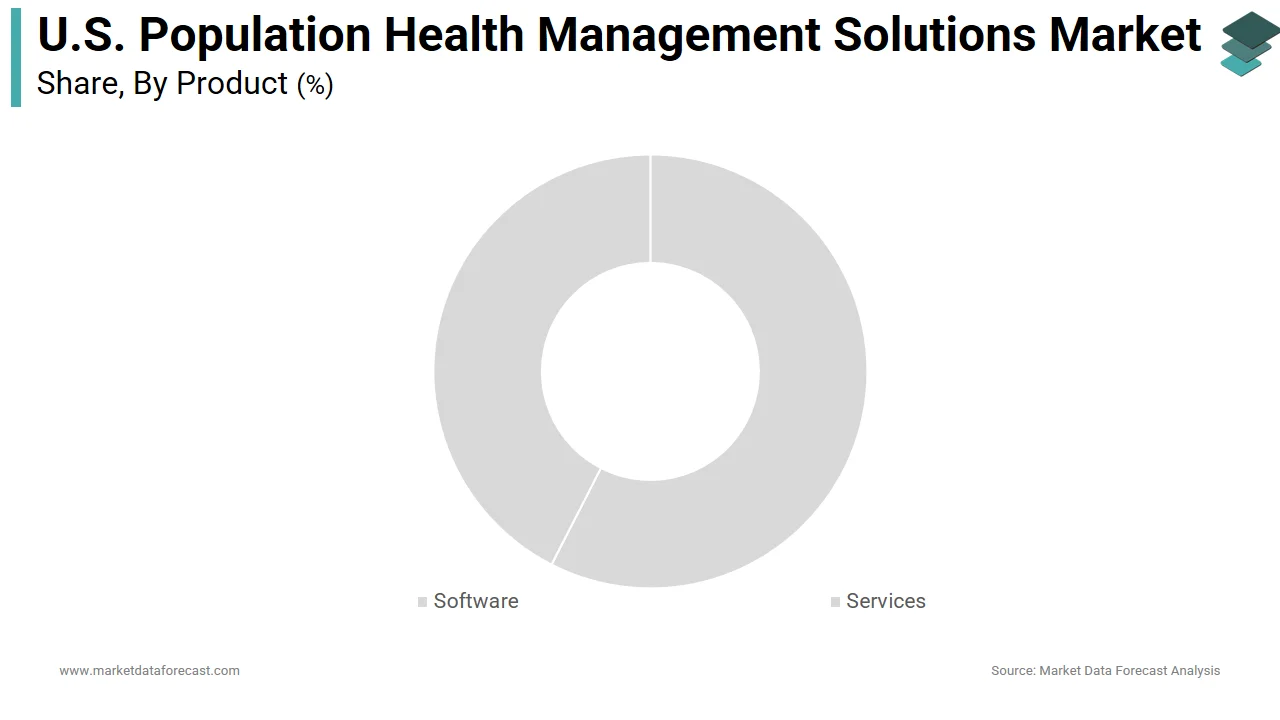
The services segment is anticipated to grow at the fastest CAGR of 9.3% from 2026 to 2034, with the increasing need for specialized expertise in implementing and managing complex health IT systems. Healthcare organizations often lack the internal resources and technical knowledge required to deploy population health solutions effectively, leading to a surge in demand for consulting implementation and managed services. The shortage of skilled health IT professionals has compelled providers to outsource these functions to third-party vendors who offer end to end suppor. This trend is particularly evident among smaller practices and rural hospitals that cannot afford to maintain dedicated IT departments. The growing complexity of data analytics and artificial intelligence technologies further necessitates professional services to ensure accurate interpretation and application of insights. Consulting services help organizations design customized population health strategies that align with their specific clinical and financial goals. Additionally, managed services provide ongoing maintenance and updates, ensuring that systems remain compliant with evolving regulatory standards. The workforce challenges remain a top concern for healthcare leaders, driving the reliance on external service providers to bridge capability gaps. Training and education services are also gaining traction as staff require continuous upskilling to utilize new technologies effectively. The shift towards value-based care increases the stakes for successful implementation, making professional services indispensable for achieving desired outcomes.
By Deployment Insights
The cloud deployment segment accounted in holding 36.7% of the United States population health management solutions market share in 2025, owing to its scalability, cost efficiency, and ability to facilitate seamless data sharing across diverse healthcare settings. Cloud-based solutions enable healthcare organizations to access patient data from anywhere at any time, which is crucial for coordinating care among multidisciplinary teams and remote providers. The adoption of cloud technologies is accelerating as payers and providers seek to reduce the high capital expenditures associated with on-premises infrastructure. Cloud platforms offer flexible storage options that can handle the massive volumes of data generated by electronic health records, wearable devices, and genomic sequencing without the need for physical server maintenance. This flexibility allows healthcare entities to scale their operations quickly in response to changing patient demands or public health emergencies. The enhanced security features of modern cloud providers also address privacy concerns by offering advanced encryption and compliance with healthcare regulations such as HIPAA. Cloud computing reduces the total cost of ownership by eliminating the need for hardware upgrades and dedicated IT staff for infrastructure management. Furthermore, cloud-based solutions facilitate easier integration with third-party applications and analytics tools, fostering innovation and interoperability. The ability to perform real-time data analytics in the cloud supports timely decision-making and proactive patient interventions.
The cloud deployment segment is expected to witness the fastest CAGR of 8.6% from 2026 to 2034, with the urgent need for agile and interoperable health IT infrastructure. The rapid expansion of telehealth and remote patient monitoring services has intensified the demand for cloud-based platforms that can support real-time data transmission and processing. Healthcare providers are increasingly recognizing the limitations of on-premises systems in handling the dynamic nature of modern healthcare data, which necessitates a shift to cloud environments. The ability of cloud solutions to support artificial intelligence and machine learning algorithms further accelerates their adoption, as these technologies require substantial computational power and storage capacity. Additionally, the rise of value-based care models requires continuous monitoring and reporting of performance metrics, which cloud platforms facilitate through automated dashboards and analytics tools. Small and medium-sized healthcare practices are particularly drawn to cloud solutions due to their lower upfront costs and ease of deployment. The ongoing investment by major technology companies in healthcare-specific cloud services also contributes to market growth by offering innovative features and enhanced security protocols.
By End User Insights
The healthcare providers segment was the largest by accounting for 32.1% of the United States population health management solutions market share in 2025, with a responsibility for delivering care and managing patient outcomes. Hospitals, physician groups, and accountable care organizations utilize these solutions to streamline clinical workflows, enhance care coordination, and meet quality benchmarks required for reimbursement. Hospitals are increasingly investing in health IT technologies to improve operational efficiency and patient satisfaction scores, which are components of population health strategies. The transition from fee-for-service to value-based care places significant financial risk on providers who must manage the health of entire populations rather than individual episodes of care. Population health management tools enable providers to identify high-risk patients, monitor chronic conditions, and prevent avoidable hospitalizations, thereby reducing overall costs. Furthermore, the integration of population health software with electronic health records allows clinicians to access comprehensive patient histories and make informed treatment decisions. The need to address social determinants of health also drives provider adoption, as these factors significantly influence health outcomes and resource utilization. Providers leverage data analytics to tailor interventions to specific community needs and improve health equity.
The healthcare payers segment is growing at an anticipated CAGR of 7.1% during the forecast period due to their strategic shift towards proactive disease management and cost containment. Insurance companies and government payers are increasingly utilizing population health data to design targeted wellness programs, negotiate value-based contracts with providers, and identify fraud, waste, and abuse. The rising cost of healthcare services compels payers to move beyond traditional claims processing to active engagement in member health outcomes. Population health solutions enable payers to stratify members by risk level and coordinate care across multiple providers, ensuring that individuals receive appropriate and timely interventions. The integration of payer and provider data through interoperable platforms enhances transparency and facilitates collaborative care models. The adoption of risk-based contracting arrangements is increasing, which necessitates advanced analytics to manage financial exposure and performance metrics. Payers also leverage these tools to monitor network performance and identify gaps in care that may lead to costly complications. The growing emphasis on consumerism in healthcare encourages payers to engage members through digital channels and personalized health recommendations.
COMPETITIVE LANDSCAPE
The competition in the United States population health management solutions market is characterized by intense rivalry among established technology giants and innovative niche players. Major electronic health record vendors leverage their existing installed base to cross-sell population health tools, creating high barriers to entry for new competitors. These incumbents benefit from deep integration with clinical workflows, which enhances stickiness and customer retention. Meanwhile, specialized analytics firms differentiate themselves through advanced artificial intelligence capabilities and superior predictive modeling accuracy. Price competition is moderate because healthcare organizations prioritize functionality and interoperability over cost due to the critical nature of these systems. Collaboration between payers and providers drives demand for solutions that facilitate data sharing and coordinated care. Vendors who offer comprehensive end-to-end platforms, including consulting and managed services, gain a competitive advantage. The rapid evolution of technology necessitates continuous innovation, forcing companies to invest heavily in research and development. Customer support and ease of implementation are also key differentiators that influence purchasing decisions.
KEY MARKET PLAYERS
Some of the companies that are playing a dominating role in the U.S. population health management solutions market include
- Athenahealth Inc.
- Conifer Health Solutions LLC
- Cotiviti Inc.
- eClinicalWorks LLC
- Epic Systems Corp.
- Health Catalyst Inc.
- HealthEC LLC
- i2i Systems Inc.
- Allscripts Healthcare Solutions
- Innovaccer Inc.
- IBM Watson Health
- Koninklijke Philips NV
- Lightbeam Health Solutions
- McKesson Corp.
- Medecision Inc.
- Medical Information Tech Inc.
- Merative L.P.
- NextGen Healthcare
- Optum Inc.
- Oracle Corp.
- symplr Software LLC
- Tebra Technologies Inc.
TOP PLAYERS IN THE MARKET
- Oracle Cerner remains a pivotal force in the United States population health management landscape by leveraging its extensive electronic health record infrastructure. The company integrates advanced analytics and artificial intelligence to help healthcare organizations identify high-risk patients and manage chronic conditions effectively. Recent initiatives focus on enhancing interoperability through cloud-based solutions that facilitate seamless data exchange across diverse care settings. Oracle has invested heavily in modernizing its platform to support value-based care models, which require robust performance tracking and reporting capabilities. By combining clinical data with social determinants of health information, the company enables providers to deliver more personalized and equitable care. Their strategic emphasis on open standards ensures that healthcare systems can connect with third-party applications easily. This approach strengthens their position as a comprehensive technology partner for hospitals and accountable care organizations seeking to improve population health outcomes while reducing overall costs through proactive intervention strategies and streamlined operational workflows.
- IBM Watson Health contributes significantly to the market by applying sophisticated artificial intelligence and data analytics to complex healthcare challenges. The company focuses on transforming raw data into actionable insights that empower payers and providers to make informed decisions. Its population health platforms utilize machine learning algorithms to predict patient risks and optimize care pathways for individuals with multiple chronic conditions. IBM has recently strengthened its offerings by integrating real-world evidence and genomic data into its analytics suites. This enhancement allows for more precise risk stratification and personalized treatment plans. The company actively collaborates with health systems to develop scalable solutions that address social determinants of health and reduce disparities. Their commitment to ethical AI and secure data handling builds trust among stakeholders. These efforts position IBM as a key enabler of data-driven population health strategies that improve the quality of care and financial sustainability for healthcare entities across the nation.
- Allscripts Healthcare Solutions plays a crucial role by providing integrated technology solutions that connect clinical, financial, and operational data for healthcare providers. The company specializes in enabling accountable care organizations to manage population health through comprehensive dashboards and predictive analytics tools. Allscripts focuses on facilitating care coordination by offering platforms that support remote patient monitoring and telehealth integration. Recent actions include enhancing their user interface to improve clinician adoption and reduce administrative burden. The company actively partners with health systems to implement value-based care programs that reward quality and efficiency. Their solutions also support patient engagement initiatives through mobile applications and personalized communication channels. This holistic approach ensures that healthcare organizations can track performance metrics and adjust strategies in real time. Allscripts continues to innovate by incorporating artificial intelligence into its workflows, which enhances decision-making capabilities.
TOP STRATEGIES USED BY KEY MARKET PARTICIPANTS
Key players in the United States population health management solutions market primarily employ strategic mergers and acquisitions to expand their technological capabilities and broaden their customer base. Companies actively pursue partnerships with electronic health record vendors to ensure seamless data interoperability and enhance platform integration. Investment in artificial intelligence and machine learning technologies is a common strategy to improve predictive analytics and risk stratification accuracy. Organizations also focus on developing cloud-based solutions to offer scalable and cost-effective services to healthcare providers of all sizes. Enhancing user experience through intuitive interfaces is another critical strategy aimed at increasing clinician adoption and reducing administrative burdens. Many firms are expanding their service offerings to include consulting and managed services, which help clients implement and optimize population health initiatives effectively. Additionally, companies are prioritizing cybersecurity measures to protect sensitive patient data and maintain compliance with regulatory standards. Strategic collaborations with payers and government bodies help align solutions with value-based care requirements and
MARKET SEGMENTATION
This research report on the U.S. population health management solutions market has been segmented and sub-segmented into the following categories.
By Product
- Software
- Services
By Deployment
- Cloud
- On-premises
By End-user
- Healthcare providers
- Healthcare payers
- Employers and government bodies
By Country
- New York
- Texas
- Florida
- Georgia
- California
- Rest of U.S.
Frequently Asked Questions
What is the U.S. population health management solutions market?
The U.S. population health management solutions market includes software and platforms that analyze health data, coordinate care, manage chronic diseases, and improve outcomes for patient populations across the United States.
Why is the U.S. population health management solutions market growing?
The U.S. population health management solutions market is growing due to value-based care adoption, rising chronic disease prevalence, healthcare cost pressures, and demand for data-driven population health strategies.
Who uses solutions from the U.S. population health management solutions market?
Healthcare providers, accountable care organizations, health plans, hospitals, physician groups, and government agencies use the U.S. population health management solutions market for care coordination and outcomes improvement.
What types of solutions are in the U.S. population health management solutions market?
The U.S. population health management solutions market includes care coordination platforms, data analytics tools, patient engagement systems, risk stratification software, and chronic disease management solutions.
How does value-based care impact the U.S. population health management solutions market?
Value-based care drives the U.S. population health management solutions market by incentivizing quality outcomes, cost reduction, preventive care, and population health optimization over fee-for-service models.
What challenges face the U.S. population health management solutions market?
Challenges in the U.S. population health management solutions market include data interoperability issues, privacy concerns, integration complexity, high implementation costs, and workforce training needs.
Which healthcare providers use the U.S. population health management solutions market most?
Hospitals, account care organizations, integrated delivery networks, and large physician practices represent the largest users in the U.S. population health management solutions market for comprehensive care management.
How does health data analytics affect the U.S. population health management solutions market?
Health data analytics shapes the U.S. population health management solutions market by enabling predictive modeling, risk identification, care gap analysis, and evidence-based population health interventions.
What role does care coordination play in the U.S. population health management solutions market?
Care coordination is central to the U.S. population health management solutions market, facilitating communication among providers, reducing duplication, improving transitions, and enhancing patient outcomes.
Is the U.S. population health management solutions market competitive?
Yes, the U.S. population health management solutions market is highly competitive with major EHR vendors, specialized PHM companies, health plans, and continuous innovation in analytics and interoperability.
Related Reports
Access the study in MULTIPLE FORMATS
Purchase options starting from
$ 1200
Didn’t find what you’re looking for?
TALK TO OUR ANALYST TEAM
Need something within your budget?
NO WORRIES! WE GOT YOU COVERED!
Call us on: +1 888 702 9696 (U.S Toll Free)
Write to us: sales@marketdataforecast.com