- Product Description Description
- Table of Contents TOC
- List of Table & Figure LOT
- Get Free Sample PDF Sample PDF
Market Size, 2025
$7.93 BnMarket Estimate, 2026
$8.39 BnMarket Forecast, 2034
$13.18 BnCAGR, 2026–2034
5.81%U.S. Ready to Drink Coffee Market Report Summary
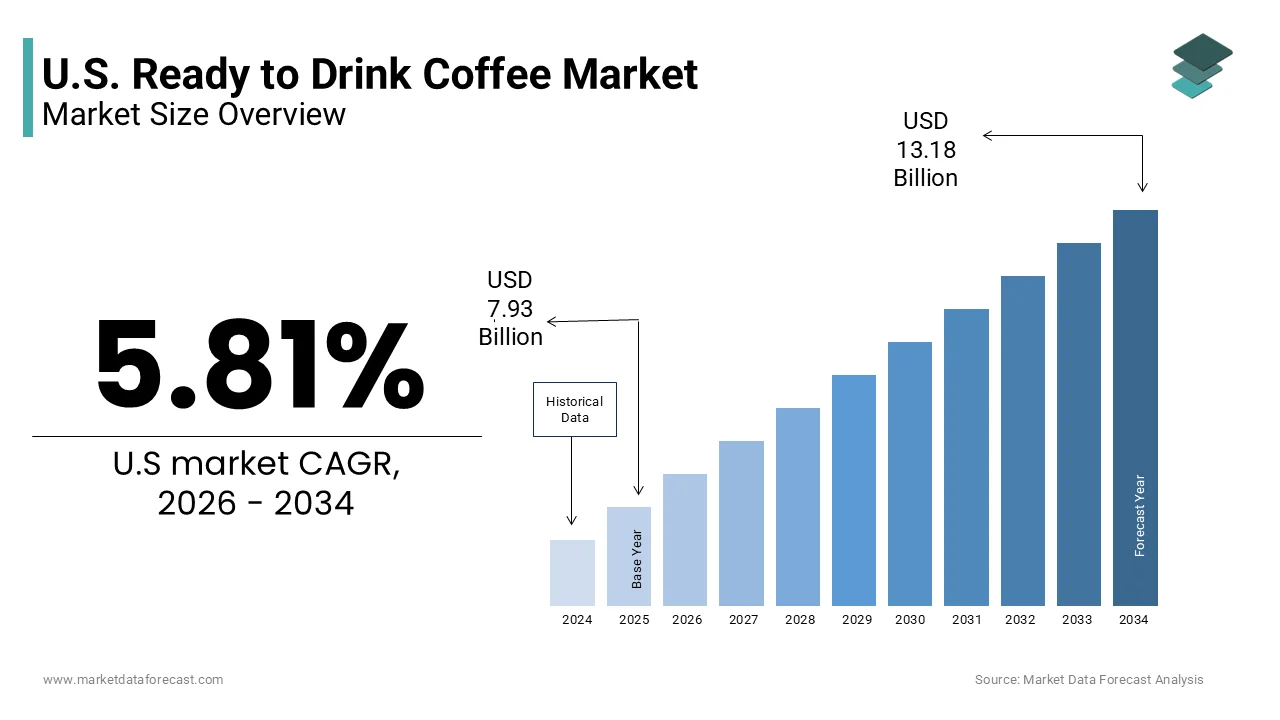
The U.S. ready to drink coffee market was valued at USD 7.93 billion in 2025, is estimated to reach USD 8.39 billion in 2026, and is projected to reach USD 13.18 billion by 2034, growing at a CAGR of 5.81% during the forecast period. Market growth is driven by increasing consumer demand for convenient beverage options, rising coffee consumption among younger demographics, and growing preference for premium and functional coffee products. The popularity of on the go lifestyles, innovative flavor offerings, and health focused beverage formulations continues to support market expansion. Advancements in packaging technologies and the growing presence of RTD coffee across retail channels are further fueling market growth in the United States.
Key Market Trends
- Growing demand for convenient and on the go coffee beverages is driving market growth.
- Increasing popularity of premium cold brew and specialty coffee products is boosting market expansion.
- Rising consumer interest in functional beverages with added energy and wellness benefits is supporting industry development.
- Expansion of modern retail and e commerce distribution channels is enhancing product accessibility.
- Innovation in flavor profiles, packaging formats, and clean label formulations is influencing market advancement.
Segmental Insights
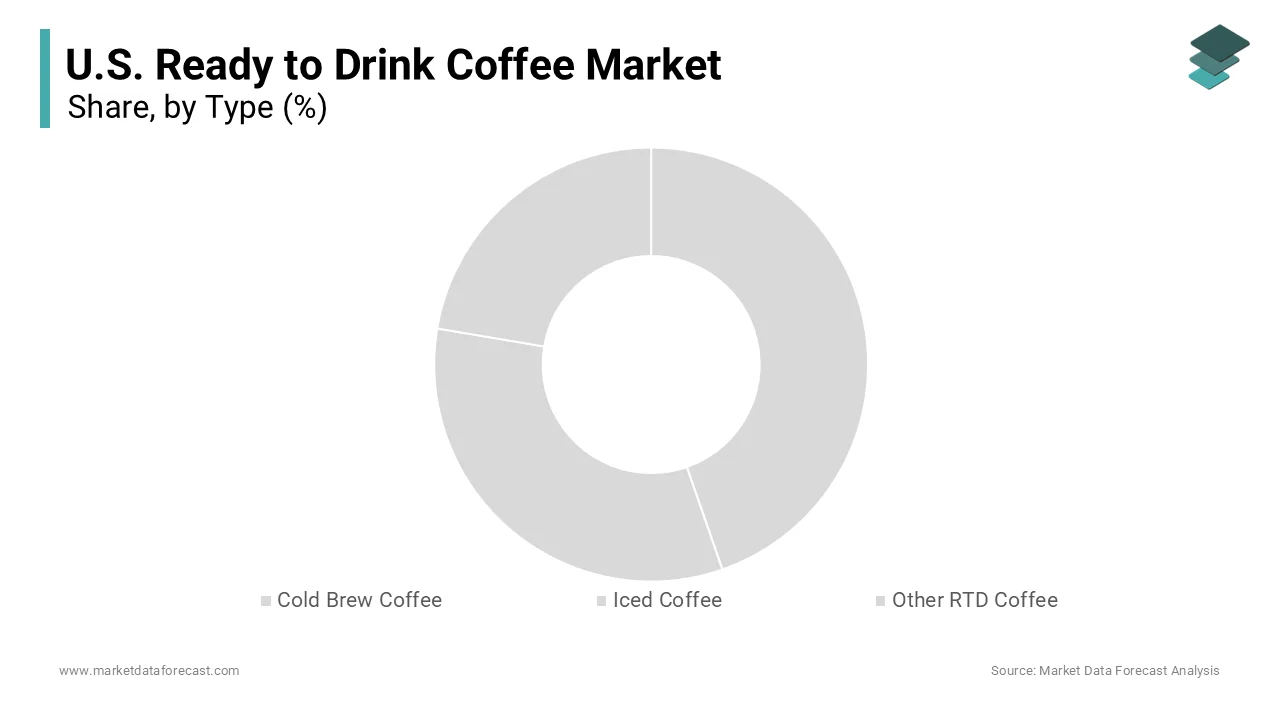
- Based on type, the cold brew coffee segment accounted for 44.5% of the U.S. ready to drink coffee market share in 2025. This dominance is attributed to its smooth flavor profile, lower acidity, and growing popularity among health conscious consumers.
- Based on packaging type, the metal cans segment held 51.8% of the U.S. ready to drink coffee market share in 2025, supported by portability, product protection, and recyclability advantages.
- Based on functionality, the energy infused RTD coffee segment accounted for 33.2% of the U.S. market share in 2025, driven by increasing consumer demand for beverages that provide both caffeine and functional energy benefits.
Regional Insights
- The United States accounted for 83.5% of the North American ready to drink coffee market share in 2025 and maintained its leadership position in the region. High coffee consumption rates, strong retail infrastructure, and ongoing product innovation continue to support market growth.
Competitive Landscape
The U.S. ready to drink coffee market is highly competitive, with companies focusing on premium product development, functional beverage innovation, sustainable packaging, and distribution expansion to strengthen their market position. Market participants continue investing in new flavors, strategic partnerships, and health focused product offerings. Prominent players in the U.S. ready to drink coffee market include Starbucks Corp., PepsiCo Inc., Danone S.A., Nestlé S.A., The Coca-Cola Company, BRC Inc., Califia Farms, LLC, Chamberlain Coffee Inc., Costco Wholesale Corporation, Keurig Dr Pepper, Inc., La Colombe Holdings, Inc., Luigi Lavazza S.p.A., Peak Rock Capital LLC, and The Central America Bottling Corporation.
U.S. Ready to Drink Coffee Market Size
The U.S. ready to drink coffee market size was valued at USD 7.93 billion in 2025, and is projected to reach USD 13.18 billion by 2034 from USD 8.39 billion in 2026, growing at a CAGR of 5.81%.
Ready-to-Drink (RTD) coffee refers to pre-packaged, single-serving coffee beverages that are fully prepared and ready to consume immediately. This market has evolved from a niche offering into a mainstream staple driven by shifting consumer lifestyles and an increasing preference for convenience. As per recent data 66% of American adults consume coffee on a daily basis which establishes a robust foundational demand for various coffee formats including ready to drink options. The cultural integration of coffee as a functional necessity rather than merely a recreational beverage has accelerated the adoption of portable and accessible formats. In 2025 the National Coffee Data Trends report indicated that past week coffee drinking reached 73% of American adults demonstrating the pervasive nature of coffee consumption in the national diet. This high frequency of consumption creates a fertile environment for ready to drink products which cater to consumers seeking immediate gratification without the preparation time associated with traditional brewing methods. The market is further defined by a growing inclination toward premiumization where consumers are willing to pay more for high quality ingredients and unique flavor profiles. Cold brew and nitro coffee variants have gained significant traction due to their smoother taste and lower acidity which appeals to health conscious demographics. According to industry observations specialty coffee consumption hit a 14 year high in 2025 reflecting a consumer base that is increasingly knowledgeable and discerning about coffee quality. This shift towards specialty grades within the ready to drink segment underscores a transition from commodity based consumption to experience driven purchasing behavior. The interplay between convenience and quality defines the current landscape as manufacturers strive to balance shelf stability with the fresh taste expectations of modern consumers.
MARKET DRIVERS
Rising Consumer Preference for Convenience and On the Go Consumption
The escalating consumer demand for convenience amidst increasingly busy lifestyles is a major factor behind the growth of the United States ready to drink coffee market. Modern Americans face time constraints that limit their ability to prepare traditional brewed coffee at home or visit cafes during peak hours. As per recent statistics 66% of U.S. adults drink coffee daily which creates a massive recurring demand for accessible formats . Ready to drink coffee eliminates the preparation barrier by offering an immediate solution that fits seamlessly into commuting routines work breaks and travel schedules. This convenience factor is particularly potent among younger demographics who prioritize efficiency and mobility in their consumption habits. Various sources show that 46% of all American adults drank specialty coffee recently, with young adults leading the trend toward premium and cold ready-to-drink options. The portability of canned and bottled coffee allows consumers to maintain their caffeine intake without disrupting their daily workflow. Furthermore the expansion of distribution channels into convenience stores gas stations and vending machines has enhanced product accessibility. Consumers no longer need to seek out specific grocery aisles as ready to drink coffee is available at numerous touchpoints throughout their day. This ubiquity reinforces the habit loop where convenience drives repeat purchases. The trend is also supported by the rise of remote work and hybrid models where consumers seek café quality experiences at home or in transit. Manufacturers have responded by innovating packaging sizes and formats that cater to single serve needs. The psychological appeal of grabbing a high quality coffee item quickly resonates with a population that values time savings. Therefore, the convenience attribute acts as a critical catalyst for market expansion as it addresses the fundamental need for speed without compromising on the desired coffee experience.
Growing Demand for Premium and Specialty Coffee Variants
The surging consumer interest in premium and specialty coffee variants further boosts the expansion of the United States ready to drink coffee market. Americans are increasingly discerning about coffee quality seeking artisanal flavors and superior bean origins even in packaged formats. According to the 2025 National Coffee Data Trends report specialty coffee consumption reached a 14 year high indicating a robust appetite for elevated coffee experiences . This trend reflects a broader cultural shift where coffee is viewed as a craft product rather than a generic commodity. Consumers are willing to pay a premium for ready to drink options that feature cold brew nitro infusion or single origin beans. Cold brew coffee in particular has gained prominence due to its smooth profile and natural sweetness which reduces the need for added sugars. Industry analysis suggests that cold brew sales have been growing significantly as consumers associate it with higher quality and healthier attributes. The demand for transparency in sourcing also drives this segment as buyers prefer brands that emphasize ethical procurement and sustainable farming practices. Ready to drink manufacturers are responding by launching products that highlight specific flavor notes and roasting techniques. This premiumization strategy helps differentiate brands in a crowded marketplace and attracts affluent consumers who prioritize quality over price. The integration of functional benefits such as added protein or adaptogens further enhances the appeal of these specialty drinks. As per market observations the willingness to invest in high end ready to drink coffee is sustained by the perception of value derived from superior taste and brand storytelling. This driver ensures that the market continues to evolve beyond basic caffeinated beverages into a sophisticated segment that mirrors the trends seen in independent coffee shops.
MARKET RESTRAINTS
Health Consciousness and Sugar Content Concerns
The increasing consumer scrutiny regarding sugar content and overall nutritional value is restricting the growth of the United States ready to drink coffee market. Health-conscious individuals are increasingly avoiding beverages with high levels of added sugars due to concerns about obesity diabetes and other metabolic disorders. As per recent data 57% of Americans followed a specific diet in the past year indicating a widespread commitment to health management . Many traditional ready to drink coffee products contain substantial amounts of sugar to mask bitterness and enhance palatability which conflicts with these dietary goals. Consumers are actively reading labels and rejecting products that do not align with clean eating principles. This shift forces manufacturers to reformulate their offerings which can be costly and may alter taste profiles that loyal customers prefer. The demand for low sugar or sugar free alternatives is rising but achieving a balanced flavor without artificial sweeteners remains a technical challenge. Natural sweeteners often impart aftertastes that some consumers find unappealing. Additionally the perception of processed ingredients in canned beverages deters some health focused buyers who prefer freshly brewed options where they can control additives. The regulatory environment is also becoming stricter regarding sugar labeling and health claims which adds compliance burdens. As per market trends the pressure to reduce sugar content is intensifying as public health campaigns continue to highlight the risks of excessive sugar intake. This restraint limits the growth potential of standard sweetened ready to drink coffee lines and necessitates continuous innovation in natural formulation. Brands that fail to adapt to these health preferences risk losing market share to healthier alternatives such as unsweetened teas or black coffee.
Supply Chain Volatility and Raw Material Cost Fluctuations
Persistent volatility in the global coffee supply chain affects raw material availability and pricing, a factor that impedes the expansion of the United States ready to drink coffee market. The United States relies heavily on imported coffee beans primarily from Latin America Africa and Asia making the market susceptible to geopolitical and environmental disruptions. Recent reports indicate that coffee prices have reached record highs due to adverse weather conditions and supply chain bottlenecks . Climate change impacts such as droughts and frost in key producing regions like Brazil and Vietnam have reduced yields and increased uncertainty. These factors lead to fluctuating input costs for manufacturers who struggle to maintain stable pricing for ready to drink products. High transportation costs and logistical delays further exacerbate the issue by extending lead times and increasing inventory holding expenses. As per research, supply chain disruptions pose a significant challenge to maintaining consistent product quality and availability . Manufacturers face difficult decisions regarding whether to absorb these costs or pass them on to consumers which can dampen demand. Price sensitivity among certain consumer segments means that significant price hikes may lead to substitution with cheaper alternatives or home brewing. The complexity of sourcing sustainable and ethically certified beans adds another layer of cost and logistical difficulty. Companies must invest in diversified sourcing strategies and long term contracts to mitigate risks but these measures require substantial capital. The unpredictability of raw material costs makes financial planning challenging and can erode profit margins. This restraint underscores the vulnerability of the ready to drink coffee market to external global factors that are beyond the control of domestic manufacturers. It necessitates robust risk management strategies to ensure business continuity amidst ongoing supply chain instability.
MARKET OPPORTUNITIES
Expansion into Functional and Wellness Oriented Beverages
The integration of functional ingredients offers wellness benefits, which creates a pathway for the growth of the United States ready to drink market. Consumers are increasingly seeking beverages that provide more than just caffeine such as improved focus energy sustainability or digestive health. The addition of adaptogens nootropics probiotics and collagen to coffee formulations creates a unique value proposition that appeals to health conscious buyers. As per market trends the convergence of coffee and functional nutrition is gaining momentum as users look for holistic health solutions in convenient formats. This innovation allows brands to differentiate themselves in a saturated market by targeting specific consumer needs such as stress relief or immune support. The growing popularity of plant based diets also presents an opportunity to incorporate oat almond or coconut milk which are perceived as healthier alternatives to dairy. These plant based options often carry a premium price point which can enhance profit margins. Furthermore the demand for clean label products encourages the use of organic and non GMO ingredients which resonate with environmentally aware consumers. Manufacturers can leverage these trends to create niche products that command loyalty and higher prices. The functional coffee segment is still in its early stages offering ample room for growth and experimentation. As per studies consumers are willing to pay more for beverages that deliver tangible health benefits alongside taste . This opportunity enables companies to expand their product portfolios beyond traditional coffee into the broader wellness category. By aligning with lifestyle trends such as fitness and mental well being brands can attract new customer segments who previously did not consider ready to drink coffee. The potential for cross category innovation positions functional RTD coffee as a high growth area within the beverage industry.
Sustainability and Eco Friendly Packaging Innovations
Adopting sustainable and eco-friendly packaging solutions is also a significant opportunity for the growth of the United States ready to drink coffee market. It perfectly aligns with the growing environmental concerns of today's consumers. Americans are increasingly aware of the plastic waste generated by single use beverage containers and are demanding greener alternatives. Manufacturers have the opportunity to innovate by using aluminum cans which are highly recyclable or paper based bottles that reduce plastic usage. Implementing clear recycling instructions and partnering with waste management initiatives can enhance brand reputation and consumer trust. The use of recycled materials in packaging also appeals to environmentally conscious buyers who prioritize circular economy principles. Brands that demonstrate a genuine commitment to sustainability can differentiate themselves and build stronger emotional connections with customers. This opportunity extends beyond packaging to include carbon neutral production processes and ethical sourcing certifications. The regulatory landscape is also evolving with stricter rules on plastic usage which makes early adoption of sustainable practices a strategic advantage. Companies can leverage these innovations to access retail channels that prioritize eco friendly products. The demand for sustainable options is particularly strong among younger demographics who view environmental responsibility as a key purchasing criterion. By investing in green packaging technologies manufacturers can future proof their operations against regulatory changes and shifting consumer preferences. This opportunity not only mitigates environmental risks but also opens up new marketing avenues that highlight corporate social responsibility. It positions ready to drink coffee brands as leaders in the transition toward a more sustainable beverage industry.
MARKET CHALLENGES
Intense Market Competition and Brand Saturation
The intense competition and saturation among established and emerging brands are among the major challenges to the United States ready to drink coffee market. The low barriers to entry have led to a proliferation of products making it difficult for individual brands to stand out. Large multinational corporations dominate shelf space while numerous artisanal startups compete for niche audiences. This crowded landscape drives up marketing costs as companies strive to capture consumer attention through advertising and promotions. Private label products from major retailers further intensify competition by offering lower priced alternatives that mimic premium brands. These store brands leverage existing distribution networks and customer trust to gain market share rapidly. The pressure to continuously innovate flavors and formats strains research and development budgets. Companies must constantly launch new products to stay relevant which increases the risk of failure and inventory waste. Price wars often emerge as brands attempt to undercut competitors leading to margin compression. The dominance of established players makes it challenging for new entrants to secure retail placement and visibility. Smaller brands may struggle to achieve economies of scale which limits their ability to compete on price. The challenge is compounded by the rapid pace of trend cycles which shortens product lifecycles. Manufacturers must balance innovation with consistency to maintain a stable revenue stream. This competitive pressure necessitates strategic differentiation through unique value propositions and strong brand narratives. Choice is abundant and switching costs are low in today's market. Thus, brands risk becoming commoditized without distinct positioning.
Regulatory Compliance and Labeling Requirements
The complex and evolving regulatory landscape governing food and beverage labeling and safety standards is slowing down the expansion of the United States ready to drink market. Manufacturers must comply with strict guidelines from agencies such as the Food and Drug Administration regarding ingredient disclosure nutritional information and health claims. Non compliance can result in hefty fines product recalls and reputational damage which poses a serious risk to business operations. The requirement for transparent sourcing information also adds complexity to supply chain management and documentation. Companies must ensure that all claims such as organic fair trade or non GMO are verified and substantiated which involves rigorous auditing processes. The variation in state level regulations further complicates national distribution strategies as different jurisdictions may have unique requirements. For instance some states have implemented stricter rules on plastic packaging or recycling mandates which affect product design. The dynamic nature of food safety laws means that manufacturers must stay abreast of changes to avoid violations. International sourcing of ingredients adds another layer of regulatory complexity due to varying standards in producing countries. Ensuring that all components meet US safety criteria requires robust quality control systems. The challenge is exacerbated by the rise of digital marketing where health claims are closely monitored for accuracy. Misleading advertising can lead to consumer lawsuits and regulatory penalties. Manufacturers must balance creative marketing with strict adherence to legal standards. This regulatory burden slows down product launches and increases time to market. It necessitates a proactive approach to compliance management to mitigate risks and ensure seamless market access.
REPORT COVERAGE
| REPORT METRIC | DETAILS |
| Market Size Available | 2025 to 2034 |
| Base Year | 2025 |
| Forecast Period | 2026 to 2034 |
| CAGR | 5.81% |
| Segments Covered | By Type, Packaging Type, Functionality, Distribution Channel, and Region. |
| Various Analyses Covered | Global, Regional and Country-Level Analysis, Segment-Level Analysis, Drivers, Restraints, Opportunities, Challenges; PESTLE Analysis; Porter’s Five Forces Analysis, Competitive Landscape, Analyst Overview of Investment Opportunities |
| Countries Covered | California, Washington, Oregon, New York, United States |
| Market Leaders Profiled | Starbucks Corp., PepsiCo Inc., Danone S.A., Nestlé S.A., The Coca-Cola Company, BRC Inc., Califia Farms, LLC, Chamberlain Coffee Inc., Costco Wholesale Corporation, Keurig Dr Pepper, Inc., La Colombe Holdings, Inc., Luigi Lavazza S.p.A., Peak Rock Capital LLC, and The Central America Bottling Corporation |
SEGMENTAL ANALYSIS
By Type Insights
The cold brew coffee segment was the largest in the United States ready to drink coffee market and occupied a 44.5% share in 2025. This prominence of the segment was supported by its distinct sensory attributes that appeal to modern palates. The cold extraction process involves steeping coffee grounds in cold water for an extended period which results in a beverage with significantly lower acidity compared to traditional hot brewed iced coffee. Scientific studies show that cold brew coffee is less acidic than hot coffee, but both typically have a pH level between 4.85 and 5.13. The lower amount of specific oils and acids in cold brew is what makes it gentler on the stomach. This reduced acidity is a critical factor for consumers who experience digestive discomfort or acid reflux from regular coffee but still desire the caffeine boost. The smoother and naturally sweeter taste profile of cold brew reduces the need for added sugars and creamers aligning with the growing consumer demand for cleaner and healthier beverage options. Recent surveys indicate that 40% of coffee drinkers prefer cold brew specifically for its smooth taste and lack of bitterness . This preference has driven major brands to expand their cold brew portfolios offering various flavors and strengths to cater to diverse tastes. The perception of cold brew as a premium product also allows manufacturers to command higher price points which enhances profitability. Furthermore the visual appeal of clear cold brew bottles showcasing the rich color of the coffee attracts younger consumers who value aesthetics in their purchases. The dominance of this segment is reinforced by its versatility as it serves as a base for numerous innovations including nitro infusions and flavored variants. As per sources, cold brew accounts for over 50% of the specialty ready to drink coffee sales in the United States highlighting its central role in the category . This sustained popularity ensures that cold brew remains the leading type in the market driven by its unique combination of taste health benefits and premium positioning.
A further key factor driving the domination of the cold brew segment is its inherent stability and longer shelf life which offers significant operational advantages for manufacturers and retailers. The cold brewing process produces a concentrate that is less prone to oxidation and degradation compared to hot brewed coffee which can lose its flavor rapidly when exposed to air and heat. The extended shelf life reduces waste and spoilage rates allowing retailers to stock larger quantities without the risk of rapid expiration. For manufacturers this stability simplifies logistics and distribution enabling wider reach into remote markets and convenience stores where turnover rates may vary. The ability to produce cold brew in large batches and store it efficiently lowers production costs and improves supply chain management. Additionally the consistency of cold brew ensures that consumers receive a uniform product experience regardless of when or where they purchase it which builds brand trust and loyalty. The operational efficiency translates into better margins for producers who can optimize their production schedules and inventory levels. The robustness of cold brew also facilitates innovation in packaging formats such as cans and bottles that do not require immediate consumption. These logistical and economic benefits solidify the position of cold brew as the leading segment in the United States ready to drink coffee market.
On the other hand, the nitro coffee segment is expected to exhibit a noteworthy CAGR of 18.5% from 2026 to 2034 due to the unique sensory experience offered by nitrogen infusion which creates a creamy texture and a cascading visual effect similar to draft beer. The addition of nitrogen gas eliminates the need for dairy or sugar to achieve a rich mouthfeel appealing to health conscious consumers who seek indulgence without calories. As per consumer trends the demand for experiential beverages is rising with 35% of millennials willing to pay more for drinks that offer novel textures and presentations . Nitro coffee satisfies this desire by transforming a standard coffee drink into a luxurious treat that stands out in a crowded market. The velvety foam head and smooth finish enhance the perceived quality of the coffee making it a popular choice for special occasions or daily indulgences. Major coffee chains and ready to drink brands have invested heavily in nitro technology expanding availability beyond specialty cafes into mainstream retail channels. This increased accessibility has accelerated adoption among broader consumer groups who previously had limited access to nitro beverages. Research indicates that nitro coffee sales have doubled in the past three years reflecting its strong momentum and consumer acceptance . The premium positioning of nitro coffee also allows for higher pricing strategies which drive revenue growth for manufacturers. Furthermore the association of nitro coffee with craft and artisanal qualities resonates with consumers who value authenticity and craftsmanship in their purchases. As per market forecasts the nitro segment is expected to capture a larger share of the ready to drink coffee market as production costs decrease and distribution networks expand. This combination of sensory appeal and premium positioning fuels the rapid growth of nitro coffee.
The fast growth is boosted even more by the advancement in packaging technology that enables the effective preservation of nitrogen infusion in portable formats. Traditional packaging methods often failed to maintain the pressure required to keep nitrogen dissolved in the coffee leading to flat and disappointing consumer experiences. However recent innovations in can and bottle designs have solved this issue by incorporating specialized valves and materials that retain gas pressure until opening. This breakthrough has enabled mass production and widespread distribution of nitro coffee making it accessible to consumers across the United States. The convenience of canned nitro coffee appeals to busy professionals and students who seek café quality experiences on the go. Retailers have responded by dedicating more shelf space to nitro products recognizing their high turnover rates and profit margins. The portability of these packages also supports outdoor and travel consumption which expands usage occasions beyond home and office settings. Furthermore the visual appeal of transparent bottles showcasing the nitrogen cascade enhances marketing efforts and social media sharing which drives organic promotion. This technological enablement ensures that nitro coffee continues to grow at the fastest rate by delivering consistent quality and convenience to a widening consumer base.
By Packaging Type Insights
The metal cans segment dominated the United States ready to drink coffee market and accounted for a 51.8% share in 2025. This dominance of the segment was driven by its superior recyclability and alignment with environmental sustainability goals. Aluminum cans are infinitely recyclable without loss of quality which makes them a preferred choice for eco conscious consumers and brands committed to reducing plastic waste. The high recyclability rate reduces the environmental footprint of ready to drink coffee products and enhances brand image among sustainability focused demographics. Consumers are increasingly aware of the impact of packaging waste on oceans and landfills leading them to favor products with greener packaging options. This preference has prompted major coffee brands to transition from plastic to aluminum packaging to meet consumer expectations and regulatory pressures. The lightweight nature of aluminum cans also reduces transportation emissions contributing to lower carbon footprints throughout the supply chain. Furthermore metal cans provide excellent barrier properties against light and oxygen which preserve the freshness and flavor of coffee for extended periods. This protection ensures that consumers receive a high quality product every time reinforcing brand loyalty. The combination of environmental benefits and functional advantages solidifies the position of metal cans as the dominant packaging segment. As per market trends the demand for sustainable packaging continues to rise ensuring that metal cans remain the leading choice for ready to drink coffee manufacturers.
Further strengthening this lead is its ability to provide superior product protection and versatile branding opportunities that enhance market appeal. Metal cans offer complete impermeability to light and oxygen which are primary causes of coffee degradation and flavor loss. The protective quality is crucial for ready to drink coffee which often sits on shelves for weeks before consumption. The durability of metal cans also prevents leakage and damage during transportation and handling reducing product waste and returns. From a marketing perspective metal cans provide a large and smooth surface area for high quality printing and design which allows brands to create visually striking packages that stand out on retail shelves. The tactile experience of holding a cold metal can also enhances consumer perception of quality and refreshment. The branding advantage helps companies differentiate their products in a competitive market and build strong brand identities. Furthermore the compact shape of cans optimizes shelf space and storage efficiency for retailers leading to better placement and visibility. The ability to innovate with can sizes and shapes also allows brands to target specific consumer segments such as single serve or multi pack options. These combined benefits ensure that metal cans remain the preferred packaging choice for manufacturers and consumers alike.
But the glass bottles segment is predicted to witness the highest CAGR of 12.3% during the forecast period owing to the premium perception and aesthetic appeal associated with glass packaging which aligns with the trend toward luxury and artisanal coffee products. Consumers associate glass with purity and high quality as it does not impart any flavors or chemicals to the beverage. The transparency of glass allows the rich color and clarity of the coffee to be visible which serves as a natural marketing tool that attracts attention on shelves. Brands leveraging glass packaging often position their products as gourmet or specialty items commanding higher price points and margins. The reusability of glass bottles also appeals to environmentally conscious consumers who repurpose them for storage or decoration extending the product lifecycle. The elegance of glass packaging also makes it suitable for gifting and special occasions which expands usage scenarios beyond daily consumption. Furthermore advancements in lightweight glass technology have reduced transportation costs and breakage risks making it more viable for mass distribution. As per research, the demand for premium and artisanal coffee products will continue to rise supporting the rapid growth of glass bottle packaging. This combination of aesthetic appeal and premium positioning drives the accelerated adoption of glass in the ready to drink coffee sector.
This fast-growing segment is pushed forward by the innovation in lightweight and durable glass technologies that address historical limitations such as weight and fragility. Traditional glass packaging was often avoided due to its heavy weight which increased shipping costs and carbon emissions. However recent developments in glass manufacturing have produced thinner yet stronger bottles that maintain integrity while reducing material usage. The improved durability of modern glass bottles also minimizes breakage rates during handling and distribution enhancing supply chain efficiency. Retailers are more willing to stock glass packaged products as the risk of damage and cleanup costs decreases. Furthermore the ability to recycle lightweight glass efficiently supports sustainability goals as it requires less energy to melt and reform. The cost efficiency encourages more brands to switch to glass packaging especially those targeting premium markets. The aesthetic versatility of glass also allows for unique shapes and textures that enhance brand differentiation. These technological improvements ensure that glass bottles continue to grow at the fastest rate by overcoming previous logistical challenges while maintaining their premium appeal. The convergence of innovation and consumer preference positions glass as a dynamic and rapidly expanding segment in the ready to drink coffee market.
By Functionality Insights
The energy infused RTD coffee segment held the majority share of 33.2% of the United States market in 2025 because of the high demand for caffeine and its proven ability to enhance alertness and productivity. American consumers rely heavily on coffee as a primary source of energy to cope with busy schedules and demanding work environments. The widespread reliance on caffeine creates a robust baseline demand for energy infused coffee products that deliver consistent and reliable stimulation. The functional utility of coffee as an energy booster is deeply ingrained in American culture making it a staple for morning routines and afternoon slumps. Ready to drink formats offer the convenience of immediate energy intake without the preparation time required for brewing. This convenience is particularly valued by students professionals and shift workers who need quick and effective solutions for fatigue. The familiarity of coffee as an energy source reduces consumer hesitation and encourages repeat purchases. Furthermore the natural occurrence of caffeine in coffee is perceived as healthier than synthetic stimulants found in energy drinks. This perception drives preference for coffee based energy products over alternatives. The combination of cultural habit functional benefit and natural positioning ensures that this segment remains the largest in the market. Manufacturers continue to innovate with varying caffeine levels to cater to different tolerance levels further expanding the consumer base. This sustained demand and cultural relevance solidify the position of energy infused coffee as the leading functional segment.
The segment’s top spot is also supported by its integration with active lifestyles and the growing emphasis on physical and mental performance. Consumers are increasingly viewing coffee not just as a beverage but as a performance enhancer that supports workout routines and cognitive tasks. Ready to drink energy infused coffee offers a convenient pre workout option that is easy to consume and digest. The presence of antioxidants in coffee also appeals to health conscious individuals who seek additional benefits beyond energy. This dual function of energy and health support enhances the value proposition of the product. Brands are responding by marketing their products as fitness allies highlighting benefits such as improved metabolism and fat burning. The association of coffee with productivity also drives demand in professional settings where mental clarity is essential. The versatility of energy infused coffee allows it to fit into various daily routines from morning commutes to evening study sessions. This adaptability ensures broad appeal across different demographic groups. Furthermore the development of clean label energy infused products with no artificial additives aligns with the demand for transparent and healthy ingredients. This alignment with lifestyle and performance needs ensures continued growth and dominance.
However, the protein enriched RTD coffee segment is estimated to register the fastest CAGR of 15.8 between 2026 and 2034. This rapid growth is fuelled by the rising trend of using coffee as a meal replacement or snack substitute among health conscious consumers seeking satiety and nutritional balance. The addition of protein to coffee transforms it from a simple beverage into a nutritious option that helps curb hunger and maintain energy levels between meals. Protein enriched coffee appeals to this demographic by offering a convenient way to consume protein without preparing separate meals. The convenience of a single product that provides both caffeine and protein fits seamlessly into busy lifestyles. This dual benefit is particularly attractive to individuals following intermittent fasting or low carbohydrate diets who need nutrient dense options during eating windows. The perception of protein coffee as a healthier alternative to sugary snacks or pastries also drives adoption. Brands are innovating with plant based proteins such as pea and collagen to cater to diverse dietary preferences. The ability to replace multiple supplements with one beverage enhances its value proposition. This convergence of convenience nutrition and dietary trends positions protein enriched coffee as the fastest growing segment in the market.
The segment moves ahead quickly, driven by the expansion of fitness and wellness culture among millennials and Gen Z consumers who prioritize holistic health. These demographics are increasingly integrating nutrition into their fitness routines seeking products that support recovery and muscle building. Protein enriched coffee offers a post workout solution that combines hydration caffeine and protein in one package. The convenience of ready to drink formats appeals to gym goers who need immediate nutrition after exercise. The association of protein coffee with fitness influencers and social media trends also boosts its popularity and visibility. Brands are leveraging digital marketing to educate consumers about the benefits of protein coffee for muscle recovery and sustained energy. The customization of protein levels allows consumers to tailor their intake to specific fitness goals. Furthermore the use of high quality proteins such as whey isolate and collagen enhances the premium appeal of these products. This alignment with fitness culture and wellness trends ensures that protein enriched coffee continues to grow at the fastest rate. The ongoing emphasis on health and performance supports the long term expansion of this segment.
COUNTRY LEVEL ANALYSIS
In 2025, the United States led the North American ready to drink coffee market and captured an 83.5% share. The demand for RTD coffee was driven by its mature coffee culture and high consumption rates. The country serves as the primary engine for market growth driven by a large population of daily coffee drinkers and a robust infrastructure for beverage distribution. National data confirms the United States is the largest consumer of coffee by total volume, but it ranks roughly 25th globally in per capita consumption at approximately 4.2 to 5 kilograms annually, significantly lower than top-ranking nations like Finland (~12 kg). This high volume of consumption creates a substantial base for ready to drink products which cater to the demand for convenience and variety. The presence of major coffee chains and established brands further strengthens the market by ensuring wide availability and brand recognition. Consumers in the United States are highly receptive to new coffee trends such as cold brew and nitro which drives innovation and product launches. The advanced retail network including supermarkets convenience stores and online platforms facilitates easy access to ready to drink coffee for millions of customers. Multiple studies indicate that the United States market is characterized by intense competition which fosters continuous improvement in quality and packaging . This competitive environment benefits consumers through better products and prices. The strong economic status of the country also supports premiumization as consumers are willing to pay more for high quality and specialty coffee. As per economic indicators disposable income levels in the United States remain high enabling sustained spending on non essential beverages. The cultural significance of coffee as a social and functional beverage ensures steady demand regardless of economic fluctuations. This combination of consumption habits infrastructure and economic strength solidifies the United States as the leading market for ready to drink coffee in the region. The ongoing evolution of consumer preferences towards healthier and more sustainable options further drives market dynamics. Manufacturers are responding by introducing innovative products that align with these trends ensuring continued growth and relevance. The United States thus remains the central hub for the ready to drink coffee industry setting trends that influence global markets.
COMPETITIVE LANDSCAPE
The competition in the United States ready to drink coffee market is intense and characterized by the presence of established multinational corporations alongside agile niche startups. Major beverage giants leverage their extensive distribution networks and strong brand recognition to dominate shelf space and capture significant consumer attention. These companies invest heavily in marketing campaigns and product innovation to maintain their leadership positions and respond to changing consumer preferences. Simultaneously emerging brands focus on specialty segments such as organic fair trade and functional coffees to carve out distinct market niches. The barrier to entry remains relatively low for small batches allowing new entrants to experiment with unique flavors and packaging designs. This dynamic environment fosters continuous innovation as companies strive to differentiate themselves through quality sustainability and convenience. Private label products from major retailers further intensify competition by offering affordable alternatives that mimic premium brands. The rapid pace of trend adoption means that companies must remain agile and responsive to consumer feedback. Strategic acquisitions and partnerships are common as larger firms seek to expand their portfolios and access new technologies. Overall the market is defined by a constant battle for consumer loyalty driven by product quality brand storytelling and operational efficiency.
KEY MARKET PLAYERS
Some of the companies that are playing a dominating role in the U.S. ready to drink coffee market are
- Starbucks Corp.
- PepsiCo Inc.
- Danone S.A.
- Nestlé S.A.
- The Coca-Cola Company
- BRC Inc.
- Califia Farms, LLC
- Chamberlain Coffee Inc.
- Costco Wholesale Corporation
- Keurig Dr Pepper, Inc.
- La Colombe Holdings, Inc.
- Luigi Lavazza S.p.A.
- Peak Rock Capital LLC
- The Central America Bottling Corporation
Top Players in the Market
- Starbucks Corporation maintains a formidable presence in the United States ready to drink coffee sector through its strategic partnership with PepsiCo under the North American Coffee Partnership. The company leverages its powerful brand equity and extensive retail network to distribute premium bottled Frappuccino and cold brew products nationwide. Recent initiatives focus on expanding its plant based offerings by introducing oat milk and almond milk variants to cater to evolving consumer dietary preferences. Starbucks also invests heavily in sustainable sourcing practices and recyclable packaging solutions to align with environmental consciousness among modern buyers. The brand continuously innovates its flavor profiles by launching limited edition seasonal drinks that drive consumer excitement and repeat purchases. By integrating digital loyalty programs with retail availability Starbucks enhances customer engagement and brand loyalty. These efforts solidify its position as a leader in the premium segment of the market while addressing health and sustainability trends effectively.
- The Coca Cola Company significantly influences the United States ready to drink coffee market through its diverse portfolio including Costa Coffee and Gevalia brands. The company utilizes its unparalleled distribution network to ensure widespread availability of its coffee products across various retail channels from supermarkets to vending machines. Recent strategies involve expanding its Costa Ready to Drink line with new flavors and functional benefits such as added vitamins and minerals. Coca Cola also focuses on premiumization by introducing high quality arabica bean options that appeal to discerning coffee enthusiasts. The company actively promotes sustainability by committing to recyclable packaging and reducing plastic waste in its operations. Through targeted marketing campaigns and partnerships with local retailers Coca Cola strengthens its brand visibility and consumer reach. These actions demonstrate its commitment to capturing a larger share of the growing coffee beverage sector while maintaining operational efficiency and brand relevance.
- Nestlé S.A. plays a crucial role in the United States ready to drink coffee market with its prominent Starbucks at Home license and Nescafé brands. The company capitalizes on its global expertise in coffee processing and product development to offer a wide range of innovative ready to drink solutions. Recent actions include the launch of nitro cold brew varieties and organic coffee options that cater to health conscious consumers seeking premium experiences. Nestlé emphasizes digital transformation by enhancing its e commerce platforms and direct to consumer channels to improve accessibility and convenience. The company also prioritizes sustainability through its Nescafé Plan which aims to source coffee responsibly and support farming communities. By leveraging advanced manufacturing technologies Nestlé ensures consistent quality and flavor in its products. These strategic moves reinforce its competitive edge and ability to meet the dynamic demands of the American coffee market effectively while fostering long term growth and consumer trust.
Top Strategies Used by Key Market Participants
Key players in the United States ready to drink coffee market primarily employ product innovation and premiumization strategies to differentiate their offerings and attract discerning consumers. Companies frequently launch new flavors such as vanilla caramel and seasonal specialties to maintain consumer interest and drive sales volume. Expansion into plant based dairy alternatives like oat and almond milk addresses the growing demand for vegan and lactose free options. Strategic partnerships and collaborations with popular brands or celebrities enhance brand visibility and appeal to younger demographics. Sustainability initiatives including recyclable packaging and ethical sourcing commitments resonate with environmentally conscious buyers and improve brand reputation. Digital marketing and social media engagement are utilized to build community and foster loyalty among tech savvy consumers. Retailers also focus on expanding distribution channels by placing products in convenience stores gyms and online platforms to increase accessibility. Price promotions and bundle deals encourage trial and repeat purchases among price sensitive segments. These multifaceted strategies enable companies to navigate competitive pressures and sustain growth in the evolving market landscape effectively.
MARKET SEGMENTATION
This research report on the U.S. ready to drink coffee market is segmented and sub-segmented into the following categories.
By Type
- Cold Brew Coffee
- Iced Coffee
- Other RTD Coffee
By Packaging Type
- PET Bottles
- Glass Bottles
- Metal Can
- Aseptic Packages (Tetra Pak, Cartons, Pouches)
- Disposable Cups
By Functionality
- Protein Enriched
- Energy Infused
- Other
By Distribution Channel
- On Trade
- Off Trade
- Supermarket/Hypermarket
- Convenience Stores
- Specialty Stores
- Online Retail
- Other Distribution Channels
By Country
- California
- Washington
- Oregon
- New York
- Rest of the United States