- Product Description Description
- Table of Contents TOC
- List of Table & Figure LOT
- Get Free Sample PDF Sample PDF
Market Size, 2025
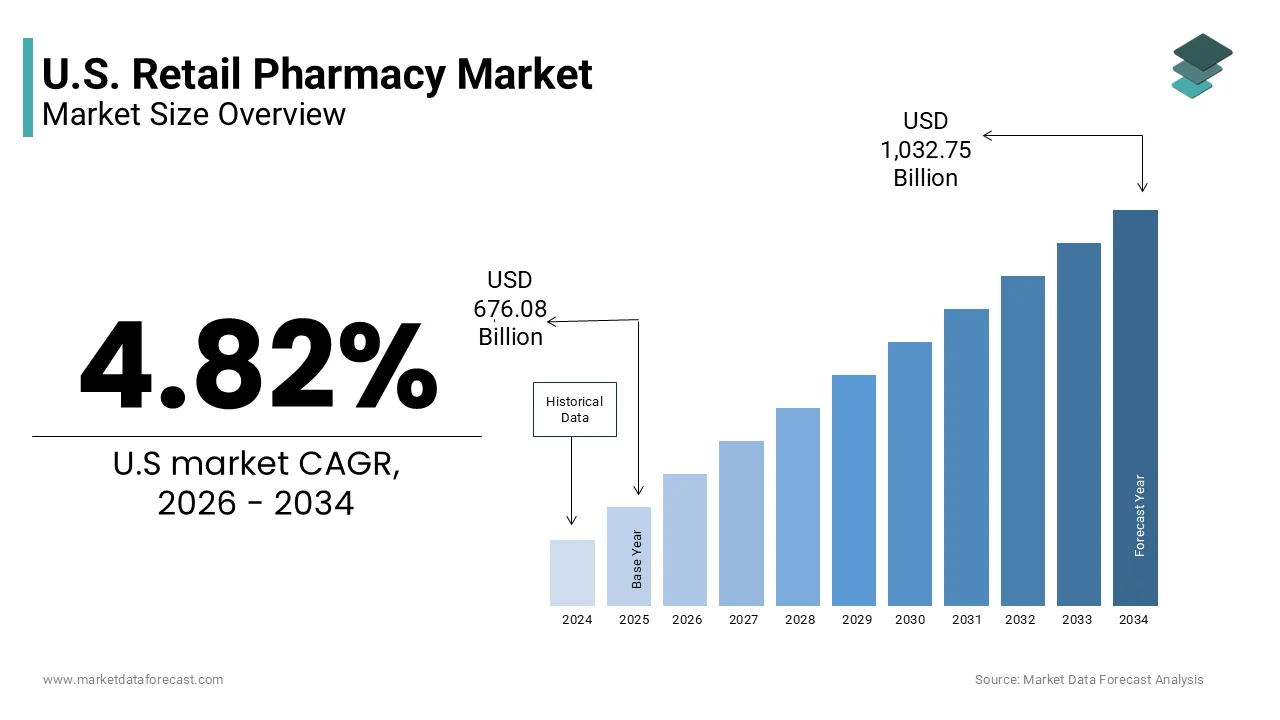
$676.08 BnMarket Estimate, 2026
$708.67 BnMarket Forecast, 2034
$1,032.75 BnCAGR, 2026–2034
4.82%U.S. Retail Pharmacy Market Report Summary
The U.S. retail pharmacy market was valued at USD 676.08 billion in 2025, is estimated to reach USD 708.67 billion in 2026, and is projected to reach USD 1,032.75 billion by 2034, growing at a CAGR of 4.82% during the forecast period. Market growth is driven by increasing prescription drug utilization, rising prevalence of chronic diseases, expanding healthcare access, and growing demand for pharmacy based healthcare services. Retail pharmacies continue to play a critical role in medication dispensing, preventive healthcare, vaccination services, and patient counseling. The integration of digital health technologies, telepharmacy services, and personalized healthcare solutions is further supporting market expansion across the United States.
Key Market Trends
- Growing demand for prescription medications and chronic disease management is driving market growth.
- Increasing adoption of pharmacy based healthcare services and vaccinations is boosting market expansion.
- Rising integration of digital health platforms and online prescription fulfillment is supporting industry development.
- Expansion of specialty pharmacy services is enhancing patient care capabilities.
- Innovation in telepharmacy, medication management, and personalized healthcare solutions is influencing market advancement.
Segmental Insights
- Based on pharmacy type, the chain pharmacies segment accounted for 58.6% of the U.S. retail pharmacy market share in 2025. This dominance is attributed to extensive store networks, strong brand recognition, integrated healthcare services, and broad prescription fulfillment capabilities.
Regional Insights
- The United States accounted for 82.8% of the North American retail pharmacy market share in 2025 and maintained its dominant regional position. Strong healthcare infrastructure, widespread pharmacy accessibility, and increasing pharmaceutical consumption continue to support market growth.
Competitive Landscape
The U.S. retail pharmacy market is highly competitive, with companies focusing on healthcare service integration, specialty pharmacy expansion, digital transformation, and patient engagement initiatives to strengthen their market position. Market participants are investing in omnichannel pharmacy services, healthcare partnerships, and advanced prescription management platforms. Prominent players in the U.S. retail pharmacy market include CVS Health, Walgreens Boots Alliance, Inc., Cigna Healthcare, UnitedHealth Group, Walmart, The Kroger Co., Humana, Publix, Albertsons Companies, BrightSpring Health Services, PANTHERx Rare Pharmacy, Costco Wholesale Corporation, Elevance Health, Koninklijke Ahold Delhaize N.V., CarelonRx, Centene Corporation, and Amazon.com, Inc..
 Download Free Sample Report
U.S. Retail Pharmacy Market Size
The U.S. retail pharmacy market size was valued at USD 676.08 billion in 2025, and is projected to reach USD 1,032.75 billion by 2034 from USD 708.67 billion in 2026, growing at a CAGR of 4.82%.
A retail pharmacy, commonly known as a community pharmacy, medicalstore, or chemist shop, is a public-facing commercial establishment licensed to dispense prescription medications and sell over-the-counter (OTC) drugs directly to consumers. This ecosystem is defined by its role in dispensing prescription medications while increasingly offering comprehensive health services such as immunizations and chronic disease management. The structural integrity of this market relies heavily on the demographic shifts within the nation. As per the United States Census Bureau, individuals aged 65 and older are projected to reach 95 million by 2060, creating a sustained demand for pharmaceutical interventions. This aging population necessitates frequent interaction with retail pharmacies for medication adherence and health monitoring. Furthermore, the prevalence of chronic conditions drives foot traffic and service utilization. According to the Centers for Disease Control and Prevention, six in ten adults in the United States have a chronic disease, and four in ten have two or more. These statistics underscore the operational necessity of retail pharmacies beyond mere product distribution. The integration of digital health tools and telehealth services further redefines the physical store experience, transforming it into a hybrid care hub. Regulatory frameworks also shape the landscape, with state boards of pharmacy enforcing strict compliance standards that influence operational costs and service offerings. The market’s resilience is tied to its ability to adapt to these demographic and regulatory pressures while maintaining accessibility for diverse patient populations across urban and rural divides.
MARKET DRIVERS
Rising Prevalence Of Chronic Diseases Drives Prescription Volume
The escalating burden of chronic illnesses is a key factor contributing to the growth in the United States retail pharmacy market. This directly influences prescription volume and service demand. Conditions such as diabetes, hypertension, and cardiovascular diseases require long term medication management, ensuring consistent customer engagement. According to the National Center for Chronic Disease Prevention and Health Promotion, heart disease and cancer remain the leading causes of death, accounting for a significant portion of healthcare expenditures. The American Diabetes Association states that 38.4 million people in the United States have diabetes, representing 11.6 percent of the population. This vast patient base requires regular insulin purchases, glucose monitoring supplies, and oral medications, all of which are predominantly sourced from retail pharmacies. Additionally, the management of respiratory conditions like asthma and chronic obstructive pulmonary disease contributes to steady revenue streams. As per the Asthma and Allergy Foundation of America, approximately 25 million people in the United States have asthma, with millions experiencing attacks annually. The need for inhalers and maintenance therapies drives frequent visits to pharmacy counters. Retail pharmacies capitalize on this demand by offering adherence programs and automated refill services, which enhance patient outcomes and loyalty. The complexity of managing multiple comorbidities further increases the reliance on pharmacists for medication therapy management. This clinical involvement deepens the relationship between patients and pharmacies, transforming transactions into ongoing care partnerships. Therefore, the persistent rise in chronic disease prevalence ensures a robust and expanding base for prescription drug sales, solidifying the economic foundation of the retail pharmacy market.
Expansion Of Clinical Services Enhances Revenue Streams
The strategic diversification into clinical services has emerged as a vital driver for the United States retail pharmacy market. This offsets margin pressures from traditional prescription dispensing. Pharmacies are increasingly positioned as accessible healthcare destinations, offering vaccinations, health screenings, and minor ailment treatments. According to the Centers for Disease Control and Prevention, pharmacies play a crucial role in public health by administering roughly 30-40% of annual adult flu vaccines and were instrumental in delivering hundreds of millions of doses during the COVID-19 pandemic response. This shift is supported by legislative changes in various states that expand the scope of practice for pharmacists, allowing them to prescribe certain medications and provide point of care testing. The National Alliance of State Pharmacy Associations highlights that all 50 states now permit pharmacists to administer immunizations, facilitating broader access to preventive care. Retail chains leverage this capability to attract customers who seek convenience and immediate attention without scheduling physician appointments. Services such as blood pressure monitoring, cholesterol screening, and diabetes education create additional touchpoints for patient interaction. These clinical offerings not only generate direct revenue but also drive foot traffic that leads to incremental sales of over the counter products and wellness items. The integration of these services aligns with value based care models, where payers incentivize preventive measures to reduce overall healthcare costs. By embedding themselves into the continuum of care, retail pharmacies enhance their relevance and financial stability. This evolution from product centric to service oriented models ensures sustainable growth amidst competitive pressures and changing consumer expectations regarding healthcare accessibility.
MARKET RESTRAINTS
Reimbursement Pressure From Pharmacy Benefit Managers Squeezes Margins
Pharmacy benefit managers impose intense pressure on reimbursement rates, which creates a significant hindrance for the United States retail pharmacy market. As a result, this pressure severely compresses profit margins. PBMs act as intermediaries between insurers and pharmacies, negotiating drug prices and determining reimbursement levels. According to the Government Accountability Office, PBM spread pricing practices have been scrutinized for lack of transparency, where PBMs charge health plans significantly more than they reimburse pharmacies, retaining the difference as profit. This dynamic forces independent and chain pharmacies alike to operate on razor thin margins, particularly for generic drugs which constitute a large volume of prescriptions. The National Community Pharmacists Association reports that many independent pharmacies face negative reimbursement on generic prescriptions, meaning they lose money on each fill. This financial strain limits the ability of pharmacies to invest in new technologies, staff training, or expanded clinical services. Furthermore, the consolidation among PBMs has increased their bargaining power, leaving pharmacies with limited alternatives for contract negotiations. As per research, the top three PBMs control a substantial majority of the prescription drug market, enabling them to dictate terms that favor payer savings over provider sustainability. Direct and indirect remuneration fees, often clawed back from pharmacies after the point of sale, further exacerbate cash flow challenges. These fees are frequently unpredictable and difficult to forecast, complicating financial planning for pharmacy operators. The cumulative effect of low reimbursement rates and opaque fee structures creates a hostile economic environment, threatening the viability of smaller players and forcing larger chains to seek efficiency gains through store closures or workforce reductions.
Workforce Shortages Impact Operational Efficiency And Service Quality
Severe workforce shortages are currently impeding the expansion of the United States retail pharmacy market. As a result, operational efficiency suffers and patient care is compromised. Pharmacists and pharmacy technicians are essential for accurate dispensing and clinical service delivery, yet the industry faces significant retention and recruitment challenges. According to the Bureau of Labor Statistics, employment of pharmacists is projected to grow 5% from 2024 to 2034, with many openings expected due to workers retiring or transferring to different occupations. A survey by the American Pharmacists Association revealed that a substantial percentage of pharmacists report high levels of stress and dissatisfaction, citing understaffing and excessive workload as primary concerns. This labor deficit leads to longer wait times for patients, increased error risks, and reduced capacity to offer value added clinical services. The shortage of qualified pharmacy technicians further amplifies these issues, as pharmacists are often forced to perform technical tasks instead of focusing on clinical consultations. As per data from organizations like the ASHP and National Pharmacy Technician Association, the demand for certified technicians outpaces the supply, with a majority of pharmacy administrators reporting severe shortages that create bottlenecks in prescription processing. Rural areas are disproportionately affected, with many communities struggling to maintain adequate staffing levels, leading to pharmacy closures or reduced hours. The inability to staff stores adequately limits the expansion of new services such as testing and vaccination clinics, which require dedicated personnel. Moreover, the cost of recruiting and training new staff adds to operational expenses, further straining financial resources. Addressing this human capital crisis is critical for sustaining service quality and ensuring that retail pharmacies can meet the growing healthcare needs of the population without compromising safety or accessibility.
MARKET OPPORTUNITIES
Integration Of Digital Health Platforms Creates Engagement Opportunities
The integration of digital health platforms paves the way for the growth of the United States retail pharmacy market. This allows pharmacies to enhance patient engagement and streamline care coordination. Mobile applications, telehealth interfaces, and electronic health records allow pharmacies to connect with consumers beyond the physical store, offering personalized health management tools. Retail chains are leveraging this trend by developing apps that enable prescription refills, medication reminders, and virtual consultations with pharmacists. These digital touchpoints facilitate continuous monitoring of chronic conditions, improving adherence and health outcomes. The Office of the National Coordinator for Health Information Technology emphasizes the importance of interoperability, encouraging pharmacies to integrate their systems with broader healthcare networks. This connectivity allows for seamless sharing of patient data, enabling pharmacists to provide more informed recommendations and collaborate effectively with physicians. Digital platforms also support the expansion of remote patient monitoring services, where pharmacies can track vital signs and adjust therapies in real time. As per industry trends, the adoption of artificial intelligence in pharmacy operations is rising, helping to predict inventory needs and identify patients at risk of nonadherence. By embracing digital transformation, retail pharmacies can differentiate themselves in a crowded market, offering convenience and personalized care that appeals to tech savvy consumers. This shift not only enhances customer loyalty but also opens new revenue streams through subscription based health services and data driven insights, positioning pharmacies as integral components of the modern digital health ecosystem.
Growth In Specialty Pharmacy Services Addresses Complex Care Needs
The expansion of specialty pharmacy services opens the door for these pharmacies to address the growing demand for complex disease management, which is likely to boost the growth of the United States retail pharmacy market. Specialty drugs, which treat conditions such as cancer, rheumatoid arthritis, and multiple sclerosis, require specialized handling, patient education, and close monitoring. Retail pharmacies are well positioned to capture this market by establishing dedicated specialty units that provide white glove service to patients. These units offer comprehensive support, including prior authorization assistance, side effect management, and financial counseling, which are critical for patients navigating complex treatment regimens. The Centers for Medicare and Medicaid Services highlight the increasing utilization of specialty drugs among Medicare beneficiaries, underscoring the need for accessible and expert care. By integrating specialty services, retail pharmacies can build deeper relationships with patients and prescribers, becoming trusted partners in chronic disease management. This specialization also allows pharmacies to command higher reimbursement rates compared to traditional generic prescriptions, improving overall profitability. Furthermore, the collaboration with pharmaceutical manufacturers for patient support programs enhances the value proposition, ensuring that patients receive timely access to life saving medications. Retail pharmacies that invest in the required infrastructure and expertise will capitalize on the expanding specialty drug pipeline. Thus, this high-growth segment will drive sustainable revenue and enhance their role in the healthcare continuum.
MARKET CHALLENGES
Regulatory Compliance Burdens Increase Operational Costs
Navigating the complex web of regulatory compliance is a major hurdle for the United States retail pharmacy market. This imposes substantial operational costs and administrative burdens. Pharmacies must adhere to stringent federal and state laws governing drug dispensing, privacy, and controlled substances, which require continuous monitoring and adaptation. According to the Drug Enforcement Administration, regulations surrounding controlled substances have tightened, necessitating robust tracking systems and reporting mechanisms to prevent diversion and abuse. Compliance with the Health Insurance Portability and Accountability Act is also critical, as pharmacies handle sensitive patient data that must be protected against breaches. The Department of Health and Human Services imposes heavy penalties for noncompliance, forcing pharmacies to invest in advanced cybersecurity measures and staff training. Additionally, state boards of pharmacy frequently update practice standards, requiring pharmacies to modify workflows and documentation processes. As per the National Association of Boards of Pharmacy, varying state regulations create a fragmented landscape that complicates operations for national chains seeking uniformity. The cost of maintaining compliance extends to licensing, inspections, and legal counsel, diverting resources from patient care initiatives. Failure to comply can result in fines, license revocation, or reputational damage, which can be devastating for business continuity. The dynamic nature of healthcare legislation means that pharmacies must remain agile and informed, constantly adjusting to new mandates. This regulatory volatility creates uncertainty and increases the risk profile of operating in the retail pharmacy sector, challenging operators to balance compliance obligations with financial sustainability and service excellence.
Competition From Mail Order and Online Pharmacies Erodes Market Share
The rise of mail order and online pharmacies is a grave challenge to traditional brick and mortar pharmacies within the United States retail pharmacy market. This decreases their market share and customer base. Consumers are increasingly drawn to the convenience and potential cost savings of having medications delivered directly to their homes. Large e commerce giants and specialized online pharmacies have entered the market, leveraging technology to offer competitive pricing and seamless user experiences. The Federal Trade Commission has reported that increasing consolidation and vertical integration in the PBM and pharmacy space may enable dominant players to steer patients to their own higher-cost mail-order pharmacies, potentially inflating drug prices rather than passing savings to consumers. This shift threatens the traditional revenue model of retail pharmacies, particularly for chronic disease medications that represent a stable volume of prescriptions. As per sources, the penetration of digital pharmacy services has accelerated, with millions of Americans now utilizing online platforms for their prescription needs. Retail pharmacies struggle to match the convenience and often lower prices offered by these digital competitors, leading to a decline in foot traffic and prescription volume. The loss of high volume maintenance prescriptions impacts overall profitability and reduces opportunities for cross selling other health and wellness products. To survive, retail pharmacies must innovate and emphasize the value of face to face interactions and immediate access, but the trend toward digital convenience continues to pose a significant threat to their traditional business model.
REPORT COVERAGE
| REPORT METRIC | DETAILS |
| Market Size Available | 2025 to 2034 |
| Base Year | 2025 |
| Forecast Period | 2026 to 2034 |
| CAGR | 4.82% |
| Segments Covered | By Pharmacy Type, Prescription Type, Product, and Region. |
| Various Analyses Covered | Global, Regional and Country-Level Analysis, Segment-Level Analysis, Drivers, Restraints, Opportunities, Challenges; PESTLE Analysis; Porter’s Five Forces Analysis, Competitive Landscape, Analyst Overview of Investment Opportunities |
| Countries Covered | California, Washington, Oregon, New York, United States |
| Market Leaders Profiled | CVS Health, Walgreens Boots Alliance, Inc., Cigna Healthcare, UnitedHealth Group, Walmart, The Kroger Co., Humana, Publix, Albertsons Companies, BrightSpring Health Services, PANTHERx Rare Pharmacy, Costco Wholesale Corporation, Elevance Health, Koninklijke Ahold Delhaize N.V., CarelonRx, Centene Corporation, and Amazon.com, Inc. |
SEGMENTAL ANALYSIS
By Pharmacy Type Insights
The chain pharmacies segment remained the largest in the United States retail pharmacy market and occupied a 58.6% share in 2025. Factors such as its extensive geographic footprint and economies of scale drive the prominence of this segment. This segment covers large national operators such as CVS Health, Walgreens Boots Alliance, and Walmart, which collectively operate tens of thousands of locations across the country. The dominance of chain pharmacies is also fueled by their ability to negotiate favorable terms with suppliers and pharmacy benefit managers, allowing them to offer competitive pricing and comprehensive service offerings. According to the National Association of Chain Drug Stores, chain pharmacies account for approximately 60 percent of all prescription dispensed in the United States, highlighting their central role in medication access. Their widespread presence ensures that consumers in both urban and suburban areas have convenient access to prescription medications and health services. Furthermore, chain pharmacies leverage their size to invest heavily in technology and clinical services, such as immunization clinics and chronic disease management programs. As per industry data, the top three chain pharmacy operators generate hundreds of billions of dollars in annual revenue, underscoring their financial strength and market influence. This financial stability enables continuous expansion and innovation, reinforcing their leadership position. The integration of retail and healthcare services within chain stores creates a one stop shop experience that appeals to busy consumers seeking convenience and efficiency. Chain pharmacies combine prescription services with general merchandise and wellness products. By doing so, they maximize customer engagement and lifetime value, solidifying their status as the leading segment in the market.
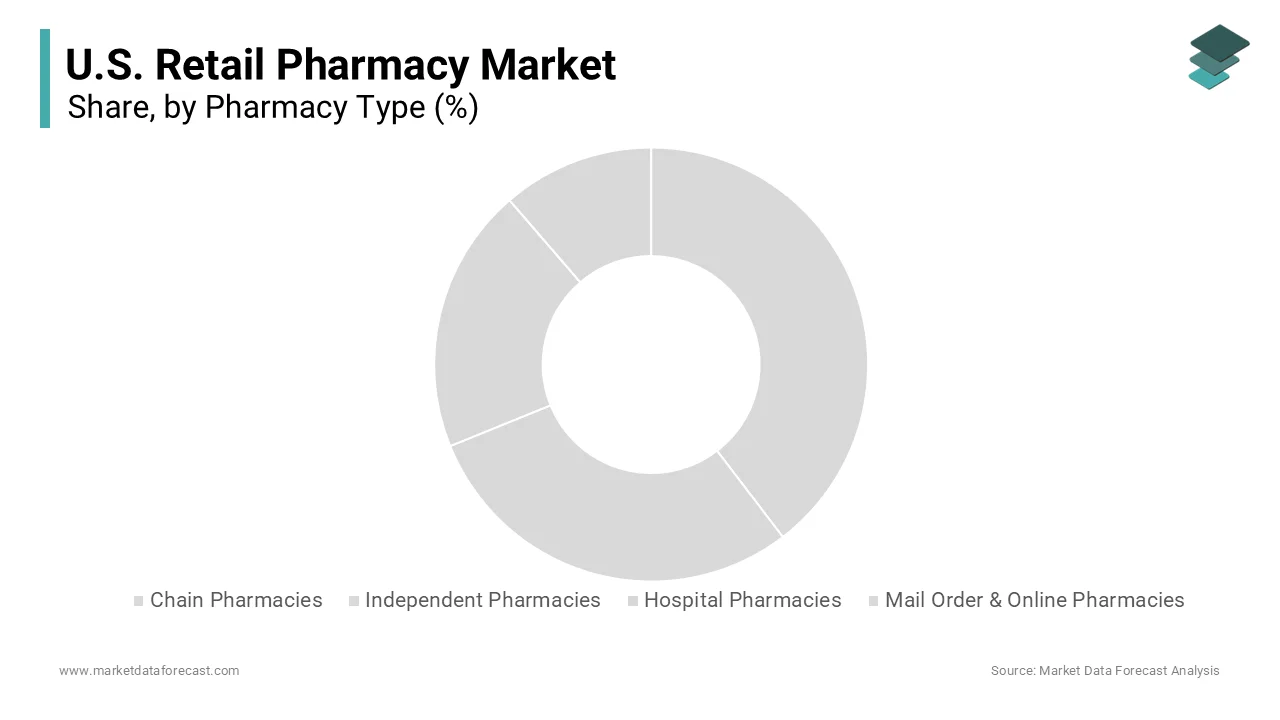
On the other hand, the mail order and online pharmacy segment is likely to experience the fastest CAGR of 8.5% from 2026 and 2034 due to shifting consumer preferences toward digital convenience and home delivery services. Also, the acceleration of this growth is largely attributed to the increasing adoption of telehealth services and the normalization of remote healthcare interactions following recent public health crises. According to a study, the utilization of digital health services has increased significantly, with millions of patients now comfortable receiving medical consultations and prescriptions online. This trend is further supported by the expansion of insurance coverage for mail order medications, which often offers lower copayments for ninety day supplies compared to thirty day retail fills. The convenience of automatic refills and direct home delivery reduces the burden on patients, improving adherence rates and overall satisfaction. Additionally, technological advancements in logistics and supply chain management have enhanced the reliability and speed of medication delivery, addressing previous concerns about timeliness and security. The entry of major e commerce players into the pharmacy space has also intensified competition and innovation, driving further adoption among tech savvy consumers. These factors collectively contribute to the robust growth trajectory of the mail order and online pharmacy segment.
COUNTRY LEVEL ANALYSIS
The United States outperformed other countries in the North American retail pharmacy market and captured an 82.8% share in 2025. This dominance of the country’s market was driven by a highly developed healthcare infrastructure and significant pharmaceutical consumption. High healthcare spending, an aging demographic, and a strong reliance on prescription drugs drive this dominance. According to the Centers for Medicare and Medicaid Services, national health spending in the United States reached 4.3 trillion dollars in recent years, with prescription drugs representing a substantial portion of this expenditure. The demographic shift toward an older population further amplifies demand, as individuals aged 65 and older typically require more frequent medical interventions and medications. As per U.S. Census Bureau projections, the population aged 65 and older is expected to reach nearly 95 million by 2060, representing a roughly 75% increase from 2020 levels, thereby creating a sustained and expanding customer base for healthcare services and retail pharmacies. Additionally, the high prevalence of chronic diseases such as diabetes, hypertension, and heart disease necessitates long term medication management, ensuring steady revenue streams for pharmacy operators. The regulatory environment also plays a crucial role, with policies promoting the expansion of pharmacist scopes of practice and the integration of clinical services into retail settings. These factors, combined with strong consumer purchasing power and advanced distribution networks, solidify the United States position as the primary driver of growth and innovation in the global retail pharmacy sector.
COMPETITIVE LANDSCAPE
The competitive landscape of the United States retail pharmacy market is characterized by intense rivalry among established chains independent operators and emerging digital platforms. Major players compete on factors such as pricing convenience service quality and technological innovation to attract and retain customers. The consolidation of pharmacy benefit managers has increased pressure on reimbursement rates forcing retailers to seek efficiency gains and diversify revenue sources. Independent pharmacies face significant challenges in competing with large chains due to limited bargaining power and higher operational costs. However they often differentiate themselves through personalized customer service and community engagement. The entry of e commerce giants and specialized online pharmacies has disrupted traditional models by offering home delivery and competitive pricing. This shift necessitates that brick and mortar retailers enhance their digital capabilities and emphasize the value of face to face interactions. Regulatory compliance and workforce shortages further complicate the competitive environment requiring companies to balance operational constraints with service excellence. Overall the market remains dynamic with continuous adaptation required to sustain growth and profitability amidst evolving consumer expectations and structural changes in healthcare delivery systems.
KEY MARKET PLAYERS
Some of the companies that are playing a dominating role in the U.S. retail pharmacy market are
- CVS Health
- Walgreens Boots Alliance, Inc.
- Cigna Healthcare
- UnitedHealth Group
- Walmart
- The Kroger Co.
- Humana
- Publix
- Albertsons Companies
- BrightSpring Health Services
- PANTHERx Rare Pharmacy
- Costco Wholesale Corporation
- Elevance Health
- Koninklijke Ahold Delhaize N.V.
- CarelonRx
- Centene Corporation
- Amazon.com, Inc.
Top Players in the Market
- CVS Health Corporation operates as a dominant force in the United States retail pharmacy landscape by integrating traditional dispensing with comprehensive health services. The company leverages its extensive network of retail locations to provide accessible care including vaccinations and minute clinic services. Recent strategic initiatives focus on expanding primary care capabilities through acquisitions and partnerships that enhance patient engagement. CVS Health actively invests in digital health platforms to streamline prescription management and improve customer convenience. Their involvement extends to pharmacy benefit management which supports cost containment for payers and patients. By aligning retail operations with insurance services the company creates a cohesive ecosystem that drives loyalty and improves health outcomes. This integrated approach allows CVS Health to maintain a competitive edge while addressing evolving consumer needs for seamless healthcare experiences across multiple touchpoints.
- Walgreens Boots Alliance Inc maintains a significant presence in the United States market through its vast network of community pharmacies and digital health solutions. The company focuses on transforming stores into healthcare destinations by offering immunizations testing and chronic disease management services. Recent efforts include strategic partnerships with healthcare providers to expand access to primary and urgent care within retail settings. Walgreens actively enhances its digital infrastructure to support online prescription refills and personalized health recommendations. The company also prioritizes operational efficiency by optimizing supply chain processes and reducing costs. By emphasizing preventive care and wellness programs Walgreens strengthens its role as a trusted health partner. These initiatives enable the company to adapt to changing consumer preferences while delivering value through convenient and integrated healthcare services that meet diverse patient needs effectively.
- Walmart Inc leverages its massive retail footprint to offer affordable pharmacy services and health products to millions of customers across the United States. The company focuses on providing low cost prescriptions and over the counter medications through its extensive store network and online platform. Recent strategies include expanding clinical services such as vision centers and hearing aid clinics within select locations. Walmart actively invests in technology to enhance the customer experience including automated prescription fulfillment and mobile app integration. The company also collaborates with healthcare providers to offer primary care services at competitive prices. By prioritizing accessibility and affordability Walmart attracts price sensitive consumers seeking convenient healthcare solutions. Their commitment to lowering healthcare costs while maintaining quality service strengthens their position in the retail pharmacy sector and supports broader public health goals through widespread community engagement.
Top Strategies Used by Key Market Participants
Key players in the United States retail pharmacy market employ diversification strategies to mitigate margin pressures from traditional prescription dispensing. Companies increasingly integrate clinical services such as vaccinations screenings and minor ailment treatments to generate new revenue streams. Strategic acquisitions of healthcare providers and technology firms enable these retailers to expand their care capabilities and enhance patient engagement. Digital transformation is another critical strategy with investments in mobile applications telehealth platforms and artificial intelligence to improve operational efficiency and customer convenience. Partnerships with insurance companies and pharmacy benefit managers help optimize reimbursement rates and streamline claims processing. Additionally retailers focus on specialty pharmacy services to address complex disease management needs which offer higher margins. These multifaceted approaches allow market participants to adapt to regulatory changes and competitive pressures while strengthening their overall market position through enhanced service offerings and improved patient outcomes.
MARKET SEGMENTATION
This research report on the U.S. retail pharmacy market is segmented and sub-segmented into the following categories.
By Pharmacy Type
- Chain Pharmacies
- Independent Pharmacies
- Hospital Pharmacies
- Mail Order & Online Pharmacies
By Prescription Type
- Prescription Drugs (Rx)
- Over-the-Counter (OTC) Drugs
By Product
- Generic Drugs
- Branded Drugs
By Country
- California
- Washington
- Oregon
- New York
- Rest of the United States