- Product Description Description
- Table of Contents TOC
- List of Table & Figure LOT
- Get Free Sample PDF Sample PDF
Market Size, 2025
$10.68 BnMarket Estimate, 2026
$11.86 BnMarket Forecast, 2034
$27.35 BnCAGR, 2026–2034
11.01%U.S. Sports Betting Market Size, Growth, Trends & Forecast (2026–2034)
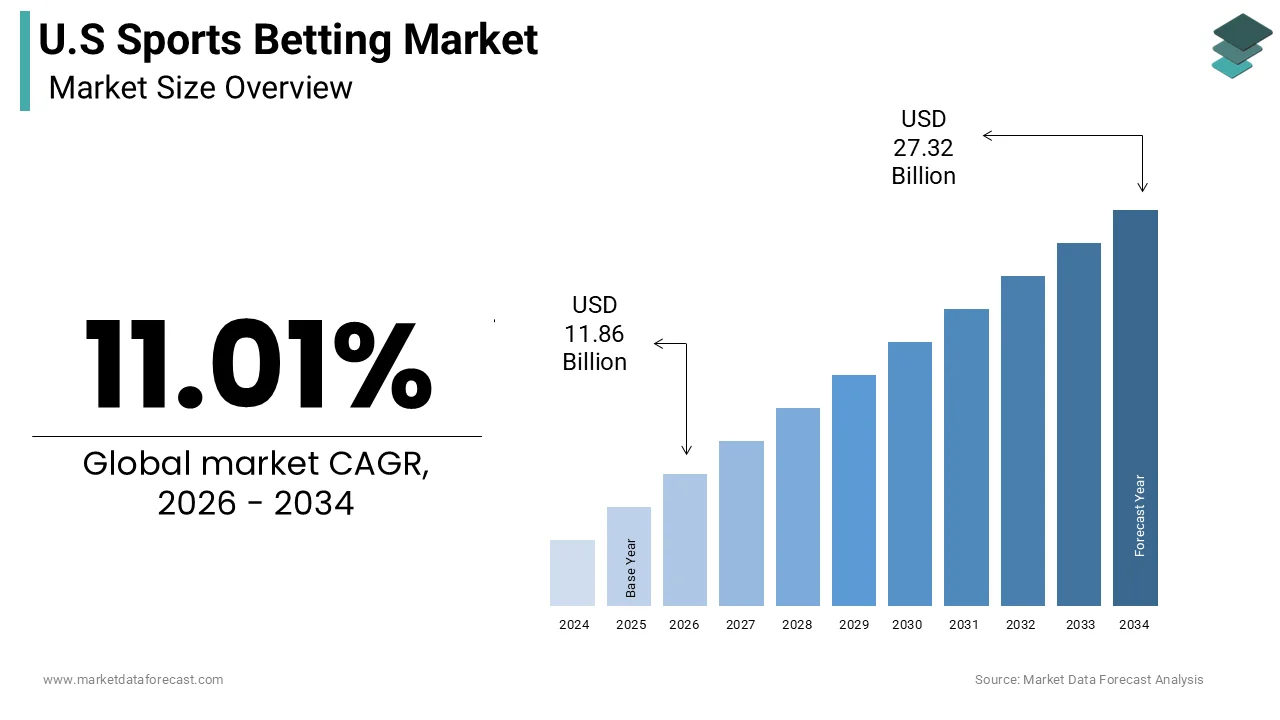
The U.S. sports betting market size was calculated to be USD 10.68 billion in 2025, is anticipated to reach USD 11.86 billion in 2026, and is projected to be worth USD 27.35 billion by 2034, registering a compound annual growth rate (CAGR) of 11.01% during the forecast period from 2026 to 2034. Driven by progressive state-level legislative expansions, high smartphone penetration, and real-time mobile betting platforms, the market continues to transition from a clandestine activity into a mainstream form of entertainment.
Key Executive Metrics (At-a-Glance)
- 2025 Base Valuation: USD 10.68 Billion
- 2026 Current Valuation: USD 11.86 Billion
- 2034 Forecast Valuation: USD 27.35 Billion
- Compound Annual Growth Rate (CAGR): 11.01% (2026–2034)
- Dominant Platform Segment: Online segment (accounting for approximately 95% of total handle in the United States)
- Fastest-Growing Platform Segment: Online segment (projected at a CAGR of 15.5% between 2026 and 2034)
- Dominant Betting Type Segment: Fixed odds wagering (holding the majority share of 50.9% in 2025)
- Fastest-Growing Betting Type Segment: Live or in-play betting (registering the fastest CAGR of 20.3% over the forecast period)
- Dominant Sports Type Segment: Football segment (capturing a 37.2% share in 2025)
- Fastest-Growing Sports Type Segment: eSports betting segment (projected as the fastest-growing at a CAGR of 25.7% from 2026 to 2034)
Core Market Drivers
- Progressive State-Level Legislation: Legalization across 38 states plus the District of Columbia, expanding regulated jurisdictions and consumer safety frameworks.
- High Smartphone Penetration: U.S. adult smartphone ownership reaching 91% in 2024, supported by high-speed broadband and 5G networks enabling live in-play wagering.
Primary Market Restraints & Challenges
- Regulatory Fragmentation & Problem Gambling: Complex, state-specific compliance mandates and tax structures, combined with social responsibility concerns and addiction risks affecting roughly 2 million adults.
U.S. Sports Betting Market Segmentation Breakdown
| Segment Category | Leading Sub-Segment (Base Year) | Fastest-Growing Sub-Segment (2026–2034) |
|---|---|---|
| By Platform | Online Segment (~95% total handle share in 2025) | Online Segment (fastest CAGR at 15.5%) |
| By Betting Type | Fixed Odds Wagering (50.9% share in 2025) | Live/In-Play Betting (fastest CAGR at 20.3%) |
| By Sports Type | Football (37.2% share in 2025) | eSports Betting (fastest CAGR at 25.7%) |
Major Industry Players Profiled
Key operators shaping the U.S. sports betting market include DraftKings Inc., FanDuel Group, BetMGM LLC, Caesars Entertainment Inc., Penn Entertainment Inc., Bally’s Corporation, Rush Street Interactive Inc., WynnBET, PointsBet USA, Hard Rock Digital, Bet365, Kindred Group plc, Flutter Entertainment plc, Entain plc, and Churchill Downs Incorporated.
U.S Sports Betting Market Size
The U.S. sports betting market size was calculated to be USD 10.68 billion in 2025 and is anticipated to be worth USD 27.35 billion by 2034, from USD 11.86 billion in 2026, growing at a CAGR of 11.01% during the forecast period.
Sports betting is the act of wagering money on the outcome of a sporting event, such as predicting a winner, final score, or specific player performance. It is a form of gambling that involves placing bets through licensed sportsbooks or bookmakers, where odds determine potential payouts, typically requiring payment up front. This market includes retail sportsbooks located within casinos and racetracks as well as digital platforms accessible via mobile devices and desktop computers. The industry has transitioned from a clandestine activity to a mainstream form of entertainment integrated with professional sports media and broadcasting. As per the American Gaming Association, more than 30 states, plus the District of Columbia, have legalized some form of sports betting, indicating a widespread legislative shift. Furthermore, the research indicates that public opinion is turning increasingly critical, with 43 percent of American adults now viewing legalized sports betting as a "bad thing for society," a rise from 34 percent three years ago. The integration of high-speed mobile internet infrastructure is fundamental to this growth, with the Federal Communications Commission reporting that over 90 percent of Americans have access to broadband services capable of supporting real-time data-intensive applications. Regulatory frameworks vary by state regarding tax rates, licensing requirements, and permissible bet types, creating a fragmented yet dynamic landscape. The convergence of technology, sports media, and regulatory acceptance defines the current scenario, fostering an environment where consumer engagement is driven by accessibility, social acceptance, and innovative betting products.
MARKET DRIVERS
Progressive State-Level Legislative Expansion
The progressive legalization of sports betting at the state level is a major factor behind the growth of the United States sports betting market. This creates new jurisdictions where operators can legally offer services and generate tax revenue. Each state that passes legislation opens a fresh customer base and provides a regulated alternative to the illegal offshore market. As per the National Conference of State Legislatures and the American Gaming Association, 38 states plus the District of Columbia have enacted laws permitting sports betting, with several others, such as Wisconsin and Minnesota, actively considering measures in current legislative sessions. This patchwork of regulations allows operators to expand their footprint incrementally, reducing the risk associated with nationwide launches. States like New Jersey, Pennsylvania, and Michigan have demonstrated robust revenue generation from sports betting,g proving the economic viability of these initiatives. For instance, New Jersey consistently reports monthly handle figures exceeding 1 billion dollars,s showcasing the immense potential of regulated markets. The legislative process often includes provisions for responsible gaming and consumer protection, which helps mitigate public opposition and builds trust in the industry. Additionally, the ability of states to partner with existing land-based casinos provides a ready-made infrastructure for licensing and oversight. This regulatory clarity encourages investment from major international and domestic operators who seek stable and compliant environments for growth. The continuous addition of new states to the list of legal jurisdictions ensures a steady pipeline of growth opportunities for the industry.
High Smartphone Penetration and Mobile Accessibility
The widespread adoption of smartphones and mobile devices significantly propels the expansion of the United States sports betting market. This provides users with convenient and immediate access to betting platforms. Mobile applications allow individuals to place wagers from virtually anywhere within state borders, transforming sports betting into an on-demand entertainment option. As per sources, smartphone ownership among U.S. adults reached 91% in 2024, up from 85% in 2021. This high level of device ownership ensures that potential customers have the necessary hardware to engage with online betting apps without additional investment. The convenience of mobile betting appeals particularly to younger demographics who prefer digital interactions over traditional brick-and-mortar establishments. Operators have optimized their platforms for mobile use, offering seamless user interfaces, fast loading times, and secure transaction capabilities. The integration of biometric authentication, such as fingerprint and facial recognition, enhances security and simplifies the login process,s encouraging frequent usage. Furthermore, the availability of high-speed mobile networks, including fifth-generation technology, ensures that live betting features, which require real-time data updates, function smoothly. This technological ecosystem supports the growth of in-play betting, where odds change dynamically during events, driving higher engagement and wagering volumes. The ease of access provided by mobile devices thus acts as a critical catalyst for market expansion and user retention.
MARKET RESTRAINTS
Fragmented Regulatory Landscape and Compliance Complexity
The fragmented regulatory landscape across different states is a major constraint to the United States sports betting market. This imposes varying compliance requirements that increase operational costs and complexity. Each state has its own set of rules regarding licensing, taxation, geolocation verification, and responsible gaming measures, forcing operators to customize their platforms for each jurisdiction. As per the American Gaming Association, operators must navigate distinct regulatory bodies in each state, which often have differing interpretations of federal and state laws. This lack of uniformity prevents economies of scale and requires significant legal and technical resources to maintain compliance. For example, the geolocation technology must be highly precise to ensure bets are only placed within state boundaries, adding technical overhead. Additionally, tax rates vary widely from state to state, ranging from single digits to over 50 percent, which impacts profitability and pricing strategies. The uncertainty surrounding future legislation in pending states also makes long-term planning difficult for long-term operators. Companies must constantly monitor legislative developments and adjust their operations accordingly, which diverts resources from innovation and marketing. This regulatory fragmentation acts as a barrier to entry for smaller operators who may lack the capital to manage multi-state compliance effectively. So, the market remains concentrated among large players who can absorb these costs, limiting competition and diversity in service offerings.
Strict Age Verification and Identity Check Requirements
Strict age verification and identity check requirements impede the expansion of the United States sports betting market. This creates friction in the user onboarding process. Regulatory mandates require operators to verify the identity and age of every user to prevent underage gambling and money laundering, which can be a cumbersome and time-consuming process. Users often need to submit multiple documents, such as government-issued IDs, proof of address, and social security numbers, which can deter potential customers who value privacy and convenience. The verification process can take anywhere from a few minutes to several days, leading to drop-offs during registration. False positives in identity verification systems can also frustrate legitimate users who are incorrectly flagged as suspicious. Furthermore, the need for continuous monitoring of user behavior for signs of problem gambling adds another layer of complexity and potential intrusion. While these measures are essential for regulatory compliance and social responsibility, they can negatively impact user experience and acquisition rates. Operators must balance strict adherence to regulations with the need for a seamless user journey, which is a challenging endeavor. This friction can limit the speed of market growth as potential users may abandon the registration process due to perceived inconvenience or privacy concerns.
MARKET OPPORTUNITIES
Integration of Live Streaming and In-Play Betting
The integration of live streaming and in-play betting features provides a clear path for the growth of the United States sports betting market. This enhances user engagement and increases wagering frequency. In-play betting allows users to place wagers on specific outcomes during a live event, such as the next goal in a soccer match or the next pitch in a baseball game. As per the International Betting Integrity Association (IBIA) [and market data from H2 Gambling Capital], live betting accounts for a growing share of total handle in mature markets, often exceeding 50% of turnover, driven by the excitement of real-time interaction. Streaming live events directly within betting apps keeps users on the platform longer and provides immediate context for their wagers. This synergy between content and betting creates a more immersive experience that appeals to modern consumers accustomed to interactive media. Operators can leverage data analytics to offer personalized betting suggestions based on live game statistics, further enhancing the user experience. The technology required for low-latency streaming and real-time odds calculation is becoming more accessible, allowing more operators to offer these features. Additionally, partnerships with sports leagues and media companies can provide exclusive content and data rights, creating a competitive advantage. By offering a dynamic and engaging betting environment, operators can differentiate themselves in a crowded market and drive higher revenue per user. This opportunity aligns with the trend toward interactive and personalized entertainment experiences.
Expansion into Emerging Markets and New Product Verticals
Expansion into emerging markets and new product verticals opens the door for the expansion of the United States sports betting market. This expansion is accelerating as more states consider legalization and new gambling forms gain acceptance. Several states currently have bills pending or are studying the potential economic benefits of online casinos and poker, which represent significant untapped revenue streams. As per the American Gaming Association (AGA) and state legislative reports, expanding legal gambling options can generate tax revenue for states facing budget challenges, though the Center for American Progress generally advocates for progressive tax reforms to address deficits rather than gambling expansion. Online casino games such as slots and table games typically have higher profit margins than sports betting, offering operators greater profitability. Additionally, the potential for cross-selling between sports betting and casino products allows operators to maximize customer lifetime value. Entering new states early provides a first-mover advantage, allowing brands to establish loyalty before the market becomes saturated. Furthermore, the development of new betting products such as esports wagering and virtual sports can attract younger demographics who may not be interested in traditional sports. Esports betting in particular is growing globally and offers a niche but highly engaged audience. By diversifying their product offerings and geographic reach, operators can reduce dependence on any single market or sport, ensuring more stable and sustainable growth. This strategic expansion allows companies to capitalize on evolving consumer preferences and regulatory changes.
MARKET CHALLENGES
Problem Gambling and Social Responsibility Concerns
Problem gambling and social responsibility concerns are major hindrances to the United States sports betting market. This attracts regulatory scrutiny and public backlash. The ease of access and continuous availability of online betting platforms can exacerbate addictive behaviors, leading to financial and personal harm for vulnerable individuals. As per the National Council on Problem Gambling, approximately 2 million adults in the United States meet the criteria for severe problem gambling, with millions more at risk. High-profile cases of gambling-related harm can lead to negative media coverage and calls for stricter regulations or bans. Operators are under increasing pressure to implement effective responsible gaming tools such as deposit limits, self-exclusion options, and reality checks. However, the effectiveness of these tools depends on user adoption and enforcement, which can be inconsistent. Regulatory bodies are also demanding more robust data sharing and intervention strategies to identify at-risk players. Failure to adequately address problem gambling can result in hefty fines, license revocation, and reputational damage. Additionally, there is an ongoing debate about the ethical implications of aggressive marketing tactics, particularly those targeting young adults. Balancing commercial interests with social responsibility is a complex challenge that requires ongoing investment in research, technology, and community support. Addressing this challenge is critical for the long-term sustainability and social license of the industry.
Intense Competition and Customer Acquisition Costs
Intense competition and high customer acquisition costs are significant limitations for the United States sports betting market. This erodes profitability and makes it difficult for new entrants to gain traction. The market is dominated by a few large operators with substantial marketing budgets who engage in aggressive promotional campaigns to attract users. As per recent industry analysis referencing H2 Gambling Capital data, while customer acquisition costs were historically high, operators in the United States are now rationalizing marketing spend and shifting focus from market share expansion to profitability, leading to a stabilization or decline in promotional intensity in mature states. These costs include generous sign-up bonuses, free bets, and extensive advertising across digital and traditional media channels. The saturation of advertising in popular sports leagues and events has led to diminishing returns on marketing spend. Smaller operators struggle to compete with these expenditures, leading to market consolidation and reduced diversity. Additionally, customer loyalty is low in the online gambling sector, with users frequently switching platforms to take advantage of better promotions. This churn rate forces operators to continuously invest in retention strategies and incentives, further increasing operational costs. The pressure to maintain profitability while spending heavily on acquisitions creates a challenging financial environment. Operators must find innovative ways to differentiate their offerings and build brand loyalty beyond price competition. Without sustainable differentiation, the market risks a race to the bottom, compressing margins. This threatens the long-term viability of all but the largest players.
REPORT COVERAGE
| REPORT METRIC | DETAILS |
| Market Size Available | 2025 to 2034 |
| Base Year | 2025 |
| Forecast Period | 2026 to 2034 |
| CAGR | 11.01% |
| Segments Covered | By Platform, Betting Type, Sports Type, And Region |
| Various Analyses Covered | Global, Regional & Country Level Analysis; Segment-Level Analysis; DROC, PESTLE Analysis; Porter’s Five Forces Analysis; Competitive Landscape; Analyst Overview of Investment Opportunities |
| Regions Covered | New York, Massachusetts, Pennsylvania, Illinois, Ohio, Michigan, Texas, Florida, Georgia, California, Washington, Colorado. |
| Market Leaders Profiled | DraftKings Inc., FanDuel Group, BetMGM LLC, Caesars Entertainment Inc., Penn Entertainment Inc., Bally’s Corporation, Rush Street Interactive Inc., WynnBET, PointsBet USA, Hard Rock Digital, Bet365, Kindred Group plc, Flutter Entertainment plc, Entain plc, Churchill Downs Incorporated |
SEGMENTAL ANALYSIS
By Platform Insights
The online segment was the largest segment in the United States sports betting market and occupied a substantial share in 2025. This prominence of the segment is supported by the unparalleled convenience, accessibility, and extensive feature set offered by digital platforms. Mobile applications allow users to place wagers from anywhere within state borders at any time, transforming sports betting into an on-demand entertainment option. As per the American Gaming Association, online sports betting accounts for approximately 95 percent of the total handle in the United States, reflecting a near-total consumer shift toward digital platforms in established states like New Jersey and Pennsylvania. One of the major drivers of this domination is the ability of online platforms to offer a wider variety of betting markets, including live in-play wagering, which is difficult to replicate in physical retail locations. The integration of real-time data streaming and personalized promotions enhances user engagement and retention. Furthermore, the ease of depositing and withdrawing funds through digital wallets and banking apps reduces friction in the transaction process. The widespread adoption of smartphones, with 91 percent of American adults owning one according to the research, ensures a massive installed base for mobile betting operators. The ability to compare odds across multiple apps instantly also empowers consumers to seek the best value. Consequently, the combination of technological convenience, diverse product offerings, and broad accessibility cements the online segment as the dominant platform in the market.
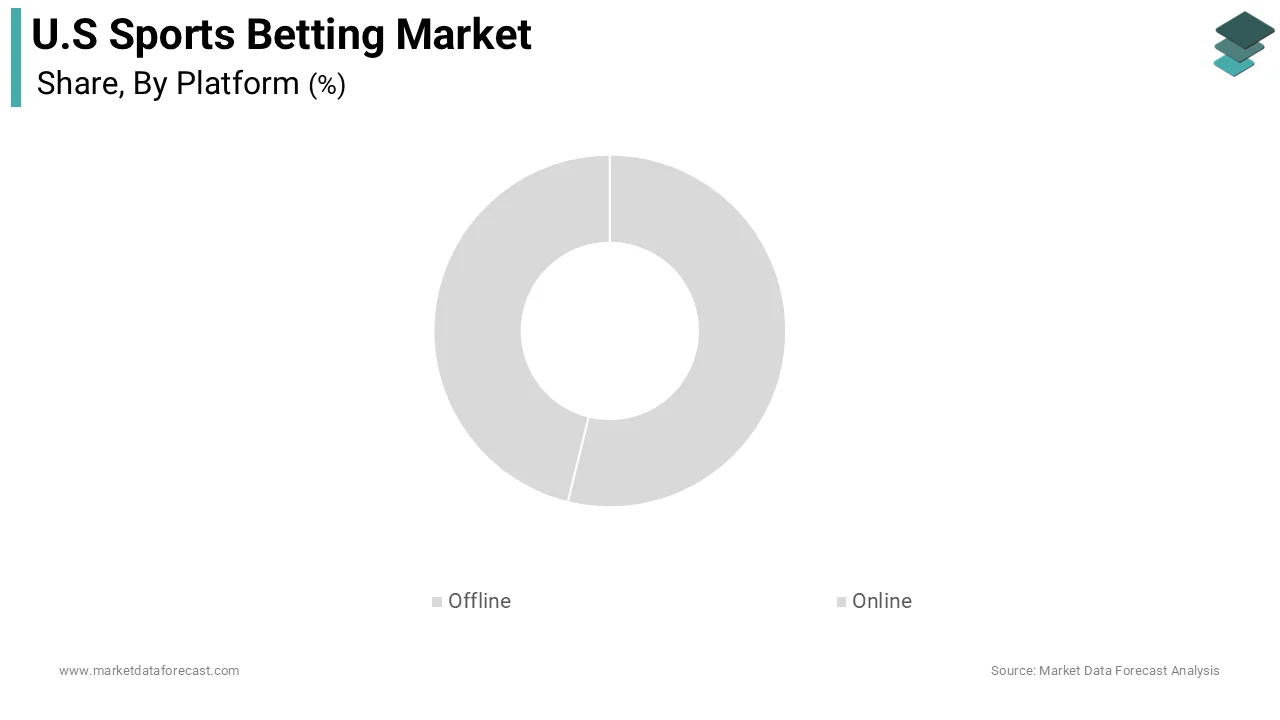
The online segment is also the fastest-growing platform in the United States sports betting market, with a projected CAGR of 15.5% between 2026 and 2034. The swift growth of the segment is fueled by the continuous expansion of legal jurisdictions and increasing consumer comfort with digital transactions. As more states legalize online sports betting, the addressable market expands rapidly, driving significant revenue growth for operators. As per the National Conference of State Legislatures, several new states are expected to launch online sports betting operations in the coming years, creating fresh opportunities for customer acquisition. The main factor driving this growth is the aggressive marketing and promotional strategies employed by operators to attract new users in newly regulated markets. Sign-up bonuses, free bets, and enhanced odds offers are highly effective in converting casual sports fans into active bettors. Additionally, the improvement in mobile network infrastructure, including the rollout of fifth-generation technology, enables faster and more reliable live betting experiences, which are increasingly popular among users. The integration of social features and gamification elements within betting apps further enhances user stickiness and engagement. The shift in cultural attitudes toward sports betting as a mainstream form of entertainment also supports this growth. Consequently, the combination of regulatory expansion, technological advancement, and strategic marketing drives the rapid expansion of the online segment.
By Betting Type Insights
The fixed odds wagering segment held the majority share of 50.9% of the United States sports betting market in 2025. This supremacy of the segment is credited to its simplicity, transparency, and widespread familiarity among consumers. This betting type allows users to know the potential payout at the time of placing the bet, which provides clarity and reduces uncertainty. As per H2 Gambling Capital, fixed odds wagering remains the dominant betting type globally, accounting for the majority of market volume due to its established regulatory framework and ease of use. The biggest factor behind this domination is the extensive coverage of major professional sports leagues such as the National Football League, the National Basketball Association, and Major League Baseball, which primarily utilize fixed odds markets. Consumers prefer the straightforward nature of predicting outcomes such as money lines, point spreads, and totals without the complexity of exchange dynamics or pari mutuel pools. The standardization of fixed odds formats across different operators allows for easy comparison and shopping for the best lines. Additionally, the integration of fixed odds betting into mainstream sports media broadcasts and commentary has normalized its usage and educated the public on how to engage with these markets. The availability of a wide range of pre-match and live fixed odds options ensures that there is always a betting opportunity available. So, the clarity, familiarity, and broad applicability of fixed odds wagering establish it as the dominant betting type in the market.
The live or in-play betting segment is likely to experience the fastest CAGR of 20.3% over the forecast period. This rapid expansion of the segment is fuelled by the desire for immediate engagement and dynamic wagering opportunities during sporting events. In addition, this betting type allows users to place wagers on various outcomes as the action unfolds, such as the next team to score or the result of the next drive. As per H2 Gambling Capital, live betting now accounts for a significant and growing portion of total handle in mature markets, reflecting its increasing popularity among experienced bettors. The primary factor accelerating this growth is the advancement of low-latency streaming technology and real-time data analytics, which enable operators to update odds instantly based on game developments. This creates an immersive and interactive experience that keeps users engaged throughout the entire duration of the event. The ability to hedge bets or capitalize on momentum shifts adds a strategic layer to the betting experience that appeals to sophisticated users. Mobile devices play a crucial role in this growth as they allow for quick and convenient placement of live bets. Operators are investing heavily in enhancing their live betting interfaces and offering a wider variety of micro markets to cater to this demand. Thus, the excitement, interactivity, and technological enablement of live betting drive its rapid expansion.
By Sports Type Insights
The football segment led the United States sports betting market and captured a 37.2% share in 2025. This leading position of the segment can be attributed to its immense popularity, cultural significance, and extensive media coverage. The National Football League, in particular, attracts millions of viewers each week, creating a massive audience for betting activities. As per a study, NFL games consistently rank as the most-watched television programs in the United States, providing a vast pool of potential bettors. The main pull for this segment is the high frequency of games during the season, and the variety of betting markets available for each matchup, including point spreads, totals, and player props. The Super Bowl alone generates billions of dollars in betting handle annually, highlighting the peak interest in football wagering. College football also contributes significantly to this segment with a dedicated fan base that engages heavily in betting activities. The integration of betting odds and analysis into sports broadcasts and digital media further reinforces the connection between football and wagering. Fantasy sports leagues have also served as a gateway for many fans to transition into real money betting. The emotional investment and competitive nature of football fandom drive consistent and high-volume betting activity. Consequently, the sheer scale of the audience and the depth of engagement establish football as the dominant sports type in the market.
The eSports betting segment is on the rise and is expected to be the fastest-growing segment in the market by witnessing a CAGR of 25.7% from 2026 to 2034 due to the rising popularity of competitive video gaming and the demographic alignment with digital natives. As traditional sports face saturation in certain demographics, eSports offers a fresh and engaging alternative for younger audiences who are avid gamers and tech-savvy. As per sources, the global eSports audience is expected to reach hundreds of millions, with a significant portion located in North America, indicating a large potential market for betting. The primary factor propelling this expansion is the year-round schedule of major tournaments and leagues for games such as League of Legends, Counter-Strike, and Dota 2, providing continuous betting opportunities. The digital native nature of eSports fans makes them more comfortable with online betting platforms and digital transactions. Streaming platforms like Twitch and YouTube Gaming provide direct access to live matches, facilitating seamless integration of betting interfaces. The variety of in-game events that can be wagered on offers unique and dynamic betting markets. Additionally, the increasing recognition of eSports as a legitimate sport by mainstream media and sponsors enhances its credibility and appeal. Consequently, the rapid growth of the eSports ecosystem and its alignment with modern consumer preferences drive the exceptional expansion of this segment.
REGIONAL ANALYSIS
The United States dominated the North American sports betting market and occupied a 90.7% share in 2025. This position of the US market is fuelled by its large population, strong sports culture, and progressive legislative landscape. The country’s market status is characterized by a rapidly expanding regulated environment where state-level legalization is creating a fragmented but robust industry. As per the American Gaming Association, commercial sports betting revenue in the United States has surpassed 10 billion dollars annually, demonstrating the massive financial scale of the sector. The presence of major professional sports leagues such as the NFL, NBA, and MLB provides a constant stream of high-profile events that drive betting activity. The integration of sports betting into mainstream media and partnerships between leagues and operators has normalized the activity and increased visibility. High smartphone penetration and advanced digital infrastructure facilitate widespread access to online betting platforms. Regulatory frameworks vary by state but generally support responsible gaming and consumer protection, ensuring a stable operating environment. The United States serves as a key growth engine for the global sports betting industry, influencing trends in technology and product development. Hence, the combination of economic strength, cultural affinity for sports, and regulatory momentum solidifies the United States' position as the dominant force in the regional sports betting landscape.
COMPETITION OVERVIEW
The competition in the United States sports betting market is intense and characterized by a handful of dominant operators vying for market share in newly regulated states. Major players like FanDuel, DraftKings, and BetMGM leverage substantial financial resources to fund aggressive marketing campaigns and offer attractive promotions to acquire customers. Brand recognition and user experience are critical differentiators as operators strive to create seamless and engaging platforms for sports betting and casino games. The market sees frequent entry of new competitors, including international brands and regional casinos launching digital platforms. Price competition is evident in the form of enhanced odds and bonus offers, which can erode profit margins. Strategic partnerships with sports leagues and media companies provide competitive advantages in terms of content and data access. Technology plays a pivotal role, with operators investing in advanced algorithms for odds setting and risk management. Customer retention is a key focus area as acquisition costs rise, leading to increased emphasis on loyalty programs and personalized experiences. Regulatory compliance and responsible gaming practices also influence competitive dynamics as operators seek to maintain their licenses and public trust. This highly contested environment drives continuous innovation and improvement in service offerings.
KEY MARKET PLAYERS
A few major players of the U.S. sports betting market include
- DraftKings Inc
- FanDuel Group
- BetMGM LLC
- Caesars Entertainment Inc
- Penn Entertainment Inc
- Bally’s Corporation
- Rush Street Interactive Inc
- WynnBET
- PointsBet USA
- Hard Rock Digital
- Bet365
- Kindred Group plc
- Flutter Entertainment plc
- Entain plc
- Churchill Downs Incorporated
Leading Players in the US Sports Betting Market
- FanDuel Group stands as a premier operator in the United States sports betting market by offering a comprehensive suite of sportsbook and daily fantasy sports products. The company leverages its strong brand recognition and user-friendly interface to attract and retain a large customer base across multiple states. Recent actions include the expansion of its live betting capabilities, which provide real-time wagering options for enhanced engagement. FanDuel has also invested heavily in proprietary technology to improve odds compilation and risk management efficiency. Strategic partnerships with major sports leagues and media outlets have increased its visibility and credibility among consumers. The company focuses on responsible gaming initiatives to build trust and ensure sustainable growth. By continuously updating its mobile application with new features and promotions, FanDuel maintains a competitive edge. These strategic initiatives reinforce its position as a leader in the rapidly evolving digital wagering landscape.
- DraftKings Inc is a dominant force in the United States sports betting market, known for its innovative daily fantasy sports origins and robust sportsbook platform. The company has successfully transitioned into a full-service iGaming provider offering both sports betting and online casino games in regulated jurisdictions. Recent actions include the launch of exclusive content and branded promotions that differentiate its sportsbook from competitors. DraftKings has expanded its geographic footprint by entering new states as legislation permits, ensuring broad market coverage. The company utilizes aggressive marketing campaigns and promotional offers to acquire new users and drive engagement. Its technology stack supports high-volume traffic during peak sporting events, ensuring reliability and performance. DraftKings also focuses on cross-selling opportunities between its fantasy sports and betting platforms to maximize customer lifetime value. Investments in artificial intelligence help optimize user experiences and detect problematic gambling behaviors. These strategic initiatives reinforce its status as a top-tier operator in the industry.
- BetMGM operates as a leading joint venture in the United States sports betting market, combining the digital expertise of Entain with the brand power of MGM Resorts. The company offers a wide range of sports betting options, leveraging the loyalty program of MGM to drive customer retention. Recent actions include the enhancement of its live sports streaming capabilities, which allow users to watch games directly within the app while placing bets. BetMGM has focused on integrating its online and land-based operations to provide a seamless omnichannel experience for customers. The company regularly introduces new promotional features and betting markets to keep users engaged. Its strong presence in key states like New Jersey and Pennsylvania provides a solid revenue foundation. BetMGM invests in customer support and responsible gaming tools to maintain high standards of service. By capitalizing on the established reputation of the MGM brand, the company attracts high-value players. These efforts contribute to its sustained growth and competitive positioning in the market.
Top Strategies Used by Key Market Participants
Key players in the United States sports betting market primarily focus on aggressive customer acquisition through lucrative sign-up bonuses and free bet offers to attract new users. Companies invest heavily in marketing partnerships with professional sports leagues and teams to enhance brand visibility and credibility. Technological innovation is central to their strategy, with operators developing intuitive mobile applications and live streaming features to improve user engagement. Expansion into new states as legalization progresses allows firms to capture early market share and establish brand loyalty. Diversification into online casino games provides additional revenue streams beyond sports betting. Data analytics are utilized to personalize marketing efforts and optimize risk management processes. Responsible gaming initiatives are implemented to ensure regulatory compliance and build consumer trust. Mergers and acquisitions help consolidate market position and acquire specialized technologies or talent. These strategies collectively drive growth and competitiveness in the dynamic online gambling landscape.
MARKET SEGMENTATION
This research report on the US sports betting market has been segmented and sub-segmented based on platform, betting type, sports type & region.
By Platform
- Offline
- Online
By Betting Type
- Fixed Odds Wagering
- Exchange Betting
- Live/In-Play Betting
- Pari-Mutuel
- eSports Betting
- Others
By Sports Type
- Football
- Basketball
- Baseball
- Horse Racing
- Cricket
- Hockey
- Others
By Region
- New York
- Texas
- Florida
- Georgia
- California
- Rest of U.S.