- Product Description Description
- Table of Contents TOC
- List of Table & Figure LOT
- Get Free Sample PDF Sample PDF
Market Size, 2025
$2.58 BnMarket Estimate, 2026
$2.90 BnMarket Forecast, 2034
$7.30 BnCAGR, 2026–2034
12.25%U.S. Substance Abuse Treatment Market Report Summary
The U.S. substance abuse treatment market was valued at USD 2.30 billion in 2024, is estimated to reach USD 2.57 billion in 2025, and is projected to reach USD 8.20 billion by 2033, growing at a CAGR of 12.25% from 2025 to 2033. The growth of the U.S. substance abuse treatment market is driven by the increasing prevalence of drug and alcohol dependency, expanding access to rehabilitation programs, and growing government support for addiction treatment initiatives. Additionally, rising public awareness, growing acceptance of mental health and addiction recovery, and the integration of digital health tools into treatment programs are further accelerating market growth.
Key Market Trends
- The increasing prevalence of alcohol and opioid addiction prompting demand for comprehensive treatment programs.
- Growing adoption of telehealth and digital therapy platforms for remote substance abuse counseling.
- Expanding government support through funding initiatives and insurance coverage for addiction treatment services.
- Rising use of medication-assisted treatments (MATs) such as buprenorphine and methadone for opioid dependency.
- Increasing establishment of integrated behavioral health models combining physical and psychological care.
Segmental Insights
- Based on treatment type, the alcohol use disorder treatment segment held 45.3% of the U.S. substance abuse treatment market share in 2024, driven by the high prevalence of alcohol dependency, growing awareness of its health risks, and the availability of evidence-based therapeutic approaches.
- Based on end use, the rehabilitation centers segment accounted for 53.2% of the U.S. substance abuse treatment market share in 2024, supported by the rising number of specialized facilities offering inpatient and outpatient recovery programs, as well as the increasing adoption of holistic and long-term treatment models.
Competitive Landscape
- The U.S. substance abuse treatment market is moderately consolidated, with key providers emphasizing digital transformation, holistic care, and expansion of service offerings.
- Companies are investing in evidence-based treatment programs, personalized care approaches, and technology-driven platforms to improve treatment accessibility and outcomes.
- Prominent players in the U.S. substance abuse treatment market include Hazelden Betty Ford Foundation, Journey Pure (Regard Recovery), Workit Health, Pyramid Healthcare, Inc., American Treatment Network, Banyan Treatment Centers, Asana Recovery, Acadia Healthcare, Promises Behavioral Health, and BayMark Health Services.
- These organizations are focusing on expanding nationwide service networks, integrating digital health solutions, and forming partnerships with healthcare providers and insurers to deliver effective, patient-centered addiction treatment across the U.S.
U.S. Substance Abuse Treatment Market Size
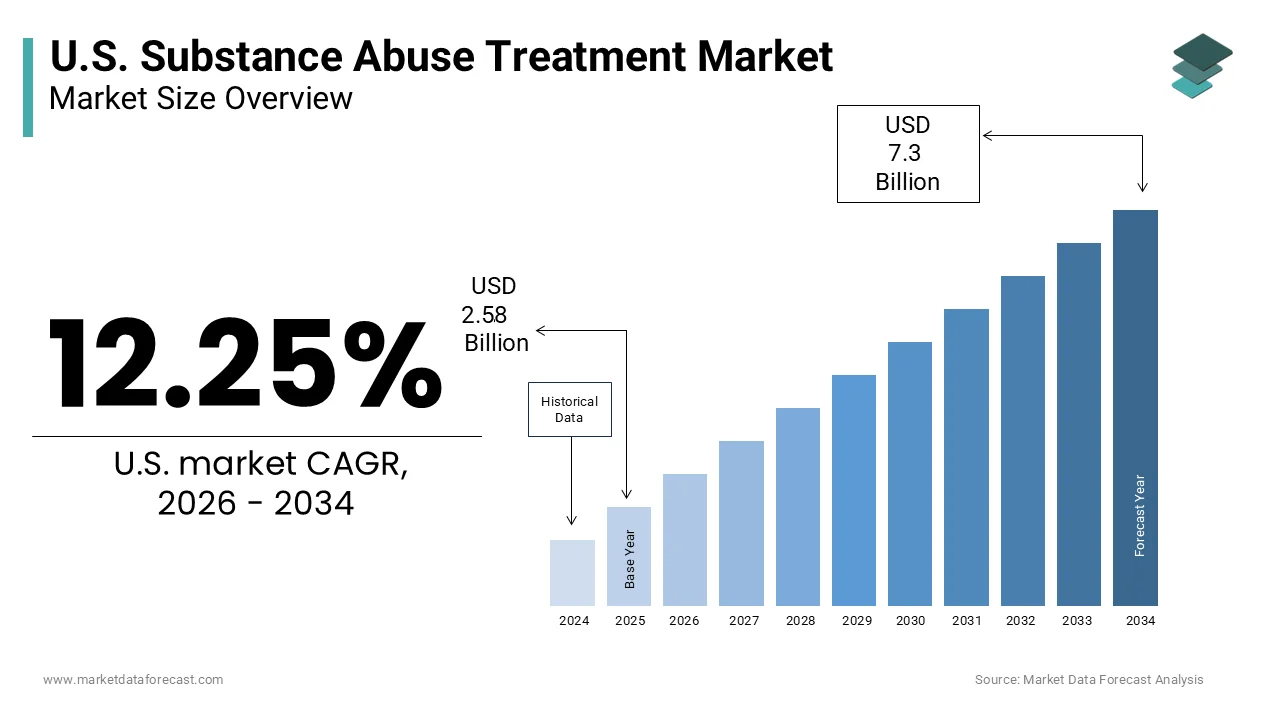
The U.S. substance abuse treatment market was valued at USD 2.58 billion in 2025, is estimated to reach USD 2.90 billion in 2026, and is projected to reach USD 7.3 billion by 2034, growing at a CAGR of 12.25% from 2026 to 2034.
Substance Abuse Treatment (often formally called SUD or Substance Use Disorder Treatment) is a medical and psychological process designed to help individuals overcome their dependence on alcohol or drugs, manage withdrawal symptoms, and rebuild their lives. This market operates at the intersection of public health and clinical care, responding to a complex epidemic that affects millions of individuals across various demographics. The scope of treatment includes inpatient rehabilitation centers, outpatient clinics, medication-assisted treatment programs, and community-based support networks. The urgency of this market is underscored by the persistent rise in overdose fatalities and the widespread prevalence of substance use disorders. According to the Substance Abuse and Mental Health Services Administration, approximately 46.3 million people aged 12 or older met the criteria for a substance use disorder in 2021. This staggering figure illustrates the profound scale of the crisis and the critical need for accessible and effective treatment infrastructure. Furthermore, the Centers for Disease Control and Prevention reported over 107,000 drug overdose deaths in the United States in 2021, marking a historic high and emphasizing the lethal consequences of untreated addiction. These statistics highlight the systemic pressure on healthcare providers to expand capacity and innovate treatment modalities. The market is also shaped by evolving regulatory frameworks and insurance coverage mandates that aim to reduce barriers to care. As societal stigma diminishes and awareness grows, the demand for comprehensive, evidence-based treatment solutions continues to intensify, driving structural changes within the healthcare landscape.
MARKET DRIVERS
Increasing Prevalence Of Opioid Use Disorder Fuels Demand
The escalating prevalence of opioid use disorder is a primary driver of the United States substance abuse treatment market. This creates an urgent and sustained demand for specialized intervention services. Opioids, including prescription pain relievers, heroin, and synthetic variants like fentanyl, have contributed significantly to the national health crisis. According to the National Institute on Drug Abuse, nearly 2.7 million people aged 12 or older had an opioid use disorder in 2020. This widespread addiction necessitates a robust treatment infrastructure capable of delivering medication-assisted treatment, which combines behavioral therapy with medications such as methadone, buprenorphine, and naltrexone. The efficacy of these treatments in reducing overdose risk and improving retention in care has led to increased adoption by healthcare providers and payers. The Centers for Disease Control and Prevention reports that expanding access to Medication-Assisted Treatment (MAT) is a critical strategy that averts opioid overdose deaths and reduces mortality risk. While national overdose rates fluctuated, modeling shows that sustaining and expanding MAT coverage significantly reduces the expected number of opioid-related deaths. The federal government has also prioritized this issue, allocating billions of dollars in grants to support treatment expansion and recovery services. The Department of Health and Human Services reports that the number of facilities offering medication-assisted treatment has grown substantially in recent years. This institutional support, combined with the sheer volume of individuals affected, ensures a steady influx of patients into treatment programs. The chronic nature of opioid addiction often requires long-term management, further sustaining demand for continuous care services and reinforcing the economic viability of the treatment market.
Legislative Mandates Enhance Insurance Coverage For Treatment
Legislative mandates requiring parity in insurance coverage for mental health and substance use disorders have significantly expanded access to treatment services, which further contributes to the expansion of the United States substance abuse treatment market. The Mental Health Parity and Addiction Equity Act, along with provisions in the Affordable Care Act, prohibits insurers from imposing more restrictive limits on substance abuse treatment than on medical and surgical care. According to the Kaiser Family Foundation, these laws have enabled millions of previously uninsured individuals to access addiction treatment services through Medicaid expansion and private insurance marketplaces. Data from the Substance Abuse and Mental Health Services Administration indicates that the percentage of individuals receiving treatment who had some form of health insurance coverage increased markedly following these legislative changes. This financial accessibility reduces out-of-pocket costs for patients, encouraging earlier intervention and higher enrollment in treatment programs. Furthermore, state-level initiatives have reinforced federal mandates by expanding Medicaid eligibility and requiring coverage for specific treatment modalities. The National Alliance on Mental Illness emphasizes that states with stronger enforcement of the Mental Health Parity and Addiction Equity Act tend to have fewer barriers to care, leading to higher utilization of necessary substance abuse and mental health services. The removal of financial barriers has also encouraged healthcare providers to integrate addiction treatment into primary care settings, broadening the reach of services. These legislative frameworks have transformed substance abuse care from a niche service into a standard component of healthcare. By ensuring that treatment is affordable and covered, they continue to drive market growth and improve public health outcomes.
MARKET RESTRAINTS
Persistent Stigma Hinders Help-Seeking Behavior
Persistent social stigma surrounding substance abuse remains a significant restraint that hinders individuals from seeking help and thereby hampers the growth of the United States substance abuse treatment market. This is despite advancements in treatment availability. Many people struggling with addiction fear judgment, discrimination, or professional repercussions if they disclose their condition. According to a survey, a substantial portion of Americans still view addiction as a moral failing rather than a medical condition, which discourages open discussion and treatment seeking. This societal perception creates a barrier to entry for treatment providers, as many potential patients delay or avoid care until their condition becomes critical. The National Survey on Drug Use and Health reveals that among the millions who needed treatment, only a fraction actually received it, with stigma cited as a primary reason for non-engagement. This gap between need and utilization limits the effective market size and reduces the overall impact of treatment initiatives. Furthermore, stigma can affect funding and policy decisions, as lawmakers may be less inclined to prioritize resources for populations perceived negatively by constituents. As per studies published in the Journal of Substance Abuse Treatment, internalized stigma also leads to lower self-esteem and higher relapse rates among those who do enter treatment. Addressing this cultural barrier requires extensive public education campaigns and community engagement, which are resource-intensive and slow to yield results. Stigma will continue to suppress demand and limit the full potential of the substance abuse treatment market. This will remain the case until societal attitudes shift significantly.
Severe Workforce Shortages Limit Service Capacity
Severe workforce shortages critically limit its capacity to meet growing demand, which hinders the expansion of the United States substance abuse treatment market. There is a pronounced lack of qualified professionals, including addiction counselors, psychiatrists, and nurses specializing in behavioral health. According to the Health Resources and Services Administration, a majority of rural counties in the United States are designated as mental health professional shortage areas, exacerbating access issues for vulnerable populations. The Bureau of Labor Statistics projects that employment of substance abuse, behavioral disorder, and mental health counselors will grow, yet the current supply remains insufficient to address the scale of the crisis. High turnover rates due to burnout and emotional fatigue further strain the existing workforce. As per the National Council for Mental Wellbeing, the average tenure for addiction counselors is relatively short, leading to continuity of care issues for patients. This instability disrupts therapeutic relationships and can negatively impact treatment outcomes. Additionally, the specialized training required for certification in addiction counseling creates a bottleneck in workforce development. Many states have rigorous licensing requirements that take time to fulfill, delaying the entry of new professionals into the field. The shortage is particularly acute in residential treatment facilities, where 24-hour care is needed. Without adequate staffing, facilities must reduce admissions or close units, directly constraining market growth. Addressing this human capital deficit requires significant investment in education, loan forgiveness programs, and improved working conditions, which are long-term solutions that do not immediately alleviate current capacity constraints.
MARKET OPPORTUNITIES
Integration Of Telehealth Expands Access To Remote Patients
The integration of telehealth offers a transformative opportunity to expand access to care, particularly for individuals in remote or underserved areas, which is likely to boost the growth of the United States substance abuse treatment market. Digital platforms enable patients to receive counseling, medication management, and support group participation from the comfort of their homes, removing geographical and logistical barriers. According to the Substance Abuse and Mental Health Services Administration, the use of telehealth for substance use disorder treatment surged during the public health emergency, with many providers reporting improved patient engagement and retention. The flexibility of virtual visits allows for more frequent check-ins, which are crucial for monitoring progress and preventing relapse. As per a study published in the Journal of Medical Internet Research, telehealth interventions for opioid use disorder have shown comparable efficacy to in-person care, with high levels of patient satisfaction. This modality also appeals to younger demographics who are more comfortable with digital communication tools. The permanent relaxation of regulatory restrictions on telehealth prescribing, particularly for controlled substances, has further solidified its role in the treatment landscape. By leveraging technology, treatment providers can scale their services more efficiently, reaching a broader patient base without the overhead costs associated with physical facilities. This expansion not only increases revenue potential but also enhances public health outcomes by making treatment more accessible and convenient for diverse populations.
Development Of Personalized Medicine Approaches
The development of personalized medicine approaches paves the way to enhance the efficacy and improve patient outcomes, which is expected to propel the expansion of the United States substance abuse treatment market. Advances in genetics and biomarkers allow clinicians to tailor treatment plans to individual biological profiles, predicting response to specific medications and therapies. According to the National Institute on Drug Abuse, pharmacogenomics research is identifying genetic variations that influence how patients metabolize drugs used in medication-assisted treatment, such as buprenorphine and naltrexone. This precision enables providers to select the most effective interventions with fewer side effects, increasing adherence and reducing dropout rates. The integration of digital health tools, such as wearable devices that monitor physiological signs of stress or craving, further supports personalized care by providing real-time data for intervention adjustments. This data-driven approach allows for dynamic treatment modifications based on individual progress and triggers. Pharmaceutical companies are also investing in the development of novel therapeutics targeting specific neural pathways involved in addiction. By moving away from a one-size-fits-all model, the market can offer higher-value services that justify premium pricing and attract patients seeking optimized care. This shift toward precision medicine positions the industry at the forefront of medical innovation, driving both clinical excellence and economic growth.
MARKET CHALLENGES
High Rates Of Relapse Complicate Long-Term Recovery
High rates of relapse among individuals undergoing treatment for SUD are a significant challenge to the United States substance abuse treatment market. This complicates long-term recovery efforts and strains resources. Addiction is a chronic relapsing condition, and many patients require multiple episodes of care before achieving sustained sobriety. According to the National Institute on Drug Abuse, relapse rates for substance use disorders are similar to those of other chronic diseases, such as diabetes and hypertension, ranging from 40 percent to 60 percent. This recurring cycle of treatment and relapse places a heavy financial burden on healthcare systems and insurance providers, who must cover repeated interventions. As per data from the Substance Abuse and Mental Health Services Administration, a significant portion of treatment admissions are readmissions, indicating gaps in aftercare support and continuity. The complexity of co-occurring mental health disorders further exacerbates this challenge, as untreated psychiatric conditions often trigger relapse. Treatment facilities struggle to provide comprehensive long-term support due to funding limitations and capacity constraints. The emotional toll on families and communities also contributes to a fragmented support network, making it difficult for individuals to maintain recovery. Addressing this issue requires a shift toward long-term disease management models rather than acute care episodes. However, implementing such models is costly and requires coordinated efforts across multiple sectors. The high recurrence of addiction will remain a persistent obstacle to market stability and patient success. This will persist until more effective relapse prevention strategies are widely adopted.
Fragmented Healthcare System Impedes Coordinated Care
The fragmented nature of the country’s healthcare system impedes the delivery of coordinated and continuous care for individuals with SUDs, which in turn holds back the expansion of the United States substance abuse treatment market. Patients often navigate a disjointed landscape of providers, including primary care physicians, specialty addiction clinics, mental health professionals, and social services, with little integration between them. According to the Commonwealth Fund, the lack of interoperability among electronic health records prevents seamless sharing of patient information, leading to duplicated tests, conflicting treatments, and gaps in care. This fragmentation is particularly detrimental for individuals with co-occurring disorders, who require simultaneous management of addiction and mental health conditions. As per the National Alliance on Mental Illness, many treatment facilities are not equipped to handle dual diagnoses, forcing patients to seek separate services that may not communicate effectively. The siloed structure also complicates billing and reimbursement processes, creating administrative burdens for providers and confusion for patients. Insurance coverage varies widely across different types of treatment, with some services covered under medical benefits and others under behavioral health, leading to inconsistent access. The Department of Health and Human Services has identified care coordination as a critical area for improvement, yet progress remains slow. Without a unified approach, patients are likely to fall through the cracks, resulting in poorer outcomes and higher overall healthcare costs. Overcoming this structural challenge requires significant systemic reform and investment in integrated care models, which are difficult to implement in the current decentralized environment.
REPORT COVERAGE
| REPORT METRIC | DETAILS |
| Market Size Available | 2025 to 2034 |
| Base Year | 2025 |
| Forecast Period | 2026 to 2034 |
| Segments Covered | By Treatment Type, End Use, And Region |
| Various Analyses Covered | Global, Regional, and Country-Level Analysis, Segment-Level Analysis, Drivers, Restraints, Opportunities, Challenges; PESTLE Analysis; Porter’s Five Forces Analysis, Competitive Landscape, Analyst Overview of Investment Opportunities |
| Regions Covered | California, New York, Texas, Florida, and the rest of the United States |
| Market Leaders Profiled | Hazelden Betty Ford Foundation, Journey Pure (Regard Recovery), Workit Health, Pyramid Healthcare, Inc., American Treatment Network, Banyan Treatment Centers, Asana Recovery, Acadia Healthcare, Promises Behavioral Health, BayMark Health Services |
SEGMENTAL ANALYSIS
By Treatment Type Insights
The alcohol abuse treatment segment was the largest in the United States substance abuse treatment market and occupied a 31.5% share in 2025. The prominence of this segment was supported by the widespread prevalence of alcohol use disorder and its deep-rooted societal acceptance, which often delays intervention until severe health complications arise. Alcohol remains the most commonly used addictive substance in the country, creating a consistent and high volume demand for detoxification, counseling, and rehabilitation services. According to the National Survey on Drug Use and Health, approximately 29.5 million people aged 12 and older had an alcohol use disorder in 2021. This substantial patient pool ensures a steady flow of individuals seeking professional help, thereby sustaining the dominance of this segment. The chronic nature of alcohol dependence often requires long-term management and multiple treatment episodes, which further amplifies the revenue potential for treatment providers. Additionally, the legal and social consequences of alcohol misuse, such as driving under the influence offenses, frequently mandate court-ordered treatment, adding a compulsory layer to the demand. As per updated data from the Centers for Disease Control and Prevention (CDC), excessive alcohol use is actually responsible for more than 178,000 deaths annually in the United States. This reflects a sharp 29% surge in alcohol-attributable fatalities tracked over recent multi-year study blocks. The availability of established pharmacological interventions, such as naltrexone and acamprosate, alongside behavioral therapies, provides a standardized care pathway that is widely adopted by healthcare facilities. This combination of high prevalence, regulatory mandates, and established treatment protocols solidifies the leadership of the alcohol abuse treatment segment within the broader market landscape.
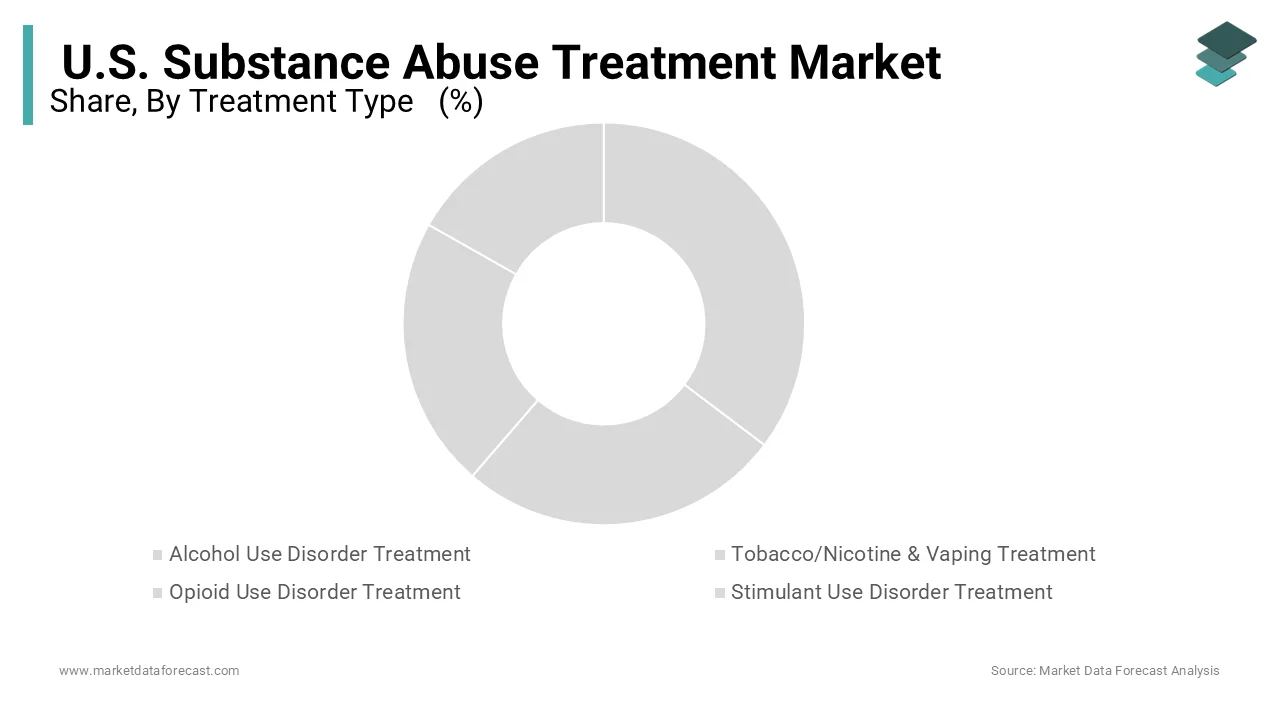
The opioid and prescription medication treatment segment is likely to experience the fastest CAGR of 9.2% over the forecast period. This rapid expansion is fueled by the ongoing opioid epidemic and the increasing recognition of medication-assisted treatment as the gold standard for care. The surge in demand is directly linked to the rising number of individuals developing dependence on prescribed pain relievers and illicit synthetic opioids. According to the Substance Abuse and Mental Health Services Administration, the number of people receiving treatment for opioid use disorder has increased significantly in recent years due to federal initiatives aimed at expanding access to buprenorphine and methadone. The Department of Health and Human Services has allocated substantial funding to support these efforts, removing regulatory barriers that previously limited the prescription of addiction medications. A study indicates that targeted public health interventions, primarily expanding the distribution of naloxone, have finally driven an historic annual decline in overall opioid overdose deaths. Furthermore, the integration of opioid treatment programs into primary care settings has broadened the reach of services, allowing for earlier intervention. The development of new long-acting injectable formulations of naltrexone and buprenorphine also contributes to growth by improving patient adherence and outcomes. These factors collectively drive the accelerated expansion of this segment as the healthcare system prioritizes effective solutions for the opioid crisis.
By End Use Insights
The rehabilitation centers segment held the majority share of 36.5% of the United States substance abuse treatment market in 2025. This supremacy of the segment was credited to its ability to provide comprehensive, structured, and intensive care environments that are essential for severe addiction cases. These facilities offer residential programs that remove patients from triggering environments, allowing for focused recovery through a combination of medical detoxification, individual and group therapy, and aftercare planning. According to data from the Substance Abuse and Mental Health Services Administration (SAMHSA), there are thousands of specialized treatment facilities nationwide, but a clear majority provide outpatient care rather than residential or inpatient services. In standard facility surveys, outpatient programs consistently make up over 80% of all operating clinics, while residential and inpatient settings represent a much smaller segment of the system. The effectiveness of these immersive programs in achieving long-term sobriety makes them the preferred choice for individuals with complex or long-standing addictions. As per the National Association of Addiction Treatment Providers, the demand for residential treatment has remained robust due to the increasing severity of substance use disorders, particularly those involving polysubstance abuse. Insurance coverage for inpatient rehabilitation has also improved under parity laws, making these expensive services more accessible to a broader population. The holistic approach offered by rehabilitation centers, which often includes mental health support, vocational training, and family counseling, addresses the multifaceted nature of addiction. This comprehensive care model yields higher success rates compared to outpatient alternatives for severe cases, reinforcing the dominance of rehabilitation centers. The established reputation and proven track record of these institutions continue to attract patients and referrals from healthcare providers, sustaining their leading position in the market.
On the contrary, the outpatient clinics segment is on the rise and is expected to be the fastest-growing segment in the market by witnessing a CAGR of 8.7% between 2026 and 2034. This expansion of the segment is propelled by the shift toward flexible, cost-effective, and accessible care models that allow patients to maintain their daily responsibilities while undergoing treatment. It shows changing consumer preferences and healthcare delivery trends. The growth is largely attributed to the expansion of telehealth services and the integration of medication-assisted treatment into primary care settings, which reduces the need for intensive residential stays. According to the American Society of Addiction Medicine (ASAM) Criteria, outpatient care is not automatically a universal first-line intervention. Instead, patient placement is dictated by a thorough biopsychosocial assessment across six unique dimensions, including withdrawal risks and biomedical conditions, to match the person to the safest and least restrictive level of care. The lower cost of outpatient care compared to inpatient rehabilitation makes it a more viable option for insured and self-pay patients alike. As per data from the National Survey of Substance Abuse Treatment Services, the number of facilities offering outpatient services has increased substantially, providing greater geographic accessibility. Furthermore, the reduction of stigma associated with visiting a clinic rather than a rehabilitation center encourages earlier help-seeking behavior. The ability of outpatient clinics to offer personalized treatment plans that fit into patients' work and family schedules enhances retention rates. This adaptability, combined with technological advancements in remote monitoring, positions outpatient clinics as a dynamic and rapidly expanding component of the treatment landscape.
COUNTRY LEVEL ANALYSIS
United States Substance Abuse Treatment Market Analysis
The United States was the top performer in the North American substance abuse treatment market and accounted for an 85.1% share in 2025 because of its high prevalence of substance use disorders and advanced healthcare infrastructure. The market status is characterized by a robust network of public and private treatment facilities, supported by significant government funding and evolving insurance mandates. A key driving factor is the persistent opioid epidemic, which has compelled federal and state governments to prioritize addiction treatment as a public health emergency. According to Centers for Disease Control and Prevention data, U.S. drug overdose fatalities exceeded 100,000 annually from 2021 to 2023, driving urgent efforts to expand addiction treatment capacity. While historic declines were reported in 2024 and 2025, overdose mortality remains a leading cause of death, necessitating ongoing public health intervention. Also, a major driver is the implementation of the Mental Health Parity and Addiction Equity Act, which has improved insurance coverage for substance abuse services, thereby increasing patient access. As per the Substance Abuse and Mental Health Services Administration, millions of Americans now have coverage for addiction treatment that was previously unavailable or unaffordable. The growing acceptance ofmedication-assistedd treatment as a standard of care further fuels market growth, with healthcare providers increasingly integrating these services into mainstream medical practice. Additionally, the rise in co-occurring mental health disorders has created a demand for integrated treatment models that address both addiction and psychiatric conditions simultaneously. These factors, combined with ongoing research into innovative therapies and digital health solutions, ensure that the United States remains the largest and most dynamic market for substance abuse treatment globally.
COMPETITIVE LANDSCAPE
The competitive landscape of the United States substance abuse treatment market is characterized by a mix of large multinational healthcare providers, specialized regional chains, and nonprofit organizations. Competition is driven by the need to provide high-quality, evidence-based care while managing costs and ensuring regulatory compliance. Large players leverage their scale to offer comprehensive services and negotiate better reimbursement rates from payers. Smaller specialized facilities often compete based on personalized care and niche treatment modalities. The entry of telehealth providers has intensified competition by offering convenient and accessible alternatives to traditional in-person treatment. Regulatory changes and parity laws have leveled the playing field, allowing more providers to enter the market. However, workforce shortages remain a critical challenge that affects all participants. Companies differentiate themselves through innovative treatment programs, superior patient outcomes, and strong community partnerships. The market remains fragmented with no single entity dominating the entire sector. This fragmentation creates opportunities for consolidation and strategic alliances as organizations seek to enhance their capabilities and expand their reach to meet the growing demand for effective substance abuse treatment services across the nation.
KEY MARKET PLAYERS
Some of the companies that are playing a dominating role in the U.S. Substance Abuse Treatment Market include
- Hazelden Betty Ford Foundation
- Journey Pure (Regard Recovery)
- Workit Health
- Pyramid Healthcare, Inc.
- American Treatment Network
- Banyan Treatment Centers
- Asana Recovery
- Acadia Healthcare
- Promises Behavioral Health
- BayMark Health Services
TOP LEADING PLAYERS IN THE MARKET
- Universal Health Services Inc operates a vast network of behavioral health facilities across the United States, providing comprehensive inpatient and outpatient substance abuse treatment services. The company focuses on delivering evidence-based care through its acute care hospitals and freestanding behavioral health centers. Recent strategic initiatives include expanding capacity in key markets to address the growing demand for addiction services. Universal Health Services actively invests in staff training and clinical protocols to improve patient outcomes and retention rates. The company leverages its scale to negotiate favorable contracts with insurance providers, enhancing accessibility for patients. By integrating mental health and substance abuse treatments, the organization offers holistic care models that address co-occurring disorders effectively. These efforts strengthen its reputation as a leading provider of high-quality behavioral health services while ensuring sustainable growth in a competitive landscape.
- Acadia Healthcare Company Inc specializes in providing behavioral health services with a strong emphasis on substance abuse treatment through its extensive network of facilities. The company operates psychiatric hospitals and community-based clinics that offer detoxification, rehabilitation, and ongoing support services. Acadia Healthcare recently focused on optimizing its portfolio by divesting non-core assets and investing in high-growth regions. The company emphasizes personalized treatment plans that incorporate medication-assisted therapy and behavioral interventions. Strategic partnerships with local healthcare providers enable Acadia to create seamless referral networks that facilitate continuous care. By prioritizing operational efficiency and clinical excellence, the company enhances its ability to serve diverse patient populations. These actions reinforce its position as a significant contributor to the national effort to combat substance abuse and improve recovery outcomes for individuals struggling with addiction.
- Hazelden Betty Ford Foundation is a nonprofit leader in the field of addiction treatment, renowned for its pioneering approach to recovery and comprehensive care models. The organization provides residential and outpatient services that integrate traditional twelve-step programs with evidence-based medical and psychological therapies. Recent actions include expanding its digital health offerings to reach individuals who cannot access in-person care. Hazelden Betty Ford actively engages in research and education to advance the understanding of addiction and improve treatment methodologies. The foundation collaborates with healthcare systems and policymakers to advocate for improved access to quality care. By maintaining a strong focus on patient-centered care and innovation, the organization continues to set standards for excellence in the field. Its commitment to reducing stigma and promoting recovery strengthens its influence and impact within the United States substance abuse treatment market.
TOP STRATEGIES USED BY KEY MARKET PARTICIPANTS
Key players in the United States substance abuse treatment market employ expansion strategies to increase their geographic footprint and service capacity. Companies actively acquire smaller treatment facilities to consolidate market presence and achieve economies of scale. Integration of medication-assisted treatment into standard care protocols is a common strategy to improve clinical outcomes and patient retention. Providers also focus on developing hybrid care models that combine in-person therapy with telehealth services to enhance accessibility. Strategic partnerships with insurance companies and employers help streamline payment processes and expand patient access. Investment in staff training and certification ensures high-quality care delivery and compliance with regulatory standards. Marketing efforts emphasize destigmatization and awareness to encourage early help-seeking behavior. These multifaceted approaches enable organizations to adapt to evolving healthcare demands while maintaining financial sustainability and operational efficiency in a complex regulatory environment.
MARKET SEGMENTATION
This research report on the U.S. substance abuse treatment market is segmented and sub-segmented into the following categories.
By Treatment Type
- Alcohol Use Disorder Treatment
- Tobacco/Nicotine & Vaping Treatment
- Opioid Use Disorder Treatment
- Stimulant Use Disorder Treatment
- Others
By End Use
- Rehabilitation Centers
- Outpatient Clinics
- Hospitals
- Others
By Region
- California
- Texas
- Florida
- Rest of the United States