- Product Description Description
- Table of Contents TOC
- List of Table & Figure LOT
- Get Free Sample PDF Sample PDF
Market Size, 2025
$7.69 BnMarket Estimate, 2026
$8.07 BnMarket Forecast, 2034
$11.75 BnCAGR, 2026–2034
4.82%U.S. Swimwear Market Size, Growth, Trends & Forecast (2026–2034)
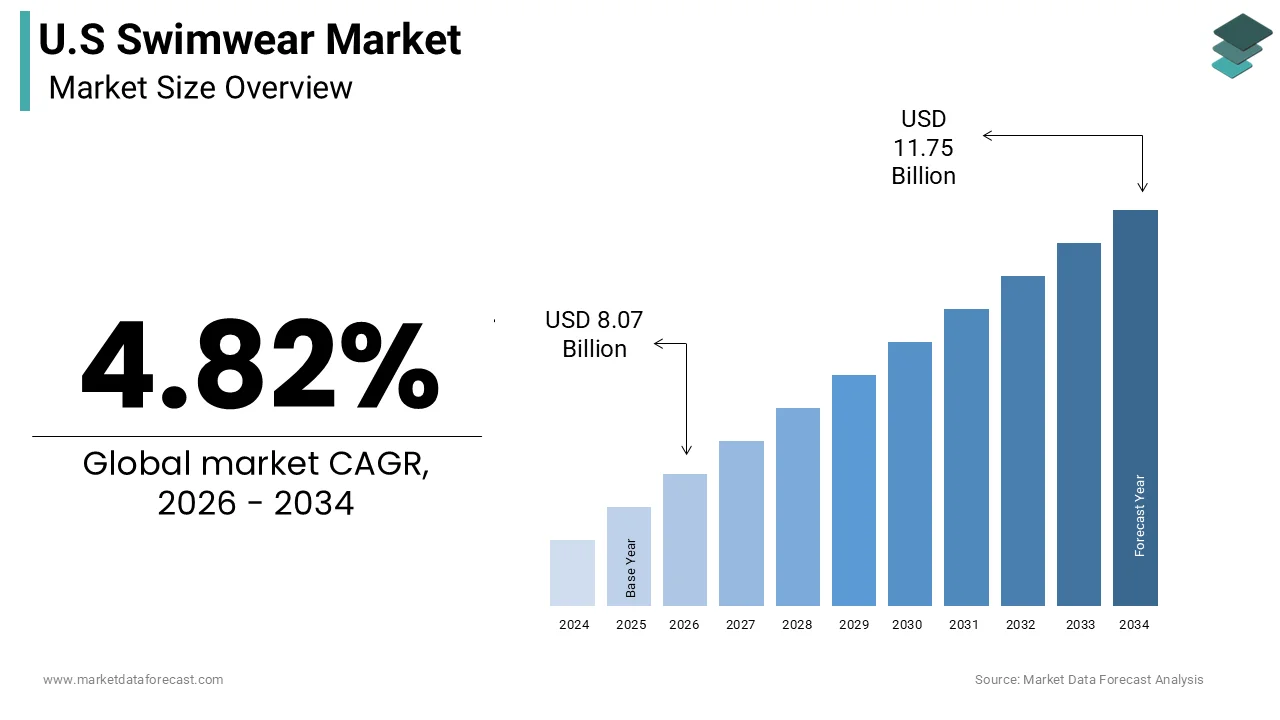
The U.S. swimwear market size was calculated to be USD 7.69 billion in 2025, is anticipated to reach USD 8.07 billion in 2026, and is projected to be worth USD 11.75 billion by 2034, registering a compound annual growth rate (CAGR) of 4.82% during the forecast period from 2026 to 2034. Driven by rising water-based recreational activities, body positivity movements, and inclusive sizing trends, the market continues steady expansion.
Key Executive Metrics (At-a-Glance)
- 2025 Base Valuation: USD 7.69 Billion
- 2026 Current Valuation: USD 8.07 Billion
- 2034 Forecast Valuation: USD 11.75 Billion
- Compound Annual Growth Rate (CAGR): 4.82% (2026–2034)
- Dominant Material Segment: Polyester and nylon segment (holding 44.3% market share in 2025)
- Fastest-Growing Material Segment: Spandex segment (projected at a CAGR of 5.8%)
- Dominant End User Segment: Women's segment (dominant share in 2025)
- Fastest-Growing End User Segment: Kids segment (projected at a CAGR of 6.5% from 2026 to 2034)
- Dominant Distribution Channel Segment: Offline segment (holding 44.3% market share in 2025)
- Fastest-Growing Distribution Channel Segment: Online segment (projected at a CAGR of 9.2% from 2026 to 2034)
Core Market Drivers
- Water-Based Recreation: Increasing engagement in swimming, surfing, beach tourism, and outdoor fitness.
- Body Positivity & Inclusivity: Cultural shifts rejecting narrow beauty standards, boosting plus-size collections and diverse consumer confidence.
Primary Market Restraints & Challenges
- Seasonality & Returns: Pronounced weather-dependent sales spikes alongside high online return rates due to sizing and fit inconsistencies.
U.S. Swimwear Market Segmentation Breakdown
| Segment Category | Leading Sub-Segment (Base Year) | Fastest-Growing Sub-Segment |
|---|---|---|
| By Material | Polyester/Nylon (44.3% share in 2025) | Spandex (CAGR of 5.8%) |
| By End User | Women (Dominant share in 2025) | Kids (CAGR of 6.5%) |
| By Distribution Channel | Offline (44.3% share in 2025) | Online (CAGR of 9.2%) |
Major Industry Players Profiled
Key market leaders shaping the U.S. swimwear industry include Nike Inc., Speedo International Ltd., Arena S.p.A., TYR Sport Inc., PVH Corp., Victoria's Secret & Co., American Eagle Outfitters Inc., Jantzen, La Blanca, and Perry Ellis International.
 Download Free Sample Report
U.S Swimwear Market Size
The U.S swimwear market size was calculated to be USD 7.69 billion in 2025 and is anticipated to be worth USD 11.75 billion by 2034, from USD 8.07 billion in 2026, growing at a CAGR of 4.82% during the forecast period.
The swimwear is aquatic apparel designed for recreational swimming, competitive sports, and leisure activities, including bikinis, one pieces, trunks, and board shorts. The definition extends beyond functional utility to encompass fashion identity and self-expression, where swimwear acts as a statement piece for vacation and social media engagement. Consumer engagement is heavily influenced by digital media platforms, where visual aesthetics drive purchasing decisions and trend adoption. According to the United States Census Bureau, approximately 76% of the population lives within 100 miles of a coastline or major water body, providing a substantial geographic base for regular swimwear usage. Furthermore, data from the National Recreation and Park Association indicates that over 200 million Americans visit public pools and beaches annually, underscoring the consistent demand for appropriate aquatic attire. The shift toward inclusive sizing and sustainable materials has redefined product expectations, moving away from standardized ideals toward personalized comfort and ethical consumption. As per the Bureau of Labor Statistics, average annual expenditures on apparel per consumer unit remain significant, with seasonal purchases contributing notably to household budgets. The integration of technical fabrics that offer UV protection and quick drying capabilities has elevated swimwear from mere clothing to performance gear.
MARKET DRIVERS
Rising Participation in Water-Based Recreational Activities
The increasing engagement in water-based recreational activities, such as swimming, surfing, and beach tourism, is enhancing the growth of the United States swimwear market. Americans are increasingly prioritizing active lifestyles and outdoor experiences, which necessitate specialized apparel for safety and comfort. According to the Sports and Fitness Industry Association, approximately 55 million individuals in the United States participated in swimming at least once in the past year, establishing a robust consumer base for aquatic apparel. This widespread participation drives demand for durable and functional swimwear that can withstand frequent exposure to chlorine, saltwater, water, and sunlight. The coastal tourism contributes significantly to the national economy, with millions of visitors flocking to beach destinations annually. This travel behavior stimulates seasonal purchases of new swimwear, as consumers seek fresh styles for vacations and social occasions. The proliferation of water parks and community pools further expands the usage occasions beyond natural bodies of water. Families often purchase multiple sets of swimwear for different activities, leading to higher volume sales. The trend toward wellness and fitness encourages regular swimming as a low-impact exercise, sustaining year-round demand in warmer regions. Social media platforms amplify this driver by showcasing aspirational beach lifestyles and encouraging users to document their aquatic adventures.
Influence of Body Positivity and Inclusive Sizing Trends
The growing movement toward body positivity and inclusive sizing by expanding the addressable audience and encouraging consumption is accelerating the growth of the United States swimwear market. Consumers are increasingly rejecting narrow beauty standards and demanding apparel that celebrates diverse body shapes and sizes. This cultural shift empowers individuals to participate in swimming and beach activities with confidence, driving demand for flattering and supportive designs. The sales of plus-size swimwear have grown significantly, as brands introduce curated collections for larger body types. The visibility of diverse models in advertising campaigns and social media reinforces the message that swimwear is for everybody. Retailers are responding by expanding inventory to include a wider variety of cuts and fits that accommodate different proportions. The psychological benefit of feeling represented and accepted fosters brand loyalty and repeat purchases. Influencers and advocates who promote self-love and body acceptance further amplify this trend, encouraging others to embrace swimwear without shame. The availability of customizable options, such as mix-and-match tops and bottoms, allows consumers to create personalized fits. This convergence of social advocacy and retail adaptation unlocks new revenue streams and broadens market penetration.
MARKET RESTRAINTS
Seasonality and Weather Dependence Limiting Year-Round Sales
The inherent seasonality of swimwear consumption, as demand fluctuates heavily with weather conditions and calendar seasons, is hampering the growth of the United States swimwear market. Sales peak during the summer months and decline sharply in colder periods, creating challenges for inventory management and revenue stability. The majority of the United States experiences distinct winter seasons, where outdoor swimming activities are limited or impossible. This climatic reality restricts the usage occasions for swimwear to a few months of the year for most consumers. The retail sales of swimwear show pronounced spikes in the second and third quarters, followed by significant drops in the fourth and first quarters. This volatility forces retailers to discount excess inventory heavily at the end of the season, eroding profit margins. Manufacturers struggle to maintain consistent production levels and cash flow due to the cyclical nature of demand. The unpredictability of weather patterns, such as cooler summers or early winters, can further disrupt sales forecasts and lead to overstock situations. Consumers often delay purchases until the peak season, hoping for better deals, which compresses the selling window. The lack of year-round demand in many regions limits the potential for continuous growth. Brands must invest in marketing strategies to extend the season through indoor pool promotions or tropical travel incentives.
High Return Rates Due to Fit and Sizing Issues
The high rate of returns associated with online swimwear purchases due to fit and sizing inconsistencies on profitability and operational efficiency, which is hindering the growth of the United States swimwear market. Swimwear requires a precise fit for both comfort and functionality, making it difficult for consumers to select the correct size without trying it on. This high return volume increases logistical costs for retailers, including shipping, processing, and restocking fees. The businesses lose significant revenue due to return fraud and the inability to resell returned hygiene-sensitive items like swimwear. Many retailers prohibit the return of used swimwear for health reasons, which complicates the process for customers who try items on at home. The lack of standardized sizing across brands further exacerbates the problem, leading to consumer frustration and hesitation in purchasing. Virtual fitting tools and detailed size guides help mitigate this issue, but do not eliminate it. The environmental impact of returns, including packaging waste and carbon emissions from transportation, also poses a reputational risk. Consumers may become reluctant to buy from brands with cumbersome return policies.
MARKET OPPORTUNITIES
Expansion of Sustainable and Eco-Friendly Materials
The growing consumer demand for sustainability brands to innovate with eco-friendly materials, such as recycled nylon and polyester, is setting up the growth of the United States swimwear market. Shoppers are increasingly concerned about the environmental impact of synthetic fabrics and plastic pollution in oceans. The consumers express willingness to pay more for sustainable products, indicating a shift in values. The production of recycled polyester is growing rapidly, providing a viable alternative to virgin materials. Marketing campaigns that resonate strongly with ocean conservation and circular economy practices resonate strongly with environmentally conscious demographics. Partnerships with environmental organizations can amplify brand credibility and reach. The development of biodegradable elastane alternatives offers further potential for reducing microplastic shedding. Direct-to-consumer channels allow for targeted messaging about sustainability efforts to engaged audiences. The strategic pivot toward sustainability transforms regulatory and social pressures into competitive advantages.
Integration of Smart Fabrics and UV Protection Technologies
The integration of smart fabrics and advanced UV protection technologies for enhancing the functionality and value proposition will additionally propel the growth of the United States swimwear market. Consumers are increasingly seeking apparel that provides health benefits, such as sun protection and moisture management. The UPF-rated clothing is recommended as an effective method for preventing skin damage from ultraviolet radiation. Brands can leverage this trend by incorporating fabrics with built-in UPF 50 plus protection into their swimwear lines. The demand for performance textiles with antimicrobial and quick-drying properties is growing among active consumers. Smart fabrics that change color based on UV exposure or temperature offer novel features that appeal to tech-savvy shoppers. The integration of compression technologies for muscle support appeals to competitive swimmers and fitness enthusiasts. Marketing campaigns that emphasize health and performance benefits differentiate these products from traditional fashion-focused swimwear. Collaborations with textile innovators enable the development of proprietary fabrics with unique characteristics. Direct-to-consumer channels allow for educational content about the benefits of technical swimwear.
MARKET CHALLENGES
Intense Competition and Market Saturation
The intense competition and saturation with numerous established brands and emerging direct-to-consumer labels vying for consumer attention is one of the major challenges for the United States swimwear market. The thousands of new clothing brands launched annually make it difficult for established players to maintain visibility and loyalty. Price wars and frequent promotions erode profit margins and devalue brand equity. The consumers are overwhelmed by choices, leading to decision fatigue and reduced brand allegiance. The rise of fast fashion retailers offering extremely low prices and rapid trend turnover puts pressure on traditional brands to accelerate their production cycles. This speed often compromises quality and sustainability, leading to reputational risks. Differentiation becomes challenging as many products appear similar in style and function. Marketing costs have increased as brands compete for digital advertising space and influencer partnerships. Customer acquisition costs are rising while retention rates decline due to the ease of switching brands. The saturation also leads to shorter product life cycles requiring constant innovation and inventory turnover.
Supply Chain Disruptions and Raw Material Volatility
The complex global supply chain for components, such as synthetic fibers, elastane, and manufacturing labor, also impedes the growth of the United States swimwear market. Disruptions in these supply chains due to geopolitical tensions, trade policies, and logistical hurdles pose significant challenges to production and delivery. Manufacturing sectors have faced persistent delays in sourcing key materials, affecting lead times and inventory levels. Fluctuations in the prices of oil-based raw materials directly impact the cost of nylon and polyester. The dependence on single-source suppliers for specialized fabrics exacerbates vulnerabilities to regional disruptions. Inventory management becomes challenging as businesses strive to balance stock levels against uncertain supply conditions. Delays in component availability can halt production lines and delay seasonal launches, leading to missed sales opportunities. The transition to sustainable materials also requires changes in supply chains, adding complexity. Companies must invest in diversifying supplier bases and enhancing logistics resilience. However, these measures require significant capital and time. Navigating this volatile landscape requires agility and strategic foresight to maintain operational continuity.
REPORT COVERAGE
| REPORT METRIC | DETAILS |
| Market Size Available | 2025 to 2034 |
| Base Year | 2025 |
| Forecast Period | 2026 to 2034 |
| CAGR | 4.82% |
| Segments Covered | By Material, End User, Distribution Channel, And Region |
| Various Analyses Covered | Global, Regional & Country Level Analysis; Segment-Level Analysis; DROC, PESTLE Analysis; Porter’s Five Forces Analysis; Competitive Landscape; Analyst Overview of Investment Opportunities |
| Regions Covered | New York, Massachusetts, Pennsylvania, Illinois, Ohio, Michigan, Texas, Florida, Georgia, California, Washington, Colorado. |
| Market Leaders Profiled | Nike Inc., Speedo International Ltd., Arena S.p.A., TYR Sport Inc., PVH Corp., Victoria's Secret & Co., American Eagle Outfitters Inc., Jantzen, La Blanca, Perry Ellis International |
SEGMENTAL ANALYSIS
By Material Insights
The polyester and nylon segment was the largest by holding 44.3% of the United States swimwear market share in 2025, with their superior durability, resistance to chlorine and saltwater degradation, and cost effectiveness compared to natural fibers. These synthetic materials form the structural backbone of most modern swimwear, providing the necessary strength and shape retention required for aquatic activities. The ability of these materials to withstand harsh environmental conditions without losing integrity or color vibrancy. The polyester fibers are highly resistant to abrasion and stretching, making them ideal for competitive swimwear and frequent recreational use. Nylon offers a softer hand feel and excellent elasticity, which enhances comfort and fit for casual swimwear. Manufacturers prefer these materials because they can be easily dyed in vibrant colors and printed with intricate patterns appealing to fashion-conscious consumers. The established supply chain for synthetic fibers ensures consistent availability and lower production costs compared to specialized, eco-friendly alternatives. Furthermore, the quick-drying properties of polyester and nylon reduce the risk of bacterial growth and enhance hygiene.
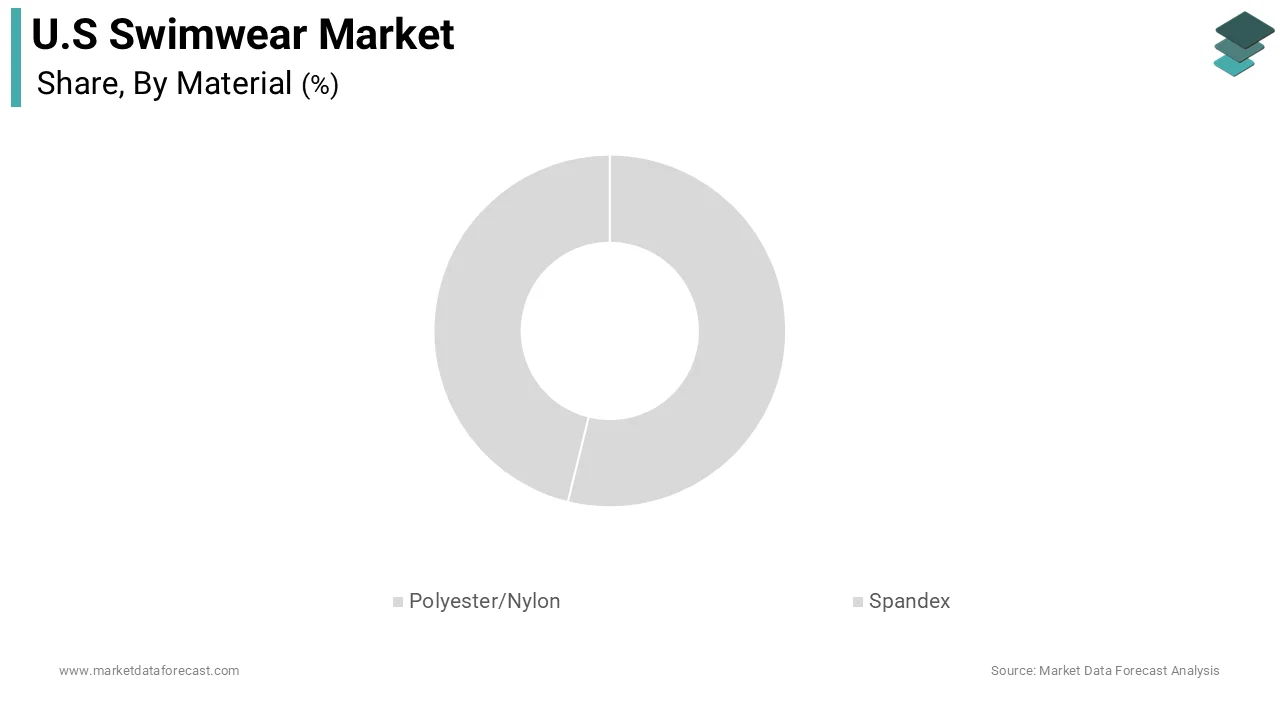
The spandex segment is likely to grow at the fastest CAGR of 5.8% during the forecast period. While rarely used alone, spandex content is increasing in premium swimwear lines to enhance stretch recovery and body contouring. The consumer preference for swimwear that offers compression and shaping benefits without restricting movement. As a major producer of elastane fibers, the demand for high-performance stretch fabrics in activewear and swimwear has risen by 15% annually, as consumers prioritize comfort and fit. Advances in spandex technology have improved resistance to chlorine and heat, extending the lifespan of the garment. Brands are marketing high spandex content as a premium feature that ensures the suit retains its shape after repeated use. The integration of spandex with sustainable fibers also appeals to eco-conscious buyers seeking durable, long-lasting products.
By End User Insights
The women's segment held a dominant share of the United States swimwear market in 2025, with a diverse variety of styles, frequent fashion cycles, and a higher propensity for multiple purchases per season. Women’s swimwear includes bikinis, one pieces, tankinis, and cover-ups, offering a wide range of options for different body types and occasions. Women’s apparel, including swimwear, consistently generates higher revenue than men’s due to the emphasis on fashion trends and seasonal updates. The cultural expectation for women is to update their swimwear wardrobe regularly to align with current styles and social media trends. The women are more likely to purchase swimwear for specific events, such as vacations, pool parties, and beach outings, leading to a higher frequency of buying. Social media platforms amplify this demand by showcasing new styles and influencers promoting specific brands. The emotional connection between swimwear and self-expression drives the willingness to experiment with different looks. Retailers cater to this segment with extensive collections and personalized marketing campaigns. The availability of mix-and-match options allows for customization, further boosting sales volume.
The kids segment is expected to register a CAGR of 6.5% from 2026 to 2034, with the increasing participation of children in swimming lessons, water sports, and family vacations. Parents are prioritizing safety and comfort when purchasing swimwear for their children, leading to demand for high-quality and protective designs. Drowning is a leading cause of unintentional injury death among children, which has increased awareness of the importance of proper swim attire and visibility. The mandatory participation in swimming lessons in many schools and communities ensures a consistent base of young swimmers. The youth participation in swimming has grown steadily, with millions of children engaging in aquatic activities annually. Parents often replace swimwear frequently due to rapid growth rates and wear and tear from active play. The rise of UV protective swimwear for children has further boosted sales as parents seek to shield sensitive skin from sun damage.
By Distribution Channel Insights
The offline segment was the largest by capturing 44.3% of the United States swimwear market share in 2025, with the consumer needing to try on products for fit and comfort before purchasing. Swimwear requires precise sizing and fit assessment, which is difficult to achieve online without physical interaction. According to the National Retail Federation, approximately 70% of apparel purchases still occur in physical stores where customers can evaluate texture and fit immediately. As per data from Shopify, return rates for online swimwear can exceed 30% due to sizing issues, prompting shoppers to prefer in-store trials. Physical stores offer immediate gratification, allowing customers to take home their purchases instantly for upcoming trips. The presence of knowledgeable staff who can assist with sizing and style recommendations enhances the shopping experience. Retailers often create immersive displays and seasonal promotions that attract foot traffic during peak summer months. The ability to see color accuracy and fabric quality in person builds consumer confidence. Additionally, many consumers enjoy the social aspect of shopping with friends or family for vacation outfits.
The online segment is likely to witness the fastest CAGR of 9.2% from 2026 to 2034, with the convenience of home shopping, extensive product selection, and advanced digital tools. E-commerce platforms allow consumers to browse thousands of styles and compare prices effortlessly from any location. The e-commerce sales continue to capture an increasing share of total retail revenue, with apparel being a top category. The improvement in virtual try-on technologies and detailed size guides mitigates the risks of incorrect fits. Mobile commerce has surged as smartphones have become the primary device for browsing and purchasing clothing. Direct-to-consumer brands leverage social media marketing to reach targeted audiences effectively, bypassing traditional retail intermediaries. Subscription services and personalized recommendations enhance customer retention and lifetime value. The ability to access niche and international brands not available locally expands consumer choices. Additionally, the ease of price comparison and access to reviews empowers shoppers to make informed decisions.
COMPETITION OVERVIEW
The competitive landscape of the United States swimwear market is characterized by intense rivalry among established athletic brands, fashion retailers, and emerging direct-to-consumer labels. Large players leverage strong brand equity and extensive distribution networks to maintain dominance, while niche brands compete on specialization and agility. Price competition is fierce in the mass market segment, whereas premium brands compete on technology and exclusivity. The rise of e-commerce has lowered barriers to entry, allowing new entrants to gain traction quickly. Consumer loyalty is increasingly fragmented as shoppers prioritize style and value over brand heritage alone. Retailers play a crucial role by curating assortments that balance popular staples with trending items. Intellectual property protection is vital as design copying remains a persistent issue. Companies must adapt rapidly to changing consumer preferences and seasonal trends. Success depends on balancing innovation with operational efficiency and strong brand storytelling.
KEY MARKET PLAYERS
A few major players of the U.S swimwear market include
- Nike Inc
- Speedo International Ltd
- Arena S.p.A
- TYR Sport Inc
- PVH Corp
- Victoria's Secret & Co
- American Eagle Outfitters Inc
- Jantzen
- La Blanca
- Perry Ellis International
Top Strategies Used by Key Market Participants
Key players in the United States swimwear market employ diverse strategies to maintain competitive advantage and drive growth. Product innovation remains central with companies developing sustainable fabrics and performance enhancing technologies. Brands focus on inclusivity by expanding size ranges and featuring diverse models in marketing campaigns. Strategic collaborations with designers and influencers help generate hype and cultural relevance. Sustainability initiatives are increasingly important as consumers demand eco-friendly materials and ethical production. Companies leverage data analytics to optimize inventory and predict seasonal trends accurately. Omnichannel integration ensures seamless experiences between online and physical stores. Limited edition releases create scarcity and drive urgency among consumers. Marketing campaigns emphasize body positivity and self-expression to build emotional connections.
Leading Players in the United States Swimwear Market
- Speedo USA remains a dominant force in the United States swimwear market by leveraging its heritage in competitive swimming and performance innovation. The company contributes significantly by developing advanced fabrics that reduce drag and enhance hydrodynamics for athletes. Recent actions include expanding its eco-friendly Endurance Plus collection, which uses recycled materials to appeal to environmentally conscious consumers. Speedo has strengthened its digital presence through enhanced e-commerce platforms and personalized fitting tools. The brand collaborates with elite swimmers and Olympic teams to validate product performance and build credibility. These initiatives ensure the brand remains the preferred choice for serious swimmers and fitness enthusiasts seeking durable and high-performance aquatic apparel.
- PVH Corp, through its Calvin Klein brand, holds a strong position in the US swimwear sector by blending iconic fashion with functional design. The company drives growth by leveraging its powerful brand equity and minimalist aesthetic that appeals to a broad demographic. Recent strategies involve launching inclusive size ranges and diverse marketing campaigns that resonate with modern values of body positivity. Calvin Klein has expanded its distribution through strategic partnerships with major department stores and online retailers. The firm invests heavily in digital marketing and influencer collaborations to maintain cultural relevance.
- Target Corporation contributes to the market through its exclusive private labels, such as Goodfellow Co for men and Kona Sol for women. The retailer focuses on providing affordable, trendy, and accessible swimwear to a mass audience. Recent actions include expanding sustainable fabric options and introducing limited edition designer collaborations to drive excitement. Target has enhanced its omnichannel capabilities by offering same-day delivery and easy in-store returns for online purchases. The firm leverages data analytics to predict trends and optimize inventory levels effectively.
MARKET SEGMENTATION
This research report on the US swimwear market has been segmented and sub-segmented based on material, end user, distribution channel & region.
By Material
- Polyester/Nylon
- Spandex
By End User
- Men
- Women
- Kids
By Distribution Channel
- Online
- Offline
By Region
- New York
- Texas
- Florida
- Georgia
- California
- Rest of U.S.