- Product Description Description
- Table of Contents TOC
- List of Table & Figure LOT
- Get Free Sample PDF Sample PDF
Market Size, 2025
$78.73 BnMarket Estimate, 2026
$82.35 BnMarket Forecast, 2034
$188.02 BnCAGR, 2026–2034
4.6%U.S. Wine Market Summary
The U.S. wine market was valued at USD 78.73 billion in 2025 and is projected to reach USD 188.02 billion by 2034, growing at a CAGR of 4.6% from 2026 to 2034, driven by direct-to-consumer shipping liberalization, premiumization, and AI-driven personalization.
Market Snapshot
- 2025 Market Size: USD 78.73 billion
- 2026 Estimate: USD 82.35 billion
- 2034 Forecast: USD 188.02 billion
- CAGR (2026–2034): 4.6%
- Base Year: 2025
- Forecast Period: 2026–2034
The U.S. wine market represents a culturally embedded, agriculturally sensitive, and economically stratified ecosystem, spanning large-scale vineyard operations, boutique wineries, digital direct-to-consumer platforms, and omnichannel retail distribution. Market dynamics are increasingly shaped by regulatory evolution, climate pressure, digital discovery models, and premium-led consumption behavior rather than volume-driven growth alone.
Quick Growth Drivers
- Expansion of direct-to-consumer (DTC) wine shipping laws across U.S. states
- Consumer shift toward premium, terroir-driven, and sustainable wines
- Growth of subscription commerce and curated gifting platforms
- AI-powered personalization in discovery, recommendation, and loyalty
- Rising demand for experiential and story-led wine consumption
Principal Restraints
- Federal excise tax disparities disproportionately impacting small wineries
- Vineyard and cellar labor shortages driven by demographic and policy shifts
- Regulatory fragmentation across interstate wine shipping and compliance
- Climate volatility and wildfire exposure affecting grape supply stability
High-Value Opportunities
- Premium pricing through regenerative viticulture and sustainability certifications
- AI-driven wine clubs, subscriptions, and predictive taste profiling
- Blockchain-enabled traceability and authenticity verification
- Growth of alternative formats (low-ABV, canned, sustainable packaging)
- Deeper integration with food delivery, hospitality tech, and gifting platforms
Key Market Challenges
- Compliance complexity across state-level alcohol shipping regulations
- Rising insurance and land costs in key viticultural regions
- Margin pressure from excise taxation and logistics costs
- Workforce scarcity limiting vineyard expansion and operational scalability
Fastest-Growing Segments
- Direct-to-Consumer (DTC) Sales Channels
- Premium & Luxury Wines
- AI-Personalized Subscription & Gifting Platforms
- Regenerative and Sustainable Wine Labels
Regional Leadership & Dynamics
- California: Dominant production base; premium Napa & Sonoma positioning
- Washington & Oregon: Climate-resilient, high-quality appellations
- New York: Finger Lakes growth, DTC-led premiumization
- Rest of U.S.: Emerging boutique and experiential wineries
What Wins Commercially
- Direct ownership of consumer relationships via DTC platforms
- Premium scarcity, allocation, and storytelling-driven branding
- Digital traceability and provenance transparency
- AI-powered discovery and subscription retention
- Sustainable viticulture aligned with ESG-conscious consumers
Top Strategic Ask for Executives
Shift from volume-led distribution toward premium, data-driven, and direct-to-consumer ecosystems that monetize personalization, sustainability, and experiential storytelling while navigating regulatory complexity.
Leading Players
Some of the companies that are playing a dominating role in the U.S. wine market include
E. & J. Gallo Winery, Constellation Brands, The Wine Group, Trinchero Family Estates, Treasury Wine Estates, Deutsch Family Wine & Spirits, Casella Family Brands, Bronco Wine Company, Jackson Family Wines, and Delicato Family Wines.
U.S. Wine Market Size
The U.S. wine market was valued at USD 78.73 billion in 2025, is estimated to reach USD 82.35 billion in 2026, and is projected to reach USD 188.02 billion by 2034, growing at a CAGR of 4.6% from 2026 to 2034
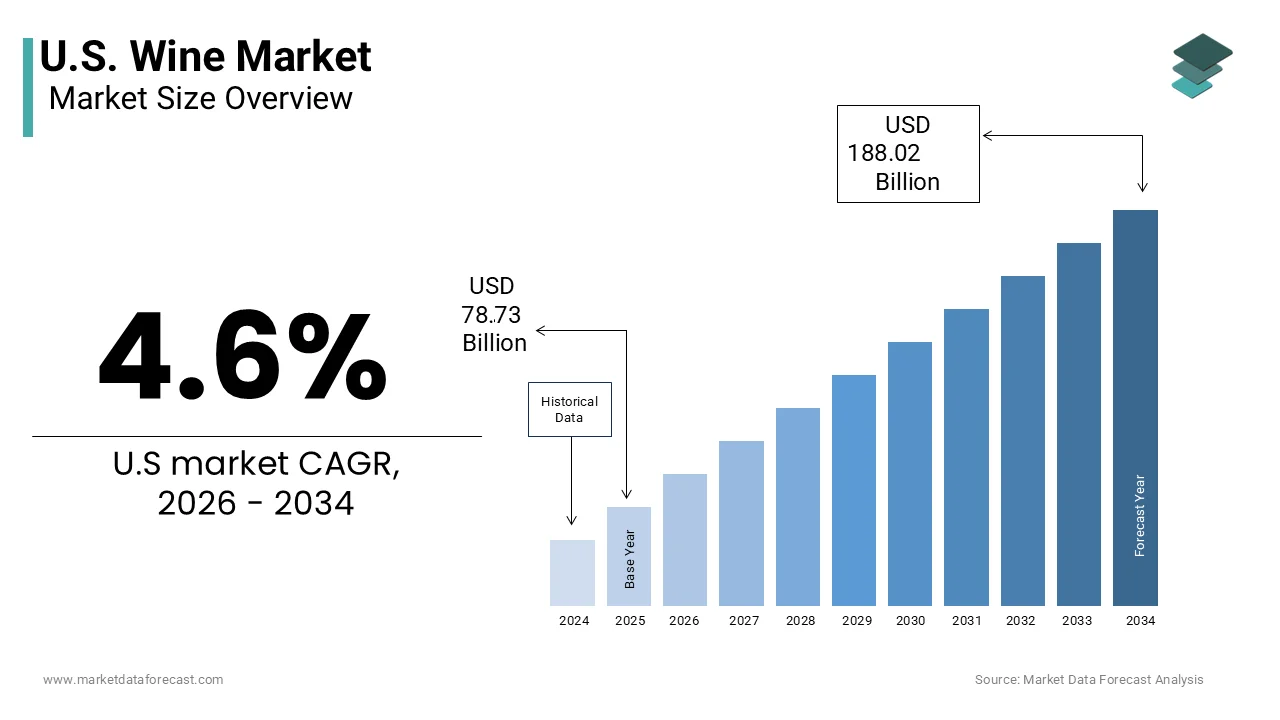
Wine is defined as an alcoholic beverage made from fermented grapes or other fruits, categorized primarily into red, white, rosé, and sparkling varieties. This market is deeply embedded in American culinary and social culture, serving as a staple for dining, celebration, and relaxation. According to the Wine Institute, California produces approximately 81% of all US wine, establishing the state as the dominant domestic supplier and a global powerhouse in viticulture. The market structure is bifurcated between domestic production and significant imports from traditional European countries such as Italy, France, and Spain, as well as emerging regions like Australia and Chile. According to the International Organisation of Vine and Wine (OIV) 2025 statistics, the United States remains the largest wine consumer by total volume at 33.3 million hectolitres, despite a volume contraction and a shift in consumer habits toward lower-frequency, higher-quality "premium" purchases rather than daily consumption. Consumer trends indicate a shift toward premiumization, where drinkers prioritize quality and unique varietals over quantity. The regulatory environment involves a complex three-tier system that separates producers, distributors, and retailers, influencing pricing and availability. Sustainability practices and organic certifications are increasingly influencing purchasing decisions. The market also sees growth in alternative formats such as canned wine and ready-to-drink cocktails, catering to younger demographics seeking convenience. This dynamic landscape requires stakeholders to navigate regulatory complexities while adapting to shifting health consciousness and lifestyle changes.
MARKET DRIVERS
Premiumization and Demand for High Quality Varietals
The trend toward premiumization and the increasing demand for high-quality varietals propel the growth of the United States wine market. Consumers are shifting away from value-oriented bulk wines toward premium and super premium categories that offer superior taste, terroir expression, and brand heritage. According to Impact Databank, sales of premium and super premium wines have consistently outpaced those of lower-priced segments, indicating a robust preference for quality over quantity. As sources, the average price per bottle for wine sold in retail channels has risen steadily, reflecting the willingness of consumers to invest in elevated drinking experiences. This shift is driven by a growing appreciation for winemaking craftsmanship, sustainable farming practices, and unique regional characteristics. Millennial and Generation Z consumers, in particular, are willing to pay more for wines that align with their values regarding environmental stewardship and ethical production. The influence of wine education and digital platforms has further amplified this trend, as enthusiasts seek specific appellations and rare vintages. Retailers have responded by expanding their selections of small production and artisanal wines, catering to discerning palates. The desire for exclusivity and differentiation motivates consumers to explore diverse wine types such as Pinot Noir, Cabernet Sauvignon, and Chardonnay from specific vineyards. This cultural evolution toward sophistication ensures that the premium segment continues to expand, driving overall market revenue and profitability for brands that emphasize quality and authenticity.
Growth of Direct-to-Consumer Sales Channels
The expansion of direct-to-consumer (DTC) sales channels greatly fuels the expansion of the United States wine market. This enables wineries to bypass traditional distribution layers and connect directly with buyers. Recent regulatory changes in several states have facilitated the shipping of wine directly to consumers, opening new avenues for growth and customer engagement. E-commerce platforms allow wineries to share their stories, educate consumers, and build communities through digital engagement. Subscription services and wine clubs provide recurring revenue opportunities and encourage exploration of new releases. Data collected from online interactions enables companies to personalize marketing efforts and improve customer retention. The ability to reach consumers in remote areas or those with limited access to specialty shops expands market reach. Brands are investing in user-friendly websites and secure payment systems to enhance the shopping experience. This digital transformation empowers producers to control their brand narrative and gather valuable insights into consumer preferences. By leveraging DTC channels, the wine industry can enhance profitability and foster deeper connections with its audience.
MARKET RESTRAINTS
Complex Regulatory Frameworks and Three-Tier System
Complex regulatory frameworks and the entrenched three-tier system are key factors hindering the growth of the United States wine market. This increases operational costs and limits market access. The alcohol industry is subject to a fragmented web of federal, state, and local regulations that govern production, labeling, advertising, and distribution. According to the Wine Institute’s 2024 Regulatory Analysis, the complexity of complying with varying state-level mandates established under the 21st Amendment remains a primary logistical hurdle for wineries and distributors navigating the U.S. market. The three-tier system, which mandates separation between producers, distributors, and retailers, adds layers of complexity and cost to the supply chain. As per the National Conference of State Legislatures, inconsistent regulations across different jurisdictions hinder national expansion efforts for emerging brands and small wineries. Compliance with these regulations requires substantial legal and administrative resources, particularly for small producers with limited budgets. High taxes and tariffs on imported wines also impact pricing strategies and profit margins. Restrictions on advertising and marketing limit the ability of brands to reach potential customers effectively. The inability to sell directly to consumers in certain states restricts revenue potential and customer relationship building. These regulatory burdens create barriers to entry and growth, forcing companies to navigate a fragmented and often restrictive legal landscape. The market will continue to face significant operational headwinds. This will persist until reforms simplify these processes.
Health Consciousness and Declining Consumption Among Youth
Health consciousness and declining consumption among younger demographics restrain the expansion of the United States wine market. A growing segment of the population is reducing or eliminating alcohol intake due to concerns about health risks, calorie content, and mental well-being. According to the Centers for Disease Control and Prevention, excessive alcohol use is linked to numerous health issues, prompting public health campaigns that encourage moderation. As per Gallup polls, the percentage of Americans who abstain from alcohol has increased in recent years, particularly among Millennials and Generation Z. This shift is driven by the wellness movement, which prioritizes physical fitness and mental clarity over traditional social drinking habits. The rise of the sober curious movement has led to increased demand for non alcoholic alternatives, diverting spending away from traditional wine. Bars and restaurants are responding by expanding their mocktail menus, further normalizing non alcoholic consumption. Marketing restrictions and negative perceptions of alcohol related harms also influence consumer behavior. While moderate drinking remains socially acceptable, the stigma associated with heavy consumption is growing. This cultural shift challenges the wine industry to adapt by promoting responsible drinking and exploring lower alcohol or non alcoholic product lines. The long-term impact of these changing attitudes may result in stagnant or declining volume growth for traditional wine categories.
MARKET OPPORTUNITIES
Expansion of Non Alcoholic and Low Alcohol Wines
The expansion of non alcoholic and low alcohol wines paves the way for the growth of the United States wine market. This caters to health-conscious consumers and the sober curious demographic. Innovations in dealcoholization technologies have enabled the creation of sophisticated non alcoholic wines that mimic the complexity and taste profiles of traditional counterparts. According to the Non Alcoholic Beer and Wine Association, sales of non alcoholic beverages have grown substantially, with wine alternatives emerging as a key category. Major wine producers are launching non alcoholic versions of their flagship products, leveraging brand recognition to attract new customers. These products appeal to individuals who wish to reduce alcohol intake for health, religious, or personal reasons. The versatility of non alcoholic wines in pairing with food allows for seamless integration into dining experiences. Retailers are dedicating shelf space to these products, recognizing their potential for growth and higher margins. Marketing campaigns that emphasize inclusivity and wellness resonate with modern consumers who value choice and balance. The expansion of this segment allows wine companies to diversify their portfolios and maintain relevance in a changing cultural landscape. The market can capture new revenue streams by embracing this trend. Furthermore, this approach builds loyalty among health-focused buyers.
Sustainable and Organic Wine Production
Sustainable and organic wine production provides major potential for the United States wine market. This is in line with the growing consumer demand for environmentally responsible products. Shoppers are increasingly scrutinizing the environmental impact of their purchases, preferring wines produced using organic farming methods and sustainable practices. According to the Organic Trade Association, sales of organic wine have grown consistently, outpacing conventional wine segments in certain demographics. As per the California Sustainable Winegrowing Alliance, certified sustainable wines are gaining traction among consumers who value transparency and ecological stewardship. Wineries are adopting practices such as water conservation, solar energy usage, and biodiversity protection to reduce their carbon footprint. Certifications such as USDA Organic and Demeter Biodynamic provide credibility and differentiate products in a crowded market. Retailers are highlighting sustainable credentials on shelves, attracting eco-conscious buyers. The story of sustainability resonates strongly with younger generations who prioritize ethical consumption. Collaborations with environmental organizations and community initiatives enhance brand reputation and loyalty. By positioning wine as a product of responsible agriculture, producers can command premium prices and build long-term relationships with value-driven consumers. This focus on sustainability ensures that the wine market remains dynamic and responsive to evolving societal expectations.
MARKET CHALLENGES
Climate Change and Environmental Volatility
Climate change and environmental volatility slow down the growth of the United States wine market. This affects grape yields, quality, and production consistency. Rising temperatures, changing precipitation patterns, and extreme weather events such as wildfires and droughts threaten vineyard viability. According to the University of California Agriculture and Natural Resources, climate change is altering the growing seasons for key varietals, forcing growers to adapt planting strategies and irrigation methods. As per the National Oceanic and Atmospheric Administration, increased frequency of wildfires in wine-producing regions like California has led to smoke taint in grapes, resulting in significant crop losses and financial damage. These environmental stressors increase the risk of unpredictable harvests and fluctuating quality, impacting brand reliability. Growers must invest in resilient farming practices and technology to mitigate these risks, which requires substantial capital. The uncertainty surrounding future climate conditions makes long-term planning difficult for wineries. Insurance costs are rising, and some regions may become unsuitable for traditional viticulture. The industry faces the challenge of balancing production needs with environmental sustainability. Addressing these climate-related vulnerabilities requires collaboration across the sector and investment in research and development. The persistent threat of environmental disruption remains a critical challenge that requires ongoing adaptation and strategic intervention to protect the integrity and future of the wine market.
Supply Chain Disruptions and Labor Shortages
Supply chain disruptions and labor shortages impede the expansion of the United States wine market. This impacts production efficiency and distribution reliability. The wine industry relies on a complex supply chain involving glass bottles, corks, labels, and transportation logistics, all of which have faced recent disruptions. According to the Bureau of Labor Statistics, labor shortages in the agriculture and manufacturing sectors have affected grape harvesting and bottling operations, leading to delays and increased costs. The reliance on global sourcing for materials adds complexity and risk to supply chain management. Transportation bottlenecks and rising fuel costs further exacerbate these challenges, affecting timely delivery to markets. Companies must invest in redundant supply chains and alternative sourcing strategies to mitigate these risks, which requires significant resources. The unpredictability of supply conditions makes inventory management difficult and affects customer satisfaction. These disruptions can lead to product shortages on shelves, frustrating consumers and damaging brand loyalty. Addressing these supply chain vulnerabilities requires collaboration across the industry and investment in resilient infrastructure. The persistent issue of labor and material availability remains a critical challenge that requires ongoing vigilance and strategic planning to ensure operational continuity.
REPORT COVERAGE
| REPORT METRIC | DETAILS |
| Market Size Available | 2025 to 2034 |
| Base Year | 2025 |
| Forecast Period | 2026 to 2034 |
| Segments Covered | By Distribution Channel and Region. |
| Various Analyses Covered | Global, Regional, and Country-Level Analysis, Segment-Level Analysis, Drivers, Restraints, Opportunities, Challenges; PESTLE Analysis; Porter’s Five Forces Analysis, Competitive Landscape, Analyst Overview of Investment Opportunities |
| Countries Covered | New York, Massachusetts, Pennsylvania, Illinois, Ohio, Michigan, Texas, Florida, Georgia, California, Washington, Colorado. |
| Market Leaders Profiled | E. & J. Gallo Winery, Constellation Brands, Inc., The Wine Group LLC, Trinchero Family Estates, Treasury Wine Estates Ltd, Deutsch Family Wine & Spirits, Casella Family Brands, Bronco Wine Company, Jackson Family Wines, Delicato Family Wines |
SEGMENTAL ANALYSIS
By Distribution Channel Insights
The still wine segment was the largest in the United States wine market and occupied a substantial share in 2025. This prominence of the segment is supported by its entrenched role in daily consumption habits and its versatility in culinary pairing. Unlike sparkling or fortified wines, which are often reserved for special occasions, still wine is consumed regularly with meals and during casual social interactions. According to the Wine Institute (2024), still wine represents 84.3% of the U.S. wine market by volume, maintaining its status as the primary segment for domestic consumers. As per sources, red and white still wines are consistently the top-selling categories in retail outlets, driven by consumer familiarity and wide availability. The diverse range of varietals, such as Cabernet Sauvignon, Chardonnay, and Pinot Noir,r allows consumers to find options that suit various taste preferences and food pairings. This versatility ensures that still wine remains relevant across different dining scenarios from quick weeknight dinners to formal gatherings. The established production infrastructure in California and other domestic regions supports a consistent supply and competitive pricing. Retailers allocate significant shelf space to still wines, reinforcing their visibility and accessibility. The cultural normalization of wine as a dinner companion further sustains high volume sales. This broad acceptance and routine integration into American lifestyles solidify still wine as the leading product type in the market. The affordability and extensive variety of price points available in the still wine segment significantly drive its market domination. Still wines are produced at various quality levels, ranging from value-oriented bulk options to premium reserve bottles, catering to diverse economic segments. The ability to purchase still wine in multiple formats, including standard bottles,s box wines, and cans,s enhances its accessibility and convenience. Box wines in particular have gained popularity for their cost efficiency and longer shelf life after opening. This economic flexibility allows consumers to enjoy wine regularly without financial strain. Major retailers frequently promote still wines through discounts and bundle offers, driving volume sales. The widespread distribution network ensures that still wine is available in supermarkets, ts convenience stores, res and liquor shops across the country. This combination of affordability and availability ensures that still wine remains the primary choice for the majority of American wine drinkers.
The sparkling wine segment is expected to exhibit a noteworthy CAGR of 4.4% from 2026 to 2034 due to its association with celebration occasion-based consumption. Consumers increasingly view sparkling wine as an accessible luxury for marking milestones, holidays, and social gatherings. The perception of sparkling wine as a festive beverage encourages trial and repeat purchases among younger demographics who seek experiential drinking opportunities. Social media platforms amplify this trend by showcasing sparkling wine in celebratory contexts, influencing consumer behavior. The rise of brunch culture has also contributed to growth,h with mimosas and bellinis becoming popular menu items in restaurants and cafes. Retailers respond by expanding their sparkling wine selections and offering promotional displays during key holiday periods. The availability of affordable sparkling options has democratized access, ss allowing more consumers to participate in this trend. This cultural shift toward celebrating everyday moments with sparkling wine ensures sustained growth for the segment. Innovation in formats and flavor profiles accelerates the growth of the sparkling wine segment. Manufacturers are introducing canned sparkling wines and flavored variants that appeal to modern consumers seeking convenience and novelty. The introduction of fruit-infused sparkling wines, such as peach, strawberry,y and citrus blends, expands the appeal beyond traditional grape flavors. These innovations lower the barrier to entry for non-traditional wine drinkers who may find classic sparkling wines too dry or complex. Brands are leveraging sleek packaging and vibrant marketing to position sparkling wine as a lifestyle beverage. Retailers are dedicating more shelf space to these innovative products, recognizing their potential for impulse purchases. The versatility of sparkling wine in mixology also drives demand in the foodservice sector. This continuous innovation ensures that the sparkling wine segment remains dynamic and rapidly expanding.
By Color Insights
The red wine segment held the majority share of 45.1% of the United States wine market in 2025. This supremacy of the segment is credited to its perceived health benefits and high antioxidant content. Consumers often choose red wine for its association with cardiovascular health and longevity, attributed to compounds like resveratrol. The robust flavor profile of red wine pairs well with a wide range of foods, including meats, cheeses, and hearty dishes, making it a versatile choice for dining. Popular varietals such as Cabernet Sauvignon, Merlot, and Pinot Noir dominate sales charts, reflecting strong consumer preference. Marketing campaigns often highlight the health aspects of red wine, reinforcing its positive image. Retailers stock extensive selections of red wines, ensuring availability across all price points. The cultural perception of red wine as sophisticated and mature further enhances its appeal. This combination of health perception and culinary versatility solidifies red wine as the dominant color segment. Strong brand loyalty and established consumer preferences drive the dominance of red wine in the market. Many American wine drinkers have developed long-standing preferences for specific red varietals and brands c, creating stable demand. The consistency of red wine production allows brands to build trust and recognition over time. Educational initiatives by wineries and retailers help consumers understand different red wine styles, fostering deeper engagement. The prevalence of red wine in popular culture and media reinforces its status as a preferred beverage. Retail promotions often focus on red wine bundles, encouraging bulk purchases. The ability of red wine to age well also appeals to collectors and enthusiasts who invest in premium bottles. This deep-rooted loyalty and cultural significance ensure that red wine continues to lead the market by color.
The rosé wine segment is predicted to witness the highest CAGR of 2.9% during the forecast period, owing to effective lifestyle branding and social media influence. Rosé has become synonymous with leisure summer vibes and social connectivity, appealing particularly to Millennials and Generation Z. The visual appeal of rosé makes it highly shareable on Instagram and TikTok, driving organic marketing and brand awareness. Wineries have responded by creating stylish labels and packaging that resonate with younger audiences. The perception of rosé as a refreshing and approachable wine lowers the barrier for new drinkers. Retailers capitalize on this trend by featuring rosé prominently during the spring and summer seasons. The expansion of rosé offerings from major producers ensures widespread availability. This alignment with modern lifestyle trends ensures that rosé continues to experience rapid growth. The versatility and refreshing flavor profile of rosé wine accelerate its growth in the US market. Rosé offers a balance between the complexity of red wine and the crispness of white wine, making it suitable for various occasions and food pairings. The availability of dry, sweet,t and sparkling rosé variants caters to different taste preferences. Consumers appreciate rosé for its ability to be served chilled, providing a refreshing option in warm weather. The rise of rosé all-day drinking culture encourages consumption beyond traditional dinner settings. Retailers support this trend by offering a wide range of rosé prices and styles. This functional and sensory appeal ensures that rosé remains a dynamic and high-growth segment.
By End User Insights
The women segment led the United States wine market and captured a 53.9% share in 2025. This leading position of the segment is attributed to higher participation rates and significant purchasing influence. Female consumers are more likely to consume wine regularly and make household buying decisions regarding alcoholic beverages. The perception of wine as a sophisticated and relaxing beverage resonates strongly with female demographics. Marketing campaigns often target women by emphasizing themes of self-care, friendship,p and enjoyment. Retailers tailor their displays and promotions to appeal to female shoppers, highlighting approachable and flavorful options. The rise of women-focused wine clubs and communities further reinforces engagement. Women are also more likely to explore new varietals and brands driven by curiosity and social recommendations. This high level of involvement and decision-making power ensures that women remain the primary drivers of wine sales. The preference for lower alcohol and sweeter wine profiles among women contributes to their leading position in the market. Female consumers often seek wines that are easier to drink and less intense in alcohol content, aligning with health and wellness trends. The availability of such options in mainstream retail channels facilitates regular purchases. Women are also influenced by packaging and labeling aesthetics,s preferring designs that are elegant and inviting. Brands that cater to these preferences build strong loyalty and repeat business. The social aspect of wine consumption among women often involves sharing and trying new products, further driving volume. Retailers recognize this trend by stocking diverse options that meet these specific tastes. This alignment with female preferences ensures sustained dominance in the market.
The men segment is estimated to register the fastest CAGR of 3.3% between 2026 and 2034. This quick surge of the segment is propelled by increasing interest in premiumization and wine collecting. Male consumers are increasingly exploring high-end wines, rare vintages,s and investment-grade bottles as hobbies and status symbols. This engagement leads to higher spending on individual bottles and cases. The culture of wine collecting appeals to men who value exclusivity and heritage. Brands leverage this by offering limited edition releases and membership programs. Retailers enhance the shopping experience with knowledgeable staff and curated selections for connoisseurs. The social aspect of sharing rare wines with peers also drives demand. This shift toward sophisticated consumption ensures that the male segment continues to expand rapidly. The adoption of wine in casual dining settings accelerates growth among male consumers. Men are increasingly choosing wine over beer or spirits during meals and social outings, reflecting changing gender norms. The destigmatization of wine as a masculine beverage encourages trial and regular consumption. Breweries and distilleries are also launching wine-inspired products to capture this demographic. Retailers promote wine as a versatile companion for grilling and sports viewing, appealing to male interests. This broader acceptance in casual contexts ensures that men remain a dynamic and growing segment in the wine market.
By Distribution Channel Insights
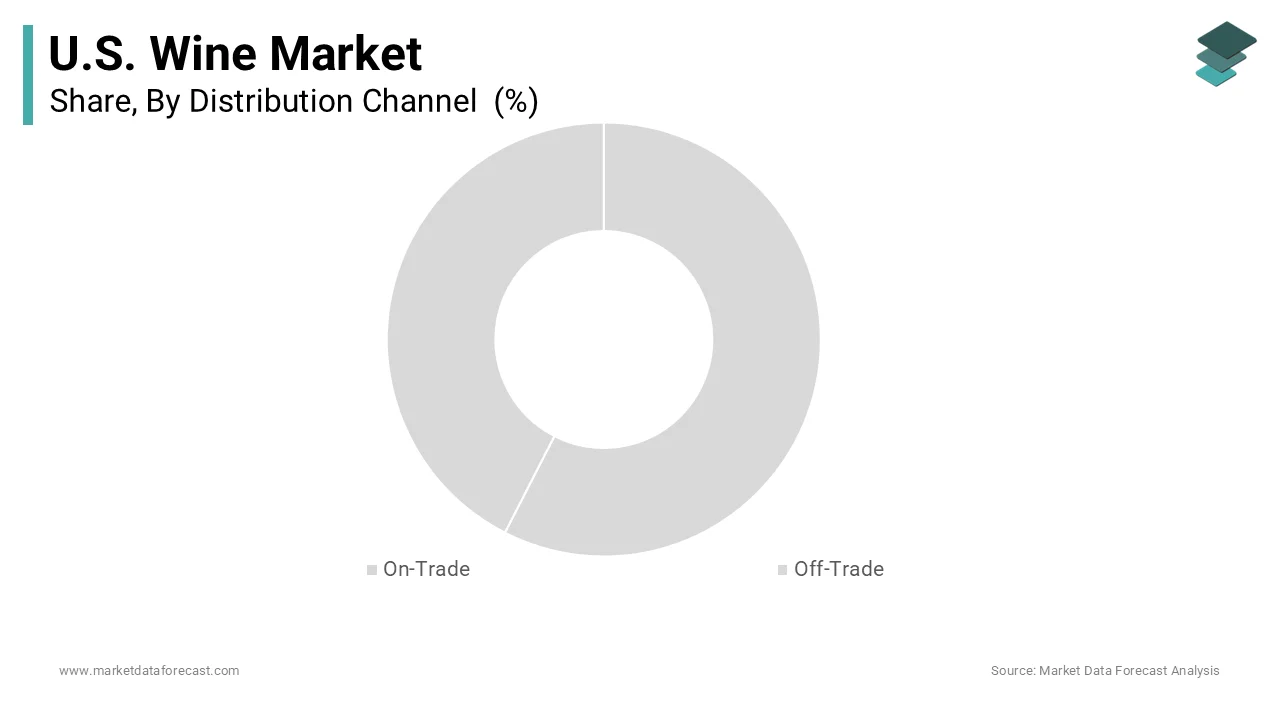
The off-trade channel segment dominated the US wine market and accounted for a significant share in 2025. This dominance of the segment is driven by the convenience it offers and the growing trend of home consumption. Consumers prefer purchasing wine from liquor stores, supermarkets, and online retailers for the ease of access and wider selection. The comfort of consuming wine at home, particularly after the pandemic, ic has sustained high-trade demand. Retailers offer competitive pricing and promotions that attract budget-conscious shoppers. The availability of diverse brands and niche products in large retail formats allows consumers to explore new options without leaving home. The integration of curbside pickup and delivery services further enhances convenience. This accessibility and flexibility ensure that the off-trade channel remains the primary source for wine purchases. Regulatory ease and pricing advantages significantly contribute to the dominance of the off-trade channel. Unlike on-premise establishments, off-trade retailers face fewer restrictions on operating hours and sales volumes in many states. Taxes and markups are often lower in off-trade settings, resulting in better deals for buyers. The ability to purchase wine alongside other groceries simplifies shopping trips and encourages larger basket sizes. Retailers leverage loyalty programs and digital coupons to drive repeat business. The stability of off-trade sales provides a reliable revenue stream for producers and distributors. This economic and regulatory environment ensures that the off-trade channel maintains its leading position.
The on-trade channel segment is anticipated to witness the fastest CAGR of 9.2% over the forecast period. This swift growth of the segment is supported by the rebound in hospitality and social dining following pandemic restrictions. Consumers are eager to return to bars, restaurants, and clubs for social interaction and experiential drinking. The role of wine pairings in enhancing culinary experiences drives sales in upscale venues. Events and festivals featuring wine tastings have also boosted on-trade visibility. The social atmosphere and immediate gratification of on-premise drinking cannot be replicated at home, driving sustained growth. This resurgence in social activity ensures that the on-trade channel continues to expand rapidly. Experiential marketing and brand engagement accelerate the growth of the on-trade channel. Wine brands invest heavily in on-premise activations such as sponsored events, bartender training, ng, and exclusive launches to build loyalty. The immersive nature of trade experiences allows brands to tell their stories and connect emotionally with customers. Bars and restaurants serve as showcases for premium and limited edition wines, encouraging upselling and exploration. The integration of digital menus and interactive displays enhances engagement. This strategic focus on experience ensures that the on-trade channel remains a dynamic and high-growth area.
REGIONAL ANALYSIS
United States Wine Market Analysis
The United States outperformed other countries in the North American wine market and accounted for a 90.5% share in 2025. This position of the US market is propelled by high maturity, extensive product diversity,y and strong brand recognition. Data from the OIV and Wine Institute confirms the United States remains the world's largest wine consumer by volume, although total consumption declined by approximately 5.8% in 2024 as consumers shift toward moderation and competing beverage categories, with premiumization driving value rather than volume growth. The market benefits from a well-developed distribution network and a robust regulatory framework that ensures product safety and quality. The presence of major multinational companies fosters innovation and competition, driving continuous improvement in product offerings. Consumer preferences are influenced by health consciousness and sustainability, ty prompting brands to adapt their strategies. The United States leads in trends such as non alcoholic wines and sustainable viticulture,e influencing global market dynamics. Investment in digital marketing and e-commerce enhances reach and engagement. The strong economic foundation and high disposable income support demand for premium and luxury wines. This combination of scale innovation and consumer sophistication ensures that the United States remains the central pillar of the global wine industry.
COMPETITION OVERVIEW
The United States dominated the Global Wine market and occupied a 17.8% share in 2025. Moreover, the competition in the US market is intense and characterized by the presence of large multinational corporations alongside thousands of small boutique wineries. Major players compete based on brand heritage, product quality, price,e and distribution efficiency to secure shelf space and consumer loyalty. The market sees continuous innovation as companieslaunch news formats and premium expressions to differentiate their offerings. Private label brands pose a significant challenge to national brands by offering affordable alternatives that appeal to budget-conscious shoppers. Boutique wineries contribute to market diversity by catering to niche segments seeking unique and authentic products. Consolidation through mergers and acquisitions is common as larger firms seek to expand their reach and achieve economies of scale. Regulatory complexities and varying state laws influence distribution strategies and market access. The rise of health consciousness drives demand for low alcohol and non alcoholic options, prompting reformulation efforts. This dynamic landscape requires agility and strategic foresight to navigate changing trends and maintain market relevance effectively.
KEY MARKET PLAYERS
A few major players of the US wine market include
- & J. Gallo Winery
- Constellation Brands Inc
- The Wine Group
- Treasury Wine Estates
- Trinchero Family Estates
- Delicato Family Wines
- Jackson Family Wines
- Michelle Wine Estates
- Bronco Wine Company
- Deutsch Family Wine & Spirits
- Pernod Ricard
- Accolade Wines
- Castel Frères
- Casella Family Brands
- The Duckhorn Portfolio
TOP LEADING PLAYERS IN THE MARKET
- E and J Gallo Winery is a family-owned enterprise and one of the largest wine producers globally, with a dominant presence in the United States. The company manages a diverse portfolio ranging from value-oriented brands to premium luxury labels. Gallo leverages its extensive distribution network to ensure widespread availability across retail and hospitality channels. Recent actions include strategic acquisitions of premium wine brands to enhance its high-end offerings and expand market reach. The company invests heavily in sustainable viticulture practices and water conservation initiatives to address environmental concerns. Gallo also focuses on digital innovation by enhancing direct-to-consumer platforms and personalized marketing campaigns. These efforts strengthen its market position by aligning with modern consumer values and improving operational efficiency. Gallo maintains a balance between scale and quality. They continue to lead the industry through innovation and responsible stewardship.
- Constellation Brands Inc is a leading international producer and marketer of beer, wine, and spirits with a significant footprint in the US wine sector. The company owns iconic wine brands such as Robert Mondavi and Kim Crawfo, rd which are staples in American households. Constellation focuses on premiumization strategies to capture value-driven consumers and enhance brand equity. Recent actions involve optimizing its portfolio by divesting lower-performing assets and investing in high-growth premium wine categories. The company emphasizes sustainability by reducing carbon emissions and promoting ethical sourcing across its supply chain. Constellation also leverages data analytics to understand consumer trends and tailor marketing efforts effectively. These initiatives strengthen its competitive edge by ensuring relevance in an evolving market landscape. Constellation prioritizes brand strength and operational excellence. Consequently, it maintains its status as a key player in the global beverage alcohol industry.
- Treasury Wine Estates is a global wine company with a strong presence in the United States through its premium and luxury brands such as Penfolds and 19 Crimes. The company is known for its commitment to quality and innovation in winemaking techniques. Treasury Wine Estates focuses on expanding its direct-to-consumer channels and enhancing customer engagement through digital platforms. Recent actions include launching new premium labels and expanding production capabilities in key markets to meet rising demand. The company prioritizes sustainable farming practices and community involvement to build long-term resilience. Treasury also invests in marketing campaigns that highlight the heritage and craftsmanship of its wines. These strategies strengthen its market position by attracting discerning consumers and fostering brand loyalty. By balancing tradition with modern business practices, Treasury Wine Estates continues to grow its influence in the competitive global wine market.
Top Strategies Used by Key Market Participants
Key players in the United States wine market employ several major strategies to maintain competitiveness and drive growth. Premiumization is central to these efforts, with companies focusing on high-end luxury brands to capture value-conscious consumers. Strategic acquisitions allow firms to expand their portfolios and access niche markets with high growth potential. Sustainability initiatives, including eco-friendly packaging and responsible sourcing, enhance brand reputation and meet regulatory expectations. Digital transformation enables direct-to-consumer sales and personalized marketing campaigns that build loyalty. Innovation in alternative formats such as canned wine and ready-to-drink cocktails appeals to younger demographics seeking convenience. Partnerships with hospitality venues ensure prominent placement and visibility in on-trade channels. These combined strategies allow participants to adapt to evolving consumer preferences and sustain long-term profitability in a highly competitive environment.
MARKET SEGMENTATION
This research report on the U.S. wine market has been segmented and sub-segmented into the following categories:
By Distribution Channel
- On-Trade
- Off-Trade
By Country
- California
- Washington
- Oregon
- New York
- Rest of the United States