- Product Description Description
- Table of Contents TOC
- List of Table & Figure LOT
- Get Free Sample PDF Sample PDF
Market Size, 2025
$2.52 BnMarket Estimate, 2026
$3.16 BnMarket Forecast, 2034
$19.36 BnCAGR, 2026–2034
25.43%Executive Summary: North America Fitness App Market
- Market Scope: Comprehensive regional analysis tracking activity tracking, nutrition & diet, workout & exercise, and meditation/mindfulness apps across platforms, revenue models, end-users, and country-level markets in North America.
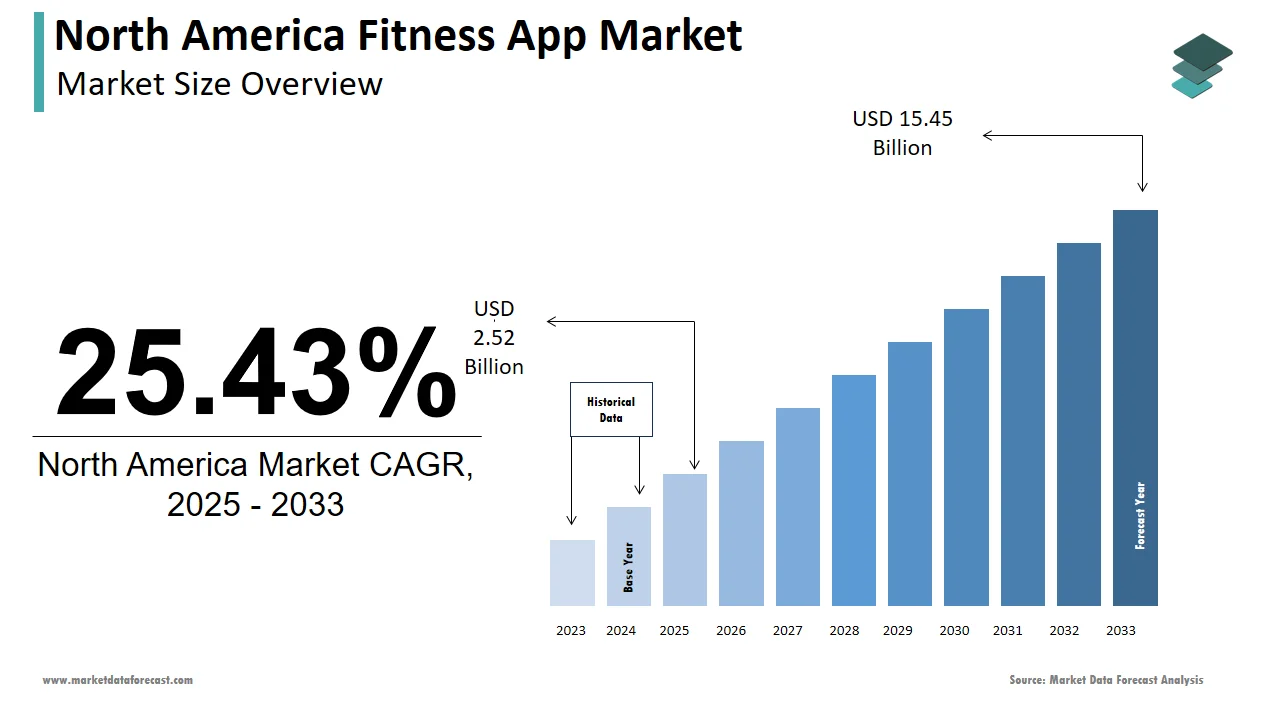
- Market Valuation: Valued at USD 2.52 billion in 2025, reaching USD 3.16 billion in 2026, and projected to expand to USD 19.36 billion by 2034, growing at a robust CAGR of 25.43% during the forecast period (2026–2034).
- Primary Growth Drivers: Rising health awareness, the shift toward virtual fitness platforms and online training, high smartphone and smart wearable proliferation, and increasing consumer focus on continuous health monitoring and weight reduction. Key restraints include high app development and maintenance costs, user interface challenges, and low awareness in emerging sub-segments.
Key Market Segment Metrics (2026–2034)
| Category | Leading Segment / Focus Area | Key Insights & Trends |
|---|---|---|
| By Type | Activity Tracking & Workout Apps | Complemented by rapid expansion in Nutrition & Diet and Meditation & Mindfulness applications driven by holistic wellness trends. |
| By Platform & Revenue Model | iOS & Android / Freemium & Subscription-Based | Mobile app ecosystems dominate, with subscription and freemium models driving sustained recurring revenue for developers. |
| By Region / Country | United States (Dominant regional market) | Anchored by high obesity rates, pervasive smart wear usage, self-conscious health monitoring, and AI/ML-driven personalized fitness offerings. |
Major Market Players & Market Structure
Market Structure: Highly competitive landscape comprising specialized health-tech firms, wearable manufacturers, fitness apparel giants, and mobile app development agencies innovating through AI, machine learning, and personalized user experiences.
Key Companies: MyFitnessPal Inc., Motorola Mobility LLC, Azumio, WillowTree, Inc., Under Armour, Dom and Tom, Grandapps, Fitbit, ASICS, and Appster.
 Download Free Sample Report
North America Fitness App Market Size
The size of the fitness app market in North America was valued at USD 2.52 billion in 2025. This market is expected to grow at a CAGR of 25.43% from 2026 to 2034 and be worth USD 19.36 billion by 2034 from USD 3.16 billion in 2026.
The North America fitness app market covers the digital ecosystem of mobile applications designed to track physical activity, provide workout guidance, and monitor health metrics for users in the United States, Canada, and Mexico. These platforms leverage smartphone sensors and wearable device integration to offer personalized fitness plans, nutrition tracking, and community support. The market dynamics are shaped by increasing health consciousness and technological adoption among diverse demographic groups. As per the Centers for Disease Control and Prevention, a large share of adults in the United States still fall short of recommended physical activity guidelines, creating a strong baseline interest in fitness tracking tools that help users build and sustain exercise routines. This engagement level drives the demand for apps that help users maintain and optimize their exercise routines. Regular physical activity lowers the risk of chronic diseases, which motivates individuals to use digital tools for consistent monitoring and goal setting. This health imperative fuels the proliferation of fitness applications across the region. Developers focus on user experience, data accuracy, and gamification to enhance retention. Stakeholders include tech companies, healthcare providers, and insurance firms exploring digital wellness integration. Understanding this sector requires analyzing consumer behavior trends and the evolving landscape of digital health regulations.
MARKET DRIVERS
Rising Prevalence of Chronic Diseases
A rising prevalence of chronic diseases is primarily driving the North America fitness app market growth by creating an urgent need for preventive health measures and lifestyle management tools. Conditions such as obesity, diabetes, and cardiovascular issues are increasingly common, prompting individuals to adopt proactive fitness regimes monitored through digital platforms. Healthcare providers often recommend fitness apps as part of comprehensive treatment plans to encourage patient adherence to physical activity goals. As per the Centers for Disease Control and Prevention, 40.3% of adults in the United States had obesity during 2021 to 2023 and this indicates the critical need for effective weight management solutions. This statistic underscores the potential for fitness apps to serve as accessible interventions for public health challenges. As per the American Heart Association, regular physical activity can lower blood pressure and improve cholesterol levels, which motivates patients to use tracking apps for consistent monitoring. The ability of these applications to provide real-time feedback and progress visualization enhances user motivation and accountability. Insurance companies also promote app usage through wellness programs that offer incentives for healthy behaviors. The integration of medical advice with fitness tracking creates a holistic approach to disease prevention. This health-driven demand ensures sustained growth for developers who prioritize evidence-based content and clinical validity.
Widespread Adoption of Wearable Technology
Widespread adoption of wearable technology is further contributing to the North America fitness app market expansion by providing seamless data synchronization and enhanced user engagement through connected devices. Smartwatches, fitness trackers, and heart rate monitors generate vast amounts of physiological data that fitness apps use to deliver personalized insights and recommendations. The interoperability between hardware and software creates a cohesive ecosystem that simplifies health monitoring for consumers. Shipments of wearable devices in North America have reached large volumes in recent years, reflecting the massive installed base of compatible hardware. This extensive device penetration ensures a ready audience for fitness applications that can leverage sensor data for accurate tracking. High consumer spending on health technology keeps North America a key contributor to wearable growth. Users prefer apps that automatically sync with their devices to eliminate manual entry errors and save time. The availability of advanced metrics such as sleep quality, stress levels, and recovery scores adds value to the user experience. Developers partner with hardware manufacturers to ensure compatibility and optimize performance. This technological synergy fosters loyalty and encourages long-term subscription retention.
MARKET RESTRAINTS
Data Privacy and Security Concerns
Data privacy and security concerns are majorly impeding the North America fitness app market growth by causing hesitation among users who are wary of sharing sensitive health information with third-party providers. Fitness apps collect detailed personal data, including location, heart rate, and activity patterns, which can be vulnerable to breaches if not properly secured. High-profile data leaks have eroded trust in digital health platforms, leading to stricter user scrutiny and regulatory oversight. As per the Pew Research Center, 81% of Americans said in a 2019 survey that they have very little or no control over the data companies collect about them, which impacts their willingness to use health tracking applications. This lack of confidence limits user acquisition and retention rates for new entrants in the market. As per the Office for Civil Rights within the US Department of Health and Human Services, violations of health data privacy laws have resulted in significant fines for several digital health companies, highlighting the legal risks involved. Compliance with regulations such as HIPAA and GDPR requires substantial investment in cybersecurity infrastructure, which increases operational costs. Users may disable data sharing features, reducing the effectiveness of personalized recommendations. The fear of data misuse for advertising or insurance purposes further dampens enthusiasm. Addressing these concerns is essential for building a sustainable user base.
High User Churn Rates
High user churn rates is further hindering the North America fitness app market expansion by undermining revenue stability and increasing customer acquisition costs for developers. Many users download fitness apps with initial enthusiasm but discontinue use within a few weeks due to lack of motivation, perceived complexity or insufficient results. Maintaining long-term engagement is challenging in a saturated market where alternatives are readily available and often free. This high dropout rate forces companies to constantly invest in marketing to replace lost users rather than growing their active base. Retention tends to fall steeply after the first weeks of use, highlighting the difficulty of sustaining user interest. Developers struggle to balance feature richness with ease of use to keep users engaged. Lack of personalized content or social interaction features can lead to boredom. Subscription fatigue also contributes to cancellations as users manage multiple digital services. Improving retention requires continuous innovation and community building efforts.
MARKET OPPORTUNITIES
Integration with Corporate Wellness Programs
Integration with corporate wellness programs is a major opportunity for the North America fitness app market by providing a stable B2B revenue stream and expanding user reach through employer-sponsored initiatives. Companies are increasingly investing in employee health to reduce healthcare costs, improve productivity, and enhance job satisfaction. Fitness apps that offer enterprise solutions allow organizations to track group progress, organize challenges, and provide incentives for healthy behaviors. A large share of large employers in the United States offer some form of wellness program, creating a substantial market for digital health partners. This widespread adoption enables app developers to secure bulk licenses and long-term contracts. As per a Health Affairs analysis of wellness programs, medical costs fall by about $3.27 for every dollar spent on wellness programs, and absenteeism costs fall by about $2.73, encouraging employers to prioritize high-quality fitness platforms. Apps that integrate with existing HR systems and offer customizable content are preferred. The shift toward remote work has increased demand for digital wellness tools that support home-based fitness. This B2B channel offers scalability and reduced marketing costs compared to direct consumer sales.
Advancements in Artificial Intelligence
Advancements in artificial intelligence are another significant opportunity for the North America fitness app market by enabling hyper-personalized coaching and predictive health analytics. AI algorithms can analyze user data to create dynamic workout plans, adjust intensity based on performance, and provide real-time form correction through computer vision. This level of customization mimics the experience of having a personal trainer, making premium subscriptions more valuable to users. Adaptive programs can improve user adherence compared with static plans, which drives higher conversion rates and longer subscription durations. As per the MIT Technology Review, machine learning models are becoming increasingly accurate in predicting injury risks, allowing apps to suggest preventive exercises and rest periods. This proactive approach appeals to serious athletes and rehabilitation patients alike. Voice assistants and natural language processing enable hands-free interaction during workouts, improving convenience. Developers who leverage AI to simplify complex health data into actionable insights gain a competitive edge. The potential for AI to integrate with electronic health records opens new avenues for clinical collaboration.
MARKET CHALLENGES
Market Saturation and Competition
Market saturation and competition are challenging the North America fitness app market expansion by making it difficult for new entrants to differentiate themselves and acquire users cost-effectively. The app stores are flooded with thousands of fitness applications, ranging from general trackers to niche specialty programs, creating noise and choice paralysis for consumers. Established players with large marketing budgets dominate visibility rankings, leaving little room for smaller developers. This abundance forces companies to spend heavily on user acquisition campaigns, which erodes profit margins. A small share of top apps capture the majority of downloads and revenue, creating a winner-takes-all dynamic. New apps must offer unique value propositions such as specialized content or superior technology to stand out. Feature parity among competitors makes switching costs low for users. Maintaining relevance requires constant updates and innovation, which strains resources. Negative reviews and low ratings can quickly derail launch momentum. Breaking through the clutter requires strategic partnerships and viral marketing strategies.
Regulatory Compliance Complexities
Regulatory compliance complexities are further challenging the North America fitness app market growth by imposing strict requirements on data handling, medical claims, and software classification. Apps that provide diagnostic advice or therapeutic recommendations may be classified as medical devices requiring approval from bodies like the Food and Drug Administration. Navigating these regulatory pathways is time-consuming and expensive, particularly for startups with limited legal resources. As per the Food and Drug Administration, digital health technologies that pose moderate to high risk must undergo rigorous premarket review to ensure safety and efficacy. This process can delay product launches and increase development costs significantly. As per the Federal Trade Commission, companies must ensure that their marketing claims are substantiated by scientific evidence to avoid penalties for deceptive practices. Ambiguity in regulations regarding wellness versus medical apps creates uncertainty for developers. Cross-border operations require compliance with varying state and provincial laws in addition to federal rules. Failure to comply can result in fines, removal from app stores, and reputational damage. Keeping pace with evolving regulatory frameworks requires dedicated compliance teams. This administrative burden slows innovation and market entry.
REPORT COVERAGE
| REPORT METRIC | DETAILS |
| Market Size Available | 2025 to 2034 |
| Base Year | 2025 |
| Forecast Period | 2026 to 2034 |
| Segments Covered | By Type, Platform, Application/User Type, End-User, Revenue Model, and Country. |
| Various Analyses Covered | Global, Regional, and Country-Level Analysis, Segment-Level Analysis, Drivers, Restraints, Opportunities, Challenges; PESTLE Analysis; Porter’s Five Forces Analysis, Competitive Landscape, Analyst Overview of Investment Opportunities |
| Countries Covered | United States, Canada, Mexico, Rest of North America |
| Market Leaders Profiled | MyFitnessPal Inc., Motorola Mobility LLC, Azumio, WillowTree, Inc., Under Armour, Dom and Tom, Grandapps, Fitbit, ASICS, Peloton Digital, WillowTree, Inc., and Appster. |
SEGMENTAL ANALYSIS
By Type Insights
The activity tracking apps segment dominated the market by holding the largest share of the North America fitness app market in 2025 due to their seamless integration with wearable devices and broad appeal across diverse user demographics. This segment leads because it provides foundational metrics such as step count, heart rate, and sleep patterns, which serve as the baseline for overall health monitoring. The widespread ownership of smartwatches and fitness bands drives consistent daily usage and data synchronization. Wearable device shipments in North America continue to rise, with millions of units sold annually, creating a vast ecosystem for activity tracking applications. This hardware penetration ensures a steady stream of users who require compatible software to interpret their physiological data. Mainstream adoption of wearables and smartphone tracking apps highlights the acceptance of these tools among American adults. Users value the passive nature of activity tracking, which requires minimal effort compared to structured workout logging. Social features such as leaderboards and challenges further enhance engagement and retention. Insurance companies often partner with these apps to offer incentives for meeting activity goals. The simplicity and utility of tracking basic movements make this segment the entry point for most digital fitness journeys. Manufacturers focus on improving algorithm accuracy and battery efficiency to maintain user trust.
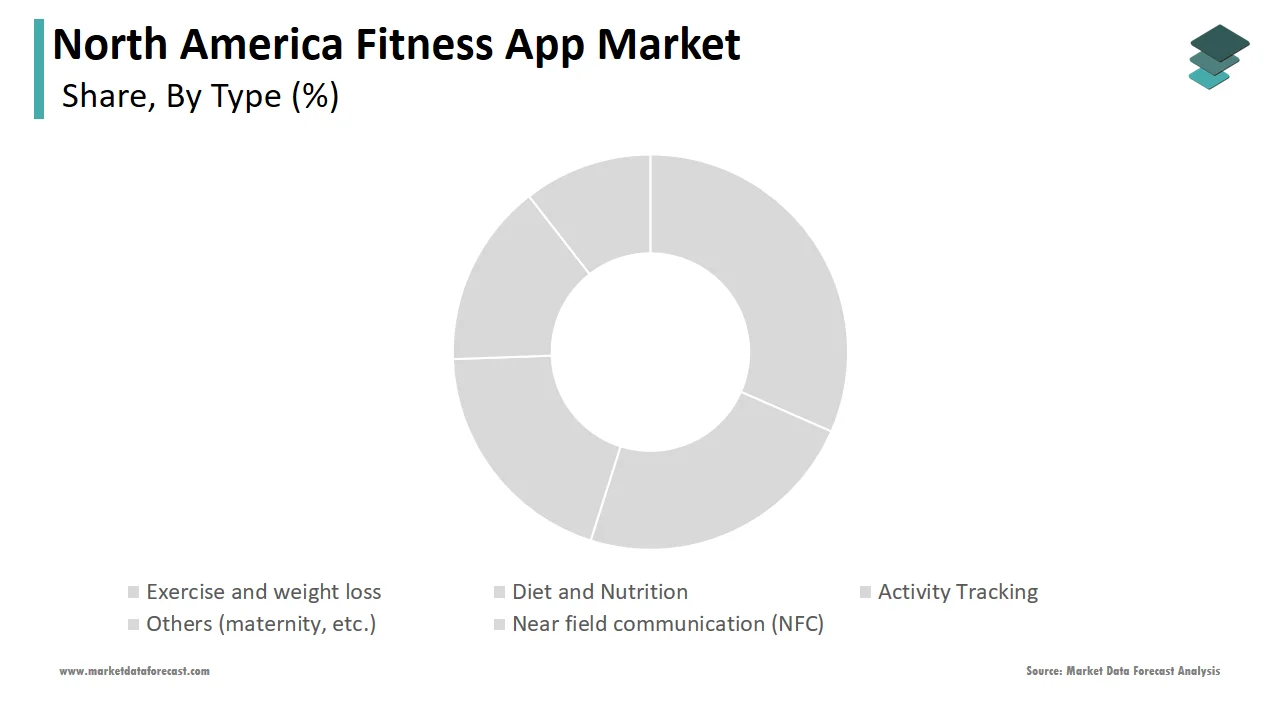
However, the meditation and mindfulness apps segment is expected to register the fastest CAGR of 15.1% over the forecast period in the North American market owing to the increasing awareness of mental health and stress management and the recognition that mental well-being is integral to overall fitness, prompting users to adopt holistic health approaches. The high pressure of modern life and remote work environments has elevated the demand for accessible relaxation and focus tools. As per the American Psychological Association, stress levels in the United States have reached historic highs, with many individuals seeking digital solutions for coping mechanisms. This psychological need drives subscriptions to apps offering guided meditations, breathing exercises and sleep stories. Research from the National Institutes of Health suggests that mindfulness practice can reduce symptoms of anxiety and depression, which validates the therapeutic value of these applications. Celebrities and influencers promoting mental health awareness further boost visibility and acceptance. Corporate wellness programs increasingly include mindfulness modules to support employee resilience. The low barrier to entry and immediate perceived benefits encourage trial and conversion. Developers are adding personalized content based on mood and stress levels. This segment appeals to a broader audience beyond traditional fitness enthusiasts, including students and professionals.
By Platform Insights
The iOS platform segment led the market with the largest share of the North America fitness app market in 2025. The dominance of the iOS platform segment in the North American market can be driven by the high spending power of its user base and the seamless integration with Apple hardware ecosystems. This segment dominates because iPhone and Apple Watch users exhibit higher engagement rates and willingness to pay for premium subscription services. The closed ecosystem allows for optimized performance and strict privacy standards, which appeal to health-conscious consumers. iOS users in North America spend significantly more on mobile apps than Android users, reflecting their propensity for purchasing digital health services. This revenue potential attracts top-tier developers who prioritize feature-rich experiences for the Apple platform. Health and fitness categories remain among the top downloaded and grossing segments in the App Store, driven by the popularity of Apple Fitness Plus. The native HealthKit framework simplifies data aggregation from various sources, enhancing user convenience. High-resolution displays and advanced sensors in Apple devices enable superior visual and tracking capabilities. Brand loyalty within the Apple ecosystem reduces churn rates for compatible fitness apps. Developers leverage ARKit for immersive workout experiences. The demographic profile of iOS users aligns closely with early adopters of digital wellness trends. This economic advantage sustains the platform leadership in terms of revenue generation.
On the other hand, the Android platform segment is the fastest-growing platform segment of the North America fitness app market and is estimated to exhibit a CAGR of 13.3% over the forecast period owing to its extensive market reach and device diversity and the increasing affordability of smartphones and the expanding user base in varied socioeconomic groups across the region. Android offers flexibility in hardware choices, allowing users to select devices that fit their budget while still accessing robust fitness applications. Android holds a substantial share of the smartphone market in North America, particularly among younger demographics and value-conscious consumers. This broad accessibility expands the total addressable market for fitness app developers beyond premium segments. The number of active users in health and fitness categories has increased as more manufacturers integrate advanced sensors into mid-range devices. Open-source compatibility allows for innovation in third-party integrations and custom widgets. The availability of free and freemium models lowers the barrier to entry for new users. Developers are optimizing apps for a wide range of screen sizes and processing powers. Partnerships with diverse wearable brands enhance the Android ecosystem. This inclusivity drives volume growth and widespread adoption of digital fitness tools.
By Application/User Type Insights
The weight loss segment occupied the major share of the North America fitness app market in 2025. The growth of the weight loss segment in the North American market is driven by the high prevalence of obesity and the strong cultural emphasis on physical appearance and health. This segment dominates because calorie counting and meal tracking provide tangible metrics that users find easy to monitor and adjust. The immediate feedback loop of logging food intake versus energy expenditure motivates consistent usage. As per the Centers for Disease Control and Prevention, 40.3% of adults in the United States had obesity during 2021 to 2023, creating a massive addressable market for weight management solutions. This public health crisis drives individuals to seek digital tools for accountability and guidance. As per the Journal of Medical Internet Research, users who track their food intake digitally tend to lose more weight than those who do not, highlighting the efficacy of these apps. Integration with barcode scanners and restaurant databases simplifies the logging process. Social support communities within apps foster motivation through shared goals and success stories. Many apps offer personalized meal plans and recipe suggestions to enhance adherence. Insurance providers sometimes subsidize these apps as preventive care measures. The clear goal of weight reduction provides strong initial motivation for download and subscription. This segment remains the primary driver of user acquisition in the fitness app landscape.
However, the wellness and meditation segment is projected to grow at a promising CAGR of 16.4% over the forecast period owing to the holistic shift in health definitions and the increasing recognition that mental and emotional balance are critical components of overall well-being alongside physical fitness. Users are moving beyond mere physical transformation to seek stress reduction, better sleep, and emotional resilience. As per the Global Wellness Institute, the mental wellness sector is one of the fastest-growing segments of the global wellness economy, reflecting changing consumer priorities. This trend encourages users to subscribe to apps that offer guided mindfulness and cognitive behavioral therapy techniques. Regular use of mindfulness apps can improve focus and reduce burnout, which appeals to professionals and students alike. The stigma around mental health is decreasing, making digital therapy tools more acceptable. Employers are integrating these apps into corporate benefits packages to support workforce mental health. Content diversification includes sleep aids, gratitude journals, and mood tracking. The recurring nature of mental health needs ensures long-term retention. This segment captures users who may not be interested in intense physical workouts but value daily self-care practices.
COUNTRY-LEVEL ANALYSIS
U.S. Fitness App Market Analysis
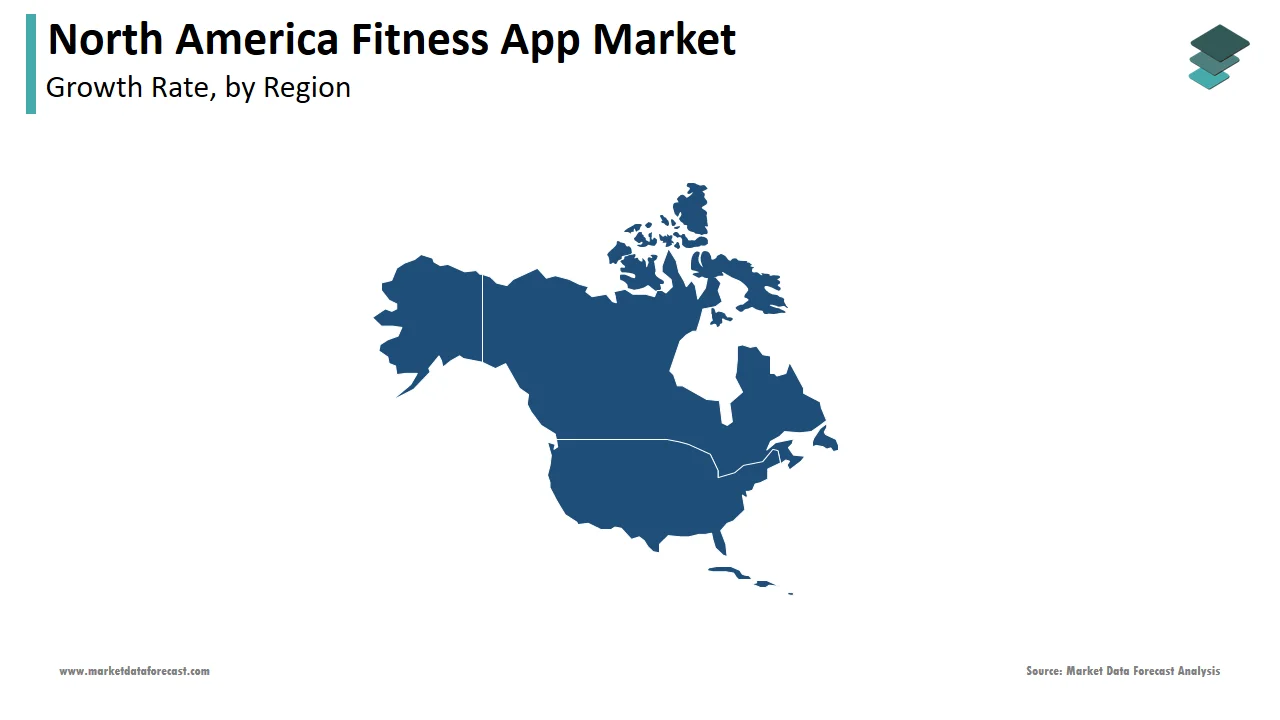
The U.S. held the largest share of the North America fitness app market in 2025 and is likely to remain the leading fitness app market over the next few years, supported by high smartphone penetration, a strong culture of fitness, and significant healthcare spending. The country benefits from a mature digital infrastructure and a large population of early adopters who prioritize health and wellness. As per the Health & Fitness Association, about 77 million Americans were health club members in 2023, indicating a strong baseline interest in fitness that translates to digital engagement. This active lifestyle drives demand for apps that complement gym workouts and track progress. As per the Bureau of Labor Statistics, the healthcare and social assistance sector continues to grow, encouraging the integration of digital health tools into mainstream medical practices. Major tech companies headquartered in the US lead innovation in AI-driven coaching and wearable integration. The presence of venture capital fuels the development of niche fitness startups. High disposable income allows consumers to afford premium subscriptions. Regulatory frameworks like HIPAA influence data privacy standards for health apps. The market is highly competitive, with numerous players vying for user attention. Marketing strategies often leverage social media influencers to drive downloads. The US serves as the primary testing ground for new features and business models.
Canada Fitness App Market Analysis
Canada is likely to keep its steady, privacy-conscious growth in fitness apps over the next few years, supported by high digital literacy and government backing for healthy living initiatives. The country benefits from a universal healthcare system that increasingly recognizes the value of preventive digital health tools in reducing long-term costs. As per Statistics Canada, over 80% of Canadians own a smartphone, providing a broad base for mobile health application adoption. This connectivity facilitates the widespread use of fitness trackers and nutrition apps. As per the Public Health Agency of Canada, chronic disease prevention is a national priority, leading to partnerships between health authorities and digital wellness providers. These collaborations promote the use of evidence-based fitness apps for managing conditions like diabetes and hypertension. The cold climate in many regions drives indoor fitness activities supported by home workout apps. Canadian users value privacy and data security, influencing their choice of platforms. Local developers focus on bilingual content to serve both English- and French-speaking populations. The market is less saturated than the US, offering opportunities for niche players. Government grants support health tech innovation. The strong emphasis on work-life balance encourages the use of mindfulness and wellness apps.
Mexico Fitness App Market Analysis
Mexico is likely to be one of the faster-growing fitness app markets over the next few years, helped by rising smartphone adoption and increasing health awareness among its young population. The country benefits from a demographic dividend, with a large proportion of citizens under the age of 30 who are tech-savvy and open to digital fitness solutions. As per the Federal Telecommunications Institute, smartphone penetration in Mexico has surpassed 70%, enabling wider access to mobile health applications. This connectivity drives the download of free and freemium fitness apps. As per the National Institute of Public Health, obesity rates in Mexico are among the highest globally, creating an urgent need for effective weight management tools. This public health challenge motivates individuals to seek affordable digital interventions. Economic constraints make subscription-based apps less accessible than free alternatives, driving the popularity of ad-supported models. Local influencers play a key role in promoting fitness trends and specific apps. Internet connectivity improvements in rural areas are expanding the user base. The market is price sensitive but shows strong volume growth. Partnerships with local telecom providers offer bundled data plans for health apps. Cultural preferences for community and social interaction favor apps with strong social features.
COMPETITIVE LANDSCAPE
Fierce rivalry among established tech giants, specialized fitness startups, and traditional gym chains expanding into digital spaces characterizes the competitive landscape of the North America fitness app market. Key players compete based on content quality, user experience, personalization, and community engagement. The market sees continuous innovation in artificial intelligence and machine learning to deliver hyper-personalized workout and nutrition plans. Companies strive to differentiate themselves through exclusive partnerships with celebrity trainers and influencers who drive brand visibility. Strategic integrations with wearable devices and smart home ecosystems create sticky environments that reduce churn rates. Participants also focus on hybrid models combining digital subscriptions with physical merchandise or equipment sales. Price competition is fierce in the basic tracking segment, leading many apps to adopt freemium models. Intellectual property protection for proprietary algorithms and content libraries remains crucial for maintaining competitive advantage. The dynamic nature of consumer preferences requires constant adaptation and agility from all market players. Collaboration with healthcare providers opens new B2B channels for prescription-based fitness programs. Brand trust and data security are key determinants of customer choice in this sensitive sector.
KEY MARKET PLAYERS
The leading companies operating in the North America fitness app market include:
- MyFitnessPal Inc.
- Motorola Mobility LLC
- Azumio
- WillowTree, Inc.
- Under Armour
- Dom and Tom
- Grandapps
- Fitbit
- ASICS
- Peloton Digital
- Appster
TOP PLAYERS IN THE MARKET
- MyFitnessPal is an active contributor to the North America fitness app market, leveraging its extensive food database and calorie tracking capabilities to support weight management goals. The company focuses on providing users with detailed nutritional insights and macronutrient breakdowns for personalized diet planning. MyFitnessPal recently enhanced its barcode scanning technology to improve accuracy and speed during meal logging. Their integration with various wearable devices allows seamless data synchronization for a holistic health view. This connectivity helps users correlate physical activity with dietary intake effectively. The platform also offers premium features such as meal plans and advanced analytics for dedicated users. MyFitnessPal collaborates with health professionals to validate content and ensure scientific accuracy. Their large user community fosters social support and motivation through shared experiences. This comprehensive approach strengthens their position as a leading tool for nutrition-focused fitness enthusiasts seeking sustainable lifestyle changes.
- Fitbit reinforces its position in the North American fitness app market through seamless hardware-software integration and robust health monitoring features. The company offers a wide range of activity tracking metrics, including heart rate variability, sleep stages, and stress scores. Fitbit recently introduced guided breathing sessions and mindfulness content to address mental well-being alongside physical fitness. Their focus on long-term health trends enables users to identify patterns and make informed lifestyle adjustments. The firm invests heavily in clinical research to validate the accuracy of its sensors and algorithms. Fitbit partners with healthcare providers to integrate patient data into electronic health records for better care coordination. The app provides personalized insights and challenges to keep users engaged and motivated. Premium subscriptions offer deeper analysis and video workouts for a more comprehensive experience. This holistic ecosystem fosters loyalty and encourages daily usage among health-conscious consumers.
- Peloton Digital holds a pivotal role in the North America fitness app market by bringing high-energy, studio-style workouts to users at home. The company offers a diverse library of live and on-demand classes ranging from cycling and running to yoga and strength training. Peloton Digital recently expanded its content offerings to include outdoor audio runs and meditation sessions for broader appeal. Their emphasis on instructor-led community creates a strong emotional connection and accountability for subscribers. The app integrates with third-party equipment, allowing users without Peloton hardware to access premium content. The firm leverages data analytics to recommend classes based on user preferences and performance history. Social features enable friends to compete and celebrate milestones together, enhancing engagement. High-production-quality videos and professional instruction differentiate the platform from amateur alternatives. This immersive experience drives subscription growth and brand loyalty among fitness enthusiasts seeking convenience and motivation.
TOP STRATEGIES USED BY THE KEY MARKET PARTICIPANTS
Key strategies used by market participants include expanding content libraries to cover diverse fitness disciplines and wellness topics. Companies focus on forming strategic alliances with wearable manufacturers to ensure seamless data integration and enhanced functionality. Geographic expansion into underserved demographics within North America is another priority for major players seeking growth. Firms invest in AI-driven personalization engines to tailor recommendations and improve user retention rates. Product diversification through the introduction of mental health and nutrition modules helps capture holistic wellness markets. Sustainability initiatives such as carbon-neutral operations appeal to environmentally conscious consumers. Providing corporate wellness solutions builds stable B2B revenue streams and broadens user bases. Participating in health tech conferences enhances brand credibility and networking opportunities. Mergers and acquisitions are used to acquire niche technologies and eliminate competitors. These strategies collectively aim to solidify market presence and drive sustainable growth in the evolving digital health ecosystem.
Recent Market Developments
- In April 2025, Strava announced a definitive agreement to acquire Runna, a UK-based running training app offering personalized plans and coaching. This acquisition is anticipated to allow Strava to add coaching to its platform and strengthen the North American fitness app market.
- In May 2025, Strava acquired the core assets of The Breakaway, an AI-powered cycling coaching app. This acquisition is anticipated to allow Strava to expand personalized training for cyclists and strengthen the North American fitness app market.
MARKET SEGMENTATION
This research report on the North America fitness app market has been segmented and sub-segmented into the following categories.
By Type
- Activity Tracking Apps
- Nutrition & Diet Apps
- Workout & Exercise Apps
- Meditation & Mindfulness Apps
- Others (e.g., Sleep Tracking, Health Monitoring)
By Platform
- iOS
- Android
- Others (e.g., Windows, Web-based)
By Application/User Type
- Weight Loss
- Muscle Building
- Wellness & Meditation
- General Fitness
- Sports & Training
- Rehabilitation & Physical Therapy
By End-User
- Individual Consumers
- Fitness Centers & Gyms
- Healthcare Providers
- Corporate Wellness Programs
By Revenue Model
- Freemium
- Subscription-Based
- Advertisement-Based
- One-Time Purchase
By Country
- The United States
- Canada
- Rest of North America