- Product Description Description
- Table of Contents TOC
- List of Table & Figure LOT
- Get Free Sample PDF Sample PDF
Market Size, 2025
$21.98 BnMarket Estimate, 2026
$23.05 BnMarket Forecast, 2034
$33.69 BnCAGR, 2026–2034
4.86%U.S. Paint Market Report Summary
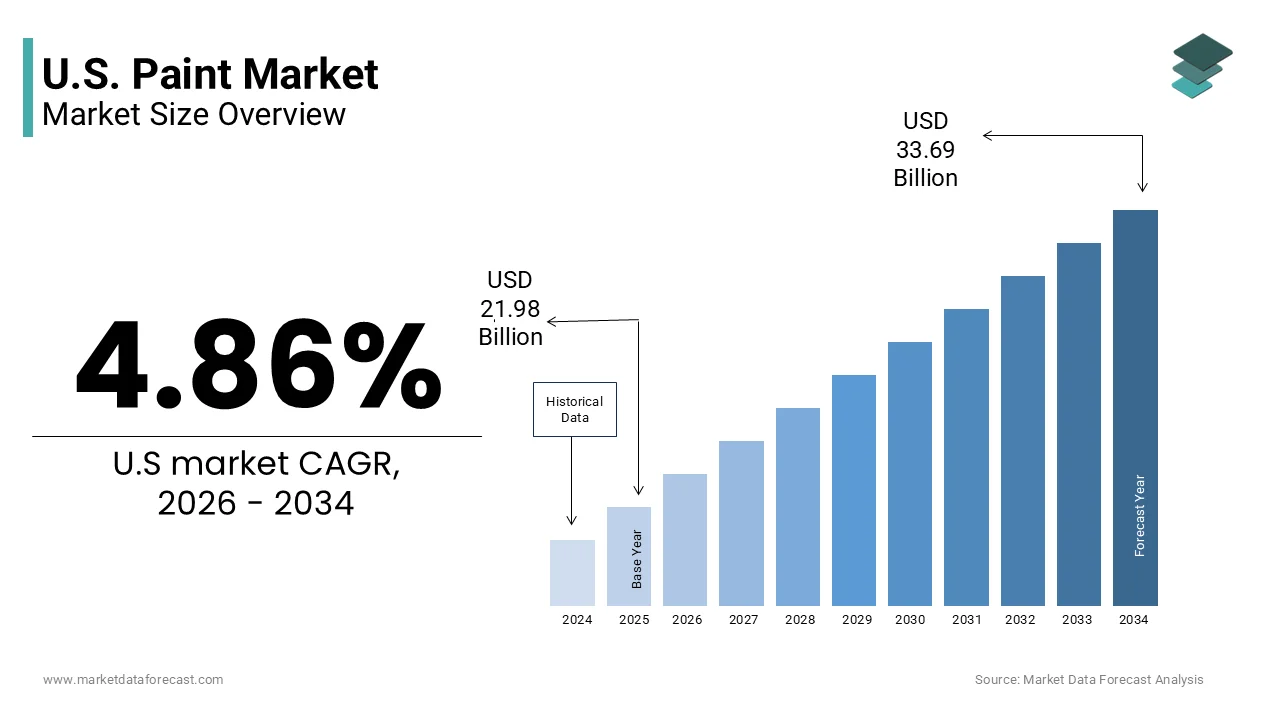
The U.S. paint market was valued at USD 21.98 billion in 2025, is estimated to reach USD 23.05 billion in 2026, and is projected to reach USD 33.69 billion by 2034, growing at a CAGR of 4.86% during the forecast period. Market growth is driven by increasing residential and commercial construction activities, rising renovation and remodeling projects, and growing demand for sustainable coating technologies. Paint products continue to witness strong demand across architectural, industrial, automotive, and infrastructure applications due to their protective and aesthetic functions. The increasing preference for environmentally friendly formulations and advanced coating technologies is further supporting market expansion across the United States.
Key Market Trends
- Increasing residential and commercial construction activities are driving market growth.
- Growing renovation and remodeling projects are boosting paint consumption.
- Rising demand for environmentally friendly and low VOC paint formulations is supporting market expansion.
- Expansion of infrastructure development and urban modernization projects is enhancing product demand.
- Innovation in durable coatings, antimicrobial paints, and sustainable paint technologies is influencing industry growth.
Segmental Insights
- Based on resin, the acrylic resin segment accounted for 54.3% of the U.S. paint market share in 2025. This dominance is attributed to excellent durability, weather resistance, and versatility across interior and exterior applications.
- Based on product type, the waterborne paints segment held a significant share of the U.S. paint market in 2025, driven by lower emissions, regulatory compliance, and growing sustainability preferences.
- Based on application, the architectural coatings segment accounted for 23.1% of the U.S. paint market share in 2025, supported by rising demand from residential housing, commercial buildings, and renovation activities.
Regional Insights
- The U.S. paint market is experiencing steady growth across construction, infrastructure, and industrial sectors, supported by rising urban development and strong housing demand. Growing investments in sustainable building materials and advanced coating technologies continue to strengthen market growth.
Competitive Landscape
The U.S. paint market is highly competitive, with key players focusing on sustainable coating technologies, product innovation, and advanced paint performance solutions to strengthen their market position. Companies are investing in waterborne formulations, specialty coatings, and environmentally responsible manufacturing technologies. Prominent players in the U.S. paint market include PPG Industries, Inc., Axalta Coating Systems, The Sherwin-Williams Company, RPM International Inc., Dunn-Edwards Corporation, Kansai Paint Co. Ltd., BASF SE, 3M, Sika AG, and Masco Corporation.
U.S. Paint Market Size
The U.S. paint market size was valued at USD 21.98 billion in 2025, and the market size is expected to be worth USD 33.69 billion by 2034 from USD 23.05 billion by 2026. The market is growing at a CAGR of 4.86% during the forecast period.
The paint is the formulation distribution and application of protective and decorative coatings for residential commercial and industrial sectors. The construction manufacturing and automotive sectors providing essential solutions for surface preservation and aesthetic enhancement. Paint products are categorized into architectural coatings, which serve building interiors and exteriors and industrial coatings which protect machinery infrastructure and vehicles. Additionally, the aging housing stock in the United States drives the remodeling sector which sustains demand for repainting projects. Spending on home improvements has remained robust reflecting consumer willingness to invest in property maintenance. The regulatory landscape also shapes the market with strict environmental standards governing volatile organic compound emissions. Manufacturers are increasingly innovating to produce low odor and eco-friendly formulations that comply with these regulations. The supply chain relies on raw materials such as titanium dioxide resins and solvents whose prices fluctuate based on global commodity trends.
MARKET DRIVERS
Robust Residential Remodeling and Home Improvement Activities Fuel Demand
The sustained momentum in residential remodeling and home improvement activities is major factor fuelling the growth of the United States paint market. Homeowners are increasingly investing in interior and exterior renovations to enhance property value and aesthetic appeal. The expenditure on home improvements reached record levels in recent years is driven by higher disposable incomes and increased time spent at home. This trend has accelerated the demand for architectural coatings particularly in the DIY segment, where consumers undertake painting projects themselves. The aging housing stock in the United States necessitates regular maintenance including repainting every five to seven years which creates a recurring revenue stream for paint manufacturers. Furthermore, the popularity of home staging for real estate sales encourages sellers to apply fresh coats of neutral paints to attract buyers. The rise of digital platforms and social media has also inspired homeowners with color trends and DIY tutorials further stimulating demand. Retailers have responded by expanding their paint offerings and providing online visualization tools to assist customers.
Expansion of Infrastructure and Commercial Construction Projects Boosts Industrial Coatings
The expansion of infrastructure and commercial construction projects is another factor propelling the growth of the United States paint market. Government initiatives aimed at modernizing transportation networks bridges and public facilities require durable coatings that withstand harsh environmental conditions. The infrastructure report card that the urgent need for investment in deteriorating assets, which drives procurement of high performance industrial paints. The Bipartisan Infrastructure Law has allocated substantial funds for road bridge and airport improvements creating a robust pipeline for coating applications. Commercial real estate development including warehouses office buildings and retail spaces also contributes to this growth as these structures require specialized coatings for fire resistance and energy efficiency. The construction spending on non-residential buildings has shown consistent growth reflecting confidence in the commercial sector. Industrial facilities, such as manufacturing plants and power stations utilize heavy duty coatings to protect equipment from corrosion and chemical exposure.
MARKET RESTRAINTS
Volatility in Raw Material Prices Impacts Production Costs and Margins
The volatility in raw material prices by affecting production costs and profit margins is restricting the growth of the United States paint market. Key ingredients, such as titanium dioxide resins and solvents are subject to global supply chain disruptions and geopolitical tensions that cause price fluctuations. The producer price index for chemicals and allied products has experienced notable increases reflecting the rising cost of inputs. Titanium dioxide is a pigment for whiteness and opacity has seen supply constraints due to plant closures and environmental regulations in producing countries. These supply-side issues force manufacturers to either absorb the higher costs or pass them on to consumers which can dampen demand. The member companies have reported challenges in maintaining stable pricing strategies amidst unpredictable raw material. The dependence on imported raw materials exacerbates this vulnerability as trade policies and tariffs can further inflate costs. Small and medium sized manufacturers are particularly affected as they lack the bargaining power to secure favorable contracts with suppliers. This financial pressure limits their ability to invest in research and development or expand product lines.
Stringent Environmental Regulations Limit Product Formulations and Increase Compliance Costs
The stringent environmental regulations regarding volatile organic compound emissions and hazardous air pollutants restrict product formulations and increase compliance costs for manufacturers is additionally hindering the growth of the United States paint market. Federal and state agencies enforce strict limits on the amount of VOCs allowed in architectural and industrial coatings to protect air quality and public health. Developing low VOC alternatives often involves expensive research and development efforts as well as the sourcing of costly bio based or synthetic resins. Non-compliance can result in hefty fines and reputational damage, which discourages innovation in certain high performance segments. The transition to water-based coatings, while environmentally beneficial can sometimes compromise durability and application ease leading to customer resistance. Manufacturers must balance regulatory adherence with product performance, which is a complex technical challenge.
MARKET OPPORTUNITIES
Growing Demand for Eco Friendly and Sustainable Paint Solutions
The growing consumer preference for eco-friendly and sustainable paint solutions to differentiate their offerings is setting up new opportunities for the growth of the United States paint market. Health-conscious consumers are increasingly seeking paints that are free from toxic chemicals and have low odor profiles for indoor use. The Leadership in Energy and Environmental Design certification program encourages the use of low emitting materials which drives demand for green coatings. Manufacturers, who invest in developing zero VOC and natural ingredient based paints can capture this emerging segment and command premium pricing. The rise of biophilic design principles in architecture also promotes the use of natural and non-toxic finishes that enhance indoor air quality. Companies can leverage this trend by obtaining third party certifications such as Green Seal or EcoLogo which validate their sustainability claims. Furthermore, partnerships with green building contractors and architects can open new distribution channels. This shift towards sustainability not only aligns with regulatory trends but also builds brand loyalty among conscientious consumers.
Technological Advancements in Smart and Self Healing Coatings
The technological advancements in smart and self-healing coatings to expand into high value industrial applications is additionally to escalate new opportunities for the growth of the United States paint market. Self healing paints contain microcapsules that release healing agents, when the surface is scratched thereby restoring integrity and preventing corrosion. These advanced coatings reduce maintenance costs and extend the lifespan of assets, which is highly attractive to industrial clients. Smart coatings that change color in response to temperature or light also present novel opportunities for energy efficient building envelopes. The integration of nanotechnology in paint formulations enhances durability UV resistance and antimicrobial properties, which are valuable in healthcare and food processing facilities. Manufacturers who collaborate with research institutions and technology firms can accelerate the commercialization of these innovative products. The ability to offer superior performance and lifecycle savings allows companies to move beyond commoditized pricing models.
MARKET CHALLENGES
Supply Chain Disruptions and Logistics Bottlenecks Affect Availability
The supply chain disruptions and logistics hurdles by affecting the timely availability of products and raw materials is one of the major challenges for the growth of the United States paint market. The global pandemic exposed vulnerabilities in just in time inventory systems leading to delays in shipping and increased freight costs. Paint manufacturers rely on timely delivery of containers and bulk chemicals any delay in which can halt production lines. Port congestion and labor shortages in the transportation sector further exacerbate these issues causing unpredictability in lead times. The chemical industry has faced ongoing challenges in securing reliable transport for hazardous materials which include many paint ingredients. These logistical hurdles force companies to hold higher inventory levels which ties up capital and increases storage costs. Small retailers often struggle to maintain stock levels leading to lost sales opportunities. The complexity of managing a global supply network amidst geopolitical tensions and trade uncertainties adds another layer of risk. Companies must invest in supply chain resilience through diversification of suppliers and nearshoring strategies. However these adjustments require significant time and resources.
Intense Competition and Price Wars Erode Profitability
The intense competition and price wars that erode profitability and limit the ability of companies to invest in innovation is also to pose as a major challenge for the growth of the United States paint market. Private label brands offered by large home improvement retailers also exert downward pressure on prices forcing branded manufacturers to compete on cost rather than value. As per the National Retail Federation, private label penetration in home improvement categories has grown offering consumers cheaper alternatives to national brands. The commoditization of standard architectural paints further intensifies this challenge as differentiation becomes harder. Companies must constantly innovate to justify premium pricing but the rapid imitation of new products by competitors shortens the window of exclusivity.
REPORT COVERAGE
| REPORT METRIC | DETAILS |
| Market Size Available | 2025 to 2034 |
| Base Year | 2025 |
| Forecast Period | 2026 to 2034 |
| CAGR | 4.86% |
| Segments Covered | By Resin, Product Type, Application, and Region. |
| Various Analyses Covered | Global, Regional and Country-Level Analysis, Segment-Level Analysis, Drivers, Restraints, Opportunities, Challenges; PESTLE Analysis; Porter’s Five Forces Analysis, Competitive Landscape, Analyst Overview of Investment Opportunities |
| Countries Covered | California, Washington, Oregon, New York, United States |
| Market Leaders Profiled | PPG Industries, Inc. (U.S.), Axalta Coating Systems (U.S.), The Sherwin-Williams Company (U.S.), RPM International Inc. (U.S.), Dunn-Edwards Corporation (U.S.), Kansai Paint Co. Ltd. (India), BASF SE (Germany), 3M (U.S.), Sika AG (Switzerland), and Masco Corporation (U.S.). |
SEGMENTAL ANALYSIS
By Resin Insights
The acrylic resin segment was accounted in holding 54.3% of the United States paint market share in 2025 due to its superior versatility durability and compatibility with environmental regulations. The growth of the segment is driven by its extensive use in architectural coatings where weather resistance and color retention are paramount. The acrylic emulsions account for the majority of volume in interior and exterior house paints due to their ability to withstand UV radiation without yellowing. The shift towards waterborne formulations has further cemented the position of acrylics as they disperse easily in water reducing the need for volatile organic solvents. The strict limits on VOC emissions have compelled manufacturers to favor acrylic based systems, which offer low odor and quick drying times. The residential construction sector relies heavily on acrylic latex paints for their ease of application and cleanup, which appeals to both professional contractors and DIY consumers. Furthermore advancements in acrylic technology have improved their performance in extreme temperatures making them suitable for diverse climatic conditions across the United States. The cost effectiveness of acrylic resins compared to specialized alternatives also contributes to their widespread adoption. Manufacturers continue to innovate by developing high solids acrylics that provide better coverage and durability.
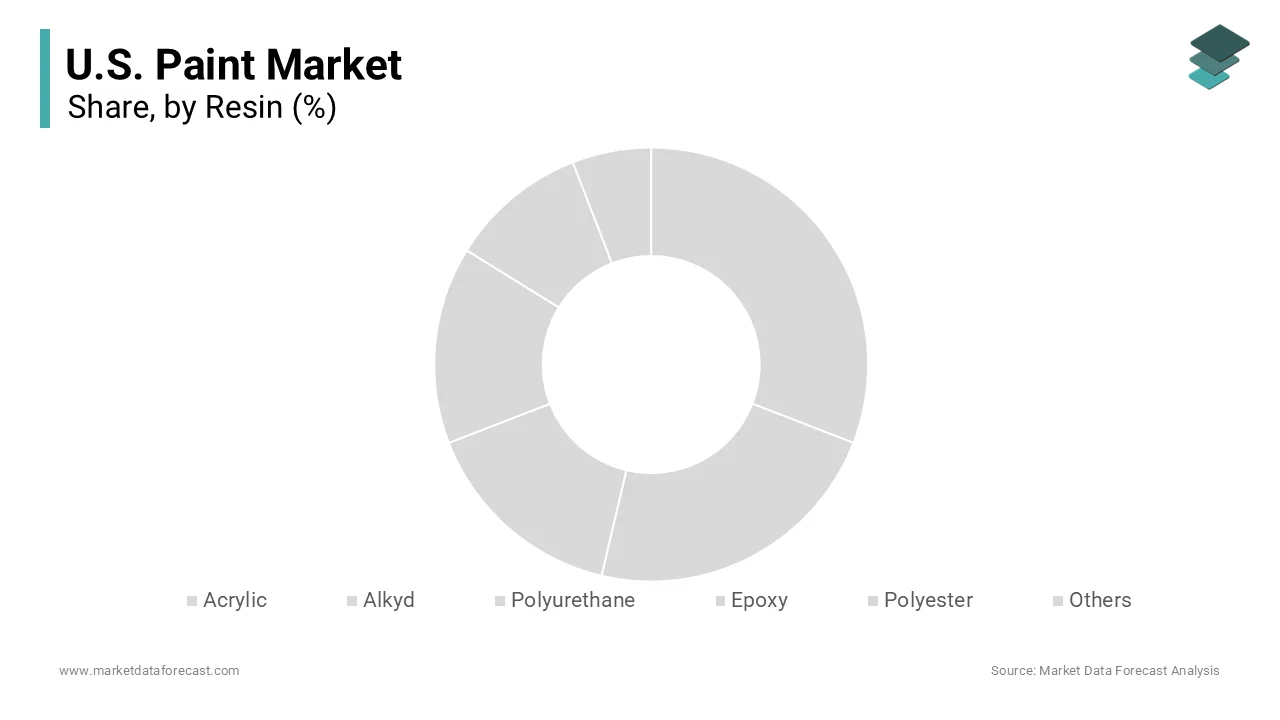
The epoxy resin segment is expected to register a fastest CAGR of 5.2% during the forecast period with the increasing demand for high performance protective coatings in industrial and infrastructure applications. Epoxy coatings offer exceptional adhesion chemical resistance and mechanical strength, which are for protecting concrete and metal surfaces in harsh environments. The ongoing rehabilitation of bridges and highways requires durable coating systems that can withstand deicing salts and heavy traffic loads. Epoxy primers and topcoats are extensively used in these projects to extend the lifespan of infrastructure assets. Additionally, the expansion of the energy sector including oil and gas pipelines and renewable energy facilities drives the demand for corrosion resistant epoxy coatings. The flooring industry, also contributes to this growth as epoxy floor coatings gain popularity in commercial warehouses healthcare facilities and automotive garages due to their seamless and hygienic properties. The development of bio-based epoxy resins that further aligns with sustainability goals opening new avenues for expansion.
By Product Type Insights
The waterborne paints segment was the largest by holding a significant share of the United States paint market in 2025 with the stringent environmental regulations and shifting consumer preferences towards safer and sustainable products. The National Volatile Organic Compound Emission Standards for Architectural Coatings have significantly reduced the allowable VOC levels prompting manufacturers to transition from solvent borne to waterborne systems. Waterborne paints emit fewer hazardous air pollutants making them safer for indoor use and compliant with green building standards. Technological advancements have improved the performance of waterborne paints matching the durability and gloss of traditional solvent based options. The DIY segment strongly favors waterborne products due to their easy cleanup with water and minimal odor. Major retailers have expanded their shelves with eco-friendly water-based options reflecting consumer demand. The automotive industry is also increasingly adopting waterborne basecoats to meet emission standards.
The powder coatings segment is expected to witness a fastest CAGR of 6.1% during the forecast period with their environmental benefits and superior durability in industrial applications. Unlike liquid paints powder coatings contain no solvents and emit negligible VOCs during the curing process making them an attractive option for manufacturers seeking to reduce their environmental footprint. The efficiency of powder coating application is high as overspray can be recovered and reused reducing material waste. This cost effectiveness appeals to industries such as automotive appliances and furniture manufacturing where large volumes of parts are coated. The durability of powder coatings against chipping scratching and corrosion makes them ideal for outdoor equipment and architectural aluminum profiles.Regulatory pressures to eliminate hazardous air pollutants further accelerate the adoption of powder coatings in various sectors. Advances in technology have enabled the application of powder coatings on heat sensitive substrates, such as wood and plastics expanding their potential market.
By Application Insights
The architectural coatings segment was the largest by capturing 23.1% of the United States paint market share in 2025 with the vast volume of residential and commercial construction activities. The number of housing starts remains robust indicating a steady demand for architectural paints from developers and homeowners. The aging housing stock in the United States also contributes significantly as properties require repainting every few years to maintain aesthetic appeal and structural protection. The DIY sector plays a crucial role in this dominance with millions of consumers undertaking painting projects annually supported by extensive retail distribution networks. Retailers such as Home Depot and Lowe's offer a wide range of architectural coatings catering to diverse consumer preferences. The trend towards smart homes and energy efficient buildings also drives the use of specialized architectural paints such as insulating and reflective coatings. Government incentives for energy efficient retrofits further stimulate demand.
The protective coatings segment is projected to grow at a fastest CAGR of 4.8% from 2026 to 2034 with the need to protect infrastructure and industrial assets from corrosion and environmental degradation. The deteriorating condition of national infrastructure including bridges pipelines and water treatment facilities necessitates significant investment in protective maintenance. The Bipartisan Infrastructure Law has allocated substantial funds for these improvements creating a robust pipeline for protective coating applications. Industries, such as oil and gas marine and power generation rely heavily on high performance protective coatings to ensure safety and operational continuity. The expansion of renewable energy infrastructure including wind turbines and solar farms also drives demand for coatings that withstand harsh outdoor conditions. Offshore wind projects in particular require advanced protective systems to resist saltwater corrosion. Regulatory mandates for safety and environmental protection further compel industries to adopt superior coating solutions.
COMPETITIVE LANDSCAPE
The competition in the United States paint market is characterized by a mix of global giants and regional manufacturers who compete on brand recognition product quality and distribution reach. The market structure is moderately consolidated with a few key players holding significant influence over pricing and innovation trends. Competitive intensity is driven by the need to differentiate through specialized formulations and superior customer service. Innovation in sustainable and smart coatings plays a vital role as firms seek to meet stringent environmental regulations and evolving consumer preferences. Regulatory compliance serves as a barrier to entry for new competitors due to the high costs associated with research and development. Established players leverage their extensive retail networks and professional contractor relationships to ensure consistent sales volume. Customer loyalty is maintained through color trend leadership and technical support services. Price competition remains intense in the commodity segment while premium segments focus on value added features. The focus on digital tools and online engagement is becoming a key differentiator in the market. Overall the competitive landscape requires continuous adaptation to changing regulatory economic and technological conditions.
KEY MARKET PLAYERS
Some of the companies that are playing a dominating role in the U.S. paint market are
- PPG Industries, Inc. (U.S.)
- Axalta Coating Systems (U.S.)
- The Sherwin-Williams Company (U.S.)
- RPM International Inc. (U.S.)
- Dunn-Edwards Corporation (U.S.)
- Kansai Paint Co. Ltd. (India)
- BASF SE (Germany)
- 3M (U.S.)
- Sika AG (Switzerland)
- Masco Corporation (U.S.)
Top Players in the Market
- The Sherwin Williams Company is a global leader in the paint and coatings industry with a vast presence in the United States market. The company produces a wide range of architectural and industrial coatings serving professional painters and DIY consumers. Sherwin Williams has strengthened its position through strategic acquisitions such as the purchase of Valspar which expanded its product portfolio and geographic reach. The company invests heavily in research and development to create sustainable and high- performance formulations. Its extensive retail network including dedicated paint stores ensures broad market accessibility. Sherwin Williams focuses on digital innovation by offering color visualization tools that enhance customer experience. The company also prioritizes sustainability by reducing volatile organic compound emissions in its products. These initiatives solidify its reputation as an innovator and reliable supplier in the global coatings sector.
- PPG Industries Inc is a major global supplier of paints coatings and specialty materials with significant operations in the United States. The company serves diverse sectors including aerospace automotive construction and industrial markets. PPG has recently focused on expanding its protective and marine coatings business to capitalize on infrastructure development trends. The company actively pursues sustainability goals by developing low carbon footprint products and energy efficient manufacturing processes. PPG strengthens its market position through continuous innovation in smart coatings and digital color matching technologies. Strategic partnerships with original equipment manufacturers ensure long term supply contracts in the automotive and aerospace industries. The company also invests in talent development and operational excellence to maintain competitive advantage. PPGs commitment to protecting and beautifying the world drives its strategic decisions and market leadership.
- AkzoNobel NV is a leading global paints and coatings company with a strong footprint in the United States through its Dulux and other brands. The company specializes in decorative paints and performance coatings for various industrial applications. AkzoNobel has recently emphasized sustainability by launching products with reduced environmental impact and promoting circular economy principles. The company strengthens its market position by investing in digital platforms that provide personalized color advice and project planning tools. AkzoNobel focuses on operational efficiency by optimizing its supply chain and production facilities. Strategic divestitures of non core businesses allow the company to concentrate on high growth areas in decorative and industrial coatings. The company collaborates with architects and designers to influence color trends and drive demand. These efforts enhance its brand equity and customer loyalty in the competitive global market.
Top Strategies Used by Key Market Participants
Key players in the United States paint market primarily employ strategies such as strategic acquisitions product innovation and sustainability initiatives to strengthen their market position. Companies frequently acquire complementary brands to expand their product portfolios and access new customer segments. This approach allows them to offer comprehensive solutions and increase market penetration. Investment in research and development is crucial for creating low volatile organic compound and high performance coatings that meet regulatory standards. By focusing on eco friendly formulations firms align with consumer preferences for safer and sustainable products. Digital transformation is another key strategy as companies implement online color visualization tools and e commerce platforms to enhance customer engagement. Strategic partnerships with contractors and retailers help secure distribution channels and build brand loyalty.
MARKET SEGMENTATION
This research report on the U.S. paint market is segmented and sub-segmented into the following categories.
By Resin
- Epoxy
- Acrylic
- Polyester
- Alkyd
- Polyurethane
- Others
By Product Type
- Waterborne
- Solvent Borne
- Powder Coatings
- UV Coatings
- Others
By Application
- Architectural
- Automotive OEM
- Marine
- Coil
- General Industries
- Protective Coatings
- Automotive Refinish
- Industrial Wood
- Packaging
- Others
By Country
- California
- Washington
- Oregon
- New York
- Rest of the United States