- Product Description Description
- Table of Contents TOC
- List of Table & Figure LOT
- Get Free Sample PDF Sample PDF
Market Size, 2025
$145 MnMarket Estimate, 2026
$155 MnMarket Forecast, 2034
$263 MnCAGR, 2026–2034
6.79%U.S. Xylitol Market Report Summary
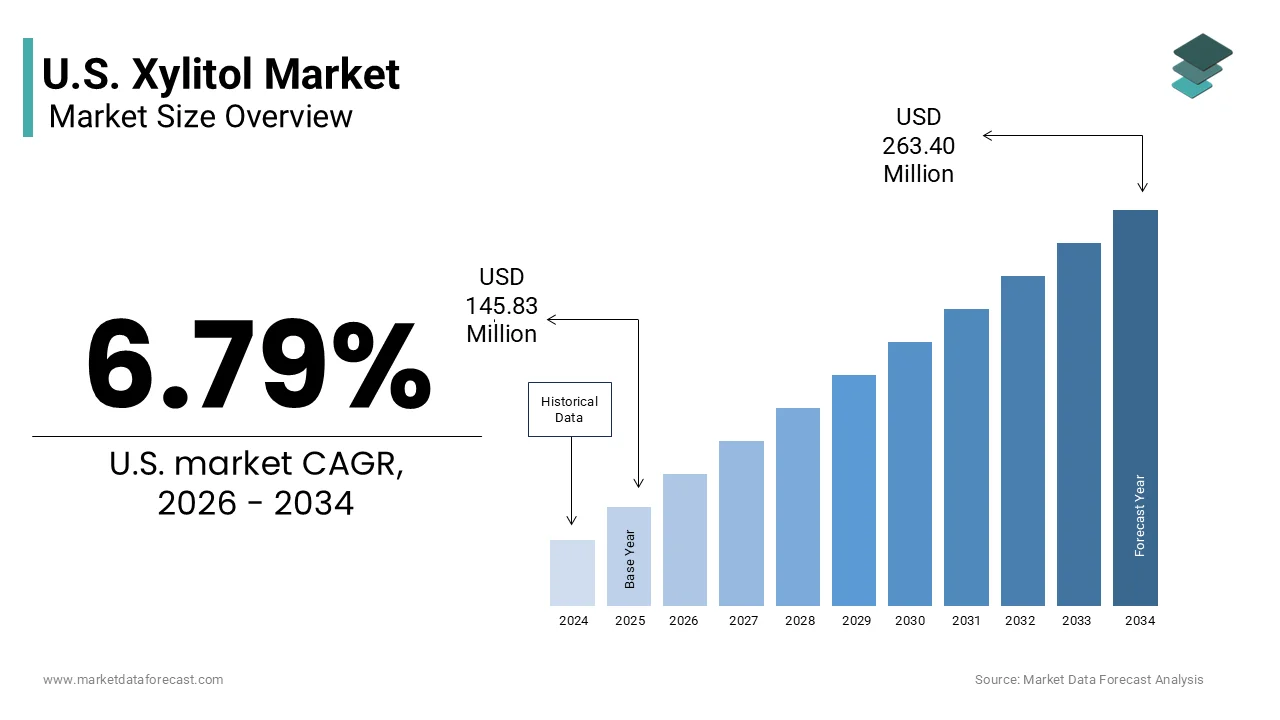
The U.S. xylitol market was valued at USD 145.83 million in 2025, is estimated to reach USD 155.73 million in 2026, and is projected to reach USD 263.40 million by 2034, growing at a CAGR of 6.79% during the forecast period. Market growth is driven by increasing consumer awareness regarding sugar reduction, rising demand for low calorie sweeteners, and growing adoption of xylitol in food, beverage, and oral care applications. The expanding preference for healthier lifestyles and functional ingredients is encouraging manufacturers to incorporate xylitol into a wide range of products. Growing demand for clean label and natural sweetening solutions is further supporting market expansion across the United States.
Key Market Trends
- Growing consumer preference for sugar free and reduced sugar products is driving market growth.
- Increasing use of xylitol in oral care products is boosting market expansion.
- Rising demand for natural and low calorie sweeteners is supporting industry development.
- Expansion of functional food and beverage applications is enhancing market opportunities.
- Innovation in health focused formulations and clean label ingredients is influencing market advancement.
Segmental Insights
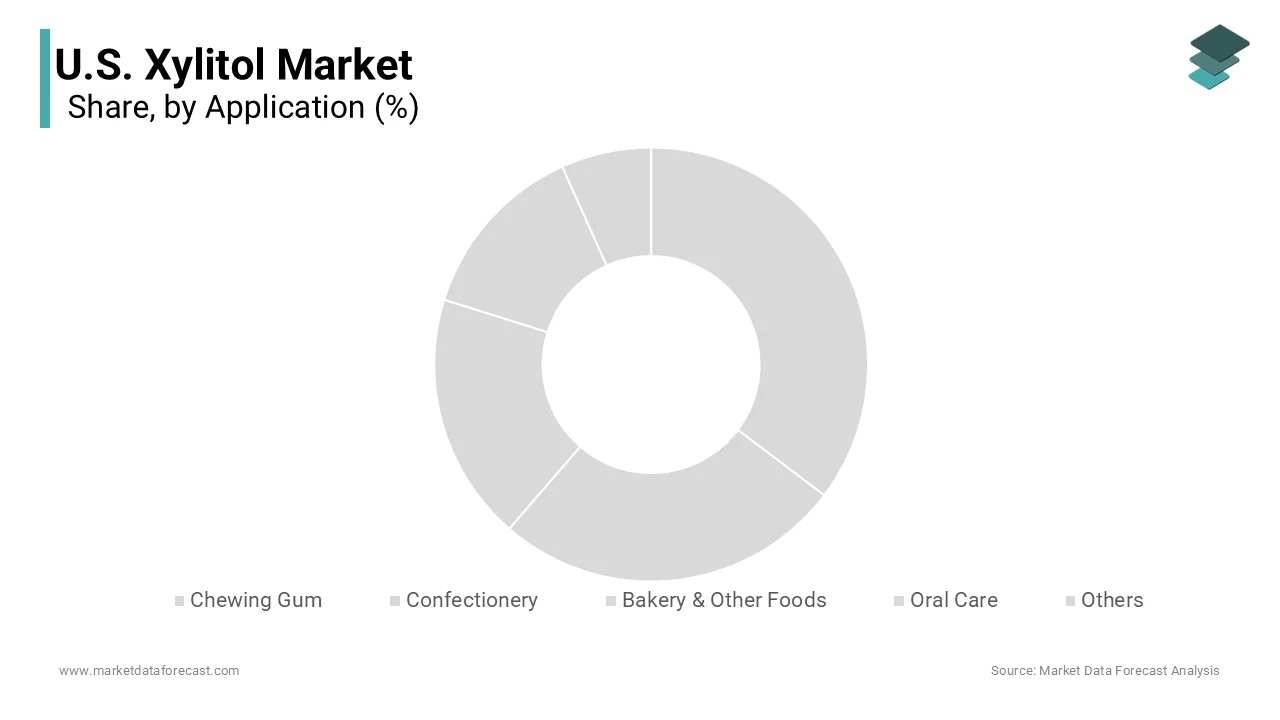
- Based on application, the chewing gum segment accounted for 40.1% of the U.S. xylitol market share in 2025. This dominance is attributed to xylitol's recognized dental health benefits, pleasant sweetness profile, and widespread use in sugar free chewing gum products.
- Based on form, the solid form segment held a significant share of the U.S. xylitol market in 2025, supported by its ease of handling, storage stability, and extensive use in food processing and confectionery applications.
Regional Insights
- The United States remains one of the leading markets for xylitol due to increasing health consciousness, strong demand for sugar alternatives, and growing adoption of functional ingredients across food, beverage, and personal care industries.
Competitive Landscape
The U.S. xylitol market is highly competitive, with manufacturers focusing on product innovation, sustainable sourcing, and expansion of application areas to strengthen their market position. Companies continue to invest in research and development activities to enhance product quality and meet evolving consumer preferences for healthier sweetening solutions.
Key companies operating in the U.S. xylitol market include DuPont de Nemours, Inc., Cargill, Incorporated, Ingredion Incorporated, zuChem, Inc., Roquette Frères, Archer Daniels Midland Company, Mitsubishi Corporation Life Sciences Limited, Thomson Biotech Corporation, NovaGreen Inc., and Foodchem International Corporation.
U.S. Xylitol Market Size
The U.S. xylitol market size was valued at USD 145.83 million in 2025, and the market size is expected to be worth USD 263.40 million by 2034 from USD 155.73 million by 2026. The market is growing at a CAGR of 6.79% during the forecast period.
The xylitol is sugar alcohol and natural sweetener derived primarily from hardwood biomass, such as birch and beech trees. Xylitol is distinguished by its ability to provide sweetness comparable to sucrose while containing approximately 40% fewer calories and exhibiting a negligible impact on blood glucose levels. This unique metabolic profile positions it as an ingredient in functional foods, oral care products, and pharmaceutical formulations designed for diabetic management and dental health preservation. As per the Centers for Disease Control and Prevention, more than 38 million Americans have diabetes, creating a substantial consumer base seeking low glycemic index alternatives to traditional sugars. According to the American Dental Association, clinical studies confirm that xylitol reduces the levels of decay causing bacteria in saliva by up to 75%, reinforcing its status as a preferred ingredient in therapeutic chewing gums and toothpastes. The supply chain relies heavily on imported raw materials, particularly from Finland and China, although domestic extraction capabilities are gradually expanding to meet rising demand. Consumer awareness regarding the detrimental effects of excessive sugar intake continues to drive substitution trends, with xylitol emerging as a premium option due to its cooling sensation and non cariogenic properties.
MARKET DRIVERS
Rising Prevalence of Dental Caries Drives Oral Care Formulation Demand
The escalating incidence of dental caries and periodontal diseases, particularly within the oral hygiene sector is fuelling the growth of the United States xylitol market. Health professionals increasingly recommend xylitol-based products due to their proven efficacy in inhibiting the growth of Streptococcus mutans, the primary bacterium responsible for tooth decay. According to the National Institute of Dental and Craniofacial Research, nearly 90% of adults aged 20 to 64 have had cavities in their permanent teeth, highlighting a pervasive public health issue that necessitates preventive solutions. Xylitol functions by disrupting the energy production processes of these bacteria, thereby reducing acid production and plaque formation without contributing to enamel erosion. This scientific validation has prompted major oral care manufacturers to incorporate xylitol into toothpastes, mouthwashes, and professional treatment kits. The growing emphasis on preventive dentistry over restorative procedures further amplifies demand, as consumers seek proactive measures to maintain oral health. Insurance providers and corporate wellness programs are also beginning to recognize the cost effectiveness of preventive oral care by encouraging the adoption of xylitol based regimens. The availability of over the counter products fortified with xylitol makes these benefits accessible to a broad demographic, fostering consistent consumption patterns.
Increasing Diabetes Population Fuels Low Glycemic Sweetener Adoption
The expanding population of individuals diagnosed with diabetes and prediabetes, as a safe and effective sugar substitute is additionally elevating the growth of the United States xylitol market. Unlike sucrose, xylitol is absorbed slowly and does not cause rapid spikes in blood glucose or insulin levels by making it an ideal sweetener for diabetic dietary management. According to the Centers for Disease Control and Prevention, approximately 98 million American adults aged 18 years or older have prediabetes, representing a vast potential market for low glycemic index ingredients. Healthcare providers frequently recommend xylitol to patients seeking to satisfy sweet cravings without compromising metabolic control, leading to its inclusion in specialized diabetic foods, beverages, and confectionery items. The sugar alcohols like xylitol are recognized as acceptable alternatives that can help manage carbohydrate intake, while providing sensory satisfaction. The rising awareness of the long term complications associated with uncontrolled blood sugar levels, such as cardiovascular disease and neuropathy, motivates consumers to adopt stricter dietary regimes. Food manufacturers are responding by reformulating popular products to include xylitol, thereby expanding its presence beyond niche health stores into mainstream retail channels. The aging population, which is disproportionately affected by type 2 diabetes, further sustains this demand trajectory. Additionally, the growing trend towards low carbohydrate and ketogenic diets, often adopted for weight management and metabolic health, reinforces the utility of xylitol as a versatile sweetening agent.
MARKET RESTRAINTS
High Production Costs Limit Competitive Pricing Potential
The substantial cost associated with the production and purification, particularly when compared to conventional sweeteners and other sugar alcohols is impeding the growth of the United States xylitol market. The manufacturing process involves complex hydrolysis and hydrogenation steps to extract xylitol from hardwood hemicellulose or corn cobs by requiring significant energy input and specialized equipment. The production cost of xylitol is approximately three to five times higher than that of sucrose by making it a premium priced ingredient that may deter price sensitive consumers. As per commodity market data, fluctuations in the prices of raw materials such as birch wood and corn further exacerbate cost volatility, which is impacting profit margins for manufacturers and formulators. This high price point restricts the widespread adoption of xylitol in mass market food and beverage applications, where cost efficiency is paramount. Competitors such as erythritol and allulose, which offer similar health benefits at lower production costs, pose a significant threat to xylitol’s market share. The economic barrier is particularly pronounced in developing segments of the food industry, where manufacturers prioritize affordability to maintain competitive retail pricing. Additionally, the limited number of large scale producers globally creates supply bottlenecks that can lead to price spikes during periods of high demand. These financial constraints hinder the ability of xylitol to achieve the same level of ubiquity as cheaper alternatives, confining its usage largely to premium and specialty products.
Gastrointestinal Side Effects Restrict Consumer Acceptance
The potential for gastrointestinal discomfort associated with excessive xylitol consumption constitutes a notable restraint on its market growth, as it limits the dosage and frequency with which consumers can safely use the product. Xylitol is not fully absorbed in the small intestine and ferments in the colon, which can lead to symptoms such as bloating, gas, and diarrhea in sensitive individuals. This physiological limitation necessitates clear labeling and consumer education, which can dampen enthusiasm for high volume usage in everyday foods and beverages. The products containing significant amounts of xylitol must carry warning labels regarding potential laxative effects, which may discourage casual users seeking simple sugar replacements. The comparison with other sweeteners that have higher tolerance thresholds, such as stevia or monk fruit, places xylitol at a disadvantage for applications requiring high sweetness intensity. Manufacturers must carefully balance formulation levels to avoid adverse effects, which can compromise taste profiles and texture in certain products. This safety concern is particularly relevant in the children’s, where parents may hesitate to introduce sugar alcohols due to fears of digestive distress.
MARKET OPPORTUNITIES
Expansion into Pharmaceutical and Medical Applications Creates New Avenues
The integration of xylitol into pharmaceutical formulations and medical devices with its unique physicochemical properties and biocompatibility, which is creating new opportunities for the growth of the United States xylitol market. Beyond its role as a sweetener, xylitol is increasingly utilized as an excipient in tablet coatings, syrups, and nasal sprays due to its ability to enhance stability and improve patient compliance through pleasant taste masking. According to the United States Pharmacopeia, xylitol is recognized for its non-hygroscopic nature, which prevents moisture absorption and extends the shelf life of sensitive drug compounds. The growing focus on patient centric drug design encourages pharmaceutical companies to explore xylitol as a functional ingredient that offers therapeutic benefits alongside delivery mechanisms. Additionally, the use of xylitol in wound care products and dermatological formulations is gaining traction due to its moisturizing and antimicrobial properties. The expansion of the geriatric population, who often require multiple medications and suffer from dry mouth conditions, further drives demand for xylitol based oral lubricants and lozenges. Regulatory approvals for new medical indications continue to broaden the scope of application by allowing manufacturers to diversify their product portfolios.
Innovation in Sustainable Biomass Extraction Technologies Enhances Supply Security
The advancements in biotechnology and sustainable extraction methods to reduce production costs and secure domestic supply chains is another factor promoting new opportunities for the growth of the United States xylitol market. Researchers and manufacturers are developing innovative enzymatic hydrolysis techniques that convert agricultural waste products, such as corn cobs and sugarcane bagasse, into xylitol with higher yields and lower environmental impact. The utilization of lignocellulosic biomass for bio based chemicals supports national goals for renewable resource utilization and carbon footprint reduction. The technological progress reduces reliance on imported raw materials from Europe and Asia by mitigating supply chain risks and currency fluctuation impacts. The ability to source xylitol from locally available agricultural byproducts aligns with the clean label and sustainability preferences of modern consumers, enhancing brand appeal. Companies investing in these green technologies can differentiate themselves in the market by offering eco certified xylitol products that appeal to environmentally conscious buyers. Furthermore, the scalability of these new extraction methods allows for increased production capacity to meet growing demand without proportional increases in cost. The transition towards circular economy models in the chemical industry further incentivizes the adoption of these sustainable practices.
MARKET CHALLENGES
Volatility in Raw Material Supply Chains Impacts Production Stability
The dependence on specific agricultural and forestry residues for xylitol production creates vulnerability to supply chain disruptions, which is a significant challenge for the growth of the United States xylitol market. The primary sources of xylitol, including birch wood and corn cobs, are subject to seasonal variations, weather conditions, and competing industrial demands, which can lead to inconsistent availability. The fluctuations in corn harvest yields due to climate change and pest infestations directly affect the supply of corn cobs, a key feedstock for domestic xylitol production. The geopolitical tensions and logistics hurdles can disrupt the import of birch derived xylitol from primary suppliers in Finland and China byleading to shortages and price volatility. This unpredictability complicates inventory management for manufacturers and formulators, who require consistent supply to meet contractual obligations. The lack of diversified sourcing options exacerbates this risk, as few alternative raw materials offer the same purity and yield characteristics. Additionally, the competition for biomass resources from other bio-based industries, such as biofuels and paper production, drives up input costs and limits availability. These supply chain fragilities hinder long term planning and investment in capacity expansion, as companies hesitate to commit to large scale projects amidst uncertain raw material prospects. Mitigating these risks requires strategic partnerships and vertical integration, but such measures involve significant capital expenditure.
Regulatory Ambiguity in Labeling and Health Claims Creates Compliance Hurdles
The evolving regulatory landscape surrounding health claims and labeling requirements for sugar alcohols presents a complex challenge for xylitol manufacturers and marketers. While the Food and Drug Administration generally recognizes xylitol as safe, specific guidelines regarding structure function claims and disease prevention assertions remain stringent and subject to interpretation. According to federal regulations, manufacturers must substantiate any claims regarding dental health or blood sugar management with rigorous scientific evidence, a process that is time consuming and costly. The requirement to include laxative warnings on products exceeding certain thresholds can negatively impact consumer perception and limit marketing opportunities. Additionally, the lack of harmonized international standards complicates export opportunities for US based producers, who must navigate varying regulatory frameworks in key global markets. The emergence of new sweeteners and the continuous reevaluation of existing ones by health authorities add another layer of uncertainty, requiring constant monitoring and adaptation of compliance strategies. Small and medium sized enterprises often lack the resources to navigate these complex regulatory environments effectively, limiting their ability to compete with larger corporations. This regulatory ambiguity stifles innovation in product positioning and claim communication, hindering the ability of xylitol to fully capitalize on its health benefits.
REPORT COVERAGE
| REPORT METRIC | DETAILS |
| Market Size Available | 2025 to 2034 |
| Base Year | 2025 |
| Forecast Period | 2026 to 2034 |
| CAGR | 6.79% |
| Segments Covered | By Application, Form, and Region |
| Various Analyses Covered | Global, Regional, and Country Level Analysis; Segment-Level Analysis; DROC; PESTLE Analysis; Porter’s Five Forces Analysis; Competitive Landscape; Analyst Overview of Investment Opportunities |
| Regions Covered | New York, Massachusetts, Pennsylvania, Illinois, Ohio, Michigan, Texas, Florida, Georgia, California, Washington, Colorado |
| Market Leaders Profiled | DuPont de Nemours, Inc., Cargill, Incorporated, Ingredion Incorporated, zuChem, Inc., Roquette Frères, Archer Daniels Midland Company (ADM), Mitsubishi Corporation Life Sciences Limited, Thomson Biotech Corporation, NovaGreen Inc., Foodchem International Corporation, and others |
SEGMENTAL ANALYSIS
By Application Insights
The chewing gum segment was the largest by occupying 40.1% of the United States xylitol market share in 2025 due to the well documented dental health benefits associated with regular use. The strong endorsement from dental professionals and consumer awareness regarding the ability of xylitol to reduce plaque and prevent cavities. Some studies indicate that chewing xylitol gum for five minutes after meals can significantly reduce the risk of tooth decay by neutralizing acids and stimulating saliva flow. Major gum manufacturers have reformulated their flagship products to include xylitol as a primary sweetener by responding to consumer demand for functional confectionery. The portability and convenience of gum make it an ideal vehicle for delivering xylitol throughout the day, aligning with busy lifestyles. The presence of established brands and extensive retail distribution networks ensures high visibility and accessibility for consumers. Additionally, the introduction of innovative flavors and textures keeps the product category fresh and appealing to younger demographics.
The pharmaceutical and personal care segment is esteemed to grow at a fastest CAGR of 8.2% from 2026 to 2034 with the expansion of xylitol use in oral hygiene products, nasal sprays, and dermatological formulations. The primary growth factor is the increasing recognition of xylitol’s antimicrobial and moisturizing properties beyond its role as a sweetener. In the pharmaceutical sector, xylitol is increasingly used as an excipient in cough syrups and pediatric medications due to its safety profile and pleasant taste. The xylitol nasal sprays have shown efficacy in preventing upper respiratory infections by inhibiting bacterial colonization, which is leading to increased adoption in preventive healthcare routines. The aging population, which requires more frequent medical and personal care interventions, further drives demand for these specialized products. Manufacturers are investing in research to develop new formulations that leverage xylitol’s unique properties, such as its ability to enhance skin hydration in lotions and creams. The trend towards holistic health and wellness encourages consumers to choose products with added functional benefits, boosting sales in this segment. Regulatory support for safe and effective personal care ingredients also facilitates market entry and expansion.
By Form Insights
The solid form segment was the largest by holding a significant share of the United States xylitol market in 2025 owing to its extensive use in chewing gum, confectionery, and tabletop sweeteners. The primary factor driving this dominance is the consumer preference for portable and convenient oral care solutions that leverage the non-cariogenic properties of crystalline xylitol. The sugar free gum sales have remained robust, with xylitol based products capturing a significant share due to their proven dental benefits. The physical stability of solid xylitol allows for easy integration into manufacturing processes for hard candies, mints, and chocolate coatings without altering texture or shelf life. The average American consumes nearly 1.5 pounds of chewing gum annually, with a growing portion seeking functional ingredients like xylitol for health benefits. The versatility of granulated and powdered xylitol, also supports its adoption in home baking and food preparation among diabetic and health conscious consumers. Manufacturers favor solid forms due to their longer shelf life and lower packaging costs compared to liquid alternatives. The established supply chain for bulk solid xylitol ensures consistent availability for large scale production lines. Furthermore, the cooling sensation provided by solid xylitol crystals enhances the sensory experience in mints and gums, reinforcing consumer loyalty.
The liquid form segment is projected to expand at a CAGR of 7.8% throughout the forecast period with the increasing application in pharmaceutical syrups, oral care rinses, and liquid dietary supplements. The rising demand for ready to use health products that offer precise dosing and ease of administration for children and the elderly. Liquid xylitol serves as an effective sweetener and humectant in these formulations, improving palatability while maintaining moisture content and stability. The use of xylitol in nasal sprays and ear drops has gained traction due to its ability to inhibit bacterial adhesion, providing therapeutic benefits beyond sweetness. The beverage industry is also exploring liquid xylitol for low calorie soft drinks and functional waters, appealing to consumers seeking sugar reduction without compromising taste. The solubility of liquid xylitol allows for seamless integration into cold fill processes, reducing energy costs for manufacturers. Additionally, the rise of e-commerce has facilitated the distribution of liquid health products by making them more accessible to a broader audience.
COMPETITIVE LANDSCAPE
The competition in the United States xylitol market is characterized by the presence of established global ingredient manufacturers and specialized niche producers vying for dominance in diverse application segments. Intense rivalry exists due to the commoditized nature of standard grades, prompting firms to differentiate through product purity, sustainability credentials, and technical support services. Major players leverage economies of scale and integrated supply chains to offer competitive pricing while investing in advanced processing technologies to improve yield and quality. The market features moderate barriers to entry due to the complexity of extraction processes and stringent regulatory requirements for food and pharmaceutical use. Price volatility in raw materials adds complexity to competitive dynamics by forcing companies to adopt sophisticated hedging strategies to maintain margins. Customer loyalty plays a crucial role as industrial buyers prioritize consistent quality and reliable supply over minor price differences. Innovation in sustainable sourcing and clean label positioning provides avenues for differentiation beyond traditional metrics. The presence of imported products creates additional pressure, leading domestic distributors to emphasize local inventory and rapid delivery capabilities.
KEY MARKET PLAYERS
A few of the dominating players in the U.S. xylitol market include
- DuPont de Nemours, Inc.
- Cargill, Incorporated
- Ingredion Incorporated
- zuChem, Inc.
- Roquette Frères
- Archer Daniels Midland Company (ADM)
- Mitsubishi Corporation Life Sciences Limited
- Thomson Biotech Corporation
- NovaGreen Inc.
- Foodchem International Corporation
Top Players in the Market
- DuPont Nutrition and Biosciences is a prominent player in the United States xylitol market, leveraging its extensive expertise in food ingredients and biotechnology. The company provides high purity xylitol solutions for various applications including confectionery, oral care, and pharmaceuticals. Recent actions include the expansion of its production capabilities to ensure consistent supply and quality for domestic customers. DuPont focuses on sustainability by sourcing raw materials from responsible forestry practices by aligning with consumer preferences for eco-friendly products. The firm actively collaborates with formulators to develop innovative recipes that maximize the health benefits of xylitol. By investing in research and development, DuPont enhances the functional properties of its sweeteners by ensuring they meet rigorous industry standards. These efforts strengthen its reputation as a reliable partner for manufacturers seeking premium quality sugar alcohols in the competitive national landscape.
- Ingredion Incorporated plays a significant role in the US xylitol market by offering a diverse portfolio of specialty sweeteners tailored to meet specific customer needs. The company utilizes its global supply chain network to source and distribute high quality xylitol for food and beverage applications. Recent initiatives involve the development of customized blending solutions that improve texture and stability in sugar free products. Ingredion emphasizes technical support and application expertise to help clients optimize their formulations for better taste and performance. The firm also invests in sustainable sourcing practices to reduce environmental impact and enhance brand value. By focusing on innovation and customer collaboration, Ingredion strengthens its position as a key supplier of functional ingredients. Its commitment to quality and reliability ensures consistent delivery of xylitol products to major manufacturers across the country.
- Cargill Incorporated contributes significantly to the United States xylitol market through its robust ingredient solutions division and extensive distribution network. The company supplies high grade xylitol to various industries including personal care, pharmaceuticals, and food processing. Recent actions include the enhancement of its logistics infrastructure to improve delivery efficiency and product availability. Cargill focuses on providing comprehensive technical services to assist customers in integrating xylitol into their product lines effectively. The firm prioritizes sustainability by supporting responsible agricultural practices and reducing carbon footprint in its operations. These strategic efforts reinforce its status as a trusted partner in the sweetener market, driving growth and innovation in xylitol applications across diverse sectors in the nation.
Top Strategies Used by Key Market Participants
Key players in the United States xylitol market primarily employ product differentiation strategies by developing high purity grades and specialized blends for specific industrial applications. Companies invest heavily in research and development to innovate sustainable extraction methods that reduce production costs and environmental impact. Strategic partnerships with raw material suppliers ensure consistent access to quality biomass sources such as birch wood and corn cobs. Participants also focus on expanding their distribution networks to reach broader customer bases in food, pharmaceutical, and personal care sectors. Marketing efforts emphasize the health benefits of xylitol, particularly its dental protective properties and low glycemic index, to educate consumers and drive demand. Additionally, firms prioritize regulatory compliance and certification to build trust and facilitate market entry for new products. These combined approaches enable companies to maintain competitive advantages and adapt to evolving consumer preferences while fostering innovation and operational excellence in the sweetener industry.
MARKET SEGMENTATION
This research report on the U.S. xylitol market is segmented and sub-segmented into the following categories.
By Application
- Chewing Gum
- Confectionery
- Bakery & Other Foods
- Oral Care
- Others
By Form
- Powder
- Liquid
By Region
- New York
- Massachusetts
- Pennsylvania
- Illinois
- Ohio
- Michigan
- Texas
- Florida
- Georgia
- California
- Washington
- Colorado