- Product Description Description
- Table of Contents TOC
- List of Table & Figure LOT
- Get Free Sample PDF Sample PDF
Market Size, 2025
$61.85 BnMarket Estimate, 2026
$65.87 BnMarket Forecast, 2034
$109.01 BnCAGR, 2026–2034
6.5%Global UV Nail Gel Market Report Summary
The global UV nail gel market was valued at USD 61.85 million in 2025, is estimated to reach USD 65.87 million in 2026, and is projected to reach USD 109.01 million by 2034, growing at a CAGR of 6.50% during the forecast period. Market growth is driven by increasing demand for long lasting and salon quality nail products, rising beauty and personal care awareness, and growing popularity of nail art and grooming trends. UV nail gels are widely preferred for their durability, glossy finish, and resistance to chipping. The expansion of professional salons and at home beauty solutions is further supporting steady market growth globally.
Key Market Trends
- Rising demand for long lasting and durable nail care products is driving market growth.
- Increasing popularity of nail art and personal grooming is boosting demand.
- Growing expansion of beauty salons and professional services is supporting market growth.
- Rising adoption of at home nail care kits is enhancing product accessibility.
- Innovation in gel formulations and colors is influencing consumer preferences.
Segmental Insights
- Based on chemistry, the acrylate based formulations segment was the largest and held 61.5% of the global UV nail gel market share in 2025. This dominance is attributed to superior adhesion, durability, and performance in nail applications.
Regional Insights
- The global UV nail gel market is experiencing steady growth across regions, supported by increasing beauty and personal care spending.
- North America was the largest contributor in 2025, driven by high consumer awareness, strong salon industry presence, and growing demand for premium nail care products.
Competitive Landscape
The global UV nail gel market is moderately competitive, with key players focusing on product innovation, branding, and expansion of distribution networks to strengthen their market position. Companies are investing in advanced formulations, color variety, and professional grade products. Prominent players in the global UV nail gel market include Shany Cosmetics Inc, Keystone Research and Pharmaceuticals Inc, Crystal Nails, Creative Nail Design Inc, and Alessandro International.
Global UV Nail Gel Market Size
The global UV nail gel market size was valued at USD 61.85 million in the year 2025 and is projected to reach a revised size of USD 109.01 million by 2034 from 65.87 million in 2026, growing at a CAGR of 6.50% during the forecast period.
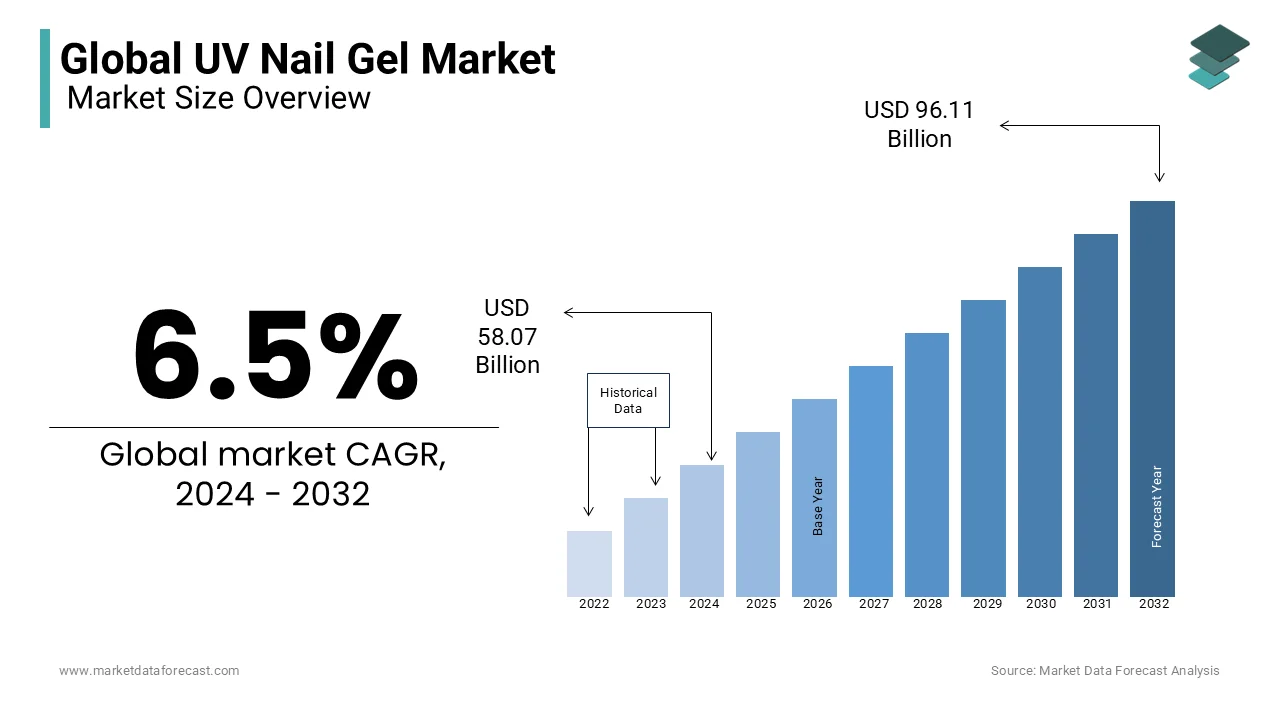
UV nail gel encompasses a specialized segment of the cosmetic industry focused on photocurable polymer formulations that harden upon exposure to ultraviolet or light-emitting diode radiation. These gels provide a durable, high-gloss finish that resists chipping and peeling for extended periods compared to traditional nail lacquers. The technology relies on oligomers, monomers, and photoinitiators that undergo rapid polymerization when exposed to specific wavelengths of light. According to the American Academy of Dermatology, the popularity of gel manicures has surged, with millions of consumers opting for this long-lasting alternative annually. The market is driven by the desire for aesthetic perfection and convenience in personal grooming routines. As per the International Labour Organization, the beauty and personal care sector continues to expand globally, with nail services representing a significant portion of salon revenues. The proliferation of home-use kits has further democratized access to professional-grade results. Regulatory bodies, such as the European Commission, monitor the safety of ingredients used in these products, ensuring compliance with health standards. The integration of innovative formulas, including soak-off gels and hybrid polishes, has diversified product offerings. Consumer awareness regarding nail health and safety protocols influences purchasing decisions significantly. The market dynamics are shaped by technological advancements in curing lamps and formulation chemistry. This sector reflects broader trends in self-care and digital influence, where social media platforms drive demand for intricate nail art designs.
MARKET DRIVERS
Rising Influence of Social Media and Digital Beauty Trends Accelerates Consumer Adoption of Gel Manicures
The pervasive influence of social media platforms and digital beauty trends is primarily driving the growth of the global UV nail gel market by creating constant demand for visually appealing and photogenic nail aesthetics. Platforms such as Instagram, TikTok, and Pinterest feature millions of posts showcasing intricate nail art designs that predominantly utilize UV gel products due to their versatility and durability. According to Statista, the number of social media users worldwide reached 5.04 billion in 2024, with beauty-related content generating billions of engagements annually. This digital exposure inspires consumers to replicate professional looks at home or in salons, driving sales of UV gel kits and accessories. As per the Global Web Index, 64% of internet users typically find out about new brands or products on social media, highlighting the power of digital marketing. Influencers and nail artists collaborate with brands to launch exclusive collections, further stimulating consumer interest. The visual nature of gel nails, which maintain their shine and integrity under camera flashes, makes them ideal for content creation. This synergy between digital culture and cosmetic preferences creates a self-reinforcing cycle of demand. Consumers seek long-lasting solutions that withstand daily activities while maintaining aesthetic appeal for online presence. The trend towards self-expression through nail art encourages frequent manicures, increasing product consumption. Brands leverage user-generated content to build community and trust, enhancing market penetration. This digital-driven engagement ensures sustained growth in the UV nail gel sector.
Increasing Participation of Women in the Workforce Drives Demand for Low Maintenance Beauty Solutions
The increasing participation of women in the global workforce is further contributing to the expansion of the global UV nail gel market as professionals seek low-maintenance and durable beauty solutions that align with busy lifestyles. Working women often prioritize efficiency and professionalism in their appearance, leading to a preference for manicures that remain intact for weeks without frequent touch-ups. According to the International Labour Organization, the global labor force participation rate for women was 48.8% in 2023, representing a major demographic of consumers. This demographic shift creates a substantial customer base for time-saving beauty services. As per the Bureau of Labor Statistics, women in professional roles often have limited time for personal care, making long-lasting options like UV gel nails highly attractive. The durability of gel polish reduces the frequency of salon visits, offering cost and time savings over traditional lacquers which chip easily. Corporate environments often emphasize grooming standards, encouraging employees to maintain polished appearances. The resilience of UV gel against workplace hazards, such as typing and handling documents, further enhances its appeal. Employers and employees alike value the professional look provided by gel manicures. This practical benefit, combined with aesthetic satisfaction, drives consistent demand. The trend towards work-life balance also encourages investments in self-care services that offer convenience. Consequently, the professional sector remains a key driver of market expansion.
MARKET RESTRAINTS
Health Concerns Regarding UV Exposure and Potential Skin Damage Restrain Market Growth
Health concerns regarding prolonged exposure to ultraviolet radiation during the curing process is impeding the global UV nail gel market expansion. Repeated use of UV lamps has been linked to an increased risk of premature aging and potentially skin cancer, although the absolute risk remains low. According to the Journal of the American Academy of Dermatology, the DNA damage and mutations that can lead to skin cancer have been observed in mammalian cells following exposure to UV nail polish dryers. As per the Skin Cancer Foundation, even with the most powerful lamps, the risk of developing skin cancer is very low, but consumers are increasingly cautious about cumulative UV damage. This awareness leads some individuals to avoid gel manicures altogether or seek alternatives such as dip powders or regular polish. Dermatologists recommend protective measures, such as applying broad-spectrum sunscreen before treatments, which adds complexity to the routine. The fear of long-term health effects outweighs the aesthetic benefits for health-conscious consumers. Regulatory scrutiny on the safety of UV-emitting devices also impacts consumer confidence. Manufacturers face pressure to develop safer curing technologies, such as LED lamps with lower UV output. However, the perception of risk persists, limiting market expansion among certain demographics. Educational campaigns by industry stakeholders aim to mitigate fears, but skepticism remains a barrier. This health-related hesitation constrains the overall growth potential of the UV nail gel sector.
Stringent Regulatory Frameworks and Chemical Safety Standards Increase Compliance Costs for Manufacturers
Stringent regulatory frameworks and evolving chemical safety standards impose significant restraints on the UV nail gel market by increasing compliance costs and limiting ingredient options for manufacturers. Regulatory bodies, such as the European Chemicals Agency and the United States Food and Drug Administration, closely monitor the safety of substances used in cosmetic products, including methacrylates and photoinitiators. According to the European Commission, the Cosmetic Regulation prohibits or restricts numerous chemicals known to cause allergic reactions or environmental harm. As per the Scientific Committee on Consumer Safety, hydroquinone and the p-hydroxyanisole used as stabilizers in nail kits are safe for use at 0.02% or below in professional-use-only systems. Compliance with these regulations necessitates extensive safety assessments and reformulation efforts, which are costly and time-consuming. Small and medium-sized enterprises often struggle to meet these requirements, leading to market consolidation. The ban on specific ingredients forces manufacturers to innovate with alternative compounds that may offer inferior performance or higher costs. Additionally, varying regulations across different regions complicate global distribution strategies. Companies must navigate a complex landscape of legal requirements to ensure market access. Non-compliance can result in product recalls, fines, and reputational damage. These regulatory hurdles slow down product launches and increase operational expenses. The continuous evolution of safety standards requires ongoing investment in research and development. This regulatory burden acts as a persistent constraint on market agility and profitability.
MARKET OPPORTUNITIES
Expansion of Home-Based DIY Nail Care Routines Presents Significant Growth Opportunities
The expansion of home-based do-it-yourself nail care routines is a substantial opportunity for the UV nail gel market as consumers seek cost-effective and convenient alternatives to salon services. The pandemic accelerated this trend with many individuals investing in personal nail kits to maintain grooming standards at home. According to NielsenIQ, 68% of shoppers say they are maintaining a regular beauty and personal care routine at home even after pandemic restrictions were lifted. As per the NPD Group, the DIY nail category has shown resilient growth, with UV gel kits becoming a staple in household beauty regimes. Manufacturers are responding by developing user-friendly kits with simplified application processes and safer LED lamps. Online tutorials and virtual consultations further empower consumers to achieve professional results independently. This trend reduces dependency on salons and increases the frequency of product purchases for home use. Brands are leveraging e-commerce platforms to reach direct consumers, offering subscription models and bundled deals. The affordability of home kits compared to recurring salon visits appeals to budget-conscious shoppers. Innovation in peel-off gels and easier removal methods enhances the user experience. This shift towards self-sufficiency in beauty care opens new revenue streams for manufacturers. By catering to the DIY segment, companies can tap into a growing market of empowered consumers seeking convenience and value.
Innovation in Eco-Friendly and Non-Toxic Gel Formulations Attracts Environmentally Conscious Consumers
Innovation in eco-friendly and non-toxic gel formulations offers a promising opportunity for the UV nail gel market by aligning with the growing demand for sustainable and safe beauty products. Consumers are increasingly prioritizing products free from harmful chemicals such as formaldehyde, toluene, and dibutyl phthalate. According to the Environmental Working Group, more than 80% of consumers now look for "clean" or "organic" labels when purchasing personal care products. As per the Organic Monitor, the global natural and organic cosmetics market is expanding rapidly, influencing the nail care sector. Manufacturers are developing bio-based gels derived from renewable resources and waterborne formulations that reduce environmental impact. These innovations appeal to environmentally conscious buyers who value sustainability without compromising on performance. Brands are obtaining certifications such as Ecocert and Leaping Bunny to validate their claims and build trust. The introduction of recyclable packaging further enhances the eco-friendly profile of these products. Retailers are dedicating shelf space to green beauty brands, facilitating visibility and access. Marketing campaigns emphasizing health and environmental benefits resonate with modern consumers. This strategic pivot towards sustainability differentiates brands in a crowded market. By addressing ethical concerns, companies can capture a loyal customer base willing to pay a premium for responsible products. This trend drives innovation and long-term market viability.
MARKET CHALLENGES
Risk of Allergic Reactions and Contact Dermatitis Poses Significant Health Challenges
The risk of allergic reactions and contact dermatitis associated with UV nail gel ingredients is challenging the expansion of the global UV nail gel market. Acrylates commonly found in gel polishes are known sensitizers that can cause severe skin irritation and lifelong allergies upon repeated exposure. According to the British Association of Dermatologists, the prevalence of methacrylate allergy in patients patch-tested for contact dermatitis is approximately 2.4%. As per the Contact Dermatitis Institute, improper application techniques, such as getting gel on the skin rather than the nail plate, significantly increase the risk of sensitization. Once an allergy develops, individuals may react to other acrylate-containing products, including dental fillings and medical adhesives, limiting their future options. This health risk discourages new users and causes existing customers to discontinue use. Salon technicians are also at higher risk due to occupational exposure, leading to workforce health issues. Liability concerns prompt insurers to raise premiums for nail salons. Manufacturers face pressure to develop hypoallergenic formulas, which are technically challenging and expensive. Public awareness campaigns by health organizations highlight these risks, further dampening consumer confidence. Managing this challenge requires rigorous training for applicators and clear consumer education. Until safer alternatives are widely available, this health concern remains a critical barrier to market expansion.
High Skill Requirement for Professional Application Limits Service Quality and Consistency
The high skill requirement for professional application of UV nail gels is another major challenge to the market by impacting service quality and customer satisfaction. Proper application involves precise nail preparation, layering, and curing, which demands extensive training and practice. According to the National Accrediting Commission of Career Arts and Sciences, the number of beauty professional graduates has fluctuated in recent years, affecting the supply of skilled labor. As per the Professional Beauty Association, many entry-level technicians lack the expertise to handle complex nail structures, resulting in poor outcomes. These inconsistencies frustrate consumers who expect flawless and long-lasting results. Poor application can also lead to nail damage, including thinning and weakening of the natural nail plate. Negative experiences discourage repeat business and generate unfavorable reviews, affecting salon revenues. The shortage of skilled professionals exacerbates the problem, particularly in regions with high demand. Salons invest heavily in training programs, but staff turnover remains high. Consumers attempting DIY applications often struggle with technique, leading to similar issues. The complexity of the process creates a barrier to entry for both professionals and amateurs. Standardizing training and certification could mitigate this challenge, but implementation varies widely. Until application becomes more foolproof, the reliance on skilled labor constrains market accessibility and consistency.
REPORT COVERAGE
| REPORT METRIC | DETAILS |
| Market Size Available | 2025 to 2034 |
| Base Year | 2025 |
| Forecast Period | 2026 to 2034 |
| CAGR | 6.50% |
| Segments Covered | By Chemistry and Region. |
| Various Analyses Covered | Global, Regional & Country Level Analysis, Segment-Level Analysis, DROC, PESTLE Analysis, Porter’s Five Forces Analysis, Competitive Landscape, Analyst Overview of Investment Opportunities |
| Regions Covered | North America: (United States, Mexico, Canada), Europe: (United Kingdom, Germany, Italy, France), Asia Pacific: (Australia, Canada, China), Latin America: (Argentina, Brazil, Chile), The Middle East and Africa: (Egypt, Iran, Iraq, Israel). |
| Market Leaders Profiled | Shany Cosmetics Inc., Keystone Research and Pharmaceuticals Inc., Crystal Nails, Creative Nail Design Inc., Alessandro International, and Others. |
SEGMENTAL ANALYSIS
By Chemistry Insights
The acrylate-based formulations segment led the market by holding 61.5% of the global market share in 2025. The dominance of the acrylate segment is primarily attributed to the exceptional performance characteristics of urethane acrylates and epoxy acrylates, which form the backbone of most modern gel polish systems. These compounds provide the necessary balance between hardness and flexibility, ensuring that the manicure withstands daily wear and tear without cracking or lifting. According to the Society of Chemical Industry, acrylate oligomers are preferred in cosmetic applications due to their ability to cure quickly under UV or LED light, reducing service time in salons. As per the American Chemical Society, acrylates are among the most versatile monomers because they can undergo rapid free radical polymerization to form polymers with a wide range of glass transition temperatures. This versatility supports the diverse demands of consumers, ranging from natural looks to elaborate nail art. The strong bonding capability of acrylates to the natural nail plate minimizes the risk of premature chipping, which is a key consumer requirement. Furthermore, the widespread availability of raw materials and established supply chains for acrylate monomers keep production costs manageable for manufacturers. The industry has also developed low-odor acrylate formulas, addressing previous concerns about strong chemical smells in salon environments. This combination of technical superiority, aesthetic versatility, and economic efficiency cements the leading position of acrylate chemistry in the global UV nail gel market.
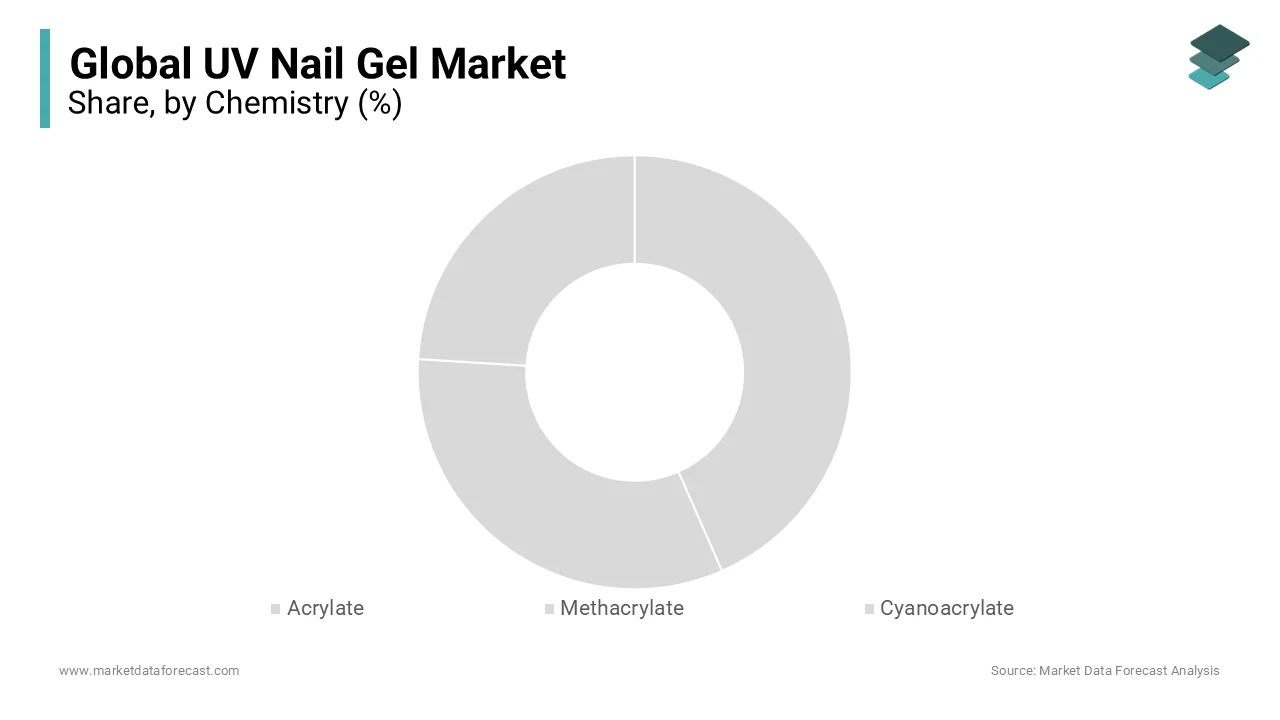
However, the methacrylate segment is estimated to record a promising CAGR of 9.2% over the forecast period owing to the increasing consumer awareness regarding skin sensitization and the desire for safer beauty products. While traditional acrylates can cause allergic reactions in some individuals, methacrylates such as hydroxyethyl methacrylate are often perceived as less irritating and more biocompatible. According to the British Association of Dermatologists, identifying specific methacrylate sensitizers through patch testing is essential for managing contact dermatitis in nail technicians and consumers. As per the European Commission, specific methacrylates are restricted in nail products to professional use only to minimize the risk of consumer sensitization. This shift is particularly evident in premium and professional-grade gel lines that prioritize health and safety. Methacrylates also offer excellent clarity and gloss retention, which appeals to consumers seeking high-end finishes. The development of new methacrylate copolymers has improved their durability and adhesion, making them competitive with traditional acrylates. Additionally, the rise of sensitive skin clinics and specialized nail bars drives the adoption of these gentler formulations. Marketing campaigns highlighting hypoallergenic properties further accelerate market penetration. As health consciousness continues to influence purchasing decisions, methacrylate-based gels are positioned for sustained growth, outpacing other chemical segments.
REGIONAL ANALYSIS
North America UV Nail Gel Market Analysis
North America dominated the UV nail gel market globally in 2025 and held the largest share of the global market. North America maintains its leadership position due to the strong culture of self-care and beauty maintenance among consumers in the United States and Canada. The region boasts a dense network of professional nail salons and spas that drive consistent demand for high-quality gel products. According to the Professional Beauty Association, the nail care industry in the United States reached a record market size of over 8 billion dollars in recent years. As per the Bureau of Labor Statistics, employment of manicurists and pedicurists is projected to grow 9% from 2022 to 2032, much faster than the average for all occupations. The prevalence of social media influencers in North America significantly impacts beauty trends, encouraging frequent manicures and experimentation with new gel styles. The availability of advanced DIY kits in major retail chains and online platforms further expands market reach beyond professional settings. Consumers in this region are willing to pay a premium for branded and safe products, driving innovation among manufacturers. Regulatory standards set by the Food and Drug Administration ensure product safety, fostering consumer trust. The integration of technology in salons, such as automated booking and digital design tools, enhances customer experience. This mature market environment, supported by high disposable income and cultural emphasis on aesthetics, solidifies North America's dominant share.
Europe UV Nail Gel Market Analysis
Europe captured a promising share of the global UV nail gel market in 2025. The growth of Europe in the global market is majorly driven by stringent safety regulations and a growing preference for sustainable and non-toxic beauty products. Europe holds a prominent position in the market due to its rigorous regulatory framework, which influences global standards for cosmetic safety. The European Union Cosmetic Regulation mandates strict compliance regarding ingredient safety, pushing manufacturers to develop cleaner and safer UV gel formulations. According to Eurostat, 41.1% of plastic packaging waste was recycled in the EU in 2022, highlighting the region's focus on circular economy practices. As per the European Chemicals Agency, 2-hydroxyethyl methacrylate and other sensitizing acrylates are subject to specific concentration limits and labeling requirements in nail products. Countries like Germany, France, and the United Kingdom are key contributors, with high concentrations of beauty-conscious consumers. The trend towards natural and organic beauty extends to nail care, driving demand for vegan and cruelty-free gel options. Professional training standards in Europe are high, ensuring quality application and reducing health risks. The presence of major cosmetic companies headquartered in Europe facilitates rapid adoption of new technologies. Consumer awareness about UV exposure risks has led to increased use of protective measures and LED lamps. This focus on safety and sustainability distinguishes the European market and drives steady growth.
Asia Pacific UV Nail Gel Market Analysis
Asia Pacific is the fastest growing region in the global UV nail gel market and fueled by rising disposable incomes and expanding beauty industries in emerging economies. Asia Pacific is emerging as a dynamic hub for UV nail gel consumption, driven by rapid urbanization and changing lifestyle patterns in countries like China, Japan, South Korea, and India. The region is home to a large youth population that is highly influenced by global beauty trends and social media. According to the Asian Development Bank, developing Asia's economy is expected to grow by 4.9% in 2024, supporting increased discretionary spending. As per the China Beauty Association, the domestic cosmetics market in China continues to expand, with specialized segments like nail art becoming increasingly popular among Gen Z consumers. South Korea and Japan are known for their innovative beauty products and intricate nail art styles, which drive demand for high-quality gel supplies. The manufacturing base in Asia provides cost-effective production capabilities, attracting global brands. E-commerce platforms facilitate easy access to DIY gel kits for home users. Government support for the cosmetics industry in several countries encourages local production and exports. The cultural importance of grooming and appearance in many Asian societies further sustains demand. This combination of economic growth, cultural factors, and industrial capacity positions Asia Pacific as a key growth engine.
Latin America UV Nail Gel Market Analysis
Latin America is estimated to account for a notable share of the global UV nail gel market during the forecast period owing to a strong beauty culture and increasing accessibility of professional services. Latin America is characterized by a deep-rooted beauty culture where personal grooming is highly valued across various socioeconomic groups. Countries such as Brazil and Mexico are significant contributors to the regional market, with a high density of nail salons and beauty professionals. According to the Brazilian Beauty and Personal Care Association, Brazil ranks as the fourth largest beauty market in the world, with consumers spending a significant portion of their income on grooming. As per the Mexican Association of Cosmetics, Toiletries, and Perfumery, the beauty industry in Mexico accounts for approximately 1.2% of the national GDP. The popularity of long-lasting manicures suits the active lifestyles of consumers in the region. Local distributors are expanding their networks to reach smaller cities and towns, increasing market penetration. International brands are entering the market through partnerships with local entities. The influence of international beauty trends via digital media drives demand for modern gel techniques. Economic fluctuations pose challenges, but the resilience of the beauty sector ensures steady demand. Investment in professional training improves service quality and consumer satisfaction. This vibrant beauty landscape supports the gradual expansion of the UV nail gel market in Latin America.
Middle East and Africa UV Nail Gel Market Analysis
The Middle East and Africa represent an emerging market characterized by growing luxury beauty consumption and urbanization. The Middle East and Africa are beginning to explore the UV nail gel market as part of broader efforts to improve beauty standards and promote sustainability. Countries in the Gulf Cooperation Council are investing in luxury salon infrastructure to cater to a high-net-worth clientele. According to the United Nations Environment Programme, global plastic production reached 400 million tonnes per year by 2022, prompting regional initiatives to improve waste management. As per the African Union, the African Continental Free Trade Area is expected to boost intra-African trade in manufactured goods, including cosmetics, by up to 25% by 2040. The cultural emphasis on personal presentation and hospitality drives demand for professional nail services. Social events and weddings are significant occasions for elaborate manicures, boosting seasonal demand. The availability of imported gel products in upscale malls and online stores caters to affluent consumers. Local entrepreneurs are establishing nail studios offering international standards of service. Challenges, such as limited distribution networks in remote areas, persist, but urban centers show strong potential. The influence of global beauty icons and digital media inspires younger generations to adopt gel manicures. This evolving market offers opportunities for brands targeting premium segments.
COMPETITIVE LANDSCAPE
The competition in the UV Nail Gel Market is intense and fragmented featuring a mix of established beauty conglomerates and specialized niche brands. Major players compete on the basis of product quality brand reputation and innovation in formulation technology. The market sees continuous product launches focusing on ease of application durability and safety to attract both professionals and DIY enthusiasts. Private label brands from retail chains pose a significant threat by offering affordable alternatives to premium products. Established companies respond by emphasizing professional grade quality and exclusive salon partnerships. Regulatory compliance regarding chemical safety serves as a critical differentiator as consumers become more health conscious. The rise of social media influences competitive dynamics by accelerating trend cycles and demanding rapid product innovation. Mergers and acquisitions are common as larger firms seek to expand their portfolios and market reach. Overall the market rewards agility and creativity requiring companies to constantly adapt to changing consumer preferences and technological advancements.
Key Market Players
The major key players in the global uv nail gel market are
- Shany Cosmetics Inc.
- Keystone Research and Pharmaceuticals Inc.
- Crystal Nails
- Creative Nail Design Inc.
- Alessandro International
Top Players in the UV Nail Gel Market
- OPI Products LLC is a globally recognized leader in the nail care industry known for its high quality gel polish systems and extensive color ranges. The company contributes to the global market by setting trends in nail aesthetics and maintaining rigorous safety standards for its formulations. OPI has recently focused on expanding its professional education programs to ensure proper application techniques among nail technicians. They have also launched innovative gel products that offer easier removal and longer wear times to meet consumer demands. The brand leverages strong partnerships with salons worldwide to maintain its presence in the professional sector. By continuously updating their color collections and incorporating sustainable practices OPI strengthens its market position. Their commitment to quality and innovation ensures they remain a preferred choice for professionals and consumers alike in the competitive UV nail gel landscape.
- Coty Inc. is a major beauty conglomerate that owns prominent nail care brands such as Rimmel and Sally Hansen which are key players in the UV gel segment. The company drives global market growth through its extensive distribution network and mass market accessibility. Coty has recently invested in digital marketing campaigns and influencer collaborations to reach younger demographics interested in DIY nail care. They have introduced user friendly gel kits designed for home use featuring LED lamps and long lasting formulas. The company focuses on product innovation by developing hypoallergenic and vegan friendly options to align with current consumer preferences. Coty also enhances its supply chain efficiency to ensure consistent product availability across various retail channels. These strategic initiatives help Coty maintain a strong competitive edge and expand its footprint in the evolving UV nail gel market.
- L Oréal S.A. is a global beauty giant that participates in the UV nail gel market through its diverse portfolio of cosmetic brands including Essie and Redken. The company contributes to the market by leveraging its extensive research and development capabilities to create advanced gel formulations. L Oréal has recently focused on sustainability by introducing eco conscious packaging and cleaner ingredient lists for its nail products. They have expanded their professional division offerings to include high performance gel systems for salon use. The company also utilizes data analytics to understand consumer trends and tailor product launches accordingly. L Oréal strengthens its market position through strategic acquisitions and partnerships with beauty tech startups. Their commitment to innovation and sustainability ensures they remain at the forefront of the UV nail gel industry catering to both professional and retail segments.
Top Strategies Used by the Key Market Participants
Key players in the UV Nail Gel Market primarily focus on product innovation and diversification to meet evolving consumer preferences. Companies invest heavily in research and development to create hypoallergenic and long lasting formulas that address health concerns. Strategic partnerships with nail salons and beauty influencers help brands enhance visibility and credibility in the professional sector. Expansion into e commerce platforms allows companies to reach direct consumers with DIY kits and accessories. Sustainability initiatives such as eco friendly packaging and vegan certifications are increasingly used to differentiate products. Educational programs for technicians ensure proper application and reduce liability risks. Brands also leverage social media marketing to showcase trends and engage with younger audiences. These strategies collectively enable participants to maintain competitiveness and drive growth in the dynamic beauty industry.
MARKET SEGMENTATION
This research report on the global smoothies market has been segmented and sub-segmented based on chemistry, and region.
By Chemistry
- Acrylate
- Methacrylate
- Cyanoacrylate
By Region
- North America
- Europe
- Asia Pacific
- Latin America
- Middle East & Africa