Global Vehicle Access Control Market Size, Share, Trends & Growth Forecast Report, Segmented By Type (Biometric System, Non-biometric System), Biometric System (Face Recognition, Fingerprint Recognition, Iris Recognition, Voice Recognition), Non-biometric System (Keyless Entry, Alarm, Immobilizer, Steering Wheel Lock, Stolen Vehicle Assist, Others), Technology (Bluetooth, NFC, RFID, Wi-Fi), Vehicle Type (PC, LCV, HCV), Electric Vehicle (BEV, HEV, PHEV, FCEV) And By Region (North America, Europe, Asia-Pacific, Latin America, Middle East, and Africa), Industry Analysis Forecast 2026 to 2034
Market Size, 2025
$33.96 BnMarket Estimate, 2026
$37.48 BnMarket Forecast, 2034
$82.53 BnCAGR, 2026–2034
10.37%Global Vehicle Access Control Market Size
The global vehicle access control market size was valued at USD 33.96 billion in 2025 and is anticipated to reach USD 37.48 billion in 2026, from USD 82.53 billion by 2034, and is predicted to register a CAGR of 10.37% during the forecast period from 2026 to 2034.
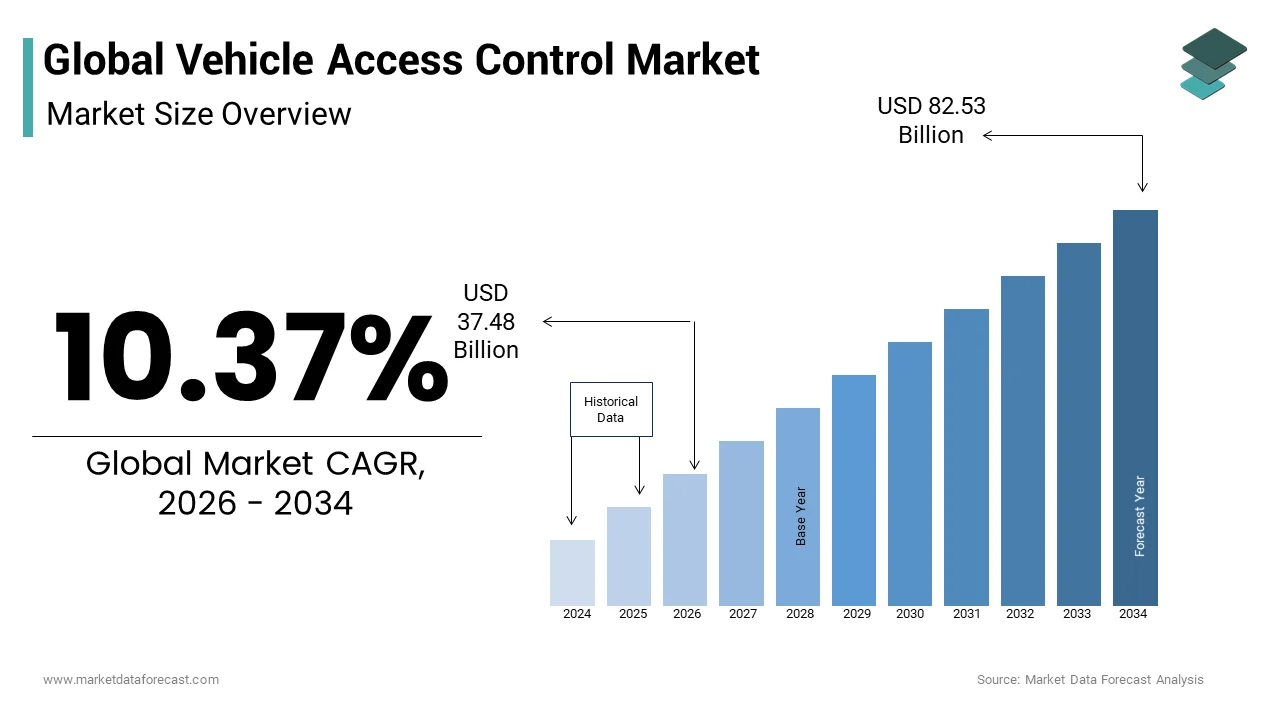
Vehicle access control is a system that allows the entry of the vehicle into the premises, based on entry needs, for example, time, day, and employment. Vehicle access control removes the requirement for human intervention to check the vehicle and allows automatic access to the automobile. Improvement in technology has led to the latest, quick, environment-friendly, innovative, futuristic cars. Along with the production of top-dollar automobiles, crimes have become more sophisticated, too. Hence, monitoring the movement of vehicles in and out of an area has become more critical and essential.
Vehicle access control is created to cater to the requirements of those facilities that are generally utilized as parking bays. A few of the commercial places where automobile owners demand secure and strict regulations are corporate offices, IT parks, special economic zones (SEZs), public sector undertakings (PSUs), universities, and government firms, among others.
MARKET DRIVERS
The vehicle access control system saves the high working costs of an organization, as it removes the working hours utilized for safety and frees the resources for other undertakings. The increase in the number of automobiles and traffic has substantially increased the usage of automatic systems to detect and evaluate a vehicle quickly, which is projected to drive the vehicle access control market. Increasing demand for premises safety among customers is driving this market. The rising threat of security breaches, theft, and crimes further triggers the global vehicle access control market.
MARKET RESTRAINTS
There exist some limitations that are hampering the implementation of these systems. First, while incorporating access control systems based on biometrics in a vehicle can be a challenging undertaking for vehicle organizations, end users can also find it difficult to get used to the latest and innovative vehicle access control systems. Second, the price incurred in repairing these systems is also very much.
REPORT COVERAGE
| REPORT METRIC | DETAILS |
| Market Size Available | 2025 to 2034 |
| Base Year | 2025 |
| Forecast Period | 2026 to 2034 |
| CAGR | 10.37% |
| Segments Covered | By Type, Biometric System, Non-Biometric System, Technology, Vehicle Type, Electric Vehicle, and Region. |
|
Various Analyses Covered | Global, Regional and Country Level Analysis, Segment-Level Analysis, DROC, PESTLE Analysis, Porter’s Five Forces Analysis, Competitive Landscape, Analyst Overview of Investment Opportunities |
| Regions Covered | North America, Europe, APAC, Latin America, Middle East & Africa |
|
Market Leaders Profiled | Johnson Electric, Valeo, Synaptics Incorporated, Voxx International, Denso Corporation, Robert Bosch, Methode Electronics, Mitsubishi Electronic, Fingerprint Cards Ab, Continental AG, and Others. |
SEGMENTAL ANALYSIS
By Biometric System
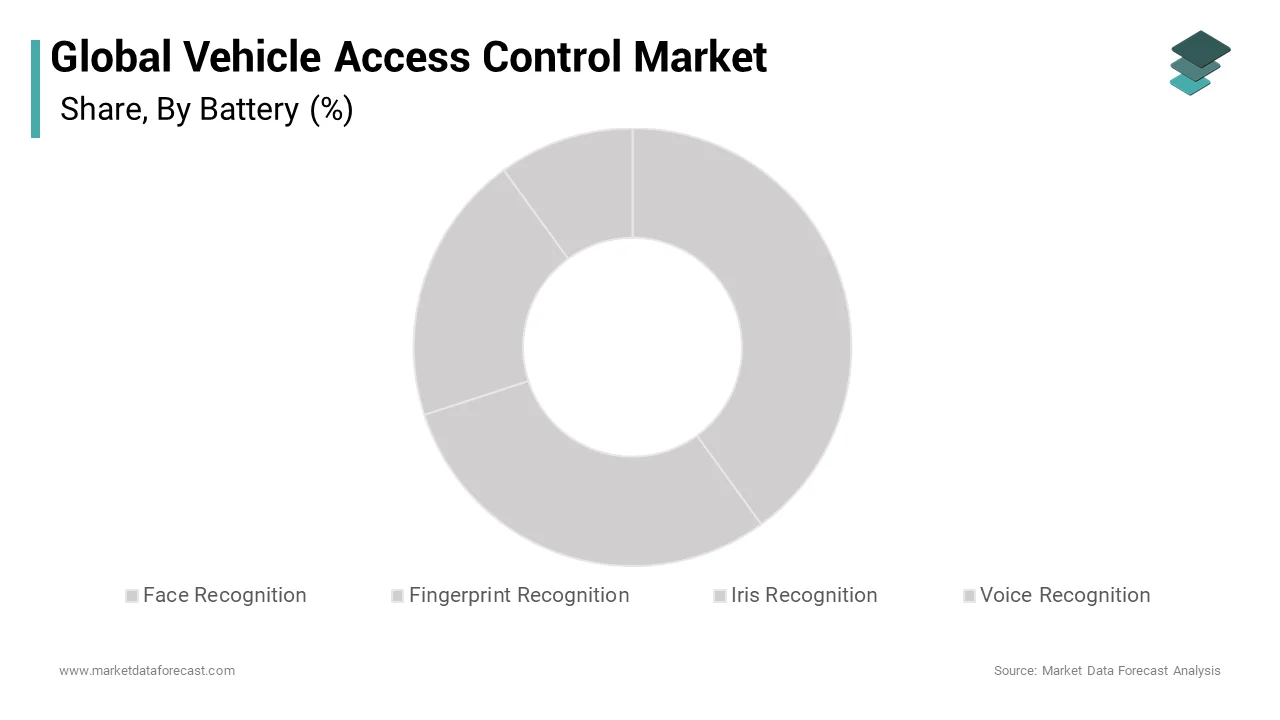
The biometric sector is projected to emerge as a rapidly growing sector over the foreseeable period. The fast growth can be attributed to the rising usage of biometrics-based access control systems in vehicles. Biometric systems can thwart vehicle theft efforts and ensure easy access to the owner of the car. Biometric systems can also be configured to provide a personalized experience to consumers, thereby contributing to their popularity. Thus, the use of biometrics-based vehicle access control systems, particularly in premium vehicles, is predicted to grow over the outlook period.
By Non-Biometric System
The non-biometric system is projected to be the biggest and most rapidly growing market. The system utilizes automotive sensors, which are a reliable and low-cost technology. These sensors are comparatively simple and used in applications such as keyless entry, permitting OEMs to use such features in almost all premium models, quickly. This trend for safety features with dependability is projected to trigger the market.
By Vehicle Type
The light commercial vehicle is projected to be a rapidly growing market during the projection period. Safety features such as alarms, immobilizers, and central locking are now added as standard attributes by OEMs in developed nations. Furthermore, a shift in customer preference is boosting the vehicle access control market growth. Moreover, the sales of LCVs are continuously increasing in many countries, which will trigger demand.
REGIONAL ANALYSIS
North America Market Analysis
North American vehicle access control market accounted for the largest share of this global business in 2018, with an economic share of more than 30%. North America has been witnessing a surge in sales of premium automobiles, which feature built-in advanced access control systems. Furthermore, automakers in this area are also progressively implementing the latest and innovative vehicle access control systems. Vehicle access control systems are also utilized extensively on tollways across North America to manage the traffic on highways effectively.
Europe Market Analysis
Europe is anticipated to hold a significant share of this global market, as these technologies are first used in developed regions and gradually maximize penetration in developing ones. Asia Pacific is projected to emerge as a rapidly increasing regional market, accounting for a CAGR of over 12% over the forecast period. Automotive organizations are spending more on research and development to lower deployment prices so that these systems are no longer limited only to high-end vehicles. They can also be installed in low-end and mid-end cars. Low-end and mid-end automobiles are particularly popular in the developing economies of Asia Pacific. Thus, manufacturers in this area are stressing installing access control systems in such cars without increasing the costs of these vehicles beyond a specific limit.
KEY MARKET PLAYER
The global access control market is concentrated with well-established players. Key players in the market include,
- Johnson Electric
- Valeo
- Synaptics Incorporate
- Voxx International
- Denso Corporation
- Robert Bosch
- Methode Electronics
- Mitsubishi Electronic
- Fingerprint Cards Ab
- Continental AG.
RECENT MARKET NEWS
- With the Valeo Inblue® System, drivers can virtually share the key to their automobile via mobile phone and lock, unlock, and start the vehicle, as well as control applications and access certain vehicle information remotely. Developed in collaboration with CAPGEMINI, the app "Inblue Mobility Solution" is the concrete and unequaled response for vehicle sharing destined for firm fleets and vehicle rental organizations.
- VOXXHirschmann removes the requirement for vehicle Keys with the Introduction of Groundbreaking eFob mobile Phone-Based Bluetooth Technology for the Automotive Market.
- VOXX Automotive Forms Strategic Collaboration with UniKey. Partnership to Bring Easier, Smarter, More Secure Phone-as-a-Key abilities to Global Automakers, Fleet Operators, and Customers.
MARKET SEGMENTATION
This research report on the global access control market has been segmented and sub-segmented based on type, biometric system, non-biometric system, technology, vehicle type, electric vehicle, and region.
By Type
- Biometric System
- Non-Biometric System
By a Biometric System
- Face Recognition
- Fingerprint Recognition
- Iris Recognition
- Voice Recognition
By Non-Biometric System
- Keyless entry
- Alarm
- Immobilizer
- Steering wheel lock
- Stolen Vehicle Assist
- Others (Tire Lock, Gear Lock, and Hood Lock)
By Technology
- Bluetooth
- NFC
- RFID
- Wi-Fi
By Vehicle Type
- PC
- LCV
- HCV
By Electric Vehicle
- BEV
- HEV
- PHEV
- FCEV
By Region
- North America
- Europe
- Asia Pacific
- Latin America
- Middle East and Africa
Frequently Asked Questions
Why is the vehicle access control market becoming essential for modern vehicle security?
The market is expanding due to increasing vehicle theft concerns, rising adoption of connected vehicles, growing demand for keyless entry systems, and advancements in automotive security technologies.
What is a vehicle access control system and how does it work?
A vehicle access control system uses technologies such as smart keys, keyless entry, biometrics, RFID, and mobile authentication to securely authorize vehicle access and ignition.
How do vehicle access control systems improve vehicle security and user convenience?
They prevent unauthorized access, enable seamless vehicle entry, enhance theft protection, and provide a more convenient and personalized user experience.
Which vehicle access technology holds the largest share of the market?
Passive keyless entry (PKE) systems account for a significant market share due to their widespread adoption in passenger vehicles and premium automotive models.
What factors are driving the growth of the vehicle access control market worldwide?
Increasing demand for connected and luxury vehicles, stricter vehicle security standards, advancements in digital authentication, and rising consumer preference for smart vehicle features are driving market growth.
Which vehicle segment generates the highest demand for vehicle access control systems?
Passenger vehicles account for the highest demand as manufacturers increasingly integrate advanced security and convenience features across multiple vehicle categories.
What technologies are shaping the future of the vehicle access control market?
Biometric authentication, smartphone-based digital keys, ultra-wideband (UWB) technology, NFC, AI-powered identity verification, and cloud-connected access management systems are shaping the market.
Who are the primary users of vehicle access control solutions?
Automotive manufacturers, fleet operators, mobility service providers, vehicle rental companies, commercial vehicle operators, and individual vehicle owners are the primary users.
What challenges could affect the growth of the vehicle access control market?
Cybersecurity risks, high integration costs, electronic system complexity, interoperability challenges, and evolving vehicle hacking techniques could affect market growth.
Which regions are expected to lead the vehicle access control market?
Asia Pacific leads the market due to high vehicle production, while Europe and North America continue to drive innovation through connected vehicle technologies and premium automotive manufacturing.
Related Reports
Access the study in MULTIPLE FORMATS
Purchase options starting from
$ 2500
Didn’t find what you’re looking for?
TALK TO OUR ANALYST TEAM
Need something within your budget?
NO WORRIES! WE GOT YOU COVERED!
Call us on: +1 888 702 9696 (U.S Toll Free)
Write to us: sales@marketdataforecast.com