- Product Description Description
- Table of Contents TOC
- List of Table & Figure LOT
- Get Free Sample PDF Sample PDF
Market Size, 2025
$270 MnMarket Estimate, 2026
$289.1 MnMarket Forecast, 2034
$501 MnCAGR, 2026–2034
7.1%Global Visual Electrophysiology Market Size, Growth, Trends & Forecast (2026–2034)
The global visual electrophysiology market size was valued at USD 270 million in 2025, is estimated at USD 289.17 million in 2026, and is expected to reach USD 501 million by 2034, registering a compound annual growth rate (CAGR) of 7.1% from 2026 to 2034. Driven by the rising prevalence of ophthalmic and neurological disorders, expanding geriatric populations, and increased governmental and private investments, the market is experiencing consistent worldwide adoption.
Key Executive Metrics (At-a-Glance)
- 2025 Base Valuation: USD 270 Million
- 2026 Current Valuation: USD 289.17 Million
- 2034 Forecast Valuation: USD 501 Million
- Compound Annual Growth Rate (CAGR): 7.1% (2026–2034)
- Dominant Test Type Segment: Electroretinogram (ERG) (widely utilized for evaluating hereditary and acquired retinal disorders)
- Dominant Product Type Segment: Fixed Visual Electrophysiology Systems (favored for high accuracy and heavy clinic/hospital preference)
- Dominant End-User Segment: Hospitals (backed by higher capital budgets and specialized R&D departments)
- Dominant Region: North America (anchored by high healthcare expenditure and early technology adoption)
- Fastest-Growing Region: Asia-Pacific (propelled by improving economic conditions, expanding healthcare infrastructure, and rising disposable incomes in countries like China and Japan)
Core Market Drivers
- Rising Disorder Prevalence: Escalating global incidence rates of eye diseases (such as retinitis pigmentosa and macular conditions) and related neurological dysfunctions.
- Technological Innovations: Ongoing research breakthroughs, including advanced signal recording compliant with ISCEV standards and experimental techniques like nanoparticle retinal integration.
Primary Market Restraints & Challenges
- High Diagnostic Costs: Expensive equipment and diagnostic procedures restricting rapid penetration in lower-income and developing regions.
- Adoption Barriers: Practitioner-side training gaps and initial reluctance or lack of experience regarding novel electrophysiological technologies.
Global Visual Electrophysiology Market Segmentation Breakdown
| Segment Category | Leading Sub-Segment (Base Year) | Fastest-Growing Sub-Segment |
|---|---|---|
| By Test Type | Electroretinogram (ERG) | Visual-Evoked Responses (VER) |
| By Product Type | Fixed Systems | Portable Systems |
| By End-User | Hospitals | Ophthalmic Clinics & Specialty Labs |
| By Region | North America (Market leader) | Asia-Pacific (Highest regional growth rate) |
Major Industry Players Profiled
Key organizations driving the global visual electrophysiology market include Konan Medical USA, Inc., Diopsys, Inc., LKC Technologies, Inc., Metro Vision, and specialized medical centers like Nationwide Children's Hospital.
Global Visual Electrophysiology Market Size
The size of the global visual electrophysiology market was worth USD 270 million in 2025. The global market is anticipated to grow at a CAGR of 7.1% from 2026 to 2034 and be worth USD 501 million by 2034 from USD 289.17 million in 2026.
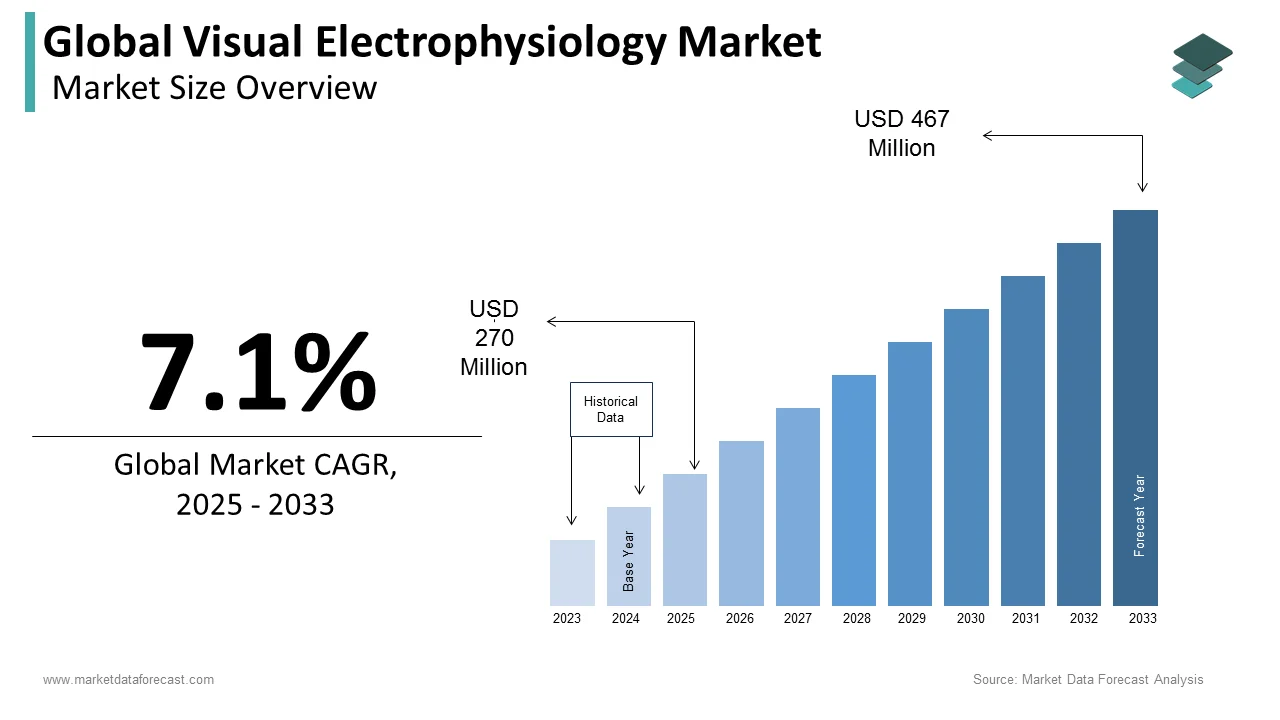
Visual electrophysiology is a procedure that involves the recording of several electrical signals that come from the brain, optic nerve, and eye, which are in response to visual stimuli. This technology has quickly become famous all over the world in the ophthalmologist community. Though training the ophthalmologist about this new technology remains a constraint, it is rapidly being adopted worldwide. For examining the adults, children, and animals, visual electrophysiology testing will use the devices. To record the Visual Electrophysiology tests, some standards were set by the ISCEV (International Society for Clinical Electrophysiology of the Vision).
MARKET DRIVERS
Rising Prevalence of Eye and Neurological Disorders Driving Market Growth
The visual electrophysiology market is growing with the prevalence of eye and neurological disorders and increasing investment from Government and Private sector to inculcate new technologies. Increasing awareness about the adverse effects of visual and neurological disorders is expected to create the opportunity for visual electrophysiology testing device providers. The other major drivers contributing to the visual electrophysiology market's growth are the growing incidences of target diseases and processes. The rise in technological advancements is another significant market growth factor in the visual electrophysiology market. The market is growing due to the province's increase in neurologies eye cases and disorders. Growth in the geriatric population and adopting the diagnosis's visual electrophysiology practices with the high increasement help drive the global visual electrophysiology market. Rising awareness levels about the adverse effects of visual neurology disorders and the increasing number of initiatives and funding taken by various governments worldwide are expected to provide growth opportunities for companies operating in this market. Growing demand to promote the best treatment procedures for targeted diseases like cancer is enhancing the need of the market.
MARKET RESTRAINTS
The high cost associated with the diagnosis and treatment procedure is a restraint for the Visual Electrophysiology Market. Lack of experience and lack of willingness to adopt these advanced technologies on the practitioner's side is a significant constraint in the growth of the Visual Electrophysiology Market.
REPORT COVERAGE
| REPORT METRIC | DETAILS |
| Market Size Available | 2025 to 2034 |
| Base Year | 2025 |
| Forecast Period | 2026 to 2034 |
| Segments Covered | By Test Type, Product Type, End-User, and Region. |
| Various Analyses Covered | Global, Regional and Country-Level Analysis, Segment-Level Analysis, Drivers, Restraints, Opportunities, Challenges; PESTLE Analysis; Porter’s Five Forces Analysis, Competitive Landscape, Analyst Overview of Investment Opportunities |
| Regions Covered | North America, Europe, Asia Pacific, Latin America, Middle East & Africa |
| Market Leaders Profiled | Konan Medical USA, Inc., Diopsys, Inc, Nationwide Children's Hospital, LKC Technologies, Inc., Metro Vision, and Others. |
SEGMENTAL ANALYSIS
By Test Type Insights
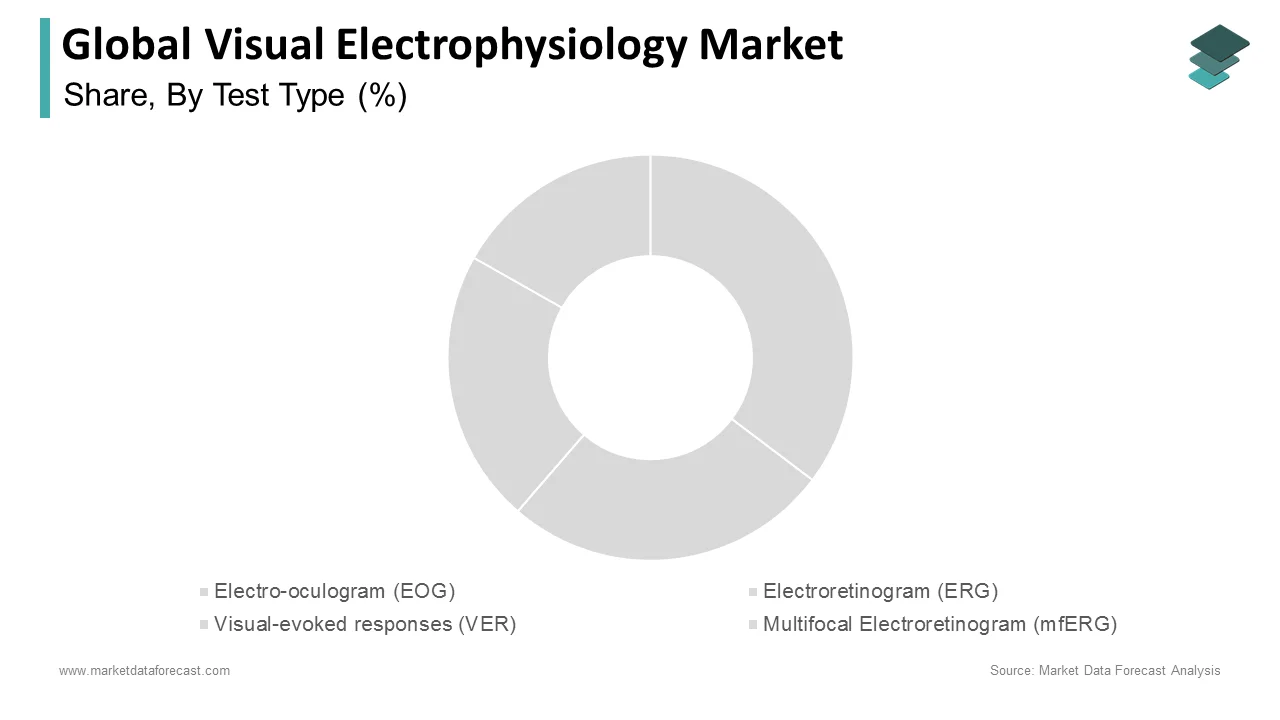
Based on the test type, electroretinogram (ERG) is used most widely and has the largest market share during the forecast period. An ERG is advantageous in evaluating both hereditary and acquired disorders of the retina. The diagnoses commonly suspect the retina's prevailing conditions, including retinitis pigmentosa, retinitis pigmentosa sine pigment, choroideremia, achromatopsia, and congenital stationary night blindness. The increasing government initiatives for the early diagnosis and treatment of visual and neurological disorders in advanced economies are expected to upsurge the overall visual electrophysiology testing device market.
By Product Type Insights
Based on product type, fixed visual electrophysiology has a way higher market share, and it is projected to remain so in the forecast period. It is because the machine is massive, and eye care is not an emergency situation, so people prefer to go to clinics and hospitals for their time of appointments with the doctor.
By End-User Insights
Based on the end-user, hospitals have the highest market share, followed by clinics. It is mainly because hospitals have higher disposable money to acquire new machinery. Many hospitals have their R&D department, so they are better in sync with the latest technologies and training their doctors.
REGIONAL ANALYSIS
North America Visual Electrophysiology Market Analysis
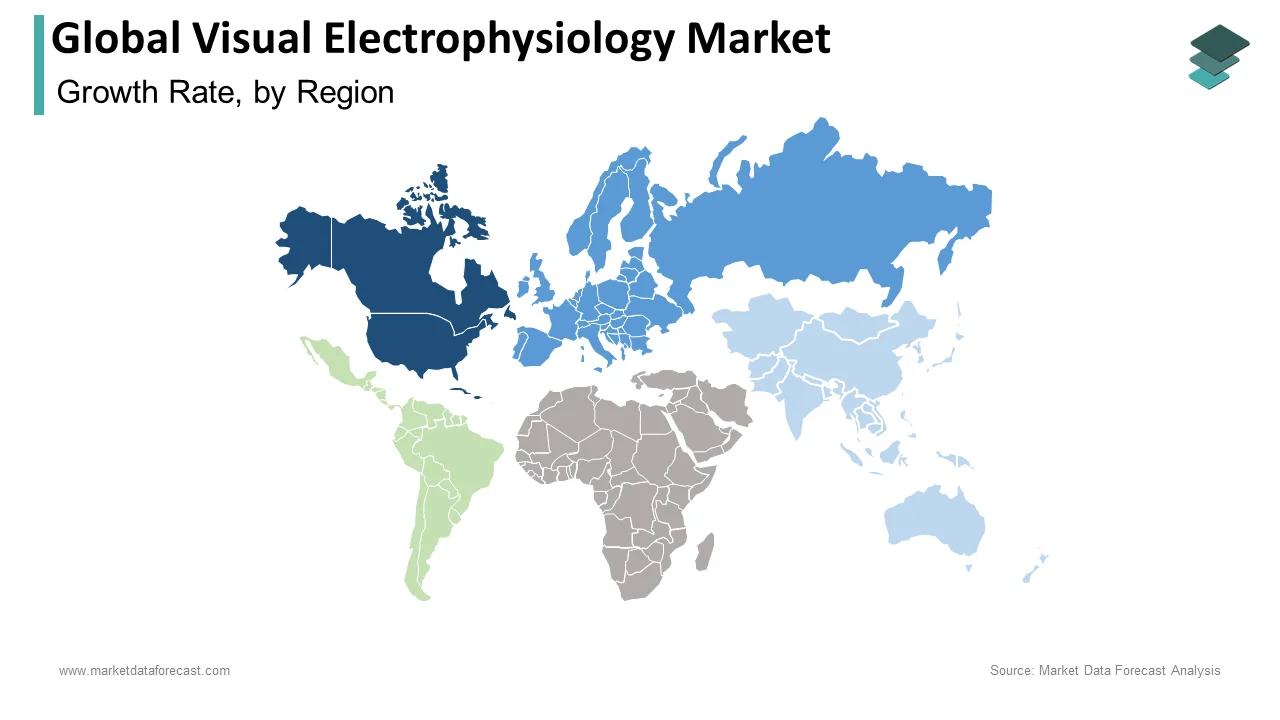
North America and Western Europe are the biggest markets for visual Electrophysiology in 2022 and are expected to remain during the forecast period. Because of the high cost of equipment and the technology involved being relatively new, countries with higher disposable income are only adapting these technologies quickly. The North American region contributes the largest share with dominancy across the globe in the visual electrophysiology market. North American region is owning growth of high incidences of visual disorders.
Europe Visual Electrophysiology Market Analysis
The European region was the second-largest regional market globally and was strongly driven by technological advancements. During the forecast period, the Asia-Pacific region accounts for the fast and high revenue share in the visual electrophysiology market. In Asia-pacific and the Middle East, and Africa, regions are owning improvement of healthcare facilities' economic conditions.
Asia Pacific Visual Electrophysiology Market Analysis
In terms of the growth rate, the Asia Pacific region leads the pack. Japan and China lead the market share in the Asia Pacific region during the forecast period. Improving economic conditions and increasing disposable income in Asia Pacific will see a sharp rise in the visual electrophysiology market in China, India, and Indonesia.
KEY MARKET PLAYERS
Some of the most promising companies leading the global visual electrophysiology market profiled in this report are
- Konan Medical USA, Inc.
- Diopsys, Inc.
- Nationwide Children's Hospital
- LKC Technologies, Inc.
- Metro Vision
GLOBAL VISUAL ELECTROPHYSIOLOGY MARKET NEWS
- In recent research, nanoparticles were injected into the mouse’s retina, which enabled it to see near-infrared (near-IR) light at about half the visible light's resolution. This research has the potential to change visual electrophysiology in the coming years.
MARKET SEGMENTATION
This research report on the global visual electrophysiology market has been segmented and sub-segmented based on the test type, product type, end-users, and region.
By Test Type
- Electro-oculogram (EOG)
- Electroretinogram (ERG)
- Visual-evoked responses (VER)
- Multifocal Electroretinogram (mfERG)
By Product Type
- Portable
- Fixed
By End-User
- Hospitals
- Ophthalmic Clinics/Visual Electrophysiology Laboratory
- Ambulatory Surgical Centers
- Others
By Region
- North America
- The United States
- Canada
- Rest of North America
- Europe
- United Kingdom
- Germany
- France
- Italy
- Spain
- Rest of EU
- Asia Pacific
- India
- China
- Japan
- Australia
- South Korea
- Rest of Asia-Pacific
- Latin America
- Brazil
- Mexico
- Argentina
- Chile
- Rest of Latin America
- The Middle East and Africa