- Product Description Description
- Table of Contents TOC
- List of Table & Figure LOT
- Get Free Sample PDF Sample PDF
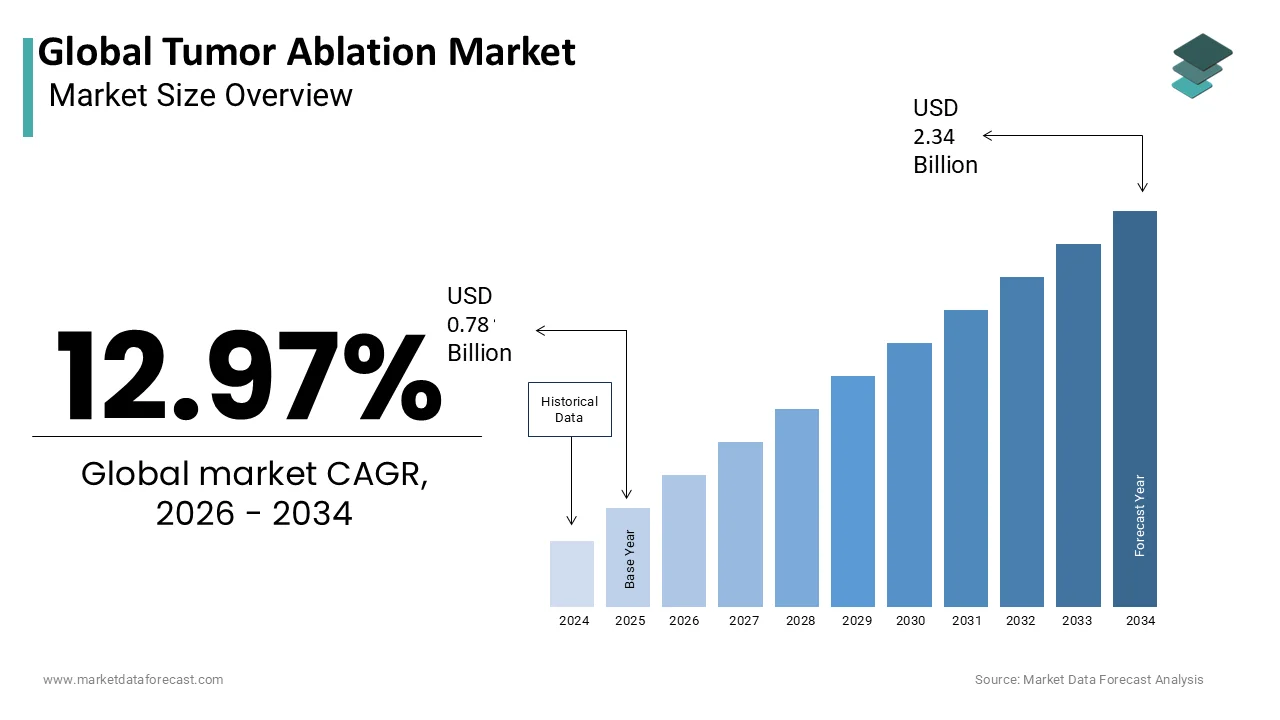
Market Size, 2025
$0.78 BnMarket Estimate, 2026
$0.88 BnMarket Forecast, 2034
$2.34 BnCAGR, 2026–2034
12.97%Executive Summary: Global Tumor Ablation Market
- Market Scope: Comprehensive global analysis covering technology segments (radiofrequency, microwave, cryoablation), treatment approaches (surgical, laparoscopic, percutaneous), application domains (liver, breast, lung, prostate metastasis, and others), and regional performances.
- Market Valuation: Valued at USD 0.78 billion (2025), estimated at USD 0.88 billion (2026), and projected to reach USD 2.34 billion by 2034, registering a strong CAGR of 12.97% (2026–2034).
- Primary Growth Drivers: Rising global patient population with cancer, increasing preference for minimally invasive procedures over conventional surgeries, continuous technological innovations in ablation devices, and advantages such as shorter hospital stays and faster patient recovery.
Key Market Segment Metrics (2026–2034)
| Category | Leading Segment (Position) | Fastest-Growing / Key Segment Trends |
|---|---|---|
| By Technology | Radiofrequency Ablation Devices (dominated due to its crucial and established role in solid tumor removal and multi-site tumor treatment efficiency) | Microwave & Cryoablation Devices (gaining accelerated adoption due to enhanced precision and reduced procedural times) |
| By Treatment | Surgical & Laparoscopic Procedures (accounted for a prominent historical share driven by liver and breast cancer interventions) | Percutaneous Ablation (projected to develop at a healthy rate driven by demand for outpatient-friendly, less traumatic options) |
| By Application | Liver Cancer Segment (led the market owing to the high prevalence of primary liver and bile duct cancers) | Lung Cancer Segment (projected to grow significantly during the forecast period supported by high incidence rates of non-small cell lung cancer) |
| By Region | North America (largest regional market with over 33% share, propelled by advanced healthcare infrastructure and favorable reimbursements) | Asia-Pacific (fastest-growing regional market driven by a vast patient population base, urbanization, and government healthcare fund initiatives) |
Major Market Players & Market Structure
Market Structure: Moderately consolidated landscape dominated by leading multinational medical device companies competing through strategic acquisitions, continuous product innovations, and collaborative partnerships with healthcare providers.
Key Companies: Medtronic Plc., Boston Scientific Corporation, AngioDynamics, Mermaid Medical, HealthTronics, Galil Medical Inc., EDAP TMS S.A., SonaCare Medical, Misonix Inc., and Neuwave Medical, Inc.
Global Tumor Ablation Market Size
The Global Tumor Ablation Market is projected to grow from USD 0.78 billion in 2025 to USD 0.88 billion in 2026 and reach USD 2.34 billion by 2034, registering a CAGR of 12.97% during the forecast period from 2026 to 2034.
Tumor ablation is dedicated to the minimally invasive image-guided destruction of localized malignant tissues using thermal and non-thermal energy sources. According to World Health Organization statistical evaluations, global cancer incidence reached approximately 21 million newly diagnosed cases with nearly 10 million deaths, highlighting an immense clinical burden requiring alternative surgical interventions. Furthermore, as per International Agency for Research on Cancer data, total oncological diagnoses will escalate toward 34 million cases by 2050, reinforcing the clinical necessity for repeatable tissue destruction methods. Within this sophisticated healthcare framework, practitioners deploy radiofrequency, microwave, and cryoablation modalities to treat inoperable hepatic, renal, and pulmonary tumors. Consequently, interventional oncology clinics increasingly rely on these precision-focused energy delivery platforms to minimize patient recovery durations while preserving surrounding healthy organ architecture. The ongoing modernization of clinical environments requires robust manufacturing standards and rigorous adherence to patient safety protocols governed by international health authorities. Medical device developers consistently innovate to optimize energy delivery parameters, reduce collateral thermal damage, and expand clinical indications to challenging anatomical locations previously deemed inaccessible by conventional surgical techniques.
MARKET DRIVERS
Minimally Invasive Procedures and Early Detection
Escalating clinical preference for minimally invasive surgical interventions accelerates the adoption of image-guided percutaneous procedures, which is a key factor propelling the tumor ablation market growth. According to World Health Organization health system evaluations, global surgical oncology workflows are experiencing a 25% annual increase in outpatient tumor management procedures due to heightened emphasis on patient comfort and shortened hospital stays. This clinical shift directly relates to the tumor ablation market because minimally invasive thermal and non-thermal energy delivery systems allow physicians to eradicate localized malignancies without the massive tissue trauma associated with open surgical resections. Additionally, as per American Cancer Society oncology tracking data, early-stage tumor detection rates have risen by nearly 18% across modern diagnostic screening centers, generating a robust pipeline of suitable candidates for focal ablation therapies. This direct correlation drives continuous device innovation, as hospitals increasingly procure advanced radiofrequency and microwave ablation probes to satisfy patient demand for scarless, low-risk cancer treatments. Furthermore, health ministries and global public health organizations advocate for preventive screening initiatives that facilitate early diagnosis, which in turn elevates the clinical utility of localized tissue destruction techniques. The financial and operational advantages of shifting complex oncological care from inpatient operating rooms to outpatient interventional suites further compel healthcare administrators to invest in comprehensive ablation programs. By minimizing post-operative complications and reducing recovery periods, these minimally invasive modalities support broader health economic objectives, ensuring sustainable resource allocation across modern clinical networks.
Advanced Imaging and Targeting Technologies
Proliferation of advanced imaging guidance technologies significantly enhances targeting precision and procedural efficacy during complex tissue destruction, which further contributes to the global tumor ablation market expansion. As per International Atomic Energy Agency healthcare infrastructure metrics, global installations of high-resolution computed tomography and magnetic resonance imaging scanners in oncology departments expanded by 14% over recent operational cycles. This technological advancement directly fuels the tumor ablation market because precise spatial visualization is a mandatory prerequisite for guiding ablation needles accurately into deep-seated visceral tumors without damaging critical vascular structures. Furthermore, according to health technology intelligence from the Radiological Society of North America, image-guided navigation software adoption reduces technical failure rates by 30% during percutaneous liver and kidney interventions. This strong operational correlation ensures that medical device manufacturers continuously incorporate advanced fusion imaging features into their ablation portfolios, thereby maximizing procedural success and expanding clinical adoption across regional medical centers. The convergence of real-time imaging modality integration with sophisticated robotic and navigational software allows medical practitioners to navigate complex anatomical pathways with unprecedented accuracy. Regulatory bodies and health technology assessment agencies closely monitor these software-hardware integrations to ensure that safety margins are maintained during high-risk interventions. As hospitals upgrade their diagnostic and interventional radiology suites, the demand for compatibility between imaging systems and energy delivery platforms drives continuous technological evolution, solidifying the role of image guidance as a cornerstone of modern interventional oncology.
MARKET RESTRAINTS
Equipment Costs and Financial Constraints
Prohibitive equipment acquisition and maintenance expenditures are impeding the tumor ablation market growth. According to World Bank global health expenditure evaluations, capital medical equipment allocations in developing healthcare networks face strict budget caps, limiting large-scale procurement of advanced surgical technologies. This economic barrier directly impacts the tumor ablation market by restricting the acquisition of high-end microwave and irreversible electroporation generators primarily to well-funded tier-one metropolitan hospitals. Furthermore, as per medical technology fiscal audits published by the Organization for Economic Cooperation and Development, single-use disposable applicator needles add an ongoing per-procedure expense exceeding USD 3,000, which strains institutional reimbursement models. Consequently, these prohibitive financial hurdles suppress widespread market penetration across resource-constrained community clinics and emerging regional health systems. Hospital administrators must carefully balance the high initial outlays and ongoing consumable costs against potential savings derived from shorter patient stays and reduced complication rates. International health organizations often highlight these economic disparities, urging policymakers to develop equitable financing mechanisms and sustainable reimbursement structures that facilitate access to advanced cancer treatments in underserved regions. Without targeted financial interventions, the high cost of proprietary hardware and specialized disposables will continue to restrict the democratization of cutting-edge tumor ablation technologies across diverse global healthcare settings.
Regulatory Compliance and Commercialization Timelines
Strict regulatory compliance pathways and delayed product commercialization are further hampering the global market growth. As documented by global regulatory compliance data from the International Medical Device Regulators Forum, the average duration required to secure commercial clearance for active implantable and thermal surgical devices exceeds 3 years across major jurisdictions. This administrative stringency directly restrains the tumor ablation market by imposing multi-million-dollar clinical trial overhead costs on device manufacturers attempting to introduce innovative multi-probe or robotic-assisted systems. Moreover, as per health economics insights from the Advanced Medical Technology Association, regulatory compliance delays reduce active commercial lifecycles for proprietary ablation hardware by nearly 20%, deterring small-scale medical startups from entering the space. These stringent oversight hurdles intentionally prioritize patient safety but simultaneously restrict the rapid commercial rollout of breakthrough therapeutic iterations. Navigating complex pre-market approval requirements demands extensive clinical evidence, biocompatibility testing, and rigorous software verification, which can pose insurmountable barriers for emerging engineering firms. Regulatory bodies continuously refine their evaluation frameworks to accommodate novel technologies such as non-thermal ablation and artificial intelligence-driven navigation, balancing the imperative for rapid patient access with the foundational requirement for absolute clinical safety and device reliability.
MARKET OPPORTUNITIES
Emerging Market Expansion and Infrastructural Modernization
Expansion into untapped emerging healthcare markets unlocks lucrative commercial avenues for device manufacturers in the global tumor ablation market. According to World Bank global economic development statistics, healthcare capital investments across emerging Asia Pacific and Latin American economies expanded at a compound annual growth rate of 6.8%, significantly improving regional hospital capacities. This macro trend creates a major opportunity for the tumor ablation market by establishing modernized interventional radiology suites capable of supporting complex image-guided cancer treatments in regions previously reliant solely on traditional open surgery. Furthermore, as per World Health Organization epidemiological reports, a 22% rise in lifestyle-related oncological conditions within urbanizing developing nations creates an urgent, localized demand for cost-effective minimally invasive tumor treatments. Consequently, medical device vendors strategically expand distribution partnerships across these territories to capture high-volume patient pipelines and secure long-term revenue growth. Local governments and global health partnerships are increasingly investing in specialized cancer care infrastructure, creating favorable conditions for the deployment of advanced thermal and non-thermal ablation systems. As healthcare access improves in these developing regions, educational initiatives training local clinicians in percutaneous ablation techniques further accelerate market adoption, transforming regional healthcare landscapes and addressing previously unmet clinical needs on a global scale.
Non-Thermal Modalities and Complex Tumor Treatment
Technological advancements in non-thermal modalities broaden treatment feasibility for tumors located near major blood vessels. As per clinical engineering metrics published by the National Institutes of Health, non-thermal tissue destruction techniques such as irreversible electroporation reduce collateral vascular damage risks by over 40% compared to traditional thermal methods. This technological evolution creates a lucrative opportunity for the tumor ablation market by enabling physicians to successfully treat previously unresectable tumors situated near delicate bile ducts, major arteries, and heart structures. Additionally, as per global medical technology adoption surveys, specialized non-thermal ablation system placements grew by 15% in advanced university medical centers. This clinical expansion directly drives market revenue expansion by opening up entirely new patient sub-populations who were previously contraindicated for thermal energy ablation due to the critical location of their tumors. The ability to induce cellular apoptosis without relying on extreme thermal energy preserves extracellular matrix structures, major blood vessels, and ductal networks, thereby minimizing severe post-procedural complications. As clinical research continues to validate the safety and efficacy of irreversible electroporation and other emerging non-thermal platforms, interventional oncologists gain powerful new tools for managing anatomically complex malignancies that defy conventional surgical and thermal approaches.
MARKET CHALLENGES
Operator Dependency and Clinical Learning Curves
Complex technical risks and operator dependency introduce significant clinical risks that hinder standardized adoption across community hospitals due to steep learning curves and high procedural variability, which is a major challenge to the global tumor ablation market. According to surgical safety assessments published by the World Health Organization, procedural complication rates, including localized hemorrhage and incomplete tumor necrosis, remain closely tied to operator experience levels during complex percutaneous interventions. This operator dependency directly challenges the tumor ablation market by discouraging general surgeons from adopting advanced ablation modalities without extensive specialized fellowship training. Furthermore, as per clinical audit data from the American College of Surgeons, procedural error rates drop by 25% only after an operator completes a minimum threshold of 50 supervised ablation cases. Consequently, this specialized skill requirement limits the widespread decentralization of ablation procedures, keeping clinical utilization concentrated primarily in specialized tertiary oncology centers. Overcoming these educational and operational barriers requires structured proctorship programs, simulation-based training modules, and standardized institutional credentialing guidelines. Medical device manufacturers frequently collaborate with academic medical centers and professional societies to establish comprehensive training curricula that accelerate the proficiency curve for clinicians. By addressing operator dependency through rigorous education and technological aids such as automated navigation and real-time feedback systems, the healthcare community can foster safer, more consistent procedural outcomes across diverse medical settings.
Reimbursement Complexities and Coverage Disparities
Reimbursement complexities and coverage disparities are further challenging the global tumor ablation market expansion. As reported in healthcare policy tracking by the American Medical Association, out-of-pocket coverage denials for specialized percutaneous ablation procedures affect nearly 18% of patients insured under variable commercial health plans. This reimbursement ambiguity directly impacts the tumor ablation market by causing elective procedural delays and forcing hospitals to absorb uncompensated care costs when insurers classify novel non-thermal technologies as experimental. Moreover, as per global health economics data from the International Social Security Association, public healthcare reimbursement tariffs fail to cover the full consumable cost of advanced multi-probe ablation kits in 30% of assessed regional jurisdictions. These widespread payer friction points restrict optimal clinical utilization rates and constrain predictable financial forecasting for medical device manufacturers. Healthcare advocacy groups and professional medical societies continuously engage with public and private payers to establish transparent, evidence-based reimbursement codes that reflect the true clinical and economic value of minimally invasive oncology procedures. Resolving these coverage disparities is essential for ensuring equitable patient access and providing hospitals with the financial stability necessary to maintain state-of-the-art interventional radiology and surgical ablation programs.
REPORT COVERAGE
| REPORT METRIC | DETAILS |
| Market Size Available | 2025 to 2034 |
| Base Year | 2025 |
| Forecast Period | 2026 to 2034 |
| Segments Covered | By Technology, Treatment, Application, and Region |
| Various Analyses Covered | Global, Regional & Country-Level Analysis, Segment-Level Analysis, Drivers, Restraints, Opportunities, Challenges, PESTLE Analysis, Porter’s Five Forces Analysis, Competitive Landscape, Analyst Overview on Investment Opportunities |
| Regions Covered | North America, Europe, Asia Pacific, Latin America, Middle East, and Africa |
| Market Leader Profiled | Boston Scientific Corporation, AngioDynamics, Mermaid Medical, HealthTronics |
SEGMENTAL ANALYSIS
By Technology Insights
The radiofrequency ablation devices segment held 61.2% of the global market share in 2025. This widespread market leadership is driven by decades of proven safety data in treating hepatic and renal malignancies, making radiofrequency generators the primary default choice for interventional radiologists worldwide. Furthermore, as per World Health Organization clinical data, minimally invasive thermal interventions reduce hospital stay durations by 40% compared to traditional open surgeries, cementing the clinical preference for established radiofrequency platforms. The extensive body of peer-reviewed literature supporting radiofrequency ablation provides hospital procurement committees with high confidence in its long-term clinical efficacy and safety profile. Manufacturers continue to refine radiofrequency generator technology by incorporating impedance-controlled power output algorithms and multi-probe switching systems, which optimize energy delivery and enlarge ablation volumes. These continuous engineering enhancements ensure that radiofrequency devices remain competitive and versatile, sustaining their dominant market position even as alternative energy sources emerge within the broader interventional oncology landscape.
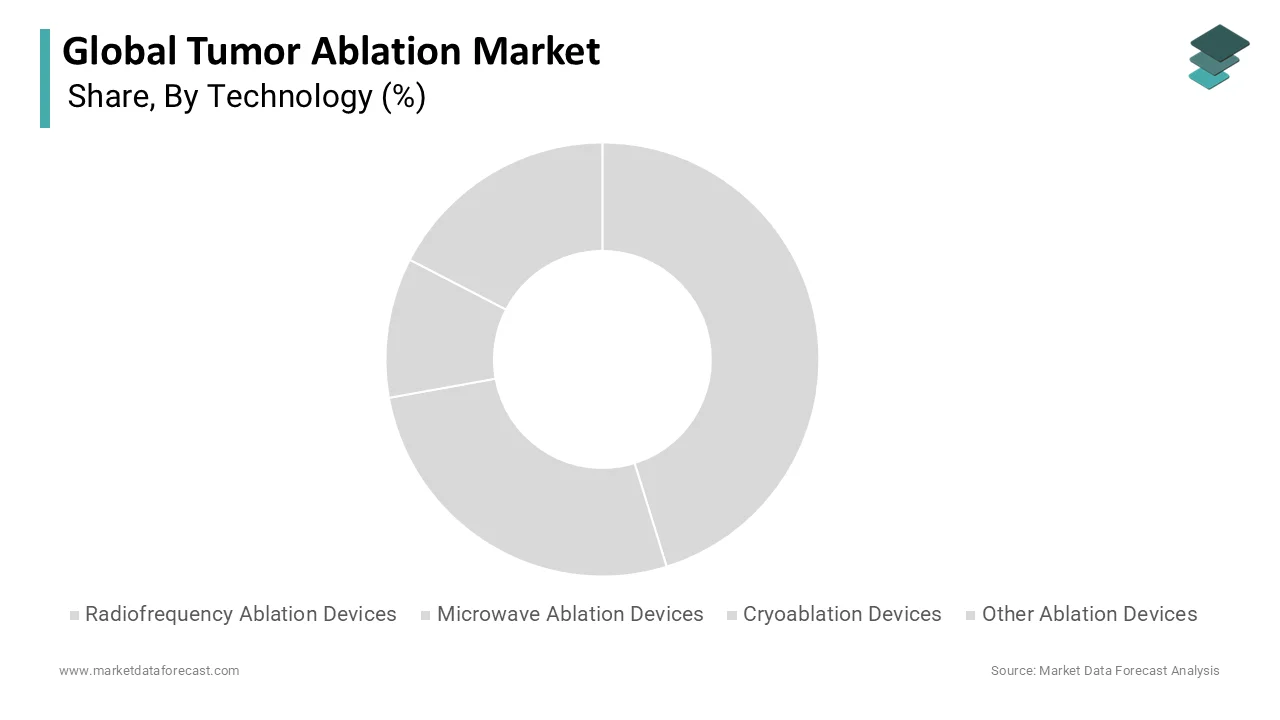
On the other hand, the microwave ablation devices segment is estimated to grow at a promising CAGR of 14.5% over the forecast period in the global market owing to the rapid technological upgrades in microwave antenna design. According to the National Institutes of Health, medical evaluations highlight that microwave energy achieves significantly higher intratumoral temperatures faster than older modalities, overcoming the cooling effects of adjacent blood vessels by 50%. This technical superiority drives accelerated adoption because microwave systems can eradicate larger tumor volumes in shorter procedure times, matching the fast-paced workflow requirements of modern hospital surgical suites. The ability of microwave frequencies to propagate efficiently through charred or desiccated tissue enables more predictable and extensive coagulative necrosis compared to radiofrequency alternatives. Furthermore, multiple antennas can be activated simultaneously, allowing physicians to customize ablation zones tailored to irregular tumor geometries. As interventional radiologists increasingly encounter complex, multi-focal hepatic and pulmonary malignancies, the superior heating dynamics and procedural efficiency of microwave ablation systems continue to drive their rapid market expansion across leading global healthcare institutions.
By Treatment Insights
The surgical ablation segment had the major share of the global market in 2025. The growth of the surgical ablation segment in the global market can be credited to the steady institutional procurement of open and direct intraoperative ablation systems. Clinical audits from surgical associations indicate that direct surgical visualization is utilized in over 50% of complex multi-organ cancer debulking procedures where precise tactile feedback is mandatory. This procedural dominance stems from the absolute reliability of open surgical exposure during intricate oncological resections, reassuring surgical oncologists when managing highly aggressive or structurally complex tumors that preclude purely blind percutaneous approaches. Intraoperative ablation serves as a vital adjunct during open or laparoscopic cytoreductive surgeries, allowing surgeons to treat deep-seated or unresectable satellite lesions in the same operative session. The capacity to combine open surgical excision of primary tumor masses with immediate thermal destruction of microscopic margins or adjacent organ metastases provides a comprehensive therapeutic strategy. Consequently, hospitals maintain robust inventories of surgical ablation applicators and open-surgical handpieces to support multidisciplinary oncological teams performing complex, high-risk interventions in specialized inpatient operating suites.
On the other side, the percutaneous ablation segment represents the fastest-growing treatment methodology and is expected to record a CAGR of 14.4% over the forecast period. For instance, image-guided needle placements performed under local anesthesia reduce post-operative recovery windows by an average of 5 days compared to open surgical alternatives. This clinical trend correlates directly with rapid segment expansion because outpatient percutaneous interventions significantly lower overall healthcare delivery expenditures while minimizing patient trauma. Furthermore, as per Radiological Society of North America metrics, a 28% annual increase in computed tomography-guided percutaneous sessions occurs across ambulatory surgical centers, fueling continuous market momentum. The transition toward image-guided needle-based interventions is strongly supported by advancements in real-time imaging fusion software, electromagnetic tracking systems, and specialized micro-introducer needles. These technological innovations enable clinicians to target small, early-stage lesions with pinpoint accuracy while preserving surrounding healthy parenchyma. As healthcare systems globally prioritize value-based care, outpatient management models, and reduced hospital readmission rates, percutaneous ablation continues to gain preference among patients and physicians alike, driving sustained double-digit growth across ambulatory and hospital-based interventional suites.
By Application Insights
The liver cancer segment captured the leading share in the global market in 2025 due to the exceptionally high global prevalence of hepatocellular carcinoma. World Health Organization epidemiological reports indicate that primary liver cancer accounts for over 900,000 annual diagnoses worldwide, establishing a vast patient pool requiring targeted local tumor destruction. National Cancer Institute clinical data notes that thermal ablation serves as a curative first-line therapy for early-stage hepatocellular carcinoma, achieving local tumor control rates exceeding 85%. This high clinical efficacy ensures that interventional oncology departments consistently prioritize liver indications for their primary ablation device procurement budgets, sustaining the dominant revenue generation of this application segment. The unique dual-blood supply and complex architecture of the liver present distinct clinical management challenges, making image-guided thermal ablation an invaluable alternative to major hepatic resection, particularly for patients with underlying cirrhosis or compromised hepatic functional reserve. International liver cancer treatment guidelines officially endorse thermal ablation as a standard-of-care intervention for patients with early-stage disease who are not optimal candidates for surgical transplantation or partial hepatectomy. Consequently, medical device manufacturers continuously refine liver-specific ablation probes, cool-tip technologies, and navigation algorithms to optimize outcomes in this vital clinical domain.
However, the prostate metastasis segment is predicted to showcase the fastest CAGR of 15.4% over the forecast period in the global market. According to cancer research organizations, localized prostate cancer recurrences following primary radiation or surgical failures affect over 20% of treated patients, creating an urgent demand for focal salvage therapies. National Institutes of Health clinical studies demonstrate that targeted focal ablation of prostate lesions preserves urinary and sexual function in nearly 80% of patients, presenting a vastly superior quality of life profile compared to total gland salvage surgery. This clinical advantage fuels rapid segment expansion as urological oncology centers increasingly adopt image-guided ablation to manage localized recurrence safely. The integration of multiparametric magnetic resonance imaging with transrectal ultrasound fusion guidance allows urologists and interventional radiologists to target index lesions with millimeter-level precision while sparing the urethral sphincter and neurovascular bundles. As patients increasingly demand treatments that minimize treatment-related morbidities such as incontinence and erectile dysfunction, focal ablation modalities including cryoablation and high-intensity focused ultrasound are experiencing unprecedented adoption rates within specialized urological oncology practices.
COUNTRY LEVEL ANALYSIS
North America Tumor Ablation Market Analysis
North America held 37.4% of the global market share in 2025 and is poised to maintain steady market leadership over the next few years. Regional healthcare infrastructure investments dedicated to advanced interventional radiology suites expanded by 5.2% annually, cementing the continent's technological superiority. This regional strength correlates directly with high adoption rates because North American hospitals benefit from robust medical reimbursement frameworks and early commercial access to next-generation microwave and cryoablation systems. Furthermore, as per American Hospital Association records, over 65% of major metropolitan oncology centers routinely perform image-guided focal therapies, ensuring sustained high-volume market demand. The presence of leading medical device manufacturers, well-established clinical trial networks, and highly trained interventional radiology specialists further accelerates the commercialization and clinical uptake of breakthrough ablation technologies. Regulatory pathways managed by federal health agencies ensure rigorous safety standards while permitting expedited review cycles for innovative therapeutic devices. Additionally, proactive patient awareness campaigns regarding early cancer screening drive high volumes of suitable candidates into specialized oncology pipelines, reinforcing North America's status as the cornerstone of the global tumor ablation marketplace.
Europe Tumor Ablation Market Analysis
Europe is likely to experience stable development over the coming years, maintaining a highly sophisticated and strictly regulated position within the global framework, anchored by strong governmental emphasis on advanced healthcare technologies and universal patient access. European Commission health statistics highlight that regional government allocations for specialized cancer treatment equipment exceeded EUR 4 billion recently, driving widespread modernization across hospital networks. This funding directly supports market expansion by enabling clinical adoption of precise image-guided ablation tools in countries like Germany, France, and the United Kingdom. Additionally, as per European Association for the Study of the Liver metrics, a steady 4% rise occurs in regional clinical trials evaluating combination therapies, reinforcing steady market growth. The continent's unified regulatory framework under stringent medical device regulations ensures high product safety standards, albeit with rigorous clinical evaluation demands for manufacturers. Public healthcare systems across European nations prioritize cost-effectiveness and equitable patient access, prompting health technology assessment bodies to closely scrutinize the long-term clinical and economic benefits of minimally invasive oncology procedures. Collaborative cross-border research networks and standardized clinical guidelines further ensure that European hospitals maintain high standards of patient care and technological proficiency in interventional oncology.
Asia-Pacific Tumor Ablation Market Analysis
Asia-Pacific is anticipated to record rapid development over the next few years, acting as the fastest-growing regional market in the global landscape, propelled by massive healthcare modernization initiatives across emerging economies like China, Japan, and regional medical hubs. World Health Organization demographic studies indicate that the region accounts for over 50% of the worldwide cancer burden, creating an immense, underserved patient population requiring affordable focal treatments. This high disease incidence correlates directly with explosive market expansion because regional governments are rapidly constructing specialized oncology hubs and expanding health insurance coverage. Consequently, local procurement of cost-effective radiofrequency and microwave ablation devices is surging across densely populated medical corridors. Rapid economic growth, rising disposable incomes, and the expansion of private and public health insurance schemes enable millions of patients to access advanced diagnostic and therapeutic oncology services for the first time. National health ministries across the region actively invest in upgrading hospital infrastructure and training local medical personnel in percutaneous interventional techniques. As domestic medical device manufacturing capabilities mature alongside international technology imports, the Asia-Pacific region is transforming into a highly dynamic, high-volume marketplace that significantly shapes global tumor ablation industry trends.
Latin America Tumor Ablation Market Analysis
Latin America is projected to show moderate growth over the next few years, representing an emerging and progressively modernizing regional market characterized by increasing private sector investments in specialized surgical infrastructure. Pan American Health Organization data reveals that regional capital expenditures on hospital diagnostic and therapeutic devices grew by 4.5% over the past year, improving local access to advanced cancer care. This infrastructural upgrade correlates with market expansion as major urban medical centers in Brazil and Mexico transition away from traditional open surgeries toward minimally invasive interventional radiology. However, market growth remains tempered by persistent economic disparities and limited public reimbursement coverage across rural healthcare settings. Private healthcare providers in major metropolitan corridors drive the adoption of advanced microwave and radiofrequency ablation systems, catering to insured patient populations seeking cutting-edge oncological care. Public health authorities are gradually implementing regional cancer control plans aimed at expanding diagnostic screening and improving hospital infrastructure, laying the groundwork for broader adoption of minimally invasive focal therapies. Collaborative health initiatives between international organizations and local governments continue to address resource gaps, fostering a progressive, long-term trajectory for interventional oncology development across Latin American nations.
Middle East and Africa Tumor Ablation Market Analysis
The Middle East and Africa is poised for progressive advancement over the next few years, functioning as a rapidly developing regional market driven by strategic state-backed healthcare diversification projects and medical tourism initiatives. World Bank economic development metrics indicate that Gulf Cooperation Council nations increased their health sector budgets by over 6% to establish world-class tertiary medical facilities. This financial commitment directly drives market growth by attracting international medical technology manufacturers to supply advanced ablation systems to newly built regional oncology centers. Furthermore, as per regional health ministry reports, a steady rise is materializing in lifestyle-related oncological diagnoses, securing a long-term trajectory for local market adoption. National healthcare strategies across the Middle East emphasize the development of specialized centers of excellence designed to reduce outward medical travel and provide advanced oncological care locally. Meanwhile, developing healthcare systems in parts of Africa focus on building basic infrastructural capacity and improving diagnostic screening access, creating gradual but steady demand for cost-effective surgical and percutaneous ablation solutions. Strategic public-private partnerships, government-led healthcare digitalization programs, and targeted investments in medical education ensure that the region continues to build a solid foundation for advanced interventional oncology care in the coming years.
COMPETITIVE LANDSCAPE
Competition within the global tumor ablation market is exceptionally intense, driven by rapid technological advancements and a crowded landscape of multinational medical device manufacturers vying for clinical leadership. Industry participants constantly strive to differentiate their product portfolios by introducing next-generation ablation probes that offer shorter procedure times, larger ablation volumes, and superior protection of adjacent critical vascular structures. Pricing pressures and strict hospital capital budget constraints require manufacturers to demonstrate clear cost-effectiveness and excellent patient recovery metrics to secure institutional procurement contracts. Key competitors frequently engage in strategic acquisitions, intellectual property litigation, and broad clinical trial expansions to capture lucrative market shares before rival technologies achieve widespread adoption. Furthermore, the complexity of managing single-use disposable consumable supply chains forces market players to forge exclusive purchasing agreements with major hospital networks, creating high operational barriers that separate dominant industry leaders from smaller emerging device developers.
KEY MARKET PLAYERS
Some of the companies that are playing a dominant role in the Global Tumor Ablation Market include:
- Boston Scientific Corporation
- AngioDynamics, Inc.
- Mermaid Medical
- HealthTronics, Inc.
TOP LEADING PLAYERS IN THE MARKET
- Medtronic functions as a global medical technology leader contributing extensively to interventional oncology through advanced radiofrequency and microwave ablation systems designed for precise soft tissue destruction. The enterprise delivers highly reliable energy generators and specialized probe portfolios utilized widely in hospital radiology departments to treat hepatic and renal malignancies. To reinforce its market position, the corporation actively invests in clinical research initiatives and digital surgical integration tools that improve procedural accuracy. Furthermore, the firm continuously expands its global distribution networks and partners with major healthcare institutions to streamline minimally invasive cancer care workflows across international markets.
- Boston Scientific Corporation operates as a premier healthcare innovator contributing advanced cryoablation and radiofrequency technologies that enable physicians to sculpt precise treatment zones during complex tumor interventions. The organization provides comprehensive interventional oncology solutions engineered to minimize procedural trauma while maximizing local tumor control across various soft tissue cancers. To maintain its competitive edge, the enterprise pursues strategic product enhancements focusing on portable generator designs and enhanced visualization software. Additionally, the company strengthens its commercial footprint through targeted medical education programs and strategic distribution agreements designed to support interventional radiologists globally.
- AngioDynamics acts as a specialized medical device pioneer, contributing cutting-edge microwave and radiofrequency ablation platforms tailored for precise oncological applications. The enterprise delivers comprehensive procedural kits and proprietary antenna designs that optimize thermal energy delivery within difficult anatomical structures. To strengthen its market standing, the corporation emphasizes continuous research and development to introduce next-generation ablation applicators with improved thermal efficiency. Moreover, the firm leverages strategic acquisitions and direct hospital collaborations to expand its specialized interventional product offerings and enhance customer support frameworks across key regional healthcare networks.
TOP STRATEGIES USED BY KEY MARKET PARTICIPANTS
Key market participants deploy aggressive research and development initiatives to introduce multi-energy ablation platforms combining microwave, radiofrequency, and cryoablation capabilities. Major medical device enterprises focus heavily on securing regulatory clearances for expanded clinical indications,s including lung and bone metastasis treatments. Industry leaders pursue strategic mergers and acquisitions to integrate proprietary navigation software and advanced visualization tools directly into their procedural ecosystems. Corporations also establish comprehensive physician training programs and clinical fellowships to accelerate the adoption of image-guided percutaneous techniques within community hospitals. Furthermore, leading firms optimize their supply chain frameworks and expand direct distribution partnerships across emerging healthcare markets to capture rising procedural volumes.
GLOBAL TUMOR ABLATION MARKET NEWS
- In January 2024, Medtronic expanded its interventional oncology portfolio by launching an advanced generator platform designed to optimize energy delivery control during complex microwave ablation procedures.
- In April 2024, Boston Scientific, a global medical technology developer, acquired Silk Road Medical, a medical device company. This acquisition is anticipated to allow Boston Scientific to offer more comprehensive vascular and interventional solutions and strengthen its tumor ablation market presence.
- In July 2024, AngioDynamics enhanced its manufacturing infrastructure by integrating specialized production lines for high-purity single-use ablation probes to meet rising global demand.
- In October 2024, EDAP TMS secured expanded European regulatory approvals for its flagship robotic-assisted focal therapy systems, reinforcing its competitive posture in the tumor ablation market.
- In December 2024, IceCure Medical established a multi-center clinical collaboration agreement with premier oncology institutes to evaluate advanced cryoablation protocols, further cementing its commercial footprint in the tumor ablation market.
MARKET SEGMENTATION
This research report on the global tumor ablation market has been segmented based on the technology, treatment, application, and region.
By Technology
- Radiofrequency Ablation Devices
- Microwave Ablation Devices
- Cryoablation Devices
- Other Ablation Devices
By Treatment
- Surgical Ablation
- Laparoscopic Ablation
- Percutaneous Ablation
By Application
- Liver Cancer
- Breast Cancer
- Lung Cancer
- Prostrate Metastasis
- Other Cancer
By Region
- North America
- Europe
- Asia Pacific
- Latin America
- The Middle East and Africa