- Product Description Description
- Table of Contents TOC
- List of Table & Figure LOT
- Get Free Sample PDF Sample PDF
Market Size, 2025
$4.14 BnMarket Estimate, 2026
$4.42 BnMarket Forecast, 2034
$7.51 BnCAGR, 2026–2034
6.85%Executive Summary: Africa Cosmetics Market
- Market Scope: Comprehensive regional assessment covering product categories (skincare, haircare, makeup, fragrance, others), end-user demographics (men, women), distribution channels (offline, online), and country-level performances across Africa.
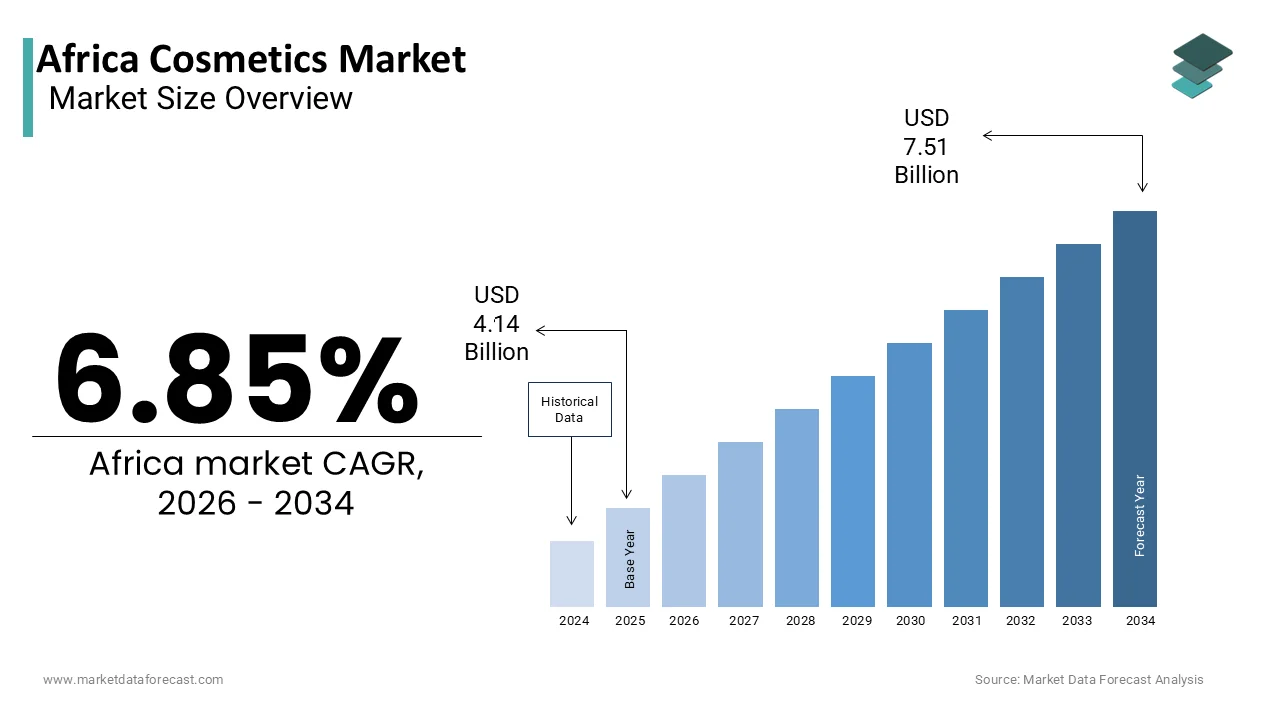
- Market Valuation: Valued at USD 4.14 billion (2025), estimated at USD 4.42 billion (2026), and projected to reach USD 7.51 billion by 2034, registering a solid CAGR of 6.85% (2026–2034).
- Primary Growth Drivers: Rapid urbanization, growing middle-class disposable incomes, rising digital/e-commerce retail penetration, and an increased preference for natural, culturally tailored formulations suited to African skin tones and textures.
Key Market Segment Metrics (2026–2034)
| Category | Leading Segment (2025 Position) | Fastest-Growing / Key Segment Trends |
|---|---|---|
| By Product | Skincare (dominated with 42.4% of total revenue in 2025 due to consumer awareness about skin health and solutions for hyperpigmentation/dryness) | Hair Care (emerging as the fastest-growing segment with a projected CAGR of 9.1% driven by high demand for ethnic and textured hair products) |
| By End-User | Women (accounted for the vast majority of market consumption backed by cultural beauty rituals and rising female workforce participation) | Men (expanding rapidly as the fastest-growing category at a 12.4% CAGR fueled by normalization of male grooming, skincare, and barber culture) |
| By Distribution Channel | Offline Distribution (commanded 67.5% of total sales in 2025 anchored by traditional retail networks, informal markets, and physical product testing) | Online Distribution (fastest-growing channel expanding at a robust 18.3% CAGR, accelerated by mobile e-commerce, social commerce, and digital beauty platforms) |
| By Region | South Africa (led the regional market with 27.5% revenue share in 2025 backed by advanced regulatory frameworks, retail infrastructure, and clean beauty hubs) | Nigeria & East Africa (experiencing rapid growth driven by youthful Gen Z demographics, digital adoption, and vibrant local beauty entrepreneurship) |
Major Market Players & Market Structure
Market Structure: A dynamic, hybrid competitive landscape featuring global multinational corporations alongside agile indigenous African startups competing through localization, authenticity, and digital engagement.
Key Companies: L'Oréal SA, Procter & Gamble, Unilever PLC, House of Tara, Juvia's Place, Africology, and regional beauty innovators like Khulu Naturals and Flora & Curl.
Africa Cosmetics Market Size
The Africa cosmetics market was valued at USD 4.14 billion in 2025, is estimated to reach USD 4.42 billion in 2026, and is projected to reach USD 7.51 billion by 2034, growing at a CAGR of 6.85% from 2026 to 2034.
Cosmetics are a broad range of personal care products, including skincare, haircare, fragrances, and makeup, tailored to meet the unique cultural, climatic, and demographic needs of African consumers. This sector has evolved significantly over the past decade, driven by increasing urbanization, rising disposable incomes, and growing awareness around personal grooming and wellness. Unlike mature markets in Europe or North America, the African beauty industry is distinguished by its strong emphasis on natural ingredients, ethnic preferences, and traditional formulations that cater specifically to African skin tones and textures.
South Africa remains the largest single market in the region. Meanwhile, Nigeria's market is expanding rapidly, fueled largely by youthful demographics and digital adoption in retail channels. These trends reflect a broader transformation in how cosmetics are marketed, distributed, and consumed across the continent.
MARKET DRIVERS
Rapid Urbanization and Changing Lifestyle Trends
Urbanization across Africa has been a pivotal force behind the expansion of the cosmetics market. According to the United Nations, Africa's urban population is projected to reach 1.3 billion by 2050, more than doubling its current size. This migration from rural to urban centers has led to a significant shift in lifestyle patterns, particularly among young professionals and middle-class consumers who are increasingly prioritizing personal appearance and grooming.
In cities like Lagos, Nairobi, and Cape Town, exposure to global beauty standards through social media, fashion, and entertainment has heightened demand for premium and international cosmetic brands. Apart from these, average household income in urban regions is approximately 2.5 times higher than in rural zones, enabling greater discretionary spending on non-essential items such as cosmetics.
Moreover, the rise of beauty influencers and localized content creators has further accelerated brand awareness and product trials. Platforms like Instagram and TikTok have become critical touchpoints for brand engagement, especially among Gen Z consumers. The growing presence of shopping malls, department stores, and specialty beauty retailers in major cities also supports easier access to a wider variety of cosmetic products. These factors contribute to the sustained growth trajectory of the Africa cosmetics market.
Expansion of E-commerce and Digital Retail Channels
The rapid proliferation of mobile internet and smartphone penetration has catalyzed the growth of e-commerce platforms across Africa, significantly influencing the cosmetics market. This digital transformation has enabled a new wave of online beauty retailers and direct-to-consumer brands to enter the market, offering convenience, variety, and competitive pricing.
This digital shift is not only reshaping distribution models but also enhancing customer engagement through personalized recommendations, virtual try-ons, and AI-powered skincare diagnostics. Furthermore, cross-border e-commerce platforms such as Amazon and Alibaba have made it easier for African consumers to access international beauty brands previously unavailable locally. As per McKinsey & Company, digital-first brands are capturing nearly 18% of total beauty sales in urban African markets, signaling a fundamental shift in how cosmetics are marketed and sold.
MARKET RESTRAINTS
Economic Volatility and Currency Fluctuations
Economic instability across several African countries poses a significant challenge to the cosmetics market. Many nations, including Nigeria, Ghana, and Zambia, have experienced high inflation rates and currency depreciation in recent years, which directly impacts consumer purchasing power. According to the World Bank, Nigeria's inflation rate reached 21.9% in 2023, the highest in over two decades. Such economic pressures make imported cosmetic products prohibitively expensive, discouraging both retailers and consumers from investing in premium beauty offerings.
Besides, foreign exchange scarcity has limited the ability of local importers to procure raw materials and finished goods from international suppliers.
Local manufacturers are also affected, as many rely on imported ingredients and packaging materials. Fluctuating exchange rates and production costs rise are forcing companies to either absorb losses or pass on price increases to consumers. So, market expansion slows down, especially in lower-income segments where price sensitivity is high.
Regulatory Fragmentation and Quality Control Issues
The lack of standardized regulatory frameworks across different countries is one of the persistent challenges in the Africa cosmetics market. Each nation operates under its own set of guidelines regarding product registration, labeling, ingredient safety, and import compliance. As per the African Union's 2023 health and trade report, there are over 20 distinct regulatory bodies governing cosmetics in Africa, each with varying approval timelines and documentation requirements.
This fragmentation increases operational complexity for multinational beauty brands looking to enter multiple African markets. For example, while South Africa's South African Health Products Regulatory Authority (SAHPRA) requires extensive clinical testing and product registration, other countries may lack robust oversight mechanisms altogether. This inconsistency leads to delays in market entry and higher compliance costs, deterring investment from global players.
Furthermore, weak enforcement of quality control measures has resulted in the proliferation of counterfeit and substandard products. According to UNCTAD, counterfeit cosmetics account for up to 15% of total sales in some African markets, undermining consumer trust and brand credibility. In Nigeria, the National Agency for Food and Drug Administration and Control (NAFDAC) seized over 4,000 units of fake beauty products in 2023 alone, highlighting ongoing concerns about product authenticity and safety.
So, such regulatory inefficiencies not only hamper market growth but also expose consumers to potential health risks, thereby slowing the adoption of formal beauty products and favoring informal or unregulated alternatives.
MARKET OPPORTUNITIES
Rising Demand for Natural and Indigenous Ingredients
A growing preference for clean beauty and organic formulations has created a lucrative opportunity for the Africa cosmetics market, particularly in leveraging indigenous ingredients. Consumers are increasingly seeking products that are free from synthetic additives and rooted in traditional knowledge. Ingredients such as shea butter, baobab oil, marula oil, and moringa native to various parts of Africa are gaining global recognition for their nourishing and therapeutic properties.
Local brands such as Ghana’s Shea Radiance and South Africa’s Khulu Naturals have capitalized on this demand, exporting certified organic products to Europe, North America, and Asia-Pacific markets.
Moreover, multinational brands are entering partnerships with African cooperatives and small-scale producers to source ethical and sustainable raw materials. This growing interest in ethically sourced African botanicals presents a strategic opportunity for domestic manufacturers to scale operations, enhance brand equity, and capture a larger share of the global clean beauty movement.
Growth of Male Grooming Segment
The emergence of a robust male grooming segment is seeing notable shift in the African cosmetics market which is traditionally dominated by female consumers. Increasing awareness around skincare, beard care, and personal hygiene among men has spurred demand for targeted products such as facial cleansers, moisturizers, deodorants, and styling gels.
Social media and celebrity endorsements have played a crucial role in normalizing male grooming practices. Influencers and public figures across Nigeria, Kenya, and South Africa have actively promoted skincare routines and luxury fragrance lines tailored to men.
Brands like Nivea Men, L’Oréal Men Expert, and homegrown label Manology have launched region-specific campaigns to tap into this evolving demographic. Moreover, niche startups such as BlackGroom and Mr. Aramis are capitalizing on this trend by offering premium grooming kits and barber services exclusively for men.
MARKET CHALLENGES
Limited Access to Financing for Local Manufacturers
Access to adequate financing remains a critical challenge for small and medium-sized enterprises (SMEs) operating in the Africa cosmetics market. Despite the presence of numerous entrepreneurial beauty brands, many struggle to secure loans or investment due to stringent lending criteria, lack of collateral, and perceived market volatility. According to the African Development Bank, less than 20% of African SMEs have access to formal credit, severely limiting their capacity to scale production, invest in R&D, or expand distribution networks.
Banks and financial institutions often view the cosmetics sector as high-risk due to its reliance on seasonal demand, fluctuating raw material prices, and fragmented supply chains. This funding gap stifles innovation and prevents promising local brands from competing effectively with established international players.
Moreover, venture capital and angel investment in African beauty startups remain minimal compared to sectors like fintech or logistics.
Supply Chain Inefficiencies and Distribution Barriers
Supply chain inefficiencies pose a substantial obstacle to the growth of the Africa cosmetics market. Poor infrastructure, logistical bottlenecks, and inconsistent customs procedures hinder the timely delivery of raw materials and finished products across the continent. According to the World Bank’s Logistics Performance Index 2023, most African countries rank below the global average in terms of infrastructure quality, customs efficiency, and shipment reliability.
For instance, road transport remains the dominant mode of freight in Sub-Saharan Africa, yet poor road conditions and frequent border delays cause significant disruptions. As per a 2023 study by PwC, delivery lead times in Nigeria can be up to 50% longer than in developed markets due to traffic congestion, fuel shortages, and inadequate warehousing. This results in higher operational costs and inventory management issues for beauty brands.
Further, cold chain logistics for temperature-sensitive products such as creams and serums are underdeveloped in many regions, compromising product integrity.
These distribution challenges limit market penetration, particularly in rural and semi-urban areas where physical retail infrastructure is sparse.
REPORT COVERAGE
| REPORT METRIC | DETAILS |
| Market Size Available | 2025 to 2034 |
| Base Year | 2025 |
| Forecast Period | 2026 to 2034 |
| Segments Covered | By Product, End-User, Distribution Channel, and Region. |
| Various Analyses Covered | Global, Regional and Country Level Analysis; Segment-Level Analysis; DROC; PESTLE Analysis; Porter’s Five Forces Analysis; Competitive Landscape; Analyst Overview of Investment Opportunities |
| Regions Covered | Sudan, Egypt, Kenya, Ethiopia, South Africa, and the rest of Africa |
| Market Leaders Profiled | L'Oréal SA, Procter & Gamble, and Unilever PLC, as well as local African brands such as House of Tara, Juvia's Place, and Africology, |
SEGMENTAL ANALYSIS
By Product Insights
The skincare segment dominated the Africa cosmetics market by accounting for 42.4% of total revenue in 2025. This dominance is primarily attributed to Rising consumer awareness about skin health and the growing prevalence of skin conditions such as hyperpigmentation, acne, and dryness due to harsh climatic conditions is primarily credited to the dominance of skincare segment. In addition, the increasing demand for sun protection and hydration products tailored to darker skin tones is also a leading driver of this segment. Apart from these, the proliferation of dermatologist-endorsed brands and the expansion of local skincare startups have further strengthened consumer trust and product adoption.
Moreover, social media has played a pivotal role in shaping beauty routines. Platforms like Instagram and TikTok have enabled direct brand-to-consumer engagement, particularly among Gen Z consumers. These factors ensure the sustained leadership of the skincare category in the regional cosmetics landscape.
The hair care segment is emerging as the fastest-growing within the Africa cosmetics market, projected to expand at a CAGR of 9.1% in the coming years. Increasing demand for ethnic hair products that cater specifically to textured and curly hair types is a major contributing factor for the hair care segment. The influx of both international and local brands such as SheaMoisture, Mielle Organics, and Nigerian-based Flora & Curl has intensified competition and innovation in this space.
Besides, the rise of e-commerce platforms has improved access to niche hair care products in previously underserved regions. Jumia Beauty experienced a surge in hair product orders between Q1 2022 and Q1 2023. Furthermore, a large share of Black African women consider hair care an essential part of their beauty regimen, reinforcing the long-term growth potential of this segment.
By End-User Insights
The women segment remained the dominant end-user group in the Africa cosmetics market by representing a substantial portion of total consumption in 2025. The deeply ingrained cultural norms around femininity, beauty rituals, and social expectations regarding appearance is largely propelling the growth of women segment. Moreover, the high participation of women in formal and informal employment, which increases discretionary income for personal grooming, is another key driving force behind this trend. As per the World Bank, female labor force participation in Sub-Saharan Africa stood at 60% in 2023, significantly higher than the global average of 47%. This economic empowerment has led to increased spending on premium skincare, makeup, and fragrance products.
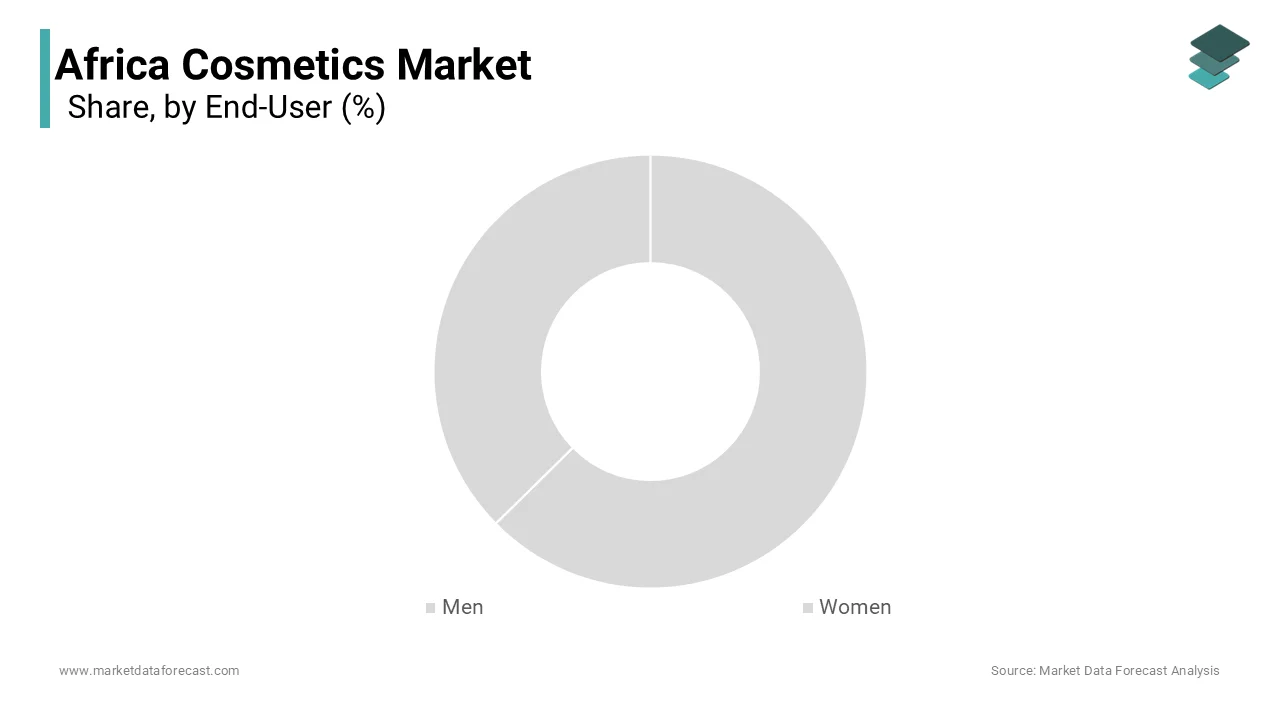
An additional significant driver is the influence of digital media and celebrity culture. Local influencers such as Nigerian fashion blogger Nkem Owoh and South African makeup artist Kevyn Aucoin’s protégé Thandiwe Msebenzi have helped shape trends and drive brand loyalty. These patterns continue to reinforce the overwhelming dominance of women in the cosmetics market.
The men segment is gaining momentum and is currently the fastest-growing end-user category in the Africa cosmetics market, expanding at a CAGR of 12.4% during the forecast period. The increasing exposure to global beauty standards through sports, entertainment, and social media is a primary factor fuelling the rise of men's segment. This exposure has normalized the use of facial cleansers, toners, and moisturizers among younger demographics.
The rise of male-centric grooming salons and barber shops offering premium services such as beard grooming, facials, and waxing is another influential driver of this segment. Brands like L’Oréal Men Expert, Nivea Men, and homegrown label Manology have capitalized on this trend by launching targeted marketing campaigns and region-specific product lines. These developments signal a transformative phase in the perception and consumption of cosmetics by male consumers across Africa.
By Distribution Channel Insights
The offline distribution segment continues to be the largest channel in the Africa cosmetics market by commanding a 67.5% of total sales in 2025. The dominance of this segment can be attributed to the limited reach of digital infrastructure in rural areas and the preference of older generations for in-store consultations and product testing.
A further key reason for the offline channel’s continued strength is the widespread presence of informal retail networks, especially in West and East Africa. These vendors often stock locally manufactured or imported generics at lower price points, making them attractive to budget-conscious consumers.
Moreover, physical retail remains a vital touchpoint for brand discovery, particularly for first-time buyers who rely on in-store demonstrations and advice from sales representatives. Despite the rapid rise of e-commerce, these entrenched shopping habits ensure that offline channels maintain their stronghold in the African cosmetics market.
The online distribution segment is the fastest-growing segment in the Africa cosmetics market by expanding at a CAGR of 18.3% from 2025 to 2033. A key growth catalyst of online distribution segment is the proliferation of localized e-commerce platforms that specialize in beauty and personal care products. Similarly, South Africa’s Takealot saw a rise in online beauty orders, indicating robust demand across both urban and semi-urban areas.
Social commerce is also playing a critical role in accelerating online growth. Platforms like Facebook Marketplace, WhatsApp commerce, and Instagram Shops have become popular avenues for micro-influencers and small-scale entrepreneurs to sell directly to consumers. This digital transformation underscores the immense potential for online retail to reshape the future of the African cosmetics industry.
REGIONAL ANALYSIS
South Africa
South Africa led the Africa cosmetics market by accounting for 27.5% of total regional revenue in 2025. A key driver of South Africa's market leadership is its advanced regulatory framework overseen by SAHPRA (South African Health Products Regulatory Authority), which ensures product safety and quality compliance. Cape Town and Johannesburg serve as major hubs for international cosmetic brands, while Pretoria hosts several regulatory and trade institutions that facilitate market entry. Further, South Africa boasts a mature digital ecosystem, with online beauty sales growing since 2020. With strong consumer confidence and a growing interest in clean beauty and organic formulations, South Africa remains the cornerstone of the African cosmetics industry.
Nigeria
Nigeria is another significant player in the Africa cosmetics market. Among the primary growth drivers in Nigeria is the high engagement of Gen Z consumers with digital beauty content. Lagos, Abuja, and Port Harcourt are key urban centers where modern retail formats and digital beauty platforms are gaining traction. Apart from these, the rise of indigenous beauty brands such as House of Aama and 54 Thrones has boosted domestic production and export opportunities. The country also benefits from a booming e-commerce ecosystem, with platforms like Jumia Beauty and Konga Beauty facilitating easier access to both local and international products. Despite economic volatility, Nigeria's dynamic consumer base and evolving retail landscape make it a key player in the African cosmetics market.
Egypt
Egypt occupies the key position in the Africa cosmetics market. A key driver of Egypt's market growth is the rising prominence of halal-certified beauty products, which align with the country's predominantly Muslim population. Cairo and Alexandria serve as major commercial centers, hosting numerous beauty expos, department stores, and specialized salons. According to the Islamic Economic Centre, the halal cosmetics market in Egypt expanded in 2023, with many brands gaining popularity. These products emphasize ethical sourcing and ingredient transparency, resonating with religiously conscious consumers. An additional important factor is the government’s efforts to streamline import regulations and promote local manufacturing.
Kenya
Kenya serves as a regional hub for East African trade, attracting both multinational and local beauty brands. A key growth driver in Kenya is the increasing influence of social media and digital marketing. Besides, Nairobi has emerged as a startup hotspot, with companies like Skin City and Baoabab Oil Co. leveraging e-commerce to scale operations beyond national borders. A further notable factor is the rising demand for locally sourced and sustainable beauty products. With improving digital infrastructure and a growing youth demographic, Kenya continues to solidify its position as a key player in the African cosmetics market.
Morocco
Morocco is a notable player in the Africa cosmetics market. Rabat and Casablanca are the primary urban centers where luxury and wellness-oriented beauty products thrive.One of the key growth drivers is the deep-rooted tradition of using argan oil and other botanical extracts in skincare and haircare. Locally, brands like Amal Active and Weleda Morocco have capitalized on this heritage by offering certified organic and fair-trade beauty solutions. Moreover, Morocco benefits from a favorable regulatory environment and proximity to European markets, making it an attractive destination for foreign investment. With increasing tourism and a growing expatriate community, Morocco’s cosmetics market is poised for steady expansion in the coming years.
KEY MARKET PLAYERS AND COMPETITIVE LANDSCAPE
L'Oréal SA, Procter & Gamble, and Unilever PLC, as well as local African brands such as House of Tara, Juvia's Place, and Africology are playing dominating role in the Africa cosmetics market.
The Africa cosmetics market is characterized by a dynamic and evolving competitive landscape, featuring a mix of multinational corporations, regional players, and emerging local startups. Global giants such as L’Oréal, Unilever, and Procter & Gamble dominate the premium and mass-market segments, leveraging their extensive distribution networks and brand recognition. However, they face increasing competition from homegrown brands that offer culturally relevant, affordable, and ethically sourced alternatives. These indigenous companies are gaining traction by capitalizing on authenticity, storytelling, and the rising demand for clean beauty products. Further, the proliferation of digital platforms has enabled smaller players to directly engage with consumers and scale rapidly without significant physical infrastructure. As consumer preferences shift toward personalized, sustainable, and locally inspired products, the market is witnessing intensified rivalry across pricing, branding, and innovation. Regulatory challenges, fragmented distribution systems, and economic volatility further shape the competitive environment, making adaptability and localized strategies essential for sustained success.
TOP PLAYERS IN THE MARKET
L’Oréal S.A.
L’Oréal S.A. has a strong presence across multiple African markets, offering a diverse portfolio of beauty and personal care products tailored to local consumer preferences. The company operates through various distribution channels and leverages its global expertise while adapting formulations to suit African skin tones and hair types. L’Oréal’s commitment to innovation, sustainability, and inclusive marketing has positioned it as a trusted brand among African consumers.
Unilever PLC
Unilever PLC plays a pivotal role in the Africa cosmetics market with popular brands such as Dove, Sunsilk, and Vaseline. The company focuses on mass-market appeal, ensuring affordability and accessibility across both urban and rural regions. Unilever invests heavily in community engagement, product localization, and responsible sourcing, aligning its operations with regional socio-economic and environmental priorities.
Procter & Gamble (P&G)
Procter & Gamble (P&G) contributes significantly to the African beauty landscape through well-established brands like Pantene, Olay, and Herbal Essences. P&G emphasizes research-driven product development and strategic partnerships to enhance consumer trust and brand loyalty. Its long-term presence in key African markets enables it to maintain a competitive edge through robust supply chain networks and targeted advertising campaigns.
TOP STRATEGIES USED BY KEY MARKET PLAYERS
One of the major strategies employed by key players is localized product development , where companies tailor formulations to meet the unique skincare and haircare needs of African consumers. This includes using region-specific ingredients and addressing concerns such as melanin-rich skin hydration and textured hair maintenance.
Another crucial strategy is expanding digital engagement , with brands leveraging social media influencers, e-commerce platforms, and mobile-first marketing campaigns to reach younger, tech-savvy audiences across urban centers.
Lastly, companies are increasingly adopting sustainable and ethical sourcing practices , partnering with local cooperatives to source natural ingredients like shea butter and argan oil, thereby supporting community development while enhancing brand reputation and consumer trust.
RECENT HAPPENINGS IN THE MARKET
- In February 2025, L’Oréal launched a dedicated research and development center in Johannesburg, aimed at developing beauty products specifically formulated for African skin tones and hair textures. This move reinforced the company’s commitment to inclusivity and localized innovation.
- In June 2023, Unilever partnered with women-led shea butter cooperatives in Ghana to enhance ingredient sourcing sustainability and support fair-trade practices, strengthening both supply chain resilience and corporate social responsibility efforts.
- In November 2023, Procter & Gamble expanded its e-commerce presence in Nigeria by collaborating with Jumia Beauty to improve product availability and customer engagement through digital-first marketing initiatives.
- In March 2025, South African natural beauty brand Khulu Naturals secured a strategic partnership with a European distributor to export its organic skincare line into select EU markets, highlighting the growing global appeal of African-sourced ingredients.
- In September 2023, Nigerian startup Flora & Curl raised seed funding to scale production and launch an omnichannel retail strategy, combining online sales with pop-up stores across major cities to build brand awareness and consumer loyalty.
MARKET SEGMENTATION
This research report on the Africa cosmetics market is segmented and sub-segmented into the following categories.
By Product
- Skin Care
- Hair Care
- Makeup
- Fragrance
- Others
By End-User Channel
- Men
- Women
By Distribution Channel
- Offline
- Online
By Region
- Sudan
- Egypt
- Kenya
- Ethiopia
- South Africa
- Rest of Africa