- Product Description Description
- Table of Contents TOC
- List of Table & Figure LOT
- Get Free Sample PDF Sample PDF
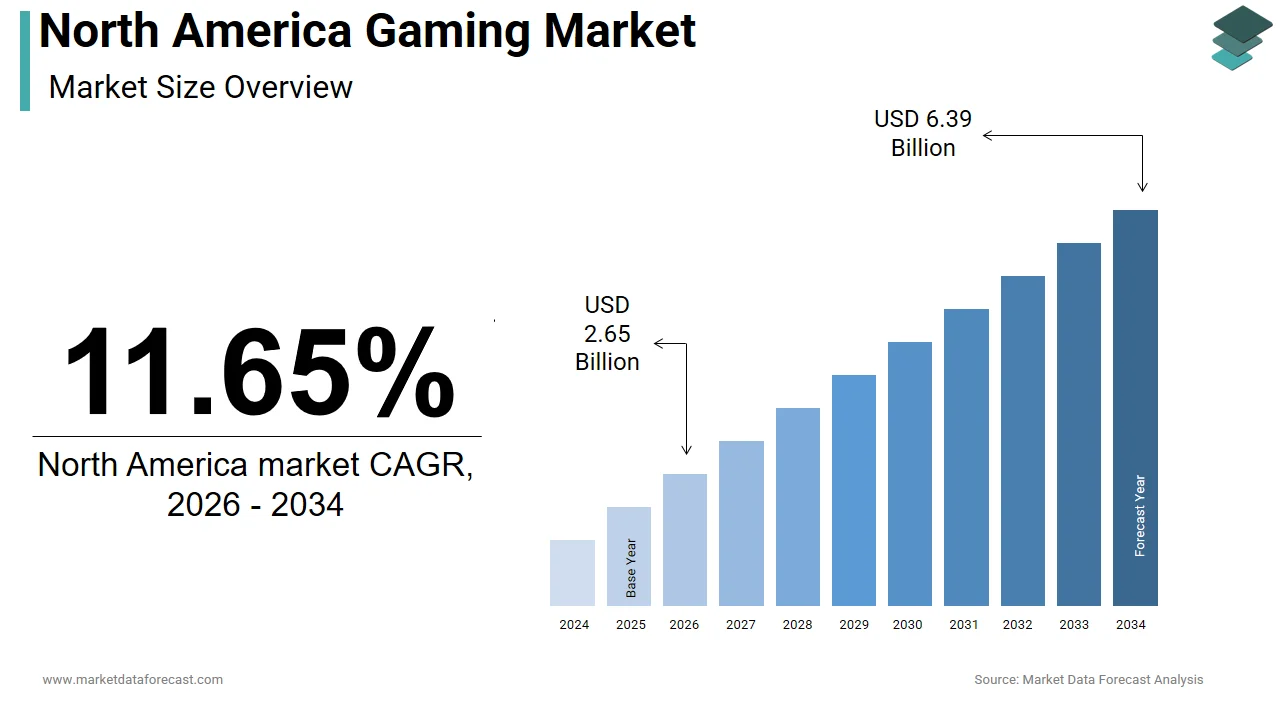
Market Size, 2025
$2.37 BnMarket Estimate, 2026
$2.65 BnMarket Forecast, 2034
$6.39 BnCAGR, 2026–2034
11.65%Africa Gaming Market Size
The North America data center liquid cooling market was valued at USD 2.37 billion in 2025, is estimated to reach USD 2.65 billion in 2026, and is projected to reach USD 6.39 billion by 2034, growing at a CAGR of 11.65% from 2026 to 2034.
Gaming has emerged as one of the fastest-evolving digital entertainment sectors. Unlike traditional gaming markets in North America or Asia-Pacific, the African gaming landscape is predominantly mobile-first, with smartphones serving as the primary gaming device for millions of users across the continent.
Africa’s gaming industry is not only about entertainment but also intersects with education, fintech, and social engagement platforms. In urban centers like Lagos, Nairobi, Cape Town, and Johannesburg, gaming cafes and esports events are gaining traction, reflecting a cultural shift toward interactive digital content.
According to the United Nations Educational, Scientific, and Cultural Organization (UNESCO), over 60% of Africa’s population is under the age of 25, making it one of the youngest demographics globally. This demographic dividend presents immense potential for growth in casual, competitive, and educational gaming segments. Moreover, local game development studios are increasingly producing culturally relevant content that resonates with African players, fostering a unique identity within the global gaming ecosystem.
MARKET DRIVERS
Rapid Mobile Phone Adoption and Internet Penetration
The rapid adoption of mobile phones and expanding internet connectivity, particularly among the youth demographic, is one of the primary drivers of the Africa gaming market. This widespread access to mobile devices has transformed how Africans engage with digital content, making mobile gaming more accessible than ever before.
This digital transformation has enabled game developers to reach millions of new players through lightweight, low-data games optimized for entry-level smartphones and limited bandwidth environments. Platforms like App Store, Google Play, and regional app stores have seen a surge in downloads from African consumers, particularly in Nigeria, Kenya, and South Africa.
Moreover, mobile network operators and tech startups are rolling out affordable data plans and localized payment gateways, reducing barriers to digital consumption. Also, mobile gaming revenue in Africa grew significantly between 2020 and 2023, driven by increased engagement with casual, puzzle, and sports-based mobile titles tailored to regional preferences.
Rise of Local Game Development Studios and Digital Entrepreneurship
The emergence of homegrown game development studios and a vibrant startup ecosystem focused on digital entertainment is a significant factor fueling the growth of the Africa gaming market. According to Disrupt Africa, over 70 indigenous game development companies were actively operating in 2023, with hubs in Nigeria, Egypt, Kenya, and South Africa leading the charge. These studios are leveraging local narratives, languages, and cultural elements to create games that resonate with African audiences.
This rise in local game creation has been supported by incubators, accelerators, and funding initiatives aimed at nurturing digital talent. Several African countries have launched innovation funds targeting youth-led tech ventures, including gaming. Organizations such as the Tony Elumelu Foundation and Google's Launchpad Accelerator have provided financial backing and mentorship to game developers, enabling them to scale their products regionally and internationally.
Apart from these, the integration of gaming with fintech and e-commerce has opened new monetization avenues. As per UNESCO, gamified learning applications and mobile-based skill games have gained popularity, attracting both investors and corporate sponsors.
MARKET RESTRAINTS
Limited Access to High-Speed Internet and Data Affordability
The persistent challenge of limited access to high-speed internet and unaffordable data costs, which hinder consistent and immersive gaming experiences, is a major restraint on the Africa gaming market. According to the Alliance for Affordable Internet, mobile broadband remains prohibitively expensive in many African countries, with 1GB of data costing over 5% of average monthly income in nations like Nigeria, Ghana, and Malawi.
This pricing barrier disproportionately affects younger, budget-conscious gamers who form the core consumer base of the gaming industry. As per the African Union, less than 30% of rural populations have reliable internet access, limiting the reach of online multiplayer and cloud-based games that require continuous connectivity.
Moreover, inconsistent network coverage in peri-urban and remote areas restricts user engagement and retention.
Underdeveloped Payment Ecosystem for Digital Transactions
The underdeveloped payment infrastructure, which limits in-game purchases and subscription models that are standard in global gaming economies, is another critical constraint facing the Africa gaming market. According to the World Bank, less than 30% of the African population has access to formal banking services, and digital payment adoption remains uneven across the continent.
Many African gamers rely on alternative payment methods such as USSD codes, airtime top-ups, and mobile money, which are not always integrated into international gaming platforms. This fragmentation results in low conversion rates for paid games and microtransactions, discouraging foreign developers from tailoring content specifically for African markets.
Furthermore, cross-border payment processing issues and currency volatility make it difficult for local developers to monetize their games internationally.
MARKET OPPORTUNITIES
Growth of Esports and Competitive Gaming Communities
The rapid growth of esports and competitive gaming communities, which are reshaping how gaming is perceived and consumed across the continent, presents one of the most promising opportunities for the Africa gaming market. According to Newzoo, Africa’s esports audience has grown steadily since 2021, with organized tournaments, streaming platforms, and sponsorships gaining momentum in key markets such as Nigeria, Kenya, and South Africa.
A key driver behind this trend is the increasing participation of young gamers in online competitions and live-streamed events. Companies like MTN, Gloo, and Gamers Connect have already begun investing in tournaments, team sponsorships, and streaming infrastructure.
Besides, educational institutions and private academies are launching gaming and esports programs to develop professional talent. In addition, university-level gaming leagues have expanded across East and Southern Africa, providing a structured pathway for aspiring professional gamers.
Integration of Gaming with Education and Skill Development
The integration of gaming with education and skill development, offering a dual benefit of entertainment and cognitive enhancement, is an emerging opportunity in the Africa gaming market. According to UNESCO, gamification techniques are being increasingly adopted in schools and vocational training centers across Africa to improve student engagement and digital literacy.
This shift is evident in the rise of educational games designed to teach mathematics, coding, history, and language skills in an interactive format. As per the African Union’s Digital Transformation Strategy, governments in countries like Rwanda, Ghana, and South Africa are supporting edutainment (education + entertainment) initiatives that use gaming to enhance learning outcomes, particularly in STEM fields.
Moreover, startups and non-profit organizations are developing mobile-based games that address real-world challenges such as financial literacy, health awareness, and civic education. Several African game developers have partnered with NGOs to create serious games that educate youth on entrepreneurship, personal finance, and environmental sustainability.
These developments show a growing recognition of gaming as more than just leisure, but as a tool for social impact and economic empowerment.
MARKET CHALLENGES
Insufficient Government Support and Policy Frameworks
The lack of robust government support and comprehensive policy frameworks to foster sustainable growth in the sector is a major challenge confronting the Africa gaming market. Unlike other regions where national agencies provide grants, tax incentives, and regulatory clarity for digital content creators, many African governments have yet to recognize gaming as a strategic industry.
Also, only a handful of African countries have developed clear policies for digital creative industries, leaving game developers without institutional backing, funding, or export facilitation. As a result, many startups struggle to scale due to bureaucratic hurdles and limited access to public funding channels.
Moreover, intellectual property rights enforcement remains weak in many jurisdictions, exposing local developers to piracy and unauthorized distribution of their work.
Lack of Infrastructure for Console and Cloud Gaming
The Africa gaming market faces a significant challenge due to the underdeveloped infrastructure for console and cloud gaming, which limits the diversity of available gaming experiences.
Cloud gaming, which relies on high-speed internet and low-latency networks, is similarly constrained.
Moreover, power supply instability and the high cost of electricity in many regions further deter investment in gaming hardware and data center infrastructure. According to the World Bank, intermittent electricity access affects nearly 60% of the population in Sub-Saharan Africa, making it challenging for gamers to maintain consistent play sessions or invest in premium gaming equipment.
Until there is significant progress in energy stability, internet infrastructure, and affordability of next-generation gaming devices, console and cloud gaming will remain niche segments in the Africa gaming market.
REPORT COVERAGE
| REPORT METRIC | DETAILS |
| Market Size Available | 2025 to 2034 |
| Base Year | 2025 |
| Forecast Period | 2026 to 2034 |
| Segments Covered | By Platform and Region. |
| Various Analyses Covered | Global, Regional and Country-Level Analysis, Segment-Level Analysis, Drivers, Restraints, Opportunities, Challenges; PESTLE Analysis; Porter’s Five Forces Analysis, Competitive Landscape, Analyst Overview of Investment Opportunities |
| Countries Covered | Sudan, Egypt, Kenya, Ethiopia, Ghana, South Africa, Rest of Africa |
| Market Leaders Profiled | Kucheza, Kagiso Interactive, Nyamakop, Celestial Games, Kuluya, and Others. |
SEGMENTAL ANALYSIS
By Platform Insights
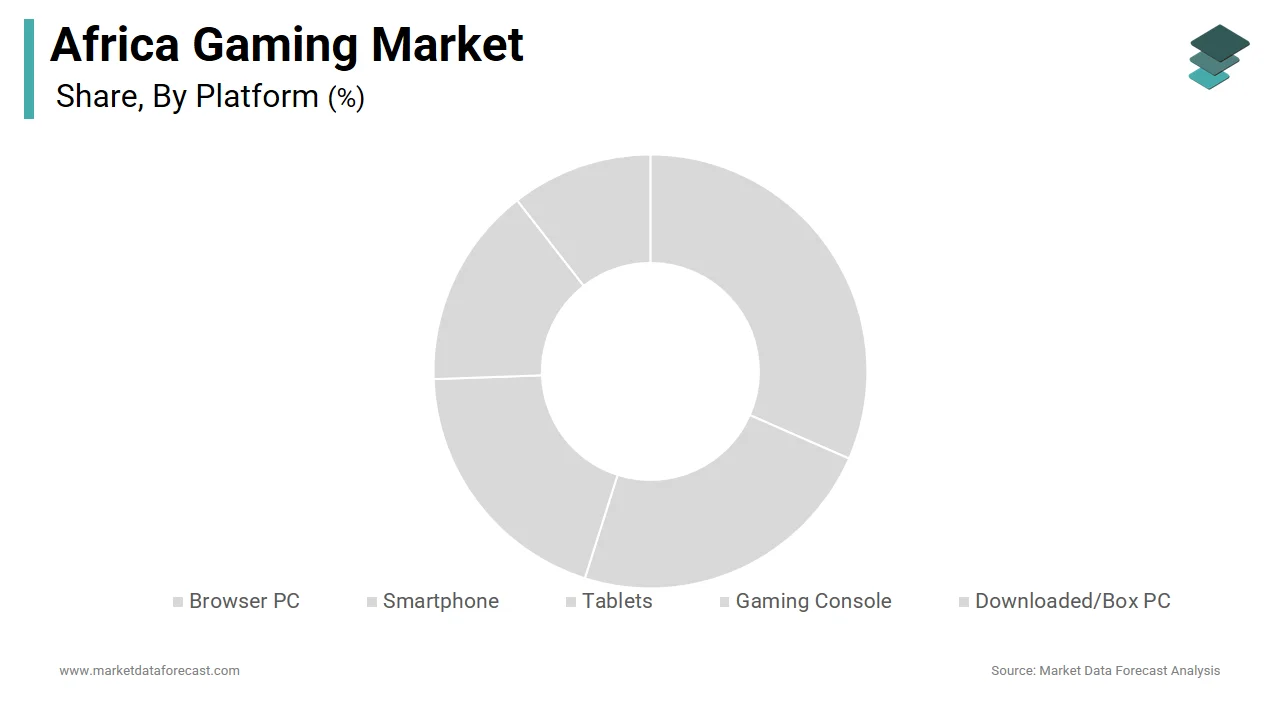
The smartphone segment dominated the Africa gaming market by capturing 68.3% of total gaming activity in 2024. The rapid proliferation of smartphones and mobile internet adoption, particularly among younger demographics, is one of the key drivers behind the dominance of the smartphone segment. This widespread access has made mobile games the preferred choice for millions of African gamers who rely on smartphones as their primary digital device.
Besides, smartphone-based games are often optimized for low-bandwidth environments, making them ideal for regions with limited internet connectivity.
Moreover, local game developers are increasingly focusing on mobile-first experiences that reflect African culture, folklore, and storytelling traditions.
The cloud gaming segment is the fastest-growing within the Africa gaming market and is projected to expand at a CAGR of 31.2%. The expansion of high-speed internet services in major urban centers such as Cape Town, Nairobi, and Cairo is one of the key factors driving the growth of the cloud gaming segment. Though still in its early stages, cloud gaming is gaining momentum due to improvements in broadband infrastructure, rising disposable incomes, and increasing partnerships between telecom providers and global game publishers. Also, fiber-optic networks and 4G rollouts have significantly improved online gaming performance, reducing latency and buffering issues that previously hindered real-time gameplay.
The appeal of subscription-based models that eliminate the need for expensive hardware purchases is another influential driver of this segment. Also, platforms like Xbox Cloud Gaming and NVIDIA GeForce Now offer flexible payment plans tailored to budget-conscious consumers, making high-end gaming more accessible to a broader audience.
Moreover, international gaming companies are collaborating with local telecom operators to bundle cloud gaming access with data plans.
COUNTRY-WISE ANALYSIS
Nigeria Gaming Market Insights
Nigeria led the Africa gaming market by accounting for 26.5% of total regional revenue in 2024. Lagos, Abuja, and Port Harcourt serve as key hubs where mobile gaming, esports, and digital streaming thrive.
A major factor supporting Nigeria’s leadership position is the country’s robust mobile ecosystem, which enables widespread access to casual and competitive gaming applications.
Further, Nigeria is witnessing a surge in local game development studios producing culturally relevant content.
Furthermore, social media and influencer-driven marketing play a significant role in boosting game visibility. As per a study, Nigerian gaming influencers collectively reach over 10 million followers on platforms like YouTube and Twitch, contributing to higher engagement and monetization opportunities. These patterns position Nigeria as the continent’s leading gaming market.
South Africa Gaming Market Insights
South Africa is a significant player in the Africa gaming market. A key factor contributing to South Africa’s market strength is its well-developed mobile and console gaming ecosystems. Apart from these, South Africa hosts several international gaming events and esports tournaments, attracting both local and global attention.
A further important driver is the presence of established incubators and accelerators supporting game development startups. According to the University of Cape Town’s Centre for Film and Media Studies, over 30 game development firms were registered in South Africa in 2023, many of which focus on mobile and browser-based games tailored for African audiences.
Moreover, South Africa benefits from stronger financial inclusion and digital payment systems, enabling smoother in-game transactions and monetization. These elements reinforce South Africa’s role as a key player in the regional gaming industry.
Kenya Gaming Market Insights
Kenya occupies a key position in the Africa gaming market. A major driver of Kenya’s gaming growth is the presence of a vibrant innovation hub network, including Nailab and iHub, which support local game developers through mentorship, funding, and technical resources. As per Disrupt Africa, Kenyan game studios raised over USD 3 million in venture capital in 2023, signaling strong investor interest in homegrown talent.
Besides, Kenya benefits from a growing esports scene, with organized tournaments and streaming communities gaining traction. Nairobi-based gaming influencers have amassed millions of followers, enhancing brand awareness and user engagement for local and international titles alike.
Moreover, the Kenyan government has shown increasing support for digital creative industries, recognizing gaming as a viable contributor to youth employment and economic diversification. These developments show Kenya’s potential to become a regional gaming powerhouse.
Egypt Gaming Market Insights
Egypt holds a notable portion of the Africa gaming market. A key factor influencing Egypt’s market status is the growing popularity of mobile and browser-based gaming, particularly among Gen Z and millennial players. As per the Central Agency for Public Mobilization and Statistics, over 75% of Egyptian gamers engage primarily via smartphones, with mobile game downloads increasing by 18% in 2023 compared to the previous year.
Moreover, Egypt has seen a rise in local game development initiatives, supported by government-backed technology parks and university programs offering courses in game design and software engineering.
Moreover, Egypt’s gaming community is becoming more organized, with esports leagues and tournaments gaining traction.
Ghana Gaming Market Insights
Ghana holds s decent share in the Africa gaming market. A major driver behind Ghana’s market growth is the rise of mobile money platforms and fintech solutions that facilitate seamless in-game transactions. As per the Bank of Ghana, mobile payments reached record levels in 2023, improving the viability of paid apps, in-app purchases, and digital subscriptions for gaming platforms.
Further, Ghana is witnessing an increase in gaming-related entrepreneurship, with local developers launching innovative titles that blend traditional storytelling with modern gameplay mechanics.
Moreover, the country has seen a surge in gaming events and developer meetups, fostering collaboration and skill-building among emerging creators. Like Ghanaian gaming influencers and streamers have gained substantial followings, helping to promote both local and global games to wider audiences. These trends indicate a promising trajectory for Ghana’s role in the evolving Africa gaming landscape.
COMPETITIVE LANDSCAPE
The Africa gaming market is experiencing a dynamic evolution marked by intense competition among global tech giants, regional telecom providers, and emerging local startups. Multinational corporations such as Google, Meta, and Microsoft are leveraging their global infrastructure and financial resources to expand gaming access through cloud streaming, app store optimization, and developer support programs tailored for African creators. These players benefit from strong brand recognition and existing digital ecosystems that facilitate seamless integration with gaming content.
At the same time, regional telecom operators like MTN, Airtel, and Orange are positioning themselves as key enablers of gaming growth by investing in network expansion, affordable data packages, and partnerships with game publishers. Their deep understanding of local consumer behavior gives them an edge in distributing mobile-first gaming experiences.
Meanwhile, a growing cohort of African indie developers and startups is carving out space by creating localized content that resonates with regional cultures and preferences. As venture capital interest increases and esports gains traction, the competitive landscape is becoming more diverse, with traditional tech firms, communication providers, and homegrown talent all vying for influence and market share in this rapidly evolving sector.
KEY MARKET PLAYERS
Some of the noteworthy companies in the Africa gaming market profiled in this report are
- Kucheza
- Kagiso Interactive
- Meta Platforms
- Nyamakop
- MTN Group
- Celestial Games
- Kuluya
TOP LEADING PLAYERS IN THE MARKET
MTN Group, a leading telecommunications company, plays a pivotal role in shaping the Africa gaming market by providing mobile internet access and digital payment solutions that support game downloads, in-app purchases, and online multiplayer experiences. MTN has invested heavily in expanding 4G networks across key African markets, making mobile gaming more accessible to millions of users.
Google (through its Launchpad Accelerator Africa program) actively supports African game developers by offering technical mentorship, funding opportunities, and global exposure through the Google Play Store. The company has been instrumental in enabling local studios to scale their operations and reach international audiences while optimizing games for low-bandwidth environments.
Meta Platforms (formerly Facebook) contributes significantly to the growth of the Africa gaming market through investments in gaming infrastructure, social media-driven discovery, and monetization tools for developers. By integrating gaming features into WhatsApp, Messenger, and Instagram, Meta has expanded the reach of casual and interactive content tailored for African audiences, fostering a new generation of mobile-first gamers.
TOP STRATEGIES USED BY KEY MARKET PARTICIPANTS
One major strategy employed by key players in the Africa gaming market is partnering with local telecom operators to bundle data plans with gaming services, ensuring affordability and accessibility for mobile-first users. This approach helps reduce barriers to entry and enhances user engagement across platforms.
Another strategic initiative involves investing in local game development ecosystems through incubators, accelerators, and seed funding programs. By supporting African developers, companies can tap into culturally relevant storytelling and gameplay mechanics that resonate with regional audiences while building long-term brand loyalty.
Lastly, leading firms are increasingly adopting cloud-based and ad-supported gaming models tailored to African consumer behaviour, allowing users to play high-quality games without requiring expensive hardware or high-speed broadband connections, thus expanding market reach and monetization potential.
RECENT MARKET DEVELOPMENTS
- In January 2024, Google launched a dedicated “Game Developer Support Program” under its Launchpad Accelerator Africa initiative, offering mentorship, funding, and technical training to ten selected African game studios aiming to scale globally.
- In May 2023, MTN expanded its partnership with Nigerian-based mobile game studio Carry1st to co-develop and distribute exclusive mobile titles tailored for African audiences, enhancing localized engagement and monetization strategies.
- In October 2023, Meta introduced a new suite of gaming tools within Instagram and WhatsApp to enable instant-play mini-games, increasing user retention and opening up new avenues for developers to distribute lightweight, cross-platform content.
- In February 2024, Carry1st secured USD 10 million in Series A funding to further develop its platform, which aggregates and distributes mobile games optimized for African users, reinforcing its position as a leading player in the region.
- In August 2023, Ubisoft announced a collaboration with South African game developers at Yellowbear Studios to co-produce a narrative-driven mobile title inspired by African folklore, signaling increased interest from global publishers in local creative talent.
MARKET SEGMENTATION
This Africa gaming market research report is segmented and sub-segmented into the following categories.
By Platform
- Browser PC
- Smartphone
- Tablets
- Gaming Console
- Downloaded/Box PC
By Country
- Sudan
- Egypt
- Kenya
- Ethiopia
- Ghana
- South Africa
- Rest of Africa