- Product Description Description
- Table of Contents TOC
- List of Table & Figure LOT
- Get Free Sample PDF Sample PDF
Market Size, 2025
$5.73 BnMarket Estimate, 2026
$6.08 BnMarket Forecast, 2034
$9.76 BnCAGR, 2026–2034
6.1%Executive Summary: Global Aircraft Doors Market
- Market Scope: Comprehensive global aviation assessment covering fixed-wing and rotary-wing aircraft (narrow-body, wide-body, commercial helicopters, military helicopters), end-users (OEM vs. MRO), application segments (main cabin, cargo, emergency exits), and regional growth hubs.
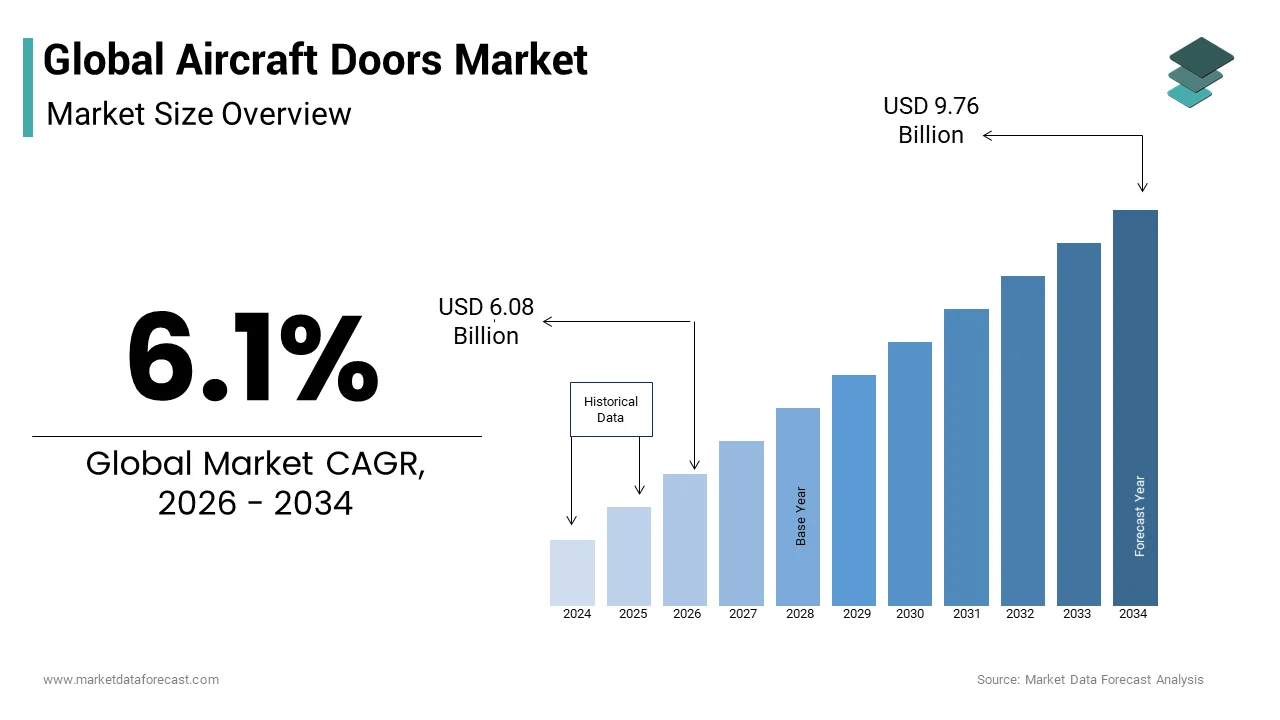
- Market Valuation: Valued at USD 5.73 billion (2025), estimated at USD 6.08 billion (2026), and projected to reach USD 9.76 billion by 2034, growing at a steady CAGR of 6.1% (2026–2034).
- Primary Growth Drivers: Massive global commercial fleet expansion, strict 90-second emergency evacuation safety regulations, and the rising adoption of lightweight composite materials and smart sensor-equipped doors for predictive maintenance.
Key Market Segment Metrics (2026–2034)
| Category | Leading Segment (2025 Position) | Fastest-Growing Segment |
|---|---|---|
| By Aircraft Type (Fixed-Wing) | Narrow-body aircraft (dominating market share due to massive fleet volumes and high daily flight cycles on short-haul routes) | Wide-body aircraft (expanding at a 7.4% CAGR driven by long-haul travel recovery and next-generation large aircraft designs) |
| By Rotary-Wing | Commercial helicopters (holding the primary position via diverse utility, tourism, and emergency medical services) | Military helicopters (projected at an 8.5% CAGR fueled by rising defense expenditures and tactical aviation upgrades) |
| By End-User | OEM segment (leading market revenue anchored by high new-aircraft production rates and factory-fitted systems) | MRO segment (growing at a 6.4% CAGR driven by aging global fleets and mandatory safety retrofits) |
| By Region | North America (holding the dominant revenue share supported by major domestic aviation networks, FAA regulations, and OEMs) | Asia-Pacific (surging rapidly as the fastest-growing regional market due to fleet expansions in China, India, and low-cost carriers) |
Major Market Players & Market Structure
Market Structure: Consolidated aerospace supplier ecosystem characterized by high barriers to entry due to strict regulatory certification timelines, specialized alloy supply chains, and collaborative engineering partnerships with major airframers.
Key Focus Areas: Competitors differentiate through advanced carbon-fiber composite integration, weight reduction, smart sensor-based predictive health monitoring, and compliance with stringent EASA and FAA safety directives.
 Download Free Sample Report
Global Aircraft Doors Market Size
The global aircraft doors market size was valued at USD 5.73 billion in 2025 and is anticipated to reach USD 6.08 billion in 2026 to reach USD 9.76 billion by 2034, growing at a CAGR of 6.1% from 2026 to 2034.
Aircraft doors are critical entry, exit, and emergency egress systems that ensure passenger safety and operational security in aviation. These specialized components include main cabin doors, cargo doors, emergency exits, and service panels, which must withstand extreme pressure differentials, thermal variations, and rigorous mechanical stress during flight cycles. The structural integrity of these doors is paramount, as they serve as the primary barrier against depressurization and external hazards while facilitating efficient boarding and loading processes. According to the International Civil Aviation Organization, global air passenger traffic reached 9.4 billion in 2024, reflecting a robust recovery that has intensified the utilization rates of commercial fleets worldwide. This surge in flight operations accelerates the wear and tear on door mechanisms, hinges, and seals, necessitating frequent inspections and replacements to maintain airworthiness. The European Union Aviation Safety Agency mandates strict certification protocols for all door systems, ensuring they meet rigorous standards for rapid evacuation and structural reliability. Furthermore, the industry is increasingly focusing on lightweight composite materials and automated locking mechanisms to reduce overall aircraft weight and enhance fuel efficiency. As airlines prioritize turnaround times and passenger experience, the integration of smart sensors for real time door status monitoring becomes increasingly prevalent, transforming static structures into intelligent safety assets.
MARKET DRIVERS
Expansion of Global Fleet Deliveries Drives Demand for New Door Systems
The continuous expansion of the global commercial aircraft fleet is majorly fuelling the expansion of the aircraft doors market due to the direct correlation between new aircraft production and the requirement for certified door assemblies. According to Airbus, the world's passenger and freighter fleet is expected to grow from 24,730 aircraft at the end of 2024 to 49,210 aircraft by the end of 2044. Each new aircraft entering service requires a complete set of main cabin, cargo, and emergency doors, which are complex engineered systems involving precise aerodynamics and safety mechanisms. The proliferation of narrow body aircraft, such as the Airbus A320neo and Boeing 737 MAX families, which dominate short haul routes, creates substantial volume demand for standardized door configurations. These high frequency operations subject doors to thousands of open close cycles annually, necessitating robust designs that can endure repetitive mechanical stress without failure. Furthermore, the introduction of new wide body models with larger fuselage diameters requires innovative door designs that can manage higher pressure loads while maintaining ease of operation for ground crews. This relentless production tempo ensures a steady and predictable demand for new door systems from original equipment manufacturers who must supply fully integrated and certified units to airframers. The scale of this fleet expansion guarantees that the linefit segment will remain the foundational pillar of market growth.
Stringent Safety Regulations Mandate Advanced Emergency Egress Systems
Strict regulatory frameworks imposed by international aviation authorities mandate the continuous upgrade and modernization of emergency egress systems, thereby driving demand for advanced aircraft doors and propelling the global market growth. According to the Federal Aviation Administration, regulations require that all commercial aircraft be capable of evacuating all passengers and crew within 90 seconds using only half of the available exits under simulated emergency conditions. This stringent requirement compels manufacturers to develop lightweight yet highly durable emergency exit doors that can be operated quickly and reliably by passengers or crew members under stressful scenarios. Modern emergency doors incorporate intuitive handling mechanisms, fail safe locking systems, and integrated slide raft deployment features that enhance evacuation efficiency. Additionally, regulatory bodies regularly update safety standards to address lessons learned from incident investigations, leading to mandatory retrofits or design modifications for existing fleets. For instance, updates to door seal integrity and latch reliability standards force airlines to replace older components with newer compliant versions to maintain their operating certificates. The uncompromising focus on passenger safety ensures that compliance with these evolving regulations remains a non-negotiable priority for airlines and lessors. This regulatory pressure creates a consistent aftermarket demand for certified replacement doors and components, ensuring sustained market activity beyond initial aircraft deliveries.
MARKET RESTRAINTS
High Certification and Testing Costs Restrict Market Entry for New Innovators
The aircraft doors market faces significant restraints due to the exorbitant costs and lengthy timelines associated with obtaining regulatory certification for new door designs and materials. According to the European Union Aviation Safety Agency, the certification process involves extensive structural testing including burst pressure, fatigue cycling, and emergency deployment trials which require significant financial investment and time to complete. These high barriers to entry limit the number of qualified suppliers and discourage smaller innovative firms from entering the market with novel technologies. Furthermore, any design change, even if minor, requires re certification, which adds to the development burden and delays time to market. The complexity of integrating doors with diverse airframe structures from different original equipment manufacturers also necessitates customized testing protocols for each application. This financial and regulatory hurdle forces companies to rely on proven legacy designs rather than adopting cutting edge technologies that may offer superior performance but lack certified status. Consequently, the market remains consolidated with a few dominant players who can absorb the high costs of compliance, thereby limiting competition and slowing the pace of technological disruption in door systems.
Supply Chain Volatility for Specialized Aerospace Alloys Impacts Production Stability
The production of aircraft doors is heavily dependent on specialized aerospace alloys and composite materials, which are subject to significant supply chain volatility and geopolitical risks and is further impeding the aircraft doors market expansion. According to the United States Geological Survey, the global supply of titanium and high strength aluminum alloys essential for door frames and locking mechanisms is concentrated in a few regions, creating vulnerability to trade restrictions and export controls. Disruptions in the supply of these critical raw materials can lead to sudden price spikes and prolonged lead times for door manufacturers who rely on just in time inventory models. Additionally, the stringent quality requirements for aerospace grade materials mean that alternative sources cannot be easily qualified without extensive testing and validation. This dependency on a limited supplier base increases the risk of production delays and cost overruns, impacting the profitability of door programs. Furthermore, the energy intensive nature of metal processing makes it vulnerable to fluctuations in energy prices, adding another layer of uncertainty to manufacturing costs. Mitigating these supply chain risks requires diversifying sourcing strategies and investing in domestic production capabilities, but these measures take time and significant capital to implement effectively, thereby restraining market agility.
MARKET OPPORTUNITIES
Integration of Smart Sensors for Predictive Maintenance Creates Service Opportunities
The emergence of smart aircraft doors equipped with embedded sensors and connectivity features presents a significant opportunity for the aircraft doors market by enabling predictive maintenance and enhancing operational safety. According to the IATA Air Transport IT Survey, airlines and airports are prioritizing digital investments to improve asset management and reduce unscheduled downtime. Smart doors can monitor parameters such as latch status, seal integrity, hinge wear, and motor performance, transmitting real time data to maintenance crews via wireless networks. This capability allows airlines to identify potential failures before they occur, reducing the risk of door related delays and minimizing the need for costly spare parts inventory. Furthermore, these connected systems can integrate with central aircraft health monitoring platforms, providing a comprehensive view of door system status across the entire fleet. Manufacturers who develop open architecture sensor platforms can partner with software providers to create comprehensive maintenance ecosystems. This shift from passive mechanical components to intelligent connected devices opens new revenue streams through data services and subscription based maintenance models, driving innovation and value creation in the aircraft doors market.
Adoption of Lightweight Composite Materials Enhances Fuel Efficiency
The increasing adoption of lightweight composite materials in aircraft door construction offers a promising opportunity for the aircraft doors market. According to the International Air Transport Association, the aviation industry is committed to achieving net zero carbon emissions by 2050, necessitating continuous improvements in aircraft weight reduction. Traditional metal doors are being replaced by those utilizing carbon fiber reinforced polymers and advanced thermoplastics, which offer comparable structural integrity at a fraction of the weight. Additionally, the use of composites allows for more complex aerodynamic shapes that reduce drag and improve overall aircraft performance. Airlines are increasingly specifying weight savings as a key criterion in procurement contracts, pushing suppliers to innovate in material science and design optimization. The cumulative effect of reducing the weight of multiple doors across a large fleet results in significant annual fuel savings. This regulatory and economic pressure ensures that lightweight composite door technologies will remain a primary focus for manufacturers seeking to meet sustainability goals and improve airline profitability, thereby opening new avenues for material innovation.
MARKET CHALLENGES
Complexity of Integrating Doors with Diverse Airframe Designs Increases Engineering Burden
The aircraft doors market faces significant challenges due to the increasing complexity of integrating standardized door systems with highly customized and diverse airframe designs from various original equipment manufacturers. Each aircraft model has unique structural requirements, curvature profiles, and pressure load characteristics, leading to a wide variety of door configurations that demand bespoke engineering solutions. According to the Aerospace Industries Association, the lack of universal standards for door interfaces means that suppliers must engage in extensive collaborative engineering with airframers to ensure proper fit and function. This customization process increases development time and costs, as each new program requires unique mounting brackets, sealing systems, and actuation mechanisms. Furthermore, the tight packaging constraints within modern slimline fuselages leave little room for error, requiring precise spatial coordination between the door structure and surrounding cabin elements. Any misalignment can lead to air leaks, noise, or operational failures, compromising safety and comfort. The need to support multiple generations of aircraft designs simultaneously further complicates inventory management and production planning for suppliers. This high level of customization limits economies of scale and places a significant engineering burden on manufacturers who must balance flexibility with efficiency in their production processes.
Cybersecurity Risks Associated with Connected Door Systems Threaten Operational Integrity
The increasing connectivity of smart aircraft doors introduces new cybersecurity vulnerabilities that pose a significant challenge to market participants and airline operators. As doors become part of the broader aircraft Internet of Things network, they potentially expose the internal systems to external cyber threats if not properly secured. According to the European Union Aviation Safety Agency, the integration of wireless communication protocols in cabin components requires robust encryption and authentication mechanisms to prevent unauthorized access and malicious control. A compromised door system could theoretically be used to disrupt boarding procedures, cause safety hazards during flight, or interfere with other avionics systems through electromagnetic interference. Ensuring the cybersecurity of these embedded devices requires continuous software updates and vulnerability assessments, which add to the operational complexity and cost for airlines. Furthermore, the supply chain for electronic components in smart doors must be vetted to prevent the insertion of hardware trojans or counterfeit parts. The lack of established cybersecurity standards specifically for door systems creates uncertainty and liability concerns for manufacturers. Addressing these security risks requires significant investment in secure by design principles and collaboration with cybersecurity experts to protect the integrity of connected aircraft infrastructure.
REPORT COVERAGE
| REPORT METRIC | DETAILS |
| Market Size Available | 2025 to 2034 |
| Base Year | 2025 |
| Forecast Period | 2026 to 2034 |
| CAGR | 6.1% |
| Segments Covered | By End User, Door Type, Application & Region |
| Various Analyses Covered | Global, Regional, and country-level analysis; Segment-Level Analysis, DROC; PESTLE Analysis; Porter’s Five Forces Analysis, Competitive Landscape; Analyst Overview of Investment Opportunities |
| Regions Covered | North America, Europe, Asia Pacific, Latin America, Middle East & Africa |
SEGMENTAL ANALYSIS
By Aircraft Insights
The fixed wing narrow body aircraft segment dominated dominates the market in 2025. The dominance of fixed wing narrow body aircraft segment in the global market is majorly primarily due to the sheer volume of these aircraft in global commercial fleets and their high frequency of daily operations. According to Boeing, narrow body aircraft such as the Airbus A320 family and Boeing 737 series account for over 70% of all new commercial aircraft deliveries projected through 2042. These aircraft operate on short to medium haul routes with multiple daily cycles, subjecting doors to thousands of open and close operations annually, which accelerates wear and necessitates frequent replacement. The high utilization rate means that door mechanisms, hinges, and seals experience significant mechanical stress, requiring robust and durable designs. Furthermore, the standardization of door configurations across major narrow body models allows manufacturers to achieve economies of scale in production. This massive installed base ensures a consistent and high volume demand for both linefit and aftermarket door components, solidifying the narrow body segment as the leader in the aircraft doors market. The second major factor driving the dominance of the narrow body segment is the intense focus by low cost carriers on rapid turnaround times, which places premium importance on reliable and efficient door operations. According to the International Air Transport Association, low cost carriers aim for turnaround times of under 30 minutes to maximize asset utilization, making swift and fault free door operation critical. Any delay in door opening or closing directly impacts schedule adherence and increases operational costs. Consequently, airlines prioritize high quality door systems that offer smooth operation and minimal maintenance requirements. The proliferation of single aisle aircraft in emerging markets further amplifies this demand as new routes are opened and frequencies increase. This operational imperative ensures that narrow body aircraft remain the primary driver of revenue and innovation in the aircraft doors market as manufacturers strive to deliver systems that support the rigorous demands of high frequency commercial aviation.
On the other end, the fixed wing wide body aircraft segment is growing at the fastest rate and is expected to record a CAGR of 7.4% during the forecast period owing to the recovery of long haul international travel and the introduction of next generation large aircraft. According to Airbus, the global fleet of wide body aircraft is expected to double by 2040 as airlines expand their intercontinental networks to connect major economic hubs. These larger aircraft feature complex door systems including main cabin, cargo, and emergency exits that must withstand higher pressure differentials and heavier structural loads. The increasing average stage length of flights means that wide body doors are subjected to prolonged periods of extreme environmental stress, requiring advanced materials and engineering solutions. Furthermore, the trend toward premium cabins with larger entry doors for enhanced passenger experience drives demand for sophisticated automated door mechanisms. As airlines invest in new wide body fleets to replace aging aircraft, the demand for advanced door systems tailored to these larger platforms accelerates rapidly, establishing it as the fastest growing segment. The second catalyst propelling the rapid expansion of the wide body segment is the integration of smart technologies and lightweight composite materials into door structures to improve fuel efficiency and operational safety. According to the Federal Aviation Administration, modern wide body aircraft require doors that contribute to overall weight reduction goals without compromising structural integrity or safety standards. Manufacturers are increasingly utilizing carbon fiber reinforced polymers and integrated sensor systems to create lighter and smarter door assemblies. These advanced doors can monitor their own status and predict maintenance needs, reducing unscheduled downtime and enhancing reliability. The ability to offer such high value added features appeals to airlines seeking to optimize their long haul operations and reduce operating costs. Furthermore, the complexity of wide body door systems commands higher unit prices compared to narrow body equivalents, contributing to faster revenue growth. This combination of technological advancement and high value procurement ensures that the wide body segment will experience the most rapid growth in the aircraft doors market.
By Rotary Wing Insights
The commercial helicopter segment held the leading position in the global by holding the global market in 2025. The growth of the commercial helicopter segment in the global market is attributed to the diverse range of applications including emergency medical services, offshore transport, and tourism, which require frequent and reliable door operations. According to the Vertical Flight Society, the global commercial helicopter fleet exceeds 15,000 units with a significant portion dedicated to passenger transport and utility roles. These helicopters often operate in challenging environments where doors are used frequently for loading passengers, cargo, and equipment, subjecting them to rigorous mechanical stress. The need for quick access and egress in emergency situations mandates robust and easy to operate door systems that can withstand harsh conditions. Furthermore, the regulatory requirements for safety and accessibility in commercial operations drive the demand for high quality certified doors. The steady growth in helicopter tourism and offshore energy support services ensures a consistent baseline demand for commercial helicopter doors, maintaining its leadership in the rotary wing segment. The second major factor sustaining the dominance of the commercial helicopter segment is the ongoing modernization of existing fleets to meet stricter noise and safety regulations. According to the European Union Aviation Safety Agency, older helicopter models are being retrofitted with newer door designs that incorporate better sealing and acoustic insulation to reduce noise pollution in urban areas. This retrofit activity generates significant aftermarket demand for replacement doors and components. Additionally, the expansion of urban air mobility initiatives is prompting the development of new commercial helicopter designs with optimized door configurations for rapid passenger boarding. These innovations require specialized door systems that balance weight, security, and ease of use. The continuous evolution of commercial helicopter operations and the need to comply with evolving regulatory standards ensure that this segment remains the largest contributor to the rotary wing aircraft doors market.
However, the military helicopter segment is anticipated to grow at a CAGR of 8.5% during the forecast period in the global market owing to the increased defense spending and the modernization of tactical aviation fleets globally. According to the Stockholm International Peace Research Institute, global military expenditure reached record levels in 2025, with a significant portion allocated to aviation assets including attack and transport helicopters. Modern military helicopters require specialized door systems that can accommodate weapon mounts, rapid troop deployment, and medical evacuation scenarios. These doors must be extremely durable and capable of withstanding combat conditions including ballistic threats and extreme weather. The introduction of new generation military helicopters with advanced avionics and modular mission packages necessitates the development of innovative door solutions that integrate seamlessly with these complex systems. As nations upgrade their aerial capabilities to address emerging security threats, the demand for high performance military helicopter doors accelerates rapidly. The second driver accelerating the growth of the military helicopter segment is the increasing focus on special operations and asymmetric warfare which requires versatile and rapidly configurable door systems. According to the United States Department of Defense, special operations forces rely heavily on helicopters for insertion and extraction missions, demanding doors that can be quickly removed or modified in the field. This operational requirement drives the development of lightweight and modular door designs that offer maximum flexibility. Furthermore, the integration of advanced sensors and communication equipment into door structures enhances situational awareness for crew members. Manufacturers who can provide ruggedized and adaptable door solutions gain a competitive edge in this high value segment. The strategic importance of military aviation and the continuous need for technological superiority ensure that the military helicopter segment will grow at the fastest pace in the rotary wing market.
By End User Insights
The OEM segment led the market by commanding for the leading share of the global market in 2025. The dominance of OEM segment in the global market is attributed to the massive volume of new aircraft deliveries and the inherent requirement for fully integrated door systems during initial assembly. According to Boeing, the global commercial airplane fleet is projected to grow significantly over the next two decades, requiring millions of new doors to be installed directly on the production line. OEMs benefit from long term exclusive contracts with airframers which guarantee a steady volume of door sales for every new aircraft rolling off the assembly line. These partnerships often involve collaborative engineering efforts where door manufacturers work closely with aircraft designers to develop customized solutions that optimize aerodynamics and weight. The trend toward more integrated door systems where sensors and actuators are pre installed at the factory further strengthens the OEM channel. As global aircraft deliveries accelerate to meet post pandemic demand, the OEM segment is poised for sustained leadership driven by the direct correlation between production volumes and door installations. The second major factor reinforcing the dominance of the OEM segment is the stringent certification and safety requirements that are most efficiently addressed during the initial aircraft design and manufacturing phase. According to the Federal Aviation Administration, new aircraft types must undergo rigorous testing to verify the structural integrity and operational reliability of all components including doors. OEMs are uniquely positioned to provide this assurance as they participate in the type certification process and demonstrate compliance with all regulatory requirements from the outset. This level of integration reduces the risk for airlines and simplifies the entry into service process for new fleets. Furthermore, OEMs are increasingly offering bundled packages that include doors, windows, and emergency slides as a single unit which streamlines procurement and installation for airlines. This holistic approach appeals to carriers looking to minimize administrative burden and ensure seamless compatibility between components. The growing preference for factory fitted solutions among leasing companies who prefer to deliver fully configured aircraft to operators also supports the growth of the OEM channel.
On the other end, the MRO segment is expected to record a CAGR of 6.4% during the forecast period in the global market owing to the aging global aircraft fleet and the increasing frequency of mandatory inspections and replacements. According to IATA, the average age of the global commercial fleet is gradually rising, requiring airlines to perform more frequent heavy maintenance checks that often involve door component replacements. Older doors are prone to wear and tear including seal degradation, hinge fatigue, and latch mechanism failures which necessitate timely repairs or replacements to maintain airworthiness. The MRO sector benefits from the recurring nature of these maintenance events, ensuring a steady and predictable demand for door parts and services. Furthermore, the rise of third party MRO providers who offer competitive pricing and faster turnaround times compared to OEMs is accelerating the growth of this segment. Airlines are increasingly outsourcing door maintenance to specialized providers to reduce costs and improve operational efficiency. The second catalyst propelling the rapid expansion of the MRO segment is the regulatory mandate for regular safety audits and upgrades to meet evolving aviation standards. According to the European Union Aviation Safety Agency, airlines must comply with strict directives regarding door emergency operation and structural integrity which often require retrofitting older aircraft with newer compliant components. This regulatory pressure drives significant aftermarket activity as airlines seek to avoid penalties and maintain their operating certificates. Additionally, the increasing adoption of smart door technologies in new aircraft creates a parallel demand for specialized diagnostic and repair services in the MRO sector. Technicians require advanced tools and training to service these intelligent systems, creating new revenue streams for MRO providers. The combination of an aging fleet, regulatory compliance, and technological complexity ensures that the MRO segment will experience the fastest growth in the aircraft doors market.
REGIONAL ANALYSIS
North America Market Analysis
North America had the leading share of the global market in 2025 and is likely to see steady development in the near future as manufacturers prioritize smart door technologies for enhanced safety and operational efficiency. The United States occupies a dominant position in the North American aircraft doors market, accounting for approximately 35% of the global revenue share driven by its vast domestic aviation network and strong manufacturing base. According to the Federal Aviation Administration, the United States has over 5,000 public use airports and handles more than 900 million passengers annually, creating immense demand for both new and replacement door systems. The presence of major aerospace manufacturers and MRO providers in the region ensures a robust supply chain and advanced technological capabilities. Strict safety regulations enforced by the FAA mandate regular inspections and upgrades, driving compliance based demand. Furthermore, the strong general aviation and military sectors contribute significantly to the market as private and defense aircraft require frequent door maintenance and modernization. The mature nature of the market means that focus is shifting toward smart technologies and lightweight materials to enhance efficiency and safety. The robust economic environment and high disposable income levels support strong leisure and business travel demand, ensuring sustained growth for the aircraft doors market in North America.
Europe Market Analysis
The European market is expected to experience consistent demand for high performance doors as sustainability initiatives continue to drive fleet modernization over the next few years. Germany serves as the central hub for the European aircraft doors market characterized by strict environmental regulations and a dense network of international hubs. According to Eurostat, European airports handled over 1 billion passengers in 2024, reflecting a strong recovery in cross border travel. The market in Germany is driven by major carriers like Lufthansa which operate extensive fleets requiring high quality door systems for safety and efficiency. The European Union Green Deal mandates significant reductions in carbon emissions, prompting airlines to adopt lightweight composite doors to reduce fuel consumption. Strict safety and environmental standards imposed by EASA ensure that only high performance and compliant doors are used in the region. The well-developed MRO infrastructure in Europe supports a vibrant aftermarket sector with specialized providers offering advanced repair and upgrade services. The focus on sustainability and operational efficiency ensures that the European market remains a key driver of innovation and quality in the global aircraft doors industry.
Asia Pacific Market Analysis
The Asia Pacific region is expected to lead global growth in door system adoption over the next few years as rapid fleet expansion continues to fuel market demand. China stands as the fastest growing market in the Asia Pacific aircraft doors market and is driven by unprecedented fleet expansion and rising middle class travel demand. According to the Civil Aviation Administration of China, the nation plans to construct over 100 new civil airports by 2035 to accommodate its rapidly growing passenger traffic. This infrastructure boom requires the procurement of thousands of new aircraft each equipped with fresh sets of doors, creating substantial OEM demand. Chinese airlines are expanding their international networks, increasing the utilization of wide body aircraft and driving demand for high performance door systems. The region is also seeing a surge in low cost carriers which operate high frequency short haul routes, leading to accelerated door wear and robust aftermarket activity. Local manufacturing capabilities are improving with domestic producers gaining certification and market acceptance, reducing reliance on imports. The government's support for the aviation sector as a strategic industry ensures continued investment in fleet modernization and infrastructure development, ensuring that Asia Pacific will remain the primary engine of growth for the global aircraft doors market.
Latin America Market Analysis
The Latin American aviation sector is likely to see gradual growth and improved operational reliability in the coming years as regional infrastructure continues to undergo modernization. Brazil maintains a commanding position in the Latin American aircraft doors market due to the gradual modernization and privatization of airport infrastructure. According to the Brazilian Airport Infrastructure Company, recent concession agreements for major airports have unlocked significant capital for infrastructure upgrades and fleet expansion. The market in Brazil is driven by major carriers which operate large fleets of narrow body aircraft on domestic routes with high flight frequencies. The tropical climate and varied runway conditions in the region place additional stress on doors, increasing the need for durable and robust products. The aftermarket segment is particularly strong as airlines seek to maintain older fleets in peak condition while optimizing operational costs through localized MRO support.
COMPETITIVE LANDSCAPE
Competition in the aircraft doors market is characterized by a highly consolidated landscape dominated by a few major aerospace suppliers with extensive technical expertise and established relationships with airframers. High barriers to entry due to stringent safety certifications complex engineering requirements and significant capital investment protect incumbent players from new competitors. Leading companies differentiate themselves through superior material science innovations advanced locking mechanisms and seamless integration capabilities with next generation aircraft structures. Price competition is moderate as airlines and original equipment manufacturers prioritize reliability weight savings and safety compliance over initial cost savings for these critical structural components. However vendors compete aggressively on lifecycle support services customization capabilities and speed of delivery for both linefit and retrofit projects. The shift toward smart connected doors creates new battlegrounds for innovation where technological agility and data analytics become key differentiators. Strategic alliances with material suppliers and technology firms are frequently utilized to share development risks and access specialized expertise. Regional players focus on niche markets or specific component supplies while global leaders leverage their broad portfolios to secure large scale fleet contracts. Overall the market remains stable with continuous technological advancement and strong demand for fuel efficient solutions driving sustained competitive intensity among top tier manufacturers who continuously invest in automation and digitalization to maintain their leadership positions.
KEY MARKET PLAYERS
These are some of the major players in the global aircraft doors market.
- Airbus Helicopters (France)
- Latecoere (France)
- Saab (Sweden)
- Elbit Systems (Israel)
- Triumph Group U U.S.
- Mitsubishi Heavy Industries (Japan)
Top Players In The Market
- Safran Cabin stands as a global leader in aircraft door systems providing comprehensive solutions for commercial and military aviation platforms. The company specializes in lightweight composite doors and advanced locking mechanisms that ensure superior safety and operational efficiency. Recent strategic initiatives include the development of next generation smart door systems integrated with Internet of Things sensors for real time status monitoring. Safran actively collaborates with major airframers to design customized door architectures that optimize aerodynamics and reduce overall aircraft weight. Their commitment to sustainability is evident in the adoption of recyclable materials and energy efficient manufacturing processes. By focusing on innovation and reliability Safran continues to set industry standards for passenger safety and ease of maintenance in the global aviation sector.
- Collins Aerospace contributes significantly to the market through its extensive portfolio of entry service and cargo door systems serving a wide range of aircraft types. The company leverages deep engineering expertise to deliver robust and durable door assemblies that meet stringent international safety standards. Recent actions to strengthen its position involve investing in advanced manufacturing technologies such as automated fiber placement to improve production precision and reduce lead times. Collins Aerospace also expands its global service network to provide rapid maintenance and repair support for airline customers. The company focuses on integrating digital health monitoring capabilities into door structures to enable predictive maintenance and reduce unscheduled downtime. Through continuous technological advancement and customer centric service Collins Aerospace maintains a strong competitive edge in the aerospace supply chain.
- Spirit AeroSystems plays a pivotal role in the aircraft doors market by supplying high volume structural door components and integrated assemblies for major airframers. The company specializes in large scale composite manufacturing and precision assembly services that ensure consistent quality and timely delivery. Recent efforts to bolster its market presence include securing long term contracts for new narrow body aircraft programs and expanding its global manufacturing footprint. Spirit AeroSystems actively partners with original equipment manufacturers to co develop innovative door designs that enhance fuel efficiency and passenger experience. The company emphasizes lean manufacturing principles and supply chain optimization to maintain cost competitiveness. By prioritizing operational reliability and strategic partnerships Spirit AeroSystems delivers critical cabin structures that support the growth of the global aviation industry.
Top Strategies Used by the Key Market Participants
Key players in the aircraft doors market prioritize research and development to create lightweight composite structures that reduce overall aircraft weight and improve fuel efficiency. Strategic partnerships with original equipment manufacturers enable companies to integrate door systems seamlessly into new aircraft designs ensuring optimal aerodynamic performance and safety. Expansion into sustainable manufacturing practices including the use of recyclable thermoplastics and additive manufacturing helps participants meet environmental regulations and reduce production waste. Investment in digital health monitoring technologies allows for predictive maintenance and enhanced operational reliability for airline customers. Focus on global supply chain resilience and localized production capabilities mitigates geopolitical risks and ensures timely delivery of critical components to meet surging aircraft production demands.
MARKET SEGMENTATION
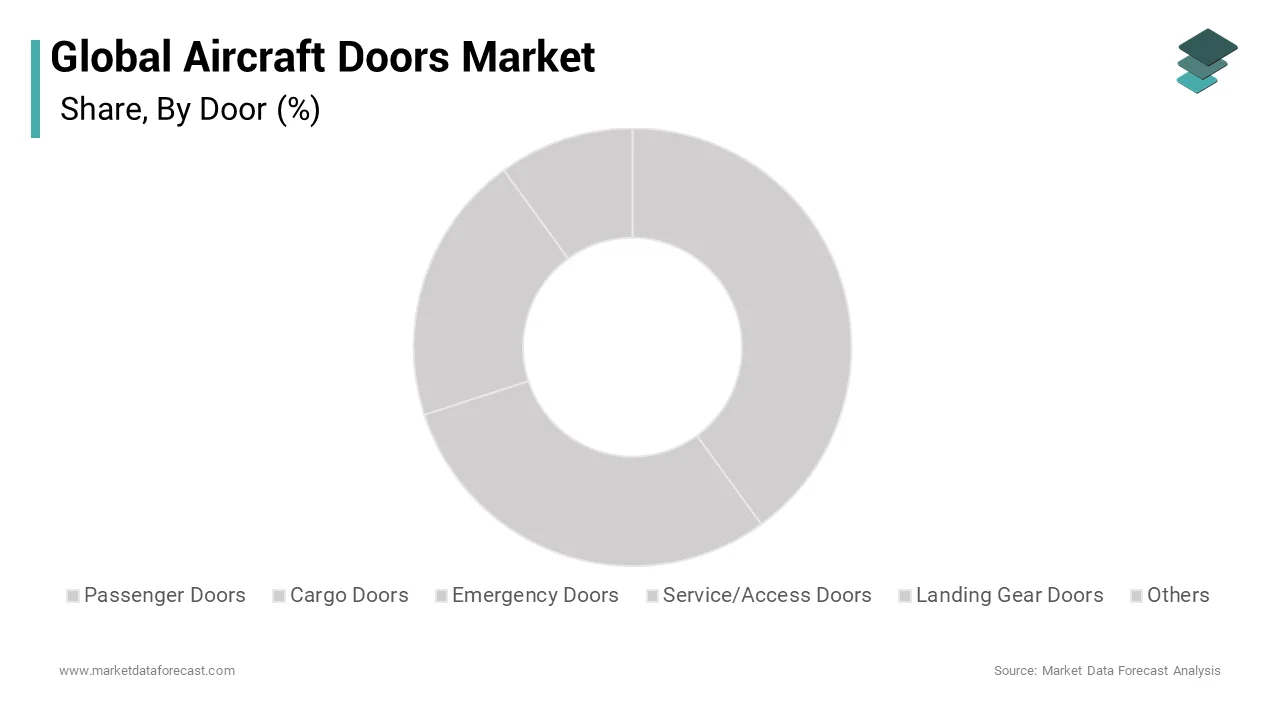
This research report on the global aircraft doors market has been segmented and sub-segmented based on door type, end-user, application, and region.
By Door Type
- Passenger Doors
- Cargo Doors
- Emergency Doors
- Service/Access Doors
- Landing Gear Doors
- Others
By End User
- OEM
- Aftermarket
By Application
- Commercial Aviation
- Narrow-Body Aircraft
- Wide-Body Aircraft
- Regional Aircraft
- Business Jets
- Very Large Aircraft
- Military Aviation
- Transport Aircraft
- Military Helicopters
By Region
- North America
- Europe
- Asia-Pacific
- South America
- Middle East & Africa