- Product Description Description
- Table of Contents TOC
- List of Table & Figure LOT
- Get Free Sample PDF Sample PDF
Market Size, 2025
$86.98 BnMarket Estimate, 2026
$94.70 BnMarket Forecast, 2034
$187.05 BnCAGR, 2026–2034
8.88%Executive Summary: Asia Pacific Biologics Market
- Market Scope: Comprehensive regional biologics market analysis covering source types, product categories, manufacturing frameworks, disease indications, and country-level leadership frameworks.
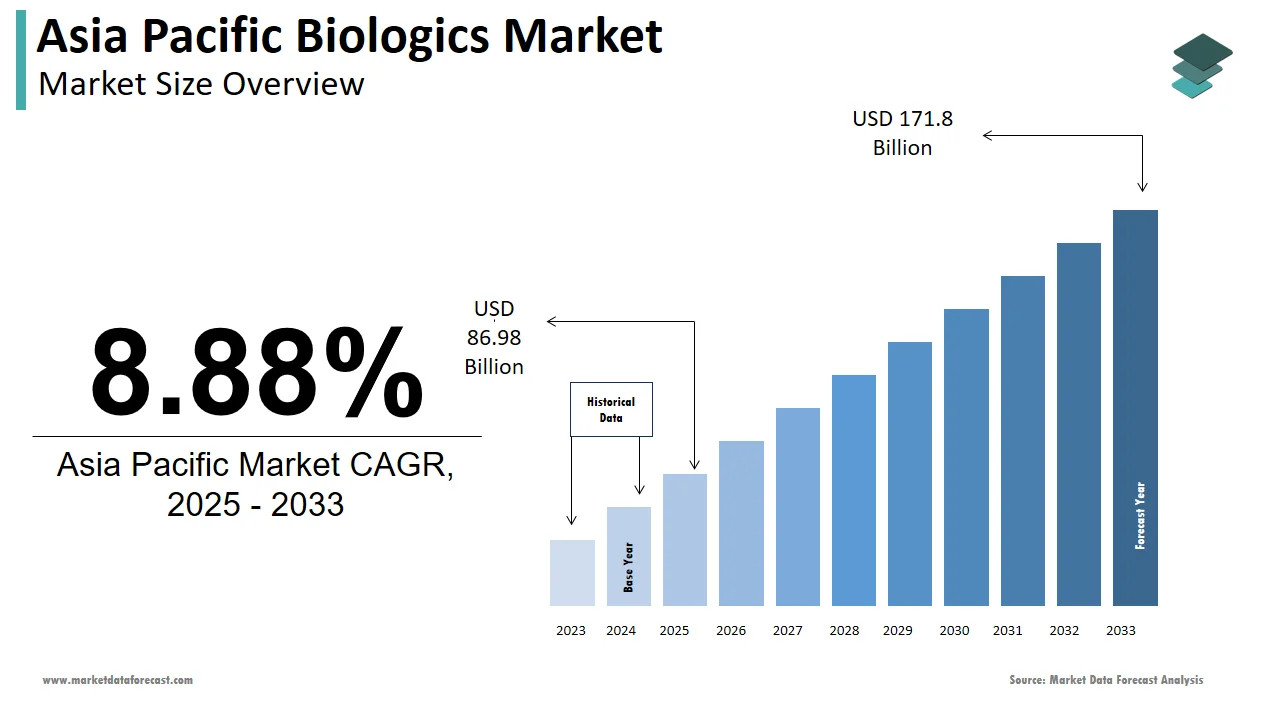
- Market Valuation: Valued at USD 86.98 billion (2025), estimated at USD 94.70 billion (2026), and projected to reach USD 187.05 billion by 2034, registering a solid CAGR of 8.88% (2026–2034).
- Primary Growth Drivers: Increasing demand for innovative therapies, rising prevalence of chronic diseases, accelerating demand for biologics outsourcing, and robust advancements in R&D activities across emerging nations like China and India.
Key Market Segment Metrics (2026–2034)
| Category | Leading Segment (2025 Position) | Fastest-Growing Segment (2026–2034) |
|---|---|---|
| By Product | Monoclonal Antibodies (leading product segment driven by high clinical adoption in oncology and chronic conditions) | Antisense, RNAi, & Molecular Therapy (expanding rapidly due to advanced genetic engineering breakthroughs) |
| By Disease Category | Oncology (holding the major share supported by rising cancer incidence rates across the region) | Immunological Disorders (driven by rising prevalence of autoimmune diseases and targeted biologic treatments) |
| By Country | China (accounted for the majority market share in 2025, backed by robust research teams and growing oncology demands) | India (one of the fastest-growing regions driven by a growing population and rising health awareness) |
Major Market Players & Market Structure
Market Structure: Highly competitive landscape characterized by major global biopharmaceutical leaders expanding their product portfolios, scaling up contract manufacturing partnerships in China and India, and navigating complex, capital-intensive regulatory and development frameworks.
Key Companies: Johnson & Johnson (J&J), F. Hoffmann-La Roche, Bristol-Myers Squibb, GlaxoSmithKline, AbbVie, Amgen, Sanofi, Eli Lilly and Company, Merck & Co., and Pfizer Inc.
Asia Pacific Biologics Market Size
The size of the Asia Pacific biologics market was valued at USD 86.98 billion in 2025. This market is expected to grow at a CAGR of 8.88% from 2026 to 2034 and be worth USD 187.05 billion by 2034, up from USD 94.70 billion in 2026.
Biologics are advanced medications made from living organisms like human cells, animals, bacteria, or yeast rather than being mixed from simple lab chemicals. Unlike standard pills that use simple chemical structures, biologic drugs use large, complex molecules designed to target exact parts of the body's immune system or cellular processes. This field represents a critical shift from small molecule drugs toward targeted biological interventions that offer higher efficacy for conditions such as cancer, autoimmune disorders, and diabetes. According to the World Health Organization, noncommunicable diseases account for nearly 90% of all deaths in the Western Pacific Region, driving clinical adoption of therapeutic monoclonal antibodies and other advanced biological drugs. As per the National Medical Products Administration, regulators approved 22 novel biological drugs in 2023, expanding local commercial distribution and clinical availability of targeted immunotherapies. According to the Ministry of Internal Affairs and Communications, citizens aged 65 or older reached a record 29.4% of the total population, escalating national market demand for rheumatology and oncology biologic therapies. Governments across India, South Korea, and Singapore are increasingly integrating biological therapies into national reimbursement schemes to improve accessibility. The region serves as a global manufacturing hub, with contract development and manufacturing organizations expanding capacity to support both domestic consumption and export demands while navigating complex cold chain logistics requirements essential for maintaining product stability and potency.
MARKET DRIVERS
Rising Prevalence Of Chronic And Noncommunicable Diseases Drives Therapeutic Demand
The escalating burden of chronic conditions, such as cancer, diabetes, and cardiovascular diseases, across nations in the region accelerates the growth of the Asia Pacific biologics market. This creates sustained clinical necessity for biologic therapies that offer superior targeting and efficacy compared to traditional small molecule drugs. According to the International Diabetes Federation, the Western Pacific Region is home to 215 million adults with diabetes, driving massive clinical adoption of advanced molecular interventions and therapeutic regimens. According to the World Cancer Research Fund, global cancer risk management and preventative health strategies prioritize mitigating lifestyle and dietary factors to curb rising tumor incidence rates. These facts directly correlate with market expansion as healthcare systems prioritize biologics for first-line treatment protocols in oncology and endocrinology. Hospitals and clinics in countries like China and India are increasingly adopting biologic standards of care supported by government initiatives to reduce mortality rates from noncommunicable diseases. The high patient volume ensures consistent utilization rates for established biologics while creating a vast addressable population for new entrants. Furthermore, the chronic nature of these conditions requires long term therapy, ensuring recurring revenue streams for manufacturers and stabilizing market growth against economic fluctuations.
Government Initiatives And Regulatory Reforms Accelerate Market Access
Strategic policy reforms and increased public healthcare spending in key economies in the region are significantly reducing barriers to entry for biologic manufacturers and improving patient access to advanced therapies in the Asia Pacific biologics market. According to the Chinese National Healthcare Security Administration, the official national reimbursement drug list was expanded to include 126 new drugs, reducing consumer out-of-pocket healthcare expenses for patient populations nationwide. The regulatory efficiencies encourage multinational pharmaceutical companies to launch new products in the region simultaneously with global releases rather than delaying entry. As per the Asian Development Bank, developing regional economies face structural public healthcare constraints and high out-of-pocket medical costs that limit patient access to high-value treatments. Additionally governments in South Korea and Australia have established dedicated funding pools for rare disease treatments further stimulating demand for specialized biologics. These proactive measures create a favorable ecosystem for market growth by aligning regulatory incentives with public health goals and ensuring financial viability for providers.
MARKET RESTRAINTS
High Manufacturing Costs And Complex Production Processes Limit Affordability
The intricate nature of biologic production involving living cell cultures, strict sterility requirements, and extensive purification steps results in substantially higher manufacturing costs compared to synthetic small molecule drugs, which hampers the growth of the Asia Pacific biologics market. This restricts affordability in price-sensitive markets. According to a study, the capital expenditure required to establish a commercial-scale biologic manufacturing facility can cost up to 800 million dollars, requiring four to five years from groundbreaking to the first validated batch. As per the International Society for Pharmacoeconomics and Outcomes Research, biological therapies and targeted immunotherapies place a substantial economic footprint on national health systems due to pricing differentials that dwarf traditional chemical drug treatments. The cost disparity limits widespread adoption in countries like Indonesia and Vietnam, where out-of-pocket expenditure constitutes a notable portion of total health spending. Manufacturers face challenges in achieving economies of scale due to batch variability and lower yields compared to chemical synthesis. According to sources, large-molecule biopharmaceutical manufacturers experience variable product titers and contamination rates that escalate upstream and downstream processing losses during standard batch operations. These financial constraints force many healthcare providers to ration access or delay the introduction of newer biologics, thereby slowing market penetration despite clinical benefits.
Inadequate Cold Chain Infrastructure Compromises Product Integrity
Biologics require stringent temperature-controlled storage and transportation, typically between 2 and 8 degrees Celsius or frozen conditions, to maintain stability, limiting the expansion of the Asia Pacific market. This requirement makes them highly vulnerable to supply-chain disruptions in regions with underdeveloped logistics infrastructure. According to the World Health Organization, more than 50% of vaccines are wasted around the world every year due to cold chain disruptions, inadequate temperature control, and shipment-related issues. As per the ASEAN Pharmaceutical Regulatory Policy framework, distribution networks across developing Southeast Asian territories lack widespread infrastructure for integrated temperature mapping and continuous data logging. The infrastructure gap is particularly acute in rural areas of India and the Philippines, where last-mile delivery challenges expose products to ambient temperatures that degrade protein structures and render them ineffective. According to the Parenteral Drug Association, temperature deviations during cold chain logistics precipitate immediate quality investigations, cargo quarantines, and administrative product rejections at clinical receiving sites. Manufacturers must invest heavily in specialized packaging and real-time tracking technologies, increasing overall distribution costs. The lack of standardized cold chain protocols across borders further complicates regional trade, forcing companies to limit distribution to major urban centers with reliable infrastructure, thereby excluding large rural patient populations from accessing life-saving therapies.
MARKET OPPORTUNITIES
Expansion Of Biosimilar Adoption Creates Cost-Effective Alternatives
The expiration of patents for major blockbuster biologics is driving rapid growth in the biosimilar segment, which is likely to propel the Asia Pacific biologics market. This trend offers affordable alternatives that expand patient access while maintaining therapeutic equivalence to originator products. According to IQVIA, biotech medicines will represent 35% of global pharmaceutical spending through 2027, driven by breakthrough cell and gene therapies along with a maturing biosimilar segment. South Korea has emerged as a global leader in biosimilar development. As per studies, South Korea has emerged as a global leader in biosimilar development, with companies like Celltrion and Samsung Bioepis matching each other at 10 FDA-approved antibody biosimilars to lead the U.S. and European markets. According to the National Institutes of Health research database, biosimilars typically launch with initial price discounts of 15% to 40% compared to their reference products due to the intense technical complexity and development costs involved. Governments in China and Thailand are actively encouraging biosimilar uptake through preferential reimbursement policies, accelerating market transition. This shift not only alleviates healthcare budget pressures but also stimulates local biotechnology innovation and manufacturing expertise, positioning the region as a global hub for affordable biological therapies.
Integration Of Artificial Intelligence In Drug Discovery Accelerates Development
The application of artificial intelligence and machine learning algorithms in biologic drug discovery is expected to fuel the growth of the Asia Pacific biologics market. This significantly reduces development timelines and improves success rates for novel therapeutic candidates in the region. According to Nature portfolio reports, artificial intelligence models predict three-dimensional protein structures from amino acid sequences to accelerate target identification and structure-based drug design. As per the Agency for Science, Technology and Research, institutional frameworks like the BioPIPS consortium integrate multinational pharma leaders to transform the existing base of biologics manufacturing. According to research, AI-native biotechnology firms utilize generative platforms to progress entirely AI-designed molecules through Phase II efficacy testing for idiopathic pulmonary conditions. As per sources, artificial intelligence integration in early drug research and development yields time and cost savings of 25% to 50% up to the preclinical stage. The technological advantage allows regional players to compete globally by bringing innovative biologics to market faster and at lower costs. Furthermore, AI facilitates personalized medicine approaches by analyzing patient data to tailor biologic therapies, enhancing efficacy and minimizing adverse events, which strengthens market appeal and clinical adoption.
MARKET CHALLENGES
Stringent Regulatory Heterogeneity Across Countries Complicates Compliance
The lack of harmonized regulatory frameworks across countries in the region creates significant compliance burdens for manufacturers in the Asia Pacific biologics market. This requires separate approvals, varying documentation standards, and distinct clinical trial requirements for each market. According to the Pharmaceutical Research and Manufacturers of America, member companies encounter persistent market access barriers and delayed regulatory approvals across emerging Asian healthcare sectors due to distinct localization data requirements. As per the National Medical Products Administration, foreign biopharmaceutical developers face evolving technical evaluation frameworks for therapeutic proteins, necessitating rigorous clinical compatibility data to secure local market commercialization. According to the Asia-Pacific Economic Cooperation, regulatory non-convergence across regional drug authorities extends timeline uncertainty for high-value molecular therapies, shifting institutional corporate investment toward markets with standardized approval workflows. Smaller biotechnology firms often lack resources to manage multi-jurisdictional submissions, limiting their ability to commercialize innovations beyond domestic borders. This fragmentation impedes regional trade and economies of scale, forcing companies to prioritize large markets like China and Japan while neglecting smaller but growing economies. Harmonization efforts through the ASEAN Pharmaceutical Product Working Group have made limited progress, leaving significant gaps that hinder efficient market access and increase administrative overhead for industry participants.
Intellectual Property Enforcement Issues Deter Innovation Investment
Inconsistent enforcement of intellectual property rights across various jurisdictions in the region poses significant risks to biologic innovators in the Asia Pacific market. These companies rely on patent protection to recoup substantial research and development investments. According to the United States Trade Representative, trading partners in the Asia-Pacific region remain on the Special 301 Priority Watch List and Watch List due to structural deficiencies in protecting and enforcing intellectual property rights, including a lack of effective mechanisms for resolving patent disputes prior to the marketing approval of generic or biosimilar products. As per the European Chamber of Commerce in China, foreign enterprises encounter operational risks related to intellectual property leakage and administrative enforcement gaps, impacting long-term commercial research and development investments. According to the World Intellectual Property Organization, global biopharmaceutical patent filings have surged alongside rising commercial competition in the life sciences sector, driving legal and administrative disputes over proprietary large-molecule technologies. Weak enforcement discourages multinational companies from launching cutting-edge therapies early in certain markets, fearing premature competition from local imitators. This environment forces innovators to delay launches or withhold advanced technologies, impacting patient access to the latest treatments. Strengthening legal frameworks and improving judicial expertise in biotech patent law are critical to fostering an innovation-friendly ecosystem that attracts long-term investment and ensures fair competition between originators and biosimilar manufacturers.
REPORT COVERAGE
| REPORT METRIC | DETAILS |
| Market Size Available | 2025 to 2034 |
| Base Year | 2025 |
| Forecast Period | 2026 to 2034 |
| Segments Covered | By Source, Product, Biologics Manufacturing Type, Disease Category, and Country |
| Various Analyses Covered | Global, Regional, and Country-Level Analysis, Segment-Level Analysis, Drivers, Restraints, Opportunities, Challenges; PESTLE Analysis; Porter’s Five Forces Analysis, Competitive Landscape, Analyst Overview of Investment Opportunities |
| Countries Covered |
|
| Market Leaders Profiled | Johnson & Johnson (J&J), F Hoffmann-La Roche, Samsung Bioepis, Bristol-Myers Squibb, GlaxoSmithKline, AbbVie, Amgen, Takeda Pharmaceutical Company, Sanofi, Eli Lilly and Company, Merck & Co., Beigene, and Pfizer Inc. |
SEGMENTAL ANALYSIS
By Source Insights
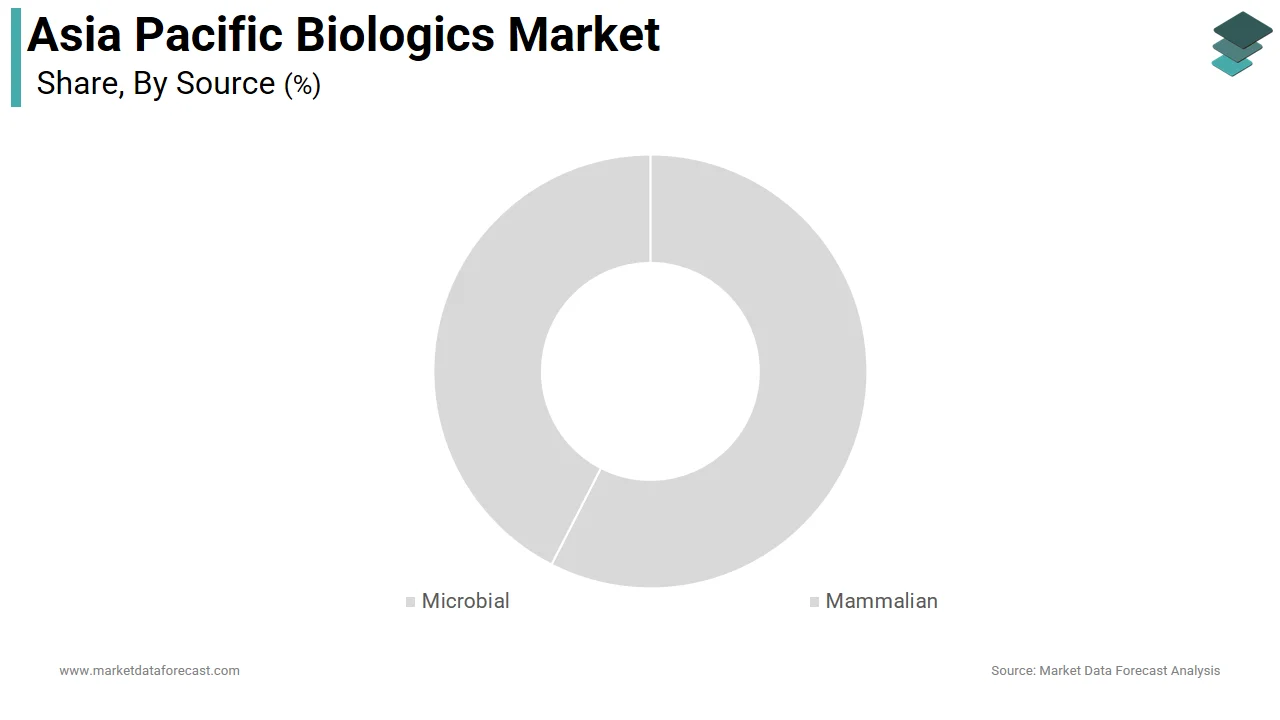
In 2025, the mammalian source segment held the majority share in the Asia Pacific biologics market because mammalian cell lines, such as Chinese Hamster Ovary cells, are uniquely capable of performing complex post-translational modifications, including glycosylation, which are essential for the stability, efficacy, and safety of therapeutic proteins like monoclonal antibodies.
Mammalian cells provide the necessary biological machinery to fold complex proteins correctly and add human-like sugar structures that prevent immune reactions and ensure long circulation times in the human body, making them indispensable for high-value therapeutics. According to Nature Biotechnology, Chinese hamster ovary cell lines serve as the prominent manufacturing host system for over 70% of currently approved recombinant therapeutic proteins in the global biopharmaceutical landscape. As per the European Medicines Agency guidelines, comprehensive structural characterization of post-translational modifications remains critical during clinical evaluations to assess protein heterogeneity and potential human immunogenicity risks. According to the Ministry of Food and Drug Safety, modern biotherapeutic applications require optimized eukaryotic transfection and culture strategies to secure highly reproducible macromolecular validation across regional medicine frameworks. The technical superiority ensures that despite higher costs, mammalian sources remain the gold standard for producing blockbuster drugs like Humira and Keytruda, which drive significant revenue in the region. The ability to scale these processes using single-use bioreactors has further cemented their dominance by reducing contamination risks and improving batch consistency across large manufacturing facilities in China and South Korea.
Decades of investment in mammalian cell culture technologies have created a robust ecosystem of contract development and manufacturing organizations, equipment suppliers, and skilled personnel in Asia Pacific that lowers barriers to entry for new biologic projects. According to McKinsey Company analysis, contract development and manufacturing organizations accelerate institutional clinical pipelines by scaling complex biologics from initial engineering up to high-volume commercial production phases. As per the National Medical Products Administration regulatory listings, approved therapeutic biosimilars span multiple complex structural classes to treat targeted oncological, rheumatological, and immunological indications across domestic patient populations. According to BioPlan Associates tracking reports, regional biopharmaceutical capacity growth drives global machinery acquisition trends as emerging manufacturers upgrade infrastructure to satisfy international quality specifications. The entrenched infrastructure creates a virtuous cycle where availability of expertise and facilities encourages more companies to choose mammalian sources, ensuring continued market leadership. Furthermore, international partnerships between Western pharmaceutical giants and Asian manufacturers often stipulate mammalian production to maintain global supply chain uniformity, reinforcing the segment's entrenched position.
The microbial source segment is estimated to register the fastest CAGR of 11.5% during the forecast period due to its cost-effectiveness, rapid fermentation cycles, and suitability for producing simpler proteins, peptides, and enzymes that do not require complex glycosylation.
Microbial systems such as Escherichia coli and Pichia pastoris offer significantly lower production costs and faster turnaround times compared to mammalian cells, making them ideal for high-volume, low-margin products like insulin growth hormones and industrial enzymes. According to studies, bacterial and yeast expression platforms mitigate production complexities by offering rapid cellular duplication times and simplified downstream purification mechanics. Moreover, as per the World Health Organization, global access to essential diabetes care requires sustainable procurement policies and affordable medical delivery channels to reduce severe financial constraints on vulnerable patient populations. According to the National Institutes of Health database, high-density microbial fermentation systems enhance protein accumulation and product yield parameters across diverse biotechnology production methodologies. The economic advantage drives adoption in emerging economies like India and Vietnam, where manufacturers focus on affordable biologics for large patient populations. Additionally, the simplicity of downstream processing for microbial products reduces facility complexity and energy consumption, aligning with sustainability goals and regulatory pressures to lower carbon footprints in pharmaceutical manufacturing.
Recent breakthroughs in genetic engineering and synthetic biology have enabled microbial systems to produce more complex molecules, including fusion proteins and non-glycosylated antibodies, expanding their utility beyond simple peptides into higher-value therapeutic areas. According to Nature Reviews Drug Discovery, advanced molecular engineering applications utilize programmable endonuclease platforms to modify target genomes, advancing functional host cell line modification and metabolic pathways. As per the Japan Science and Technology Agency, domestic academic and industrial consortiums pioneer specialized microbial cultivation models to optimize high-affinity macromolecular synthesis for experimental therapeutic evaluation. According to the European Pharmaceutical Review, biotechnology enterprises integrate scalable single-use bioreactors and modular bioprocessing designs to provide agile manufacturing turnarounds for initial therapeutic evaluation phases. These technological advancements broaden the addressable market for microbial sources, enabling them to compete in segments previously dominated by mammalian cells. Furthermore, the ability to rapidly iterate designs in microbial systems accelerates drug discovery timelines, providing a competitive edge for companies developing personalized medicines and rare disease treatments in the fast-paced Asia Pacific innovation landscape.
By Product Insights
The monoclonal antibodies segment was the largest in 2025 and occupied a commanding share of the Asia Pacific biologics market. This supremacy was supported by its widespread application in treating cancer, autoimmune diseases, and chronic inflammatory conditions, where these therapies offer targeted therapy with fewer side effects than conventional chemotherapy.
Monoclonal antibodies have revolutionized treatment protocols for major diseases prevalent in Asia, such as lung, breast, and liver cancers, leading to their designation as first-line therapies in national clinical guidelines. According to the International Agency for Research on Cancer, Asia accounts for more than half of all global cancer cases and deaths, reflecting its massive population and intensifying the regional burden of malignant diseases. As per the Chinese Society of Clinical Oncology guidelines, specialized multi-center trials focus on integrating targeted checkpoint blockade to evaluate clinical responses in advanced solid tumor cohorts. According to studies, the Japanese pharmaceutical market demands high-volume tracking across institutional channels to optimize inventory procurement for chronic care therapeutics. The superior clinical outcomes associated with these drugs justify their higher cost, encouraging healthcare providers to prioritize their adoption. Furthermore, ongoing research continues to expand indications for existing antibodies into new disease areas, sustaining long-term growth. The presence of numerous biosimilars entering the market also increases accessibility, allowing broader patient populations to benefit from these life-saving treatments, thereby solidifying the segment's market leadership.
A vibrant pipeline of next-generation monoclonal antibodies, including bispecific antibodies and antibody-drug conjugates, ensures continuous innovation and market expansion in the Asia Pacific region. According to Evaluate Ltd tracking, global macromolecular pipelines emphasize multi-specific binding targets to disrupt oncogenic cellular pathways during advanced development phases. As per the Ministry of Food and Drug Safety, South Korean health regulators enforce rigorous evaluation protocols for biological products to ensure structural safety and identity prior to local commercialization. According to Clarivate Analytics, life sciences venture funding remains concentrated on validated biological technologies that mitigate standard early-stage manufacturing risks. The novel agents offer improved pharmacokinetics and reduced immunogenicity, addressing limitations of first-generation antibodies. Pharmaceutical companies are increasingly collaborating with academic institutions in the region to accelerate development, leveraging local genetic data to design antibodies tailored to Asian patient profiles. This localized approach enhances efficacy and safety profiles, further driving adoption. The continuous influx of new products prevents market saturation and maintains high growth momentum as each launch captures share from older standards of care.
The antisense RNAi and molecular therapy segment is anticipated to witness the fastest CAGR of 14.2% from 2026 to 2034, owing to its potential to treat rare genetic disorders and previously undruggable targets by silencing disease-causing genes at the mRNA level.
RNA interference and antisense oligonucleotide therapies offer curative potential for rare genetic diseases that lack effective treatments, creating a high-value niche market with limited competition and premium pricing power. According to the National Organization for Rare Disorders, patient advocacy frameworks emphasize early genetic diagnostic access to optimize long-term clinical management strategies. As per the Pharmaceuticals and Medical Devices Agency regulatory listings, orphan drug designations incentivize therapeutic research to treat conditions with restricted domestic prevalence. Moreover, these therapies address the root cause of diseases rather than just symptoms, offering transformative benefits that justify high costs. Success stories like patisiran for amyloidosis have validated the technology, encouraging further investment. As diagnostic capabilities improve in countries like India and China, more patients are identified, creating a growing addressable population for these specialized treatments.
Innovations in lipid nanoparticles and conjugation technologies have overcome historical challenges related to stability and cellular uptake of RNA-based therapies, enabling systemic administration and broader therapeutic applications. According to Nature Nanotechnology, engineered nanoparticle formulations optimize macromolecular encapsulation and intracellular translocation across targeted cellular barriers. As per the Agency for Science, Technology and Research, regional clinical translation ecosystems support early-stage therapeutic asset development through specialized medical engineering training programs. According to Arrowhead Pharmaceuticals, technical validation of targeted gene-silencing molecules requires extended multi-phase human clinical evaluation to verify safety, baseline pharmacokinetics, and therapeutic efficacy. The technical improvements reduce manufacturing complexity and cost, making therapies more commercially viable. Regulatory agencies are adapting guidelines to accommodate these novel modalities, providing clarity for developers. The ability to target intracellular proteins expands the druggable genome significantly, opening opportunities for treating cardiovascular and metabolic diseases prevalent in Asia. This technological maturation positions the segment for sustained rapid growth as more candidates enter late-stage trials.
By Disease Category Insights
The oncology segment led the Asia Pacific biologics market and captured a significant share in 2025. This leading position was attributed to the high incidence of cancer in the region and the superior efficacy of biologic therapies, such as monoclonal antibodies and immune-checkpoint inhibitors, in improving survival rates.
The demographic shift toward an older population, combined with lifestyle changes, has led to a surge in cancer cases across Asia Pacific, necessitating advanced biological treatments that offer better outcomes than traditional chemotherapy. According to the World Health Organization, noncommunicable diseases are the leading cause of death in the Western Pacific Region, where cancer cases are expected to increase from 4.5 million new cases in 2012 to 6.4 million in 2025. As per the Chinese National Cancer Center, lung and liver cancer remain the leading malignancies with very poor five-year survival rates of 16.1% and 10.1%, respectively. According to the Australian Institute of Health and Welfare, almost one in two Australian men and women will be diagnosed with cancer by the age of 85. Healthcare systems are prioritizing funding for these therapies due to their proven ability to extend life and improve quality of life. The emotional and social impact of cancer further drives patient willingness to seek advanced treatments even at high costs. Government screening programs are identifying cases earlier when biologic therapies are most effective, further boosting utilization rates.
Governments across Asia Pacific are increasingly including high-cost oncology biologics in national insurance schemes, reducing financial barriers and enabling broader patient access to life-saving treatments. As per the Japanese Ministry of Health, Labour and Welfare, medical cost settings and standard regimens as of April 2023 are utilized to determine the value and cost-effectiveness of perioperative immune checkpoint inhibitors for cancer patients. As per the Ministry of Health and Family Welfare of India, the government expands access to critical medical care through price-capping mechanisms on essential oncology therapies. According to the National Healthcare Security Administration of China, out-of-pocket medical expenditure drops as oncology therapies are progressively added to the National Reimbursement Drug List. The policy support stimulates market growth by converting latent demand into actual sales. Hospitals are incentivized to stock these drugs due to guaranteed payment reducing inventory risks. Pharmaceutical companies are responding by launching patient assistance programs and negotiating volume-based discounts with payers. The combination of clinical necessity and financial support creates a robust environment for oncology biologics to maintain their market leadership.
The immunological disorders segment is on the rise and is expected to be the fastest-growing segment in the market, witnessing a CAGR of 13.8% over the forecast period. This swift expansion is propelled by increasing diagnosis of autoimmune conditions such as rheumatoid arthritis, psoriasis, and inflammatory bowel disease and the availability of highly effective biologic modifiers.
Growing medical awareness and improved diagnostic capabilities are identifying millions of previously undiagnosed patients with autoimmune diseases in Asia Pacific, creating a new wave of demand for biologic therapies. According to the World Health Organization, the crude prevalence of rheumatoid arthritis varies widely globally, prompting localized civil society networks to provide diagnostic support packages to low-income populations. As per the Korean Association for the Study of the Liver, newly established clinical practice guidelines outline specific criteria for synthesized diagnostic findings to manage rare occurrences of autoimmune hepatitis. According to the World Health Organization, global consumption shifts from classic topical agents to systemic biological solutions for moderate-to-severe psoriasis, creating market expansion independent of any single corporation's internal regional metrics. Early diagnosis allows for timely intervention, preventing irreversible joint or organ damage, which motivates patients to adhere to biologic regimens. Digital health platforms are also facilitating remote monitoring and diagnosis, reaching rural populations. This uncovering of hidden demand provides a substantial growth engine for the segment as treatment rates converge with Western levels.
The entry of affordable biosimilars for key immunological biologics such as adalimumab and infliximab is making long-term treatment feasible for a larger portion of the population in price-sensitive markets. According to the Organisation for Economic Co-operation and Development, the introduction of biosimilars increases the total consumption of critical anti-tumor necrosis factor therapies in Australia, despite volume penetration for specific complex sub-categories remaining under 5%. In addition, as per the Chinese National Healthcare Security Administration, regular updates are implemented for the national medical insurance directory to incorporate targeted rheumatoid arthritis treatments and prioritize high-demand therapeutics. Lower costs enable patients to continue therapy without interruption, improving clinical outcomes and reinforcing physician confidence in prescribing. Manufacturers are investing in patient support programs to ensure adherence, further sustaining volume growth. The competitive pricing environment encourages wider use in second-line and even first-line settings, accelerating market expansion for immunological biologics.
COUNTRY LEVEL ANALYSIS
China Biologics Market Analysis
China was dominant as well as the fastest-growing country in the Asia Pacific biologics market and accounted for a substantial share in 2025. The Chinese market dominated because of its massive population, rising healthcare expenditure, and aggressive government policies to promote domestic innovation and reduce reliance on imports. According to the Chinese National Medical Products Administration, innovative drug approvals expanded heavily with a total of 167 innovative drugs approved between 2018 and 2024, of which biologics represented 31.1 percent. Moreover, as per the State Council of the People's Republic of China, the national industrial strategy targets 70 percent domestic innovation by 2025 within the biopharma priority sector, while the Healthy China 2030 blueprint maps out a broader roadmap to grow the total health industry to 2 trillion dollars. According to the National Medical Products Administration of China, sales projections for the country's biologic drug market dictate a five-fold expansion overall, alongside a seven-fold increase in monoclonal antibodies since 2011. The country serves as a major manufacturing hub with significant capacity additions by both multinational and local players. Regulatory reforms such as the acceptance of foreign clinical trial data have accelerated the launch of global innovations. However, intense competition among domestic biosimilar manufacturers is driving down prices, requiring companies to differentiate through novel mechanisms of action. The sheer scale of the patient population ensures that even niche indications can support viable commercial operations, making China a critical market for global biologics strategies.

Japan Biologics Market Analysis
Japan is a well-established player within the Asia Pacific biologics market. This leading posture is sustained by an elderly population, significant healthcare funding, and a clear market bias toward advanced, high-quality treatments. According to the Ministry of Health, Labour and Welfare of Japan, public healthcare infrastructure and national insurance architectures support high-value medical access, positioning Japan as the third-largest pharmaceutical market globally behind the United States and China. Also, as per the Pharmaceuticals and Medical Devices Agency of Japan, the Sakigake designation system functions to prioritize innovative therapies that are expected to be first approved in Japan based on early clinical data. According to the Ministry of Health, Labour and Welfare of Japan, the national market share for biosimilar retail volume in the region is approximately 1.1 percent despite global expansion in related therapeutic spending. Local companies are major global players driving innovation in antibody-drug conjugates and cell therapies. The universal health insurance system ensures broad access but imposes strict price controls that pressure margins. Manufacturers must demonstrate superior clinical value to justify premium pricing. The market is shifting toward outpatient administration of biologics to reduce hospital burden. Despite slow population growth, the high prevalence of age-related diseases sustains steady demand. Regulatory stability and high intellectual property protection make Japan an attractive market for long-term investment.
India Biologics Market Analysis
India is emerging as a key player in the Asia Pacific biologics market. This emergence is driven mainly by its position as a global hub for biosimilar manufacturing and a growing domestic market for affordable biologic therapies. According to the Department of Pharmaceuticals of India, domestic manufacturers provide about 60 percent of vaccine supplies to the United Nations Children's Fund and meet 40 to 70 percent of global demand for specific basic immunizations. Besides, as per the Ministry of Chemicals and Fertilizers of India, prominent private biopharmaceutical enterprises expand regional therapeutic pipelines to target diversified international export networks. According to the Department of Pharmaceuticals of India, strategic sector initiatives like the Promotion of Research and Innovation in Pharma scheme target infrastructure enhancements to boost the long-term output of the national biopharma ecosystem. Domestic demand is rising due to increasing prevalence of diabetes and cancer, but price sensitivity remains a major constraint limiting uptake of originator biologics. The government’s push for universal health coverage is gradually improving access to essential biologics. Regulatory standards are aligning with global norms, enhancing the credibility of Indian manufacturers. However, infrastructure challenges and cold chain limitations hinder distribution in rural areas. The focus remains on volume-driven growth through biosimilars rather than high-margin innovative drugs. Strategic partnerships with global firms are helping Indian companies gain technology transfer and market access.
South Korea Biologics Market Analysis
South Korea holds a major position in the Asia Pacific biologics market. It is a leader in biosimilar development and a sophisticated consumer of innovative biologics, supported by strong government R&D funding. According to the Korean Ministry of Science and ICT, national innovation architectures prioritize deep-tech frameworks under the Five-Year Comprehensive Plan for the Development and Support of the Bio-Pharmaceutical Industry to expand long-term biotech venture creation. Also, as per the Ministry of Food and Drug Safety of South Korea, regional manufacturing leaders secure dominant market footprints by capturing over 50 percent combined market share across Europe's six major blockbuster biosimilar categories. According to the Korea International Trade Association, international export trajectories for specialized clinical segments maintain long-term upward momentum, positioning the domestic industry as a core regional manufacturing hub. Domestically, the National Health Insurance Service covers a wide range of biologics, ensuring high patient access rates for cancer and autoimmune treatments. The aging population drives demand for chronic disease management therapies. Regulatory pathways are efficient and transparent, encouraging foreign companies to launch products early. The country boasts world-class manufacturing facilities with high compliance standards. Collaboration between academia and industry accelerates translation of research into commercial products. However, the small domestic market size forces companies to pursue global expansion early in the development cycle. Intellectual property protection is strong, attracting foreign investment.
Australia Biologics Market Analysis
Australia grew steadily in the Asia Pacific biologics market due to a robust public healthcare system and high standards for clinical efficacy and safety. According to the Australian Government Department of Health and Aged Care, biological medicines make up a rapidly expanding segment of the Pharmaceutical Benefits Scheme, tracking historically at 15 percent of total scheme spending. The Therapeutic Goods Administration maintains rigorous assessment processes ensuring only high-quality biologics reach the market. In addition, the Pharmaceutical Benefits Scheme negotiates prices aggressively, ensuring affordability but limiting profit margins for manufacturers. High prevalence of skin cancer and autoimmune diseases drives demand for specific biologics. The country serves as a strategic entry point for global companies testing Asian market viability. Strong intellectual property laws protect innovation. However, the small population limits market size compared to China or Japan. Patients have high expectations for access to the latest therapies, creating pressure on government funding. Remote geography poses logistical challenges for cold chain distribution. Overall, the market offers steady growth with a predictable regulatory environment.
COMPETITIVE LANDSCAPE
The competitive landscape of the Asia Pacific Biologics Market features intense rivalry among multinational pharmaceutical giants, established regional players, and emerging biotechnology startups striving to capture growing demand for innovative therapies. Major participants compete primarily on scientific innovation, pipeline depth, and manufacturing efficiency while navigating diverse regulatory environments across different countries. Price competition is becoming increasingly significant, particularly in the biosimilar segment where local manufacturers leverage cost advantages to challenge global originators. Differentiation relies heavily on clinical efficacy, safety profiles, and the ability to secure reimbursement from national health insurance schemes. Strategic alliances and licensing agreements are common as companies seek to share development risks and access new markets quickly. Intellectual property protection remains a critical factor influencing competitive dynamics, with ongoing disputes over patent validity and market exclusivity. The rise of contract development and manufacturing organizations provides smaller firms with resources to compete effectively against larger incumbents. Government policies promoting local production further intensify competition by favoring domestic companies in procurement decisions. Continuous investment in research and development is essential to maintain technological leadership and address evolving patient needs in this rapidly expanding market.
KEY MARKET PLAYERS
The leading companies operating in the Asia Pacific biologics market include:
- Johnson & Johnson (J&J)
- Hoffmann-La Roche
- Samsung Bioepis
- Bristol Myers Squibb
- GlaxoSmithKline
- AbbVie
- Amgen
- Takeda Pharmaceutical Company
- Sanofi
- Eli Lilly and Company
- Merck & Co., Inc.
- BeiGene
- Pfizer Inc.
TOP PLAYERS IN THE MARKET
- Takeda Pharmaceutical Company maintains a strong presence in the Asia Pacific biologics market through its extensive portfolio of plasma-derived therapies and innovative monoclonal antibodies. The company recently expanded its manufacturing capabilities in Singapore to support regional demand for high-quality biological products. Takeda actively collaborates with local research institutions to develop treatments tailored to Asian genetic profiles, enhancing clinical efficacy. Their strategic focus on rare diseases and oncology drives significant investment in novel biologic pipelines. By strengthening supply chain resilience and adhering to strict regulatory standards, Takeda ensures consistent product availability across diverse markets. The company also engages in patient support programs to improve access and adherence to complex biologic therapies throughout the region.
- Samsung Bioepis has emerged as a leading developer and manufacturer of biosimilars in the Asia Pacific region, leveraging advanced bioprocessing technologies and robust clinical development capabilities. The company recently secured approvals for multiple biosimilar candidates in key markets, including South Korea and China, expanding its commercial footprint. Samsung Bioepis focuses on producing high-quality, affordable alternatives to originator biologics for autoimmune and oncology indications. Strategic partnerships with global pharmaceutical companies facilitate international distribution and technology exchange. The company invests heavily in state-of-the-art manufacturing facilities to ensure scalability and compliance with international standards. Their commitment to innovation and cost efficiency strengthens their position as a preferred partner for healthcare systems seeking sustainable biologic solutions.
- Beigene is a prominent biotechnology company in China specializing in the discovery, development, and commercialization of innovative cancer therapies, including monoclonal antibodies and small molecule drugs. The company recently launched several novel biologics in domestic and international markets, demonstrating its rapid growth trajectory. Beigene collaborates with global partners like Amgen to co-develop and co-commercialize oncology products, enhancing its pipeline depth. Their integrated platform combines internal research with external collaborations to accelerate drug discovery. Beigene expands its manufacturing infrastructure to meet increasing demand for targeted cancer therapies. By focusing on unmet medical needs in oncology, the company addresses critical health challenges in the Asia Pacific region while building a sustainable global biopharmaceutical business model.
TOP STRATEGIES USED BY KEY MARKET PARTICIPANTS
Key players in the Asia Pacific Biologics Market prioritize strategic collaborations with local biotechnology firms to accelerate drug discovery and navigate complex regulatory landscapes efficiently. Companies invest heavily in expanding manufacturing capacities within the region to reduce production costs and mitigate supply chain risks associated with global disruptions. Focus on developing biosimilars allows participants to offer affordable alternatives to expensive originator drugs, thereby increasing patient access and market penetration. Adoption of advanced technologies such as artificial intelligence and single-use bioreactors enhances operational efficiency and product quality. Regulatory harmonization efforts are supported through active engagement with government bodies to streamline approval processes. Diversification of product portfolios into rare diseases and personalized medicine segments helps capture high value niche markets and sustain long term growth momentum.
MARKET SEGMENTATION
This Asia Pacific biologics market research report is segmented and sub-segmented into the following categories.
By Source
- Microbial
- Mammalian
- Others
By Product
- Monoclonal Antibodies
- Vaccines
- Recombinant Proteins
- Antisense, RNAi, & Molecular Therapy
- Others
By Biologics Manufacturing
- Outsourced
- In-house
By Disease Category
- Oncology
- Infectious Diseases
- Immunological Disorders
- Cardiovascular Disorders
- Hematological Disorders
- Others
By Country
- India
- China
- Japan
- South Korea
- Australia
- New Zealand
- Thailand
- Malaysia
- Vietnam
- Philippines
- Indonesia
- Singapore
- Rest Of APAC