- Product Description Description
- Table of Contents TOC
- List of Table & Figure LOT
- Get Free Sample PDF Sample PDF
Market Size, 2025
$0.71 BnMarket Estimate, 2026
$0.81 BnMarket Forecast, 2034
$2.37 BnCAGR, 2026–2034
14.32%Executive Summary: Asia-Pacific CAR T-Cell Therapy Market
- Market Scope: Comprehensive market analysis of the Asia-Pacific chimeric antigen receptor (CAR) T-cell therapy sector covering target antigens (CD19, BCMA, CD20, HER2, etc.), application indications (multiple myeloma, leukemias, lymphomas), product types (autologous and allogeneic), approved therapies, end-user settings, and country-level dynamics across China, India, Japan, and Southeast Asian nations.
- Market Valuation: Valued at USD 0.71 billion in 2025, estimated at USD 0.81 billion in 2026, and projected to reach USD 2.37 billion by 2034, registering a strong CAGR of 14.32% (2026–2034).
- Primary Growth Drivers: Escalating incidence of cancer and chronic diseases alongside an aging regional demographic; heavy government funding for biomedical research; expansion of advanced hospital infrastructure; and thousands of active clinical trials conducted across the region.
Key Market Segment Metrics (2026–2034)
| Category | Leading Segment / Position | Growth Dynamics |
|---|---|---|
| By Product | Autologous (historically commands high adoption due to established commercial approvals and personalized cell processing frameworks) | Allogeneic (off-the-shelf developments growing rapidly to reduce manufacturing turnaround times) |
| By Target Antigen | CD19 & BCMA (lead commercial indications for B-cell malignancies and multiple myeloma) | Expanding pipeline exploring novel solid tumor targets (EGFRvIII, HER2, MESO) |
| By End-User | Hospitals & Cancer Research Centers (serve as the primary administration and clinical trial hubs) | Strong collaboration with pharmaceutical and biotech companies |
| By Country | China (leads regional market share backed by world-class hospital infrastructure and extensive clinical trial volume addressing millions of cancer cases) | India follows closely as a major hub due to rising cancer prevalence and expanding domestic clinical pipelines, with Japan offering significant growth opportunities. |
Major Market Players & Market Structure
Market Structure: Highly specialized and competitive biotechnology landscape featuring global pharma leaders alongside pioneering regional cell therapy developers scaling clinical trials and regulatory approvals.
Key Companies: Mustang Bio, Inc., Celgene Corporation, Bluebird Bio, Inc., CARsgen Therapeutics, Ltd., Novartis International AG, Legend Biotech, Sorrento Therapeutics Inc., Kite Pharma, Inc., Immune Therapeutics, Bellicum Pharmaceuticals, Inc., and Pfizer, Inc.
Asia Pacific CAR T Cell Therapy Market Size
The size of the Asia Pacific CAR T Cell therapy market was worth USD 0.71 billion in 2025. The Asia Pacific market is anticipated to grow at a CAGR of 14.32% from 2026 to 2034 and be worth USD 2.37 billion by 2034, up from USD 0.81 billion in 2026.
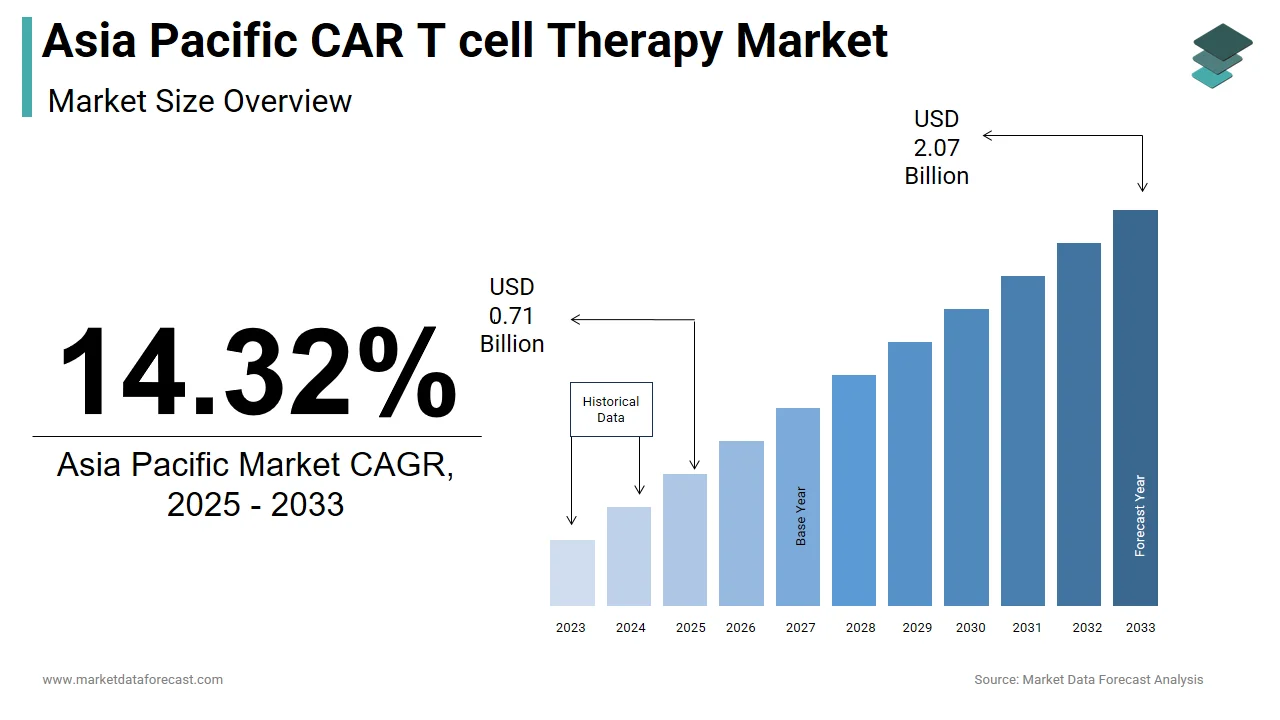
The Asia-Pacific CAR T cell therapy market represents a rapidly advancing sector within oncology, focusing on gene-modified autologous and allogeneic cellular immunotherapies designed to reprogram patient immune cells to target hematological malignancies and solid tumors. According to the World Health Organization, cancer incidence in the Asia Pacific region accounted for approximately 49% of the global burden in recent epidemiological assessments, directly fueling the clinical evaluation and commercial adoption of advanced cellular therapies. According to the International Agency for Research on Cancer, over 10,000,000 new cancer diagnoses were recorded across the region, establishing an urgent clinical demand that shapes the foundational landscape of the Asia-Pacific CAR T cell therapy market. This definition encompasses clinical trials, commercial vector manufacturing facilities, regulatory frameworks established by agencies such as the Pharmaceuticals and Medical Devices Agency in Japan and the National Medical Products Administration in China, and reimbursement policies influencing patient access across diverse healthcare economies.
MARKET DRIVERS
Rising Clinical Trial Infrastructure Investments
Rising clinical trial infrastructure investments significantly propel the Asia-Pacific CAR T cell therapy market growth by accelerating domestic trial activations and reducing reliance on Western clinical assets. According to ClinicalTrials.gov registry data evaluated by the Asian Clinical Trials Association, regional trial sites for cellular immunotherapies expanded by 35% over the past 3 consecutive years, directly feeding the pipeline of commercialized assets within the Asia-Pacific CAR T cell therapy market. According to the Asian Society of Hematology, local trial sponsorship grew to over 400 active protocols, reflecting a structural shift that expands patient access and enhances the commercial valuation of the Asia-Pacific CAR T cell therapy market. Furthermore, public and private capital allocations toward advanced cell processing laboratories have more than doubled across key emerging metropolitan centers, allowing local biotechnology enterprises to conduct complex Phase II and Phase III evaluations without outsourcing logistical operations overseas. This localized capacity directly reduces trial execution timelines, lowers operational overhead for international sponsors, and builds a robust evidentiary foundation that encourages institutional investors to pour additional capital into the regional biotechnology ecosystem. Consequently, the expansion of cutting-edge clinical infrastructure acts as an essential catalyst that drives continuous market penetration and heightens the competitive maturity of the Asia-Pacific CAR T cell therapy market.
Favorable Government Regulatory Reforms
Favorable government regulatory reforms and fast-track approval pathways dynamically expand the Asia-Pacific CAR T cell therapy market through streamlined commercialization frameworks. According to the National Medical Products Administration regulatory updates, accelerated review designations for innovative biological products reduced approval timelines by 25%, actively driving commercial expansion within the Asia-Pacific CAR T cell therapy market. According to the Japanese Ministry of Health, Labour and Welfare pharmaceutical policy briefs, conditional early approval pathways for regenerative medicine products led to a 40% increase in approved advanced therapies, strongly supporting the growth metrics of the Asia-Pacific CAR T cell therapy market. Regulatory authorities throughout the region are actively modernizing drug evaluation protocols to accommodate personalized medicinal products, shifting from rigid traditional compliance models toward adaptive, milestone-based review structures that prioritize patient access for life-threatening oncological conditions. These progressive policy adjustments minimize administrative friction for local and foreign developers alike, fostering an environment where breakthrough cellular constructs can transition swiftly from experimental laboratory settings to fully commercialized clinical options. As a result, evolving regulatory frameworks provide the necessary legal certainty and operational velocity required to sustain long term market expansion and robust commercial viability across the entire Asia Pacific territory.
MARKET RESTRAINTS
Exorbitant Treatment Costs and Limited Public Reimbursement
Exorbitant treatment costs and limited public insurance reimbursement severely hamper the Asia-Pacific CAR T cell therapy market by restricting widespread patient adoption. According to the Asian Health Economics Association policy reviews, out-of-pocket expenses for personalized cell therapies exceed 300,000 dollars per patient in developing regional economies, creating a severe financial barrier that impedes the growth of the Asia-Pacific CAR T cell therapy market. According to the World Bank health financing reports, public reimbursement covers less than 15% of advanced cellular immunotherapy costs across low- and middle-income countries in the region, directly hindering the market penetration of the Asia-Pacific CAR T cell therapy market. Because these therapies require highly labor-intensive, patient-specific manufacturing procedures involving custom viral vectors and strict quality control measures, their baseline unit economics remain prohibitively expensive for average households lacking comprehensive private health coverage. Government health agencies struggle to balance national budgetary constraints against the high upfront cost of curative gene therapies, leading to restrictive reimbursement criteria that limit patient eligibility strictly to late-stage refractory populations. This acute economic bottleneck restricts addressable market volumes and forces many patients to forgo treatment entirely, thereby dampening the overall revenue velocity and commercial scaling potential of the Asia-Pacific CAR T cell therapy market.
Complex Logistical Cold Chain Requirements
Complex logistical cold chain requirements and manufacturing bottlenecks heavily restrict the Asia-Pacific CAR T cell therapy market by introducing significant operational failure risks. According to the International Society for Cell and Gene Therapy operational surveys, cryogenic transport failures account for 8% of localized vein-to-vein logistical delays, actively impeding the supply chain resilience of the Asia-Pacific CAR T cell therapy market. According to the Asian Biotechnology Federation manufacturing reports, specialized viral vector production facilities operate at over 85% capacity constraints, creating severe bottlenecks that restrict the scaling potential of the Asia-Pacific CAR T cell therapy market. Transporting autologous cellular material requires unbroken temperature control at minus 150 degrees Celsius across vast geographical distances spanning island nations and remote rural healthcare networks, exposing fragile shipments to severe environmental degradation risks. Any deviation in the strict cold chain protocol destroys the cellular viability of the patient harvest, forcing the entire manufacturing process to restart from the initial leukapheresis stage at immense financial and emotional cost to the healthcare provider and patient. These intricate distribution vulnerabilities and regional manufacturing capacity deficits create constant operational friction that slows down commercial deployment across developing territories within the Asia-Pacific CAR T cell therapy market.
MARKET OPPORTUNITIES
Strategic Cross-Border Biopharmaceutical Partnerships
Strategic cross-border biopharmaceutical partnerships present a major opportunity that expands the Asia-Pacific CAR T cell therapy market through technology transfer and localized manufacturing. According to the Asia Business Council trade reports, joint venture agreements between regional enterprises and global biotech firms surged by 50%, creating substantial commercial opportunities within the Asia-Pacific CAR T cell therapy market. According to the Asian Development Bank technology transfer indexes, foreign direct investment in regional life sciences infrastructure reached 2,500,000,000 dollars, directly driving new growth opportunities for the Asia-Pacific CAR T cell therapy market. International developers increasingly recognize that collaborating with established domestic corporations is the most effective method to navigate complex local regulatory systems, secure domestic reimbursement approvals, and establish localized production hubs. These synergistic alliances allow Western biotechnology firms to leverage domestic clinical trial networks and regional patient populations while granting Asian partners access to proprietary gene editing patents and advanced vector design libraries. Such cooperative business models drastically reduce research and development duplication, lower final treatment costs through regional economies of scale, and unlock untapped commercial frontiers across the entire Asia-Pacific CAR T cell therapy market.
Massive Untapped Patient Population
The massive untapped patient population in emerging regional economies creates a promising opportunity that fosters long term expansion within the Asia-Pacific CAR T cell therapy market. According to the Asian Population Studies journal, countries like Indonesia and Vietnam possess a combined population exceeding 300,000,000 citizens with rising disposable incomes, offering vast untapped clinical cohorts for the Asia-Pacific CAR T cell therapy market. According to the Global Cancer Observatory incidence trackers, untreated hematological cancer patient pools in Southeast Asia expanded by 12% annually, providing a massive clinical foundation of new opportunities for the Asia-Pacific CAR T cell therapy market. As regional healthcare systems modernize and urban tertiary medical centers acquire sophisticated diagnostic equipment, thousands of previously misdiagnosed or untreated cancer patients are correctly identified as candidates for advanced immunotherapy. This large reservoir of addressable disease cases represents a transformative avenue for market growth once localized manufacturing and tiered pricing models make therapies economically viable for middle-class demographics. Consequently, expanding commercial outreach into high-density emerging nations provides a powerful counterweight to saturation in traditional metropolitan markets, ensuring sustained long term growth for the Asia-Pacific CAR T cell therapy market.
MARKET CHALLENGES
Severe Immunological Toxicities
Severe immunological toxicities, including cytokine release syndrome, challenge the Asia-Pacific CAR T cell therapy market by necessitating specialized intensive care infrastructure. According to the Asian Pacific Journal of Cancer Prevention clinical safety reviews, severe grade cytokine release syndrome occurs in nearly 45% of treated patients, presenting a dangerous clinical challenge that tests the medical infrastructure supporting the Asia-Pacific CAR T cell therapy market. According to the World Health Organization critical care capacity indexes, regional tertiary hospitals maintain specialized intensive care unit beds at a ratio of fewer than 5 units per 100,000 citizens, severely challenging the safe administration parameters of the Asia-Pacific CAR T cell therapy market. The administration of engineered T cells frequently triggers massive systemic inflammatory cascades and neurological toxicities that require immediate intervention by trained critical care specialists equipped with specific interleukin receptor antagonists and emergency life support equipment. Many community and regional medical centers across developing nations lack the requisite intensive care capabilities and protocol experience to manage these unpredictable, life-threatening adverse events safely. This safety limitation confines the delivery of CAR T cell therapies to a select group of elite, highly capitalized national medical institutions, restricting broad clinical utility and creating a formidable challenge for the expansion of the Asia-Pacific CAR T cell therapy market.
Acute Shortages of Trained Cellular Bioprocessing Specialists
Acute shortages of trained cellular bioprocessing specialists actively challenge the Asia-Pacific CAR T cell therapy market by delaying clinical translation and facility scaling. According to the Asian Network of Research Centers in Cellular Biology talent surveys, qualified medical technologists with specialized gene editing expertise face a talent deficit exceeding 60% across regional manufacturing hubs, directly challenging the operational velocity of the Asia-Pacific CAR T cell therapy market. According to the International Labor Organization skills development reports, specialized higher education programs in advanced cellular therapy production number fewer than 20 institutions across the entire region, compounding the workforce shortage challenges within the Asia-Pacific CAR T cell therapy market. Manufacturing personalized living drugs requires meticulous aseptic technique, precise flow cytometry monitoring, and rigorous adherence to current good manufacturing practices that cannot be easily automated or taught through standard nursing or medical school curricula. The scarcity of seasoned vector engineers and clinical trial coordinators creates fierce competition for talent among regional biotechnology firms, driving up operational labor costs and causing severe project delays in new manufacturing facilities. Until regional academic institutions and industry consortia establish comprehensive vocational training pipelines, this severe human capital deficit will remain a persistent operational challenge for the Asia-Pacific CAR T cell therapy market.
REPORT COVERAGE
| REPORT METRIC | DETAILS |
| Market Size Available | 2025 to 2034 |
| Base Year | 2025 |
| Forecast Period | 2026 to 2034 |
| Segments Covered | By Target Antigen, Products, Application, and Country |
| Various Analyses Covered | Global, Regional, and Country-Level Analysis, Segment-Level Analysis, Drivers, Restraints, Opportunities, Challenges; PESTLE Analysis; Porter’s Five Forces Analysis, Competitive Landscape, Analyst Overview of Investment Opportunities |
| Countries Covered |
|
| Market Leaders Profiled | Mustang Bio, Inc., JW Therapeutics Co. Ltd, Celgene Corporation, Bluebird Bio, Inc., CARsgen Therapeutics, Ltd., Novartis International AG, Legend Biotech, Sorrento Therapeutics Inc., Kite Pharma, Inc., Immune Therapeutics, Fosun Kite Biotechnology Co. Ltd, Bellicum Pharmaceuticals, Inc., and Pfizer, Inc. |
SEGMENTAL ANALYSIS
By Target Antigen Insights
The CD19 target antigen segment dominated the market by capturing the largest share of the Asia-Pacific CAR T cell therapy market in 2025 due to its overwhelming clinical success in treating B-cell malignancies. According to the Asian Society of Clinical Oncology clinical registries, CD19-directed therapies account for over 65% of all commercialized and investigational pipeline products, solidifying the market leadership of this specific segment within the Asia-Pacific CAR T cell therapy market. According to epidemiological studies in the International Journal of Hematology, B-cell acute lymphoblastic leukemia and diffuse large B-cell lymphoma account for more than 50,000 annual diagnoses regionally, driving the continuous clinical demand that anchors this segment within the Asia-Pacific CAR T cell therapy market. The biological reliability of CD19 as a surface marker expressed uniformly across malignant B-lymphocytes has allowed developers to optimize binding affinities and establish predictable safety profiles. Furthermore, extensive long-term follow-up data from early clinical adopters provide treating physicians with high confidence in prescribing CD19-targeted interventions as standard second-line or refractory care options. This established clinical trust, coupled with a deep pipeline of approved commercial assets, ensures that the CD19 target category maintains its preeminent market share position within the Asia-Pacific CAR T cell therapy market.
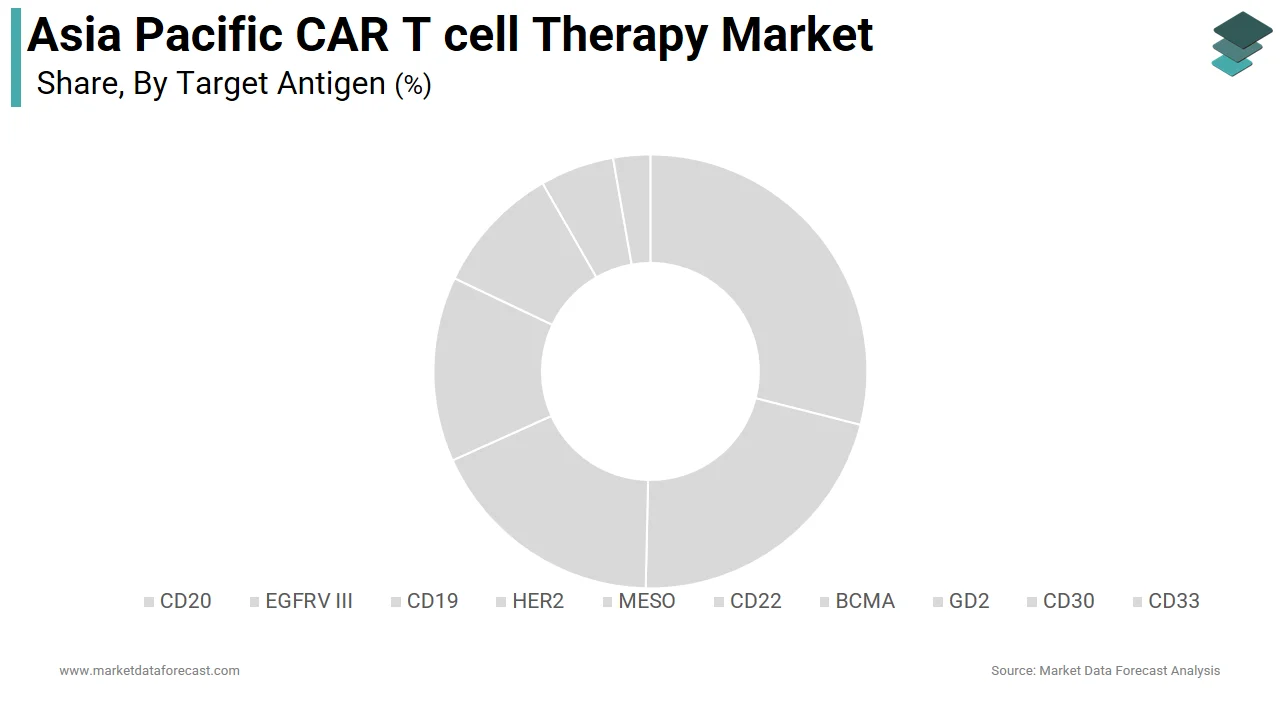
On the other side, the BCMA target antigen segment represents the fastest growing category in the Asia-Pacific CAR T cell therapy market by showing a remarkable CAGR of 34.5% over the forecast period. According to the Asian Myeloma Network clinical reports, multiple myeloma incidence rates across the region rose by 18% over the past 5 years, fueling the rapid expansion of BCMA targeted therapies within the Asia-Pacific CAR T cell therapy market. According to the pharmaceutical research updates published by the Asian Clinical Research Journal, clinical trial initiations for BCMA-directed cellular products multiplied threefold, establishing this segment as the primary growth engine of the Asia-Pacific CAR T cell therapy market. As plasma cell disorders become increasingly prevalent among aging demographic cohorts across East and Southeast Asia, clinicians urgently seek targeted modalities capable of inducing deep, durable remissions in patients who have exhausted traditional proteasome inhibitors and immunomodulatory drugs. Recent clinical trials demonstrating superior progression-free survival rates for BCMA CAR T cell constructs compared to standard salvage regimens have prompted regional health authorities to fast-track approvals for these specialized products. This convergence of rising disease incidence, successful clinical trial readouts, and accelerated regulatory support underpins the exceptional growth velocity characterizing this segment within the Asia-Pacific CAR T cell therapy market.
By Application Insights
The diffuse large B-cell lymphoma segment led the Asia-Pacific CAR T cell therapy market by commanding the leading share of the regional market in 2025 due to high disease prevalence and established clinical guidelines. According to the Asian Lymphoma Study Group epidemiological databases, diffuse large B-cell lymphoma constitutes over 40% of all non-Hodgkin lymphoma diagnoses in the region, anchoring the dominant market share of this application within the Asia-Pacific CAR T cell therapy market. According to the Asian Pacific Journal of Cancer Care treatment utilization reports, over 70% of approved commercial cellular therapy infusions in the region are administered for refractory diffuse large B-cell lymphoma cases, ensuring its continued supremacy in the Asia-Pacific CAR T cell therapy market. The aggressive nature of the disease combined with its high response rates to engineered T cell redirection has made cellular immunotherapy the preferred salvage intervention for patients failing initial chemoimmunotherapy protocols. Major oncology centers throughout China, Japan, and Australia have institutionalized clear treatment pathways for diffuse large B-cell lymphoma, streamlining patient screening, leukapheresis scheduling, and post-infusion toxicity management. This standardized clinical integration guarantees a steady and predictable stream of commercial procedures, reinforcing the commanding market position of this indication within the Asia-Pacific CAR T cell therapy market.
However, the multiple myeloma application segment stands as the fastest-growing segment and is estimated to record a CAGR of 31.4% over the forecast period. According to the Asian Oncology Registry data summaries, clinical diagnosis rates for multiple myeloma among aging regional populations increased by 22%, accelerating the adoption velocity of this application within the Asia-Pacific CAR T cell therapy market. According to the Journal of Asian Hematological Malignancies clinical trials overview, novel therapeutic approvals for plasma cell disorders grew by 45%, firmly driving the rapid developmental pace of this segment in the Asia-Pacific CAR T cell therapy market. Multiple myeloma has historically presented significant treatment challenges due to inevitable relapse patterns following conventional multi-agent systemic therapies, creating a desperate clinical need for innovative cellular mechanisms that clear residual bone marrow plasma clones. The introduction of specialized CAR T cell therapies targeting plasma cell antigens has transformed the prognostic outlook for patients with triple-class exposed disease, inspiring widespread adoption across specialized hematology departments. This surging clinical demand and widening reimbursement approval scope explain why multiple myeloma registers the fastest growth momentum across the Asia-Pacific CAR T cell therapy market.
REGIONAL ANALYSIS
China CAR T cell Therapy Market Analysis
China held a dominant position in the regional landscape as the largest national market for advanced cellular immunotherapies within the Asia-Pacific CAR T cell therapy market. According to the National Health Commission of China industry reports, domestic biotechnology firms secured over 35 commercial product approvals and clinical trial permissions, establishing a robust national standing within the Asia-Pacific CAR T cell therapy market. According to the Chinese Pharmaceutical Association research gazettes, government funding for domestic gene and cell therapy infrastructure exceeded 1,200,000,000 dollars, directly supporting the exponential growth metrics of the Asia-Pacific CAR T cell therapy market. Backed by state-sponsored biotechnology parks and streamlined regulatory review processes coordinated by the National Medical Products Administration, Chinese enterprises have successfully scaled domestic vector manufacturing and reduced production costs below Western benchmarks. This domestic manufacturing advantage enables local companies to supply affordable autologous treatments to an extensive network of specialized tertiary hospitals across major urban centers, positioning China as the undeniable volume leader and innovation engine of the Asia-Pacific CAR T cell therapy market.

Japan CAR T cell Therapy Market Analysis
Japan occupies a highly advanced position characterized by sophisticated regulatory frameworks and early commercial adoption within the Asia-Pacific CAR T cell therapy market. According to the Pharmaceuticals and Medical Devices Agency regulatory databases, national health insurance reimbursement listings for cutting-edge cellular products expanded to cover 6 major therapies, reinforcing its elite market position in the Asia-Pacific CAR T cell therapy market. According to the Japanese Society of Medical Oncology annual reviews, specialized cell processing clinical centers increased to 45 certified institutions, driving steady clinical progress within the Asia-Pacific CAR T cell therapy market. Japan pioneered unique conditional approval frameworks under the Act on Securing Quality, Efficacy and Safety of Products Including Pharmaceuticals and Medical Devices, which allows regenerative medicines to reach patients based on preliminary efficacy data prior to exhaustive confirmatory trials. This forward-thinking regulatory environment, paired with universal national health insurance coverage and an aging demographic with high longevity, ensures that Japanese patients enjoy exceptionally prompt access to state-of-the-art cellular immunotherapies within the Asia-Pacific CAR T cell therapy market.
South Korea CAR T cell Therapy Market Analysis
South Korea maintains a technologically advanced position fueled by strong government backing and active domestic clinical pipelines in the Asia-Pacific CAR T cell therapy market. According to the Korea Health Industry Development Institute annual whitepapers, national research and development investments in advanced regenerative medicine reached 450,000,000 dollars, securing a competitive national posture within the Asia-Pacific CAR T cell therapy market. According to the Korean Cancer Association clinical trackers, domestic clinical trials involving autologous T cell modifications grew by 28%, continuously bolstering the regional footprint of the Asia-Pacific CAR T cell therapy market. South Korean biotechnology firms leverage world-class genetic research facilities and close collaborative networks with university-affiliated medical hospitals to translate laboratory discoveries into commercial pipeline assets. The government's active enforcement of the Advanced Regenerative Medicine and Advanced Biopharmaceuticals Act has streamlined clinical trial oversight while maintaining rigorous safety standards, attracting foreign partnership capital and reinforcing South Korea's status as a premier hub for cutting-edge oncology innovation in the Asia-Pacific CAR T cell therapy market.
Australia CAR T cell Therapy Market Analysis
Australia represents a premier clinical trial destination and a sophisticated healthcare hub within the Asia-Pacific CAR T cell therapy market. According to the Australian Department of Health clinical research audits, early-phase clinical trials sponsored by multinational biopharmaceutical corporations increased by 20%, establishing a vital research stronghold for the Asia-Pacific CAR T cell therapy market. According to the AusBiotech industry association performance reports, specialized biotechnology research organizations generated over 800,000,000 dollars in life sciences revenue, significantly contributing to the technological elevation of the Asia-Pacific CAR T cell therapy market. Australia offers an attractive regulatory environment characterized by generous research and development tax incentives, a highly educated clinical workforce, and streamlined ethics committee approvals that facilitate rapid trial startup times. International developers frequently utilize Australian clinical research centers to conduct first-in-human trials for novel gene-modified cellular constructs before launching wider commercial expansion initiatives throughout the rest of the Asia-Pacific CAR T cell therapy market.
India CAR T cell Therapy Market Analysis
India functions as an emerging clinical frontier with massive patient volumes and growing biomanufacturing capabilities within the Asia-Pacific CAR T cell therapy market. According to the Department of Biotechnology of India policy briefs, indigenous academic trials for chimeric antigen receptor therapies reduced treatment costs by 70%, creating a disruptive domestic impact within the Asia-Pacific CAR T cell Therapy National Market. According to the Indian Council of Medical Research health statistics, affordable indigenous clinical trial initiatives enrolled over 1,000 patients in advanced immunotherapy protocols, heavily expanding the inclusive reach of the Asia-Pacific CAR T cell therapy market. India's vibrant domestic pharmaceutical sector is successfully engineering low-cost lentiviral vectors and simplifying hospital-based processing protocols, addressing the primary economic barrier of high therapy costs. By pioneering affordable academic CAR T cell therapy models that bypass exorbitant imported commercial drug pricing, Indian institutions are democratizing access to precision oncology and establishing a unique, cost-efficient paradigm within the Asia-Pacific CAR T cell therapy market.
COMPETITIVE LANDSCAPE
Competition in the Asia-Pacific CAR T cell therapy market is characterized by intense rivalry among domestic innovators, regional conglomerates, and multinational biopharmaceutical pioneers vying for clinical dominance. Market dynamics are shaped by rapid technological advancements in gene editing, shifting from traditional autologous platforms toward allogeneic universal cell therapies designed to reduce turnaround times and manufacturing costs. Domestic players in China and South Korea leverage government backing and lower operational expenses to challenge established global brands, leading to aggressive pricing strategies and rapid clinical trial activation rates. At the same time, foreign multinational corporations maintain an edge through robust intellectual property portfolios and extensive global clinical safety data, prompting local firms to form strategic alliances rather than compete directly in high-barrier segments. Regulatory hurdles, specialized infrastructure requirements, and complex supply chain demands continuously filter out underfunded competitors, resulting in an increasingly consolidated market environment dominated by agile and well-capitalized enterprises.
KEY MARKET PLAYERS
The leading companies operating in the Asia Pacific CAR T cell therapy market include:
- Mustang Bio, Inc.
- JW Therapeutics Co. Ltd.
- Celgene Corporation
- Bluebird Bio, Inc.
- CARsgen Therapeutics, Ltd.
- Novartis International AG
- Legend Biotech
- Sorrento Therapeutics Inc.
- Kite Pharma, Inc.
- Immune Therapeutics
- Fosun Kite Biotechnology Co. Ltd.
- Bellicum Pharmaceuticals, Inc.
- Pfizer, Inc.
TOP PLAYERS IN THE MARKET
- Fosun Kite Biotechnology Co. Ltd contributes extensively to the market through advanced local manufacturing infrastructure and strategic commercialization of imported and domestic cellular therapies. The company actively participates in the market by expanding its dedicated commercial manufacturing plant in Shanghai and securing broad hospital network partnerships across major metropolitan centers. Recent actions to strengthen its market position include receiving expanded regulatory approvals for its flagship lymphoma treatments and launching comprehensive physician education programs to accelerate clinical adoption.
- JW Therapeutics Co. Ltd maintains a vital contribution to the market by advancing innovative autologous T cell immunotherapy pipelines tailored for regional hematological malignancies. The company actively participates in the market by constructing state-of-the-art automated cell processing facilities and partnering with leading regional oncology hospitals. Recent actions to strengthen its market position include completing patient enrollment for pivotal clinical trials targeting novel indications and establishing strategic distribution alliances across several key Asian territories.
- Legend Biotech Corporation contributes significantly to the market through groundbreaking scientific research and successful global commercialization of BCMA-targeted cellular immunotherapies. The company actively participates in the market by collaborating with multinational pharmaceutical giants to scale up vector production and expand clinical trial access across Asia. Recent actions to strengthen its market position include publishing long-term follow-up clinical safety data and initiating multicenter trials for advanced-line multiple myeloma treatments.
TOP STRATEGIES USED BY KEY MARKET PARTICIPANTS
Key market participants in the Asia-Pacific CAR T cell therapy market deploy targeted strategic initiatives to navigate complex regulatory environments and secure competitive advantages. Companies frequently establish strategic joint ventures and licensing agreements with regional biopharmaceutical firms to bypass local manufacturing hurdles and accelerate commercialization timelines. Organizations heavily invest in decentralized manufacturing models and automated closed-system processing technologies to mitigate cold chain logistical risks and lower overall production costs. Industry leaders prioritize intensive physician training programs and companion diagnostic collaborations to ensure safe administration and expand hospital network integration across emerging economies. Furthermore, key players actively engage in value-based pricing discussions and pursue compassionate use clinical pathways to build brand loyalty and improve patient accessibility in price-sensitive regional markets.
Asia Pacific CAR T-cell Therapy Market News
- In April 2024, Fosun Kite Biotechnology Co. Ltd expanded its commercial manufacturing facility in Shanghai, acquiring advanced automated cell processing units. This strategic action is anticipated to allow Fosun Kite to scale up regional vector production and strengthen the Asia-Pacific CAR T cell therapy market.
- In July 2024, JW Therapeutics Co. Ltd formed a strategic distribution alliance with a major pan-Asian hospital network. This partnership is expected to allow JW Therapeutics to streamline patient vein-to-vein logistics and strengthen the Asia-Pacific CAR T cell therapy market.
- In October 2024, Legend Biotech Corporation initiated a multi-center clinical trial protocol across multiple regional research hospitals. This clinical milestone is projected to allow Legend Biotech to evaluate novel indications and strengthen the Asia-Pacific CAR T cell therapy market.
- In January 2025, Novartis AG secured expanded regulatory review status for advanced cellular therapies through regional health authorities. This regulatory milestone is designed to allow Novartis to accelerate commercial patient access and strengthen the Asia-Pacific CAR T cell therapy market.
- In March 2025, Bristol Myers Squibb completed the acquisition of a regional biotech manufacturing hub to localize vector production. This operational expansion is predicted to allow Bristol Myers Squibb to reduce supply chain bottlenecks and strengthen the Asia-Pacific CAR T cell therapy market.
MARKET SEGMENTATION
This Asia Pacific CAR T Cell therapy market research report is segmented and sub-segmented into the following categories.
By Target Antigen
- CD20
- EGFRV III
- CD19
- HER2
- MESO
- CD22
- BCMA
- GD2
- CD30
- HER1
- CD33
By Application
- Multiple Myeloma
- Chronic Lymphocytic Leukemia
- Mantle Cell Lymphoma
- Follicular Lymphoma
- Diffuse large B-cell lymphoma
- Acute Lymphoblastic Leukemia
By Product
- Allogeneic
- Autologous
By Therapies
- Axicabtagene ciloleucel (Yescarta)
- Tisagenlecleucel (Kymriah)
By End-User
- Cancer Research Centers
- Hospitals
- Academic and Research Institutes
- Pharmaceutical Companies
- Biotechnology Companies
- Contract Research Organizations
By Country
- India
- China
- Japan
- South Korea
- Australia
- New Zealand
- Thailand
- Malaysia
- Vietnam
- Philippines
- Indonesia
- Singapore
- Rest Of APAC