- Product Description Description
- Table of Contents TOC
- List of Table & Figure LOT
- Get Free Sample PDF Sample PDF
Market Size, 2025
$30.28 BnMarket Estimate, 2026
$41.33 BnMarket Forecast, 2034
$498.11 BnCAGR, 2026–2034
36.5%Global Ardent Spirits Market Size, Share, Trends & Forecast (2026-2034)
- Market Scope: Comprehensive global beverage alcohol intelligence tracking distilled ardent spirits across product types, application/distribution channels, and regional country frameworks.
- Market Valuation: Valued at USD 30.28 billion in 2025, estimated at USD 41.33 billion in 2026, and projected to reach USD 498.11 billion by 2034, growing at a robust CAGR of 36.5% from 2026 to 2034.
- Primary Growth Drivers: Rising disposable incomes and premiumization trends among middle-class populations in emerging economies, deep-rooted cultural integration and social consumption habits, and the explosive expansion of global cocktail culture.
Key Global Ardent Spirits Segment Metrics (2026–2034)
| Category | Leading Segment (2025 Position) | Fastest-Growing Segment |
|---|---|---|
| By Product Type | Whiskey (dominating global value sales via deep cultural heritage, status symbolism, and strong export infrastructure) | Tequila (projected to experience rapid expansion driven by agave spirit premiumization, cocktail culture, and celebrity-backed brands) |
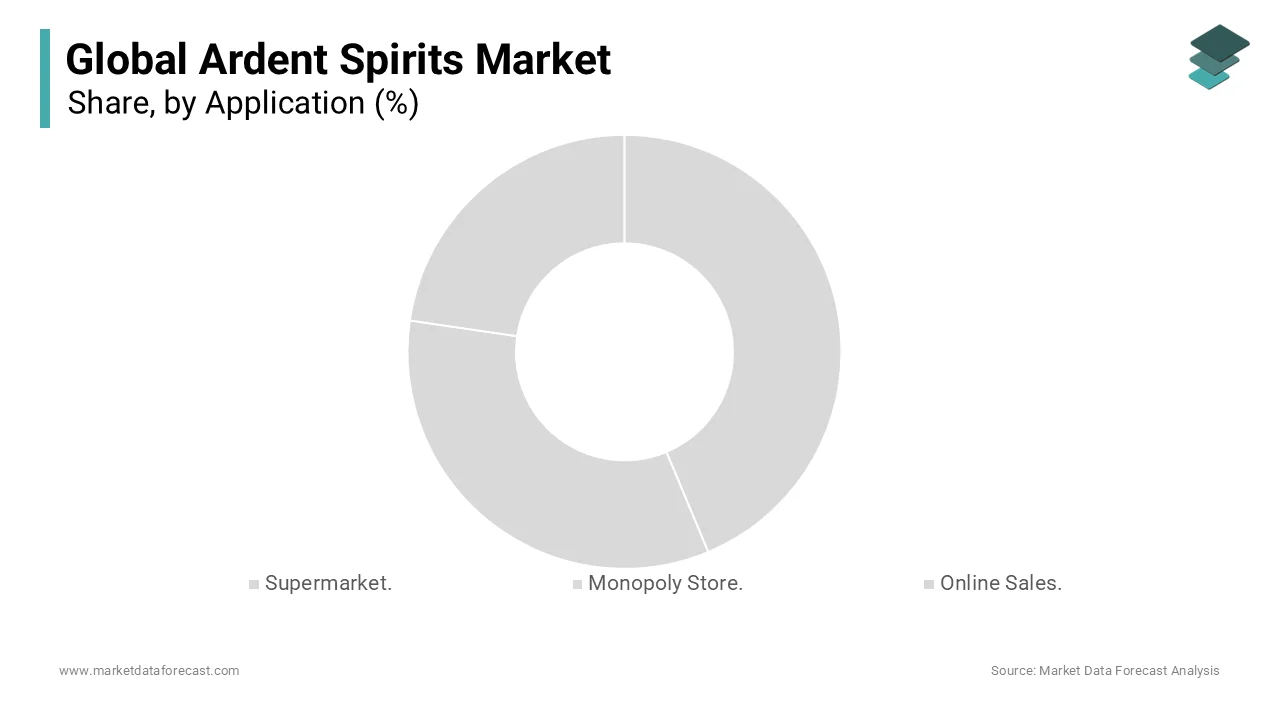
| By Distribution Channel | Supermarkets (holding leading off-premise market share through convenience, one-stop shopping, and competitive pricing) | Online Sales (accelerating rapidly via digital convenience, home delivery, and access to expanded niche selections) |
| By Region / Country | North America & Europe (stable mature markets characterized by high per-capita spending and premium brand loyalty) | Asia-Pacific & Latin America (fastest-growing emerging regions fueled by urbanization and rising middle-class disposable incomes) |
Major Industry Players & Market Structure
Market Structure: Highly competitive global landscape featuring multinational beverage conglomerates and prominent regional distillers competing on brand heritage, craft innovation, global export reach, and sustainability practices.
Key Market Players: Diageo, Pernod Ricard, Tito’s Handmade Vodka, HITEJINRO CO., LTD, Brown-Forman Corporation, Bacardi Limited, Tanduay Distillers Inc., Allied Blenders and Distillers Pvt. Ltd., Guizhou Moutai Wine Co., Ltd., Alliance Global Group, Inc., and Roust.
Global Ardent Spirits Market Size
The global ardent spirits market size was valued at USD 30.28 billion in 2025 and is predicted to reach USD 498.11 billion by 2034 from USD 41.33 billion in 2026. The market is growing at a CAGR of 36.5%.
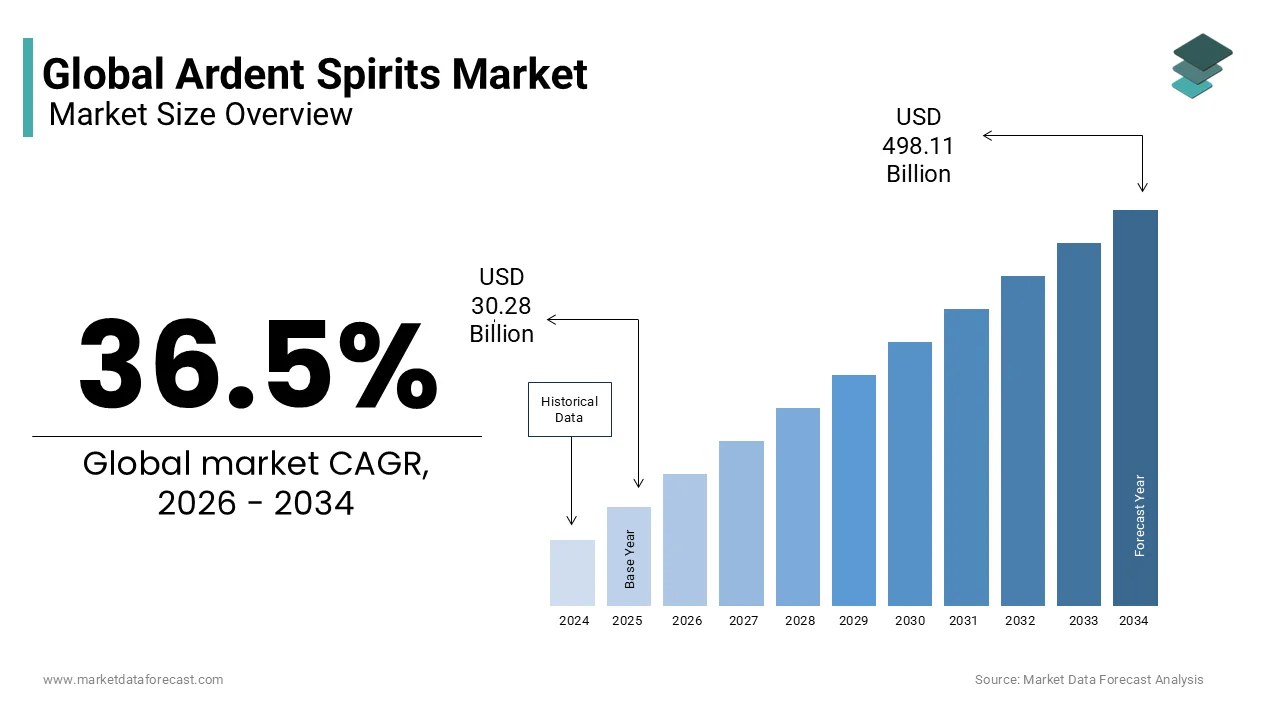
The Ardent Spirits Market comprises distilled alcoholic beverages characterized by high ethanol content produced through the fermentation of agricultural substrates followed by distillation. This category includes whiskey vodka rum gin tequila and brandy which are consumed globally for their sensory profiles and cultural significance. The production process involves heating fermented liquid to separate alcohol from water and impurities resulting in a potent spirit that is often aged in wooden casks to develop complex flavors. According to the World Health Organization global alcohol consumption patterns indicate that spirits account for approximately 35 percent of total pure alcohol intake worldwide reflecting their enduring popularity across diverse demographics. The International Wine and Spirit Record highlights that premiumization trends are reshaping consumer preferences with drinkers increasingly seeking aged and craft varieties over standard mass produced options. In regions such as Europe and North America per capita consumption of spirits has stabilized while volume growth is driven by emerging markets in Asia Pacific and Latin America where rising disposable incomes facilitate access to imported and domestic premium brands. The regulatory landscape varies significantly with governments imposing strict labeling requirements and taxation policies to manage public health outcomes. Despite these controls the sector remains robust due to its deep integration into social rituals and hospitality industries. The shift towards sustainable production methods and transparent sourcing further influences market dynamics as consumers demand greater accountability from manufacturers regarding environmental impact and ethical labor practices.
MARKET DRIVERS
Rising Disposable Income And Premiumization Trends
The escalation of disposable income among middle class populations in emerging economies serves as a primary catalyst for the expansion of the ardent spirits market particularly in the premium and super premium segments. As economic stability improves in countries like China India and Brazil consumers are shifting from unbranded or low cost local spirits to internationally recognized premium brands that offer perceived higher quality and status. According to the World Bank global middle class population is projected to reach 5.3 billion by 2030 with a significant portion residing in Asia Pacific creating a vast consumer base for discretionary spending on luxury goods including aged whiskies and craft gins. The Boston Consulting Group reports that premium spirit sales in China have grown by 15 percent annually over the past five years driven by urban professionals who view premium spirits as symbols of success and sophistication. This trend is not limited to Asia as Latin American markets also witness a surge in demand for imported Scotch whisky and cognac. Consumers are willing to pay a premium for products with detailed provenance stories unique flavor profiles and artisanal production methods. The hospitality sector supports this shift by expanding upscale bar concepts that feature extensive spirit menus encouraging experimentation and education among patrons. This economic empowerment allows individuals to explore diverse spirit categories beyond traditional local offerings driving volume and value growth for established and niche brands alike.
Cultural Integration And Social Consumption Habits
Deep rooted cultural traditions and evolving social consumption habits significantly drive demand for ardent spirits across various global regions. In many societies spirits are integral to celebrations business networking and familial gatherings ensuring consistent demand regardless of economic fluctuations. The Euromonitor International data indicates that spirits remain the preferred alcoholic beverage in Eastern Europe and parts of Asia where vodka and baijiu respectively hold dominant positions due to historical precedence and cultural acceptance. In Japan the tradition of drinking shochu and whisky during after work socializing known as nomikai sustains high per capita consumption levels. Similarly in Russia and Poland vodka consumption is embedded in social rituals making it a staple household item. The rise of cocktail culture in urban centers worldwide has further revitalized interest in specific spirits such as gin and tequila which serve as base ingredients for mixed drinks. The Global Cocktail Report states that the number of cocktail bars in major cities has increased by 20 percent in the last decade fostering an environment where consumers learn about and appreciate different spirit types. Social media platforms amplify this trend by showcasing mixology techniques and premium bottle presentations influencing younger demographics to engage with spirits as a lifestyle choice rather than merely an intoxicant. This cultural entrenchment ensures a stable baseline demand while providing opportunities for brands to innovate within traditional frameworks.
MARKET RESTRAINTS
Stringent Regulatory Frameworks And Taxation Policies
Government imposed regulations and heavy taxation on alcoholic beverages act as significant restraints on the ardent spirits market by increasing retail prices and limiting accessibility. Public health concerns regarding alcohol abuse have prompted many nations to implement strict control measures including high excise duties minimum pricing laws and restricted advertising. According to the Organisation for Economic Co operation and Development alcohol taxes constitute a substantial portion of the final retail price in countries like the United Kingdom and Australia where excise duties can exceed 50 percent of the product cost. In India individual states impose varying tax rates leading to significant price disparities and encouraging illicit trade across borders. The World Health Organization advocates for higher alcohol taxes as a cost effective strategy to reduce harmful consumption noting that a 10 percent increase in price can lead to a 5 percent decrease in consumption. These fiscal policies disproportionately affect premium segments where higher absolute tax amounts make products less affordable for middle income consumers. Additionally restrictions on sales hours and outlet density limit impulse purchases and reduce overall visibility. Compliance with complex labeling requirements and health warnings adds operational costs for manufacturers. While these measures aim to protect public health they inadvertently suppress legitimate market growth and push some consumers towards unregulated informal markets where quality and safety cannot be guaranteed.
Health Consciousness And Shifting Consumer Preferences
Growing health consciousness and changing lifestyle preferences pose a substantial restraint on the ardent spirits market as consumers increasingly prioritize wellness and moderation. The global trend towards fitness and mental well being has led to a decline in heavy drinking habits particularly among millennials and Generation Z who are more likely to monitor their alcohol intake. The Nielsen IQ Global Health and Wellness Survey reveals that 45 percent of consumers are actively trying to reduce their alcohol consumption citing health reasons such as weight management and better sleep quality. This shift has fueled the rise of the no and low alcohol movement with many individuals opting for non alcoholic alternatives or reducing the frequency of spirit consumption. The stigma associated with excessive drinking is stronger than ever prompting social norms to favor moderate or abstinent behaviors. Fitness apps and wearable technology enable users to track calorie intake including those from alcohol which often contains high empty calories without nutritional value. Spirits typically have higher alcohol by volume compared to beer or wine meaning fewer servings are required to achieve similar effects but the perception of spirits as harsher on the body persists. Marketing efforts by health organizations highlight the link between alcohol and chronic diseases further discouraging regular consumption. Consequently spirit manufacturers face the challenge of maintaining relevance in a market where abstinence or moderation is becoming the new normal requiring them to adapt their product portfolios and messaging strategies.
MARKET OPPORTUNITIES
Expansion Into Emerging Markets With Untapped Potential
The penetration into emerging markets with untapped potential presents a significant opportunity for growth in the ardent spirits market as rising urbanization and westernization influence local drinking cultures. Countries in Southeast Asia Africa and the Middle East are experiencing rapid demographic shifts with young populations entering the workforce and adopting global lifestyle trends. According to the International Monetary Fund emerging economies are expected to contribute over 60 percent of global GDP growth in the coming decade creating a fertile ground for international spirit brands. In Vietnam and Indonesia the middle class is expanding rapidly leading to increased demand for imported whiskies and vodkas which were previously considered luxury items. Local distributors are partnering with global brands to establish supply chains and marketing networks tailored to regional tastes. The rise of modern retail formats such as supermarkets and convenience stores in these regions improves product accessibility compared to traditional informal channels. Furthermore the growing tourism industry in countries like Thailand and Mexico exposes locals to international spirit categories encouraging adoption. Manufacturers can leverage these opportunities by introducing entry level premium products that cater to first time buyers while building brand loyalty early. Educational campaigns and tasting events help demystify complex spirit categories enabling broader acceptance. By focusing on these high growth regions companies can offset stagnation in mature markets and achieve sustainable long term expansion.
Innovation In Sustainable And Ethical Production Practices
The adoption of sustainable and ethical production practices offers a compelling opportunity for ardent spirits manufacturers to differentiate their brands and appeal to environmentally conscious consumers. Modern shoppers are increasingly scrutinizing the environmental footprint of their purchases including water usage carbon emissions and packaging waste associated with spirit production. The Carbon Trust reports that the beverage industry is under pressure to reduce its carbon footprint with many consumers willing to pay a premium for eco friendly products. Distilleries are responding by implementing renewable energy sources such as solar and biomass to power operations and investing in water recycling technologies to minimize waste. The use of locally sourced organic grains and botanicals supports regional agriculture and reduces transportation emissions appealing to consumers who value transparency and community support. Packaging innovations such as lightweight glass bottles biodegradable labels and recycled materials further enhance sustainability credentials. Brands that obtain certifications like B Corp or Fair Trade gain competitive advantage by demonstrating commitment to social and environmental responsibility. Marketing narratives focused on heritage craftsmanship combined with modern sustainability resonate strongly with younger demographics who prioritize values aligned with their own. This strategic shift not only mitigates regulatory risks related to environmental compliance but also builds strong emotional connections with consumers fostering brand loyalty in a crowded marketplace.
MARKET CHALLENGES
Supply Chain Volatility And Raw Material Costs
Fluctuations in raw material costs and supply chain volatility present major challenges for the ardent spirits market impacting profitability and pricing stability. The production of spirits relies heavily on agricultural commodities such as barley corn agave and sugarcane which are susceptible to weather conditions climate change and geopolitical disruptions. The Food and Agriculture Organization of the United Nations warns that extreme weather events have become more frequent leading to unpredictable harvests and price spikes for key ingredients. For instance droughts in Mexico have affected agave supplies for tequila production causing significant cost increases for manufacturers. Similarly conflicts in grain producing regions have disrupted barley supplies for whisky distillers forcing them to seek alternative sources at higher prices. Energy costs also play a critical role as distillation is an energy intensive process requiring substantial heat for evaporation and condensation. The International Energy Agency notes that global energy prices have remained volatile affecting operational expenses for distilleries worldwide. Transportation bottlenecks and logistics delays further exacerbate supply chain issues leading to inventory shortages and increased freight costs. Manufacturers struggle to pass these costs onto consumers due to competitive pressures and price sensitivity in certain segments. Maintaining consistent quality while managing fluctuating input costs requires sophisticated risk management strategies and diversified sourcing which can be challenging for smaller producers with limited resources.
Counterfeit Products And Illicit Trade
The prevalence of counterfeit products and illicit trade poses a severe challenge to the ardent spirits market undermining brand integrity and posing serious health risks to consumers. Illicit spirits often contain harmful substances such as methanol which can cause blindness or death yet they are sold at lower prices attracting price sensitive consumers. The International Alliance for Responsible Drinking estimates that illicit alcohol accounts for approximately 25 percent of global alcohol consumption with higher rates in developing regions where enforcement is weak. Counterfeit versions of premium brands deceive consumers and erode trust in legitimate products causing significant revenue losses for manufacturers. In countries like India and Russia illegal distillation operations operate outside regulatory oversight avoiding taxes and quality controls. These illicit products flood the market displacing genuine articles and distorting competition. Governments face difficulties in curbing this trade due to porous borders and corruption within enforcement agencies. Brand owners invest heavily in anti counterfeiting technologies such as holograms and blockchain tracking but these measures are often circumvented by sophisticated criminal networks. The negative publicity associated with health incidents linked to illicit alcohol damages the reputation of the entire industry. Addressing this issue requires coordinated efforts between governments industry stakeholders and law enforcement agencies to strengthen regulations improve detection methods and educate consumers about the dangers of consuming unverified spirits.
REPORT COVERAGE
| REPORT METRIC | DETAILS |
| Market Size Available | 2025 to 2034 |
| Base Year | 2025 |
| Forecast Period | 2026 to 2034 |
| CAGR | 36.5% |
| Segments Covered | By Product Type, Application, and Region |
| Various Analyses Covered | Global, Regional & Country Level Analysis, Segment-Level Analysis, DROC, PESTLE Analysis, Porter’s Five Forces Analysis, Competitive Landscape, Analyst Overview on Investment Opportunities |
| Regions Covered | North America, Europe, APAC, Latin America, Middle East & Africa |
| Market Leaders Profiled | Diageo, Pernod Ricard, Tito’s Handmade Vodka, HITEJINRO CO., LTD, Brown Forman Corporation, Bacardi Limited, Tanduay Distillers Inc., Allied Blenders and Distillers Pvt. Ltd., Guizhou Moutai Wine Co., Ltd., Alliance Global Group, Inc., Roust. |
SEGMENTAL ANALYSIS
By Product Type Insights
Leading Segment: Whiskey
Whiskey holds the leading position in the global Ardent Spirits Market driven by its deep cultural heritage premiumization trends and widespread acceptance across diverse demographics. The category includes Scotch Bourbon Irish and Japanese varieties which are consumed both neat and in cocktails. According to the International Wine and Spirit Record whiskey accounts for approximately 25 percent of global spirits value sales reflecting its dominance in the premium segment. The demand is particularly strong in North America and Europe where consumers view aged whiskey as a luxury item and investment asset. The Scotch Whisky Association reports that exports of Scotch whisky reached record levels recently with significant growth in emerging markets like India and China. In the United States the Distilled Spirits Council notes that American whiskey sales have grown by double digits annually due to the craft distilling boom and consumer interest in local provenance. The versatility of whiskey in mixology has also contributed to its popularity with bartenders creating innovative cocktails that appeal to younger drinkers. Furthermore the aging process creates a natural scarcity for older expressions driving up prices and perceived value. Brand loyalty in the whiskey sector is exceptionally high as consumers often stick to specific regions or distilleries they trust. This combination of tradition innovation and status symbolism ensures that whiskey remains the cornerstone of the ardent spirits industry globally.
Premiumization And Status Symbolism
The trend towards premiumization and the perception of whiskey as a status symbol are primary drivers of its market dominance. Consumers are increasingly willing to pay higher prices for aged single malts and limited edition releases that offer unique flavor profiles and storytelling elements. The Boston Consulting Group indicates that the super premium spirits segment is growing at twice the rate of the standard segment with whiskey leading this charge. In Asia Pacific countries like China and South Korea gifting premium whiskey bottles is a common business practice reinforcing its association with success and respect. The rise of whiskey tourism where visitors travel to distilleries in Scotland Kentucky and Japan further enhances brand affinity and willingness to pay premiums. Social media platforms amplify this trend by showcasing rare bottles and tasting notes influencing consumer aspirations. Retailers respond by expanding their shelf space for high end expressions catering to connoisseurs and collectors. The investment potential of rare whiskies has also attracted non traditional buyers who view bottles as alternative assets. This financial aspect combined with sensory enjoyment creates a robust demand cycle that sustains high margins for producers. As disposable incomes rise globally more consumers enter the premium whiskey market ensuring continued leadership for this segment.
Global Export Strength And Craft Innovation
The robust export infrastructure and continuous innovation in craft whiskey production significantly contribute to the segment's leading position. Major producing nations have established strong trade agreements and marketing bodies that promote their spirits globally. The Scotch Whisky Association and the Kentucky Distillers Association actively campaign in international markets educating consumers about quality and heritage. According to the World Trade Organization spirits are among the most traded agricultural products with whiskey commanding a significant share of this volume. The emergence of craft distilleries in countries like Australia India and Sweden has introduced new flavors and techniques attracting adventurous drinkers. These smaller producers often experiment with local grains and cask types creating niche products that differentiate them from mass market brands. The diversity within the whiskey category allows it to appeal to a wide range of palates from smoky peated Scotches to sweet Bourbons. This variety ensures that there is a whiskey product for every occasion and preference. Additionally the standardization of quality through geographical indications protects authentic products and builds consumer trust. The combination of established global brands and agile craft innovators creates a dynamic market that continuously refreshes consumer interest and drives volume growth.
Fastest Growing Segment: Tequila
Tequila represents the fastest growing segment in the Ardent Spirits Market with a projected compound annual growth rate of 8.5 percent through 2030. This rapid expansion is fueled by the global popularity of Mexican culture the rise of cocktail consumption and the premiumization of agave spirits. Once considered a party drink tequila has evolved into a sophisticated sipping spirit with aged varieties like Añejo and Extra Añejo gaining traction among connoisseurs. The Tequila Regulatory Council reports that exports of tequila have increased by over 15 percent annually in recent years with the United States being the largest market followed by Europe and Asia. The versatility of tequila in cocktails such as margaritas and palomas makes it a staple in bars and restaurants worldwide. The influence of celebrity owned brands and social media marketing has further accelerated its adoption among younger demographics who value authenticity and heritage. The strict designation of origin requiring tequila to be produced in specific regions of Mexico adds to its exclusivity and appeal. As consumers seek alternatives to traditional whiskey and vodka tequila offers a distinct flavor profile that stands out. The growth of the mezcal category which is often grouped with tequila also contributes to the overall expansion of agave spirits. This momentum shows no signs of slowing as global appreciation for Mexican cuisine and culture continues to rise.
Rising Popularity Of Cocktail Culture
The resurgence of cocktail culture and the prominence of tequila based drinks are key factors driving the rapid growth of this segment. Bars and restaurants globally are featuring extensive tequila menus highlighting different brands and aging profiles. The United States Bartenders Guild notes that tequila is now one of the top three spirits used in craft cocktails surpassing gin in many urban centers. The margarita remains one of the most ordered cocktails worldwide providing a consistent baseline demand for blanco and reposado tequilas. Mixologists are experimenting with new combinations using mezcal and aged tequilas creating sophisticated drinks that appeal to discerning palates. This culinary integration elevates tequila from a casual beverage to a gourmet ingredient. Cooking shows and food blogs frequently feature tequila pairings further educating consumers on its versatility. The social aspect of drinking tequila often associated with celebration and vibrancy resonates with millennial and Gen Z consumers. Events like National Tequila Day generate significant social media buzz driving trial and purchase. The availability of high quality mixers and ready to drink tequila beverages also supports this trend by making consumption easier at home. As cocktail culture expands into new markets tequila benefits from its established reputation as a fun and flavorful base spirit.
Premiumization Of Agave Spirits
The shift towards premium and ultra premium agave spirits is accelerating the growth of the tequila segment as consumers seek higher quality experiences. Historically dominated by mixto tequilas the market is now driven by 100 percent blue agave products which offer superior taste and purity. The Tequila Regulatory Council indicates that the share of 100 percent agave tequila in exports has risen to over 90 percent reflecting changing consumer preferences. Brands are investing in sustainable farming practices and transparent production methods to appeal to ethical consumers. The introduction of extra añejo tequilas aged for more than three years competes directly with high end whiskeys and cognacs in terms of price and prestige. Celebrities and influencers launching their own tequila brands have brought significant attention and credibility to the category. These brands often emphasize artisanal production and small batch releases creating a sense of exclusivity. Retailers are dedicating more shelf space to premium tequilas recognizing their higher margin potential. The education of consumers regarding the differences between blanco reposado and añejo encourages experimentation and upselling. As the perception of tequila shifts from a low cost party drink to a sophisticated spirit its value proposition strengthens driving sustained high growth rates.
By Application Insights
Leading Segment: Supermarket
Supermarkets hold the leading position in the Ardent Spirits Market distribution channel due to their widespread accessibility convenience and competitive pricing. These retail outlets allow consumers to purchase spirits alongside their regular grocery shopping saving time and effort. According to Nielsen IQ supermarkets account for approximately 40 percent of total off premise alcohol sales globally offering a vast selection of brands and price points. The ability to compare prices and read labels in a relaxed environment appeals to budget conscious shoppers. Supermarkets often run promotions and discounts on popular spirit brands driving volume sales especially during holiday seasons. The presence of dedicated alcohol sections with knowledgeable staff helps guide consumers in their purchasing decisions. In many countries regulatory changes have allowed supermarkets to sell spirits which was previously restricted to specialty stores expanding their market reach. The integration of loyalty programs enables retailers to offer personalized deals encouraging repeat purchases. Private label spirits offered by major supermarket chains provide affordable alternatives that attract value seekers. The convenience of one stop shopping combined with competitive pricing ensures that supermarkets remain the primary destination for spirit purchases for the majority of consumers.
Convenience And One Stop Shopping
The convenience of one stop shopping is a primary driver for the dominance of supermarkets in the spirits market. Modern consumers lead busy lives and prefer to minimize the number of stops required for their weekly errands. Purchasing spirits along with groceries eliminates the need for a separate trip to a liquor store saving time and transportation costs. The European Retail Forum reports that convenience is the top factor influencing retail choice for 60 percent of shoppers. Supermarkets cater to this need by placing spirit aisles in prominent locations and ensuring adequate stock levels. The availability of a wide range of products from budget to premium allows consumers to fulfill all their needs in one visit. Self checkout options and mobile payment systems further streamline the purchasing process reducing wait times. For impulse buyers the visibility of spirit displays near checkout counters or in promotional end caps drives unplanned purchases. The familiarity of the supermarket environment reduces anxiety for novice buyers who may feel intimidated by specialty liquor stores. This ease of access and seamless shopping experience reinforces the habit of buying spirits at supermarkets sustaining their leading market position.
Competitive Pricing And Promotions
Competitive pricing and frequent promotional activities make supermarkets an attractive channel for spirit purchases. Large retail chains leverage their buying power to negotiate lower prices from suppliers passing savings on to consumers. According to Kantar Worldpanel promotional sales account for a significant portion of spirit volumes sold in supermarkets particularly during festive periods. Discounts bundle offers and loyalty point redemptions incentivize shoppers to choose supermarkets over other channels. Price transparency allows consumers to easily compare costs between brands and sizes ensuring they get the best value. Supermarkets often use spirits as loss leaders to drive foot traffic benefiting from cross selling opportunities with mixers and snacks. The ability to offer private label spirits at lower price points provides an option for cost conscious consumers without compromising on quality perception. Seasonal campaigns such as summer BBQ packs or holiday gift sets create urgency and boost sales volumes. These strategic pricing initiatives build customer loyalty and encourage bulk buying. As economic pressures influence spending habits the affordability offered by supermarkets becomes increasingly important maintaining their dominance in the distribution landscape.
Fastest Growing Segment: Online Sales
Online sales represent the fastest growing distribution channel in the Ardent Spirits Market with a projected compound annual growth rate of 12.5 percent through 2030. The digital transformation of retail and changing consumer behaviors have accelerated the adoption of e commerce for alcohol purchases. The closure of physical stores during recent global events forced many consumers to explore online options which they found convenient and efficient. According to Statista online alcohol sales have doubled in many major markets over the past five years driven by improved logistics and legal frameworks. Platforms offer extensive product ranges including rare and international brands that may not be available locally. The ability to read reviews and compare prices online empowers consumers to make informed decisions. Subscription services for spirits provide curated selections and regular deliveries appealing to enthusiasts who want to discover new products. The integration of age verification technologies has addressed regulatory concerns enabling safer transactions. Mobile apps facilitate quick reordering and personalized recommendations enhancing user experience. As digital natives become the primary consumer demographic the preference for online shopping continues to rise. This channel offers unparalleled convenience and variety positioning it for sustained rapid growth.
Digital Convenience And Expanded Selection
The digital convenience and expanded product selection offered by online platforms are key drivers of their rapid growth in the spirits market. Consumers can browse thousands of products from the comfort of their homes accessing brands from around the world that are not available in local stores. The Global E Commerce Report highlights that variety is a major motivator for online alcohol purchases with 70 percent of users citing access to niche products as a key benefit. Detailed product descriptions tasting notes and customer reviews help buyers choose spirits that match their preferences without needing expert assistance. The ease of search filters allows users to find specific types ages or price ranges quickly. Home delivery eliminates the physical burden of carrying heavy bottles and removes the social stigma some may feel when purchasing alcohol. The 24/7 availability of online stores caters to different schedules and immediate needs. Subscription models automate the purchasing process ensuring a steady supply of favorite spirits or introducing new ones regularly. This level of convenience and choice is difficult for physical retailers to match making online sales an increasingly preferred channel for spirit enthusiasts.
Technological Advancements and Age Verification
Technological advancements in logistics and age verification have resolved previous barriers to online spirit sales fueling segment growth. Secure and reliable delivery networks ensure that products arrive intact and on time building consumer trust. The implementation of robust age verification systems at checkout and upon delivery complies with legal requirements protecting minors and satisfying regulators. The International Alliance for Responsible Drinking notes that technological solutions for age verification have become more accurate and less intrusive improving the user experience. Data analytics allow retailers to personalize marketing efforts recommending products based on past purchases and browsing history. Augmented reality tools enable virtual tastings and bottle previews enhancing engagement. Seamless payment options including digital wallets and buy now pay later services reduce friction in the checkout process. Social media integration allows brands to link directly to e commerce sites facilitating impulse buys from influencer content. As technology continues to evolve the online shopping experience becomes smoother and more secure encouraging more consumers to switch from offline to online channels. This technological foundation supports the scalability and sustainability of online spirit sales.
REGIONAL ANALYSIS
North America Ardent Spirits Market Analysis
North America holds the largest share of approximately 35 percent in the global Ardent Spirits Market driven by high disposable incomes a mature retail infrastructure and a strong culture of premium consumption. The United States is the world’s largest spirits market by value with consumers showing a strong preference for whiskey tequila and craft gin. According to the Distilled Spirits Council of the United States domestic spirit shipments have reached record highs with premium and super premium categories leading growth. Canada also contributes significantly with a robust whisky tradition and increasing interest in imported spirits. The region benefits from well established distribution networks and aggressive marketing by major brands. Regulatory environments vary by state and province but generally support legal sales through multiple channels including supermarkets and online platforms. The rise of craft distilleries in both countries has diversified the product landscape offering unique local options. Health consciousness is influencing choices with some consumers opting for lower calorie or organic spirits. The hospitality sector remains a key driver with bars and restaurants promoting premium cocktails. Innovation in packaging and flavor profiles keeps the market dynamic. North America’s economic stability and consumer sophistication ensure its continued leadership in the global spirits industry.
Europe Ardent Spirits Market Analysis
Europe occupies the second largest position with approximately 30 percent market share characterized by deep historical roots in spirit production and consumption. The region is home to iconic categories such as Scotch whisky Irish whiskey Cognac and vodka. According to Eurostat per capita alcohol consumption remains high although trends are shifting towards quality over quantity. Western European countries like the United Kingdom France and Germany are major consumers and exporters of premium spirits. Eastern Europe maintains strong vodka consumption traditions but is seeing growth in whiskey and gin. The European Union’s geographical indication protections safeguard traditional products enhancing their global value. Sustainability is a major focus with distilleries adopting green practices to meet consumer expectations. The region faces challenges from strict advertising regulations and health campaigns promoting moderation. However the strong cultural attachment to spirits ensures steady demand. Tourism plays a significant role with distillery visits contributing to brand loyalty and direct sales. The premiumization trend is evident as consumers trade up to aged and artisanal expressions. Europe’s heritage and craftsmanship continue to define global standards for ardent spirits.
Asia Pacific Ardent Spirits Market Analysis
Asia Pacific represents approximately 20 percent of the market and is the fastest growing region due to rising middle class populations and westernizing lifestyles. China is the largest market by volume driven primarily by Baijiu consumption while India is a major growth engine for whiskey and rum. According to the International Wine and Spirit Record spirit consumption in Asia Pacific is projected to grow faster than any other region over the next decade. Japan and South Korea have mature markets with high appreciation for whisky and soju respectively. Southeast Asian countries like Vietnam and Thailand are seeing increased demand for imported spirits as tourism and urbanization rise. Local production is expanding with distilleries in Australia India and Taiwan gaining international recognition. Regulatory frameworks are evolving to accommodate growing demand while addressing public health concerns. The young demographic in the region is open to experimenting with new categories like gin and tequila. E commerce is rapidly developing providing easier access to diverse products. Cultural shifts towards social drinking and nightlife are boosting off premise and on premise sales. Asia Pacific’s economic dynamism and demographic advantages position it as the future growth hub for the global spirits industry.
Latin America Ardent Spirits Market Analysis
Latin America holds approximately 10 percent of the market distinguished by its strong production of rum tequila and pisco. Mexico and Brazil are the dominant players with Mexico leading in tequila exports and Brazil in cachaça and rum consumption. According to the Inter American Development Bank rising disposable incomes are driving premiumization in the region with consumers seeking higher quality imported whiskies and vodkas. Argentina and Chile have growing wine and spirit cultures with increasing interest in craft distilling. The region benefits from favorable agricultural conditions for producing sugarcane and agave. Local festivals and traditions integrate spirits deeply into social life ensuring consistent demand. Economic volatility in some countries affects purchasing power but premium segments remain resilient. Tourism supports the industry with visitors exploring local spirit offerings. Regulatory harmonization within trade blocs facilitates cross border sales. The diaspora of Latin Americans abroad also drives demand for native spirits globally. Innovation in packaging and marketing is helping local brands compete with international giants. Latin America’s rich heritage and production capabilities make it a vital component of the global spirits landscape.
Middle East and Africa Ardent Spirits Market Analysis
The Middle East and Africa collectively hold approximately 5 percent of the market characterized by diverse consumption patterns and regulatory environments. South Africa is the largest market in Africa with a strong tradition of brandy and whisky consumption. According to the African Development Bank urbanization and economic growth are expanding the consumer base for premium spirits in key cities. In the Middle East duty free shops and tourist hubs drive significant sales of luxury spirits despite restrictions in some countries. Nigeria and Kenya are emerging markets with growing interest in imported brands. Local production of spirits like ogogoro in West Africa exists but formal markets are dominated by international brands. Religious and cultural factors influence consumption levels with some countries having strict prohibitions. However non alcoholic spirits and low alcohol alternatives are gaining traction. The hospitality sector in major cities supports demand for premium offerings. Infrastructure improvements are enhancing distribution networks. As economies develop and middle classes expand the potential for growth in this region increases. Strategic partnerships and localized marketing are key to unlocking this emerging market.
COMPETITIVE LANDSCAPE
The ardent spirits market features intense competition among multinational conglomerates regional producers and emerging craft distilleries striving for brand loyalty and market share. Global leaders leverage extensive distribution networks and marketing budgets to dominate premium segments while local players compete on authenticity and cultural relevance. Premiumization is a key battleground with companies launching aged expressions and limited editions to attract discerning consumers. Innovation in ready to drink cocktails and low alcohol alternatives addresses shifting health trends. Regulatory pressures regarding taxation and advertising restrict promotional activities forcing brands to rely on digital engagement and experiential marketing. Supply chain resilience has become critical amid raw material volatility prompting investments in vertical integration. Sustainability credentials increasingly influence purchasing decisions driving competition in eco friendly packaging and ethical sourcing. Counterfeit products pose a threat in emerging markets requiring robust anti fraud measures. The rise of e commerce platforms disrupts traditional retail channels enabling direct to consumer sales. Mergers and acquisitions consolidate market power allowing larger entities to access new categories and geographies. This dynamic environment demands continuous adaptation to consumer preferences regulatory changes and economic conditions to maintain competitive positioning.
KEY MARKET PLAYERS
Some of the notable companies in the global ardent spirits market are
- Diageo
- Pernod Ricard
- Tito’s Handmade Vodka
- HITEJINRO CO., LTD
- Brown Forman Corporation
- Bacardi Limited
- Tanduay Distillers Inc.
- Allied Blenders and Distillers Pvt. Ltd.
- Guizhou Moutai Wine Co., Ltd.
- Alliance Global Group, Inc.
- Roust
Top Players in the Market
Diageo plc stands as a global leader in the ardent spirits market with an extensive portfolio including Johnnie Walker Smirnoff and Tanqueray. The company drives growth through strategic acquisitions and premiumization initiatives across key markets. Recent actions include expanding its distillation capacity in Scotland and investing in sustainable packaging solutions to meet environmental goals. Diageo strengthens its position by leveraging digital marketing campaigns that engage younger consumers and enhance brand loyalty. The company also focuses on emerging markets in Asia and Africa where rising disposable incomes drive demand for premium spirits. By prioritizing innovation in product development and supply chain efficiency Diageo maintains its competitive edge. Its commitment to responsible drinking initiatives further enhances corporate reputation. These efforts ensure Diageo remains a dominant force in the global spirits industry while adapting to evolving consumer preferences and regulatory landscapes.
Pernod Ricard SA is a major player in the global ardent spirits market known for iconic brands such as Absolut Vodka Chivas Regal and Jameson. The company emphasizes premiumization and sustainability in its operational strategy. Recent actions involve acquiring niche craft distilleries to diversify its portfolio and appeal to discerning consumers. Pernod Ricard invests heavily in digital transformation to improve customer engagement and streamline distribution channels. The company supports local communities through responsible sourcing practices and water conservation projects. Its focus on high growth markets like India and China drives revenue expansion. Pernod Ricard also launches innovative limited edition products to create buzz and attract collectors. By balancing heritage with modern trends the company strengthens its brand equity. These strategic moves reinforce Pernod Ricard status as a top tier competitor in the international spirits sector.
Beam Suntory Inc contributes significantly to the ardent spirits market with a strong presence in whiskey tequila and vodka categories. The company owns renowned brands such as Jim Beam Maker’s Mark and Sauza. Recent actions include expanding production facilities in Kentucky and Mexico to meet growing global demand. Beam Suntory focuses on sustainability by reducing carbon emissions and implementing water stewardship programs. The company enhances its market position through strategic partnerships with hospitality groups and retail chains. It also invests in consumer education initiatives to promote responsible consumption. Innovation in flavor profiles and packaging design attracts new demographics. Beam Suntory leverages its dual heritage from American and Japanese traditions to create unique product offerings. These efforts drive brand loyalty and market penetration. By prioritizing quality and corporate responsibility Beam Suntory solidifies its role as a key influencer in the global spirits landscape.
Top Strategies Used by the Key Market Participants
Key players in the Ardent Spirits Market employ premiumization strategies to increase value by focusing on high end aged and craft products. Sustainability initiatives reduce environmental impact through eco friendly packaging and responsible sourcing. Digital marketing engages younger consumers via social media and influencer collaborations. Strategic acquisitions expand portfolios with niche and emerging brands. Geographic expansion targets high growth emerging markets in Asia and Africa. Innovation in flavors and ready to drink formats appeals to changing tastes. Supply chain optimization ensures efficiency and resilience against disruptions. Corporate social responsibility programs build brand trust and community support. These comprehensive approaches drive long term growth and competitive advantage in the dynamic global spirits industry.
Ardent Spirits Market News
- In March 2024, Diageo plc expanded its distillation capacity in Scotland to increase premium whisky production and strengthen the Ardent Spirits Market.presence
- In June 2023, Pernod Ricard SA acquired a niche craft gin brand to diversify its portfolio and strengthen the Ardent Spirits Market.presence
- In September 2023, Beam Suntory Inc launched a new sustainable packaging initiative to reduce environmental impact and strengthen the Ardent Spirits Market.presence
- In January 2024, Diageo plc invested in digital marketing campaigns targeting Asian consumers to boost brand engagement and strengthen the Ardent Spirits Market.presence
- In May 2024, Pernod Ricard SA opened a new distribution center in India to improve supply chain efficiency and strengthen the Ardent Spirits Market.presence
MARKET SEGMENTATION
This research report on the global ardent spirits market has been segmented and sub-segmented based on product type, application, and region.
By Product Type
- Gin
- Whiskey
- Brandy
- Vodka
- Rum
- Tequila
- Baijiu
- Sake
By Application
- Supermarket
- Monopoly Store
- Online Sales
By Region
- North America
- Europe
- Asia Pacific
- Latin America
- The Middle East and Africa