- Product Description Description
- Table of Contents TOC
- List of Table & Figure LOT
- Get Free Sample PDF Sample PDF
Market Size, 2025
$1,900.00 MnMarket Estimate, 2026
$1,970.00 MnMarket Forecast, 2034
$2,680.00 MnCAGR, 2026–2034
3.91%Executive Summary: Asia Pacific Canned Fruits Market
- Market Scope: Comprehensive analysis of the Asia Pacific canned fruits market covering product types, distribution channels, country-level dynamics, growth drivers, restraints, and competitive landscapes.
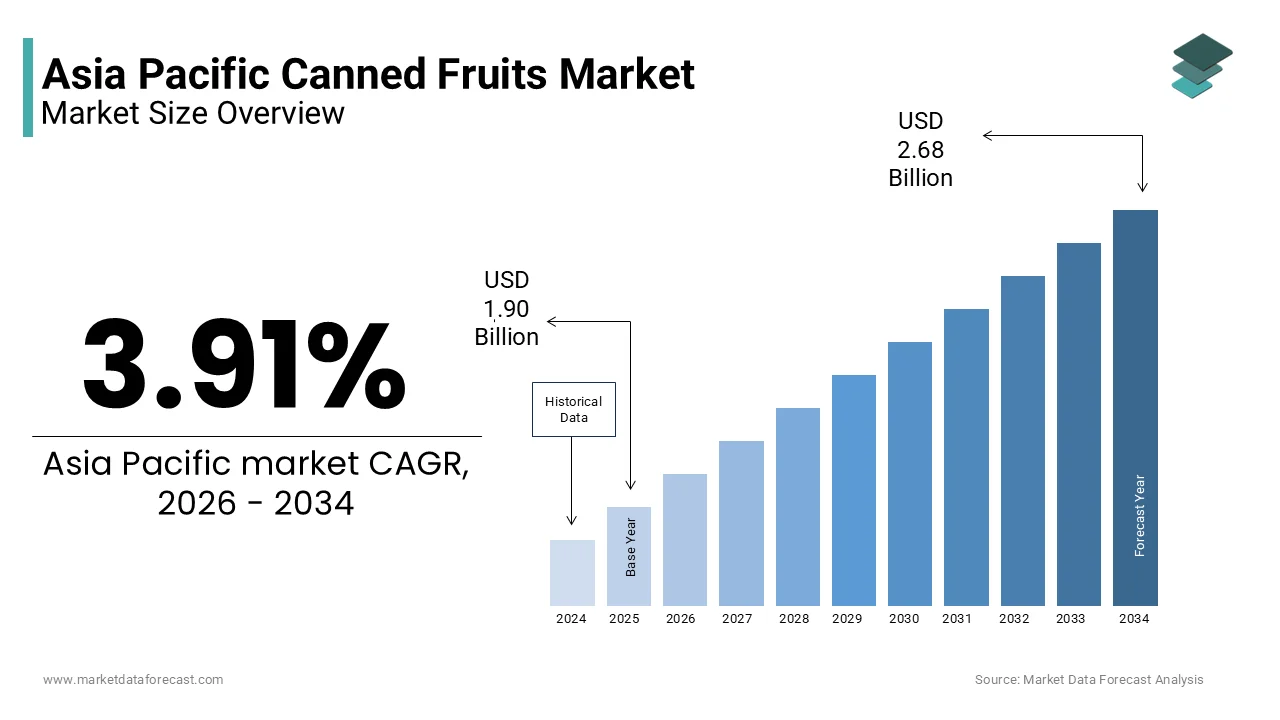
- Market Valuation: Valued at USD 1,900 million (2025), estimated at USD 1,970 million (2026), and projected to reach USD 2,680 million by 2034, registering a solid CAGR of 3.91% during the forecast period (2026–2034).
- Primary Growth Drivers: Rapid urbanization, increasing prevalence of nuclear households, busy consumer lifestyles, surging demand for portable, long-shelf-life food storage options, and growing popularity of convenience foods across developing Asian economies.
Key Market Segment Metrics (2026–2034)
| Category | Leading Segment (2025 Position) | Fastest-Growing Segment |
|---|---|---|
| By Type | Inorganic / Conventional Canned Fruits (holds the major market share due to extended shelf life and lower cost) | Organic Canned Fruits (driven by rising trends in organic farming and health-conscious consumer choices) |
| By Distribution Channel | Supermarkets (dominate retail sales volume owing to easy consumer accessibility, variety, and bulk storage options) | Online Retail (expanding at the fastest growth rate backed by digital grocery adoption and doorstep deliveries) |
| By Region / Country | China (holds the major market share in the region due to established market leaders and everyday dietary usage) | India (fastest-growing regional market propelled by rising disposable incomes, urbanization, and changing diets) |
Major Market Players & Market Structure
Market Structure: Moderately consolidated food processing and canning landscape featuring international agricultural conglomerates and regional food brands competing on supply chain efficiency, preservation quality, and retail distribution partnerships.
Key Companies: ConAgra Foods, Dole Food Company, H.J. Heinz, Seneca Foods, Rhodes Food Group, Ardo, Conserve, Del Monte, CHB Group, Tropical Food Industries, Reese, and others.
 Download Free Sample Report
Asia Pacific Canned Fruits Market Size
The Asia Pacific canned fruits market size was valued at USD 1,900 million in 2025 and is predicted to reach USD 2,680 million by 2034 from USD 1,970 million in 2026, growing at a CAGR of 3.91% during the forecast period.
The Asia Pacific canned fruits market encompasses the processing, preservation, and distribution of fruits sealed in airtight containers with syrup, water, or juice, primarily serving as a convenient, shelf-stable food source across diverse economies. According to the Food and Agriculture Organization of the United Nations, Asia accounted for the largest share of global fruit production in 2023, providing an abundant raw material base that supports extensive canning operations in countries like Thailand, China, and the Philippines. This market is distinct due to its dual role as a major exporter to Western markets and a growing domestic consumption hub driven by urbanization. According to the United Nations Economic and Social Commission for Asia and the Pacific, more than 2.2 billion people lived in urban areas across Asia and the Pacific in recent estimates, creating a massive consumer base with limited storage space and time for fresh food preparation. These demographic shifts directly influence the demand for ready-to-eat preserved foods. The industry relies heavily on tropical fruits such as pineapples, mangoes, and lychees, which are native to the region. According to the Food and Agriculture Organization of the United Nations, Asia experienced the largest share of global agricultural losses from disasters and this indicates the importance of resilient fruit production and processing systems in the region. This agricultural abundance, combined with evolving lifestyle patterns, ensures that the Asia-Pacific canned fruits market remains a critical component of regional food security and international trade dynamics.
MARKET DRIVERS
Rapid Urbanization and Changing Lifestyle Patterns
The accelerating pace of urbanization across Asia-Pacific is one of the major factors propelling the Asia-Pacific canned fruits market expansion by driving demand for convenient and long-shelf-life food options among busy urban dwellers. According to the United Nations Economic and Social Commission for Asia and the Pacific, the Asia-Pacific region is home to more than 2.2 billion urban dwellers, and its urban population is projected to increase substantially by 2050. This demographic shift creates a structural need for ready-to-eat products that require minimal effort to consume. The statistical correlation between urban density and processed food consumption is evident, as canned fruits offer an immediate solution for snacks, desserts, and meal additions without the risk of spoilage. Additionally, rising disposable incomes in emerging economies allow consumers to prioritize convenience over traditional fresh food procurement. According to the Food and Agriculture Organization of the United Nations, urbanization and changing food consumption patterns are contributing to transformations in agrifood systems across Asia and the Pacific. Working professionals and young families increasingly rely on canned goods for their predictable availability and ease of storage in compact apartments. Consequently, the Asia-Pacific canned fruits market benefits from a self-reinforcing cycle where urban growth drives convenience-seeking behavior, which in turn sustains high-volume sales of preserved fruit products.
Expansion of Modern Retail Infrastructure and E-Commerce
The proliferation of supermarkets, hypermarkets, and online grocery platforms further fuels the Asia-Pacific canned fruits market growth by enhancing product accessibility and visibility for a broader consumer base. According to the United Nations Economic and Social Commission for Asia and the Pacific, rapid urbanization and the expansion of modern retail and digital commerce are transforming food distribution across Asia and the Pacific. This retail expansion ensures that canned fruits are available not only in major cities but also in tier-two and tier-three towns where traditional wet markets previously dominated. The statistical growth in organized retail facilitates standardized pricing and consistent quality assurance, which builds consumer trust in branded canned products. Furthermore, the rise of e-commerce has removed geographic barriers, allowing consumers in remote areas to access a wider variety of canned fruits. According to the United Nations Conference on Trade and Development, digital commerce has expanded significantly across developing economies, supporting broader consumer access to digitally distributed goods. Digital marketing campaigns and subscription models further drive repeat purchases. Thus, the Asia-Pacific canned fruits market leverages these distribution advancements to reach untapped demographics and maintain steady growth through improved supply chain efficiency and customer engagement.
MARKET RESTRAINTS
Health Concerns Regarding Added Sugars and Preservatives
Growing consumer awareness about the health implications of high sugar intake and artificial preservatives hinder the Asia-Pacific canned fruits market expansion by shifting preference toward fresh or frozen alternatives. According to the World Health Organization, more than 220 million adults aged 18 years and above were estimated to have diabetes in the Western Pacific Region in 2022, demonstrating the substantial burden of metabolic disease in the region. Many canned fruits are packed in heavy syrup, which contributes significantly to daily sugar limits, causing health-conscious consumers to avoid these products. The statistical decline in trust is evident as consumers increasingly scrutinize nutritional information and ingredient labels when purchasing packaged foods. This scrutiny forces manufacturers to reformulate products, which can be costly and may affect taste and texture. Additionally, the perception that canned foods lack nutritional value compared to fresh produce persists. According to the scientific literature on food preservation, canning can retain substantial amounts of nutrients in fruits when appropriate processing conditions are used. These health narratives limit market expansion, particularly among middle-class families who are increasingly prioritizing wellness. Consequently, the Asia-Pacific canned fruits market faces a persistent headwind as it struggles to reconcile convenience with evolving dietary standards.
Environmental Scrutiny of Packaging Waste
Increasing regulatory pressure and consumer activism regarding single-use packaging waste hamper the Asia-Pacific canned fruits market by imposing higher compliance costs and reputational risks. According to the United Nations Environment Programme, plastic pollution remains a major environmental challenge across Asia and the Pacific, with inadequate waste collection and recycling infrastructure contributing significantly to leakage into the environment. Canned fruits typically use steel or aluminum cans with plastic liners, which are complex to recycle in many developing nations within the region. The statistical burden of waste management falls on producers who must invest in eco-friendly packaging solutions or face penalties. According to the United Nations Environment Programme, strengthening waste management systems and improving circularity are essential to reducing plastic pollution in the region. Consumers are increasingly favoring brands with clear environmental commitments, making it difficult for traditional canners to compete with those using biodegradable or reusable packaging. Additionally, carbon footprint concerns related to transportation and manufacturing further dampen brand loyalty. These environmental challenges force companies to rethink their packaging strategies, which require significant capital investment. Thus, the Asia-Pacific canned fruits market is constrained by the urgent need to align with sustainability goals while maintaining cost competitiveness in a price-sensitive region.
MARKET OPPORTUNITIES
Development of Healthy Variants Packed in Water or Juice
The introduction of canned fruits packed in water, natural juice, or light syrup is a significant opportunity for the Asia-Pacific canned fruits market to reclaim health-conscious consumers and differentiate from standard offerings. According to the World Health Organization, reducing free sugar intake is an important component of preventing and managing diet-related health risks, supporting opportunities for lower-sugar food formulations. By eliminating heavy syrups, manufacturers can position their products as nutritious and suitable for consumers seeking lower-sugar alternatives. The statistical shift in preference is supported by broader changes in consumer interest toward healthier packaged food choices. This trend allows brands to command premium pricing and build loyalty among wellness-oriented demographics. Additionally, fortifying these products with vitamins or probiotics can enhance their functional appeal. According to the Institute of Food Technologists, advances in food processing and packaging technologies can improve the quality, stability, and sensory characteristics of preserved fruit products. Marketing campaigns emphasizing natural ingredients and clean labels further drive adoption. Consequently, the Asia-Pacific canned fruits market can leverage this innovation to expand its total addressable market and mitigate the negative impact of health-related restraints by offering guilt-free indulgence.
Growth in Food Service and Hospitality Sector Post Pandemic
The robust recovery of the food service and hospitality industry offers a substantial opportunity for the Asia-Pacific canned fruits market by driving bulk procurement for restaurants, hotels, and catering services. According to the World Travel and Tourism Council, travel and tourism contributed substantially to the economies of Asia-Pacific in 2023 as international and domestic travel continued to recover. This resurgence increases demand for consistent and cost-effective ingredients for desserts, salads, and garnishes, where canned fruits provide uniformity and ease of use. The statistical rise in hotel occupancy rates and dining-out frequency directly correlates with higher institutional sales volumes. According to the United Nations World Tourism Organization, international tourism in Asia and the Pacific continued to recover strongly following the pandemic, supporting renewed activity across hospitality and food service industries. Canned fruits reduce labor costs and waste in commercial kitchens, making them attractive to high-volume operators. Furthermore, the growth of quick-service restaurants and cloud kitchens relies on efficient supply chains where canned goods play a vital role. Suppliers can secure long-term contracts with major chains, ensuring stable revenue streams. Thus, the Asia-Pacific canned fruits market can capitalize on the hospitality boom to drive volume growth and establish strong B2B relationships.
MARKET CHALLENGES
Volatility in Raw Material Prices Due to Climate Change
Fluctuating costs of fresh fruits caused by extreme weather events and climate change pose a significant challenge to the Asia-Pacific canned fruits market by squeezing profit margins and disrupting supply stability. According to the Food and Agriculture Organization of the United Nations, disasters caused average annual agricultural production losses of approximately USD 123 billion globally over the three decades covered by its assessment, with Asia experiencing the largest share of total economic losses. These climatic disruptions lead to sudden spikes in raw material prices, making it difficult for processors to maintain consistent pricing for end consumers. The statistical impact is severe, as climate-related shocks can affect yields, supply chains, and agricultural input costs simultaneously. Manufacturers often absorb these costs to remain competitive, which erodes profitability. Additionally, inconsistent fruit quality affects the final product standard, leading to higher rejection rates. According to the Food and Agriculture Organization of the United Nations, fruits and vegetables experienced average losses approaching 40 million tonnes annually from disaster events over the assessed three-decade period. These vulnerabilities make long-term planning difficult and discourage investment in expansion. Consequently, the Asia-Pacific canned fruits market faces ongoing operational instability where external environmental factors dictate production viability and financial performance.
Intense Competition from Fresh and Frozen Fruit Alternatives
Intense competition from the expanding fresh and frozen fruit sectors is further challenging the Asia-Pacific canned fruits market growth by offering perceived superior quality and nutritional value to consumers. According to the Food and Agriculture Organization of the United Nations, global fruit and vegetable production reached approximately 2.1 billion tonnes in 2023, highlighting the enormous availability of fresh produce competing with preserved alternatives. This logistical improvement allows retailers to offer fresh-like experiences year-round, reducing the reliance on preserved options. The statistical growth in agricultural production supports the availability of alternatives across modern retail channels. According to the Food and Agriculture Organization of the United Nations, global fruit production continued to expand in 2023, reinforcing the competitive availability of fresh fruit. Fresh fruits also benefit from strong cultural preferences in many Asian countries where daily market visits are common. Canned fruits are often viewed as a secondary option for emergencies rather than a primary choice. This perception limits market penetration in affluent segments. Thus, the Asia-Pacific canned fruits market must contend with superior alternatives that leverage technology and cultural habits to capture share in the evolving fruit consumption ecosystem.
REPORT COVERAGE
| REPORT METRIC | DETAILS |
| Market Size Available | 2025 to 2034 |
| Base Year | 2025 |
| Forecast Period | 2026 to 2034 |
| CAGR | 3.91% |
| Segments Covered | By Type, Distribution Channel, and Region |
| Various Analyses Covered | Regional & Country Level Analysis, Segment-Level Analysis, DROC, PESTLE Analysis, Porter’s Five Forces Analysis, Competitive Landscape, Analyst Overview on Investment Opportunities |
| Regions Covered | India, China, Japan, South Korea, Australia, New Zealand, Thailand, Malaysia, Vietnam, Philippines, Indonesia, Singapore, and the Rest of Asia-Pacific |
| Market Leaders Profiled | ConAgra Foods, Dole Food Company, H.J. Heinz, Seneca Foods, Rhodes Food Group, Ardo, Conserve, Del Monte, CHB Group, Tropical Food Industries, Reese, Del Monte Pacific Limited, Dole Packaged Foods, LLC, The Kraft Heinz Company, Greenyard NV, Delicia Foods India Pvt. Ltd., Oregon Fruit Products LLC, and The Kroger Co. |
SEGMENTAL ANALYSIS
By Type Insights
The inorganic canned fruits segment accounted for the leading share of the Asia-Pacific canned fruits market in 2025 due to their affordability, widespread availability, and established consumer acceptance across diverse socioeconomic groups. The dominance of inorganic canned fruits segment is further driven by their competitive pricing, which makes them accessible to the vast majority of consumers in price-sensitive emerging economies. According to the Asian Development Bank, food remains one of the largest components of household consumption expenditure across developing Asia, reinforcing the importance of affordability in food purchasing decisions. Inorganic canned fruits are typically 30% to 50% cheaper than organic variants, allowing them to penetrate mass-market retail channels effectively. The statistical prevalence of these products in discount stores and local markets ensures high-volume turnover. Additionally, large-scale conventional farming practices yield higher volumes of raw materials such as pineapples and peaches, reducing input costs for processors. According to the Food and Agriculture Organization of the United Nations, Asia remained a major contributor to global fruit production in 2023, providing a substantial raw material base for fruit processing operations. This abundance supports consistent pricing and availability. Consequently, the Asia-Pacific canned fruits market relies on inorganic segments to drive baseline revenue and maintain market penetration in regions where disposable income growth is gradual and value remains the primary purchase driver.
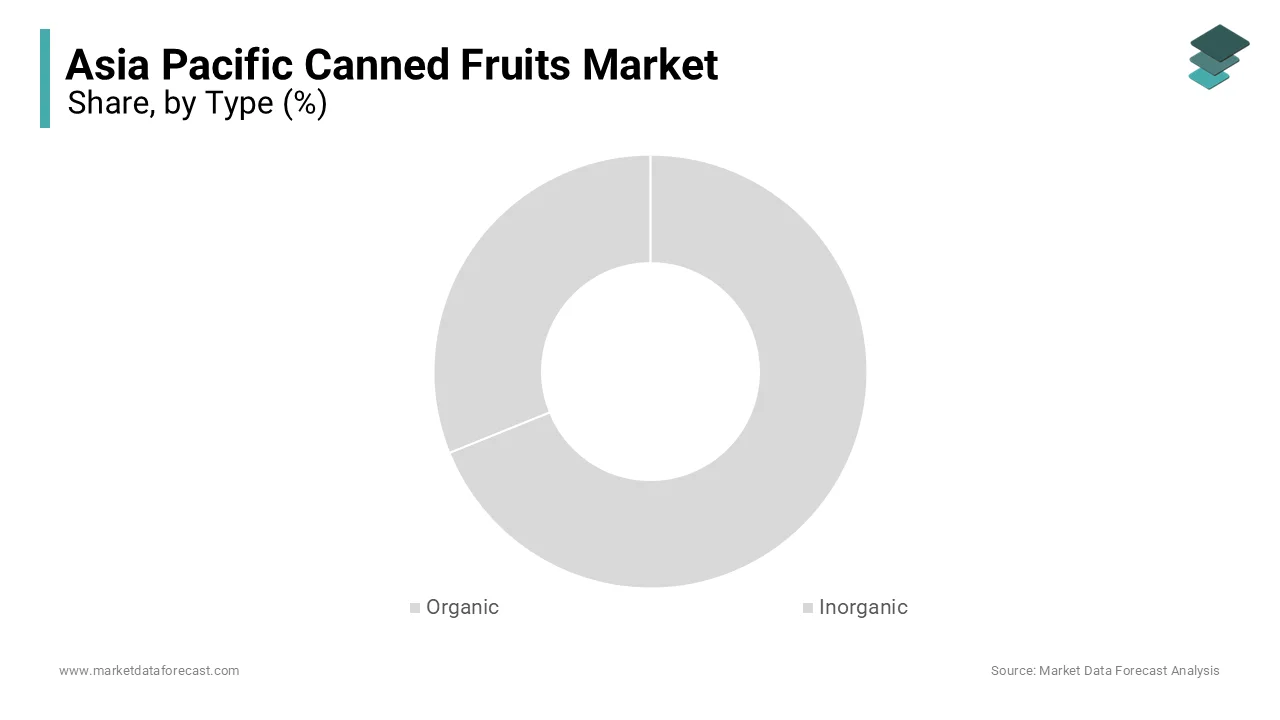
However, the organic canned fruits segment is estimated to record a notable CAGR of 10.3% over the forecast period owing to the rising health consciousness and environmental awareness among affluent consumers and increasing consumer preference for chemical-free and naturally produced food items that align with wellness lifestyles. According to the International Federation of Organic Agriculture Movements, Asia remains a major region for organic agriculture, with continued expansion in organic production and consumer markets. This shift is particularly pronounced in urban centers where health literacy is high and disposable incomes allow for premium purchases. The statistical correlation between health awareness and organic adoption is evident, as consumers increasingly associate organic production with environmental and health benefits. Manufacturers are responding by obtaining international organic certifications, which build trust and justify higher price points. Additionally, the absence of artificial preservatives in organic variants appeals to parents purchasing for children. According to scientific research published in food and agricultural journals, organic production systems can differ from conventional systems in nutrient composition and antioxidant profiles, although outcomes vary by crop and production conditions. Consequently, the Asia-Pacific canned fruits market sees organic segments as a high-value growth engine driven by informed consumers willing to pay for purity and health benefits.
By Distribution Channel Insights
The supermarkets and hypermarkets segment had the major share of the Asia-Pacific canned fruits market in 2025 due to their extensive reach, one-stop shopping convenience, and ability to offer wide product assortments and their dense network of stores that provide easy access to canned fruits for a broad consumer base in both urban and semi-urban areas. According to industry retail statistics, modern grocery retail continues to account for a substantial portion of packaged food distribution in developed Asia-Pacific economies. This widespread presence is complemented by promotional activities, as retailers use discounts, displays, and private-label products to drive packaged food purchases. The statistical reliance on supermarket traffic means that brands prioritize shelf placement in these channels to maximize exposure. Furthermore, supermarkets offer varied pack sizes, from single-serve tins to bulk family packs catering to different household needs. Consumer trust, combined with logistical efficiency, cements the leading position of supermarkets in the Asia-Pacific canned fruits market.
On the other end, the online retail segment is the fastest-growing distribution channel in the Asia-Pacific canned fruits market and is estimated to register a CAGR of 15.4% over the forecast period owing to the digital penetration and convenience-seeking behavior and widespread smartphone usage and improved internet connectivity, which have transformed shopping habits across the region. According to the International Telecommunication Union, internet use has continued to expand across Asia and the Pacific, strengthening the digital foundation for online grocery and food retail. This digital shift allows consumers to browse extensive catalogs of canned fruits, including niche and imported varieties not available in local stores. The statistical rise in online grocery sales reflects changing consumer purchasing habits as digital platforms provide home delivery and broad product selection. Convenience is a key factor, as home delivery eliminates the need to carry heavy cans from physical stores. Additionally, online platforms offer detailed product information and reviews, which help consumers make informed choices. According to the United Nations Conference on Trade and Development, digital commerce has expanded across developing economies and increasingly forms part of consumer purchasing ecosystems. These factors ensure that online retail becomes an increasingly vital channel for the Asia-Pacific canned fruits market.
REGIONAL ANALYSIS
China Market Analysis
China held the largest position in the Asia-Pacific canned fruits market with the highest share of the regional market in 2025. The dominance of China in this regional market is majorly driven by its massive population, robust manufacturing base, and growing domestic consumption. The country is a leading producer and exporter of canned mandarins, peaches, and pineapples. According to the National Bureau of Statistics of China, the country's food manufacturing industry continued to represent a substantial part of industrial production in 2023, supporting a broad processing base. This industrial capacity supports both local demand and international exports. Additionally, the expansion of modern retail chains and e-commerce platforms facilitates wider distribution. Government initiatives to improve food safety standards also enhance consumer trust in domestic brands. These factors ensure China remains the dominant force in the regional market through scale and integration.
Japan Market Analysis
Japan occupies a mature and high-value position in the Asia-Pacific canned fruits market, characterized by strong demand for premium and imported varieties. The country relies heavily on imports for tropical fruits while maintaining high-quality domestic production for certain items. According to Japan's Ministry of Agriculture, Forestry and Fisheries, official agricultural trade statistics separately track imports of processed fruit products, including canned pineapple and canned peach products. Convenience and long shelf life are key drivers for elderly consumers. Additionally, the hospitality sector demands high-quality canned fruits for desserts and garnishes. Strict quality standards ensure only superior products enter the market. These dynamics position Japan as a key destination for high-end canned fruit exports in the region.
India Market Analysis
India represents an emerging and rapidly growing segment in the Asia-Pacific canned fruits market, driven by increasing urbanization and changing dietary habits. While fresh fruit consumption dominates, the market for canned goods is gaining traction in urban centers. According to the Ministry of Food Processing Industries, food processing remains an important component of India's manufacturing and agricultural value chain, with government programs supporting the development of processing infrastructure. Rising middle-class incomes enable greater spending on convenience foods. Additionally, the export of processed mangoes and other fruit products to international markets provides significant revenue. According to the Agricultural and Processed Food Products Export Development Authority, India continues to expand fruit and processed food export capabilities through improved post-harvest infrastructure and export protocols. Local players are investing in modern canning technologies to meet international standards. These factors indicate strong future growth potential for India in the regional market.
South Korea Market Analysis
South Korea holds a sophisticated position in the Asia-Pacific canned fruits market, driven by high consumer spending on premium food products and a strong cafe culture. The country imports significant volumes of canned fruits for use in beverages and desserts. According to World Integrated Trade Solution data based on UN Comtrade, South Korea imported approximately 6.65 million kg of prepared or preserved peaches in 2024, with Thailand, China, and Greece among the major suppliers. The trend of home baking and coffee consumption drives demand for high-quality ingredients. Additionally, health-conscious consumers prefer low-sugar and organic options. According to World Integrated Trade Solution data based on UN Comtrade, South Korea imported approximately 806,000 kg of prepared or preserved cherries in 2024. Strong distribution networks ensure wide availability. These attributes make South Korea a valuable market for specialized and high-value canned fruit products.
Australia Market Analysis
Australia maintains a stable and export-oriented position in the Asia-Pacific canned fruits market, known for high-quality production standards and strong brand reputation. The country produces significant quantities of canned peaches, pears, and apricots primarily for export. According to Hort Innovation's Australian Horticulture Statistics Handbook, pineapples accounted for 44% of Australian canned fruit processing in 2023/24, followed by summerfruit at 23% and pears at 18%. High labor costs limit domestic mass-market growth, but premium positioning supports profitability. Additionally, domestic demand for convenient, healthy snacks sustains local sales. According to Hort Innovation's Australian Horticulture Statistics Handbook, Australia imported 37,167 tonnes of canned fruit in 2023/24, illustrating the importance of international trade in the country's canned fruit supply chain. Strong trade agreements with Asian neighbors facilitate market access. These factors ensure Australia remains a key supplier of premium canned fruits in the region.
COMPETITIVE LANDSCAPE
The competition in the Asia Pacific canned fruits market is characterized by a mix of large multinational corporations and numerous small to medium sized local processors who compete on price quality and sustainability credentials. Multinational entities leverage their global distribution networks and financial resources to dominate export channels while local players focus on domestic markets and niche premium segments. The barrier to entry remains moderate due to the capital intensive nature of processing infrastructure but low for raw trading activities. Competitive intensity is high as firms strive to differentiate through certifications such as organic and fair trade which command higher prices. Price volatility in global commodity markets further intensifies competition as buyers seek reliable suppliers with consistent quality. Innovation in product formats such as fruit butter and milk alternatives creates new battlegrounds for market share. Companies also compete on sustainability metrics with buyers increasingly preferring suppliers who demonstrate environmental stewardship and social responsibility. This dynamic landscape forces participants to continuously invest in efficiency technology and brand building to maintain relevance and profitability in the evolving market structure.
Key Market Players
Some of the key players in the Asia Pacific canned fruits market are
- ConAgra Foods
- Dole Food Company
- H.J. Heinz
- Seneca Foods
- Rhodes Food Group
- Ardo
- Conserve
- Del Monte
- CHB Group
- Tropical Food Industries
- Reese
- Del Monte Pacific Limited
- Dole Packaged Foods, LLC
- The Kraft Heinz Company
- Greenyard NV
- Delicia Foods India Pvt. Ltd.
- Oregon Fruit Products LLC
- The Kroger Co.
Top Players in the Market
- Dole plc maintains a robust presence in the Asia-Pacific Canned Fruits Market through its extensive sourcing network and advanced processing facilities across Thailand and the Philippines. The company focuses on sustainable supply chain practices by partnering directly with local farmers to ensure quality and traceability. Recently Dole expanded its pineapple processing capacity in Thailand to reduce postharvest losses and improve kernel recovery rates. This investment allows the firm to offer consistent premium grades to global buyers while supporting rural livelihoods. Their commitment to environmental standards aligns with increasing regulatory demands for deforestation free products. By integrating digital tools for farmer training Dole enhances productivity and strengthens long term supplier relationships. These actions solidify their role as a key enabler of market growth and quality assurance in the region.
- Del Monte Foods Inc leverages its global distribution expertise to promote Asian sourced canned fruits in international markets particularly in North America and Europe. The company emphasizes brand building and value addition by introducing innovative flavored and roasted fruit products sourced from the region. They recently launched a sustainability initiative that supports agroforestry projects in the Philippines helping farmers diversify income and improve soil health. This strategy enhances supply resilience while appealing to ethically conscious consumers. Del Monte also invests in marketing campaigns that highlight the unique taste profile of Asian tropical fruits. Their focus on product differentiation and consumer education drives demand for higher value segments. These efforts contribute to market expansion by creating new consumption occasions and strengthening brand loyalty among premium buyers.
- Chiquita Brands International plays a critical role in the Asia-Pacific Canned Fruits Market by providing integrated logistics and ingredient solutions to food manufacturers. The company utilizes its vast network to facilitate efficient export operations ensuring timely delivery of high quality kernels. They recently upgraded their storage infrastructure in key ports to maintain optimal humidity levels and prevent spoilage during transit. This improvement reduces waste and ensures product integrity for industrial clients. Chiquita also collaborates with local processors to develop customized fruit ingredients such as flours and butters for the plant based food sector. Their technical support helps manufacturers innovate with fruit based alternatives. These initiatives enhance supply chain efficiency and drive industrial demand positioning Chiquita as a vital partner in market development.
Top Strategies Used by Key Market Participants
Key players in the Asia-Pacific Canned Fruits Market primarily employ vertical integration strategies to control quality and reduce costs throughout the supply chain. Companies invest directly in processing facilities and farmer cooperatives to secure raw material access and improve recovery rates. This approach minimizes dependency on intermediaries and ensures consistent product standards for export markets. Another major strategy involves product differentiation through value addition such as roasting flavoring and packaging innovations that cater to niche consumer preferences. Brands focus on organic and fair trade certifications to appeal to health conscious and ethically driven buyers in developed markets. Additionally participants leverage digital platforms for direct to consumer sales bypassing traditional retail channels to capture higher margins. Strategic partnerships with local governments and NGOs help secure funding for sustainability projects which enhance brand reputation and comply with emerging environmental regulations. These combined tactics enable firms to build resilient supply chains and capture premium pricing in a competitive landscape.
MARKET SEGMENTATION
This research report on the Asia Pacific canned fruits market is segmented and sub segmented into following categories
By Type
- Organic
- Inorganic
By Distribution Channel
- Supermarkets
- Convenience Stores
- Specialist Retailers
- Online Retail
By Country
- India
- China
- Japan
- South Korea
- Australia
- New Zealand
- Thailand
- Malaysia
- Vietnam
- Philippines
- Indonesia
- Singapore
- Rest of Asia Pacific