- Product Description Description
- Table of Contents TOC
- List of Table & Figure LOT
- Get Free Sample PDF Sample PDF
Market Size, 2025
$7.93 BnMarket Estimate, 2026
$8.59 BnMarket Forecast, 2034
$16.31 BnCAGR, 2026–2034
8.34%Asia-Pacific CRO Services Market Size, Trends, and Forecast (2026-2034)
- Market Scope: Comprehensive regional industry analysis covering service types (clinical research, early-phase development, preclinical, laboratory, and consulting services), therapeutic areas (oncology, CNS, and cardiovascular), end-users (pharma, biopharma, and medical device companies), and country-level adoption across India, China, Japan, South Korea, Australia, Southeast Asia, and the wider APAC region.
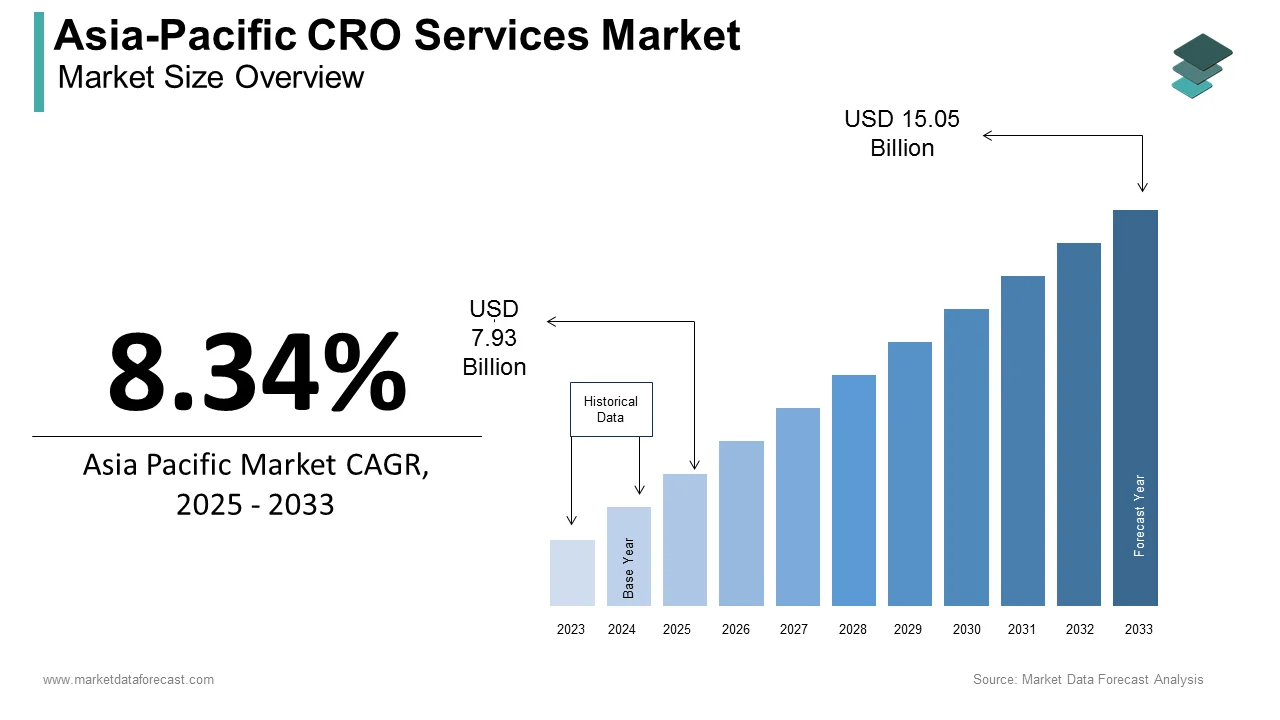
- Market Valuation: Valued at USD 7.93 billion in 2025, estimated at USD 8.59 billion in 2026, and projected to reach USD 16.31 billion by 2034, registering a strong compound annual growth rate (CAGR) of 8.34% from 2026 to 2034.
- Primary Growth Drivers: Significant cost advantages and skilled labor pools in nations like India and China, favorable government policies and regulatory reforms (e.g., streamlined trial approvals), large genetically diverse patient populations, and rapid adoption of digital and decentralized clinical trials.
Key Market Segment Metrics (2026-2034)
| Category | Leading Segment (Base Position) | Fastest-Growing / Promising Segment |
|---|---|---|
| By Service Type & Therapeutic Area | Clinical Research Services (43.2% share driven by Phase II-IV outsourcing) & Oncology (35.5% share backed by high cancer incidence and targeted therapy investments) | Laboratory Services (15.2% CAGR fueled by bioanalytical testing/central labs) & CNS Disorders (16.5% CAGR driven by neurodegenerative/mental health R&D) |
| By Country | India (28.6% market share supported by established trial ecosystems, cost-effectiveness, and diverse patient pools) | China (rapid modernization of life sciences infrastructure and aggressive biopharma investments) & Medical Device End-Users (17.3% CAGR) |
Major Market Players & Industry Structure
Market Structure: Highly competitive and dynamic landscape featuring established global multinationals (IQVIA, Parexel, Syneos Health) leveraging worldwide networks alongside agile regional and domestic CROs expanding through localized expertise and digital health integration.
Key Industry Companies: Quintiles Transnational Holdings Inc. (IQVIA), Laboratory Corporation of America Holdings, Pharmaceutical Product Development, PAREXEL International Corporation, ICON Plc, PRA Health Sciences Inc., InVentiv Health Inc. (Syneos Health), Charles River Laboratories International Inc., INC Research Holdings Inc., and WuXi PharmaTech (WuXi AppTec).
Asia-Pacific Contract Research Organization (CRO) Market Size
The Asia-Pacific contract research organization services (CRO) market was valued at USD 7.93 billion in 2025. The market is estimated at USD 8.59 billion in 2026 and is projected to reach USD 16.31 billion by 2034, growing at a CAGR of 8.34% from 2026 to 2034.
The Asia Pacific contract research organization (CRO) market includes a wide array of outsourced services provided to pharmaceutical, biotechnology, and medical device companies for drug discovery, clinical development, regulatory compliance, and post-marketing surveillance. CROs play a pivotal role in accelerating R&D timelines, reducing costs, and ensuring adherence to international quality standards. The region has emerged as a preferred outsourcing destination due to its large patient pool, cost-effective clinical trial infrastructure, and growing expertise in bioanalytics and data management.
Like, according to the International Federation of Pharmaceutical Manufacturers & Associations (IFPMA), more than 40% of global clinical trials now involve at least one site in the Asia Pacific, highlighting the region’s increasing importance in drug development. As per the Department of Pharmaceuticals, India, the country alone hosts a large number of active clinical trial sites, supported by a diverse genetic population and well-established regulatory frameworks. Similarly, China has strengthened its position through policy reforms that encourage foreign investment in R&D and streamline approval processes. With increasing demand for personalized medicine and digital transformation in clinical operations, the Asia Pacific CRO sector is undergoing rapid evolution, positioning itself as a key contributor to the global life sciences ecosystem.
MARKET DRIVERS
Cost Advantage and Competitive Labor Pool
A core element influencing the growth of the Asia Pacific contract research organization (CRO) market is the significant cost advantage offered by countries like India, China, and Thailand in comparison to Western markets.
In addition, average labor costs in the Indian pharmaceutical R&D sector are lower than those in the United States and Europe, making it an attractive destination for outsourced clinical trials and bioanalytical work.
Also, these countries have a large pool of skilled scientists, physicians, and regulatory experts who are trained in international Good Clinical Practice (GCP) standards. This combination of affordability, scalability, and talent availability reinforces the region’s appeal to multinational pharmaceutical firms seeking efficient and cost-effective R&D solutions.
Government Support and Regulatory Reforms
An additional factor contributing to the Asia Pacific CRO market is the growing support from national governments and regulatory bodies aimed at strengthening the pharmaceutical and biotech ecosystems. Countries such as South Korea, Singapore, and Malaysia have introduced favorable policies, tax incentives, and funding programs to attract foreign investment in clinical research.
As per the Indian Society for Clinical Research, the average time for clinical trial approvals dropped from 18 months to under 9 months between 2019 and 2023, enhancing operational efficiency. Similarly, in Japan, the Pharmaceuticals and Medical Devices Agency (PMDA) has collaborated with the U.S. FDA and EMA to align regulatory pathways, enabling faster drug approvals. These proactive measures have significantly enhanced the region's competitiveness and attractiveness to global pharmaceutical companies seeking reliable CRO partners.
MARKET RESTRAINTS
Intellectual Property Protection Concerns
An important restraint affecting the Asia Pacific contract research organization (CRO) market is the lingering concern over intellectual property (IP) protection, particularly in emerging economies such as Vietnam, Indonesia, and parts of India. According to the World Intellectual Property Organization (WIPO), IP-related disputes in the pharmaceutical sector increased by 18% in the Asia Pacific between 2020 and 2023, raising apprehensions among global sponsors about data confidentiality and proprietary asset security.
In China, despite recent improvements in IP laws under the revised Patent Law of 2021, multinational pharmaceutical firms remain cautious about transferring sensitive research protocols to local CROs. Until robust legal frameworks and enforcement mechanisms are universally established, IP protection will continue to be a limiting factor for full-scale outsourcing in certain APAC markets.
Complex and Fragmented Regulatory Environment
Regulatory fragmentation across the Asia Pacific poses a significant challenge to the growth of the contract research organization (CRO) market. Unlike the harmonized systems of the European Union or the U.S. Food and Drug Administration (FDA), the APAC region features varying regulatory requirements, approval timelines, and documentation standards, complicating multi-country clinical trial execution.
In Southeast Asia, regulatory authorities such as the National Institute of Drug Quality Control in Vietnam and the BPOM in Indonesia require extensive local compliance procedures, often delaying trial start dates. As per Deloitte Insights, the average time to initiate a multi-country clinical trial in APAC remains 25% longer than in North America, primarily due to administrative hurdles.
Besides, differences in ethical review board (ERB) processes and language barriers further complicate investigator engagement and patient recruitment. Without stronger regional coordination and standardization efforts, this complexity will continue to hinder the seamless expansion of CRO services across the Asia Pacific.
MARKET OPPORTUNITIES
Expansion of Digital and Decentralized Clinical Trials
A prominent opportunity in the Asia Pacific contract research organization (CRO) market lies in the rapid adoption of digital and decentralized clinical trials. As global pharmaceutical companies seek to enhance trial efficiency, reduce costs, and improve patient participation, CROs in the region are leveraging advanced technologies such as AI-driven analytics, real-world evidence platforms, and remote monitoring tools.
Also, according to McKinsey & Company, decentralized clinical trials accounted for nearly 35% of all new studies initiated in the Asia Pacific in 2023, up from just 8% in 2020. In India, CROs such as Syngene International and QuintilesIMS have expanded their digital health offerings, incorporating wearable biosensors and mobile health applications to collect real-time patient data.
Similarly, in South Korea, the Ministry of Food and Drug Safety (MFDS) introduced regulatory guidance supporting virtual trial models, encouraging CROs to adopt hybrid methodologies. With continued advancements in telemedicine, cloud-based data management, and AI-powered trial design, the Asia Pacific CRO market is well-positioned to lead the shift toward next-generation clinical research models.
Growth of Biosimilars and Specialty Therapeutics Outsourcing
The rising demand for biosimilars and specialty therapeutics presents a substantial opportunity for the Asia Pacific contract research organization (CRO) market. As global biopharmaceutical firms seek cost-effective yet compliant partners for complex molecule development, APAC-based CROs are expanding their biosimilar testing, pharmacokinetic analysis, and cell and gene therapy capabilities.
Likewise, according to the International Generic and Biosimilar Association (IGBA), Asia Pacific accounts for over 40% of global biosimilar manufacturing capacity, with India and South Korea being key contributors. Also, in India, the Department of Biotechnology reported that biosimilar clinical trials increased by 25% in 2023, driving demand for specialized CRO services.
Moreover, in South Korea, the Korea Health Industry Development Institute (KHIDI) facilitated partnerships between domestic CROs and global biotech firms to expedite regulatory submissions and international market access. With ongoing investments in biocontainment labs and GMP-certified facilities, the region is poised to capture a larger share of the high-growth biosimilar outsourcing segment.
MARKET CHALLENGES
Talent Retention and Workforce Development
One of the most pressing challenges facing the Asia Pacific contract research organization (CRO) market is talent retention and workforce development. While the region offers a vast pool of technically skilled professionals, competition for experienced personnel, particularly in data science, regulatory affairs, and biostatistics, is intensifying. In Asia Pacific, turnover rates in mid-sized CROs reached 20–25% in 2023, largely due to attrition toward larger multinational firms and tech-driven startups.
In India, the Confederation of Indian Industry (CII) reported that only 30% of life sciences graduates entering the CRO sector remained in their roles beyond three years, citing limited career progression and exposure to global trial designs. Similarly,
Further, less than half of surveyed CROs had structured upskilling programs for employees, exacerbating the shortage of senior-level project managers and clinical pharmacologists. Unless strategic investments are made in continuous learning, leadership development, and global certification programs, the ability of APAC CROs to scale and compete internationally will remain constrained.
Evolving Global Outsourcing Dynamics and Competition from Eastern Europe
The Asia Pacific contract research organization (CRO) market faces increasing competition from Eastern European countries, which are emerging as alternative outsourcing destinations for global pharmaceutical companies. As per the European Federation of Pharmaceutical Industries and Associations (EFPIA), Eastern Europe hosted over 20% of all new global clinical trials in 2023, with Poland, Hungary, and Romania gaining traction due to streamlined regulatory processes and strong scientific infrastructure.
In response, some multinational pharmaceutical firms have diversified their outsourcing strategies, leading to a slowdown in contract inflows to traditional APAC hubs. A key reason is the faster regulatory approvals and more predictable ethics committee timelines in Eastern Europe, which contrast with bureaucratic delays still present in certain APAC countries.
Apart from these, geopolitical tensions and supply chain reconfigurations have prompted some Western sponsors to reassess their dependency on single-region outsourcing.
REPORT COVERAGE
| REPORT METRIC | DETAILS |
| Market Size Available | 2025 to 2034 |
| Base Year | 2025 |
| Forecast Period | 2026 to 2034 |
| Segments Covered | By Service Type, Therapeutic Area, End-user, and Region. |
| Various Analyses Covered | Global, Regional and Country-Level Analysis, Segment-Level Analysis, Drivers, Restraints, Opportunities, Challenges; PESTLE Analysis; Porter’s Five Forces Analysis, Competitive Landscape, Analyst Overview of Investment Opportunities |
| Countries Covered | India, China, Japan, South Korea, Australia, New Zealand, Thailand, Malaysia, Vietnam, Philippines, Indonesia, Singapore, Rest of APAC |
| Market Leaders Profiled | Quintiles Transnational Holdings Inc., Laboratory Corporation of America Holdings, Pharmaceutical Product Development, PAREXEL International Corporation, ICON Plc, PRA Health Sciences Inc., InVentiv Health Inc., Charles River Laboratories International Inc., INC Research Holdings Inc., and Wuxi PharmaTech |
SEGMENT ANALYSIS
By Service Type Insights
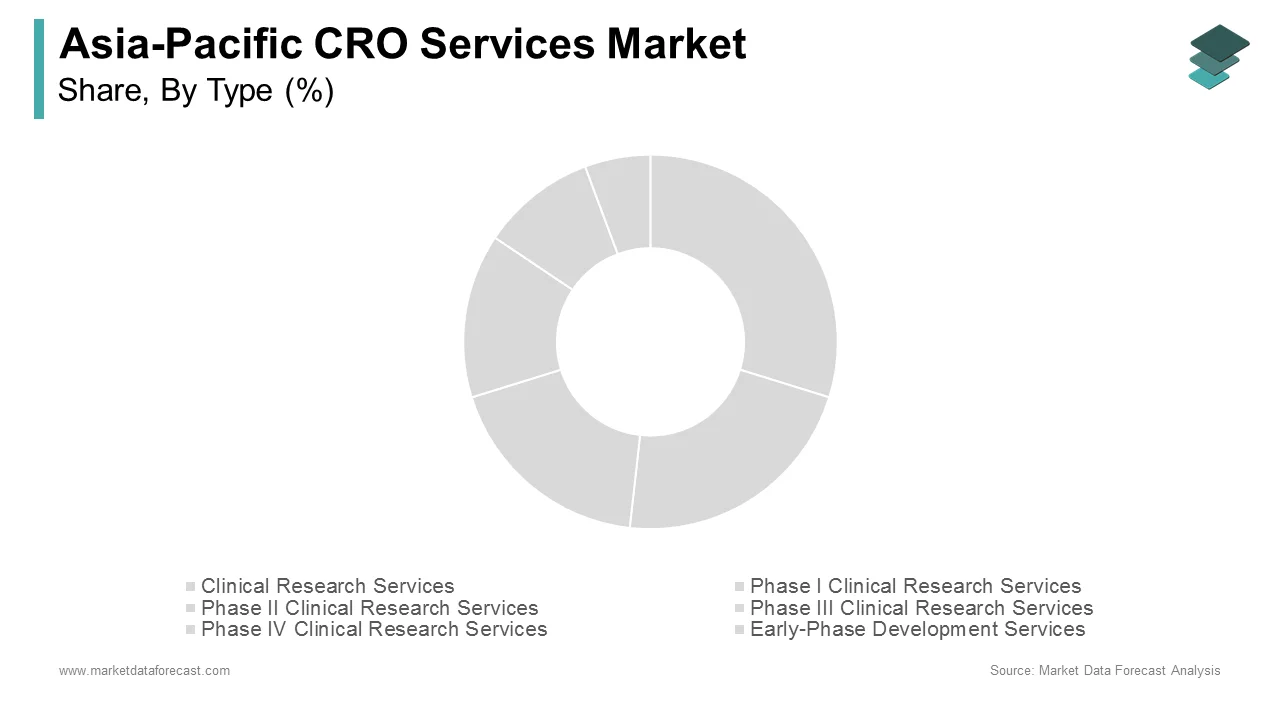
Clinical research services represented the prevailing segment in the Asia Pacific contract research organization (CRO) market, accounting for 43.2% of total revenue in 2025. This dominance is primarily attributed to the increasing outsourcing of Phase II–IV clinical trials by global pharmaceutical and biotech firms seeking cost-effective yet compliant trial execution. A main driver is the region’s large and genetically diverse patient pool, which facilitates faster recruitment and broader data collection.
Also, according to the Indian Society for Clinical Research, over 1,500 clinical trials were approved in India alone in 2023, with oncology and metabolic disorders being the most common therapeutic areas. Likewise, as per the National Medical Products Administration (NMPA) in China, there is a 20% increase in foreign-sponsored clinical trials, reflecting growing confidence in local regulatory efficiency.
In Japan, the Pharmaceuticals and Medical Devices Agency (PMDA) has aligned its approval processes with those of the U.S. FDA and EMA, enhancing cross-border recognition of trial data. These factors collectively reinforce the leading position of clinical research services in the regional CRO landscape.
Laboratory services are emerging as the fastest-growing segment in the Asia Pacific CRO market, registering a CAGR of 15.2% in the coming years. This rapid expansion is fueled by rising demand for bioanalytical testing, biomarker analysis, and centralized laboratory support in complex clinical studies.
Moreover, in Australia, the National Association of Testing Authorities (NATA) has accredited over 80 laboratories for Good Clinical Laboratory Practice (GCLP) compliance, strengthening the country's appeal for outsourced testing.
Similarly, in South Korea, the Ministry of Food and Drug Safety (MFDS) introduced AI-driven diagnostics in clinical labs, improving turnaround times and accuracy. With ongoing investments in GLP-certified facilities and automation, this segment is expected to maintain its upward trajectory across the Asia Pacific.
By Therapeutic Area Insights
Oncology remained the dominant therapeutic area in the Asia Pacific CRO market, capturing 35.5% of total contract value in 2025. The high incidence of cancer, coupled with increased investment in targeted therapies and immuno-oncology, has made oncology a focal point for clinical development in the region. One major factor driving this segment is the rising prevalence of cancer across APAC countries.
Like, according to the World Cancer Research Fund International, Asia accounts for nearly 50% of global cancer cases, with China and India witnessing significant increases in breast, lung, and colorectal cancers. Further, inn India, the Indian Council of Medical Research (ICMR) reported that new cancer diagnoses rose by 12% in 2023, prompting an uptick in clinical trials focused on early detection and personalized treatment. Similarly, as per Deloitte Insights, over 40% of all new clinical trials initiated in the region in 2023 were oncology-related, reinforcing the dominance of this therapeutic area in the APAC CRO sector.
Central Nervous System (CNS) disorders are witnessing the boom in the Asia Pacific CRO market, recording a CAGR of 16.5% during the forest period. This surge is driven by rising mental health awareness, neurodegenerative disease prevalence, and expanding R&D in psychiatric and neurological conditions.
In China, the Chinese Center for Disease Control and Prevention estimated that over 240 million people suffer from some form of mental or neurological disorder, creating a strong demand for psychotropic drugs and neurotherapeutics. Also, in South Korea, the Ministry of Health and Welfare prioritized brain health research under its "National Health Innovation Strategy 2025," leading to increased outsourcing of neuropsychiatric trials to CROs. With advancements in neuroimaging, digital biomarkers, and gene therapy, this segment is poised for sustained expansion across the Asia Pacific.
By End-User Insights
Pharmaceutical and biopharmaceutical companies constituted the biggest end-user segment in the Asia Pacific CRO market, accounting for a substantial portion of total outsourcing expenditure in 2025. This superiority is credited to the industry’s increasing reliance on external partners for drug discovery, clinical development, and post-marketing surveillance. A major contributing factor is the rising number of biotech startups and mid-sized pharmaceutical firms that lack in-house R&D infrastructure but require full-cycle CRO support.
Besides, in China, the National Medical Products Administration (NMPA) reported that foreign pharmaceutical firms accounted for 45% of all new drug applications, necessitating outsourced regulatory and clinical trial support. Moreover, in Japan, the Pharmaceuticals and Medical Devices Agency (PMDA) has encouraged collaborations between multinational sponsors and local CROs, especially in regenerative medicine and orphan drug development.
Medical device companies are coming up as the fastest-growing end-user segment in the Asia Pacific CRO market, registering a CAGR of 17.3%. This rapid expansion is driven by stricter regulatory requirements for medical device approvals and the growing complexity of clinical evaluations for implants, diagnostics, and wearable technologies.
In Japan, the Pharmaceuticals and Medical Devices Agency (PMDA) mandated clinical evidence for Class III and IV devices, compelling manufacturers to engage CROs for study design and execution. With evolving regulatory landscapes and increasing adoption of advanced medical technologies, this segment is expected to sustain its robust growth trajectory across the Asia Pacific.
COUNTRY-LEVEL ANALYSIS
India Contract Research Organization Market Insights
India secured the dominant share at 28.6% of the Asia Pacific contract research organization (CRO) market. The country’s well-established clinical trial ecosystem, cost-effectiveness, and availability of a genetically diverse patient population make it a preferred outsourcing destination. Also, the Indian government has taken steps to strengthen regulatory clarity, with the Central Drugs Standard Control Organization (CDSCO) streamlining approval timelines. In addition, India’s thriving generics and biosimilars sectors have led to increased demand for bioequivalence studies and comparative effectiveness trials.
China Contract Research Organization Market Insights
China is another major player in the Asia Pacific CRO market. The country’s rapid modernization of its regulatory environment and aggressive investment in life sciences infrastructure have positioned it as a formidable player in the global CRO ecosystem.
The government’s "Made in China 2025" strategy includes a dedicated focus on biopharmaceuticals, leading to increased public-private collaboration in clinical research. Additionally, the integration of artificial intelligence in clinical data processing and the expansion of domestic biotech firms have further fueled demand for outsourced CRO services. With sustained regulatory modernization and infrastructure investment, China is poised to maintain strong momentum in the CRO space.
Japan Contract Research Organization Market Insights
Japan commands a significant share of the Asia Pacific CRO market. The country’s sophisticated healthcare system, stringent quality standards, and deep-rooted pharmaceutical R&D expertise contribute to its strong presence in the global CRO value chain. Moreover, the country’s alignment with international regulatory bodies such as the U.S. FDA and the European Medicines Agency (EMA) has enabled smoother cross-border data acceptance. Also, the Japanese government has introduced financial incentives to promote innovation in regenerative medicine and orphan drug development, sectors that heavily rely on outsourced CRO support. With its advanced infrastructure and regulatory alignment, Japan continues to be a key contributor to the APAC CRO market.
South Korea Contract Research Organization Market Insights
South Korea is seeing rising demand in the Asia Pacific contract research organization (CRO) market. The country’s strong emphasis on innovation, coupled with a robust biopharma pipeline, has propelled the growth of CRO services in areas such as precision medicine, oncology trials, and biologics development. Additionally, South Korea’s well-developed electronic health record systems and centralized hospital networks have enhanced data accessibility for CROs. With continued investment in digital health and translational research, South Korea is consolidating its position as a key hub for advanced clinical research outsourcing in the Asia Pacific.
Australia Contract Research Organization Market Insights
Australia accounts for a notable s share of the Asia Pacific contract research organization (CRO) market. The country’s strong regulatory framework, high-quality research infrastructure, and emphasis on data integrity have positioned it as a trusted partner for global pharmaceutical and biotech firms. Besides, the country’s participation in the International Coalition of Medicines Regulatory Authorities (ICMRA) has facilitated cross-border recognition of trial data, improving sponsor confidence in local CROs. Also, government incentives such as the R&D Tax Incentive Program have encouraged CROs to invest in novel study designs and digital trial platforms. With its reputation for scientific rigor and regulatory excellence, Australia remains a key contributor to the regional CRO industry.
COMPETITIVE LANDSCAPE
The competition in the Asia Pacific contract research organization (CRO) market is intensifying as global leaders and regional players vie for a share of a rapidly expanding industry. Established multinational CROs such as IQVIA, Parexel, and Syneos Health leverage their global networks, technological expertise, and regulatory experience to secure contracts from international pharmaceutical and biotech firms. At the same time, homegrown CROs in India, China, and South Korea are scaling up their capabilities to offer cost-effective, high-quality alternatives with localized knowledge and faster turnaround times.
Market participants are increasingly focused on differentiation through innovation, service diversification, and strategic collaborations. Many CROs are investing in digital infrastructure, AI-enabled clinical trial design, and decentralized trial models to enhance efficiency and reduce time-to-market for drug developers. Additionally, there is a growing emphasis on expanding therapeutic specializations in oncology, autoimmune diseases, and rare conditions, aligning with global R&D trends. Strategic acquisitions and joint ventures are also shaping the competitive landscape, allowing firms to integrate complementary capabilities and expand their geographic reach. With the region’s growing influence in global drug development, the battle for market leadership is expected to grow more dynamic, with innovation and localization playing decisive roles in long-term success.
KEY MARKET PLAYERS
The major players in the Asia-Pacific CRO services market include
- Quintiles Transnational Holdings Inc.
- Laboratory Corporation of America Holdings
- Pharmaceutical Product Development
- PAREXEL International Corporation
- ICON Plc
- PRA Health Sciences Inc.
- InVentiv Health Inc.
- Charles River Laboratories International Inc.
- INC Research Holdings Inc.
- WuXi PharmaTech
TOP LEADING PLAYERS IN THE MARKET
- IQVIA is a global leader in contract research services and maintains a strong presence in the Asia Pacific region. The company provides end-to-end solutions, including clinical trial design, patient recruitment, regulatory consulting, and real-world evidence generation. In the Asia Pacific, IQVIA has leveraged its extensive network of investigators, digital health platforms, and regulatory expertise to support multinational pharmaceutical companies in navigating complex trial environments. Its investment in AI-driven analytics and decentralized trial models has further strengthened its competitive edge, making IQVIA a dominant force in the region’s evolving CRO landscape.
- PAREXEL International plays a crucial role in the Asia Pacific CRO market by delivering comprehensive clinical development, regulatory, and pharmacovigilance services. The company has expanded its footprint in countries like Japan, South Korea, and China, where demand for localized trial execution and regulatory compliance is rising. PAREXEL’s focus on adaptive trial design, data governance, and patient-centric approaches has enabled it to support biopharma firms in expediting drug development cycles. Its strategic partnerships with academic institutions and technology providers have also enhanced its ability to offer integrated solutions tailored to the unique regulatory and operational dynamics of the Asia Pacific region.
- Syneos Health is a key player in the Asia Pacific contract research organization (CRO) market, known for its combined clinical and commercial outsourcing model. The company has successfully embedded itself in the region by providing tailored solutions for biopharma firms seeking accelerated product development and market access. Syneos Health has expanded its operations in India, China, and Australia, where it supports both global and regional drug development programs. Its expertise in complex trial execution, along with its investment in digital infrastructure, has enabled pharmaceutical sponsors to reduce time-to-market while maintaining compliance with global standards. As the demand for integrated R&D services grows, Syneos Health continues to reinforce its position as a leading CRO in the Asia Pacific.
TOP STRATEGIES USED BY KEY MARKET PARTICIPANTS
One major strategy employed by leading players in the Asia Pacific CRO market is technology integration and digital transformation. Companies are investing in AI-driven trial planning, electronic data capture systems, and predictive analytics to enhance efficiency, reduce cycle times, and improve patient recruitment outcomes. This approach enables CROs to deliver higher-quality insights and accelerate decision-making for pharmaceutical sponsors.
Another critical approach is expanding therapeutic specialization and niche service offerings. CROs are increasingly focusing on high-growth areas such as oncology, neurology, rare diseases, and advanced therapies. By building deep domain expertise and forming strategic alliances with academic and clinical trial centers, CROs can offer differentiated services that align with evolving sponsor needs, particularly in the development of biologics and targeted therapies.
Lastly, strengthening regional footprints through strategic acquisitions and partnerships is a priority for leading CROs. Companies are acquiring boutique firms with specialized capabilities in pharmacovigilance, real-world evidence, and decentralized trials to enhance their service portfolios. These moves allow CROs to offer more comprehensive solutions while improving local market penetration and client retention across the Asia Pacific.
RECENT MARKET DEVELOPMENTS
- In March 2024, IQVIA expanded its AI-driven clinical trial platform in Singapore, integrating machine learning tools to enhance patient enrollment and real-world evidence generation for global pharmaceutical clients.
- In February 2024, PAREXEL International formed a strategic alliance with a leading Indian biotech firm to co-develop digital biomarker assessment tools, aiming to improve endpoint measurement accuracy in CNS and oncology trials.
- In January 2024, Syneos Health acquired a South Korean-based CRO specializing in late-phase studies and pharmacovigilance, strengthening its presence in the APAC regulatory landscape and expanding its bioinformatics capabilities.
- In November 2023, WuXi AppTec announced a new biotherapeutics testing facility in Shanghai, designed to support global sponsors in biosimilar and cell and gene therapy development with end-to-end contract research services.
- In October 2023, ICON PLC partnered with the Australian Institute of Tropical Health and Medicine to conduct infectious disease trials, leveraging local epidemiological expertise and regulatory support to enhance trial execution in the APAC region.
MARKET SEGMENTATION
This research report on the Asia-Pacific CRO services market is segmented and sub-segmented into the following categories.
By Service Type
- Clinical Research Services
- Phase I Clinical Research Services
- Phase II Clinical Research Services
- Phase III Clinical Research Services
- Phase IV Clinical Research Services
- Early-Phase Development Services
- Discovery Studies
- Chemistry, Manufacturing, & Control (CMC)
- Preclinical Services
- Pharmacokinetics/Pharmacodynamics (PK/PD)
- Toxicology Testing Services
- Other Preclinical Services
- Laboratory Services
- Bioanalytical Testing Services
- Analytical Testing Services
- Physical Characterization
- Raw Material Testing
- Batch-Release Testing
- Stability Testing
- Other Analytical Testing Services
- Consulting Services
By Therapeutic Area
- Oncology
- CNS
- Cardiovascular
By End User
- Pharmaceutical
- Biopharmaceutical
- Medical Device Companies
By Country
- India
- China
- Japan
- South Korea
- Australia
- New Zealand
- Thailand
- Malaysia
- Vietnam
- Philippines
- Indonesia
- Singapore
- Rest of Asia-Pacific