- Product Description Description
- Table of Contents TOC
- List of Table & Figure LOT
- Get Free Sample PDF Sample PDF
Market Size, 2025
$6.11 BnMarket Estimate, 2026
$6.55 BnMarket Forecast, 2034
$7.03 BnCAGR, 2026–2034
7.32%Asia-Pacific Endoscopy Devices Market Summary
Market Size & Growth
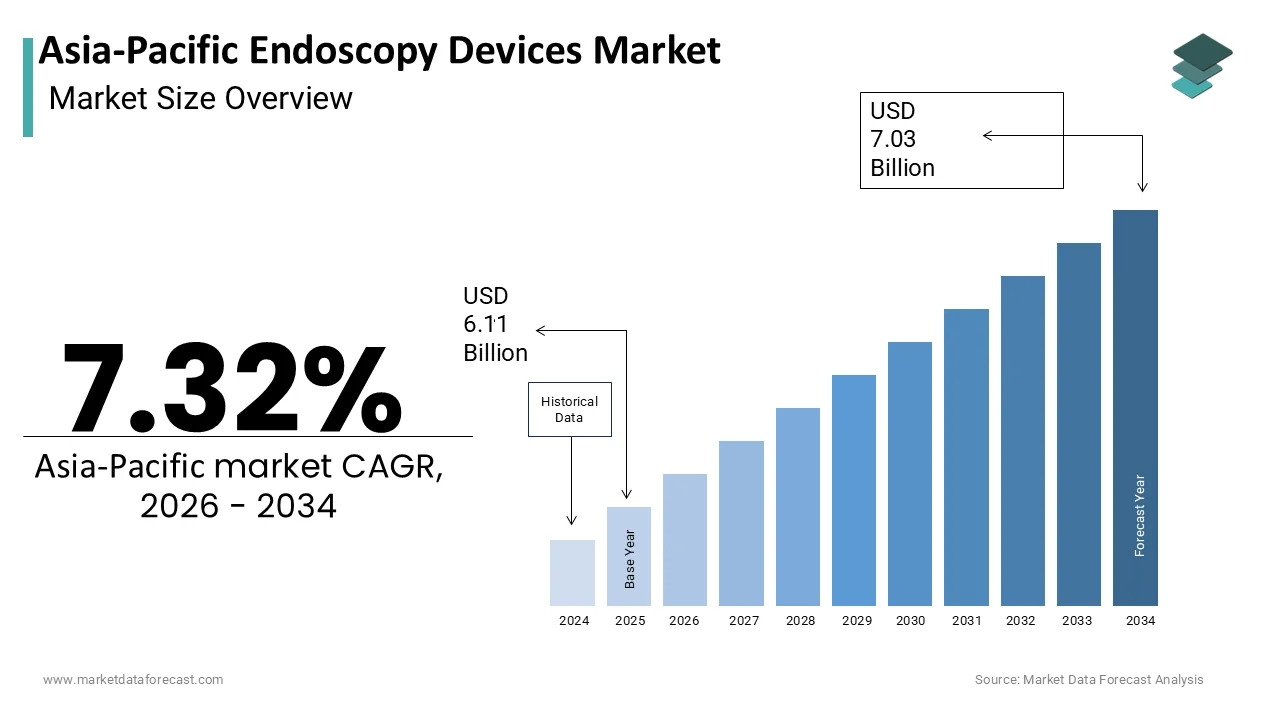
- The Asia-Pacific endoscopy devices market was valued at USD 6.11 billion in 2025.
- Expected to reach USD 6.55 billion in 2026 and USD 7.03 billion by 2034, growing at a CAGR of 7.32% from 2026 to 2034.
- China led the region, contributing 35.3% of regional revenue in 2023.
Key Market Segments
- By product: Endoscopes, Visualization Systems.
- By application: Gastrointestinal (GI) Endoscopy, Bronchoscopy.
- By country: China, India, Japan, South Korea, Australia, New Zealand, Thailand, Malaysia, Vietnam, Philippines, Indonesia, Singapore, Rest of Asia-Pacific.
- The endoscopes segment held 45.2% of total revenue in 2024; the visualization systems segment is the fastest-growing at a CAGR of 11.3% (2025–2033).
- The GI endoscopy segment captured 42.3% of total demand in 2024; the bronchoscopy segment is the fastest-growing application at a CAGR of 10.9%.
Key Drivers
- Rising prevalence of chronic gastrointestinal and respiratory diseases (peptic ulcers, IBD, Barrett's esophagus, COPD) across Asia-Pacific.
- Expansion of healthcare infrastructure and medical tourism in Thailand, India, Singapore, and Malaysia.
- Integration of AI-assisted diagnostics and digital imaging, including AI-powered endoscopes from Olympus and Fujifilm in Japan.
Key Players
Ethicon, Stryker Corporation, Karl Storz GmbH, Boston Scientific Inc., Olympus Corporation, Covidien Plc, Smith and Nephew Inc., Fujifilm Holding Corporation.
Asia-Pacific Endoscopy Devices Market Size
The Asia-Pacific Endoscopy Devices Market is projected to grow from USD 6.11 billion in 2025 to USD 6.55 billion in 2026 and reach USD 7.03 billion by 2034, registering a CAGR of 7.32% during the forecast period from 2026 to 2034.
Endoscopy devices are a wide range of minimally invasive diagnostic and therapeutic tools used across gastroenterology, urology, pulmonology, and surgical specialties. These devices include flexible and rigid endoscopes, capsule endoscopes, endoscopic ultrasound systems, and associated accessories such as biopsy forceps, snares, and imaging processors. As healthcare systems in the region focus on early disease detection, reduced hospital stays, and cost-effective treatment options, endoscopy has emerged as a critical modality in both public and private medical facilities.
Asia Pacific is witnessing a surge in demand for endoscopic procedures due to rising prevalence of chronic diseases such as gastrointestinal cancers, respiratory disorders, and metabolic conditions. In addition, the increasing geriatric population, which is more prone to age-related illnesses requiring endoscopic evaluation, further fuels market growth.
Technological advancements, including high-definition imaging, AI-integrated diagnostics, and portable endoscopic systems, have enhanced procedural accuracy and patient outcomes. Governments across countries like India, China, and South Korea are investing in healthcare infrastructure modernization, expanding access to endoscopic services in tier-2 and tier-3 cities. Moreover, rising medical tourism and growing awareness about preventive healthcare are reshaping the landscape of endoscopy device adoption. Hence, the Asia Pacific region is emerging as a key growth hub for global players in the endoscopy devices sector.
MARKET DRIVERS
Rising Prevalence of Chronic Gastrointestinal and Respiratory Diseases
The increasing prevalence of chronic gastrointestinal (GI) and respiratory diseases, which necessitate early diagnosis and intervention through endoscopic procedures, is one of the primary drivers of the Asia Pacific endoscopy devices market. Conditions such as peptic ulcers, inflammatory bowel disease (IBD), Barrett’s esophagus, and chronic obstructive pulmonary disease (COPD) are becoming more widespread, particularly in rapidly urbanizing areas. In India, GI cancer cases increased, prompting a greater reliance on endoscopic screening programs. In addition, the rise in smoking and air pollution-related lung diseases has led to higher demand for bronchoscopic evaluations. These health challenges are escalating so hospitals and clinics are increasingly adopting endoscopic devices for early detection, staging, and targeted therapy which is fueling market expansion across the Asia Pacific region.
Expansion of Healthcare Infrastructure and Medical Tourism
The rapid expansion of healthcare infrastructure and the growing prominence of medical tourism in the region is another significant driver of the Asia Pacific endoscopy devices market. Countries such as Thailand, India, Singapore, and Malaysia have developed world-class healthcare facilities that offer high-quality endoscopic procedures at a fraction of the cost compared to Western nations. Also, millions of international patients traveled to Asia for medical treatments in recent years, with diagnostic and minimally invasive procedures being among the most sought-after services. This influx has prompted hospitals to invest heavily in advanced endoscopic equipment to meet global standards and attract a larger patient base.
In India, investments in hospital infrastructure grew, with many new facilities incorporating state-of-the-art endoscopy suites. Similarly, in China, the National Health Commission is prioritizing upgrading and improving access for underserved patients. Furthermore, government initiatives aimed at digital health integration and tele-endoscopy are enhancing remote diagnostics, especially in island nations and rural areas. These developments contribute to the sustained growth of the endoscopy devices market in the Asia Pacific region.
MARKET RESTRAINTS
High Cost of Advanced Endoscopic Equipment and Procedures
The high cost of advanced endoscopic equipment and related procedures, which limits accessibility for low-income populations and smaller healthcare institutions, is a major restraint affecting the Asia Pacific endoscopy devices market. Cutting-edge technologies such as high-definition endoscopes, robotic-assisted systems, and AI-integrated imaging platforms come with substantial capital investment requirements, making them prohibitive for budget-constrained hospitals. Moreover, the cost of disposable accessories such as biopsy forceps, guidewires, and catheters adds to the overall expense of endoscopic procedures. Private healthcare providers are continuing to adopt advanced endoscopic solutions and affordability still remain a key barrier to broader market penetration.
Shortage of Trained Endoscopists and Technical Expertise
The shortage of trained endoscopists and technical personnel capable of operating complex endoscopic systems also affects the growth of the Asia Pacific endoscopy devices market. Despite increasing investments in healthcare infrastructure, there remains a critical gap in skilled professionals who can perform accurate endoscopic diagnostics and interventions. Also, the Asia Pacific region faces a severe deficit in specialized healthcare workers. In India, most district hospitals lack certified endoscopists, severely limiting the availability of timely diagnostic services in rural areas. Similarly, in the Philippines, the number of physicians trained in endoscopic procedures had not kept pace with the growing demand for GI diagnostics. This disparity results in long waiting times, misdiagnoses, and suboptimal clinical outcomes, discouraging patients from seeking early intervention.
MARKET OPPORTUNITIES
Integration of Artificial Intelligence and Digital Imaging Technologies
The integration of artificial intelligence (AI) and advanced digital imaging technologies into endoscopic systems gives potential opportunity in the Asia Pacific endoscopy devices market. These innovations enhance diagnostic accuracy, streamline workflow efficiency, and enable real-time decision-making during procedures. Like, AI-assisted endoscopy has demonstrated significant improvement in lesion detection rates compared to conventional methods. In Japan, where gastric cancer screening is a national priority, Fujifilm and Olympus have introduced AI-powered endoscopes that automatically highlight suspicious tissue regions. In China, AI-integrated endoscopic systems were being deployed in major hospitals to support early-stage cancer detection, particularly in high-prevalence areas such as Henan and Zhejiang provinces. Besides, companies like Medtronic and Boston Scientific have launched cloud-connected endoscopic platforms that allow remote consultations and data-driven analysis, enabling better patient management. South Korea has also embraced digital transformation in endoscopy, with Samsung Medical Center implementing deep learning algorithms to analyze endoscopic images and predict disease progression.
Growth of Telemedicine and Remote Diagnostic Services
The expansion of telemedicine and remote diagnostic services, particularly in geographically dispersed and underserved regions is another transformative opportunity for the Asia Pacific endoscopy devices market. With advancements in connectivity, mobile health platforms, and digital endoscopic imaging, healthcare providers are increasingly leveraging remote consultation and diagnostics to reach patients in rural and isolated communities. Telehealth initiatives in Asia have expanded significantly since the pandemic, with several governments launching nationwide digital health programs. Similarly, In Australia, tele-endoscopy has been adopted in regional hospitals to provide specialist oversight without requiring patient transfers to urban centers. This improves access to care and also create new avenues for endoscopy device manufacturers to expand their market reach.
MARKET CHALLENGES
Regulatory Complexity and Compliance Requirements
The regulatory complexity and varying compliance requirements across different countries in the region is a pressing challenges of the Asia Pacific endoscopy devices market. Unlike the harmonized frameworks seen in the European Union or the United States, Asia Pacific nations have distinct approval processes, quality standards, and post-market surveillance protocols, complicating product registration and commercialization timelines. Moreover, medical device regulations differ significantly between member economies, with some countries requiring extensive local clinical trials before granting market clearance. In China, the National Medical Products Administration (NMPA) revised its regulatory framework in 2023, imposing stricter documentation and performance validation criteria for imported endoscopic devices, increasing time-to-market for foreign manufacturers. Similarly, in India, the Central Drugs Standard Control Organization (CDSCO) implemented new Good Manufacturing Practice (GMP) norms, mandating comprehensive audits for device manufacturers seeking market authorization. These evolving regulatory landscapes create uncertainty and additional costs for global players aiming to scale operations in the region.
Limited Reimbursement Coverage and Out-of-Pocket Expenses
Limited reimbursement coverage and high out-of-pocket expenses pose a persistent challenge to the growth of the Asia Pacific endoscopy devices market. While healthcare spending has increased across the region, insurance penetration remains uneven, particularly in lower-middle-income countries where most patients bear the direct cost of diagnostic procedures. In Indonesia, the BPJS Kesehatan (national health insurance agency) covers only a limited set of endoscopic procedures, excluding newer or advanced applications, thereby limiting adoption. Even in more developed markets such as South Korea and Japan, where insurance systems are robust, coverage policies often restrict reimbursements to specific indications, delaying broader usage of endoscopic devices beyond established guidelines. This financial burden deters patients from undergoing timely screenings, ultimately affecting early disease detection rates and clinical outcomes.
REPORT COVERAGE
| REPORT METRIC | DETAILS |
| Market Size Available | 2026 to 2034 |
| Base Year | 2025 |
| Forecast Period | 2026 to 2034 |
| Segments Covered | By Product, Application and Country. |
| Various Analyses Covered | Global, Regional & Country Level Analysis, Segment-Level Analysis; DROC, PESTLE Analysis, Porter's Five Forces Analysis, Competitive Landscape, Analyst Overview of Investment Opportunities |
| Country Covered | China, India, Japan, South Korea, Australia, New Zealand, Thailand, Indonesia, Philippines, Vietnam, Singapore, Rest of APAC. |
| Market Leader Profiled | Ethicon, Stryker Corporation, Karl Storz GmbH, Boston Scientific Inc. |
SEGMENTAL ANALYSIS
By Product Insights
The endoscopes segment led the Asia Pacific endoscopy devices market by accounting for 45.2% of total revenue in 2024. This dominance of endoscopes segment is primarily attributed to the foundational role of endoscopes in diagnostic and therapeutic procedures across multiple medical specialties including gastroenterology, pulmonology, and urology. Like, gastrointestinal diseases accounted for a significant portion of hospital admissions across Asia Pacific countries in 2023, driving demand for GI endoscopes. In Japan, where gastric cancer screening is part of national health policy, Olympus Corporation and Fujifilm have deployed high-resolution endoscopes in public hospitals and clinics to enhance early detection rates. Moreover, flexible endoscopes are increasingly being used in bronchoscopy and laparoscopy, further expanding their application base. The growing prevalence of chronic obstructive pulmonary disease (COPD) and lung cancer in India and Indonesia has also contributed to increased adoption of bronchoscopes. These factors show the role of endoscopes as the leading product segment in the Asia Pacific endoscopy devices market.

The visualization systems segment is projected to grow at the fastest rate and is recording a CAGR of 11.3% between 2025 and 2033. This growth of visualization systems segment is driven by rapid technological advancements and increasing integration with AI-assisted diagnostics. These systems include high-definition imaging processors, video processors, monitors, and digital image management platforms that enhance real-time visualization during endoscopic procedures. Also, AI-integrated visualization tools have improved lesion detection accuracy, making them indispensable in early-stage cancer diagnosis. In South Korea, Samsung Medical Center implemented deep learning algorithms in endoscopic imaging systems, enabling automated identification of abnormal tissue structures. China has also witnessed substantial investment in smart visualization technologies, particularly in tier-1 cities such as Beijing and Shanghai. Apart from these, companies like Medtronic and Boston Scientific have launched cloud-connected visualization platforms that allow remote consultations and data-driven analysis, improving patient management.
By Application Insights
The gastrointestinal (gi) endoscopy segment remained a prominent application in the Asia Pacific endoscopy devices market by capturing 42.3% of total demand in 2024. The high prevalence of digestive tract disorders, including gastritis, peptic ulcers, inflammatory bowel disease (IBD), and colorectal and gastric cancers is majorly driving the growth of the gastrointestinal (gi) endoscopy segment. Moreover, gastric cancer ranks among the top causes of cancer-related deaths in East Asia, particularly in Japan, South Korea, and China. In response, governments in these countries have implemented nationwide screening programs utilizing upper GI endoscopy for early detection. Also, rising awareness about non-alcoholic fatty liver disease (NAFLD) and Helicobacter pylori infections has further fueled the adoption of GI endoscopy in both urban and semi-urban healthcare facilities. Moreover, GI endoscopy is increasingly being used in interventional procedures such as endoscopic retrograde cholangiopancreatography (ERCP) and endoscopic mucosal resection (EMR), expanding its utility beyond diagnostics.
The bronchoscopy application segment is expected to grow at the highest pace and is expected to advance at a CAGR of 10.9%. This quick expansion of bronchoscopy application segment is driven by the rising burden of respiratory diseases, increasing air pollution, and growing adoption of minimally invasive pulmonary diagnostics and interventions.
According to the Global Initiative for Chronic Obstructive Lung Disease (GOLD), chronic obstructive pulmonary disease (COPD) prevalence in Southeast Asia has significantly increased over the past decade, contributing to higher demand for bronchoscopic evaluations. In China, the Chinese Thoracic Society emphasized the importance of bronchoscopy in diagnosing tuberculosis, lung cancer, and interstitial lung diseases. Also, post-pandemic recovery has seen a surge in residual lung conditions, prompting increased use of bronchoscopy for long-term monitoring and treatment planning. Hospitals in Australia and Singapore have integrated robotic bronchoscopy into their pulmonary departments, enhancing procedural accuracy and patient outcomes. These factors show the strong growth trajectory of the bronchoscopy segment in the Asia Pacific endoscopy devices market.
COUNTRY LEVEL ANALYSIS
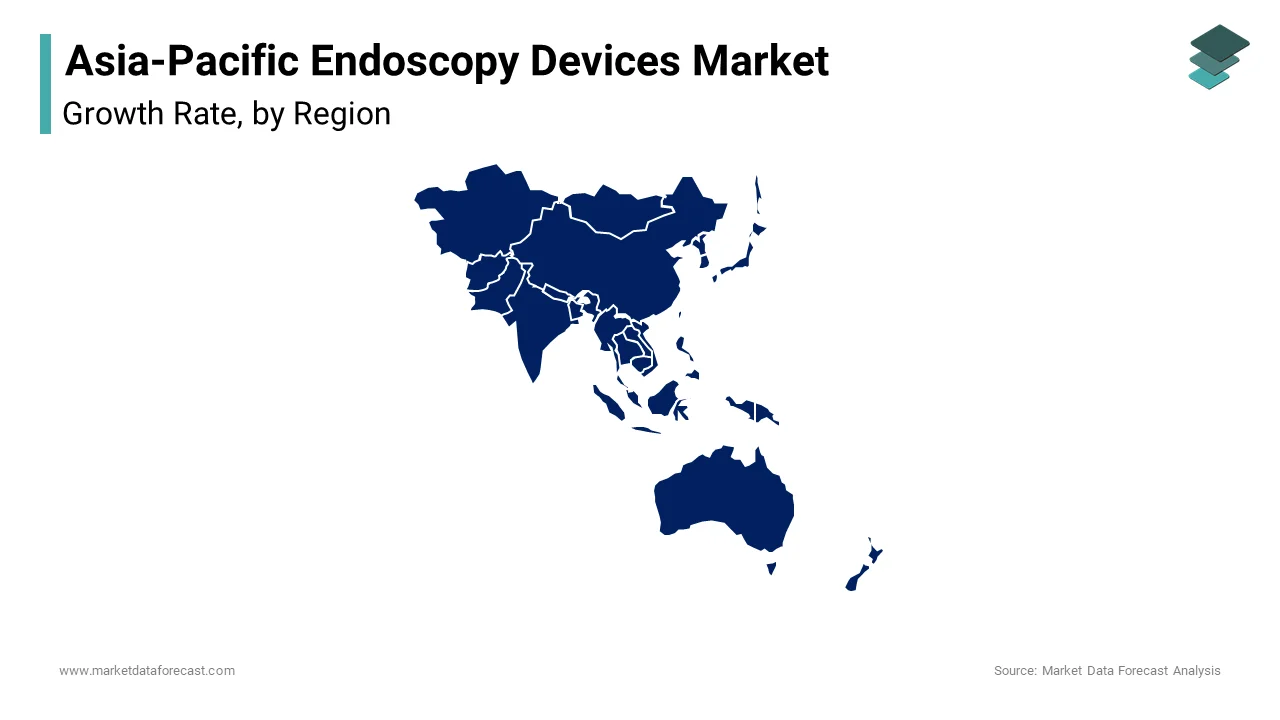
China spearheaded the Asia Pacific endoscopy devices market by contributing 35.3% of regional revenue in 2023. This dominant position is attributed to the country's vast population, rising burden of chronic diseases, and aggressive investments in healthcare infrastructure modernization. Also, government initiatives such as the Healthy China 2030 strategy have prioritized early diagnosis and minimally invasive treatments, encouraging the deployment of advanced endoscopic equipment in tier-2 and tier-3 cities. Domestic manufacturers like Aohua and Micro-Tech have expanded production capabilities, while global players including Olympus, Fujifilm, and Boston Scientific continue to strengthen their presence through partnerships and localized R&D centers.
Japan stands as another major player in the Asia Pacific endoscopy devices market and is maintaining a strong foothold due to its aging population, robust healthcare system, and high adoption of advanced endoscopic technologies. The country leads in early cancer detection, particularly in gastrointestinal malignancies, which drives consistent demand for high-resolution endoscopes and AI-assisted visualization systems. In addition, Japan is at the forefront of integrating robotics and artificial intelligence into endoscopic workflows. Companies like Olympus and Fujifilm have developed next-generation endoscopes equipped with narrow-band imaging (NBI) and AI-powered lesion recognition software, enhancing diagnostic precision. Furthermore, Japan’s regulatory environment supports rapid adoption of innovative medical devices, allowing new technologies to reach the market faster than in many other regions.
India contributes significantly to the Asia Pacific endoscopy devices market and is emerging as a key growth driver due to rising disease prevalence, expanding healthcare infrastructure, and increasing access to diagnostic services in tier-2 and tier-3 cities. Also, India’s growing medical tourism industry has led to increased adoption of high-end endoscopic equipment in private hospitals. Apollo Hospitals, Fortis Healthcare, and Max Healthcare have invested in AI-integrated endoscopic suites to attract international patients seeking cost-effective, high-quality diagnostics. Government initiatives such as Ayushman Bharat have expanded insurance coverage for endoscopic procedures, improving affordability for millions of underserved patients. Moreover, domestic manufacturers like Vision Sciences and TransAsia Biomedical are gaining traction by offering cost-effective alternatives to imported devices. These advances position India as a rapidly evolving hub within the Asia Pacific endoscopy devices market.
South Korea captures a considerable place in the Asia Pacific endoscopy devices market which is distinguished by its advanced healthcare system, high technology adoption, and strong emphasis on early disease detection. The country’s market benefits from a well-developed network of tertiary care hospitals, digital health integration, and government-backed cancer screening programs. Technological innovation plays a crucial role in South Korea’s endoscopy landscape. Institutions like Samsung Medical Center and Asan Medical Center have adopted AI-integrated endoscopic imaging systems, enhancing diagnostic accuracy and reducing procedural variability. Moreover, the country’s regulatory framework supports rapid approval of advanced medical devices, facilitating quicker access to cutting-edge endoscopic solutions.
Australia is characterized by high healthcare spending, strong regulatory oversight, and a growing emphasis on preventive diagnostics. The country’s mature healthcare system ensures widespread access to endoscopic services, particularly in metropolitan areas. Also, Australia has been at the forefront of adopting robotic-assisted endoscopy and AI-integrated visualization platforms. Major institutions such as Royal Melbourne Hospital and Sydney’s St Vincent’s Hospital have integrated digital endoscopic imaging systems to improve diagnostic precision and procedural efficiency. Medical tourism also plays a role in Australia’s market dynamics, with international patients seeking high-quality endoscopic diagnostics and minimally invasive treatments.
KEY MARKET PLAYERS AND COMPETITIVE LANDSCAPE
Some of the noteworthy companies in the Asia-Pacific endoscopy devices market profiled in this report are Ethicon, Stryker Corporation, Karl Storz GmbH, Boston Scientific Inc., Olympus Corporation, Covidien Plc, Smith and Nephew Inc., and Fujifilm Holding Corporation.
The competition in the Asia Pacific endoscopy devices market is shaped by the coexistence of global industry leaders and rapidly emerging domestic manufacturers, creating a dynamic and evolving marketplace. Multinational corporations such as Olympus, Fujifilm, and Medtronic bring technological expertise and standardized solutions, while regional players offer cost-effective alternatives tailored to local healthcare infrastructures. This mix fosters intense rivalry centered around innovation, pricing strategies, and after-sales service excellence. Governments across the region are increasingly prioritizing early disease detection and minimally invasive treatments, further intensifying demand for advanced endoscopic solutions. The expansion of private healthcare networks and medical tourism has also heightened the need for high-end diagnostic equipment, prompting companies to invest in localized R&D and distribution channels. Additionally, the growing adoption of artificial intelligence and tele-endoscopy is redefining clinical workflows, compelling firms to continuously upgrade their offerings.
Top Players in the Market
One of the leading players in the Asia Pacific endoscopy devices market is Olympus Corporation, a Japanese multinational renowned for its high-quality endoscopic systems. Olympus has been a pioneer in gastrointestinal and bronchoscopic technologies, offering advanced imaging solutions that enhance diagnostic accuracy. Its strong presence in Japan, China, and South Korea makes it a key contributor to both regional and global market dynamics.
Another major player is Fujifilm Holdings Corporation, which has emerged as a formidable competitor through its innovative endoscopy portfolio, including AI-integrated visualization systems. Fujifilm’s focus on digital endoscopy and early cancer detection has positioned it as a preferred choice among hospitals across Asia, particularly in countries with high gastric cancer prevalence.
Medtronic plc, an Irish-American medical technology giant, also holds a significant position in the region. Medtronic offers a comprehensive range of endoscopic tools and accessories, with a growing emphasis on minimally invasive surgical applications. Its strategic collaborations and localized product development have strengthened its foothold in emerging Asian markets such as India and Southeast Asia.
Top Strategies Used by Key Market Participants
Key players in the Asia Pacific endoscopy devices market employ several strategic approaches to reinforce their competitive edge. One major strategy is technology innovation and digital integration , where companies invest heavily in AI-assisted diagnostics, high-definition imaging, and robotic-assisted endoscopic platforms to enhance clinical outcomes and procedural efficiency.
Another critical approach is expanding regional presence through partnerships and localized manufacturing, allowing firms to better serve diverse healthcare ecosystems, reduce costs, and comply with local regulatory standards across emerging markets like India, Indonesia, and Vietnam.
Lastly, strengthening product portfolios through acquisitions and collaborations plays a pivotal role in enhancing market positioning. Companies frequently engage in strategic alliances with research institutions, startups, and local distributors to accelerate product development, improve service delivery, and capture niche segments within the endoscopy landscape.
RECENT HAPPENINGS IN THE MARKET
In January 2023, Olympus Corporation launched a new line of AI-powered endoscopes in Japan, designed to automatically detect early-stage lesions during GI procedures. This move aimed to enhance diagnostic accuracy and support national cancer screening programs across the country.
In May 2023, Fujifilm Holdings entered into a strategic partnership with a leading Indian hospital chain to deploy next-generation endoscopic imaging systems in tier-2 and tier-3 cities, expanding access to advanced diagnostics in underserved regions.
In September 2023, Medtronic introduced a compact, portable endoscopic platform tailored for use in ambulatory surgery centers and rural clinics across Southeast Asia, addressing the growing need for flexible and cost-effective endoscopic solutions.
In February 2024, Pentax Medical , a division of Hoya Corporation, expanded its manufacturing facility in South Korea to increase production capacity for high-definition endoscopes, supporting rising demand from hospitals and diagnostic centers.
In April 2024, Boston Scientific acquired a Singapore-based endoscopic startup specializing in AI-driven image analysis software. This acquisition is anticipated to allow Boston Scientific to integrate intelligent diagnostics into its endoscopic systems and strengthen its market presence in the Asia Pacific region.
MARKET SEGMENTATION
This research report on the Asia-Pacific endoscopy devices market has been segmented and sub-segmented into the following categories.
By Product
- Endoscopes
- Visualization Systems
By Application
- Bronchoscopy
- gastrointestinal (gi) endoscopy
By Country
- India
- China
- Japan
- South Korea
- Australia
- New Zealand
- Thailand
- Malaysia
- Vietnam
- Philippines
- Indonesia
- Singapore
- Rest of ASIA-PACIFIC