- Product Description Description
- Table of Contents TOC
- List of Table & Figure LOT
- Get Free Sample PDF Sample PDF
Market Size, 2025
$249.03 MnMarket Estimate, 2026
$262.23 MnMarket Forecast, 2034
$396.38 MnCAGR, 2026–2034
5.30%Executive Summary: Global Neuroendoscopy Market
- Market Scope: Comprehensive global analysis of the neuroendoscopy sector, detailing product categories, clinical applications, usability models, patient age groups, end-use settings, and regional profiles.
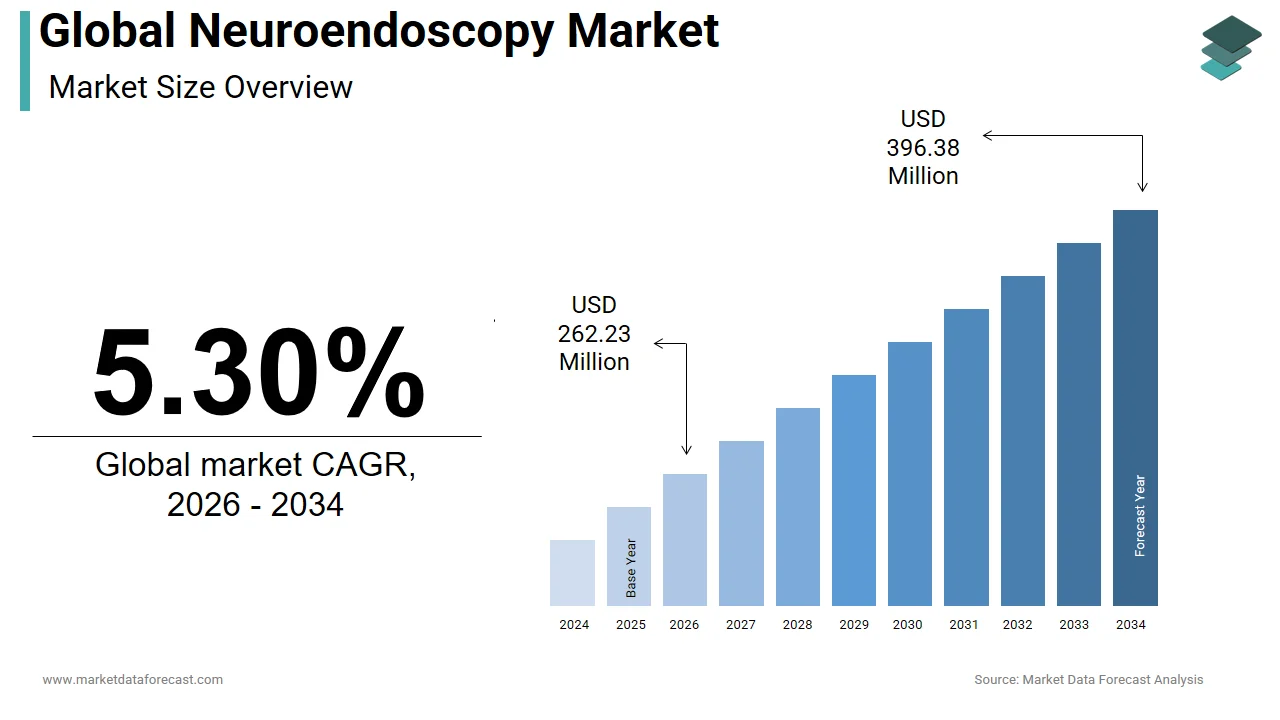
- Market Valuation: Valued at USD 249.03 million in 2025, reaching USD 262.23 million in 2026, and projected to expand to USD 396.38 million by 2034, growing at a steady CAGR of 5.30% from 2026 to 2034.
- Primary Growth Drivers: Rising demand for minimally invasive surgical treatments, growing prevalence of neurological disorders and brain tumors, aging population, and superior clinical outcomes compared to open brain surgeries.
Key Market Segment Metrics
| Category | Leading Segment (Base Position) | Fastest-Growing / High-Growth Segment |
|---|---|---|
| By Product | Rigid Endoscopes (dominated with ~70% share, driven by intraventricular applications and structural stability) | Flexible Endoscopes (growing steadily with advanced visualization capabilities and navigability) |
| By Application | Intraventricular / Transnasal Neuroendoscopy (held major shares, anchored by skull base and pituitary tumor procedures) | Transcranial Neuroendoscopy (projected at the quickest growth rate at a CAGR of 5.2% due to imaging advancements) |
| By Usability | Disposable Endoscopes (held the largest market share, supported by infection control and cost-efficiency) | Disposable Endoscopes (continuing high adoption in resource-limited and developing healthcare settings) |
| By Patient's Age | Adult Patient (accounted for the major volume share due to higher baseline incidence of neuro-oncological disorders) | Pediatric Patient (expected to expand the fastest at a CAGR of 6.89%, driven by pediatric tumor cases and specialized surgeons) |
| By End-Use | Hospitals (dominated the market, backed by advanced surgical infrastructure, specialized staff, and patient insurance) | Ambulatory Surgical Centers (growing high-growth setting for outpatient minimally invasive neurological procedures) |
| By Region | North America (market leader with dominant revenue share, backed by advanced medical infrastructure and key industry players) | Asia-Pacific (expected to experience exponential growth driven by rising brain tumor cases, expanding hospitals, and healthcare spending) |
Major Market Players & Industry Landscape
Market Structure: Highly competitive global landscape characterized by technological integrations (such as smartphone-assisted endoscopy systems) and specialized optical equipment manufacturing.
Key Companies: KARL STORZ, B. Braun Melsungen AG, Medtronic, Stryker, Olympus Corporation, and Boston Scientific Corporation.
 Download Free Sample Report
Global Neuroendoscopy Market Size
The global neuroendoscopy market was valued at USD 249.03 million in 2025, is estimated to reach USD 262.23 million in 2026, and is projected to reach USD 396.38 million by 2034, growing at a CAGR of 5.30% from 2026 to 2034.
To traverse and access the tumor, neurosurgeons perform a procedure known as neuroendoscopy, which uses an endoscope as the primary tool. In contrast, open brain surgery requires more time for recovery after surgery and causes less pain; in this procedure, the tumor is removed, or a sample of it is taken (a biopsy). Then neurosurgeons attach special instruments to the endoscope, frequently an additional endoscope with forceps and scissors. Compared to conventional brain surgery, this procedure leaves fewer scars, does less harm to common structures, and has a lower risk of consequences. For example, a study found that 12.67% of problems from minimally invasive neurosurgery were preventable. Skull base, acoustic neuromas, hydrocephalus, colloid and arachnoid cysts, and pituitary tumors are a few conditions treated with neuroendoscopy.
MARKET DRIVERS
The rising need for minimally invasive surgical treatments, an aging population, and favorable reimbursement policies are majorly propelling the growth of the neuroendoscopy market.Additionally, the advantages of neuroendoscopic surgery over traditional brain surgery, the increased prevalence of neurological illnesses, and supportive government initiatives contribute to the market's overall growth. On the other hand, the advantages of neuroendoscopic surgery over traditional brain surgery, the increased prevalence of neurological illnesses, and supportive government initiatives contribute to the market's overall growth.
Increasing rates of neurological disorders to promote neuroendoscopy market growth.Treatment for various neurological conditions, including pineal area tumors, pituitary tumors, Rathke's cleft cysts, skull base tumors, and ventricular tumors, is increasingly done using neuroendoscopy methods. As a result, its application is expanding in neuro-oncology, brain biopsies, and hydrocephalus therapy, pushing the market's expansion.
According to GLOBOCAN 2012, brain and, nervous system cancer incidence rates were projected to rise by 6.6 percent globally from 2012 to 2015. Similarly, according to the Global Burden of Disease Study 2015, neurological disorders were ranked as the second-leading cause group for deaths (9.4 million or 16.8 percent of global deaths) and the leading cause group for disability-adjusted life-years (DALYs) in 2015 (approximately 250.7 million DALYs or 10.2 percent of global DALYs).
MARKET RESTRAINTS
The high cost of equipment and treatment could become a hurdle to the growth of the neuroendoscopy market.A neuroendoscopy device can cost up to $15,000 on the list price, on average. Particularly in developing nations like India, Brazil, and Mexico, healthcare providers lack the financial money to invest in such expensive, complex technologies. Additionally, medical personnel must receive training in the proper use and upkeep of neuroendoscopy devices and apparatus; this is a severe problem due to the high expense of neuroendoscopic procedure training. Only a small percentage of surgeons choose to pursue neuroendoscopy training due to the expensive cost of the program. Neuroendoscopy operations are typically expensive because of the high cost of the equipment as well as the increased activity and maintenance expenditures. This is a significant element impeding the market for neuroendoscopy devices from expanding.
REPORT COVERAGE
| REPORT METRIC | DETAILS |
| Market Size Available | 2025 to 2034 |
| Base Year | 2025 |
| Forecast Period | 2026 to 2034 |
| Segments Covered | By Product, Application, Usability, Patient Age, End-User, Region. |
| Various Analyses Covered | Global, Regional and Country-Level Analysis, Segment-Level Analysis, Drivers, Restraints, Opportunities, Challenges; PESTLE Analysis; Porter’s Five Forces Analysis, Competitive Landscape, Analyst Overview of Investment Opportunities |
| Regions Covered | North America, Europe, Asia Pacific, Latin America, Middle East & Africa |
| Market Leaders Profiled | KARL STORZ, B.Braun, Ackermann Instrumente, Adeor Medical, Hangzhou Hawk, Claus Medical, Schindler Endoskopie, Tonglu Wanhe Medical Instrument, Machida Endoscope, Messe Dusseldorf GmbH, Medtronic, Melsungen AG, Olympus Corporation, Stryker, Boston Scientific Corporation, FUJIFILM Holding Corporation, HOYA Corporation, Cook. |
SEGMENT ANALYSIS
By Product Insights
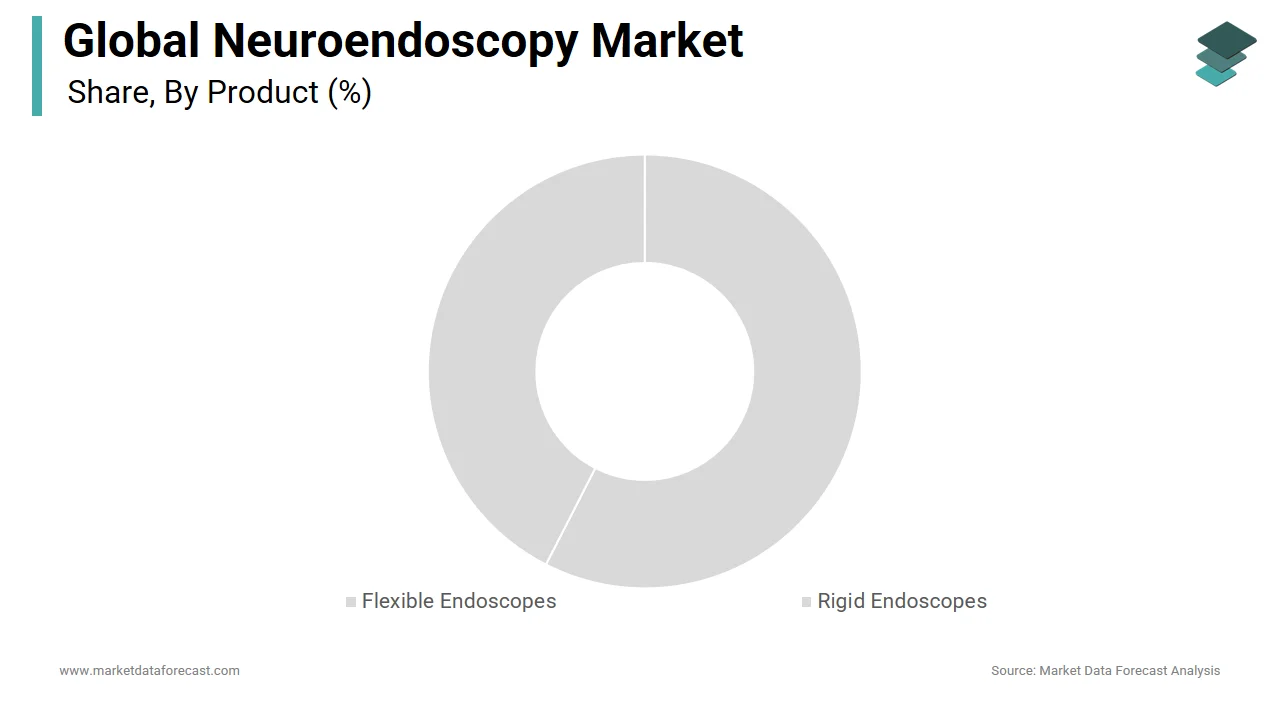
Based on the product, the rigid endoscopes segment held approximately 70% of the share in the global neuroendoscopy market in 2021. The market has grown due to increasingly rigorous endoscope applications in intraventricular neuroendoscopy and the emergence of novel products in the neuroendoscopy sector.
By Application Insights
Based on the application, the transcranial neuroendoscopy segment is anticipated to have the quickest growth rate in the global neuroendoscopy market, with a CAGR of 5.2%. Transcranial endoscopic preoperative imaging advancements have enabled neurosurgeons to plan and handle complex situations using less invasive techniques.
By Usability Insights
Based on usability, the disposable endoscopes segment held the largest share of the global neuroendoscopy market in 2024. Disposable neuroendoscopes are less expensive than reusable neuroendoscopes. Due to their single-use design, they also reduce the risk of infection. Because they are less expensive, disposable neuroendoscopes can be employed in developing nations.
By Patient's Age Insights
Based on the patient's age, the pediatric segment is anticipated to expand the fastest, with a CAGR of 6.89% during the forecast period. The demand for this market segment will be driven by the rise in pediatric tumor cases and the number of skilled pediatric neurosurgeons. In the U.S., there are 5.14 instances of brain cancer for every 100,000 children under the age of 15, according to a study published in the NCBI.
By End-Use Insights
Based on the end-user, the hospital segment dominated the global neuroendoscopy market in 2024. Modern infrastructure, patient insurance, qualified medical staff, and an increase in neurosurgeries will contribute to the market's growth. According to an NCBI study, there are now about 50,000 neurosurgeons practicing worldwide. As a result, more neurosurgeons are anticipated to meet the growing demand for neurosurgery, which will accelerate market expansion in this sector.
REGIONAL ANALYSIS
Geographically, the North American region led the global neuroendoscopy market in 2024 and is expected to continue growing during the forecast period. One of the critical drivers of regional growth is the existence of large corporations in North America. In addition, the market size in North America will also increase due to the rising occurrence of acute pediatric brain tumors. Another supporting growth is the population's growing need for minimally invasive procedures. The increasing demand for better healthcare in regions like the U.S. and Canada will grow the regions.
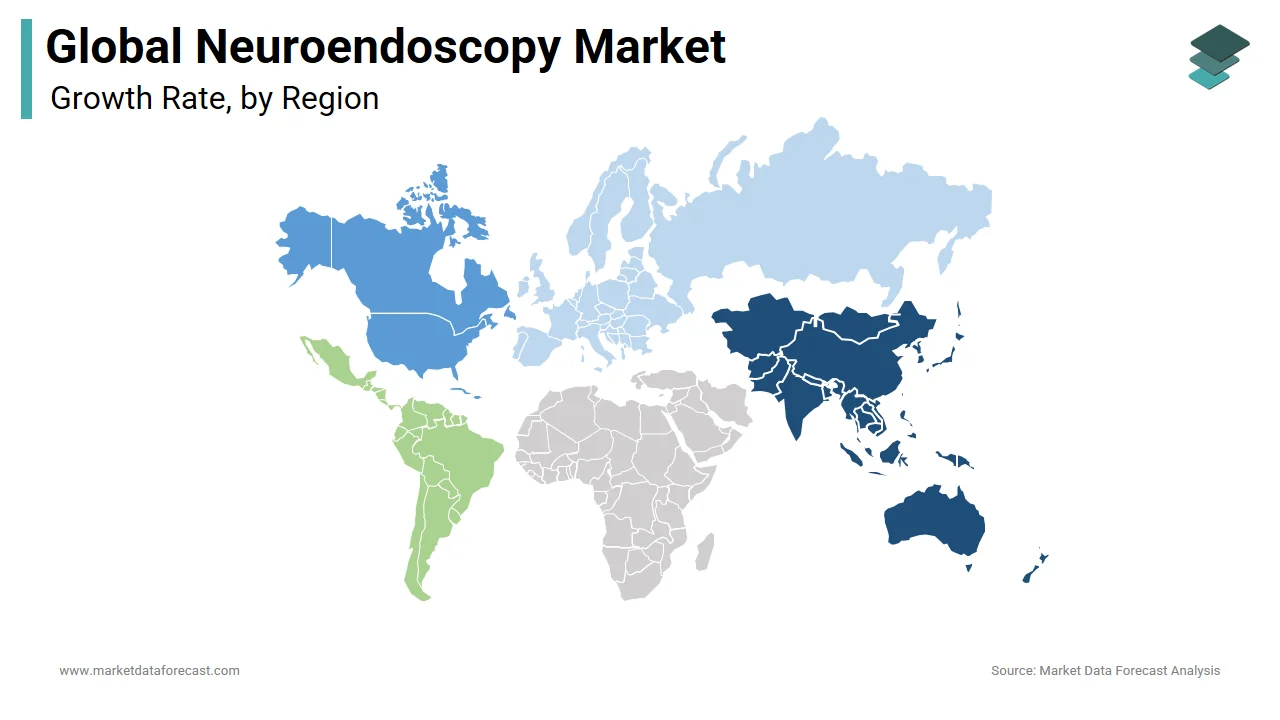
The neuroendoscopy devices market is predicted to experience exponential growth in Asia Pacific because brain tumors are becoming more common, and the frequency of hospital biopsies will suggest regional development. Rising healthcare costs in developing nations like Vietnam, India, and other countries will also help grow the Asia Pacific neuroendoscopy market. The increase in the elderly population Consequently, the senior population is growing in several countries, including India, China, Japan, etc., leading to the region's growth.
The market for neuroendoscopy in Europe is predicted to grow due to the continent's rising incidence of pituitary tumors. Additionally, skilled neurosurgeons in nations like the UK, Germany, France, and others will foster market expansion.
The MEA region accounted for a small share of the global market in 2022, and this limited segment share in the Middle East and Africa is due to the population's lack of knowledge about various minimally invasive neurosurgery treatments.
KEY MARKET PLAYERS
A few of the prominent players operating in the global neuroendoscopy market profiled in this report are
- KARL STORZ
- B. Braun Melsungen AG
- Ackermann Instrumente
- Adeor Medical
- Hangzhou Hawk
- Claus Medical
- Schindler Endoskopie
- Tonglu Wanhe Medical Instrument
- Machida Endoscope
- Messe Düsseldorf GmbH
- Medtronic
- Olympus Corporation
- Stryker
- Boston Scientific Corporation
- FUJIFILM Holding Corporation
- HOYA Corporation
- Cook
GLOBAL NEUROENDOSCOPY MARKET NEWS
- Drs. Dhandapani SS, Sushant, and Rijuneeta, endoscopic skull base surgeons from the Department of Neurosurgery and the Department of ENT at PGIMER, have performed the youngest patient operation in history to remove a massive brain tumor (craniopharyngioma) through the nose.
- Smartphones can help neurosurgeons with complex procedures. Mauricio Mandel, MD, and colleagues from So Paulo, Brazil, describe a smartphone-endoscope system for use in minimally invasive neurosurgery in a work that was just published in the Journal of Neurosurgery under the title "Smartphone-assisted minimally invasive neurosurgery." According to these authors, the instrument was straightforward, practical, economical, and excellent teaching aid for neurosurgeons with less training.
MARKET SEGMENTATION
This research report on the global neuroendoscopy market has been segmented based on product, application, usability, patients age, end-user, and region.
By Product
- Flexible Endoscopes
- Rigid Endoscopes
By Application
- Intraventricular Neuroendoscopy
- Transcranial Neuroendoscopy
- Transnasal Neuroendoscopy
By Usability
- Disposable Endoscopes
- Reusable Endoscopes
By Patient's Age
- Pediatric Patient
- Adult Patient
By End-Use
- Diagnostic Centers
- Ambulatory Surgical Centers
- Hospitals
- Others
By Region
- North America
- Europe
- Asia Pacific
- Latin America
- Middle East and Africa