- Product Description Description
- Table of Contents TOC
- List of Table & Figure LOT
- Get Free Sample PDF Sample PDF
Market Size, 2025
$0.39 BnMarket Estimate, 2026
$0.41 BnMarket Forecast, 2034
$0.65 BnCAGR, 2026–2034
5.82%Executive Summary: Asia Pacific Gluten Feed Market
- Market Scope: Comprehensive Asia Pacific gluten feed market analysis covering industrial maize processing, cost-effective livestock nutrition alternatives, precision animal nutrition, and sustainable agricultural co-product utilization.
- Market Valuation: Valued at USD 0.39 billion (2025), estimated at USD 0.41 billion (2026), and projected to reach USD 0.65 billion by 2034, registering a steady CAGR of 5.82% (2026–2034).
- Primary Growth Drivers: Industrial maize processing expansion, affordable nutrition demand, precision animal nutrition, pelleting technology, and government biofuel mandates in China, India, and Thailand. Key challenges include maize price volatility, quality consistency, and logistical constraints.
Key Market Segment Metrics (2026–2034)
| Category | Leading Segment (Position) | Fastest-Growing Segment |
|---|---|---|
| By Application, Source, Country & Region | Cattle segment (dominated in 2025 for dairy/beef nutrition fiber support) & Corn (led source segments in 2025 via wet milling infrastructure) & China (commanded largest regional share in 2025) | Aquaculture (anticipated fastest growth for sustainable formulated feeds) & Wheat (expected to grow fastest due to protein content and Australian biorefineries) & India (projected significant growth from dairy industrialization) |
| By Regional Leadership | China (largest pork/poultry producer with robust corn processing capacity) | India (driven by dairy sector industrialization and ethanol blending mandates) |
Major Market Players & Market Structure
Market Structure: Highly competitive Asia-Pacific agricultural processing and animal nutrition landscape featuring major multinational corporations driving technical services, digital supply chain tracking, and regional feed optimization.
Key Companies: Cargill Incorporated, Archer Daniels Midland Company, Wilmar International Limited, Bunge Ltd., Agrana Group, and Tereos Syral.
Asia Pacific Gluten Feed Market Size
The Asia Pacific gluten feed market size was valued at USD 0.39 billion in 2025 and is anticipated to reach USD 0.41 billion in 2026 to reach USD 0.65 billion by 2034, growing at a CAGR of 5.82% from 2026 to 2034.
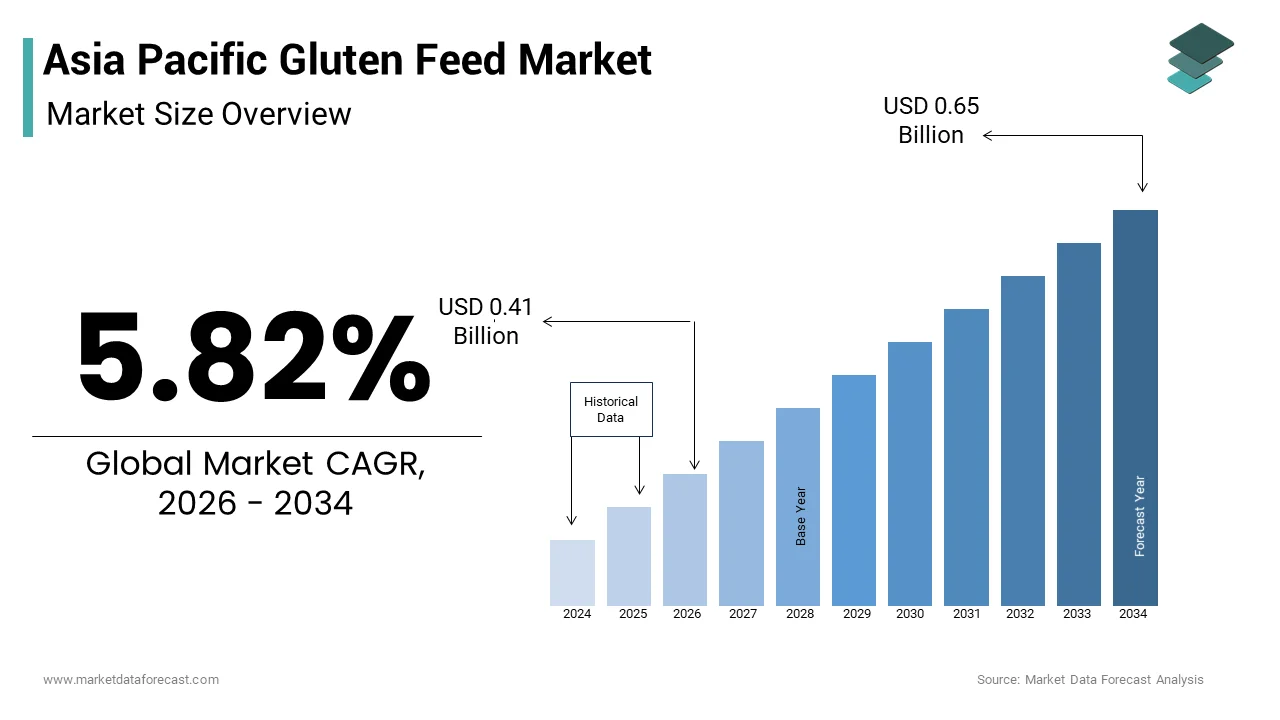
Gluten feed is a high fiber by-product derived from the wet milling of maize for starch and ethanol production. This nutrient dense ingredient serves as a cost effective alternative to traditional protein sources in livestock rations, particularly for ruminants such as cattle and buffalo. The region’s dominance in global maize production establishes a robust supply chain for this co product, supporting the growing demand for sustainable animal nutrition solutions. According to the Food and Agriculture Organization, the Asia Pacific region accounts for approximately 35% of global maize production, providing a substantial raw material base for gluten feed generation. The increasing mechanization of agriculture and expansion of biofuel industries in countries like China and India further amplify the availability of this feed ingredient. As per the United States Department of Agriculture, the rising consumption of meat and dairy products in emerging economies has intensified the need for efficient feed formulations that balance cost and nutritional value. Gluten feed offers a unique profile of digestible fiber and moderate protein, making it ideal for maintaining rumen health while reducing reliance on expensive soybean meal. Regulatory frameworks promoting the circular economy encourage the utilization of agricultural by-products, minimizing waste and enhancing resource efficiency. The integration of gluten feed into compound feed formulations supports the intensification of livestock farming, which is critical for meeting the protein requirements of a rapidly growing population. This dynamic interplay between agricultural output, industrial processing, and livestock demand defines the current landscape of the Asia Pacific gluten feed market.
MARKET DRIVERS
Expansion of Industrial Maize Processing and Ethanol Production
The rapid growth of the maize processing industry due to government mandates for biofuel blending and starch production, which significantly boosting the growth of the gluten-feed market in the Asia Pacific region. Countries such as China, India, and Thailand have implemented policies to increase ethanol usage in gasoline, leading to a surge in wet milling facilities that produce gluten feed as a primary co product. According to the International Energy Agency, biofuel production in the Asia Pacific region is expected to grow by approximately 5% annually through 2030, directly correlating with increased availability of maize derivatives. As per the National Development and Reform Commission of China, China aims to maintain consistent ethanol production levels for its fuel program, necessitating the stable operation of maize based ethanol plants which generate substantial volumes of gluten feed. This industrial shift ensures a consistent and scalable supply of gluten feed, reducing dependency on imports and stabilizing local feed markets. The economic viability of ethanol production relies heavily on the sale of co products, which is prompting processors to optimize extraction methods to maximize gluten feed yield and quality. Furthermore, advancements in milling technology have improved the nutritional consistency of gluten feed, making it more attractive to feed manufacturers. The synergy between energy security goals and agricultural processing creates a favorable environment for gluten feed production, ensuring that supply keeps pace with the rising demand from the livestock sector across the region.
Rising Demand for Cost Effective Livestock Feed Solutions
The escalating cost of traditional protein sources such as soybean meal and fish meal drives livestock producers in the Asia Pacific region to seek affordable alternatives like corn gluten feed, which is further promoting the expansion of the Asia-pacific gluten-feed market. With volatile global commodity prices and supply chain disruptions, feed formulators are increasingly incorporating gluten feed to reduce overall ration costs without compromising animal performance. According to the World Bank, food price indices have remained elevated in recent years, pressuring farmers to optimize feed expenses which constitute up to 70% of total production costs. As per the Indian Council of Agricultural Research, the inclusion of corn gluten feed in cattle diets can reduce feed costs by 15% to 20% while maintaining milk yield and weight gain metrics. The high fiber content of gluten feed supports rumen function in dairy cows, making it a valuable component in balanced rations for large ruminant populations in India and Pakistan. Additionally, the growing commercialization of poultry and swine farming in Southeast Asia encourages the use of diverse feed ingredients to mitigate risk and enhance profitability. Feed mills are reformulating diets to include higher proportions of gluten feed, leveraging its energy density and palatability. This economic imperative acts as a powerful driver, compelling the industry to adopt gluten feed as a staple ingredient in compound feeds, thereby sustaining market growth amidst financial constraints.
MARKET RESTRAINTS
Volatility in Maize Supply and Pricing Dynamics
The Asia Pacific gluten feed market faces significant restraint due to the inherent volatility in maize supply and pricing, which is influenced by climatic conditions, geopolitical factors, and trade policies. Maize is a weather sensitive crop, and erratic monsoon patterns or droughts in key producing regions such as India and China can drastically reduce harvest yields, limiting the raw material available for processing. According to the Intergovernmental Panel on Climate Change, regional climate variability is projected to affect crop yields across Asia, threatening the stability of gluten feed supplies. As per the Ministry of Agriculture and Rural Affairs in China, domestic maize prices have fluctuated due to market demand and supply balance, creating uncertainty for downstream processors. When maize prices spike, ethanol and starch producers may reduce operating rates, leading to a concurrent drop in gluten feed availability. This supply inconsistency forces feed manufacturers to seek alternative ingredients, disrupting long term procurement contracts and market stability. Furthermore, export bans or tariffs imposed by major maize exporting countries can exacerbate local shortages, driving up costs for all maize derivatives. The lack of predictable supply chains makes it difficult for gluten feed suppliers to guarantee consistent volumes and prices, hindering market expansion. Until agricultural resilience improves and trade policies stabilize, price volatility will remain a critical barrier to the sustained growth of the gluten feed sector.
Competition from Alternative Feed Ingredients
The Asia-pacific gluten-feed market encounters intense competition from other agricultural by-products and alternative protein sources that offer similar or superior nutritional profiles at competitive prices. Ingredients such as rice bran, wheat bran, distillers dried grains with soluble, and rapeseed meal are widely available in the region and often preferred by feed formulators due to their specific nutrient advantages or lower costs. According to the Food and Agriculture Organization, annual rice bran production in Asia is substantial, providing an abundant source of energy and fat for livestock feed. As per the Thai Feed Mill Association, many compound feed manufacturers substitute corn gluten feed with rice bran or cassava chips depending on seasonal price variations, limiting the market share of gluten feed. The availability of these substitutes creates a highly elastic demand environment where buyers switch ingredients based on marginal cost differences. Additionally, the rise of insect protein and single cell proteins as novel feed ingredients introduces new competitive pressures, particularly in the aquaculture and poultry sectors. These alternatives often boast higher protein concentrations or better amino acid profiles, challenging the value proposition of gluten feed. The fragmented nature of the feed ingredient market means that gluten feed must constantly compete on price and performance, restricting its ability to command premium positioning. This competitive landscape limits pricing power and market penetration for gluten feed suppliers.
MARKET OPPORTUNITIES
Growth in Organic and Sustainable Livestock Farming
The increasing consumer preference for organic and sustainably produced meat and dairy products presents a significant opportunity for the Asia-pacific gluten-feed market. Organic farming standards often prohibit the use of synthetic additives and genetically modified organisms, which is favoring natural and non GMO feed ingredients like corn gluten feed. According to the International Federation of Organic Agriculture Movements, the organic food market in Asia is growing steadily, driven by health conscious consumers in urban centers. As per the Japan Organic and Natural Foods Association, there is a rising demand for certified organic livestock products, requiring feed suppliers to provide traceable and compliant ingredients. Corn gluten feed, being a natural by-product of maize processing, aligns well with these sustainability goals when sourced from non GMO maize. Feed manufacturers can capitalize on this trend by offering certified organic gluten feed, commanding higher margins and building brand loyalty among premium livestock producers. Additionally, the emphasis on reducing the carbon footprint of agriculture encourages the use of local by-products to minimize transportation emissions. Governments in countries like Australia and New Zealand are supporting sustainable farming practices through incentives, further boosting the adoption of eco-friendly feed solutions. By positioning gluten feed as a sustainable and natural ingredient, suppliers can tap into the lucrative organic segment and differentiate their products in a crowded market.
Technological Advancements in Feed Formulation and Processing
Advancements in feed formulation software and processing technologies offer new opportunities to the expansion of the Asia-pacific gluten-feed market. Precision nutrition tools allow feed manufacturers to optimize inclusion rates of gluten feed based on real time data regarding animal requirements and ingredient composition. According to the Journal of Animal Science and Technology, the use of near infrared spectroscopy enables rapid assessment of nutrient content in gluten feed, ensuring consistent quality and accurate ration formulation. As per the Australian Centre for International Agricultural Research, innovations in pelleting and extrusion technologies improve the digestibility and palatability of high fiber feeds like gluten feed, making them more suitable for monogastric animals such as pigs and poultry. These technological improvements expand the application scope of gluten feed beyond ruminants, opening up new market segments. Furthermore, enzyme supplementation technologies can break down complex fibers in gluten feed, releasing additional energy and nutrients for animal absorption. Feed companies that invest in these technologies can offer enhanced gluten feed products with superior performance metrics, attracting customers seeking efficiency gains. Collaboration between equipment manufacturers, feed mills, and research institutions fosters innovation, driving the development of next generation feed solutions. Embracing these technological advancements allows the gluten feed industry to overcome traditional limitations and capture greater value in the evolving animal nutrition landscape.
MARKET CHALLENGES
Quality Consistency and Standardization Issues
A major challenge facing the Asia-pacific gluten feed market is the lack of uniform quality standards and consistency in nutritional composition across different suppliers and regions. Variations in maize varieties, processing methods, and storage conditions lead to significant differences in protein, fiber, and moisture content in gluten feed batches. According to various regional feed science studies, inconsistent quality poses risks to animal health and performance, causing hesitation among feed manufacturers to rely heavily on gluten feed. As per the Bureau of Indian Standards, the development of guidelines for various feed ingredients is ongoing, yet the market remains fragmented where buyers struggle to verify product quality. This variability complicates ration formulation, as nutritionists must account for wide margins of error to ensure dietary requirements are met. Contamination with mycotoxins due to improper drying and storage further exacerbates quality concerns, posing health risks to livestock and potential rejection by buyers. The lack of standardized testing protocols and certification schemes hinders trust and transparency in the supply chain. Suppliers face difficulties in commanding premium prices when quality cannot be guaranteed, leading to price wars and margin compression. Addressing this challenge requires industry wide collaboration to establish clear quality benchmarks, implement rigorous testing procedures, and promote best practices in processing and storage to ensure product reliability.
Logistical Constraints and Infrastructure Deficiencies
Inadequate logistics infrastructure and high transportation costs present significant challenges to the Asia-pacific gluten-feed market expansion. Gluten feed is a bulky commodity with relatively low value per ton, making long distance transport economically unviable without efficient rail and port facilities. According to the World Bank Logistics Performance Index, many countries in South and Southeast Asia continue to invest in improving infrastructure quality to reduce delays and freight costs. As per the Ministry of Transport in Indonesia, efforts are underway to improve road connectivity and warehousing capacity in rural areas to facilitate the movement of agricultural byproducts from processing hubs to feed mills. These logistical bottlenecks result in post harvest losses and spoilage, particularly during humid monsoon seasons when moisture control is critical. The reliance on informal transport networks further complicates supply chain visibility and reliability. Small scale farmers and feed producers in remote locations often face limited access to gluten feed due to these distribution barriers. Additionally, cross border trade is hampered by varying customs regulations and documentation requirements, slowing down regional integration. Improving infrastructure investment and streamlining logistics processes are essential to reduce costs and enhance market accessibility. Until these structural issues are addressed, the full potential of the Asia Pacific gluten feed market will remain constrained by inefficiencies in the supply chain.
REPORT COVERAGE
| REPORT METRIC | DETAILS |
| Market Size Available | 2025 to 2034 |
| Base Year | 2025 |
| Forecast Period | 2026 to 2034 |
| CAGR | 5.82% |
| Segments Covered | By Livestock, Source, and By Country |
| Various Analyses Covered | Global, Regional & Country Level Analysis, Segment-Level Analysis, DROC, PESTLE Analysis, Porter’s Five Forces Analysis, Competitive Landscape, Analyst Overview on Investment Opportunities |
| Regions Covered | India, China, Japan, South Korea, Australia, New Zealand, Thailand, Malaysia, Vietnam, Philippines, Indonesia, Singapore, and the Rest of APAC |
| Market Leaders Profiled | Ingredion Incorporated, Archer Daniels Midland Company, Commodity Specialists Company, Cargill Incorporated, The Roquette Group, Tate & Lyle Plc, Grain Processing Corporation, Bunge Ltd., Agrana Group, Tereos Syral |
SEGMENTAL ANALYSIS
By Livestock Insights
The cattle segment dominated the market in this region in 2025 and is projected to maintain its dominant position and steady demand in the Asia Pacific gluten feed market over the next few years. Ruminants possess a complex digestive system that efficiently utilizes the high fiber content of corn gluten feed, converting it into energy and microbial protein without causing acidosis. According to the Food and Agriculture Organization, the Asia Pacific region is home to a significant portion of the global cattle population, with India and China accounting for the largest shares. This vast herd size creates a consistent and substantial demand for bulk feed ingredients that support rumen health and milk production. As per the Indian Dairy Association, India remains a top milk producer, generating over 230 million tons annually, which drives intensive feeding practices where cost effective roughage alternatives like gluten feed are essential. The economic pressure on dairy farmers to reduce feed costs while maintaining yield makes gluten feed an attractive option compared to expensive concentrates. Furthermore, the growing beef consumption in countries like Australia and Southeast Asia supports the feedlot sector, where high energy density feeds are required for weight gain. The ability of gluten feed to replace a portion of forage and grain in rations without compromising performance ensures its dominance. The established supply chains and familiarity among cattle farmers further reinforce this segment's leadership, making it the primary consumer of gluten feed across the region.
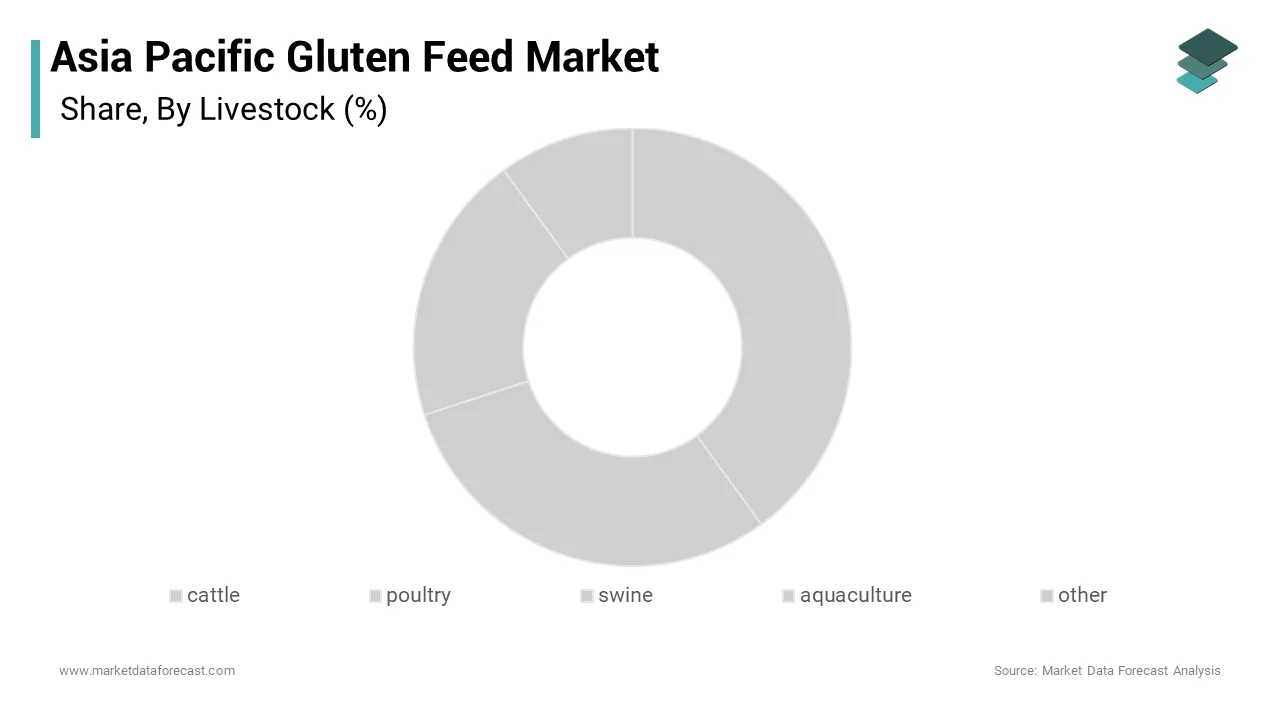
On the other side, the aquaculture segment is anticipated to witness the fastest growth in the Asia-pacific gluten-feed market over the coming years as sustainable farming practices become standard. As wild fish stocks decline, the industry is shifting toward formulated feeds that reduce reliance on fish meal, creating opportunities for alternative ingredients like corn gluten feed. According to the Food and Agriculture Organization, Asia accounts for nearly 90% of global aquaculture production, with China, Vietnam, and India being major contributors. This massive production volume necessitates millions of tons of feed annually, driving innovation in ingredient sourcing. As per the Global Seafood Alliance, the industry continues to explore plant based proteins to lower costs and improve sustainability metrics. Corn gluten feed offers a balanced profile of protein and energy, although its use is often limited by fiber content, recent advancements in enzyme technology have improved its digestibility for certain species. The rising demand for premium seafood in urban markets encourages farmers to adopt high quality compounded feeds that incorporate diverse ingredients. Government initiatives in countries like Vietnam and Indonesia to modernize aquaculture practices further accelerate the adoption of standardized feed formulations. The shift toward semi intensive and intensive farming systems requires precise nutrition, positioning gluten feed as a viable component in specialized aquafeed recipes, thus propelling this segment’s rapid expansion.
By Source Insights
The corn segment led the market by capturing the highest share of the regional market in 2025 and is estimated to hold the dominant position in this regional market throughout the forecast period owing to the region’s established industrial milling infrastructure. Corn gluten feed is a direct byproduct of corn starch and ethanol production, industries that have expanded significantly to meet energy and industrial demands. According to the United States Department of Agriculture, China and India remain among the top maize producers globally, providing an abundant raw material base for processing facilities. The established industrial ecosystem for corn processing ensures a steady and reliable supply of gluten feed, making it the most accessible and cost effective option for feed manufacturers. As per the Chinese National Grain and Oil Information Center, China produces over 10 million tons of corn gluten feed annually, primarily from its extensive ethanol and starch sectors. The nutritional profile of corn gluten feed, characterized by moderate protein and high fiber, is well understood and widely accepted by nutritionists. The logistical advantage of sourcing locally reduces transportation costs and carbon footprint, appealing to sustainability conscious buyers. Furthermore, the consistency in quality from large scale corn processors builds trust among end users. The sheer volume of corn processed in the region dwarfs other grains, ensuring that corn derived gluten feed remains the standard benchmark for price and availability, solidifying its leading position in the market.
On the other side, the wheat segment is expected to be the fastest growing source segment for gluten-feed in the Asia Pacific region and grow at a promising CAGR in the regional market over the forecast period as bio-refining capabilities continue to expand. While traditionally less common than corn, wheat gluten feed is gaining traction due to its higher protein content and favorable amino acid profile. According to the International Grains Council, wheat production in Asia remains significant, with countries like India, Australia, and Kazakhstan contributing to global supplies. The development of wheat based biorefineries in Australia and parts of China is generating more wheat gluten feed as a co product. As per the Australian Export Grains Innovation Centre, the utilization of wheat by-products in animal feed is rising as processors seek to maximize value from every ton of grain. Wheat gluten feed offers superior digestibility for certain livestock categories compared to corn, attracting niche market interest. The volatility in corn prices occasionally makes wheat a more economically viable alternative, prompting feed mills to experiment with formulation adjustments. Regulatory support for crop diversification and water efficient crops like wheat in some arid regions further boosts its cultivation and processing. Although the total volume remains lower than corn, the growth rate is higher due to the emerging nature of the supply chain and the increasing recognition of its nutritional benefits, positioning it as a dynamic growth segment.
COUNTRY ANALYSIS
China Gluten Feed Market Analysis
China dominated the Asia-pacific gluten-feed market in 2025 with the largest share of the regional market and is expected to retain its lead in the Asia Pacific gluten feed market as its modernized livestock and feed sectors continue to scale over the next few years. The country is the world’s largest producer of pork and poultry, creating an immense demand for affordable feed ingredients to support intensive farming operations. According to the National Bureau of Statistics of China, the country’s annual corn output remains robust, fueling a large wet milling industry that generates significant volumes of gluten feed. The government’s push for energy security through ethanol blending mandates has further expanded corn processing capacity, ensuring a steady supply of co products. As per the China Feed Industry Association, the compound feed production in China is massive, with gluten feed being a key component in ruminant and mixed species diets. The consolidation of small farms into larger commercial entities has increased the adoption of standardized feed formulations, boosting demand for consistent quality ingredients. Import regulations and domestic stockpiling policies influence local pricing, making domestically produced gluten feed highly competitive. The focus on reducing antibiotic use in livestock has also increased interest in high fiber ingredients that support gut health. China’s strategic investments in agricultural technology and supply chain efficiency continue to strengthen its leadership, making it the central hub for gluten feed consumption and trade in the region.
India Gluten Feed Market Analysis
India is likely to experience significant growth in its gluten feed market as the dairy sector continues to industrialize and modernize over the next few years. The dairy sector, which is predominantly composed of smallholder farmers, relies heavily on cost effective feed solutions to maintain profitability amidst fluctuating input costs. According to the Ministry of Agriculture and Farmers Welfare, India’s maize production is consistently high, supporting a growing number of starch and ethanol plants that produce gluten feed. The National Dairy Development Board reports that milk production continues to rise, driving consistent demand for nutritious and affordable feed additives. Gluten feed is particularly valued in India for its ability to replace expensive oil cakes in cattle rations without compromising milk yield. The government’s Ethanol Blending Program aims to increase the presence of biofuels in the energy mix, which will significantly increase the availability of corn based co products. As per the Indian Sugar and Bio Energy Manufacturers Association, the expansion of distilleries is creating new supply streams for gluten feed. The fragmented nature of the feed market means that local traders play a significant role in distribution, but organized feed mills are increasingly adopting standardized ingredients. The combination of dairy intensity and agricultural policy support positions India as a key growth engine for the regional gluten feed market.
Japan Gluten Feed Market Analysis
Japan is expected to maintain a stable and specialized position in the regional gluten feed market as it continues to prioritize premium quality and nutritional standards over the next few years. Despite limited domestic maize production, Japan is a major importer of feed ingredients to support its advanced dairy and beef industries, particularly the renowned Wagyu beef sector. According to the Ministry of Agriculture Forestry and Fisheries, Japan imports millions of tons of feed grains and byproducts annually to sustain its livestock population. The demand for gluten feed is driven by the need for precise nutrition to enhance meat marbling and milk quality, with importers prioritizing consistency and safety. As per the Japan Feed Mills Association, the industry is increasingly focusing on sustainable and traceable feed sources, aligning with consumer preferences for safe and high quality animal products. The aging farmer population and labor shortages have accelerated the adoption of automated feeding systems that utilize standardized compound feeds, including gluten feed. Trade agreements with major exporting countries like the United States and Australia facilitate steady imports. The high value placed on animal welfare and product quality in Japan ensures that even niche ingredients like gluten feed maintain a stable demand. The market is less sensitive to price fluctuations compared to volume driven markets, focusing instead on reliability and nutritional precision, making it a lucrative destination for high quality suppliers.
South Korea Gluten Feed Market Analysis
South Korea is projected to see moderate and steady growth in its gluten feed market as it continues to balance import dependency with technological advancements in farming over the next few years. With limited arable land, the country depends heavily on imports to meet the nutritional needs of its pig and poultry sectors, which are highly industrialized. According to the Korea Rural Economic Institute, South Korea imports millions of tons of feed ingredients annually, with corn gluten feed being a significant component due to its cost effectiveness and nutritional balance. The government’s efforts to stabilize food prices and ensure food security encourage the use of diverse feed sources to mitigate supply risks. As per the Korean Feed Association, the demand for high quality feed is rising as consumers become more concerned about meat safety and quality. The prevalence of large scale integrated farming operations allows for efficient procurement and utilization of bulk ingredients like gluten feed. Trade dynamics with major suppliers such as the United States and China influence local availability and pricing. The increasing focus on environmental sustainability in livestock farming is also driving interest in ingredients that reduce nitrogen excretion, a benefit associated with balanced fiber intake. South Korea’s strategic location and advanced logistics infrastructure make it a key entry point for feed ingredients in Northeast Asia, supporting steady market growth.
Australia Gluten Feed Market Analysis
Australia is expected to remain a vital supplier and player in the regional gluten feed market as it continues to leverage its export capabilities and high agricultural standards over the next few years. The country is a major producer of wheat and barley, and increasingly maize, supporting a growing biofuel and starch industry that generates gluten feed. According to the Australian Bureau of Agricultural and Resource Economics and Sciences, grain production in Australia is subject to climate variability but remains substantial enough to support domestic livestock and export markets. The beef and dairy industries in Australia are major consumers of gluten feed, particularly in feedlots where high energy diets are required for finishing cattle. As per Meat and Livestock Australia, the feedlot sector processes millions of cattle annually, relying on consistent and high quality feed ingredients to ensure productivity. The export orientation of the Australian agriculture sector means that surplus gluten feed is often shipped to neighboring Asian countries, integrating the local market into the broader regional supply chain. Strict biosecurity and quality assurance standards enhance the reputation of Australian feed products. The adoption of precision agriculture and sustainable farming practices further supports the efficient production of feed ingredients. Australia’s role as a reliable supplier of high quality gluten feed strengthens its importance in the regional market, balancing domestic consumption with international trade opportunities.
COMPETITIVE LANDSCAPE
The competition in the Asia Pacific gluten feed market is characterized by a mix of global agribusiness giants and regional processors who compete on price quality and reliability. Large multinational corporations leverage their extensive supply chains and financial resources to offer consistent products and technical support to large scale feed manufacturers. Regional players often compete by offering lower prices and flexible terms to small and medium sized enterprises. The market is fragmented in countries with limited domestic production where imports play a significant role. Price volatility of raw materials such as corn creates a dynamic environment where competitors must manage risk effectively. Quality consistency is a key differentiator as buyers seek reliable sources to maintain animal performance. Regulatory differences across countries add complexity to cross border trade favoring companies with strong compliance capabilities. The rise of alternative feed ingredients intensifies competition forcing suppliers to demonstrate the cost effectiveness and nutritional value of gluten feed. Strategic alliances and joint ventures are common as companies seek to expand their reach and share risks. Customer service and technical expertise are increasingly important as farmers seek guidance on optimal feed usage. This competitive landscape drives continuous improvement in efficiency and product quality across the sector.
KEY MARKET PLAYERS
Some of the major companies dominating the market, by their products and services, include
- Ingredion Incorporated
- Archer Daniels Midland Company
- Commodity Specialists Company
- Cargill Incorporated
- The Roquette Group
- Tate & Lyle Plc
- Grain Processing Corporation
- Bunge Ltd.
- Agrana Group
- Tereos Syral.
Top Players In The Market
- Cargill Incorporated maintains a robust presence in the Asia Pacific gluten feed market through its extensive network of grain processing facilities and animal nutrition divisions. The company leverages its global supply chain to source high quality corn gluten feed from major producing regions and distribute it efficiently across Asian markets. Recently Cargill has expanded its technical service capabilities in China and India to help farmers optimize feed formulations using gluten feed. They have also invested in digital platforms that provide real time pricing and logistics tracking for bulk ingredients. By partnering with local feed mills Cargill ensures consistent product availability and quality. Their focus on sustainability drives initiatives to reduce waste in the supply chain. This strategic integration of sourcing distribution and technical support solidifies their position as a key enabler of efficient livestock production in the region.
- Archer Daniels Midland Company plays a significant role in the Asia Pacific gluten feed market by supplying premium corn based co products to feed manufacturers and integrators. The company utilizes its advanced milling technologies to produce consistent and nutritious gluten feed that meets strict quality standards. ADM recently strengthened its logistics infrastructure in Southeast Asia to improve delivery times and reduce costs for customers. They have also launched educational programs for nutritionists on the benefits of including gluten feed in ruminant diets. By collaborating with research institutions ADM continues to validate the performance of their products in local conditions. Their commitment to traceability and food safety enhances trust among buyers. These efforts enable ADM to maintain strong relationships with key industry stakeholders and support the growth of sustainable animal agriculture in Asia Pacific.
- Wilmar International Limited is a leading agribusiness group in Asia with substantial involvement in the grain processing and animal feed sectors. The company produces and distributes corn gluten feed through its integrated supply chain which spans from sourcing to final delivery. Wilmar recently expanded its crushing and processing capacities in China and Vietnam to increase the availability of high quality feed ingredients. They have also implemented advanced quality control systems to ensure product consistency and safety. By leveraging their extensive distribution network Wilmar reaches a wide range of customers including smallholder farmers and large commercial operations. Their focus on innovation drives the development of customized feed solutions that address specific regional needs. This comprehensive approach allows Wilmar to capture value across the supply chain and strengthen its leadership in the Asia Pacific gluten feed market.
Top Strategies Used By Key Market Participants
Key players in the Asia Pacific gluten feed market primarily focus on vertical integration to secure raw material supplies and control production costs. Companies invest in expanding their grain processing and ethanol production facilities to ensure a steady stream of high quality gluten feed. Strategic partnerships with local feed mills and livestock producers help manufacturers tailor products to specific regional requirements and build long term loyalty. Expansion of logistics and distribution networks in emerging markets enables companies to reach remote customers and reduce delivery times. Investment in research and development drives innovation in feed formulation and nutritional analysis to enhance product value. Sustainability initiatives such as waste reduction and carbon footprint monitoring are increasingly used to differentiate brands and meet regulatory standards. Digitalization of supply chains through platforms for trading and tracking improves transparency and efficiency. These strategies collectively enable companies to navigate market volatility and maintain competitive advantages in the dynamic Asia Pacific region.
MARKET SEGMENTATION
This research report on the Asia-Pacific gluten feed market is segmented and sub-segmented into the following categories.
By Livestock
- cattle
- poultry
- swine
- aquaculture
- other
By Source
- corn
- barley
- wheat
- rye
- other
By Country
- India
- China
- Japan
- South Korea
- Australia
- New Zealand
- Thailand
- Malaysia
- Vietnam
- Philippines
- Indonesia
- Singapore
- Rest of APAC