- Product Description Description
- Table of Contents TOC
- List of Table & Figure LOT
- Get Free Sample PDF Sample PDF
Market Size, 2025
$9.45 MnMarket Estimate, 2026
$10.93 MnMarket Forecast, 2034
$35 MnCAGR, 2026–2034
15.66%Asia Pacific Intragastric Balloon Market Summary
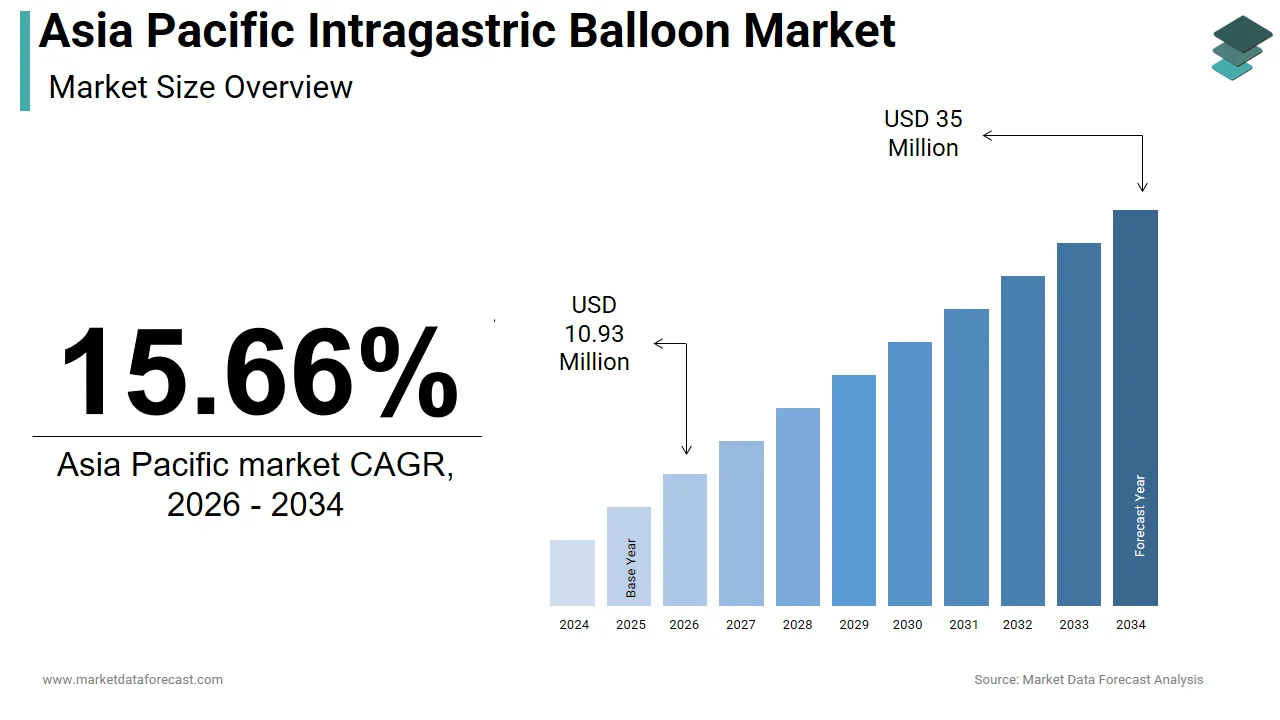
The Asia Pacific intragastric balloon market was valued at USD 9.45 million in 2025, is estimated to reach USD 10.93 million in 2026, and is projected to reach USD 35 million by 2034, growing at a CAGR of 15.66% from 2026 to 2034. Rising obesity prevalence, increasing preference for minimally invasive weight-loss procedures, and growth in medical tourism are key factors driving the market.
Key Market Trends & Insights
- China held the largest market share in 2025.
- India is expected to witness significant growth during the forecast period.
- Based on balloon type, the single intragastric balloon segment led the market in 2025.
- Based on filling material, the saline-filled segment dominated the market in 2025.
- Based on administration, the endoscopic administration segment was the leading method in 2025.
- Based on end-use, the hospitals segment accounted for the largest market share in 2025.
Market Size & Forecast
- 2025 Market Size: USD 9.45 Million
- 2026 Estimated Market Size: USD 10.93 Million
- 2034 Projected Market Size: USD 35 Million
- CAGR (2026 to 2034): 15.66%
- China: Largest market in 2025
- India: High-growth market
Asia Pacific Intragastric Balloon Market Size
The Asia Pacific intragastric balloon market was valued at USD 9.45 million in 2025, is estimated to reach USD 10.93 million in 2026, and is projected to reach USD 35 million by 2034, growing at a CAGR of 15.66% from 2026 to 2034.
Intragastric balloon is a medical device designed for non-surgical weight management through the endoscopic placement of a fluid- or gas-filled balloon within the stomach to induce satiety. These devices are primarily indicated for adults with a body mass index (BMI) of 27 kg/m² or higher, particularly those with obesity-related comorbidities such as type 2 diabetes, hypertension, and obstructive sleep apnea. Unlike bariatric surgery, intragastric balloons offer a temporary, reversible, and minimally invasive alternative, making them increasingly attractive in regions where surgical risks, cost, and cultural hesitancy toward permanent procedures are significant concerns. The expansion of this market across the Asia Pacific is closely linked to rising metabolic disease burdens and growing patient preference for less invasive interventions.
As per the World Health Organization, around 2.5 billion adults globally were overweight in 2022. Countries such as China, India, and Indonesia are witnessing accelerated urbanization and dietary shifts, further amplifying the need for scalable, non-surgical weight-loss solutions.
MARKET DRIVERS
Escalating Prevalence of Obesity and Metabolic Disorders
The rapid surge in obesity across the Asia Pacific region has emerged as a pivotal catalyst for the adoption of intragastric balloon therapy. While traditionally perceived as a Western health issue, obesity has now reached epidemic proportions in developing and developed nations alike within the region. This shift is largely attributable to sedentary lifestyles, increased consumption of processed foods, and reduced physical activity due to urban migration. Moreover, the risk profile associated with obesity in Asian populations is particularly concerning, as they tend to develop type 2 diabetes and cardiovascular diseases at lower BMIs compared to Western populations. The World Health Organization recommends lower BMI thresholds for Asian adults, defining overweight as ≥23 kg/m² and obesity as ≥25 kg/m², thereby expanding the eligible patient pool for weight-loss interventions. In India, the National Family Health Survey-5 (2021) revealed that nearly 37.1% of women and 39.4% of men in urban areas are overweight or obese. This growing disease burden has prompted healthcare systems to explore cost-effective, minimally invasive solutions. Intragastric balloons, which do not require general anesthesia or permanent anatomical alteration, align with the clinical and economic needs of both patients and providers, thus driving demand across outpatient clinics and specialty bariatric centers.
Increasing Patient Preference for Minimally Invasive Weight-Loss Procedures
A significant shift in patient behavior toward less invasive, low-risk weight-loss interventions has substantially influenced the uptake of intragastric balloon systems in the Asia Pacific region. As awareness of bariatric surgery complications—such as malnutrition, dumping syndrome, and long-term vitamin deficiencies—grows, patients are increasingly opting for temporary, reversible alternatives. The Orbera balloon, for instance, is approved for placement up to six months. Additionally, advancements in endoscopic techniques and outpatient deployment have enhanced procedural accessibility. Furthermore, private healthcare providers in countries like Thailand and India are integrating intragastric balloons into medical tourism packages, offering comprehensive weight-management programs that combine device placement with nutritional counseling and follow-up care. This convergence of clinical innovation, patient autonomy, and service customization is fueling the expansion of the intragastric balloon ecosystem across diverse healthcare settings.
MARKET RESTRAINTS
Limited Reimbursement Coverage and High Out-of-Pocket Costs
The absence of comprehensive reimbursement policies is one of the most significant barriers to the widespread adoption of intragastric balloons in the Asia Pacific region. Unlike bariatric surgeries, which are partially covered in certain public and private insurance schemes in countries like Australia and South Korea, intragastric balloon procedures are predominantly classified as elective or cosmetic, rendering them ineligible for insurance claims. This financial disincentive stifles market penetration, particularly in rural and underserved areas where obesity rates are often higher but purchasing power is lower, thereby constraining equitable access and long-term scalability.
Shortage of Trained Endoscopists and Specialized Bariatric Infrastructure
The successful deployment of intragastric balloons necessitates skilled gastroenterologists proficient in advanced endoscopic techniques, a resource that remains critically scarce across much of the Asia Pacific region. As per the Asian Pacific Association of Gastroenterology, there is a severe maldistribution of trained endoscopists, with urban centers in countries like China and India hosting the majority of specialists, while rural areas face a deficit in procedural capacity. In Indonesia, the ratio of gastroenterologists to population stands far below the recommended standard. This shortage is compounded by the lack of standardized training programs for bariatric endoscopy, which is not yet a recognized subspecialty in most regional medical curricula. Additionally, the need for follow-up endoscopic removal after six to twelve months increases the demand for repeat specialist access, further straining limited resources. This scarcity of human and technical capital not only delays patient access but also increases procedural risks due to operator inexperience, undermining confidence in the technology among both clinicians and patients.
MARKET OPPORTUNITIES
Expansion of Medical Tourism for Bariatric Interventions
The Asia Pacific region is increasingly positioning itself as a global hub for medical tourism, and intragastric balloon therapy is emerging as a sought-after service within this domain. Countries such as Thailand, India, Malaysia, and South Korea have developed sophisticated healthcare infrastructures that combine advanced medical technology with cost-efficient care, attracting patients from the Middle East, Europe, and Oceania. The institutions offer bundled packages that integrate pre-procedure assessments, endoscopic placement, dietary coaching, and post-removal follow-up, enhancing patient experience and outcomes. The cost differential is a major draw: a comparable procedure in the United States is high, whereas in India or Malaysia, it is available for less than that. Moreover, the absence of long waiting times, common in public healthcare systems in the UK and Canada, further enhances regional appeal. Governments are also supporting this trend; Malaysia’s MyHealthcare Travel Council has designated bariatric endoscopy as a priority service under its national medical tourism strategy. This convergence of affordability, quality, and accessibility presents a strategic growth vector for device manufacturers and healthcare providers alike.
Strategic Collaborations Between Device Manufacturers and Local Healthcare Providers
Growing alliances between global intragastric balloon manufacturers and regional healthcare networks are unlocking new pathways for market penetration and patient outreach. Companies such as Allurion Technologies, ReShape Lifesciences, and Baromed have initiated partnerships with hospital chains and endoscopy centers across the Asia Pacific to expand clinical adoption and training. These partnerships often include technology transfer, physician training, and joint marketing initiatives, which help overcome regulatory and educational barriers. Also, the synergies not only enhance device visibility but also standardize clinical protocols, improve patient outcomes, and build trust in minimally invasive therapies. With obesity rates rising and healthcare systems seeking scalable solutions, such alliances represent a sustainable model for expanding access to innovative weight-management technologies.
MARKET CHALLENGES
Variable Regulatory Pathways and Approval Delays
The fragmented regulatory landscape across the Asia Pacific poses a significant operational hurdle for intragastric balloon manufacturers seeking market entry. Unlike the harmonized approval mechanisms in the European Union or the centralized FDA process in the United States, each country in the region maintains distinct regulatory requirements, timelines, and clinical evidence standards. In China, the National Medical Products Administration mandates local clinical trials for most Class III medical devices. India’s Central Drugs Standard Control Organization revised its Medical Device Rules in 2017, which came into force in January 2028. Countries like Vietnam and the Philippines lack dedicated pathways for endoluminal devices, forcing manufacturers to navigate ambiguous classifications. This regulatory unpredictability increases commercial risk, delays product launches, and discourages investment in regional R&D. Moreover, post-market surveillance requirements vary widely, complicating compliance. For instance, Australia’s Therapeutic Goods Administration enforces stringent adverse event reporting, while in Bangladesh, monitoring mechanisms are underdeveloped. These disparities hinder the uniform rollout of next-generation balloons, such as those with remote fill/deflate capabilities or integrated metabolic sensors, ultimately slowing innovation diffusion.
Patient Non-Adherence and Suboptimal Long-Term Outcomes
Long-term success is heavily dependent on patient adherence to post-procedure lifestyle modifications, a factor that remains a critical challenge across the Asia Pacific region. Clinical studies indicate that without structured dietary counseling and behavioral support, weight regain occurs in many of patients within several months of balloon removal. Cultural dietary habits, such as high carbohydrate intake in South and Southeast Asia, further complicate adherence. Additionally, the absence of integrated care models that combine device therapy with sustained behavioral intervention limits clinical efficacy and diminishes provider confidence. Without robust patient engagement frameworks, the intragastric balloon risks being perceived as a short-term fix rather than a component of comprehensive obesity management, thereby constraining its long-term clinical and commercial viability.
REPORT COVERAGE
| REPORT METRIC | DETAILS |
| Market Size Available | 2025 to 2034 |
| Base Year | 2025 |
| Forecast Period | 2026 to 2034 |
| Segments Covered | By Balloon Type, Filling Material, Administration, End User, and Region. |
| Various Analyses Covered | Global, Regional and Country-Level Analysis, Segment-Level Analysis, Drivers, Restraints, Opportunities, Challenges; PESTLE Analysis; Porter’s Five Forces Analysis, Competitive Landscape, Analyst Overview of Investment Opportunities |
| Countries Covered | India, China, Japan, South Korea, Australia, New Zealand, Thailand, Malaysia, Vietnam, Philippines, Indonesia, Singapore, Rest of APAC |
| Market Leaders Profiled | Lexel Medical, MEDSIL, Endalis, ReShape Lifesciences, Spatz Medical, Allurion Technologies Inc., Obalon Therapeutics, and Silimed Indústria de Implantes Ltda. Apollo Endosurgery Inc., and others. |
SEGMENTAL ANALYSIS
By Balloon Type Insights
The single intragastric balloon segment dominated the Asia Pacific market by capturing an estimated 64.2% of total revenue in 2024. This segment’s dominance is attributed to its regulatory precedence, clinical familiarity, and streamlined procedural workflow. The Orbera, Allurion, and Spatz3 systems, single-balloon platforms, have secured regulatory clearances in over ten Asia Pacific countries, enabling widespread clinical adoption. The established safety and efficacy profile of single-balloon systems, validated through extensive clinical trials, is a primary driver of this segment’s progress. Additionally, single balloons require only one endoscopic session for placement and removal, minimizing procedural complexity. Furthermore, training programs for gastroenterologists in India, South Korea, and Australia are primarily designed around single-balloon deployment, creating a self-reinforcing cycle of preference and expertise. The simplicity of volume adjustment and compatibility with standard endoscopic ports further solidify its position as the default choice in both public and private healthcare settings.
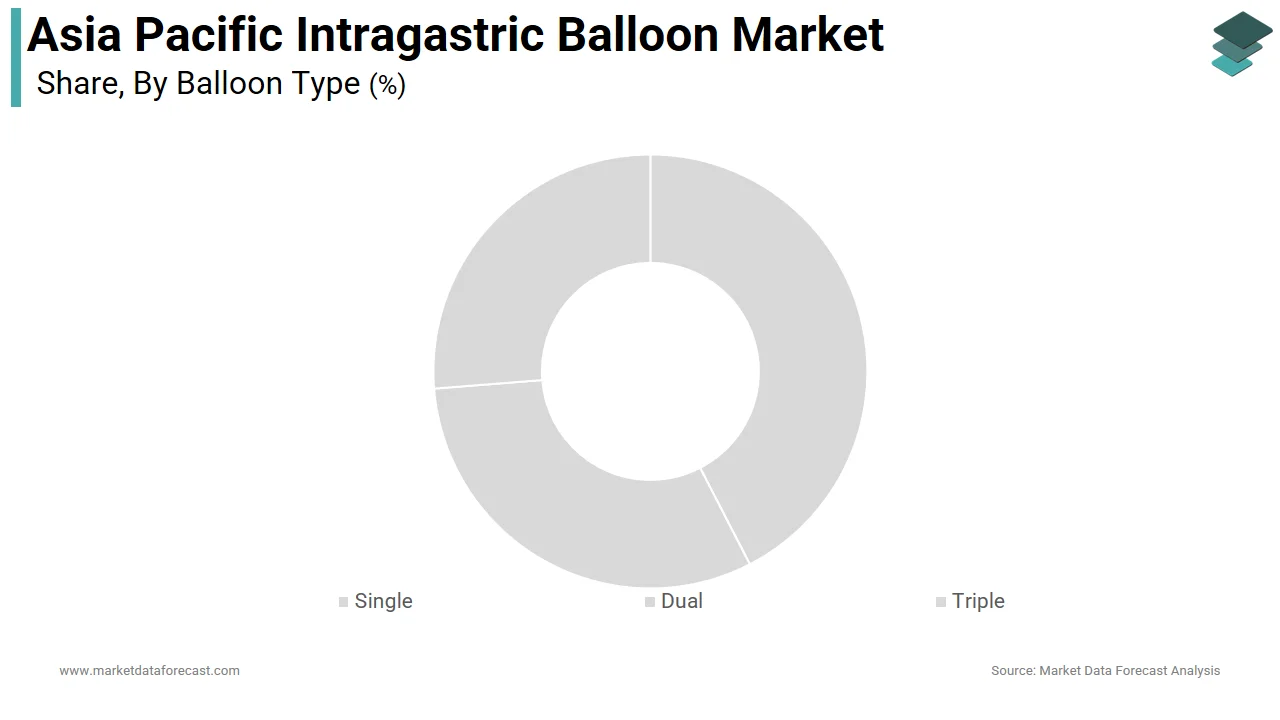
The triple intragastric balloon segment is emerging as the fastest-growing and is projected to expand at a CAGR of 14.7% from 2026 to 2034. This accelerated growth is because of its enhanced mechanical stability and superior satiety induction. Unlike single balloons, which may migrate or deflate prematurely, triple balloons distribute gastric pressure more evenly, reducing the risk of ulceration and improving tolerance. A further critical factor is the psychological advantage: the segmented design allows for phased deflation, enabling clinicians to sustain motivation through staged volume reduction. Moreover, manufacturers like Obalon (before its restructuring) and newer entrants from India’s biotech sector are investing in modular balloon systems that can be adjusted remotely, aligning with digital health trends. These technological differentiators, combined with rising demand for personalized obesity therapy, are propelling the triple-balloon segment into a leadership trajectory despite its current niche status.
By Filling Material Insights
The saline-filled intragastric balloons segment held a commanding share of the Asia Pacific market in 2025. This dominance is primarily driven by safety considerations and regulatory acceptance. Saline-filled devices, such as the Orbera and ReShape Dual, are endoscopically placed under direct visualization, and in the event of rupture, the saline is harmlessly absorbed by the body, eliminating risks of systemic toxicity. Additionally, saline balloons are compatible with MRI and CT imaging, a critical advantage in regions with high comorbidity rates. Furthermore, saline systems allow for volume titration during placement, enabling clinicians to customize balloon size based on gastric capacity. The availability of real-time endoscopic monitoring during inflation further enhances procedural control, making saline the gold standard in clinical practice across hospitals and ambulatory centers.
The Gas-filled intragastric balloons segment is growing at the fastest rate with a projected CAGR of 12.3% in the coming years. This growth is fueled by the rise of swallowable, non-endoscopic balloon systems, most notably the Allurion Elipse, which utilizes air as its filling agent. The key driver is patient convenience: the Elipse balloon requires no sedation or endoscopy for placement or removal, broadening access to primary care and non-specialist clinics. An additional factor is the rapid deployment capability. The absence of endoscopic infrastructure requirements enables rollout in tier-2 and tier-3 cities, where gastroenterologists are scarce. Additionally, gas-filled balloons are lighter and less likely to cause mechanical pressure necrosis, a concern with oversized saline devices. These advantages are catalyzing a paradigm shift toward non-endoscopic, patient-centric obesity interventions, positioning gas-filled systems as the vanguard of next-generation intragastric therapy.
By Administration Insights
The endoscopic administration segment remained the dominant method in the Asia Pacific intragastric balloon market by accounting for a substantial share of all procedures in 2025. This dominance is rooted in the entrenched infrastructure of gastrointestinal endoscopy and the regulatory requirement for direct visualization during device placement. Moreover, endoscopic placement allows for real-time assessment of gastric anatomy, enabling clinicians to exclude patients with hiatal hernias or active ulcers conditions that contraindicate balloon use. Additionally, endoscopic administration facilitates immediate volume adjustment and concurrent biopsy or therapy, enhancing clinical utility. The widespread availability of endoscopy training programs across medical universities in India, Malaysia, and Thailand further entrenches this method as the standard of care, ensuring continuity in clinical practice and regulatory compliance.
The pill form administration route is experiencing the most rapid expansion, with a projected CAGR of 15.1% from 2026 to 2034. This surge is driven by the disruptive potential of swallowable balloons, particularly the Allurion Elipse, which dissolves autonomously after 16 weeks. The principal advantage is accessibility: pill-based systems eliminate the need for sedation, specialized endoscopy suites, and trained gastroenterologists, enabling deployment in primary care clinics, pharmacies, and corporate wellness centers. Another driver is patient autonomy. Additionally, the absence of procedural downtime enhances compliance. These operational and experiential benefits are redefining the delivery model of obesity care, positioning pill-form administration as the future of decentralized, scalable weight management.
By End-Use Insights
The hospitals segment represented the biggest end-use in the Asia Pacific intragastric balloon market by commanding an estimated 64.6% of total procedures in 2024. This position is underpinned by the complex nature of patient selection, the need for multidisciplinary coordination, and the integration of balloon therapy within broader bariatric pathways. In countries like China and India, where obesity is increasingly managed as a chronic disease, hospitals serve as central hubs for metabolic assessment, including HbA1c testing, liver ultrasound, and cardiovascular risk profiling, prerequisites for balloon eligibility. Additionally, hospitals are the primary sites for emergency intervention in case of complications such as balloon deflation or gastric obstruction. Furthermore, the concentration of endoscopic equipment, trained personnel, and electronic health records in hospitals creates an ecosystem conducive to standardized, high-quality care, ensuring their continued dominance in device administration.
The Ambulatory Surgery Centers (ASCs) segment is the fastest-growing end-use and is projected to expand at a CAGR of 13.8% through 2033. This growth is driven by cost efficiency, procedural standardization, and rising demand for outpatient care. Unlike hospitals, ASCs specialize in same-day interventions, offering streamlined scheduling, reduced overhead, and lower infection rates. These centers are increasingly adopting intragastric balloon placement as a core service, leveraging their expertise in endoscopic mucosal resection and polypectomy. A further factor is the rise of private-pay models, citing higher patient satisfaction and faster turnover. Additionally, medical tourism operators prefer ASCs for their boutique, patient-centric environments. With obesity management shifting toward preventive and lifestyle-oriented models, ambulatory centers are well-positioned to deliver integrated, non-emergency care, making them the epicenter of market innovation.
COUNTRY-LEVEL ANALYSIS
China Intragastric Balloon Market Insights
China stood as the largest national market for intragastric balloons in Asia Pacific by accounting for an estimated 28.2% of regional revenue in 2024. The country’s position is driven by its massive obesity burden and aggressive healthcare modernization. With over 300 million adults classified as overweight or obese, as reported by the Chinese Center for Disease Control and Prevention, demand for non-surgical interventions is surging. Major hospitals in Beijing, Shanghai, and Guangzhou have established dedicated metabolic centers, integrating intragastric balloons into multidisciplinary care pathways. Additionally, local manufacturers such as Micro-Tech Nanjing are developing cost-competitive balloon systems, reducing reliance on imports. However, reimbursement remains limited, restricting access to urban, affluent populations.
India Intragastric Balloon Market Insights
India is another key player in the market, which is fueled by rising obesity rates and a burgeoning medical tourism sector, as per the Indian Brand Equity Foundation. The National Family Health Survey-5 (2021) revealed that many urban women are overweight, creating a vast eligible population. Private hospital chains like Apollo and Fortis have launched non-surgical weight-loss programs featuring Allurion and Orbera balloons, often bundled with nutrition counseling. India’s cost advantage has made it a preferred destination for patients from the Middle East and Southeast Asia. The government’s Ayushman Bharat scheme, while not yet covering balloons, has expanded diagnostic access, indirectly supporting patient identification. Moreover, domestic startups are developing AI-driven adherence platforms, enhancing post-procedure outcomes.
Japan Intragastric Balloon Market Insights
Japan is distinguished by its high procedural standards and aging population. With obesity rates lower than in other regions but metabolic complications rising, intragastric balloons are increasingly used as a bridge to lifestyle modification. The country’s advanced endoscopic infrastructure enables high procedural precision. However, cultural reluctance toward weight-loss interventions and strict regulatory timelines slow adoption. Still, partnerships with Olympus and Fujifilm are driving innovation in balloon monitoring and integration with digital health records.
Australia Intragastric Balloon Market Insights
Australia is characterized by strong clinical governance and high patient awareness, as per the Australian Institute of Health and Welfare. With 67% of adults overweight, public and private providers are expanding metabolic services. The Therapeutic Goods Administration has approved several balloon systems, and private insurers like Bupa are piloting coverage for select cases. Academic centers are conducting long-term outcome studies, contributing to evidence-based practice. The emphasis on multidisciplinary care ensures high retention and better weight maintenance, setting a benchmark for regional quality.
South Korea Intragastric Balloon Market Insights
South Korea holds a notable share of the market and is driven by medical innovation and aesthetic consciousness, as reported by the Korea Health Industry Development Institute. The country has one of the lowest obesity rates in Asia, but demand for body contouring and metabolic optimization is high among younger demographics. Seoul-based clinics offer premium balloon packages with genetic testing and AI coaching. The Ministry of Food and Drug Safety has fast-tracked approvals for next-gen devices, and local R&D in biodegradable materials is gaining momentum. This blend of technology, aesthetics, and preventive care positions South Korea as a high-value, innovation-led market.
COMPETITIVE LANDSCAPE
The competitive landscape of the Asia Pacific intragastric balloon market is characterized by a dynamic interplay between global innovators and regional specialists vying for clinical dominance and market penetration. Multinational companies leverage technological differentiation and digital integration to establish premium positioning, while local manufacturers focus on affordability and regulatory agility to capture volume in emerging economies. The absence of universal reimbursement creates a fragmented demand environment, prompting firms to target private-pay segments and medical tourism channels. Competition is intensifying around patient experience, with companies investing heavily in non-endoscopic delivery, remote monitoring, and behavioral support platforms. Strategic collaborations with hospitals, endoscopy centers, and digital health firms are critical for scaling operations and enhancing service delivery. Regulatory divergence across countries necessitates tailored market entry approaches, favoring players with robust regional infrastructure and compliance expertise. Innovation cycles are accelerating, particularly in biodegradable materials and AI-driven adherence tools, creating opportunities for first-mover advantage. However, challenges such as physician training gaps, inconsistent follow-up, and post-procedure relapse rates continue to shape competitive differentiation. Ultimately, the market favors organizations that combine clinical efficacy with operational scalability and patient-centric design, positioning the intragastric balloon not merely as a device, but as an integrated component of long-term metabolic health management.
KEY MARKET PLAYERS
Some of the noteworthy companies in the Asia Pacific intragastric balloon market profiled in this report are
- Lexel Medical
- MEDSIL
- Endalis
- ReShape Lifesciences
- Spatz Medical
- Allurion Technologies Inc.
- Obalon Therapeutics
- Silimed Indústria de Implantes Ltda.
- Apollo Endosurgery Inc.
TOP LEADING PLAYERS IN THE MARKET
- Allurion Technologies has emerged as a transformative force in the Asia Pacific intragastric balloon market through its innovative Elipse balloon, a swallowable, procedure-free device that does not require endoscopy for placement or removal. The company has expanded aggressively across India, Southeast Asia, and Australia by partnering with leading hospital chains and medical tourism providers. It also secured regulatory approval in Indonesia and Vietnam, enabling deployment in non-specialist clinics. By focusing on accessibility and patient-centric design, Allurion is redefining obesity care delivery, particularly in regions with limited endoscopic infrastructure, thereby solidifying its role as a pioneer in decentralized weight management solutions.
- ReShape Life Sciences has established a strong clinical footprint in the Asia Pacific region by emphasizing evidence-based outcomes and physician education. The company’s ReShape Dual Balloon, a dual-intragastric system, has been adopted in specialized bariatric centers in South Korea, Australia, and India due to its unique design that reduces gastric pressure and improves tolerance. It further strengthened its presence by presenting long-term efficacy data at the Asia Pacific Obesity Conference, demonstrating sustained weight loss outcomes. By aligning with academic institutions and focusing on clinical validation, ReShape Lifesciences continues to position its technology as a reliable option for patients with moderate-to-severe obesity.
- Baromedic Korea has gained prominence as a regional innovator by developing cost-effective, locally adapted intragastric balloon systems tailored to Asian anatomical and metabolic profiles. The company’s flagship product, the Heliosphere Bag, has been widely adopted in South Korea, China, and Thailand due to its adjustable volume and enhanced durability. It also expanded distribution through agreements with hospital networks in Vietnam and the Philippines, focusing on mid-tier cities. By combining affordability with technological refinement and localized support, Baromedic Korea has effectively addressed barriers related to cost and aftercare, making it a key enabler of broader market access in emerging Asia Pacific economies.
TOP STRATEGIES USED BY THE KEY MARKET PARTICIPANTS
Key players in the Asia Pacific intragastric balloon market are deploying multifaceted strategies to consolidate their presence and drive adoption. Strategic partnerships with hospital networks and gastroenterology societies are widely used to enhance clinical credibility and expand training programs. Companies are increasingly investing in digital health integration, incorporating AI-powered coaching, remote monitoring, and mobile applications to improve patient adherence and outcomes. Geographic expansion into high-growth Southeast Asian countries such as Indonesia, Vietnam, and the Philippines is a common focus, often supported by localized regulatory submissions and distribution alliances. Product differentiation through design innovation—such as swallowable balloons, adjustable volumes, and extended dwell times—is central to competitive positioning. Additionally, firms are engaging in medical education initiatives and sponsoring regional clinical trials to generate localized efficacy data, which supports reimbursement discussions and physician adoption. These strategies collectively aim to overcome infrastructure limitations, improve accessibility, and build long-term patient engagement in a market transitioning from surgical to minimally invasive obesity care.
RECENT MARKET DEVELOPMENTS
- In March 2023, Allurion Technologies launched its AI-powered patient engagement platform, Allurion Connected Care, across Singapore, Japan, and Australia, enabling real-time weight tracking and personalized behavioral coaching to improve adherence and outcomes.
- In August 2022, ReShape Lifesciences partnered with the Asian Pacific Association of Gastroenterology to initiate a certified training program for endoscopists in India and South Korea, enhancing clinical proficiency in dual-balloon placement and post-procedure management.
- In January 2024, Baromedic Korea expanded its distribution network by signing a strategic agreement with United Laboratories Philippines to commercialize the Heliosphere Bag in major hospitals and ambulatory centers across the Philippines.
- In November 2023, Allurion received regulatory approval from Indonesia’s BPOM for the Elipse gastric balloon, enabling non-endoscopic weight-loss treatments in public and private clinics throughout the archipelago.
- In June 2023, ReShape Lifesciences presented three-year efficacy data from its APAC clinical registry at the Asia Pacific Obesity Summit, demonstrating sustained weight loss and improved metabolic parameters among patients using the ReShape Dual Balloon.
MARKET SEGMENTATION
This Asia Pacific intragastric balloon market research report is segmented and sub-segmented into the following categories.
By Balloon Type
- Single
- Dual
- Triple
By Filling Material
- Gas Filled
- Saline Filled
By Administration
- Endoscopic Administration
- Pill Form Administration
By End User
- Hospitals
- Ambulatory Surgical Centers
- Others
By Country
- India
- China
- Japan
- South Korea
- Rest Of Asia Pacific