- Product Description Description
- Table of Contents TOC
- List of Table & Figure LOT
- Get Free Sample PDF Sample PDF
Market Size, 2025
$35.90Market Estimate, 2026
$39.18Market Forecast, 2034
$78.87CAGR, 2026–2034
9.14%Executive Summary: Asia-Pacific Non-Invasive Cancer Diagnostics Market
- Market Scope: Comprehensive Asia-Pacific non-invasive cancer diagnostics market analysis covering cancer therapeutics types, diagnostic techniques, country-level frameworks, and clinical/technological adoption drivers.
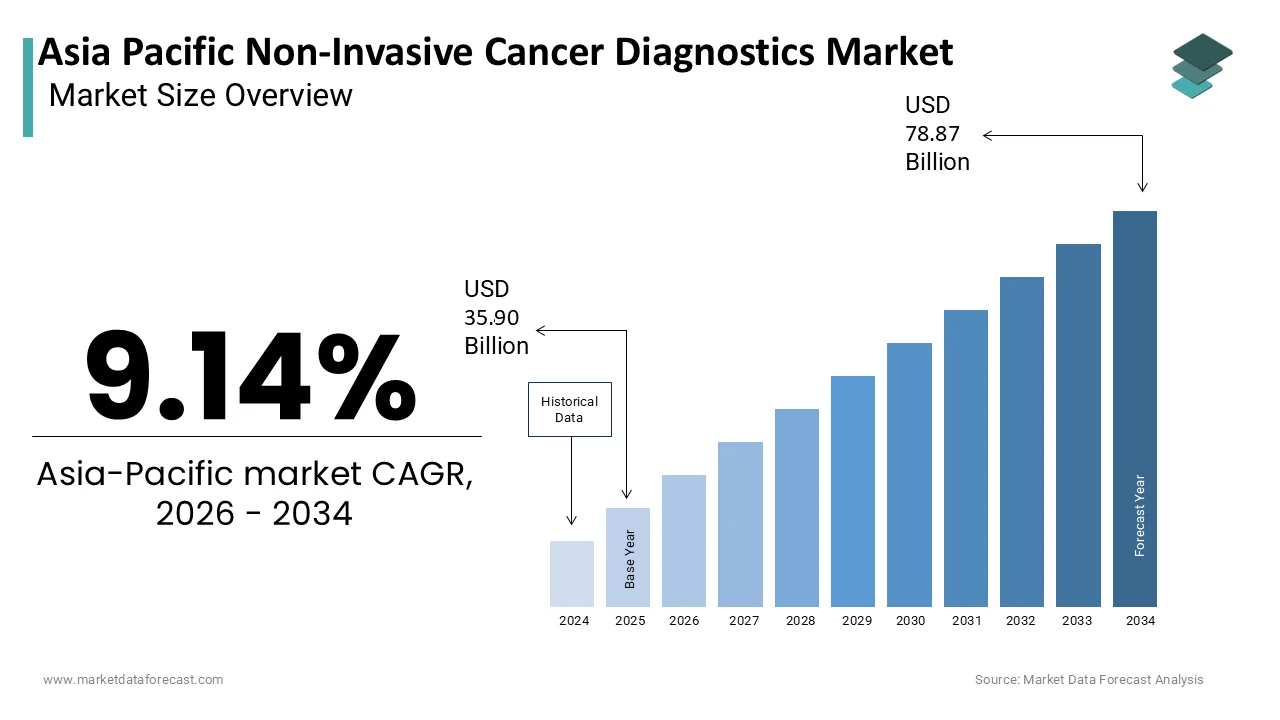
- Market Valuation: Valued at USD 35.90 billion (2025), estimated at USD 39.18 billion (2026), and projected to reach USD 78.87 billion by 2034, registering a robust CAGR of 9.14% (2026–2034).
- Primary Growth Drivers: Rising prevalence of chronic cancers fueled by an aging population and unhealthy lifestyles, increasing demand for minimally invasive tests over repetitive complex biopsies, and greater public and professional awareness regarding early cancer detection. Key market challenges include the high cost of advanced testing equipment/therapies and strict regulatory approval standards.
Key Market Segment Metrics (2026–2034)
| Category | Leading Segment (2025 Position) | Fastest-Growing Segment |
|---|---|---|
| By Therapeutics | Solid tumors and breast cancer (dominated major diagnostic testing volume owing to high clinical incidence) | Blood and lung cancer screening modalities |
| By Techniques | Molecular diagnostics (led clinical adoption for genetic profiling and biomarker detection) | Advanced molecular diagnostics and multi-omics testing workflows |
| By Country | China (accounted for the largest regional market share supported by early detection campaigns and government initiatives) | India (projected to witness rapid expansion due to rising cancer occurrences and increased diagnostic awareness) |
Major Market Players & Market Structure
Market Structure: Highly competitive regional diagnostic market featuring key biotechnology leaders and reference laboratories competing on genetic testing accuracy, biomarker integration, early detection platforms, and clinical R&D advancements.
Key Companies: Precision Therapeutics, Laboratory Corporation of America Holdings (LabCorp), BIOVIEW Inc., Affymetrix Inc., AVIVA Biosciences Corporation, A&G Pharmaceutical, Quest Diagnostics Incorporated, Cancer Genetics Inc., Digene Corporation, and Gen-Probe Incorporated.
 Download Free Sample Report
Asia Pacific Non-Invasive Cancer Diagnostics Market Size
The Asia Pacific Non-Invasive Cancer Diagnostics Market is projected to grow from USD 35.90 billion in 2025 to USD 39.18 billion in 2026 and reach USD 78.87 billion by 2034, registering a CAGR of 9.14% from 2026 to 2034.
Non-invasive cancer diagnostics refers to medical methods used to detect, analyze, or monitor cancer without surgical incisions, inserting instruments deep into the body, or removing tissue samples. This field is gaining momentum as healthcare systems across the region prioritize minimally invasive procedures that reduce patient discomfort and accelerate diagnostic timelines. As per the World Health Organization, cancer accounts for nearly 10 million deaths annually worldwide, with a significant burden falling on Asian populations due to late-stage diagnoses. According to the International Agency for Research on Cancer (IARC) GLOBOCAN report, Asia accounts for approximately 50% (50.7%) of global cancer cases, highlighting the urgent need for accessible screening solutions. These epidemiological realities drive the adoption of non-invasive tools such as circulating tumor DNA analysis and multi-omics profiling, which offer high sensitivity without surgical intervention. Governments in countries like Japan and South Korea are integrating these technologies into national health frameworks to address rising incidence rates of lung and gastrointestinal cancers. The clinical utility of these diagnostics lies in their ability to monitor treatment response and detect recurrence earlier than traditional methods. As regulatory bodies streamline approval pathways for novel biomarkers, the market is poised for substantial expansion. The convergence of artificial intelligence with diagnostic platforms further enhances accuracy, making these tools indispensable in modern oncology practice across the Asia Pacific region.
MARKET DRIVERS
Rising Cancer Incidence Rates Fuel Demand for Non-Invasive Diagnostic Solutions
The escalating prevalence of cancer across the region directly amplifies the demand for non-invasive diagnostic technologies, which fuels the growth of the Asia Pacific non-invasive cancer diagnostics market. Consequently, healthcare providers are actively seeking efficient screening methods. According to the International Agency for Research on Cancer (IARC), the region faces a stark multi-decade escalation in cancer incidence due to population aging and demographic trends, necessitating immediate, large-scale implementation of public health policies and screening initiatives. This surge places immense pressure on existing healthcare infrastructure, necessitating scalable and less intrusive diagnostic alternatives. Lung cancer remains the leading cause of cancer-related mortality in China, where the National Cancer Center records over 800000 new cases annually. Such high volume demands rapid triage mechanisms that non-invasive tests provide by analyzing blood samples for specific biomarkers. As per the Indian Council of Medical Research (ICMR), breast cancer remains the top cancer among Indian women, with an expected annual increase of 5.6%, prompting ongoing clinical research into minimally invasive diagnostic biomarkers, including circulating tumor DNA (ctDNA) platforms. These facts underscore the critical role of early detection in improving survival outcomes and reducing treatment costs. Noninvasive diagnostics enable frequent monitoring without the risks associated with tissue biopsies, making them ideal for high-risk populations. The demographic shift toward aging populations in Japan and South Korea further exacerbates cancer rates, creating a sustained need for innovative screening tools. Healthcare systems are increasingly recognizing the cost-effectiveness of these diagnostics in managing large patient cohorts efficiently.
Government Initiatives and Healthcare Infrastructure Development Support Market Growth
Strategic government investments in healthcare infrastructure and cancer screening programs significantly bolster the adoption of non-invasive diagnostic technologies within the Asia Pacific non-invasive cancer diagnostic market. According to official data from the National Development and Reform Commission regarding China's 14th Five-Year Plan, the figure of 1.2 trillion yuan represents the total expansion of China's nationwide research and development (R&D) expenditure across all industrial technology fields between 2020 and 2024. This funding facilitates the integration of advanced diagnostic equipment in tier 2 and tier 3 cities where access to specialized care was previously limited. Japan’s Ministry of Health, Labour and Welfare launched a national genomic medicine initiative that supports the development of liquid biopsy platforms for personalized cancer treatment. As per BioBank Japan, Japan's institutional genomic infrastructure tracks data from approximately 200,000 to 270,000 enrolled patients across dozens of targeted diseases to support multi-omics references, while separate clinical biomarker markets are expanding via private-public reimbursement policies. Australia’s Medicare Benefits Schedule includes rebates for specific molecular diagnostic tests, encouraging wider utilization among private and public healthcare providers. These policy frameworks create a favorable environment for manufacturers to introduce innovative products while ensuring affordability for patients. The establishment of dedicated cancer centers in Southeast Asian nations such as Thailand and Singapore further accelerates technology adoption. These facilities often partner with global diagnostic companies to implement cutting-edge screening protocols. Public awareness campaigns funded by state authorities also play a crucial role in driving patient participation in screening programs. The alignment of regulatory standards across the region simplifies market entry for international players seeking to expand their footprint.
MARKET RESTRAINTS
High Costs of Advanced Diagnostic Technologies Limit Accessibility
The prohibitive cost of advanced non-invasive diagnostic technologies significantly restricts their accessibility, particularly in low- and middle-income countries, within the Asia Pacific non-invasive cancer diagnostics market. As per the World Bank, out-of-pocket healthcare expenditure in Indonesia accounts for approximately 31% to 32% (down from roughly 45%–48% a decade earlier) of current health expenditure, limiting patients' ability to afford premium diagnostic services. Liquid biopsy tests can cost between 1000 and 3000 dollars per procedure, which is substantially higher than conventional imaging or tissue biopsy methods. This price disparity creates a significant barrier for the majority of the population who rely on public healthcare systems with limited budgets. According to data from the General Statistics Office of Vietnam, the national average monthly income of workers is approximately $315 to $340 (around 8 to 8.7 million VND), though entry-level and rural earnings can hover near $200–$250, making premium cancer diagnostics financially unattainable for most citizens without insurance coverage. The lack of comprehensive reimbursement policies in many Southeast Asian nations further exacerbates this issue, leaving patients to bear the full financial burden. Healthcare providers in rural areas often lack the capital investment required to purchase sophisticated diagnostic equipment such as next-generation sequencing platforms. The maintenance and operational costs of these technologies add another layer of financial strain on already resource-constrained facilities. Pharmaceutical and diagnostic companies face challenges in pricing their products competitively while maintaining profitability in price-sensitive markets. This economic reality slows down the widespread adoption of non-invasive diagnostics despite their clinical benefits. Efforts to localize manufacturing and develop cost-effective alternatives are ongoing, but progress remains gradual.
Limited Regulatory Harmonization Across Countries Creates Market Fragmentation
The absence of unified regulatory frameworks across countries in the region creates major fragmentation that hinders the seamless introduction of diagnostic products in the Asia Pacific non-invasive cancer diagnostics market. As per the ASEAN Medical Device Directive (AMDD), the Association of Southeast Asian Nations has made efforts to harmonize medical device regulations, but implementation varies widely among member states, leading to prolonged approval timelines. According to Cisema, China's National Medical Products Administration (NMPA) requires local clinical evaluations or trials for higher-risk imported diagnostic products that can add 6 to 24 months to the regulatory approval process, compared to faster timelines in more streamlined reference markets. This discrepancy forces manufacturers to navigate complex and often contradictory requirements, increasing time to market and operational costs. According to the Central Drugs Standard Control Organization under the Medical Devices Rules, 2017, the regulatory framework divides licensing responsibilities between central and state authorities, leading to inconsistent interpretations across State Licensing Authorities that create additional compliance hurdles. The lack of mutual recognition agreements means that approvals granted in one country do not automatically apply to neighboring markets, requiring duplicate submissions. This regulatory uncertainty discourages smaller innovators from entering the region as they lack resources to manage multi-jurisdictional compliance. As per IndexBox, Japan's Pharmaceuticals and Medical Devices Agency (PMDA) enforces stringent pre-market approval standards that diverge from those in emerging economies, resulting in a differentiated, two-tier market structure between high-end domestic/mature-market products and low-tier imports. The resulting fragmentation limits economies of scale and increases prices for end users. Harmonization efforts by regional bodies remain slow due to differing national priorities and healthcare system structures. This landscape complicates strategic planning for global diagnostic companies seeking uniform market penetration strategies.
MARKET OPPORTUNITIES
Integration of Artificial Intelligence Enhances Diagnostic Accuracy and Efficiency
The integration of artificial intelligence into these diagnostic platforms offers a substantial opportunity for the Asia-Pacific non-invasive cancer diagnostics market. This paves the way to enhance accuracy and operational efficiency across the regional market. According to Accenture, top artificial intelligence applications are projected to save the US healthcare economy up to $150 billion annually by 2026, primarily through robot-assisted surgery, virtual nursing assistants, and administrative workflows. AI algorithms analyze complex datasets from liquid biopsies and imaging studies to identify patterns that human experts might overlook, improving early detection rates. As per the journal Radiology, multi-hospital research in South Korea demonstrated that implementing AI-based computer-aided detection tools on chest X-rays improved the detection rate of lung nodules by 2.4 times and significantly reduced false-positive request rates. This technological advancement allows healthcare providers to process larger volumes of patient data with greater precision, supporting personalized treatment plans. The growing availability of digital health records in countries like Singapore and Australia provides robust training datasets for machine learning models. Startups in the region are developing proprietary algorithms tailored to genetic profiles prevalent in Asian populations, addressing a critical gap in global diagnostic tools. According to sources, total global digital health venture capital funding fell to $25.9 billion in 2022, while the entire Asia region accounted for a minor fraction of overall deals (with quarterly region funding dropping below $1 billion). These innovations enable remote monitoring and telemedicine applications, expanding access to specialized care in underserved areas. The synergy between AI and non-invasive diagnostics promises to transform oncology care delivery models.
Expansion of Telemedicine and Remote Patient Monitoring Drives Adoption
The rapid expansion of telemedicine and remote patient monitoring services creates fertile ground for the adoption of non-invasive cancer diagnostics in the Asia Pacific region. According to the Asian Development Bank, Southeast Asian countries experienced an unprecedented, rapid adoption of digital health platforms and telehealth consults as a direct response to COVID-19 clinical disruptions. Non-invasive tests such as blood-based biomarker assays are ideally suited for remote monitoring as they require minimal clinical infrastructure for sample collection. In Australia, the government’s My Health Record system enables seamless sharing of diagnostic results between specialists and primary care physicians, facilitating coordinated care. This digital infrastructure supports the integration of home-based sampling kits, allowing patients to participate in regular screening without visiting hospitals. The convenience factor appeals to aging populations in Japan, where mobility issues often hinder access to traditional healthcare facilities. Insurance providers are increasingly covering remote diagnostic services, recognizing their potential to reduce hospital readmissions and overall treatment costs. The proliferation of smartphone-enabled health applications in India and Indonesia empowers patients to track their health metrics and schedule diagnostic tests conveniently. This trend aligns with the broader movement toward preventive healthcare and patient-centric care models. Diagnostic companies are partnering with telehealth platforms to offer bundled services that include testing and virtual consultations. This ecosystem approach enhances patient engagement and improves adherence to screening protocols.
MARKET CHALLENGES
Complexity of Biomarker Validation Poses Technical Challenges
The complexity of validating diverse biomarkers for these cancer diagnostics is a significant technical challenge that impedes the growth of the Asia-Pacific non-invasive cancer diagnostics market. According to Nature Reviews Clinical Oncology and other sources, candidate molecular and tumor biomarkers face profound translation hurdles, with estimates showing that fewer than 1% to 5% successfully navigate from initial discovery to validated clinical applications. Variability in genetic profiles across different Asian ethnic groups complicates the development of universal diagnostic panels, requiring extensive population-specific studies. As per PubMed Central, researchers have established that EGFR-mutated non-small cell lung cancer is a highly heterogeneous disease with more than 200 distinct mutations identified so far, rather than 200 distinct global mutations across all lung cancer patient pathways broadly. The lack of standardized reference materials for liquid biopsy assays leads to inconsistent results across different laboratories, affecting clinical confidence. Regulatory agencies require rigorous analytical and clinical validation data, which demands large-scale multicenter trials that are logistically challenging to coordinate across borders. The dynamic nature of tumor evolution means that biomarkers may change over time, requiring continuous updates to diagnostic algorithms. This constant need for refinement strains research and development budgets, particularly for smaller companies. The heterogeneity of cancer types further complicates panel design, as each malignancy may require unique marker combinations. Collaboration between academia and industry remains limited in many countries, slowing down the translation of scientific discoveries into commercial products. These technical hurdles delay product launches and increase the risk of market failure for innovative diagnostic solutions.
Shortage of Skilled Professionals Limits Operational Capacity
The acute shortage of skilled professionals capable of operating and interpreting advanced non-invasive diagnostic technologies severely limits operational capacity across the region, which slows down the Asia-Pacific non-invasive cancer diagnostics market. As per the World Health Organization, the agency has historically projected a global health worker shortfall of 10 million (recently revised upward to 11 million to 11.1 million) by 2030, with the most severe shortages overwhelmingly concentrated in low- and lower-middle-income countries (LMICs), while higher-income regions like Europe are hardest hit by an aging workforce. According to The Pathologist, there is a severe shortage and uneven distribution of specialized diagnostic professionals across emerging healthcare systems like India, creating notable bottlenecks in turnaround times for clinical laboratory processing. The specialized nature of liquid biopsy analysis requires expertise in molecular biology and bioinformatics, which are in short supply in many emerging markets. Universities in Southeast Asia produce insufficient numbers of graduates with training in next-generation sequencing technologies, exacerbating the talent gap. Hospitals in rural areas struggle to retain qualified staff who often migrate to urban centers or abroad for better opportunities. This brain drain deprives local healthcare systems of critical human capital needed to implement advanced diagnostic programs. Training programs for existing healthcare workers are often inadequate or inaccessible due to resource constraints. The lack of standardized certification frameworks for molecular diagnosticians further complicates workforce development efforts. Diagnostic companies face challenges in providing adequate technical support and training to customers due to the scattered nature of healthcare facilities. This human resource constraint slows down the adoption rate of sophisticated diagnostic tools despite available infrastructure. Addressing this gap requires coordinated efforts between government, educational institutions,s and private sector stakeholders.
REPORT COVERAGE
| REPORT METRIC | DETAILS |
| Market Size Available | 2025 to 2034 |
| Base Year | 2025 |
| Forecast Period | 2026 to 2034 |
| Segments Covered | By Therapeutics, Techniques, and Region |
| Various Analyses Covered | Global, Regional, and Country-Level Analysis, Segment-Level Analysis, Drivers, Restraints, Opportunities, Challenges; PESTLE Analysis; Porter’s Five Forces Analysis, Competitive Landscape, Analyst Overview of Investment Opportunities |
| Countries Covered | India, China, Japan, South Korea, Australia, New Zealand, Thailand, Malaysia, Vietnam, Philippines, Indonesia, Singapore, Rest of APAC |
| Market Leaders Profiled | Precision Therapeutics Laboratory Corporation of America Holdings (LabCorp), BIOVIEW Inc., Affymetrix Inc., AVIVA Biosciences Corporation, A&G Pharmaceutical, Quest Diagnostics Incorporated, Cancer Genetics Inc., Digene Corporation, Gen-Probe Incorporated |
SEGMENTAL ANALYSIS
By Therapeutics Insights
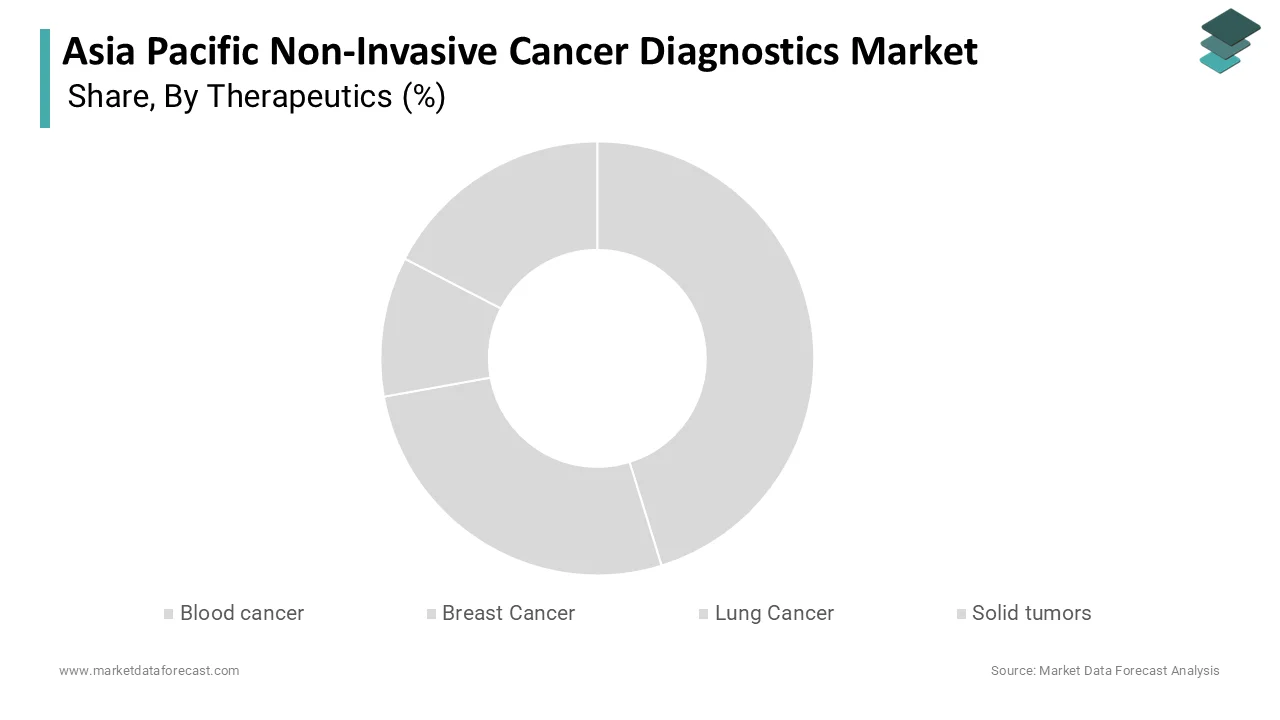
The lung cancer segment led the Asia-Pacific non-invasive cancer diagnostics market and captured a significant share in 2025. This position was attributed to the disease's status as the leading cause of cancer-related deaths across the region. According to the International Agency for Research on Cancer (IARC) GLOBOCAN database, lung cancer remains the leading cause of cancer mortality worldwide, with Asia contributing around 60% of global lung cancer deaths and more than half of all new cases, with 1.8 million new cases or 37% of the global burden. This staggering volume necessitates robust screening infrastructure, where non-invasive techniques such as liquid biopsies offer a viable alternative to invasive tissue sampling. As per the National Cancer Center of China, published in PubMed Central, lung cancer remains the leading cause of cancer-related mortality in China, with the country contributing over 40% of global lung cancer cases, creating an immense demand for early detection tools. The high mortality rate associated with late-stage diagnosis further accelerates the adoption of circulating tumor DNA testing, which can identify mutations before symptoms manifest. According to the Japanese Respiratory Society, national oncology screening strategies utilize low-dose computed tomography (LDCT) to monitor high-risk smoking populations, while blood-based multi-omic biomarkers remain in the clinical development phase. The aggressive nature of small cell and non-small cell lung cancers requires frequent monitoring during treatment, which non-invasive methods facilitate without patient discomfort. Pharmaceutical companies are increasingly partnering with diagnostic firms to develop companion diagnostics for targeted therapies specific to Asian genetic profiles. These collaborations enhance the clinical utility of non-invasive tests and reinforce their position as standard care protocols. The economic burden of advanced-stage lung treatment also drives payers to support early screening initiatives.
Stringent government initiatives aimed at reducing smoking rates indirectly boost the demand for lung cancer screening through non-invasive diagnostics. As stated by the World Health Organization, tobacco use is responsible for more than 1 million deaths annually in the Western Pacific Region, prompting aggressive public health campaigns. In Australia, the National Tobacco Strategy aims to reduce smoking prevalence to below 10 percent by 2030, leading to increased funding for early detection programs among former smokers. These individuals remain at elevated risk for decades after quitting,g necessitating regular monitoring via blood tests rather than repeated radiation exposure from CT scans. South Korea’s Ministry of Health and Welfare mandates annual lung cancer screening for individuals aged 54 to 74 with a history of heavy smoking. This mandate has resulted in a 30 percent increase in diagnostic test volumes since its implementation, according to the Korean National Cancer Center. The shift toward preventive care models encourages healthcare providers to adopt sensitive biomarker assays that can detect minimal residual disease. According to sources, insurance reimbursement policies in advanced economies like Singapore cover specific clinical indications for liquid biopsy tests in high-risk oncology patient groups, further removing financial barriers. The integration of artificial intelligence in analyzing imaging and biomarker data enhances the predictive accuracy of these screenings. Such technological advancements make non-invasive diagnostics indispensable in managing the long-term health outcomes of smoking cessation program participants.
The breast cancer segment is predicted to witness the highest CAGR of 14.2% from 2026 to 2034 due to changing lifestyle factors and delayed childbirth. As per The ASCO Post, breast cancer has become the most frequently diagnosed cancer among women in Southeast Asia, with age-standardized incidence rates peaking markedly in countries like Singapore and frequently presenting at younger median ages than in Western reference populations. This demographic shift creates an urgent need for safe and repeatable screening methods that do not involve ionizing radiation or surgical procedures. According to the National Cancer Registry Programme published by the Indian Council of Medical Research, breast cancer accounts for 27% to 28% of all female cancers in India, with a highly significant proportion of clinical cases diagnosed in young women under 50. Non-invasive liquid biopsies offer a promising solution for monitoring high-risk individuals who may require frequent assessments due to family history or genetic predisposition. The introduction of multi-analyte blood tests that detect circulating tumor cells and exosomes has improved sensitivity significantly. As per studies, regulatory approvals of novel multigene biomarker panels for breast cancer prognosis and recurrence monitoring have accelerated clinical market penetration. These tests allow oncologists to adjust treatment plans dynamically based on real-time molecular data. The cultural preference for minimally invasive procedures in many Asian societies further supports the adoption of blood-based diagnostics. Awareness campaigns led by non-governmental organizations have also educated women about the benefits of early detection through advanced technologies.
The rapid evolution of personalized medicine strategies specifically tailored for breast cancer subtypes propels the growth of non-invasive diagnostic solutions in the Asia Pacific region. As per the American Society of Clinical Oncology, hormone receptor-positive and HER2-positive breast cancers express distinct biological traits requiring precise molecular profiling to guide targeted treatments. Liquid biopsy technologies enable the identification of specific mutations such as PIK3CA and ESR1,1 which guide the selection of targeted therapies without the need for repeat tissue biopsies. As per the Chinese Society of Clinical Oncology (CSCO), clinical practice guidelines accept circulating free DNA (cfDNA) and ctDNA testing applications to track emerging mutations and evaluate treatment responses in metastatic disease states. This clinical endorsement has spurred hospitals to invest in next-generation sequencing platforms capable of detecting low-frequency variants. South Korean researchers have developed proprietary algorithms that correlate biomarker levels with drug resistance patterns, enhancing the predictive value of non-invasive tests. The availability of these advanced diagnostics in private healthcare facilities has created a premium market segment willing to pay for superior accuracy. Pharmaceutical companies are increasingly using liquid biopsy data in clinical trials to demonstrate the efficacy of new drugs in Asian populations. This synergy between drug development and diagnostic validation creates a sustainable growth trajectory for the sector. Regulatory approvals for companion diagnostics have streamlined the pathway for commercialization of these innovative tests.
By Techniques Insights
The molecular diagnostics segment dominated the Asia Pacific non-invasive cancer diagnostics market and accounted for a substantial share in 2025. This dominance of the segment was driven by its unparalleled ability to detect minute quantities of genetic material with high precision. As per the Journal of Molecular Diagnostics, polymerase chain reaction and next-generation sequencing technologies can identify single-nucleotide variants with accuracy exceeding 99 percent, making them ideal for early cancer detection. This technical superiority addresses the critical need for reliable results in screening asymptomatic individuals where false positives can lead to unnecessary anxiety and interventions. According to the Japanese Society of Medical Oncology, digital PCR technologies are utilized in precision oncology to track cell-free circulating tumor DNA (ctDNA) dynamics down to low analytical detection thresholds to monitor therapeutic resistance and anti-EGFR treatment responses. Such sensitivity allows for the monitoring of minimal residual disease after surgery,y providing crucial information for adjuvant therapy decisions. The ability to analyze multiple genes simultaneously through panel-based tests offers comprehensive insights into tumor heterogeneity,y which is particularly relevant in diverse Asian populations. As per sources, BGI Group (formerly Beijing Genomics Institute) has significantly scaled high-throughput sequencing instrumentation to support large-cohort health testing and population-scale research initiatives across Asian populations. This cost reduction has made molecular diagnostics accessible to a broader patient base in tier 2 and tier 3 cities. The integration of these tests into routine clinical practice is supported by robust evidence from large-scale prospective studies conducted in the region. Healthcare providers prefer molecular methods due to their scalability and compatibility with automated laboratory workflows.
The intrinsic link between molecular diagnostics and targeted therapy protocols solidifies its dominance in the Asia-Pacific non-invasive cancer diagnostics landscape. The European Society for Medical Oncology emphasizes that molecular profiling is essential for identifying patients who will benefit from tyrosine kinase inhibitors and immune checkpoint inhibitors. In South Korea, the national health insurance system reimburses molecular tests for non-small cell lung cancer and colorectal cancer,ncer ensuring widespread utilization in clinical settings. This financial support removes a major barrier to adoption and encourages hospitals to maintain state-of-the-art molecular laboratories. The rise of precision oncology centers in Singapore and Australia has further entrenched molecular diagnostics as the gold standard for cancer management. These centers utilize liquid biopsy results to guide treatment selection,n reducing the trial-and-error approach associated with conventional chemotherapy. The ability to detect acquired resistance mutations through serial blood sampling allows clinicians to switch therapies promptly, improving patient outcomes. As per the official Medicare Benefits Schedule Book, Australia’s Medicare Benefits Schedule explicitly details and itemizes numerous molecular diagnostic and gene-expression tests for specific solid tumor types to support patient management. The continuous development of new biomarkers by local research institutions ensures a steady pipeline of innovative tests. Collaborations between diagnostic companies and pharmaceutical firms have accelerated the co-development of tests and drugs. This ecosystem approach ensures that molecular diagnostics remains at the forefront of cancer care innovation in the region.
The immunochemistry segment is estimated to register the fastest CAGR of 13.8% during the forecast period, owing to the rapidly evolving field of immuno-oncology. According to Nature Immunology, the therapeutic success of immune checkpoint inhibitors has transformed oncology treatment paradigms, driving a massive clinical requirement for predictive biomarkers to screen patient response dynamics. Tests measuring programmed death ligand 1 expression and tumor mutational burden are becoming routine in clinical practice across developed Asian markets. In Japan, the approval of pembrolizumab and nivolumab for multiple indications has driven a surge in immunohistochemistry testing volumes, according to the Japanese Society for Cancer Immunology. Hospitals are investing in automated immunohistochemistry platforms to handle the increasing workload efficiently. The ability to assess the tumor microenvironment through protein expression analysis provides valuable insights beyond genetic mutations. China’s National Medical Products Administration has approved several domestic immunohistochemistry kits,s reducing reliance on imported reagents and lowering costs. This localization strategy has expanded access to these tests in provincial hospitals where budget constraints previously limited adoption. The development of multiplex immunoassays that measure multiple immune markers simultaneously enhances the predictive power of these diagnostics. Researchers in South Korea are exploring novel immune signatures that correlate with survival outcomes in gastric and liver cancers. These scientific advancements are translating into commercial products that offer superior clinical utility. The growing awareness among oncologists about the importance of immune profiling further accelerates market growth.
Extensive biomarker discovery initiatives focused on immune-related proteins support the rapid expansion of the immunochemistry segment in the Asia Pacific region. As per studies, the Asian Pacific Association for the Study of the Liver reviews indicate that hepatocellular carcinoma patients manifest complex, distinct immune-inflammatory microenvironments that are actively studied via serum protein and systemic cell assays. These non-invasive tests offer a safer alternative to liver biopsy for monitoring disease progression and treatment response. In Australia, researchers have identified a panel of cytokines that predict response to immunotherapy in melanoma patients,s leading to the development of commercial kits. The validation of these biomarkers in large clinical cohorts has built confidence among clinicians regarding their reliability. Singapore’s Biomedical Research Council funds several projects aimed at discovering novel immune biomarkers for rare cancers prevalent in Asian populations. These efforts contribute to the diversification of the immunochemistry portfolio beyond common cancer types. The integration of artificial intelligence in analyzing immunohistochemistry images improves the consistency and accuracy of scoring. Digital pathology platforms are being adopted by major hospitals in India and Thailand to standardize interpretation across different laboratories. This technological upgrade reduces inter-observer variability and enhances the clinical value of immunohistochemistry results. The collaboration between academic institutions and diagnostic companies facilitates the rapid translation of research findings into marketable products. Regulatory agencies are streamlining the approval process for novel immune biomarkers,s recognizing their potential to improve patient care.
COUNTRY LEVEL ANALYSIS
China Non-Invasive Cancer Diagnostics Market Analysis
China remained the largest in 2025 and occupied a commanding share of the Asia Pacific non-invasive cancer diagnostics market in 2025. This prominence of the country in the regional market was supported by its massive population and rising cancer burden. According to the National Cancer Center of China, as published in PubMed Central, there were approximately 4.82 million new cancer cases in China, representing over 22% of the global cancer incidence burden. This enormous patient pool creates a sustained demand for scalable diagnostic solutions that can be deployed across vast geographical areas. The government’s Healthy China 2030 initiative prioritizes early cancer screening,g leading to significant investments in liquid biopsy infrastructure. Major cities like Beijing and Shanghai have established specialized cancer hospitals equipped with advanced molecular diagnostic capabilities. The local manufacturing sector has grown rapidly,y with companies developing cost-effective next-generation sequencing platforms. According to research, the expanding domestic manufacturing base for molecular diagnostic reagents and high-throughput instruments supports localized cost reductions and broader accessibility for clinical genetic profiling. The inclusion of certain cancer screening tests in basic medical insurance schemes has further boosted utilization rates. Rural areas are benefiting from telemedicine networks that connect local clinics with expert centers for diagnostic interpretation. The regulatory environment has become more supportive,e with faster approval times for innovative diagnostic devices. International partnerships have facilitated technology transfer and knowledge sharing,g enhancing local expertise. The market is characterized by intense competition among domestic and international players, driving continuous innovation.
Japan Non-Invasive Cancer Diagnostics Market Analysis
Japan followed closely behind in the Asia-Pacific non-invasive cancer diagnostics market in 2025. This expansion was propelled by comprehensive universal health insurance coverage, national genome biobank initiatives, and strong demand from a large elderly cohort. Consequently, the country is well-known for its high adoption rates of precision medicine. According to vital statistics tracked by the Ministry of Health, Labour and Welfare (MHLW), malignant neoplasms have remained the leading cause of death in Japan since 1981, accounting for approximately 27% to 28% of all recorded mortalities. As per the Center for Cancer Control and Information Services at the National Cancer Center Japan, the elderly population bears the heaviest oncological burden, with individuals aged 65 and above accounting for over 75% to 80% of all newly diagnosed cancer cases. This demographic reality drives the demand for minimally invasive diagnostics that are suitable for elderly patients with comorbidities. Japan was the first country in Asia to approve liquid biopsy tests for routine clinical use, creating a favorable regulatory precedent. The national health insurance system covers several molecular diagnostic tests, ts ensuring broad accessibility for patients. Leading pharmaceutical companies collaborate with diagnostic firms to develop companion diagnostics for targeted therapies. The presence of world-class research institutions fosters innovation in biomarker discovery and assay development. Hospitals in Tokyo and Osaka serve as regional hubs for advanced cancer care, attracting patients from neighboring countries. The emphasis on quality and precision in Japanese healthcare culture supports the adoption of high-cost, high-value diagnostic technologies. Public awareness campaigns encourage regular screening participation among the elderly population. The market is stable with steady growth driven by technological upgrades and expanded indications for existing tests.
India Non-Invasive Cancer Diagnostics Market Analysis
India is growing exponentially in the Asia Pacific non-invasive cancer diagnostics market due to increasing healthcare awareness and expanding insurance coverage. According to the Indian Council of Medical Research National Cancer Registry Programme, the total number of cancer cases in India was projected to rise from 1.46 million in 2022 to approximately 1.57 million by 2025, representing an estimated increase of roughly 7.5%. Breast and cervical cancers are predominant among women, while lung and oral cancers are common among men. The government’s Ayushman Bharat scheme aims to provide health coverage to 500 million citizens, ns including access to diagnostic services. This initiative has increased the affordability of advanced tests for lower-income groups. Private laboratory chains have expanded their reach to tier 2 and tier 3 cities,s offering standardized diagnostic services. The cost of genetic testing has decreased significantly due to local manufacturing and competition among service providers. Medical tourism in cities like Mumbai and Chennai attracts international patients seeking affordable, high-quality cancer care. These facilities often offer comprehensive diagnostic packages including non-invasive screening options. The regulatory framework is evolving,g with the Central Drugs Standard Control Organization updating guidelines for in vitro diagnostics. Academic institutions are researching population-specific biomarkers,kers enhancing the relevance of local diagnostic solutions. The market is fragmented but consolidating as larger players acquire smaller laboratories to achieve economies of scale.
South Korea Non-Invasive Cancer Diagnostics Market Analysis
South Korea maintains a mature and stable position in the Asia-Pacific non-invasive cancer diagnostics market, supported by strong government backing and advanced healthcare infrastructure. The market benefits from highly centralized public health frameworks and swift regulatory channels executed by the MFDS. According to the Ministry of Health and Welfare, South Korea's National Cancer Screening Program (NCSP) provides structural coverage for six common cancers-, stomach, liver, colorectal, breast, cervical, and lung- to Medical Aid recipients and health insurance beneficiaries. The national cancer screening program covers five major cancer types and has achieved high participation rates among eligible populations. This systematic approach ensures early detection and timely intervention,n reducing overall treatment costs. South Korea is a global leader in genomic research,h with several biotech companies developing innovative liquid biopsy platforms. The Ministry of Science and ICT funds extensive research projects aimed at identifying novel biomarkers for Asian specific cancer subtypes. Hospitals in Seoul are equipped with state-of-the-art diagnostic laboratories capable of performing complex molecular analyses. The integration of electronic health records facilitates seamless data sharing between primary care providers and specialists. Insurance reimbursement policies support the use of advanced diagnostic tests for confirmed cancer cases. The presence of skilled professionals and robust regulatory standards ensures high-quality diagnostic services. Export of diagnostic technologies to other Asian countries is growing as Korean companies gain international recognition. The market is characterized by rapid adoption of new technologies and strong collaboration between industry and academia.
Australia Non-Invasive Cancer Diagnostics Market Analysis
The market in Australia is expanding moderately within the Asia-Pacific non-invasive cancer diagnostics market, owing to high healthcare spending and advanced regulatory standards. According to Cancer Council Australia, approximately one in two Australian men and women will receive a cancer diagnosis by the age of 85. The Medicare Benefits Schedule provides rebates for numerous molecular diagnostic tests,s encouraging their use in clinical practice. The country has a well-established network of pathology laboratories that adhere to strict quality assurance protocols. Research institutions such as the Peter MacCallum Cancer Centre are at the forefront of developing novel diagnostic biomarkers. The adoption of digital health technologies facilitates remote monitoring and telepathology services, especially in rural areas. Government initiatives focus on reducing health disparities between urban and remote communities through mobile diagnostic units. The regulatory environment managed by the Therapeutic Goods Administration is rigorous,s ensuring the safety and efficacy of diagnostic products. Private health insurers often cover additional diagnostic services not included in the public system. The market is mature with steady growth driven by technological advancements and an aging population. Collaboration with New Zealand and other Pacific nations enhances regional capacity for cancer diagnostics.
COMPETITIVE LANDSCAPE
The competition in the Asia Pan-invasive cancer diagnostics market is characterized by intense rivalry among global giants and emerging local players seeking to capture significant portions of this rapidly expanding sector. Multinational corporations leverage their extensive research and development capabilities to introduce innovative liquid biopsy technologies and comprehensive genomic profiling solutions. These companies benefit from established brand recognition and robust distribution networks that span multiple countries within the region. Local manufacturers are increasingly challenging these incumbents by offering cost-effective alternatives that cater to price-sensitive markets in developing economies. The competitive landscape is further shaped by strategic partnerships between diagnostic firms and pharmaceutical companies aiming to develop companion diagnostics for targeted therapies. Regulatory heterogeneity across different Asian countries creates barriers to entry but also opportunities for firms that can navigate these complexities efficiently. Innovation in artificial intelligence and machine learning applications for data analysis provides a distinct competitive advantage to early adopters. The market sees frequent mergers and acquisitions as companies seek to consolidate their positions and expand their technological portfolios. Customer loyalty is driven by product reliability,y technical support, ort and clinical validation evidence. Price competition remains fierce,e particularly in segments with standardized testing protocols. Continuous investment in clinical trials and real-world evidence generation is essential for maintaining credibility and securing reimbursement approvals. This dynamic environment fosters rapid technological advancement and improved patient access to cutting-edge diagnostic services across the Asia Pacific region.
KEY MARKET PLAYERS
Some of the companies that are playing a dominating role in the Asia Pacific Non-Invasive Cancer Diagnostics Market include:
- Precision Therapeutics
- Laboratory Corporation of America Holdings (LabCorp)
- BIOVIEW Inc.
- Affymetrix Inc.
- AVIVA Biosciences Corporation
- A&G Pharmaceutical
- Quest Diagnostics Incorporated
- Cancer Genetics Inc.
- Digene Corporation
- Gen-Probe Incorporated
TOP LEADING PLAYERS IN THE MARKET
- F Hoffmann-La Roche Ltd maintains a dominant presence in the Asia-Pacific non-invasive cancer diagnostics market through its comprehensive portfolio of liquid biopsy solutions and companion diagnostics. The company actively collaborates with regional healthcare providers to integrate its cobas testing platforms into routine clinical workflows across Japan, China, and Australia. Recent initiatives include the expansion of its blood-based biomarker testing capabilities to support personalized oncology treatments. Roche has invested significantly in local manufacturing facilities in Singapore to ensure rapid supply chain responsiveness for diagnostic reagents. The company also partners with academic institutions to validate novel biomarkers specific to Asian cancer populations. These strategic moves enhance its technological leadership and strengthen relationships with key opinion leaders in the region. Roche continues to drive innovation by launching automated systems that reduce turnaround time for critical diagnostic results. Its commitment to quality and regulatory compliance ensures widespread trust among healthcare professionals. The firm leverages its global expertise to tailor solutions that address unique regional healthcare challenges effectively.
- Qiagen NV strengthens its position in the Asia Pacific non-invasive cancer diagnostics market by offering advanced sample preparation and analysis technologies for liquid biopsies. The company focuses on providing robust tools for circulating tumor DNA extraction and purification,n which are critical for accurate molecular testing. Qiagen has established strong distribution networks in India,ia South Korea, and Southeast Asian nations to improve accessibility of its diagnostic kits. Recent actions include the launch of specialized panels for detecting resistance mutations in lung and breast cancer patients. The company collaborates with local laboratories to provide technical training and support,t ensuring optimal use of its products. Qiagen also invests in research partnerships to develop next-generation sequencing workflows tailored for high-volume diagnostic centers. Its emphasis on automation and scalability helps hospitals manage increasing test volumes efficiently. The firm continuously updates its regulatory filings to align with evolving standards in various Asian countries. These efforts solidify its reputation as a reliable provider of high-quality diagnostic infrastructure.
- Illumina Inc drives growth in the Asia Pacific non-invasive cancer diagnostics market through its leading next-generation sequencing platforms and bioinformatics solutions. The company enables comprehensive genomic profiling of tumors using blood samples, es facilitating early detection and monitoring of cancer progression. Illumina has expanded its regional footprint by opening new offices and support centers in China and Japan to serve local customers better. Recent strategies involve partnering with pharmaceutical companies to develop companion diagnostics for targeted therapies approved in Asian markets. The company offers cloud-based data analysis tools that help clinicians interpret complex genetic information quickly and accurately. Illumina also supports educational programs to train healthcare professionals in genomic medicine applications. Its investment in local research initiatives helps identify population-specific genetic variants relevant to cancer risk. The firm ensures its technologies meet stringent regulatory requirements across different jurisdictions in the region. These actions enhance its competitive edge and foster long-term collaborations with key stakeholders in the healthcare ecosystem.
TOP STRATEGIES USED BY KEY MARKET PARTICIPANTS
Key players in the Asia Pacific non-invasive cancer diagnostics market employ several strategic approaches to maintain their competitive advantage and drive growth. Partnerships and collaborations with local healthcare providers and research institutions form the cornerstone of their market entry and expansion strategies. These alliances facilitate technology transfer and enable the development of diagnostic solutions tailored to specific regional needs. Companies also focus on regulatory compliance by engaging with local authorities to streamline approval processes for new products. Investment in local manufacturing and distribution networks helps reduce costs and improve supply chain efficiency across diverse geographical areas. Product innovation remains a priority,ority with firms continuously launching advanced platforms that offer higher sensitivity and faster turnaround times. Marketing efforts emphasize clinical utility and cost-effectiveness to convince payers and providers of the value proposition. Training programs for healthcare professionals ensure proper adoption and utilization of complex diagnostic technologies. Mergers and acquisitions allow companies to acquire niche technologies and expand their product portfolios rapidly. Digital health integration is another key strategy enabling remote monitoring and data sharing capabilities. These multifaceted approaches help participants navigate the complex regulatory and economic landscape of the Asia Pacific region effectively while addressing the growing demand for precise and accessible cancer diagnostics.
MARKET SEGMENTATION
This research report on the Asia Pacific Non-Invasive Cancer Diagnostics Market has been segmented and sub-segmented into the following categories.
By Therapeutics
- Blood cancer
- Breast Cancer
- Lung Cancer
- Solid tumors
By Techniques
- Immunochemistry
- Clinical Chemistry
- Molecular Diagnostics
By Country
- India
- China
- Japan
- South Korea
- Australia
- New Zealand
- Thailand
- Malaysia
- Vietnam
- Philippines
- Indonesia
- Singapore
- Rest of APAC