- Product Description Description
- Table of Contents TOC
- List of Table & Figure LOT
- Get Free Sample PDF Sample PDF
Market Size, 2025
$0.73 BnMarket Estimate, 2026
$0.77 BnMarket Forecast, 2034
$1.30 BnCAGR, 2026–2034
6.7%Asia Pacific Peripheral Intravenous Catheters Market Size, Growth, Trends & Forecast (2026–2034)
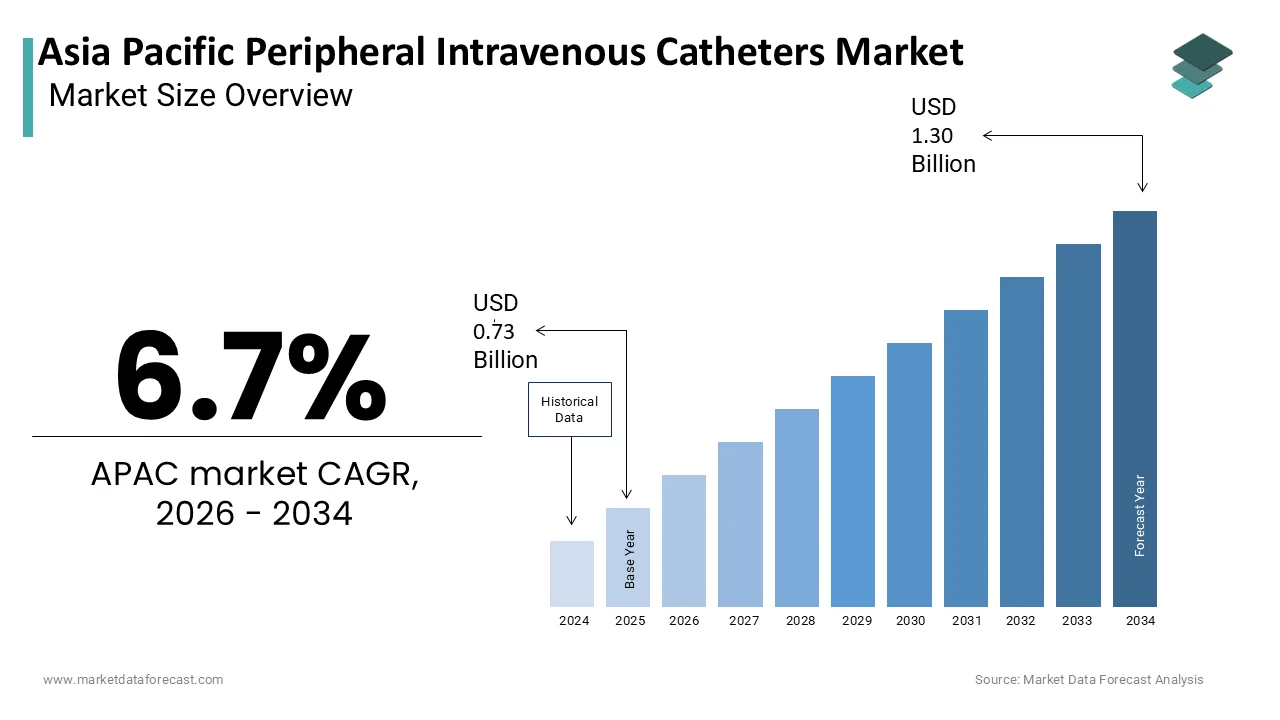
The Asia Pacific peripheral intravenous catheters market size was valued at USD 0.73 billion in 2025, is estimated at USD 0.77 billion in 2026, and is projected to reach USD 1.30 billion by 2034, registering a compound annual growth rate (CAGR) of 6.7% during the forecast period from 2026 to 2034. Driven by universal health coverage expansion, an escalating burden of noncommunicable diseases, and aging populations, the regional market continues to experience steady clinical demand.
Key Executive Metrics (At-a-Glance)
- 2025 Base Valuation: USD 0.73 Billion
- 2026 Current Valuation: USD 0.77 Billion
- 2034 Forecast Valuation: USD 1.30 Billion
- Compound Annual Growth Rate (CAGR): 6.7% (2026–2034)
- Dominant Product Segment: Short Peripheral Intravenous Catheters (holding high volume share across emergency departments and general wards)
- Fastest-Growing Product Segment: Closed Peripheral Intravenous Catheters (projected at a 9.6% CAGR driven by infection control focus)
- Dominant Type Segment: Integrated Closed Catheters (holding majority share due to mandatory regional safety standards)
- Fastest-Growing Type Segment: Peripheral Insertion Technology (estimated at an 11.4% CAGR driven by difficult vascular access solutions)
- Dominant Technology Segment: Conventional Peripheral Intravenous Catheters (leading volume share due to cost efficiency in developing economies)
- Fastest-Growing Technology Segment: Safety Peripheral Intravenous Catheters (projected at a 10.8% CAGR driven by regulatory harmonization and workforce advocacy)
- Dominant Country: India (accounted for a leading 24.5% market share in 2025 backed by massive population base and public insurance schemes)
Core Market Drivers
- Universal Health Coverage: Systematic implementation of public health programs (such as Indonesia's JKN and PhilHealth) transforming theoretical need into actualized product consumption.
- Noncommunicable Diseases: High prevalence of diabetes and cardiovascular conditions creating persistent, non-discretionary demand for long-term vascular access.
- Infection Control & Safety Mandates: Growing institutional transition toward closed and safety-engineered catheter systems to minimize healthcare-associated infections.
Primary Market Restraints & Challenges
- Nursing Workforce Shortages: Severe nursing staff deficits and high patient-to-nurse ratios constraining optimal device utilization and training adoption.
- Macroeconomic & Supply Volatility: Fragmented regulatory frameworks, persistent currency depreciation, and climate-induced logistics disruptions affecting import-dependent supply chains.
Asia Pacific Peripheral Intravenous Catheters Market Segmentation Breakdown
| Segment Category | Leading Sub-Segment (2025 Base) | Fastest-Growing Sub-Segment (2026–2034) |
|---|---|---|
| By Product | Short Peripheral Intravenous Catheters (universal applicability across general wards) | Closed Peripheral Intravenous Catheters (9.6% CAGR driven by infection reduction focus) |
| By Type | Integrated Closed Catheters (majority share due to regulatory safety standards) | Peripheral Insertion Technology (11.4% CAGR driven by ultrasound-guided and geriatric needs) |
| By Technology | Conventional PIVCs (led market share due to cost sensitivity in developing economies) | Safety PIVCs (10.8% CAGR driven by occupational safety regulations and workforce advocacy) |
| By Country | India (led with a 24.5% market share in 2025 via public hospital networks and insurance schemes) | Southeast Asian & East Asian Emerging Healthcare Markets |
Major Industry Players Profiled
Key enterprises shaping the Asia Pacific peripheral intravenous catheters market include Smiths Medical, Terumo Corporation, R. Bard, Inc., Becton, Dickinson and Company, B. Braun Melsungen AG, Tangent Medical Technologies, Inc., and Vygon Group.
 Download Free Sample Report
Asia Pacific Peripheral Intravenous Catheters Market Size
The Asia Pacific Peripheral Intravenous Catheters Market is projected to grow from USD 0.73 billion in 2025 to USD 0.77 billion in 2026 and reach USD 1.30 billion by 2034, registering a CAGR of 6.7% from 2026 to 2034.
A peripheral intravenous catheter (PIVC) is a thin, flexible plastic tube inserted into a surface vein using a small metal needle. Once placed, the needle is removed, leaving only the soft tube in the arm or hand to deliver fluids, medications, or blood products directly into the bloodstream. This market is fundamentally defined by the region's unique demographic duality where rapidly aging populations in developed nations coexist with high volumes of infectious disease and maternal care needs in emerging economies. According to the United Nations Economic and Social Commission for Asia and the Pacific, the number of persons aged 65 years or older in the region is projected to reach nearly 1 billion by 2050, driving an active upsurge in chronic disease management and clinical workflows optimized for frequent venous access. Furthermore, as per the World Health Organization, the African Region and South-Asia Region together bear the highest burden of newborn deaths, where an active upsurge in specialized pediatric cannulation devices and advanced medical equipment helps mitigate fragile vasculature issues across neonatal intensive care units. The market scope extends beyond simple product sales to encompass infection prevention protocols mandated by national health authorities responding to high rates of healthcare-associated complications. According to the Asian Development Bank, domestic general government health expenditure across developing member economies varies considerably as a percentage of gross domestic product, driving an active market expansion for standardized sterile vascular access devices and modernized clinical procurement frameworks.
MARKET DRIVERS
Rapid Expansion of Universal Health Coverage Schemes Increasing Access
The systematic implementation of universal health coverage programs across developing nations in the region is a primary structural driver of the Asia Pacific peripheral intravenous catheters market. This transforms theoretical need into actualized consumption of peripheral intravenous catheters. According to the World Bank, Indonesia’s Jaminan Kesehatan Nasional program covers over 260 million beneficiaries, driving an active upsurge in institutional healthcare utilization and hospital admission rates for populations historically restricted by cost barriers. When financial obstacles diminish, clinical guidelines are followed more rigorously, leading to appropriate use of sterile single-use catheters instead of unsafe reuse practices or delayed treatment-seeking behavior. As per PhilHealth records, the Philippines achieved near-universal healthcare enrollment across its population segments, generating an active expansion in healthcare utilization and clinical workflows at government facilities during its structural implementation phases. These policy frameworks create predictable baseline demand that correlates with enrollment expansion rather than gross domestic product fluctuations, establishing sustainable consumption floors across participating nations independent of economic cycles.
Escalating Burden of Noncommunicable Diseases Requiring Long-Term Vascular Access
The epidemiological transition toward noncommunicable diseases across the region creates persistent demand for these catheters, which further propels the Asia Pacific peripheral intravenous catheters market. This need is driven by recurrent hospitalizations and long-term therapeutic interventions. According to the International Diabetes Federation Atlas, approximately 1 in 8 adults live with diabetes in the Western Pacific Region, fostering a continuous rise in long-term vascular access operations, dialysis preparation, and specialized glycemic emergency management. As per a study, cardiovascular diseases account for approximately 39.4% of all-cause deaths in the Western Pacific region, accelerating the clinical deployment of peripheral lines for supportive emergency interventions. Unlike elective procedures subject to discretionary spending, these chronic care episodes are non-discretionary and volume-driven, creating sustained baseline demand independent of economic conditions. According to China's National Health Commission, national primary care clinics conduct hypertension health management screenings for over 110 million patients, triggering active operational updates in long-term cardiovascular monitoring infrastructure. The sheer scale of this disease burden means hospitals must maintain high throughput of short-term vascular access devices to manage patient loads effectively, driving bulk procurement agreements and supply chain optimization strategies across both public and private healthcare sectors throughout the region.
MARKET RESTRAINTS
Severe Nursing Workforce Shortages Compromising Safe Device Utilization
A critical shortage of qualified nursing professionals is a fundamental restraint to the Asia Pacific peripheral intravenous catheters market. This shortage limits optimal market function and safe device deployment across the regional healthcare systems. As per the World Health Organization, the global nursing and midwifery shortage is projected to reach approximately 4.5 million by 2030, intensifying workforce pressures that influence safe clinical device utilization and patient safety metrics. When nurses lack adequate time for proper insertion technique verification and site monitoring, premature catheter failure occurs more frequently, paradoxically inflating unit consumption while degrading clinical outcomes and increasing total cost of care. As per the Philippine Nurses Association, nurse-to-patient ratios in some public hospitals reach heights of 1 to 40 or 1 to 50, driving an active strain on care standards and nursing staff retention in general wards. Such understaffing also impedes adoption of advanced safety-engineered catheters that require specific training competencies, keeping markets locked into older-generation products despite the availability of superior alternatives. High turnover rates mean continuous retraining costs drain hospital budgets that could otherwise fund premium device procurement. Until human capital investments align with infrastructure development, the market remains constrained by operational realities preventing translation of theoretical demand into effective clinical utilization of modern peripheral intravenous access technologies.
Fragmented Regulatory Harmonization Delaying Product Registration
Regulatory fragmentation exists across diverse regional jurisdictions, which hinders the expansion of the Asia Pacific peripheral intravenous catheters market. This imposes significant friction on market accessibility and timely product availability. Unlike regions with centralized approval mechanisms, manufacturers must navigate disparate registration requirements in each country, extending time to market substantially and increasing compliance costs. According to the Global Harmonization Working Party, over thirty member economies from Asia, Africa, and South America participate in standardizing medical device regulations, establishing shared pathways to curb redundant compliance testing. As per the ASEAN Medical Device Directive, member nations deploy the Common Submission Dossier Template to harmonize device classification, yet diverse local presence rules dictate specific regional approval timelines. This regulatory complexity disproportionately affects smaller innovators and generic suppliers who lack resources for multi-jurisdictional compliance teams, reducing competitive pressure and limiting price moderation. The absence of comprehensive mutual recognition agreements means clinical data generated in one country rarely accelerates approval elsewhere, perpetuating redundant requirements until regional convergence matures sufficiently to eliminate artificial barriers suppressing potential volume growth.
MARKET OPPORTUNITIES
Integration of Antimicrobial Technology Addressing Healthcare Associated Infections
The urgent imperative to reduce healthcare-associated infections offers substantial opportunity for value-added peripheral intravenous catheters incorporating antimicrobial or antiseptic technologies across the region, which is likely to accelerate the growth of the Asia-Pacific market. As per the International Nosocomial Infection Control Consortium, device-associated infection rates in developing economies systematically vary from those in high-income countries, accelerating the deployment of premium antimicrobial technology in intensive care units. National infection control programs are responding with stricter procurement specifications favoring devices proven to reduce microbial colonization. According to the Cochrane Database of Systematic Reviews, central venous catheters impregnated with chlorhexidine and silver sulfadiazine actively decrease catheter-related bloodstream infections compared to non-coated standard devices. Private hospital groups competing for medical tourism and expatriate contracts view infection rate reduction as a key differentiator, creating willingness to pay for superior technology. This shift transforms the market from pure commodity competition toward value-based procurement, where total cost of care considerations outweigh unit price alone, enabling manufacturers investing in localized clinical validation to capture emerging premium segments before generic competitors replicate bioactive features.
Digital Health Ecosystems Enabling Smart Inventory and Remote Monitoring
The rapid proliferation of digital health platforms across the region opens novel pathways for integrating these catheters into broader care continuity models and supply chain optimization, which is expected to fuel the expansion of the Asia Pacific peripheral intravenous catheters market. According to the International Telecommunication Union, mobile broadband subscription metrics across developing networks outpace historic regional averages, prompting expanded digital health and outpatient care workflows. Smart inventory management systems using radio frequency identification tags can track catheter usage patterns in real time, reducing stockouts and wastage that plague manual ordering systems in resource-constrained settings. As per public finance statements, domestic healthcare funding across developing nations shapes the testbed operational environments for clinical device integration inside provincial hospitals. Early movers developing regionally adapted digital companions for vascular access devices can establish proprietary data moats and recurring service revenue streams beyond disposable hardware sales. This convergence of connectivity and consumables represents untapped adjacency where traditional catheter manufacturers can differentiate through software-enabled care coordination and supply chain intelligence rather than incremental material science improvements alone, capturing value from efficiency gains that justify premium positioning.
MARKET CHALLENGES
Persistent Currency Volatility Disrupting Import-Dependent Supply Chains
Chronic currency depreciation and foreign exchange restrictions challenge the growth of the Asia Pacific peripheral intravenous catheters market. This severely undermines market stability for imported peripheral intravenous catheters across multiple Asia Pacific economies. According to the International Monetary Fund, real effective exchange rate realignments can heavily influence import values across advanced nations, shifting the domestic pricing structure for crucial clinical tools like catheter supplies. As per the State Bank of Pakistan, national financial and reserve dynamics influence local procurement cycles, altering how hospitals secure advanced medical technologies and clinical consumables. Many countries impose strict foreign exchange allocation priorities that exclude medical supplies from preferred access windows, causing shipment delays of several months even when funds exist nominally. Local distributors operating on thin margins cannot absorb such volatility, leading to frequent stockouts and erosion of supplier relationships. Hospitals respond by extending catheter dwell times beyond safe limits or reverting to reusable glass cannulas in extreme cases, reversing decades of safety progress. Hedging instruments remain unavailable or prohibitively expensive in most affected markets, leaving participants exposed to spot rate shocks. Currency risk will persist as a fundamental challenge that distorts rational procurement planning and suppresses sustainable market growth trajectories. This risk will continue until macroeconomic stabilization occurs or local manufacturing capacity develops sufficiently to reduce import dependence.
Climate-Induced Logistics Disruptions Threatening Product Integrity
Environmental stressors and inadequate transport infrastructure are escalating operational barriers to the Asia Pacific peripheral intravenous catheters market. These issues make it harder to maintain peripheral intravenous catheter quality standards throughout distribution networks in the region. According to the World Meteorological Organization, multi-scale meteorological shifts across Asia catalyze regional environmental extremes, driving health systems to systematically reinforce climate-resilient logistics workflows for thermal-sensitive medical products. Polyurethane and PVC variants exhibit mechanical property degradation when exposed to prolonged heat above 40 degrees Celsius, potentially compromising sterility barriers and patient safety. As per the United Nations Office for the Coordination of Humanitarian Affairs, structural monsoon vulnerabilities within vulnerable administrative zones necessitate robust humanitarian emergency response mechanisms to safeguard localized healthcare supply lines. Port congestion exacerbated by climate-related disruptions adds weeks to lead times in key hubs like Manila and Jakarta, increasing cumulative thermal exposure risk. Distributors lacking investment in passive cooling packaging or active refrigeration face mounting quality assurance failures and regulatory noncompliance. These environmental vulnerabilities compound existing infrastructure deficits, creating reliability gaps that no amount of product innovation can overcome without parallel logistics modernization investments addressing climate resilience specifically for medical supply chains across geographically complex archipelagic and delta regions.
REPORT COVERAGE
| REPORT METRIC | DETAILS |
| Market Size Available | 2025 to 2034 |
| Base Year | 2025 |
| Forecast Period | 2026 to 2034 |
| Segments Covered | By Product, Type, End User, Technology, and Region. |
| Various Analyses Covered | Global, Regional, and Country-Level Analysis, Segment-Level Analysis, Drivers, Restraints, Opportunities, Challenges; PESTLE Analysis; Porter’s Five Forces Analysis, Competitive Landscape, Analyst Overview of Investment Opportunities |
| Countries Covered | India, China, Japan, South Korea, Australia, New Zealand, Thailand, Malaysia, Vietnam, Philippines, Indonesia, Singapore, Rest of APAC |
| Market Leaders Profiled | Smiths Medical, Terumo Corporation, R. Bard, Inc., Becton, Dickinson and Company, B. Braun Melsungen AG, Tangent Medical Technologies, Inc., Vygon Group |
SEGMENTAL ANALYSIS
By Product Insights
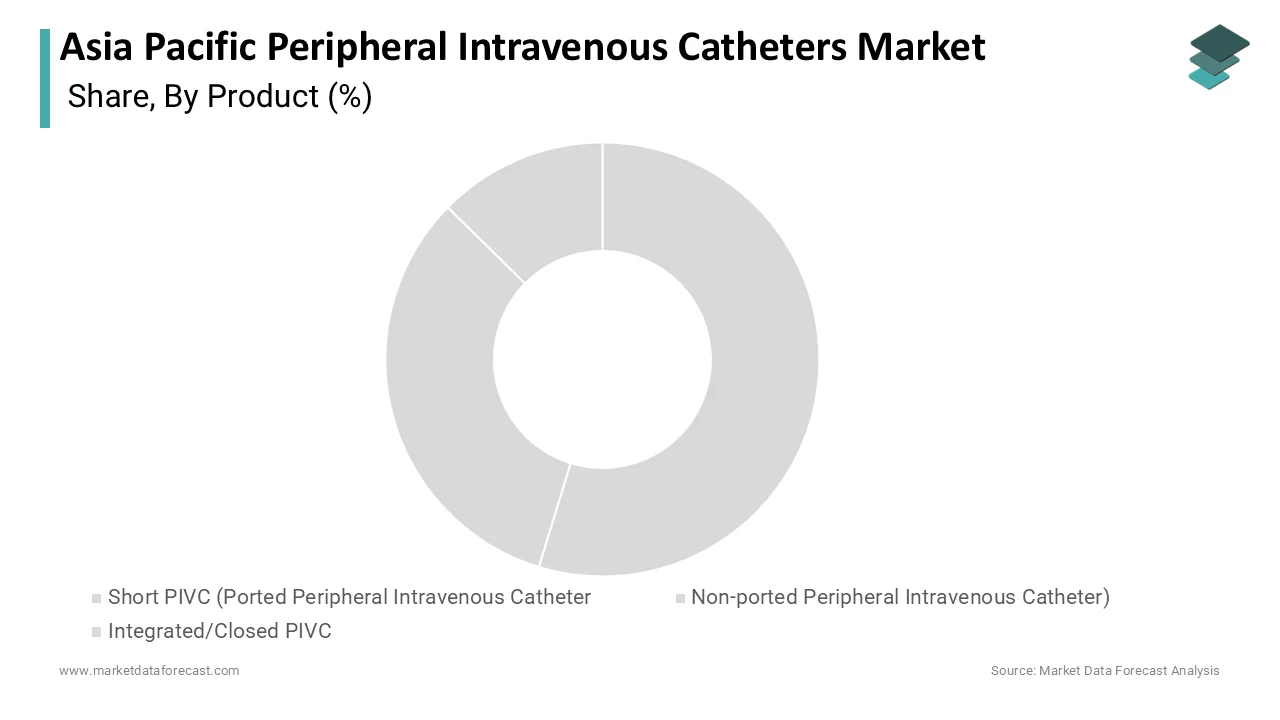
The short peripheral intravenous catheters segment maintained dominance in the Asia Pacific market and accounted for a substantial share in 2025. This dominance of the segment was driven by its universal applicability across emergency departments, general wards, and outpatient infusion centers where rapid vascular access is clinically paramount. According to the World Health Organization, rising emergency care utilization and overcrowding challenge healthcare systems globally, accelerating the deployment of baseline clinical consumables like peripheral catheters. As per the Japanese Society of Intensive Care Medicine clinical management pathways, vascular access management requires stringent safety, monitoring, and complications mitigation across high-acuity environments. Their cost-effectiveness compared to longer dwell or integrated devices makes them indispensable in resource-constrained settings where budget limitations restrict premium device adoption. This entrenched position is reinforced by nursing familiarity and established insertion protocols that reduce complication risks associated with less common device types, ensuring continued market leadership driven by clinical necessity and economic pragmatism rather than innovation cycles.
Public health systems across Asia Pacific utilize centralized procurement mechanisms that inherently favor short peripheral intravenous catheters through bulk purchasing agreements and standardized technical specifications. As per the United Nations Children's Fund Supply Division, global medical logistics networks handle multi-tier clinical packages to strengthen international public health distribution networks. According to national essential medicines frameworks across Southeast Asia, public health departments mandate standardized clinical equipment schedules to streamline primary care access. This regulatory entrenchment creates predictable volume floors independent of clinical preference shifts. Such institutional inertia ensures continued market leadership even as newer technologies emerge, because changing procurement specifications requires lengthy committee reviews and budget reallocations that most cash-constrained health systems cannot prioritize amid competing demands.
The closed peripheral intravenous catheters segment is expected to exhibit a noteworthy CAGR of 9.6% over the forecast period due to intensifying focus on healthcare-associated infection reduction across Asia Pacific. According to Joint Commission International accreditation principles, participating healthcare organizations implement international patient safety goals focused on minimizing healthcare-associated infections and clinical injuries. According to multi-center data published in the American Journal of Infection Control, closed infusion and fluid delivery environments systematically reduce baseline microbial contamination risks compared to unsealed open configurations. Private hospital groups in Singapore, Thailand, and Malaysia are adopting these devices aggressively to meet international benchmarking requirements and attract medical tourism clientele expecting Western standard safety protocols.
Workplace safety legislation across developed Asia Pacific nations is catalyzing transition toward closed catheters as employers face stricter liability frameworks for needlestick injuries among healthcare workers. According to Japan's Ministry of Health, Labour and Welfare, modern clinical evaluations prioritize the registration and roll-out of advanced passive safety innovations within local medical delivery networks. As per South Korea's Occupational Safety and Health Agency, strict surveillance protocols track workplace injury trends to promote safety-engineered solutions across public health infrastructure. Insurance providers are responding by offering premium discounts to facilities demonstrating comprehensive safety device adoption, creating financial incentives alongside regulatory mandates. Nursing associations across the region have successfully lobbied for inclusion of safety-engineered catheters in collective bargaining agreements, making provision of such devices a contractual employment condition rather than a discretionary procurement choice. This multi-stakeholder alignment transforms adoption from technology push to compliance pull, ensuring sustained growth momentum as new workforce entrants are trained exclusively on safety platforms and legacy open systems gradually retire from clinical practice.
By Type Insights
In 2025, integrated closed catheters held the majority share in the Asia Pacific peripheral intravenous catheters market because of mandatory safety standards enacted across multiple jurisdictions in the region that effectively prohibit traditional open designs in accredited facilities. According to the Therapeutic Goods Administration, medical device frameworks evaluate and register vascular access technologies based on predefined risk classification models to ensure uniform safety across clinical delivery layers. As per Singapore's Ministry of Health, national infection prevention and control guidelines prioritize uniform healthcare standards and safety frameworks to mitigate clinical transmission risks across healthcare facilities. According to South Korea’s Health Insurance Review and Assessment Service, medical care quality evaluations incentivize local clinics and hospitals to reduce healthcare-associated complications through standardized clinical safety practices. This regulatory-driven dominance differs fundamentally from voluntary adoption patterns seen in other regions, making reversal unlikely regardless of cost differentials because noncompliance carries existential operational consequences for healthcare providers.
Beyond regulatory mandates, integrated closed catheters achieve market leadership through demonstrable improvements in nursing workflow efficiency that translate to measurable labor cost savings in high-acuity settings across Asia Pacific. As per regional public hospital workload studies, clinical workflows prioritize time-management optimizations and streamlined care delivery protocols to reduce nursing fatigue in acute care units. In environments where nurse-to-patient ratios exceed recommended standards, such efficiency gains directly impact capacity utilization and throughput metrics determining hospital revenue under diagnosis-related group payment models implemented in Japan and South Korea. According to public hospital procurement metrics, institutional pharmacy departments maintain rigorous material reconciliation procedures to reduce broad consumable clinical waste. These operational benefits create value propositions resonating with hospital administrators evaluating total cost of ownership rather than unit acquisition price alone, providing sustainable justification for premium positioning even in cost-sensitive markets where clinical outcomes alone might not overcome budget resistance.
The peripheral insertion technology segment is estimated to register the fastest CAGR of 11.4% from 2026 to 2034. Clinicians are seeking solutions for difficult venous access scenarios prevalent in aging Asia-Pacific populations. These solutions include ultrasound-guided placement and advanced visualization tools. According to the Asia Pacific Vascular Access Society clinical statements, the deployment of ultrasound-guided cannulation techniques increases placement precision and procedural success rates for patients with complex vascular anatomy. Geriatric care expansion across Japan and South Korea has increased the prevalence of fragile veins and multiple comorbidities, rendering traditional blind insertion techniques inadequate and creating a clinical necessity for enhanced visualization capabilities. As per China's National Health Commission, national primary care and county-level facility upgrades prioritize standardized clinical equipment schedules to expand rural therapeutic access. This segment benefits from dual tailwinds of demographic complexity and technological democratization as device costs decrease and training accessibility improves. Unlike commodity catheters subject to price erosion, peripheral insertion technology maintains premium positioning through skill differentiation and outcome improvement, attracting early adopter clinicians who influence broader institutional adoption through peer demonstration and publication of local efficacy data.
Growth in peripheral insertion technology accelerates as dedicated specialty clinics and ambulatory surgery centers expand across Asia Pacific, creating concentrated demand nodes distinct from general hospital procurement patterns. According to research, regional expansion of specialized clinical centers triggers an active demand for advanced medical diagnostics and specialized imaging infrastructure. Oncology centers treating chemotherapy patients represent particularly strong adoption drivers because repeated venous access necessitates preservation of viable sites through precise placement techniques, minimizing vessel trauma. As per studies, the rise in outpatient infusion therapy and day-surgery procedures generates an active expansion in local clinical device utilization networks. Training academies specializing in vascular access skills have emerged in Tokyo, Seoul, Mumbai, and Sydney, creating knowledge ecosystems sustaining technology adoption independent of manufacturer promotional efforts. Ambulatory surgery centers operating under fixed fee arrangements find that investing in peripheral insertion technology reduces procedure cancellations due to failed access attempts, directly protecting revenue streams. This specialization trend fragments demand away from centralized hospital purchasing toward decentralized clinical decision makers prioritizing performance over price, enabling premium segment growth even when overall market conditions constrain capital expenditure.
By Technology Insights
The conventional peripheral intravenous catheters led the Asia Pacific market and captured a significant share in 2025. This leading position of the segment was primarily attributed to extreme cost sensitivity across developing economies, where healthcare budgets cannot accommodate premium safety-engineered alternatives. According to the World Bank, current health expenditure per capita varies widely across South and Southeast Asian countries, driving an active market demand for highly cost-optimized medical equipment and basic clinical products. As per sources, healthcare agencies utilize standardized electronic bidding platforms to regulate competitive procurement metrics for essential medical deliverables. Rural hospitals and primary health centers serving the majority of the regional population lack the infrastructure and training necessary for advanced devices, reinforcing reliance on familiar conventional platforms. Even in middle-income countries like Thailand and Malaysia, public sector procurement favors conventional catheters for routine cases while reserving safety devices for high-risk populations only. This economic reality ensures the conventional segment captures a substantial share of total unit volume despite growing safety awareness, as budget constraints override clinical best practices in resource-limited settings serving billions of people.
Conventional catheters benefit from deeply entrenched manufacturing infrastructure and distribution networks across Asia Pacific that guarantee consistent availability unmatched by newer safety technologies. According to sources, manufacturing hubs across East and South Asia scale up the domestic production of essential polymer consumables to fulfill basic regional supply chain requirements. Local production eliminates import dependencies and currency risks affecting safety devices predominantly sourced from Western manufacturers. Distribution channels optimized for conventional products reach remote rural facilities where safety device logistics remain undeveloped. Stockouts of conventional catheters are rare due to a redundant supplier base and buffer inventory practices, whereas safety devices frequently experience supply disruptions in emerging markets. Nursing education systems across the region train generations of clinicians exclusively on conventional techniques, creating muscle memory and procedural familiarity that resists change. Hospital administrators view conventional catheters as a reliable baseline supply unaffected by technology obsolescence or vendor lock-in risks associated with proprietary safety platforms. This supply chain maturity creates structural advantages independent of clinical merit, ensuring the conventional segment retains volume leadership until manufacturing capacity and distribution infrastructure for safety devices achieve comparable scale and reliability across diverse geographic contexts.
The safety peripheral intravenous catheters segment is anticipated to witness the fastest CAGR of 10.8% during the forecast period. This growth happens as regulatory harmonization and international accreditation standards increasingly mandate their use across Asia Pacific healthcare facilities. According to the Global Harmonization Working Party, over thirty participating member economies collaborate on standardizing medical device regulations, establishing shared pathways to curb redundant compliance testing. As per Japan's Ministry of Health, Labour and Welfare, occupational wellness codes dictate rigorous institutional safety audits to systematically decrease hazardous clinical needle exposures across healthcare personnel. These regulatory frameworks create non-discretionary demand independent of budget cycles or clinical preference.
Organized healthcare worker advocacy across Asia Pacific is transforming safety catheter adoption from an administrative decision to a negotiated employment condition, creating sustainable demand drivers beyond regulatory mandates. According to regional nursing education records, continuous clinical certification initiatives expand health professional competency in advanced vascular device operations. As per South Korea's Ministry of Health and Welfare, revised healthcare delivery parameters dictate specific infection containment frameworks to lower device-associated adverse events in emergency wards. Continuing education requirements increasingly include safety device competency certification, ensuring new graduates enter the workforce expecting and demanding such protections. Professional liability insurance providers offer premium reductions to facilities demonstrating comprehensive safety programs, aligning financial incentives with worker protection goals. Social media campaigns and peer networks amplify awareness of occupational risks, creating bottom-up pressure complementing top-down regulatory approaches. This multi-channel advocacy ecosystem transforms safety catheters from an optional upgrade to a fundamental workplace right, ensuring sustained growth momentum as generational workforce turnover embeds safety expectations into professional culture across diverse national contexts.
COUNTRY LEVEL ANALYSIS
India Peripheral Intravenous Catheters Market Analysis
India was the top performer in the Asia Pacific peripheral intravenous catheters market and accounted for a 24.5% share in 2025. This prominence of the Indian market was driven by a massive population base, an extensive public hospital network, and rapidly expanding insurance coverage, driving unprecedented healthcare utilization. According to the National Health Authority, the Ayushman Bharat PM-JAY national health protection scheme has logged over 50 million hospital admissions across its network, expanding the volume demand for basic medical equipment and essential therapeutic consumables. As per domestic healthcare manufacturing indicators, localized production networks scale up essential medical device output to satisfy the baseline therapeutic infrastructure demands of regional hospitals. State-level tender processes establish price ceilings, compressing margins but guaranteeing massive volume commitments attractive to generic manufacturers,s achieving economies of scale impossible elsewhere. Private hospital chains operate parallel premium segments adopting safety devices for affluent patients and medical tourists, creating a bifurcated market structure. Geographic disparities between urban tertiary centers and rural primary facilities create heterogeneous adoption patterns requiring differentiated engagement strategies. India’s scale and transformation velocity make it an indispensable market participant whose trajectory significantly influences regional aggregate performance and global pricing benchmarks for conventional devices.
China Peripheral Intravenous Catheters Market Analysis
China was the next prominent region in the Asia Pacific peripheral intravenous catheters market and captured a 22.6% share in 2025. This expansion of the Chinese market was fuelled by massive domestic manufacturing capacity, aggressive healthcare infrastructure expansion, and progressive regulatory modernization accelerating safety device adoption. According to China’s National Healthcare Security Administration, centralized volume-based procurement protocols expand regional medical consumable selections, managing strategic pricing modifications across multi-tier therapeutic supply layers. As per sources, the integration of advanced safety mechanisms across clinical markets drives a continuous volume expansion for protective medical devices. Provincial healthcare security bureaus in Shanghai, Beijing, and Guangdong have begun incorporating safety catheters into supplementary insurance schemes covering costs beyond the national formulary, creating tiered reimbursement models improving affordability for middle-income patients. However, regional disparities in clinical expertise and regulatory enforcement create heterogeneous access patterns where tier-one cities offer world-class care while rural provinces lag significantly. Intellectual property protection concerns persist despite legal reforms, causing some multinational sponsors to limit technology transfer scope. China’s combination of scale, manufacturing dominance, and policy-driven modernization positions it as both a volume leader and an emerging innovation hub, reshaping regional competitive dynamics.
Japan Peripheral Intravenous Catheters Market Analysis
Japan occupies a significant share in the Asia Pacific peripheral intravenous catheters market because of its highest per capita consumption, mature safety device adoption, and sophisticated clinical infrastructure that reflects advanced healthcare system development. According to the Ministry of Health, Labour and Welfare, national medical device registry parameters structure localized procurement pathways, shifting premium clinical consumables volumes across designated critical care units. As per the Statistics Bureau of Japan, the population aged 65 and over represents approximately 29.4% of the nation's demographics, driving an active expansion in universal health insurance system applications for clinical monitoring tools. Strict post-marketing surveillance requirements ensure high-quality standards but add compliance costs, deterring smaller innovators and concentrating market participation among well-capitalized domestic players with established pharmacovigilance infrastructure. Nursing workforce stability with favorable ratios enables optimal device utilization and protocol adherence unmatched in neighboring markets. However, stringent regulatory approval timelines averaging 18 months delay new product introductions relative to faster-moving jurisdictions. Demographic aging ensures sustained demand growth structurally embedded in population composition rather than policy interventions. Japan’s maturity manifests in shifting competitive dynamics from first mover advantages toward differentiation based on workflow integration and clinical evidence generation.
South Korea Peripheral Intravenous Catheters Market Analysis
South Korea grew steadily in the Asia Pacific peripheral intravenous catheters market due to advanced digital health integration, a strong domestic biotechnology sector, and progressive occupational safety legislation driving rapid safety device adoption. According to South Korea's Health Insurance Review and Assessment Service, medical care quality evaluations track device utilization metrics to enforce localized occupational health parameters inside hospital wards. As per the National Health Insurance Service of South Korea, national clinical reimbursement schedules establish coverage limits for specialized medical consumables to optimize institutional copayment thresholds. Domestic manufacturers leverage contract manufacturing expertise to supply global brands while developing proprietary safety platforms capturing domestic market share. Seoul National University Hospital and Asan Medical Center serve as regional reference centers conducting internationally recognized vascular access research influencing clinical guidelines across East Asia. Market maturity manifests in integration with electronic health records, enabling real-time complication surveillance and data-driven procurement optimization. However, intense price competition from Chinese imports pressures domestic manufacturers to innovate continuously or risk margin erosion in commoditized segments.
Australia Peripheral Intravenous Catheters Market Analysis
Australia is also a key player in the Asia Pacific peripheral intravenous catheters market. It functions as a Southern Hemisphere regulatory and clinical excellence hub, despite its smaller population, due to a sophisticated research ecosystem, mandatory safety standards, and internationally harmonized frameworks facilitating global trial participation. According to the Therapeutic Goods Administration, medical device frameworks evaluate and register vascular access technologies based on predefined risk classification models to ensure uniform safety across clinical delivery layers. As per the Australian Commission on Safety and Quality in Health Care, national clinical safety guidelines dictate baseline standard compliance targets across public healthcare jurisdictions. Private health insurance covers safety devices when prescribed by specialist clinicians in accredited facilities, creating a parallel payment channel supplementing public funding. Peter MacCallum Cancer Centre and Royal Melbourne Hospital conduct internationally recognized vascular access research, attracting cross-border collaborations and industry sponsorship. However, a small domestic population limits commercial attractiveness for late-stage trials focused solely on the Australian market, positioning the country primarily as a regulatory gateway and early-phase innovation site rather than a volume driver.
COMPETITIVE LANDSCAPE
Competition in the Asia Pacific peripheral intravenous catheters market exhibits pronounced stratification between multinational corporations dominating premium safety segments and regional manufacturers capturing volume-driven public sector tenders. Multinational players leverage clinical evidence generation and educational infrastructure to justify premium positioning in private hospitals and accredited facilities seeking international standards compliance. Regional producers compete aggressively on price and supply reliability in government procurement channels where standardized specifications limit differentiation opportunities. Emerging Chinese and Indian manufacturers increasingly penetrate mid-tier market segments, offering acceptable quality at intermediate price points, challenging traditional binary competition structures. Distributor loyalty remains fragmented as hospitals maintain multiple supplier relationships to mitigate stockout risks inherent in volatile supply environments. Innovation competition focuses narrowly on safety features and infection prevention rather than fundamental material science breakthroughs due to regulatory conservatism and budget constraints. Geographic coverage capabilities often outweigh product superiority in determining commercial success given infrastructure limitations across vast territories. Competitive dynamics continue evolving as local manufacturing capacity expands and regional regulatory harmonization progresses, gradually reducing historical fragmentation barriers that protected incumbent positions for decades. Price pressure intensifies in commoditized conventional segments while value-based differentiation emerges in safety categories.
KEY MARKET PLAYERS
Some of the companies that are playing a dominating role in the APAC Peripheral Intravenous Catheters Market include:
- Smiths Medical
- Terumo Corporation
- C. R. Bard, Inc.
- Becton, Dickinson and Company
- B. Braun Melsungen AG
- Tangent Medical Technologies, Inc.
- Vygon Group
TOP LEADING PLAYERS IN THE MARKET
- Terumo Corporation maintains significant involvement in the Asia Pacific peripheral intravenous catheters market through extensive manufacturing operations across Japan, China, and Southeast Asia, serving diverse healthcare systems. The company recently launched next-generation safety-engineered catheters specifically designed for high-humidity storage conditions prevalent across tropical regions. The establishment of a regional logistics hub in Singapore enhances supply chain resilience against currency volatility and customs delays affecting neighboring markets. Such infrastructure investments demonstrate commitment to long term market development beyond transactional sales relationships and position the company as a trusted partner supporting healthcare system strengthening efforts across diverse national contexts throughout the region.
- Becton Dickinson contributes substantially to the Asia Pacific peripheral intravenous catheters landscape through comprehensive product portfolios spanning conventionaland safety-engineered devicess addressing varied clinical needs and budget constraints. Their digital health integration initiative connects catheter usage data with hospital electronic medical records, enabling real-time complication surveillance across multiple facilities. Strategic alliances with government procurement agencies in India and Indonesia ensure inclusion in national essential medicine lists, securing baseline volume commitments. These multifaceted engagement strategies build sustainable competitive advantages rooted in clinical value and supply reliability rather than pricing alone, strengthening position across both premium and volume segments simultaneously.
- Nipro Corporation strengthens its position in the Asia Pacific peripheral intravenous catheters market through technology transfer agreements enabling local manufacturing partnerships in Thailand, Vietnam, and the Philippines. Their distribution network expansion into rural areas of Indonesia and the Philippines improves access to quality devices previously unavailable outside major urban centers. Strategic collaborations with public health ministries support national infection prevention campaigns, aligning corporate capabilities with governmental priorities. Manufacturing process standardization across regional facilities ensures consistent quality while achieving cost efficiencies,s enabling competitive pricing in price-sensitive markets. These integrated approaches demonstrate commitment to accessible innovation tailored to diverse Asia Pacific healthcare environments rather than importing Western solutions unchanged.
TOP STRATEGIES USED BY KEY MARKET PARTICIPANTS
Key players employ localized manufacturing partnerships to mitigate currency risks and reduce import dependencies across volatile economies. Companies invest heavily in clinical education programs that build nursing competencies while embedding product preferences through experiential learning. Regulatory engagement strategies prioritize early dialogue with national authorities to accelerate approval timelines and shape technical specifications favoring proprietary technologies. Distribution network optimization focuses on establishing regional logistics hubs that buffer against supply chain disruptions and improve delivery reliability to remote facilities. Digital health integration initiatives connect device usage with electronic health records, creating data-driven value propositions beyond unit cost considerations. Strategic acquisitions of local distributors provide immediate market access and existing customer relationships that would require years to develop organically. Product portfolio adaptation addresses regional climate challenges and clinical practice variations, distinguishing offerings from global standard catalogs. Public-private partnerships align corporate capabilities with national health priorities, securing preferential procurement treatment and policy support. Manufacturing scale investments achieve cost efficiencies enabling competitive positioning iin price-sensitivetenders while maintaining quality standards required for premium segments.
MARKET SEGMENTATION
The APAC Peripheral Intravenous Catheters Market has been segmented and sub-segmented into the following categories.
By Product
- Short PIVC (Ported Peripheral Intravenous Catheter
- Non-ported Peripheral Intravenous Catheter)
- Integrated/Closed PIVC
By Type
- Integrated/Closed catheters
- Peripheral
- insertion
- catheters
By End User
- Hospitals
- Clinics
- Ambulatory Surgery Centers (ASCs)
- Home Use and Others
By Technology
- Conventional Peripheral Intravenous Catheter
- Safety Peripheral Intravenous Catheter
By Country
- India
- China
- Japan
- South Korea
- Australia
- New Zealand
- Thailand
- Malaysia
- Vietnam
- Philippines
- Indonesia
- Singapore
- Rest of APAC