- Product Description Description
- Table of Contents TOC
- List of Table & Figure LOT
- Get Free Sample PDF Sample PDF
Market Size, 2025
$529.86 MnMarket Estimate, 2026
$630.90 MnMarket Forecast, 2034
$2,549.07 MnCAGR, 2026–2034
19.07%Asia Pacific Reprocessed Medical Devices Market Size
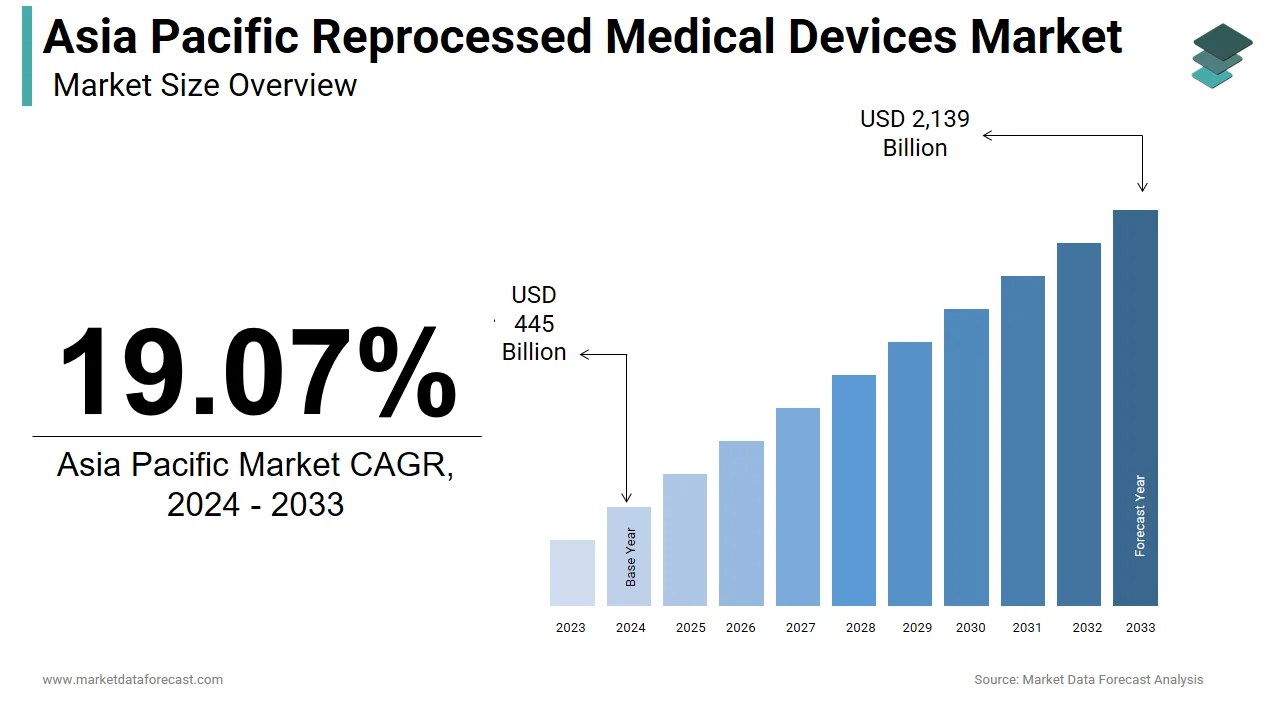
The Asia Pacific reprocessed medical devices market was valued at USD 529.86 million in 2025, is estimated to reach USD 630.90 million in 2026, and is projected to reach USD 2,549.07 million by 2034, growing at a CAGR of 19.07% from 2026 to 2034.
The reprocessed of medical devices are a practice of cleaning, testing, and remanufacturing single-use medical devices for subsequent reuse in clinical settings. This process is carried out under stringent regulatory standards to ensure patient safety while offering cost-effective alternatives to hospitals and healthcare providers. The growing emphasis on reducing healthcare expenditures, coupled with rising environmental concerns over medical waste, has propelled the adoption of reprocessed medical devices across the region. Governments and healthcare institutions in countries such as Australia, Japan, and South Korea have recognized the economic and ecological benefits of device reprocessing. Hospitals are increasingly outsourcing reprocessing activities to certified third-party vendors who adhere to international quality benchmarks.
MARKET DRIVERS
Rising Healthcare Costs and Budgetary Constraints
The escalating cost of healthcare services and limited financial resources within public health systems is a major factor propelling the growth of the Asia Pacific reprocessed medical devices market. Hospitals in middle-income countries like India and Thailand face mounting pressure to reduce operational expenses without compromising patient care. Single-use devices such as electrophysiology catheters, endoscopic accessories, and orthopedic implants are among the most commonly reprocessed due to their high procurement costs. Hospitals can achieve savings of up to 50%, as per the Association of Medical Device Reprocessors (AMDR). These cost efficiencies are especially crucial in rural and semi-urban healthcare centers where funding limitations restrict access to advanced medical tools.
Growing Environmental Awareness and Waste Management Pressures
The increasing emphasis on environmental sustainability and responsible waste management is additionally to fuel the growth of the Asia Pacific reprocessed medical devices market. Healthcare facilities across the region are under scrutiny to reduce their carbon footprint and mitigate the environmental impact of disposable medical products. According to the United Nations Environment Programme (UNEP), the healthcare sector contributes significantly to plastic waste, with single-use medical devices accounting for a substantial portion of hospital-generated refuse. Reprocessing extends the lifecycle of medical devices, thereby reducing landfill burden and conserving raw materials. In Australia, for instance, the National Waste Policy outlines targets for minimizing healthcare-related waste by encouraging hospitals to adopt circular economy principles such as device reutilization. Japan’s Ministry of the Environment promotes green procurement policies that favor reprocessed goods. Hospitals in Singapore and South Korea have also initiated sustainability programs that integrate reprocessed medical devices into daily operations.
MARKET RESTRAINTS
Stringent Regulatory Requirements and Compliance Burdens
The presence of complex regulatory requirements and compliance challenges is slightly limiting the growth of the Asia Pacific reprocessed medical devices market. According to the Asia eHealth Information Network (AeHIN), only a handful of APAC countries have fully implemented regulatory oversight specific to reprocessed medical devices. In China, the National Medical Products Administration (NMPA) enforces rigorous certification procedures for reprocessed devices, requiring extensive validation and documentation before commercial use. This increases time-to-market and discourages smaller players from entering the space. Additionally, in India, despite growing interest in reprocessing, there is no centralized regulatory authority governing the sector, resulting in fragmented implementation and limited scalability. A report by Frost & Sullivan highlighted that nearly 35% of healthcare providers cited regulatory complexity as a barrier to adopting reprocessed medical devices.
Concerns Over Patient Safety and Device Efficacy
Safety concerns and skepticism regarding the efficacy of reprocessed medical devices pose a significant challenge to market growth in the Asia Pacific region. Many clinicians and healthcare professionals remain cautious about using devices that were originally designed for single use. According to a survey conducted by Deloitte, more than 40% of medical practitioners in South Korea expressed reservations about the long-term reliability of reprocessed instruments. In response, regulatory bodies such as the Australian Therapeutic Goods Administration (TGA) and Japan's Pharmaceuticals and Medical Devices Agency (PMDA) have mandated strict reprocessing standards. However, inconsistent enforcement across the region continues to raise doubts among end-users. Furthermore, a study published in the Journal of Hospital Infection found that improper reprocessing could lead to microbial contamination, potentially compromising patient outcomes.
MARKET OPPORTUNITIES
Expansion of Outsourced Reprocessing Services
The growing trend of outsourcing reprocessing activities to specialized third-party vendors is creating new opportunities for the growth of the Asia Pacific reprocessed medical devices market. Hospitals are increasingly opting for external service providers to handle the cleaning, sterilization, and validation of reusable medical equipment, which is allowing them to focus on core clinical functions. According to the Global Health Security Index, outsourcing ensures adherence to higher quality standards and reduces the risk of in-house processing errors. Countries like Singapore and Malaysia have seen a surge in partnerships between hospitals and certified reprocessing firms, driven by stricter hygiene regulations and the need for cost-effective solutions.
Increasing Adoption of Reprocessed Devices in Ambulatory Surgical Centers
The expanding utilization of reprocessed instruments in ambulatory surgical centers (ASCs) is also to promote the growth of the Asia Pacific reprocessed medical devices market. These outpatient facilities perform a wide range of minimally invasive procedures, often under tight budget constraints. In South Korea, for example, the number of accredited ASCs has grown significantly over the past five years, as reported by the Korean Society for Ambulatory Surgery. Many of these centers now incorporate reprocessed laparoscopic tools and endoscopic accessories to manage expenses effectively. In India, the rise of private day-care surgery clinics has prompted increased interest in reprocessed devices in cardiology and gastroenterology departments. According to the Indian Journal of Surgery, reprocessed catheters and biopsy forceps are being used safely and efficiently in high-volume ASCs.
MARKET CHALLENGES
Lack of Standardization across Regional Markets
The absence of standardized regulatory and operational frameworks across different countries is slowly hindering the growth of the Asia Pacific reprocessed medical devices market. According to the Asia eHealth Information Network (AeHIN), only a few countries including Australia, Japan, and South Korea have comprehensive reprocessing standards in place. A report by Frost & Sullivan indicated that the absence of uniform certification requirements hampers cross-border trade and limits the expansion of multinational reprocessing firms. Additionally, differences in sterilization techniques, labeling norms, and post-reprocessing traceability create operational complexities for vendors seeking to scale their services across the region.
Limited Awareness among Healthcare Professionals and Patients
Limited awareness among healthcare professionals and patients regarding the benefits and safety of reprocessed medical devices presents a major challenge to market growth in the Asia Pacific region. According to a survey conducted by Deloitte, more than half of the physicians in Thailand and Malaysia expressed uncertainty about the reliability of reprocessed devices, even when sourced from accredited vendors. Patient perception also plays a crucial role in shaping adoption rates. Many individuals remain unaware that reprocessed devices undergo the same rigorous sterilization and functional testing as new instruments. A study published in the Asia-Pacific Journal of Public Health revealed that only 28% of surveyed patients in India had heard of reprocessed medical devices, and fewer understood the associated cost and environmental benefits.
REPORT COVERAGE
| REPORT METRIC | DETAILS |
| Market Size Available | 2025 to 2034 |
| Base Year | 2025 |
| Forecast Period | 2026 to 2034 |
| Segments Covered | By Product, Type, and Region. |
| Various Analyses Covered | Global, Regional, and Country-Level Analysis, Segment-Level Analysis, Drivers, Restraints, Opportunities, Challenges; PESTLE Analysis; Porter’s Five Forces Analysis, Competitive Landscape, Analyst Overview of Investment Opportunities |
| Countries Covered | India, China, Japan, South Korea, Australia, New Zealand, Thailand, Malaysia, Vietnam, Philippines, Indonesia, Singapore, and the Rest of APAC |
| Market Leaders Profiled | Stryker, Innovative Health, NEScientific, Inc., Medline Industries, LP., Arjo, Cardinal Health, SureTek Medical, Soma Tech Intl, Johnson & Johnson MedTech, and GE Healthcare. |
SEGMENTAL ANALYSIS
By Product Insights
The cardiovascular segment was the largest and held 42.3% of the Asia Pacific reprocessed medical devices market share in 2024. According to the World Health Organization, cardiovascular diseases account for nearly 30% of all deaths in the Western Pacific Region, with similar trends observed across South and Southeast Asia. In China alone, over 330 million people suffer from some form of cardiovascular condition, as per the Chinese Society of Cardiology. Moreover, regulatory bodies such as Japan’s Pharmaceuticals and Medical Devices Agency (PMDA) have established clear guidelines for reprocessing cardiovascular devices, ensuring safety and efficacy.
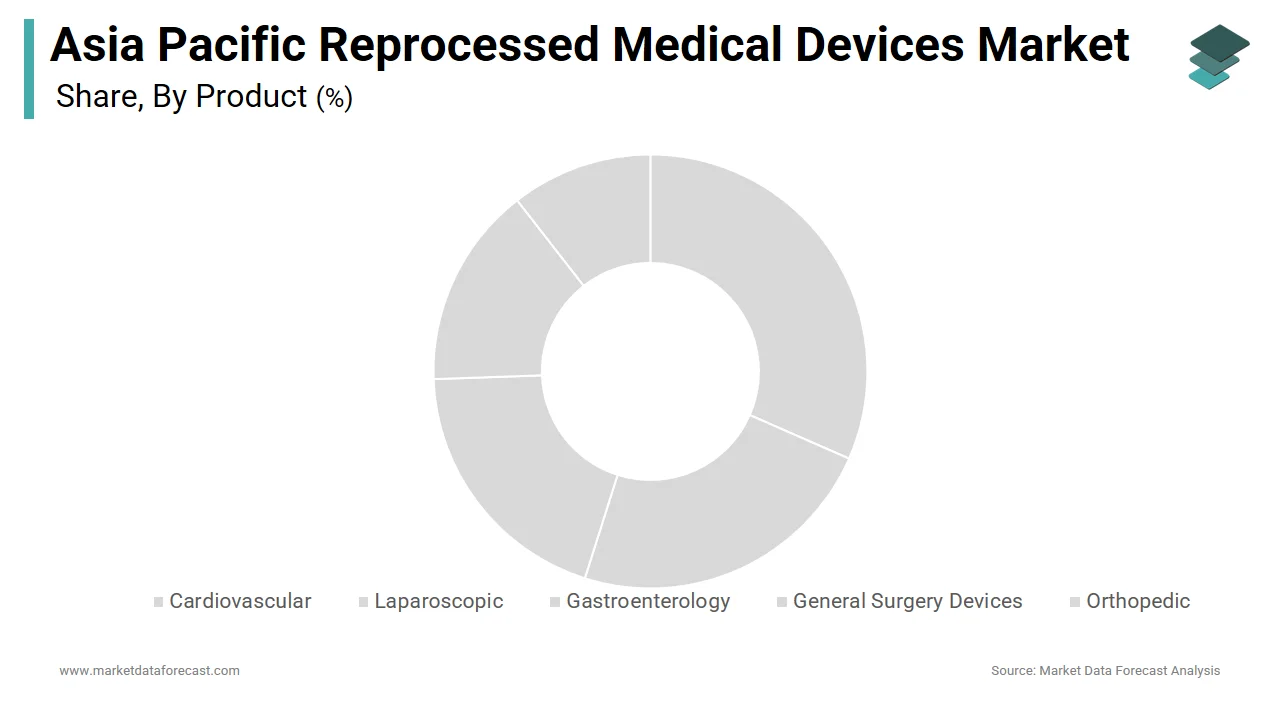
The laparoscopic devices segment is projected to grow with an expected CAGR of 14.3% during the forecast period. In India, the number of laparoscopic procedures performed annually has grown by more than 20% since 2020, according to the Indian Journal of Surgery. Similarly, in South Korea, government initiatives promoting outpatient surgical care have boosted the utilization of reusable laparoscopic tools. Additionally, advancements in sterilization technologies and improved regulatory oversight have enhanced confidence in the reliability of reprocessed laparoscopic equipment.
By Type Insights
The third-party reprocessing segment held a dominant share of the Asia Pacific reprocessed medical devices market in 2025 with the growing preference among hospitals to outsource reprocessing activities to certified external vendors who ensure compliance with stringent quality and safety standards. Outsourcing allows healthcare facilities to focus on core clinical operations while benefiting from economies of scale offered by specialized reprocessing companies. According to the Global Health Security Index, outsourcing reduces the risk of improper sterilization and functional testing, which are critical to maintaining device integrity. Major players such as Steri-Processing Group in Australia and Medline Industries in Singapore have expanded their service networks to cater to both public and private healthcare institutions.
The in-house reprocessing segment is anticipated to register a CAGR of 12.7% in the next coming years. Hospitals in countries like India and Indonesia are increasingly adopting in-house reprocessing to manage turnaround times and reduce dependency on external vendors. Technological advancements in sterilization equipment, coupled with training programs provided by regulatory bodies such as the Japan Society for Surgical Infection Control, have enhanced the feasibility of in-house processing.
COUNTRY LEVEL ANALYSIS
China Reprocessed Medical Devices Market Insights
China was the largest contributor with the Asia Pacific reprocessed medical devices market with 27.3% of the share in 2024. The National Medical Products Administration (NMPA) has introduced structured guidelines for reprocessing certain categories of single-use devices, particularly in cardiology and gastroenterology. According to the Chinese Society of Cardiology, over 330 million individuals suffer from cardiovascular conditions, necessitating frequent use of high-cost interventional tools. Hospitals are increasingly opting for reprocessed catheters and guidewires to manage expenses without compromising patient outcomes. Additionally, China’s emphasis on green healthcare policies aligns with the sustainability benefits of reprocessing.
Japan Reprocessed Medical Devices Market Insights
Japan reprocessed medical devices market growth is likely to be driven by the adoption of structured reprocessing protocols and strong regulatory oversight. The Pharmaceuticals and Medical Devices Agency (PMDA) has established clear certification requirements for reprocessed devices by ensuring safety and performance consistency. Japanese hospitals frequently utilize reprocessed endoscopic accessories and cardiovascular instruments to manage procedural costs effectively. Moreover, the Ministry of the Environment actively promotes circular economy principles by encouraging healthcare institutions to minimize waste through reuse strategies.
India Reprocessed Medical Devices Market Insights
India reprocessed medical devices market growth is estimated to grow with a high volume of surgical procedures. Public and private hospitals alike face immense financial pressure to deliver quality care at lower costs, prompting increased reliance on reprocessed medical instruments. According to the Indian Journal of Surgery, reprocessed laparoscopic and urological tools are widely used in high-volume hospitals, particularly in cardiology and gastroenterology departments.
Australia Reprocessed Medical Devices Market Insights
Australia reprocessed medical devices market growth is witnessed to have steady growth opportunities with its robust regulatory environment and proactive stance on environmental sustainability. The Therapeutic Goods Administration (TGA) mandates that only certified third-party reprocessors handle single-use devices by ensuring adherence to international standards. Healthcare waste management is a growing concern in Australia, where hospitals generate approximately 0.5 kg of hazardous waste per bed per day, as per the United Nations Environment Programme (UNEP). Steri-Processing Group and other domestic firms have capitalized on this trend by offering compliant reprocessing services to both public and private healthcare providers.
South Korea Reprocessed Medical Devices Market Insights
South Korea reprocessed medical devices market growth is likely to growing with its technologically advanced healthcare system and growing adoption of ambulatory surgical centers (ASCs). Additionally, the Ministry of Health and Welfare supports initiatives aimed at improving resource efficiency in healthcare delivery. Hospitals and clinics are leveraging reprocessed laparoscopic tools and endoscopic accessories to enhance affordability without compromising sterility or functionality.
COMPETITIVE LANDSCAPE
The competition in the Asia Pacific reprocessed medical devices market is intensifying due to growing demand for cost-effective and sustainable healthcare solutions. A mix of established global players, local manufacturers, and specialized reprocessing firms are vying for market share, each bringing unique strengths to the table. While multinational corporations leverage their technological expertise and regulatory know-how, regional firms capitalize on localized knowledge and cost advantages. The market is also witnessing an influx of startups focused on niche segments such as laparoscopic or cardiovascular device reprocessing.
Competition is further shaped by varying regulatory landscapes across APAC countries. Some players have gained a foothold by aligning early with stringent standards, while others struggle to navigate fragmented policies. Innovation in sterilization techniques, enhanced traceability systems, and transparent quality reporting are becoming critical differentiators. Vendors must demonstrate both economic viability and clinical reliability as healthcare providers increasingly prioritize value-based care.
KEY MARKET PLAYERS
Some of the noteworthy companies in the Asia Pacific reprocessed medical devices market profiled in this report are
- Stryker
- Innovative Health
- NEScientific, Inc.
- Medline Industries, LP.
- Arjo
- Cardinal Health
- SureTek Medical
- Soma Tech Intl
- Johnson & Johnson MedTech
- GE Healthcare
TOP LEADING PLAYERS IN THE MARKET
- Steri-Processing Group is a leading player in the reprocessed medical devices market across the Asia Pacific, particularly in Australia and New Zealand. The company specializes in third-party reprocessing of single-use medical devices, ensuring compliance with stringent regulatory standards. Its contributions to the global market include setting benchmarks for sterilization protocols, quality assurance, and traceability. Steri-Processing Group supports healthcare providers in reducing expenses while maintaining high levels of patient safety by offering cost-effective and sustainable solutions.
- Canon Electron Tubes & Devices plays a pivotal role in Japan’s reprocessed medical devices market by leveraging its advanced engineering expertise to remanufacture endoscopic accessories and cardiovascular instruments. The company adheres to strict Japanese regulatory requirements, contributing to the development of standardized reprocessing practices. In the global context, Canon has influenced technological innovation in device restoration and helped shape industry best practices that are now being referenced in other APAC markets seeking regulatory clarity.
- Medline Industries operates across multiple APAC countries and is known for its comprehensive portfolio of reprocessed medical devices tailored to hospital needs. It contributes to the global market by integrating sustainability with affordability, offering hospitals access to high-quality reprocessed tools without compromising on performance. Medline has strengthened its position as a key player driving adoption in emerging economies across Southeast Asia through strategic partnerships and localized service offerings.
TOP STRATEGIES USED BY KEY MARKET PARTICIPANTS
Key players in the Asia Pacific reprocessed medical devices market focus on aligning their operations with evolving regulatory standards across different countries. This includes obtaining certifications from national health authorities and demonstrating adherence to international reprocessing guidelines.
Leading firms are investing in state-of-the-art sterilization, functional testing, and validation technologies to ensure product reliability and safety. These advancements not only improve process efficiency but also reassure clinicians and patients about the integrity of reprocessed devices.
Establishing long-term partnerships with hospitals, surgical centers, and government health agencies is a crucial strategy for market participants. These collaborations allow reprocessing companies to integrate seamlessly into existing supply chains, offer customized services, and gain insights into regional demand patterns.
RECENT MARKET DEVELOPMENTS
- In March 2024, Steri-Processing Group expanded its facility in Melbourne, Australia to accommodate increased demand for third-party reprocessing services by enhancing capacity and turnaround times for hospital clients.
- In February 2024, Canon Electron Tubes & Devices launched a new line of reprocessed cardiovascular catheters in collaboration with Japanese university hospitals, which is aiming to improve accessibility and reduce procedural costs.
- In January 2024, Medline Industries partnered with a major Singaporean hospital group to implement a centralized reprocessing system for endoscopic tools by streamlining workflow and improving sterilization tracking.
- In May 2024, a South Korean startup specializing in reprocessed laparoscopic instruments secured exclusive distribution agreements with several ambulatory surgical centers across Thailand and Malaysia to expand regional reach.
- In June 2024, a leading Australian certification body collaborated with multiple reprocessing firms to develop a unified quality assurance framework intended to support cross-border recognition of reprocessed medical devices within ASEAN markets.
MARKET SEGMENTATION
This Asia Pacific reprocessed medical devices market research report is segmented and sub-segmented into the following categories.
By Product
- Cardiovascular
- Blood Pressure Cuffs
- Positioning Devices
- Cardiac Stabilization Devices
- Diagnostic Electrophysiology Catheters
- Deep Vein Thrombosis Compression Sleeves
- Electrophysiology Cables
- Laparoscopic
- Harmonic Scalpels
- Endoscopic Trocars
- Gastroenterology
- Biopsy Forceps
- Others
- General Surgery Devices
- Pressure Bags
- Balloon Inflation Devices
- Orthopedic
By Type
- Third-party Reprocessing
- In-house Reprocessing
By End-use
- Hospitals
- Home Healthcare
- Others
By Country
- India
- China
- Japan
- South Korea
- Australia
- New Zealand
- Thailand
- Malaysia
- Vietnam
- Philippines
- Indonesia
- Singapore
- Rest Of APAC