- Product Description Description
- Table of Contents TOC
- List of Table & Figure LOT
- Get Free Sample PDF Sample PDF
Market Size, 2025
$3.81 BnMarket Estimate, 2026
$4.03 BnMarket Forecast, 2034
$6.30 BnCAGR, 2026–2034
5.75%Asia Pacific Test Strips Market Size
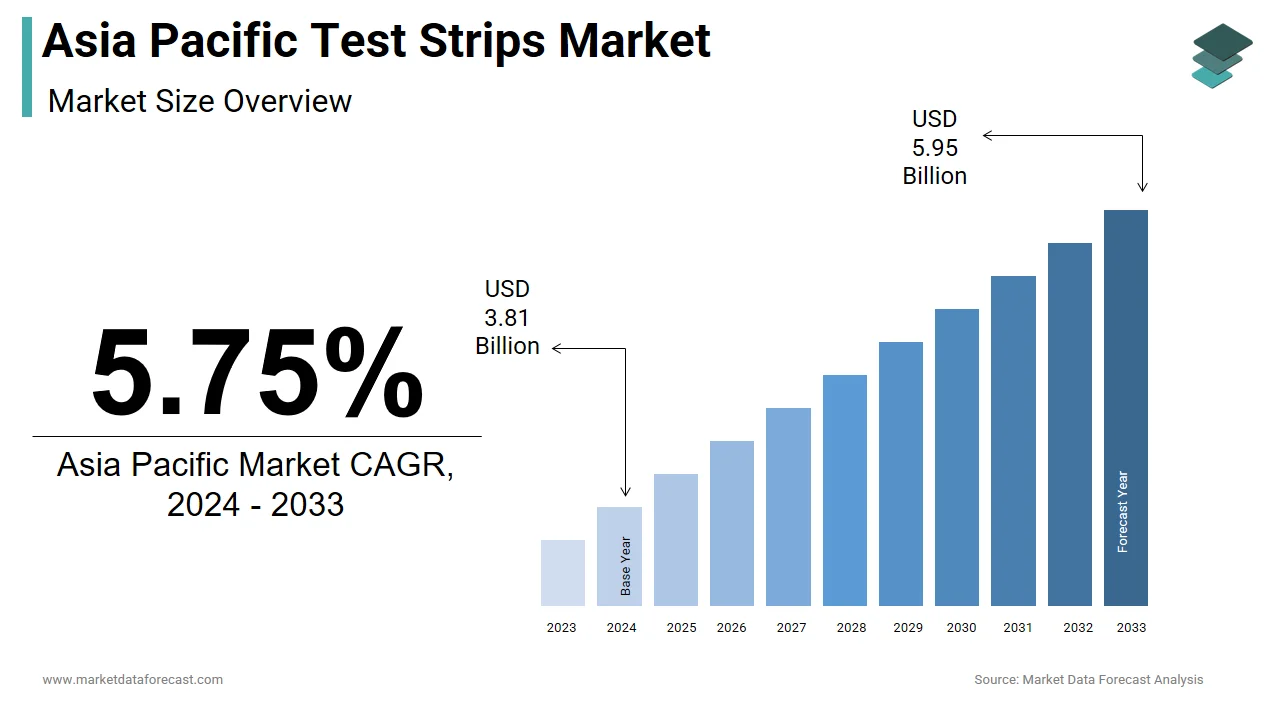
The Asia Pacific test strips market was valued at USD 3.81 billion in 2025, is estimated to reach USD 4.03 billion in 2026, and is projected to reach USD 6.30 billion by 2034, growing at a CAGR of 5.75% from 2026 to 2034.
The test strips are diagnostic tools used primarily in point-of-care testing for various medical conditions, including diabetes, urinary tract infections, liver disorders, and cardiac ailments. These strips, typically used in conjunction with portable meters, enable rapid, accurate, and cost-effective diagnostics, making them indispensable in both clinical and home healthcare settings. The region has witnessed a surge in demand for these diagnostic tools due to the rising prevalence of chronic diseases, a growing geriatric population, and increasing awareness about preventive healthcare.
According to the International Diabetes Federation, the Asia Pacific region accounts for nearly 60% of the global diabetic population, with countries like China and India experiencing exponential growth in diabetes cases. This trend has significantly fueled the demand for glucose test strips. Additionally, the expansion of healthcare infrastructure and the proliferation of self-monitoring practices have further catalyzed market growth.
MARKET DRIVERS
Rising Prevalence of Chronic Diseases
The escalating prevalence of chronic diseases, particularly diabetes and cardiovascular disorders, is propelling the growth of the Asia Pacific test strips market. The International Diabetes Federation reported that in 2021, over 212 million adults in the Asia Pacific region were living with diabetes, a number projected to reach 334 million by 2045. In India alone, diabetes prevalence has more than doubled over the past two decades, with approximately 74 million diagnosed cases in 2021. Similarly, China accounts for nearly 141 million diabetic patients, making it the country with the highest diabetic population globally.
This growing burden of chronic diseases has led to an increased demand for regular monitoring of blood glucose levels, which is primarily achieved through the use of glucose test strips. Additionally, cardiovascular diseases are also on the rise in the region. According to the World Health Organization, cardiovascular diseases accounted for over 30% of all deaths in low- and middle-income countries in the Asia Pacific region in 2020. This has led to a corresponding rise in the use of lipid and cardiac biomarker test strips for early detection and management of heart-related conditions. Governments and healthcare institutions across the region have also been promoting regular health check-ups and preventive care, further stimulating the adoption of test strip technologies in both urban and rural settings.
Expansion of Point-of-Care Testing Infrastructure
The expansion of point-of-care testing (POCT) infrastructure across the Asia Pacific region has significantly contributed to the growth of the test strips market. POCT enables rapid diagnostic results outside traditional laboratory settings, which is especially beneficial in remote and underserved areas where access to centralized labs is limited. In countries like Australia and Japan, the adoption of POCT devices has been bolstered by well-established healthcare systems and favorable reimbursement policies. Meanwhile, in emerging markets such as India and Indonesia, mobile health clinics and telemedicine platforms are increasingly integrating POCT solutions to improve diagnostic accessibility.
MARKET RESTRAINTS
Regulatory Complexities and Compliance Issues
The complex and fragmented regulatory landscape across different countries in the region is restraining the growth of the Asia Pacific test strips market. Each country has its own set of regulatory requirements for medical devices, including test strips, which can delay product approvals and increase time-to-market. For instance, in Japan, the Pharmaceuticals and Medical Devices Agency (PMDA) enforces stringent regulations, requiring extensive clinical data and quality assurance protocols before approving diagnostic products. In emerging markets such as India and Indonesia, regulatory frameworks are still evolving. According to the Indian government’s Central Drugs Standard Control Organization (CDSCO), the implementation of the Medical Devices Rules, 2017, introduced more structured regulatory oversight, but the transition has been challenging for manufacturers. A report by Deloitte indicated that nearly 40% of medical device companies in India faced delays in product registrations due to unclear regulatory pathways. Is
High Cost of Advanced Diagnostic Test Strips
The high cost associated with advanced diagnostic test strips is limiting the growth of the Asia Pacific test strips market. While basic glucose test strips are relatively affordable, more sophisticated strips used for detecting conditions such as cardiac biomarkers, infectious diseases, and metabolic disorders tend to be significantly more expensive. For instance, troponin test strips, which are used for diagnosing acute myocardial infarction, can cost up to USD 15–20 per unit in countries like Australia and Japan.
MARKET OPPORTUNITIES
Integration of Digital Health Technologies with Test Strips
The integration of digital health technologies with diagnostic test strips is creating new opportunities for the growth of the Asia Pacific test strips market. The rise of connected health devices, mobile health applications, and cloud-based diagnostics has transformed the way test strips are used in both clinical and home settings. For example, companies like Roche and Abbott have introduced smart glucose meters that sync with mobile apps, enabling real-time tracking of blood sugar levels and generating trend reports for better diabetes management. A study by PwC in 2023 found that the adoption of connected diagnostics in the Asia Pacific region is growing at a CAGR of 18%, driven by increasing smartphone penetration and rising health awareness.
Expansion of Telemedicine and Home Healthcare Services
The expansion of telemedicine and home healthcare services in the Asia Pacific region is creating new growth opportunities for the Asia Pacific test strips market. In countries like Australia and South Korea, telehealth platforms have been integrated with diagnostic tools, allowing physicians to remotely assess patient health data obtained from test strips. For instance, the Australian government’s expansion of Medicare-subsidized telehealth services has led to increased use of home diagnostic kits, including blood glucose and cholesterol test strips. In India, Apollo Telehealth and Practo have launched home diagnostic kits that include a variety of test strips, enabling users to conduct preliminary assessments before consulting a doctor online. This shift toward decentralized healthcare delivery is expected to significantly boost the demand for test strips across the Asia Pacific, particularly in densely populated and geographically diverse countries.
MARKET CHALLENGES
Limited Awareness and Accessibility in Rural Areas
The limited awareness and accessibility of diagnostic tools in rural and remote areas are impeding the growth of the Asia Pacific test strips market. According to the World Bank, in 2021, nearly 65% of India’s population resided in rural areas, where healthcare facilities are often underdeveloped and diagnostic resources are scarce. Low awareness about preventive healthcare and the benefits of early disease detection further exacerbates this issue. A 2022 study published in the Journal of Global Health found that only 30% of rural residents in Southeast Asia were aware of home-based diagnostic tools such as test strips. Additionally, distribution challenges, including poor logistics and a lack of trained healthcare personnel, hinder the availability of these products in remote locations. In response, governments and NGOs have launched initiatives such as mobile health clinics and community health worker programs to bridge the gap.
Inconsistent Reimbursement Policies Across the Region
The inconsistent reimbursement policies across the Asia Pacific region pose a significant challenge to the Asia Pacific test strips market expansion. While some countries offer comprehensive reimbursement for diagnostic products, others have limited or no coverage, affecting affordability and adoption rates. In Japan, for instance, the national health insurance system covers a wide range of diagnostic test strips, including glucose and ketone strips, which have contributed to high patient adherence. India presents a mixed scenario, where government-funded health insurance schemes such as Ayushman Bharat provide partial coverage for diagnostic services, but test strips are often excluded from the list of reimbursable items.
REPORT COVERAGE
| REPORT METRIC | DETAILS |
| Market Size Available | 2025 to 2034 |
| Base Year | 2025 |
| Forecast Period | 2026 to 2034 |
| Segments Covered | By Product, Application, End-User, Distribution Channel, and Region. |
| Various Analyses Covered | Global, Regional and Country-Level Analysis, Segment-Level Analysis, Drivers, Restraints, Opportunities, Challenges; PESTLE Analysis; Porter’s Five Forces Analysis, Competitive Landscape, Analyst Overview of Investment Opportunities |
| Countries Covered | India, China, Japan, South Korea, Australia, New Zealand, Thailand, Malaysia, Vietnam, Philippines, Indonesia, Singapore, Rest of APAC |
| Market Leaders Profiled | ARKRAY, Inc., Ascensia Diabetes Care Holdings AG, Abbott, F. Hoffmann-La Roche, LifeScan, and Others. |
SEGMENTAL ANALYSIS
By Product Insights
The blood test strips segment held 55.4% of the Asia Pacific test strips market share in 2024, with surging prevalence of diabetes and cardiovascular diseases across the region. As per the International Diabetes Federation, the Asia Pacific region alone is home to more than 212 million diabetic adults, with China and India contributing significantly to this burden. The need for regular blood glucose monitoring has directly boosted the demand for blood glucose test strips, which constitute a major portion of this segment. Additionally, growing awareness about early disease detection and rising adoption of point-of-care testing in both clinical and home settings have further strengthened the market position of blood test strips. In Japan, where the aging population is particularly vulnerable to chronic illnesses, the government has introduced initiatives to promote home-based monitoring, leading to increased usage of blood test strips.
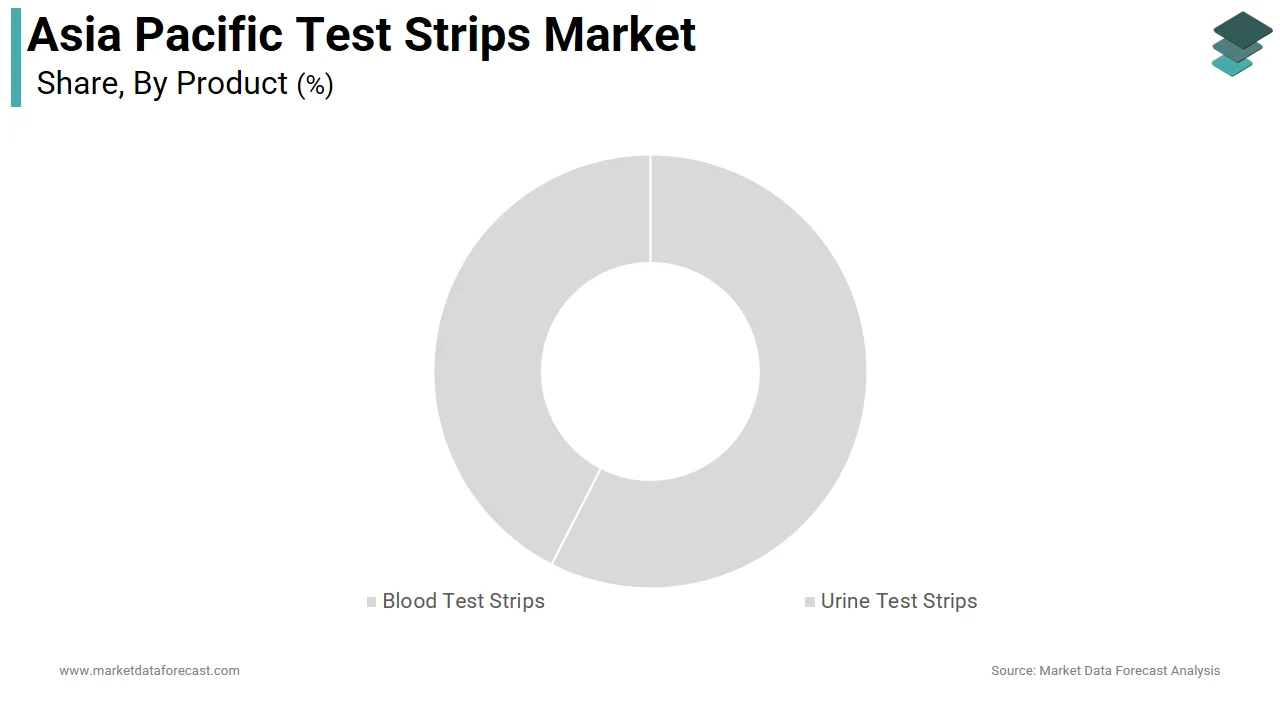
The urine test strips segment is projected to grow with a CAGR of 11.6% from 2026 to 2034, with the increasing incidence of urinary tract infections (UTIs), kidney disorders, and metabolic syndromes across the region. According to the World Health Organization, UTIs are among the most common bacterial infections in Asia, affecting approximately 150 million people annually. Moreover, government initiatives to improve maternal and child health have also contributed to the segment’s growth. In Thailand, for instance, the Ministry of Public Health has integrated urine testing into prenatal care programs, ensuring early detection of gestational diabetes and preeclampsia.
By Application Insights
The diabetes monitoring segment was the largest by accounting for 48.3% of the Asia Pacific test strips market share in 2024, with the alarming rise in diabetes prevalence across the region. As per the International Diabetes Federation, the Asia Pacific region is home to over 212 million adults with diabetes, representing nearly 60% of the global diabetic population. Additionally, growing awareness about the importance of self-monitoring of blood glucose (SMBG) and the expansion of health insurance coverage for diabetes care have further fueled market growth. In Japan, where the elderly population is particularly prone to diabetes, the government has implemented policies promoting regular blood sugar testing.
The pregnancy detection segment is estimated to witness a CAGR of 12.3% from 2026 to 2034. In Southeast Asia, countries like Indonesia and the Philippines have witnessed a surge in demand for home pregnancy test kits due to improved literacy rates and greater autonomy in reproductive health decisions. According to the United Nations Population Fund, Indonesia’s maternal health indicators have improved significantly over the past decade, with over 90% of pregnant women receiving at least one antenatal check-up in 2022. This has led to increased use of pregnancy test strips for early detection and monitoring.
By End User Insights
The hospitals & clinics segment accounted in holding 58.3% of the Asia Pacific test strips market share in 2024. In countries like China and Japan, well-established healthcare infrastructures and high patient footfalls in hospitals have resulted in a consistent demand for diagnostic test strips. According to the National Health Commission of China, over 8 billion laboratory tests were conducted in hospitals across the country in 2022, with test strips being a crucial component of these diagnostics. Additionally, the integration of point-of-care testing (POCT) systems in hospital settings has enhanced the efficiency of diagnostics. In Australia, the Royal College of Pathologists of Australasia reported that POCT adoption in hospitals has increased by 15% over the past five years, primarily due to its ability to provide immediate results without the need for centralized lab processing.
The home care and personal use segment is expected to witness a CAGR of 13.2% from 2026 to 2034. In India, the popularity of home-based diagnostics has surged due to rising health awareness and the convenience of self-testing. According to a 2023 Nielsen survey, over 65% of urban Indian consumers prefer using at-home diagnostic kits, including glucose and pregnancy test strips, for routine health assessments. Similarly, in South Korea, the Ministry of Food and Drug Safety has been promoting the use of self-testing kits to reduce the burden on hospitals and encourage preventive healthcare. Moreover, the expansion of e-commerce platforms and telemedicine services has made test strips more accessible to consumers. In Australia, online pharmacies such as Chemist Direct and MyLife Pharmacy have reported a 40% increase in home diagnostic kit sales in 2022 compared to the previous year. Additionally, government initiatives like India’s Ayushman Bharat Digital Mission have facilitated the integration of digital health records with home test results, enhancing the appeal of self-monitoring.
By Distribution Channel Insights
The retail pharmacies segment accounted in holding 52.3% of the Asia Pacific test strips market share in 2024. In countries like India and Indonesia, where access to centralized healthcare facilities is limited in rural areas, retail pharmacies serve as the primary source of diagnostic tools for consumers. According to the All India Organisation of Chemists and Druggists (AIOCD), India has over 800,000 registered retail pharmacies, with a significant portion offering OTC diagnostic kits. Similarly, in China, the rapid expansion of pharmacy chains such as DXY and Yiduifang has made test strips more accessible to the general population. Additionally, growing consumer preference for self-diagnosis and convenience has further bolstered the role of retail pharmacies in distributing test strips.
The hospital pharmacies segment is projected to expand at a CAGR of 11.8% from 2026 to 2034. In Japan, hospital pharmacies have become a key component of the healthcare system, with a strong emphasis on rapid diagnostics and treatment planning. According to the Japanese Society of Hospital Pharmacists, over 90% of hospitals in the country now employ in-house pharmacists who oversee the dispensing and use of diagnostic products, including test strips. In South Korea, the Ministry of Food and Drug Safety has mandated that all major hospitals maintain on-site pharmacies to streamline medication and diagnostic supply chains.
COUNTRY-LEVEL ANALYSIS
China Test Strips Market Insights
China was the top performer of the Asia Pacific test strips market by accounting for 28.3% of the share in 2024, with the country’s massive diabetic population, which exceeds 141 million, as reported by the International Diabetes Federation. The rising prevalence of chronic diseases, coupled with an aging population, has significantly increased the demand for glucose and other diagnostic test strips. The Chinese government has taken proactive steps to enhance diagnostic accessibility, including integrating diabetes management into national health policies. Furthermore, the expansion of telemedicine and digital health platforms has facilitated remote monitoring and home-based diagnostics. Alibaba Health and Tencent Health have launched online diagnostic kits that include a variety of test strips, enabling patients to manage their health more effectively.
India Test Strips Market Insights
India test strips market was positioned second by holding 18.2% of the share in 2024, with the large diabetic population, rising awareness about preventive healthcare, and expanding healthcare infrastructure being key drivers of market growth. According to the Indian Council of Medical Research, diabetes prevalence in India has surged to over 74 million cases in 2023, with an additional 37 million individuals at risk of developing the condition. This has led to increased demand for glucose test strips, which form a significant portion of the market. Additionally, the proliferation of e-pharmacies and telemedicine platforms has made test strips more accessible to consumers. Platforms like 1mg, Apollo Telehealth, and PharmEasy have reported a 50% increase in home diagnostic kit sales in 2022 compared to the previous year.
Japan Test Strips Market Insights
Japan test strips market growth is driven by the country’s advanced healthcare system, coupled with a rapidly aging population, has contributed to high demand for diagnostic test strips, particularly for chronic disease monitoring. As per the Japanese Ministry of Health, Labour and Welfare, over 30% of Japan’s population is aged 65 years or older, making it one of the most aged societies globally. This demographic shift has led to a surge in age-related conditions such as diabetes, hypertension, and kidney disorders, which require regular monitoring using test strips. Additionally, the integration of digital health technologies has enhanced the adoption of smart test strips. Companies like Arkray and Terumo have introduced connected glucose meters that sync with mobile apps, allowing patients to track their health data in real time. The government’s emphasis on preventive healthcare and early diagnosis has also supported market growth.
Australia Test Strips Market Insights
Australia test strips market growth is driven by its well-developed healthcare system, high per capita healthcare expenditure, and strong emphasis on preventive care have contributed to the widespread adoption of test strips.
According to the Australian Institute of Health and Welfare, the country spends over AUD 7,500 per capita on healthcare annually, one of the highest in the Asia Pacific region. This has facilitated the integration of advanced diagnostic tools, including test strips, into both clinical and home healthcare settings. Additionally, the expansion of telehealth services has further boosted the use of home diagnostic kits. During the pandemic, the Australian government expanded Medicare-subsidized telehealth consultations, which encouraged patients to perform self-tests using test strips before consulting doctors remotely. Moreover, the country’s regulatory framework supports the rapid approval and adoption of new diagnostic technologies. The Therapeutic Goods Administration (TGA) has streamlined the approval process for medical diagnostic devices, fostering innovation and market growth.
South Korea Test Strips Market Insights
South Korea test strips market growth is driven by the high adoption of digital health technologies and strong healthcare infrastructure. As per the Korean Ministry of Health and Welfare, South Korea has one of the highest rates of healthcare access and utilization in the Asia Pacific region, with nearly universal health coverage. Additionally, the integration of digital diagnostics with test strips has gained significant traction in South Korea. Companies such as SD Biosensor and i-SENS have introduced smart glucose meters that sync with mobile apps, enabling real-time health monitoring.
COMPETITIVE LANDSCAPE
The Asia Pacific test strips market is highly competitive, characterized by the presence of both global and regional players striving to capture a larger market share. The landscape is shaped by continuous product innovations, increasing demand for home-based diagnostics, and the integration of digital health technologies. Companies are actively enhancing their product portfolios to cater to a growing patient base suffering from chronic diseases such as diabetes and kidney disorders. Additionally, the expansion of healthcare infrastructure in emerging economies has intensified competition, prompting firms to adopt aggressive growth strategies. Strategic collaborations, mergers, and acquisitions are common as companies seek to strengthen their distribution networks and improve their technological capabilities. Local manufacturers are gaining prominence by offering cost-effective alternatives, while international players focus on premium product offerings and digital integration. The competition is further intensified by evolving regulatory standards and increasing consumer awareness, which necessitate continuous adaptation and innovation to maintain a strong market presence.
KEY MARKET PLAYERS
Noteworthy Companies dominating the Asia Pacific test strips market profiled in this report are
- ARKRAY, Inc.
- Ascensia Diabetes Care Holdings AG
- Abbott
- F. Hoffmann-La Roche
- LifeScan
TOP LEADING PLAYERS IN THE MARKET
One of the leading players in the Asia Pacific test strips market is F. Hoffmann-La Roche Ltd. The company has a strong presence in the region in diabetes care, where it offers advanced glucose monitoring solutions. Roche’s test strips are widely used across hospitals, clinics, and home care settings. The company’s focus on innovation and integration of digital health technologies has significantly influenced market trends. Roche continues to expand its footprint in Asia through strategic partnerships, localized product development, and collaborations with healthcare providers to enhance diagnostic accessibility and accuracy.
Bayer AG is another key player shaping the dynamics of the Asia Pacific test strips market. Bayer has a strong consumer base in countries like India, China, and Japan is known for its reliable and user-friendly diagnostic products. The company emphasizes expanding its portfolio to meet the growing demand for home-based diagnostics, particularly in diabetes and pregnancy detection. Bayer’s commitment to affordability and ease of use has made its test strips a preferred choice among patients and healthcare professionals. Abbott Laboratories plays a crucial role in driving the growth of the Asia Pacific test strips market. The company’s emphasis on innovation, particularly in connected health technologies, has enhanced patient engagement and monitoring efficiency. Abbott’s strategic initiatives in emerging markets, including partnerships with local distributors and digital health platforms, have strengthened its market position. The company’s ongoing commitment to improving diagnostic outcomes makes it a dominant force in the regional market.
TOP STRATEGIES USED BY KEY MARKET PARTICIPANTS
Key players in the Asia Pacific test strips market employ several strategic initiatives to strengthen their market position. One of the most prevalent strategies is product innovation and digital integration, where companies focus on developing advanced, smart test strips compatible with mobile health applications. This enhances user experience and aligns with the growing trend of personalized healthcare.
Another major strategy is strategic partnerships and collaborations with local distributors, healthcare providers, and telemedicine platforms. These alliances help companies expand their reach, especially in rural and underserved areas, and improve access to diagnostic products.
The expansion into emerging markets is a key approach adopted by leading firms. By tailoring product offerings to local needs and investing in localized manufacturing and distribution, companies enhance their market presence and better serve diverse patient populations across the Asia Pacific region.
RECENT MARKET DEVELOPMENTS
- In February 2024, Roche launched a new digital health platform in Japan that integrates with its glucose test strips by allowing users to track and manage their diabetes data through a mobile application, enhancing patient engagement and monitoring capabilities.
- In June 2023, Abbott expanded its distribution network in India by partnering with leading e-pharmacies to increase the availability of its test strips for home use in urban and semi-urban areas.
- In September 2023, Bayer introduced a new line of affordable pregnancy test strips in Southeast Asia, which is targeting rural healthcare centers and expanding its consumer base in the region.
- In January 2024, Mindray, a leading Chinese diagnostics company, entered into a strategic collaboration with a regional telemedicine provider to integrate its test strip-based diagnostics into virtual health consultations across China.
MARKET SEGMENTATION
This Asia Pacific test strips market research report is segmented and sub-segmented into the following categories.
By Product
- Blood Test Strips
- Urine Test Strips
By Application
- Diabetes
- Pregnancy Detection
- Urinary Tract Infection
- Other Applications
By End User
- Hospitals & Clinics
- Homecare / Personal Use
- Diagnostic Laboratories
By Distribution Channel
- Hospital Pharmacies
- Retail Pharmacies
- Online Pharmacies
By Country
- India
- China
- Japan
- South Korea
- Rest Of Asia Pacific