- Product Description Description
- Table of Contents TOC
- List of Table & Figure LOT
- Get Free Sample PDF Sample PDF
Global Bot Services Market Report Summary
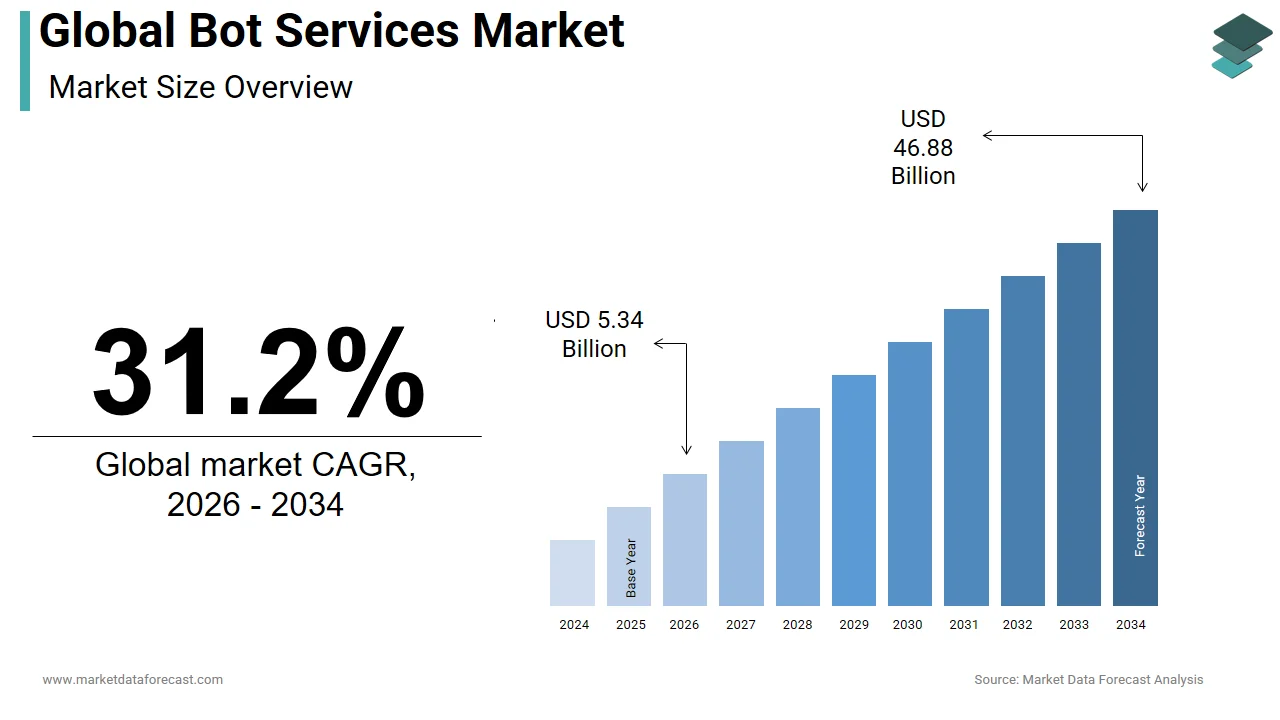
The global bot services market was valued at USD 4.07 billion in 2025, reached USD 5.34 billion in 2026, and is projected to grow to USD 46.88 billion by 2034, registering a remarkable CAGR of 31.2% during the forecast period. Market growth is driven by the rapid adoption of artificial intelligence, increasing demand for automated customer engagement solutions, and growing digital transformation initiatives across industries. Bot services enable organizations to automate customer interactions, streamline workflows, and improve operational efficiency through conversational AI technologies. The expanding use of chatbots, virtual assistants, and intelligent automation platforms across banking, retail, healthcare, and telecommunications sectors is further accelerating market growth worldwide.
Key Market Trends
- Rising adoption of AI-powered conversational platforms and virtual assistants.
- Increasing demand for automated customer service and support solutions.
- Growing integration of natural language processing (NLP) and generative AI technologies.
- Expansion of bot services across banking, healthcare, retail, and telecommunications industries.
- Increasing focus on personalized customer engagement and workflow automation.
Segmental Insights
- Based on service, the platform segment dominated the global bot services market in 2025, driven by its ability to provide comprehensive end-to-end solutions for designing, developing, deploying, and managing intelligent bots across multiple business functions.
- Based on type, the text-based bots segment held the largest share of the market in 2025, supported by widespread adoption in customer support, online engagement, and business communication applications.
- Based on deployment, the website deployment segment captured the highest market share in 2025, driven by the growing use of website chatbots for customer assistance, lead generation, and real-time user engagement.
- Based on end user, the banking, financial services, and insurance (BFSI) segment led the market in 2025, supported by increasing adoption of AI-driven customer service solutions, fraud detection systems, and automated financial advisory services.
Regional Insights
The global bot services market is witnessing rapid growth across major regions, supported by increasing investments in artificial intelligence, automation technologies, and digital customer engagement platforms.
-
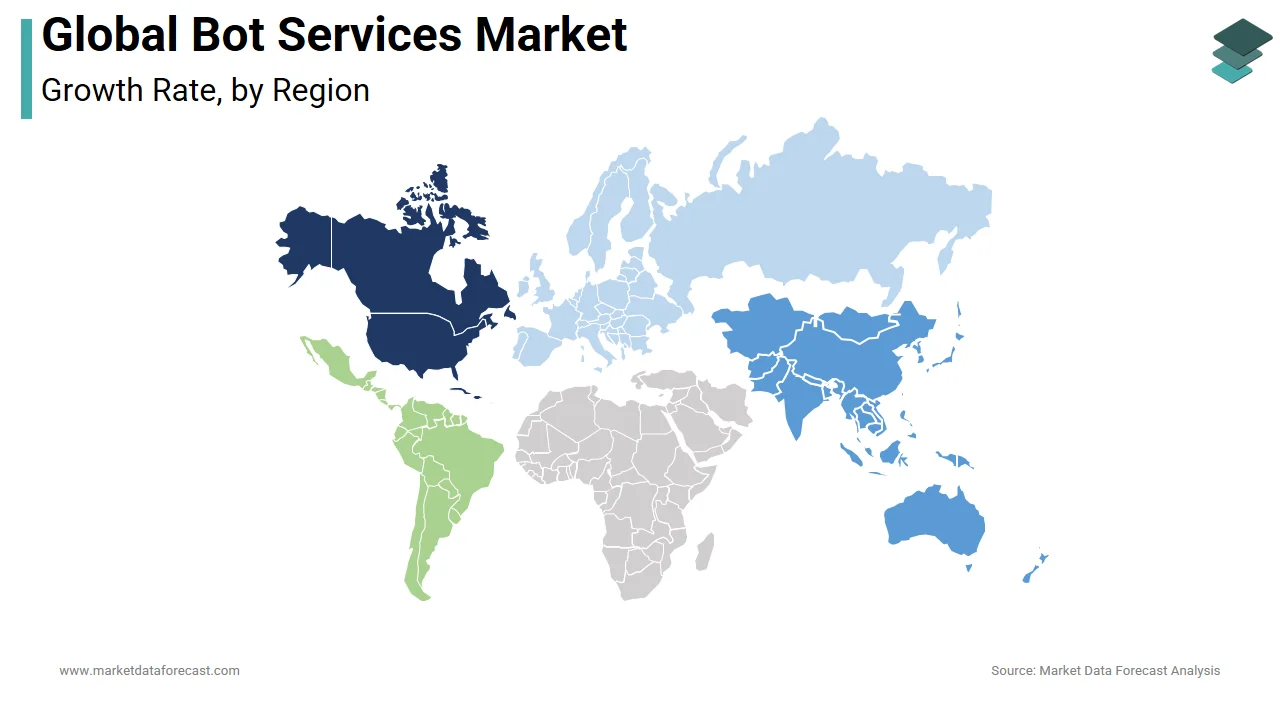
North America dominated the global bot services market in 2025 by accounting for 34.3% share, driven by strong AI adoption, advanced digital infrastructure, and the presence of leading technology companies.
-
Europe represented the second-largest market, supported by increasing enterprise automation initiatives and stringent data privacy regulations under the General Data Protection Regulation (GDPR), which influence bot development and deployment strategies.
-
Asia-Pacific is projected to register the fastest growth during the forecast period, driven by rapid digitalization, expanding internet penetration, and increasing adoption of AI technologies across major economies such as China, India, and Japan.
Competitive Landscape
The global bot services market is characterized by intense competition among technology providers, cloud platform vendors, and AI solution developers focusing on conversational AI, automation, and intelligent customer engagement solutions. Market participants are emphasizing innovation in natural language processing, machine learning, and generative AI capabilities to strengthen market positioning. Strategic partnerships, acquisitions, and investments in AI-driven automation platforms are shaping competitive dynamics across the market.
Prominent companies operating in the global bot services market include Microsoft, IBM Corporation, Google, Facebook, Amazon Web Services, Inc., Nuance Communications, Inc., Aspect Software, Inc., Inbenta Technologies Inc., Creative Virtual Ltd., IPsoft Inc., CogniCor Technologies, Astute Inc., Next IT Corp., Kore.ai, Inc., Rasa Technologies GmbH, and Pypestream.
Global Bot Services Market Size
The global bot services market was worth USD 4.07 billion in 2025. The global market is predicted to reach USD 5.34 billion in 2026 and USD 46.88 billion by 2034, growing at an annual growth rate (CAGR) of 31.2% during the forecast period.
Bot services include the development, deployment, and management of automated software applications, known as bots, that perform specific tasks over a network. These services include chatbots, virtual assistants, and robotic process automation tools that leverage artificial intelligence, natural language processing, and machine learning to simulate human interaction and execute repetitive processes. The market is pivotal in transforming customer engagement, operational efficiency, and data analysis across various industries. According to the International Data Corporation, global spending on cognitive and artificial intelligence systems, including bot technologies, is projected to reach significant heights as enterprises seek to automate complex workflows. In the realm of customer service, the shift towards digital-first interactions has accelerated adoption, with organizations aiming to provide instant support. As per the World Economic Forum, approximately 85 million jobs may be displaced by a shift in the division of labour between humans and machines by 2025, while 97 million new roles may emerge that are more adapted to the new division of labour between humans, machines, and algorithms. This transition underscores the critical role of bot services in augmenting human capabilities, rather than merely replacing them. The integration of bots into enterprise resource planning and customer relationship management systems enables real-time decision making and personalized user experiences. Furthermore, the rise of conversational commerce has made bot services essential for the retail and e-commerce sectors, where seamless transaction processing and inquiry handling are paramount. The technological evolution from rule-based scripts to context-aware intelligent agents defines the current landscape, driving widespread implementation in healthcare, finance, and telecommunications.
MARKET DRIVERS
Escalating Demand for Enhanced Customer Experience and Instant Support
The escalating demand for enhanced customer experience and instant support is one of the major factors driving the growth of the global bot services market, as consumers increasingly expect immediate responses and personalized interactions. Modern digital natives prefer self-service options that are available twenty-four hours a day, seven days a week, without the friction of waiting for human agents. According to a study by Salesforce, 80% of customers say the experience a company provides is as important as its products or services. This expectation drives businesses to deploy AI-powered chatbots that can handle thousands of simultaneous inquiries, reducing wait times from minutes to seconds. The ability of bots to provide consistent and accurate information, regardless of the time of day, which is significantly improves customer satisfaction scores. As per data from Juniper Research, chatbots will be responsible for cost savings of over 8 billion dollars globally by 2022, rising to 11 billion dollars by 2023, due to their efficiency in handling routine queries. Furthermore, bots can analyze customer data in real time to offer tailored recommendations, thereby increasing conversion rates and loyalty. The integration of natural language understanding allows these systems to interpret intent and sentiment, enabling more empathetic and relevant responses. Companies that fail to adopt these technologies risk losing competitive advantage, as customers migrate to brands that offer superior digital engagement. The scalability of bot services allows enterprises to manage peak traffic periods during sales or crises, without proportional increases in staffing costs. This operational flexibility, combined with improved service quality, creates a compelling business case for widespread adoption across retail, banking, and telecommunications sectors.
Integration of Artificial Intelligence and Natural Language Processing Advancements
The rapid advancement and integration of artificial intelligence and natural language processing technologies significantly propel the bot services market expansion, by enabling more sophisticated and human-like interactions. Early generation bots were limited to rigid, rule-based scripts that often failed to understand complex queries, leading to user frustration. However, modern bots utilize deep learning algorithms that continuously improve their understanding of context, nuance, and slang. According to Stanford University research, advances in natural language processing have led to significant improvements in machine comprehension benchmarks, allowing bots to handle multi-turn conversations with greater accuracy. This technological leap enables bots to perform complex tasks, such as scheduling appointments, processing refunds, and providing technical troubleshooting, without human intervention. As per IBM, the adoption of AI-driven automation can reduce operational costs by up to 30% while improving process speed and accuracy. The ability of these systems to learn from historical interactions means they become more effective over time, creating a virtuous cycle of improvement. Furthermore, the availability of cloud-based AI platforms has lowered the barrier to entry, allowing small and medium-sized enterprises to deploy advanced bot services without substantial infrastructure investment. The synergy between voice recognition and text-based interfaces also expands the utility of bots into smart home devices and virtual assistants. These technological enhancements transform bots from simple informational tools into proactive agents, capable of anticipating user needs. Consequently, businesses are increasingly investing in AI-centric bot solutions to drive innovation and maintain operational excellence in a digital-first economy.
MARKET RESTRAINTS
Privacy Concerns and Data Security Vulnerabilities
Privacy concerns and data security vulnerabilities represent a significant restraint on the bot services market, as users and regulators become increasingly wary of how personal data is collected, stored, and utilized. Bots often require access to sensitive information, such as financial details, health records, and personal identifiers, to function effectively, which creates potential targets for cyberattacks. According to the Pew Research Center, eight out of ten Americans are concerned about how companies use the data collected about them, highlighting a pervasive trust deficit. High-profile data breaches involving automated systems have exacerbated these fears, leading to heightened scrutiny and stricter compliance requirements. As per the General Data Protection Regulation in Europe, organizations face substantial fines for mishandling user data, which complicates the deployment of bots that rely on extensive data harvesting. The complexity of ensuring end-to-end encryption and secure data transmission adds to the development costs and technical challenges for service providers. Furthermore, the lack of transparency in how algorithms make decisions can lead to perceived invasiveness, causing users to disengage from bot interactions. The risk of unauthorized access to conversation logs poses another threat, as these records may contain confidential business information. Consequently, many enterprises hesitate to fully integrate bots into critical workflows until robust security frameworks are established. The need for continuous monitoring and updating of security protocols, which is to counter evolving threats, and this further strains resources. These privacy and security challenges slow down adoption rates, particularly in highly regulated industries, such as healthcare and finance, where data integrity is paramount.
Limitations in Understanding Context and Complex Human Emotions
The inherent limitations in understanding context and complex human emotions restrict the effectiveness of bot services, which acts as a major restraint on market expansion. Despite advancements in natural language processing, bots often struggle to interpret sarcasm, idioms, cultural nuances, and emotional subtleties that are integral to human communication. According to a study by PwC, 59% of consumers feel that companies have lost touch with the human element of customer experience, indicating a gap that bots alone cannot fill. When bots fail to recognize frustration or urgency, they may provide irrelevant or repetitive responses, leading to user dissatisfaction and brand damage. As per data from Forrester Research, only 20 % of organizations believe their current chatbot solutions are effective in resolving complex customer issues without human escalation. This limitation necessitates a hybrid model, where bots handle routine queries and seamlessly transfer complex cases to human agents, which increases operational complexity and cost. The inability of bots to exhibit genuine empathy limits their utility in sensitive scenarios, such as mental health support or complaint resolution. Furthermore, context switching within a conversation often confuses algorithmic models, causing breakdowns in dialogue flow. Users frequently report fatigue when interacting with bots that do not remember previous interactions or preferences within a session. These functional gaps prevent bots from achieving full autonomy in customer-facing roles. Until artificial intelligence can reliably mimic emotional intelligence and contextual awareness, the reliance on human oversight will remain a bottleneck, limiting the scope and scalability of bot services in high-touch industries.
MARKET OPPORTUNITIES
Expansion into Healthcare for Patient Engagement and Administrative Automation
The expansion of bot services into the healthcare sector presents a substantial opportunity for market growth by enhancing patient engagement and streamlining administrative processes. Healthcare providers are increasingly adopting virtual health assistants to triage symptoms, schedule appointments, and provide medication reminders, thereby reducing the burden on medical staff. According to the World Health Organization, the global shortage of health workers is projected to reach 10 million by 2030, creating an urgent need for automation solutions to bridge the gap. Bots can handle initial patient inquiries, collect preliminary health data, and guide users to appropriate care levels, improving efficiency and accessibility. As per a report by Accenture, AI applications in healthcare could save the industry up to 150 billion dollars annually by 2026, through improved operational efficiency and reduced administrative errors. The ability of bots to provide continuous monitoring and support for chronic disease management enhances patient outcomes and adherence to treatment plans. Furthermore, telemedicine platforms integrated with conversational agents enable remote consultations and follow-ups, expanding access to care in rural and underserved areas. The use of bots for mental health support offers scalable interventions for anxiety and depression, providing immediate coping strategies and resources. Regulatory frameworks are evolving to support digital health innovations, facilitating wider adoption. By leveraging bot services, healthcare organizations can optimize resource allocation, reduce wait times, and improve patient satisfaction. This sector represents a high-value opportunity, where technology directly contributes to saving lives and improving public health infrastructure.
Growth in E-Commerce and Conversational Commerce Applications
The growth in e-commerce and conversational commerce applications offers a significant opportunity for the bot services market, as retailers seek to replicate in-store experiences in digital environments. Conversational commerce enables shoppers to interact with brands through messaging apps and voice assistants, facilitating product discovery, purchase, and post-sale support. According to Business Insider Intelligence, conversational commerce is expected to reach 27 billion dollars in gross merchandise value in the United States by 2024, driven by consumer preference for convenient shopping experiences. Bots can personalize recommendations based on browsing history and purchase behavior, increasing average order values and customer retention. As per data from Shopify, stores using chatbots see a 10 % increase in revenue on average, due to improved engagement and faster checkout processes. The integration of bots with social media platforms allows brands to engage customers where they spend most of their time, creating seamless omnichannel experiences. Automated order tracking and return processing via bots reduces customer service workload and enhances satisfaction. Furthermore, voice-activated bots enable hands-free shopping, appealing to busy consumers and those with disabilities. The ability to conduct flash sales and promotions through interactive bot interfaces drives impulse purchases and brand loyalty. As mobile commerce continues to dominate retail sales, the role of bots in facilitating transactions becomes increasingly critical. Retailers that leverage these tools gain a competitive edge by offering frictionless and personalized shopping journeys. This trend positions bot services as a cornerstone of modern retail strategy.
MARKET CHALLENGES
High Initial Development Costs and Maintenance Complexity
The high initial development costs and ongoing maintenance complexity pose a significant challenge to the expansion of the bot services market, particularly for small and medium-sized enterprises. Building a sophisticated bot requires specialized skills in artificial intelligence, natural language processing, and software engineering, which are scarce and expensive. According to Glassdoor, the average salary for an AI engineer in the United States exceeds 100,000 dollars annually, reflecting the high labor costs associated with bot development. Additionally, the need for continuous training and updating of machine learning models to maintain accuracy and relevance adds to the operational burden. As per Gartner, organizations often underestimate the total cost of ownership for AI projects, including data preparation, integration, and monitoring. The complexity of integrating bots with legacy systems and multiple third-party applications further increases development time and expenses. Errors in bot logic or outdated information can lead to poor user experiences, requiring frequent debugging and refinement. The rapid pace of technological change means that bots can become obsolete quickly, and this requires regular upgrades and investments in new features. For smaller businesses, these financial and technical barriers can be prohibitive, limiting their ability to compete with larger corporations that have dedicated AI teams. The lack of standardized development frameworks also complicates the process, forcing companies to build custom solutions from scratch. These economic and technical hurdles slow down market penetration and restrict the diversity of players in the bot services ecosystem.
User Resistance and Lack of Trust in Automated Interactions
User resistance and a lack of trust in automated interactions is further challenging the global market expansion. Skepticism regarding the reliability and empathy of bots leads to lower adoption rates and higher abandonment rates during conversations. According to a survey by HubSpot, forty % of users do not care whether a bot or a human helps them as long as the issue is resolved, but sixty % prefer human interaction for complex problems. This preference indicates a limit to the acceptance of bots in high-stakes scenarios. As per data from Qualtrics, negative experiences with poorly designed bots can damage brand reputation and erode customer loyalty permanently. Users often feel frustrated when bots fail to understand their requests or loop them in endless cycles of irrelevant questions. The perception that bots are used primarily to cut costs, rather than improve service, further fuels resistance. Additionally, concerns about job displacement due to automation create societal pushback against the proliferation of bot services. Building trust requires transparent disclosure of bot identity and easy options to escalate to human agents, which adds complexity to service design. Overcoming this psychological barrier requires demonstrating clear value and reliability, which takes time and consistent performance. Until bots can consistently deliver superior or equal value to human interactions, user skepticism will remain a formidable obstacle to market growth.
REPORT COVERAGE
| REPORT METRIC | DETAILS |
| Market Size Available | 2025 to 2034 |
| Base Year | 2025 |
| Forecast Period | 2026 to 2034 |
| Segments Covered | By Service, Type, Deployment, End Users, and Region. |
| Various Analyses Covered | Global, Regional, and Country-Level Analysis, Segment-Level Analysis, Drivers, Restraints, Opportunities, Challenges; PESTLE Analysis; Porter’s Five Forces Analysis, Competitive Landscape, Analyst Overview of Investment Opportunities |
| Regions Covered | North America, Europe, APAC, Latin America, Middle East & Africa |
| Market Leaders Profiled | Microsoft, IBM Corporation, Google, Facebook, Amazon Web Services, Inc., Nuance Communications, Inc., Aspect Software, Inc., Inbenta Technologies Inc., Creative Virtual Ltd ., IPsoft Inc., [24] 7.ai, Inc., CogniCor Technologies, Astute Inc., Next IT Corp., Kore.ai, Inc., Rasa Technologies GmbH, Pypestream, Avaamo, Pandorabots, Inc., LogMeIn, Inc., Soluciones Artificiales, Chatfuel and Webio and Others. |
SEGMENTAL ANALYSIS
By Service Insights
The platform segment accounted for the largest share of the global market in 2025 due to its ability to provide comprehensive end-to-end solutions for building, deploying, and managing bots without requiring extensive coding expertise. The dominance of this segment is driven by the increasing demand for low-code and no-code development environments that enable businesses to rapidly prototype and launch conversational agents. According to Gartner, by 2024, low-code application development will be responsible for more than 65% of application development activity globally, reflecting a shift towards democratized technology access. Platforms offer integrated tools for natural language processing, analytics, and multi-channel deployment, which simplifies the complexity of bot management. As per data from Forrester, enterprises using dedicated bot platforms report a 40 % reduction in time to market for new digital services, compared to custom framework development. The scalability of cloud-based platforms allows organizations to handle fluctuating user volumes efficiently, ensuring consistent performance during peak interactions. Furthermore, platforms often come with pre-built templates and industry-specific modules, accelerating adoption in sectors like retail and banking. The continuous updates and maintenance provided by platform vendors reduce the operational burden on internal IT teams. This combination of ease of use, speed, and scalability ensures that platforms remain the preferred choice for organizations seeking to leverage bot technology for customer engagement and process automation.
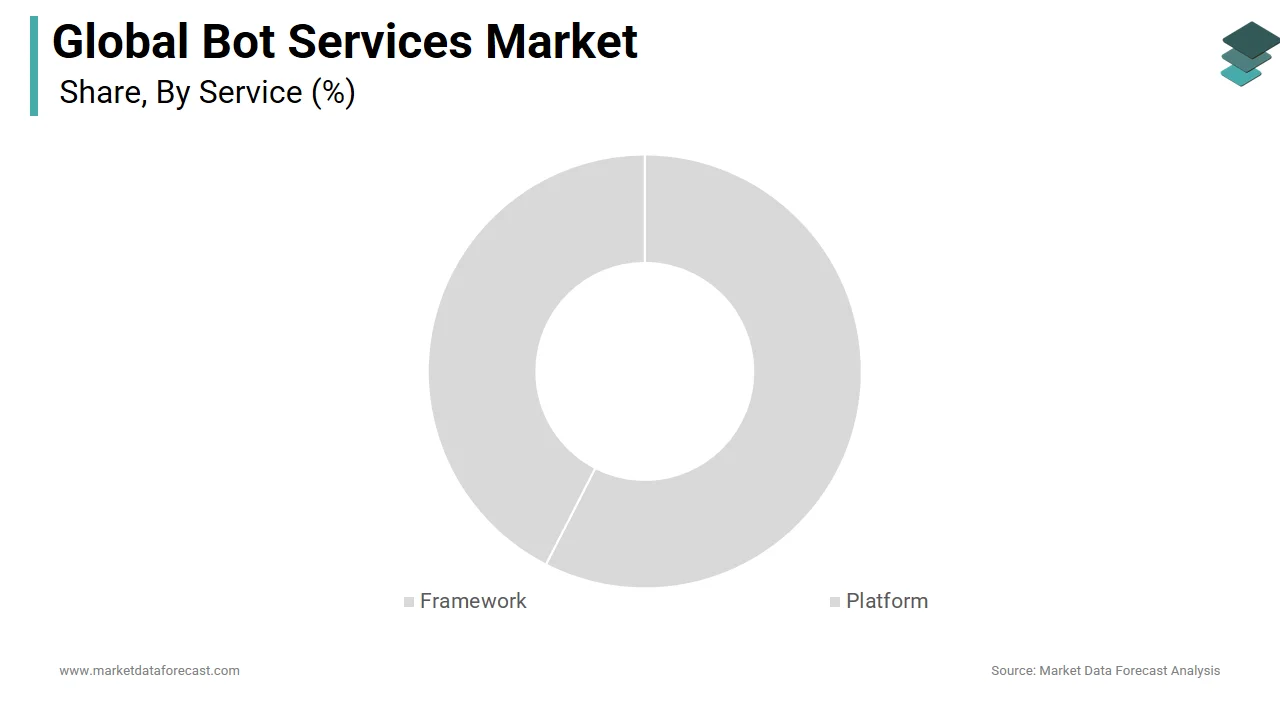
However, the framework segment is the fastest growing segment and is estimated to record a CAGR of 23.2% during the forecast period in the global market owing to the rising need for highly customized and complex bot solutions that off the shelf platforms cannot adequately address and the increasing sophistication of artificial intelligence applications, where developers require granular control over algorithms, data processing, and integration with legacy systems. According to Stack Overflow developer surveys, over 70 % of professional developers prefer using open source frameworks for building specialized applications, due to their flexibility and community support. Frameworks allow for deep customization of natural language understanding models, enabling bots to handle nuanced, industry-specific terminology and complex decision trees. As per data from GitHub, the number of repositories related to bot frameworks, such as Microsoft Bot Framework and Rasa, has increased by 35 % annually, indicating robust developer engagement and innovation. The rise of edge computing and IoT devices also drives demand for lightweight frameworks that can run locally on devices with limited resources. Additionally, large enterprises with dedicated AI research teams prefer frameworks to build proprietary intellectual property and maintain competitive advantages. The ability to integrate cutting-edge machine learning libraries directly into bot logic further enhances the capabilities of framework-based solutions. These technical advantages position frameworks as the most dynamic growth segment for advanced and specialized bot deployments.
By Type Insights
The text-based bots segment had the largest share of the global market in 2025. The dominance of the text-based bots segment in the global market is attributed to their widespread adoption across messaging apps, websites, and customer support portals, and the universal compatibility of text interfaces with existing digital infrastructure, as well as user familiarity with typing as a primary mode of communication. According to Statista, over 2.8 billion people worldwide use mobile messaging apps regularly, creating a vast ecosystem for text-based bot interactions. Text bots are cost-effective to develop and deploy, requiring less bandwidth and processing power compared to audio or video alternatives. As per data from HubSpot, 71 % of customers prefer self-service options like chatbots for quick answers to simple questions, highlighting the efficiency of text-based interactions. The asynchronous nature of text allows users to engage with bots at their own pace, making it suitable for multitasking environments. Furthermore, text logs provide valuable data for analytics and training, improving bot accuracy over time. The integration of rich media elements, such as buttons, cards, and carousels within text interfaces, enhances user experience without compromising simplicity. Most enterprise customer relationship management systems are optimized for text data, facilitating seamless integration and workflow automation. These factors ensure that text-based bots remain the cornerstone of digital customer engagement strategies across industries.
However, the audio-based bot segment is estimated to showcase a promising CAGR of 25.2% during the forecast period in the global market owing to the proliferation of smart speakers, voice assistants, and hands free technologies in homes and vehicles and the increasing consumer preference for voice interactions due to their convenience and natural feel, particularly for tasks such as setting reminders, playing music, or controlling smart home devices. According to Juniper Research, the number of voice assistant-enabled devices is expected to reach 8.4 billion units by 2024, surpassing the global population. Advances in speech recognition and natural language understanding have significantly improved the accuracy of audio bots in diverse acoustic environments and accents. As per data from Google, 50 % of all searches will be voice-based by 2025, driving businesses to optimize their services for voice interfaces. The integration of audio bots into automotive infotainment systems and wearable technology further expands their utility and reach. Additionally, voice commerce is emerging as a significant trend, allowing users to make purchases through voice commands. The ability of audio bots to provide accessible interfaces for visually impaired users also contributes to their growing adoption. These technological and behavioral shifts position audio-based bots as the most rapidly expanding segment in the market.
By Deployment Insights
The website deployment segment captured the highest share of the global market in 2025, as it serves as the primary digital touchpoint for most businesses interacting with customers. The dominance of this segment is driven by the high volume of traffic websites receive, and the immediate need for real-time assistance to convert visitors into customers. According to Adobe Digital Insights, 88 % of online consumers are less likely to return to a site after a bad experience, making instant support via bots critical for retention. Website bots can proactively engage users, offering help with navigation, product recommendations, and checkout processes, thereby reducing bounce rates. As per data from Intercom, businesses that use chatbots on their websites see a 30 % increase in conversion rates, due to improved user engagement and faster query resolution. The ease of embedding bot scripts into existing website code makes deployment straightforward and cost-effective. Furthermore, website bots can capture lead information and qualify prospects before handing them over to sales teams, enhancing marketing efficiency. The ability to personalize interactions based on user behavior and history on the site further boosts effectiveness. With the majority of consumer journeys starting on a company website, this deployment channel remains the most impactful and widely utilized for bot services.
However, the social media deployment segment is predicted to grow at the fastest CAGR of 25.6% during the forecast period, owing to the massive user base on platforms like Facebook Messenger, WhatsApp, Instagram, and LinkedIn, where consumers increasingly expect brand interactions. A key driving factor is the shift towards conversational commerce, where social media platforms serve as both marketing and sales channels. According to Meta, over 175 million people message businesses on WhatsApp every month, creating a huge opportunity for automated engagement. Social media bots enable brands to provide instant customer support, send personalized promotions, and facilitate transactions within the app environment. As per data from Hootsuite, 54 % of consumers use social media to research products, making integrated bots essential for guiding purchase decisions. The viral potential of social media interactions allows bots to reach wider audiences through sharing and referrals. Additionally, the integration of augmented reality features and interactive content within social bots enhances user engagement. The ability to leverage social graph data for hyper-personalized marketing further drives adoption. These factors position social media deployment as the most dynamic growth area for bot services.
By End-User Insights
The banking, financial services, and insurance segment led the market with the leading share of the global market in 2025 due to the high volume of routine inquiries and the need for secure, efficient customer service. The dominance of this segment is driven by the industry's focus on reducing operational costs while enhancing customer experience through automation. According to Business Insider, banks could save approximately 10 billion dollars annually by 2023 through the use of AI and chatbots for customer service and fraud detection. Bots in BFSI handle tasks such as balance inquiries, transaction history, loan applications, and fraud alerts, providing 24/7 availability. As per data from Juniper Research, the number of chatbot interactions in the banking sector is expected to reach 10 billion annually by 2024, reflecting widespread adoption. The ability of bots to verify identity and process sensitive data securely builds trust and compliance with regulatory standards. Furthermore, bots assist in financial advisory services by analyzing spending patterns and offering personalized investment recommendations. The integration of bots with core banking systems enables seamless execution of transactions without human intervention. These efficiencies and enhanced service capabilities ensure that BFSI remains the largest adopter of bot services globally.
On the other hand, the healthcare segment is growing exponentially and is expected to exhibit a CAGR of 27.1% during the forecast period, owing to the urgent need to improve patient access to care, manage administrative burdens, and support remote monitoring. A major driving factor is the rising demand for telemedicine and virtual health assistants, which can triage symptoms, schedule appointments, and provide medication reminders. According to the World Health Organization, the global shortage of health workers necessitates innovative solutions like bots to extend the reach of medical professionals. Bots in healthcare can provide initial diagnostics, mental health support, and chronic disease management, improving patient outcomes. As per data from Accenture, AI applications, including bots, could save the healthcare industry up to 150 billion dollars annually by 2026, through improved efficiency and reduced errors. The integration of bots with electronic health records enables personalized care plans and real-time health monitoring. Additionally, the pandemic accelerated the adoption of digital health tools, making patients more comfortable with virtual interactions. These factors position healthcare as the most rapidly expanding sector for bot services.
REGIONAL ANALYSIS
North America Bot Services Market Analysis
North America had 34.3% of the global market share in 2025. The United States dominates this regional market due to its advanced technological infrastructure, high adoption of artificial intelligence, and presence of major tech companies. According to the National Science Foundation, the United States leads global investment in AI research and development, fostering innovation in bot technologies. The primary driver is the strong demand for customer experience optimization in retail, finance, and healthcare sectors. As per data from McKinsey, North American companies are among the earliest adopters of AI-driven automation to enhance operational efficiency. The presence of skilled developers and supportive regulatory frameworks further accelerates market growth. Additionally, the high penetration of smartphones and internet connectivity facilitates widespread bot usage. Government initiatives promoting digital transformation in public services also contribute to market expansion. These factors collectively sustain North America's position as the leading market for bot services globally.
Europe Bot Services Market Analysis
Europe represents the second-largest market for Bot Services due to strict data privacy regulations under the General Data Protection Regulation, which influences bot development and deployment strategies. According to the European Commission, digital transformation is a key priority for member states, driving investment in AI and automation. The primary driver is the growing adoption of bots in customer service and manufacturing sectors to improve productivity. As per data from Eurostat, the %age of enterprises using AI technologies in Europe has increased steadily, reflecting broader acceptance. The presence of leading automotive and industrial manufacturers fosters demand for specialized bot solutions. Additionally, multilingual capabilities of bots are crucial in Europe, driving innovation in natural language processing. Government funding for AI research and ethical guidelines supports sustainable market growth. These elements ensure Europe remains a key region for responsible and innovative bot service adoption.
Asia Pacific Bot Services Market Analysis
The Asia Pacific region is the fastest-growing market for Bot Services, driven by rapid digitalization and increasing internet penetration in countries like China, India, and Japan. The market status is characterized by a large young population and high mobile usage, creating a fertile ground for bot adoption. According to the International Telecommunication Union, mobile broadband subscriptions in the Asia Pacific have grown significantly, enabling access to bot services. The primary driver is the booming e-commerce and fintech sectors, which rely heavily on bots for customer engagement and transaction processing.
COMPETITIVE LANDSCAPE
The competition in the bot services market is intense and characterized by rapid technological advancements and diverse player profiles. Major technology giants compete with specialized startups and niche providers offering unique solutions for specific industries. Key differentiators include the accuracy of natural language processing, ease of integration, and scalability of platforms. Companies strive to offer comprehensive ecosystems that combine bot development with analytics and customer relationship management tools. Strategic acquisitions and partnerships are common as firms seek to expand their capabilities and market reach. Price competition is moderate, with value-added services and customization driving differentiation. Intellectual property protection for proprietary algorithms and datasets maintains competitive advantages. Regulatory compliance and ethical AI practices are becoming critical factors in vendor selection. The market sees continuous innovation in voice recognition and emotional intelligence features. Overall, the landscape demands constant adaptation and investment in research to maintain leadership and meet evolving customer expectations in the dynamic bot services industry.
KEY MARKET PLAYERS
Some of the companies that are playing a dominating role in the global bot services market include
- Microsoft
- IBM Corporation
- Amazon Web Services, Inc.
- Nuance Communications, Inc.
- Aspect Software, Inc.
- Inbenta Technologies Inc.
- Creative Virtual Ltd.
- IPsoft Inc.
- CogniCor Technologies
- Astute Inc.
- Next IT Corp.
- ai, Inc.
- Rasa Technologies GmbH
- Pypestream
TOP PLAYERS IN THE MARKET
- International Business Machines Corporation is a global leader in artificial intelligence and cloud computing with significant involvement in the bot services market through its Watson Assistant platform. The company provides enterprise-grade conversational AI solutions that enable businesses to automate customer interactions and streamline operations. IBM recently strengthened its market position by integrating advanced natural language processing capabilities into Watson, allowing for more nuanced and context-aware conversations. The company actively collaborates with industry partners to develop specialized bot solutions for healthcare finance and retail sectors. IBM also focuses on ethical AI practices, ensuring transparency and fairness in bot interactions. By leveraging its extensive research and development resources, IBM continues to innovate in machine learning and automation. These efforts enhance the reliability and scalability of its bot services, making them a preferred choice for large enterprises seeking robust digital transformation tools.
- Microsoft Corporation plays a pivotal role in the bot services market with its Azure Bot Service and Power Virtual Agents platforms. The company offers comprehensive tools for building, deploying, and managing intelligent bots across multiple channels, including Teams, Skype, and web interfaces. Microsoft recently enhanced its offerings by integrating deep learning models from its Azure AI suite, improving the accuracy and responsiveness of conversational agents. The company strengthens its market position through strategic partnerships with software vendors and system integrators to expand the ecosystem of bot applications. Microsoft also emphasizes security and compliance, providing enterprise customers with trusted environments for handling sensitive data. By focusing on low-code development options, Microsoft empowers non-technical users to create sophisticated bots. These initiatives drive widespread adoption and reinforce Microsoft's leadership in the enterprise bot services landscape.
- Google LLC contributes significantly to the bot services market through its Dialogflow platform, which enables developers to build natural and rich conversational experiences. The company leverages its expertise in machine learning and natural language understanding to provide highly accurate intent recognition and entity extraction. Google recently updated Dialogflow with improved multilingual support and integration capabilities for various messaging platforms and voice assistants. The company strengthens its market position by offering seamless connectivity with its cloud infrastructure and analytics tools. Google also invests in open source projects, fostering a vibrant community of developers who contribute to the evolution of bot technologies. By prioritizing ease of use and scalability, Google attracts startups and enterprises alike. These actions ensure that Google remains at the forefront of innovation in conversational AI and bot services globally.
TOP STRATEGIES USED BY KEY MARKET PARTICIPANTS
Key players in the bot services market primarily focus on enhancing natural language understanding capabilities to improve user engagement and satisfaction. Companies invest heavily in research and development to integrate advanced machine learning algorithms that enable bots to handle complex queries effectively. Strategic partnerships with telecommunications providers and social media platforms help expand the reach and accessibility of bot services. Organizations also prioritize security and data privacy to build trust among enterprise clients and end users. The development of industry-specific templates and pre-built modules accelerates deployment times for businesses. Continuous improvement of multi-channel integration ensures seamless experiences across devices. Training and support services are enhanced to assist clients in optimizing bot performance. These strategies collectively drive innovation and competitiveness in the rapidly evolving bot services sector.
GLOBAL BOT SERVICES MARKET NEWS
- In March 2024, International Business Machines Corporation integrated advanced natural language processing into Watson Assistant to strengthen the Bot Services Market presence
- In January 2024, Microsoft Corporation launched enhanced security features for Azure Bot Service to strengthen its presence in the Bot Services Market
- In November 2023, Google LLC updated Dialogflow with improved multilingual support capabilities to strengthen the Bot Services Market presence
- In August 2023, International Business Machines Corporation partnered with healthcare providers to develop specialized AI bots to strengthen the Bot Services Market presence
- In May 2023, Microsoft Corporation expanded Power Virtual Agents with new low-code templates to strengthen its presence in the Bot Services Market.
MARKET SEGMENTATION
This research report on the global bot services market has been segmented and sub-segmented based on the service, type, deployment, end-users, and region.
By Type
- Text
- Audio
- Video
By Service
- Framework
- Platform
By Deployment
- Social Media
- SMS
- Website
- Cloud
By End-User
- BFSI
- Retail
- Healthcare
- Media & Entertainment
- Telecom
- Travel
- Government
By Region
- North America
- Europe
- Asia-Pacific
- Latin America
- The Middle East and Africa