- Product Description Description
- Table of Contents TOC
- List of Table & Figure LOT
- Get Free Sample PDF Sample PDF
Market Size, 2025
$878.4 BnMarket Estimate, 2026
$891.55 BnMarket Forecast, 2034
$1004.3 BnCAGR, 2026–2034
1.5%Executive Summary: Global Buttermilk Market
- Market Scope: Global analysis of the buttermilk industry covering product types (liquid, powder), applications (bakery, beverages, meat processing), and regional performance.
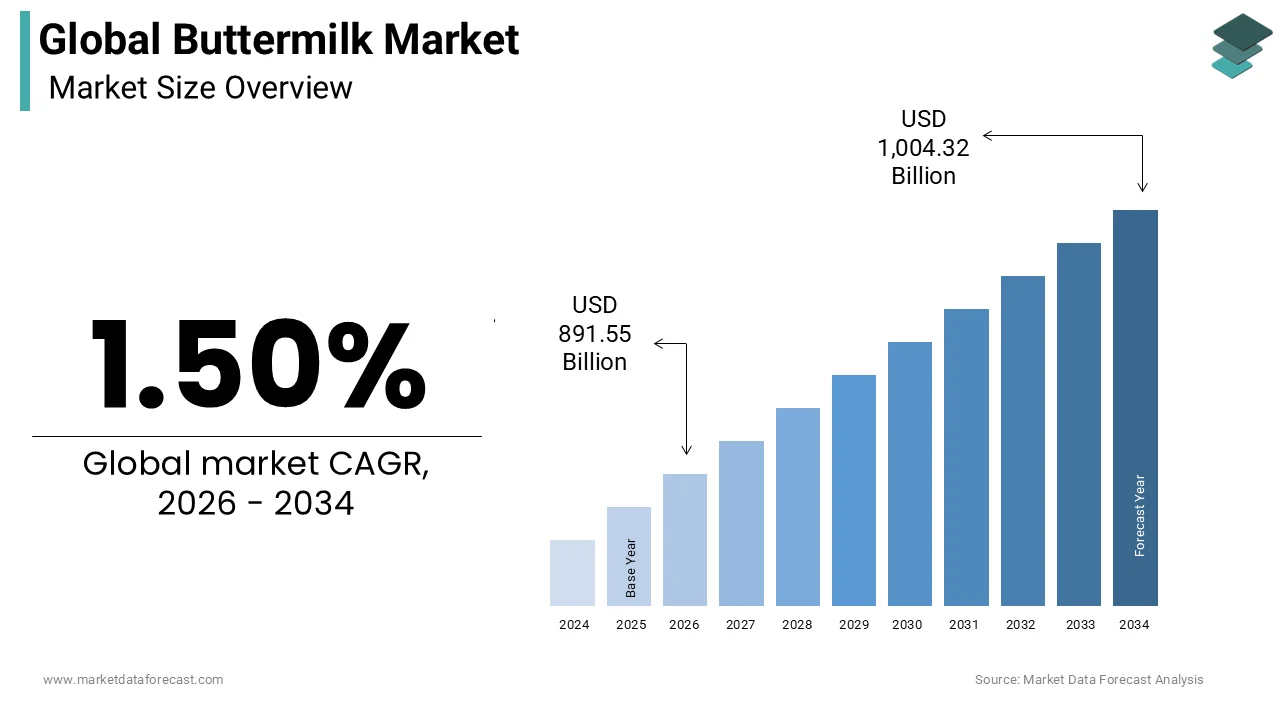
- Market Valuation: Valued at USD 878.37 billion in 2025, estimated at USD 891.55 billion in 2026, and projected to reach USD 1,004.32 billion by 2034, registering a CAGR of 1.50% during the forecast period (2026–2034).
- Primary Growth Drivers: Industrial adoption of natural leavening systems in baking, synergistic functionality in natural meat tenderization, and rising consumer demand for probiotic-fortified health beverages.
Key Market Segment Metrics (2026–2034)
| Category | Leading Segment (2025 Position) | Fastest-Growing Segment |
|---|---|---|
| By Type | Liquid Buttermilk (commanded 64.6% market share, essential for fresh acidic activation in commercial baking) | Buttermilk Powder (fastest-growing at 7.4% CAGR, driven by elimination of refrigeration and extended shelf life) |
| By Application | Bakery (captured 46.4% share, vital for chemical reactions with alkaline leavening agents in biscuits and pancakes) | Beverages (fastest-growing at 8.4% CAGR, fueled by the global pivot toward probiotic-rich digestive wellness drinks) |
| By Region | North America & Europe (dominant regions backed by advanced food processing and high bakery output) | Asia-Pacific / India (rapid expansion driven by immense domestic milk output and traditional health beverage consumption) |
Major Market Players & Market Structure
Market Structure: Highly competitive landscape featuring multinational dairy cooperatives and regional processors focusing on bioprocessing innovations, clean-label compliance, and sustainable packaging.
Key Companies: Amul, Arla Foods, Dairy America, Fonterra, Dairy Farmers of America, Glanbia, Valley Milk, Associated Milk Producers, Arion Dairy Products, and Innova Food Ingredients.
Global Buttermilk Market Size
The size of the global buttermilk market was expected to be worth USD 878.37 billion in 2025 and is anticipated to be worth USD 1,004.32 billion by 2034, from USD 891.55 billion in 2026, growing at a CAGR of 1.50% during the forecast period.
Buttermilk is a tangy, fermented dairy liquid traditionally obtained as a byproduct during the churning of cream into butter. Today, this category also includes cultured variants created by introducing specific bacterial strains to pasteurized milk to achieve the desired acidic profile and thick consistency. This versatile ingredient is highly valued across the global food processing sector for its unique ability to tenderize meats, activate baking soda in leavened breads, and provide a distinct, zesty flavor to marinades and dressings. The foundational availability of this liquid is directly tied to global butter manufacturing volumes. According to the Food and Agriculture Organization, global butter production recently reached approximately 11.5 million metric tons, ensuring a continuous supply of the traditional byproduct for various culinary and industrial applications. Furthermore, the widespread integration of this acidic dairy component into daily dietary routines is supported by massive global milk consumption. As per the International Dairy Federation, worldwide cow milk production surpassed 799 million tonnes in recent agricultural cycles, providing an endless raw material base for cultured variations. According to the World Health Organization, fermented dairy products are increasingly recommended for their probiotic properties, which aid in digestion and support gut health. Consequently, the intersection of traditional culinary practices and modern nutritional science continues to define the evolving landscape of this dynamic dairy sector.
MARKET DRIVERS
Industrial Adoption of Natural Leavening Systems
The escalating consumer preference for natural leavening agents and clean-label baking ingredients is primarily fuelling the expansion of the global buttermilk market. Modern home bakers and industrial food manufacturers are actively seeking out authentic ingredients that can replace synthetic additives and artificial preservatives in their daily recipes. This acidic dairy liquid is highly prized in the bakery sector because its natural acidity reacts perfectly with baking soda to create carbon dioxide, which results in exceptionally light and fluffy pancakes, biscuits, and breads. According to the American Bakers Association, the production volume of commercially baked goods utilizing natural leavening systems has expanded significantly, as brands respond to consumer demands for transparent ingredient lists. Furthermore, according to the International Association of Operative Millers, the incorporation of fermented dairy components significantly extends the shelf life of baked products by inhibiting mold growth, without the need for chemical preservatives. According to the Food and Agriculture Organization, global wheat production recently reached 780 million metric tons, providing the foundational flour that requires these natural acidic activators for optimal texture development. By leveraging the inherent, functional properties of this fermented liquid, food processors can successfully meet the rigorous clean-label standards while maintaining superior sensory qualities that consumers expect from premium baked goods.
Synergistic Functionality in Global Meat Processing
The profound expansion of the global meat processing industry and the widespread adoption of natural tenderization techniques significantly accelerate product utilization, which is further boosting the expansion of the global buttermilk market. Professional chefs and commercial meat processors increasingly rely on the enzymatic and acidic properties of this fermented dairy liquid to break down tough muscle fibers and infuse deep, savory flavors into various protein cuts. The calcium and lactic acid present in the liquid work synergistically to soften meat tissues without turning them mushy, a common problem associated with highly acidic, vinegar-based marinades. According to the Food and Agriculture Organization, global meat production recently surpassed 360 million metric tons, creating a massive, parallel demand for effective and natural culinary processing aids. According to the North American Meat Institute, a significant portion of commercial poultry processors now utilize dairy-based marinades to improve moisture retention and enhance the final texture of roasted and fried products. Furthermore, as per the World Organization for Animal Health, the global trade of premium meat cuts requires strict adherence to natural processing methods to maintain export certifications and consumer trust. By substituting synthetic tenderizers with this wholesome dairy derivative, the culinary sector can elevate product quality and satisfy the growing consumer appetite for naturally processed, flavor-rich protein sources.
MARKET RESTRAINTS
Prevalence of Biological Digestive Intolerances
The widespread medical diagnosis of lactose malabsorption and dairy allergies is hampering the expansion of the global buttermilk market. A significant portion of the global population lacks the necessary intestinal enzymes to properly digest the sugars and proteins found in standard dairy products, leading to severe gastrointestinal discomfort when consuming traditional fermented liquids. Although the fermentation process reduces the lactose content compared to regular milk, a residual amount remains, which can still trigger adverse reactions in highly sensitive individuals. According to the National Institute of Diabetes and Digestive Diseases, approximately 68% of the global human population experiences some degree of lactose malabsorption, with substantial representation across Asian and African demographics. This biological reality forces millions of consumers to completely eliminate all dairy derivatives from their daily dietary routines. Furthermore, according to the World Allergy Organization, cow milk protein allergy affects nearly 3% of infants and young children globally, prompting parents to strictly avoid any products containing milk solids or fermented milk derivatives. According to the International Foundation for Gastrointestinal Disorders, the medical community consistently advises these patients to adopt strictly non-dairy dietary protocols. Consequently, this massive, health-driven behavioral shift severely restricts the potential consumer base and forces manufacturers to invest heavily in alternative plant-based formulations to retain market relevance.
Financial and Logistical Cold Chain Management
The extreme perishability of the product and the associated high costs of continuous refrigeration severely constrain widespread geographic distribution, which is further impeding the global market expansion. Unlike shelf-stable powders or ultra-high-temperature processed liquids, this highly active, fermented dairy product requires an unbroken cold chain from the processing facility to the final retail destination to prevent spoilage and maintain its unique microbial balance. The live bacterial cultures present in cultured variants continue to metabolize and produce lactic acid even after packaging, which gradually alters the flavor profile and texture if not kept at precise, low temperatures. According to the Global Cold Chain Alliance, the operational costs associated with maintaining refrigerated transport and storage facilities account for nearly 20% of the total distribution expenses for perishable dairy items. Furthermore, according to the United States Department of Agriculture, the average shelf life of fresh liquid dairy derivatives rarely exceeds 30 days under optimal refrigeration conditions, severely limiting the ability of manufacturers to export these products to distant international markets. According to the World Logistics Council, developing regions with inadequate electrical grid infrastructure face immense challenges in sustaining the continuous refrigeration required for such sensitive products. Consequently, the heavy financial burden of cold chain management and the rapid degradation of product quality act as formidable barriers preventing universal market penetration.
MARKET OPPORTUNITIES
Repositioning via Targeted Probiotic Fortification
The strategic integration of targeted probiotic strains transforms this traditional culinary ingredient into a premium, health-optimizing, and functional beverage, which is a promising opportunity for the global market. Modern consumers are increasingly viewing their daily liquid consumption as a proactive mechanism for enhancing gut microbiome health and boosting overall immunity. Manufacturers can capitalize on this massive wellness trend by fortifying this naturally fermented liquid with specific, scientifically validated probiotic strains, such as Lactobacillus acidophilus and Bifidobacterium. According to the International Probiotics Association, the global consumer expenditure on gut health supporting dietary supplements and functional foods recently surpassed 45 billion dollars, reflecting an intense willingness to pay premium prices for digestive wellness. By repositioning this traditional dairy derivative from a mere baking ingredient to a daily health tonic, companies can tap into the highly lucrative sports nutrition and clinical wellness demographics. According to the World Gastroenterology Organisation, regular consumption of specific fermented dairy products significantly improves intestinal barrier function and reduces systemic inflammation. Furthermore, according to the Global Nutrition Report, over 2 billion people worldwide suffer from micronutrient deficiencies, creating a massive opportunity to additionally fortify these probiotic liquids with essential vitamins and minerals. This strategic product evolution allows manufacturers to command significantly higher retail margins and establish a strong foothold in the rapidly expanding functional beverage sector.
Accelerated Revenue Streams from Botanical Alternatives
The creation of botanical fermented liquids using cashew, almond, and soy bases opens an entirely new revenue stream among ethical and lactose-free consumers, which is another prominent opportunity for the global market. The surging global demand for vegan dietary options has created a massive gap in the market for plant-based equivalents of traditional dairy ingredients, including acidic culinary liquids. By applying the same bacterial fermentation techniques to botanical milks, manufacturers can produce vegan variants that perfectly replicate the tangy flavor and thick consistency required for vegan baking and marinades. According to the Plant Based Foods Association, retail sales of plant-based dairy alternatives have grown by over 15% annually, as flexitarian diets and veganism become mainstream lifestyle choices. This shifting consumer paradigm allows food companies to command premium price points for specialized botanical formulations that cater to the exacting standards of modern ethical consumers. According to the Vegan Society, the number of individuals identifying as vegan has quadrupled in many Western nations over the past decade, creating a massive and highly loyal demographic seeking authentic culinary replacements. Furthermore, according to the United Nations Environment Programme, transitioning to plant-based food production significantly reduces greenhouse gas emissions and land use. By leveraging advanced food science to create perfect botanical replicas, companies can capture the growing ethical consumer base while simultaneously diversifying their product portfolios.
MARKET CHALLENGES
Financial Instability and Macro Environmental Shocks
The extreme susceptibility of dairy farming to climate anomalies and fluctuating commodity prices imposes severe financial instability on processing operations, which is a key challenge to the expansion of the global market. The production of both traditional and cultured variants is inextricably linked to the availability and cost of fresh raw milk, which is highly vulnerable to unpredictable environmental and economic factors. Prolonged droughts, extreme heatwaves, and unexpected frost events can drastically reduce pasture yields and lower overall milk production, forcing dairy processors to pay exorbitant premiums to secure their raw material needs. According to the Food and Agriculture Organization, the global dairy price index has experienced severe fluctuations recently, rising by over 25% during periods of intense weather anomalies and geopolitical supply chain disruptions. For manufacturers, a sudden spike in the cost of raw milk forces them into a dilemma between absorbing the financial loss and passing the increased costs onto retail consumers, which can severely depress sales volumes. Furthermore, according to the World Bank, global agricultural commodity markets remain highly susceptible to unpredictable shocks, making long-term price forecasting nearly impossible for food formulators. According to the International Dairy Federation, maintaining stable profit margins requires massive and expensive inventory buffering and complex financial hedging strategies. Consequently, this inherent agricultural vulnerability continuously threatens the economic viability and expansion capabilities of processing facilities worldwide.
Relentless Price Competition from Acidic Substitutes
The widespread availability and low cost of commercial acidic substitutes continuously erode the traditional market share of authentic fermented dairy liquids, which is further challenging the global market expansion. In many large-scale industrial food processing applications, manufacturers frequently opt for cheaper and more stable acidic agents, such as distilled vinegar, lemon juice concentrate, or commercially produced lactic acid powders, instead of authentic fermented liquids. These synthetic substitutes offer a highly consistent pH level and an extended shelf life without the logistical burdens of cold chain management, making them extremely attractive to cost-conscious food manufacturers. According to the Institute of Food Technologists, the utilization of commercial acidulants in the global food and beverage sector has expanded by over 8% annually, as companies seek to optimize their production budgets and simplify their supply chains. According to the International Food Additives Council, synthetic acidic powders can be easily transported and stored at room temperature for years without any degradation in quality. Furthermore, according to the Global Food Processing Association, large-scale bakeries often prefer standardized chemical leavening systems over variable natural dairy ingredients to ensure absolute consistency in mass-produced goods. This relentless price competition and the operational convenience of synthetic alternatives force authentic dairy processors to continuously justify their premium pricing, making it exceedingly difficult to capture and retain the highly price-sensitive industrial segment.
REPORT COVERAGE
| REPORT METRIC | DETAILS |
| Market Size Available | 2025 to 2034 |
| Base Year | 2025 |
| Forecast Period | 2026 to 2034 |
| CAGR | 1.50% |
| Segments Covered | By Type, Application, and Region |
| Various Analyses Covered | Global, Regional & Country Level Analysis; Segment-Level Analysis, DROC, PESTLE Analysis, Porter’s Five Forces Analysis, Competitive Landscape, Analyst Overview of Investment Opportunities |
| Regions Covered | North America, Europe, APAC, Latin America, Middle East & Africa |
| Market Leaders Profiled | Amul, Arla Foods, Dairy America, Fonterra, Dairy Farmers of America, Glanbia, Valley Milk, Associated Milk Producers, Arion Dairy Products, Innova Food Ingredients, Sterling Agro Industries, Grain Millers, Agri-Mark, Land O’ Lakes, and Others. |
SEGMENTAL ANALYSIS
By Type Insights
The liquid buttermilk segment dominated the market by commanding the highest share of the 64.6% of the global market in 2025. The dominance of the liquid buttermilk segment in the global market is primarily driven by the absolute necessity for fresh acidic activation in commercial baking operations. Modern industrial bakeries require immediate and precise chemical reactions to achieve the perfect crumb structure and volume in their daily production runs. Liquid buttermilk provides the exact moisture content and immediate lactic acid availability needed to react instantly with baking soda. According to the American Bakers Association, the commercial production of chemically leavened baked goods exceeds 40 million metric tons annually across major global markets. This massive volume relies entirely on fresh liquid acidic ingredients to maintain consistent texture and taste profiles, batch after batch. Furthermore, according to the International Association of Operative Millers, over 70% of commercial pancake and biscuit manufacturers prefer the liquid form because it integrates seamlessly into automated, continuous mixing systems without requiring additional hydration steps. According to the World Bank, global wheat flour consumption continues to rise steadily, ensuring a continuous baseline demand for liquid acidic activators. By providing immediate functionality and perfect compatibility with high-speed manufacturing equipment, the liquid variant maintains an unassailable position in the global marketplace.
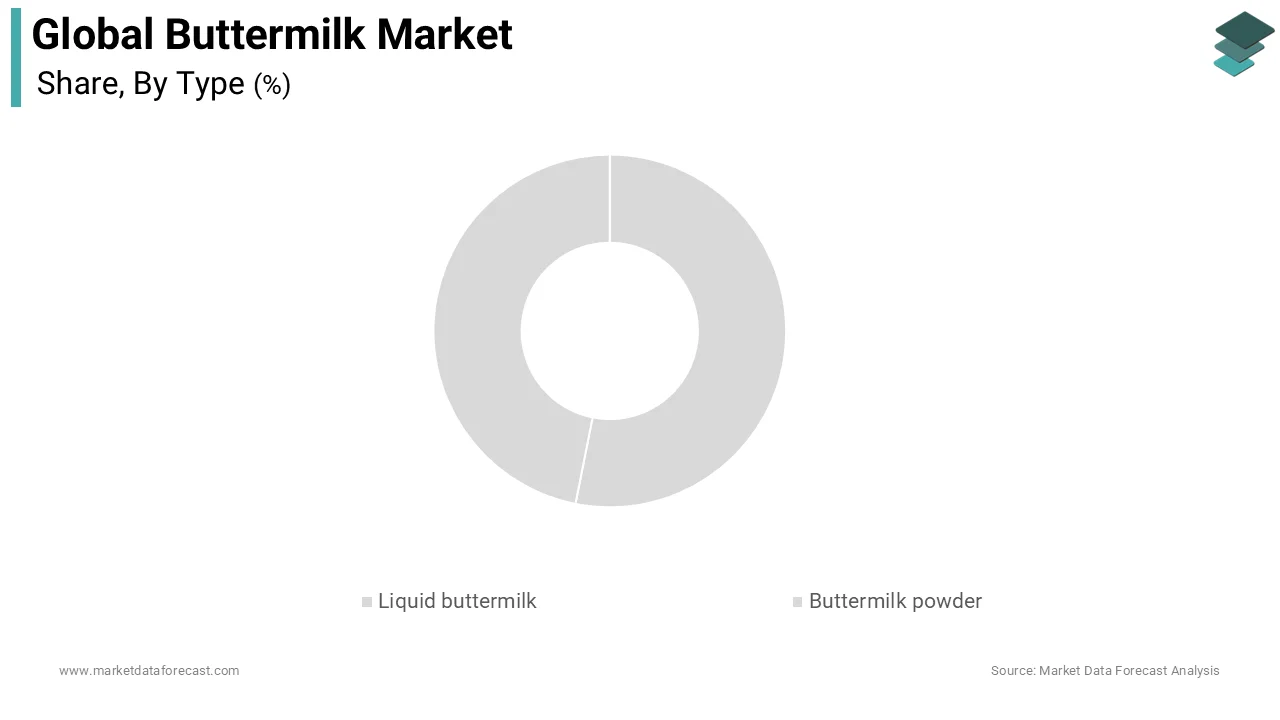
However, the buttermilk powder segment is experiencing the fastest expansion and is predicted to register a CAGR of 7.4% during the forecast period due to the profound elimination of refrigeration requirements and the dramatic extension of product longevity. Traditional liquid forms are highly perishable and require expensive, continuous cold chain logistics, which severely limit their geographic distribution and export potential. In stark contrast, the powdered variant undergoes advanced spray-drying processes that remove almost all moisture, creating a highly stable product that can be stored at ambient temperatures for over a year. According to the Global Cold Chain Alliance, the operational costs associated with refrigerated transport account for nearly 25% of total distribution expenses for perishable dairy items. By transitioning to powdered formats, manufacturers can completely bypass these exorbitant logistical costs and expand their market reach into developing regions with inadequate electrical infrastructure. Furthermore, according to the United States Department of Agriculture, the shelf life of properly packaged dairy powders routinely exceeds 12 months without any significant degradation in nutritional value or functional properties. According to the World Logistics Council, this enhanced stability allows for massive bulk shipping and extended-duration inventory buffering. Consequently, the massive reduction in supply chain complexity and storage costs drives the rapid and accelerated expansion of the powdered segment globally.
By Application Insights
The bakery segment dominated the market by capturing 46.4% of the global market share in 2025. The dominance of the bakery segment in the global market is attributed to the fundamental chemical interaction with alkaline leavening agents to produce carbon dioxide. The production of traditional American biscuits, fluffy pancakes, and tender quick breads absolutely requires an acidic environment to activate baking soda and generate the gas bubbles necessary for proper rising. Without this specific acidic catalyst, baked goods would remain dense, flat, and unpalatable. According to the American Bakers Association, the global commercial production of chemically leavened bakery items surpasses 50 million metric tons annually, representing a colossal and continuous demand for natural acidic activators. Liquid and powdered variants are both heavily utilized in this sector to ensure that every batch achieves the exact same volumetric expansion and crumb softness. Furthermore, according to the International Association of Operative Millers, over 80% of commercial bakeries formulate their biscuit and pancake mixes specifically around the acidic profile of this fermented dairy ingredient. The World Bank notes that the global consumption of wheat and cereal-based baked goods continues to rise in tandem with urbanization and busy modern lifestyles. This indispensable chemical functionality ensures that the bakery application will forever remain the undisputed cornerstone of the global market.
However, the beverages segment is anticipated to register a CAGR of 8.4% during the forecast period in the global market, owing to the massive global pivot toward proactive digestive wellness and the integration of live probiotic cultures. Modern consumers increasingly view their daily liquid consumption as a vital tool for optimizing gut microbiome health and enhancing overall immunity. Fermented dairy liquids are naturally rich in beneficial bacteria and postbiotic compounds that perfectly align with this surging demand for functional health drinks. According to the International Probiotics Association, the global consumer expenditure on gut health supporting dietary supplements and functional beverages recently surpassed 50 billion dollars, reflecting an intense willingness to pay premium prices for digestive wellness. Beverage manufacturers are capitalizing on this trend by launching specialized probiotic drinks that utilize this fermented liquid as a foundational base to deliver targeted health benefits. According to the World Gastroenterology Organisation, regular consumption of specific fermented dairy products significantly improves intestinal barrier function and reduces systemic inflammation. Furthermore, according to the Global Nutrition Report, over 2 billion people worldwide suffer from micronutrient deficiencies, creating a massive opportunity to additionally fortify these probiotic beverages with essential vitamins. This strategic product evolution transforms a traditional culinary ingredient into a highly profitable daily health tonic, driving rapid market expansion.
REGIONAL ANALYSIS
United States Buttermilk Market Analysis
The United States is projected to maintain a highly influential and robust position in the domestic and global food manufacturing landscape over the next few years, due to its highly integrated production infrastructure and evolving clean-label demands. According to the United States Department of Agriculture, the domestic production of wheat flour consistently exceeds 20 million metric tons annually, providing the foundational base for countless baked goods. According to the American Bakers Association, over 65% of commercial bakeries utilize cultured dairy liquids to achieve the perfect crumb structure in biscuits and pancakes. Furthermore, according to the Food and Drug Administration, strict clean-label guidelines are enforced, which has prompted manufacturers to abandon synthetic chemical leavening agents in favor of natural fermented alternatives. According to the World Bank, the regional food processing sector generates over 1 trillion dollars in annual revenue, demonstrating the colossal scale of industrial operations relying heavily on functional dairy ingredients. Consequently, the deep integration of this versatile liquid into both traditional recipes and modern industrial food matrices guarantees sustained and robust market expansion across the continent.
India Buttermilk Market Analysis
India is anticipated to significantly strengthen its leading position in the global dairy industry over the next few years through substantial investments in modern processing infrastructure and an expanding consumer base for traditional health beverages. According to the National Dairy Development Board, the total domestic milk production recently surpassed 220 million metric tons annually, ensuring an endless and highly cost-effective raw material base for local processors. According to the Food and Agriculture Organization, the Indian dairy sector supports the livelihoods of over 80 million rural farmers, creating a highly resilient and decentralized supply chain. Furthermore, according to the Ministry of Food Processing Industries, government initiatives aimed at modernizing traditional dairy infrastructure have significantly improved the shelf stability and commercial packaging of these fermented beverages. According to the World Health Organization, traditional probiotic drinks play a critical role in combating regional micronutrient deficiencies and improving gut health among the massive population. Consequently, the seamless blend of ancient culinary heritage and modern nutritional science ensures continuous and rapid market expansion.
Germany Buttermilk Market Analysis
Germany is poised to drive significant advancements in premium dairy innovation and functional health products over the next few years, as consumer preferences shift heavily toward sustainable and scientifically validated nutritional solutions. According to the German Dairy Association, the regional production of specialized functional dairy beverages has grown by over 12% annually, as health-conscious consumers actively seek out gut-friendly products. According to the European Food Safety Authority, rigorous testing protocols are enforced, which ensures that only the highest quality and most biologically active bacterial strains are utilized in commercial fermentation processes. Furthermore, according to the Federal Ministry of Food and Agriculture, substantial financial investments in advanced bioprocessing facilities have significantly enhanced the nutritional profile and sensory attributes of premium cultured liquids. According to the World Bank, the broader European food and beverage manufacturing sector generates over 1 trillion euros in annual turnover, demonstrating the immense financial scale of the premium health food market. Consequently, the unwavering commitment to scientific innovation and ecological sustainability guarantees continuous market leadership.
United Kingdom Buttermilk Market Analysis
The United Kingdom is expected to experience steady commercial progress over the next few years, fueled by an accelerating preference for premium artisanal baked goods and clean-label sports nutrition formulations. According to the Food and Drink Federation, the domestic artisanal baking industry has experienced exponential growth, with over 5,000 independent bakeries actively utilizing authentic cultured dairy liquids to enhance the flavor and texture of premium sourdough and quick breads. According to the British Nutrition Foundation, the consumption of protein-enriched fermented beverages has surged by over 15% recently, as consumers seek natural alternatives to synthetic sports supplements. Furthermore, according to the Department for Environment, Food and Rural Affairs, aggressive government campaigns promoting sustainable agricultural practices have encouraged local dairy processors to adopt advanced membrane filtration technologies to concentrate proteins and minerals. According to the World Health Organization, high-quality protein intake is highly important for maintaining metabolic health in aging populations. Consequently, the strategic focus on premiumization and functional nutrition ensures robust commercial expansion across the region.
Australia Buttermilk Market Analysis
Australia is set to witness a high-performance and export-driven growth trajectory over the next few years, backed by its introduction of advanced dehydration technologies and strategic entry into burgeoning Asian health food channels. According to Dairy Australia, the national dairy industry generates over 6 billion dollars in annual farm-gate revenue, demonstrating the immense scale and economic significance of the local processing infrastructure. According to the Australian Bureau of Agricultural and Resource Economics and Sciences, the export volume of specialized dairy powders has increased by over 10% annually, driven by strong demand from Asian markets seeking high-quality baking ingredients. Furthermore, according to the Commonwealth Scientific and Industrial Research Organisation, extensive research into novel probiotic strains has led to the development of highly effective functional beverages that target specific health outcomes. According to the World Bank, the regional food processing sector continuously adopts cutting-edge dehydration technologies to maximize product shelf life and nutritional integrity. Consequently, the relentless focus on technological excellence and global trade guarantees sustained market growth.
COMPETITION OVERVIEW
The competition within the global sector is characterized by intense rivalry among multinational dairy cooperatives and specialized regional processors worldwide. Major corporations leverage their extensive distribution networks and massive research budgets to dominate supermarket shelves and commercial food manufacturing channels. These industry leaders continuously invest in advanced bioprocessing innovation to capture health-conscious consumers by introducing probiotic-enriched and protein variants. Meanwhile, regional players compete aggressively by emphasizing traditional recipes and localized flavor profiles that resonate deeply with cultural preferences. The market also witnesses a surge in craft manufacturers who focus on premium artisanal fermented beverages, targeting niche demographics willing to pay higher prices for organic and sustainable products. Strategic mergers and acquisitions remain a prevalent tactic as companies seek to consolidate their supply chains and acquire emerging functional food brands. Furthermore, sustainability initiatives have become a critical competitive differentiator with firms adopting eco packaging and carbon manufacturing processes to appeal to environmentally aware buyers. Ultimately, the competitive landscape demands continuous adaptation to shifting dietary trends, ensuring that only the most agile and consumer-centric organizations maintain their long-term profitability and brand loyalty across all international retail markets today and tomorrow. This relentless pursuit guarantees exceptional global market evolution.
KEY MARKET PLAYERS
A few major players of the global buttermilk market include
- Amul
- Arla foods
- Dairy America
- Fonterra
- Dairy Farmers of America
- Glanbia
- Valley Milk
- Associated Milk Producers
- Arion Dairy Products
- Innova Food Ingredients
- Sterling Agro Industries
- Grain Millers
- Agri-Mark
- Land O’ Lakes
- Others
TOP STRATEGIES USED BY KEY MARKET PLAYERS
Key players in the market employ several strategic approaches to reinforce their competitive standing and capture evolving consumer preferences. Product innovation remains central as companies develop specialized cultured liquids tailored for specific applications such as sports nutrition, pediatric health drinks, and premium artisanal baking. Vertical integration is another common tactic with major firms controlling everything from agricultural milk sourcing to final product distribution to ensure quality and cost efficiency. Investment in sustainable production methods, including water recycling and renewable energy adoption, helps meet strict environmental regulations and consumer expectations. Geographic expansion, particularly into emerging health-conscious demographics, allows access to new markets and diversified supply chains. Lastly, strategic partnerships and technical collaborations with agricultural suppliers enable the creation of innovative solutions that address emerging trends like clean label demands and advanced fortification, ensuring long-term commercial viability.
TOP PLAYERS IN THE MARKET
- Fonterra Cooperative Group operates as a monumental force in the global dairy sector, providing specialized fermented dairy ingredients and cultured liquids to international food manufacturers. The corporation leverages its massive agricultural network to source premium mil,k ensuring exceptional quality and consistent nutritional profiles across all product lines. Recently, the enterprise announced a comprehensive investment in advanced membrane filtration technologies designed to concentrate beneficial proteins and probiotic cultures. This strategic pivot not only enhances the functional health benefits of their offerings but also deeply resonates with modern consumers seeking premium wellness solutions. By continuously innovating its processing capabilities, the organization successfully reinforces its industry leadership and drives substantial commercial growth across global markets.
- Arla Foods stands as a premier international dairy cooperative actively transforming the fermented liquid landscape through deep scientific expertise and innovative product development. The organization focuses heavily on creating probiotic-enriched cultured drinks that cater to health-conscious consumers seeking optimal digestive wellness and immune support. Recently, the company completed the expansion of its dedicated bioprocessing infrastructure equipped with state-of-the-art fermentation tanks designed to maximize the viability of live bacterial cultures. This massive operational upgrade significantly enhances product efficacy and taste while maintaining strict organic certifications. By prioritizing ecological responsibility and sensory excellence, the enterprise successfully attracts a loyal consumer base and maintains a competitive edge globally.
- Dairy Farmers of America functions as a dominant entity in the North American dairy landscape, dedicating significant resources toward the production of high-quality cultured liquids and dried powders. The corporation utilizes its extensive member network to supply commercial bakeries and food processors with consistent and highly functional acidic ingredients. In a recent strategic initiative, the enterprise launched a new line of ultra-filtered protein-enriched variants designed to support muscle recovery and sports nutrition. This technological breakthrough enables the brand to capture profitable functional beverage segments without compromising on authentic flavor. Through continuous product innovation, the company continues to solidify its formidable presence and accelerate enterprise adoption worldwide.
MARKET SEGMENTATION
This research report on the global buttermilk market has been segmented and sub-segmented based on type, application, and region.
By Type
- Liquid buttermilk
- Buttermilk powder
By Application
- Confectionery
- Frozen Desserts and Ice Cream
- Bakery
- Dairy-based
- Beverages
- Specialty foods
- Soups and Sauces
- Salad dressings
- Others
By Region
- North America
- Europe
- The Asia Pacific
- Latin America
- The Middle East and Africa