- Product Description Description
- Table of Contents TOC
- List of Table & Figure LOT
- Get Free Sample PDF Sample PDF
Market Size, 2025
$1,506.41 MnMarket Estimate, 2026
$1,618.48 MnMarket Forecast, 2034
$2,873.66 MnCAGR, 2026–2034
7.44%Global Catheter Stabilization Devices Market Size, Growth, Trends & Forecast (2026–2034)
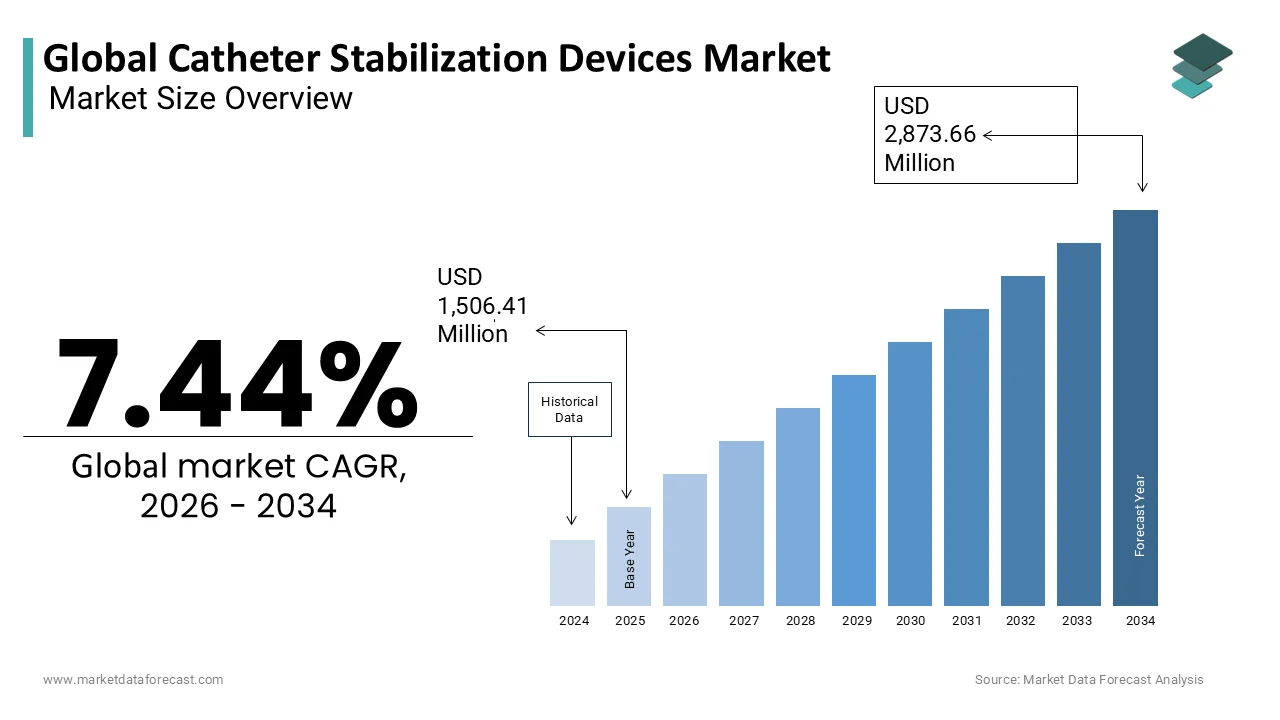
The global catheter stabilization devices market size was valued at USD 1,506.41 million in 2025, is estimated at USD 1,618.48 million in 2026, and is projected to reach USD 2,873.66 million by 2034, registering a compound annual growth rate (CAGR) of 7.44% during the forecast period from 2026 to 2034. Driven by a rising geriatric population, surging prevalence of chronic lifestyle diseases and cardiovascular conditions, growing demand for minimally invasive surgeries, and increased hospitalizations in trauma care units, the market continues to expand rapidly worldwide.
Key Executive Metrics (At-a-Glance)
- 2025 Base Valuation: USD 1,506.41 Million
- 2026 Current Valuation: USD 1,618.48 Million
- 2034 Forecast Valuation: USD 2,873.66 Million
- Compound Annual Growth Rate (CAGR): 7.44% (2026–2034)
- Leading Region: North America (commanding the largest share due to high volumes of catheter placements and advanced healthcare infrastructure)
- Fastest-Growing Region: Asia-Pacific
- Leading End-User Segment: Hospitals
Core Market Drivers
- Surge in Chronic Diseases: High incidence of cardiovascular illnesses and cancer cases requiring frequent surgical procedures and reliable catheter securement.
- Minimally Invasive Procedures: Growing preference for minimally invasive treatments that rely extensively on catheters for monitoring and fluid administration.
- Aging Demographics: A rapidly expanding global geriatric population susceptible to multiple chronic conditions and prolonged hospitalizations.
Primary Market Restraints & Challenges
- Market Barriers: High pricing structures of technologically advanced stabilization products and the availability of alternative devices, alongside occasional product recalls impacting quick adaptation.
Global Catheter Stabilization Devices Market Segmentation Breakdown
| Segment Category | Largest Segment | Fastest-Growing Segment |
|---|---|---|
| By Application | Cardiovascular | Cardiovascular (Fastest-Growing) |
| By Product | Arterial Securement Devices | Central Venous Catheter (CVC) Securement Device (Fastest-Growing) |
| By End-User | Hospitals | Hospitals (Fastest-Growing) |
| By Region | North America | Asia-Pacific (Fastest-Growing) |
Major Industry Players Profiled
Key global market participants shaping the landscape include Medtronic plc (U.S.), 3M Company (U.S.), B. Braun Melsungen AG (Germany), ConvaTec Inc. (U.S.), C. R. Bard, Inc. (U.S.), Baxter International, Inc. (U.S.), Smiths Group plc (U.K.), Centurion Medical Products (U.S.), Merit Medical Systems, Inc. (U.S.), and M.C. Johnson Company, Inc. (U.S.).
 Download Free Sample Report
Global Catheter Stabilization Devices Market Size
The Global Catheter Stabilization Devices Market is projected to grow from USD 1,506.41 million in 2025 to USD 1,618.48 million in 2026 and reach USD 2,873.66 million by 2034, registering a CAGR of 7.44% during the forecast period from 2026 to 2034.
The catheter stabilization devices are specialized medical accessories designed to secure intravenous and central venous catheters effectively, thereby preventing accidental dislodgement and reducing complications. These devices utilize adhesive patches, sutureless anchors, or mechanical clamps to maintain catheter position, ensuring uninterrupted therapy delivery and patient safety during hospital stays or home care. This evidence supports the integration of advanced stabilization technologies into standard nursing protocols. The growing emphasis on patient comfort and mobility further drives the adoption of low-profile and transparent designs that allow for easy inspection of insertion sites, while minimizing skin irritation and enhancing overall quality of care for individuals requiring long-term vascular access.
MARKET DRIVERS
Rising Prevalence of Chronic Diseases Requiring Long-Term Vascular Access
The rising prevalence of chronic diseases requiring long-term vascular access is propelling the growth of the catheter stabilization devices market. Conditions such as cancer, kidney failure, and cardiovascular disorders often necessitate prolonged administration of chemotherapy, dialysis, or parenteral nutrition, which relies on stable catheter placement to ensure treatment efficacy and patient safety. According to the World Health Organization, non-communicable diseases account for 74% of all deaths globally,y with millions of patients requiring regular intravenous interventions that benefit from robust stabilization devices to prevent accidental removal. The increasing aging population further exacerbates this trend as elderly patients are more prone to chronic conditions and may have fragile skin requiring gentle, yet effective stabilization methods. Healthcaree providers prioritize high-quality stabilization devices to minimize complications, such as phlebitis or infection associated with catheter movement.
Stringent Regulatory Guidelines and Infection Control Protocols
The stringent regulatory guidelines and infection control protocols are mandating the adoption of best practices that reduce healthcare-associated infections and improve patient safety standards, which is also accelerating the growth of the catheter stabilization devices market. Regulatory bodies, such as the Centers for Medicare and Medicaid Services, enforce strict reimbursement policies tied to hospital-acquired condition rates, compelling healthcare facilities to implement evidence-based strategies for catheter care, including the use of approved stabilization devices. These guidelines encourage the replacement of traditional tape and sutures with engineered devices that offer superior hold and breathability, thereby reducing skin breakdown and bacterial colonization. Furthermore, accreditation organizations require documentation of securement methods during audits,s reinforcing the institutional commitment to using certified stabilization products.
MARKET RESTRAINTS
High Cost of Advanced Stabilization Products Compared to Traditional Methods
The high cost of advanced stabilization products compared to traditional methods is limiting adoption in budget-constrained healthcare settings and developing regions, which is limiting the growth of the catheter stabilization devices market. While engineered devices offer superior performance, their unit price is significantly higher than basic adhesive tape or simple sutures,s which remain prevalent in resource-limited environments. The lack of insurance reimbursement for specific stabilization devices in certain jurisdictions further discourages their use, as facilities bear the full financial burden. Additionally, bulk purchasing agreements often favor generic consumables over branded stabilization tools due to price sensitivity.
Risk of Skin Irritation and Allergic Reactions
The risk of skin irritation and allergic reactions to cause patient discomfort and leading to premature device removal or discontinuation of use in sensitive populations that is additional factor degrading the growth of the catheter stabilization devices market. Many stabilization devices utilize strong adhesives or chemical components that can cause contact dermatitis, erythema, or blistering,g particularly in patients with fragile skin, such as neonates, elderly individuals,s or those undergoing prolonged therapy. These adverse events not only compromise patient comfort but also increase the risk of secondary infections and treatment delays. Healthcare providers may hesitate to prescribe advanced stabilization devices if they anticipate skin compatibility issues, es leading to a preference for alternative methods. Manufacturers face the challenge of developing hypoallergenic materials without compromising adhesion strength, which limits the availability of universally safe options and restrains broader market acceptance among vulnerable patient groups.
MARKET OPPORTUNITIES
Development of Bioactive and Antimicrobial Stabilization Devices
The development of bioactive and antimicrobial stabilization devices is solely attributed to the growth of the catheter stabilization devices market. Integrating antimicrobial agents such as silver chlorhexidine or iodine into the adhesive or foam components of stabilization devices can create a protective barrier that inhibits bacterial growth and reduces the risk of bloodstream infections. The bacterial load on skin surfaces after 7 days of wear indicates their potential to transform standard care practices and reduce antibiotic usage. This innovation aligns with global efforts to combat antimicrobial resistance and lower healthcare costs associated with treating infections. Manufacturers who invest in research and development of these advanced materials can differentiate their products and command premium pricing. The growing emphasis on zero harm initiatives in healthcare further accelerates the adoption of such proactive solutions, creating a lucrative niche for technologically advanced stabilization devices.
Expansion into Home Healthcare and Ambulatory Care Settings
The expansion into home healthcare and ambulatory care settings, as the shift towards outpatient therapy continues to gain momentum globally, which is additionally to leverage the growth of the catheter stabilization devices market. Patients receiving home infusion therapy, dialysis, or chemotherapy require reliable and easy-to-manage stabilization solutions that ensure safety without constant professional supervision. This trend drives demand for discreet, durable, and water-resistant devices that empower patients to maintain their lifestyle while undergoing treatment. Manufacturers can capitalize on this shift by designing products specifically for layperson use with clear application instructions and enhanced comfort features. Partnerships with home health agencies and durable medical equipment suppliers can facilitate distribution and education.
MARKET CHALLENGES
Lack of Standardized Training and Awareness Among Healthcare Professionals
The lack of standardized training and awareness among healthcare professionals that leads to inconsistent application techniques and suboptimal utilization of available products is likely to pose a major challenge for the growth of the catheter stabilization devices market. Many nurses and clinicians rely on habitual practices or institutional traditions rather than evidence-based guidelines for catheter securement, resulting in improper device selection or incorrect placement that compromises effectiveness. As per the study, inadequate training correlates with a 20% higher rate of device failure and patient complaints suggesting that educational deficits directly impact clinical outcomes and product perception. Without comprehensive education programs, healthcare providers may perceive advanced devices as difficult to use or unnecessary, leading to resistance to adoption. Furthermore, high staff turnover rates in healthcare facilities exacerbate this issue by requiring continuous retraining efforts that strain resources. Manufacturers face the hurdle of demonstrating ease of use and providing ongoing support to ensure correct usage.
Variability in Patient Anatomy and Skin Conditions
The variability in patient anatomy and skin conditions, and the design of one-size-fits-all solutions that effectively secure catheters across diverse demographic groups, is another factor that limits the growth of the catheter stabilization devices market. Differences in body mass index, skin elasticity,y hair density, and sweat production affect the adhesion and stability of devices, requiring manufacturers to develop versatile products that accommodate a wide range of physiological variations. Adults in developed nations are classified as obese,e presenting unique challenges for catheter securement due to deep tissue folds and increased movement that can dislodge standard devices. Elderly patients often exhibit thinning skin and reduced collagen levels, making them susceptible to tearing and injury from strong adhesives used in conventional stabilization products. These anatomical and dermatological factors necessitate customized approaches or multiple product variants, ts which increase inventory complexity and costs for healthcare providers. Failure to addr, withthese variations can lead to poor patient outcomes and dissatisfaction with the product. Manufacturers must invest in extensive clinical testing across diverse populations to ensure reliability, which is time-consuming and expensive.
REPORT COVERAGE
| REPORT METRIC | DETAILS |
| Market Size Available | 2025 to 2034 |
| Base Year | 2025 |
| Forecast Period | 2026 to 2034 |
| Segments Analysed | By Product, Application, End-User, and Region |
| Various Analyses Covered | Global, Regional & Country-Level Analysis, Segment-Level Analysis, DROC, PESTLE Analysis, Porter’s Five Forces Analysis, Competitive Landscape, Analyst Overview on Investment Opportunities |
| Regions Analysed | North America, Europe, Asia Pacific, Latin America, Middle East, and Africa |
| Market Leaders Profiled | Medtronic plc (U.S.), 3M Company (U.S.), B. Braun Melsungen AG (Germany), ConvaTec Inc. (U.S.), C. R. Bard, Inc. (U.S.), Baxter International, Inc. (U.S.), Smiths Group plc (U.K.), Centurion Medical Products (U.S.), Merit Medical Systems, Inc. |
SEGMENTAL ANALYSIS
By Application Insights
The cardiovascular segment accounted for 44.3% of the Catheter Stabilization Devices Market share in 2025 due to the high volume of central venous catheterizations and arterial line placements required for critical care and cardiac interventions. These procedures demand robust stabilization to prevent dislodgement during patient movement or emergency resuscitation efforts which are common in intensive care units. The use of dedicated stabilization devices in cardiac surgery patients reduced catheter-related adverse events, amplifying their clinical necessity in high-acuity settings. The increasing prevalence of heart failure and coronary artery disease drives frequent hospital admissions where vascular access is crucial for medication administration and hemodynamic monitoring. Furthermore, the complexity of cardiovascular procedures often requires multiple lines simultaneously, necessitating reliable fixation methods to maintain organization and safety. Hospitals prioritize premium stabilization products for these applications to mitigate the high costs associated with vascular complications.
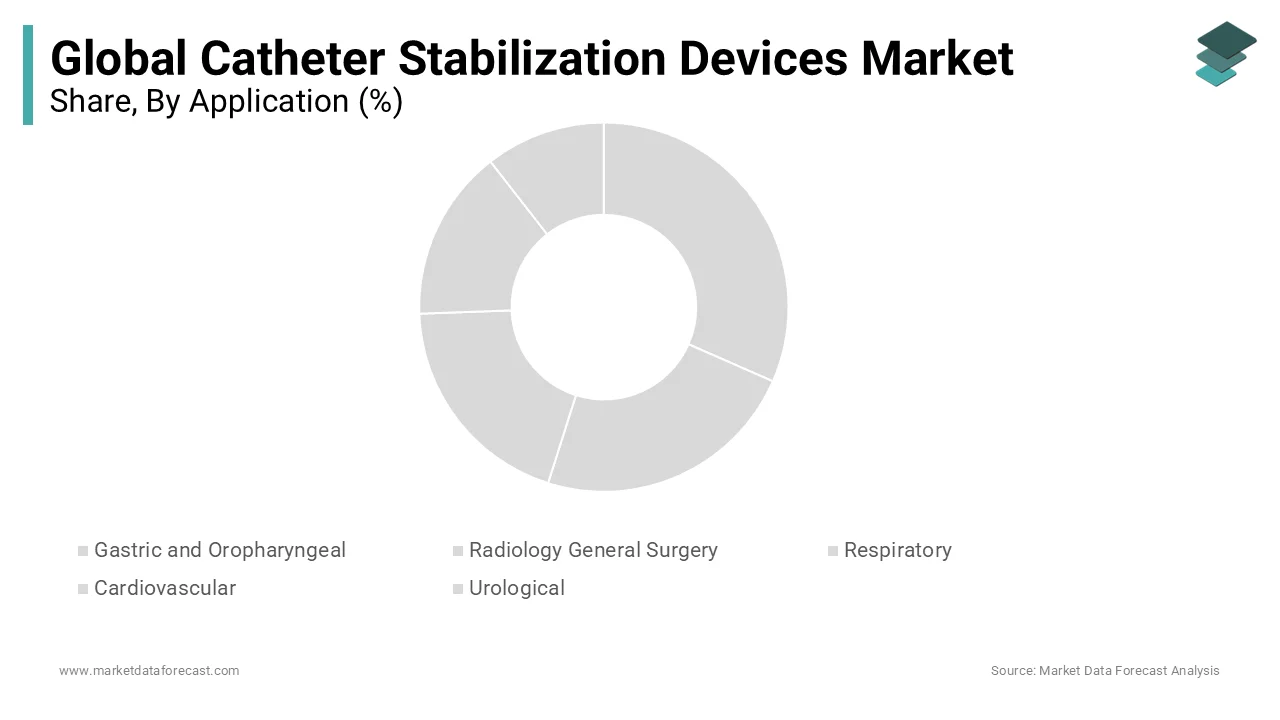
The respiratory segment is likely to grow at the fastest CAGR of 7.8% from 2026 to 2034 with the rising incidence of chronic obstructive pulmonary disease and acute respiratory failure, requiring mechanical ventilation. Patients on ventilators often have endotracheal tubes or tracheostomy tubes that require secure fixation to prevent accidental extubation, which can be life-threatening. According to the Global Initiative for Chronic Obstructive Lung Disease, over 3 million people die annually from COPD worldwide, many of whom requirelong-termm respiratory support and stable airway management devices during hospital stays. The implementation of advanced tube stabilization protocols reduced unplanned extubation rates in intensive care units, demonstrating the critical role of securement devices in patient safety outcomes. The recent global health crises have further amplified the demand for respiratory support equipment and associated accessories, includinghigh-qualityy stabilization devices that withstand prolonged use. Additionally, the expansion of home mechanical ventilation services creates new opportunities for user-friendly stabilization solutions.
By Product Insights
The central venous catheter securement device segment was the largest, holding 62.1% of the Catheter Stabilization Devices Market share in 2025 due to the widespread use of central lines for chemotherapy, long-term antibiotic therapy,y and total parenteral nutrition. These devices provide superior hold compared to traditional sutures or tape, reducing the risk of infection and catheter migrati,on which are major concerns in oncology and critical care. The durability and ease of application of these devices make them preferred choices for nursing staff managing complex patient cases. Furthermore, regulatory guidelines increasingly recommend sutureless securement as a best practice for central line care, driving institutional procurement policies. The high replacement frequency and critical nature of these applications ensure steady revenue streams for manufacturers dominating this product category.
The all-site devices segment is expected to grow at the fastest CAGR of 8.2% from 2026 to 2034, with the versatility andcost-effectivenesss of universal stabilization solutions that can be used for various catheter types. These devices offer healthcare providers flexibility in inventory management, allowing a single product to secure peripheral intravenous lines, urinary catheters,s and drainage tubes, es thereby simplifying supply chain logistics. The ability to standardize care protocols across different departments using one product type appeals to hospital administrators seeking operational efficiencies. Additionally, manufacturers are innovating with modular designs that enhance adhesion and comfort for multiple insertion sites.
By End-User Insights
The hospitals segment held a prominent share of the catheter stabilization devices market in 2025 due to the high concentration of critically ill patients requiring invasive procedures and long-term vascular access. Acute care facilities perform the majority of central line insertions, dialysis treatments,s and surgical interventions that necessitate reliable catheter stabilization to ensure patient safety and treatment continuity. According to the American Hospital Association, there are over 6000 registered hospitals in the United States performing millions of invasive procedures annually, ly each requiring securement devices to prevent complications such as dislodgement or infection. Standards for patient safety mandate the use of effective securement methods for all invasive lines, driving mandatory procurement of certified stabilization products in accredited healthcare facilities. The presence of specialized units such as intensive care oncology and nephrology wards further amplifies demand for high-performance stabilization devices tailored to specific clinical needs. Hospitals also have the financial capacity to invest in premium brands that offer proven clinical benefits and comprehensive support services.
The home healthcare providers segment is anticipated to witness the fastest CAGR of 9.5% during the forecast period, with the shifting paradigm towards outpatient care and aging-in-place initiatives. Patients receiving home infusion therapy, dialysis,s or palliative care require durable and easy-to-manage stabilization devices that allow for mobility and personal hygiene without professional assistance. The development of water-resistant and hypoallergenic devices specifically designed for home use addresses the unique challenges of non-clinical environments. Insurance coverage for home care supplies also facilitates access to these products.
COUNTRY LEVEL ANALYSIS
North America Catheter Stabilization Devices Market Analysis
North America was the largest, accounting for 44.3% of the Catheter Stabilization Devices Market share in 2025, with high adoption rates of advanced medical technologies and stringent regulatory standards for patient safety. The region benefits from a well-established healthcare infrastructure and significant reimbursement coverage for infection prevention devices, which encourages the use of premium stabilization products. The reimbursement policies in the United States incentivize hospitals to reduce healthcare-associated infections, driving the widespread adoption of evidence-based securement devices in acute care settings. The health technology assessments in Canada support the use of sutureless securement devices for central lines, citing improved clinical outcomes and cost savings from reduced complication rates. The presence of major market players and robust distribution networks ensures easy availability of innovative products. High awareness among healthcare professionals regarding best practices for catheter care further sustains demand.
Europe Catheter Stabilization Devices Market Analysis
Europe catheter stabilization devices market held the second position, holding a 22.4% share in 2025, with harmonized regulatory frameworks and increasing emphasis on healthcare quality improvement initiatives. The region is characterized by a mix of advanced healthcare systems in Western Europe and emerging adoption trends in Eastern Europe. According to the European Centre for Disease Prevention and Control, guidelines on the prevention of intravascular catheter-related infections recommend the use of securement devices to minimize movement and microbial entry, prompting widespread implementation across member states. The clinical guidelines advocate for sutureless securement methods to reduce tissue trauma and infection risks, influencing procurement decisions in public hospitalsGovernment-fundeddd healthcare systems prioritize cost-effective solutions that improve patient outcomes, leading to gradual replacement of traditional sutures. The aging population and rising prevalence of chronic diseases increase the demand for long-term vascular access solutions.
Asia Pacific Catheter Stabilization Devices Market Analysis
The Asia Pacific catheter stabilization devices market is expected to grow at the fastest CAGR in the coming years, with the expanding healthcare infrastructure and increasing awareness of infection control practices in emerging countries. Countries such as China, India, and Japan are investing heavily in hospital modernization and adoption of international clinical standards, which include the use of advanced catheter securement devices. The rising middle class and increasing medical tourism also contribute to higher demand for quality healthcare services and associated products. Local manufacturing initiatives are making devices more affordable and accessible.
Latin America Catheter Stabilization Devices Market Analysis
Latin America catheter stabilization devices market growth is driven by ongoing healthcare reforms and increasing investments in hospital infrastructure to improve patient safety standards. The region is gradually moving away from traditional suturing methods towards modern securement devices as awareness of healthcare-associated infections rises among medical professionals. According to the Pan American Health Organization, several Latin American countries have implemented national patient safety programs that emphasize the use of evidence-based practices for invasive device management, including catheter stabilization. Economic challenges remain, but the private healthcare sector is leading the adoption of premium products to differentiate service quality.
Middle East and Africa Catheter Stabilization Devices Market Analysis
The Middle East and Africa catheter stabilization market is likely to grow, with the devices supported by government visions to transform healthcare delivery and improve clinical outcomes through modernization. Countries in the Gulf Cooperation Council are leading the way with substantial investments in world-class healthcare facilities that adhere to international safety standards. The initiatives to strengthen health systems in Africa include improving infection prevention and control measures, which drive initial adoption of securement devices in referral hospitals. The focus on medical tourism in the Middle East necessitates high standards of care and patient safety, influencing device selection.
COMPETITIVE LANDSCAPE
The Catheter Stabilization Devices Market features a moderately consolidated competitive landscape characterized by the presence of established medical technology giants and specialized niche players. Global companies dominate the premium segment by offering integrated vascular access solutions that combine catheters with proprietary securement technologies to enhance clinical outcomes. Specialized manufacturers compete by focusing on specific product innovations such as antimicrobial coatings or ergonomic designs that cater to unique patient needs. The market witnesses intense competition driven by the need for regulatory compliance, cost-effectiveness, and proven clinical efficacy in preventing complications. Key participants focus on strengthening distribution channels and enhancing after-sales support to differentiate themselves in a price-sensitive environment. Strategic collaborations with healthcare providers enable companies to gather real-world evidence and refine product features based on user feedback. The entry of new players with cost-effective alternatives further intensifies competition, prompting established firms to invest in research and development for next-generation securement technologies.
KEY MARKET PLAYERS
Some of the major players in the global catheter stabilization devices market profiled in the report are
- Medtronic plc (U.S.)
- 3M Company (U.S.)
- B. Braun Melsungen AG (Germany)
- ConvaTec Inc. (U.S.)
- C. R. Bard, Inc. (U.S.)
- Baxter International, Inc. (U.S.)
- Smiths Group plc (U.K.)
- Centurion Medical Products (U.S.)
- Merit Medical Systems, Inc. (U.S.)
- M.C. Johnson Company, Inc. (U.S.).
TOP LEADING PLAYERS IN THE MARKET
- Becton Dickinson and Company maintains a strong presence in the Catheter Stabilization Devices Market through its comprehensive portfolio of vascular access solutions, including the popular StatLock stabilization devices. The company focuses on integrating securement technologies with its catheter systems to provide holistic infection prevention bundles for healthcare providers. Recent initiatives include expanding manufacturing capabilities in key global regions to ensure consistent supply and reduce lead times for critical care products. Becton Dickinson also invests heavily in clinical education programs to train nursing staff on proper application techniques, thereby enhancing product efficacy and patient safety outcomes. Their commitment to innovation is evident in the development of next-generation adhesives that minimize skin trauma while maintaining superior hold strength.
- Teleflex Incorporated contributes significantly to the Catheter Stabilization Devices Market by offering specialized securement solutions under its Venetec brand, which are widely recognized for their reliability and ease of use. The company has strengthened its position by focusing on product differentiation through unique sutureless designs that reduce procedure time and improve patient comfort during long-term therapy. Teleflex recently launched enhanced versions of its stabilization devices featuring improved breathability and transparency to facilitate better site inspection and reduce moisture buildup. The firm emphasizes sustainability by introducing eco-friendly packaging and materials that align with the environmental goals of major healthcare institutions.
- 3M Company plays a pivotal role in the Catheter Stabilization Devices Market by providing advanced adhesive technologies and securement platforms that integrate seamlessly with various catheter types. The company leverages its expertise in material science to develop hypoallergenic and durable stabilization solutions that address common challenges such as skin irritation and device dislodgement. 3M recently introduced innovative securement devices with enhanced grip features designed specifically for high mobility patients requiring extended vascular access. The firm actively engages in regulatory advocacy to promote standardized guidelines for catheter securement, thereby creating a favorable environment for product adoption. Strategic partnerships with hospital networks facilitate the implementation of comprehensive vascular access protocols that include 3M stabilization products.
GLOBAL CATHETER STABILIZATION DEVICES MARKET NEWS
- Hold-n-Place Catheter Securement Products were released in 2019 by Dale Medical Products, Inc. (US) and are engineered stabilization devices (ESD) with a soft, pleasant, and flexible design. Securement by Dale Hold-n-Place IV, arterial, mid-line, CVC, PICC, and arterial sheath securement are just a few of the applications for these devices. Dale Hold-n-Place securement devices are made to hold a variety of catheters, lines, and tubes in place with skin-friendly adhesives and simple application procedures.
- Acelity Inc. was bought by 3M (US) in 2019. (US). 3M's position as a leader in advanced wound care and specialty surgical applications will be strengthened due to this purchase.
- PICC/CVC securement device + CHG Dressing was released by 3M (US) in 2018.
- Centurion Medical Products was bought by Medline (US) in 2018. (US).
MARKET SEGMENTATION
This research report on the global catheter stabilization devices market has been segmented and sub-segmented into the following categories and calculated market size and forecast for each segment until 2032.
By Application
- Gastric and Oropharyngeal
- Radiology General Surgery
- Respiratory
- Cardiovascular
- Urological
By Product
- Peripheral Securement Devices
- Abdominal Drainage Tubes Securement Devices
- Arterial Securement Devices
- Epidural Securement Devices
- Chest Drainage Tube Securement Devices
- Central Venous Catheter Securement Device
- All-Site Devices
By End User
- Hospitals
- Home Healthcare Providers
- Emergency Clinics
- Diagnostic Centres
By Region
- North America
- Europe
- Asia-Pacific
- Latin America
- The Middle East and Africa