- Product Description Description
- Table of Contents TOC
- List of Table & Figure LOT
- Get Free Sample PDF Sample PDF
Market Size, 2025
$14.26 BnMarket Estimate, 2026
$15.15 BnMarket Forecast, 2034
$24.59 BnCAGR, 2026–2034
6.24%Executive Summary: Global Compounding Pharmacies Market
- Market Scope: Comprehensive global market analysis of the compounding pharmacies industry covering product forms, therapeutic categories, specialized service lines, and regional market distribution.
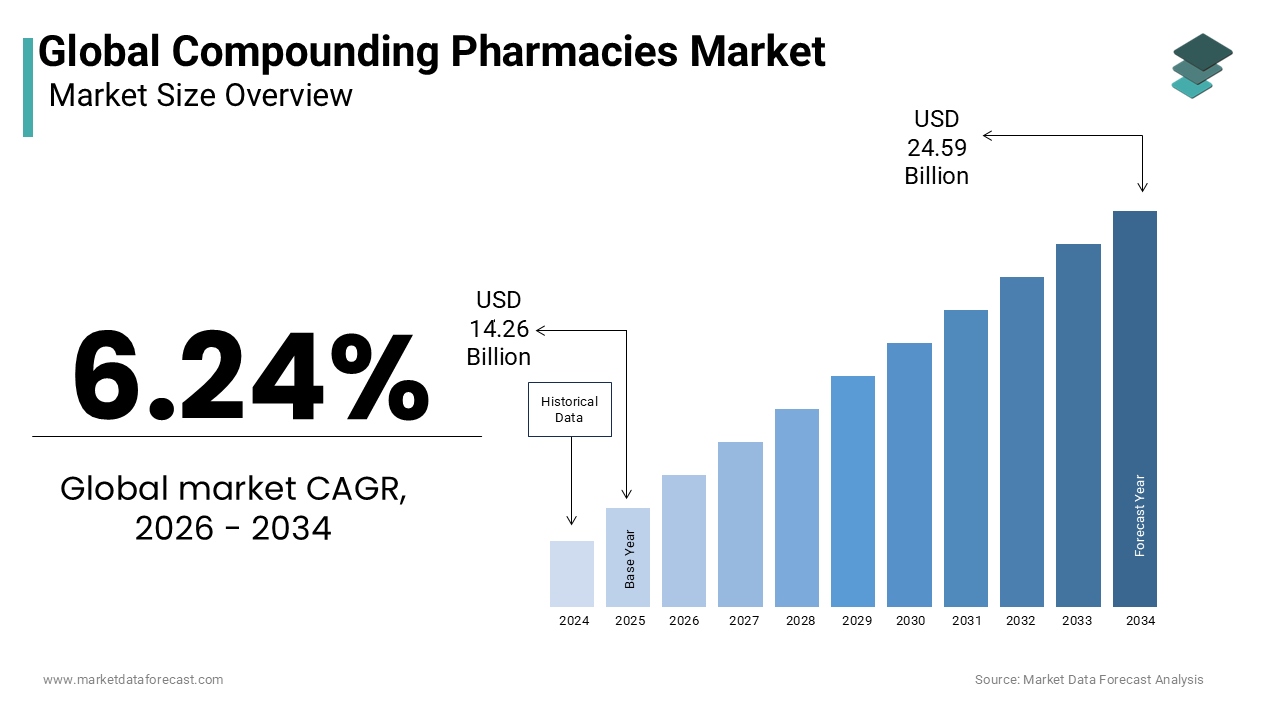
- Market Valuation: Valued at USD 14.26 billion (2025), estimated at USD 15.15 billion (2026), and projected to reach USD 24.59 billion by 2034, registering a strong CAGR of 6.24% (2026–2034).
- Primary Growth Drivers: Escalating burden of chronic diseases (affecting ~60% of adults requiring personalized care plans), growing demand for bioidentical hormone replacement therapies, and the necessity for customized pediatric, geriatric, and veterinary medicine.
Key Market Segment Metrics (2026–2034)
| Category | Leading Segment (2025 Position) | Fastest-Growing Segment |
|---|---|---|
| By Product Type | Oral medications (commanding the leading share due to widespread applicability, non-invasive convenience, and customized dosing for vulnerable populations) | Topical medications (projected at a 9.1% CAGR driven by localized pain relief and dermatological treatments) |
| By Therapeutic Area | Pain medications (leading position due to chronic pain prevalence and the necessity for non-opioid customized combination analgesics) | Hormone replacement therapies (estimated at a 9.5% CAGR driven by bioidentical hormone acceptance) |
| By Region / Country | North America (dominated with 38.7% global share backed by robust regulatory frameworks like the DQSA and thousands of specialized pharmacies) | Asia Pacific (rapid growth propelled by rising healthcare access, disposable incomes, and chronic disease burdens) |
Major Market Players & Market Structure
Market Structure: Fragmented market landscape featuring numerous independent local operators alongside large consolidated entities, balancing personalized customer service with stringent regulatory and quality assurance compliance.
Key Companies: Fagron, Inc., Elixir Compounding Pharmacy, Fresenius Kabi AG, Belle Santé Diagnostic & Therapeutic Institute Pvt. Ltd, Triangle Compounding Pharmacy, Vertisis Custom Pharmacy, Avella Specialty Pharmacy, and B. Braun Melsungen AG.
Global Compounding Pharmacies Market Size
The global compounding pharmacies market size was valued at USD 14.26 billion in 2025 and is estimated to reach USD 24.59 billion by 2034 from USD 15.15 billion in 2026, registering a CAGR of 6.24% from 2026 to 2034.
Compounding pharmacies represent a specialized sector within the pharmaceutical industry dedicated to preparing personalized medications tailored to individual patient needs. These facilities combine, mix, or alter ingredients to create customized dosage forms that are not commercially available from mass manufacturers. This practice addresses specific therapeutic requirements such as allergy-free formulations, alternative delivery methods, and precise strength adjustments for patients who cannot tolerate standard commercial products. The relevance of this market is underscored by the increasing complexity of chronic disease management where one-size-fitting-all approaches often fail to deliver optimal outcomes. According to the Centers for Disease Control and Prevention, approximately 60% of adults in the United States have at least one chronic disease and 40% have two or more, which necessitates highly individualized treatment plans. As per the American Pharmacists Association, over 7,500 compounding pharmacies operate across the nation, serving millions of patients who require bespoke therapeutic solutions. Furthermore, the aging population globally contributes to the demand, as elderly patients frequently present with multiple comorbidities and unique physiological responses to medications. According to the World Health Organization, the number of people aged 60 years and older is expected to reach 2.1 billion by 2050, which will significantly increase the need for personalized geriatric care. This demographic shift, coupled with advancements in pharmaceutical technology, ensures that compounding remains an integral component of modern healthcare delivery systems worldwide.
MARKET DRIVERS
Rising Prevalence of Chronic Diseases Requiring Personalized Care
The escalating burden of chronic diseases is a key factor driving the expansion of the global compounding pharmacies market as these conditions often demand tailored therapeutic interventions that commercial manufacturers cannot provide. Chronic illnesses such as diabetes, cardiovascular disorders, and autoimmune diseases affect a vast portion of the global population, requiring long-term medication management that accounts for individual metabolic rates and sensitivities. As per the World Health Organization, noncommunicable diseases account for 74% of all deaths globally, which translates to approximately 41 million deaths each year. This staggering statistic highlights the urgent need for effective and personalized treatment strategies that can improve patient outcomes and quality of life. Compounding pharmacies enable clinicians to adjust dosages, combine multiple medications into single formulations, and exclude inactive ingredients that may cause adverse reactions in sensitive patients. According to the Centers for Disease Control and Prevention, 6 in 10 adults in the United States have a chronic disease and 4 in 10 have two or more chronic diseases. This high prevalence creates a sustained demand for customized medications that address the unique needs of each patient. Additionally, the rise in pediatric and geriatric populations, who often struggle with swallowing pills or require liquid formulations, further drives the need for compounding services. By providing flexible dosage forms such as transdermal creams, suppositories, and flavored liquids, compounding pharmacies ensure better adherence and therapeutic efficacy for patients managing complex chronic conditions.
Growing Demand for Bioidentical Hormone Replacement Therapies
The increasing acceptance and utilization of bioidentical hormone replacement therapies is further contributing to global compounding pharmacies market growth as patients seek safer and more effective alternatives to synthetic hormones. Bioidentical hormones are chemically identical to those produced by the human body and are often preferred by patients due to their perceived safety profile and reduced side effects. As per the North American Menopause Society, over 1 million women in North America currently use compounded bioidentical hormone replacement therapy to manage symptoms associated with menopause such as hot flashes, mood swings, and bone density loss. This growing preference is driven by the ability of compounding pharmacists to customize hormone dosages based on individual salivary or blood test results, ensuring optimal therapeutic levels for each patient. Furthermore, the expanding indication of hormone therapy for men experiencing andropause has opened new avenues for market growth, as more individuals seek relief from symptoms like fatigue, decreased libido, and muscle loss. According to the Endocrine Society, testosterone deficiency affects approximately 20% of men over the age of 60, creating a substantial patient pool for customized hormone treatments. Compounding allows for the creation of various delivery methods including creams, gels, and troches, which offer convenient and non-invasive administration options. As clinical evidence supporting the efficacy and safety of bioidentical hormones continues to accumulate, more healthcare providers are recommending these personalized solutions, thereby fuelling the demand for compounding services.
MARKET RESTRAINTS
Stringent Regulatory Compliance and Quality Control Standards
Strict regulatory oversight and the need for rigorous quality control measures is a major impediment to the global compounding pharmacies market growth by imposing significant operational burdens and compliance costs. The implementation of comprehensive regulations such as the Drug Quality and Security Act in the United States has mandated that compounding pharmacies adhere to stringent standards similar to those required for large-scale pharmaceutical manufacturers. As per the Food and Drug Administration, compounding facilities must now comply with current good manufacturing practices, which involve extensive documentation, regular inspections, and investment in advanced quality assurance systems. These requirements have increased the operational costs for many small and independent compounding pharmacies, forcing some to close or merge with larger entities. The United States Pharmacopeia has established detailed standards for sterile and nonsterile compounding, which require specialized equipment, trained personnel, and continuous monitoring of environmental conditions. Compliance with these standards demands substantial financial investment, which can be prohibitive for smaller operators. Additionally, the variability in state-level regulations creates a complex regulatory landscape that complicates interstate commerce and limits market expansion. According to the National Association of Boards of Pharmacy, inconsistent enforcement of compounding laws across different states leads to confusion and increased legal risks for pharmacies operating in multiple jurisdictions. These regulatory challenges hinder innovation and limit the ability of compounding pharmacies to scale their operations efficiently, thereby restraining overall market growth.
Limited Reimbursement Coverage for Compounded Medications
The lack of consistent reimbursement coverage for compounded medications is further hampering the global market growth by limiting patient access and creating financial barriers. Many insurance providers, including Medicare and Medicaid, do not routinely cover compounded drugs, citing concerns about cost-effectiveness and lack of standardized pricing. As per the Kaiser Family Foundation, nearly 30% of insured patients face high out-of-pocket costs for prescription medications, and compounded drugs are often excluded from formularies or subject to higher copayments. This financial burden discourages patients from utilizing compounding services even when they are medically necessary. According to the International Academy of Compounding Pharmacists, only about 40% of compounded prescriptions are reimbursed by insurance companies, leaving the majority of patients to pay full price. This disparity in coverage creates inequities in access to personalized medicine, particularly for low-income individuals and those with chronic conditions who require long-term treatment. Furthermore, the administrative complexity involved in obtaining prior authorization for compounded medications adds to the burden for both patients and healthcare providers. Insurance companies often require extensive documentation to justify the medical necessity of compounded drugs, which delays treatment and increases administrative costs. The absence of a unified reimbursement framework across different payers exacerbates the problem, making it difficult for compounding pharmacies to predict revenue streams and plan for sustainable growth.
MARKET OPPORTUNITIES
Expansion into Veterinary Compounding Services
The burgeoning field of veterinary compounding is a lucrative opportunity for the compounding pharmacies market, as pet owners increasingly seek personalized medications for their animals. As per the American Veterinary Medical Association, over 70% of US households own a pet, which translates to tens of millions of families who prioritize the health and well-being of their companions. Many commercial veterinary medications are formulated for average-sized animals and do not account for the specific needs of exotic pets, senior animals, or those with unique health conditions. Compounding pharmacies can create customized dosage forms such as flavored liquids, transdermal gels, and small capsules that are easier to administer to pets. According to the North American Pet Health Insurance Association, veterinary spending reached over 30 billion dollars in recent years, reflecting the willingness of pet owners to invest in high-quality healthcare for their animals. This trend is further supported by the increasing prevalence of chronic diseases in pets, such as arthritis, diabetes, and heart disease, which require long-term management. Compounding allows veterinarians to tailor treatments to individual animals, improving compliance and therapeutic outcomes. Additionally, the growing interest in holistic and integrative veterinary medicine has led to increased demand for natural and alternative formulations that are not commercially available. By expanding into veterinary compounding, pharmacies can tap into a rapidly growing market segment that values personalized care and is less sensitive to price constraints compared to human healthcare.
Integration of Digital Health Technologies and Telepharmacy
The integration of digital health technologies and telepharmacy services offers a significant opportunity for the compounding pharmacies market by enhancing accessibility, efficiency, and patient engagement. Telepharmacy enables remote consultation and prescription verification, allowing compounding pharmacies to serve patients in underserved rural areas where access to specialized healthcare is limited. As per the American Telemedicine Association, the use of telehealth services has increased significantly since the onset of the pandemic, indicating a permanent shift in healthcare delivery models. Compounding pharmacies can leverage digital platforms to offer virtual consultations, medication therapy management, and real-time monitoring of patient outcomes. This technological integration improves patient adherence by providing convenient access to healthcare professionals and personalized support. According to the World Health Organization, digital health interventions can improve health outcomes through better disease management and patient education. Furthermore, the use of artificial intelligence and machine learning algorithms can optimize compounding processes, reduce errors, and predict demand patterns. Electronic health records facilitate seamless communication between prescribers and compounding pharmacists, ensuring accurate and timely preparation of medications. The adoption of mobile applications for medication reminders and tracking further enhances patient engagement and satisfaction. By embracing digital transformation, compounding pharmacies can expand their reach, improve operational efficiency, and deliver superior value to patients in an increasingly connected healthcare ecosystem.
MARKET CHALLENGES
Supply Chain Vulnerabilities for Raw Ingredients
Supply chain vulnerabilities for raw pharmaceutical ingredients is a major challenge for the compounding pharmacies market by causing disruptions in production and increasing costs. Compounding pharmacies rely on a steady supply of high-quality active pharmaceutical ingredients and excipients, which are often sourced from a limited number of global suppliers. As per the Food and Drug Administration, over 70% of active pharmaceutical ingredients used in the United States are manufactured overseas, primarily in China and India, making the supply chain susceptible to geopolitical tensions, trade disputes, and natural disasters. Recent global events have highlighted the fragility of these supply chains, leading to shortages of critical ingredients needed for compounding. According to the United States Pharmacopeia, ingredient shortages have fluctuated significantly in recent years, affecting the ability of compounding pharmacies to fulfill prescriptions in a timely manner. These disruptions force pharmacies to seek alternative suppliers, which may involve higher costs and additional quality testing to ensure safety and efficacy. Furthermore, the lack of transparency in the global supply chain makes it difficult to verify the origin and quality of raw materials, increasing the risk of contamination or substandard products. Compounding pharmacies must maintain extensive inventory buffers, which ties up capital and increases storage costs. The complexity of managing a global supply chain while maintaining strict quality standards poses a significant operational challenge that requires strategic planning and robust risk management protocols.
Shortage of Skilled Compounding Pharmacists and Technicians
The shortage of skilled compounding pharmacists and technicians is further challenging the global market expansion by limiting capacity and compromising service quality. Compounding is a highly specialized field that requires extensive training and expertise in pharmaceutical chemistry, sterile techniques, and quality assurance. As per the American Society of Health-System Pharmacists, there is a growing gap between the demand for compounding services and the availability of qualified personnel. Many pharmacy schools have reduced or eliminated compounding coursework in favor of clinical training, resulting in fewer graduates with the necessary skills for this specialized practice. According to the International Academy of Compounding Pharmacists, over 40% of compounding pharmacies report difficulty in hiring and retaining qualified staff. This shortage leads to increased workload for existing employees, which can result in burnout and higher error rates. Additionally, the complexity of sterile compounding requires rigorous training and certification, which takes time and resources to achieve. The lack of standardized training programs across different regions further exacerbates the problem, making it difficult to ensure consistent quality and safety standards. High turnover rates in the industry also contribute to instability and increased recruitment costs for compounding pharmacies. Addressing this workforce challenge requires collaborative efforts between educational institutions, professional organizations, and regulatory bodies to develop comprehensive training programs and incentivize careers in compounding pharmacy.
REPORT COVERAGE
| REPORT METRIC | DETAILS |
| Market Size Available | 2025 to 2034 |
| Base Year | 2025 |
| Forecast Period | 2026 to 2034 |
| Segments Covered | By Product, Therapeutic Area, Application, and Region |
| Various Analyses Covered | Global, Regional & Country Level Analysis, Segment-Level Analysis, Drivers, Restraints, Opportunities, Challenges, PESTLE Analysis, Porter’s Five Forces Analysis, Competitive Landscape, Analyst Overview on Investment Opportunities |
| Regions Covered | North America, Europe, Asia Pacific, Latin America, Middle East & Africa |
| Market Leaders Profiled | Fagron, Inc., Elixir Compounding Pharmacy, Fresenius Kabi AG, Belle Santé Diagnostic & Therapeutic Institute Pvt. Ltd, Triangle Compounding Pharmacy, Vertisis Custom Pharmacy, Avella Specialty Pharmacy, B. Braun Melsungen AG |
SEGMENTAL ANALYSIS
By Product Insights
The oral medications segment dominated the market by commanding for the leading share of the global market in 2025. The growth of the oral medications segment in the global market is attributed to its widespread applicability and patient preference for non-invasive administration routes. Oral compounded formulations allow for customized dosages that commercial manufacturers do not offer, which is critical for pediatric and geriatric populations who require specific strength adjustments. As per the International Pharmaceutical Compounding Association, over 60% of all compounded prescriptions are oral preparations, including capsules, liquids, and troches. This dominance is driven by the increasing prevalence of chronic diseases requiring long-term medication management, where personalized dosing improves adherence and therapeutic outcomes. According to the American Society of Health-System Pharmacists, nearly 30 million patients in the United States alone benefit from customized oral medications annually. Furthermore, the ability to remove allergens such as dyes, gluten, or lactose from oral formulations addresses the needs of patients with sensitivities, thereby expanding the user base. The ease of administration compared to injectables or suppositories makes oral compounds the first choice for both prescribers and patients. Regulatory support for oral compounding standards has also enhanced safety and quality assurance, encouraging greater adoption across healthcare settings globally.
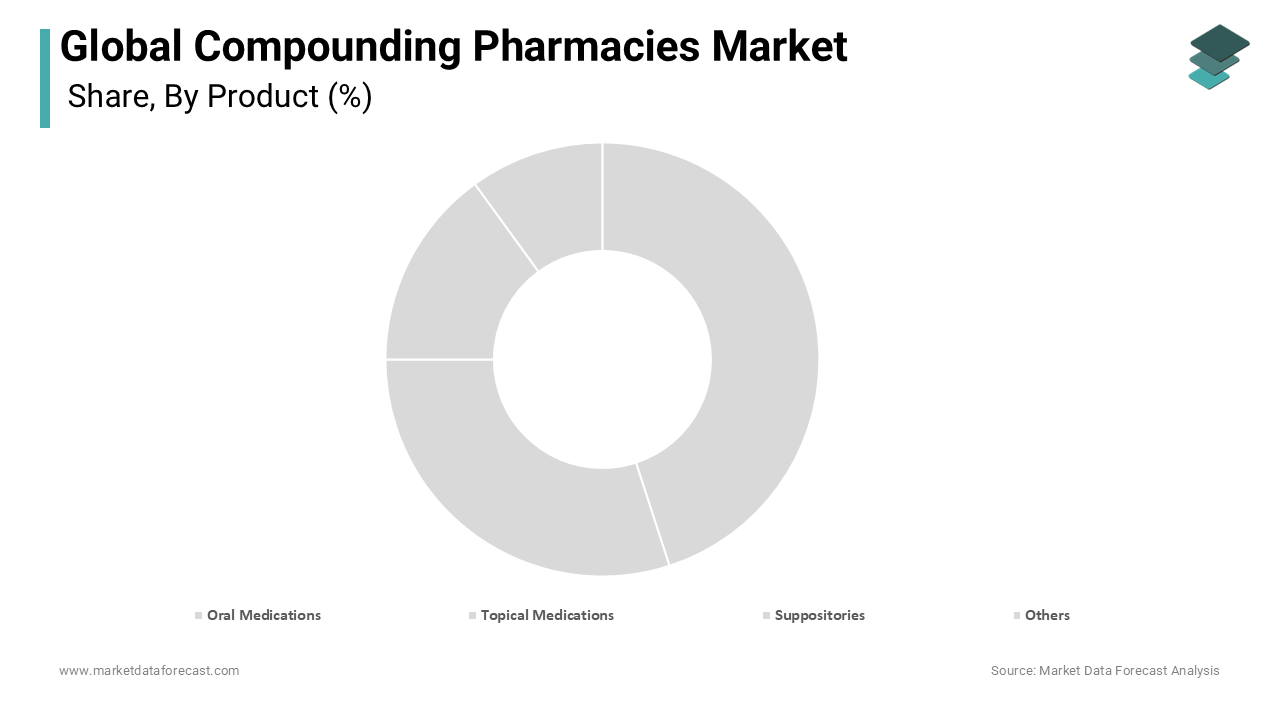
However, the topical medications segment is projected to register the highest CAGR of 9.1% over the forecast period in the global market owing to the rising demand for localized pain relief and dermatological treatments that minimize systemic side effects. Topical compounds allow direct delivery of active ingredients to the affected area, which enhances efficacy while reducing the risk of adverse reactions associated with oral or intravenous routes. As per the National Psoriasis Foundation, over 7.5 million Americans suffer from psoriasis, many of whom rely on customized topical formulations for symptom management. Additionally, the growing awareness of hormone replacement therapies delivered via creams and gels has significantly boosted this segment. According to the North American Menopause Society, bioidentical hormone creams constitute a substantial portion of topical compounding requests. Advances in transdermal technology have improved absorption rates, making topical compounds more effective than ever before. The convenience of self-administration and the ability to combine multiple active ingredients in a single preparation further drive patient preference. Increasing clinical evidence supporting the efficacy of topical analgesics for conditions like arthritis and neuropathy also contributes to the accelerated growth of this segment.
By Therapeutic Area Insights
The pain medications segment accounted for the leading position in the compounding pharmacies market by therapeutic area due to the high prevalence of chronic pain conditions and the limitations of commercially available analgesics. Chronic pain affects approximately 50 million adults in the United States according to the Centers for Disease Control and Prevention, creating a substantial demand for personalized pain management solutions. Compounded pain medications allow clinicians to tailor formulations by combining multiple analgesics, anti-inflammatories, and muscle relaxants into a single dosage form, which enhances patient compliance and therapeutic effectiveness. As per the American Academy of Pain Medicine, nearly 20% of patients with chronic pain require customized formulations because standard doses are either ineffective or cause intolerable side effects. The opioid crisis has further accelerated the shift toward nonopioid compounded alternatives, such as topical ketamine, lidocaine, and gabapentin combinations, which provide effective relief without the risk of addiction. Regulatory bodies have increasingly supported the development of these alternatives, prompting wider adoption among healthcare providers. Additionally, the aging population, which is disproportionately affected by conditions like osteoarthritis and neuropathic pain, continues to drive demand for personalized pain solutions. The ability to adjust strengths and exclude inactive ingredients that cause allergic reactions makes compounded pain medications an essential option for complex cases.
However, the hormone replacement therapies segment is estimated to record a CAGR of 9.5% over the forecast period owing to the increasing acceptance of bioidentical hormones as a safer and more effective alternative to synthetic hormone therapies. According to the Endocrine Society, over 1 million women in North America currently use compounded bioidentical hormone replacement therapy to manage menopausal symptoms. Growing awareness about the individualized nature of hormone needs has led more patients to seek customized formulations that match their specific physiological requirements. Compounded HRT allows for precise dosing of estrogen, progesterone, and testosterone, which cannot be achieved with mass-produced products. As per the National Institutes of Health, personalized hormone therapy improves symptom relief and reduces the risk of adverse events compared to standard doses. Furthermore, the expanding indication of hormone therapy for men experiencing andropause has opened new avenues for market growth. Clinical studies published in peer-reviewed journals have demonstrated the efficacy of compounded hormones in improving quality of life, bone density, and cardiovascular health. The supportive stance of functional medicine practitioners and integrative healthcare providers has also contributed to the rapid adoption of compounded HRT. As more clinical data emerges validating the benefits of personalized hormone therapy, this segment is expected to maintain its robust growth trajectory.
REGIONAL ANALYSIS
North America Compounding Pharmacies Market Analysis
North America maintains its position as the dominant region in the global compounding pharmacies market by holding 38.7% of the global market share in 2025. The United States serves as the primary contributor to this dominance due to its well-established regulatory framework and high healthcare expenditure. The Food and Drug Administration has implemented stringent guidelines through the Drug Quality and Security Act, which has enhanced the credibility and safety of compounding practices. As per the International Academy of Compounding Pharmacists, there are over 7,500 compounding pharmacies operating in the United States, serving millions of patients annually. The high prevalence of chronic diseases such as diabetes, cardiovascular disorders, and cancer has created a sustained demand for personalized medications. Additionally, the presence of major market players and advanced healthcare infrastructure supports the growth of this sector. Canada also contributes significantly to the regional market with increasing adoption of compounding services in both hospital and retail settings. The growing awareness among patients and healthcare providers about the benefits of customized therapies continues to drive market expansion. Reimbursement policies in certain states and private insurance coverage for compounded medications further facilitate accessibility. The region benefits from strong research and development activities focused on innovative compounding techniques and formulations.
Europe Compounding Pharmacies Market Analysis
Europe holds the second largest share of the compounding pharmacies market, characterized by a mature healthcare system and increasing focus on personalized medicine. Germany, France, and the United Kingdom are the key contributors to regional growth due to their robust pharmaceutical industries and supportive regulatory environments. The European Medicines Agency has established clear guidelines for compounding practices, ensuring quality and safety standards across member states. According to the European Federation of Pharmaceutical Industries and Associations, the demand for personalized medications has grown by 12% annually in recent years. The aging population in Europe, which suffers from multiple chronic conditions, requires tailored therapeutic solutions that commercial products often fail to provide. Hospital-based compounding is particularly prevalent in this region, with many healthcare institutions maintaining in-house compounding facilities to meet specific patient needs. The rise of precision medicine initiatives funded by government agencies has further stimulated interest in customized drug formulations. Additionally, the increasing prevalence of rare diseases for which no commercial treatments exist has created a niche but significant demand for compounded medications. Patient advocacy groups have been instrumental in raising awareness about the availability and benefits of compounding services. The integration of digital health technologies with compounding practices is also gaining traction, enhancing efficiency and accuracy.
Asia Pacific Compounding Pharmacies Market Analysis
Asia Pacific is anticipated to showcase rapid market growth over the next few years, propelled by expanding healthcare access, rising disposable incomes, and government-backed manufacturing upgrades. China, India, and Japan are at the forefront of this growth due to their large populations and increasing burden of chronic diseases. As per the World Health Organization, the prevalence of diabetes in Asia Pacific has doubled over the past two decades, creating a substantial need for personalized medication management. Government initiatives in countries like India and China to strengthen pharmaceutical manufacturing and quality control have facilitated the expansion of compounding services. The rising middle class is increasingly willing to pay for premium healthcare services, including customized medications. In Japan, the aging demographic has led to greater demand for geriatric-friendly formulations that are easier to administer and absorb. Regulatory reforms in several Asia Pacific countries are gradually recognizing the importance of compounding and establishing frameworks to govern its practice. The presence of local pharmaceutical companies investing in compounding technologies is also contributing to market growth. Medical tourism in countries like Thailand and Singapore has introduced international patients to high-quality compounding services, further boosting demand. Awareness campaigns by healthcare providers are educating patients about the benefits of personalized therapies, leading to increased adoption.
Latin America Compounding Pharmacies Market Analysis
Latin America is poised for moderate yet stable growth over the next few years, underpinned by regional health modernization programs and rising chronic illness awareness. Latin America shows moderate but steady growth in the compounding pharmacies market, supported by expanding healthcare access and rising chronic disease prevalence. Brazil and Mexico are the primary markets in this region due to their large populations and developing pharmaceutical sectors. According to the Pan American Health Organization, noncommunicable diseases account for over 70% of deaths in Latin America, driving the need for effective personalized treatments. Economic improvements in certain countries have enabled greater investment in healthcare infrastructure, including compounding facilities. Local regulations are evolving to accommodate compounding practices, although standardization remains a challenge in some areas. The growing number of private healthcare providers offering specialized services has increased the availability of compounded medications. Patient awareness about personalized medicine is gradually increasing, particularly in urban centers where access to advanced healthcare is better. Collaborations between international compounding organizations and local pharmacies are helping to transfer knowledge and best practices. The cost-effectiveness of compounded medications compared to imported branded drugs is another factor driving adoption in price-sensitive markets. However, limited reimbursement coverage and regulatory inconsistencies pose challenges to broader market penetration. Efforts to harmonize regulations across the region could significantly accelerate growth in the coming years.
Middle East and Africa Compounding Pharmacies Market Analysis
Middle East and Africa is likely to maintain robust expansion in the booster compressor market over the next few years, driven by accelerated investments in healthcare transformation and medical tourism. The Middle East and Africa region represents a nascent but promising market for compounding pharmacies, with growth driven by healthcare modernization initiatives. Saudi Arabia, the United Arab Emirates, and South Africa are leading this expansion due to their investments in advanced medical facilities and pharmaceutical services. The Gulf Cooperation Council countries have been actively promoting personalized medicine as part of their healthcare transformation strategies. As per the World Bank, healthcare expenditure in the Middle East has increased by 8% annually, reflecting greater commitment to improving patient outcomes. The rising prevalence of lifestyle-related diseases such as obesity and diabetes has created demand for tailored therapeutic solutions. In Africa, South Africa stands out with a more developed pharmaceutical sector that includes compounding capabilities. However, the rest of the continent faces challenges related to infrastructure and regulatory frameworks. International partnerships and technology transfers are helping to build local capacity for compounding services. The growing medical tourism industry in countries like Dubai and Abu Dhabi has introduced high standards of personalized care, including compounding. Government efforts to reduce dependency on imported medications by supporting local pharmaceutical production are also beneficial. As awareness grows and regulatory environments improve, the region is expected to witness accelerated adoption of compounding services in the near future.
COMPETITIVE LANDSCAPE
The competition within the compounding pharmacies market is characterized by a fragmented landscape comprising numerous independent operators alongside a few large consolidated entities. Independent pharmacies often compete on the basis of personalized customer service and local community relationships while larger organizations leverage economies of scale and advanced technological infrastructure. The entry barrier remains moderately high due to stringent regulatory requirements and the need for specialized equipment and trained personnel. Competitive dynamics are increasingly influenced by the ability to offer rapid turnaround times and consistent quality assurance. Companies differentiate themselves through specialized therapeutic expertise such as bioidentical hormone replacement or pediatric formulations. Price competition is less intense compared to commercial pharmaceuticals because value is derived from customization rather than volume. However the threat of substitution from mass produced generics persists for common conditions. Strategic collaborations with insurance providers and healthcare systems are becoming critical for securing referral networks. Innovation in delivery methods and digital patient engagement tools serves as a key differentiator. The market sees continuous consolidation as larger players acquire smaller pharmacies to expand geographic footprint and service capabilities.
KEY MARKET PLAYERS
Some of the companies that are playing a dominating role in the global compounding pharmacies market include
- Fagron, Inc.
- Elixir Compounding Pharmacy
- Fresenius Kabi AG
- Belle Santé Diagnostic & Therapeutic Institute Pvt. Ltd
- Triangle Compounding Pharmacy
- Vertisis Custom Pharmacy
- Avella Specialty Pharmacy
- B. Braun Melsungen AG
- PharMEDium Healthcare Holdings, Inc.
- US Compounding Inc.
Top Players in the Market
Perrigo Company plc
Perrigo Company plc operates as a significant entity in the global compounding landscape by providing essential active pharmaceutical ingredients and specialized delivery systems. The company focuses on developing innovative solutions that support independent compounding pharmacies in creating customized medications. Perrigo has recently expanded its portfolio through strategic partnerships with technology firms to enhance sterile compounding capabilities. Their commitment to quality assurance and regulatory compliance ensures that healthcare providers receive reliable raw materials. By investing in advanced manufacturing facilities Perrigo strengthens its position as a trusted supplier for complex formulations. The company actively engages in educational initiatives to promote best practices among pharmacists. This approach fosters long term relationships with clients and reinforces their leadership in supporting personalized medicine infrastructure globally.
ImprimisRX
ImprimisRX stands out as a dedicated compounding pharmacy network that emphasizes high quality sterile and nonsterile preparations. The organization has invested heavily in state of the art facilities that meet rigorous United States Pharmacopeia standards. ImprimisRX recently launched digital platforms to streamline prescription processing and improve patient access to customized therapies. Their focus on therapeutic areas such as pain management and hormone replacement therapy drives substantial growth. The company collaborates closely with prescribers to develop tailored treatment protocols that address individual patient needs. By prioritizing transparency and clinical outcomes ImprimisRX builds trust within the medical community. Their expansion into new geographic regions demonstrates a commitment to making personalized medicine more accessible to diverse populations across the nation.
Fagron NV
Fagron NV is a global leader in providing compounded medication solutions and related services to healthcare professionals. The company offers a comprehensive range of high purity active ingredients excipients and ready to use bases. Fagron has strengthened its market position by acquiring regional distributors to expand its reach in emerging markets. Their recent investments in research and development focus on novel drug delivery systems that enhance patient compliance. The company provides extensive technical support and training to pharmacists ensuring consistent quality in compounding practices. Fagron also develops proprietary software solutions that optimize inventory management and workflow efficiency. These technological advancements enable pharmacies to operate more effectively while maintaining strict adherence to safety standards and regulatory requirements worldwide.
Top Strategies Used by the Key Market Participants
Key players in the compounding pharmacies market primarily employ strategies focused on technological integration and strategic acquisitions to enhance operational efficiency and expand service offerings. Companies invest heavily in automation technologies to reduce human error and increase production capacity for sterile compounds. Strategic partnerships with healthcare providers enable better alignment with clinical needs and facilitate direct prescribing channels. Expansion into specialized therapeutic areas such as pediatrics and geriatrics allows firms to capture niche markets with high growth potential. Regulatory compliance remains a central strategy as companies upgrade facilities to meet stringent quality standards set by global health authorities. Additionally key participants focus on educational initiatives to train pharmacists and prescribers on the benefits of personalized medicine. Digital health integration including telepharmacy services helps reach underserved populations and improves patient engagement. These combined efforts ensure sustainable growth and competitive advantage in an evolving healthcare landscape.
RECENT MARKET DEVELOPMENTS
- The FDA authorized Nephron Pharmaceuticals Corporation's new production line in April 2020. This development increased revenue tremendously and allowed the company to meet the growing demand for compounded medications.
- Triangle Compounding Pharmacy launched compounded hand sanitizer in December 2020 to combat the COVID-19 outbreak. Triangle Compounding Pharmacy is the nation's first pharmacy to sell pharmaceutical-grade hand sanitizer.
MARKET SEGMENTATION
This research report on the global compounding pharmacies market has been segmented and sub-segmented based on product, therapeutic area, application, and region.
By Product
- Oral Medications
- Topical Medications
- Suppositories
- Others
By Therapeutic Area
- Pain Medications
- Hormone Replacement Therapies (HRT)
- Dermatological Applications
- Others
By Application
- Pediatric
- Adult
- Geriatric
- Veterinary
By Region
- North America
- Asia Pacific
- Europe
- Latin America
- The Middle East and Africa