- Product Description Description
- Table of Contents TOC
- List of Table & Figure LOT
- Get Free Sample PDF Sample PDF
Market Size, 2025
$65.7 BnMarket Estimate, 2026
$78.2 BnMarket Forecast, 2034
$314.5 BnCAGR, 2026–2034
19%Executive Summary: Global Connected Car Market Size & Trends
- Market Scope: Global connected car market analysis covering embedded and integrated technologies, infotainment, driver assistance, OEM and aftermarket channels, V2X communication, and regional dynamics.
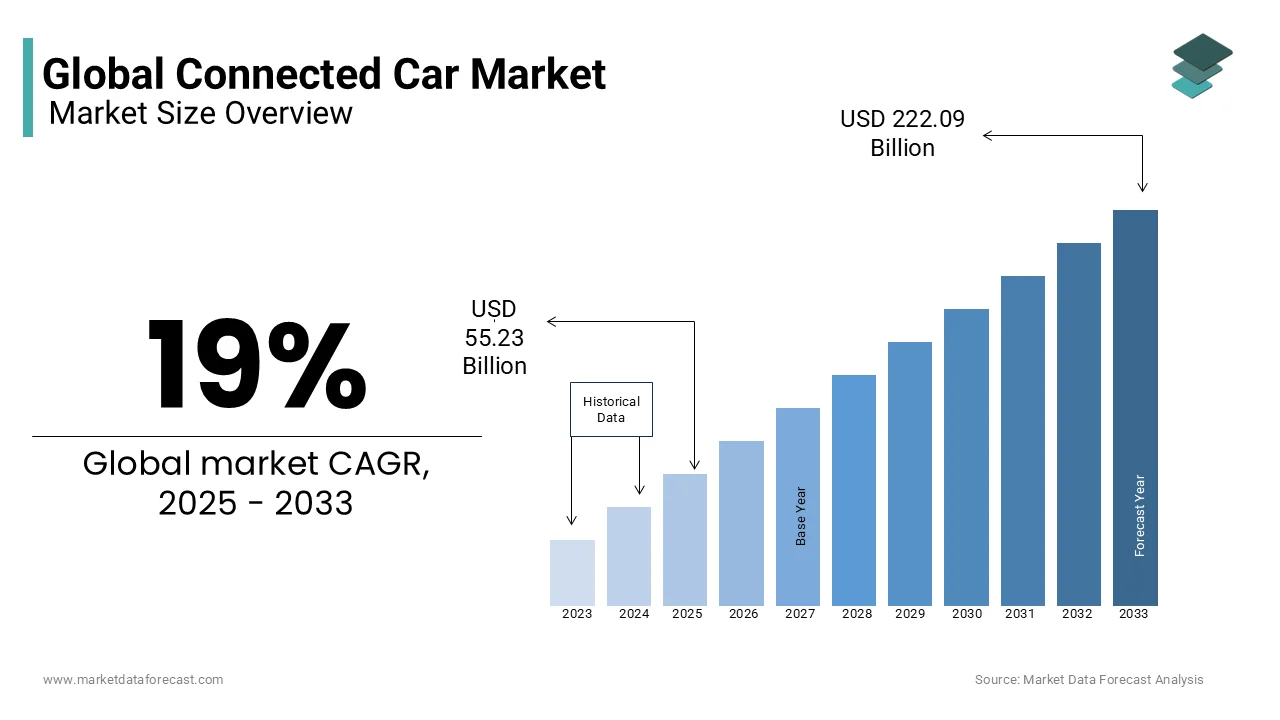
- Market Valuation: Valued at USD 65.72 billion (2026) and projected to reach USD 314.50 billion by 2034, registering a robust CAGR of 19% (2026–2034).
- Primary Growth Drivers: Government safety mandates (such as EU eCall regulations), surging consumer demand for in-car smartphone integration (>70% preference), and rapid 5G infrastructure expansion enabling real-time V2X communication.
Key Connected Car Market Segment Metrics (2026–2034)
| Category | Leading Segment (2025/2026 Position) | Fastest-Growing Segment |
|---|---|---|
| By Technology | Embedded technology (dominant due to direct factory architecture integration) | Integrated technology (projected CAGR of 15.4%) |
| By Application | Infotainment system (dominated via high consumer demand for digital experiences) | Driver assistance (fastest-growing CAGR of 15.5%) |
| By Sales Channel | OEM channel (led market share via factory-installed components) | Aftermarket segment (projected CAGR of 13.3%) |
| By Communication | Vehicle-to-Infrastructure (V2I) (accounted for major smart city share) | Vehicle-to-Vehicle (V2V) (estimated CAGR of 17.4%) |
Major Market Players & Competitive Landscape
Market Structure: Highly competitive global automotive technology landscape driven by software-defined vehicles, telematics optimization, 5G networks, and rigorous cybersecurity frameworks.
Key Companies: Harman International, Continental AG, AT&T, Robert Bosch GmbH, Daimler AG, Audi, TomTom, General Motors, Ford, Hyundai, Volvo, and Nissan.
Global Connected Car Market Size
The global connected car market size was valued at USD 65.72 billion in 2026 and is anticipated to reach USD 78.21 billion in 2026 to reach USD 314.50 billion by 2034, growing at a CAGR of 19% during the forecast period from 2026 to 2034.
Introduction To The Connected Car Market
The connected car market is a transformative shift in the automotive industry, where vehicles are equipped with internet access and wireless local area networks. This connectivity allows cars to share data with other devices, both inside and outside the vehicle, creating an ecosystem of enhanced safety, efficiency, and entertainment. The integration of cellular modules enables real-time communication with cloud services, infrastructure, and other vehicles. According to the European Commission, 75% of new vehicles sold worldwide are expected to have built-in connectivity in 2025, reflecting rapid adoption rates. According to the National Highway Traffic Safety Administration, vehicle-to-vehicle communication applications could eventually prevent or reduce the severity of up to 80% of non-alcohol-related crashes. This potential for accident reduction drives regulatory support and consumer interest globally. The proliferation of fifth-generation networks facilitates low-latency data transmission, essential for advanced driver assistance systems. As per the International Telecommunication Union, the number of mobile broadband subscriptions has surpassed 6 billion worldwide, providing the necessary infrastructure backbone. Consumers increasingly demand seamless integration of their digital lives with their driving experience. Features such as remote diagnostics, over-the-air updates, and predictive maintenance are becoming standard expectations. The convergence of telecommunications and automotive engineering creates new business models centered on data monetization and service subscriptions. This technological evolution redefines mobility from mere transportation to an intelligent, interactive experience.
MARKET DRIVERS
Stringent Government Safety Regulations and Mandates
Government mandates requiring advanced safety features is a major factor driving the growth of the global connected car market by compelling manufacturers to integrate connectivity solutions. Regulatory bodies worldwide recognize that connected technologies significantly reduce accidents and save lives. The European Union mandated the installation of eCall systems in all new passenger cars and light commercial vehicles starting March 2018. As per the European Commission, this system automatically contacts emergency services in the event of a serious accident, reducing response times by up to 50% in rural areas. Similarly, the United States National Highway Traffic Safety Administration proposed rules requiring vehicle-to-vehicle communication technology in new light vehicles. These regulations force automakers to embed cellular modems and dedicated short-range communication hardware into their designs. Compliance with these standards ensures that connectivity becomes a baseline feature rather than an optional extra. The push for zero vision goals in countries like Sweden and the Netherlands and this further accelerates adoption. Data from the World Health Organization indicates that road traffic injuries are a leading cause of death globally, prompting urgent policy action. Governments use connectivity data to monitor traffic patterns and improve infrastructure planning. The legal requirement to meet specific safety benchmarks creates a guaranteed demand for connected components. Automakers must invest in robust telematics platforms to avoid penalties and maintain market access. This regulatory pressure ensures consistent growth in the penetration of connected vehicles across major markets.
Rising Consumer Demand for Enhanced In Vehicle Experience
The growing expectation for seamless digital experiences within the vehicle cabin drives significant demand for connected car technologies, which is further fuelling the expansion of the connected car market. Modern consumers view their cars as extensions of their smartphones and homes, expecting similar levels of connectivity and convenience. According to J D Power studies, over 70% of drivers consider smartphone integration a critical factor when purchasing a new vehicle. Features such as real-time navigation with live traffic updates, streaming music, and voice-activated assistants enhance daily commutes. The ability to remotely start vehicles, check fuel levels, or locate parked cars via mobile applications adds substantial value. Younger demographics, particularly millennials and Generation Z, prioritize connectivity over traditional performance metrics. As per a survey by Cox Automotive, over 65% of car buyers consider smartphone integration as a top priority when purchasing a new vehicle. Entertainment options, including video streaming and gaming, are becoming relevant as autonomous driving features evolve. Connectivity enables personalized settings that adjust seating, climate, and media preferences automatically upon entry. Over-the-air software updates allow manufacturers to add new features post-purchase, keeping the vehicle current. This continuous improvement model increases customer loyalty and retention. The desire for instant information and entertainment transforms the car interior into a productive or relaxing space. Automakers respond by partnering with tech giants to develop intuitive user interfaces. This consumer-led demand pushes innovation in infotainment systems and cloud integration.
MARKET RESTRAINTS
High Costs of Implementation and Infrastructure Development
The substantial financial burden associated with implementing connected technologies and developing supporting infrastructure is a major restraint on market growth. Integrating advanced telematics units, sensors, and communication modules increases the bill of materials for each vehicle. According to Deloitte, electronics are responsible for 40% of a new car's total cost. Manufacturers face challenges in balancing these added expenses with competitive pricing strategies. Small and mid-sized automakers struggle to absorb these costs without compromising profit margins. Additionally, the deployment of fifth-generation network infrastructure requires massive capital investment from telecommunications providers. Rural areas often lack adequate coverage, limiting the functionality of connected services in those regions. As per the International Telecommunication Union, approximately 37% of the global population remains offline, highlighting connectivity gaps. Maintaining secure and reliable cloud servers for data processing adds ongoing operational expenses. Cybersecurity measures necessitate continuous investment in encryption and threat detection systems. Consumers may resist paying premium prices for connected features if perceived value does not justify the cost. Subscription models for services can lead to churn if users find them unnecessary after the trial period. The complexity of integrating legacy systems with new technologies further drives up development costs. These financial barriers slow down widespread adoption, particularly in price-sensitive emerging markets.
Data Privacy Concerns and Cybersecurity Threats
Growing anxieties regarding data privacy and vulnerability to cyberattacks significantly restrain consumer confidence and market expansion. Connected cars generate vast amounts of personal data, including location history, driving habits, and biometric information. According to a survey by Upstream Security, the automotive industry experienced a 99% increase in cyberattacks between 2018 and 2022. High-profile breaches erode trust and make consumers hesitant to adopt fully connected vehicles. Regulatory frameworks, such as the General Data Protection Regulation in Europe, impose strict requirements on data handling and consent. Non-compliance can result in hefty fines and reputational damage for manufacturers. Users are increasingly aware of how their data is collected, stored, and shared with third parties. Lack of transparency in data usage policies leads to resistance against mandatory connectivity features. Hackers can potentially take control of critical vehicle functions, such as braking and steering, posing severe safety risks. As per the Federal Bureau of Investigation, vehicle hacking incidents are rising due to increased connectivity points. Automakers must invest heavily in robust cybersecurity architectures, which increase development timelines. Insurance companies are beginning to adjust premiums based on cybersecurity ratings, adding another layer of complexity. The fear of surveillance and unauthorized access remains a psychological barrier for many buyers. Addressing these concerns requires industry-wide standards and proactive communication, which are still evolving.
MARKET OPPORTUNITIES
Integration of Artificial Intelligence and Machine Learning
The incorporation of artificial intelligence and machine learning into connected car platforms presents a massive opportunity for the global connected car market. AI algorithms analyze real-time data from sensors and external sources to optimize performance and safety. According to McKinsey and Company, AI-driven predictive maintenance can reduce vehicle downtime by up to 30% and lower repair costs. Connected cars learn driver behaviors to personalize settings and suggest routes based on historical patterns. Voice recognition systems powered by natural language processing enable safer, hands-free interaction. Machine learning models improve battery management in electric vehicles by predicting range more accurately under varying conditions. Autonomous driving features rely heavily on AI to interpret complex traffic scenarios and make split-second decisions. As per the Institute of Electrical and Electronics Engineers, AI integration improves object detection accuracy by over 20% compared to traditional methods. Healthcare monitoring systems can detect driver fatigue or medical emergencies, and alert authorities automatically. Smart city integration allows vehicles to communicate with traffic lights and parking systems to reduce congestion. Insurance companies offer usage-based policies leveraging AI analysis of driving data for fairer pricing. The ability to process large datasets enables continuous improvement of software through over-the-air updates. This technological synergy creates new revenue streams through data analytics services. Manufacturers can offer premium AI-driven features as subscription packages, increasing lifetime customer value.
Expansion of Vehicle to Everything Communication Ecosystems
The development of vehicle-to-everything communication ecosystems offers significant opportunities the global market expansion. V2X technology allows cars to exchange information with other vehicles, infrastructure, pedestrians, and networks. According to the 5G Automotive Association, V2X communication can reduce traffic congestion by up to 40% in urban areas by optimizing flow. Smart traffic lights adjust timing based on real-time vehicle density, reducing idle times and emissions. Connected vehicles can warn drivers of hazards, such as black ice or accidents ahead, before they are visible. This cooperative awareness enhances overall road safety beyond the line of sight. Municipalities are investing in smart infrastructure projects that support V2X interactions. As per the Department of Transportation in the United States, pilot programs have shown a 20% reduction in intersection collisions using V2I technology. Logistics companies utilize V2X for fleet management, improving delivery efficiency and route optimization. Public transportation systems integrate with private vehicles to provide seamless, multimodal journey planning. Parking solutions guide drivers to available spots, reducing search time and fuel consumption. Emergency vehicles can request priority passage through green waves created by connected infrastructure. The expansion of 5G networks provides the low latency required for critical V2X applications. Standardization efforts by organizations like the European Telecommunications Standards Institute facilitate interoperability. This interconnected environment creates a foundation for fully autonomous mobility services.
Standardization of Communication Protocols and Technologies
The lack of uniform global standards for communication protocols is a significant challenge to the expansion of the global connected car market. Different regions and manufacturers adopt varying technologies, such as dedicated short-range communications or cellular V2X, leading to fragmentation. According to the Society of Automotive Engineers, incompatible systems prevent vehicles from different brands or regions from communicating effectively. This interoperability issue limits the effectiveness of safety applications that rely on universal data exchange. Automakers face difficulties in designing hardware that supports multiple standards, increasing complexity and cost. Regulators struggle to mandate specific technologies without stifling innovation or favoring certain industry players. As per the European Commission, harmonizing standards across member states is a lengthy process involving multiple stakeholders. The transition from fourth-generation to fifth-generation networks introduces further compatibility challenges. Legacy vehicles without updated software cannot participate in newer V2X ecosystems, creating mixed traffic environments. Software updates must be carefully managed to avoid disrupting existing connections. Global supply chains are affected by differing regional requirements for spectrum allocation and encryption. The absence of a single dominant standard delays mass adoption of advanced cooperative features. Industry consortia work towards consensus, but progress is slow due to competing commercial interests. This fragmentation hinders the realization of fully integrated smart transportation networks.
Reliability and Latency Issues in Network Connectivity
Ensuring consistent reliability and low latency in network connectivity remains another critical challenge for the expansion of the connected car market worldwide. Any delay in data transmission can have catastrophic consequences in high-speed driving scenarios. According to the 5G Automotive Association, latency must be below 10 milliseconds for effective collision avoidance systems. However, real-world network conditions often fail to meet this stringent requirement, especially in congested urban areas or remote locations. Signal interference from buildings, weather conditions, or network overload can disrupt communication links. As per OpenSignal reports, average 5G speeds vary significantly across different cities and countries, affecting performance consistency. Dropouts in connectivity can disable features like real-time traffic updates or remote diagnostics, causing user frustration. Redundancy systems add weight and cost to vehicles without guaranteeing absolute reliability. The dependence on third-party telecommunications providers means automakers have limited control over service quality. Network slicing technology promises dedicated bandwidth but is not yet widely deployed. Testing and validating connectivity performance under diverse environmental conditions is resource-intensive. Consumers expect uninterrupted service, similar to their home broadband experiences. Failure to deliver consistent performance undermines trust in connected technologies. Addressing these technical limitations requires ongoing investment in network infrastructure and edge computing capabilities.
REPORT COVERAGE
| REPORT METRIC | DETAILS |
| Market Size Available | 2025 to 2034 |
| Base Year | 2025 |
| Forecast Period | 2026 to 2034 |
| CAGR | 19% |
| Segments Covered | By Application, Technology, Network, Sales Channel, Communication, and Region |
|
Various Analyses Covered | Global, Regional, and Country Level Analysis, Segment-Level Analysis, DROC, PESTLE Analysis, Porter’s Five Forces Analysis, Competitive Landscape, Analyst Overview of Investment Opportunities |
| Regions Covered | North America, Europe, APAC, Latin America, Middle East & Africa |
|
Market Leaders Profiled | Harman International (US), Continental AG (Germany), AT&T (US), Robert Bosch GmbH (Germany), Daimler AG (Germany), Audi (Germany), TomTom (Netherlands), General Motors (US), Ford (US), Hyundai (South Korea), Volvo (Sweden), Nissan (Japan), and Others. |
SEGMENTAL ANALYSIS
By Technology Insights
The embedded technology segment held the dominant share in the connected car market in 2025 with the highest share of the global market as it integrates connectivity hardware directly into the vehicle architecture during manufacturing. This approach ensures seamless performance, reliability, and aesthetic integration without relying on external devices. The primary factor driving the dominance of embedded technology is its superior reliability and seamless integration with vehicle systems. Unlike tethered solutions that depend on smartphone batteries and data plans, embedded modules operate independently, ensuring constant connectivity. According to the Society of Automotive Engineers, embedded telematics units are designed to withstand extreme temperatures and vibrations, ensuring consistent performance over the vehicle lifespan. Manufacturers prefer this approach because it allows for deeper integration with critical safety systems, such as automatic emergency braking and lane-keeping assist. The hardware is optimized for low power consumption, preventing drain on the vehicle battery when parked. As per data from Intel, embedded modems support higher data throughput required for advanced driver assistance systems and high-definition map updates. Consumers value the plug-and-play nature of embedded systems, which do not require pairing or setup every time they enter the car. This convenience enhances user experience and encourages regular use of connected services. Automakers can guarantee service quality since they control both the hardware and software environment. This level of integration is essential for meeting stringent safety regulations that mandate always-on connectivity for emergency calls. The robustness of embedded systems makes them the preferred choice for premium and mass-market vehicles alike.
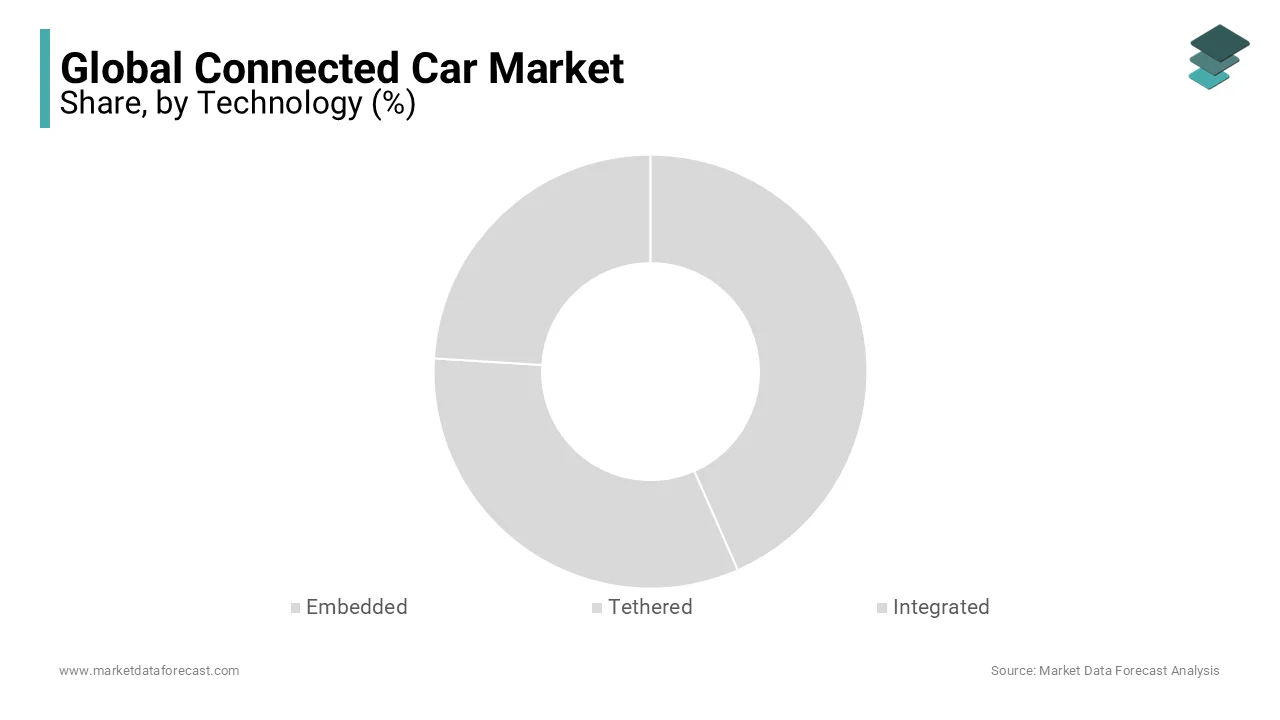
However, the integrated technology segment is projected to register the highest CAGR of 15.4% during the forecast period owing to the convergence of infotainment and telematics into unified domain controllers. The convergence of infotainment and telematics into single integrated units is a major catalyst for the rapid growth of this segment. Modern vehicle architectures are moving towards centralized computing where one powerful processor handles both entertainment and connectivity tasks. According to the European Association of Automotive Suppliers, this integration reduces wiring complexity and weight, leading to improved fuel efficiency and lower production costs. Integrated systems provide a more cohesive user interface, allowing drivers to access navigation, media, and vehicle settings through a single screen. This simplification enhances usability and reduces driver distraction. As per data from Harman International, integrated platforms enable faster data exchange between subsystems, improving response times for voice commands and touch inputs. The use of high-performance chips, originally developed for smartphones, allows for richer graphics and smoother multitasking. Consumers benefit from a smartphone-like experience within the car, including app ecosystems and personalized profiles. Automakers leverage this integration to offer premium digital experiences that differentiate their brands. The cost savings from reduced component count make integrated solutions attractive for mid-range vehicles. This technological shift aligns with the industry trend towards software-defined vehicles. The ability to scale features across different vehicle models using the same hardware platform accelerates adoption.
By Application Insights
The infotainment system segment dominated the market by holding the major share of the global market in 2025. The dominance of infotainment system segment in the global market is primarily driven by consumer demand for entertainment and connectivity features that enhance the driving experience. The overwhelming consumer demand for seamless smartphone integration and in-car entertainment drives the dominance of the infotainment segment. Drivers expect their vehicles to mirror the connectivity of their mobile devices, including access to music streaming, navigation, and messaging. According to a survey by Cox Automotive, over 65% of car buyers consider smartphone integration as a top priority when purchasing a new vehicle. Features such as Apple CarPlay and Android Auto have become standard expectations rather than luxury additions. The ability to stream high-quality audio and video content transforms long commutes into enjoyable experiences. As per data from Nielsen, American adults spend an average of 4 hours listening to audio content daily, much of which occurs in vehicles. Automakers respond by installing larger, high-resolution touchscreens and premium audio systems. The integration of social media and communication apps allows passengers to stay connected without using handheld devices. This demand is particularly strong among millennials and Generation Z who view connectivity as essential. Manufacturers compete on the richness of the infotainment ecosystem, offering exclusive content and partnerships. The revenue potential from subscription-based entertainment services further incentivizes investment in this area. Consumer willingness to pay for premium audio and visual experiences sustains market leadership. The infotainment system serves as the primary touchpoint for user interaction, making it central to brand perception.
On the other end, the driver assistance segment is experiencing the fastest growth and is expected to register a CAGR of 15.5% during the forecast period owing to the safety regulations and the progression towards autonomous driving. Strict regulatory mandates requiring advanced driver assistance systems are the primary engine for the rapid growth of this segment. Governments worldwide are implementing laws that make features such as automatic emergency braking, lane departure warning, and blind-spot monitoring mandatory. According to the European Commission, all new cars registered in the European Union must be equipped with intelligent speed assistance and other safety systems starting from 2022. Similar regulations are being adopted in North America and Asia-Pacific regions. As per data from the National Highway Traffic Safety Administration, these technologies have the potential to prevent thousands of fatalities annually. Compliance with these standards forces automakers to integrate sophisticated sensors, cameras, and radar systems into their vehicles. The need for real-time data processing to support these features drives demand for high-performance computing platforms. Insurance companies offer discounts for vehicles equipped with verified safety systems, encouraging consumer adoption. The regulatory push creates a baseline demand that expands the market rapidly. Automakers invest heavily in research and development to meet these requirements efficiently. The standardization of safety features across all vehicle segments accelerates penetration rates. This legal framework ensures sustained growth regardless of economic fluctuations. The focus on saving lives provides a strong moral and commercial imperative for expansion.
By Sales Channel Insights
The OEM channel segment led the market with the major share of the global market in 2025 as connectivity is increasingly integrated into vehicles during the production process rather than added later. Factory integration of connected technologies ensures optimal performance, compatibility, and warranty coverage, which drives the dominance of the Original Equipment Manufacturer channel. When connectivity hardware is installed on the assembly line, it is thoroughly tested and calibrated to work seamlessly with other vehicle systems. According to the Alliance for Automotive Innovation, factory-installed systems have significantly lower failure rates compared to aftermarket additions. Consumers prefer this approach because it preserves the vehicle warranty and avoids potential electrical issues. Automakers can optimize the placement of antennas and modules for better signal reception and aesthetics. As per data from JD Power, customers report higher satisfaction with factory-installed infotainment and telematics systems due to ease of use. The integration allows for deeper access to vehicle data, enabling more accurate diagnostics and maintenance alerts. Dealerships promote connected features as part of the sales pitch, highlighting their convenience and safety benefits. Financing options often include the cost of connectivity packages, making them more accessible. The trust associated with brand-new vehicles extends to their digital features. Manufacturers use proprietary software to create unique user experiences that cannot be replicated by third parties. This exclusivity strengthens brand loyalty and justifies premium pricing. The seamless nature of factory integration makes it the preferred choice for the majority of buyers.
On the other side, the aftermarket segment is anticipated to record a CAGR of 13.3% during the forecast period owing to the rising need to connect older vehicles and the availability of affordable plug-and-play devices. The desire to add connected features to legacy vehicles that lack factory-installed systems is a major driver for the aftermarket segment. Millions of cars on the road today were manufactured before connectivity became standard, creating a large addressable market. According to the Specialty Equipment Market Association, the demand for retrofitting telematics and infotainment systems is rising among owners of older vehicles. Plug-and-play devices, such as On-Board Diagnostic dongles, provide instant connectivity for tracking diagnostics and location. These affordable solutions allow users to enjoy benefits like insurance discounts and fleet management without buying a new car. As per data from Statista, the global population of vehicles older than 10 years continues to grow, sustaining demand for upgrades. Consumers appreciate the ability to extend the life and functionality of their current vehicles. Installation is often simple, requiring no professional help, which lowers the barrier to entry. The variety of available products ranges from basic trackers to advanced multimedia systems. This flexibility appeals to budget-conscious consumers who want modern features at a fraction of the cost. The aftermarket sector responds quickly to new trends, offering innovative solutions faster than OEMs. This agility contributes to its rapid growth trajectory. The democratization of connectivity through aftermarket devices ensures broader market penetration.
By Communication Insights
The vehicle-to-infrastructure communication segment accounted for the major share of the global market in 2025 as it forms the backbone of smart city initiatives and traffic management systems. Smart city initiatives aimed at optimizing traffic flow and reducing congestion are the primary drivers for the dominance of Vehicle to Infrastructure communication. Municipalities invest in smart traffic lights and road sensors that communicate with vehicles to provide real-time information. According to the Intelligent Transportation Society of America, V2I technology can reduce travel time by up to 20% in urban areas by coordinating signal timing. This efficiency leads to lower fuel consumption and reduced emissions, contributing to environmental goals. Governments prioritize V2I deployments as part of broader infrastructure modernization plans. As per data from the Department of Transportation in the United States, pilot programs have demonstrated significant improvements in intersection safety and throughput. The infrastructure side of the equation is often funded by public budgets, ensuring steady deployment. Vehicles receive data about red-light timing, road hazards, and parking availability, enhancing the driving experience. This two-way communication creates a more responsive and efficient transportation network. The visibility of tangible benefits, such as shorter commute times, builds public support. Standardization efforts facilitate interoperability between different city systems and vehicle brands. The foundational role of infrastructure in enabling other connected services cements its market leadership. Continued urbanization drives the need for smarter traffic management solutions. This strategic importance ensures V2I remains the dominant communication type.
However, the Vehicle to Vehicle communication segment is estimated to showcase a CAGR of 17.4% during the forecast period due to the increasing need for cooperative safety and autonomous driving coordination. The implementation of cooperative collision avoidance systems is the primary catalyst for the rapid growth of Vehicle to Vehicle communication. Cars exchange data about their speed, position, and direction to predict and prevent potential collisions. According to the 5G Automotive Association, V2V technology can warn drivers of imminent crashes up to 300 meters away, providing crucial reaction time. This capability is essential for preventing multi-vehicle pileups in heavy traffic or poor visibility. As per data from the University of Michigan, pilot studies showed that V2V could prevent up to 80% of unimpaired crashes. The direct communication between vehicles does not rely on cellular networks, ensuring low latency and high reliability. Automakers are integrating V2V modules into new models to enhance safety ratings. Insurance companies recognize the risk reduction potential and may offer incentives for equipped vehicles. The technology works synergistically with onboard sensors to create a comprehensive safety net. Consumer awareness of these life-saving features drives demand. Regulatory bodies are considering mandates for V2V equipment, similar to seat belts. The proven effectiveness in real-world trials accelerates adoption. The collaborative nature of V2V creates a network effect where more equipped vehicles increase safety for all. This dynamic ensures rapid market expansion.
REGIONAL ANALYSIS
United States Connected Car Market Analysis
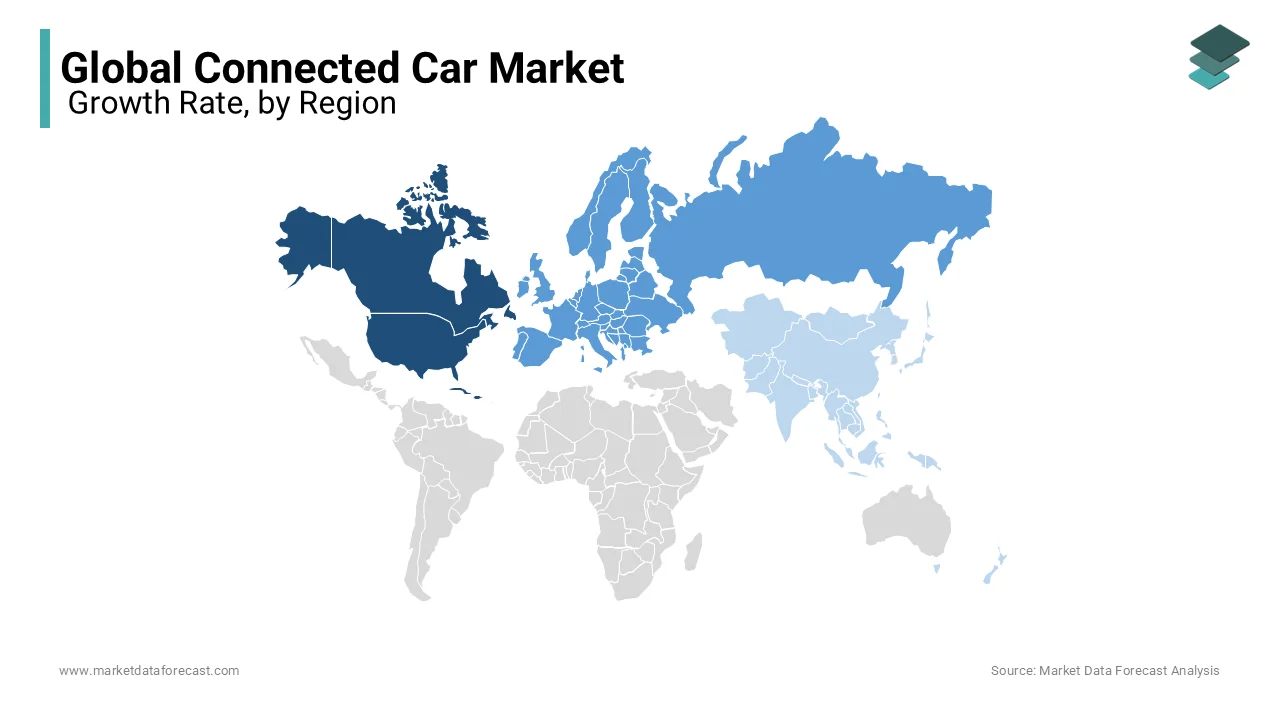
The United States is likely to strengthen its global leadership in technology adoption and smart vehicle implementation over the next few years. The United States leads the region with high consumer demand for advanced infotainment and safety features. According to the Alliance for Automotive Innovation, over 70% of new vehicles sold in the US are equipped with some form of connectivity. The Federal Communications Commission has allocated spectrum for dedicated short-range communications, supporting V2X development. Major technology hubs in Silicon Valley foster innovation in autonomous driving and software-defined vehicles. Consumers in this region are willing to pay premiums for digital features and subscription services. The presence of companies like Tesla, General Motors, and Ford accelerates local development. Regulatory support from the National Highway Traffic Safety Administration encourages safety innovations. High smartphone penetration facilitates seamless integration with vehicle systems. The mature telecommunications infrastructure supports reliable data transmission. Investment in smart city projects in cities like Detroit and San Francisco drives infrastructure development. The competitive landscape pushes manufacturers to continuously upgrade their offerings. Strong intellectual property protections encourage research and development. The region serves as a testing ground for new business models, such as mobility as a service. This combination of factors ensures North America remains a leader in the connected car ecosystem.
Germany Connected Car Market Analysis
Germany, France, and Sweden are likely to experience advanced structural growth and rapid implementation of standardized cooperative transport systems during the next few years. The European Union mandates eCall systems and promotes V2X standards through the C ITS framework. According to the European Automobile Manufacturers Association, connectivity is becoming standard in most new vehicles produced in the region. Countries like Germany, France, and Sweden are leaders in automotive engineering and digital innovation. The General Data Protection Regulation influences how vehicle data is collected and used, ensuring high privacy standards. Consumers in Europe prioritize sustainability and efficiency, driving demand for connected services that optimize fuel usage. Public transportation integration with private vehicles is a key focus area. The region benefits from dense urban centers that are ideal for smart traffic management solutions. Government funding supports research into autonomous driving and electrification. Collaboration between automakers and telecommunications providers is strong.
COMPETITIVE LANDSCAPE
The competition in the global connected car market is intensifying as traditional automakers compete with technology companies and new entrants for dominance in the digital mobility space. Established manufacturers leverage their production scale and brand loyalty while integrating advanced software capabilities to retain relevance. Tech giants enter the fray by offering operating systems and cloud infrastructure that power vehicle connectivity and autonomous features. The battle centers on who controls the user interface and the resulting data generated by connected vehicles. Companies differentiate themselves through unique ecosystems of apps services and seamless integration with smart home devices. Speed of innovation becomes critical as consumers expect frequent updates and new functionalities similar to smartphones. Partnerships between automakers and semiconductor firms are essential to secure supply chains for specialized chips. Regulatory compliance regarding data privacy and safety standards adds complexity to competitive strategies. The shift towards software defined vehicles requires massive investment in talent and research development. Market leaders focus on creating sticky ecosystems that lock users into their services. This dynamic environment fosters rapid technological advancement but also increases operational risks for slower adapters.
KEY MARKET PLAYERS
These are some of the other major players in the global connected car market.
- Connected Car Software
- Harman International (US)
- Continental AG (Germany)
- AT&T (US)
- Tesla Inc
- Volkswagen Group
- General Motors Company
- Robert Bosch GmbH (Germany)
- Daimler AG (Germany)
- Audi (Germany)
- TomTom (Netherlands)
- General Motors (US)
- Ford (US)
- Hyundai (South Korea)
- Volvo (Sweden)
- Nissan (Japan)
Top Players In The Market
- Tesla Inc revolutionizes the connected car market by treating vehicles as software defined platforms that improve continuously through over the air updates. The company integrates advanced cellular connectivity directly into its architecture enabling real time data transmission and remote diagnostics. Tesla recently expanded its Full Self Driving beta program leveraging vast amounts of fleet data to refine autonomous capabilities. The introduction of premium connectivity packages offers users live traffic visualization satellite maps and streaming media services. By controlling both hardware and software Tesla ensures seamless integration of safety features and entertainment options. The company actively develops proprietary chips to enhance processing power for neural networks. These actions strengthen its position as a technology leader rather than just an automaker. Tesla also opens its charging network to other brands increasing ecosystem interoperability. This strategic openness fosters broader adoption of its connectivity standards. Continuous innovation in user interface design keeps customers engaged and loyal.
- General Motors Company strengthens its global position through its Ultifi software platform which enables end to end digital experiences across its vehicle portfolio. The company collaborates with Google to integrate Android Automotive OS into its infotainment systems providing native access to apps and services. GM recently launched OnStar+ a subscription service combining safety security and convenience features with personalized recommendations. The manufacturer invests heavily in cellular vehicle to everything technology to enhance safety and traffic efficiency. By partnering with Microsoft Azure GM ensures robust cloud infrastructure for data analytics and machine learning. The company focuses on monetizing software services throughout the vehicle lifecycle. Recent initiatives include expanding super cruise hands free driving capabilities to more models. These efforts demonstrate a commitment to transforming traditional automotive offerings into dynamic digital services. GM also emphasizes cybersecurity to protect user data and maintain trust.
- Volkswagen Group accelerates its digital transformation by establishing Cariad as its dedicated software subsidiary to develop unified operating systems for all brands. The company aims to create a scalable software stack that supports advanced driver assistance systems and automated driving functions. Volkswagen recently partnered with Horizon Robotics to enhance intelligent driving solutions specifically for the Chinese market. The group integrates Amazon Web Services cloud technologies to process vehicle data and enable over the air updates efficiently. By standardizing electronic architectures Volkswagen reduces complexity and speeds up feature deployment. The company focuses on creating a digital ecosystem that connects cars with homes and smart cities. Recent investments in quantum computing research aim to solve complex optimization problems for mobility services. These strategic moves ensure Volkswagen remains competitive in the rapidly evolving software defined vehicle landscape. The emphasis on internal software competence reduces dependency on external suppliers.
Top Strategies Used by Key Market Participants
Key players in the connected car market primarily focus on developing proprietary software platforms to control the user experience and generate recurring revenue streams. Companies form strategic partnerships with technology giants to integrate advanced operating systems and cloud services into vehicle architectures. Investment in over the air update capabilities allows manufacturers to fix bugs and add features remotely extending vehicle lifespan. Automakers prioritize cybersecurity measures to protect sensitive user data and prevent unauthorized access to critical systems. Expansion of subscription based services for navigation entertainment and autonomous features creates new business models beyond initial sales. Collaboration with telecommunications providers ensures reliable fifth generation connectivity for low latency applications. Manufacturers also invest in artificial intelligence to analyze vehicle data for predictive maintenance and personalized recommendations. Standardization of communication protocols facilitates interoperability between different brands and infrastructure components. These strategies collectively enhance customer retention and drive long term profitability in the digital mobility sector.
MARKET SEGMENTATION
This research report on the global connected car market has been segmented and sub-segmented into the following categories.
By Technology
- Embedded
- Tethered
- Integrated
By Network
- 3G
- 4G
- 5G
- Satellite
By Sales Channel
- OEM
- Aftermath
By Communication
- Vehicle-to-Vehicle (V2V)
- Vehicle-to-Infrastructure (V2I)
By Application
- Driver Assistance
- Mobility Management
- Vehicle Telematics
- Infotainment Systems
By Region
- North America
- Europe
- Asia-Pacific
- Latin America
- Middle East and Africa