- Product Description Description
- Table of Contents TOC
- List of Table & Figure LOT
- Get Free Sample PDF Sample PDF
Market Size, 2025
$1.15 BnMarket Estimate, 2026
$1.21 BnMarket Forecast, 2034
$1.77 BnCAGR, 2026–2034
4.93%Executive Summary: Asia Pacific CT Market
- Market Scope: Comprehensive regional computed tomography (CT) market analysis covering slice types, clinical end-users, country-level breakdowns, core growth drivers, regulatory restraints, and competitive landscapes.
- Market Valuation: Valued at USD 1.15 billion (2025), estimated at USD 1.21 billion (2026), and projected to reach USD 1.77 billion by 2034, registering a CAGR of 4.93% (2026–2034).
- Primary Growth Drivers: Rising prevalence of chronic diseases and cancer (with Asia accounting for nearly 50% of global cancer cases), rapid expansion of healthcare infrastructure and diagnostic accessibility, and escalating demand driven by an aging population across the region.
Key Market Segment Metrics (2026–2034)
| Category | Leading Segment (2025 Position) | Fastest-Growing Segment |
|---|---|---|
| By Slice Type | High-Slice & Mid-Slice CT Systems (widely utilized in tertiary care and oncology staging) | Advanced High-Slice & Dual-Energy CT Systems |
| By End-User | Hospitals and Clinics (held the dominant market share due to high patient volumes and emergency trauma care) | Specialized Diagnostic Imaging Centers |
| By Country / Region | China (dominated the regional market with a 32.8% share in 2025, driven by infrastructure investments) | India (emerging as a high-growth market fueled by medical tourism and expanding healthcare access) |
Major Market Players & Market Structure
Market Structure: Highly competitive regional medical imaging landscape featuring established multinational corporations and agile local manufacturers competing on AI integration, low-dose radiation technologies, cost-effective pricing, and comprehensive service support networks.
Key Companies: GE Healthcare, Siemens Healthineers AG, Canon Medical Systems Corporation, Hitachi Medical Corporation, Neusoft Medical Systems Co. Ltd., Philips Healthcare, Shenzhen Anke High-Tech Co., NeuroLogica Corporation, and Toshiba Medical Systems Corporation.
Asia Pacific CT Market Size
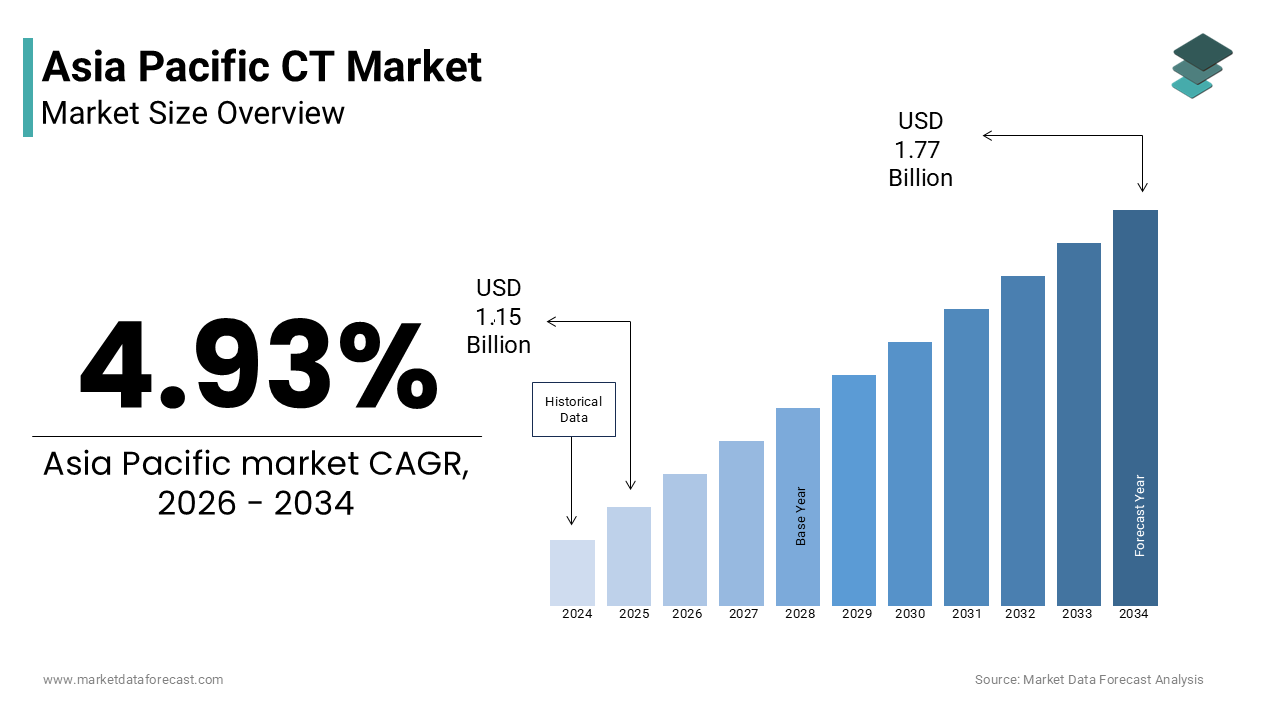
The Asia Pacific CT market size was valued at USD 1.15 billion in 2025. The CT market size in the Asia Pacific was worth USD 1.21 billion in 2026 and is estimated to reach USD 1.77 billion by the end of 2034, with a CAGR of 4.93%.
CT stands for Computed Tomography. It is a diagnostic medical imaging test that uses a combination of X-rays and computer processing to create highly detailed, 3D cross-sectional images of your body’s internal structures. These systems are indispensable for diagnosing a wide array of conditions including trauma, cancer, cardiovascular diseases, and neurological disorders. The clinical necessity for these devices is underscored by the rising burden of non communicable diseases across the region. According to the World Health Organization, non-communicable diseases account for approximately 62 percent (nearly two-thirds) of all deaths in the South East Asia Region, necessitating precise diagnostic capabilities for early intervention. Furthermore, the International Agency for Research on Cancer states that Asia accounts for nearly 50 percent of global cancer cases, driving the demand for high-resolution staging and monitoring tools. The aging population further amplifies this need, as the United Nations Department of Economic and Social Affairs projects that the number of people aged 60 years or older in Asia will reach 1.3 billion by 2050. Governments are increasingly investing in healthcare infrastructure to support preventive care and personalized medicine. Regulatory bodies in countries like Japan and Australia enforce stringent quality standards, ensuring the reliability of diagnostic results. The integration of artificial intelligence and dual energy technologies is transforming radiological workflows, enhancing throughput and accuracy. This market plays a pivotal role in enabling timely diagnosis, monitoring treatment efficacy, and improving patient outcomes across diverse healthcare settings in the Asia Pacific region.
MARKET DRIVERS
Rising Prevalence of Chronic Diseases and Cancer
The escalating prevalence of chronic diseases and cancer is a top factor for the expansion of the Asia Pacific CT market. Accurate and timely diagnosis is critical for effective treatment planning and improved patient survival rates. According to the International Agency for Research on Cancer, the combined Western Pacific and South East Asia regions represent a massive share of the global cancer burden, with respiratory, colorectal, and breast malignancies identified as the most frequent diagnoses. The National Cancer Center highlights that the country faces a high volume of new oncological diagnoses annually, driving an urgent national transition toward integrated screening programs and expanded clinical testing facilities. Traditional imaging methods are often insufficient for detailed staging, whereas CT provides high resolution anatomical details essential for oncology. The ability to perform rapid scans makes CT ideal for emergency situations and trauma care, which are common in densely populated urban centers. The Indian Council of Medical Research projects a significant escalation in the national cancer burden over the coming years, attributed largely to shifting social habits and a growing proportion of elderly citizens. This surge in case volume overwhelms existing diagnostic infrastructure, creating a bottleneck in services. CT offers a scalable solution by allowing rapid assessment of multiple body regions. The integration of advanced reconstruction algorithms enhances image quality while reducing radiation dose, addressing safety concerns. The growing burden of disease makes the accuracy and efficiency of CT technology indispensable for healthcare systems. Consequently, the regional market is experiencing sustained growth.
Expansion of Healthcare Infrastructure and Diagnostic Accessibility
The significant expansion of healthcare infrastructure and improved accessibility to diagnostic services across the region is a major fuel for the growth of the Asia Pacific CT market. Governments and private investors are heavily investing in the establishment of new hospitals, clinics, and diagnostic centers to meet the growing healthcare needs of the population. The Asian Development Bank emphasizes that maintaining economic momentum requires immense annual investments in power, transport, and digital connectivity, alongside separate strategic initiatives to strengthen health systems and social inclusion. In Indonesia, the Ministry of Health has launched initiatives to upgrade primary healthcare facilities with modern diagnostic equipment, including CT scanners. This decentralization of diagnostic services ensures that patients in rural and semi urban areas have access to timely imaging. In Vietnam, the government’s National Health Insurance program has expanded coverage to include more diagnostic tests, increasing affordability and utilization. The proliferation of private diagnostic chains in countries like India and Thailand has further enhanced accessibility, offering standardized and high quality imaging services. The adoption of laboratory information systems and automation technologies improves efficiency and reduces turnaround times, making CT more attractive to healthcare providers. As healthcare spending per capita increases, particularly in emerging economies, the demand for advanced diagnostic tools continues to grow. This infrastructural development supports the widespread adoption of CT technologies, facilitating early detection and better management of diseases across the region.
MARKET RESTRAINTS
High Cost of Advanced CT Systems and Maintenance
The high cost of advanced CT systems and their maintenance is a major barrier to the growth of the Asia Pacific CT market. This issue is especially severe in low- and middle-income countries within the APAC region. Acquiring advanced diagnostic imaging systems requires significant capital outlay, which can be a prohibitive factor for smaller or rural medical centers with limited budgets. The World Bank indicates that per capita spending on health services in several developing nations within East Asia and the Pacific remains constrained, creating challenges for the widespread procurement of expensive medical technologies. In rural areas of India and the Philippines, primary health centers often lack the funds to purchase advanced CT systems, relying instead on basic X ray or ultrasound. Furthermore, the recurring cost of maintenance, software upgrades, and specialized technician training adds to the financial burden. Studies suggest that the ongoing maintenance and staffing of specialized imaging departments represent a major portion of a hospital's recurring expenses, often necessitating long-term service agreements with manufacturers. This economic barrier forces many facilities to refer patients to external centers, delaying diagnosis. The lack of comprehensive reimbursement policies for advanced diagnostic tests in several countries further discourages investment. Price-sensitive markets are experiencing slow adoption of high-end CT systems due to a lack of financial support or subsidies. This barrier restricts overall market expansion, despite the significant clinical benefits of these technologies.
Radiation Safety Concerns and Regulatory Stringency
Persistent concerns regarding radiation exposure and stringent regulatory requirements further impede the expansion of the Asia Pacific CT market. Although technological advancements have reduced radiation doses, the perception of risk remains a barrier for patients and referring physicians. The World Health Organization provides guidelines on the use of medical imaging, emphasizing that while modern procedures are generally safe, special protocols should be used for children and during pregnancy to ensure the lowest possible exposure. In Japan, the Ministry of Health, Labour and Welfare enforces strict guidelines on radiation dose limits, requiring regular audits and compliance reporting. These regulations increase the operational complexity and cost for healthcare providers. In Australia, the Australian Radiation Protection and Nuclear Safety Agency mandates rigorous safety standards, which can delay the installation and commissioning of new units. The lack of standardized protocols across different countries in the region creates confusion for multinational manufacturers. In emerging markets, the shortage of trained radiologists and technicians who can optimize scan parameters to minimize dose exacerbates the issue. The fear of liability and potential regulatory penalties makes some healthcare administrators hesitant to invest in high volume CT services. The full potential of the CT market will remain constrained by regulatory and perceptual barriers. This will continue until public awareness and professional training adequately address these safety concerns.
MARKET OPPORTUNITIES
Integration of Artificial Intelligence and Deep Learning
The integration of artificial intelligence and deep learning into CT workflows boosts potential for growth in the Asia Pacific CT market. AI algorithms can optimize image reconstruction, reduce noise, and assist in automated detection of abnormalities, enhancing diagnostic accuracy and efficiency. Recent studies in the Journal of Digital Imaging indicate that AI-driven reconstruction techniques reduce radiation doses by a higher margin than previously cited while maintaining image quality. In Singapore, the Health Sciences Authority supports the adoption of smart imaging technologies, encouraging hospitals to integrate AI with their CT systems. The National University Hospital in Singapore has implemented AI assisted workflows that prioritize urgent cases and flag potential findings for radiologists. Similarly, in China, technology giants such as Alibaba and Tencent are developing AI powered diagnostic tools that integrate with CT scanners to detect early signs of lung cancer and stroke. The Chinese Ministry of Science and Technology supports these initiatives through national research programs. These innovations offer a pathway to overcome workforce shortages and enhance diagnostic confidence. Manufacturers who incorporate AI capabilities into their CT platforms can differentiate their products and appeal to tech savvy healthcare providers. The growing interest in precision medicine and digital health initiatives across the region supports the adoption of these smart technologies. AI-integrated CT systems enhance operational efficiency and diagnostic precision. These improvements open new avenues for market expansion and better patient care.
Growth of Mobile and Portable CT Solutions
The development and deployment of mobile and portable CT solutions offer a clear path to extend diagnostic services to underserved rural and remote populations in the Asia Pacific CT market. Geographic barriers and limited healthcare infrastructure often prevent individuals in remote areas from accessing centralized imaging facilities. Mobile CT units equipped with compact scanners can travel to remote communities, providing timely diagnostic services for stroke and trauma patients. The United Nations Economic and Social Commission for Asia and the Pacific shows that the region accounts for roughly 60 percent of the world’s population, with a lower and declining proportion living in rural areas. In India, organizations such as the Foundation for Innovation and Technology Transfer have developed mobile diagnostic vans equipped with CT scanners, which are deployed in village health centers. The Indian Council of Medical Research supports such initiatives as part of its strategy to improve healthcare accessibility. In Australia, the Royal Flying Doctor Service utilizes mobile imaging units to provide diagnostic services in outback communities, demonstrating the viability of this model. Portable CT scanners are particularly valuable in emergency settings, allowing for rapid assessment without transporting unstable patients. Governments and non governmental organizations are increasingly funding these programs to improve health equity. By bridging the urban rural divide, mobile CT solutions create a new market segment for manufacturers. This approach not only expands the customer base but also contributes to public health goals by ensuring earlier detection and better outcomes for marginalized populations.
MARKET CHALLENGES
Shortage of Skilled Radiologists and Technicians
A critical shortage of trained radiologists and CT technicians poses a major impediment to the effective utilization of advanced CT systems, which negatively impacts the overall growth of the Asia Pacific CT market. The operation and interpretation of complex CT scans require specialized skills in image acquisition, reconstruction, and diagnosis. Regarding challenges, the World Health Organization identifies a severe health worker deficit in the Asia-Pacific region, failing to meet critical thresholds of professionals per 1,000 population. This scarcity is particularly acute in radiology, where specialized training is required. In China, the Chinese Society of Radiology reports that there is a significant imbalance in the distribution of radiologists, with most concentrated in urban tertiary hospitals, leaving rural areas underserved. Similarly, in Indonesia, the Ministry of Health highlights that many peripheral hospitals lack qualified personnel to operate complex CT instruments, leading to potential errors and inconsistent results. The lack of standardized training programs and continuous professional development opportunities exacerbates the problem. This workforce gap leads to bottlenecks in diagnostic services, as available experts are overwhelmed by patient volumes. The risk of operational errors due to inadequate training undermines confidence in test results, affecting clinical decision making. Healthcare facilities hesitate to invest in advanced equipment if they cannot staff them adequately, thereby restraining market growth. The CT market's full potential will remain constrained. This is due to a human resource challenge that must be addressed through targeted education and training initiatives.
Supply Chain Disruptions and Component Shortages
Supply chain disruptions and shortages of critical components are a significant obstacle to the stability and growth of the Asia Pacific CT market. The manufacturing of CT scanners relies on specialized components such as X ray tubes, detectors, and semiconductor chips, the supply of which is vulnerable to global logistical issues. Additionally, study of global supply chain disruptions highlights increased lead times for medical device manufacturers. In China, the world’s largest producer of medical devices, factory shutdowns due to health regulations or energy shortages can disrupt global supply. Natural disasters, such as typhoons in the Philippines or earthquakes in Japan, can further damage infrastructure and interrupt production. These uncertainties force manufacturers to maintain higher inventory levels, increasing working capital requirements, or pass on costs to consumers, which may dampen demand in price sensitive markets. For small and medium sized enterprises, managing these risks is particularly challenging due to limited resources. Ensuring supply chain resilience through diversification and local sourcing initiatives becomes a critical operational challenge. Stable supply chains and predictable costs are crucial for CT system availability and affordability. Without them, market growth and user access are hindered.
REPORT COVERAGE
| REPORT METRIC | DETAILS |
| Market Size Available | 2025 to 2034 |
| Base Year | 2025 |
| Forecast Period | 2026 to 2034 |
| CAGR | 4.93% |
| Segments Covered | By Low-Slice Type, Mid-Slice Type, High-Slice Type, End-User and Region |
| Various Analyses Covered | Regional & Country Level Analysis, Segment-Level Analysis, DROC, PESTLE Analysis, Porter’s Five Forces Analysis, Competitive Landscape, Analyst Overview on Investment Opportunities |
| Countries Covered | India, China, Japan, South Korea, Australia, New Zealand, Thailand, Malaysia, Vietnam, the Philippines, Indonesia, Singapore, and the Rest of Asia Pacific. |
| Market Leaders Profiled | GE Healthcare, Hitachi Medical Corporation, Hitachi Medical Systems America, Inc., NeuroLogica Corporation, Neusoft Medical Systems Co. Ltd., Philips Healthcare, Shenzhen Anke High-Tech Co., Siemens Healthcare, and Toshiba Medical Systems Corporation. |
REGIONAL ANALYSIS
China CT market Analysis
China dominated the Asia Pacific computed tomography market and accounted for a 32.8% share in 2025. The demand for CT in China is driven by massive healthcare infrastructure investments and a growing burden of chronic diseases. The market position in China shows rapid installation of advanced imaging systems in both tier one cities and expanding rural healthcare networks. According to recent trade and market data, the CT scanner market in China has expanded rapidly, with imports alone totaling approximately 2,800 units in 2023 to meet the demands of its healthcare infrastructure. The total installed base has grown substantially from over 10,000 units in 2016, driven by government initiatives to improve county-level hospitals and support the early diagnosis of cancer and cardiovascular conditions. The government's Healthy China 2030 initiative prioritizes early detection and treatment which directly fuels the demand for high resolution diagnostic imaging technologies. Domestic manufacturers such as United Imaging Healthcare are gaining market share by offering cost effective solutions that meet international quality standards thereby reducing reliance on imported equipment. The aging population in China which is projected to reach 300 million by 2025 further exacerbates the need for frequent diagnostic monitoring . Additionally the expansion of private healthcare facilities and specialized imaging centers contributes to market growth. The adoption of artificial intelligence integrated CT systems is accelerating as hospitals seek to improve diagnostic accuracy and workflow efficiency. Regulatory approvals for new medical devices have been streamlined to encourage innovation and faster market entry. This combination of policy support demographic pressure and technological advancement solidifies China's leadership in the regional CT market.
Japan CT Market Analysis
Japan was the second largest market for computed tomography in the Asia Pacific region by holding a 18.3% share in 2025. This growth of the Japanese market is propelled by a highly developed healthcare system and early adoption of cutting-edge imaging technologies. The Japanese market reveals a replacement cycle driven by the need for energy efficient and low dose radiation CT scanners in its extensive network of hospitals and clinics. According to OECD and 2024 industry data, Japan maintains the highest density of CT scanners per capita globally, with approximately 120 units per million people (specifically 119.81 in 2024), reflecting the critical role of imaging in routine medical care. The super aged society in Japan where individuals aged 65 and above constitute nearly 30 percent of the population drives consistent demand for diagnostic services related to stroke cancer and orthopedic conditions . Major domestic players such as Canon Medical Systems and Fujifilm continue to innovate by developing photon counting CT technology which offers superior image quality and reduced radiation exposure. The universal health insurance coverage in Japan ensures that patients have affordable access to advanced diagnostic procedures sustaining high utilization rates. Furthermore the integration of CT imaging with electronic health records facilitates seamless data sharing and collaborative care. The government's focus on preventive medicine and regular health checkups for elderly citizens further supports market stability. Despite market saturation the demand for premium and specialized CT systems remains robust due to the continuous technological upgrades required by medical institutions.
India CT Market Analysis
India is emerging as a high growth countr in the Asia Pacific computed tomography market due to increasing healthcare accessibility and the rise of medical tourism. Diagnostic centers in India are expanding significantly across urban and semi-urban areas. Private investment and government initiatives are driving this growth. According to the Federation of Indian Chambers of Commerce and Industry (FICCI), the medical tourism industry in India is expected to reach USD 13 billion by 2026, driving the demand for state-of-the-art diagnostic equipment, including CT scanners, to serve international patients. The prevalence of non communicable diseases such as diabetes and heart conditions is rising necessitating advanced imaging for accurate diagnosis and management. The Ayushman Bharat scheme has improved health insurance coverage for millions of citizens enabling greater access to diagnostic services in empaneled hospitals. Data from NITI Aayog indicates the Indian healthcare sector grew at a CAGR of 22 percent during the 2016–2022 period. Moving forward, the diagnostic imaging landscape specifically is projected to expand at a growth rate of approximately 7% to 15% through 2033, driven by rising chronic disease prevalence. Local distributors and service providers are enhancing their networks to support the installation and maintenance of CT systems in remote locations. The affordability of CT scans compared to Western countries attracts patients from neighboring regions further boosting market volume. Increasing awareness about early disease detection among the middle class also contributes to higher utilization rates. This dynamic environment positions India as a critical growth engine for the regional CT market.
South Korea CT Market Analysis
South Korea is moving ahead steadfastly in the Asia Pacific computed tomography market owing to its advanced medical infrastructure and high health screening participation rates. The market status in South Korea is characterized by the widespread availability of high end CT systems in general hospitals and specialized screening centers. According to OECD Health Statistics, South Korea possesses the highest number of hospital beds per capita (12.8 per 1,000 population) among member nations and ranks among the top for medical equipment density, facilitating extensive diagnostic capabilities. The national health insurance program covers comprehensive health screenings which include CT imaging for early detection of cancers and other serious conditions leading to high utilization rates. The prevalence of gastric and liver cancers in South Korea drives the specific demand for high resolution CT scanners capable of detailed abdominal imaging. As per Statistics Korea (KOSTAT) and OECD data, national healthcare expenditure has steadily increased, reaching 9.7% of GDP in 2022. This high level of spending supports the country's advanced infrastructure, which includes a density of 38.6 CT scanners per million population (significantly above the OECD average). Domestic companies such as Samsung Medison are contributing to the market by developing innovative imaging solutions that integrate with digital health platforms. The government's investment in smart hospitals and telemedicine infrastructure further supports the adoption of connected CT systems. The high level of health literacy among the population encourages proactive health management and regular diagnostic checkups. This combination of structural advantages and cultural factors sustains South Korea's strong presence in the regional CT market.
Australia CT Market Analysis
Australia is likely to grow significantly in the Asia Pacific computed tomography market from 2026 to 2034 due to its robust healthcare system and high adoption of premium imaging technologies. Public and private healthcare providers in Australia are heavily investing in advanced CT systems. This trend aims to address the diagnostic needs of an aging population. Data indicates Australia utilizes a high density of diagnostic equipment, with approximately 75 CT scanners per million population (est. ~2,000 units) operating across the country in 2024, facilitating over 27 million Medicare-subsidised diagnostic imaging services annually (2022–23). The Medicare Benefits Schedule provides rebates for CT scans ensuring affordable access for patients while supporting the financial viability of imaging centers. The increasing incidence of chronic diseases such as cancer and cardiovascular disorders drives the demand for precise diagnostic imaging. As per the Department of Health and Aged Care the government has invested significantly in upgrading medical equipment in regional and rural hospitals to reduce disparities in healthcare access . Private radiology groups are increasingly adopting dual energy and spectral CT technologies to offer differentiated services and improve clinical outcomes. The integration of artificial intelligence tools for image analysis is gaining traction as radiologists seek to enhance efficiency and reduce reporting times. The strong regulatory framework enforced by the Therapeutic Goods Administration ensures high safety and performance standards for medical devices. This stable and technologically advanced environment supports steady growth in the Australian CT market.
COMPETITIVE LANDSCAPE
The competitive landscape of the Asia Pacific CT market is characterized by the presence of established multinational corporations and emerging local manufacturers who compete on technology price and service quality. Global leaders leverage their extensive research and development capabilities to introduce advanced systems with superior imaging resolution and lower radiation doses. These companies benefit from strong brand recognition and comprehensive distribution networks that facilitate widespread adoption in tertiary care centers. Local players are gaining traction by offering cost effective alternatives that appeal to budget constrained healthcare facilities in emerging markets. The intensity of competition is heightened by the rapid advancement of artificial intelligence technologies which require continuous investment. Companies differentiate themselves through value added services such as remote monitoring predictive maintenance and clinical consulting. Regulatory compliance remains a critical factor with firms navigating diverse approval processes across different countries. Strategic collaborations with local distributors and healthcare institutions are common tactics to enhance market penetration. The market is also witnessing a shift towards portable and specialized CT units driving competition in niche segments. This dynamic environment encourages constant innovation and adaptation to changing consumer preferences and healthcare policies to sustain growth and profitability in the region.
KEY MARKET PLAYERS
A few of the noteworthy companies operating in the APAC CT market include
- GE Healthcare
- Hitachi Medical Corporation
- Hitachi Medical Systems America, Inc.
- NeuroLogica Corporation
- Neusoft Medical Systems Co. Ltd.
- Philips Healthcare
- Shenzhen Anke High-Tech Co.
- Siemens Healthcare
- Toshiba Medical Systems Corporation
Top Players in the Market
Siemens Healthineers AG
Siemens Healthineers AG is a global leader in medical imaging with a strong presence in the Asia Pacific CT market. The company contributes significantly to the global market by pioneering dual source and photon counting CT technologies that enhance diagnostic precision. Siemens Healthineers recently strengthened its position in the region by launching advanced AI powered workflow solutions in China and Japan. These innovations reduce scan times and improve image quality for complex cases. The company actively collaborates with local hospitals to establish clinical excellence centers. By focusing on digitalization and personalized care Siemens Healthineers addresses the growing demand for efficient diagnostic services. Their commitment to sustainability and innovation ensures they remain at the forefront of technological advancements. This strategic focus on integrated care pathways reinforces their leadership in the Asia Pacific market.
GE HealthCare
GE HealthCare is a major player in the Asia Pacific CT market offering a comprehensive portfolio of computed tomography systems. The company contributes to the global market by delivering scalable solutions that cater to diverse healthcare settings from large hospitals to rural clinics. GE HealthCare recently strengthened its regional presence by introducing the Revolution Apex platform in India and Southeast Asia. This system features intelligent automation and dose reduction technologies tailored for high volume environments. The company invests heavily in local manufacturing and supply chain resilience to ensure consistent product availability. GE HealthCare also partners with government initiatives to expand access to advanced imaging in underserved areas. By prioritizing affordability and performance the company enhances its competitive edge. Their focus on precision health and data driven insights supports better patient outcomes across the Asia Pacific region.
Canon Medical Systems Corporation
Canon Medical Systems Corporation is a key participant in the Asia Pacific CT market known for its Aquilion series of scanners. The company contributes to the global market by advancing low dose imaging techniques and wide area detector technologies. Canon Medical recently strengthened its market position by expanding its service network in Australia and South Korea. The company focuses on providing customized solutions that meet specific clinical needs such as cardiac and neurological imaging. Canon Medical actively engages in research collaborations with academic institutions to validate new applications. By emphasizing user friendly interfaces and robust hardware reliability the company builds trust with radiologists. Their commitment to reducing radiation exposure aligns with regional safety standards. These efforts enhance customer loyalty and drive adoption of their advanced CT systems in the competitive Asia Pacific landscape.
Top Strategies Used by the Key Market Participants
Key players in the Asia Pacific CT market primarily focus on product innovation by integrating artificial intelligence and advanced detectors to enhance image quality and workflow efficiency. Companies strategically expand their local manufacturing capabilities to reduce costs and mitigate supply chain risks. They invest heavily in clinical education and training programs to build expertise among radiologists and technicians. Strategic partnerships with governments and private healthcare providers help secure large scale infrastructure projects. Firms emphasize digital health integration by connecting CT systems with hospital information networks for seamless data sharing. Pricing strategies are adapted to local economic conditions to improve accessibility in emerging markets. Regulatory compliance is prioritized to ensure timely market entry. After sales service and maintenance support are enhanced to retain customers. These multifaceted approaches enable companies to address diverse regional needs while maintaining competitive advantage in a dynamic healthcare environment.
MARKET SEGMENTATION
This research report on the Asia Pacific CT market has been segmented & sub-segmented into the following categories.
By Low-slice Type
- Single Slice
- Dual Slice
By Slice Type
- 6 Slice
- 10 Slice
- 16 Slice
- 32 Slice
By High-slice Type
- 40 Slice
- 64 Slice
- Open Versions
- Cardiac CT
By End-Users
- Hospitals and Clinics
- Imaging Centers
- Others
By Country
- India
- China
- Japan
- South Korea
- Australia
- New Zealand
- Thailand
- Malaysia
- Vietnam
- Philippines
- Indonesia
- Singapore
- Rest of APAC