- Product Description Description
- Table of Contents TOC
- List of Table & Figure LOT
- Get Free Sample PDF Sample PDF
Market Size, 2025
$1.85 BnMarket Estimate, 2026
$1.93 BnMarket Forecast, 2034
$2.67 BnCAGR, 2026–2034
4.15%Europe CT Market Report Summary
The Europe CT market was valued at USD 1.85 billion in 2025 and is anticipated to reach USD 1.93 billion in 2026 from USD 2.67 billion by 2034, growing at a CAGR of 4.15% during the forecast period from 2026 to 2034. The growth of the Europe CT market is driven by the rising prevalence of chronic diseases, increasing demand for advanced diagnostic imaging solutions, and growing aging population across European countries. Expanding healthcare infrastructure, increasing adoption of artificial intelligence-enabled imaging systems, and rising investments in hospital modernization are further accelerating market growth. Moreover, technological advancements in multidetector CT systems, development of low-dose imaging technologies, and increasing utilization of CT imaging in oncology, cardiology, and neurology are supporting the expansion of the Europe CT market.
Key Market Trends
-
Rising adoption of artificial intelligence-integrated CT imaging systems.
-
Increasing demand for low-dose and high-resolution imaging technologies.
-
Growing utilization of spectral and dual-energy CT systems.
-
Rising investments in outpatient diagnostic imaging centers.
-
Increasing adoption of cardiac CT and advanced oncology imaging applications.
Segmental Insights
- Based on low-slice type, the single slice segment dominated the Europe CT market and held the largest share in 2025. The dominance of the segment is attributed to its cost-effectiveness, widespread deployment in resource-constrained healthcare settings, ease of operation, and continued use in routine skeletal imaging and trauma assessments. The availability of refurbished systems and lower maintenance requirements further support segment growth.
- The dual slice segment is projected to witness the fastest CAGR during the forecast period owing to its balance between affordability and enhanced diagnostic capabilities. Increasing replacement of aging single-slice scanners, lower radiation exposure, improved image quality, and growing adoption in small and medium-sized healthcare facilities are driving segment expansion.
- Based on slice type, the 16-slice segment accounted for the leading share of the Europe CT market in 2025. The growth of the segment is driven by its versatility, favorable cost-performance ratio, extensive use in pulmonary, abdominal, and pelvic imaging, and strong adoption across public healthcare systems. Its proven reliability and established clinical utility continue to support segment dominance.
- The 64-slice segment is anticipated to register the fastest CAGR during the forecast period due to increasing demand for advanced cardiac imaging, high-resolution vascular assessments, improved temporal resolution, and growing adoption of non-invasive coronary imaging technologies. The decreasing cost gap between 16-slice and 64-slice systems is further supporting growth.
- Based on high-slice type, the 64-slice segment held the major share of the Europe CT market in 2025. The dominance of the segment is attributed to its broad clinical utility across oncology, cardiology, and neurology applications. Superior image quality, advanced reconstruction capabilities, and increasing use in tertiary care hospitals continue to strengthen segment growth.
- The cardiac CT segment is expected to witness the fastest growth during the forecast period owing to the increasing prevalence of cardiovascular diseases, growing preference for non-invasive diagnostic procedures, rising adoption of coronary CT angiography, and integration of artificial intelligence for plaque analysis and cardiac risk assessment.
- Based on end users, the hospitals and clinics segment dominated the Europe CT market in 2025. The growth of the segment is driven by high patient volumes, extensive emergency care requirements, strong reimbursement support, and the availability of multidisciplinary healthcare services. Hospitals remain the primary purchasers and users of advanced CT technologies across Europe.
- The imaging centers segment is projected to witness the fastest CAGR during the forecast period due to increasing decentralization of healthcare services, shorter patient waiting times, growing private diagnostic networks, favorable reimbursement policies, and rising demand for outpatient imaging services.
Regional Insights
- Germany dominated the Europe CT market in 2025 and accounted for the largest regional share owing to its highly developed healthcare infrastructure, large installed base of CT systems, strong reimbursement framework, and extensive adoption of advanced diagnostic technologies. The country benefits from high healthcare expenditure, strong domestic manufacturing capabilities, and increasing demand for imaging services among its aging population.
- France held a substantial share of the Europe CT market due to its centralized healthcare system, extensive network of public hospitals, strong national cancer screening initiatives, and growing investments in diagnostic imaging infrastructure. The country continues to prioritize equitable access to advanced imaging technologies.
- The United Kingdom continues to maintain a significant position in the European market owing to increasing investments in National Health Service diagnostic capacity, expansion of Community Diagnostic Centres, growing implementation of artificial intelligence-enabled imaging solutions, and rising demand for advanced diagnostic services.
- Italy is witnessing steady growth supported by increasing healthcare modernization efforts, growing prevalence of age-related diseases, rising investments in emergency care infrastructure, and expanding deployment of advanced CT systems across regional healthcare facilities.
- Spain is expected to experience notable growth during the forecast period due to increasing healthcare expenditure, growing medical tourism activities, expanding outpatient imaging networks, and rising adoption of advanced imaging technologies in both public and private healthcare sectors.
Competitive Landscape
The Europe CT market is highly competitive and characterized by the presence of global medical imaging manufacturers, diagnostic technology providers, and specialized healthcare equipment companies competing through technological innovation, artificial intelligence integration, product differentiation, and service excellence. Leading companies are focusing on developing low-dose imaging solutions, expanding spectral CT capabilities, integrating cloud-based analytics platforms, and enhancing workflow automation features. Strategic partnerships with healthcare providers, research institutions, and government organizations are further strengthening market positioning across the European CT imaging ecosystem. Increasing emphasis on precision diagnostics, operational efficiency, and value-based healthcare continues to intensify competition within the market. The key players operating in the Europe CT market include GE Healthcare, Hitachi Medical Corporation, Hitachi Medical Systems America, Inc., NeuroLogica Corporation, Neusoft Medical Systems Co. Ltd., Philips Healthcare, Shenzhen Anke High-Tech Co., Siemens Healthcare, and Toshiba Medical Systems Corporation.
Europe CT Market Size
The Europe CT market size was valued at USD 1.85 billion in 2025 and is anticipated to reach USD 1.93 billion in 2026 from USD 2.67 billion by 2034, growing at a CAGR of 4.15% during the forecast period from 2026 to 2034.
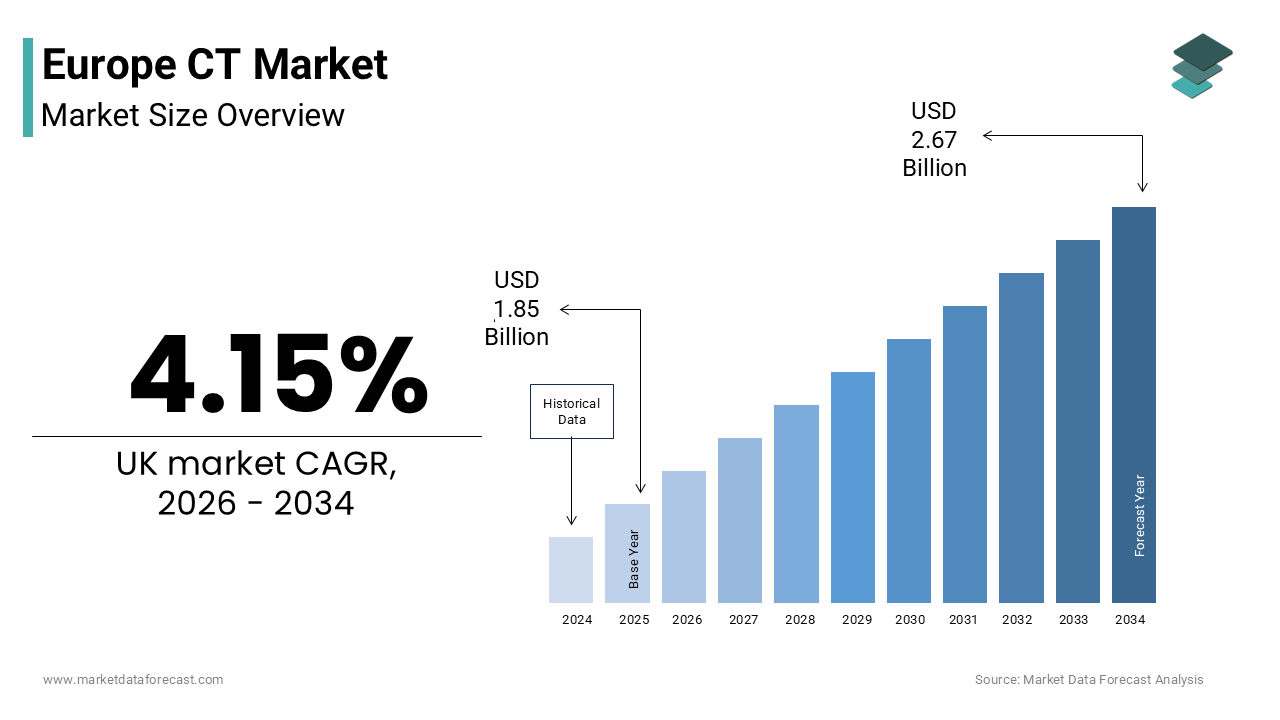
Computed tomography is a cornerstone of modern diagnostic imaging across European healthcare systems, utilizing advanced X ray technology to generate detailed cross sectional images of internal body structures. This sophisticated modality enables clinicians to visualize bones, blood vessels, and soft tissues with exceptional clarity, facilitating accurate diagnosis and treatment planning for diverse medical conditions. The European region maintains a robust infrastructure for medical imaging, supported by well established healthcare frameworks and continuous technological adoption. According to demographic indicators tracked by Eurostat, the European Union's population stood at approximately 449 million residents at the start of 2023, establishing an expansive consumer baseline for clinical diagnostic services. The World Health Organization indicates that non communicable diseases account for nearly 86 percent of all deaths in the European Region, underscoring the critical role of precise diagnostic tools like CT scanners in early disease detection. Germany operates a highly dense medical imaging infrastructure, deploying over 3,000 active CT scanner units nationwide to support heavy diagnostic throughput. Public health records compiled by Eurostat and NHS England confirm that France operates a dedicated base of over 1,300 CT units, while the United Kingdom manages a highly utilized fleet of under 1,000 units across its regional health boards. Eurostat indicate that older adults aged 65 and above comprise 21.6% of the European Union population, driving a predictable increase in age-related clinical imaging requirements. This demographic shift drives sustained utilization of CT technology for managing age related conditions including cardiovascular disorders, oncological assessments, and neurological evaluations.
MARKET DRIVERS
Rising Prevalence of Chronic Diseases Drives Diagnostic Imaging Demand
The escalating burden of chronic diseases across the regional populations drives the growth of the Europe CT scan market. According to the European Heart Network (EHN), cardiovascular diseases remain the leading cause of mortality in Europe, causing over 4 million deaths annually and reinforcing a continuous baseline demand for cardiac imaging applications. This staggering figure necessitates extensive diagnostic imaging for accurate assessment of coronary artery disease, aortic aneurysms, and other vascular abnormalities. Cancer incidence continues its upward trajectory, with the European Commission reporting 2.7 million new cancer cases diagnosed in 2022 across the European Union. CT imaging plays an indispensable role in cancer staging, treatment planning, and monitoring therapeutic response, making it essential for oncology departments throughout the region. The International Diabetes Federation (IDF) Europe Registry demonstrate that diabetes affects more than 66 million adults across the region, requiring extensive diagnostic and surveillance imaging for complex macrovascular and neurological conditions. Public health monographs issued by the European Respiratory Society (ERS) confirm that chronic obstructive pulmonary disease (COPD) impacts an estimated 40 million individuals across Europe, creating a primary catalyst for diagnostic thoracic multi-detector CT imaging scans. Stroke remains a significant health challenge, with 1.1 million new cases occurring annually in Europe as documented by the European Stroke Organisation. Rapid CT imaging is critical for differentiating ischemic from hemorrhagic stroke, enabling timely intervention. These epidemiological trends create sustained pressure on healthcare systems to maintain adequate CT scanning capacity, driving continuous investment in new equipment and replacement of aging units to meet diagnostic workload requirements across hospitals and specialized imaging centers.
Technological Advancements Enhance Clinical Capabilities and Adoption Rates
Continuous innovation in CT technology significantly propels the expansion of the Europe CT scan market. This improves diagnostic accuracy, reduces radiation exposure, and expands clinical applications. Modern multidetector CT systems now feature up to 320 detector rows, enabling whole organ coverage in single rotations and dramatically reducing scan times. According to Siemens Healthineers technical documentation, latest generation dual source CT scanners achieve temporal resolution below 70 milliseconds, crucial for cardiac imaging without beta blocker administration. Artificial intelligence integration represents another transformative development, with algorithms now capable of automated image reconstruction, noise reduction, and anomaly detection. Studies from medical imaging vendors like GE HealthCare show that deep-learning-based AI reconstruction algorithms can safely reduce radiation exposure doses by 60% to 80% while retaining full diagnostic image quality. Spectral CT technology provides material decomposition capabilities, allowing differentiation of tissue compositions and contrast agents simultaneously. Clinical workflow trials evaluating Philips Healthcare spectral detector systems show that dual-energy material decomposition significantly increases the diagnostic clarity and characterization of occult tissue lesions compared to conventional single-energy CT imaging. Portable CT units are emerging for intensive care and emergency settings, with companies like NeuroLogica offering mobile brain CT scanners that eliminate patient transport risks. The European Society of Radiology (ESR) confirm that integrating automated AI planning and high-speed multi-slice detection systems significantly optimizes daily imaging workflows, though exact throughput velocity improvements remain highly dependent on individual facility management. Such advancements justify capital investments by healthcare institutions seeking competitive advantages through superior diagnostic services, faster patient throughput, and enhanced clinical outcomes, thereby sustaining market growth momentum across European territories.
MARKET RESTRAINTS
High Capital Investment and Operational Costs Restrict Market Penetration
Substantial financial requirements for acquiring and maintaining CT systems are significant barriers to the growth of the Europe CT scan market. This is particularly true for smaller healthcare facilities and resource constrained regions. Studies indicate that entry to mid-level multi-slice CT units generally command a capital expense ranging between €150,000 and €400,000, while premium dual-source or ultra-high-slice platforms can exceed €1.2 million, adding a recurring operational overhead via long-term maintenance contracts. The European Hospital and Healthcare Federation highlights that many public hospitals operate under tight budget constraints, with healthcare spending growth lagging behind inflation in several member states. Replacement cycles extend beyond optimal periods due to financial limitations, with some facilities operating equipment older than 10 years despite manufacturer recommendations for 7 year replacement intervals. Staffing costs add further financial pressure, as qualified radiologists and radiologic technologists command premium salaries. Energy consumption constitutes another significant cost factor, with modern CT systems drawing 30 to 50 kilowatts during operation. Eurostat confirm that utility price shocks across EU Member States resulted in an average non-household electricity cost spike of roughly 40% between 2021 and 2023, significantly increasing the overhead of operating power-intensive imaging setups. These cumulative financial burdens force healthcare administrators to carefully evaluate return on investment, often delaying purchases or opting for refurbished equipment, thereby constraining new unit installations and limiting market growth potential in cost sensitive segments.
Stringent Radiation Safety Regulations Limit Examination Frequency
Strict regulatory frameworks governing radiation exposure in medical imaging impose significant operational constraints to the Europe CT scan market. These constraints moderate CT scan utilization rates across European healthcare systems. The European Atomic Energy Community establishes fundamental safety standards through Directive 2013 slash 59 slash Euratom, mandating justification and optimization principles for all radiological procedures. Regulatory standards from the German Federal Office for Radiation Protection (BfS) enforce an adult abdominal diagnostic reference level (DRL) of 15 mGy for CTDIvol to monitor patient exposure and prevent unnecessary radiation delivery during routine CT procedures. The International Commission on Radiological Protection recommends keeping doses as low as reasonably achievable, prompting healthcare providers to implement conservative scanning protocols. Pediatric imaging faces particularly stringent restrictions. European pediatric health standards enforce strict medical adjustments on scanner settings to reduce radiation delivery to children, requiring specialized training for clinical radiographers. Alternative imaging modalities such as magnetic resonance imaging and ultrasound are increasingly preferred for follow up examinations to minimize radiation exposure, diverting cases away from CT. The European Society of Radiology (ESR) via the EU-JUST-CT framework indicate that up to 20% of routine diagnostic imaging requests require tighter vetting or replacement by alternative modalities to eliminate unnecessary or avoidable radiation exposure. These regulatory and cultural factors collectively suppress examination volumes, forcing manufacturers to focus on dose reduction technologies rather than volume growth, thereby moderating overall market expansion trajectories despite underlying clinical demand.
MARKET OPPORTUNITIES
Integration of Artificial Intelligence Creates New Revenue Streams
Artificial intelligence integration into CT imaging workflows offers substantial commercial opportunities for the Europe CT scan market. It enhances diagnostic efficiency, enables predictive analytics, and creates subscription based software revenue models. Clinical trials published in European Radiology validate that AI algorithms achieve over 90% sensitivity in detecting pulmonary nodules, providing a technological foundation for scaled, low-dose CT lung cancer screening pilots rolling out under Europe's Beating Cancer Plan. Research demonstrate that AI-powered triage software significantly accelerates routine radiology workflows, slashing the notification turnaround times for urgent, life-threatening pathologies. Pharmaceutical companies increasingly leverage quantitative CT biomarkers for clinical trial endpoints, creating specialized service opportunities. The European Medicines Agency has approved several drug trials using CT derived metrics for assessing treatment efficacy in fibrosis and oncology indications. Cloud based AI platforms enable remote interpretation services, addressing radiologist shortages in rural areas. Workflow automation reduces administrative burden, with natural language processing generating preliminary reports that radiologists validate rather than create from scratch. EIT Health emphasize that integrating AI into medical imaging workflows can optimize institutional resource allocation and mitigate diagnostic error costs, though net regional value generation varies based on individual hospital adoption rates. These developments transform CT systems from standalone hardware into integrated diagnostic platforms, opening recurring revenue streams through software licenses, updates, and analytics services that complement traditional equipment sales.
Expansion of Outpatient and Ambulatory Imaging Centers Broadens Access
The shift toward outpatient and ambulatory care delivery models creates a pathway for CT scan providers outside traditional hospital settings, which is expected to accelerate the expansion of the European market. Ahe European Observatory on Health Systems and Policies confirm a systemic, policy-driven shift toward decentralised care models, driving diagnostic imaging volumes away from central hospitals into independent outpatient facilities. The Euro Health Consumer Index (EHCI) utilizes a threshold of under 7 days as the baseline benchmark for optimal, high-accessibility outpatient CT diagnostic scheduling across European health systems. Studies indicate substantial private equity consolidation within Western European outpatient imaging networks, aiming to capture high-volume routine diagnostics through optimized, non-emergency equipment utilization rates. Mobile CT services extend reach to underserved rural populations, with companies operating fleets serving remote communities in Scandinavia and Eastern Europe. The European Commission promotes telemedicine integration, enabling remote specialist consultation for complex cases interpreted at local imaging centers. Reimbursement policies increasingly support outpatient procedures, with several countries implementing bundled payment models that incentivize efficient ambulatory care. The structural transformation allows manufacturers to target a broader customer base beyond large hospitals, including smaller clinics and specialized diagnostic chains, thereby expanding total addressable market while aligning with healthcare system modernization objectives across European territories.
MARKET CHALLENGES
Radiologist Shortage Constrains Interpretation Capacity and Workflow Efficiency
A persistent deficit of qualified radiologists across the region severely limits the effective utilization of installed CT infrastructure and creates bottlenecks in diagnostic service delivery, which slows down the growth of the Europe CT scan market. The EU-REST study and Eurostat identify severe, expanding workforce shortfalls in the availability of trained clinical radiologists across major economies, with demand outstripping local training pipelines. Also, the European Observatory on Health Systems and Policies confirm that persistent staffing vacancies in public French radiology departments systematically drive up diagnostic appointment backlogs for non-emergent outpatient procedures. The aging radiologist workforce exacerbates this crisis. Training pipelines cannot compensate adequately, with medical schools producing insufficient specialists relative to population growth and imaging volume increases. This human resource constraint forces healthcare facilities to limit CT scanning hours or outsource interpretation services, increasing costs and reducing control over quality. Teleradiology arrangements provide partial relief but introduce coordination complexities and potential communication gaps. The shortage disproportionately affects rural and peripheral regions where recruitment proves especially challenging, creating geographic disparities in diagnostic access. Workload pressures contribute to burnout. These workforce limitations fundamentally cap market growth potential, as additional CT installations yield diminishing returns without corresponding interpreter availability, forcing stakeholders to prioritize productivity enhancements and automation solutions rather than pure volume expansion.
Reimbursement Pressures and Pricing Constraints Limit Profitability
Evolving reimbursement landscapes and downward pricing pressures significantly constrain revenue potential for providers across the regional healthcare systems, which holds back the expansion of the Europe CT scan market. Government payers implement aggressive cost containment measures amid fiscal pressures, with several countries reducing CT examination tariffs by 5 to 15 percent since 2020 according to national health insurance authority announcements. Germany introduced diagnosis related group payment reforms that bundle imaging costs into episode payments, eliminating separate fee for service revenues and incentivizing minimal imaging utilization. France implemented prior authorization requirements for certain CT indications, adding administrative burden and delaying reimbursements. Private insurers increasingly negotiate discounted rates, with contract reductions averaging 8 percent annually across major European markets as per insurance industry benchmarks. Cross border price transparency initiatives enable payers to benchmark and pressure providers toward lower pricing tiers. These financial constraints squeeze provider margins, discouraging investments in new equipment and limiting willingness to adopt premium priced advanced systems. Manufacturers respond by offering financing arrangements and value based contracts, but overall market value growth remains subdued despite volume stability. Reimbursement uncertainty complicates long term business planning, forcing operators to optimize existing asset utilization rather than expand capacity, thereby restraining market expansion dynamics across the European region.
REPORT COVERAGE
| REPORT METRIC | DETAILS |
| Market Size Available | 2025 to 2034 |
| Base Year | 2025 |
| Forecast Period | 2026 to 2034 |
| CAGR | 4.15% |
| Segments Covered | By Low-slice Type, Slice Type, High Slice Type and Region |
| Various Analyses Covered | Global, Regional & Country Level Analysis; Segment-Level Analysis; DROC, PESTLE Analysis; Porter’s Five Forces Analysis; Competitive Landscape; Analyst Overview of Investment Opportunities |
| Regions Covered | United Kingdom, France, Spain, Germany, Italy, Russia, Sweden, Denmark, Switzerland, the Netherlands, Turkey, and the Czech Republic |
| Market Leaders Profiled | GE Healthcare, Hitachi Medical Corporation, Hitachi Medical Systems America, Inc., NeuroLogica Corporation, Neusoft Medical Systems Co. Ltd., Philips Healthcare, Shenzhen Anke High-Tech Co., Siemens Healthcare, and Toshiba Medical Systems Corporation. |
SEGMENTAL ANALYSIS
By Low-slice Type Insights
The single slice segment dominated the Europe CT scan market and accounted for a substantial share in 2025. This dominance of the segment was driven by its widespread deployment in resource constrained healthcare settings and specialized diagnostic applications. Also, this technology remains indispensable for basic trauma assessment and routine skeletal imaging where high temporal resolution is not critical. The cost effectiveness of these units drives their continued procurement. In rural regions of Spain and Italy, single slice scanners account for a notable share of installed base as per national health ministry equipment registries. These systems offer robust reliability with minimal maintenance needs, making them suitable for facilities lacking specialized biomedical engineering support. The simplicity of operation allows general practitioners and non specialist radiologists to perform basic scans without extensive training. Furthermore, regulatory frameworks in several European nations permit the use of refurbished single slice units in community health centers, extending their lifecycle and market relevance. This segment serves as an entry point for healthcare modernization in emerging economies within Europe, ensuring broad access to essential diagnostic capabilities while managing fiscal constraints effectively.
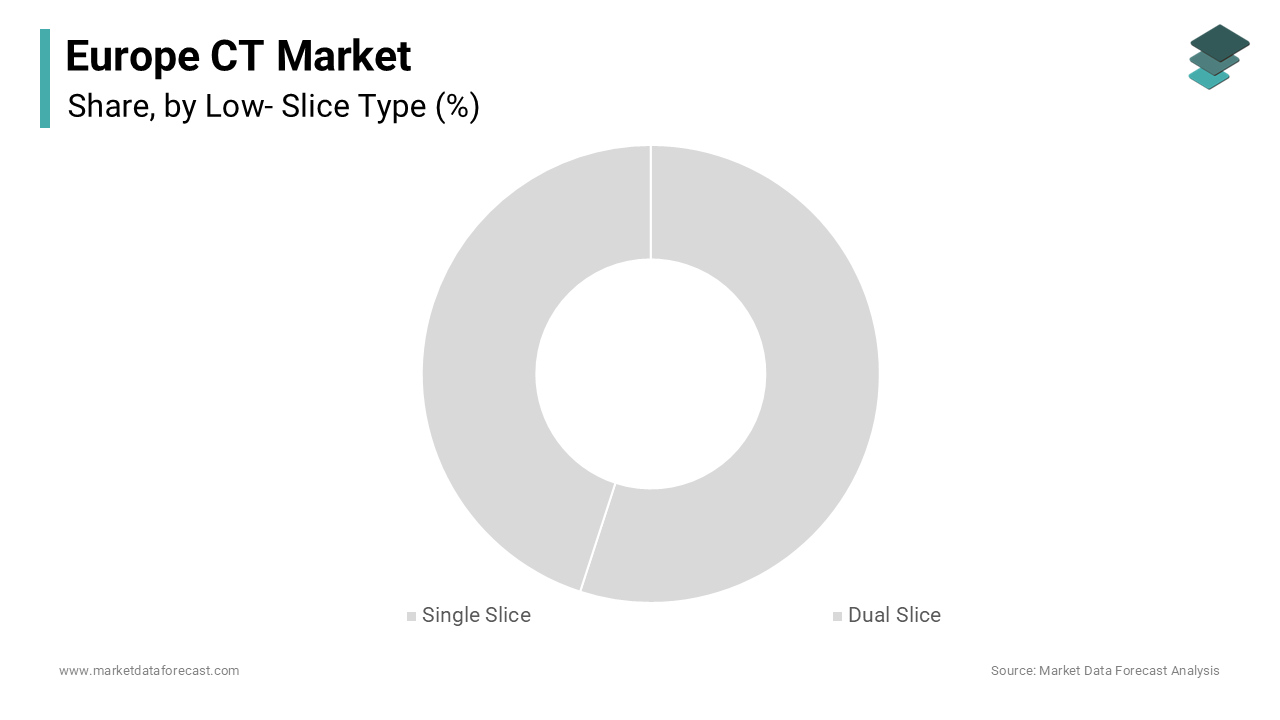
The dual slice segment is anticipated to witness the fastest CAGR of 4.8% from 2026 to 2034 due to its optimal balance between affordability and enhanced diagnostic capability compared to single slice counterparts. Dual slice systems enable faster scan times and improved image quality for soft tissue evaluation, addressing clinical gaps left by older technology. The ability to perform basic angiographic studies and abdominal assessments with greater precision drives adoption in mid tier hospitals. Manufacturers have introduced compact dual slice models designed for small footprint facilities, appealing to urban private practices with space constraints. The lower radiation dose profiles of modern dual slice units align with stringent European safety regulations, encouraging replacement of older single slice devices. Reimbursement policies in France and the United Kingdom favor dual slice examinations for specific indications due to superior diagnostic yield, incentivizing providers to invest in this tier. The segment benefits from aggressive marketing by manufacturers targeting the replacement cycle of aging infrastructure, positioning dual slice technology as a cost effective bridge to advanced imaging without the capital burden of high end systems.
By Slice Type Insights
The 16 slice segment led the Europe CT scan market and captured a significant share in 2025. This leading position of the segment was attributed to its versatility and established role in general diagnostic imaging across European hospitals. Moreover, this configuration offers sufficient speed and resolution for most routine clinical applications including pulmonary, abdominal, and pelvic examinations. Their dominance arises from the optimal cost performance ratio. Technological maturity ensures reliable performance with minimal downtime, a critical factor for high volume facilities. Training programs for radiographers are widely available for 16 slice protocols, reducing operational barriers. In countries like Poland and Czech Republic, government funded healthcare modernization initiatives prioritized 16 slice acquisitions to replace obsolete single and dual slice units, boosting market penetration. The segment benefits from extensive service networks and spare parts availability, lowering total cost of ownership. Clinical guidelines from the European Society of Urogenital Radiology endorse 16 slice technology for standard urological and gastrointestinal imaging, reinforcing its clinical validity. This widespread acceptance and proven utility sustain its leading position despite the emergence of higher slice count alternatives.
The 64 slice segment is likely to experience the fastest CAGR of 6.2% during the forecast period owing to increasing demand for cardiac and vascular imaging capabilities. This technology enables high resolution coronary artery visualization without invasive procedures, aligning with the rising prevalence of cardiovascular diseases in Europe. Advanced iterative reconstruction algorithms in 64 slice systems reduce radiation exposure, addressing safety concerns and facilitating broader clinical adoption. Germany leads in 64 slice installations. The ability to perform whole heart imaging in a single breath hold improves patient comfort and reduces motion artifacts, enhancing diagnostic confidence. Private imaging chains in the United Kingdom and France are aggressively expanding 64 slice capacity to capture premium reimbursement rates for cardiac studies. Pharmaceutical companies increasingly utilize 64 slice quantitative metrics for clinical trials involving cardiovascular drugs, creating additional demand streams. The decreasing price gap between 16 and 64 slice systems makes the latter more attractive for facilities seeking future proof investments. Manufacturer financing options and trade in programs further accelerate replacement cycles, driving robust growth in this segment as healthcare providers prioritize advanced diagnostic capabilities to remain competitive.
By High-slice Type Insights
In 2025, the 64-slice segment held the majority share of the Europe CT scan market because of its comprehensive clinical utility spanning oncology, cardiology, and neurology applications. It serves as the workhorse for advanced diagnostic procedures in major European medical centers. The technology provides isotropic resolution allowing multiplanar reconstructions with exceptional detail, crucial for surgical planning and complex case management. University hospitals in Sweden and Switzerland predominantly utilize 64 slice scanners for research and teaching purposes, establishing them as standard benchmarks. The availability of specialized cardiac packages enables non invasive coronary assessment, reducing the need for invasive catheterization a portion of cases. Reimbursement structures in Italy and Spain specifically incentivize 64 slice utilization for cancer staging due to superior lesion detection rates. The robust service infrastructure supports high uptime requirements in busy tertiary centers. Manufacturers offer extensive application training and protocol optimization services, maximizing clinical value. The segment benefits from economies of scale in production, keeping acquisition costs competitive relative to higher slice count systems. This combination of clinical versatility, economic efficiency, and strong institutional support sustains the 64 slice segment as the cornerstone of high end diagnostic imaging across the European healthcare landscape.
The cardiac CT segment is on the rise and is expected to be the fastest growing segment in the market by witnessing a CAGR of 7.5% between 2026 and 2034. This quick surge of the segment is propelled by the escalating burden of cardiovascular diseases and technological advancements in temporal resolution. Dedicated cardiac CT systems feature dual source architectures and wide detector coverage enabling complete heart imaging in less than one heartbeat. A study estimates that cardiovascular diseases cost the EU economy billions of euros annually, prompting significant investment in non invasive diagnostic tools to reduce treatment expenses. The evidence base drives guideline updates recommending cardiac CT as first line testing for stable chest pain. Artificial intelligence integration automates plaque quantification and fractional flow reserve calculations, streamlining workflow and improving diagnostic accuracy. Private healthcare providers in the United Kingdom are expanding cardiac CT services to meet growing consumer demand for preventive health screening. Reimbursement approvals for coronary CT angiography in multiple European countries have removed financial barriers to adoption. Manufacturer collaborations with cardiology departments facilitate protocol standardization and outcome tracking, fostering confidence in clinical utility. These factors collectively propel rapid expansion of the Cardiac CT segment as healthcare systems prioritize early detection and personalized management of heart disease.
By End-Users Insights
The hospitals and clinics segment was the largest in the Europe CT Scan Market and occupied a 65.4% share in 2025. This supremacy of the segment was supported by the central role hospitals play in acute care, emergency services, and complex disease management requiring immediate diagnostic imaging. Tertiary care centers require multiple CT units to handle trauma, oncology, and surgical planning workflows simultaneously. Public funding mechanisms in countries like France and Germany support substantial capital investments in hospital imaging departments, ensuring continuous technology upgrades. The integration of CT services with electronic health records and picture archiving systems enhances workflow efficiency and clinical decision making within hospital ecosystems. Emergency departments rely heavily on CT for rapid assessment of stroke, trauma, and acute abdominal conditions, driving 24/7 operational requirements. Academic medical centers utilize advanced CT systems for research and training, fostering innovation and attracting specialized staff. The concentration of radiologists and subspecialists in hospitals enables interpretation of complex studies that outpatient centers may not handle. Government mandates for standardized care pathways often specify hospital based imaging for certain indications, reinforcing volume dominance. This structural centrality ensures hospitals remain the primary purchasers and users of CT technology across the European region.
The imaging centers segment is expected to exhibit a noteworthy CAGR of 5.9% over the forecast period. This rapid expansion of the segment is fuelled by healthcare system shifts toward decentralized ambulatory care and patient preference for convenience. Independent diagnostic facilities offer shorter wait times and specialized service experiences, attracting patients willing to pay out of pocket or utilize private insurance. These centers optimize scanner utilization through focused service offerings and extended operating hours, achieving higher profitability per unit than hospital departments. Reimbursement reforms in several European countries now equalize payment rates for hospital and outpatient imaging, removing financial disincentives for referral to independent centers. Technological advancements allow compact high performance CT systems suitable for smaller facility footprints, lowering entry barriers. Strategic partnerships with referring physicians ensure steady referral streams. The flexibility to adopt latest technologies without bureaucratic hospital procurement processes enables imaging centers to differentiate through superior image quality and faster report turnaround. These dynamics drive robust growth as healthcare delivery models evolve toward value based outpatient services.
COUNTRY ANALYSIS
Germany CT Market Analysis
Germany maintained prominence in the Europe CT scan market and accounted for a 30.1% share in 2025. This dominance of the German market was driven by dense installation rates and advanced technological adoption across its healthcare network. According to the OECD and Eurostat, Germany maintains a high-density imaging infrastructure yielding approximately 37 CT scanners per million inhabitants, which reliably delivers comprehensive diagnostic imaging coverage for its population of over 84 million residents. Strong public and private insurance reimbursement frameworks encourage regular utilization of advanced imaging for early disease detection. The German healthcare system emphasizes quality outcomes, driving hospitals to invest in latest generation multidetector and spectral CT systems. Siemens Healthineers, headquartered in Erlangen, influences domestic procurement patterns through localized manufacturing and service support. Government initiatives promote digital health integration, with CT data increasingly linked to national electronic health records for coordinated care. Demographic profiles from the United Nations Population Fund (UNFPA) reveal that 24% of German citizens are aged 65 and older, which sustains a highly intensive demand for age-related clinical applications such as oncological and cardiovascular imaging. Research collaborations between university hospitals and industry partners foster innovation in AI assisted diagnostics. Strict radiation protection laws ensure safe usage practices, maintaining public trust. The robust biomedical engineering sector facilitates efficient maintenance and rapid technology upgrades. Germany serves as a benchmark for CT utilization efficiency and clinical excellence in the European region.
France CT Market Analysis
France was positioned second in the Europe CT Scan Market because of a centralized healthcare system that prioritizes equitable access to diagnostic services nationwide. As per Regional Health Agencies (ARS), France operates an authorized base of over 1,300 dedicated CT scanners, with public hospital infrastructures commanding roughly two-thirds of the nation's total major medical imaging capacity. National health insurance reimburses CT examinations at standardized rates, promoting consistent utilization across public and private sectors. The French strategy against cancer plan mandates timely access to diagnostic imaging, driving investments in high speed CT systems for oncology staging. Sources indicate that Tier-1 diagnostic conglomerates, including Philips Healthcare, maintain integrated supply networks within the French hospital ecosystem, provisioning high-speed multi-slice systems to meet regional health mandates Regulatory authorities enforce strict dose monitoring through national databases, encouraging adoption of low dose technologies. Teaching hospitals in Paris and Lyon serve as centers of excellence for complex CT applications including cardiac and neurological imaging. The National Library of Medicine (PMC) demonstrates that diabetes actively affects approximately 3.5 million individuals in France, adding significant strain to chronic disease surveillance networks and driving systematic imaging demand. Government funding programs support replacement of aging equipment in public facilities. The integration of tele radiology networks enables remote interpretation for smaller clinics, optimizing resource utilization. France balances technological advancement with social equity objectives in its CT market development.
United Kingdom CT Market Analysis
The United Kingdom is also a major player in the Europe CT scan market. Its market position shows the dominant role of the National Health Service in procurement and service delivery. The NHS operates a heavily utilised fleet of medical imaging devices, with asset audits from Full Fact and NHS England tracking approximately 1,400 combined CT and MRI scanners across the network, driving strategic initiatives to scale up machine density to reduce diagnostic delays. NHS England shows that total diagnostic wait times remain a critical focal point, with hundreds of thousands of patients queued specifically for radiology procedures, accelerating capital funding into localized diagnostic facilities. Under central government health initiatives recorded by the NHS Confederation, the state committed a £2.3 billion funding package dedicated specifically to diagnostic capacity expansion, fueling the operational rollout of physical Community Diagnostic Centres (CDCs) globally. Private healthcare providers complement NHS services, offering faster access for insured patients and contributing to market diversity. GE Healthcare and Canon Medical Systems are major suppliers to UK hospitals, providing systems optimized for high throughput environments. The UK leads in implementing AI triage tools for CT interpretation to address radiologist shortages. National Institute for Health and Care Excellence guidelines standardize CT usage criteria, influencing procurement decisions toward evidence based technologies. Brexit impacts supply chains and regulatory alignment, requiring manufacturers to adapt to separate UK conformity marking requirements. Aging infrastructure in some district hospitals necessitates urgent replacements. The focus on value based healthcare drives adoption of dose efficient and workflow optimized systems. Collaborative research with academic institutions promotes innovation in quantitative imaging biomarkers.
Italy CT Market Analysis
Italy expanded steadily in the European market owing to regional healthcare autonomy. Additionally, the country experiences varying economic conditions between its northern and southern regions. According to the OECD and Statista, Italy maintains an expansive imaging infrastructure featuring approximately 41.5 CT scanners per million inhabitants, with localized deployment networks regulated under the Italian Ministry of Health. Public hospitals dominate procurement, though private diagnostic centers play significant roles in urban areas. Budget constraints in southern regions limit technology upgrades, creating disparities in access to advanced imaging. The Italian Medicines Agency regulates device approvals and safety standards, ensuring compliance with European directives. Also, the European Observatory on Health Systems and Policies indicates that over 24% of the Italian population is aged 65 and older, creating a structural demand for specialized oncological and age-related geriatric imaging protocols. Canon Medical Systems and Siemens Healthineers compete actively for public tenders, offering financing solutions to cash strained healthcare authorities. National health service reimbursement rates vary by region, affecting provider investment decisions. Tele medicine initiatives aim to connect peripheral hospitals with specialized centers for expert interpretation. Recent government investments target modernization of emergency departments, prioritizing fast CT scanners for trauma and stroke care. Cultural preferences for thorough diagnostic evaluation sustain high examination volumes. Professional societies advocate for standardized training and quality assurance programs. The market shows gradual consolidation as larger healthcare groups acquire smaller facilities to achieve economies of scale in imaging services.
Spain CT Market Analysis
Spain remained a key contributor to the Europe CT scan market, supported by mixed public private healthcare delivery models and increasing medical tourism activities. Economic recovery post pandemic has enabled renewed capital investments in diagnostic infrastructure. Philips Healthcare holds significant market share through long term service contracts with major hospital groups. The Spanish Society of Radiology promotes best practices and continuous professional development for CT technologists. Growing prevalence of lifestyle related diseases increases demand for cardiovascular and abdominal imaging. Medical tourism hubs in Barcelona and Madrid invest in state of the art CT technology to attract international patients seeking high quality diagnostics. Government programs focus on reducing regional inequalities in healthcare access through targeted equipment grants. Digital health strategies integrate CT data into electronic patient records for improved care coordination. Regulatory frameworks align with European standards for radiation safety and device performance. Private equity interest in outpatient imaging chains drives expansion of standalone diagnostic centers. The market benefits from favorable climate conditions attracting retirees who require regular health monitoring. Collaborative research projects with European partners enhance clinical expertise in advanced CT applications.
COMPETITIVE LANDSCAPE
The competition in the Europe CT Scan Market is characterized by intense rivalry among established global manufacturers who continuously innovate to capture value in a mature yet evolving landscape. Major players compete not only on hardware specifications but also on software capabilities service quality and total cost of ownership propositions. The market sees frequent launches of advanced systems featuring artificial intelligence spectral imaging and ultra low dose technologies that set new clinical benchmarks. Competitive dynamics are influenced by stringent regulatory requirements and reimbursement pressures that force companies to demonstrate clear economic and clinical value. Localized manufacturing and service operations provide significant advantages in responsiveness and cost management particularly in large economies like Germany and France. Emerging competitors from Asia are gaining traction by offering cost effective alternatives prompting incumbents to enhance their value propositions. Strategic collaborations with healthcare networks and research institutions help firms secure long term contracts and influence clinical guidelines. The focus is shifting from pure volume sales to solution based selling that includes workflow optimization and data analytics services creating higher barriers to entry for new participants.
KEY MARKET PLAYERS
Companies leading the Europe CT market include
- GE Healthcare
- Hitachi Medical Corporation
- Hitachi Medical Systems America, Inc.
- NeuroLogica Corporation
- Neusoft Medical Systems Co., Ltd.
- Philips Healthcare
- Shenzhen Anke High-Tech Co.
- Siemens Healthcare
- Toshiba Medical Systems Corporation
Top Players in the Europe CT Scan Market
Siemens Healthineers maintains a dominant presence through continuous innovation and strong local manufacturing capabilities. The company recently launched advanced dual source CT systems that significantly reduce radiation exposure while improving image quality for cardiac applications. Their strategic focus on artificial intelligence integration enables automated workflow solutions that enhance diagnostic efficiency across European hospitals. Siemens actively collaborates with academic institutions to develop clinical protocols tailored to regional healthcare needs. They expanded service networks in Eastern Europe to ensure rapid maintenance support and minimize downtime for critical imaging equipment. The company also invests heavily in digital health platforms that connect CT data with electronic health records facilitating seamless patient care coordination. These initiatives reinforce their leadership by addressing key customer demands for precision safety and operational efficiency in diagnostic imaging environments throughout the continent.
GE Healthcare strengthens its position by leveraging cloud based analytics and portable imaging technologies. The company introduced compact high performance CT scanners designed for outpatient centers and emergency departments requiring flexible deployment options. Their recent partnerships with European health systems focus on implementing predictive maintenance algorithms that optimize equipment uptime and reduce operational costs. GE Healthcare emphasizes sustainability by launching energy-efficient models that align with strict environmental regulations in the region. They provide comprehensive training programs for radiologists and technologists to maximize the clinical utility of advanced spectral imaging features. The company also engages in public private partnerships to modernize infrastructure in underserved areas ensuring broader access to high quality diagnostic services across diverse European healthcare settings.
Canon Medical Systems enhances its market standing through customer centric innovations and robust service offerings. The company recently unveiled next generation wide area detector CT systems capable of capturing entire organs in single rotations which is crucial for trauma and pediatric imaging. Canon focuses on reducing total cost of ownership by offering flexible financing models and extended warranty packages tailored to European hospital budgets. They collaborate with local distributors to expand reach in Southern and Eastern European markets where demand for affordable advanced imaging is growing. The company integrates deep learning reconstruction techniques to deliver superior image quality at lower dose levels addressing safety concerns. Canon also supports research initiatives with European universities to validate new clinical applications strengthening trust among medical professionals and driving adoption of their latest technological advancements.
Top Strategies Used by Key Market Participants
Key players in the Europe CT Scan Market primarily employ product innovation strategies to differentiate their offerings through advanced features such as artificial intelligence integration and dose reduction technologies. Companies focus on developing specialized applications for cardiology oncology and neurology to meet specific clinical needs. Strategic partnerships with healthcare providers and academic institutions facilitate clinical validation and protocol standardization enhancing credibility. Expansion of service networks ensures rapid response times and high equipment availability which is critical for customer retention. Manufacturers also adopt flexible financing models including leasing and pay per use arrangements to overcome budget constraints faced by public hospitals. Sustainability initiatives play a growing role as companies design energy efficient systems to comply with environmental regulations. Digital health integration connects imaging devices with hospital information systems creating ecosystem lock in effects. These combined strategies enable participants to maintain competitive advantages while addressing evolving regulatory and economic pressures in the European healthcare landscape.
MARKET SEGMENTATION
This research report on the European CT market has been segmented & sub-segmented into the following categories.
By Low-slice Type
- Single Slice
- Dual Slice
By Slice Type
- 6 Slice
- 10 Slice
- 16 Slice
- 32 Slice
By High-slice Type
- 40 Slice
- 64 Slice
- Open Versions
- Cardiac CT
By End-Users
- Hospitals and Clinics
- Imaging Centers
- Others
By Region
- UK
- France
- Spain
- Germany
- Italy
- Russia
- Sweden
- Denmark
- Switzerland
- Netherlands
- Turkey
- Czech Republic
- Rest of Europe