- Product Description Description
- Table of Contents TOC
- List of Table & Figure LOT
- Get Free Sample PDF Sample PDF
Market Size, 2025
$2.13 BnMarket Estimate, 2026
$2.51 BnMarket Forecast, 2034
$9.32 BnCAGR, 2026–2034
17.82%Executive Summary: Global Culinary Tourism Market
- Market Scope: Comprehensive global culinary tourism market analysis covering tourism types, booking channels, regional leadership frameworks, and competitive dynamics.
- Market Valuation: Valued at USD 2.13 billion (2025), estimated at USD 2.51 billion (2026), and projected to reach USD 9.32 billion by 2034, registering a robust CAGR of 17.82% (2026–2034).
- Primary Growth Drivers: Digital media/food content influence, authentic cultural immersion demand, global tourism growth, and regional gastronomy interest. Opportunities include national culinary tourism integration, agri-food tourism, and farm-to-table experiences.
Key Market Segment Metrics (2026–2034)
| Category | Leading Segment (2025 Position) | Fastest-Growing Segment |
|---|---|---|
| By Type & Booking Mode | Restaurants segment (dominated with 44.1% of consumer expenditure in 2025); Online Travel Agencies (OTAs) (held largest booking share at 53.5%) | Cooking Classes segment (fastest-growing type CAGR of 12.6%); Direct Travel segment (fastest-growing booking CAGR of 11.8%) |
| By Region | Europe (leads global market with a 37.3% market share) | Asia-Pacific (fastest-growing regional market via diverse heritage, middle-class expansion, and food travel popularity) |
Major Market Players & Market Structure
Market Structure: Highly competitive global gastronomic and experiential travel landscape featuring tour operators competing on curated culinary itineraries, restaurant packages, cooking workshops, and digital booking platforms.
Key Companies: Abercrombie & Kent USA LLC, Classic Journeys LLC, G Adventures, Greaves Travel Ltd, India Food Tour, ITC Travel Group Limited, Food Tour Corporation, The Travel Corporation, Topdeck Travel, and TourRadar GmbH.
 Download Free Sample Report
Global Culinary Tourism Market Size
The size of the global culinary tourism market was worth USD 2.13 billion in 2025. The global market size is anticipated to register a CAGR of 17.82% from 2026 to 2034 and be worth USD 9.32 billion by 2034 from USD 2.51 billion in 2026.
Culinary tourism, also referred to as food tourism, encompasses travel primarily motivated by the pursuit of authentic, regional, and culturally significant food and beverage experiences. It extends beyond mere dining to include immersive activities such as cooking classes, market tours, vineyard visits, farm-to-table excursions, and participation in local food festivals. This form of experiential travel allows visitors to engage with a destination’s heritage, traditions, and agricultural practices through its gastronomic identity.
As per the World Food Travel Association, a notable share of travelers consider food and drink experiences to be central to their travel planning, underscoring the intrinsic link between cuisine and cultural exploration. Similarly, in Italy, UNESCO has inscribed elements of the Mediterranean diet and traditional cheese-making as intangible cultural heritage, reinforcing the global recognition of food as a cultural asset. The phenomenon is further amplified by digital influence. Unlike conventional tourism, culinary tourism fosters deeper local integration, often supporting small-scale producers, family-run eateries, and indigenous food systems, thereby contributing to rural development and cultural preservation.
MARKET DRIVERS
Rising Influence of Digital Media and Food-Centric Content
The proliferation of digital platforms has fundamentally transformed how travelers discover and engage with culinary destinations. Visual-centric social media networks such as Instagram, TikTok, and YouTube have elevated food into a central motif of travel storytelling, where dishes like Mexico’s mole, Thailand’s som tam, or Portugal’s pastel de nata become symbolic representations of place. Influencers and food bloggers now wield significant power in shaping destination appeal; a single post by a prominent culinary influencer can generate thousands of visits to a previously obscure eatery. Moreover, platforms like Pinterest report that recipe searches linked to travel, such as “Tuscany pasta dishes” or “Marrakech spice markets”, have grown year-on-year. This digital amplification not only increases visibility but also creates aspirational narratives that drive travelers to seek out authentic, photogenic, and culturally rich food encounters, thereby embedding gastronomy at the core of modern travel motivation.
Growing Demand for Authentic and Immersive Cultural Experiences
Modern travelers increasingly prioritize experiential authenticity over passive sightseeing, seeking meaningful interactions that connect them to local ways of life, with food serving as a primary conduit. As per the Global Sustainable Tourism Council, international travelers in 2023 expressed a preference for destinations offering hands-on cultural activities, including cooking with local families, harvesting ingredients, or learning traditional preservation techniques. These experiences not only preserve ancestral knowledge but also generate income for indigenous communities. Similarly, in Morocco, UNESCO’s recognition of the Jemaa el-Fnaa night market in Marrakech as a cultural heritage site has amplified interest in its culinary offerings. The desire for cultural immersion extends to agritourism, where visitors participate in olive harvests in Greece or sake brewing in Japan. This shift reflects a broader consumer ethos valuing sustainability, storytelling, and ethical engagement, positioning food not just as sustenance but as a narrative vehicle through which travelers forge deeper connections with the places they visit.
MARKET RESTRAINTS
Seasonal Availability and Geographic Limitations of Culinary Offerings
The inherent seasonality and geographic specificity of many traditional food experiences, which limit accessibility and scalability, a fundamental constraints in culinary tourism. Certain ingredients, dishes, and festivals are intrinsically tied to climatic cycles and regional ecosystems, making them available only during specific periods. These temporal and spatial constraints hinder year-round tourism planning and reduce the predictability of visitor experiences. Besides, remote locations such as Oaxaca’s mezcal-producing villages or Bhutan’s red rice terraces are difficult to access, requiring extensive travel infrastructure that is often underdeveloped. Consequently, while these limitations preserve authenticity, they also restrict market expansion and revenue potential.
Risk of Cultural Commodification and Loss of Authenticity
There is an increasing risk of cultural dilution, where traditional food practices are altered or staged for tourist consumption, undermining their original significance. In many destinations, local cuisines are simplified, sanitized, or exaggerated to cater to foreign palates, leading to a loss of authenticity. This commodification not only erodes cultural integrity but also marginalizes local communities who may lose control over their culinary heritage. Furthermore, the influx of tourists can drive up ingredient prices, making traditional dishes unaffordable for residents. Balancing commercial viability with cultural preservation remains a critical challenge.
MARKET OPPORTUNITIES
Integration of Culinary Tourism into National Tourism Strategies
Governments worldwide are increasingly recognizing gastronomy as a strategic pillar of national branding and economic development, leading to institutional support for culinary tourism. Countries are formalizing food-based itineraries, certifying heritage dishes, and funding culinary festivals to attract high-value travelers. The state-backed initiatives not only enhance destination appeal but also stimulate rural economies, preserve traditional knowledge, and create employment in agriculture, hospitality, and crafts, positioning culinary tourism as a catalyst for inclusive and sustainable development.
Expansion of Agri-Food Tourism and Farm-to-Table Experiences
The convergence of agritourism and culinary travel is creating new avenues for experiential engagement, where visitors participate in farming, harvesting, and meal preparation using hyper-local ingredients. This trend aligns with growing consumer interest in food provenance, sustainability, and transparency. These experiences not only deepen consumer connection to food but also provide farmers with diversified income streams, reduce food miles, and promote environmental stewardship, making agri-food tourism a transformative force in the evolution of sustainable travel.
MARKET CHALLENGES
Maintaining Food Safety and Hygiene Standards in Informal Culinary Settings
Ensuring consistent food safety, particularly in informal or street-based food environments that are central to the traveler experience, is one of the most pressing challenges in culinary tourism. Many popular culinary destinations rely on open-air markets, roadside stalls, and home kitchens, which may lack regulated sanitation infrastructure. Foreign travelers, unfamiliar with local pathogens, are particularly vulnerable. While authenticity is a key appeal, the lack of enforceable hygiene standards risks public health and damages destination reputation. Governments and tour operators face the difficult task of preserving culinary authenticity while implementing scalable safety measures without over-regulating and alienating small vendors.
Balancing Tourism Growth with Environmental and Cultural Sustainability
The rapid expansion of culinary tourism exerts pressure on local ecosystems, food systems, and cultural practices, raising concerns about long-term sustainability. Increased demand for signature dishes can lead to overharvesting of native ingredients, threatening biodiversity. Beyond environmental impact, cultural sustainability is at risk when tourism distorts traditional practices for commercial gain. Managing this dual challenge requires coordinated policies that promote responsible sourcing, limit visitor numbers, and involve local communities in decision-making to ensure that culinary tourism enhances rather than depletes the very resources it depends on.
REPORT COVERAGE
| REPORT METRIC | DETAILS |
| Market Size Available | 2025 to 2034 |
| Base Year | 2025 |
| Forecast Period | 2026 to 2034 |
| CAGR | 17.82% |
| Segments Covered | By Type, Mode of Booking, and Region. |
|
Various Analyses Covered | Global, Regional & Country Level Analysis, Segment-Level Analysis, DROC, PESTLE Analysis, Porter’s Five Forces Analysis, Competitive Landscape, Analyst Overview of Investment Opportunities |
| Regions Covered | North America, Europe, APAC, Latin America, Middle East & Africa |
|
Market Leaders Profiled | Abercrombie & kent USA, LLC, Classic journeys, LLC, G Adventures, Greaves travel ltd, India food tour, Itc travel group limited Food tour corporation, The travel corporation, Topdeck travel, Tourradar gmbh, and Others. |
SEGMENTAL ANALYSIS
By Type Insights
The restaurants segment constituted the largest part in the culinary tourism market by capturing 44.1% of total consumer expenditure in 2025. This dominance is due to the central role that dining plays in the travel experience, where tourists seek out iconic eateries, Michelin-starred establishments, and local food hubs as primary attractions. The appeal is further amplified by digital influence. Additionally, destination branding increasingly revolves around culinary landmarks Barcelona’s La Boqueria market eateries, Istanbul’s rooftop meyhanes, and New Orleans’ Creole restaurants attract millions annually. Unlike transient experiences such as festivals, restaurants offer consistent, year-round access, enabling repeat visitation and integration into broader travel itineraries. This structural reliability, combined with cultural prestige and media visibility, solidifies restaurants as the cornerstone of culinary tourism demand.
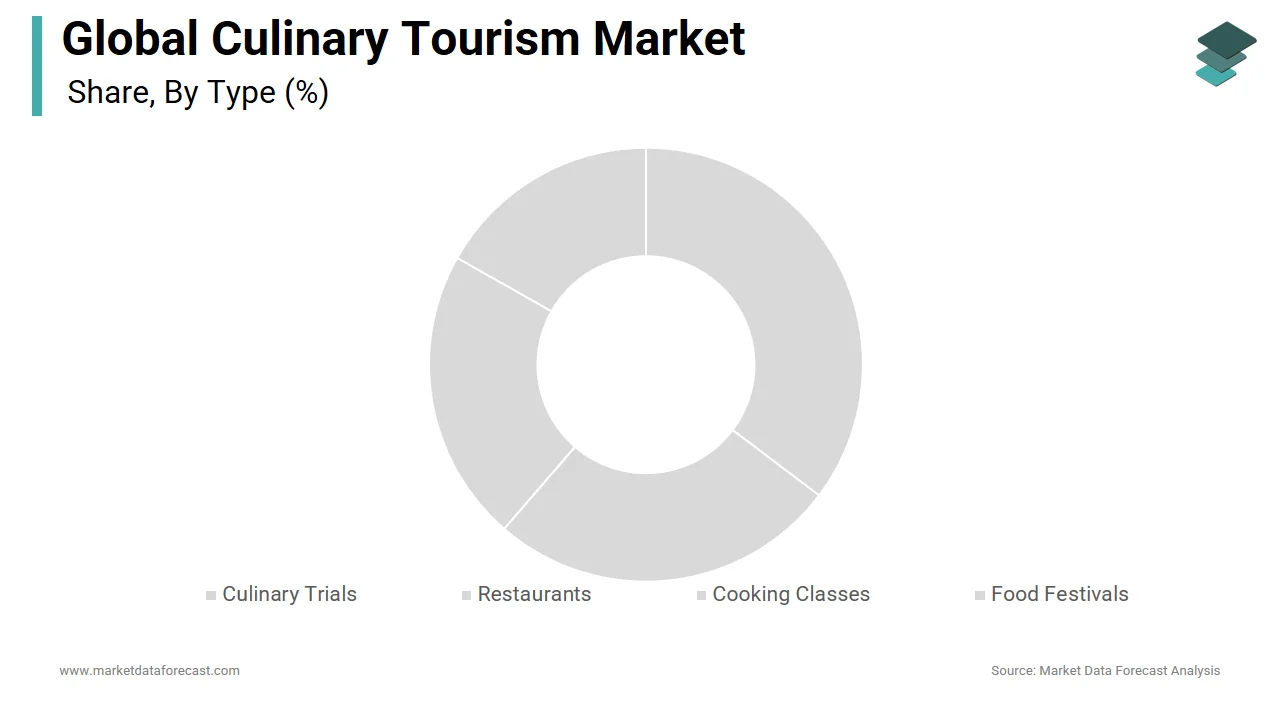
The cooking classes segment is emerging as the fastest-growing within culinary tourism and is projected to expand at a CAGR of 12.6% which is driven by travelers’ increasing desire for participatory and skill-based cultural immersion. Unlike passive dining, cooking classes offer hands-on engagement, allowing visitors to learn traditional techniques, source local ingredients, and recreate authentic dishes post-travel. These classes often include market visits, ingredient foraging, and storytelling, deepening cultural connection. In Peru, cooking workshops centered on native Andean ingredients like quinoa and purple corn have become integral to high-end tour packages, as noted by the Peruvian Ministry of Foreign Trade and Tourism. Additionally, luxury operators such as Aman Resorts and Belmond now include private chef-led sessions as standard offerings. The convergence of education, authenticity, and personalization positions cooking classes as a transformative experience, fueling their accelerated growth.
By Mode of Booking Insights
The Online Travel Agencies (OTAs) segment commanded a 53.5% share of the culinary tourism booking market in 2025. This dominance is rooted in the seamless integration of food experiences into comprehensive travel packages, where platforms like Booking.com, Expedia, and TripAdvisor offer bundled options that include restaurant reservations, food tours, and cooking classes. The convenience of centralized planning, user reviews, and dynamic pricing enhances consumer confidence. OTAs also leverage big data to personalize recommendations. Additionally, partnerships with culinary influencers allow OTAs to curate premium food trails, such as “Tokyo Ramen Routes” or “Tuscany Wine Journeys,” further driving engagement. The ability to compare availability, pricing, and authenticity metrics in real time makes OTAs the preferred gateway for modern culinary travelers, consolidating their leadership in the booking ecosystem.
The direct travel segment is growing at a CAGR of 11.8% and is the fastest among all booking modes, which is driven by a shift toward authenticity, transparency, and disintermediation. Travelers are increasingly bypassing third-party platforms to engage directly with providers, seeking unfiltered access to heritage practices and community-based initiatives. This trend is amplified by digital empowerment; small-scale operators now maintain professional websites, social media channels, and WhatsApp-based booking systems to reach global audiences. The desire for ethical consumption, reduced commission fees, and deeper personal connection is accelerating the shift toward direct engagement, redefining how culinary tourism is accessed.
REGIONAL ANALYSIS
Europe Culinary Tourism Market Insights
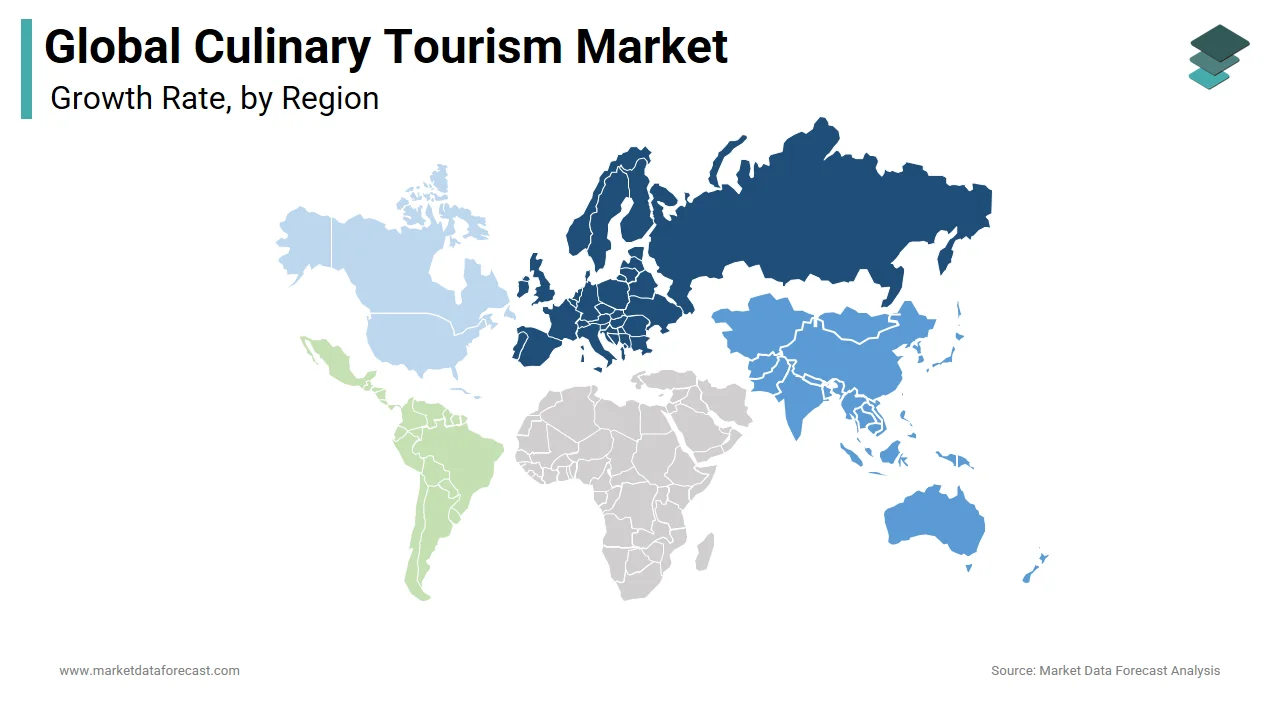
Europe holds a 37.3% share of the global culinary tourism market and is positioning itself as the most mature and diversified region in gastronomic travel. The continent’s dominance is anchored in its deep-rooted culinary traditions, UNESCO-recognized food heritage, and well-developed tourism infrastructure. Italy, France, and Spain lead the segment, with Italian cuisine contributing to the majorly of food-related travel in the region. France’s gastronomy was inscribed by UNESCO as an intangible cultural heritage in 2010, reinforcing its status as a premier culinary destination. Spain leverages its tapas culture and olive oil routes to drive rural tourism. Government initiatives like the EU’s “Taste Routes” program integrate cross-border culinary trails, enhancing regional connectivity. The presence of high-speed rail, multilingual services, and established OTAs further facilitates seamless access, solidifying Europe’s leadership in high-value culinary travel.
Asia-Pacific Culinary Tourism Market Insights
Asia-Pacific is distinguished by its explosive growth, diverse flavor profiles, and rising middle-class domestic demand. The region’s appeal lies in its vibrant street food cultures, ancient culinary techniques, and media-driven food destinations. Thailand’s street food economy supports vendors and attracts tourists annually seeking dishes like pad Thai and mango sticky rice. South Korea’s “K-Food” campaign has amplified global interest, with kimchi, bibimbap, and Korean barbecue becoming cultural exports. In India, culinary tourism is expanding beyond metros to regions like Kerala’s spice trails and Punjab’s farm-to-fork experiences, as noted by the Ministry of Tourism. The proliferation of food delivery platforms like Zomato and Swiggy has also enabled tourists to explore hyper-local eateries. With strong government backing and digital innovation, the Asia-Pacific is rapidly evolving into a global epicenter of experiential food travel.
North America Culinary Tourism Market Insights
North America is characterized by a fusion of regional diversity, innovation, and high consumer spending. The United States leads the region. Cities like New Orleans, Charleston, and San Antonio have built tourism identities around Creole, Southern, and Tex-Mex cuisines, drawing millions to food festivals and heritage tours. Mexico’s culinary tourism sector is equally robust. Canada complements this with wine and cheese trails in Quebec and British Columbia, attracting agritourism enthusiasts. The integration of technology, such as augmented reality food maps in Austin and blockchain-tracked seafood sourcing in Seattle, enhances authenticity and engagement. With strong domestic demand and a growing emphasis on indigenous and farm-to-table narratives, North America continues to innovate within the culinary tourism landscape.
Latin America Culinary Tourism Market Insights
Latin America is emerging as a dynamic destination for authentic, ingredient-driven gastronomy rooted in indigenous and colonial fusion. The region’s culinary identity is defined by biodiversity, ancestral techniques, and vibrant food markets. Peru stands at the forefront. Government initiatives like Chile’s “Sabores de Chile” and Ecuador’s “Cocina del Encuentro” are formalizing food routes to boost rural development. However, infrastructure limitations and seasonal accessibility constrain scalability. Despite these challenges, the region’s rich culinary tapestry and growing international recognition position it as a high-potential market for immersive gastronomic travel.
Middle East and Africa Culinary Tourism Market Insights
The Middle East and Africa are collectively marked by nascent but rapidly evolving gastronomic offerings shaped by cultural heritage and regional diversity. The Gulf Cooperation Council (GCC) countries are investing heavily in culinary branding. Saudi Arabia’s Vision 2030 includes a national food strategy to promote traditional Najdi and Hijazi cuisines, with culinary experiences integrated into new mega-projects like NEOM. In Morocco, food tourism centered on tagine, couscous, and mint tea contributes to total tourist spending. South Africa leads in sub-Saharan Africa. The country’s fusion of Malay, African, and European flavors has earned global acclaim, with some restaurants featured in the Eat Out South Africa Top 100. However, challenges persist; in Sub-Saharan Africa, limited food safety infrastructure and underdeveloped tourism logistics hinder scalability. Despite this, growing interest in indigenous ingredients, like Ethiopia’s injera and fermented teff, signals untapped potential for culturally rich, sustainable culinary tourism expansion.
KEY MARKET PLAYERS
Companies playing a major role in the global culinary tourism market include Abercrombie & Kent USA, LLC., Classic Journeys, LLC., G Adventures, Greaves Travel Ltd, India Food Tour, ITC Travel Group Limited, Food Tour Corporation, The Travel Corporation, Topdeck Travel and Tourradar GmbH., and Others.
TOP LEADING PLAYERS IN THE MARKET
Michelin Travel Selection
Michelin, renowned for its restaurant ratings, has evolved into a pivotal force in culinary tourism by shaping global gastronomic itineraries through its star-based recognition system. Beyond fine dining, Michelin curates green-starred sustainable restaurants and Bib Gourmand establishments, guiding travelers toward authentic, high-quality experiences. Its influence extends across continents, where inclusion in the Michelin Guide significantly boosts a destination’s visibility and visitor inflow. The organization collaborates with local authorities to highlight regional cuisines, preserving culinary heritage while promoting tourism. By standardizing excellence and emphasizing provenance, Michelin has become a trusted benchmark for discerning travelers seeking both luxury and authenticity. Its digital platforms further enhance accessibility, offering curated food trails and real-time updates, thereby redefining how travelers engage with food cultures worldwide.
Airbnb Experiences
Airbnb Experiences has redefined culinary tourism by democratizing access to hyper-local, community-driven food activities. Through its global network, travelers can participate in intimate cooking sessions with home chefs, visit family-run farms, or explore neighborhood markets guided by residents. This peer-to-peer model emphasizes cultural exchange over commercialization, fostering genuine connections between hosts and guests. The platform’s strength lies in its diversity, offering everything from sushi-making in Tokyo to spice blending in Marrakech while supporting micro-entrepreneurs in underserved regions. By prioritizing storytelling and tradition, Airbnb Experiences has shifted the focus from elite dining to inclusive, immersive gastronomy. Its integration within the broader travel ecosystem allows seamless booking of food experiences alongside accommodations, making culinary exploration an intrinsic part of the journey rather than an add-on.
Relais & Châteaux
Relais & Châteaux operates at the intersection of luxury hospitality and culinary artistry, uniting over 500 independent hotels and restaurants dedicated to exceptional gastronomy and cultural authenticity. Each member property emphasizes regional ingredients, traditional techniques, and narrative-driven dining, transforming meals into immersive journeys. The alliance promotes sustainable sourcing and mentorship of local chefs, reinforcing culinary heritage across remote and iconic destinations alike. By curating a global network of gastronomic sanctuaries from vineyard estates in Bordeaux to jungle lodges in Costa Rica Relais & Châteaux elevates food as a core travel experience. Its rigorous selection criteria ensure consistency in excellence, attracting connoisseurs seeking both refinement and rootedness. The organization also hosts international events that celebrate culinary diversity, further solidifying its role as a custodian of global gastronomic traditions within the luxury travel landscape.
TOP STRATEGIES USED BY KEY MARKET PARTICIPANTS
A defining strategy among leading players in the culinary tourism market is the creation of immersive, story-driven experiences that connect food to cultural identity. Companies are moving beyond transactional dining to craft narratives around heritage, terroir, and craftsmanship, allowing travelers to engage with the history and people behind the cuisine. This approach fosters emotional resonance and enhances perceived value.
Another key strategy is strategic partnerships with local communities, farmers, and artisans to ensure authenticity and equitable benefit-sharing. By integrating small-scale producers into the tourism value chain, operators support rural economies while offering guests traceable, sustainable, and ethically sourced experiences that align with growing consumer demand for responsible travel.
A third major strategy is digital curation and personalization through technology. Platforms are leveraging AI, geolocation, and user behavior data to recommend tailored food trails, hidden-gem eateries, and niche culinary workshops. This enables discovery beyond mainstream attractions, catering to the evolving preferences of experiential and independent travelers seeking unique, off-the-beaten-path gastronomic encounters.
COMPETITIVE LANDSCAPE
The competitive landscape of the culinary tourism market is marked by a blend of global brands, niche operators, and grassroots initiatives, each vying to capture the growing appetite for food-centered travel. While established entities like Michelin and Relais & Châteaux set benchmarks for quality and prestige, digital platforms such as Airbnb Experiences and Klook are disrupting traditional models by empowering local hosts and democratizing access. Independent tour operators specializing in regional cuisines such as Oaxacan mole trails or Himalayan spice routes are gaining traction by offering hyper-local authenticity that larger players cannot replicate. At the same time, national tourism boards are increasingly positioning gastronomy as a core national asset, launching branded food trails and certification programs to elevate their global profile. Competition is not solely about scale but about differentiation through uniqueness, sustainability, and depth of engagement. The rise of ethical consumerism has intensified the focus on fair wages, environmental stewardship, and cultural preservation, compelling operators to balance commercial success with social responsibility. As travelers seek more meaningful and personalized experiences, the market rewards innovation, storytelling, and genuine human connection, making authenticity the ultimate competitive advantage.
RECENT MARKET DEVELOPMENTS
- In February 2023, Michelin Travel Selection launched a dedicated digital platform highlighting sustainable gastronomy trails across Europe, featuring green-starred restaurants and farm-to-table experiences to align with eco-conscious traveler preferences.
- In June 2023, Airbnb Experiences partnered with UNESCO to promote traditional food practices in endangered culinary regions, introducing verified experiences in places like the Gullah communities of South Carolina and the rice terraces of the Philippine Cordilleras.
- In October 2023, Relais & Châteaux initiated a global mentorship program connecting young chefs from underrepresented regions with master artisans, reinforcing cultural preservation and culinary excellence within its network.
- In January 2024, Michelin expanded its guide to include street food vendors in Southeast Asia, recognizing informal culinary operators in Bangkok and Singapore, thereby broadening its influence and inclusivity in the gastronomy sector.
- In April 2024, Airbnb Experiences introduced AI-powered food journey planners that curate personalized culinary itineraries based on user preferences, dietary habits, and past travel behavior, enhancing engagement and discovery for global users.
MARKET SEGMENTATION
This research report on the global culinary tourism market has been segmented and sub-segmented based on type, mode of booking, and region.
By Type
- Culinary Trials
- Restaurants
- Cooking Classes
- Food Festivals
- Others
By Mode of Booking
- Traditional Agents
- OTA
- Direct Travel
By Region
- North America
- Europe
- Asia Pacific
- Latin America
- Middle East & Africa