- Product Description Description
- Table of Contents TOC
- List of Table & Figure LOT
- Get Free Sample PDF Sample PDF
Market Size, 2025
$5.31 BnMarket Estimate, 2026
$5.59 BnMarket Forecast, 2034
$8.38 BnCAGR, 2026–2034
5.20%Global Mountain and Snow Tourism Market Report Summary
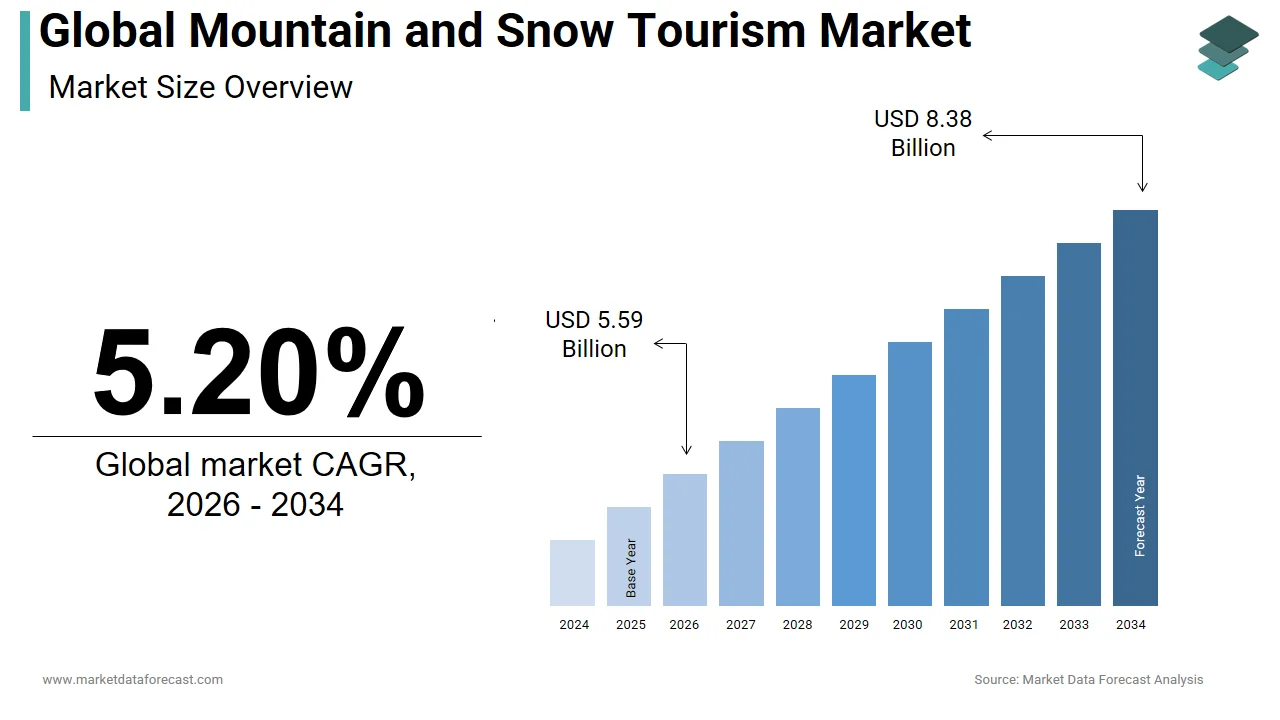
The global mountain and snow tourism market was valued at USD 5.31 billion in 2025, is estimated to reach USD 5.59 billion in 2026, and is projected to reach USD 8.38 billion by 2034, growing at a CAGR of 5.20% from 2026 to 2034. Market growth is driven by increasing participation in winter sports, rising demand for adventure travel, and expanding investments in mountain tourism infrastructure. Improvements in ski resorts, digital booking platforms, and year-round recreational activities are attracting both domestic and international travelers. Growing disposable incomes, government support for tourism development, and the popularity of experiential travel are further contributing to market expansion.
Key Market Trends
- Rising demand for adventure and experiential travel centered around mountain destinations.
- Increasing adoption of online travel booking and digital tourism platforms.
- Growing investments in ski resorts, cable car infrastructure, and winter sports facilities.
- Expansion of year-round mountain tourism through hiking, wellness, and eco-tourism activities.
- Increasing focus on sustainable tourism and environmentally responsible destination management.
Segmental Insights
- Based on service type, the skiing segment dominated the global mountain and snow tourism market in 2025 by accounting for 45.2% market share, driven by the popularity of alpine skiing, well-developed ski resort infrastructure, and growing participation in winter sports.
- Based on booking channel, the online booking segment held the largest share of the market in 2025, supported by the convenience, instant confirmation, price comparison features, and growing use of digital travel platforms.
- Based on tourist type, the domestic segment accounted for 62.7% market share in 2025, driven by increasing domestic travel, shorter travel distances, and growing interest in regional mountain destinations.
- Based on tour type, the independent traveler segment led the market by capturing 55.4% share in 2025, supported by increasing preference for personalized travel experiences, flexible itineraries, and self-planned vacations.
Regional Insights
The global mountain and snow tourism market continues to expand across major regions, supported by growing tourism investments, improved transportation infrastructure, and increasing participation in outdoor recreational activities.
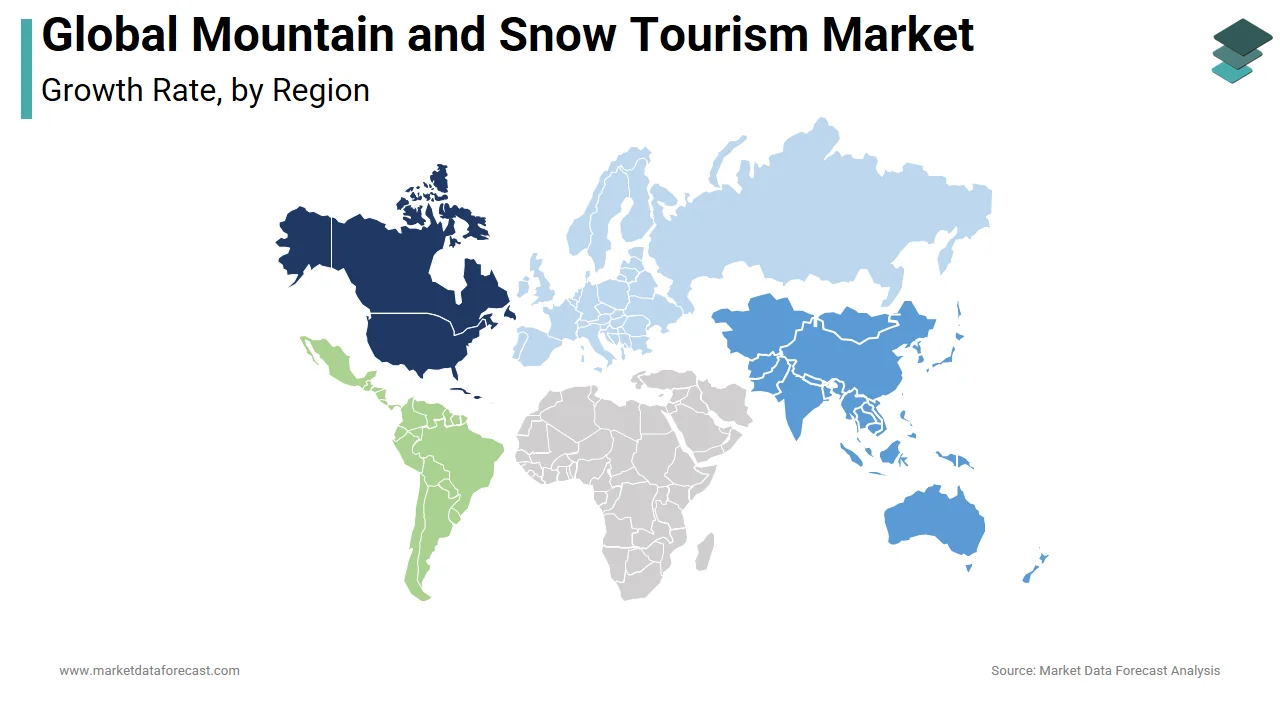
- Europe dominated the global market in 2025 by accounting for 42.8% share, driven by its world-renowned ski destinations, mature tourism infrastructure, long-established winter sports culture, and strong international visitor arrivals.
- North America held the second-largest position with 28.2% share in 2025, supported by premium ski resorts, extensive mountain tourism infrastructure, and high consumer spending on adventure travel.
- Asia-Pacific is projected to register the fastest growth during the forecast period, driven by significant government investments in tourism infrastructure, rising middle-class disposable incomes, expanding winter sports participation, and the successful hosting of major international winter sporting events.
Competitive Landscape
The global mountain and snow tourism market is characterized by the presence of travel companies, resort operators, and online travel platforms focusing on expanding destination offerings, enhancing customer experiences, and promoting sustainable tourism. Market participants are investing in digital booking technologies, resort modernization, year-round recreational activities, and strategic partnerships to strengthen their market presence. Continuous innovation in tourism services and infrastructure development continues to shape the competitive landscape.
Prominent companies operating in the global mountain and snow tourism market include Veena World, Epic Snow, Snow Tours, Thomas Cook India, Vail Resorts, Tripadvisor, Travel Triangle, MakeMyTrip, Compagnie des Alpes, BookMountain Tours, Alterra Mountain Company, Flying Fox, White Magic Adventure Travel, and Mountain Watch Travel.
Global Mountain and Snow Tourism Market Size
The global mountain and snow tourism market was valued at USD 5.31 billion in 2025, is estimated to reach USD 5.59 billion in 2026, and is projected to reach USD 8.38 billion by 2034, growing at a CAGR of 5.20% from 2026 to 2034.
Mountain and Snow Tourism refers to recreational travel to mountainous regions for activities driven by natural landscapes and winter weather. This specialized domain includes winter disciplines like alpine skiing and snowboarding, alongside summer activities such as mountaineering and highland trekking. The foundational appeal lies in the unique geographical and climatic conditions that offer environments vastly different from standard urban settings. The physical scale of these destinations is immense, shaping global travel patterns and regional economic frameworks. According to the Food and Agriculture Organization (FAO), mountains cover roughly 22% of the Earth's land surface and act as natural water towers providing vital freshwater resources to half of global humanity. As per the International Report on Snow & Mountain Tourism by Laurent Vanat, there are approximately 6,000 operational ski resorts globally spanning over 68 countries. Furthermore, the ecological diversity of these regions attracts a wide demographic of nature enthusiasts seeking pristine environments. UN Tourism and the Mountain Partnership confirm that mountain destinations systematically attract around 15% to 20% of global tourism volume. This deep integration of geographical assets and human recreation underscores the critical importance of mountain environments in the broader global tourism ecosystem and highlights their role in preserving cultural heritage.
MARKET DRIVERS
The escalating global enthusiasm for winter sports and high-altitude adventure recreation serves as a primary catalyst for sector expansion.
Modern consumers are increasingly prioritizing active lifestyles and seeking immersive outdoor experiences that promote both physical fitness and mental well-being, and thereby drive the mountain and snow tourism market. Alpine skiing and snowboarding require intense cardiovascular exertion and muscular engagement, making them highly attractive to health-conscious demographics. Global physical health guidelines from the World Health Organization (WHO) emphasize that achieving recommended levels of vigorous aerobic physical activity systematically mitigates cardiovascular disease risk and improves metabolic profiles. This physiological benefit drives millions of individuals to seek out mountain destinations for active holidays. Furthermore, the global visibility of winter sports has surged dramatically, inspiring new generations to participate. The International Olympic Committee (IOC) confirms that recent Olympic Winter Games have generated over 3.2 billion digital engagements, reflecting massive global engagement with winter sports. This heightened visibility transforms passive viewers into active participants, directly increasing the demand for lift passes, equipment rentals, and mountain accommodation. The cultural shift toward experiential and active travel ensures that winter sports remain a powerful engine for continuous visitor growth in elevated geographical regions.
The profound integration of holistic wellness therapies and thermal spa infrastructure within elevated terrains significantly accelerates visitor influx.
Historically, mountain tourism was heavily reliant on winter sports, but modern travelers increasingly seek comprehensive health and relaxation experiences that do not require physical exertion and ultimately boost the expansion of the mountain and snow tourism market. Alpine regions are naturally endowed with geothermal activity and mineral-rich waters, making them ideal locations for therapeutic spa resorts. The Global Wellness Institute (GWI) shows that the thermal and mineral springs sector drives tens of billions in annual revenue, positioning high-altitude wellness destinations as major pillars of luxury tourism. These facilities offer specialized treatments utilizing local mud, mineral waters, and highland botanicals, creating unique wellness propositions that cannot be replicated in urban environments. The European Spas Association (ESPA) highlights that integrating natural alpine resources with certified medical wellness frameworks forms a core pillar of European preventative health tourism. This diversification allows resorts to attract non-skiing demographics, including older adults and families seeking relaxation. By blending pristine natural environments with advanced wellness infrastructure, mountain destinations successfully capture a highly lucrative segment of the global health tourism market, ensuring robust financial performance beyond traditional winter seasons.
MARKET RESTRAINTS
The acute susceptibility of high altitude ecosystems to climate change and the consequent reduction in natural snowfall severely constrain operational viability.
The fundamental appeal of snow tourism relies entirely on consistent and abundant winter precipitation, which is increasingly threatened by rising global temperatures and is hampering the growth of the mountain and snow tourism market. Warmer climates cause the snow line to elevate, leaving lower-altitude resorts without sufficient natural snow cover to sustain their operations. The geographical shift renders many traditional ski areas economically unviable without massive artificial intervention. Environmental data from the European Environment Agency (EEA) highlights that alpine climate shifts pose substantial long-term economic risks, threatening winter season lengths and necessitating costly artificial adaptation measures. This environmental unpredictability deters long-term investment and makes it exceedingly difficult for resort operators to guarantee a quality experience for visitors. The physical degradation of the primary natural resource thus acts as a severe structural limitation on the expansion and stability of the snow tourism sector.
The substantial financial expenditures required for specialized sporting equipment and remote geographical transit act as significant barriers to widespread consumer participation.
The high financial cost of specialized gear and the logistics of traveling to isolated regions are major barriers to broader public involvement, which restricts the expansion of the mountain and snow tourism market. Engaging in this tourism is inherently expensive, requiring significant capital outlays for travel, accommodation, lift access, and technical gear. The remote nature of high altitude destinations means that transportation costs are disproportionately high compared to standard urban or coastal vacations. The National Ski Areas Association (NSAA) indicates that the rising cost of walk-up lift access, retail rentals, and resort services represents a significant structural hurdle for expanding newcomer participation. This steep daily expenditure places mountain vacations out of reach for a large portion of the middle class and budget travelers. Furthermore, the logistical complexity of reaching these locations adds to the financial burden. The International Air Transport Association (IATA) indicates that global passenger demand continues to track at historic highs, with strong seasonal travel trends consistently driving competitive market yields. These compounding financial barriers restrict the addressable market primarily to affluent demographics, limiting the overall volume growth and mass market penetration of mountain tourism.
MARKET OPPORTUNITIES
The strategic development of summer alpine activities and non-snow recreational infrastructure presents a massive avenue for year-round revenue generation.
Mountain destinations are aggressively expanding their warm weather offerings to mitigate the financial risks associated with seasonal snow dependency, which unlocks potential for the mountain and snow tourism market. The pristine landscapes, cool temperatures, and dramatic topography that attract winter sports enthusiasts are equally appealing to hikers, mountain bikers, and nature photographers during the summer months. This seasonal diversification stabilizes local economies by providing continuous employment and sustaining hospitality businesses throughout the entire year. IMBA Europe confirms that collaborating with mountain resorts to develop professional, lift-accessed trail systems serves as a primary driver for sustainable, year-round alpine tourism. By transforming ski lifts into summer transport for cyclists and hikers, resorts maximize the utility of their existing infrastructure. This strategic pivot toward four-season tourism unlocks immense financial potential, allowing destinations to capture diverse demographic segments and ensure long-term economic resilience.
The rapid advancement and deployment of highly efficient artificial snowmaking technologies offer a critical pathway to mitigate natural precipitation deficits.
The integration of advanced snowmaking systems has transitioned from a luxury to an absolute operational necessity for mountain resorts, which paves the way for the expansion of the mountain and snow tourism market. This is because natural snowfall is becoming increasingly unreliable. Modern technological innovations have drastically improved the efficiency, speed, and environmental footprint of these systems, allowing operators to produce high-quality snow at higher ambient temperatures. TechnoAlpin demonstrates that next-generation snowmakers utilize highly optimized nozzle configurations to substantially maximize snow output per kilowatt-hour compared to legacy models. This technological leap enables resorts to guarantee a baseline of skiable terrain even during marginal winter conditions, preserving customer satisfaction and protecting revenue streams. By leveraging these advanced climate adaptation technologies, the industry can effectively decouple its operational viability from unpredictable weather patterns, securing its future in a warming world.
MARKET CHALLENGES
The profound ecological degradation and habitat fragmentation resulting from extensive resort infrastructure development pose a severe threat to alpine biodiversity.
The construction and expansion of ski resorts require massive alterations to the natural landscape, which slows down the growth of the mountain and snow tourism market. These alterations include the clearing of forests, the leveling of terrain, and the installation of heavy mechanical infrastructure. This physical transformation destroys the natural habitats of numerous endemic plant and animal species, disrupting fragile highland ecosystems. Studies from the World Wildlife Fund (WWF) emphasize that expanding high-altitude tourism infrastructure drives habitat fragmentation and threatens endemic alpine flora and fauna. Furthermore, the intense human presence during both winter and summer seasons introduces significant pollution and disturbance. The Alpine Convention mandates the creation of strict ecological networks to mitigate the disruptive pressure of human recreational activities on native alpine wildlife. Balancing the economic imperatives of tourism development with the urgent need for ecological conservation remains a deeply complex challenge, as excessive infrastructure expansion risks destroying the very natural beauty that attracts visitors in the first place.
The acute seasonal labor shortages and the pervasive difficulty in retaining skilled hospitality workers in remote geographical locations severely hinder operational excellence.
Severe seasonal staff shortages and the constant struggle to keep skilled hospitality workers in isolated areas make it difficult to maintain high-quality service, which impedes the expansion of the mountain and snow tourism market. Mountain resorts rely heavily on a massive influx of temporary workers to staff hotels, restaurants, and lift operations during peak winter and summer seasons. However, the extreme cost of living in popular alpine towns, combined with the demanding nature of the work, creates a severe recruitment and retention crisis. EFFAT emphasizes that precarious seasonal contracts in mountain tourism exacerbate structural labor shortages, requiring stronger social protections to retain skilled hospitality workers. The lack of affordable housing for workers is a primary driver of this crisis, as local real estate markets are dominated by short-term vacation rentals. Also, the International Labour Organization (ILO) highlights that ensuring fair working conditions and adequate, accessible housing is vital to solving labor shortages across seasonal tourism economies. This persistent human resource barrier limits the capacity of resorts to scale their operations, restricts the quality of the guest experience, and imposes significant financial strain on businesses forced to offer premium wages to attract scarce labor.
SEGMENTAL ANALYSIS
By Services Types Insights
The skiing segment led the Mountain and Snow Tourism Market and captured a 45.2% share in 2025. This dominance of the segment was attributed to the deep cultural integration and historical legacy of alpine sports. In many mountainous regions, skiing is not merely a recreational activity but a profound cultural tradition passed down through generations. This historical affinity creates a massive and highly loyal consumer base that views winter mountain visits as an essential annual ritual rather than a discretionary luxury. According to the International Report on Snow & Mountain Tourism, the total global pool of active skiers and snowboarders is estimated at roughly 135 million, heavily concentrated in traditional European and North American alpine corridors. The ingrained cultural connection ensures a steady baseline of demand that is largely immune to short-term economic fluctuations. Furthermore, the prestige associated with mastering complex alpine techniques motivates continuous participation and the frequent upgrading of equipment and lift passes. The World Ski Awards highlights that luxury resort designations and hospitality standards serve as key indicators for international travelers selecting premium winter destinations.
Massive infrastructure investment and the continuous modernization of lift systems significantly propel the skiing segment to its leading position. Mountain resorts dedicate enormous financial resources to upgrade their transportation infrastructure, ensuring that skiers can access pristine terrain quickly, safely, and comfortably. The transition from slow chairlifts to high-speed gondolas and heated cable cars has drastically improved the overall user experience, maximizing the time spent on the slopes. National alpine operator associations like WKO Austria and DSF France show that hundreds of millions of euros are allocated annually to upgrade ropeways and integrate energy-efficient snowmaking systems. The seamless vertical mobility allows resorts to handle massive daily visitor volumes without compromising service quality. Furthermore, the integration of advanced weather tracking and automated snow distribution systems ensures optimal slope conditions. This relentless commitment to infrastructural excellence guarantees that skiing remains the most attractive and heavily utilized service in the mountain tourism landscape.
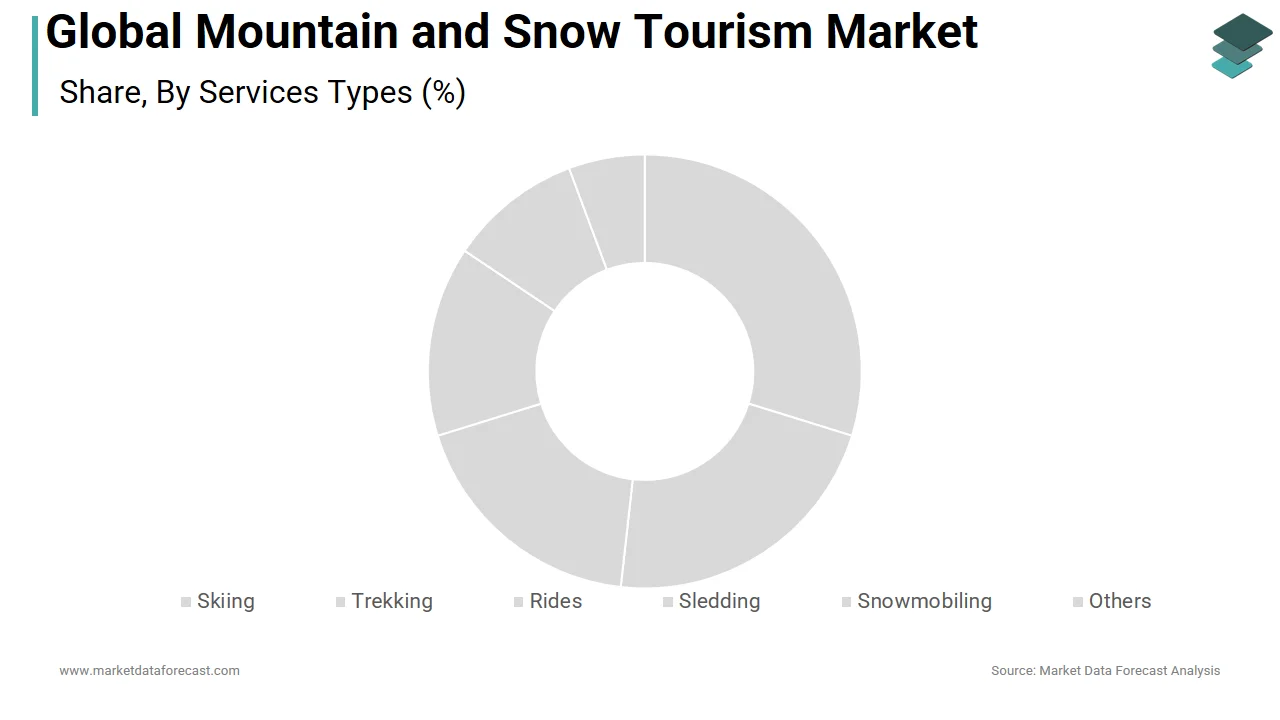
The trekking segment is estimated to register the fastest CAGR of 12.8% from 2026 to 2034 due to the rising consumer demand for low-impact and sustainable outdoor activities. Modern travelers are increasingly rejecting highly commercialized and environmentally intrusive vacation models in favor of authentic, nature-based experiences that leave minimal ecological footprints. Trekking perfectly aligns with this ethical shift, offering profound physical and mental health benefits without the heavy infrastructure requirements of motorized snow sports. The Global Wellness Institute (GWI) confirms that wellness tourism is experiencing rapid global growth as consumers increasingly prioritize active, nature-immersion travel experiences. Sustainable tourism guidelines from the International Union for Conservation of Nature (IUCN) emphasize that planning low-impact, non-motorized trail networks is crucial to mitigating soil erosion and protecting alpine biodiversity. This ecological compatibility allows destinations to promote trekking as a responsible tourism product, attracting a highly conscious demographic. Furthermore, the medical community heavily endorses the cardiovascular and psychological benefits of high altitude walking.
The strategic development of extensive high altitude trail networks and modern mountain hut infrastructure significantly accelerates the growth of the trekking category. Destination management organizations are heavily investing in the creation, marking, and maintenance of thousands of kilometers of dedicated hiking routes that cater to all skill levels. This comprehensive trail infrastructure transforms previously inaccessible wilderness areas into safe and navigable recreational zones. The European Ramblers Association (ERA) tracks over 75,000 kilometers of interconnected European long-distance paths, forming a robust structural network for cross-border eco-tourism. Furthermore, the renovation and expansion of alpine mountain huts provide essential logistical support for multi-day expeditions. This robust physical infrastructure removes the primary barriers to entry for casual hikers, enabling the trekking segment to capture a massive and rapidly expanding share of the summer mountain tourism market.
By Booking Channel Insights
In 2025, the online booking segment held the majority share of the Mountain and Snow Tourism Market because of the unprecedented convenience and instant confirmation capabilities of digital platforms. Modern consumers demand immediate gratification and seamless transactional experiences when planning their travel itineraries. Digital platforms allow travelers to compare prices, read peer reviews, view high-resolution imagery, and secure their reservations in a matter of minutes from any internet-connected device. Research indicates that digital platforms capture the clear majority of total gross travel bookings, led by high mobile adoption across mature global markets. The frictionless digital experience significantly reduces the cognitive load and time required to plan complex mountain vacations. Furthermore, the integration of secure digital payment gateways and instant mobile ticketing removes traditional logistical hurdles. This unparalleled convenience and efficiency ensure that online booking remains the primary and most heavily utilized channel for mountain and snow tourism.
The sophisticated integration of dynamic pricing models and highly personalized recommendation algorithms drives the continuous expansion of the online booking segment. Digital travel platforms utilize advanced machine learning to analyze vast amounts of consumer data, enabling them to offer tailored vacation packages that perfectly match individual preferences and budget constraints. The data-driven approach allows platforms to cross-sell additional services such as equipment rentals, ski lessons, and spa treatments directly during the checkout process. Also, the ability to optimize pricing and maximize the lifetime value of each customer through intelligent digital merchandising makes online platforms the most profitable and dominant distribution channel in the industry.
The in-person booking segment is anticipated to witness the fastest CAGR of 9.6% during the forecast period owing to the surging demand for highly personalized and bespoke luxury travel concierge services. While digital platforms excel at standard transactions, affluent travelers increasingly seek the nuanced expertise and tailored service that only human travel advisors can provide. In-person consultations allow luxury travel agents to curate highly complex, multi-generational mountain vacations that include private helicopter transfers, exclusive access to closed alpine trails, and private chef services. The human element is crucial for managing the intricate logistics of premium alpine travel, where unexpected weather changes or specific dietary requirements demand immediate, empathetic problem-solving. This reliance on expert human curation for premium experiences ensures that the in-person channel expands rapidly within the high-end segment.
The strong rebound and preference of older demographic segments for traditional face-to-face interactions significantly accelerate the in-person booking channel. A substantial portion of the mountain tourism demographic consists of retirees and older adults who possess significant disposable income but lack the digital literacy or desire to navigate complex online booking interfaces. These travelers highly value the personal reassurance, detailed verbal explanations, and physical brochures provided by traditional travel agencies. Travel agencies catering to this demographic provide essential services such as arranging specialized medical travel insurance and coordinating accessible accommodation. This enduring reliance on traditional agency models by a highly lucrative demographic ensures the sustained and rapid growth of in-person bookings.
By Tourist Type Insights
The domestic segment dominated the Mountain and Snow Tourism Market, accounting for 62.7% of the market in 2025. Great national pride and a deep cultural affinity for local mountainous landscapes are the primary drivers for the dominance of this segment. In many nations, mountain ranges are considered sacred national treasures and integral components of the cultural identity. Citizens feel a profound sense of ownership and connection to these local peaks, driving consistent and frequent visitation throughout the year. The intrinsic connection fosters intense brand loyalty to local resorts and a willingness to visit frequently, even during suboptimal weather conditions. Furthermore, national media and educational systems heavily promote local mountain conservation and recreation. This powerful cultural and emotional bond ensures that domestic tourists form the most stable and voluminous foundation of the mountain tourism market.
The inherent cost-effectiveness and reduced logistical complexity of local travel heavily reinforce the leading position of the domestic tourist segment. Traveling within one's own country eliminates the need for expensive international airfare, complex visa applications, and costly currency exchanges. This financial accessibility allows middle-class families to enjoy premium mountain vacations multiple times a year without straining their household budgets. The logistical simplicity is particularly appealing for short weekend getaways and spontaneous winter trips. Furthermore, domestic tourists are highly familiar with local road conditions, weather patterns, and regional customs, allowing them to navigate the environment with confidence. This combination of financial prudence and logistical ease makes domestic travel the most practical and heavily utilized option for the majority of mountain tourists.
The international segment is likely to experience the fastest CAGR of 11.1% between 2026 and 2034. Aggressive international marketing campaigns and streamlined visa facilitation programs propel the rapid expansion of this segment. Mountain destinations are increasingly recognizing the immense financial value of foreign visitors and are investing heavily in targeted global advertising to attract them. Many mountainous nations have introduced electronic travel authorizations and visa-on-arrival schemes specifically targeting high-spending tourists from emerging economies. Furthermore, destination marketing organizations are partnering with international airlines to create seamless travel packages that include flights, transfers, and lift passes. This strategic removal of administrative and financial barriers is rapidly accelerating the influx of global tourists.
The rapid expansion of direct flight routes to remote regional mountain airports significantly accelerates the growth of the international tourist segment. Historically, reaching premier mountain destinations required long, exhausting journeys involving multiple layovers and extended ground transfers. The recent proliferation of direct, long-haul flights to regional airports situated at the base of major mountain ranges has completely transformed this logistical challenge. Also, the enhanced accessibility makes short international ski trips highly viable for time-poor, affluent professionals. Furthermore, airlines are increasingly offering specialized baggage handling for expensive ski and mountaineering equipment, removing a major pain point for international sports tourists. This dramatic improvement in global connectivity is the primary engine driving the rapid expansion of international mountain tourism.
By Tour Type Insights
The independent traveler segment was the largest in the Mountain and Snow Tourism Market and occupied a 55.4% share in 2025. This supremacy of the segment was supported by the growing consumer desire for absolute autonomy and flexible itinerary planning. Modern tourists increasingly reject the rigid schedules and compulsory group activities associated with traditional package tours, preferring to design their own daily experiences. Independent travel allows individuals to wake up when they choose, spend as much time on a specific hiking trail or ski run as they desire, and dine at their preferred pace. Independent travelers can easily adapt their plans based on real-time weather conditions or sudden changes in personal energy levels, ensuring a more personalized and satisfying vacation. Furthermore, the rise of the gig economy and peer-to-peer platforms allows independent tourists to easily hire local guides or rent equipment on demand without committing to a full package. This pursuit of total personal freedom cements the independent traveler as the leading tour type in the mountain tourism market.
The proliferation of advanced digital navigation tools and self-guided tour applications significantly empowers and expands the independent traveler segment. Historically, exploring remote mountain environments required expensive local guides or joining organized groups for safety and orientation. Today, sophisticated smartphone applications provide highly accurate topographical maps, real-time weather alerts, and augmented reality trail markers that allow anyone to navigate complex alpine terrain safely. These digital tools also offer instant access to emergency services and offline survival guides, drastically reducing the risks associated with solo travel. Furthermore, translation and currency conversion applications eliminate the language and financial barriers that previously deterred independent exploration in foreign mountain regions. This technological empowerment removes the traditional barriers to solo exploration, driving the massive dominance of the independent traveler segment.
The family trip segment is on the rise and is expected to be the fastest-growing segment in the market with a CAGR of 10.3% over the forecast period. This quick surge of the segment is fuelled by the introduction of comprehensive child care facilities and specialized youth instruction programs. Historically, mountain vacations were considered difficult for families with young children due to the physical demands and lack of appropriate supervision. Modern resorts have aggressively addressed this by building state-of-the-art children's clubs, indoor play areas, and professional youth ski and snowboard schools. These specialized programs allow parents to enjoy advanced skiing or spa treatments while their children are safely engaged in age-appropriate, educational, and highly supervised activities. Furthermore, the integration of gamified learning and interactive snow play areas makes the mountain environment highly enjoyable for non-skiing children. This robust support infrastructure transforms mountain resorts into highly attractive, stress-free destinations for families.
The strategic development of interconnected family-friendly accommodation and multi-activity lift passes significantly accelerates the expansion of the family trip segment. Resort operators recognize that families require specific spatial configurations and financial structures to make mountain vacations viable. Consequently, there has been a massive shift toward building large, interconnected apartment suites and family-oriented hotel rooms that provide the necessary space and privacy for multiple generations. Furthermore, resorts have introduced highly flexible, multi-activity lift passes that allow families to mix skiing, snow tubing, and spa access without purchasing expensive individual tickets for every activity. Resorts are tailoring both their physical infrastructure and financial offerings to meet the specific needs of multi-generational groups. As a result, they are successfully capturing a rapidly growing and highly lucrative family tourism segment.
REGIONAL ANALYSIS
Europe Mountain and Snow Tourism Market Analysis
Europe was the top performer in the global mountain and snow tourism market and accounted for a 42.8% share in 2025. The region is universally recognized as the historical birthplace of modern alpine sports and remains the ultimate global benchmark for winter tourism excellence. The European Alps, Pyrenees, and Dolomites offer an unmatched concentration of world-class resorts, characterized by extensive interconnected ski areas and deeply entrenched winter cultures. The European Commission shows that Alpine-dependent regions remain highly reliant on winter and summer tourism, which serves as the primary economic engine and employer for over 500 communities. According to the annual International Report on Snow & Mountain Tourism, the European continent accounts for roughly 50% of the world’s total ski lift infrastructure, supporting the highest concentration of high-capacity ski resorts globally. This massive infrastructure is supported by highly efficient, integrated public transportation networks that seamlessly connect major international airports to remote mountain villages. Furthermore, the region benefits from strong governmental support and stringent environmental regulations that ensure the long-term sustainability of these fragile ecosystems. This unparalleled combination of historical prestige, massive infrastructure, and regulatory cohesion ensures that Europe remains the undisputed global leader in mountain and snow tourism.
North America Mountain and Snow Tourism Market Analysis
North America was positioned second in the global mountain and snow tourism market and captured a 28.2% share in 2025. This growth of the North American market was driven by its vast, rugged wilderness, massive vertical drops, and a highly commercialized, premium resort model. Destinations in the Rocky Mountains and the Pacific Coast offer a distinctly different experience from Europe, focusing on expansive terrain, deep powder snow, and highly integrated luxury village environments. The National Ski Areas Association (NSAA) shows that the U.S. ski resort industry injects more than $11 billion into the national economy annually, driven by record-setting visitor volumes. Also, the U.S. Forest Service (USFS) confirms that more than 120 of the nation's ski resorts operate under special use permits on national forest lands, providing managed public access to mountain recreation. Furthermore, the North American market is heavily driven by a strong culture of destination resorts, where visitors stay on site for extended periods, utilizing comprehensive on-mountain dining, shopping, and spa facilities. This focus on premium, large-scale destination experiences ensures North America maintains a highly profitable and influential position in the global market.
Asia Pacific Mountain and Snow Tourism Market Analysis
Asia Pacific witnessed a swift growth in the global mountain and snow tourism market due to massive government investments, rising middle-class disposable incomes, and the successful hosting of major international winter sporting events. Countries like China and Japan have transformed their mountainous regions into world-class tourism hubs, blending traditional cultural heritage with modern resort infrastructure. The Pacific Asia Travel Association (PATA) outlines a massive, multi-year rebound in international visitor arrivals across Asia-Pacific hubs, driven by expanded regional airline capacity. Data published by the China Tourism Academy (CTA) confirms that next-generation high-speed rail corridors have ushered in a new era of record-breaking prosperity for northern domestic ice and snow destinations. Furthermore, Japan has successfully leveraged its unique combination of legendary powder snow, volcanic hot springs, and traditional ryokan accommodation to attract a massive influx of international tourists. This explosive growth, driven by infrastructure development and cultural uniqueness, positions Asia Pacific as the most critical growth engine for the global mountain tourism industry.
Latin America Mountain and Snow Tourism Market Analysis
Latin America maintains a noteworthy position in the global mountain and snow tourism market owing to the towering Andes mountain range, which offers a dramatic counter-seasonal winter experience for tourists from the Northern Hemisphere. When snow conditions deteriorate in Europe and North America, the high altitudes of Chile and Argentina provide pristine, reliable snowpack, making it a crucial destination for extended winter seasons and professional athletic training. UN Tourism highlights that the Southern Hemisphere's counter-seasonal winter calendar acts as an exclusive market differentiator for countries like Chile and Argentina to capture dedicated international ski travelers. Also, PROCHILE highlights that pairing world-class high-altitude viticulture tours with premier alpine resorts forms a core component of South America's luxury adventure trade. Furthermore, the region is increasingly developing summer alpine tourism, leveraging the dramatic landscapes for mountaineering and high-altitude trekking. This unique geographical advantage and diverse product offering ensure Latin America remains a vital and highly specialized component of the global mountain tourism market.
Middle East and Africa Mountain and Snow Tourism Market Analysis
The Middle East and Africa region is likely to expand in the global market during the forecast period due to massive, capital-intensive mega projects that aim to create year-round snow and mountain experiences in traditionally arid climates. The development of massive indoor ski complexes and ambitious outdoor mountain resorts in the Gulf states represents a radical reimagining of winter tourism. Saudi Arabia's NEOM project reveals a multi-billion-dollar investment to develop Trojena, a futuristic, year-round mountain destination designed to host the 2029 Asian Winter Games. Strategic development guidelines from the Moroccan National Tourism Office (ONMT) actively position the High Atlas region as a premier hub for sustainable trekking, eco-lodges, and rural cultural tourism tailored to the European market. The Middle Eastern model focuses on luxury, exclusivity, and technological marvels, utilizing advanced snowmaking and climate control technologies to maintain pristine winter conditions year-round. This aggressive, technology-driven approach to mountain tourism establishes the Middle East and Africa as a highly innovative and rapidly expanding frontier in the global market.
COMPETITIVE LANDSCAPE
The competitive landscape of the mountain and snow tourism market is defined by intense rivalry among massive multinational resort operators and highly specialized regional destination managers. Major global conglomerates dominate the sector through extensive property portfolios, leveraging multi-destination season passes to secure consumer loyalty and capture upfront capital. These corporations continuously invest billions in modernizing lift infrastructure and expanding terrain to enhance the guest experience and maximize daily capacity. Conversely, independent regional resorts compete aggressively by emphasizing authentic local culture, exclusive boutique accommodations, and highly personalized guest services that large operators cannot easily replicate. The market is currently witnessing a fierce strategic battle for four-season viability, with companies aggressively developing summer alpine activities to reduce reliance on unpredictable winter snowfall. Furthermore, the integration of advanced digital technologies and artificial intelligence has become a critical battleground, as operators strive to deliver seamless, personalized mobile experiences. Intense environmental scrutiny and climate change concerns force competitors to differentiate themselves through verifiable sustainability credentials and ecological conservation efforts. Ultimately, success requires a delicate balance of massive capital investment, relentless operational innovation, and deep respect for the fragile alpine environments that form the foundation of this highly lucrative global tourism industry landscape today.
KEY MARKET PLAYERS
The major companies operating in the mountain and snow tourism market are
- Veena World
- Epic Snow
- Snow Tours
- Thomas Cook India
- Vail Resorts
- Tripadvisor
- Travel Triangle
- MakeMyTrip
- Compagnie des Alpes
- BookMountain Tours
- Alterra Mountain Company
- Flying Fox
- White Magic Adventure Travel
- Mountain Watch Travel
TOP PLAYERS IN THE MARKET
- Vail Resorts operates as a foundational powerhouse in the global mountain tourism sector, managing a vast portfolio of premier alpine destinations across multiple continents. The company deeply integrates advanced digital technologies into the guest experience, utilizing proprietary mobile applications to streamline lift access, dining reservations, and lesson bookings. Recently, Vail Resorts has aggressively expanded its global footprint through strategic acquisitions of highly regarded international ski areas, ensuring a diverse and geographically dispersed portfolio. The corporation also prioritizes environmental sustainability, implementing comprehensive carbon reduction initiatives and investing heavily in highly efficient snowmaking infrastructure to mitigate climate risks. These focused actions continuously enhance operational excellence and solidify the company's reputation as a premier global mountain tourism leader.
- Compagnie des Alpes maintains a highly formidable presence in the European mountain tourism landscape, operating a massive network of premier alpine ski resorts and leisure attractions. The company leverages its deep historical roots in the French Alps to deliver authentic, high-quality winter experiences that cater to diverse demographic segments. Recently, Compagnie des Alpes has accelerated its digital transformation, integrating advanced data analytics to optimize slope maintenance and enhance personalized guest services. The corporation also places a strong emphasis on four-season tourism, heavily investing in summer mountain activities like mountain biking and alpine coasters to ensure year-round revenue stability. These strategic initiatives significantly improve guest satisfaction and reinforce the company's status as a leading force in the European and global alpine market.
- Alterra Mountain Company operates as a dynamic and highly influential player in the North American and global mountain tourism sector, renowned for its collection of iconic destination resorts. The company aggressively drives customer loyalty through its highly successful multi-resort season pass product, which grants access to a vast network of premier global destinations. Recently, Alterra Mountain Company has invested heavily in upgrading aging lift infrastructure and expanding terrain capacity across its core properties to reduce congestion and improve the overall guest experience. Additionally, the corporation is deeply committed to environmental stewardship, partnering with leading climate organizations to promote winter conservation and reduce operational emissions. These focused actions continuously drive commercial expansion and reinforce the company's reputation as an innovative and guest-centric industry leader.
TOP STRATEGIES USED BY THE KEY MARKET PARTICIPANTS
Key participants in the mountain and snow tourism market predominantly utilize aggressive portfolio diversification and advanced digital integration to secure their competitive positions. Major operators are heavily investing in the acquisition of geographically dispersed resorts to offer multi-destination season passes, thereby locking in consumer loyalty and guaranteeing upfront revenue. Simultaneously, companies are deploying sophisticated mobile applications and artificial intelligence to personalize the guest experience, optimize slope maintenance, and streamline operational logistics. Strategic partnerships with international airlines and luxury hospitality brands are frequently leveraged to create seamless, high-end travel packages that attract affluent global tourists. Furthermore, industry leaders are prioritizing four-season tourism development, investing heavily in summer activities like mountain biking and wellness retreats to mitigate the financial risks associated with seasonal snow dependency. Finally, comprehensive environmental sustainability initiatives are being implemented to protect fragile alpine ecosystems and ensure long-term operational viability.
MARKET SEGMENTATION
This global mountain and snow tourism market research report has been segmented and sub-segmented based on services types, booking channel, tourist type, consumer orientation, age group and region.
By Services Types
- Skiing
- Trekking
- Rides
- Sledding
- Snowmobiling
- Others
By Booking Channel
- Online Booking
- In Person Booking
By Tourist Type
- Domestic
- International
By Tour Type
- Independent Traveler
- Group Trip
- Family Trip
By Consumer Orientation
- Men
- Women
- Children
By Age Group
- 15-25 Years
- 26-35 Years
- 36-45 Years
- 46-55 Years
- 66-75 years
By Region
- North America
- Europe
- Asia Pacific
- Latin America
- Middle East & Africa