- Product Description Description
- Table of Contents TOC
- List of Table & Figure LOT
- Get Free Sample PDF Sample PDF
Market Size, 2025
$1037 MnMarket Estimate, 2026
$1121 MnMarket Forecast, 2034
$2094 MnCAGR, 2026–2034
8.12%Global Wellness Tourism Market Report Summary
The global wellness tourism market was valued at USD 1,037.48 billion in 2025, is estimated to reach USD 1,121.47 billion in 2026, and is projected to reach USD 2,094.29 billion by 2034, growing at a CAGR of 8.12% during the forecast period from 2026 to 2034. The growth of the global wellness tourism market is driven by rising consumer awareness of preventive healthcare, increasing prevalence of stress-related disorders, and growing demand for holistic travel experiences that promote physical, mental, and emotional well-being. Expanding investments in luxury wellness resorts, digital health integration, personalized wellness programs, and corporate wellness retreats are further accelerating market growth. Moreover, the increasing popularity of sustainable tourism, wellness-focused hospitality services, and destination-based healing experiences continues to strengthen the expansion of the global wellness tourism market.
Key Market Trends
-
Rising demand for wellness retreats focused on stress reduction, mindfulness, meditation, and mental well-being.
-
Growing integration of digital health technologies, wearable devices, and personalized wellness analytics into tourism experiences.
-
Increasing popularity of preventive healthcare travel, including fitness, nutrition, longevity, and biohacking programs.
-
Expansion of corporate wellness retreats and employee well-being travel programs across global organizations.
-
Growing emphasis on sustainable, eco-friendly, and authentic wellness tourism experiences supported by responsible hospitality practices.
Segmental Insights
- Based on service, the lodging segment dominated the global wellness tourism market in 2025. The dominance of the segment is attributed to increasing investments in wellness-focused hotels and resorts, integration of spa facilities, sleep optimization rooms, fitness amenities, healthy dining services, and personalized hospitality experiences that form the foundation of wellness travel.
- The wellness activities segment is projected to witness the fastest CAGR during the forecast period owing to rising consumer interest in yoga retreats, meditation programs, digital detox experiences, hiking expeditions, mindfulness workshops, fitness camps, and immersive wellness activities that promote long-term physical and mental well-being.
- Based on travel purpose, the primary wellness tourism segment dominated the global wellness tourism market in 2025. The growth of the segment is driven by increasing consumer preference for travel specifically designed around health improvement, preventive care, detoxification, stress management, weight management, and holistic wellness experiences supported by professional guidance.
- The secondary wellness tourism segment is anticipated to register the fastest growth during the forecast period due to the increasing integration of wellness services into business travel and leisure tourism, along with growing consumer preference for maintaining healthy lifestyles while traveling for non-wellness purposes.
- Based on travel type, the domestic segment accounted for the largest share of the global wellness tourism market in 2025. The segment’s dominance is supported by affordability, convenience, increasing domestic travel initiatives, shorter travel durations, and growing availability of wellness destinations within national borders.
- The international wellness tourism segment is expected to witness the fastest CAGR during the forecast period owing to increasing demand for authentic healing traditions, specialized wellness treatments, luxury destination resorts, cultural wellness experiences, and premium cross-border health tourism offerings.
Regional Insights
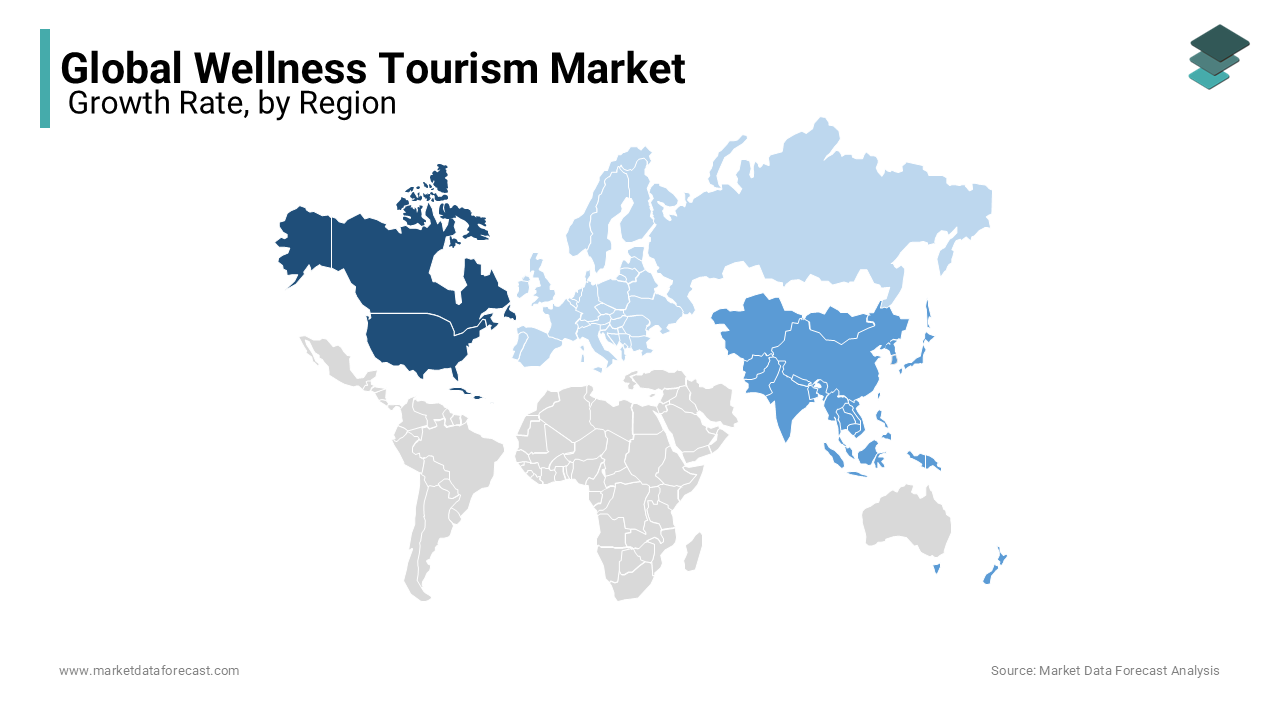
- North America dominated the global wellness tourism market by accounting for 32.3% of the market share in 2025. The region’s leadership is driven by high disposable incomes, advanced wellness infrastructure, increasing investments in luxury wellness resorts, strong consumer awareness regarding preventive healthcare, and growing corporate wellness initiatives.
- Europe held a significant share of the global wellness tourism market owing to its well-established medical spa culture, thermal wellness destinations, sustainable tourism initiatives, extensive wellness hospitality infrastructure, and strong government support for preventive healthcare tourism.
- Asia-Pacific is projected to witness the fastest growth during the forecast period due to rising demand for Ayurveda, yoga, meditation, traditional healing therapies, expanding middle-class population, increasing government support for wellness tourism, and growing international tourist arrivals seeking authentic wellness experiences.
- Latin America continues to emerge as a promising market owing to increasing eco-wellness tourism, abundant natural resources, expanding wellness retreats, growing community-based tourism initiatives, and rising global interest in indigenous healing practices.
- The Middle East and Africa is expected to experience significant growth supported by luxury wellness resort developments, increasing investments under national tourism diversification programs, expanding medical wellness infrastructure, and growing demand for premium wellness experiences across the Gulf countries and Africa.
Competitive Landscape
The global wellness tourism market is highly competitive and consists of international hospitality groups, luxury wellness resorts, spa operators, and specialized wellness retreat providers competing through innovation, personalized wellness programs, digital health integration, sustainability initiatives, and premium customer experiences. Leading companies are investing in wellness-focused accommodations, strategic partnerships with health technology providers, personalized nutrition and fitness programs, eco-friendly infrastructure, and integrated wellness ecosystems to strengthen their global market presence. Continuous innovation in mental wellness, preventive healthcare travel, and technology-enabled wellness experiences continues to intensify competition across the global wellness tourism market.The prominent players operating in the global wellness tourism market include Accor SA, Allergan PLC, Canyon Ranch, Fitpacking, Four Seasons Hotels Ltd., Galderma SA, Hilton Hotels & Resorts, Hyatt Corporation, KPJ Healthcare Berhad, Marriott International, Inc., Miraval Group, Omni Hotels & Resorts, Radisson Hotel Group, Rancho La Puerta Inc., and Shangri-La Asia Ltd.
Global Wellness Tourism Market Size
The global wellness tourism market was valued at USD 1037.48 billion in 2025. The wellness tourism market is forecasted to grow at a CAGR of 8.12% from 2026 to 2034 and be worth USD 2094.29 billion by 2034 from USD 1121.47 billion in 2026.
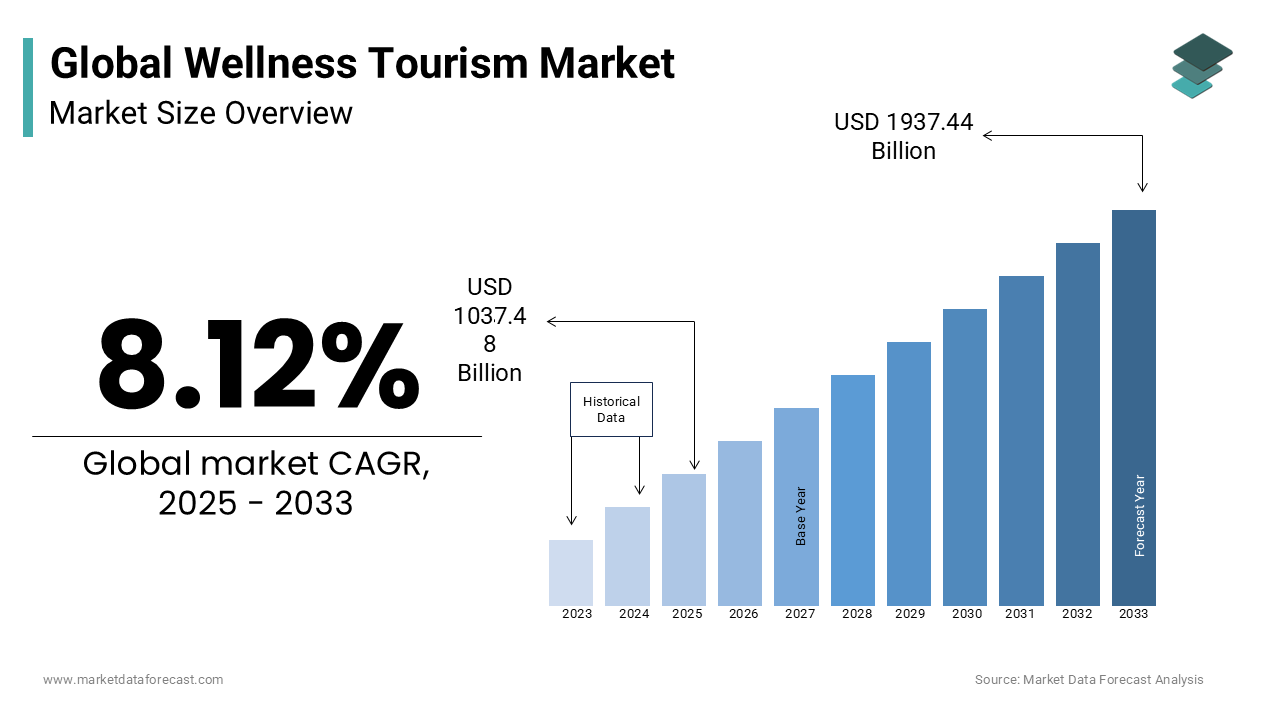
Wellness tourism represents a specialized sector within the global travel industry where travelers pursue activities that enhance their physical, mental, spiritual, or social well-being. This distinct form of tourism goes beyond traditional leisure by integrating health-promoting services such as spa treatments, yoga retreats, medical checkups, and nutritional counseling into the travel experience. According to the Global Wellness Institute, wellness tourism is defined by the intention of the traveler to maintain or enhance personal well-being, which differentiates it from general vacationing. As per the World Health Organization, noncommunicable diseases account for 74% of all deaths globally, prompting individuals to seek preventive health measures through lifestyle changes, including travel. The modern traveler increasingly views vacations as an opportunity for rejuvenation rather than mere escapism, driving demand for holistic experiences. Regulatory bodies in various countries are establishing standards for wellness facilities to ensure quality and safety, further professionalizing the sector. The integration of technology, such as wearable health monitors, allows tourists to track their progress during retreats, adding a data-driven dimension to their journey. Infrastructure development in remote natural locations facilitates access to serene environments essential for mental restoration. This convergence of healthcare, hospitality, and tourism creates a dynamic ecosystem that caters to a growing demographic of health-conscious consumers seeking meaningful and transformative travel experiences.
MARKET DRIVERS
Rising Prevalence of Chronic Stress And Burnout Drives Demand For Mental Restoration
The escalating levels of chronic stress and occupational burnout among the global workforce are driving the global wellness tourism market growth as individuals seek effective methods to restore mental equilibrium. Modern work environments, characterized by constant connectivity and high-performance expectations, have led to a mental health crisis that traditional vacations often fail to address. According to the World Health Organization, depression and anxiety disorders cost the global economy an estimated $1 trillion annually in lost productivity, highlighting the urgent need for effective interventions. As per the American Psychological Association, 75% of adults report experiencing moderate-to-high levels of stress, which manifests in physical and emotional exhaustion. Wellness tourism offers structured environments such as meditation retreats, digital detox centers, and mindfulness workshops that provide tools for stress management and psychological resilience. These experiences allow travelers to disconnect from daily pressures and engage in restorative practices under professional guidance. The therapeutic value of nature immersion, combined with guided mental health activities, creates a powerful antidote to urban fatigue. Corporate sectors are increasingly recognizing this trend, with many companies offering wellness travel incentives to employees as part of retention strategies. This shift from reactive healthcare to proactive mental well-being ensures sustained demand for tourism products that prioritize psychological restoration and emotional balance.
Increasing Consumer Focus On Preventive Healthcare And Longevity Influences Travel Choices
A growing consumer emphasis on preventive healthcare and longevity is significantly influencing travel decisions as individuals prioritize investments that extend healthspan and improve quality of life, which is further propelling the global market expansion. Rather than waiting for illness to occur, travelers are proactively seeking experiences that optimize their physiological function and delay aging processes. According to the Centers for Disease Control and Prevention, chronic diseases such as heart disease and diabetes are leading causes of death and disability, but many are preventable through lifestyle modifications. As per the Global Wellness Economy Monitor, consumers are shifting spending from curative medical treatments to preventive wellness activities, including fitness camps, nutritional coaching, and diagnostic health screenings during travel. Destinations offering comprehensive health assessments, personalized fitness programs, and organic culinary experiences attract this demographic seeking tangible health benefits. The rise of biohacking and precision medicine has further fueled interest in high-tech wellness resorts that offer advanced therapies such as cryotherapy, hyperbaric oxygen treatment, and genetic testing. Travelers view these expenditures as investments in their long-term health rather than discretionary spending. This paradigm shift aligns with broader societal trends toward health optimization and self-care. The desire to age gracefully and maintain vitality drives demand for specialized wellness tourism products that combine luxury with scientific rigor, ensuring continued market expansion.
MARKET RESTRAINTS
High Cost of Premium Wellness Experiences Restricts Mass Market Accessibility
The substantial financial investment required for premium wellness tourism experiences is majorly hampering the expansion of the global wellness tourism market. High-end wellness resorts and specialized retreats often charge premium prices due to the cost of expert practitioners, luxurious accommodations, and exclusive facilities, which are beyond the reach of average consumers. According to the Global Wellness Institute, the average expenditure for a wellness tourist is significantly higher than that of a typical tourist, with some luxury retreats costing thousands of dollars per week. As per the Bureau of Labor Statistics, wage growth in many developed nations has not kept pace with rising living costs, making expensive wellness trips a lower priority compared to essential expenses. The perception of wellness tourism as a luxury good rather than a necessary health intervention further limits its appeal to price-sensitive consumers. Economic downturns and inflationary pressures exacerbate this issue as travelers cut back on non-essential, high-cost items. While budget-friendly options exist, they often lack the comprehensive services and professional guidance that define high-value wellness experiences. This pricing barrier creates a disparity in access to health-promoting travel opportunities. Until more affordable models emerge, the market will remain niche, catering primarily to high-net-worth individuals, thereby restricting overall volume growth and widespread adoption across diverse economic groups.
Lack of Standardized Regulations and Quality Assurance Creates Consumer Uncertainty
The absence of unified global standards and rigorous quality assurance mechanisms in the wellness tourism industry creates uncertainty for consumers regarding the efficacy and safety of offered services, which is further impeding the wellness tourism market growth. Unlike the medical tourism sector, which is heavily regulated, wellness tourism operates in a gray area where claims about health benefits are often unsubstantiated and practitioner qualifications vary widely. According to the World Health Organization, there is no single international regulatory framework governing wellness practices, leading to inconsistencies in service quality and safety protocols across different destinations. As per the International Spa Association, while certification programs exist, they are not mandatory, resulting in a fragmented landscape where unqualified providers may offer potentially harmful treatments. Consumers face difficulties in distinguishing between evidence-based therapies and pseudoscientific practices, leading to skepticism and hesitation. Incidents of ineffective or unsafe treatments can damage the reputation of the entire industry, discouraging potential travelers. The lack of transparency in pricing and service outcomes further complicates decision-making for tourists. Without standardized accreditation and clear regulatory oversight, trust remains fragile. This regulatory vacuum hinders the professionalization of the sector and limits its integration with mainstream healthcare systems. Establishing robust quality standards is essential to build consumer confidence and ensure sustainable market growth.
MARKET OPPORTUNITIES
Integration of Digital Health Technologies and Personalized Data Analytics Creates New Value Propositions
The integration of digital health technologies and personalized data analytics presents a significant opportunity for wellness tourism providers to enhance service customization and demonstrate tangible health outcomes to travelers. Wearable devices, mobile applications, and artificial intelligence algorithms enable real-time monitoring of physiological metrics, allowing for highly tailored wellness programs that adapt to individual needs. According to the Global Wellness Institute, the convergence of technology and wellness is creating new categories such as digital detox retreats and tech-enabled health tracking experiences that appeal to data-driven consumers. As per research by McKinsey and Company, consumers are increasingly willing to share personal health data in exchange for personalized recommendations and improved service delivery. Wellness resorts can leverage this data to design precise nutrition plans, fitness routines, and sleep optimization strategies that provide measurable results. This evidence-based approach differentiates premium providers from competitors and justifies higher price points. Partnerships with tech companies facilitate the development of proprietary platforms that enhance guest engagement and loyalty. The ability to track progress before, during, and after the trip extends the value proposition beyond the travel period. This technological evolution transforms wellness tourism from a passive experience into an active health management tool. Embracing digital innovation allows providers to capture a tech-savvy demographic and drive repeat business through demonstrated efficacy.
Expansion into Corporate Wellness Programs and Employee Retreats Opens B2B Revenue Streams
The expanding focus on corporate wellness and employee well-being offers a lucrative opportunity for wellness tourism providers to tap into the business-to-business market through organized retreats and incentive programs. Companies are increasingly recognizing that employee health directly impacts productivity, retention, and organizational culture, leading to increased investment in wellness-related travel. According to the Society for Human Resource Management, over 80% of employers offer some form of wellness program, with many incorporating travel components such as team-building retreats and stress management workshops. As per Deloitte, organizations are shifting from transactional wellness benefits to holistic experiences that foster connection and rejuvenation among staff. Wellness tourism operators can develop customized packages that address specific corporate needs such as leadership development, mindfulness training, and physical fitness challenges. These B2B contracts provide stable revenue streams and fill occupancy during off-peak seasons. The trend toward remote work has also enabled companies to organize distributed wellness retreats for dispersed teams. By positioning wellness tourism as a strategic human resource tool, providers can access large corporate budgets. This segment offers higher volume and predictable demand compared to individual leisure travelers. Developing strong relationships with corporate clients ensures long-term partnerships and sustained growth in the professional wellness market.
MARKET CHALLENGES
Ensuring Authenticity and Avoiding Greenwashing Maintains Brand Credibility
A major challenge for the wellness tourism market is maintaining authenticity and avoiding greenwashing as consumers become more discerning about the environmental and social impact of their travel choices. Many destinations claim to be eco-friendly or spiritually authentic without implementing genuine sustainable practices or respecting local cultures, leading to consumer backlash and reputational damage. According to the United Nations World Tourism Organization, tourists are increasingly scrutinizing the sustainability credentials of travel providers, demanding transparency in sourcing, labor practices, and environmental conservation efforts. As per the Global Sustainable Tourism Council, only a small fraction of tourism businesses meet rigorous sustainability standards, creating a gap between marketing claims and actual operations. Wellness tourists often seek connections with nature and local traditions, making them particularly sensitive to exploitative or superficial practices. Providers must invest in verifiable sustainability initiatives such as renewable energy use, waste reduction, and community engagement to build trust. Failure to deliver on authenticity promises can lead to negative reviews and loss of customer loyalty. The complexity of verifying supply chains and operational impacts adds administrative burden. Balancing commercial interests with ethical responsibilities requires commitment and resources. Overcoming this challenge is critical for long-term viability as informed consumers drive market preferences toward genuinely responsible and authentic wellness experiences.
Managing Seasonality and Geographic Concentration Impacts Operational Stability
The inherent seasonality of many wellness destinations and the geographic concentration of popular hubs pose significant operational challenges for wellness tourism providers, which is further challenging the global wellness tourism market expansion. Many wellness resorts rely on favorable weather conditions or natural phenomena such as hot springs, which limit their operating windows and create peaks and troughs in demand. According to the European Travel Commission, seasonal fluctuations can result in occupancy rates dropping below 40% during off-peak months, leading to financial strain and staff turnover. As per the World Travel and Tourism Council, geographic concentration in regions like Southeast Asia and Europe creates intense competition and vulnerability to local disruptions such as political instability or natural disasters. Providers struggle to maintain consistent cash flow and retain skilled personnel during low seasons. Diversifying offerings to include indoor wellness activities or targeting different source markets can mitigate these effects but requires additional investment. The reliance on specific natural assets limits scalability and replication. Climate change further exacerbates seasonality issues by altering weather patterns and affecting the reliability of natural resources. Managing these operational vulnerabilities requires strategic planning and financial resilience. Without effective mitigation strategies, providers face a heightened risk of business failure during downturns. Addressing seasonality and geographic risks is essential for sustainable growth in the wellness tourism sector.
REPORT COVERAGE
| REPORT METRIC | DETAILS |
| Market Size Available | 2025 to 2034 |
| Base Year | 2025 |
| Forecast Period | 2026 to 2034 |
| Segments Covered | By Service, Travel Purpose, Travel Type, and Region |
| Various Analyses Covered | Global, Regional & Country Level Analysis, Segment-Level Analysis, Drivers, Restraints, Opportunities, Challenges; PESTLE Analysis; Porter’s Five Forces Analysis; Competitive Landscape, Analyst Overview of Investment Opportunities |
| Regions Covered | North America, Europe, Asia Pacific, Latin America, Middle East & Africa |
| Market leaders profiled | Accor SA, Allergan PLC, Canyon Ranch, Fitpacking, Four Seasons Hotels Ltd., Galderma SA, Hilton Hotels and Resorts, Hyatt Corporation, KPJ Healthcare Berhad, Marriott International, Inc., Miraval Group, Omni Hotels & Resorts, Radisson Hotel Group |
SEGMENTAL ANALYSIS
By Service Insights
The lodging segment dominated the market by capturing the highest share of the global market in 2025 as it serves as the foundational infrastructure for all wellness travel experiences. Whether staying at a dedicated wellness resort, a spa hotel or a retreat center, accommodation is the primary expense and the central hub where wellness activities, dining and relaxation occur. The transformation of traditional hospitality assets into wellness-centric accommodations drives the dominance of the lodging segment. Hotels and resorts are increasingly incorporating specialized facilities such as sleep optimization rooms, air purification systems, circadian lighting, and in-room fitness equipment to cater to health-conscious travelers. According to the Global Wellness Institute, wellness real estate and hospitality sectors are growing faster than conventional construction, with wellness-focused properties commanding premium rates. As per the American Hotel and Lodging Association, over 60% of luxury hotels now offer dedicated wellness floors or suites equipped with advanced health monitoring technologies. This integration allows providers to capture higher average daily rates and extend the length of stay. Travelers prioritize accommodations that support their health goals, making lodging the primary decision factor in trip planning. The physical environment of the lodging facility directly impacts the perceived value of the wellness experience. Investment in sustainable building materials and biophilic design further enhances appeal. These structural enhancements ensure that lodging remains the core revenue generator in the wellness tourism ecosystem.
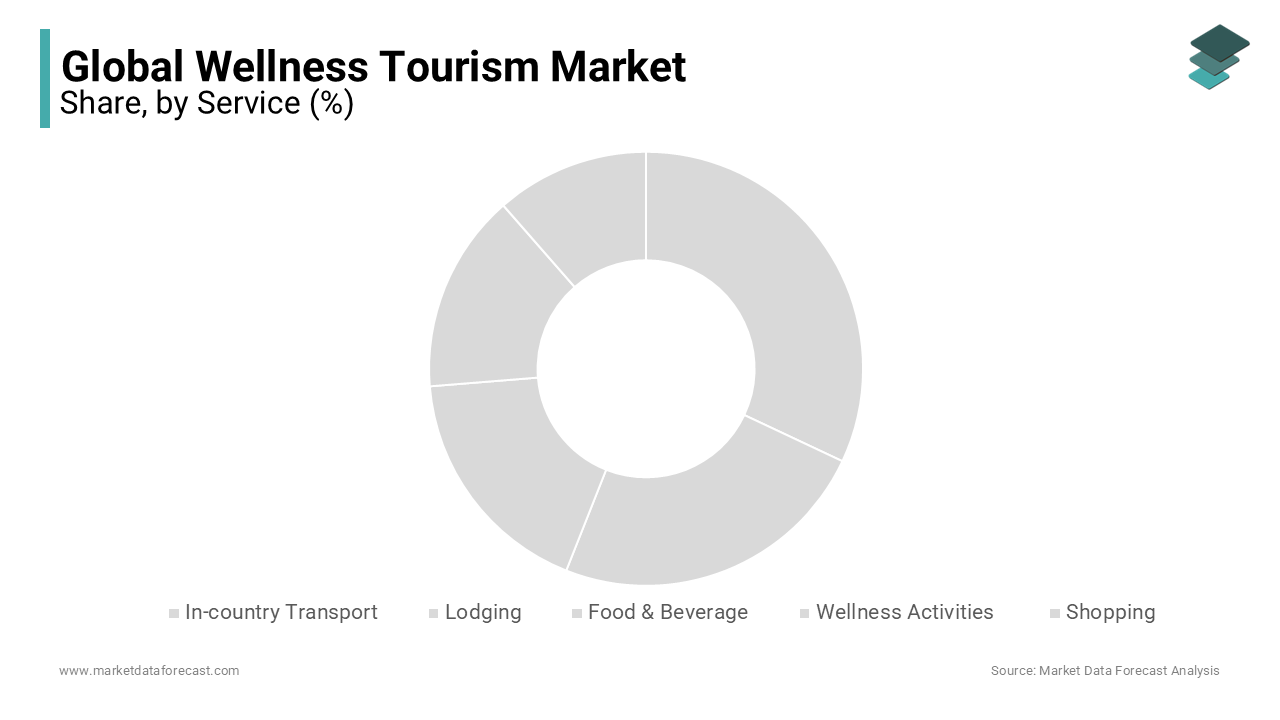
However, the wellness activities segment is predicted to record a promising CAGR in the global market over the forecast period owing to the increasing demand for experiential and transformative travel experiences that go beyond passive relaxation. Modern travelers are shifting from passive consumption to active participation, seeking immersive experiences that provide personal growth and skill acquisition. Activities such as yoga retreats, meditation workshops, hiking trails, and mindfulness courses are becoming central to travel itineraries. According to the Adventure Travel Trade Association, the market for active wellness travel, including hiking and cycling tours, has grown by 12% annually as consumers seek physical challenge combined with mental clarity. As per the Global Wellness Institute, spiritual and mindfulness travel is one of the fastest-expanding niches, with millions of travelers participating in retreats globally. These activities offer tangible takeaways such as improved mental resilience or physical fitness, which enhance the perceived value of the trip. Social media amplifies this trend as users share transformative experiences, driving peer influence. Providers are diversifying offerings to include digital detox programs and creative arts therapies. This shift toward active engagement fuels rapid growth in the activities segment as it differentiates wellness tourism from standard vacations.
By Travel Purpose Insights
The primary wellness tourism segment led the market by holding the largest share of the global market in 2025 as it represents the core definition of wellness travel where every aspect of the journey is designed around health objectives. Travelers engaging in primary wellness tourism make deliberate choices to prioritize their health, resulting in higher engagement and spending. These individuals specifically select destinations and providers based on their ability to deliver specific health outcomes such as weight loss, stress reduction, or detoxification. According to the Global Wellness Institute, primary wellness tourists spend significantly more per trip than secondary wellness tourists as they purchase comprehensive packages including treatments, consultations, and specialized meals. As per the Centers for Disease Control and Prevention, the rising awareness of preventive healthcare motivates individuals to dedicate entire vacations to health improvement rather than treating it as an add-on. This intentional behavior creates loyal customers who return regularly for maintenance. The clarity of purpose allows providers to tailor services precisely, enhancing satisfaction. Medical wellness retreats and specialized spas cater exclusively to this segment, ensuring high occupancy. The commitment to health goals ensures that primary wellness tourism remains the largest and most stable component of the market.
Secondary wellness tourism occurs when travelers maintain or enhance their well-being while traveling for other primary purposes such as business or leisure. This segment is growing rapidly as wellness becomes integrated into all aspects of life and travel. The blurring lines between work, leisure, and health has led to the widespread adoption of wellness practices during non-wellness-specific trips. Business travelers increasingly incorporate gym sessions, healthy dining, and spa treatments into their itineraries to manage stress and maintain routine. According to the Global Business Travel Association, over 70% of corporate travelers prioritize hotels with wellness amenities such as fitness centers and healthy menus. As per the World Travel and Tourism Council, leisure travelers are also seeking wellness options such as running maps and healthy local food guides to enhance their vacation experience. This integration expands the total addressable market as almost every traveler becomes a potential wellness consumer. Hotels and airlines are responding by offering wellness-focused upgrades and services. The convenience of accessing wellness without dedicating a whole trip to it appeals to time-constrained individuals. This ubiquitous adoption drives the rapid growth of the secondary segment.
By Travel Type Insights
The domestic segment held the major share of the global market in 2025. Domestic wellness tourism involves travelers visiting wellness destinations within their own country. It holds the largest share of the market due to convenience, affordability, and reduced logistical barriers. Domestic wellness trips eliminate international flight costs, visa requirements, and language barriers, making them more affordable and accessible for regular participation. According to the United States Travel Association, domestic travel accounts for over 80% of all tourism spending, with wellness being a significant component. As per the Global Wellness Institute, domestic wellness tourists take more frequent trips than international travelers, contributing to higher overall volume. The ability to drive or take short flights reduces travel time and stress, aligning with the goal of wellness. Local destinations often offer familiar cultural contexts which enhance comfort. Government initiatives promoting domestic tourism further support this segment. The frequency of domestic trips ensures steady revenue for local wellness providers. This accessibility makes domestic wellness tourism the backbone of the market.
However, the international segment is the fastest-growing segment and is expected to exhibit the fastest CAGR in the global market during the forecast period due to the rising desire for exotic experiences, specialized treatments, and cultural immersion. Travelers are increasingly venturing abroad to experience authentic wellness traditions such as Ayurveda in India, thermal baths in Hungary, or meditation in Thailand. According to the Pacific Asia Travel Association, wellness tourism is a key driver of international arrivals in Asia-Pacific, with millions of visitors seeking traditional healing practices. As per the Global Wellness Institute, international wellness tourists spend significantly more per trip than domestic travelers due to the inclusion of long-haul flights and premium accommodations. The allure of experiencing wellness in its cultural origin adds value to the trip. Social media inspires travelers to seek out bucket-list wellness destinations. This desire for authenticity and uniqueness drives rapid growth in international travel. Providers in destination countries are upgrading facilities to meet international standards. This cross-border exchange of wellness culture fuels the fastest growth segment.
REGIONAL ANALYSIS
North America Wellness Tourism Market Analysis
North America captured 32.3% of the global market share in 2025 and is poised for continued growth as the region leverages its mature market and consumer focus on longevity, with specialized mental health and senior wellness offerings leading the way. The dominance of North America in the global market is further driven by high disposable incomes, advanced healthcare infrastructure, and strong cultural emphasis on fitness and prevention. The United States is the primary contributor with a vast network of wellness resorts, spas, and fitness retreats. According to the Global Wellness Institute, North America leads in wellness real estate and hospitality investment, supporting robust tourism infrastructure. As per the U.S. Department of Commerce, domestic wellness travel is a major economic driver with millions of trips taken annually. Canada contributes with its natural landscapes, offering eco-wellness and outdoor adventure tourism. The region benefits from high health literacy and consumer willingness to pay for premium wellness experiences. Corporate wellness programs further stimulate business-related wellness travel. Technological innovation in health tracking and personalized wellness is prevalent. The mature market continues to grow through product differentiation and expansion into niche segments. Regulatory standards ensure high-quality services, maintaining consumer trust.
Europe Wellness Tourism Market Analysis
Europe is expected to maintain its prominence by integrating its rich heritage of thermal and medical spa culture with modern sustainability and eco-wellness initiatives over the coming years. The region occupies the second-largest position in the global wellness tourism market, characterized by its rich heritage of thermal spas, medical wellness, and nature-based retreats. Countries like Germany, Austria, and Hungary are renowned for their Kur culture and medical spa traditions. According to the European Spas Association, Europe has the highest concentration of certified medical spas globally, attracting millions of health tourists annually. As per the World Travel and Tourism Council, wellness tourism is a key strategy for rural development in many European regions. The region benefits from strong public health systems that often subsidize preventive wellness treatments. Cultural acceptance of wellness as part of lifestyle supports steady demand. Sustainable and eco-friendly wellness tourism is particularly strong in Northern Europe. The diversity of offerings from luxury alpine retreats to coastal thalassotherapy centers caters to varied preferences. Government support for health tourism promotes cross-border visits. Europe remains a leader in integrating medical credibility with leisure tourism.
Asia Pacific Wellness Tourism Market Analysis
Asia Pacific is projected to experience a surge in growth as the region increasingly blends its traditional healing wisdom with advanced modern hospitality, positioning itself as a top choice for global wellness seekers. It represents the fastest-growing region in the global wellness tourism market, driven by ancient healing traditions, rapid economic growth, and an expanding middle class. Countries like India, Thailand, and Bali are global hubs for yoga, Ayurveda, and meditation retreats. According to the Pacific Asia Travel Association, wellness tourism arrivals in Asia Pacific have grown by double digits annually as international travelers seek authentic experiences. As per the China Tourism Academy, domestic wellness tourism is surging in China, driven by government health initiatives and rising health awareness. Japan and South Korea contribute with advanced medical wellness and onsen culture. The region offers cost-effective, high-quality services, attracting budget and luxury travelers alike. Infrastructure development in remote areas improves accessibility. Government policies promoting medical and wellness tourism boost investment. The combination of traditional wisdom and modern hospitality creates a unique value proposition. Asia Pacific is poised to become the largest market in the coming years.
Latin America Wellness Tourism Market Analysis
Latin America is anticipated to see rising interest as the region emphasizes its unique biodiversity and community-based wellness initiatives to attract international travelers seeking authentic connections with nature. The region holds an emerging share of the global wellness tourism market, driven by its natural biodiversity, indigenous healing traditions, and growing eco-tourism sector. Countries like Costa Rica, Mexico, and Brazil are popular for jungle retreats, yoga camps, and thermal springs. According to the Inter-American Development Bank, eco-wellness tourism is a key driver of sustainable development in the region. As per the World Tourism Organization, Latin America attracts travelers seeking connection with nature and spiritual renewal. The region benefits from favorable climates and diverse landscapes. Local communities are increasingly involved in wellness tourism, providing authentic cultural experiences. Infrastructure improvements are enhancing accessibility to remote wellness destinations. Government support for sustainable tourism practices encourages investment. The market is growing as international awareness of Latin American wellness offerings increases. Challenges remain in standardization and safety, but the potential for growth is significant.
Middle East and Africa Wellness Tourism Market Analysis
The Middle East and Africa are likely to witness significant expansion as the region continues to invest in luxury medical wellness infrastructure and leverages its unique natural and cultural assets for wellness travelers. The region represents a nascent but promising market for wellness tourism, driven by luxury developments in the Gulf and natural wellness resources in Africa. The United Arab Emirates and Saudi Arabia are investing heavily in luxury wellness resorts and medical tourism hubs. According to the Gulf Cooperation Council Secretariat, wellness tourism is a priority sector for economic diversification in the region. As per the African Tourism Board, countries like Morocco and South Africa offer unique wellness experiences such as hammam rituals and safari wellness retreats. The region benefits from high spending power in the Gulf and unique natural assets in Africa. Government initiatives such as Saudi Vision 2030 include wellness tourism as a key pillar. Investment in infrastructure and international partnerships is accelerating growth. The market is transitioning from traditional hospitality to specialized wellness offerings. Cultural and religious tourism also intersects with wellness. The region offers significant untapped potential for future expansion.
COMPETITIVE LANDSCAPE
The competition in the global wellness tourism market is characterized by intense rivalry among international hotel chains independent boutique resorts and specialized wellness retreat operators striving to capture the attention of health conscious travelers. Large hospitality groups leverage their brand recognition and global distribution networks to offer standardized wellness amenities across multiple locations ensuring consistency and reliability for guests. Independent operators compete by providing unique authentic and highly personalized experiences often rooted in local traditions and natural settings that large chains cannot easily replicate. Innovation in wellness offerings such as integrating artificial intelligence for health tracking or offering specialized medical wellness programs serves as a key differentiator. Price competition is moderate as consumers prioritize quality and efficacy over cost but value for money remains important. Sustainability and ethical practices are increasingly critical factors influencing consumer choice forcing competitors to adopt green initiatives. Digital marketing and social media presence play crucial roles in attracting younger demographics who seek instagrammable and transformative experiences. The market remains fragmented with numerous niche players offering specialized services requiring established brands to continuously innovate and adapt to maintain their competitive edge and market share.
KEY MARKET PLAYERS
Some of the companies that are playing a dominating role in the Global Wellness Tourism Market include
- Accor SA
- Allergan PLC
- Canyon Ranch
- Fitpacking
- Four Seasons Hotels Ltd.
- Galderma SA
- Hilton Hotels & Resorts
- Hyatt Corporation
- KPJ Healthcare Berhad
- Marriott International, Inc.
- Miraval Group
- Omni Hotels & Resorts
- Radisson Hotel Group
- Rancho La Puerta Inc.
- Shangri-La Asia Ltd
Top Players in the Global Wellness Tourism Market
Marriott International Inc
Marriott International Inc significantly influences the global wellness tourism market through its extensive portfolio of luxury and lifestyle brands that integrate comprehensive wellness amenities. The company has launched the Westin Wellbeing Movement focusing on sleep nutrition movement mindfulness and community to enhance guest health. Recently Marriott International Inc expanded its partnership with Peloton to offer in room fitness classes across select properties strengthening its appeal to fitness oriented travelers. They also introduced healthy menu options developed by nutritionists in their dining outlets catering to health conscious guests. These initiatives reinforce their position as a leader in hospitality wellness by providing accessible and high quality health focused experiences. By leveraging their global scale Marriott ensures consistent wellness standards while adapting to local preferences thereby driving customer loyalty and repeat visitation in the competitive travel sector.
Hilton Worldwide Holdings Inc
Hilton Worldwide Holdings Inc contributes extensively to the wellness tourism sector by embedding well being into its core operational strategy through the Hilton Effect program. This initiative focuses on five pillars including mind body food community and purpose to create holistic guest experiences. Recently Hilton Worldwide Holdings Inc partnered with Headspace to provide guided meditation content in hotel rooms enhancing mental wellness offerings for travelers. They also upgraded fitness centers with advanced equipment and virtual training sessions to meet evolving consumer expectations. These actions strengthen their market position by differentiating their brand through tangible health benefits. Hilton leverages its digital platform to personalize wellness recommendations ensuring guests receive tailored support. Their commitment to employee well being also translates into better guest service creating a positive cycle of health and hospitality excellence globally.
Accor SA
Accor SA plays a vital role in the global wellness tourism market by integrating wellness into its diverse brand ecosystem ranging from luxury to economy segments. The group has developed the Accor Live Limitless program which includes wellness rewards and partnerships with fitness providers. Recently Accor SA launched sustainable and wellness focused hotel concepts such as JO&JOE which emphasize community health and active lifestyles. They also collaborated with Technogym to equip hotels with state of the art fitness solutions strengthening their physical wellness infrastructure. These strategic moves enhance their appeal to modern travelers seeking balanced and healthy travel experiences. Accor focuses on local wellness traditions in various regions offering authentic spa and culinary experiences. Their approach combines global standards with local authenticity ensuring broad market relevance and sustained growth in the wellness tourism industry.
Top Strategies Used by Key Market Participants
Key participants in the wellness tourism market prioritize strategic partnerships with health tech firms and fitness brands to integrate digital wellness solutions into hospitality services enhancing guest engagement and personalization. Companies invest heavily in sustainable practices and eco friendly infrastructure to appeal to environmentally conscious travelers who value ethical and healthy environments. Development of specialized wellness packages including mental health retreats digital detox programs and personalized nutrition plans helps differentiate offerings in a crowded marketplace. Expansion into emerging markets with rich natural resources and traditional healing practices allows brands to tap into new customer bases seeking authentic experiences. Training staff in wellness coaching and mindfulness techniques ensures high quality service delivery and enhances the overall guest experience. Leveraging data analytics to understand consumer health preferences enables targeted marketing and customized service recommendations. These combined strategies help vendors build strong brand loyalty and capture growing demand for holistic travel experiences.
RECENT MARKET HAPPENINGS
- In November 2024, the Jakarta-Bali Medical Tourism Campaign 2024-2026 was launched by the Indonesian authorities. It is a strategic initiative aimed at promoting the country as a prime location for medical and wellness tourism, particularly between the two popular regions of Bali and Jakarta.
- In October 2024, the Philippines government revealed an ambitious campaign to establish the nation as a prominent location for wellness tourism. It inaugurated a significant tourism initiative for wellness and health with the International Health and Wellness Tourism Congress (IHWTC) held in Taguig City. Moreover, this event was attended by First Lady Liza Marcos and headed by Tourism Secretary Christina Frasco, signifying a pivotal step towards making the Philippines a main center for this tourism within the Asia Pacific. This program gained momentum from the Global Wellness Institute’s (GWI) recently disclosed study at the 18th Global Wellness Summit (GWS) in the United Kingdom.
- In September 2024, it was reported that The Wellness Co has obtained INR 60 crore in funding from EasyMyTrip, an online travel aggregator, in giving a 30 per cent equity stake in its parent company, Rollins International Pvt Ltd. In addition, the investment will allow The Wellness Co to broaden its footprint in key urban centers all over India and abroad, capitalizing on the increasing demand for wellness tourism, according to the company. Lately in the same month, Inc42 reported that Easy Trip Planners, the parent company of EasyMyTrip, approved the purchase of two firms for a combined total of INR 90 crore.
- In September 2024, the WTT Wellness Certificate for resorts and hotels was introduced by the Wellness in Travel & Tourism (WITT). It is the first-ever certificate for wellness and was launched with the goal of revolutionising the hospitality industry by offering esteemed or renowned certificate standards that distinguish properties in a competitive landscape, allowing them to improve their wellness services and attract or lure visitors or travellers.
- In February 2019, Aman Spa opened Amanpuri, a wellness center in Thailand that also provides medical services.
- In May 2019, InterContinental Hotels bought Six Senses Hotels Resorts Spas, a leading operator of hotels, spas, and resorts.
- In March 2019, OneSpaWorld, a provider of health and wellness services for cruise ships and resorts, announced a joint venture with Haymaker Acquisition Corp., an acquisition company, to form OneSpaWorld Holdings Ltd., a new holding company.
MARKET SEGMENTATION
This research report on the global wellness tourism market has been segmented and sub-segmented based on service, travel purpose, travel type, and region.
By Service
- Lodging
- Wellness Activities
- Food & Beverage
- In-country Transport
- Shopping
By Travel Purpose
- Primary
- Secondary
By Travel Type
- Domestic
- International
By Region
- North America
- Europe
- Asia-Pacific
- Latin America
- Middle East and Africa