- Product Description Description
- Table of Contents TOC
- List of Table & Figure LOT
- Get Free Sample PDF Sample PDF
Market Size, 2025
$175.1 BnMarket Estimate, 2026
$189.47 BnMarket Forecast, 2034
$356.2 BnCAGR, 2026–2034
8.2%Global Decorative Paints and Coatings Market Report Summary
The global decorative paints and coatings market was valued at USD 175.09 billion in 2025 and is estimated to reach USD 189.47 billion in 2026 and USD 356.19 billion by 2034, growing at a CAGR of 8.21% during the forecast period. Market growth is driven by increasing residential and commercial construction activities, rising renovation and remodeling trends, and growing demand for aesthetically enhanced interior and exterior spaces. Decorative paints and coatings are widely used for protection, durability, and visual enhancement across residential, commercial, and institutional buildings. The growing focus on sustainable coatings, low VOC formulations, and premium decorative finishes is further supporting global market expansion.
Key Market Trends
- Rising residential and commercial construction activities are driving market growth.
- Increasing home renovation and remodeling projects are boosting decorative coating demand.
- Growing consumer preference for premium finishes and aesthetic interior solutions is supporting market expansion.
- Expansion of sustainable and low VOC coating technologies is enhancing product adoption.
- Innovation in antimicrobial coatings, weather resistant formulations, and eco friendly paint solutions is influencing market development.
Segmental Insights
- Based on resin type, the acrylic resin segment accounted for 43.2% of the global decorative paints and coatings market share in 2026. This dominance is attributed to excellent durability, weather resistance, and broad applicability across interior and exterior decorative applications.
- Based on product, the emulsion paint segment held 46.8% of the global decorative paints and coatings market share in 2025, supported by ease of application, low odor characteristics, and growing residential demand.
- Based on application, the residential segment accounted for 34.4% of the global decorative paints and coatings market share in 2025, driven by increasing housing development and home improvement activities.
Regional Insights
- Asia Pacific accounted for 45.3% of the global decorative paints and coatings market share in 2025 and emerged as the leading regional market. The region’s dominance is supported by rapid urbanization, expanding infrastructure development, and rising residential construction activities across major economies.
Competitive Landscape
The global decorative paints and coatings market is highly competitive, with key players focusing on sustainable coating technologies, premium decorative finishes, and expansion of production capabilities to strengthen their market position. Companies are investing in low emission technologies, product innovation, and advanced coating performance solutions. Prominent players in the global decorative paints and coatings market include PPG Industries, Datacor, Inc., AkzoNobel N.V., RPM International Inc., Asian Paints, Becker Group, Sherwin Williams Company, KCC Corporation, Masco Corporation, Koninklijke DSM N.V., Kansai Paints Co., Ltd., Henkel AG & Co., Jotun Group, Axalta Coating Systems Ltd., DAW SE, BASF SE, Dulux Group Ltd., and Nippon Paint Co. Ltd..
Global Decorative Paints and Coatings Market Size
The global decorative paints and coatings market size was valued at USD 175.09 billion in 2025 and is projected to reach USD 356.19 billion by 2034 from USD 189.47 billion in 2026, growing at a CAGR of 8.21%.
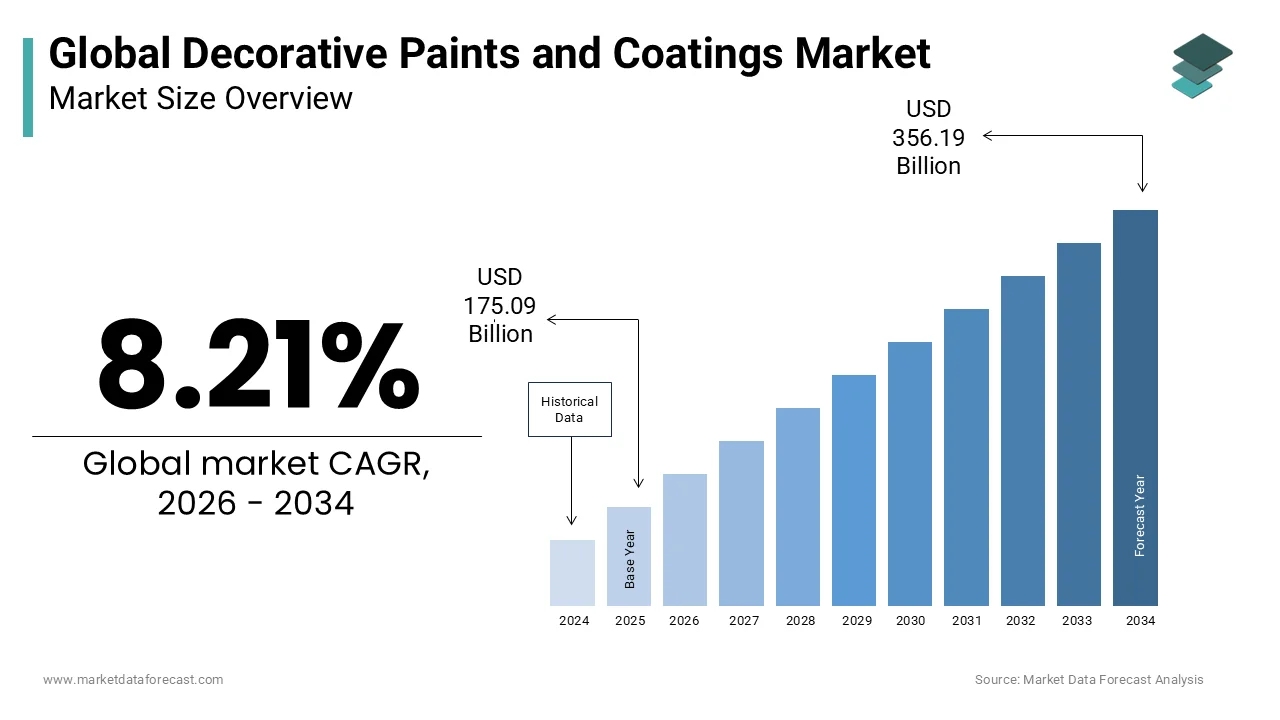
The decorative paints and coatings are liquid and powder formulations applied to residential commercial and industrial structures, primarily for aesthetic enhancement and surface protection. These products include emulsions enamels varnishes and stains that serve both functional and decorative purposes. As per the United States Census Bureau, there were approximately 1.4 million new housing units authorized in 2023 indicating a robust foundation for demand in the new construction sector. According to the Joint Center for Housing Studies of Harvard University, spending on home improvements reached record highs as homeowners sought to upgrade living spaces during periods of remote work. The environmental impact of these coatings is significant with the Environmental Protection Agency noting that architectural coatings are a source of volatile organic compounds which contribute to ground level ozone formation. Consequently, regulatory bodies are pushing for low VOC formulations. The industry has shifted significantly towards water-based technologies to comply with these stricter environmental standards. Furthermore, the longevity of building infrastructure drives recurring demand for repainting services. The Bureau of Labor Statistics indicates that employment in painting and wall covering contractors remains steady reflecting consistent maintenance needs.
MARKET DRIVERS
Surge in Residential Renovation and Remodeling Activities
The surge in residential renovation and remodeling activities, as homeowners increasingly invest in upgrading existing properties rather than moving is propelling the growth of the decorative paints and coatings market. This trend is fueled by high interest rates and limited inventory in the housing market which discourage new purchases and encourage improvement of current homes. As per the Joint Center for Housing Studies of Harvard University, annual spending on home improvements and repairs in the United States exceeded 400 billion dollars in recent years demonstrating the massive scale of this sector. Decorative paints are the most accessible and cost-effective way to transform interior and exterior spaces driving frequent repurchase cycles. The National Association of Home Builders reports that remodeling projects often involve multiple coats of paint for walls trim and ceilings creating substantial volume demand. Additionally, the rise of do it yourself culture empowered by online tutorials and social media inspiration has increased the frequency of small scale painting projects. Consumers are experimenting with bold colors and textured finishes which require specialized coatings. The pandemic induced shift towards remote work also led to the creation of home offices and living spaces necessitating aesthetic updates. According to Houzz a leading platform for home remodeling and design over 50% of homeowners plan to decorate or update their interiors within the next year. This sustained focus on personalization and comfort ensures a steady baseline demand for decorative paints regardless of new construction fluctuations.
Urbanization and Expansion of Commercial Infrastructure
The rapid urbanization and the subsequent expansion of commercial infrastructure is boosting the growth of the decorative paints and coatings market. As populations concentrate in urban centers, the construction of office buildings retail spaces hotels and educational institutions accelerates. As per the United Nations Department of Economic and Social Affairs, 68% of the world population is projected to live in urban areas by 2050 creating immense pressure for commercial development. These structures require durable and visually appealing coatings to attract tenants and customers. The International Council of Shopping Centers notes that retail environments are increasingly using color psychology and branded interiors to enhance customer experience driving demand for custom decorative solutions. Hospitality sectors such as hotels and restaurants frequently refresh their interiors to maintain competitiveness leading to regular repainting cycles. Furthermore, government investments in public infrastructure, such as airports hospitals and schools will also escalate the growth of the market. The American Institute of Architects reports strong billings in institutional and commercial sectors indicating robust future construction activity. Commercial projects often utilize higher volumes of paint per square foot due to complex designs and branding requirements. The need for low odor and fast drying coatings in occupied commercial spaces also drives innovation and product differentiation. Urban renewal projects in older cities further stimulate demand for exterior facade treatments.
MARKET RESTRAINTS
Volatility in Raw Material Prices and Supply Chain Disruptions
The volatility in raw material prices and supply chain disruptions by squeezing profit margins and creating pricing uncertainty for consumers is restraining the growth of the decorative paints and coatings market. Paint formulations rely heavily on petrochemical derivatives, such as titanium dioxide acrylics and epoxy resins, which are subject to global commodity price fluctuations. As per the U.S. Bureau of Labor Statistics, the producer price index for paints and coatings has experienced significant swings due to energy costs and geopolitical tensions. When raw material costs rise manufacturers are forced to pass these increases onto customers, which can dampen demand particularly among price sensitive residential consumers. The supply chain hurdles have led to longer lead times and inventory shortages affecting project timelines. Construction delays due to lack of materials result in postponed painting jobs by reducing immediate throughput. Additionally, the complexity of global logistics means that disruptions in one region can have cascading effects worldwide. The Institute for Supply Management reports that supplier deliveries remain extended impacting manufacturing efficiency. Small and medium sized painting contractors often struggle to absorb these cost increases leading to reduced competitiveness. The unpredictability of input costs makes long term planning difficult for manufacturers and distributors.
Stringent Environmental Regulations on Volatile Organic Compounds
The stringent environmental regulations on volatile organic compounds (VOCs) by imposing compliance costs and limiting product formulations is degrading the growth of the decorative paints and coatings market. Governments worldwide are tightening limits on VOC emissions to improve air quality and protect public health. As per the Environmental Protection Agency,architectural coatings are a significant source of VOCs which contribute to smog formation. Compliance with these regulations requires manufacturers to reformulate products using alternative solvents and additives which can be more expensive and technically challenging. The California Air Resources Board has implemented some of the strictest VOC limits in the United States forcing companies to innovate rapidly. These regulatory pressures increase research and development expenses and may extend time to market for new products. According to the American Coatings Association, adapting to diverse regional regulations creates complexity for multinational operators. Consumers may also perceive low VOC paints as having inferior performance or coverage although technology has improved. This perception can slow adoption rates in certain segments.
MARKET OPPORTUNITIES
Development of Smart and Functional Coatings
The development of smart and functional coatings to expand beyond traditional aesthetic applications is to create new opportunities for the growth of the decorative paints and coatings market. Innovations, such as thermal insulating paints, air purifying coatings, and antimicrobial finishes, offer added value to consumers and commercial clients. As per the National Renewable Energy Laboratory, thermal reflective coatings can reduce building cooling loads by up to 15% providing energy savings and environmental benefits. This functionality appeals to green building initiatives and LEED certification requirements which are becoming standard in commercial construction. The growing awareness of health and hygiene post pandemic has increased demand for antimicrobial paints in healthcare and residential settings. Additionally, self-cleaning and stain resistant coatings reduce maintenance costs for building owners enhancing their appeal. The integration of nanotechnology allows for thinner and more durable films with superior performance characteristics. The advancements in polymer science are enabling coatings that respond to environmental stimuli, such as light and temperature. These smart features differentiate products in a crowded areas by allowing manufacturers to command premium prices. The alignment with sustainability goals and energy efficiency mandates further accelerates adoption.
Expansion of E-Commerce and Digital Color Matching Technologies
The expansion of e-commerce and digital color matching technologies to enhance customer experience and reach new demographics is additionally to leverage the growth of the decorative paints and coatings market. Online sales channels allow consumers to browse extensive color palettes and order samples conveniently from home. The e-commerce sales in the building materials and garden equipment sector have grown significantly indicating a shift in purchasing behavior. Digital tools, such as augmented reality apps enable users to visualize paint colors in their own spaces before purchasing reducing hesitation and returns. Major paint manufacturers have invested in proprietary mobile applications that use smartphone cameras to match existing colors accurately. Direct to consumer models eliminate intermediaries allowing brands to capture higher margins and gather valuable data on consumer preferences. Additionally, digital platforms facilitate personalized recommendations and design consultations enhancing engagement. The convenience of home delivery for heavy paint cans addresses a key pain point for DIYers.
MARKET CHALLENGES
Counterfeit Products and Brand Integrity Issues
The counterfeit products and brand integrity issues by undermining consumer trust and causing financial losses is one of the challenges for the growth of the decorative paints and coatings market. Fake paints often contain substandard ingredients and harmful chemicals that fail to meet safety and performance standards. The counterfeit goods cost the global economy hundreds of billions of dollars annually with building materials being a significant category. Consumers, who purchase counterfeit paints may experience poor coverage peeling and health hazards leading to negative perceptions of the genuine brand. The difficulty in distinguishing authentic products from fakes especially in informal markets exacerbates the problem. Manufacturers must invest heavily in anti-counterfeit technologies, such as holographic labels and blockchain tracking, which increase operational costs. Legal actions against counterfeiters are often lengthy and expensive with limited success in jurisdictions with weak enforcement. The presence of fake products erodes brand equity and customer loyalty making it difficult for legitimate companies to maintain market share. Additionally, insurance claims related to property damage caused by inferior counterfeit coatings can lead to liability disputes. Protecting brand integrity requires continuous vigilance and collaboration with law enforcement.
Labor Shortages in Professional Painting Services
The labor shortages in professional painting services by limiting the capacity to execute large scale projects is additionally to impede the growth of the decorative paints and coatings market. The construction and maintenance industries face a significant gap in skilled tradespeople including painters. This shortage leads to project delays and increased labor costs, which can deter homeowners and businesses from undertaking painting projects. The aging workforce and lack of vocational training programs contribute to the dwindling supply of qualified painters. The Bureau of Labor Statistics projects that while employment in painting occupations will grow it will not keep pace with demand. Higher labor costs may push consumers towards do it yourself solutions, which typically involve lower volume purchases compared to professional contracts. Additionally, the quality of application affects the longevity and appearance of the coating meaning inexperienced labor can lead to premature failure and dissatisfaction. Without sufficient skilled labor the market cannot fully capitalize on demand from new construction and renovation sectors. This constraint limits the overall throughput of the industry and affects revenue potential for manufacturers who rely on professional specifier relationships.
REPORT COVERAGE
| REPORT METRIC | DETAILS |
| Market Size Available | 2025 to 2034 |
| Base Year | 2025 |
| Forecast Period | 2026 to 2034 |
| CAGR | 8.21% |
| Segments Covered | By Resin Type, Resin, Product, Application, Technology, and Region, |
| Various Analyses Covered | Global, Regional & Country Level Analysis, Segment-Level Analysis, DROC, PESTLE Analysis, Porter’s Five Forces Analysis, Competitive Landscape, Analyst Overview of Investment Opportunities |
| Regions Covered | North America, Europe, Asia Pacific, Latin America, Middle East & Africa. |
| Market Leaders Profiled | PPG Industries (U.S.), Datacor, Inc., AkzoNobel N.V. (Netherlands), RPM International Inc., Asian Paints (India), Becker Group, Sherwin-Williams Company (U.S.), KCC Corporation, Masco Corporation (U.S.), Koninklijke DSM N.V, Kansai Paints Co., Ltd. (Japan), Henkel AG & Co., Jotun Group (Norway), Axalta Coating Systems Ltd, DAW SE (Germany), BASF SE Dulux Group Ltd.(Australia), and Nippon Paint Co. Ltd.(Japan), and Others. |
SEGMENTAL ANALYSIS
By Resin Type Insights
The acrylic resin segment was the largest by holding 43.2% of the Decorative Paints and Coatings Market share in 2026 due to its superior durability flexibility and resistance to environmental degradation. Unlike alkyd or oil-based paints acrylics do not yellow over time and maintain their color integrity when exposed to ultraviolet radiation. The acrylic latex paints are preferred for exterior applications because they expand and contract with temperature fluctuations without cracking or peeling. This elasticity is crucial for maintaining protective barriers on substrates, such as wood stucco and siding. The Environmental Protection Agency notes that acrylic formulations have improved significantly in terms of adhesion and moisture resistance making them suitable for diverse climatic conditions. Consumers and professional painters favor acrylics for their long service life which reduces the frequency of repainting. The National Association of Home Builders highlights that exterior maintenance cycles are extended by using high quality acrylic coatings thereby lowering long term ownership costs. Additionally, acrylics offer excellent alkali resistance which is essential for fresh masonry and concrete surfaces. The ability to retain gloss and finish quality over many years makes acrylic the default choice for premium decorative projects. Its versatility allows it to be formulated into various sheens from flat to high gloss catering to different aesthetic preferences. The widespread availability of acrylic raw materials also ensures stable supply chains.
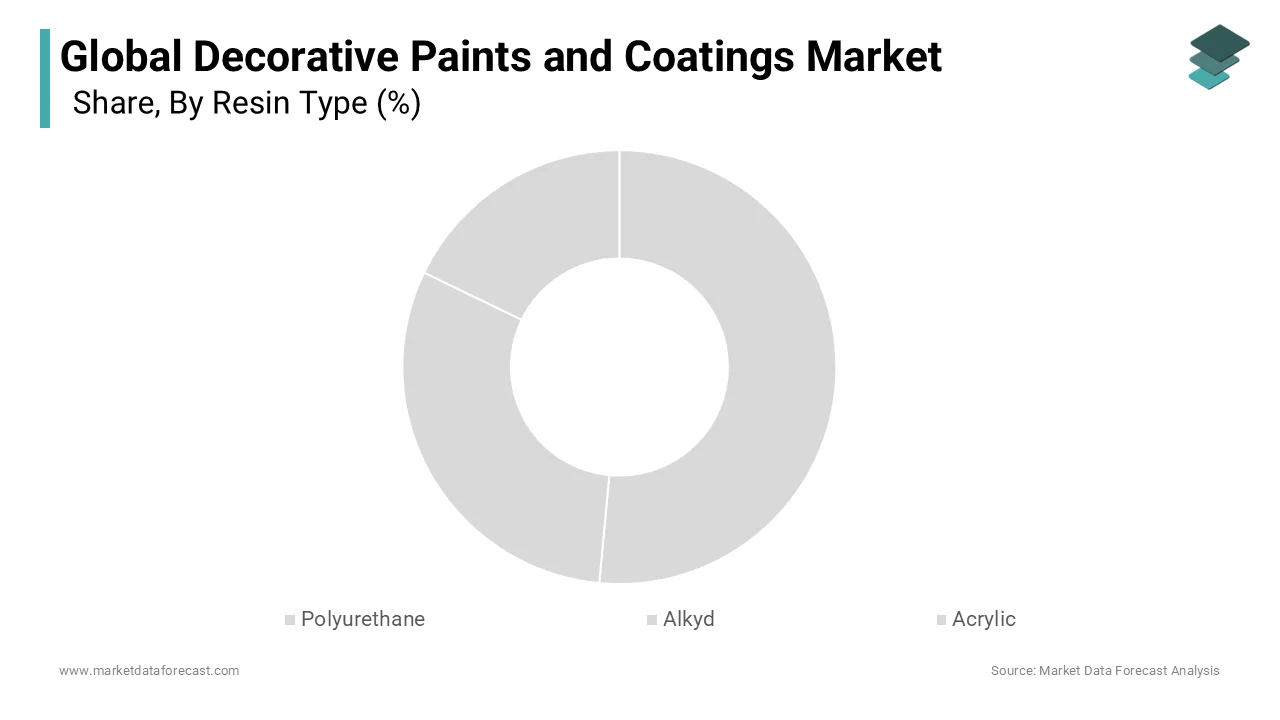
The polyurethane segment is projected to register a fastest CAGR of 5.8% from 2026 to 2034 owing to the increasing demand for high performance finishes that offer exceptional hardness and scratch resistance. The polyurethane coatings provide superior abrasion resistance compared to traditional acrylics and alkyds by making them ideal for high traffic areas. Consumers are increasingly investing in durable interior finishes for floors furniture and trim that can withstand daily wear and tear. The polyurethane finishes are the standard for protecting hardwood floors due to their ability to resist dents and scratches. In residential settings the rise of open concept living spaces has increased the visibility of flooring and millwork driving demand for premium protective coatings. Additionally, the hospitality and commercial sectors utilize polyurethane for its ability to maintain aesthetic appeal under heavy use. The durable coatings reduce maintenance frequency and costs in commercial buildings. Polyurethane also offers excellent chemical resistance protecting surfaces from stains caused by household cleaners and spills. Advances in water based polyurethane technology have reduced odor and drying times making them more user friendly for DIY applications.
By Product Insights
The emulsion paint segment was accounted in holding 46.8% of the Decorative Paints and Coatings Market share in 2025 due to its versatility ease of application and suitability for large interior surface areas. Emulsions are water-based paints that dry quickly and have low odor by making them ideal for occupied residential and commercial spaces. The emulsion paints are the most commonly used product for interior walls and ceilings because they provide a smooth uniform finish with minimal effort. Their water-soluble nature allows for easy cleanup with soap and water reducing the need for harsh chemical solvents. The National Association of Home Builders reports that interior repainting is the most frequent home improvement activity driving consistent demand for emulsion paints. Emulsions are available in various finishes including matte eggshell and satin allowing consumers to customize the look and feel of their spaces. Matte finishes are particularly popular for hiding surface imperfections on walls. Additionally, emulsion paints are breathable allowing moisture to escape which prevents blistering and peeling in humid environments. The American Lung Association advocates for low VOC water based paints to improve indoor air quality further boosting emulsion popularity. The broad range of colors and textures available in emulsion formulations caters to diverse aesthetic preferences.
The wood coating segment is likely to register a fastest CAGR of 6.2% from 2026 to 2034 with the rising trend of using natural wood in interior design and premium furniture. As per the American Home Furnishings Alliance, sales of solid wood furniture have increased as consumers seek authentic and sustainable materials. Wood coatings, such as varnishes stains and oils are essential for protecting and enhancing the natural grain and beauty of wood. The wooden flooring cabinetry and trim are key features in modern home designs by requiring specialized protective finishes. Consumers are willing to invest in high quality wood coatings to preserve the value and appearance of these investments. The trend towards biophilic design, which incorporates natural elements into built environments that further boosts demand for wood finishes. Wood coatings provide protection against moisture UV damage and wear ensuring longevity. The variety of finishes from glossy to matte allows for customization to match interior styles.
By Application Insights
The residential application segment was the largest by holding 34.4% of the Decorative Paints and Coatings Market share in 2025 due to the vast existing housing stock and continuous renovation activity. Homes require regular repainting to maintain aesthetics and protect surfaces from wear and environmental damage. As per the United States Census Bureau, there are over 140 million housing units in the United States creating a massive base for recurring demand. The Joint Center for Housing Studies of Harvard University reports that homeowner spending on improvements and repairs is consistently high driven by the desire to enhance living conditions. Residential painting projects often involve multiple rooms and exterior surfaces generating significant volume for paint manufacturers. The emotional aspect of home ownership leads individuals to personalize spaces through color and finish choices. The National Association of Realtors indicates that fresh paint is one of the most effective ways to increase home value and appeal to buyers. This drives both owner occupied and rental property owners to invest in decorative coatings. The frequency of residential repainting is higher than commercial due to changing trends and personal preferences. Additionally, the rise of remote work has led to home office conversions requiring aesthetic updates.
The non-residential application segment is expected to grow at an anticipated CAGR of 5.5% from 2026 to 2034 with the expansion of commercial real estate including offices retail spaces and hospitality venues. The employment in service sectors continues to grow necessitating new and refurbished commercial spaces. Hotels restaurants and retail stores frequently update their interiors to attract customers and stay competitive. The retail environments use color and branding to enhance customer experience driving demand for specialized decorative coatings. Corporate offices are also undergoing transformations to create collaborative and inspiring work environments. The Global Workplace Analytics reports that companies are investing in office redesigns to support hybrid work models. These projects often require durable and high-performance coatings that can withstand heavy foot traffic. The hospitality sector in particular relies on aesthetic appeal to justify premium pricing.
REGIONAL ANALYSIS
Asia Pacific Decorative Paints and Coatings Market Analysis
Asia-Pacific was the top performer of the global Decorative Paints and Coatings Market by accounting for 45.3% of share in 2025 with the rapid urbanization industrialization and a booming construction sector in countries like China, India, and Southeast Asian nations. The Asia-Pacific region is experiencing the fastest rate of urban growth globally driving demand for new housing and commercial infrastructure. The middle class in these countries is expanding leading to increased disposable income and spending on home improvement. India’s Smart Cities Mission also contributes to growth through urban renewal projects. The region is a major manufacturing hub for paint raw materials ensuring cost competitiveness. The adoption of modern construction techniques and aesthetic trends further boosts demand.
North America Decorative Paints and Coatings Market Analysis
North America decorative paints and coatings market was ranked second by holding 34.3% of the share in 2025 with the increasing demand of the renovation and remodeling activities. As per the Joint Center for Housing Studies of Harvard University, remodeling expenditure in the United States remains robust despite economic fluctuations. The Environmental Protection Agency sets strict standards that drive innovation in sustainable coatings. Consumer preference for DIY projects is strong supported by a well-developed retail infrastructure. The commercial sector also contributes through office and retail renovations. Technological advancements in paint performance and application tools are widely adopted. The presence of major global paint manufacturers headquartered in the region fosters innovation. High labor costs encourage the use of durable and easy to apply products.
Europe Decorative Paints and Coatings Market Analysis
Europe decorative paints and coatings market growth is likely to grow at an anticipated CAGR during the forecast period with the strict environmental regulations and a focus on sustainability. The European Union’s Green Deal and REACH regulations mandate low VOC emissions and safe chemical usage influencing product formulations. The shifting towards bio-based and renewable raw materials. Consumers in Europe are highly environmentally conscious preferring paints with eco-labels, such as the EU Ecolabel. The renovation of older building stock is a key driver as governments aim to improve energy efficiency. The European Commission supports renovation waves to reduce carbon emissions from buildings. Countries like Germany France and the United Kingdom have strong DIY cultures supporting retail sales. The architectural heritage in Europe requires specialized coatings for restoration projects. Innovation in smart and functional coatings is prominent in this region. The emphasis on health and indoor air quality drives demand for premium products. Economic stability in Western Europe supports consistent spending on home improvement.
Latin America Decorative Paints and Coatings Market Analysis
Latin America Decorative Paints and Coatings Market growth is driven by urbanization and economic recovery in key countries. Brazil, Mexico, and Argentina are the largest contributors in the region. As per the Economic Commission for Latin America and the Caribbean, urbanization rates are high leading to demand for housing and infrastructure. The construction sector is rebounding after periods of economic instability driving paint consumption. Government housing programs in Brazil and Mexico support low-income housing projects. Local manufacturers compete on price and distribution reach. The adoption of international quality standards is increasing among leading players. Climate conditions in tropical areas require durable and weather resistant coatings. The DIY segment is growing as retail infrastructure improves. Economic volatility remains a challenge affecting purchasing power. However, the long term demographic trends support market growth. Investment in commercial real estate in urban centers is also contributing.
Middle East and Africa Decorative Paints and Coatings Market Analysis
The Middle East and Africa decorative paints and coatings market is propelling with the mega construction projects and tourism infrastructure. Saudi Arabia’s Vision 2030 includes massive giga projects like NEOM requiring vast amounts of decorative coatings. The hospitality sector in Dubai and Qatar supports demand for premium finishes. In Africa, the growth of the middle class in countries like Nigeria and Kenya is boosting home improvement spending. The lack of local manufacturing in some areas relies on imports. Climate challenges, such as heat and dust require specialized durable coatings. Government investments in infrastructure are key drivers in North Africa. Awareness of quality and brand value is increasing among consumers. Economic diversification efforts in the Middle East reduce reliance on oil.
COMPETITIVE LANDSCAPE
The competition in the decorative paints and coatings market is intense and characterized by the presence of large multinational corporations alongside numerous regional and local players. Major companies compete on the basis of product quality brand reputation and technological innovation. The market sees a strong emphasis on sustainability with manufacturers striving to meet increasingly stringent environmental regulations regarding volatile organic compounds. Differentiation is achieved through advanced color matching technologies and digital customer experiences that enhance convenience and personalization. Price competition remains significant particularly in the mid tier and economy segments prompting companies to optimize supply chains for cost efficiency. Strategic mergers and acquisitions are common as firms seek to expand their global footprint and consolidate market power. Private label brands from large retail chains pose a threat to established brands by offering lower priced alternatives. Innovation in functional coatings such as antimicrobial and air purifying paints creates new growth avenues.
Key Market Players
Some of the key players in the global decorative paints and coatings market are
- PPG Industries (U.S.)
- Datacor, Inc.
- AkzoNobel N.V. (Netherlands)
- RPM International Inc.
- Asian Paints (India)
- Becker Group
- Sherwin Williams Company (U.S.)
- KCC Corporation
- Masco Corporation (U.S.)
- Koninklijke DSM N.V.
- Kansai Paints Co., Ltd. (Japan)
- Henkel AG & Co.
- Jotun Group (Norway)
- Axalta Coating Systems Ltd.
- DAW SE (Germany)
- BASF SE
- Dulux Group Ltd. (Australia)
- Nippon Paint Co. Ltd. (Japan)
Top Players in the Market
- AkzoNobel N.V. is a global leader in paints and coatings with a strong presence in the decorative segment through its Dulux brand. The company focuses on sustainability and innovation offering low volatile organic compound formulations that meet stringent environmental standards. Recent actions include expanding its digital color matching services to enhance customer experience and streamline purchasing processes. AkzoNobel invests heavily in research and development to create durable and aesthetically pleasing products for residential and commercial use. The company actively promotes circular economy principles by reducing waste and using recycled materials in packaging. These strategic initiatives reinforce its reputation for quality and sustainability. The company continues to engage with professional painters and consumers to build brand loyalty. Its commitment to carbon neutrality drives operational improvements and market differentiation.
- PPG Industries Inc. is a major global supplier of paints coatings and specialty materials with a significant footprint in the decorative market. The company offers a diverse portfolio of brands including Glidden and Comex catering to various consumer segments. Recent strategies involve enhancing its digital platforms for color visualization and online procurement to meet evolving customer preferences. PPG Industries focuses on developing high performance water based coatings that align with global regulatory requirements. The company expands its manufacturing capabilities in emerging markets to capture growth opportunities. The company collaborates with architects and designers to introduce innovative color trends. These efforts strengthen its competitive position and drive revenue growth. PPG Industries leverages its technical expertise to deliver superior product performance. Its global reach and local responsiveness ensure market leadership.
- The Sherwin Williams Company is a prominent player in the global decorative paints and coatings market known for its extensive retail network and professional grade products. The company owns well recognized brands such as Sherwin Williams and Valspar serving both do it yourself and professional customers. Recent actions include integrating advanced tinting technologies in stores to improve accuracy and speed of service. Sherwin Williams invests in sustainable product innovations including zero VOC options to address health and environmental concerns. The company enhances its distribution infrastructure to ensure timely delivery and product availability. By focusing on customer education and support Sherwin Williams builds strong relationships with contractors and homeowners. The company also expands its international presence through strategic partnerships and acquisitions. These initiatives drive market penetration and brand recognition. Sherwin Williams remains committed to quality and innovation. Its robust financial position supports continued growth and expansion.
Top Strategies Used by Key Market Participants
Key players in the Decorative Paints and Coatings Market primarily focus on product innovation to develop sustainable and high performance formulations. Companies invest heavily in research and development to create low volatile organic compound and bio based paints that meet strict environmental regulations. Digital transformation is a central strategy with firms enhancing online color matching tools and e commerce platforms to improve customer engagement. Strategic acquisitions allow leading companies to expand their geographic reach and diversify product portfolios. Sustainability initiatives such as reducing carbon footprints and using recycled packaging differentiate brands in a competitive landscape. Partnerships with professional painters and contractors strengthen distribution channels and brand loyalty. Supply chain optimization ensures cost efficiency and product availability amidst global disruptions. These strategies collectively drive growth and maintain competitive advantage in the evolving global market.
MARKET SEGMENTATION
This research report on the global flywheel energy storage market has been segmented and sub-segmented based on resin type, product, technology, application, and region.
By Resin Type
- Polyurethane
- Alkyd
- Acrylic
By Product
- Emulsion
- Enamel
- Wood Coating
By Technology
- Water-Based
- Solvent-Based
By Application
- Residential
- Non-Residential
By Region
- North America
- Latin America
- Europe
- Asia Pacific
- Middle East & Africa