- Product Description Description
- Table of Contents TOC
- List of Table & Figure LOT
- Get Free Sample PDF Sample PDF
Market Size, 2025
$15.48 BnMarket Estimate, 2026
$16.12 BnMarket Forecast, 2034
$22.27 BnCAGR, 2026–2034
4.12%Europe Air Insulated Switchgear Market Size, Growth, Trends & Forecast (2026–2034)
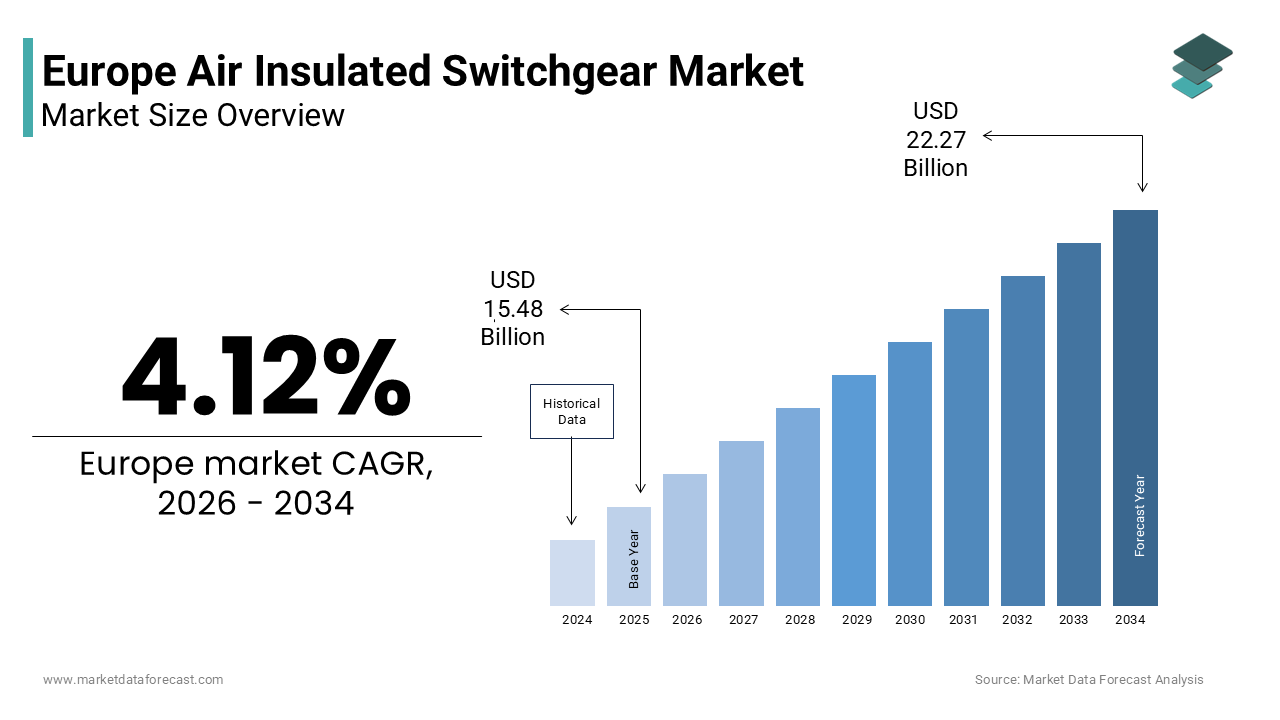
The Europe air insulated switchgear market size was valued at USD 15.48 billion in 2025, is anticipated to reach USD 16.12 billion in 2026, and is projected to scale up to USD 22.27 billion by 2034, registering a compound annual growth rate (CAGR) of 4.12% during the forecast period from 2026 to 2034. Driven by aging transmission networks, urgent grid modernization initiatives, and the massive integration of decentralized renewable energy sources, the regional market continues to expand steadily.
Key Executive Metrics (At-a-Glance)
- 2025 Base Valuation: USD 15.48 Billion
- 2026 Current Valuation: USD 16.12 Billion
- 2034 Forecast Valuation: USD 22.27 Billion
- Compound Annual Growth Rate (CAGR): 4.12% (2026–2034)
- Dominant Voltage Level Segment: Medium-Voltage Segment (anchored by extensive distribution network backbones and renewable energy step-up connections)
- Dominant End-Use Segment: Power Utilities (driven by mandatory grid modernization and transmission reinforcement outlays)
- Dominant Installation Segment: Outdoor Installations (preferred for rural and suburban substation layouts due to cost efficiencies and natural cooling)
- Dominant Country Market: Germany & United Kingdom (anchored by heavy industrial automation, Energiewende targets, and offshore wind integration)
Core Market Drivers
- Grid Modernization & Infrastructure Replacement: Over 40% of European high-voltage assets are older than 40 years, necessitating extensive replacement programs.
- Renewable Energy Integration: Rapid expansion of wind and solar installations requiring modular, adaptable distribution switchgear to handle variable power flows.
- Industrial Electrification: Growing demand for robust electrical distribution systems as industrial facilities shift from fossil fuels to electricity.
Primary Market Restraints & Challenges
- Urban Space Constraints & Raw Material Volatility: Large physical footprints limit use in dense urban centers, while price fluctuations in copper and steel impact manufacturing margins.
Europe Air Insulated Switchgear Market Segmentation Breakdown
| Segment Category | Leading Sub-Segment (2025 Base) | Fastest-Growing Sub-Segment (2026–2034) |
|---|---|---|
| By Voltage Level | Medium-Voltage (dominant market share managing core regional electricity distribution and renewable interconnects) | Low-Voltage (scaling rapidly via EV charging infrastructure, smart buildings, and urban electrification) |
| By End-Use | Power Utilities (primary consumer category allocating capital to grid reinforcement and automated substations) | Industrial Sector (expanding through factory automation, EV manufacturing upgrades, and green process transitions) |
| By Installation | Outdoor Installations (capturing majority share through traditional rural/suburban transmission and distribution layouts) | Indoor Installations (growing faster due to urban space limitations, indoor sub-stations, and asset protection needs) |
| By Region | Germany & U.K. (leading regional markets backed by clean energy policies, net-zero targets, and grid upgrades) | France & Rest of Europe (steady growth driven by nuclear asset maintenance and regional renewable integration) |
Major Industry Players Profiled
Key enterprises shaping the competitive European air insulated switchgear market include ABB Ltd. (Switzerland), Siemens AG (Germany), Schneider Electric SE (France), Hitachi Energy Ltd. (Switzerland), Eaton Corporation plc (Ireland), Ormazabal (Spain), Lucy Electric Ltd. (U.K.), Efacec Power Solutions (Portugal), SGC – SwitchGear Company NV (Belgium), and KONČAR Group (Croatia).
 Download Free Sample Report
Europe Air Insulated Switchgear Market Size
The europe air insulated switchgear market size was valued at USD 15.48 billion in 2025 and is anticipated to reach USD 16.12 billion in 2026 from USD 22.27 billion by 2034, growing at a CAGR of 4.12% during the forecast period from 2026 to 2034.
According to Eurostat, the European Union generated approximately 2,700 terawatt-hours of electricity in 2023, with a significant portion requiring efficient distribution infrastructure to reach end users. The aging grid infrastructure across many member states necessitates regular upgrades and replacements, which is driving consistent demand for robust switchgear solutions. According to the European Network of Transmission System Operators for Electricity, over 40% of the existing high-voltage assets in Europe are older than 40 years, indicating an urgent need for modernization. Furthermore, the integration of renewable energy sources such as wind and solar requires flexible and resilient distribution networks capable of handling variable power flows. According to the International Energy Agency, renewable sources accounted for nearly 44% of electricity generation in Europe in 2023, creating complex load management challenges that air-insulated switchgear helps address through its modular design and ease of maintenance. These factors collectively establish a critical foundation for the continued relevance and deployment of air-insulated technologies in the regional power sector.
MARKET DRIVERS
Grid Modernization Initiatives Drive Replacement of Aging Infrastructure
The extensive modernization of electrical grids across Europe is majorly driving the growth of the European air insulated switchgear market due to the urgent need to replace obsolete equipment. Much of the existing distribution infrastructure was installed during the mid-twentieth century and has reached the end of its operational lifecycle, which is leading to increased failure rates and maintenance costs. According to the European Commission, the investment required to upgrade and expand the European electricity grid is estimated at 584 billion euros by 2030 to meet climate and energy targets. This substantial capital allocation directly fuels the procurement of new switchgear units that offer improved reliability and safety features. Air-insulated switchgear remains a preferred choice for many utilities due to its proven track record and lower initial capital expenditure compared to gas-insulated alternatives. According to the Council of European Energy Regulators, distribution system operators are prioritizing investments in digitalized and automated substations to enhance grid resilience. As per Entso-E, the transparency platform data indicates that transmission and distribution losses in some regions exceed 5%, prompting operators to install modern switchgear with better monitoring capabilities. The replacement cycle typically spans 25 to 30 years, meaning a large volume of equipment installed in the 1990s is now due for renewal. This systematic overhaul ensures a steady demand for air-insulated units, particularly in rural and suburban areas where space constraints are less severe than in dense urban centers.
Expansion of Renewable Energy Integration Requires Flexible Distribution Solutions
The rapid expansion of renewable energy sources across Europe is further propelling the European air insulated switchgear market expansion. Wind and solar power installations are often located in remote or semi-rural areas where the existing grid infrastructure must be extended or reinforced to handle intermittent power injection. According to the European Wind Energy Association, wind energy capacity in Europe reached 255 gigawatts in 2023, requiring extensive network connections to transport electricity to consumption centers. Air-insulated switchgear is particularly suited for these applications due to its modular design, which allows for easy expansion and adaptation to changing load profiles. According to the SolarPower Europe association, solar photovoltaic capacity exceeded 260 gigawatts in the European Union, necessitating robust medium-voltage connection points. These renewable projects often utilize standard voltage levels where air-insulated technology provides a cost-effective and reliable solution for step-up and step-down substations. Furthermore, the decentralized nature of renewable generation requires numerous connection points along the distribution network, increasing the total number of switchgear units needed. According to the International Renewable Energy Agency, the share of renewables in the European power mix is expected to reach 60% by 2030, driving continuous investment in grid connectivity. The simplicity of air-insulated systems also facilitates faster installation times, which is crucial for meeting the tight deadlines associated with renewable energy projects funded by government incentives.
MARKET RESTRAINTS
Space Constraints in Urban Areas Limit Application Scope
The physical footprint of air-insulated switchgear is a significant impediment to the European air insulated switchgear market growth. Unlike gas-insulated switchgear, which uses sulfur hexafluoride or alternative gases to achieve compact designs, air-insulated units require substantial clearance distances between live parts to prevent electrical discharge. According to Eurostat, approximately 75% of the European population lives in urban areas where space optimization is a critical factor in infrastructure planning. This demographic concentration limits the applicability of air-insulated technology in city center substations where real estate prices are prohibitively high. According to the European Union Agency for the Cooperation of Energy Regulators, urban grid reinforcement projects increasingly favor compact solutions to minimize visual impact and land use. In cities like Paris, London, and Berlin, the trend towards underground cabling and compact substations further reduces the market opportunity for traditional air-insulated setups. Additionally, zoning regulations in many European municipalities restrict the height and width of above-ground electrical installations, making it difficult to accommodate the larger dimensions of air-insulated equipment. According to the European Environment Agency, urban sprawl has led to higher-density living arrangements, which exacerbates the space limitation issue. Consequently, utilities and developers often opt for gas-insulated or solid-insulated alternatives despite their higher costs because they offer a smaller footprint. This spatial disadvantage restricts the growth potential of air-insulated switchgear in the most dynamic and high-value segments of the European market.
Environmental Regulations Restrict Use of Certain Insulating Gases in Hybrid Systems
While air-insulated switchgear itself is environmentally benign, the broader regulatory landscape regarding insulating gases impacts the competitive dynamics and technological choices in the market, which is further likely to hamper the regional market expansion. Many modern switchgear designs incorporate hybrid elements or are being compared against gas-insulated alternatives that traditionally used sulfur hexafluoride, a potent greenhouse gas. According to European Parliament Regulation (EU) 2024/573, the use of sulfur hexafluoride in new medium-voltage switchgear is banned from 2026 onwards, pushing manufacturers to develop alternative technologies. This regulatory shift creates uncertainty and transition costs for manufacturers who must retool production lines and validate new insulating materials. Although air-insulated systems do not use these gases, they face increased competition from new eco-friendly gas-insulated solutions that offer compactness without the environmental penalty. According to the European Chemicals Agency, sulfur hexafluoride is listed as a substance of very high concern, prompting a rapid industry shift towards fluoronitrile or dry-air mixtures. According to the German Environment Agency, the global warming potential of sulfur hexafluoride is 23,500 times higher than carbon dioxide, driving strict enforcement of phase-out timelines. This regulatory pressure forces utilities to reconsider their procurement strategies, often favoring compact gas-insulated units with alternative gases over traditional air-insulated ones in space-constrained projects. The complexity of complying with evolving environmental standards adds to the operational burden and slows down the adoption rate of conventional air-insulated technologies in certain segments.
MARKET OPPORTUNITIES
Digitalization and Smart Grid Integration Offer New Value Propositions
The integration of digital technologies into air-insulated switchgear is a major opportunity for market growth by enhancing operational efficiency and predictive maintenance capabilities. Modern air-insulated units are increasingly equipped with sensors and communication modules that enable real-time monitoring of temperature, humidity, and partial discharge levels. According to the European Commission, the Digital Decade policy aims to have 75% of European enterprises using cloud computing and big data analytics by 2030, facilitating the adoption of smart grid technologies. This digital transformation allows utilities to move from reactive to predictive maintenance, reducing downtime and extending asset life. According to the International Electrotechnical Commission, standards for digital substations encourage the use of intelligent electronic devices in switchgear assemblies. According to Statista, the Internet of Things market in the energy sector in Europe is projected to grow at a compound annual growth rate of 12% through 2028. By embedding smart sensors in air-insulated switchgear, manufacturers can offer value-added services such as remote diagnostics and asset health monitoring. This capability is particularly attractive to distribution system operators managing large networks with limited field staff. Furthermore, the data collected from these smart units can be integrated into grid management software to optimize load balancing and fault detection. The ability to provide actionable insights alongside hardware sales creates a new revenue stream and differentiates products in a competitive market. This technological evolution revitalizes the appeal of air-insulated switchgear by aligning it with the broader digitalization trends in the European energy sector.
Retrofitting and Upgrading Existing Substations Provide Sustainable Growth Avenue
The opportunity to retrofit and upgrade existing substations with modern air-insulated switchgear components offers a sustainable growth avenue for manufacturers in Europe. Many older substations contain legacy equipment that is no longer supported by original manufacturers or fails to meet current safety and efficiency standards. According to the European Distribution System Operators association, there are over 2,000 distribution system operators in Europe, many of whom manage aging infrastructure that requires incremental upgrades rather than complete replacement. Retrofitting allows utilities to extend the life of their civil structures while upgrading the electrical components to modern standards. This approach is cost-effective and minimizes service disruption, which is critical for maintaining supply reliability. According to the Council of European Energy Regulators, non-disruptive grid upgrades are emphasized to ensure continuity of supply during the energy transition. According to the International Energy Agency, refurbishment of existing assets accounts for a significant portion of grid investment in mature markets like Europe. Manufacturers can capitalize on this trend by offering modular air-insulated switchgear units that fit into existing footprints and connect seamlessly with legacy systems. Additionally, the push for circular economy principles encourages the reuse of structural elements, making retrofitting an environmentally responsible choice. By providing specialized retrofit kits and engineering services, companies can tap into a steady stream of projects that do not require new land acquisition. This segment offers higher margins and longer customer relationships compared to Greenfield projects, thereby stabilizing revenue streams for market participants.
MARKET CHALLENGES
Supply Chain Volatility for Raw Materials Impacts Production Costs
The volatility in the supply chain for key raw materials such as copper, aluminum and steel is a significant challenge to the Europe air-insulated switchgear market. These materials are essential for manufacturing conductors, busbars, and enclosures, and their prices are subject to global market fluctuations. According to the European Central Bank, producer price indices for base metals increased by over 20% in recent years due to supply chain disruptions and energy cost spikes. This inflationary pressure squeezes profit margins for switchgear manufacturers who often operate under fixed-price contracts with utilities. The Russian-Ukrainian conflict has further exacerbated supply chain issues by disrupting the flow of raw materials from Eastern Europe. According to the European Metal Industries Confederation, the energy-intensive nature of metal production in Europe has led to reduced output and higher costs following the energy crisis. Manufacturers struggle to pass these increased costs on to customers immediately due to long lead times and contractual obligations. Additionally, the shortage of skilled labor in the manufacturing sector compounds the problem by slowing down production rates. According to the European Manufacturing Alliance, 60% of manufacturers face difficulties in finding qualified workers, leading to delays in order fulfillment. These supply chain constraints not only increase production costs but also affect the reliability of delivery schedules, causing project delays for utilities. The inability to predict material costs accurately makes financial planning challenging and hinders the ability of companies to invest in innovation and expansion.
Technical Limitations in High Voltage Applications Restrict Market Expansion
The technical limitations of air-insulated switchgear in high-voltage applications restrict its market expansion beyond the medium-voltage segment. As voltage levels increase, the required clearance distances for air insulation grow exponentially, making the equipment bulky and impractical for higher voltage tiers. According to the International Electrotechnical Commission, air-insulated switchgear is generally limited to voltages below 52 kilovolts due to size and safety constraints. This limitation excludes the technology from participating in the high-voltage transmission market where gas-insulated or hybrid solutions are dominant. According to the European Network of Transmission System Operators for Electricity, investments in high-voltage transmission grids are increasing to support cross-border electricity trade and renewable integration. According to Entso-E, the ten-year network development plan highlights billions of euros in planned investments for high-voltage infrastructure where air-insulated technology is not viable. Consequently, the market for air-insulated switchgear is confined to distribution and sub-transmission levels, limiting its total addressable market. Furthermore, the performance of air-insulated switchgear can be affected by environmental conditions such as humidity, pollution, and altitude, which require additional protective measures. According to the European Committee for Electrotechnical Standardization, maintenance requirements for air-insulated units in harsh environments are higher compared to sealed gas-insulated systems. These technical and environmental constraints limit the versatility of air-insulated switchgear and prevent it from capturing a larger share of the overall switchgear market in Europe.
REPORT COVERAGE
| REPORT METRIC | DETAILS |
| Market Size Available | 2025 to 2034 |
| Base Year | 2025 |
| Forecast Period | 2026 to 2034 |
| CAGR | 4.12% |
| Segments Covered | By Voltage Level, End-Use, Installation and Region. |
| Various Analyses Covered | Global, Regional & Country Level Analysis, Segment-Level Analysis, DROC, PESTLE Analysis, Porter’s Five Forces Analysis, Competitive Landscape, Analyst Overview of Investment Opportunities |
| Regions Covered | UK, France, Spain, Germany, Italy, Russia, Sweden, Denmark, Switzerland, the Netherlands, Turkey, the Czech Republic, and the Rest of Europe. |
| Market Leaders Profiled | ABB Ltd. (Switzerland), Siemens AG (Germany), Schneider Electric SE (France), Hitachi Energy Ltd. (Switzerland), Eaton Corporation plc (Ireland), Ormazabal (Spain), Lucy Electric Ltd. (U.K.), Efacec Power Solutions (Portugal), SGC – SwitchGear Company NV (Belgium), and KONČAR Group (Croatia). |
SEGMENTAL ANALYSIS
By Voltage Level Insights
The medium segment dominated the market by capturing the highest share of the European market in 2025 because it serves as the backbone of regional electricity distribution networks. This segment covers voltage levels typically between 1 kilovolt and 52 kilovolts, which are standard for distributing power from substations to industrial, commercial, and residential consumers. According to the European Network of Transmission System Operators for Electricity, medium-voltage networks account for the majority of distribution infrastructure length across the continent, facilitating the final delivery of electricity. The dominance is driven by the extensive need to connect renewable energy sources such as wind farms and solar parks, which usually operate at medium-voltage levels before stepping up to high voltage for transmission. According to the International Energy Agency, over 40% of electricity generation in Europe comes from renewables, requiring robust medium-voltage connection points. Additionally, the aging infrastructure in many European countries necessitates the replacement of obsolete medium-voltage equipment to ensure reliability and safety. According to the Council of European Energy Regulators, distribution system operators are investing heavily in modernizing medium-voltage grids to handle bidirectional power flows from decentralized generation. The cost-effectiveness of air-insulated technology at these voltage levels makes it the preferred choice over gas-insulated alternatives for widespread deployment. Furthermore, regulatory standards for grid stability and power quality enforcement drive utilities to upgrade their medium-voltage switchgear to smart-capable units. These factors collectively ensure that medium voltage remains the largest segment by volume and value in the European air-insulated switchgear market.
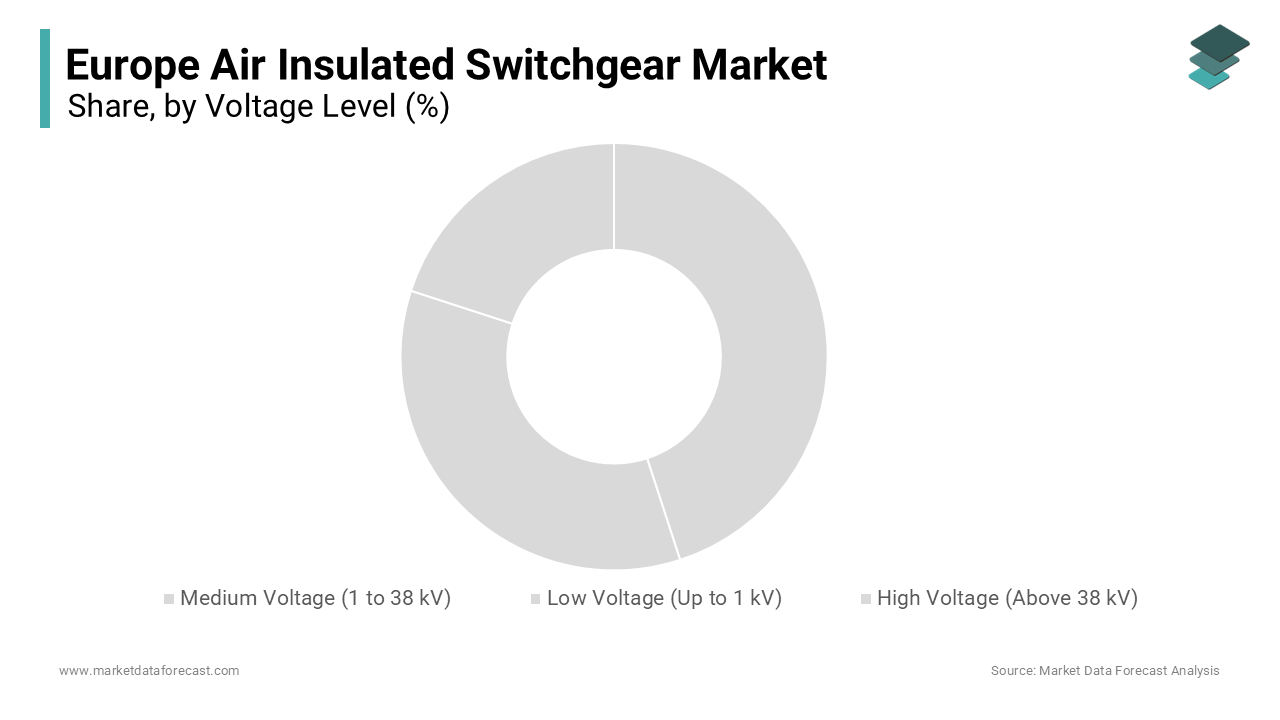
On the other side, the low-voltage segment is projected to be the fastest-growing category and register a CAGR of 7.04% over the forecast period owing to the growing electrification of urban infrastructure and the proliferation of electric vehicle charging stations, which operate primarily at low-voltage levels. According to the European Alternative Fuels Observatory, the number of public electric vehicle charging points in Europe exceeded 500,000 in 2023, creating a massive demand for low-voltage distribution boards and switchgear. The growth is also supported by the construction of smart buildings and data centers that require precise and reliable low-voltage power management systems. According to Eurostat, the construction sector in Europe continues to expand with residential and non-residential building permits rising by 5% annually, driving the installation of new low-voltage electrical infrastructure. The integration of distributed energy resources such as rooftop solar panels and home battery storage systems further boosts demand for low-voltage switchgear that can manage complex load profiles. According to the European Commission Energy Efficiency Directive, stricter energy monitoring in buildings is mandated, which requires advanced low-voltage metering and switching solutions. Additionally, the renovation wave initiative aims to improve the energy performance of millions of buildings, necessitating upgrades to existing low-voltage electrical systems. These converging trends in mobility, construction, and energy efficiency create a dynamic environment for low-voltage air-insulated switchgear growth.
By End User Insights
The power utilities segment dominated the market by holding the major share of the European market in 2025. The leading position of power utilities segment in the European market is driven by their responsibility for maintaining and expanding the national electricity grid. This segment includes transmission and distribution system operators who invest billions of euros annually in grid modernization and reinforcement projects. According to the European Commission, the estimated investment needed for electricity grids in the European Union is 584 billion euros by 2030 to support decarbonization and security of supply. A significant portion of this capital expenditure is allocated to substations where air-insulated switchgear is widely used for its reliability and ease of maintenance. According to the Council of European Energy Regulators, distribution system operators are prioritizing investments in automated and digitalized substations to enhance grid resilience against extreme weather events. According to Entso-E, the ten-year network development plan outlines substantial investments in cross-border interconnections and internal grid upgrades requiring thousands of new switchgear units. The aging asset base of many European utilities necessitates regular replacement cycles, ensuring a steady demand for new equipment. Furthermore, the integration of renewable energy sources requires utilities to upgrade their distribution networks to handle variable power flows and maintain voltage stability. Air-insulated switchgear offers a cost-effective solution for these upgrades, particularly in rural and suburban areas where space is less constrained. The regulatory mandate for improved service quality and reduced outage times further drives utilities to adopt modern switchgear technologies. These factors solidify the position of power utilities as the primary consumers of air-insulated switchgear in Europe.
However, the industrial sector is emerging as the fastest-growing end-user segment in the Europe air-insulated switchgear market and is anticipated to showcase a promising CAGR during the forecast period owing to the revival of manufacturing activities and the push for industrial electrification. According to Eurostat, industrial production in the European Union has shown signs of recovery with key sectors such as automotive, chemicals, and machinery leading the growth. The European Green Deal and the REPowerEU plan encourage industries to switch from fossil fuels to electricity for heating and process operations, increasing the demand for robust electrical distribution systems. According to the European Chemical Industry Council, the chemical sector is investing heavily in electrification of cracker furnaces and other high-temperature processes, requiring specialized medium-voltage switchgear. The automotive industry transition to electric vehicle production also necessitates new factory setups with advanced power distribution infrastructure. According to the German Association of the Automotive Industry, vehicle production facilities are undergoing significant upgrades to support battery manufacturing and assembly lines. Additionally, the rise of data centers and semiconductor fabrication plants in Europe creates a niche but high-value demand for reliable power protection systems. According to the International Energy Agency, industrial electricity demand in Europe is expected to grow by 2% annually as companies adopt energy-efficient technologies. Air-insulated switchgear is preferred in many industrial applications due to its durability and lower maintenance requirements compared to gas-insulated alternatives. These industrial transformation trends drive the rapid growth of this end-user segment.
By Installation Insights
The outdoor segment accounted for the largest share of the European market in 2025. The dominance of outdoor segment in the European market can be credited to the widespread prevalence of outdoor substations in transmission and distribution networks. These installations are typically found in rural and semi-urban areas where land availability is sufficient to accommodate the larger footprint of air-insulated equipment. According to the European Network of Transmission System Operators for Electricity, the majority of high- and medium-voltage substations in Europe are located outdoors to facilitate easier access for maintenance and cooling. The cost advantage of outdoor installations is significant as they do not require expensive building structures, making them the preferred choice for utilities managing large geographic areas. According to the Council of European Energy Regulators, distribution system operators prioritize cost-effective solutions for grid expansion, which favors outdoor air-insulated switchgear over compact indoor alternatives. The modular nature of outdoor switchgear allows for easy expansion and reconfiguration as load demands change over time. Furthermore, outdoor installations benefit from natural cooling, which reduces the risk of overheating and extends the lifespan of the equipment. According to the European Environment Agency, environmental regulations often permit outdoor electrical infrastructure provided it meets noise and visual impact standards, which manufacturers address through innovative design. The established practice of using outdoor substations in European grid planning ensures a consistent demand for outdoor air-insulated switchgear. This segment dominance is reinforced by the ongoing upgrades of existing outdoor substations to meet modern safety and performance standards.
On the other side, the indoor segment is estimated to record a CAGR of 6.4% over the forecast period in the European market owing to the increasing urbanization and space constraints in city centers. As cities expand vertically and land becomes scarce, utilities and developers are locating electrical infrastructure indoors to minimize footprint and visual impact. According to Eurostat, approximately 75% of the European population lives in urban areas where real estate prices are high and zoning regulations are strict. This demographic trend drives the adoption of indoor switchgear solutions that can be integrated into building basements or dedicated electrical rooms. According to the European Union Agency for the Cooperation of Energy Regulators, urban grid reinforcement projects increasingly favor compact and enclosed solutions to protect equipment from environmental factors and vandalism. Indoor installations also offer better protection against pollution and humidity, which can affect the performance of air-insulated components. According to the European Construction Industry Federation, the renovation of existing buildings often involves upgrading electrical systems within confined spaces, requiring compact indoor switchgear. Additionally, the growth of data centers and commercial complexes in urban areas creates a demand for indoor power distribution systems that ensure high reliability and safety. Manufacturers are responding by developing smaller and more efficient indoor air-insulated switchgear units that meet these spatial requirements. These urban development trends propel the indoor segment to grow at a faster rate than the traditional outdoor segment.
COUNTRY ANALYSIS
Germany Air Insulated Switchgear Market Analysis
Germany led the market by holding the major share of the European market in 2025 and is likely to experience steady market expansion driven by its robust industrial automation and aggressive grid integration initiatives over the next few years. Germany stands as the largest market for air-insulated switchgear in Europe due to its powerful industrial base and ambitious energy transition goals. The country position is anchored by its manufacturing sector, which requires reliable and high-capacity power distribution systems. According to the Federal Ministry for Economic Affairs and Climate Action, the industrial sector contributes significantly to Germany gross domestic product, driving continuous investment in electrical infrastructure. The Energiewende policy has led to a massive expansion of renewable energy sources particularly wind and solar, which require extensive medium-voltage grid connections. According to the German Environment Agency, the share of renewables in electricity consumption reached over 50% in recent years, necessitating robust switchgear solutions for grid integration. The automotive industry shift towards electric vehicle production also boosts demand for new factory infrastructure equipped with modern switchgear. According to the German Association of the Automotive Industry, vehicle production remains a key economic pillar requiring stable power supply. Additionally, the age of the existing grid infrastructure prompts utilities to invest in modernization projects to enhance reliability and efficiency. According to the Federal Network Agency, the need for grid expansion to accommodate decentralized generation is emphasized. These factors combine to make Germany a dominant force in the European air-insulated switchgear market with steady demand from both industrial and utility sectors.
UK Air Insulated Switchgear Market Analysis
The UK is likely to witness strong market momentum propelled by major offshore wind integration and large-scale infrastructure investments over the next few years. The United Kingdom holds a significant position in the Europe air-insulated switchgear market driven by its aggressive offshore wind expansion and grid modernization initiatives. The country market status is influenced by its commitment to achieving net-zero emissions by 2050, which requires substantial upgrades to the electricity network. According to the Department for Energy Security and Net Zero, the UK has installed over 14 gigawatts of offshore wind capacity, creating a need for extensive onshore grid connections. These connections rely heavily on medium-voltage air-insulated switchgear to distribute power from landing points to the national grid. According to the National Grid ESO, billions of pounds are being invested in grid reinforcement to handle the variability of renewable energy. According to the Office for National Statistics, the construction sector is recovering post-pandemic, leading to increased demand for electrical infrastructure in new residential and commercial projects. The UK island geography and dense population centers also drive the need for reliable distribution networks that can withstand extreme weather events. The Office of Gas and Electricity Markets regulates the sector, ensuring that distribution network operators meet strict performance standards. This regulatory environment encourages the adoption of high-quality switchgear solutions. The combination of renewable integration and urban development sustains strong demand for air-insulated switchgear in the UK market.
France Air Insulated Switchgear Market Analysis
France is likely to record consistent growth supported by nuclear fleet modernization efforts and ambitious renewable energy targets over the next few years. France occupies a prominent position in the Europe air-insulated switchgear market characterized by a unique mix of nuclear power maintenance and renewable energy expansion. The country market status is shaped by its reliance on nuclear energy, which requires regular upgrades to auxiliary power systems and distribution networks. According to the French Nuclear Safety Authority, strict safety regulations mandate the modernization of electrical equipment in nuclear facilities, driving demand for reliable switchgear. Simultaneously, the French government is accelerating the deployment of solar and wind energy to diversify its energy mix. According to the French Ministry of Ecological Transition, the target is to double renewable energy production by 2030, requiring new grid connections and substations. According to the French Transmission System Operator RTE, heavy investments are made in grid infrastructure to integrate these renewable sources and ensure supply security. The automotive industry in France also contributes to market demand through ongoing factory electrifications.
COMPETITIVE LANDSCAPE
The competition in the Europe air insulated switchgear market is characterized by the presence of established global giants and specialized regional manufacturers vying for dominance through innovation and service excellence. Large multinational corporations leverage their extensive distribution networks and brand recognition to secure contracts with major utilities and industrial clients. Meanwhile smaller niche players focus on developing customized solutions for specific applications such as harsh environments or compact urban substations. The market witnesses intense rivalry driven by strict regulatory frameworks that mandate continuous improvement in environmental performance and safety standards. Companies are increasingly differentiating themselves through the integration of digital technologies and sustainable materials to meet evolving consumer preferences and legal requirements. Price competition remains moderate as buyers prioritize reliability and compliance over initial cost particularly in critical infrastructure projects. However the residential and small commercial segments see more price sensitivity prompting manufacturers to offer a range of products from basic to premium tiers. Strategic mergers and acquisitions are common as firms seek to expand their technological capabilities and geographic reach. The entry of new players with innovative digital solutions further intensifies competition forcing incumbent companies to accelerate their innovation cycles and enhance customer engagement through value added services.
KEY MARKET PLAYERS
Some of the promising companies that are playing a dominating role in the Europe air insulated switchgear market include
- ABB Ltd. (Switzerland)
- Siemens AG (Germany)
- Schneider Electric SE (France)
- Hitachi Energy Ltd. (Switzerland)
- Eaton Corporation plc (Ireland)
- Ormazabal (Spain)
- Lucy Electric Ltd. (United Kingdom)
- Efacec Power Solutions (Portugal)
- SGC – SwitchGear Company NV (Belgium)
- KONČAR Group (Croatia)
Top Players in the Europe Air Insulated Switchgear Market
Siemens AG
Siemens AG maintains a formidable presence in the European air insulated switchgear market through its comprehensive portfolio of medium voltage solutions. The company focuses on digitalizing switchgear systems to enable predictive maintenance and enhanced grid monitoring capabilities. Recently Siemens has intensified its efforts to develop eco friendly insulation technologies that eliminate the use of harmful gases while maintaining high performance standards. Their strategic investments in smart grid infrastructure allow utilities to integrate renewable energy sources more effectively. By collaborating with major distribution system operators they ensure their products meet the evolving regulatory requirements for efficiency and sustainability. The company also emphasizes local manufacturing and supply chain resilience to mitigate geopolitical risks. These initiatives reinforce their reputation as a technology leader committed to supporting the European energy transition through reliable and innovative switchgear solutions.
Schneider Electric SE
Schneider Electric SE contributes significantly to the market by offering advanced air insulated switchgear designed for safety and operational efficiency. The company leverages its expertise in energy management to provide integrated solutions that combine hardware with digital software platforms. Recent actions include the launch of new product lines that feature reduced environmental impact and improved lifecycle performance. Schneider Electric has expanded its service offerings to include remote monitoring and asset health analytics which help customers optimize maintenance schedules. They actively participate in industry standardization bodies to shape future regulations regarding electrical safety and sustainability. The firm also invests in training programs for installers and engineers to ensure proper deployment of their technologies. This holistic approach strengthens their market position by delivering value beyond mere equipment supply and fostering long term customer relationships across various industrial and utility sectors.
ABB Ltd
ABB Ltd plays a crucial role in the European market by providing robust air insulated switchgear solutions tailored for diverse applications. The company focuses on innovation in material science to enhance the durability and reliability of its products under harsh environmental conditions. ABB has recently accelerated its development of vacuum interrupter technology which offers superior switching performance and lower maintenance requirements. Their strategic partnerships with renewable energy developers facilitate the integration of wind and solar power into existing grids. The company also prioritizes circular economy principles by designing switchgear components that are easier to recycle at the end of their life. ABB continues to expand its digital services portfolio enabling real time diagnostics and fault detection. These efforts demonstrate their commitment to sustainable electrification and support the modernization of Europe’s aging electrical infrastructure through high quality and technologically advanced switchgear systems.
Top Strategies Used by Key Market Participants
Key players in the Europe air insulated switchgear market primarily employ strategies focused on technological innovation and sustainability to maintain competitive advantage. Companies are heavily investing in research and development to create digitalized switchgear systems equipped with sensors for real time monitoring and predictive maintenance. This integration enhances operational efficiency and reduces downtime for utilities. Another major strategy involves developing eco friendly insulation alternatives to replace sulfur hexafluoride in compliance with stringent European environmental regulations. Strategic partnerships with renewable energy developers allow manufacturers to tailor solutions for wind and solar integration. Additionally firms are strengthening their supply chains by localizing production facilities to mitigate logistical risks and ensure timely delivery. Marketing efforts increasingly emphasize lifecycle cost savings and energy efficiency to appeal to cost conscious utilities and industrial clients seeking long term value.
MARKET SEGMENTATION
This research report on the Europe air insulated switchgear market has been segmented & sub-segmented into the following categories
By Voltage Level
- Medium Voltage (1 to 38 kV)
- Low Voltage (Up to 1 kV)
- High Voltage (Above 38 kV)
By End-User
- Power Utilities (T&D)
- Industrial
- Commercial
- Residential
By Installation
- Indoor
- Outdoor
By Country
- United Kingdom
- France
- Spain
- Germany
- Italy
- Russia
- Sweden
- Denmark
- Switzerland
- Netherlands
- Turkey
- Czech Republic
- Rest of Europe