- Product Description Description
- Table of Contents TOC
- List of Table & Figure LOT
- Get Free Sample PDF Sample PDF
Market Size, 2025
$3.41 BnMarket Estimate, 2026
$3.73 BnMarket Forecast, 2034
$7.63 BnCAGR, 2026–2034
9.35%Europe Apheresis Equipment Market Report Summary
The European apheresis equipment market was valued at USD 3.41 billion in 2025, is estimated to reach USD 3.73 billion in 2026, and is projected to reach USD 7.63 billion by 2034, growing at a CAGR of 9.35% during the forecast period from 2026 to 2034. The growth of the European apheresis equipment market is driven by the rising prevalence of chronic diseases such as renal, neurological, and autoimmune disorders, increasing adoption of minimally invasive therapies, and continuous technological advancements in automated and portable apheresis systems. Growing demand for personalized medicine, wider use of apheresis in oncology and immunotherapy, and increasing healthcare investments across Europe are further supporting market expansion. In addition, the development of compact, user-friendly devices and expanding hospital infrastructure are improving accessibility and accelerating market growth across the region.
Key Market Trends
- Rising adoption of apheresis procedures for the management of chronic kidney disease, neurological disorders, and autoimmune conditions.
- Increasing demand for minimally invasive and targeted therapies supporting the use of therapeutic apheresis.
- Growing integration of automation and AI-enabled monitoring features in next-generation apheresis systems.
- Rising preference for portable and compact apheresis devices supporting outpatient and decentralized care settings.
- Increasing investments by European healthcare systems in advanced medical devices and blood management technologies.
Segmental Insights
- Based on application, the renal diseases segment dominated the market, accounting for 50.8% of the European market share in 2025. The dominance of this segment is attributed to the high prevalence of chronic kidney disease (CKD) across Europe and the widespread use of apheresis in managing complications such as hyperlipidemia and toxin accumulation.
- The neurology segment is projected to grow at the fastest CAGR of 12.8% during the forecast period, driven by the increasing prevalence of neurological disorders such as multiple sclerosis and Guillain-Barré syndrome and the expanding use of apheresis in immunomodulatory therapies.
- Based on procedure, the LDL-apheresis segment held 45.7% of the market share due to its extensive application in treating familial hypercholesterolemia and cardiovascular complications among aging populations.
Regional Insights
The Europe apheresis equipment market is witnessing steady growth across major economies, supported by strong healthcare infrastructure, rising chronic disease burden, and increasing adoption of advanced therapeutic technologies.
- Germany held the largest share of the market in 2025, accounting for 22.7%, driven by its advanced healthcare ecosystem, high procedure volumes, and strong presence of medical device manufacturers.
- France remains a key market, supported by strong renal and neurological research focus and increasing government funding for chronic disease management.
- Italy is expected to witness healthy growth due to the rising prevalence of cardiovascular diseases and increasing adoption of apheresis procedures across hospitals and research institutions.
- Spain continues to expand steadily, supported by growing healthcare expenditure on renal and neurological disorders and wider adoption of advanced treatment technologies.
Competitive Landscape
The Europe apheresis equipment market is characterized by the presence of well-established global medical device manufacturers competing through technological innovation, automation, and product reliability. Leading companies are focusing on developing next-generation apheresis systems with enhanced safety, portability, and digital integration. Strategic partnerships with hospitals, investments in R&D, and expansion across emerging European healthcare markets are strengthening competitive positioning. Companies are also emphasizing training programs and service support to improve adoption among healthcare professionals. Prominent players operating in the Europe apheresis equipment market include Fresenius Kabi, Terumo Corporation, Haemonetics Corporation, Baxter International Inc., DonorTech A/S (Macopharma), Asahi Kasei Medical, B. Braun Melsungen, Nipro Corporation, Grifols, and Cerus Corporation.
Europe Apheresis Equipment Market Size
The European apheresis equipment market was worth USD 3.41 billion in 2025. The European market is estimated to grow at a CAGR of 9.35% from 2026 to 2034 and be valued at USD 7.63 billion by the end of 2034 from USD 3.73 billion in 2026.

According to Eurostat, approximately 22% of the European Union population was aged 65 years or older in 2025, which is a demographic shift that directly correlates with increased prevalence of chronic conditions requiring extracorporeal therapies. Furthermore, the World Health Organization Regional Office for Europe indicates that noncommunicable diseases account for nearly 90% of all deaths in the region, necessitating sophisticated interventional treatments like apheresis. As per the European Blood Alliance, maintaining a secure supply of plasma derived medicinal products remains a strategic priority, driving continuous demand for high efficiency source plasma collection systems. The regulatory landscape governed by the European Medicines Agency ensures stringent quality standards for both equipment and disposable kits, influencing technological adoption rates. This market is intrinsically linked to the region’s robust healthcare infrastructure, academic research output, and the growing integration of personalized medicine protocols that rely on precise blood component manipulation for therapeutic efficacy.
MARKET DRIVERS
Rising Prevalence of Autoimmune and Neurological Disorders
The increasing incidence of autoimmune and neurological conditions across Europe is majorly propelling the European apheresis equipment market growth. Conditions such as myasthenia gravis, Guillain Barré syndrome, and multiple sclerosis frequently require therapeutic plasma exchange or immunoadsorption as first line or rescue therapy when pharmacological interventions fail. According to the European Brain Council, nearly 179 million Europeans live with a brain disorder, representing a significant portion of the total disease burden and creating sustained demand for neuroimmunological interventions. Multiple sclerosis alone affects over 700,000 people in Europe, with a substantial subset requiring periodic apheresis sessions during acute relapses or for managing refractory symptoms. As per the European Reference Network for Rare Immunological Disorders, early intervention with extracorporeal therapies significantly improves long term outcomes in rare autoimmune vasculitides and thrombotic microangiopathies. National health systems in Germany, France, and Italy have established specialized centers of excellence that standardize these procedures, thereby stabilizing equipment procurement cycles. The aging European demographic further exacerbates this trend, as immune senescence increases susceptibility to dysregulated immune responses. Consequently, hospitals are investing in next generation selective adsorption columns and automated fluid management systems to enhance patient safety and procedural efficiency, directly translating epidemiological pressure into tangible market volume for therapeutic devices.
Strategic Focus on Plasma Self Sufficiency and Collection
Europe’s strategic imperative to achieve self-sufficiency in plasma derived medicinal products is further boosting the European apheresis equipment market expansion. Historically dependent on imports from the United States, European nations are actively expanding domestic collection capacities to mitigate supply chain vulnerabilities exposed during recent global health crises. According to the Plasma Protein Therapeutics Association, Europe contributes significantly to global plasma collection efforts, yet continues to rely on international imports to meet the high clinical demand for immunoglobulin, highlighting a gap that policymakers aim to close. Countries like Austria, Hungary, and Spain have implemented favorable regulatory frameworks and reimbursement models to encourage paid and voluntary plasma donation programs. As per the European Commission Directorate General for Health and Food Safety, securing the supply of albumin, clotting factors, and immunoglobulins is classified as a matter of public health security. This geopolitical motivation has led to the establishment of new private and public plasmapheresis centers equipped with high throughput automated collectors. Manufacturers are responding by deploying devices with faster processing times and improved donor comfort features to maximize yield per session. The convergence of national security policy and commercial plasma fractionation needs ensures a steady capital expenditure stream for collection equipment independent of broader hospital budget constraints.
MARKET RESTRAINTS
Stringent Regulatory Compliance and Reimbursement Heterogeneity
The rigorous Medical Device Regulation framework and disparate national reimbursement structures are impeding the European apheresis equipment market growth. Compliance with EU MDR 2017/745 requires extensive clinical evidence and post market surveillance, substantially increasing the time and cost to bring new technologies to market. According to MedTech Europe, the transition to MDR has resulted in extended certification timelines, with many manufacturers reporting delays of 12 to 18 months for device recertification compared to previous directives. Simultaneously, reimbursement for apheresis procedures varies dramatically across member states, creating market fragmentation. As per the European Observatory on Health Systems and Policies, while countries like Germany offer diagnosis related group coverage for therapeutic exchanges, other nations lack dedicated tariff codes, forcing hospitals to absorb costs or limit access. This financial uncertainty discourages smaller clinics from acquiring advanced equipment. Furthermore, the requirement for Notified Body assessment creates bottlenecks, as there are currently fewer designated bodies capable of handling complex Class IIb and III apheresis devices. These regulatory and economic barriers disproportionately affect innovative startups and niche technologies, slowing the diffusion of next generation selective apheresis systems despite clear clinical benefits. Hospitals often defer capital purchases until reimbursement clarity is achieved, leading to prolonged replacement cycles for legacy equipment.
High Capital Expenditure and Operational Cost Pressures
Budgetary pressures within European public healthcare systems are further hindering the apheresis equipment market growth. Apheresis machines represent significant capital investments, often exceeding 50,000 euros per unit, excluding annual service contracts and proprietary disposable kits which can cost hundreds of euros per procedure. According to the Organisation for Economic Cooperation and Development, health spending growth in many European countries has decelerated relative to GDP growth post pandemic, forcing hospitals to prioritize essential infrastructure over specialized equipment upgrades. As per the European Hospital and Healthcare Federation, inflation and energy costs have eroded operational budgets, leading to deferred maintenance and delayed procurement decisions for non-emergency medical technologies. The closed system nature of apheresis platforms locks institutions into long term consumable agreements with single vendors, reducing negotiating leverage and inflating lifetime ownership costs. In Southern and Eastern European regions where healthcare funding is more constrained, this economic barrier is particularly acute, resulting in lower equipment density compared to Western counterparts. Additionally, the need for specialized nursing staff trained in extracorporeal circuits adds hidden labor costs that strain departmental finances. Without dedicated funding streams or value based procurement models that account for long term savings from reduced hospitalizations, many facilities cannot justify the upfront expenditure despite growing clinical indications.
MARKET OPPORTUNITIES
Expansion of Cell Therapy and Regenerative Medicine Applications
The burgeoning field of cell and gene therapy in Europe is a significant opportunity for apheresis equipment manufacturers. Leukapheresis is the critical first step in manufacturing chimeric antigen receptor T cell therapies and other autologous advanced therapy medicinal products, linking equipment directly to the most dynamic segment of oncology innovation. According to the European Medicines Agency, there is a consistent rise in the number of authorized multinational clinical trials for advanced therapies, signaling massive future demand for standardized cell collection services. As per the Alliance for Regenerative Medicine, Europe remains a leading global hub for cell therapy pipeline activity, with academic centers and biotech firms rapidly scaling up manufacturing capabilities. Each approved therapy requires validated, reproducible apheresis protocols to ensure consistent starting material quality, driving demand for devices with integrated software compliance and traceability features. The establishment of centralized cell processing hubs under the EU Pharmaceutical Strategy further amplifies equipment needs. Manufacturers who develop specialized mononuclear cell collection kits and partner with therapy developers gain preferential positioning in this high value niche. Unlike traditional therapeutic apheresis, cell therapy collections command premium pricing and are less sensitive to standard hospital budget cuts due to their association with curative intent treatments. This emerging application diversifies revenue streams beyond conventional plasma and therapeutic exchange markets.
Technological Integration of Selective and Miniaturized Systems
Advancements in selective adsorption and miniaturization technologies offer significant growth opportunities for the European apheresis equipment market. Traditional plasma exchange removes all plasma proteins indiscriminately, whereas newer selective columns target only pathogenic antibodies or lipids, preserving beneficial components and reducing adverse events. According to peer reviewed literature in Transfusion and Apheresis Science, selective immunoadsorption demonstrates superior safety profiles in pediatric and elderly patients who tolerate full plasma exchange poorly. As per industry analyses, the development of portable and bedside compatible apheresis units enables treatment in intensive care units and outpatient clinics previously unable to house large centrifugal systems. This miniaturization addresses space constraints in older European hospitals and facilitates home based or decentralized care models aligned with EU health system sustainability goals. Furthermore, integration with digital health platforms allows remote monitoring and predictive maintenance, appealing to resource constrained facilities seeking operational efficiency. Companies investing in biomarker specific sorbents for conditions like familial hypercholesterolemia or sepsis can capture markets underserved by generic devices. The convergence of precision medicine principles with extracorporeal technology creates differentiation opportunities in a commoditized hardware market, allowing premium pricing for clinically superior outcomes and expanded accessibility.
MARKET CHALLENGES
Persistent Shortage of Specialized Clinical Personnel
The severe shortage of trained nurses and perfusionists qualified to operate complex extracorporeal circuits safely is primarily challenging the European apheresis equipment market expansion. Apheresis procedures require specialized competencies in vascular access, anticoagulation management, and complication recognition that are not covered in standard nursing curricula. According to the World Health Organization, the European region faces a significant shortfall of health workers by 2030, with specialized technical roles being disproportionately affected due to burnout and migration. As per national workforce surveys in the United Kingdom and France, turnover rates in dialysis and apheresis units are high, leading to chronic understaffing that limits machine utilization regardless of installed base. Training new staff requires 6 to 12 months of supervised practice, creating long lead times before additional capacity becomes operational. Equipment downtime due to lack of qualified operators represents significant lost revenue and delayed patient care. Manufacturers attempting to mitigate this through automation face resistance from clinicians concerned about deskilling and liability. The human capital bottleneck is structural rather than cyclical, meaning equipment sales may outpace actual procedural volume growth. Addressing this requires coordinated investment in vocational education and retention incentives, areas largely outside manufacturer control but fundamental to market realization.
Supply Chain Vulnerabilities for Critical Disposables
The acute vulnerability from supply chain disruptions affecting single use kits, tubing sets, and adsorption columns is also challenging the regional market growth. Unlike durable equipment, disposables must be available continuously; any interruption halts life sustaining therapies immediately. According to various clinical reports, the shift toward just in time inventory practices in recent years left many hospitals with limited buffer stocks for critical consumables. As per Eurostat trade data, a significant share of medical device components imported into Europe originates from outside the region, exposing the sector to shipping delays, raw material shortages, and geopolitical tensions. The concentration of sterile manufacturing capacity among few global suppliers creates single points of failure; a plant shutdown or regulatory hold can cascade across multiple countries simultaneously. Brexit complications have added customs friction for UK EU cross border flows, delaying deliveries by days or weeks. While reshoring initiatives under the EU Critical Raw Materials Act aim to reduce dependency, building new GMP compliant facilities takes 3 to 5 years. In the interim, hospitals face difficult rationing decisions during shortages, undermining confidence in apheresis as a reliable therapy. Manufacturers must balance inventory carrying costs against resilience needs, often passing risk premiums to already strained healthcare budgets.
REPORT COVERAGE
| REPORT METRIC | DETAILS |
| Market Size Available | 2025 to 2034 |
| Base Year | 2025 |
| Forecast Period | 2026 to 2034 |
| CAGR | 9.35% |
| Segments Covered | By Application, Procedure and Region |
| Various Analyses Covered | Global, Regional & Country Level Analysis; Segment-Level Analysis; DROC, PESTLE Analysis; Porter’s Five Forces Analysis; Competitive Landscape; Analyst Overview of Investment Opportunities |
| Regions Covered | United Kingdom, France, Spain, Germany, Italy, Russia, Sweden, Denmark, Switzerland, the Netherlands, Turkey, and the Czech Republic |
| Market Leaders Profiled | Fresenius Kabi, Terumo Corporation, Haemonetics Corporation, Baxter International Inc., DonorTech A/S (Macopharma), Asahi Kasei Medical Co., Ltd., B. Braun Melsungen AG, NIPRO Corporation, Grifols, S.A., and Cerus Corporation. |
SEGMENTAL ANALYSIS
By Application Insights
The renal diseases segment dominated the market by capturing the major share of the regional market in 2025 and is likely to maintain its strong market position over the next few years due to the ongoing high prevalence of kidney related conditions. The Renal Diseases segment holds the leading position in the Europe Apheresis Equipment Market due to the high prevalence of end stage renal disease and the critical need for plasma exchange in managing associated autoimmune complications. This dominance is driven by the substantial patient population requiring regular extracorporeal therapies to remove toxic metabolites and autoantibodies that exacerbate kidney damage. According to the ERA Registry, tens of thousands of patients in Europe are currently receiving kidney replacement therapy, with a significant subset requiring adjunctive apheresis procedures for conditions such as anti glomerular basement membrane disease or recurrent focal segmental glomerulosclerosis. The aging demographic across the continent further amplifies this demand, as chronic kidney disease prevalence increases exponentially with age. As per Eurostat, nearly 22% of the EU population is aged 65 or older, creating a sustained clinical need for renal support technologies. National healthcare systems in countries like Germany and France have established robust reimbursement pathways for therapeutic apheresis in nephrology, ensuring consistent equipment utilization. The integration of apheresis into multidisciplinary renal care protocols allows for better management of complex cases that do not respond to conventional pharmacotherapy. Additionally, the rising incidence of diabetes and hypertension, primary drivers of kidney failure, ensures a steady inflow of new patients requiring advanced intervention. This clinical necessity combined with established infrastructure solidifies the renal segment as the largest consumer of apheresis technology in the region.
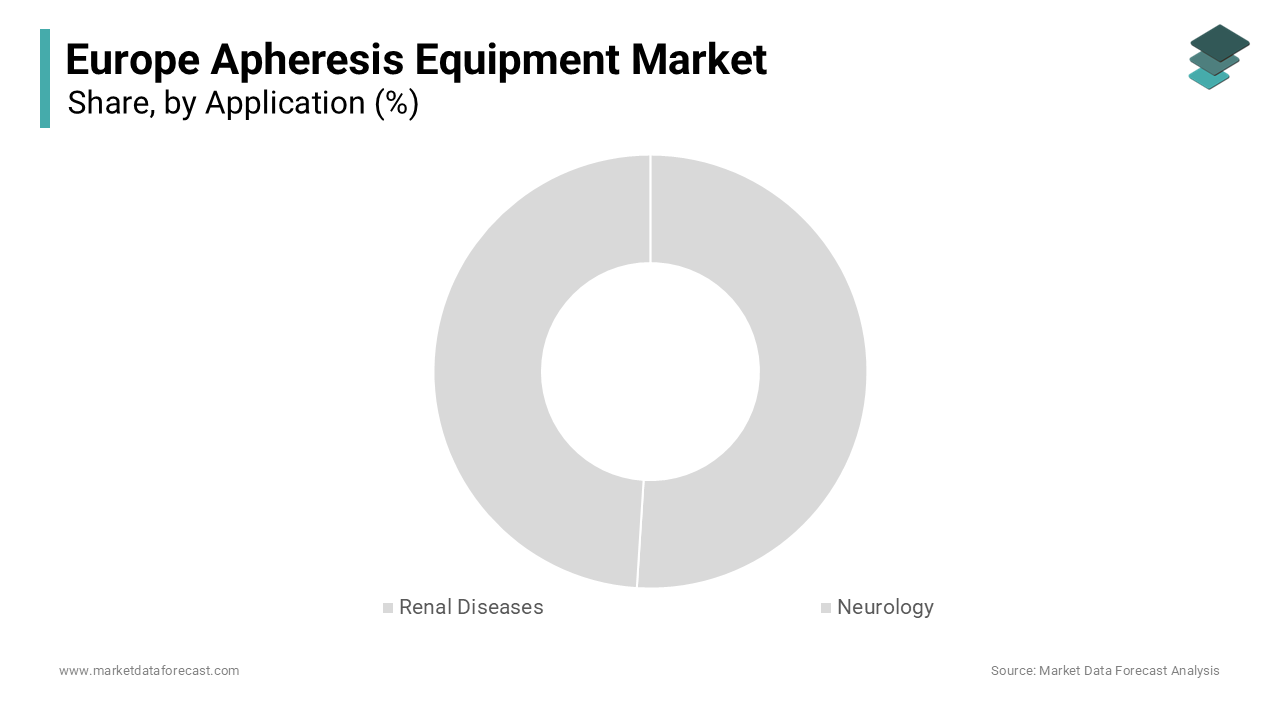
On the other side, the neurology segment is projected to register the highest CAGR in the European market during the forecast period. This rapid expansion is fueled by the increasing recognition of therapeutic plasma exchange and immunoadsorption as effective treatments for severe autoimmune neurological disorders such as myasthenia gravis, Guillain Barré syndrome, and chronic inflammatory demyelinating polyneuropathy. According to the European Brain Council, neurological disorders affect approximately 179 million people in Europe, with autoimmune conditions representing a significant and growing proportion of this burden. Recent clinical guidelines from the European Academy of Neurology have strengthened recommendations for early intervention with apheresis in acute relapses, driving adoption in specialized centers. As per data from national health registries, the diagnosis rate of rare neuroimmunological diseases has improved due to better awareness and diagnostic tools, expanding the treatable patient pool. The shift towards personalized medicine encourages the use of selective adsorption techniques that preserve beneficial proteins while removing pathogenic antibodies, offering superior safety profiles for fragile neurological patients. Furthermore, the establishment of European Reference Networks for rare neurological diseases facilitates knowledge sharing and standardization of apheresis protocols across borders. This harmonization accelerates equipment procurement in smaller hospitals that previously lacked expertise. The promising results of ongoing clinical trials investigating apheresis in multiple sclerosis and neuromyelitis optica also contribute to optimistic growth projections for this segment.
By Procedure Insights
The leukapheresis led the market in 2025 and is expected to remain the dominant procedure category in the European market for the next few years, sustained by its vital role in oncology and advanced therapies. This dominance is driven by the high volume of autologous and allogeneic stem cell collections required for treating hematological malignancies such as leukemia, lymphoma, and multiple myeloma. According to the European Society for Blood and Marrow Transplantation, tens of thousands of hematopoietic stem cell transplants are performed annually in Europe, each requiring one or more leukapheresis sessions to collect sufficient progenitor cells. The expanding indication for CAR T cell therapy further boosts demand, as these advanced treatments require high quality mononuclear cell collection as the starting material for manufacturing. As per the European Medicines Agency, several CAR T cell products have received marketing authorization in recent years, stimulating investment in specialized collection centers. Major academic hospitals in Germany, France, and the UK have scaled up their apheresis units to meet the logistical demands of these complex therapies. The procedural standardization of leukapheresis and its integration into routine oncology care pathways ensure consistent equipment usage. Additionally, the development of closed system kits and automated interfaces reduces contamination risk and operator workload, making leukapheresis the preferred and most frequently performed apheresis procedure in clinical settings. This entrenched clinical utility sustains its leadership in the market.
However, the LDL apheresis is expected to showcase a promising CAGR in the European apheresis equipment market during the forecast period owing to the rising prevalence of familial hypercholesterolemia and refractory cardiovascular disease where statins and other lipid lowering drugs fail to achieve target levels. According to the European Atherosclerosis Society, familial hypercholesterolemia affects approximately 1 in 300 individuals in Europe, yet diagnosis rates remain low, presenting a vast untapped market for therapeutic intervention. Recent updates to European Society of Cardiology guidelines recommend LDL apheresis as a class IIa recommendation for high risk patients with progressive cardiovascular disease despite maximal medical therapy. As per national registry data from countries like Germany and Austria, the number of LDL apheresis treatments has increased by double digits annually following expanded reimbursement coverage. The procedure offers immediate and significant reduction in low density lipoprotein cholesterol, providing a crucial lifeline for patients at imminent risk of myocardial infarction or stroke. Technological advancements allowing for selective removal of LDL while preserving high density lipoprotein have improved patient tolerance and outcomes. The establishment of dedicated lipid clinics and the training of cardiologists in apheresis techniques further drive adoption. As awareness of genetic lipid disorders grows and screening programs expand, the demand for LDL apheresis equipment is poised for substantial growth across the continent.
COUNTRY ANALYSIS
Germany Apheresis Equipment Market Analysis
Germany dominated the market in Europe in 2025 with accounting for the major share is expected to retain its leadership position in the European apheresis market over the next few years as it continues to invest in healthcare infrastructure and specialized medical technologies. This leadership is driven by the country’s advanced healthcare infrastructure, high healthcare expenditure, and comprehensive reimbursement policies for therapeutic apheresis. According to the German Federal Statistical Office, Germany maintains one of the highest densities of hospital beds and specialized medical devices per capita in Europe, facilitating widespread access to apheresis therapies. The country is a pioneer in LDL apheresis, with over 100 certified centers performing thousands of procedures annually for familial hypercholesterolemia patients. As per the German Society for Nephrology, the prevalence of chronic kidney disease and autoimmune disorders drives steady demand for renal and therapeutic plasma exchange procedures. The presence of leading medical device manufacturers and research institutions fosters innovation and rapid adoption of new technologies. Strict regulatory standards enforced by the Paul Ehrlich Institute ensure high quality and safety, building trust among clinicians and patients. The strong economic base allows for continuous investment in upgrading aging equipment to next generation automated systems. Additionally, the well established network of university hospitals serves as referral centers for complex cases, concentrating equipment usage and expertise. These factors collectively establish Germany as the primary engine of growth and innovation in the European apheresis market.
France Apheresis Equipment Market Analysis
France is projected to maintain a steady growth trajectory in the apheresis equipment market over the next few years, supported by its strong emphasis on national self sufficiency in blood products. The country is a major contributor to European plasma collection efforts, driving demand for source plasma apheresis devices. According to the French National Authority for Health, therapeutic apheresis is reimbursed for specific indications including neurological and hematological disorders, ensuring stable funding for procedures. The establishment of the French Blood Service has standardized collection practices and equipment procurement across public hospitals. As per data from the Ministry of Health, France collects millions of liters of plasma annually, requiring a robust fleet of automated collectors. The aging population and high prevalence of autoimmune diseases further support demand for therapeutic exchanges. Leading academic centers in Paris and Lyon are at the forefront of clinical research, exploring new applications for apheresis in rare diseases. The government’s strategic plan for biomedicine encourages investment in advanced therapies, including cell and gene therapies that rely on leukapheresis. Regulatory compliance with European standards is rigorously monitored, ensuring patient safety. The combination of public health priorities and clinical excellence sustains France’s prominent position in the regional market.
United Kingdom Apheresis Equipment Market Analysis
The United Kingdom is expected to see moderate and stable growth in its apheresis equipment market as it continues to integrate advanced cell therapy protocols into its healthcare system over the coming years. The National Health Service provides universal access to apheresis therapies for indicated conditions, creating a predictable demand pattern. According to NHS Blood and Transplant, the UK operates numerous donor apheresis centers to support plasma derived medicinal product production and platelet supply. The country is also a hub for clinical trials in cell therapy, boosting demand for leukapheresis equipment in research hospitals. As per the British Society for Haematology, stem cell transplantation rates remain steady, requiring consistent collection capabilities. The introduction of new CAR T cell therapies has prompted upgrades in apheresis units to meet manufacturing requirements. Despite budget constraints, the focus on value based healthcare encourages the adoption of efficient and durable equipment. Adherence to high safety standards remains paramount. Leading institutions in London and Manchester drive innovation and set clinical guidelines that influence practice across the region. The commitment to equitable access ensures that apheresis services are available nationwide, supporting market stability.
Italy Apheresis Equipment Market Analysis
Italy is anticipated to experience increasing demand for apheresis solutions over the next few years, driven by hospital modernization initiatives and a focus on outpatient therapeutic care. The country has a high prevalence of cardiovascular and autoimmune diseases, which are key indications for apheresis. According to the Italian Society of Nephrology, therapeutic plasma exchange is widely used for treating rare renal and neurological conditions. The Italian Medicines Agency has expanded reimbursement criteria for LDL apheresis, encouraging more centers to offer this service. As per data from the Ministry of Health, Italy is investing in modernizing its hospital infrastructure, including upgrades to apheresis units. The presence of skilled clinicians and researchers fosters adoption of advanced techniques such as immunoadsorption. Regional differences in healthcare organization lead to varying adoption rates, with northern regions generally having higher equipment density. The strong tradition of blood donation supports source plasma collection activities. Collaborations with international partners facilitate knowledge transfer and technology adoption. Economic recovery efforts include funding for medical equipment, benefiting the apheresis sector. The focus on improving patient outcomes and reducing hospital stays through effective outpatient therapies drives continued interest in apheresis solutions.
Spain Apheresis Equipment Market Analysis
Spain is expected to show continued growth in its apheresis equipment market as the nation further invests in specialized healthcare and advanced therapy adoption over the next few years. The country has seen growth in the number of apheresis procedures due to better diagnosis of autoimmune and hematological conditions. According to the Spanish Society of Hematology and Hemotherapy, stem cell transplantation activity is rising, driving demand for leukapheresis services. The Spanish Agency of Medicines and Medical Devices ensures strict compliance with safety standards, promoting confidence in apheresis technologies. As per the Ministry of Health, investments in digital health and hospital modernization include upgrades to extracorporeal therapy units. The prevalence of familial hypercholesterolemia is gaining attention, leading to pilot programs for LDL apheresis in major cities. The decentralized nature of healthcare administration means that procurement decisions are often made at the regional level, creating diverse opportunities for vendors. Strong clinical expertise in nephrology and neurology supports the use of therapeutic apheresis. The tourism medical sector also contributes to demand for high quality specialized treatments. Economic stabilization and EU recovery funds provide financial support for healthcare infrastructure improvements, benefiting the apheresis equipment market.
COMPETITIVE LANDSCAPE
The competition in the Europe Apheresis Equipment Market is characterized by a concentrated group of global leaders who compete on technology reliability clinical evidence and service quality. High barriers to entry due to stringent regulatory requirements and significant research costs limit the number of active participants. Major players differentiate themselves through proprietary separation technologies such as selective adsorption columns and advanced automation software. Price competition is moderate as healthcare providers prioritize clinical outcomes and device safety over initial cost savings. The market sees intense rivalry in the therapeutic segment where manufacturers strive to demonstrate superior efficacy for rare diseases. Service excellence and training programs are critical differentiators as skilled operation is vital for patient safety. Collaborations with blood services and transplant centers create sticky relationships that hinder competitor entry. Innovation cycles are rapid with continuous improvements in disposable kits and connectivity features. Regional preferences influence strategy with some countries favoring domestic suppliers or specific technical approaches. The shift towards outpatient and decentralized care models opens new competitive fronts requiring portable and easy to use devices. Overall the market rewards companies that combine scientific rigor with strong commercial execution and regulatory expertise.
KEY MARKET PLAYERS
Some of the companies that are playing a dominating role in the Europe Apheresis Equipment Market include
- Fresenius Kabi
- Terumo Corporation
- Haemonetics Corporation
- Baxter International Inc.
- DonorTech A/S (Macopharma)
- Asahi Kasei Medical Co., Ltd.
- B. Braun Melsungen AG
- NIPRO Corporation
- Grifols, S.A.
- Cerus Corporation
Top Players in the Europe Apheresis Equipment Market
Fresenius Medical Care is a dominant force in the European apheresis market providing comprehensive solutions for therapeutic and donor procedures. The company leverages its extensive network of dialysis centers across Germany and other key markets to drive adoption of its automated apheresis systems. Fresenius has recently strengthened its position by integrating digital health platforms that optimize treatment protocols and enhance patient monitoring capabilities. Their focus on developing selective adsorption technologies addresses the growing demand for targeted therapies in autoimmune disorders. The company actively collaborates with clinical experts to refine indications and improve outcomes ensuring high standards of care. Fresenius continues to invest in manufacturing excellence and supply chain resilience to meet the stringent regulatory requirements of the European market while supporting plasma self sufficiency initiatives through robust collection infrastructure.
Terumo BCT plays a pivotal role in the European apheresis landscape by offering advanced cell separation technologies widely used in hematopoietic stem cell collection and therapeutic exchanges. The company emphasizes innovation in software driven automation which simplifies complex procedures and reduces operator dependency. Terumo has recently expanded its service network in major European hubs to ensure rapid support and maintenance for healthcare facilities. Their strategic partnerships with academic research centers facilitate clinical trials and the development of new protocols for emerging cell therapies. Terumo focuses on enhancing donor and patient comfort through ergonomic design and efficient fluid management systems. This commitment to technological advancement and customer support reinforces their reputation as a reliable partner for hospitals and blood banks seeking high performance apheresis solutions.
Asahi Kasei Corporation contributes significantly to the European market through its specialized membrane technologies and immunoadsorption columns. The company is renowned for its high selectivity products that remove pathogenic substances while preserving beneficial plasma proteins. Asahi Kasei has recently strengthened its market presence by obtaining additional regulatory approvals for new therapeutic indications in neurology and nephrology. Their investment in local distribution channels ensures timely availability of critical disposables across the continent. The company actively engages in medical education programs to raise awareness about the benefits of selective apheresis among clinicians. By focusing on precision medicine and high quality manufacturing Asahi Kasei addresses the specific needs of European healthcare systems prioritizing patient safety and clinical efficacy in complex autoimmune treatments.
Top Strategies Used by Key Market Participants
Key players in the Europe Apheresis Equipment Market primarily focus on product innovation and technological differentiation to address evolving clinical needs. Companies invest heavily in research and development to create automated systems with enhanced safety features and user friendly interfaces. Strategic partnerships with academic institutions and clinical trial networks are essential to validate new indications and expand reimbursement coverage. Manufacturers also prioritize regulatory compliance with the European Medical Device Regulation to maintain market access and build trust. Expansion of service and support networks ensures high equipment uptime and customer satisfaction. Additionally key participants engage in mergers and acquisitions to broaden their product portfolios and enter niche therapeutic segments. Sustainability initiatives including waste reduction and energy efficient designs are increasingly adopted to align with European environmental goals. Digital integration through remote monitoring and data analytics enhances operational efficiency and supports value based healthcare models. These strategies collectively enable companies to navigate the complex regulatory landscape and sustain growth in a competitive environment.
MARKET SEGMENTATION
This research report on the europe apheresis equipment market is segmented and sub-segmented based on categories.
By Application
- Renal Diseases
- Neurology
By Procedure
- LDL-Apheresis
- Leukapheresis
By Country
- UK
- France
- Spain
- Germany
- Italy
- Russia
- Sweden
- Denmark
- Switzerland
- Netherlands
- Turkey
- Czech Republic
- Rest of Europe