- Product Description Description
- Table of Contents TOC
- List of Table & Figure LOT
- Get Free Sample PDF Sample PDF
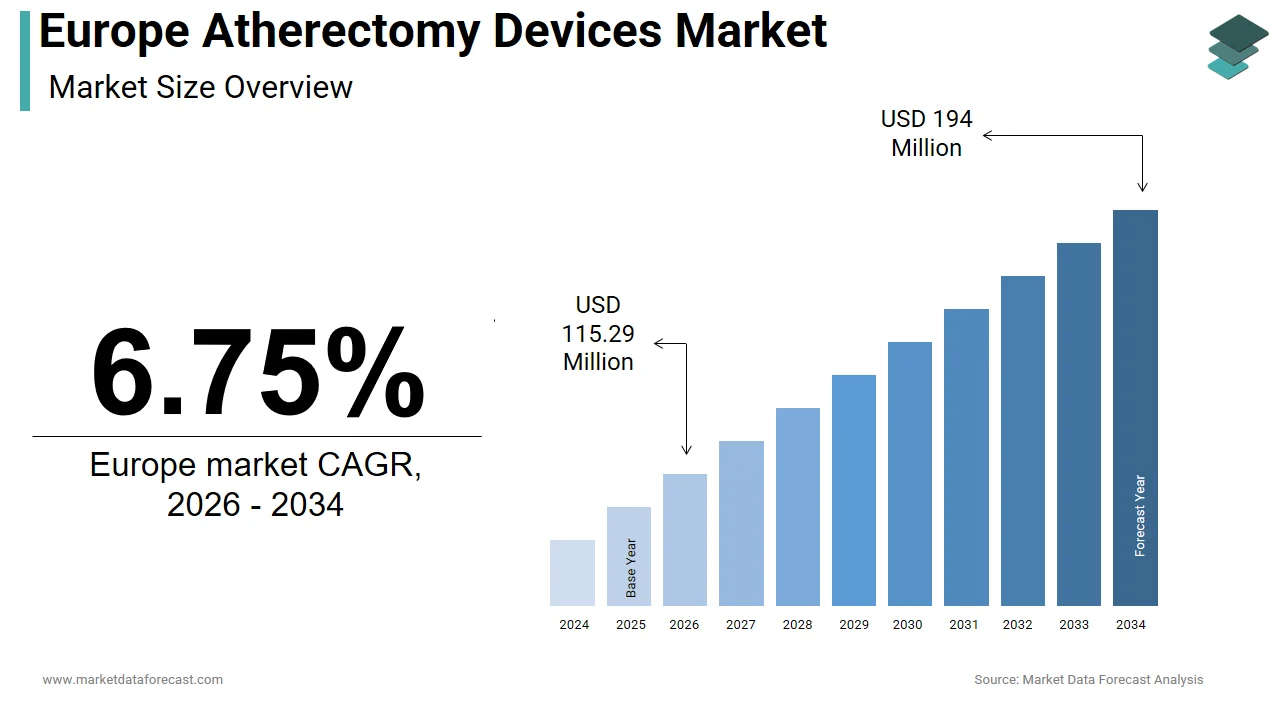
Market Size, 2025
$108 MnMarket Estimate, 2026
$115.29 MnMarket Forecast, 2034
$194 MnCAGR, 2026–2034
6.75%Europe Atherectomy Devices Market Report Summary
The Europe atherectomy devices market was valued at USD 108 million in 2025, is anticipated to reach USD 115.29 million in 2026, and is projected to reach USD 194 million by 2034, growing at a CAGR of 6.75% from 2026 to 2034. Market growth is driven by the rising prevalence of peripheral artery disease (PAD), increasing geriatric population, and growing adoption of minimally invasive vascular interventions. Healthcare providers across Europe are increasingly utilizing atherectomy devices to remove plaque buildup and restore blood flow, reducing the need for open surgical procedures. Technological advancements in directional, rotational, and laser atherectomy systems are further supporting market expansion.
Key Market Trends
- Rising incidence of peripheral artery disease and critical limb ischemia.
- Increasing preference for minimally invasive endovascular procedures.
- Growing adoption of combination therapies with drug-coated balloons and stents.
- Expansion of vascular specialty centers and hybrid operating rooms.
- Strengthening focus on limb salvage and amputation reduction strategies.
Segmental Insights
- Based on type, the directional atherectomy segment dominated the market in 2025 by accounting for 39.4% market share, driven by its precision plaque removal capability and clinical flexibility.
- Based on application, the peripheral segment overwhelmingly led the market by capturing 90.5% share in 2025, supported by the high burden of PAD and increasing lower limb revascularization procedures.
- Based on end user, the hospitals segment held the largest share at 80.95% in 2025, driven by high procedure volumes, availability of specialized vascular surgeons, and advanced imaging facilities.
Regional Insights
The Europe atherectomy devices market is witnessing steady growth across major economies, supported by advanced vascular care infrastructure, increasing cardiovascular disease burden, and expanding interventional capabilities.
- Germany led the regional market in 2025 with 23.5% share, driven by strong hospital infrastructure, high adoption of endovascular procedures, and advanced reimbursement systems.
- France held the second-largest share in 2025, supported by expanding vascular specialty networks and growing focus on minimally invasive therapies.
- The United Kingdom is anticipated to register a promising CAGR over the forecast period, driven by its strategic focus on reducing amputations through integrated vascular care networks.
Competitive Landscape
The Europe atherectomy devices market is characterized by strong competition among global medical device manufacturers and specialized vascular intervention companies. Market players are focusing on technological innovation, improved device maneuverability, and enhanced safety profiles. Strategic collaborations, clinical trial expansions, and product launches are shaping competitive dynamics across the region.
Prominent companies operating in the Europe atherectomy devices market include Bayer HealthCare, C. R. Bard, Inc., Cardinal Health, Avinger, Inc., Boston Scientific Corporation, Straub Medical AG, St. Jude Medical, Philips Healthcare, Cardiovascular Systems, Inc., and Spectranetics.
Europe Atherectomy Devices Market Size
The size of the Europe atherectomy devices market was valued at USD 108 million in 2025. This market is expected to grow at a CAGR of 6.75% from 2026 to 2034 and be worth USD 194 million by 2034 from USD 115.29 million in 2026.
Atherectomy devices encompass minimally invasive medical instruments designed to remove atherosclerotic plaque from arterial walls in patients with peripheral artery disease (PAD) and, less commonly, coronary artery disease. These devices are classified into directional, rotational, orbital, and laser-based systems and enable interventional cardiologists and vascular surgeons to restore blood flow by excising or ablating calcified or fibrotic lesions that are suboptimal for angioplasty or stenting alone. Atherectomy is particularly valued in complex cases involving long occlusions, heavy calcification, or in-stent restenosis, where vessel preparation is critical to procedural success. According to the European Society of Cardiology, over 40 million adults in the EU suffer from peripheral artery disease, with prevalence rising sharply with age, and among individuals over 70, nearly one in five exhibits symptomatic disease. As per Eurostat, the population aged 65 and older reached 21.3% of the total EU population in 2023, creating sustained clinical demand for advanced endovascular solutions. Furthermore, Germany’s Federal Joint Committee reported a 28% decline in major lower extremity amputations between 2018 and 2023, partly attributed to improved revascularization techniques, including atherectomy. This clinical and demographic context positions atherectomy not as a first-line therapy but as a strategic adjunct in the evolving algorithm of vascular intervention across Europe.
MARKET DRIVERS
Rising Burden of Complex Peripheral Artery Disease Drives Procedural Adoption
The increasing prevalence of advanced and calcified peripheral artery disease in aging European populations is a primary driver of the European atherectomy devices market. As per the European Society of Vascular Medicine, a significant proportion of patients undergoing endovascular treatment for femoropopliteal lesions present with moderate to severe arterial calcification, a condition that increases the risk of dissection, recoil, and restenosis when treated with balloons alone. In response, interventionalists are turning to atherectomy for effective lesion modification. Data from the German Institute for Quality and Efficiency in Health Care shows that atherectomy use in PAD interventions rose between 2021 and 2023, concentrated in patients with Rutherford Class 4 to 6 symptoms. Italy’s National Registry of Endovascular Procedures documented that orbital atherectomy accounted for a notable share of plaque modification strategies in tibial artery disease in 2023, reflecting its utility in distal vessels. Moreover, clinical guidelines are evolving, with the 2023 update from the TransAtlantic Inter Society Consensus conditionally recommending atherectomy for in-stent restenosis and heavily calcified lesions based on trials such as DEFINITIVE AR. This shift from empirical practice to guideline-supported application legitimizes device use and encourages reimbursement approval across national health systems.
Emphasis on Limb Preservation and Reduced Amputation Rates Reinforces Clinical Value
European healthcare systems are increasingly prioritizing limb salvage as a quality and cost metric, directly elevating the role of atherectomy in comprehensive PAD management, which is further propelling the growth of the European atherectomy devices market. Major amputations carry high morbidity, mortality, and economic costs. According to the Swedish National Board of Health and Welfare, the five-year survival rate after major lower limb amputation is only 45%, worse than many cancers. Consequently, national strategies now emphasize revascularization-first approaches. The UK’s National Health Service launched the “Saving Legs” initiative in 2022, mandating multidisciplinary vascular review before any amputation, which led to an increase in endovascular interventions, including atherectomy, by 2023, as reported by NHS Digital. Similarly, France’s Haute Autorité de Santé updated its vascular care pathways in 2023 to include atherectomy as a reimbursed option for chronic limb-threatening ischemia when anatomical complexity precludes standard angioplasty. Real-world evidence supports this policy shift, with a multicenter study published by the Dutch Vascular Society in 2024 finding that patients receiving adjunctive directional atherectomy had a lower rate of target lesion revascularization at one year compared to balloon-only therapy. These outcomes align with value-based healthcare principles, reinforcing atherectomy’s position as a clinically justified investment rather than a discretionary expense.
MARKET RESTRAINTS
Stringent Reimbursement Constraints Limit Routine Device Utilization
Despite clinical benefits, inconsistent and restrictive reimbursement policies across European countries significantly restrain widespread adoption of atherectomy devices andares a notable restraint to the European atherectomy devices market. Unlike in the United States, where specific CPT codes exist for atherectomy procedures, most EU nations bundle device costs into broader diagnosis-related group payments for peripheral interventions, offering no additional compensation for plaque removal technology. As per the European Observatory on Health Systems and Policies, only Germany, France, and Italy provide partial add-on payments for atherectomy under select indications, while countries such as Spain and Portugal offer no separate reimbursement at all. This creates strong financial disincentives for hospitals operating under fixed budgets. A 2023 survey by the European Association of Percutaneous Cardiovascular Interventions revealed that 68% of vascular centers in Southern and Eastern Europe avoid atherectomy unless necessary due to cost absorption concerns. Even in Germany, where reimbursement exists, the Federal Joint Committee requires prior authorization for laser atherectomy, adding administrative burden. Without harmonized value-based payment models that recognize the long-term savings from reduced reinterventions and amputations, atherectomy remains a niche tool despite its procedural advantages.
Limited High Quality Comparative Evidence Hinders Guideline Integration
The absence of large-scale randomized controlled trials directly comparing atherectomy modalities against contemporary alternatives such as drug-coated balloons or lithoplasty restricts definitive clinical endorsement across Europe, which is also inhibiting the European atherectomy devices market growth. While registries and single-arm studies suggest benefit, regulatory and advisory bodies remain cautious in granting broad recommendations. According to the European Medicines Agency, none of the current atherectomy devices have received a Class I recommendation in European vascular guidelines due to insufficient Level A evidence. The 2023 Cochrane Review on atherectomy for femoropopliteal disease concluded that existing trials were underpowered and at high risk of bias, preventing firm conclusions on patency or amputation reduction. This evidence gap influences both clinician behavior and payer decisions. For instance, the Netherlands’ Zorginstituut Nederland declined expanded reimbursement in 2023, citing a lack of comparative effectiveness data versus plain old balloon angioplasty. Consequently, adoption relies heavily on operator experience and institutional preference rather than standardized protocols, leading to geographic variability in use and slowing diffusion even in high-volume centers. Until robust multicenter trials such as the ongoing EURECA II provide conclusive data, atherectomy will struggle to achieve mainstream status in European vascular algorithms.
MARKET OPPORTUNITIES
Integration with Intravascular Imaging Enhances Precision and Outcomes
The convergence of atherectomy with intravascular ultrasound and optical coherence tomography is unlocking new opportunities for the European atherectomy devices market. These imaging modalities allow operators to identify calcium distribution, plaque composition, and vessel dimensions in real time, enabling selective debulking while preserving healthy media. As per the European Association of Percutaneous Cardiovascular Interventions, more than half of high-volume vascular centers in Germany and Switzerland now perform imaging-guided atherectomy for complex lesions. A 2024 analysis from the Italian Endovascular Registry showed that IVUS-guided orbital atherectomy reduced dissection rates compared to angiography alone in calcified superficial femoral arteries. This synergy improves acute results and long-term patency, strengthening the clinical rationale for device use. Manufacturers are responding with integrated platforms, with Philips and Boston Scientific co-developing workflows that overlay OCT data onto atherectomy consoles for real-time feedback. As European health systems increasingly adopt value-based procurement, such image-enabled precision interventions demonstrate measurable quality improvements that justify higher upfront costs through reduced complications and reinterventions.
Expansion into Below-the-Knee and In-Stent Restenosis Indications Broadens Applicability
Emerging clinical evidence supporting atherectomy in challenging anatomical territories is creating significant growth avenues for the European atherectomy devices market. Below-the-knee disease and in-stent restenosis represent two high-unmet-need areas where conventional therapies often fail. According to the European Journal of Vascular and Endovascular Surgery, ISR accounts for a substantial share of recurrent PAD cases in previously stented limbs, and BTK lesions affect a majority of diabetic patients with critical limb ischemia. Directional and laser atherectomy have shown promise in these scenarios by removing neointimal hyperplasia without damaging the underlying stent struts or fragile tibial vessels. The French Society of Vascular Medicine reported in 2023 that laser atherectomy use in BTK interventions grew following publication of the EXCITE ISR trial subgroup analysis showing improved amputation-free survival. Regulatory bodies are taking note, with the UK’s NICE issuing a MedTech Innovation Briefing in early 2024 endorsing laser atherectomy for ISR based on reduced binary restenosis. As training programs expand and device profiles evolve for smaller vessels, these niche indications are transitioning into validated therapeutic pathways, significantly expanding the addressable patient pool across Europe.
MARKET CHALLENGES
High Procedure Complexity Demands Specialized Training and Infrastructure
Atherectomy procedures require advanced technical skills and specialized catheterization lab infrastructure, creating operational barriers that limit adoption outside tertiary referral centers, which is a major challenge to the growth of the European atherectomy devices market. Unlike standard angioplasty, atherectomy involves real-time torque control, lesion crossing strategy, and debris management, demanding extensive proctoring and case volume to achieve proficiency. According to the European Board of Vascular Surgery, fewer than one-third of interventionalists in the EU have completed formal atherectomy training, with most certified practitioners concentrated in urban academic hospitals. This scarcity restricts access in rural and Eastern European regions where vascular specialists are already limited. A 2023 workforce assessment by the Czech Society of Angiology found that only a small number of centers nationwide offered rotational atherectomy due to a lack of trained personnel and compatible imaging systems. Furthermore, the procedure often requires longer fluoroscopy times and additional support staff, straining resource-constrained facilities. Without scalable simulation-based training programs and simplified next-generation devices, the learning curve will continue to suppress diffusion even where clinical need is high, perpetuating disparities in advanced endovascular care across the continent.
Device Fragmentation and Lack of Standardization Complicate Procurement and Outcomes Comparison
The Europe atherectomy market features multiple competing technologies, each with distinct mechanisms, indications, and learning curves, leading to clinical and logistical fragmentation. This diversity impedes standardized protocol development and makes cross-center outcome benchmarking difficult. As per the European Registry of Endovascular Interventions, procedural success rates for atherectomy vary widely depending on device type and operator experience, complicating meta-analyses and health technology assessments. Hospitals face complex procurement decisions without clear comparative effectiveness data, with a 2024 survey by the German Hospital Federation revealing that a majority of purchasing committees cited lack of head-to-head trials as the top barrier to selecting atherectomy platforms. Additionally, each system requires proprietary consoles, guidewires, and accessories, increasing inventory costs and training burdens. This technological siloing discourages smaller hospitals from adopting any platform due to cost and complexity. Until consensus emerges on lesion-specific device selection or hybrid platforms unify functionalities, the market will remain fragmented, slowing both innovation uptake and equitable patient access across diverse European healthcare settings.
REPORT COVERAGE
| REPORT METRIC | DETAILS |
| Market Size Available | 2025 to 2034 |
| Base Year | 2025 |
| Forecast Period | 2026 to 2034 |
| Segments Covered | By Type, Application, End User, and Country. |
| Various Analyses Covered | Global, Regional, and Country-Level Analysis, Segment-Level Analysis, Drivers, Restraints, Opportunities, Challenges; PESTLE Analysis; Porter’s Five Forces Analysis, Competitive Landscape, Analyst Overview of Investment Opportunities |
| Countries Covered | UK, France, Spain, Germany, Italy, Russia, Sweden, Denmark, Switzerland, Netherlands, Turkey, Czech Republic, and the Rest of Europe. |
| Market Leaders Profiled | Bayer HealthCare, C. R. Bard, Inc., Cardinal Health (Cordis), Avinger, Inc., Boston Scientific Corporation, Straub Medical AG, St. Jude Medical, Philips Healthcare, Cardiovascular Systems, Inc., and Spectranetics. |
SEGMENTAL ANALYSIS
By Type Insights
The directional atherectomy segment accounted for 39.4% of the regional market share in 2025. The dominance of directional atherectomy segment in the European market is primarily driven by its proven efficacy in treating eccentric and fibrotic plaque commonly found in femoropopliteal and tibial arteries, particularly in patients with diabetes or chronic limb-threatening ischemia. Unlike rotational or orbital systems that ablate circumferentially, directional devices allow selective excision of plaque while preserving healthy vessel wall, a critical advantage in distal vessels prone to perforation. According to the European Journal of Vascular and Endovascular Surgery, directional atherectomy achieved a primary patency rate of 72% at one year in the DEFINITIVE LE trial’s European subgroup, significantly outperforming historical balloon angioplasty outcomes. The technology is especially favored in below-the-knee interventions where precision matters, with Italy’s National Registry of Endovascular Procedures reporting that directional platforms were widely used in 2023 due to their compatibility with small vessel anatomy. Furthermore, reimbursement pathways in Germany and France explicitly recognize directional atherectomy for in-stent restenosis, reinforcing its clinical legitimacy. The availability of integrated imaging guidance, such as IVUS-compatible catheters, has further enhanced procedural control, making it the preferred choice for high-volume vascular centers across Western Europe.
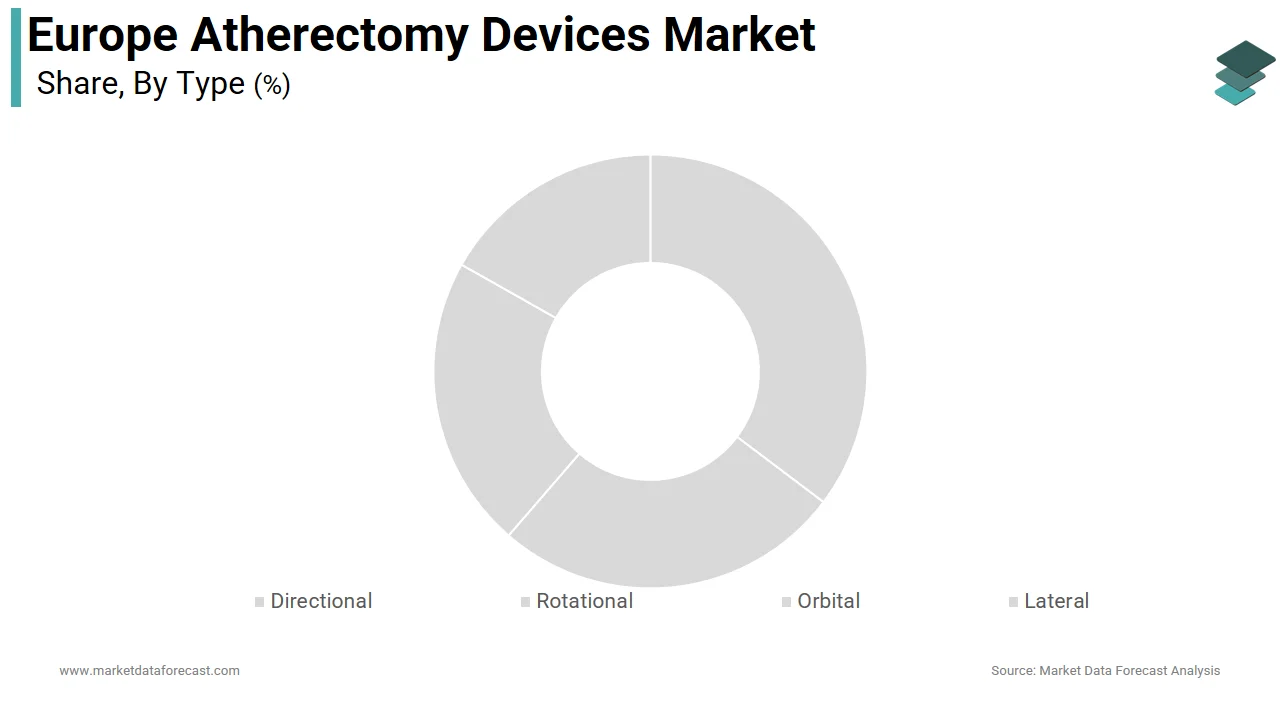
The orbital atherectomy segment is the fastest growing by device type and is estimated to register a CAGR of 12.4% over the forecast period, owing to its unique ability to safely modify heavily calcified lesions without requiring precise lesion targeting, addressing a major unmet need in aging European populations. Orbital systems use an eccentrically mounted crown that orbits at variable speeds to sand down calcium circumferentially, reducing the risk of vessel injury compared to high-speed rotational devices. As per the German Institute for Quality and Efficiency in Health Care, a significant proportion of PAD patients undergoing endovascular therapy in 2023 presented with moderate to severe medial calcification, a condition where orbital atherectomy demonstrates superior safety. The technology gained traction following the publication of the CONFIRM registry’s European cohort in 2024, which showed lower rates of flow-limiting dissection compared to balloon angioplasty in calcified superficial femoral arteries. Additionally, its single-use disposable design simplifies logistics and reduces cross-contamination risk, key considerations under the EU Medical Device Regulation. Switzerland’s Federal Office of Public Health approved expanded coverage for orbital atherectomy in 2023 based on cost-effectiveness modeling that factored in reduced reintervention rates, signaling growing payer acceptance across high-income markets.
By Application Insights
The peripheral segment overwhelmingly dominated the Europe atherectomy devices market in 2025 by capturing 90.5% of the European market share. This near exclusivity reflects the established role of atherectomy in managing peripheral artery disease, particularly in the lower extremities, where complex lesions often resist conventional angioplasty. Coronary and neurovascular applications remain experimental or contraindicated due to vessel size and safety concerns. According to the European Society of Cardiology, over 8 million Europeans suffer from symptomatic PAD, with prevalence exceeding 20% in those over 70. National health strategies increasingly emphasize limb salvage, with the UK’s National Health Service reporting an increase in endovascular revascularization procedures between 2021 and 2023, where atherectomy played a key adjunctive role in complex cases. Germany’s Federal Joint Committee includes atherectomy in its S3 guidelines for chronic limb-threatening ischemia when calcification impedes stent deployment. Real-world data from the Dutch Vascular Registry confirms that the majority of atherectomy procedures in 2023 targeted iliac, femoral, popliteal, or tibial arteries. The absence of viable alternatives for in-stent restenosis and long occlusions further cements peripheral use as the clinical and economic core of the market.
The cardiovascular (coronary) segment, though currently minimal, is the fastest growing, albeit from a very low base, and is estimated to record a CAGR of 14.4% over the forecast period, owing to the widespread adoption, but by emerging investigational use in highly selected coronary scenarios, such as in-stent restenosis or undilatable lesions where rotational atherectomy remains the only option. While coronary atherectomy accounts for less than 3% of total procedures in Europe, specialized centers in Switzerland and the Netherlands are exploring its revival with next-generation devices featuring enhanced torque control and embolic protection. As per the Swiss Working Group on Interventional Cardiology, rotational atherectomy was used in a small proportion of complex PCI cases in 2023, primarily in patients with prior stent failure. The European Medicines Agency granted breakthrough designation in early 2024 to a novel micro-rotational system designed specifically for coronary use, citing unmet need in undilatable lesions. Although large-scale adoption remains unlikely due to risks of perforation and distal embolization, these niche applications in high acuity tertiary centers represent a scientifically validated frontier that could gradually expand with improved safety profiles and imaging integration.
By End User Insights
The hospitals segment dominated the market by commanding for 80.95% of the regional market share in 2025. The leading position of hospitals segment in the European market can be credited to the procedural complexity, infrastructure requirements, and multidisciplinary support necessary for safe atherectomy execution. These interventions demand hybrid operating rooms with advanced fluoroscopy, intravascular imaging, and hemodynamic monitoring, resources concentrated in public and academic hospitals. According to the European Observatory on Health Systems, most vascular interventions involving plaque modification occur in hospital settings due to the need for immediate surgical backup in case of complications such as perforation or distal embolization. Germany’s Hospital Care Structure Act mandates that all endovascular atherectomy be performed in certified vascular centers, which are exclusively hospital-based. Similarly, France’s Haute Autorité de Santé requires institutional accreditation for complex PAD interventions, effectively excluding standalone clinics. The integration of atherectomy into comprehensive limb salvage programs, often involving podiatrists, infectious disease specialists, and wound care teams, further anchors its practice within hospital ecosystems where coordinated care models are operationalized.
The surgical centers segment represents the fastest-growing end-user segment and is expected to exhibit a CAGR of 10.3% over the forecast period, owing to the gradual shift of select peripheral interventions to outpatient settings in countries with mature ambulatory care frameworks such as the UK, Netherlands, and Switzerland. As atherectomy devices become more user-friendly and complication rates decline, certain low-risk femoropopliteal cases are being deemed suitable for same-day discharge. According to the British Society of Interventional Radiology, directional atherectomies performed in accredited independent vascular centers increased between 2020 and 2023, driven by NHS efforts to reduce inpatient bed pressure. These centers benefit from streamlined workflows, faster scheduling, and lower overhead costs. However, expansion remains tightly regulated, with the Dutch Healthcare Authority requiring surgical centers to maintain transfer agreements with nearby hospitals and demonstrate minimum annual case volumes before offering atherectomy. This cautious liberalization reflects a broader European trend toward value-based ambulatory care without compromising safety, creating a controlled but meaningful growth corridor outside traditional hospitals.
COUNTRY-LEVEL ANALYSIS
Germany Atherectomy Devices Market Analysis
Germany dominated the market by holding 23.5% of the European atherectomy devices market share in 2025. The dominating position of Germany in the European market is attributed to a robust vascular care infrastructure, stringent quality standards, and favorable reimbursement for complex endovascular procedures. The country hosts more than 180 certified vascular centers mandated by the Federal Joint Committee to manage chronic limb-threatening ischemia using guideline-directed algorithms that include atherectomy for calcified or in-stent lesions. According to the German Institute for Quality and Efficiency in Health Care, atherectomy utilization in PAD interventions increased by 21% between 2021 and 2023, driven by aging demographics and diabetes prevalence exceeding 12% among adults. Germany also enforces rigorous operator credentialing, requiring interventionalists to complete proctored cases and annual recertification, ensuring high procedural standards. Domestic manufacturers and research hospitals in Berlin and Munich actively contribute to clinical evidence generation, reinforcing Germany’s role as both a consumption leader and scientific reference point for atherectomy adoption across Europe.
France Atherectomy Devices Market Analysis
France held the second-largest share of the European atherectomy devices market in 2025. The prominent position of France in the European market is driven by the centralized healthcare planning and strong emphasis on limb preservation. The French National Authority for Health updated its vascular intervention guidelines in 2023 to explicitly recommend atherectomy for femoropopliteal in-stent restenosis and heavily calcified lesions, directly influencing hospital procurement. France’s public hospital system performs tens of thousands of endovascular PAD procedures annually, according to the National Hospital Discharge Database, with atherectomy featured in an estimated share of complex cases. The country also leads in training, with Paris and Lyon hosting two of Europe’s most active proctoring programs for directional and orbital systems. Additionally, France’s social security system provides partial add-on reimbursement for plaque modification devices, reducing financial barriers for institutions. With more than 23% of its population aged 65 or older and rising obesity rates, France’s clinical need for advanced revascularization continues to grow, sustaining steady demand for atherectomy technologies within its highly regulated yet responsive healthcare ecosystem.
United Kingdom Atherectomy Devices Market Analysis
The United Kingdom is estimated to register a promising CAGR in the European atherectomy devices market during the forecast period due to its strategic focus on reducing amputations through integrated vascular networks. The NHS’s “Saving Legs” initiative, launched in 2022, mandates multidisciplinary review before any major amputation, resulting in a 26% increase in endovascular interventions, including atherectomy, by 2023 as per NHS England data. The UK favors directional atherectomy for below-the-knee disease due to its precision in small vessels, a preference reflected in the British Journal of Surgery’s 2023 consensus statement on limb salvage. Reimbursement remains bundled, but the National Institute for Health and Care Excellence issued a MedTech Innovation Briefing in early 2024 endorsing laser atherectomy for in-stent restenosis based on reduced binary restenosis. Teaching hospitals in London, Birmingham, and Glasgow serve as national referral centers, combining high case volumes with research output. Despite Brexit, the UK maintains alignment with EU device regulations, ensuring continued access to next-generation platforms. This blend of policy-driven care delivery, clinical expertise, and outcome tracking solidifies the UK’s position as a key adopter and evaluator of atherectomy innovation.
Italy Atherectomy Devices Market Analysis
Italy is expected to account for a notable share of the European atherectomy devices market during the forecast peri,od owing to the high PAD burden and regional variation in vascular care access. Southern regions exhibit greater disease severity due to higher smoking and diabetes rates, while the North boasts advanced endovascular capabilities. According to Italy’s National Institute of Statistics, more than 15% of adults over 65 suffer from symptomatic PAD, creating substantial procedural demand. The Italian Association of Hospital Cardiologists reported that atherectomy use rose by 29% between 2021 and 2023, concentrated in tertiary centers in Milan, Rome, and Turin. Italy is particularly receptive to orbital atherectomy for calcified lesions, a reflection of its aging patient profile and preference for circumferential plaque modification. Reimbursement is decentralized, but Lombardy and Emilia Romagna regions offer supplementary payments for complex interventions. Domestic research contributes significantly, with the IRCCS Policlinico San Donato publishing pivotal real-world data on directional atherectomy in diabetic foot patients in 2024. This combination of epidemiological pressure, clinical innovation, and regional policy flexibility sustains Italy’s dynamic role in the European atherectomy landscape.
Switzerland Atherectomy Devices Market Analysis
Switzerland is predicted to register a healthy CAGR in the European atherectomy devices market during the forecast period due to its status as a high acuity referral hub and early adopter of advanced technologies. Swiss vascular centers in Zurich, Geneva, and Basel routinely treat complex international patients and participate in global clinical trials, accelerating device uptake. According to the Swiss Medical Association, more than one-third of PAD interventions in 2023 involved some form of plaque modification, the highest rate in Europe. Switzerland’s fee-for-service reimbursement model allows direct billing for atherectomy devices, removing budgetary constraints faced in public systems. The Federal Office of Public Health approved full coverage for orbital atherectomy in 2023 following a health technology assessment that demonstrated cost savings from reduced reinterventions. Moreover, Swiss operators benefit from proximity to the European headquarters of major device manufacturers, enabling rapid access to next-generation systems and training. With life expectancy exceeding 84 years and exceptional vascular care standards, Switzerland punches far above its demographic weight, serving as a benchmark for clinical excellence and innovation diffusion across the continent.
COMPETITIVE LANDSCAPE
Competition in the Europe atherectomy devices market is defined by technological differentiation, clinical validation, and strategic alignment with limb salvage imperatives rather than price alone. The market features a mix of specialized innovators like CSI and diversified MedTech giants such as Philips and Boston Scientific, each leveraging distinct mechanisms to address specific lesion morphologies. Reimbursement constraints and stringent EU MDR requirements create high barriers to entry, favoring established players with robust quality systems and post-market data capabilities. Success hinges on demonstrating not just procedural success but long-term value through reduced amputations, reinterventi,ons and hospital stays. Geographic variation in vascular expertise and healthcare financing further fragments adoption patterns, necessitating localized commercial models. As European health systems shift toward value-based procurement, companies that combine device efficacy with integrated imaging training and health economic evidence gain a competitive advantage in this highly specialized and clinically driven segment.
KEY MARKET PLAYERS
The leading companies operating in the Europe atherectomy devices market include:
- Bayer HealthCare
- R. Bard, Inc.
- Cardinal Health
- Avinger, Inc.
- Boston Scientific Corporation
- Straub Medical AG
- Jude Medical
- Philips Healthcare
- Cardiovascular Systems, Inc.
- Spectranetics
TOP PLAYERS IN THE MARKET
- Philips Healthcare plays a pivotal role in the Europe atherectomy devices market through its acquisition of Spectranetics, now integrated into its Image Guided Therapy portfolio. The company offers the Stellarex laser atherectomy system, which is widely used for treating in-stent restenosis and complex calcified lesions in peripheral arteries. Philips leverages its strength in intravascular imaging and hybrid lab integration to provide end-to-end vascular solutions that enhance procedural precision. In recent years, the company has expanded clinical education programs across Germany, France, and the UK to train interventionalists on image-guided atherectomy techniques. It also collaborates with European vascular societies to generate real-world evidence supporting laser atherectomy in below-the-knee disease. These initiatives reinforce Philips’ global leadership in image-enabled vascular interventions while deepening its footprint in Europe’s value-based care environment.
- Cardiovascular Systems Inc is a key contributor to the Europe atherectomy landscape with its proprietary orbital atherectomy technology designed specifically for heavily calcified peripheral artery disease. The company’s Diamondback 360 system has gained traction in high-volume centers across Switzerland, Germany, and Italy, where calcification prevalence is high. CSI has invested in localized clinical support teams to facilitate proctoring and case observation programs aligned with EU Medical Device Regulation requirements. It actively participates in European registries such as CONFIRM EU to validate long-term outcomes in real-world populations. The company also works closely with national reimbursement agencies to demonstrate cost effectiveness through reduced reinterventions and amputations. These efforts position CSI as a specialized innovator whose technology addresses a critical unmet need in Europe’s aging vascular patient cohort.
- Boston Scientific maintains a strong presence in the Europe atherectomy market through its Jetstream Navix directional atherectomy platform, which combines aspiration with plaque excision for efficient debulking and embolic protection. The company integrates this technology into its broader peripheral intervention ecosystem, including drug-coated balloons and intravascular ultrasound systems. Boston Scientific has enhanced its European commercial infrastructure by establishing dedicated vascular specialist teams in Spain, the Netherlands, and Sweden to support hospital adoption. It also sponsors hands-on training workshops at its Innovation Centers in Paris and Munich, focusing on complex lesion management. Recent regulatory submissions to expand indications for in-stent restenosis reflect its commitment to broadening clinical utility. Through this integrated approach, Boston Scientific strengthens its position as a comprehensive partner in advanced endovascular care across the region.
TOP STRATEGIES USED BY THE KEY MARKET PARTICIPANTS
Key players in the Europe atherectomy devices market prioritize clinical evidence generation through participation in multicenter registries and post-market studies to support reimbursement and guideline inclusion. They invest in physician training and proctoring programs to overcome high learning curves and ensure safe adoption. Companies integrate atherectomy platforms with intravascular imaging and other interventional tools to offer seamless workflow solutions. Strategic collaborations with national vascular societies and health technology assessment bodies help align device value with limb preservation outcomes. Additionally, they focus on regulatory compliance under the EU Medical Device Regulation by enhancing post-market surveillance and risk management systems to maintain market access.
MARKET SEGMENTATION
This Europe atherectomy devices market research report is segmented and sub-segmented into the following categories.
By Type
- Directional
- Rotational
- Orbital
- Lateral
By Application
- Peripheral
- Cardiovascular
- Neurovascular
By End User
- Hospitals
- Surgical Centers
- Research Laboratories
- Academic Institutes
By Country
- UK
- France
- Spain
- Germany
- Italy
- Russia
- Sweden
- Denmark
- Switzerland
- Netherlands
- Turkey
- Czech Republic
- Rest of Europe