Europe Vascular Guidewires Market Size, Share, Trends & Growth Forecast Report By Product, Coating Type, End-User and Country - Industry Analysis, From (2026 to 2034)
Market Size, 2025
$0.87 BnMarket Estimate, 2026
$0.91 BnMarket Forecast, 2034
$1.34 BnCAGR, 2026–2034
4.89%Europe Vascular Guidewires Market Report Summary
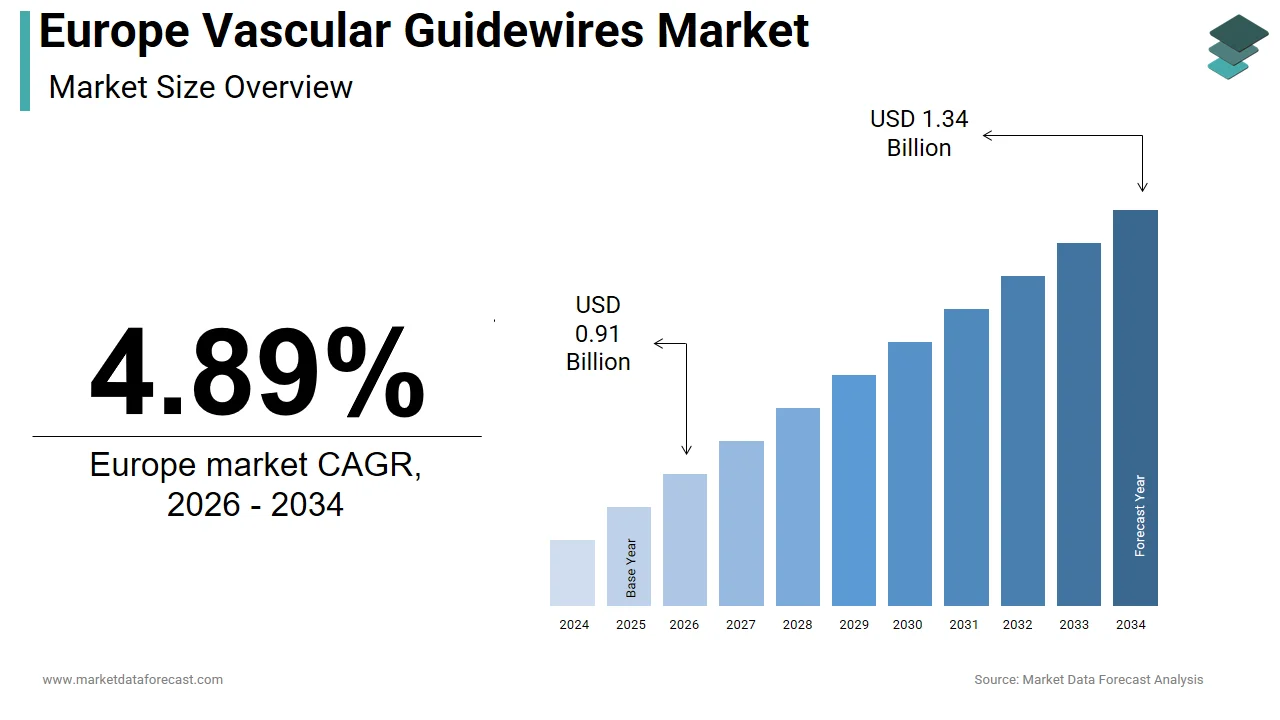
The Europe vascular guidewires market was valued at USD 0.87 billion in 2025, is anticipated to reach USD 0.91 billion in 2026, and is projected to reach USD 1.34 billion by 2034, growing at a CAGR of 4.89% from 2026 to 2034. Market growth is driven by the rising prevalence of cardiovascular diseases, increasing adoption of minimally invasive procedures, and expanding use of interventional cardiology and peripheral vascular interventions. Healthcare providers across Europe are increasingly relying on advanced guidewire technologies to improve procedural accuracy, reduce complications, and enhance patient outcomes. Continuous innovations in coating materials, flexibility, and torque control are further supporting market expansion.
Key Market Trends
- Rising adoption of minimally invasive cardiovascular and endovascular procedures.
- Increasing demand for hydrophilic and specialty-coated guidewires for improved maneuverability.
- Growing use of advanced imaging-guided interventions in cardiology and radiology.
- Expansion of hybrid catheterization laboratories in major hospitals.
- Strengthening focus on procedural safety, precision, and clinical efficiency.
Segmental Insights
- Based on product, the coronary guidewires segment led the market in 2025 by holding 57.5% market share. The segment’s dominance is attributed to the high incidence of coronary artery disease and the growing number of percutaneous coronary interventions across Europe.
- Based on coating type, the coated guidewires segment dominated the market by capturing 66.4% share in 2025, driven by superior lubricity, reduced friction, and enhanced navigation through complex vascular anatomies.
- Based on end user, the hospitals segment held the largest share at 71.9% in 2025, supported by high patient volumes, advanced interventional facilities, and widespread availability of specialized cardiology services.
Regional Insights
The Europe vascular guidewires market is witnessing steady growth across major economies, supported by advanced healthcare infrastructure, high cardiovascular disease burden, and increasing investments in interventional care.
- Germany led the regional market in 2025 with 28.2% share, driven by strong hospital infrastructure, high procedure volumes, and advanced medical device adoption.
- France ranked second with 19.2% share in 2025, supported by well-established cardiac care networks and government healthcare investments.
- The United Kingdom is anticipated to register a promising CAGR over the forecast period, driven by its integrated National Health Service and strong focus on acute cardiac care and early diagnosis.
Competitive Landscape
The Europe vascular guidewires market is characterized by strong competition among global medical device manufacturers and specialized interventional product providers. Market players are focusing on developing high-performance guidewires with improved flexibility, durability, and coating technologies. Strategic collaborations, product launches, and investments in clinical research are shaping competitive dynamics across the region.
Prominent companies operating in the Europe vascular guidewires market include Abbott Laboratories, Terumo Corporation, B. Braun Melsungen AG, Medtronic plc, Biotronik SE & Co. KG, Cook Medical, Inc., Boston Scientific Corporation, Cardinal Health, Inc., C. R. Bard, Inc., and The Spectranetics Corporation.
Europe Vascular Guidewires Market Size
The size of the Europe vascular guidewires market was valued at USD 0.87 billion in 2025. This market is expected to grow at a CAGR of 4.89% from 2026 to 2034 and be worth USD 1.34 billion by 2034 from USD 0.91 billion in 2026.
Vascular guidewires are precision-engineered medical devices used to navigate the vascular anatomy during minimally invasive endovascular procedures such as angioplasty, stent placement, thrombectomy, and diagnostic angiography. These guidewires are designed with specific torque response, flexibility, lubricity, and tip load characteristics to traverse complex vascular pathways while minimizing vessel trauma. Classified as Class IIb or III devices under the European Union Medical Device Regulation (EU MDR) 2017/745, vascular guidewires undergo rigorous biocompatibility, mechanical, and clinical performance assessments. The market is shaped by Europe’s aging population, rising prevalence of peripheral artery disease and coronary artery disease, and the continent’s leadership in adopting advanced endovascular techniques. As per Eurostat, 21.6% of the EU population was aged 65 or older in 2024, a demographic at elevated risk for atherosclerosis and vascular occlusion. Concurrently, as per the European Society of Cardiology, percutaneous coronary interventions are widely performed across Europe, which reflects the significant clinical demand for advanced cardiovascular procedures. This clinical volume, combined with stringent regulatory oversight and technological innovation in hydrophilic coatings and shapeable tips, defines a market where vascular guidewires are not consumables but mission-critical tools enabling precision, safety, and success in modern cardiovascular care.
MARKET DRIVERS
Rising Prevalence of Peripheral Artery Disease and Critical Limb Ischemia
The growing burden of peripheral vascular diseases is a primary driver of vascular guidewire demand across Europe, particularly in aging populations with high rates of diabetes and hypertension. As per the European Society for Vascular Surgery, peripheral artery disease affects millions of adults in the EU, with a significant proportion progressing to advanced stages requiring urgent endovascular revascularization. Germany continues to record high volumes of peripheral interventions, reflecting the reliance on specialized guidewires with enhanced support and chronic total occlusion crossing capabilities. The prevalence of diabetes, diagnosed in 66 million Europeans according to the International Diabetes Federation, further compounds vascular complications, as diabetic patients often present with calcified, tortuous vessels that demand high-performance guidewires with precise steerability. National healthcare systems in Italy and Spain now prioritize limb salvage over amputation, with Spain reporting increased peripheral interventions in recent years. This clinical urgency ensures consistent and expanding demand for advanced vascular guidewires tailored to complex anatomies and high-risk patients.
Expansion of Endovascular Aneurysm Repair and Complex Aortic Interventions
The shift toward minimally invasive treatment of aortic pathologies has significantly increased reliance on specialized vascular guidewires capable of navigating tortuous iliac and aortic anatomy, which is further boosting the expansion of the European vascular guidewires market. As per the European Society for Vascular Surgery, endovascular aneurysm repair volumes have steadily grown across the EU, with tens of thousands of procedures performed annually. These interventions require hydrophilic or stiff support guidewires to deliver stent grafts through challenging access routes, often in elderly patients with heavily calcified vessels. The UK’s National Health Service now mandates endovascular-first approaches for suitable abdominal aortic aneurysm patients, driving guidewire utilization in vascular centers nationwide. Furthermore, the rise of fenestrated and branched endografts for thoracoabdominal aneurysms has intensified demand for shapeable and torque-responsive devices. Complex aortic cases typically require multiple guidewires per procedure, underscoring their role as multi-device enablers of next-generation endovascular therapy.
MARKET RESTRAINTS
Stringent and Prolonged Conformity Assessment Under EU MDR
The European Union Medical Device Regulation has significantly extended the time and cost required to bring new vascular guidewires to market, particularly for innovative designs with novel coatings or tip configurations, which is a significant restraint to the European vascular guidewires market growth. As per the Medical Devices Coordination Group of the European Commission, conformity assessment for Class IIb guidewires involves lengthy review processes, often exceeding 18 months. In 2024, Team-NB highlighted challenges in approval timelines for novel devices, with many applications requiring multiple rounds of review. This bottleneck disproportionately affects small and medium enterprises lacking regulatory infrastructure, delaying the introduction of next-generation devices such as polymer-jacketed nitinol guidewires or antimicrobial-coated variants. Furthermore, the regulation mandates ongoing performance monitoring after market entry, increasing long-term compliance costs. These barriers stifle iterative innovation and limit the diversity of available guidewires, particularly for niche indications like renal or carotid interventions, where clinical trial recruitment is challenging.
High Cost and Reimbursement Limitations in Public Healthcare Systems
Despite clinical benefits, the premium pricing of advanced vascular guidewires creates access barriers in publicly funded European healthcare systems under fiscal pressure, which further hinders the European vascular guidewires market growth. A high-performance hydrophilic guidewire for chronic total occlusion can cost significantly more than standard models, as documented in medical device pricing reports. In countries like Spain, Greece, and Portugal, hospital procurement committees often restrict the use of premium guidewires to complex cases only or require prior authorization, leading to procedural delays. Italy has reported budget constraints impacting peripheral intervention volumes, with regional hospitals struggling to meet national targets. Furthermore, reimbursement codes in many EU countries bundle guidewires into overall procedure payments, offering no incremental payment for advanced devices. Without dedicated funding mechanisms or value-based pricing models, clinicians may opt for lower-cost alternatives even when suboptimal, compromising procedural success and long-term outcomes and undermining both innovation and patient care.
MARKET OPPORTUNITIES
Adoption of Robotic-Assisted Endovascular Platforms Requiring Precision Guidewires
Europe’s investment in robotic-assisted vascular intervention is creating demand for guidewires engineered for compatibility with robotic control systems, which is a promising opportunity in the European vascular guidewires market. As per the European Association of Robotic Surgery, robotic endovascular systems such as the CorPath GRX have been installed in European hospitals, primarily in Germany, France, and the Netherlands. These platforms require guidewires with consistent torque response, minimal backlash, and standardized proximal connectors to interface with robotic drive units. Validation studies in European hospitals have shown that robotic-assisted procedures using torque-optimized guidewires reduce operator radiation exposure and improve wire navigation accuracy in tortuous vessels. The European Commission’s Digital Europe Programme allocated funding in 2023 to support robotic surgery adoption in public hospitals, with vascular applications prioritized due to high procedural volume. As robotic platforms shift from coronary to peripheral and neurovascular use, the demand for purpose-built guidewires that balance stiffness, flexibility, and robotic compatibility will expand significantly, creating a high-value niche for manufacturers who can co-develop with robotics firms and meet stringent mechanical tolerances.
Integration of Guidewires into Chronic Total Occlusion and Below-the-Knee Revascularization Programs
The expansion of limb salvage initiatives for diabetic and elderly patients is driving specialized demand for guidewires capable of crossing chronic total occlusions and navigating distal tibial vessels, which is another lucrative opportunity in the European vascular guidewires market. As per the European Society of Vascular Medicine, below-the-knee interventions have increased across the EU in recent years, driven by national amputation reduction targets. These procedures require ultra-low-profile guidewires with polymer jackets, tapered tips, and enhanced tactile feedback to traverse microvascular pathways without perforation. Sweden’s National Diabetic Foot Registry reported reductions in major amputations following the nationwide rollout of dedicated CTO guidewire kits in vascular centers. Similarly, the French Health Authority now reimburses advanced guidewires for infrapopliteal interventions under its “Save the Limb” initiative. With the EU allocating funding through Horizon Europe to develop devices for diabetic vascular complications, guidewire innovation is shifting toward distal precision, opening a high-growth segment aligned with Europe’s public health priorities in diabetic care and vascular preservation.
MARKET CHALLENGES
Shortage of Trained Interventionalists and Standardized Training in Guidewire Use
Europe faces a critical deficit in vascular specialists proficient in advanced guidewire techniques, particularly for complex peripheral and chronic total occlusion cases, which is a major challenge to the growth of the European vascular guidewires market. According to the European Board of Vascular Surgery, the number of interventionalists certified in advanced endovascular techniques remains limited, with shortages most acute in Eastern and Southern Europe. As per the surveys in European hospitals, many district hospitals lack operators trained in retrograde tibial access or subintimal re-entry, skills dependent on specialized guidewire handling. Furthermore, training programs remain fragmented, with no EU-wide simulation or competency certification for guidewire navigation. This gap leads to inconsistent outcomes, with registries reporting that first-pass success rates for CTO crossing vary significantly between academic centers and community hospitals. Without standardized training and proctoring, even the most advanced guidewires cannot deliver their full clinical potential, limiting adoption and undermining return on investment in next-generation devices across diverse European healthcare settings.
Interoperability and Compatibility Issues Across Device Ecosystems
Despite technological advances, vascular guidewires often face functional mismatches when used with catheters, sheaths, or imaging systems from different manufacturers, which compromises procedural efficiency and safety and further challenges the regional market expansion. As per the European Society of Cardiology, guidewire-related complications are frequently attributed to mismatched device combinations rather than operator error. For example, a stiff support guidewire may kink when advanced through a highly flexible microcatheter, or a hydrophilic wire may lose coating integrity when used with non-compatible flushing solutions. The lack of universal standards for tip geometry, lubricity metrics, or torque transmission exacerbates this issue. Usability studies in European hospitals have found that interventionalists spend additional time troubleshooting device compatibility, increasing procedure time, and radiation exposure. Until guidewires are developed as integrated components of cohesive endovascular platforms with validated combinations and shared engineering specifications, their performance will remain suboptimal, hindering both clinical outcomes and market differentiation in an increasingly complex procedural landscape.
REPORT COVERAGE
| REPORT METRIC | DETAILS |
| Market Size Available | 2025 to 2033 |
| Base Year | 2025 |
| Forecast Period | 2026 to 2034 |
| Segments Covered | By Product, Coating Type, End-User, and Country. |
| Various Analyses Covered | Global, Regional, and Country-Level Analysis, Segment-Level Analysis, Drivers, Restraints, Opportunities, Challenges; PESTLE Analysis; Porter’s Five Forces Analysis, Competitive Landscape, Analyst Overview of Investment Opportunities |
| Countries Covered | UK, France, Spain, Germany, Italy, Russia, Sweden, Denmark, Switzerland, Netherlands, Turkey, Czech Republic,c anthe restst of Europe |
| Market Leaders Profiled | Abbott Laboratories, Terumo Corporation, B. Braun Melsungen AG, Medtronic plc, Biotronik SE & Co. KG, Cook Medical, Inc., Boston Scientific Corporation, Cardinal Health, Inc., C. R. Bard, Inc., and The Spectranetics Corporation. |
SEGMENTAL ANALYSIS
By Product Insights
The coronary guidewires segment led the market by holding 57.5% of the regional market share in 2025. Coronary guidewires dominate the market due to the sheer scale of percutaneous coronary interventions (PCIs) performed annually across Europe’s advanced cardiology infrastructure. As per the European Society of Cardiology, millions of PCIs are conducted in EU hospitals each year, with Germany recording among the highest volumes according to the German Cardiac Society. These interventions, ranging from stable angina management to acute myocardial infarction care, require at least one coronary guidewire per case, with complex lesions often necessitating multiple wires for sequential lesion crossing. National healthcare systems universally reimburse PCI as a first-line revascularization strategy, ensuring consistent procedural volume regardless of economic fluctuations. Furthermore, the European Society of Cardiology’s guidelines reinforce PCI as the standard of care for acute coronary syndromes, mandating rapid guidewire access in all certified heart attack centers. With over 1,200 primary PCI centers operating across the EU and strict door-to-balloon time targets, coronary guidewires remain indispensable high-turnover consumables in every catheterization laboratory, solidifying their leadership through procedural necessity.
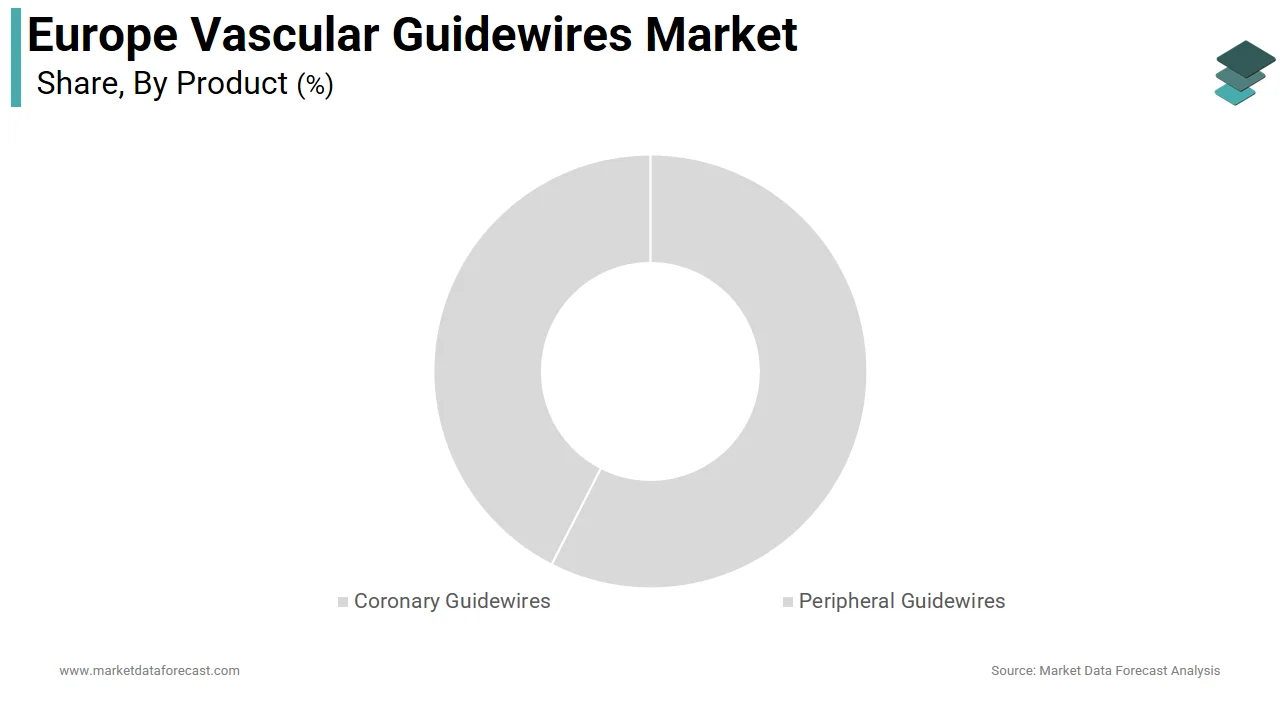
The peripheral guidewires segment represents the fastest-growing product segment and is projected to expand at a CAGR of 10.12% over the forecast period, owing to the national healthcare policies prioritizing limb preservation over amputation in patients with critical limb ischemia. Sweden’s National Diabetic Foot Registry reported reductions in major amputations following the nationwide deployment of dedicated peripheral guidewire kits in vascular centers. Similarly, the French Health Authority’s “Sauver la Jambe” (Save the Leg) initiative now reimburses advanced guidewires for infrapopliteal interventions, which is leading to an increase in below-the-knee revascularizations. The EU’s Horizon Europe program allocated funding to develop devices for diabetic vascular complications, with peripheral guidewires as a core component. As member states align with the European Wound Management Association’s amputation reduction targets, demand for specialized guidewires capable of navigating tibial and pedal arteries continues to surge, transforming peripheral interventions from niche to mainstream.
By Coating Type Insights
The coated guidewires segment led the market by capturing 66.4% of the regional market share in 2025. Hydrophobic coatings dominate the coated guidewire segment due to their proven ability to reduce vessel trauma and improve crossing success in tortuous anatomy. As per the European Society of Cardiology, hydrophilic-coated guidewires are widely used in chronic total occlusion and bifurcation PCI cases across Germany, France, and the Netherlands. A multicenter trial in Switzerland demonstrated that hydrophilic guidewires reduced procedure time and minor dissection rates compared to non-coated alternatives in complex coronary lesions. In peripheral interventions, the benefit is even more pronounced, with registries reporting higher first-pass success rates for hydrophilic wires compared to non-coated wires. National guidelines in Sweden and Denmark now recommend hydrophilic guidewires as first-line for diabetic patients with multilevel disease. This clinical validation ensures hydrophobic (hydrophilic) coatings remain the gold standard for high-performance vascular navigation.
The non-hydrophobic coated guidewires segment is the fastest-growing coating segment and is estimated to grow at a CAGR of 11.4% over the forecast period, owing to the rising need for controlled friction and superior tactile feedback in procedures where hydrophilic wires are too slippery to manipulate precisely. In neurovascular interventions, many EU centers now use non-hydrophobic guidewires for carotid and vertebral artery stenting, as documented by the European Stroke Organisation, due to their predictable torque response and reduced risk of vessel perforation. Similarly, in coronary bifurcation stenting, the European Bifurcation Club recommends non-hydrophobic wires for side-branch rewiring to prevent unintended deep intubation. Studies have confirmed that non-hydrophobic guidewires improve operator confidence in distal tibial interventions. As complex anatomies demand greater control over wire advancement and tip positioning, this segment is transitioning from niche to essential, particularly in high-stakes vascular territories where safety outweighs speed.
By End-User Insights
The hospitals segment dominated the market by commanding for 71.9% of the European market share in 2025. Hospitals remain the primary deployment site for vascular guidewires due to their role as the sole authorized centers for complex coronary, peripheral, and aortic interventions across Europe. As per the European Society of Cardiology, all primary PCI for acute myocardial infarction must be performed in hospitals with 24/7 catheterization labs, a requirement enforced in all EU member states. Similarly, the European Society for Vascular Surgery mandates that endovascular aneurysm repair and chronic total occlusion interventions be conducted only in accredited hospital settings with on-site surgical backup. The German Hospital Federation reported that the majority of vascular guidewire use occurs in hospitals, with university centers performing millions of interventions annually. National health systems further concentrate demand, with the UK’s NHS performing all complex vascular procedures in hospitals, while ASCs remain limited to diagnostic angiography. This institutional and regulatory centralization ensures hospitals remain the dominant end-user, supported by robust procurement systems, specialized interventional teams, and integrated imaging infrastructure that ASCs cannot replicate.
The ambulatory surgical centers segment is the fastest-growing end-user segment and is predicted to witness a promising CAGR of 12.6% over the forecast period due to the national healthcare policies incentivizing same-day discharge to reduce hospital bed congestion and lower costs. As per the Organisation for Economic Co-operation and Development, diagnostic angiographies and low-risk stenting procedures in countries such as the Netherlands and Denmark are increasingly performed in ASCs. The UK’s NHS Long Term Plan now reimburses ASCs for selected femoral-popliteal interventions, provided they meet accreditation standards. Similarly, France’s National Health Insurance expanded ASC coverage to include straightforward below-the-knee angioplasty for non-diabetic patients. With average procedure costs in ASCs significantly lower than in hospitals, payers actively steer low-risk patients toward outpatient settings. This structural shift creates robust demand for cost-optimized yet reliable guidewires tailored to high-throughput, single-shift environments.
COUNTRY-LEVEL ANALYSIS
Germany Vascular Guidewires Market Analysis
Germany led the vascular guidewires market in Europe in 2025 by accounting for 28.2% of the regional market share. The dominance of Germany in the European market is driven by its advanced interventional cardiology and vascular surgery infrastructure, high procedural volumes, and leadership in medical technology. As per the German Cardiac Society, Germany records among the highest volumes of percutaneous coronary interventions and peripheral vascular procedures in Europe. The country operates over 1,100 catheterization labs and numerous hybrid operating rooms, all requiring consistent guidewire supply. Germany’s statutory health insurance system provides full reimbursement for all guidewire types used in indicated procedures, ensuring universal access. Furthermore, the Hospital Structural Fund allocated significant investment in 2024 to modernize vascular intervention suites with robotic and digital navigation systems that demand high-performance guidewires. With world-class research institutions like the German Heart Center Berlin leading clinical trials on next-generation devices, Germany remains the undisputed leader in both volume and technological adoption in the European vascular guidewires market.
France Vascular Guidewires Market Analysis
France commanded the second largest position in the Europe vascular guidewires market with 19.2% of the regional market share in 2025. The growth of France in the European market is attributed to the centralized healthcare planning and strong national initiatives in limb salvage and cardiac care. According to the French National Authority for Health, France performs hundreds of thousands of PCIs and peripheral interventions annually, with full reimbursement for advanced guidewires in chronic total occlusion and critical limb ischemia cases. The “Sauver la Jambe” (Save the Leg) program has driven increased below-the-knee revascularizations, elevating demand for specialized peripheral guidewires. France is also a hub for clinical innovation, with the European Cardiovascular Research Institute in Paris leading multicenter trials on guidewire performance in diabetic patients. The National Health Insurance system maintains a streamlined procurement framework that ensures rapid adoption of CE-certified devices across public hospitals. This combination of policy foresight, clinical volume, and research leadership sustains France’s significant and expanding role in the regional market.
United Kingdom Vascular Guidewires Market Analysis
The United Kingdom is anticipated to record a promising CAGR in the European vascular guidewires market over the forecast period due to its integrated National Health Service and focus on acute cardiac care. As per NHS England, the UK delivers hundreds of thousands of PCIs annually across primary PCI centers, all operating under strict door-to-balloon time mandates that necessitate reliable, high-performance guidewires. The NHS Long Term Plan has expanded coverage for peripheral interventions in ASCs for low-risk patients, creating new demand streams. The UK’s Medicines and Healthcare products Regulatory Agency offers expedited approval for innovative guidewires under its Innovation Passport scheme, accelerating market entry compared to EU processes. Additionally, the British Cardiovascular Intervention Society maintains national registries that track guidewire usage and outcomes, informing best practices. Despite post-Brexit regulatory divergence, the UK remains a high-value market due to its centralized procurement, clinical standardization, and leadership in complex coronary interventions.
Italy Vascular Guidewires Market Analysis
Italy is estimated to account for a prominent share of the European vascular guidewires market over the forecast period due to its high prevalence of peripheral artery disease and strong regional innovation in vascular care. According to the Italian National Registry of Endovascular Procedures, Italy performs significant volumes of peripheral interventions annually, with Lombardy and Emilia Romagna reporting per capita rates above the national average. The country faces a considerable diabetic foot burden, driving adoption of advanced guidewires for tibial revascularization. Italy is also a major site for EU clinical trials, with multiple guidewire-focused studies conducted in Italian centers. The National Recovery and Resilience Plan allocated substantial funding in 2023 to modernize vascular labs in Southern Italy, reducing geographic disparities. With high clinical need, procedural specialization, and targeted public investment, Italy maintains a significant and evolving role in the European vascular guidewires ecosystem.
Netherlands Vascular Guidewires Market Analysis
The Netherlands is expected to exhibit a healthy CAGR in the European vascular guidewires market over the forecast period. The leadership of the Netherlands in efficiency-driven vascular care, robotic intervention, and data-integrated practice is contributing to the vascular guidewires market growth in the Netherlands. As per the Dutch Vascular Registry, vascular procedures in the Netherlands are performed in standardized pathways with real-time outcome tracking, ensuring consistent guidewire performance evaluation. The country is a pioneer in robotic-assisted endovascular surgery, with multiple systems installed nationwide by 2024, all requiring torque-optimized guidewires. The Netherlands Healthcare Authority mandates full reimbursement for advanced guidewires in complex lesions, supporting adoption in both academic and community hospitals. Furthermore, the Dutch “Save the Leg” initiative has reduced major amputations through systematic use of specialized peripheral guidewires. With compact, high-quality care, strong data infrastructure, and early adoption of innovation, the Netherlands punches above its population weight as a model market for vascular guidewire utilization and advancement.
COMPETITIVE LANDSCAPE
Competition in the Europe Vascular Guidewires Market is defined by a concentrated landscape of global MedTech leaders competing on clinical performance, regulatory compliance, and integration with advanced endovascular ecosystems. The market is highly regulated under the EU Medical Device Regulation, which mandates extensive evidence of safety and performance, favoring companies with robust quality systems and engineering heritage. Differentiation arises through coating technology tip design, torque control, and suitability for complex indications like chronic total occlusion or below-the-knee revascularization, rather than price. While coronary guidewires remain high-volume, the frontier lies in peripheral applications driven by national limb salvage policies. Competition is further shaped by hospital procurement practices that prioritize reliability and guideline alignment over cost and by the need for physician training in advanced techniques. Companies that combine material science innovation, regulatory agility, and strategic alignment with public health initiatives gain preferential access to Europe’s dense network of catheterization labs and hybrid operating rooms. The market rewards those who can translate engineering precision into procedural success across Europe’s diverse and demanding vascular intervention landscape.
KEY MARKET PLAYERS
The leading companies operating in the Europe vascular guidewires market include:
- Abbott Laboratories
- Terumo Corporation
- Braun Melsungen AG
- Medtronic plc
- Biotronik SE & Co. KG
- Cook Medical, Inc.
- Boston Scientific Corporation
- Cardinal Health, Inc.
- R. Bard, Inc.
- The Spectranetics Corporation
TOP PLAYERS IN THE MARKET
- Terumo Corporation is a global leader in interventional cardiovascular devices with a strong presence in the Europe Vascular Guidewires Market through its comprehensive portfolio of coronary and peripheral guidewires. The company contributes to the global market by pioneering hydrophilic coating technology and torque-responsive nitinol core designs that set industry standards for crossing complex lesions. In Europe, Terumo’s Runthrough and Gladius guidewires are widely used in both academic and community hospitals for chronic total occlusion and below-the-knee interventions. Recently, the company strengthened its position by launching the Gladius Pro tapered-tip guidewire with enhanced tactile feedback for peripheral applications and by expanding its dedicated vascular training centers in Germany and France to support physician adoption of advanced techniques under EU MDR compliance frameworks.
- Boston Scientific Corporation plays a pivotal role in the Europe Vascular Guidewires Market through its innovative Guidant heritage and advanced guidewire platforms such as the Pilot, Transcend, and IronMan series. The company contributes globally by integrating real-time force-sensing and polymer-jacketed technologies that improve safety in torturous anatomy. In Europe, Boston Scientific supports national limb salvage initiatives with guidewires tailored for diabetic vascular disease and collaborates with hybrid operating rooms in the Netherlands and Sweden on robotic compatibility studies. To reinforce its market presence, the company received CE certification in 2024 for its new IronMan CTO guidewire, featuring a dual-core design for balanced support and flexibility, and launched a digital navigation module that pairs guidewire selection with intravascular imaging data in real time.
- Medtronic plc is a major player in the Europe Vascular Guidewires Market, offering high-performance devices under its InQwire and Spartacore brands designed for coronary, peripheral, and neurovascular applications. The company contributes to the global landscape by emphasizing guidewire durability, kink resistance, and compatibility with its broader endovascular ecosystem, including stents and atherectomy systems. In Europe, Medtronic aligns its portfolio with national amputation reduction programs by supplying tapered-tip guidewires for tibial access in diabetic patients. Recently, the company enhanced its position by upgrading its hydrophilic coating process to meet EU MDR particulate shedding requirements and by partnering with university hospitals in Italy and Spain to validate guidewire performance in robotic-assisted peripheral interventions under the EU Digital Europe Programme.
TOP STRATEGIES USED BY THE KEY MARKET PARTICIPANTS
Key players in the Europe Vascular Guidewires Market prioritize full compliance with the EU Medical Device Regulation through rigorous biocompatibility testing, coating integrity validation, and clinical performance documentation. They invest in proprietary coating technologies such as hydrophilic polymers and hybrid lubricious layers to differentiate performance in complex anatomy. Companies develop specialized guidewires for high-growth indications, including chronic total occlusion, diabetic foot disease, and robotic-assisted interventions. Strategic partnerships with academic hospitals support real-world evidence generation and physician training under evolving EU clinical evaluation requirements. Product portfolios are segmented to serve both high-volume coronary and emerging peripheral markets with tailored tip loads, torque response, and diameters. Digital integration through navigation software and procedural analytics further enhances value in Europe’s data-driven vascular care environment.
MARKET SEGMENTATION
This Europe vascular guidewires market research report is segmented and sub-segmented into the following categories.
By Product
- Coronary Guidewires
- Peripheral Guidewires
By Coating Type
- Coated
- Hydrophobic Coatings
- Non-Hydrophobic Coatings
- Non-Coated
By End-User
- Hospitals
- Ambulatory Surgical Centers
By Country
- UK
- France
- Spain
- Germany
- Italy
- Russia
- Sweden
- Denmark
- Switzerland
- Netherlands
- Turkey
- Czech Republic
- Rest of Europe
Frequently Asked Questions
What is the Europe vascular guidewires market?
The Europe vascular guidewires market provides thin flexible wires guiding catheters for PCI, angioplasty. Minimally invasive procedures drive steady demand.
What drives the Europe vascular guidewires market?
Cardiovascular diseases and aging populations propel the Europe vascular guidewires market. Advanced healthcare facilities expand intervention volumes.
Which types dominate the Europe vascular guidewires market?
Coronary guidewires lead the Europe vascular guidewires market treating heart disease. Peripheral and neurovascular follow closely.
Why UK leads the Europe vascular guidewires market?
UK's high PCI volumes drive the Europe vascular guidewires market supported by NHS intervention programs and private cardiology centers.
What role do hydrophilic coatings play in the Europe vascular guidewires market?
Hydrophilic coatings enhance navigation in the Europe vascular guidewires market reducing friction for complex coronary anatomies.
How does Germany contribute to the Europe vascular guidewires market?
Germany's precision medicine advances the Europe vascular guidewires market with specialized neurovascular and peripheral intervention wires.
Which procedures use the Europe vascular guidewires market?
PCI, angioplasty, stenting define the Europe vascular guidewires market alongside peripheral artery disease treatment and stroke thrombectomy.
What challenges face the Europe vascular guidewires market?
Stringent CE marking and reimbursement pressures challenge the Europe vascular guidewires market requiring cost-effective innovation.
Why neurovascular guidewires growing in the Europe vascular guidewires market?
Stroke management procedures boost neurovascular guidewires in the Europe vascular guidewires market treating ischemic events effectively.
How do coronary guidewires segmented in the Europe vascular guidewires market?
Hydrophilic and PTFE-coated coronary guidewires lead the Europe vascular guidewires market navigating tortuous vessels precisely.
Related Reports
Access the study in MULTIPLE FORMATS
Purchase options starting from
$ 2000
Didn’t find what you’re looking for?
TALK TO OUR ANALYST TEAM
Need something within your budget?
NO WORRIES! WE GOT YOU COVERED!
Call us on: +1 888 702 9696 (U.S Toll Free)
Write to us: sales@marketdataforecast.com