- Product Description Description
- Table of Contents TOC
- List of Table & Figure LOT
- Get Free Sample PDF Sample PDF
Market Size, 2025
$42 MnMarket Estimate, 2026
$47.06 MnMarket Forecast, 2034
$117 MnCAGR, 2026–2034
12.05%Europe Automated CPR Devices Market Size, Growth, Trends & Forecast (2026–2034)
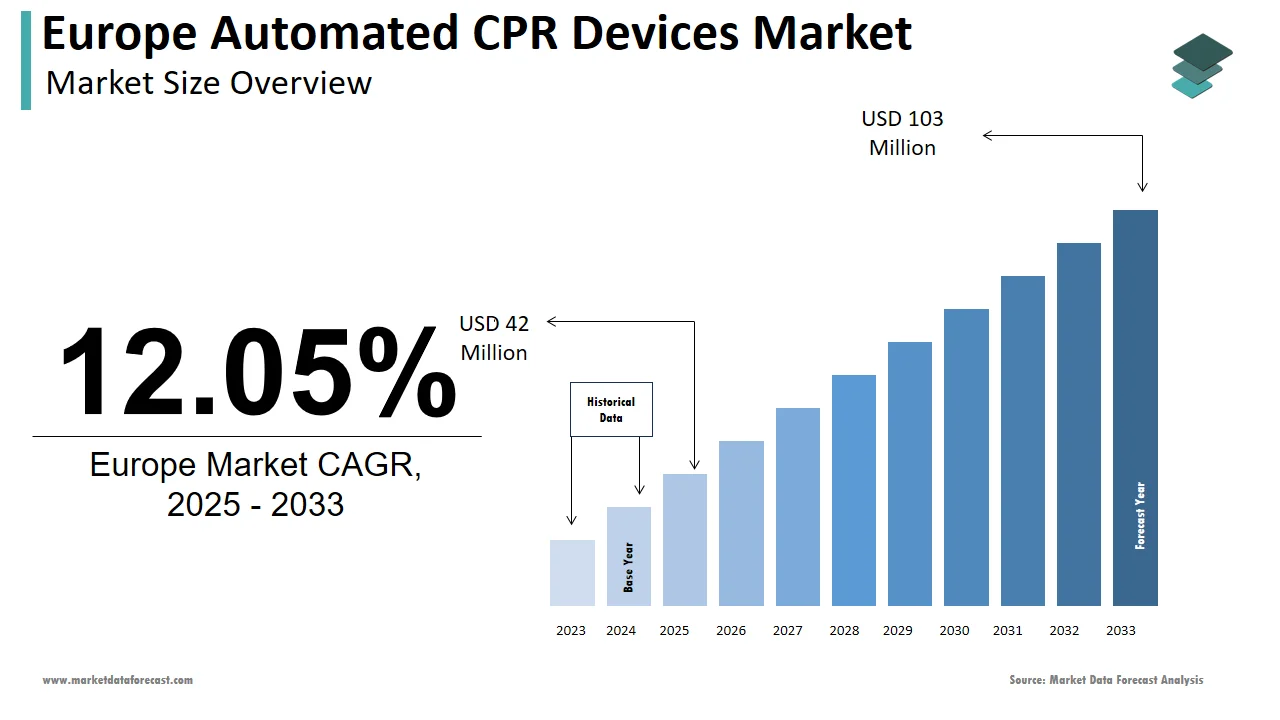
The automated CPR devices market size in Europe was valued at USD 42 million in 2025, is estimated to reach USD 47.06 million in 2026, and is projected to scale up to USD 117 million by 2034, registering a compound annual growth rate (CAGR) of 12.05% during the forecast period from 2026 to 2034. Driven by rising incidence rates of out-of-hospital cardiac arrests, growing emphasis on standardization of resuscitation protocols by the European Resuscitation Council, and acute needs for responder safety and fatigue elimination, the market continues to expand across European prehospital and hospital infrastructure.
Key Executive Metrics (At-a-Glance)
- 2025 Base Valuation: USD 42 Million
- 2026 Current Valuation: USD 47.06 Million
- 2034 Forecast Valuation: USD 117 Million
- Compound Annual Growth Rate (CAGR): 12.05% (2026–2034)
- Dominant Power Source Segment: Battery-Driven CPR Devices (held leading share due to operational independence, portability, and prehospital suitability)
- Fastest-Growing Power Source Segment: Pneumatically Driven CPR Devices (projected at a 6.3% CAGR driven by hospital ICU and cath lab integration)
- Dominant Device Segment: Piston Devices (held a leading 59.4% share supported by extensive clinical validation like LUCAS and compact ambulance design)
- Fastest-Growing Device Segment: Load Distribution Devices (projected at a 7.8% CAGR fueled by patient variability adaptation and lower iatrogenic injury rates)
- Dominant Country Market: Germany (accounting for a leading 21.4% share anchored by organized EMS infrastructure and standardized resuscitation protocols)
Core Market Drivers
- Prehospital Protocol Integration: Systematic inclusion of mechanical compression devices by regional emergency medical services to minimize hands-off time and boost survival outcomes.
- Responder Safety & Ergonomics: Increasing focus on mitigating physical strain, chronic back/shoulder injuries, and musculoskeletal stress associated with manual chest compressions in cramped environments.
Primary Market Restraints & Challenges
- High Procurement Costs & Training Gaps: Substantial capital expenses limiting rural/volunteer EMS deployment, compounded by insufficient hands-on familiarity and inconsistent training curricula across member states.
Europe Automated CPR Devices Market Segmentation Breakdown
| Segment Category | Leading Sub-Segment (Largest) | Fastest-Growing Sub-Segment |
|---|---|---|
| By Power Source | Battery-Driven Devices (dominant due to portability, lithium-ion reliability, and prehospital utility) | Pneumatically Driven Devices (6.3% CAGR; growing via hospital cath lab and ICU air/oxygen line integration) |
| By Kind of Device | Piston Devices (59.4% share; backed by wide clinical trials, e.g., LUCAS, and CT/MRI compatibility) | Load Distribution Devices (7.8% CAGR; rising via multi-sided chest compression and lower rib fracture risk) |
| By Country | Germany (21.4% share; led by structured Red Cross/Johanniter ALS ambulances and high cardiac arrest volumes) | The Netherlands & France (advancing rapidly via digital civilian alert apps, urban rescue brigades, and simulation centers) |
Major Industry Players Profiled
Key enterprises shaping the Europe automated CPR devices market include Zhuhai Kindway Medical Science & Technology Co., Ltd, Stryker, Schiller AG, ZOLL Medical Corporation, CPR Medical Devices, Inc., and Medtronic, Inc..
 Download Free Sample Report
Europe Automated CPR Devices Market Size
The automated CPR devices market size in Europe was valued at USD 42 million in 2025. The European market is estimated to be worth USD 117 million by 2034 from USD 47.06 million in 2026, growing at a CAGR of 12.05% from 2026 to 2034.
Automated CPR devices are mechanical systems designed to deliver consistent high quality chest compressions during cardiac arrest resuscitation, replacing or supplementing manual cardiopulmonary resuscitation performed by emergency responders. These devices, primarily piston-driven or load-distributing band systems, ensure uninterrupted compressions at guideline-recommended depth and rate even during patient transport or in challenging environments such as ambulances or narrow hospital corridors. In Europe, where out-of-hospital cardiac arrest affects over 350000 individuals annually according to the European Resuscitation Council, timely and effective chest compressions are critical to survival. Survival rates remain low, with only 8 percent of out-of-hospital cardiac arrest patients in Europe surviving to hospital discharge, as per the European Registry of Cardiac Arrest. The adoption of automated CPR is increasingly supported by clinical guidelines that emphasize minimizing hands-off time and maintaining perfusion quality. Deployment is expanding beyond advanced life support ambulances into fire rescue units, air medical services, and hospital emergency departments. Automated CPR devices have shifted from optional equipment to key components of modern cardiac arrest response protocols, driven by European healthcare systems' emphasis on standardized resuscitation quality and addressing the issues of responder fatigue and safety.
MARKET DRIVERS
Integration into Prehospital Emergency Protocols Drives Clinical Adoption
Regional emergency medical services are systematically incorporating these devices into standardized resuscitation algorithms to improve survival outcomes and responder safety, which fuels the expansion of the Europe automated CPR devices market. According to research, leading medical bodies, such as the European Resuscitation Council, advocate for the use of mechanical chest compression devices during lengthy resuscitation efforts and when moving patients, prioritizing consistent compression quality and the safety of medical providers. International practices reflect this shift, with automated CPR devices becoming standard equipment in advanced life support ambulances in several European regions and integrated into national emergency medical service protocols in some countries. Fire and rescue services in the Netherlands and Denmark have also integrated these devices into first responder kits, enabling immediate high-quality compressions before paramedic arrival. This institutional endorsement transforms automated CPR from a discretionary tool into a protocol-driven intervention aligned with Europe’s push for systematized high-performance resuscitation.
Responder Safety and Ergonomic Concerns Accelerate Device Utilization
The physical demands and occupational hazards of manual CPR have become a key growth enabler for automated device adoption across the regional emergency services, which in turn drives the growth of the Europe automated CPR devices market. Performing effective chest compressions requires significant upper body exertion, often in confined or unstable environments such as moving ambulances or stairwells, leading to responder fatigue and musculoskeletal injuries. According to studies, paramedics have a high risk of occupational musculoskeletal injuries, including chronic back and shoulder pain, which can be linked to the physical demands of their job, such as performing manual resuscitation and assuming forced positions during patient care. As per sources, the physically demanding nature of ambulance work, including tasks like manual CPR, is a significant contributor to occupational injury risk, leading to various compensation claims for ambulance workers. Automated CPR devices eliminate this physical strain while maintaining guideline-compliant compression quality uninterrupted during defibrillation or patient movement. Automated CPR devices are becoming operationally necessary due to tightening European occupational health regulations and increased focus on workforce retention, as they provide both clinical consistency and essential personnel protection.
MARKET RESTRAINTS
High Procurement and Maintenance Costs Limit Widespread Deployment
The significant capital investment required for these devices restricts their adoption, particularly among volunteer-based or rural emergency services across Southern and Eastern Europe, which restrains the expansion of the Europe automated CPR devices market. A single device typically costs a substantial amount with additional annual maintenance and battery replacement expenses, as per sources. In some European countries, where municipalities have significant EMS budgets, many services cannot justify such expenditures for a single indication tool. As per sources, only a share of rural ambulance units in the EU have access to automated CPR compared to those in urban centers of Germany and the Netherlands. Furthermore, reimbursement mechanisms rarely cover device depreciation as cardiac arrest interventions are bundled into general emergency tariffs. This financial asymmetry creates a two-tier resuscitation landscape where survival chances depend on geographic location. Universal access to resuscitation technology will remain limited unless public health funding prioritizes equity in distribution or manufacturers develop lower-cost models.
Lack of Standardized Training and Clinical Familiarity Hinders Effective Use
Inconsistent training and low hands-on familiarity among emergency personnel impede the optimal utilization of these systems, despite device availability. As a result, these factors also hinder the growth of the Europe automated CPR devices market. According to a study, only a share of EMS agencies in the EU provide annual competency assessments for mechanical CPR deployment. In Italy and Spain, field reports indicate that devices often remain unused during actual resuscitations due to provider uncertainty about setup timing or fear of interrupting ongoing manual efforts. Unlike defibrillators, which have intuitive interfaces, automated CPR units require precise patient positioning, torso stabilization, and sequence coordination that demand repetitive simulation. Finland and Austria have addressed this through national VR-based training mandates, but most countries lack structured curricula. Apart from these, hospital emergency departments frequently receive patients with devices still attached, yet staff are untrained in their removal or troubleshooting. Automated CPR risks becoming an underutilized asset rather than a lifesaving intervention if standardized education isn't integrated into initial and continuing certification processes.
MARKET OPPORTUNITIES
Expansion into Hospital In-House Cardiac Arrest Response Creates New Demand
The growing recognition of in-hospital cardiac arrest as an important quality indicator is driving adoption of these devices beyond prehospital settings into regional hospital emergency teams, which is setting up new opportunities for the growth of the Europe automated CPR devices market. Automated CPR ensures immediate high-quality compressions during code blue activation, especially during night shifts or in non-critical care units where staff may lack resuscitation experience. Moreover, university hospitals in some European countries have integrated these devices into every crash cart, enabling seamless transition during patient transfer to catheterization labs. The European Board of Critical Care Nursing now includes mechanical CPR competency in its certification standards. The push for quality accreditation and reduced reliance on inconsistent manual methods has made automated CPR a foundational element of standardized in-house hospital resuscitation protocols.
Integration with Real-Time Physiological Feedback Systems Enhances Resuscitation Precision
Its convergence with hemodynamic and metabolic monitoring technologies is unlocking data-driven resuscitation strategies across advanced European emergency systems, which provides fresh opportunities for the expansion of the Europe automated CPR devices market. Modern devices now interface with capnography, arterial pressure lines, and impedance cardiography to provide real-time feedback on compression efficacy and perfusion quality. Companies are collaborating with EU academic centers to embed these adaptive features into next-generation devices. The integration of precision medicine within European healthcare is transforming automated CPR. It's no longer just a mechanical action but an intelligent partner providing tailored, individualized life support.
MARKET CHALLENGES
Device Interoperability Gaps Compromise Seamless Care Transitions
The absence of universal compatibility between automated CPR devices and hospital monitoring or transport systems creates operational friction during critical handovers across the regional care continuum, which affects the growth of the Europe automated CPR devices market. Most devices use proprietary mounting brackets, battery systems, and data outputs that do not integrate with standard ambulance stretchers or hospital beds, requiring time-consuming transfers that interrupt compressions. In France, paramedics often remove devices before hospital entry because emergency department beds lack support rails for fixation. Furthermore, data from compressions, such as depth rate and pauses, is rarely transmitted to hospital electronic records, limiting post-event debriefing and quality improvement. A joint initiative by the European Committee for Standardization is developing EN ISO technical specifications for mechanical CPR interoperability, but implementation remains voluntary. The lack of enforced, universal design standards will ensure fragmentation issues continue to act as a hidden barrier to consistent and high-quality resuscitation across Europe's diverse emergency ecosystem.
Ethical and Legal Ambiguity Surrounding Device Deactivation Delays Clinical Decisions
The absence of clear legal and ethical frameworks for deactivating these devices during terminal resuscitation efforts creates hesitation and delays among regional clinicians, which inhibits the expansion of the Europe automated CPR devices market. Unlike manual CPR, which can be stopped instantly, mechanical devices often require deliberate shutdown procedures that feel more definitive and emotionally charged. In countries where end-of-life directives are inconsistently documented, emergency teams frequently continue mechanical compressions beyond futility due to fear of litigation or family confrontation. The legal gray zone not only prolongs non-beneficial interventions but also exposes providers to moral distress. Harmonized EU-level guidance on mechanical CPR cessation aligned with dignity of dying principles is urgently needed to support timely, compassionate decision-making.
REPORT COVERAGE
| REPORT METRIC | DETAILS |
| Market Size Available | 2025 to 2034 |
| Base Year | 2025 |
| Forecast Period | 2026 to 2034 |
| Segments Covered | By Power Source, Kind Of Device, and County. |
| Various Analyses Covered | Global, Regional and Country-Level Analysis, Segment-Level Analysis, Drivers, Restraints, Opportunities, Challenges; PESTLE Analysis; Porter’s Five Forces Analysis, Competitive Landscape, Analyst Overview of Investment Opportunities |
| Countries Covered | UK, France, Spain, Germany, Italy, Russia, Sweden, Denmark, Switzerland, Netherlands, Turkey, Czech Republic, and the Rest of Europe. |
| Market Leaders Profiled | Zhuhai Kindway Medical Science & Technology Co., Ltd, Stryker, Schiller AG, ZOLL Medical Corporation, CPR Medical Devices, Inc., and Medtronic, Inc. |
SEGMENTAL ANALYSIS
By Power Source Insights
The battery-driven CPR devices segment held the leading share of the Europe automated CPR devices market in 2024. The prominence of the battery-driven CPR devices segment is attributed to its operational independence, portability, and suitability for diverse prehospital environments, including ambulances, rural rescues, and air medical services. Unlike pneumatically driven systems, which require compressed gas canisters or mechanically driven units reliant on vehicle power battery operated devices function immediately upon deployment without external infrastructure. The LUCAS device, available in battery-operated versions, provides mechanical chest compressions and is used in some emergency medical systems. Field data regarding automated CPR deployments in out-of-hospital settings emphasizes that a significant percentage occur in locations without access to external power or gas lines, which underscores the necessity of reliable battery-powered devices. Furthermore, Modern lithium-ion batteries commonly used in medical devices support several hundred charge cycles and are designed to operate effectively across a wide range of environmental conditions, typically between -20 and 50 degrees Celsius, ensuring reliability in diverse field situations, as per research. This reliability in real-world conditions, coupled with rapid deployment, makes battery-driven systems the default choice for European emergency protocols prioritizing speed, consistency, and mobility.
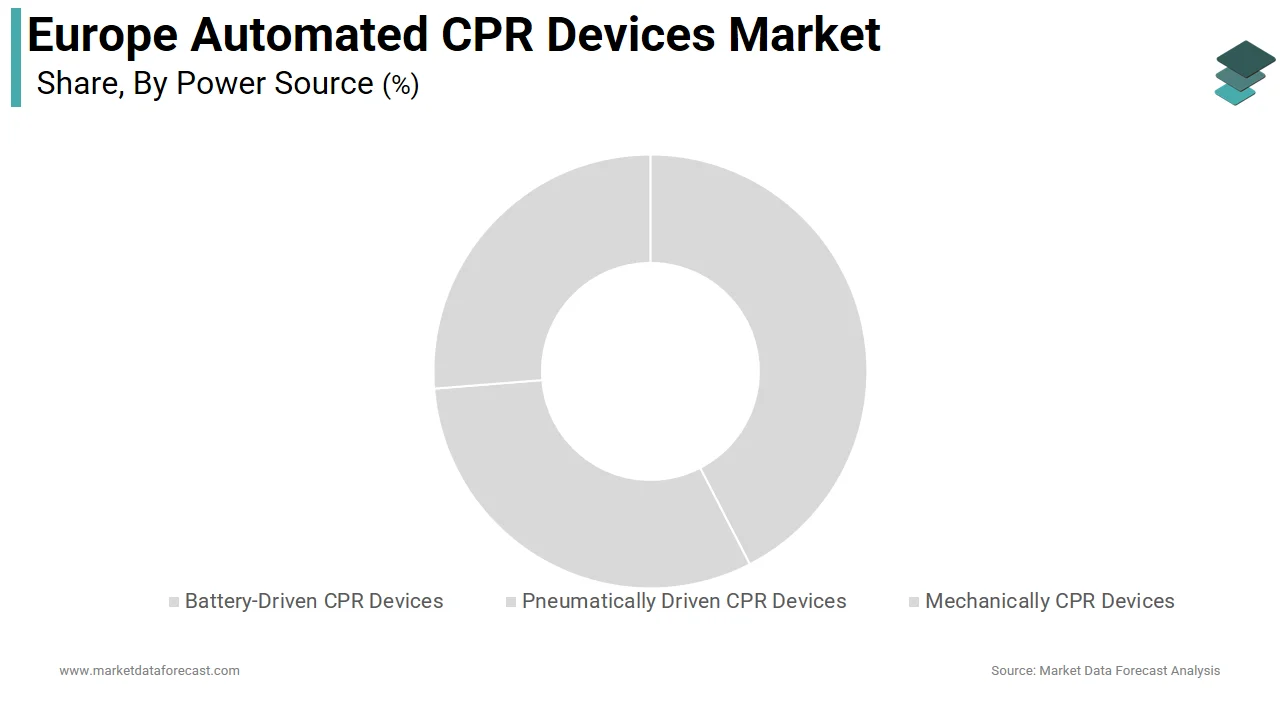
The pneumatically driven CPR devices segment is anticipated to witness the fastest CAGR of 6.3% from 2026 to 2034, owing to integration into hospital intensive care and catheterization lab environments where medical air or oxygen lines are permanently installed. Unlike battery systems, pneumatic devices offer near-unlimited runtime and generate smoother compression waveforms with less peak force variability, vital for patients with osteoporosis or during percutaneous coronary intervention. In specific European countries, many university hospitals' cath labs use pneumatic devices during code blue events in interventional suites. These settings benefit from built-in gas infrastructure, eliminating battery replacement logistics and fire safety concerns associated with lithium units. Apart from these, pneumatic compressors produce less electromagnetic interference, making them safer near sensitive electrophysiology equipment. Hospitals are increasingly standardizing high-fidelity resuscitation procedures in controlled environments, which is leading to renewed clinical interest in the niche advantages offered by pneumatic systems.
By Kind of Device Insights
The piston devices segment maintained its prominence in the Europe automated CPR devices market by accounting for a 59.4% share in 2024. Factors such as its widespread adoption in national emergency protocols contribute to the expansion of the piston devices segment. These devices use an electrically or pneumatically powered piston to deliver vertical compressions mimicking manual hand placement with precise control over depth and rate. Its dominance is also supported by extensive clinical validation. The LUCAS device alone has been used in thousands of documented resuscitations across Europe. In some countries, piston devices are standard issue in all advanced life support ambulances due to their compact design and rapid application. Furthermore, their compatibility with CT scanners and MRI environments allows uninterrupted compressions during diagnostic imaging, a vital advantage in hospital settings. Fire and rescue services in some countries also favour piston systems for their stability during stair carries and confined space rescues. This combination of guideline adherence, clinical evidence and operational versatility ensures piston devices remain the backbone of Europe’s automated resuscitation strategy.
The load distribution devices segment is likely to experience the fastest CAGR of 7.8% during the forecast period. These systems use a constricting band wrapped around the chest to compress the heart from all sides simultaneously, mimicking the natural physiology of cardiac contraction. Their growth is fueled by expanding use in hospital settings where patient variability, including obesity and thoracic deformities, challenges piston-based systems. Apart from these, these devices cause significantly less rib fracture incidence, which makes them preferable for prolonged resuscitation. The European Resuscitation Council’s innovation roadmap emphasizes load distribution technology as a promising approach for personalized CPR, especially when integrated with real-time hemodynamic feedback. European hospitals are increasingly prioritizing patient-specific resuscitation and working to reduce iatrogenic injury. As a result, this anatomically adaptive modality is gaining traction beyond its traditional niche.
COUNTRY LEVEL ANALYSIS
Germany Automated CPR Devices Market Analysis
Germany dominated the Europe automated CPR devices market by capturing a 21.4% share in 2024. This market dominance is driven by its highly organized emergency medical infrastructure and the national standardization of resuscitation protocol. The country operates a substantial number of advanced life support ambulances under the coordination of the German Red Cross and Johanniter organizations, all of which are mandated to carry automated CPR devices. Germany also ranks among the top EU nations for out-of-hospital cardiac arrest incidence. University hospitals have further integrated these devices into cath labs and emergency departments, creating dual demand channels. Besides, Germany hosts major device service centers for global manufacturers, ensuring rapid maintenance and training access. This combination of regulatory enforcement, clinical volume, and technical support infrastructure solidifies Germany’s role as the most mature and influential market in Europe.
UK Automated CPR Devices Market Analysis
The United Kingdom followed closely in the Europe automated CPR devices market and held a 16.7% share in 2024. The prominence of the UK in the regional market is propelled by its centralized National Health Service and strong emphasis on resuscitation quality metrics. NHS England’s 2023 Resuscitation Services Framework mandates that all ambulance trusts maintain automated CPR devices on every frontline emergency vehicle with competency assessments for staff every six months. The country responds to thousands of out-of-hospital cardiac arrests annually, with survival rates showing an improvement since systematic device deployment began. Major ambulance services report notable utilization rates during adult arrests. Furthermore, the Resuscitation Council UK includes mechanical CPR in its advanced life support certification curriculum, ensuring consistent training nationwide. The NHS also pioneered hospital-based adoption. This top-down policy integration, combined with performance monitoring, creates a high compliance ecosystem that drives sustained device demand across prehospital and hospital sectors.
Sweden Automated CPR Devices Market Analysis
Sweden is also a major player in the Europe automated CPR devices market because of its world-leading cardiac arrest outcomes and early nationwide adoption of mechanical resuscitation. Sweden's out-of-hospital cardiac arrest survival rates are the highest across Europe, a result of a comprehensive, nationwide system designed for rapid, effective response. This success is underpinned by a policy requiring every emergency response unit, including first responder fire vehicles and air ambulances, to carry automated compression devices. Emergency services have reported a significant reduction in interruptions during treatment, with the use of mechanical compressions decreasing "hands-off" time during defibrillation. The effectiveness of this approach is further maximized by Sweden's dense urban infrastructure and efficient ambulance services, which typically ensure arrival within an average of seven minutes. This data-driven public health approach transforms automated CPR from a tool into a systemic survival strategy, setting a benchmark for Europe.
France Automated CPR Devices Market Analysis
France expanded gradually in the Europe automated CPR devices market due to a hybrid model blending centralized hospital adoption with decentralized prehospital deployment. The country is modernizing its emergency medical response by broadly adopting mechanical chest compression devices across the country's specialized medical emergency units. Every mobile intensive care unit is now equipped with these automated CPR devices, ensuring consistent and high-quality chest compressions during resuscitation efforts. Following a successful national pilot program, fire brigades in major urban centers such as Paris, Lyon, and Marseille also carry battery-powered units, significantly expanding the initial response capacity. Beyond general deployment, university hospitals in cities like Strasbourg and Bordeaux are spearheading efforts to integrate these devices with advanced hemodynamic monitoring for more precise, patient-specific resuscitation. Urban standardization and clinical leadership make France a high-growth market with strong institutional backing, even though rural coverage remains uneven.
Netherlands Automated CPR Devices Market Analysis
The Netherlands is predicted to grow in the Europe automated CPR devices market over the forecast period owing to its innovative emergency response models and commitment to systematized resuscitation science. The country’s HartslagNu alert system dispatches volunteer first responders within 1000 meters of a cardiac arrest, enabling immediate bystander CPR while ambulances arrive with automated devices. It has a highly developed emergency medical services (EMS) system with all ambulances capable of providing advanced life support. All ambulances in the Netherlands are equipped to provide advanced life support (ALS). Furthermore, the commitment to innovation extends to specialized education and training. The nation is home to a state-of-the-art simulation training center in Utrecht, a pioneering facility in Europe where medical teams engage in realistic practice scenarios. This fusion of digital coordination, clinical rigor, and operational realism ensures the Netherlands remains a model of high-performance resuscitation in Europe.
COMPETITIVE LANDSCAPE
The Europe automated CPR devices market features concentrated competition among a few technologically advanced global players, with limited room for new entrants due to stringent regulatory requirements and high clinical validation barriers. Competition centers on clinical outcomes, device interoperability, and integration into national emergency systems rather than price. Established companies differentiate through compression mechanisms, reliable battery performance, and compatibility with hospital infrastructure such as imaging suites and electronic records. The European Union’s Medical Devices Regulation 2017 745 mandates rigorous post-market surveillance and performance documentation, favoring manufacturers with robust quality management systems and long-term clinical data. National resuscitation councils play a decisive role as their guidelines heavily influence procurement decisions, creating regional adoption clusters. While piston-driven systems dominate current use, load distribution and feedback-enhanced platforms represent emerging battlegrounds. The absence of generic alternatives and the life-critical nature of the technology ensure that trust, clinical validation, and service infrastructure remain the primary determinants of competitive success.
KEY MARKET PLAYERS
Some of the companies that are playing a dominating role in the Europe automated CPR devices market include
- Zhuhai Kindway Medical Science & Technology Co., Ltd
- Stryker
- Schiller AG
- ZOLL Medical Corporation
- CPR Medical Devices, Inc.
- Medtronic, Inc.
TOP PLAYERS IN THE MARKET
- Stryker is a global medical technology leader whose LIFEPAK LUCAS device is widely deployed across European emergency medical services and hospitals. The company plays a pivotal role in advancing mechanical CPR through continuous engineering refinement focused on portability, battery longevity, and compatibility with imaging and transport systems. It also expanded its European training network with simulation-based certification programs in Germany, Sweden, and the UK, aligned with the national resuscitation council guidelines. Stryker is strengthening its role in Europe's resuscitation ecosystem by integrating clinical evidence, operational feedback, and digital connectivity, which also impacts the global evaluation and deployment standards for mechanical CPR.
- ZOLL Medical Corporation maintains a strong presence in the Europe automated CPR devices market through its AutoPulse load distribution platform, known for its adaptive chest compression technology. The company differentiates by focusing on hospital and specialized transport settings where patient variability demands anatomically responsive solutions. It also partnered with university hospitals to validate its use in catheterization labs and intensive care units. ZOLL is growing beyond prehospital care and into precision resuscitation, thanks to clinical partnerships and data-focused innovation. This is changing the future of personalized mechanical CPR throughout Europe and the world.
- Schiller AG, a Swiss-based medical device innovator, contributes significantly to the Europe automated CPR devices market with its specialized focus on integrated resuscitation systems. The company’s MOVEO automated CPR device is engineered for seamless compatibility with its defibrillators and monitoring platforms, creating unified emergency response workflows. It also enhanced its devices with Bluetooth-enabled data transmission to the national cardiac arrest registry, supporting quality improvement initiatives. Schiller is a regional innovator, strengthening its role by concentrating on interoperability, European regulatory alignment, and localized deployment models. Its solutions effectively address the operational realities of European emergency services while simultaneously contributing to global resuscitation science.
TOP STRATEGIES USED BY THE KEY MARKET PARTICIPANTS
Key players in the Europe automated CPR devices market pursue clinical integration by embedding devices into national resuscitation protocols through collaboration with emergency medical services and hospital networks. Companies invest in real-time data connectivity, enabling compression metrics to feed into quality dashboards and national cardiac arrest registries for continuous performance improvement. Strategic emphasis is placed on training and simulation, with manufacturers establishing certified centers that align with European Resuscitation Council competency standards. Product development focuses on environmental adaptability, including lightweight designs for urban first responders and MRI-compatible materials for hospital use. Additionally, firms engage in health economics research to demonstrate survival benefit and cost-effectiveness, supporting public procurement decisions. These multifaceted strategies combine clinical evidence, operational relevance, and policy engagement to secure sustainable adoption across Europe’s diverse emergency care landscape.
MARKET SEGMENTATION
This Europe automated CPR devices market research report is segmented and sub-segmented into the following categories.
By Power Source
- Battery-Driven CPR Devices
- Pneumatically Driven CPR Devices
- Mechanically CPR Devices
By Kind Of Device
- Piston Devices
- 3D Compression Devices
- Load Distribution Devices
By Country
- UK
- France
- Spain
- Germany
- Italy
- Russia
- Sweden
- Denmark
- Switzerland
- Netherlands
- Turkey
- Czech Republic
- Rest of Europe