- Product Description Description
- Table of Contents TOC
- List of Table & Figure LOT
- Get Free Sample PDF Sample PDF
Market Size, 2025
$15.3 BnMarket Estimate, 2026
$16.42 BnMarket Forecast, 2034
$28.85 BnCAGR, 2026–2034
7.3%Executive Summary: Global Defibrillator Market
- Market Scope: Comprehensive global defibrillator market analysis covering device categories, end-user clinical settings, regional leadership frameworks, and public health deployment standards across major worldwide economies.
- Market Valuation: Valued at USD 15.30 billion (2025), estimated at USD 16.42 billion (2026), and projected to reach USD 28.85 billion by 2034, registering a robust CAGR of 7.30% (2026–2034).
- Primary Growth Drivers: Increasing prevalence of cardiovascular diseases, government funding for public access devices, and continuous technological advancements in defibrillators, including smart algorithms and wireless monitoring. Key industry trends include widespread installation of automated external defibrillators (AEDs) in public spaces, rising adoption of implantable cardioverter-defibrillators (ICDs) for chronic cardiac management, and expansion of wearable defibrillator solutions.
Key Market Segment Metrics (2026–2034)
| Category | Leading Segment (2025 Position) | Fastest-Growing Segment |
|---|---|---|
| By Product & Device Type | Implantable cardioverter-defibrillators (ICDs) segment (dominated with a 64.2% share) | Wearable cardioverter-defibrillators (WCDs) and smart algorithm-equipped devices |
| By End User & Setting | Hospitals (represent the largest end-user segment for acute and chronic cardiac care) | Public access locations (seeing rapid deployment driven by government initiatives) |
| By Technology & Innovation | Standard external and traditional implantable defibrillation systems | Wireless monitoring capabilities, portable AED units, and advanced algorithms |
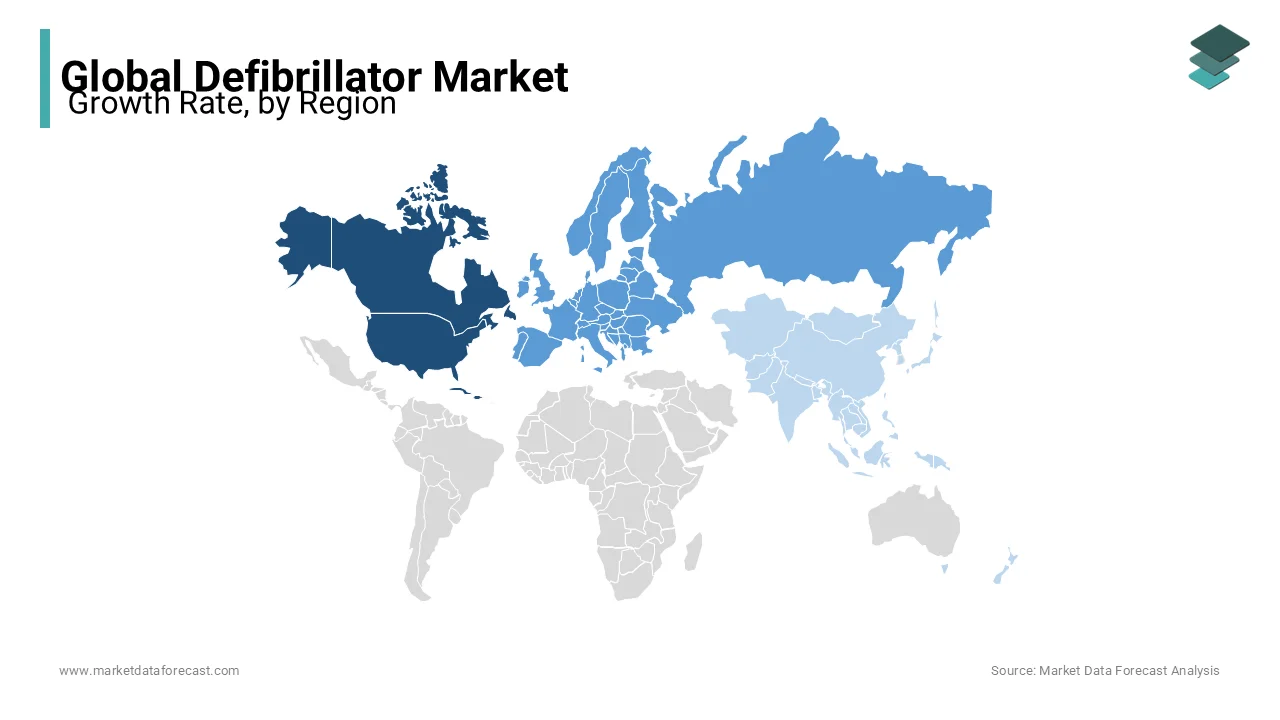
| By Region | North America (leads the global market, supported by advanced healthcare infrastructure; Europe captured 31.7% share) | Asia-Pacific (fastest-growing region, fueled by rapid cardiac care infrastructure expansion in China, Japan, and South Korea) |
Major Market Players & Market Structure
Market Structure: Highly competitive global medical device landscape characterized by continuous technological innovations—such as ZOLL's LifeVest wearable solutions and smart defibrillators featuring improved algorithms and enhanced portability.
Key Companies: Medtronic PLC, St. Jude Medical Inc., Boston Scientific Corporation, BIOTRONIK SE & Co. KG, LivaNova PLC, Koninklijke Philips N.V., ZOLL Medical Corporation, Cardiac Science Corporation, Physio-Control Inc., and Nihon Kohden Corporation.
Global Defibrillator Market Size
The size of the global defibrillator market was worth USD 15.3 billion in 2025. The global market is anticipated to grow at a CAGR of 7.3% from 2026 to 2034 and be worth USD 28.85 billion by 2034 from USD 16.42 billion in 2026.
Defibrillators are life-saving devices engineered to detect and terminate fatal cardiac arrhythmias, primarily ventricular fibrillation and pulseless ventricular tachycardia, through precisely timed electrical shocks. Unlike generic cardiac monitors, these systems are active intervention tools that function as the final physiological safeguard against sudden cardiac arrest (SCA). The evolution from hospital-based units to wearable, implantable, and public-access AEDs reflects a paradigm shift. Defibrillators are no longer confined to clinical settings but are becoming embedded within the fabric of daily life, from corporate offices to commuter trains, as the last line of defense against an unpredictable, often silent killer.
MARKET DRIVERS
Rising Incidence of Sudden Cardiac Arrest Among Younger and Middle-Aged Populations
The rising prevalence of sudden cardiac arrest among younger populations due to undiagnosed structural heart conditions and lifestyle-related cardiomyopathies fuels the defibrillator market. The sudden cardiac death among young individuals often occurs unexpectedly, frequently due to inherited arrhythmia syndromes, even in those without prior symptoms. In the United States, the leading cause of death in young athletes is sudden cardiac arrest, which has led to the implementation of mandatory screening in many high schools across multiple states. Apart from these, the rise in obesity and sedentary lifestyles has caused a significant increase in sudden cardiac events among middle-aged adults, which reflects a shift in risk profiles, according to data from the National Heart, Lung, and Blood Institute.
Institutionalization of Public Access Defibrillation (PAD) Programs
The institutionalization of public access defibrillation (PAD) programs in high-footfall environments, driven by legislative mandates and heightened public awareness, acts as a key driver of the defibrillator market. In Japan, nationwide efforts to promote peripheral artery disease awareness have significantly increased bystander use of defibrillators, which results in much better survival rates for cardiac arrests outside hospitals, according to a study. Similar safety regulations are in place in France, where AEDs are mandatory in all train stations and government buildings, as per research. These policies are not merely logistical. They reflect a cultural transformation. Society now recognizes defibrillation as a civic duty, akin to fire extinguishers in buildings.
MARKET RESTRAINTS
Limited Accessibility and Underutilization of Defibrillators in Low-Resource and Rural Regions
The persistent gap between device availability and actual utilization during cardiac arrest events, particularly in low-resource and rural communities, restricts the expansion of the defibrillator market. According to a study, most sudden cardiac arrests happen outside hospitals, but many communities in sub-Saharan Africa lack access to defibrillation equipment and trained responders. Moreover, even in wealthy countries, significant gaps exist in AED availability between rural and urban areas, with rural regions often underserved. This inequity stems not from technological scarcity but from systemic neglect, which funds prioritize acute care over preventive infrastructure, and community education programs remain under-resourced.
Regulatory and Liability Barriers Limiting Layperson Adoption of AEDs
The regulatory and liability barriers discourage layperson use of automated external defibrillators, despite their design for non-medical operators, which hampers the growth of the defibrillator market. Manufacturers face complex compliance burdens across jurisdictions, which require country-specific language prompts, firmware certifications, and post-market surveillance, which increases costs and delays deployment.
MARKET OPPORTUNITIES
AI-Driven Predictive Analytics Enhancing Defibrillator Utility
The integration of defibrillators with AI-driven predictive analytics that identify individuals at imminent risk of arrhythmic events before they collapse is paving the way for the growth of the defibrillator market. Researchers have developed an algorithm using routine ECG patterns from wearable monitors to predict ventricular arrhythmias up to several hours in advance with accuracy, which enables preemptive implantation of wearable cardioverter-defibrillators in high-risk patients, reducing the need for reactive interventions. These systems transform defibrillators from emergency responders into anticipatory guardians, shifting focus from resuscitation to prevention. Coupled with telemedicine triage, they enable dynamic, personalized risk stratification, which turns passive devices into proactive sentinels within digital health ecosystems.
Wearable Cardioverter-Defibrillators as Bridge-to-Decision Solutions
The development of wearable cardioverter-defibrillators (WCDs) as bridge-to-decision platforms for transient high-risk populations provides key opportunities for the defibrillator market. WCD adoption has grown since 2018, particularly among patients recovering from myocardial infarction or awaiting transplant evaluation, where permanent implantation is premature or contraindicated. Companies are integrating WCDs with real-time telemetry platforms that alert caregivers to arrhythmia episodes and auto-notify EMS if shock is delivered, which creates a mobile safety net for patients transitioning between care settings.
MARKET CHALLENGES
Inappropriate Shocks from Implantable Cardioverter-Defibrillators (ICDs)
The escalating incidence of inappropriate shocks delivered by implantable cardioverter-defibrillators (ICDs), which erode patient quality of life and increase psychological morbidity, is hindering the growth of the defibrillator market. These events stem from limitations in current detection algorithms that struggle to differentiate benign from malignant arrhythmias in complex anatomies. Despite advances in machine learning, false positives remain endemic, particularly in elderly patients with atrial fibrillation or conduction disorders.
Inadequate Maintenance and Standardization of Defibrillators
The lack of standardized global protocols for defibrillator maintenance, battery replacement, and system validation, resulting in widespread device failure during emergencies, is among the main factors negatively impacting the defibrillator market. As per the study, a portion of publicly accessible AEDs in the UK were non-functional during routine audits, primarily due to expired batteries or disconnected electrodes left unattended by custodians. This systemic neglect is compounded by fragmented accountability: no single entity is responsible for upkeep in airports, gyms, or schools, and manufacturer alerts are often ignored without enforcement mechanisms. Hence, the promise of universal access remains hollow, devices sit idle, charged but useless, when seconds count most, because of the absence of mandatory inspection registries, real-time remote diagnostics, and penalties for non-compliance.
REPORT COVERAGE
| REPORT METRIC | DETAILS |
| Market Size Available | 2025 to 2034 |
| Base Year | 2025 |
| Forecast Period | 2026 to 2034 |
| Segments Covered | By Product, End-User, and Region. |
| Various Analyses Covered | Global, Regional and Country-Level Analysis, Segment-Level Analysis, Drivers, Restraints, Opportunities, Challenges; PESTLE Analysis; Porter’s Five Forces Analysis, Competitive Landscape, Analyst Overview of Investment Opportunities |
| Regions Covered | North America, Europe, Asia Pacific, Latin America, Middle East & Africa |
| Market Leaders Profiled | Medtronic PLC (Ireland), St. Jude Medical, Inc. (U.S.), Boston Scientific Corporation (U.S.), BIOTRONIK SE & Co. KG (Germany), LivaNova PLC (U.K.), Koninklijke Philips N.V. (Netherlands), ZOLL Medical Corporation (U.S.), Cardiac Science Corporation (U.S.), Physio-Control, Inc. (U.S.), and Nihon Kohden Corporation (Japan). |
SEGMENTAL ANALYSIS
By Product Insights
The implantable cardioverter-defibrillators (ICDs) segment was the largest segment in the defibrillator market and accounted for a 64.2% share in 2025. Their role as lifelong guardians for high-risk cardiac patients drives the expansion of the implantable cardioverter-defibrillators (ICDs) segment in the global market. A further factor propelling the growth of this segment is the increasing identification of patients with structural heart disease, particularly those with reduced ejection fraction following myocardial infarction or non-ischemic cardiomyopathy, who face an annual risk of sudden cardiac death without intervention, as per the study. The shift from reactive emergency response to proactive, continuous protection has made implantation not merely therapeutic but preventive, a permanent physiological safeguard embedded within the body’s own rhythm.
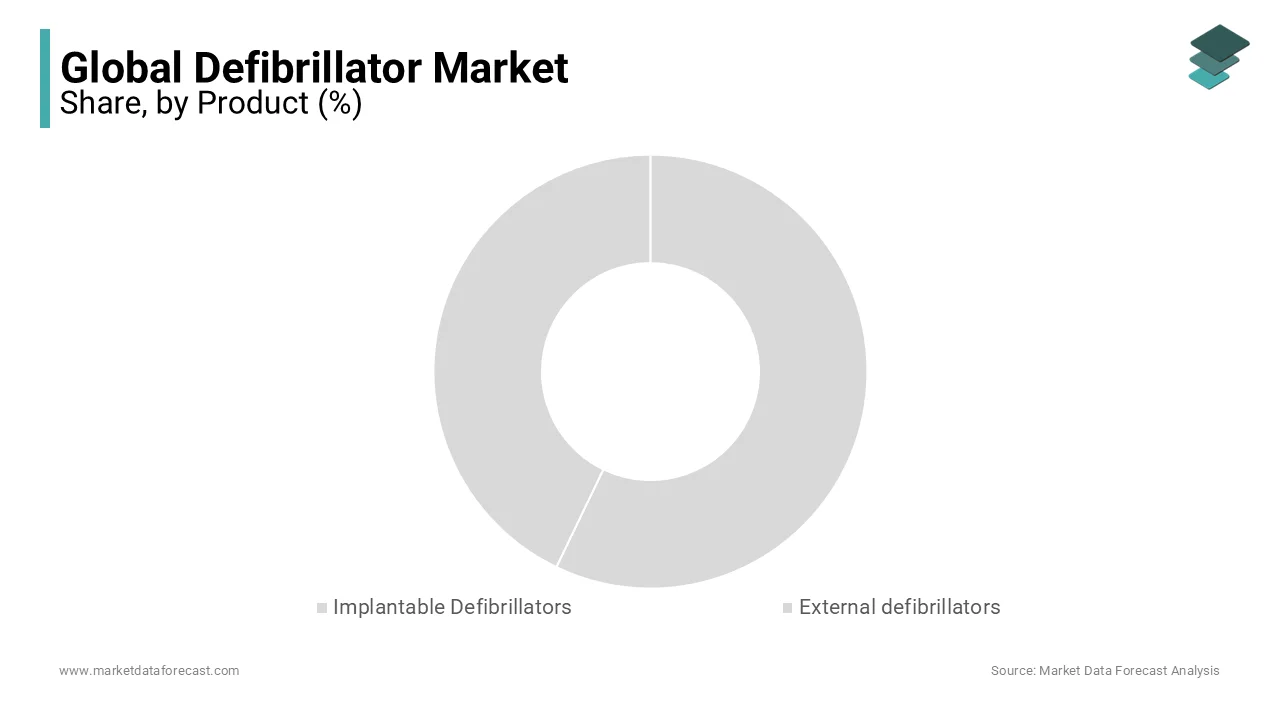
The external defibrillators segment is anticipated to witness the fastest CAGR of 10.9% from 2026 to 2034. The rapid growth of the external defibrillators segment is fueled by the global institutionalization of public access defibrillation and the rise of wearable technologies. The global availability of publicly accessible automated external defibrillators (AEDs) has significantly increased in recent years, with countries like Japan requiring them in key public spaces. As per research, the use of wearable cardioverter-defibrillators is rapidly expanding as a temporary solution for patients at high risk of cardiac events, supported by broader insurance coverage. According to a study, community AED programs in Sweden have greatly improved bystander defibrillation rates, leading to better survival outcomes in cardiac arrests. s
By End User Insights
The hospitals segment captured a leading share of 58.5% of the global defibrillator market in 2023. Factors such as their central role in acute cardiac care delivery fuels the growth of the hospitals segment. Beyond emergency response, hospitals serve as hubs for device implantation, programming, and long-term follow-up. Even as ambulatory solutions grow, hospitals remain the foundational node where diagnostics, intervention, and surveillance converge by ensuring that defibrillation remains both an emergency tool and a clinical cornerstone of cardiovascular management.
The public access segment is likely to experience the fastest CAGR of 14.1% during the forecast period. The swift growth of the public access segment is propelled by legislative mandates, corporate wellness initiatives, and cultural shifts toward community-based emergency response. Many countries have enacted laws mandating the placement of automated external defibrillators (AEDs) in key public locations, with extensive deployment efforts seen in cities like those in Japan, as per research. According to a study, U.S. legislation has encouraged private businesses to install AEDs through financial incentives, leading to significant growth in availability at commercial venues such as gyms and hotels.
REGIONAL ANALYSIS
North America Defibrillator Market Analysis
North America dominated the global defibrillator market with a 44% share in 2025. The prominence of North America is primarily driven by the United States, where systemic investment in emergency cardiac care has created the world’s most comprehensive defibrillation infrastructure. The nation leads in implantable device adoption, with millions of Americans living with ICDs, supported by robust reimbursement frameworks under Medicare and Medicaid. High rates of cardiovascular disease, aggressive screening protocols, and widespread public awareness campaigns have normalized defibrillation as a civic norm. Leading academic centers pioneer next-generation technologies, from leadless ICDs to AI-enhanced detection algorithms, while private insurers increasingly fund wearable cardioverter-defibrillators for transient risk periods. North America’s strength lies not just in volume, but in the seamless integration of technology, policy, and education into a unified survival ecosystem.
Europe Defibrillator Market Analysis
Europe defibrillator market was positioned second by capturing 31.7% of the share in 2025. Harmonized regulatory standards and deeply entrenched public health policies that prioritize accessibility over cost are contributing to the rise of Europe. Germany, France, and Sweden lead in AED deployment density, with a portion of train stations and municipal buildings equipped. Unlike fragmented markets elsewhere, Europe benefits from centralized registries tracking device performance and survival outcomes, which enables continuous quality improvement. Reimbursement for implantable devices is standardized under national health systems, which ensures equitable access regardless of income. This region exemplifies how coordinated governance transforms medical innovation into a universal right.
Asia-Pacific Defibrillator Market Analysis
Asia Pacific is the fastest-growing region in the defibrillator market due to China, Japan, and South Korea’s rapid expansion of cardiac care infrastructure amid aging populations. In Japan, according to a study by the Japanese Circulation Society, AED placement has become a common feature in railway stations and public schools, driven by national legislation and growing public readiness to assist during emergencies. South Korea is at the forefront of developing advanced implantable cardiac devices, with local companies producing compact, MRI-compatible models that are now reaching healthcare markets worldwide. Despite disparities in rural access, urban centers are leapfrogging legacy systems, integrating digital alerts and smartphone-linked AED locators into public health apps. This region’s transformation, from low awareness to mass adoption, is the most dramatic example of societal reengineering around cardiac survival.
Latin America Defibrillator Market Analysis
Latin America grew steadily in the defibrillator market, owing to Brazil and Mexico, where economic growth and rising cardiovascular burden are slowly driving infrastructure investment. However, penetration remains alarmingly low outside metropolitan areas. Innovation is emerging locally; Chilean engineers developed a solar-powered, low-cost AED designed for off-grid communities, currently piloted in Andean villages.
Middle East and Africa Defibrillator Market Analysis
Middle East and Africa is anticipated to expand in the defibrillator market due to extreme divergence between high-resource Gulf nations and severely underserved African regions. In Saudi Arabia and the UAE, advanced hospitals have built strong defibrillator programs aligned with international medical standards, supported by rapid emergency response systems and modern equipment, according to a study. In Dubai, airports now integrate smart AED kiosks with automated features and multilingual assistance to ensure smooth public access. Still, new technology-driven efforts, such as Rwanda’s collaboration with innovation labs, are introducing solar-powered and drone-assisted AED solutions to improve emergency care in remote communities. These pilots, though small, represent a radical reimagining, defibrillation as a scalable and community-owned survival tool.
COMPETITIVE LANDSCAPE
Competition in the defibrillator market has evolved beyond technical specifications to cover societal integration, where success is measured not by how well a device shocks, but by how seamlessly it becomes part of the human response to crisis. Leading firms no longer compete solely on battery life or shock energy; they vie for dominance in connectivity, accessibility, and trust. The battlefield extends from hospital cath labs to subway platforms, school gyms, and remote villages, demanding solutions that are intelligent, intuitive, and culturally adaptable.
KEY MARKET PLAYERS
Some of the prominent companies leading the global defibrillator market profiled in the report are
- Medtronic PLC
- St. Jude Medical, Inc.
- Boston Scientific Corporation
- BIOTRONIK SE & Co. KG
- LivaNova PLC
- Koninklijke Philips N.V.
- ZOLL Medical Corporation
- Cardiac Science Corporation
- Physio-Control, Inc.
- Nihon Kohden Corporation
TOP STRATEGIES USED BY THE KEY MARKET PARTICIPANTS
Key players are shifting from hardware-centric sales to ecosystem-driven platforms that fuse devices with digital health networks, predictive analytics, and community engagement tools. They are embedding intelligence into defibrillators through AI-powered rhythm discrimination, real-time connectivity, and automated emergency alerts to reduce response delays. Strategic partnerships with EMS agencies, public transit authorities, and government health programs ensure seamless integration into existing emergency infrastructures. Companies are investing in low-cost, durable designs tailored for resource-limited settings and expanding training via immersive technologies like VR and augmented reality. Regulatory innovation is being accelerated through Breakthrough Device designations for novel detection algorithms.
GLOBAL DEFIBRILLATOR MARKET NEWS
- In February 2025, Medtronic received the CE Mark for its implantable defibrillator system, Aurora EV-ICD MRI SureScan, and Epsila EV MRI SureScan for the management of irregular heart rhythm.
- In January 2022, Koninklijke Philips acquired Cardiologs to boost its cardiac diagnostic and monitoring product offerings.
- In September 2022, Kauvery Hospital launched the Restart Heart Foundation in Chennai, India. Through this foundation, over 100 automated external defibrillators are installed at key sites in Chennai.
- In August 2022, it announced its investigational EV ICD (extravascular implantable cardioverter defibrillator) system met trial endpoints. This device is aimed to avoid certain Medtronic risks of traditional and transvenous ICDs.
- In May 2021, Rapid Response Revival Research Ltd, an Australian company, received a CE mark for CellAED, the world’s first personal automated external defibrillator (AED) for home use.
- In June 2020, Philips received FDA approval for their automated external defibrillators -Heartstart FR3 and Heartstart FRx.
- In January 2020, the Cobalt and Chrome portfolio of implantable cardioverter-defibrillators and cardiac resynchronization therapy-defibrillators from Medtronic received the CE Mark.
- In 2019, Koninklijke Philips N.V. (Netherlands) introduced its Heartstart intrepid monitor/ Defibrillator with intelliSpace Connect.
- In August 2019, the Cardiac Science Corporation was acquired by Zoll Medical to strengthen the company’s product offering through Zoll’s Resuscitation division.
- St. Jude Medical Implantable Defibrillators, ICDs, are used to treat heart conditions that people develop at birth or during life. ICD is for people at risk of life-threatening ventricular arrhythmias-abnormal and rapid cardiac rhythms (arrhythmias) in the two lower chambers (ventricle) of the heart.
- Swedish carriers are currently testing a program that AEDs can deliver by drone. It shortens AED delivery times and increases the chances of survival if treated faster. Therefore, due to technological advances and product innovations, the defibrillator market is expected to grow.
- St. Jude Medical LLC is one of the most important competitors in the defibrillator market, and others are Boston Scientific Corporation and Koninklijke Philips.
- IN 2014, Asahi Kasei Corporation launched LifeVests. The product is a wearable defibrillator, and it helped in reducing complexity during cardiac arrest.
MARKET SEGMENTATION
This research report segmented and sub-segmented the global defibrillator market based on product type, end-user, and region.
By Product
- Implantable Defibrillators
- Transvenous Implantable Cardioverter Defibrillator (T-ICDs)
- Subcutaneous Implantable Cardioverter Defibrillator (S-ICDs)
- Cardiac Resynchronization Therapy- Defibrillator (CRT-D)
- External defibrillators
- Manual External Defibrillator
- Automated External Defibrillator (AEDs)
- Wearable Cardioverter Defibrillator (WCDs)
By End User
- Hospitals
- Prehospital
- Public Access market
- Alternate Care Market
- Home
By Region
- North America
- Europe
- Asia-Pacific
- Latin America
- The Middle East and Africa