- Product Description Description
- Table of Contents TOC
- List of Table & Figure LOT
- Get Free Sample PDF Sample PDF
Market Size, 2025
$0.18 BnMarket Estimate, 2026
$0.19 BnMarket Forecast, 2034
$0.28 BnCAGR, 2026–2034
4.98%Europe Avocado Oil Market Size, Growth, Trends & Forecast (2026–2034)
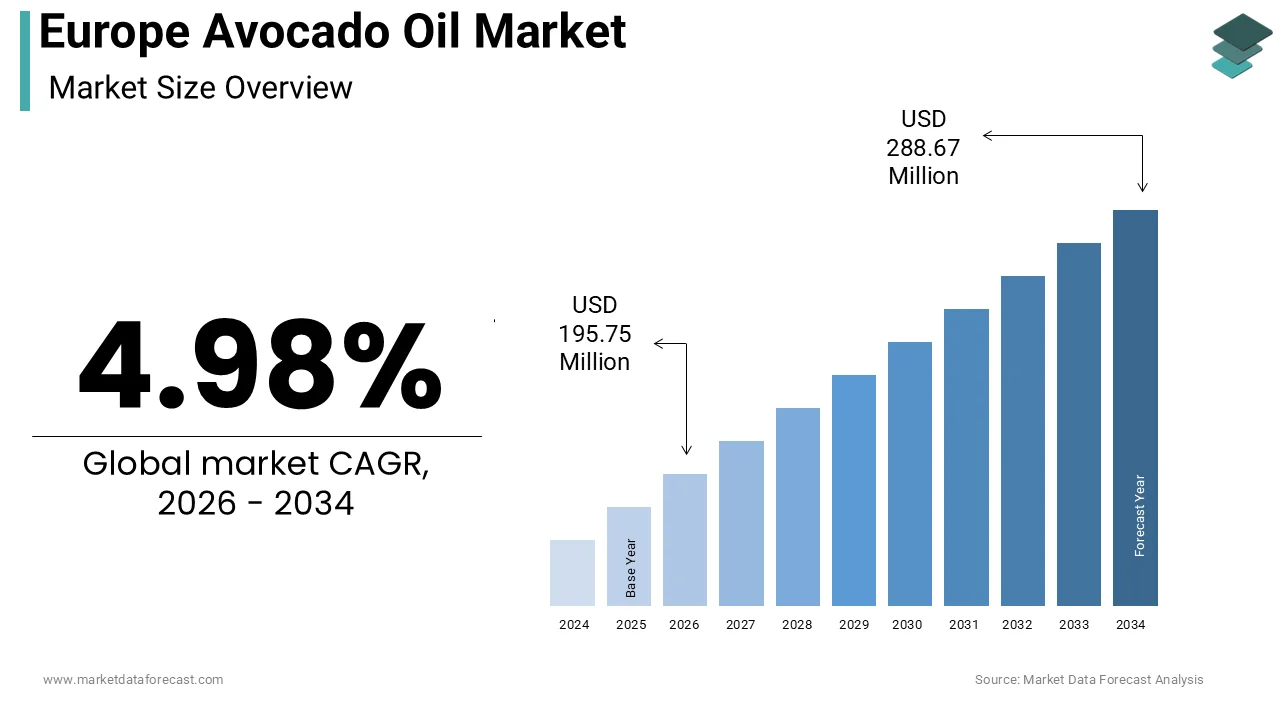
The Europe avocado oil market size was calculated to be USD 186.46 million in 2025, is anticipated to reach USD 195.75 million in 2026, and is projected to scale up to USD 288.67 million by 2034, registering a compound annual growth rate (CAGR) of 4.98% during the forecast period from 2026 to 2034. Driven by the rising demand for heart-healthy cooking oils, clean-label beauty applications, and advanced extraction methods, the avocado oil industry continues to expand steadily across the European continent.
Key Executive Metrics (At-a-Glance)
- 2025 Base Valuation: USD 186.46 Million
- 2026 Current Valuation: USD 195.75 Million
- 2034 Forecast Valuation: USD 288.67 Million
- Compound Annual Growth Rate (CAGR): 4.98% (2026–2034)
- Dominant Type Segment: Virgin Oil (favored for retaining natural nutritional profiles, high smoke points, and gourmet appeal)
- Fastest-Growing Type Segment: Refined Oil (exhibiting a CAGR of 9.2% fueled by industrial food manufacturing and ready-to-eat convenience sectors)
- Dominant Extraction Type Segment: Cold-Pressed / Mechanical Extraction (anchored by EU organic regulations and consumer preferences for chemical-free processing)
- Fastest-Growing Extraction Type Segment: Supercritical CO₂ Extraction (estimated at an 11.5% CAGR driven by technological innovation and environmental sustainability)
- Dominant Distribution Channel: Supermarkets and Hypermarkets (holding a 58.9% share in 2025 due to extensive reach and bulk purchasing power)
- Fastest-Growing Distribution Channel: Online Retail (projected at a CAGR of 14.8% due to digital shopping behaviors and niche product access)
- Dominant Region: France (holding a 24.7% share in 2025, anchored by its culinary culture and consumer appetite for premium fats)
Core Market Drivers
- Rising Demand for Heart-Healthy Cooking Oils: High monounsaturated fatty acid content (oleic acid up to 70%) and a high smoke point exceeding 250 degrees Celsius.
- Clean Beauty Sector Expansion: Surging demand for natural, non-toxic cosmetic formulations taking advantage of the "food-to-face" ingredient crossover.
Primary Market Restraints & Challenges
- Volatility in Raw Material Supply: Climate dependency and total reliance on long-distance imports from Latin America and Africa.
- High Production Costs & Extraction Limits: Low extraction yields making avocado oil significantly more expensive than traditional vegetable oils.
- Product Adulteration and Fraud: Prevalence of blending with cheaper refined oils, eroding consumer trust and brand integrity.
Europe Avocado Oil Market Segmentation Breakdown
| Segment Category | Leading Sub-Segment | Fastest-Growing Sub-Segment |
|---|---|---|
| By Type | Virgin Oil (dominant due to unrefined nutrition and flavor) | Refined Oil (9.2% CAGR driven by industrial processing and convenience food sectors) |
| By Extraction Type | Cold-Pressed / Mechanical (dominant due to EU organic standards and purity perception) | Supercritical CO₂ Extraction (11.5% CAGR driven by green chemistry and yield purity) |
| By Distribution Channel | Supermarkets and Hypermarkets (58.9% share in 2025, offering one-stop convenience and scale) | Online Retail (14.8% CAGR driven by subscriptions, e-commerce, and niche direct brands) |
| By Region | France (24.7% market share in 2025, led by culinary tradition and premium consumption) | Expanding presence across Germany, the UK, Spain, and Italy |
Major Industry Players Profiled
Key enterprises shaping the competitive Europe avocado oil market include Olivado Group, Westfalia Fruit Group, Chosen Foods LLC, Avohealth (Spectrum Organics), Sesajal S.A. de C.V., Grupo Industrial Batellero S.A. de C.V., Proteco Gold Pty Ltd, Crofts Limited, The Village Press, Olivado USA, La Tourangelle Inc., Bella Vado Inc., Avoolio Ltd., Grove Avocado Oil, and New Zealand Avocado Oil Company Ltd.
 Download Free Sample Report
Europe Avocado Oil Market Size
The Europe avocado oil market size was calculated to be USD 186.46 million in 2025 and is anticipated to be worth USD 288.67 million by 2034, from USD 195.75 million in 2026, growing at a CAGR of 4.98% during the forecast period.
Avocado oil is a nutrient-dense oil extracted from the pulp of ripe avocados (Persea americana). This premium oil is chemically distinct due to its exceptionally high monounsaturated fat content, specifically oleic acid, and possesses a smoke point exceeding 250 degrees Celsius, which positions it as a superior alternative to olive oil for high-heat culinary applications. Beyond gastronomy, the region utilizes substantial volumes for dermal formulations owing to its dense profile of vitamins E and A. The market dynamics in 2026 are shaped by a robust consumption culture where the European Union imported approximately 915000 tonnes of fresh avocados in 2025, representing a 14% increase year on year as per multiple studies. This surge in raw fruit availability directly correlates with increased oil production potential. According to Cirad research, average per capita avocado consumption across the EU27 reached 1.8 kg in 2025, indicating a deep integration of the fruit into daily diets. France continues to be a leading consumer market, having reached 160,000 tons in 2024 (World Avocado Organization), with 2025 data showing continued market consolidation, followed by substantial demand in Germany and the United Kingdom. The shift toward health-conscious lifestyles has elevated avocado oil from a niche product to a staple in premium households, driven by its perceived cardiovascular benefits and versatility in clean-label food manufacturing.
MARKET DRIVERS
Rising Demand for Heart-Healthy Cooking Oils: Nutritional Superiority and Consumer Health Trends.
The intensifying consumer preference for heart-healthy dietary fats is the main factor propelling the Europe avocado oil market. These fats offer superior nutritional profiles compared to traditional vegetable oils. European consumers are increasingly educated about the benefits of monounsaturated fatty acids, specifically oleic acid, which constitutes up to 70% of the total fat content in avocado oil. This chemical composition mirrors that of extra virgin olive oil but provides a significantly higher smoke point, allowing for versatile cooking methods without degradation of nutrients. As per statistics from the International Olive Council, olive oil consumption in the European Union has faced downward pressure in recent years due to supply constraints and price volatility, creating a strategic opening for avocado oil to capture market share among health-conscious demographics. Projections for the specialty fats and oils sector in Europe indicate steady expansion over the coming decade. This growth is driven by increasing demand for specialized ingredients in processed foods and confectionery, reflecting a positive annual growth trajectory. This growth trajectory is underpinned by medical recommendations advocating for the reduction of saturated fats and the adoption of oils that support lipid management. Furthermore, the prevalence of lifestyle-related diseases such as obesity and hypertension across the region has prompted public health initiatives that indirectly boost demand for functional foods. Consumers are willing to pay a premium for oils that deliver tangible health outcomes, positioning avocado oil as a critical component in the preventative health nutrition strategies of millions of European households.
Expansion of the Clean Label Beauty and Personal Care Sector, Regulatory Push, and Natural Ingredient Adoption.
The clean beauty movement is growing exponentially within the region’s personal care industry, which serves as a major driver for the Europe avocado oil market. Within this trend, avocado oil is a foundational ingredient for natural and organic formulations. The European Union upholds the most rigorous cosmetic safety standards in the world, prohibiting the use of thousands of hazardous chemical ingredients. This regulatory landscape compels manufacturers to innovate by formulating with safe, natural, and compliant alternatives for product bases and active ingredients. Avocado oil fits this requirement perfectly due to its high penetration rate and rich content of antioxidants and sterols that promote skin elasticity and hydration. A study confirms that the clean beauty sector in Europe is on a strong upward trajectory. The market is expected to expand significantly in the coming years, driven by consumer demand for non-toxic, transparently labeled products, outpacing the growth of the broader personal care industry. This expansion is fueled by consumer skepticism toward synthetic additives and a strong desire for transparency in product labeling. Consumer research highlights a major shift in behavior, with a substantial portion of shoppers globally and in Europe prioritizing skincare products formulated with clean, recognizable ingredients. This preference is forcing heritage brands to reformulate their product lines to include more plant-based and naturally derived components. Additionally, the established organic food market in Europe serves as a critical driver for the beauty industry. The widespread availability and certification of organic food ingredients have created a "food-to-face" crossover effect, where certified organic food-grade ingredients are increasingly sought after for use in cosmetic applications. The dual utility of avocado oil allows it to permeate both the culinary and cosmetic sectors, amplifying its market volume as brands leverage its natural provenance to meet the rigorous standards of the eco-conscious European buyer.
MARKET RESTRAINTS
Volatility in Raw Material Supply and Climate Dependency, Climatic Sensitivity, and Import Reliance
The inherent instability of raw material supply hampers the growth of the Europe avocado oil market. This instability is caused by the climatic sensitivity of avocado cultivation and the region's total reliance on imports. Avocado trees require specific environmental conditions, including annual rainfall between 1000 mm and 2000 mm and temperatures that do not drop below 0 degrees Celsius, making them highly vulnerable to climate change induced weather patterns. As per resources, shifting precipitation levels and rising temperatures in key producing regions such as Latin America and Africa are already impacting yield consistency and fruit quality. Since Europe produces negligible quantities of avocados commercially, the entire supply chain depends on long-distance logistics from countries like Peru, Kenya, and Colombia. In 2025, while imports reached 915000 tonnes, logistical bottlenecks and fluctuations often led to sudden shortages or price spikes that disrupted oil production schedules. The perishable nature of the fruit further complicates matters, as any delay in transport can result in spoilage before the oil extraction process begins. This dependency exposes European manufacturers to geopolitical risks and trade policy changes in exporting nations. Consequently, the inability to secure a stable and predictable flow of high-quality raw fruit acts as a brake on market expansion, forcing producers to maintain high inventory costs or face production halts during off-peak seasons or climate-related disruptions.
High Production Costs and Limited Extraction Efficiency: Economic Barriers and Yield Limitations
The elevated cost structure associated with avocado oil production hinders the expansion of the Europe avocado oil market. This is driven by low extraction yields and expensive processing requirements compared to other vegetable oils. The oil content in avocado pulp varies significantly by variety, with the Hass cultivar offering the highest potential, yet the mechanical cold press extraction method typically yields only a portion of the available oil, while solvent extraction, though more efficient, faces regulatory and consumer acceptance hurdles in the premium organic segment. According to studies, the mean percentage oil yield from pulp can range widely, which necessitates large volumes of raw fruit to produce a single liter of oil. This inefficiency translates into high unit costs that make avocado oil substantially more expensive than sunflower, rapeseed, or even olive oil. In a market where inflation has impacted household disposable income across the Eurozone, the premium pricing of avocado oil limits its adoption to niche affluent segments rather than the mass market. Furthermore, the energy-intensive nature of drying the pulp before extraction adds to the operational expenditures. These economic barriers prevent widespread substitution of cheaper cooking oils and restrict the market penetration of avocado oil in industrial food manufacturing, where cost margins are tight. Until technological advancements improve extraction efficiency or economies of scale reduce input costs, the high price point will remain a formidable obstacle to broader market accessibility.
MARKET OPPORTUNITIES
Integration of Avocado Byproducts in Circular Economy Model:s Waste Reduction and Enhanced Yield Potential
The adoption of circular economy principles opens up major possibilities for the growth of the Europe avocado oil market. This approach utilizes avocado byproducts for oil extraction, enhancing sustainability and reducing waste. Traditionally, the oil is extracted solely from the pulp, leaving the seed and peel as waste materials that contribute to landfill mass. However, emerging technologies now allow for the recovery of oil from seeds and peels, which still contain significant lipid content. By integrating these byproducts into the production stream, manufacturers can significantly increase the total oil output per tonne of imported fruit, effectively lowering the raw material cost per liter and improving profit margins. This approach aligns perfectly with the European Green Deal and the stringent waste reduction targets set by the European Commission, which encourage industries to minimize their environmental footprint. Companies that adopt these comprehensive extraction methods can market their products as zero-waste or fully utilized, appealing to a notable share of European households that regularly purchase organic and sustainably sourced goods. This strategy not only optimizes resource utilization but also creates a competitive advantage by differentiating brands in a crowded marketplace through verified sustainability credentials and enhanced supply chain efficiency.
Growth in Premium Functional Food and Nutraceutical Applications Diversification into Wellness and Therapeutic Segments
The expanding sector of functional foods and nutraceuticals in the region creates a substantial opportunity for manufacturers within the European avocado oil market. This allows them to diversify their product portfolios beyond traditional culinary uses. European consumers are increasingly seeking food products that offer specific health benefits, such as improved cognitive function, joint health, and anti-inflammatory properties, all of which are associated with the bioactive compounds found in avocado oil. The market for specialty fats and oils is evolving to include fortified products, dietary supplements, and medical nutrition therapies where avocado oil serves as a carrier for fat-soluble vitamins and phytochemicals. Manufacturers can develop ready-to-consume shots, salad dressings enriched with additional nutrients, or baking blends specifically formulated for health optimization. The high bioavailability of nutrients in avocado oil enhances its efficacy as a delivery system for therapeutic ingredients. By positioning avocado oil as a functional ingredient rather than just a cooking medium, companies can access higher margin segments and build brand loyalty among consumers who prioritize wellness. This diversification mitigates the risk of saturation in the standard cooking oil category and opens new revenue streams aligned with the preventative healthcare trends dominating the region.
MARKET CHALLENGES
Prevalence of Product Adulteration and Quality Fraud Integrity Issues and Consumer Trust Erosion
The widespread issue of product adulteration undermines consumer trust and threatens the integrity of premium brands, which is among the serious challenges to the Europe avocado oil market. Investigations have revealed that a significant proportion of avocado oil sold globally is mixed with cheaper refined oils such as soybean, canola, or sunflower oil, yet labeled as pure or extra virgin. A notable study found that a notable share of private-label avocado oil products tested were either rancid or adulterated, raising serious concerns about food safety and label accuracy. This prevalence of fraud creates a skeptical environment where consumers hesitate to pay premium prices due to fears of purchasing counterfeit goods. The lack of standardized testing protocols and the difficulty in detecting sophisticated blending techniques exacerbate the problem, allowing bad actors to flood the market with substandard products. For legitimate manufacturers, this means increased costs associated with third-party testing, certification, and marketing efforts required to prove authenticity. The reputational damage extends beyond individual brands to the entire category, potentially stalling market growth as confidence erodes. Addressing this challenge requires industry-wide collaboration to establish rigorous authentication standards and transparent supply chain tracking systems that can guarantee the purity of every bottle reaching the European shelf.
Complex Regulatory Compliance and Supply Chain Transparency Legislative Hurdles and Traceability Demands
The intricate web of regulatory requirements and the demand for end-to-end supply chain transparency pose a significant obstacle for operators in the Europe avocado oil market. The European Union enforces some of the world's most stringent food safety and labeling regulations, including the General Food Law and specific directives on novel foods and organic certification. Importers must navigate complex documentation processes to prove the origin, handling, and processing methods of avocado oil, which is particularly difficult given the fragmented nature of avocado farming in exporting countries. The implementation of the EU Deforestation Regulation further complicates matters by requiring proof that imported agricultural products did not contribute to forest loss, adding a layer of due diligence that many supply chains are not yet equipped to handle. Additionally, the push for digital traceability means that companies must invest in blockchain or other tracking technologies to provide consumers with verifiable data on the product journey from farm to fork. Failure to comply with these evolving mandates can result in severe penalties, product recalls, and exclusion from the market. For small and medium-sized enterprises, the cost of maintaining such high levels of compliance can be prohibitive, creating a barrier to entry and limiting competition. Balancing the need for rigorous adherence to European standards with the practical realities of global sourcing remains a persistent operational hurdle for the industry.
REPORT COVERAGE
| REPORT METRIC | DETAILS |
| Market Size Available | 2025 to 2034 |
| Base Year | 2025 |
| Forecast Period | 2026 to 2034 |
| CAGR | 4.98% |
| Segments Covered | By Type, Extraction Type, Distribution Channel, And Region |
| Various Analyses Covered | Global, Regional & Country Level Analysis; Segment-Level Analysis; DROC, PESTLE Analysis; Porter’s Five Forces Analysis; Competitive Landscape; Analyst Overview of Investment Opportunities |
| Regions Covered | UK, France, Spain, Germany, Italy, Russia, Sweden, Denmark, Switzerland, Netherlands, Turkey, and the Czech Republic |
| Market Leaders Profiled | Olivado Group, Westfalia Fruit Group, Chosen Foods LLC, Avohealth (Spectrum Organics), Sesajal S.A. de C.V., Grupo Industrial Batellero S.A. de C.V., Proteco Gold Pty Ltd, Crofts Limited, The Village Press, Olivado USA, La Tourangelle Inc., Bella Vado Inc., Avoolio Ltd., Grove Avocado Oil, New Zealand Avocado Oil Company Ltd. |
SEGMENTAL ANALYSIS
By Type Insights
In 2025, the virgin oil segment dominated the Europe avocado oil market and accounted for a substantial share. This leading position of the segment is driven by the unwavering consumer preference for unrefined products that retain their natural nutritional profile and distinct flavor. The main reason for its popularity is the belief that virgin oil is a healthier, natural product, unrefined by chemicals and heat that destroy beneficial compounds. European consumers increasingly prioritize food products that offer maximum nutritional benefits without artificial intervention, driving the overwhelming demand for virgin avocado oil. Unlike refined variants, virgin oil undergoes mechanical extraction at low temperatures, preserving critical bioactive compounds such as lutein, vitamin E, and phytosterols that are essential for cardiovascular health and skin protection. The high smoke point of virgin avocado oil, often exceeding 250 degrees Celsius, allows it to be used for frying without losing these nutrients, a unique selling point that refined olive oil cannot always match due to variability in quality. Research indicates that a notable portion of shoppers in Western Europe actively reads labels to ensure products are labeled as unrefined or virgin before purchase. This behavioral shift forces retailers to stock predominantly virgin varieties, marginalizing refined options to industrial applications. The premium pricing power of virgin oil further incentivizes producers to focus their supply chains on this segment, reinforcing its market leadership through a cycle of high demand and specialized production. A further reason for this growth is its widespread adoption in gourmet cooking and fine dining establishments across Europe, where flavor profile is paramount. Virgin avocado oil possesses a rich, buttery taste with subtle nutty notes that enhance salads, marinades, and finishing dishes, characteristics that are stripped away during the refining process. As per sources, a considerable share of Michelin-starred restaurants in France and Italy now list avocado oil as a key ingredient in their signature dishes, replacing traditional fats to offer novel flavor experiences. This trend trickles down to home cooks who seek to replicate restaurant-quality meals, driving retail sales of virgin variants. The versatility of the oil extends beyond savory applications into baking and smoothies, where its neutral yet pleasant flavor complements other ingredients without overpowering them. Chefs and food influencers frequently highlight the vibrant green color of virgin oil as a visual marker of quality, creating a strong aesthetic appeal that refined oil lacks. This cultural integration into the European gastronomic identity ensures that virgin oil remains the preferred choice for discerning consumers, solidifying its leading market share against cheaper, flavorless alternatives.
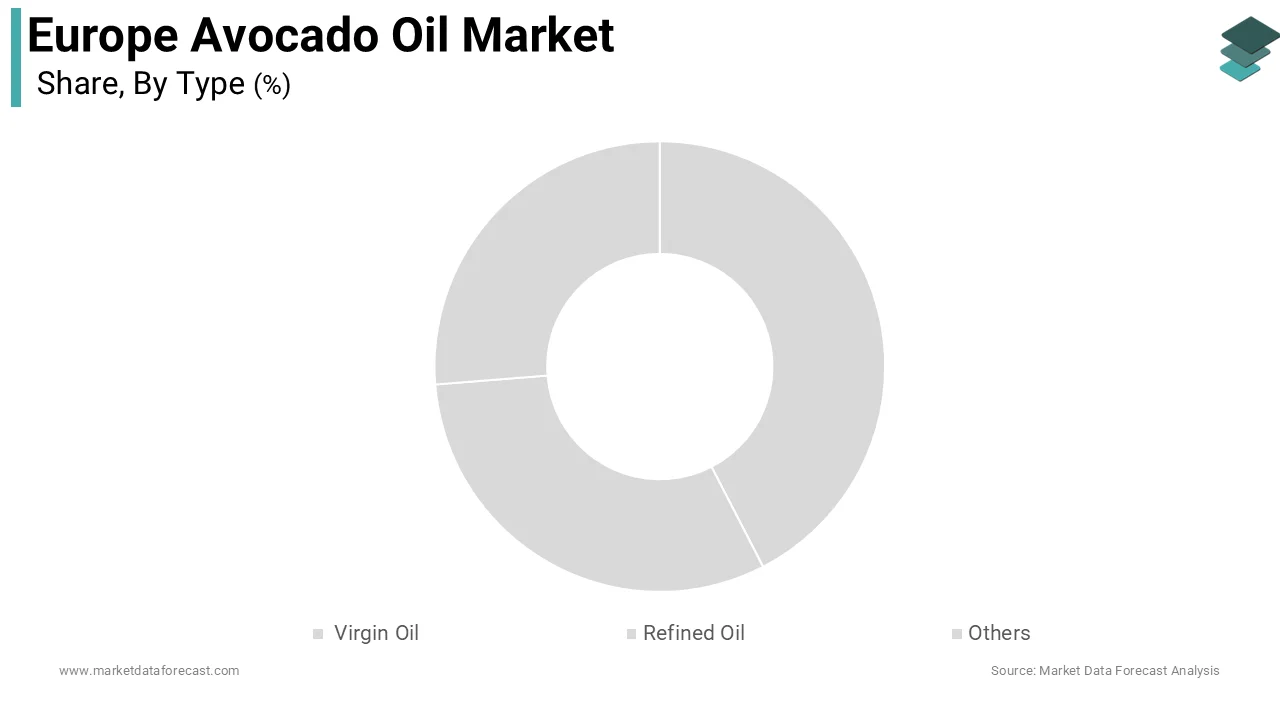
The refined oil segment is likely to experience the fastest CAGR of 9.2% from 2026 to 2034. Its growth is fueled by the need for cost-effective solutions in industrial food manufacturing and the expanding ready-to-eat food sector. Moreover, the rapid expansion of the refined oil segment is primarily driven by its adoption in large-scale industrial food manufacturing, where cost efficiency and neutral flavor profiles are critical requirements. Refined avocado oil undergoes processing that removes impurities and strong flavors, making it an ideal ingredient formass-producedd snacks, baked goods, and fried foods where the distinct taste of virgin oil would be undesirable. The stability of refined oil under high heat and its extended shelf life further reduces waste and logistical costs for large food corporations. This economic advantage enables brands to market their products as containing avocado oil while maintaining competitive price points, appealing tobudget-consciouss consumers who still seek health benefits. The scalability of refined oil production ensures a steady supply for industrial clients, fostering long-term contracts that drive consistent volume growth in this segment. In addition, this area is supported by the booming ready-to-eat and convenience food sector in Europe, which demands ingredients with consistent performance and neutral sensory attributes. Modern lifestyles have led to a surge in demand for pre-prepared meals, frozen foods, and instant snacks, all of which require oils that do not alter the intended flavor profile of the dish. Refined avocado oil fits perfectly into this niche as it provides the health halo of avocado without the risk of flavor clash in diverse culinary formulations ranging from Asian inspired noodles to Mediterranean pastas. Furthermore, the high oxidative stability of refined oil ensures that these convenience products maintain their quality over longer distribution periods, a crucial factor for retailers managing complex supply chains. The ability of refined oil to meet both the functional requirements of industrial processing and the marketing demands of health-conscious labeling positions it as the fastest-growing segment in the coming years.
By Extraction Type Insights
The cold-pressed or mechanical extraction segment was the Europe avocado oil market and captured a significant share in 2025. This dominance of the segment is attributed to the European regulatory environment and consumer insistence on natural, chemical-free processing methods that align with organic standards. Besides, the preeminence of cold-pressed extraction is largely dictated by the stringent regulatory framework of the European Union regarding organic certification and food safety, which heavily favors mechanical processes over chemical ones. To achieve the coveted organic label in Europe, oils must be extracted without the use of synthetic solvents, a criterion that only mechanical pressing can satisfy. Consumers associate mechanical extraction with purity and safety, believing that the absence of chemicals results in a healthier final product. This perception is reinforced by labeling laws that allow manufacturers to prominently display terms like "cold pressed" and "mechanically extracted," which act as powerful marketing tools. The inability of solvent-extracted oils to access the lucrative organic shelf space severely limits their market penetration, thereby cementing the dominance of the mechanical segment. The organic food market continues to outpace conventional food growth. Consequently, the reliance on cold-pressed methods remains absolute for market leaders. Beyond regulatory compliance, the sheer volume of consumer demand for chemical-free products serves as a robust driver for the dominance of mechanical extraction technologies. European shoppers are increasingly skeptical of industrial processing methods and actively avoid products associated with chemical residues, fearing potential long term health risks. This sentiment is particularly strong in the demographics that purchase avocado oil, who are typically well educated and highly informed about food production techniques. Mechanical extraction preserves the natural aroma, color, and antioxidant content of the oil, qualities that are often diminished or altered by solvent extraction and subsequent refining. The transparency of the mechanical process, which can be easily explained and visualized to consumers, builds brand loyalty and justifies premium pricing. The market signal encourages producers to invest in high-capacity mechanical presses rather than solvent plants, ensuring that the supply side remains aligned with consumer values. The convergence of health consciousness and distrust of industrial chemistry creates an insurmountable barrier for alternative extraction methods, securing the leading position of cold-pressed oil.
The supercritical CO₂ extraction segment is on the rise and is expected to be the fastest-growing segment in the market by witnessing a CAGR of 11.5% over the forecast period due to advancements in technology that offer superior quality retention and environmental sustainability. The swift ascent of supercritical CO₂ extraction is supported by continuous technological innovations that enable the production of avocado oil with unparalleled purity and nutrient retention, surpassing even traditional cold pressing methods. This technique uses carbon dioxide under high pressure and specific temperatures to extract oil, avoiding any thermal degradation or oxidation that can occur during mechanical friction. As European consumers become more discerning about the efficacy of functional foods, the superior biochemical profile of CO₂ extracted oil commands attention in the high-end nutraceutical and cosmetic sectors. The ability to fine-tune extraction parameters allows manufacturers to target specific compounds, creating customized oil blends for specialized applications that mechanical pressing cannot achieve. Investment in this technology has surged, with European equipment manufacturers reporting an increase in orders for supercritical extraction units in 2025, as per sources. This influx of capital is lowering the operational costs of the technology, making it increasingly viable formedium-sizedd producers. The promise of a cleaner, more potent product appeals to premium brands seeking differentiation, fueling the rapid adoption of this advanced extraction method across the continent. Additionally, the segment is helped by its perfect alignment with the European Green Deal and the global push towards green chemistry and sustainable manufacturing. Unlike solvent extraction, which relies on petrochemical derivatives like hexane that pose environmental and health hazards, CO₂ extraction uses non-toxic, recyclable gas that leaves no residue and generates no hazardous waste. Carbon dioxide used in the process is often captured from industrial byproducts, creating a circular economy loop that further enhances the sustainability credentials of the final product. The solvent-free nature of the process also eliminates the need for energy-intensive distillation steps required to remove chemical residues, resulting in a lower overall carbon footprint. This environmental advantage positions supercritical CO₂ extraction as the future standard for premium oil production, driving its accelerated growth as companies strive to meet ambitious corporate sustainability targets and regulatory expectations.
By Distribution Channel Insights
The supermarkets and hypermarkets segment held the majority share of 58.9% of the Europe avocado oil market in 2025 because of its extensive reach, one-stop shopping convenience, and the ability to offer competitive pricing through bulk purchasing power. A major factor that aids this segment is its ubiquitous presence and unparalleled accessibility to the average European consumer, making it the default destination for grocery shopping. These large-format stores are strategically located in urban and suburban centers, ensuring that avocado oil is within easy reach for millions of households every week. The sheer scale of these networks allows retailers to stock a wide variety of avocado oil brands, from private labels to premium imports, catering to diverse consumer preferences under one roof. This variety encourages impulse purchases and trial among shoppers who might not seek out specialty stores specifically for oil. The visibility of avocado oil in the cooking oil aisle, often accompanied by promotional displays and sampling events, further drives sales volume. The convenience of purchasing avocado oil alongside other weekly essentials eliminates the need for consumers to visit multiple specialized shops, reinforcing the supermarket as the primary touchpoint for this commodity. One more point that adds strength is its ability to offer competitive pricing through economies of scale and the aggressive expansion of private label brands. Large retail chains leverage their massive purchasing volumes to negotiate favorable terms with suppliers, passing savings on to consumers in the form of lower shelf prices that specialty stores cannot match. Furthermore, supermarkets have aggressively developed their own private-label avocado oils, which offer margins for the retailer while providing affordable options for budget-conscious shoppers. These store brands often mimic the packaging and quality claims of premium competitors but at a fraction of the cost, democratizing access to avocado oil for a broader demographic. The combination of low prices, frequent promotions, and the trust associated with established retail banners ensures that supermarkets remain the preferred channel for the majority of avocado oil transactions in Europe.
The online retail segment is expected to exhibit a noteworthy CAGR of 14.8% from 2026 to 2034, owing to the shifting digital behaviors of consumers and the ability of e-commerce platforms to offer niche and premium products that physical stores may lack. The meteoric rise of online retail is primarily driven by a fundamental shift in European consumer behavior towards digital platforms for grocery and specialty food shopping, a trend accelerated by the post pandemic landscape. Consumers increasingly value the convenience of home delivery, the ability to compare prices instantly, and access to detailed product information and reviews that are readily available online. Avocado oil, often perceived as a premium or niche product, benefits immensely from the infinite shelf space of online marketplaces where consumers can find a wider range of brands, origins, and extraction methods than in local supermarkets. The ability to subscribe to regular deliveries ensures customer retention and predictable revenue streams for sellers. The demographic is also the primary consumer of avocado oil, creating a direct correlation between digital adoption and market growth. The seamless integration of mobile shopping and quick commerce services further reduces friction, making it easier than ever for consumers to replenish their pantry staples with a few clicks. This segment is also shaped by the platform's unique capability to connect consumers directly with niche premium brands and artisanal producers that lack the distribution networks to enter physical supermarkets. Many high-quality, small-batch avocado oil producers rely on direct-to-consumer models or specialized online marketplaces to reach their audience, bypassing the stringent listing fees and slotting allowances of traditional retail. This access allows online channels to offer a diversity of products, including organic, single estate, and flavored avocado oils that appeal to discerning foodies and health enthusiasts. The storytelling potential of e-commerce product pages, featuring videos of the extraction process and farmer profiles, adds value that justifies higher price points and builds brand loyalty. Furthermore, cross-border e-commerce within the EU enables consumers in countries with limited local availability to access top-tier avocado oil from producing regions or specialized hubs in Spain and Italy. The agility of online retailers to adapt to trends and launch new products rapidly ensures that the channel remains at the forefront of innovation, attracting consumers seeking the latest and best in healthy fats.
REGIONAL ANALYSIS
France Avocado Oil Market Analysis
France led the Europe avocado oil market and occupied a 24.7% share in 2025. The dominance of the French market is driven by its deep-rooted culinary culture that embraces high-quality fats and its status as the largest importer of avocados in the European Union. France maintains its top position due to a sophisticated consumer base that views food as an integral part of lifestyle and health, driving exceptional demand for premium edible oils. The French palate has historically favored high-quality oils, transitioning seamlessly from olive oil to avocado oil as a versatile alternative for both cooking and dressing. The strong presence of gourmet food retailers and specialty boutiques in cities like Paris and Lyon facilitates the distribution of high-end avocado oil brands, catering to affluent consumers willing to pay for quality. Furthermore, the French government's nutritional programs, such as the National Nutrition Health Program, actively promote the consumption of monounsaturated fats, indirectly boosting the popularity of avocado oil. The country's thriving cosmetics industry, centered in the Grasse region, also utilizes significant volumes of avocado oil for luxury skincare formulations, creating a dual demand stream from both food and beauty sectors. Hence, France demonstrates a level of market maturity that sets the benchmark for the rest of the continent, ensuring its continued dominance in value and volume.
United Kingdom Avocado Oil Market Analysis
The United Kingdom followed closely behind in the Europe avocado oil market and accounted for a 19.3% share in 2025. The expansion of the UK market is fuelled by a dynamic retail environment and a strong trend towards health and wellness-driven food choices. The UK market is known for its rapid adoption of health trends and the influential role of major supermarket chains in normalizing avocado oil consumption among the masses. British consumers have shown a remarkable willingness to experiment with new superfoods, driven by extensive media coverage and celebrity endorsements that highlight the benefits of avocado oil. The dominance of large retailers like Tesco, Sainsbury's, and Waitrose has been instrumental in placing avocado oil in the mainstream aisle, often at competitive price points through private label offerings. Additionally, the UK's vibrant food service sector, including a high density of cafes and restaurants offering avocado toast and healthy bowls, has created a cultural association between avocados and modern, healthy living. The post-Brexit trade agreements have also facilitated diverse sourcing strategies, allowing importers to mitigate supply risks from single regions. The rising prevalence of veganism and plant-based diets in the UK, with a portion of the population identifying as vegan or vegetarian, further fuels demand for plant-derived fats. This confluence of retail power, cultural trends, and dietary shifts ensures the UK remains a critical growth engine for the European market.
Germany Avocado Oil Market Analysis
Germany is another key player in the Europe avocado oil market owing to its rigorous standards for organic products and a highly environmentally conscious consumer demographic. Germany's market growth shows its unparalleled commitment to organic agriculture and sustainability, making it the largest market for organic avocado oil in Europe. German consumers are notoriously discerning regarding food quality and origin, preferring products that carry recognized organic certifications such as the EU Bio seal or Demeter. The preference for organic integrity drives the demand for mechanically extracted, unrefined avocado oil, often at premium prices. The country's strong discount supermarket sector, led by Aldi and Lidl, has also played a pivotal role by regularly featuring avocado oil in special weekly offers, introducing the product to price-sensitive segments without compromising on quality standards. Furthermore, Germany's robust pharmaceutical and nutraceutical industries utilize avocado oil as a carrier for supplements, adding an industrial dimension to its consumption. The high level of environmental awareness among Germans aligns with the sustainable image of avocado farming when certified, fostering brand loyalty. With a steady increase in health consciousness following national campaigns against obesity, Germany continues to exhibit strong, stable growth, underpinned by a consumer base that prioritizes long term health benefits over short term cost savings.
Spain Avocado Oil Market Analysis
Spain witnessed a consistent growth in the Europe avocado oil market. It is uniquely positioned as the only significant commercial producer of avocados within the European continent. Spain's market dynamics are distinct because it combines domestic production with high local consumption, reducing reliance on imports compared to other European nations. The southern regions of Andalusia and Malaga are home to extensive avocado orchards, allowing Spanish producers to offer "kilometer zero" avocado oil that appeals to the growing locavore movement. This proximity to the source ensures higher-quality oil with lower transportation emissions, a selling point that resonates strongly with Spanish consumers who value freshness and sustainability. The Mediterranean diet, already rich in healthy fats, has easily incorporated avocado oil as a complement to olive oil, especially for high-heat cooking, where olive oil might degrade. The tourism sector also plays a role, as international visitors experience Spanish avocado cuisine and drive export demand upon returning home. Additionally, the Spanish cosmetics industry, a major player in Europe, sources local avocado oil for natural beauty products, creating a synergistic domestic market. The combination of agricultural self-sufficiency, cultural alignment with healthy fats, and industrial utilization cements Spain's position as a key strategic hub in the European avocado oil landscape.
Italy Avocado Oil Market Analysis
Italy is predicted to expand notably in the Europe avocado oil market over the forecast period by leveraging its world-renowned culinary heritage to integrate avocado oil as a modern companion to traditional olive oil. Italy's market status is characterized by a gradual but steady acceptance of avocado oil within its fiercely protective culinary tradition, driven by younger generations and innovative chefs who seek to expand the boundaries of Italian cuisine. While olive oil remains king, the occasional scarcity and high price of extra virgin olive oil have prompted Italian consumers and manufacturers to explore avocado oil as a viable alternative, particularly for frying and baking. The "Made in Italy" brand is beginning to extend to blended oils or pure avocado oils produced in Sicily and Calabria, where microclimates support avocado cultivation. Italian consumers are increasingly educated about the nutritional similarities between avocado and olive oil, facilitating adoption among health-conscious demographics. The strong presence of artisanal food producers allows for the creation of high-quality, small-batch avocado oils that fit the premium narrative of Italian gastronomy. Furthermore, the export of Italian processed foods containing avocado oil is gaining traction, showcasing the ingredient's versatility. The stigma of using non-olive oils is fading in favor of health benefits, prompting Italy to deepen its engagement with the avocado oil market. By blending tradition with innovation, the country is securing its place among the top European consumers.
COMPETITION OVERVIEW
The Europe avocado oil market features a moderately fragmented competitive landscape where established international brands coexist with regional specialists and emerging private label offerings. Competition centers on product authenticity, nutritional quality, and sustainability credentials rather than price alone. Leading companies differentiate through vertical integration, certified organic sourcing, and advanced extraction methods that preserve bioactive compounds. Retailers increasingly demand third-party testing and transparent supply chains to combat adulteration concerns that have affected consumer trust. Innovation in packaging formats and flavor profiles creates opportunities for market share gains among agile participants. European regulations regarding food safety and environmental claims raise entry barriers, favoring companies with robust compliance capabilities. The growing cosmetics sector provides an additional competitive arena where purity and cosmetic grade certifications determine supplier selection. Digital marketing and direct-to-consumer channels enable smaller brands to reach niche audiences without extensive retail distribution. Strategic partnerships between producers and European distributors accelerate market penetration while sharing logistical and regulatory burdens. As consumer awareness of avocado oil benefits expands, competitive intensity will likely increase, prompting further consolidation and specialization among market participants seeking sustainable advantage in this premium category.
KEY MARKET PLAYERS
A few major players of the Europe avocado oil market include
- Olivado Group
- Westfalia Fruit Group
- Chosen Foods LLC
- Avohealth (Spectrum Organics)
- Sesajal S.A. de C.V
- Grupo Industrial Batellero S.A. de C.V
- Proteco Gold Pty Ltd
- Crofts Limited
- The Village Press
- Olivado USA
- La Tourangelle Inc
- Bella Vado Inc
- Avoolio Ltd
- Grove Avocado Oil
- New Zealand Avocado Oil Company Ltd
Top Strategies Used by Key Market Participants
Key players in the Europe avocado oil market employ vertical integration to control quality and reduce supply chain vulnerabilities. Companies invest icold-presseded extraction technologies to preserve nutritional integrity and appeal to premium consumers. Strategic acquisitions enable rapid market entry and distribution expansion across European territories. Certification portfolios, including organic and non genetically modified labels, strengthen brand credibility with discerning European buyers. Partnerships with local retailers facilitate shelf placement and consumer access in competitive grocery environments. Sustainability initiatives such as water conservation ancarbon-neutralal operations align with European regulatory expectations and consumer values. Product innovation, including flavored oils and convenient formats, drives differentiation in crowded market segments. Digital traceability systems enhance transparency and build consumer trust regarding origin and processing methods. Collaborative relationships with avocado growers ensure a consistent raw material supply and quality standards. Marketing campaigns emphasizing health benefits and culinary versatility educate consumers and stimulate demand across diverse European demographics.
Leading Players in the Europe Avocado Oil Market
- Olivado Group operates as a vertically integrated avocado oil producer with significant influence in the European market through its commitment to cold-pressed extraction and organic certification standards. The company sources fruit directly from sustainable farms in New Zealand and Latin America, ensuring traceability and quality consistency that European retailers demand. Olivado has recently strengthened its position by expanding distribution partnerships with major European grocery chains and investing in advanced extraction facilities that preserve bioactive compounds. Their focus on cosmetic-grade oil has also opened opportunities with premium skincare manufacturers across France and Germany. Olivado maintains full control over the supply chain from orchard to bottle to deliver products that meet stringent European food safety regulations. In doing so, they support environmental stewardship initiatives that resonate with eco-conscious consumers throughout the region.
- Westfalia Fruit leverages its South African heritage and European operational footprint to supply premium avocado oil to food and cosmetic manufacturers across the continent. The company differentiates itself through circular economy practices that convert imperfect fruit into high-value oil, reducing waste while maximizing resource efficiency. Westfalia has recently expanded its European presence through strategic acquisitions, including Syros in Belgium, which enhances its foodservice distribution capabilities. The company invests in blockchain traceability systems that provide transparency from farm to consumer, er a critical requirement for European buyers. Their commitment to sustainable farming practices and carbon-neutral operations aligns with European Green Deal objectives, strengthening relationships with retailers seeking environmentally responsible suppliers for their private-label avocado oil offerings.
- Chosen Foods LLC has established a strong presence in the Europe avocado oil market through its focus on clean-label products and culinary versatility that appeals to health-conscious consumers. The company emphasizes non genetically modified and organic certifications, which are highly valued in European markets, particularly in Germany and the United Kingdom. Chosen Foods has recently enhanced its market position by launching innovative product formats, including spray oils and infused varieties that cater to evolving consumer preferences for convenience and flavor diversity. Their investment in consumer education campaigns highlighting the nutritional benefits of avocado oil has increased brand recognition among European shoppers. Chosen Foods builds trust with retailers and consumers alike through rigorous quality standards and transparent sourcing practices. Consequently, they are supporting sustained growth in the competitive European specialty oils segment.
MARKET SEGMENTATION
This research report on the Europe avocado oil market has been segmented and sub-segmented based on type, extraction type, distribution channel & region.
By Type
- Virgin Oil
- Refined Oil
- Others
By Extraction Type
- Cold-Pressed/Mechanical
- Solvent Extraction
- Supercritical CO₂ Extraction
- Others
By Distribution Channel
- Supermarkets and Hypermarkets
- Convenience Stores
- Others
By Region
- UK
- France
- Spain
- Germany
- Italy
- Russia
- Sweden
- Denmark
- Switzerland
- Netherlands
- Turkey
- Czech Republic
- Rest of Europe