- Product Description Description
- Table of Contents TOC
- List of Table & Figure LOT
- Get Free Sample PDF Sample PDF
Market Size, 2025
$1,841.98 MnMarket Estimate, 2026
$2,145.91 MnMarket Forecast, 2034
$7,281.46 MnCAGR, 2026–2034
16.5%Europe Ayurveda Market Summary
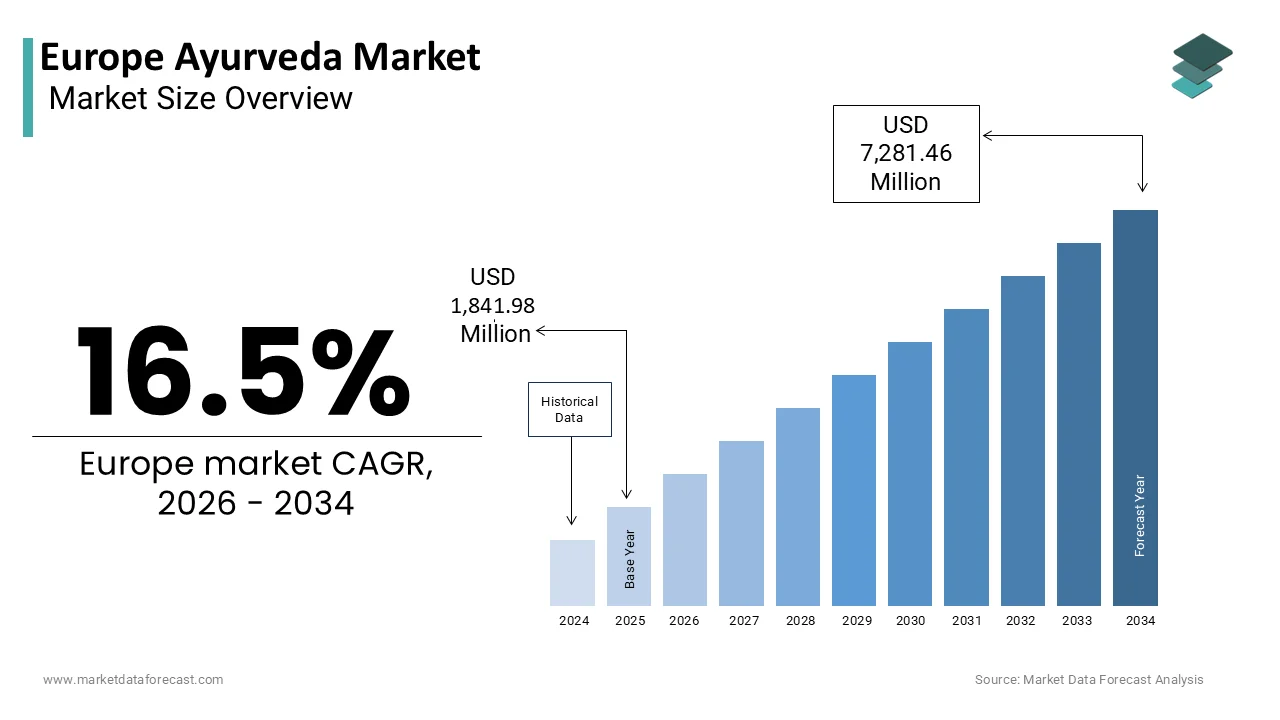
The Europe Ayurveda market was valued at USD 1,841.98 million in 2025, is estimated to reach USD 2,145.91 million in 2026, and is projected to reach USD 7,281.46 million by 2034, growing at a CAGR of 16.50% from 2026 to 2034.
Market Snapshot
- 2025 Market Size: USD 1.84 Billion
- 2026 Estimate: USD 2.15 Billion
- 2034 Forecast: USD 7.28 Billion
- CAGR (2026–2034): 16.50%
- Largest Form: Herbal
- Fastest Growing Form: Herbomineral
- Largest Indication: Skin & Hair Care (42.3%)
- Largest Application: Personal Care (65.3%)
- Leading Country: Germany (22.3%)
Quick Growth Drivers
- Rising demand for plant-based wellness solutions
- Preventive healthcare adoption across EU systems
- Clean-label & sustainable ingredient movement
- Integration with digital health personalization
- Institutional research & academic legitimization
Principal Restraints
- Complex multi-herb regulatory approval barriers
- Health claim restrictions under EU supplement rules
- Heavy metal contamination scrutiny
- Lack of standardized practitioner accreditation
High-Value Opportunities
- AI-powered dosha personalization platforms
- Certified organic & FairWild supply chains
- Blockchain-enabled herb traceability
- Clinical validation for chronic lifestyle disorders
- Integration with EU preventive health programs
Key Market Challenges
- Heavy metal contamination incidents
- Product dilution & cultural oversimplification
- Fragmented professional recognition
- Regulatory ambiguity for multi-ingredient formulas
What Wins Commercially
- Third-party heavy metal testing transparency
- Organic & FairWild certification
- Clinical validation studies
- Digital personalization tools
- Authentic cultural education positioning
Top Strategic Ask for Executives
- Invest in EU-compliant polyherbal clinical research
- Develop AI-driven dosha personalization platforms
- Build blockchain-enabled traceable supply chains
- Align marketing with preventive health data
- Strengthen practitioner training standardization initiatives
Leading Players
Some of the companies that are playing a dominating role in the Europe Ayurveda market include:
- Dabur India Ltd.
- Himalaya Wellness Company
- Arya Vaidya Sala Kottakkal
- Organic India Pvt. Ltd.
- A.Vogel Bioforce AG
- Weleda AG
- Schwabe Pharma AG
- Forest Essentials
Europe Ayurveda Market Size
The europe ayurveda market was valued at USD 1,841.98 million in 2025, is estimated to reach USD 2,145.91 million in 2026, and is projected to reach USD 7,281.46 million by 2034, growing at a CAGR of 16.5% from 2026 to 2034.
Ayurveda is the traditional Indian medicinal formulations, herbal supplements,s wellness products, ts and therapeutic services rooted in the ancient holistic system of Ayurveda. Unlike conventional pharmaceuticals, these offerings emphasize balance among body, mind, and spirit through personalized regimens involving diet lifestyl,e and plant-based interventions. In the European context, Ayurveda is primarily positioned within the complementary and alternative medicine sector operating under the regulatory framework for food supplements, traditional herbal medicinal products, and wellness services. According to the European Commission, over 1200 plant-based substances are listed in the EU’s inventory of traditional herbal ingredients eligible for registration under the Traditional Herbal Medicinal Products Directive. As per Eurostat, approximately 28% of adults in the European Union reported using some form of complementary therapy in 2023, with herbal remedies and mind-body practices showing the highest uptake.
MARKET DRIVERS
Rising Consumer Preference for Natural and Plant-Based Wellness Solutions
The consumers are increasingly shifting toward natural plant-based health solutions, driven by concerns over synthetic additives, long-term medication side effects, and environmental sustainability. This factor is solely boosting the growth of theEuropeane ayurveda market. This sentiment directly benefits Ayurveda, which relies on time-tested herbs such as ashwagandha, turmeric, and triphala, known for their adaptogenic and anti-inflammatory properties. National health surveys reinforce this trend, as per Germany’s Robert Koch Institute, 41% of adults used herbal supplements at least once in 2023, with stress relief and immune support cited as primary motivations. Similarly, France’s National Agency for Food and Environmental and Occupational Health Safety reported a 22% annual increase in notifications for traditional herbal preparations between 2021 and 2024. Retailers like dm Drogerie and Holland & Barrett have expanded dedicated Ayurvedic ssectionsireflecting commercial validation of this demand. The alignment of Ayurvedic philosophy with clean label and holistic wellness movements positions it as a culturally resonant alternative in an era of heightened health consciousness.
Integration of Ayurvedic Principles into Preventive and Lifestyle Medicine Frameworks
Ayurveda’s emphasis on individualized prevention and daily self-care routines is gaining traction within Europe’s evolving preventive health strategies. The integration of Ayurveda with the advanced lifestyle choices is also leveraging the growth of Europe ayurveda market. Public health bodies increasingly recognize that chronic diseases account for 87% of deaths in the EU, according to the World Health Organization Regional Office for Europe,e prompting a policy shift toward modifiable lifestyle factors. Ayurvedic concepts, such as dinachar, ya, daily routine,ine, and ritucharya, seasonal adaptation offer structured, yet flexible frameworks for behavior change that complement national wellness initiatives. In Sweden, the Public Health Agency incorporated Ayurvedic dietary guidance into pilot programs for metabolic syndrome management in 2024, citing improved patient adherence compared to standardized protocols. Similarly, the UK’s National Health Service launched a digital well-being platform in 2023 featuring Ayurvedic sleep and digestion modules developed in collaboration with integrative practitioners. Educational institutions are also contributing; the University of Vienna introduced a certified course on Ayurvedic nutrition in 20,24 attracting over 1200 healthcare professionals. This institutional legitimization transforms Ayurveda from a fringe practice into a credible component of Europe’s preventive health ecosystem.
MARKET RESTRAINTS
Stringent Regulatory Classification and Limited Product Authorization Pathways
Ayurvedic products face significant regulatory hurdles due to their complex multi-ingredient formulations, which often do not align with the European Medicines Agencymonograph-basedsed approval system for traditional herbal medicinal products. The stringent regulatory classification and limited product authorization pathways are restricting the growth of Europe ayurveda market. According to the European Directorate for the Quality of Medicines, fewer than 150 traditional herbal registrations included combinations of more than three botanicals as of 2024, restricting the commercial availability of authentic Ayurvedic formulations. Most products are instead marketed as food supplements under Regulation EC No 1924 200,6 which prohibitdisease-relateded health claims, thereby limiting therapeutic positioning. As per the European Commission’s Rapid Alert System for Food and Feed, over 200 Ayurvedic products were flagged between 2022 and 2025for undeclared heavy metals or unapproved ingredients,s leading to import restrictions. These structural barriers fragment market access and force vendors to dilute formulations to comply with single-ingredient norms, undermining authenticity and efficacy perception.
Lack of Standardized Practitioner Training and Professional Recognition
The absence of harmonized education standards and professional accreditation for Ayurvedic practitionesingle-ingredient cons, trains clinical credibility and service scalability. Unlike naturopathy or osteopathy, which are regulated in several member states, es Ayurveda remains largely unregulated, with training programs varying widely in duration, content, and quality. The lack of standardized practitioner training and professional recognition is additionally hampering the growth of Europe ayurveda market. According to the European Federation of Ayurvedic Professionals, only four EU countries, such as Germany, Italy, the Netherlands, and the UK, offer formal certification pathways recognized by national health authorities as of 2024. Furthermore, the European Qualifications Framework does not include Ayurvedic competencies l, limiting mobility and insurance reimbursement. In France, Ayurvedic consultations are not covered by social security, and practitioners cannot legally diagnose or prescribe.
MARKET OPPORTUNITIES
Growing Demand for Personalized Nutrition and Digital Health Integration
The emergence of Ayurveda with digital health technologies to deliver personalized wellness at scale is creating new opportunities for the growth of Europe ayurveda market. European consumers are increasingly adopting wearable devices and health apps, with over 180 million active users across the EU, as per the European Digital Health Observatory in 2024. Ayurvedic dosha typing based on constitutional analysis lends itself naturally to algorithm-driven personalization. Companies like Ojas in the Netherlands and AyurMe in the UK have developed AI-powered platforms that translate user inputs on sleep digestion and energy into customized diet and supplement plans aligned with Ayurvedic principles. The European Institute of Innovation and Technology funded a 4-million-euro project in 2024, tAI-powered dosha-based nutritional interventions for gut microbiome modulation using metagenomic sequencing. Additionally, the EU’s Horizon Europe program prioritizes individualized prevention strategies, creating funding avenues for hybrid models combining traditional knowledge with digital biomarkers. This synergy enables Ayurveda to transcend its artisanal image and position itself as a data-informed science compatible with modern precision health paradigms.
Expansion of Sustainable and Ethically Sourced Herbal Supply Chains
The strong regulatory and consumer emphasis on sustainability creates a strategic opening for Ayurvedic brands that champion ethical wildcrafting, organic farming,g and biodiversity conservation. This factor is another attribute escalating the growth of Europe ayurveda market. According to the European Environment Agency, over 70% of EU consumers consider environmental impact when purchasing health products as of 2024. Ayurveda’s foundational texts emphasize sustainable harvesting and respect for plant life cycles,les aligning with the EU’s Green Deal and Farm to Fork Strategy. Initiatives like the FairWild certification adopted by European retailers such as Alnatura and Terra Elements ensure traceability of key Ayurvedic herbs like brahmi and shatavari from Indian and Sri Lankan cooperatives. The European Commission’s Deforestation Regulation,tion effective 2023, further incentivizes transparent sourcing, which benefits vertically integrated Ayurvedic suppliers with blockchain-enabled supply chains. In 2024, the Swiss company A. Vogel partnered with Kerala-based farms to launch Europe’s first carbon-neutral ashwagandha line verified by TUV Rheinland.
MARKET CHALLENGES
Risk of Heavy Metal Contamination anQualiblockchain-enabledds
The consumer trust in Ayurvedic products is at risk of heavy metal contamination from rasa shastra formulations that historically incorporate processed minerals, which is a challenge for the growth of Europe ayurveda market. According to the European Association of Poison Centres and Clinical Toxicologists, 37 cases of lead or mercury poisoning linked to imported Ayurvedic medicines were documented across the EU in 2023. Although authentic Ayurveda employs rigorous purification protocols, many commercial products bypass these steps or source raw materials from polluted regions. National agencies respond with border controls. Germany’s Federal Office of Consumer Protection rejected 89 shipments of herbal products in 2024, citing toxicological risks. Reputable brands invest in ICP MS testing and third-party certifications, but smaller vendors lack resources for consistent quality assurance.
Cultural Misinterpretation and Commercial Dilution of Core Principles
The adaptation of Ayurveda for Western markets often results in oversimplification or commodification that severs products and practices from their philosophical and diagnostic roots. Many European offerings reduce Ayurveda to generic “detox teas” or “stress relief capsules” devoid of constitutional assessment or lifestyle guidance. According to a 2025study by the University of Copenhagen, 78% of Ayurvedic labeled products sold online in the EU did not refer to dosha theory or personalized use, contradicting foundational tenets. This superficial engagement risks alienating informed consumers and invites criticism from medical communities who view such products as pseudoscientific. Furthermore, yoga and wellness influencers frequently conflate Ayurveda with general “Eastern spirituality,” diluting its evidence-based aspects. The European Society for Traditional Medicine warns that without authentic representation, Ayurveda may be dismissed as a marketing trend rather than a coherent medical system.
REPORT COVERAGE
| REPORT METRIC | DETAILS |
| Market Size Available | 2025 to 2034 |
| Base Year | 2025 |
| Forecast Period | 2026 to 2034 |
| Segments Covered | By Form, Indication, Application, and Region. |
| Various Analyses Covered | Global, Regional, and Country-Level Analysis, Segment-Level Analysis, Drivers, Restraints, Opportunities, Challenges; PESTLE Analysis; Porter’s Five Forces Analysis, Competitive Landscape, Analyst Overview of Investment Opportunities |
| Countries Covered | UK, France, Spain, Germany, Italy, Russia, Sweden, Denmark, Switzerland, Netherlands, Turkey, Czech Republic, Rest of Europe |
| Market Leaders Profiled | Dabur India Ltd., Patanjali Ayurved Ltd., Himalaya Wellness Company, Arya Vaidya Sala Kottakkal, Baidhyanath Group, Charak Pharma Pvt. Ltd., Zandu Realty Ltd., Kerala Ayurveda Ltd., Organic India Pvt. Ltd., Sandu Pharmaceuticals Ltd., René Voltaire (Ayurveda products), JustIngredients (Ayurvedic herbs & spices), Vitane Pharma Pvt. Ltd., Lavera Naturkosmetik GmbH & Co. KG, Weleda AG, Schwabe Pharma AG, Tridosha Naturals, Ayush Herbs GmbH, Forest Essentials (L’Oréal Group), The Ayurvedic Company Scandinavia |
SEGMENTAL ANALYSIS
By Form Insights
The herbal form segment was the largest by holding a prominent share of the European Ayurveda market in 2025 from strong consumer preference foplant-baseded remedies and regulatory alignment with EU frameworks for traditional herbal medicinal products. According to the European Medicines Agency, many authorized traditional herbal registrations in the EU involve single or multiple botanical fplant-based without mineral additives, making them compliant with Directive 2004 24 EC. Retail channels, such as organic pharmacies and wellness stores, prioritize herbal supplements due to lower regulatory scrutiny and broader health claim allowances under food supplement legislation. Additionally, major European brands like A.Vogel and Salus exclusively focus on herbal extracts, ensuring consistent quality and traceability. The cultural resonance of herbs like turmeric, ashwagandha, ha and brahis mi validated by modern research on anti-inflammatory and adaptogenic effects, which further reinforces mainstream acceptance and commercial viability across diverse demographic segments.
The herbomineral segment is projected to witness the fastest CAGR is ois f 11.3% throughout the forecast period with the rising interest in synergies, which are formulations that combine botanical efficacy with bioavailable mineral cofactors, such as zinc, selenium, and iron processed through traditional bhasma techniques. According to the European Commission’s Joint Research Centreadvanced processing methods like calcination and repeated purification have enabled compliant hcofactorsl products to meet EU h,,eavy metal thresholds while retaining therapeutic activity. Clinical validation is also advancing, where a 2025pilot study funded by the German Federal Ministry of Education and Research demonstrated that an herbomineral formulation containing processed shilajit and ashwagandha improved mitochondrial function in chronic fatigue patients with no detectable toxic metals. Furthermore, premium wellness brands in Switzerland and the Netherlands are launching certified herbomineral lines targeting cognitive and metabolic health using third-party verified clean processing protocols. As per TUV Rheinland, over 40 new herbomineral products received safety certification in 2024, reflecting growing manufacturer confidence in navigating regulatory pathways through rigorous quality cthird-partytransparent sourcing.
By Indication Insights
The skin and hair care segment was the largest by capturing 42.3% of the European Ayurveda market share in 2024, with the widespread adoption of Ayurvedic principles in natural cosmetics and the cultural emphasis on external well-being as a reflection of internal balance. Consumer demand is particularly strong in WesternEuropeanane where clean beauty trends int,ersect with holisticwellness. French women prefer hair care products with plant-based active ingredients and Ayurvedic positioning. Retailers like Sephora and dm Drogerie have dedicated “Ayurvedic Beauty” sections featuring oils, serums, and shampoos formulated with traditional recipes. Additionally, the European Societyplant-basedlogy acknowledges the anti-microbial and anti-oxidative properties of key Ayurvedic botanicals supporting their use in managing conditions like dandruff,ff acne, and premature greying. This aesthetictradition and scientific plausibility sustain robust consumer engagement and product innovation in the skin and hair domain.
The gastrointestinal indication segment is anticipated to grow at a faster CAGR of 12.7%, throughout the forecast period, with the public awareness of gut health asustainerstone of systemic immunity and mental well-being. According to the World Health Organization Regional Office for Europe, digestive disorders affect over 120 million people in the EU, with functional dyspepsia and irritable bowel syndrome being among the most prevalent. Ayurvedic formulations containing triphala, ginge,r and licorice are increasingly sought for their prokineticanti-inflammatoryr,y anmicrobiome-modulatingng effects. The UK’s National Institute for Health and Care Research funded a clinical trial evaluating a standardized triphala preparation for constipation-predominant IB, showing significant improvement in stool frequency and microbiome-modulating. Furthermore, the European Food Safety Authority has issued positive opinions on several Ayurvedic herbs for digestive health claims, including constipation-predominant disorder,iander for mild gastrointestinal spasms.
By Application Insights
The personal care segment was the largest by holding 65.3% of the European Ayurveda market share in 2024, owing to the seamless integration of Ayurvedic ingredients into daily hygiene and beauty routines. According to the European Commission, over 2800 cosmetic products referencing Ayurveda or Indian herbal traditions were marketed in the EU in 2024, spanning hair oils, face masks, tooth powder,s and body scrubs. Consumer behavior supports this trend, as many Europeans aged 18 to 45 incorporate at least one natural personal care product into their regimen, with Ayurvedic brands like Kama Ayurveda and Forest Essentials gaini, ng traction in p,remium retail. The visual and sensory appeal of traditional preparations, such as cold-pressed sesame oil infused with herbs, enhances experiential value while aligning with sustainability preferences. Moreover, the absence of synthetic preservatives and microplastics in authentic Ayurvedic personal care items resonates with the EU green labeling initiative, es further accelerating adoption across urban wellness communities.
The medicinal application segment is likely to register the fastest CAGR of 10.9% throughout the forecast period, owing to the increasing recognition of Ayurveda’s role in managing chronic lifestyle diseases and the gradual opening of regulatory pathways for traditional herbal medicinal products. Conditions, such as arthritis, insomnia, and metabolic ssyndromeare re primary targets with formulations like ashwagandha capsules and guggulu tablets gaining clinical traction. In Sweden, the Public Health Agency included select Ayurvedic herbal medicines in its national complementary care formulary in 2024, enabling partial reimbursement for specific indications. Additionally, integrative clinics in Germany and the Netherlands now offer physician-supervised Ayurvedic treatment plans combining diet, herbal therapy,y and detoxification protocols. As per the European Federation of Traditional Medicine Practitioners, many licensed practitioners now provide medicinal Ayurveda services across the EU,, signaling institutional maturation and expanding t,herapeutic leg,itimacy beyond wellness aesthetics.
COUNTRY LEVEL ANALYSIS
Germany Ayurveda Market Analysis
Germany was the largest contributor to the European Ayurveda market by holding 22.3% othe f share in 2025with its strong regulatory framework for traditional herbal medicines and deep cultural affinity for natural health practices. The country was among the first to implement the EU Traditional Herbal Medicinal Products Directive, enabling the legal sale of Ayurvedic formulations meeting safety and quality criteria. According to the Federal Institute for Drugs and Medical Devices BfArM, over 150 Ayurvedic herbal products held national marketing authorizations as of 2024. Germany’s extensive network of Heilpraktiker, state-certified alternative medicine practitioners, provides clinical delivery of Ayurvedic consultations and Panchakarma therapies under professional oversight. The Robert Koch Institute reports that 39% of German adults used herbal remedies in 2023, with Ayurvedic brands like Maharishi and Dabur ranking among the top sellers in organic pharmacies. Additionally, the German government funds research on integrative medicine through the Federal Ministry of Education and Research, reinforcing scientific credibility. This blend of regulatory clarity,y professional practice,ce and consumer trust solidifies Germany’s leadership in the regional Ayurveda landscape.
United Kingdom Ayurveda Market Analysis
The United Kingdom ayurveda market growth is likely to grow with the fastest CAGR during the forecast period. The growth of the market in this country is propelled by the dynamic wellness culture and receptive regulatory environment for food supplements and complementary therapies. Although no longer an EU member, the UK retains alignment with European standards through the Traditional Herbal Registration scheme administered by the Medicines and Healthcare products Regulatory Agency. According to the agency, over 90 Ayurvedic products held valid registrations in 202,4 covering indications such as stress relief and joint health. The UK hosts Europe’s largest concentration of Ayurvedic training schools,s including the Ayurveda Institute and Jiva Institute, te offering accredited diplomas recognized by the Complementary and Natural Healthcare Council. As per the Office for National Statistics, 44% of British adults reported using herbal supplements in 2,023 with ashwagandha and turmeric leading sales. Retail penetration is strong with Boots Holland & Barrett and independent wellness stores dedicating shelf space to premium Ayurvedic brands. The NHS’s growing interest in social prescribing for mental health further opens avenues for Ayurvedic lifestyle interventions, establishing the UK as a vibrant and evolving market.
France Ayurveda Market Analysis
France, the third largest share at approximately 14%is supported by its sophisticated natural health retail sector and emphasis on phytotherapy within mainstream medicine. French consumers exhibit high discernment for botanical quality with a strong preference for certified organic and traceable ingredients. According to France’s National Agency for Food, Environmental,l and Occupational Health Safety,y ANS, E, S over 200 Ayurvedic herbal preparations were declared as dietary supplements in 20,24 with strict compliance on labeling and contaminant limits. Cultural openness is evident; French adults used plan,,t based rem,edies in 2023, with Ayurvedic brands like Kama Ayurveda gaining popularity in urban centers. Furthermore, the French Ministry of Health includes certain herbal medicines in its official pharmacopoeia, creating a bridge between traditional knowledge and biomedical practice. This unique integration of Ayurveda into France’s established phytotherapy ecosystem ensures sustained market relevance and premium positioning.
Netherlands Ayurveda Market Analysis
The Netherlands ayurveda market growth is likely to grow with its progressive stance on complementary medicine and efficient import logistics for herbal products. Dutch authorities permit the sale of Ayurvedic supplements under the Commodities Act, provided they meet European food safety standards and avoid unauthorized health claims. According to the Netherlands Food and Consumer Product Safety Authority, over 120 Ayurvedic brands were registered in the national notification system in 2024. The country is home to Europe’s largest organic wholesale hub in Ede, facilitating nationwide distribution to health stores and online platforms. Academic interest is also notable; Wageningen University launched a research program in 2025on the bioavailability of Ayurvedic polyherbal formulations. Additionally, the Dutch government supports integrative health pilots in primary care, including Ayurvedic lifestyle counseling for chronic disease prevention. This combination of regulatory pragmatism, logistical advantage,e and cultural receptivity positions the Netherlands as a strategic gateway for Ayurvedic brands entering continental Europe.
Switzerland Ayurveda Market Analysis
Switzerland's ayurveda market growth is likely to grow with its high disposable income, some premium wellness expectations, and tolerance for traditional medicine systems. Although Switzerland accepts many European regulatory standards through bilateral agreements, enabling compliant Ayurvedic products to access its market. According toSwissmedic, over 60 Ayurvedi,c herbal preparations were authorized as traditional medicinal products in 2025 w, with additional items sold as food supplements. Brands like A.Vogel and Ricola have incorporated Ayurvedic herbs into their portfolios, enhancing mainstream visibility. Furthermore, Switzerland’s private healthcare system allows partial reimbursement for complementary therapies, including Ayurvedic consultations when delivered by certified practitioners. The presence of international wellness retreats in regions like Zurich and Geneva also drives demand for authentic Ayurvedic treatments.
KEY MARKET PLAYERS
Some of the companies that are playing a dominating role in the globalEuropean Ayurvedaa market include
- Dabur India Ltd.
- Patanjali Ayurved Ltd.
- Himalaya Wellness Company
- Arya Vaidya Sala Kottakkal
- Baidhyanath Group
- Charak Pharma Pvt. Ltd.
- Zandu Realty Ltd.
- Kerala Ayurveda Ltd.
- Organic India Pvt. Ltd.
- Sandu Pharmaceuticals Ltd.
- Renée Voltaire (Ayurveda products)
- JustIngredients (Ayurvedic herbs & spices)
- Vitane Pharma Pvt. Ltd.
- Lavera Naturkosmetik GmbH & Co. KG
- Weleda AG
- Schwabe Pharma AG
- Tridosha Naturals
- Ayush Herbs GmbH
- Forest Essentials (L’Oréal Group)
- The Ayurvedic Company Scandinavia
COMPETITIVE LANDSCAPE
The European Ayurveda market features a dynamic mix of Indian multinational exporters, European phytotherapy brands,s and niche wellness startups, each competing on authenticity, scientific validity, and regulatory compliance. Established Indian companies leverage traditional knowledge and scale but must navigate complex EU import rules and consumer awareness around quality control. European players like A.Vogel and Salus differentiate through local manufacturing, organic certification,n and alignment with regional wellness norms, often blending Ayurvedic herbs into familiar phytotherapy formats. Meanwhile, agile startups focus on premium positioning,g clean label formulations, and digital-first engagement targeting urban millennials. Competition is intensifying around transparency, with leaders investing in blockchain traceability, third-party testing, and educational content to build trust. Regulatory scrutiny, particularly on heavy metals and health cclaimsms creates a high barrier to entry,ry favoring players with robust quality systems and long-term commitment to ethical sourcing and consumer safety.
TOP LEADING PLAYERS IN THE MARKET
- Dabur India Ltd maintains a significant presence in the European Ayurveda market through its portfolio of scientifically validated herbal formulations and personal care products aligned with EU regulatory standards. The company offers a wide range of supplements and wellness solutions under brands like Dabur Chyawanprash and Dabur Hone,y which are marketed as food supplements across European retail and e-commerce channels. Dabur has invested in third-party certifications, including organic and non-GMO labels, to meet European consumer expectations for purity and traceability. In recent years, the company strengthened its European footprint by establishing a dedicated regulatory affairs team in Germany to ensure compliance with EFSA and national food safety authorities. It also launched digital education campaigns on Ayurvedic wellness principles in collaboration with European integrative health practitioners,ners enhancing brand credibility and consumer trust across key markets.
- Himalaya Wellness Company has established a strong foothold in the European Ayurveda market by focusing on clinically studied herbal supplements and dermatological personal care products. Its formulations, such as Ashwagandha and Triphala capsules, are positioned as natural solutions for stress and digestive health and are distributed through pharmacies, organic stores, and online platforms across Western Europe. The company emphasizes transparency by publishing phytochemical standardization data and heavy metal testing results for all exported batches. Himalaya has recently expanded its European distribution network through partnerships with specialty wellness retailers in France and the Netherlands. It also initiated collaborations with European universities to conduct bioavailability studies on its proprietary herbal extracts, thereby reinforcing scientific legitimacy and supporting compliant health messaging under EU food supplement regulations.
- A.Vogel Bioforce AG is a Swiss-based leader in phytotherapy that has successfully integrated Ayurvedic herbs into its product portfolio while maintaining strict adherence to European quality and sustainability standards. The company markets Ayurvedic-inspired formulations such as Ashwagandha and Brahmi under its premium A. Vogel brand available in pharmacies and health stores across German-speaking Europe and Benelux. A.Vogel differentiates itself through vertically integrated organic farming,g biodynamic cultivation practices ain-houseuse analytical testing, ensuring contaminant-free products. It also enhanced its digital platform with personalized wellness content rooted in Ayurvedic principles. These initiatives position A.Vogel as a, idge between traditional Indi, an mediin-house European natural health values, strengthening its influence in the premium segment.
TOP STRATEGIES USED BY THE KEY MARKET PARTICIPANTS
Key players in theEuropeane Ayurveda market prioritize regulatory compliance by obtaining organic non-GMO and heavy metal-free certifications to meet stringent EU food and cosmetic safety standards. They invest in clinical and phytochemical validation studies to suppoEuropeanannsparent labeling and build scientific credibility among health-conscious consumers. Compmetal-free distribution through strategic partnerships with pharmacies, organic retailers, and e-commerce platforms to enhance accessibility. Brand differentiation is achieved through sustainable sourcing, storytelling, ng and integration of Ayurvedic lifestyle education into marketing campaigns. Additionally, firms increasingly adopt dig it, al ene-commerceools such as personalized wellness apps and virtual consultations to deepen consumer relationships and holistic usage beyond product consumption.
MARKET SEGMENTATION
This research report on the europe ayurverda market is segmented and sub-segmented into the following categories.
By Form
- Herbal
- Herbomineral
By Indication
- Skin & Hair Care
- Gastrointestinal Disorders
- Arthritis
- Respiratory Disorders
- Stress & Sleep Disorders
- Others
By Application
- Personal Care
- Medicinal
- Wellness & Preventive Healthcare
- Others
By Country
- Germany
- United Kingdom
- France
- Netherlands
- Switzerland
- Rest of Europe